ASSISTIVE TECHNOLOGY
S. Mari Selvi @ Dhivya
• Assistive technology (AT) is assistive,
adaptive and rehabilitative devices for people
with disabilities. They have difficulty in
performing activities of daily living. The
individuals with special needs are:
Visually disabled
Hearing disabled
Learning disabled
Assistive technology
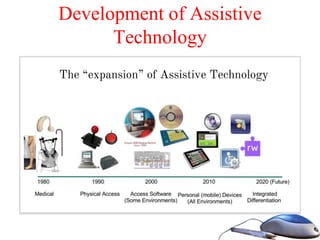
Development of Assistive
Technology
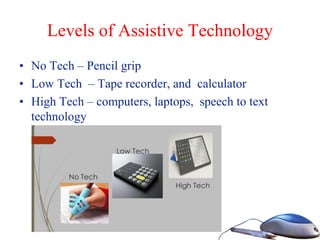
Levels of Assistive Technology
• No Tech – Pencil grip
• Low Tech – Tape recorder, and calculator
• High Tech – computers, laptops, speech to text
technology
Importance of Assistive Technology in
inclusive classroom
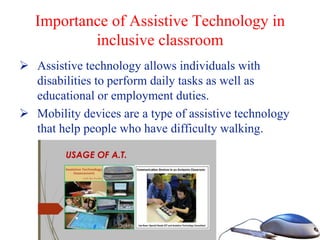
 Assistive technology allows individuals with
disabilities to perform daily tasks as well as
educational or employment duties.
 Mobility devices are a type of assistive technology
that help people who have difficulty walking.
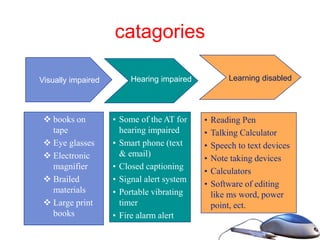
catagories
 books on
tape
 Eye glasses
 Electronic
magnifier
 Brailed
materials
 Large print
books
• Some of the AT for
hearing impaired
• Smart phone (text
& email)
• Closed captioning
• Signal alert system
• Portable vibrating
timer
• Fire alarm alert
• Reading Pen
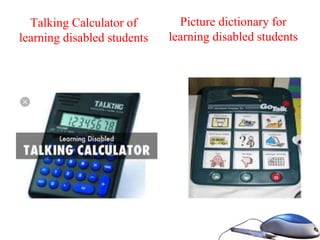
• Talking Calculator
• Speech to text devices
• Note taking devices
• Calculators
• Software of editing
like ms word, power
point, ect.
Visually impaired Hearing impaired Learning disabled
Assistive technology for visually
disabled
• Students who are visually impaired have trouble
seeing or are unable to see at all. They need assistive
technology.
• Examples of Assistive Technology for students who
are visually impaired:
books on tape
Eye glasses
Electronic magnifier
Brailed materials
Large print books -Willings, 2015.
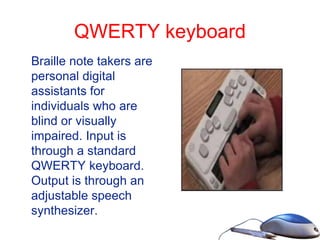
QWERTY keyboard
Braille note takers are
personal digital
assistants for
individuals who are
blind or visually
impaired. Input is
through a standard
QWERTY keyboard.
Output is through an
adjustable speech
synthesizer.
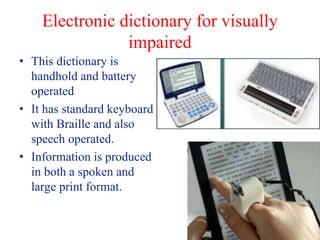
Electronic dictionary for visually
impaired
• This dictionary is
handhold and battery
operated
• It has standard keyboard
with Braille and also
speech operated.
• Information is produced
in both a spoken and
large print format.
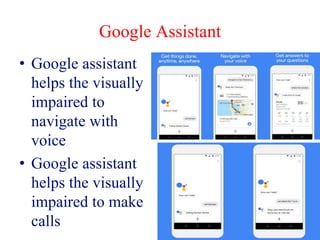
Google Assistant
• Google assistant
helps the visually
impaired to
navigate with
voice
• Google assistant
helps the visually
impaired to make
calls
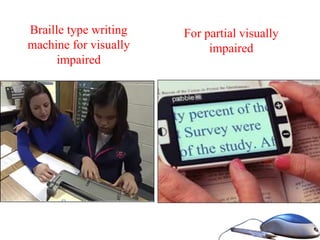
Braille type writing
machine for visually
impaired
For partial visually
impaired
Assistive technology for hearing
disabled
• Assistive listening devices help to amplify the
sounds you want to hear, especially where
there’s a lot of background noise.
• ALD’s can be used with a hearing aid or
cochlear implant to help a wearer hear certain
sounds better.
• Some of the AT for hearing impaired
• Smart phone (text & email)
• Closed captioning
• Signal alert system
• Portable vibrating timer
• Fire alarm alert
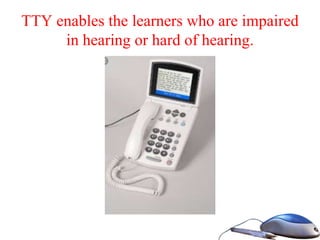
TTY enables the learners who are impaired
in hearing or hard of hearing.
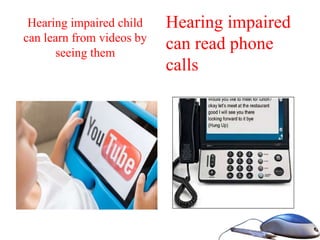
Hearing impaired child
can learn from videos by
seeing them
Hearing impaired
can read phone
calls
Assistive technology for students
who are learning disabled
• Learning disabilities are a group of disorders that
have a negative impact on learning. They may affect
one’s ability to speak, listen, think, read, write, spell
or compute.
• Learning disabilities include:
• Dyslexia,
• Dysgraphia
• Aphasia
• Dysphasia
• Students who are learning disabled may need
any of the following assistive technology:
• Speech to text devices
• Note taking devices
• Calculators
• Software of editing like ms word, power point,
ect.
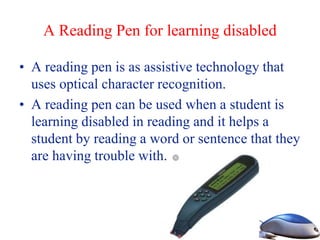
A Reading Pen for learning disabled
• A reading pen is as assistive technology that
uses optical character recognition.
• A reading pen can be used when a student is
learning disabled in reading and it helps a
student by reading a word or sentence that they
are having trouble with.
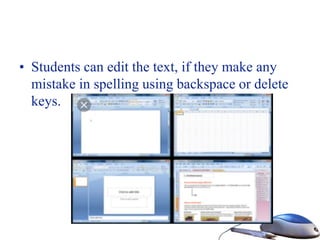
• Students can edit the text, if they make any
mistake in spelling using backspace or delete
keys.
Talking Calculator of
learning disabled students
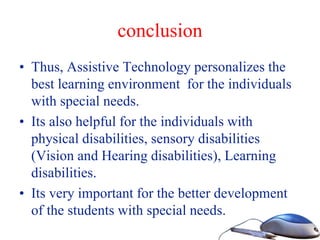
Picture dictionary for
learning disabled students
conclusion
• Thus, Assistive Technology personalizes the
best learning environment for the individuals
with special needs.
• Its also helpful for the individuals with
physical disabilities, sensory disabilities
(Vision and Hearing disabilities), Learning
disabilities.
• Its very important for the better development
of the students with special needs.
References
• Rajkumar, A., Sundari, R.S. & Rao, D.B. (2006). Special Education. New
Delhi: Discovery Publications.
• Sharma, P.L. (1990). Teachers Handbook on IED – Helping Children with
special Needs. NCERT Publications
• Sharma, P.L. (2003). Planning Inclusive Education in Small Schools.
Mysore: R.I,E. Publications.
• https://en.m.wikipedia.org/wiki/Assistive_technology
• https://study.com/academy/lesson/adaptive-assistive-technology-definition-
uses.html
• https://www.google.com/imgres?imgurl=https%3A%2F%2Fwww.carnegie
library.org%2Fwp-content%2Fuploads%2F2018%2F08%2Fassistive-
technology-2-638

Assistive technology for inclusive classroom

  • 1.
  • 2.
    • Assistive technology(AT) is assistive, adaptive and rehabilitative devices for people with disabilities. They have difficulty in performing activities of daily living. The individuals with special needs are: Visually disabled Hearing disabled Learning disabled Assistive technology
  • 3.
  • 4.
    Levels of AssistiveTechnology • No Tech – Pencil grip • Low Tech – Tape recorder, and calculator • High Tech – computers, laptops, speech to text technology
  • 5.
    Importance of AssistiveTechnology in inclusive classroom  Assistive technology allows individuals with disabilities to perform daily tasks as well as educational or employment duties.  Mobility devices are a type of assistive technology that help people who have difficulty walking.
  • 6.
    catagories  books on tape Eye glasses  Electronic magnifier  Brailed materials  Large print books • Some of the AT for hearing impaired • Smart phone (text & email) • Closed captioning • Signal alert system • Portable vibrating timer • Fire alarm alert • Reading Pen • Talking Calculator • Speech to text devices • Note taking devices • Calculators • Software of editing like ms word, power point, ect. Visually impaired Hearing impaired Learning disabled
  • 7.
    Assistive technology forvisually disabled • Students who are visually impaired have trouble seeing or are unable to see at all. They need assistive technology. • Examples of Assistive Technology for students who are visually impaired: books on tape Eye glasses Electronic magnifier Brailed materials Large print books -Willings, 2015.
  • 8.
    QWERTY keyboard Braille notetakers are personal digital assistants for individuals who are blind or visually impaired. Input is through a standard QWERTY keyboard. Output is through an adjustable speech synthesizer.
  • 9.
    Electronic dictionary forvisually impaired • This dictionary is handhold and battery operated • It has standard keyboard with Braille and also speech operated. • Information is produced in both a spoken and large print format.
  • 10.
    Google Assistant • Googleassistant helps the visually impaired to navigate with voice • Google assistant helps the visually impaired to make calls
  • 11.
    Braille type writing machinefor visually impaired For partial visually impaired
  • 12.
    Assistive technology forhearing disabled • Assistive listening devices help to amplify the sounds you want to hear, especially where there’s a lot of background noise. • ALD’s can be used with a hearing aid or cochlear implant to help a wearer hear certain sounds better.
  • 13.
    • Some ofthe AT for hearing impaired • Smart phone (text & email) • Closed captioning • Signal alert system • Portable vibrating timer • Fire alarm alert
  • 14.
    TTY enables thelearners who are impaired in hearing or hard of hearing.
  • 15.
    Hearing impaired child canlearn from videos by seeing them Hearing impaired can read phone calls
  • 16.
    Assistive technology forstudents who are learning disabled • Learning disabilities are a group of disorders that have a negative impact on learning. They may affect one’s ability to speak, listen, think, read, write, spell or compute. • Learning disabilities include: • Dyslexia, • Dysgraphia • Aphasia • Dysphasia
  • 17.
    • Students whoare learning disabled may need any of the following assistive technology: • Speech to text devices • Note taking devices • Calculators • Software of editing like ms word, power point, ect.
  • 18.
    A Reading Penfor learning disabled • A reading pen is as assistive technology that uses optical character recognition. • A reading pen can be used when a student is learning disabled in reading and it helps a student by reading a word or sentence that they are having trouble with.
  • 19.
    • Students canedit the text, if they make any mistake in spelling using backspace or delete keys.
  • 20.
    Talking Calculator of learningdisabled students Picture dictionary for learning disabled students
  • 21.
    conclusion • Thus, AssistiveTechnology personalizes the best learning environment for the individuals with special needs. • Its also helpful for the individuals with physical disabilities, sensory disabilities (Vision and Hearing disabilities), Learning disabilities. • Its very important for the better development of the students with special needs.
  • 22.
    References • Rajkumar, A.,Sundari, R.S. & Rao, D.B. (2006). Special Education. New Delhi: Discovery Publications. • Sharma, P.L. (1990). Teachers Handbook on IED – Helping Children with special Needs. NCERT Publications • Sharma, P.L. (2003). Planning Inclusive Education in Small Schools. Mysore: R.I,E. Publications. • https://en.m.wikipedia.org/wiki/Assistive_technology • https://study.com/academy/lesson/adaptive-assistive-technology-definition- uses.html • https://www.google.com/imgres?imgurl=https%3A%2F%2Fwww.carnegie library.org%2Fwp-content%2Fuploads%2F2018%2F08%2Fassistive- technology-2-638