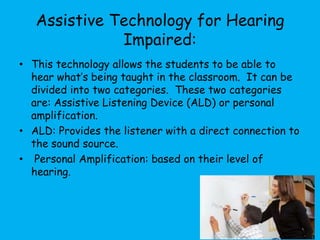
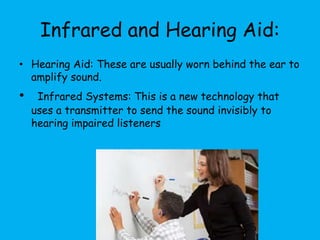
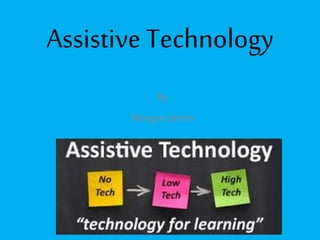
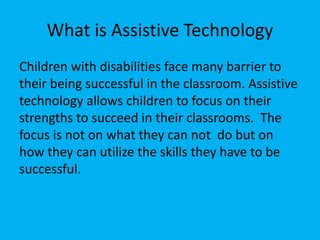
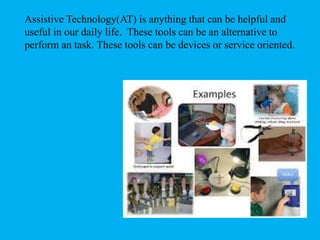
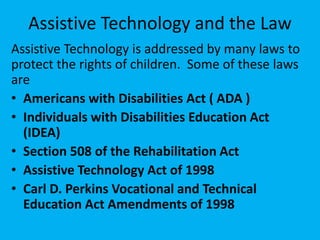
Assistive technology allows children with disabilities to focus on their strengths and succeed in the classroom by reducing barriers to their education. Laws such as the ADA and IDEA govern assistive technology to ensure equality for children with special needs. There are many types of assistive technology that can aid those with physical, sensory, or learning disabilities. Examples include screen magnifiers, hearing aids, speech recognition software, and devices that allow alternative access to computers for those unable to use standard keyboards or mice. When developing IEPs, assistive technology should be considered to help each child achieve.
![More Laws that govern Assistive Technology
• Fair Housing Act Amendments of 1988
• The Hearing Aid Compatibility Act of 1988
• The Television Decoder Circuitry Act of 1990,
Section 3
• Telecommunications Act of 1996
• Title I - Public Law 104-104 [47 USC 255]
• Title III - Public Law 104-104 [47 USC 613]](https://image.slidesharecdn.com/assistivetechnology-150328222924-conversion-gate01/85/Assistive-technology-7-320.jpg)