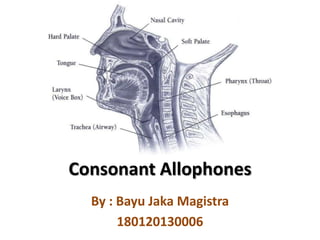
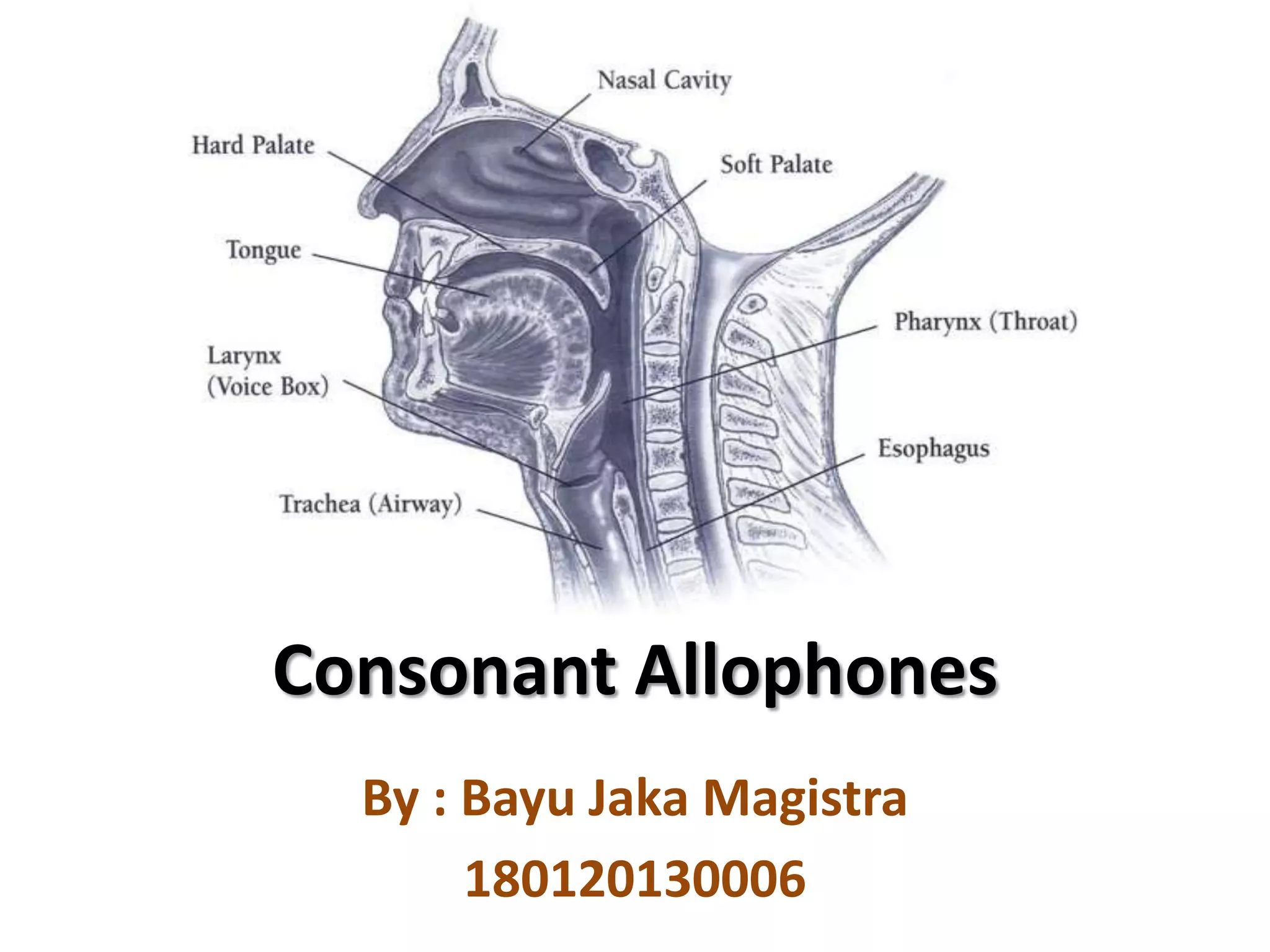
Consonant Allophones
By : Bayu Jaka Magistra
180120130006
Phonemes
• Ancient Greek φώνημα (phōnēma), from φωνέω
(phōneō), from φωνή (phōnē) = speech sound
• The smallest unit of speech that can be used to make
one word different from another word
(www.merriam-webster.com)
• The smallest contrastive linguistic unit which may
bring about a change of meaning (Gimson, 2008)
speech sound, one word different from another,
meaning

A phoneme is a speech sound that
can make one word different from
another in meaning.

Minimal Pairs
Minimal Pairs
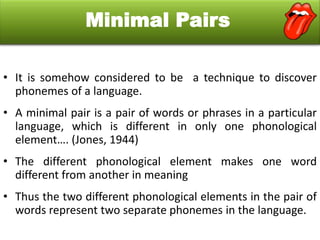
• It is somehow considered to be a technique to discover
phonemes of a language.
• A minimal pair is a pair of words or phrases in a particular
language, which is different in only one phonological
element…. (Jones, 1944)
• The different phonological element makes one word
different from another in meaning
• Thus the two different phonological elements in the pair of
words represent two separate phonemes in the language.
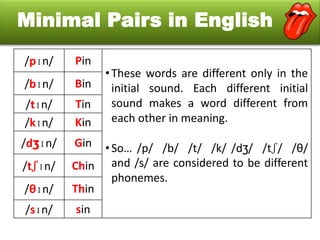
Minimal Pairs in English
/pɪn/

Pin

/bɪn/

Bin

/tɪn/
/kɪn/

Tin
Kin

/dʒɪn/

Gin

/tʃɪn/
/θɪn/
/sɪn/

• These words are different only in the
initial sound. Each different initial
sound makes a word different from
each other in meaning.

• So… /p/ /b/ /t/ /k/ /dʒ/ /tʃ/ /θ/
Chin and /s/ are considered to be different
phonemes.
Thin
sin
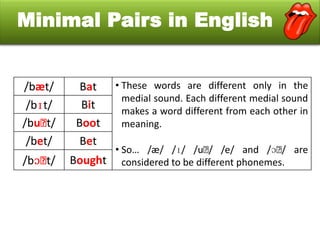
Minimal Pairs in English

/bæt/
/bɪt/
/buː
t/
/bet/
/bɔː
t/

Bat
Bit
Boot
Bet

• These words are different only in the
medial sound. Each different medial sound
makes a word different from each other in
meaning.

• So… /æ/ /ɪ/ /uː /e/ and /ɔː are
/
/
Bought considered to be different phonemes.
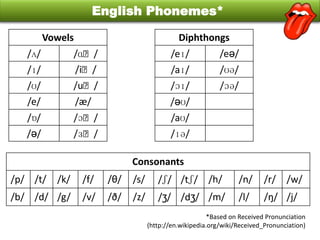
English Phonemes*
Vowels

Diphthongs

/ʌ/
/ɪ/

/ɑː/
/iː/

/eɪ/
/aɪ/

/eə/

/ʊ/
/e/

/uː/
/æ/

/ɔə/

/ɒ/
/ə/

/ɔː/

/ɔɪ/
/əʊ/
/aʊ/

/ɜː/

/ɪə/

/ʊə/

Consonants
/p/ /t/

/k/

/f/

/θ/

/s/

/ʃ/ /tʃ/ /h/

/n/

/r/

/w/

/b/ /d/ /g/

/v/

/ð/

/z/

/ʒ/ /dʒ/ /m/

/l/

/ŋ/ /j/

*Based on Received Pronunciation
(http://en.wikipedia.org/wiki/Received_Pronunciation)
Allophones
• from the Greek: ἄλλος, állos, "other" and φωνή, phōnē,
"voice, sound.“ = Other sound
• An allophone is one of a set of multiple possible spoken
sounds (or phones) used to pronounce a single phoneme
(Jakobson, 1980).
• Allophones do not change the meaning of a word

• Allophones happen because of the position of a phoneme
and the phonetic characteristics of neighboring sounds
Allophones
Allophones are phoneme variations
that do not cause meaning change
and happen because of its position
and the phonetic characteristics of
neighboring sounds.
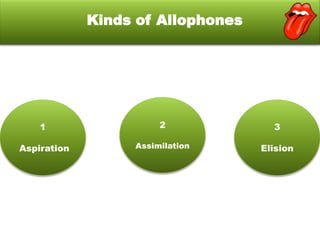
Kinds of Allophones

1

2

3

Aspiration

Assimilation

Elision
1. Aspiration

•
•

Characterized by strong explosion of breath or puff.
It happens to voiceless plosive consonants
( /p/ /t/ /k/ ) in the initial position.

[pʰ]

[p]

[tʰ]

[t]
[p]

[kʰ]

[k]
[t]

[k]
1. Aspiration

•
•

Pen
Stop

[pʰen]
[stɒp]

aspirated
un-aspirated

•
•

Top
Bat

[tʰ ɒp]
[bæt]

aspirated
un-aspirated

•
•

King
Back

[kʰɪŋ]
[bæk]

aspirated
un-aspirated
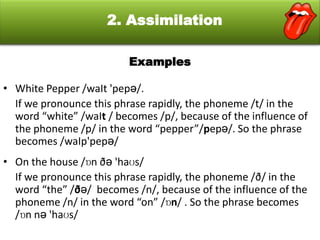
2. Assimilation

• (to) assimilate = incorporate = memasukkan.
• Assimilation is the influence of a sound on a neighboring
sound so that the two become similar or the same
(Salzmann, 2004)
2. Assimilation
Examples
• White Pepper /waIt 'pepə/.
If we pronounce this phrase rapidly, the phoneme /t/ in the
word “white” /waIt / becomes /p/, because of the influence of
the phoneme /p/ in the word “pepper”/pepə/. So the phrase
becomes /waIp'pepə/

• On the house /ɒn ðə 'haʊs/
If we pronounce this phrase rapidly, the phoneme /ð/ in the
word “the” /ðə/ becomes /n/, because of the influence of the
phoneme /n/ in the word “on” /ɒn/ . So the phrase becomes
/ɒn nə 'haʊs/
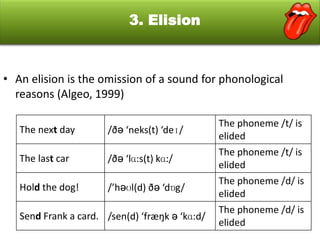
3. Elision

• An elision is the omission of a sound for phonological
reasons (Algeo, 1999)
The next day

/ðə ‘neks(t) ‘deɪ/

The last car

/ðə ‘lɑ:s(t) kɑ:/

Hold the dog!

/’həʊl(d) ðə ‘dɒg/

Send Frank a card. /sen(d) ‘fræŋk ə ‘kɑ:d/

The phoneme /t/ is
elided
The phoneme /t/ is
elided
The phoneme /d/ is
elided
The phoneme /d/ is
elided
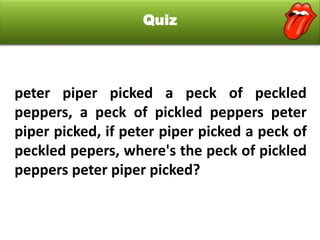
Quiz

peter piper picked a peck of peckled
peppers, a peck of pickled peppers peter
piper picked, if peter piper picked a peck of
peckled pepers, where's the peck of pickled
peppers peter piper picked?
Thank You Very Much
Bibliography
Algeo, J. (1999). Vocabulary. In S. Romaine (Ed.), The Cambridge
History of the English Language (Vol. IV). Cambridge Univ. Press.
Gimson, A. C. (2008). The Pronunciation of English (7 ed.). London ,
England: Hodder.
Jakobson, R. (1980). Structure of Language and Its Mathematical
Aspects: Proceedings of symposia in applied mathematics. AMS
Bookstore.
Jones, D. (1944). Chronemes and Tonemes. Copenhagen: Acta
Linguistica.
Salzmann, Z. (2004). Language, Culture, and Society: An Introduction
to Linguistic Anthropology. Westview.

Phonemes & Consonant Allophones

  • 1.
    Consonant Allophones By :Bayu Jaka Magistra 180120130006
  • 2.
    Phonemes • Ancient Greekφώνημα (phōnēma), from φωνέω (phōneō), from φωνή (phōnē) = speech sound • The smallest unit of speech that can be used to make one word different from another word (www.merriam-webster.com) • The smallest contrastive linguistic unit which may bring about a change of meaning (Gimson, 2008)
  • 3.
    speech sound, oneword different from another, meaning A phoneme is a speech sound that can make one word different from another in meaning. Minimal Pairs
  • 4.
    Minimal Pairs • Itis somehow considered to be a technique to discover phonemes of a language. • A minimal pair is a pair of words or phrases in a particular language, which is different in only one phonological element…. (Jones, 1944) • The different phonological element makes one word different from another in meaning • Thus the two different phonological elements in the pair of words represent two separate phonemes in the language.
  • 5.
    Minimal Pairs inEnglish /pɪn/ Pin /bɪn/ Bin /tɪn/ /kɪn/ Tin Kin /dʒɪn/ Gin /tʃɪn/ /θɪn/ /sɪn/ • These words are different only in the initial sound. Each different initial sound makes a word different from each other in meaning. • So… /p/ /b/ /t/ /k/ /dʒ/ /tʃ/ /θ/ Chin and /s/ are considered to be different phonemes. Thin sin
  • 6.
    Minimal Pairs inEnglish /bæt/ /bɪt/ /buː t/ /bet/ /bɔː t/ Bat Bit Boot Bet • These words are different only in the medial sound. Each different medial sound makes a word different from each other in meaning. • So… /æ/ /ɪ/ /uː /e/ and /ɔː are / / Bought considered to be different phonemes.
  • 7.
    English Phonemes* Vowels Diphthongs /ʌ/ /ɪ/ /ɑː/ /iː/ /eɪ/ /aɪ/ /eə/ /ʊ/ /e/ /uː/ /æ/ /ɔə/ /ɒ/ /ə/ /ɔː/ /ɔɪ/ /əʊ/ /aʊ/ /ɜː/ /ɪə/ /ʊə/ Consonants /p/ /t/ /k/ /f/ /θ/ /s/ /ʃ//tʃ/ /h/ /n/ /r/ /w/ /b/ /d/ /g/ /v/ /ð/ /z/ /ʒ/ /dʒ/ /m/ /l/ /ŋ/ /j/ *Based on Received Pronunciation (http://en.wikipedia.org/wiki/Received_Pronunciation)
  • 8.
    Allophones • from theGreek: ἄλλος, állos, "other" and φωνή, phōnē, "voice, sound.“ = Other sound • An allophone is one of a set of multiple possible spoken sounds (or phones) used to pronounce a single phoneme (Jakobson, 1980). • Allophones do not change the meaning of a word • Allophones happen because of the position of a phoneme and the phonetic characteristics of neighboring sounds
  • 9.
    Allophones Allophones are phonemevariations that do not cause meaning change and happen because of its position and the phonetic characteristics of neighboring sounds.
  • 10.
  • 11.
    1. Aspiration • • Characterized bystrong explosion of breath or puff. It happens to voiceless plosive consonants ( /p/ /t/ /k/ ) in the initial position. [pʰ] [p] [tʰ] [t] [p] [kʰ] [k] [t] [k]
  • 12.
  • 13.
    2. Assimilation • (to)assimilate = incorporate = memasukkan. • Assimilation is the influence of a sound on a neighboring sound so that the two become similar or the same (Salzmann, 2004)
  • 14.
    2. Assimilation Examples • WhitePepper /waIt 'pepə/. If we pronounce this phrase rapidly, the phoneme /t/ in the word “white” /waIt / becomes /p/, because of the influence of the phoneme /p/ in the word “pepper”/pepə/. So the phrase becomes /waIp'pepə/ • On the house /ɒn ðə 'haʊs/ If we pronounce this phrase rapidly, the phoneme /ð/ in the word “the” /ðə/ becomes /n/, because of the influence of the phoneme /n/ in the word “on” /ɒn/ . So the phrase becomes /ɒn nə 'haʊs/
  • 15.
    3. Elision • Anelision is the omission of a sound for phonological reasons (Algeo, 1999) The next day /ðə ‘neks(t) ‘deɪ/ The last car /ðə ‘lɑ:s(t) kɑ:/ Hold the dog! /’həʊl(d) ðə ‘dɒg/ Send Frank a card. /sen(d) ‘fræŋk ə ‘kɑ:d/ The phoneme /t/ is elided The phoneme /t/ is elided The phoneme /d/ is elided The phoneme /d/ is elided
  • 16.
    Quiz peter piper pickeda peck of peckled peppers, a peck of pickled peppers peter piper picked, if peter piper picked a peck of peckled pepers, where's the peck of pickled peppers peter piper picked?
  • 17.
    Thank You VeryMuch Bibliography Algeo, J. (1999). Vocabulary. In S. Romaine (Ed.), The Cambridge History of the English Language (Vol. IV). Cambridge Univ. Press. Gimson, A. C. (2008). The Pronunciation of English (7 ed.). London , England: Hodder. Jakobson, R. (1980). Structure of Language and Its Mathematical Aspects: Proceedings of symposia in applied mathematics. AMS Bookstore. Jones, D. (1944). Chronemes and Tonemes. Copenhagen: Acta Linguistica. Salzmann, Z. (2004). Language, Culture, and Society: An Introduction to Linguistic Anthropology. Westview.