Beta blockers for heart failure
Dr. Mahendra
Cardiology ,JIPMER
Most hazardous drug
Most effective therapy
1. Waagstein et al 1975 : Effect of chronic beta-
adrenergic receptor blockade in congestive
cardiomyopathy
2. Waagstein et al 1989 : Long-term beta-blockade in
DCM.Effects of short- and long-term metoprolol
followed by withdrawal and readministration of
metoprolol.
3. CIBIS 1994
4. U.S. Carvedilol Heart Failure
Study Group. 1996 N Engl J Med
5. CIBIS II. 1999 Lancet
6. MERIT-HF 2000
Β-Blocker status in chronic heart failure
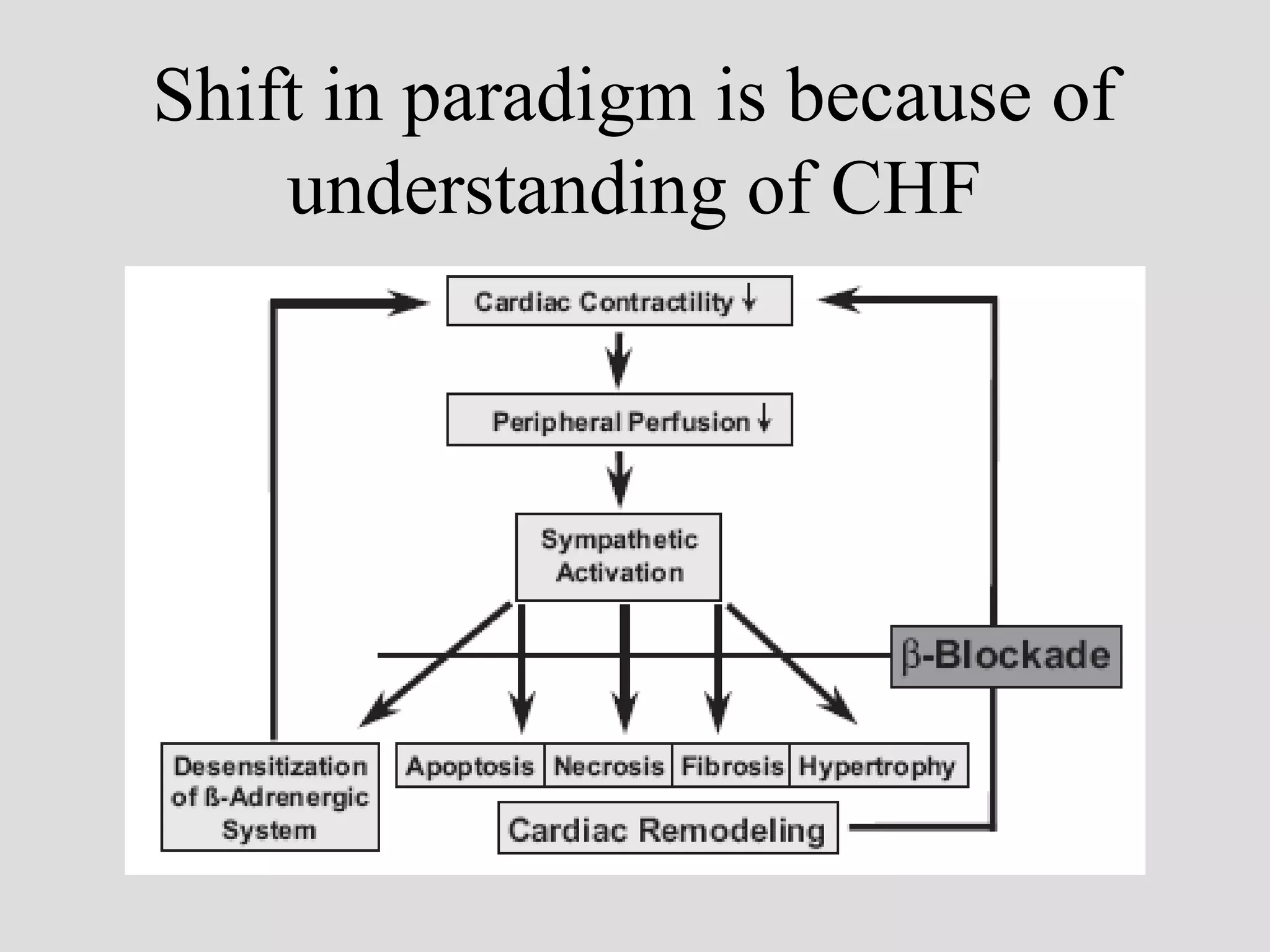
Shift in paradigm is because of
understanding of CHF
Purely hemodynamic disease
Activation of the deleterious
neurohormonal systems and possibly
inflammatory processes are responsible
Definitions
I. Heart Failure with Reduced Ejection Fraction
(HFrEF) - EF ≤ 40%
II. Heart Failure with Preserved Ejection Fraction
(HFpEF) - EF ≥50%
a. HFpEF, Borderline – EF 41% to 49%
b. HFpEF, Improved – EF >40%
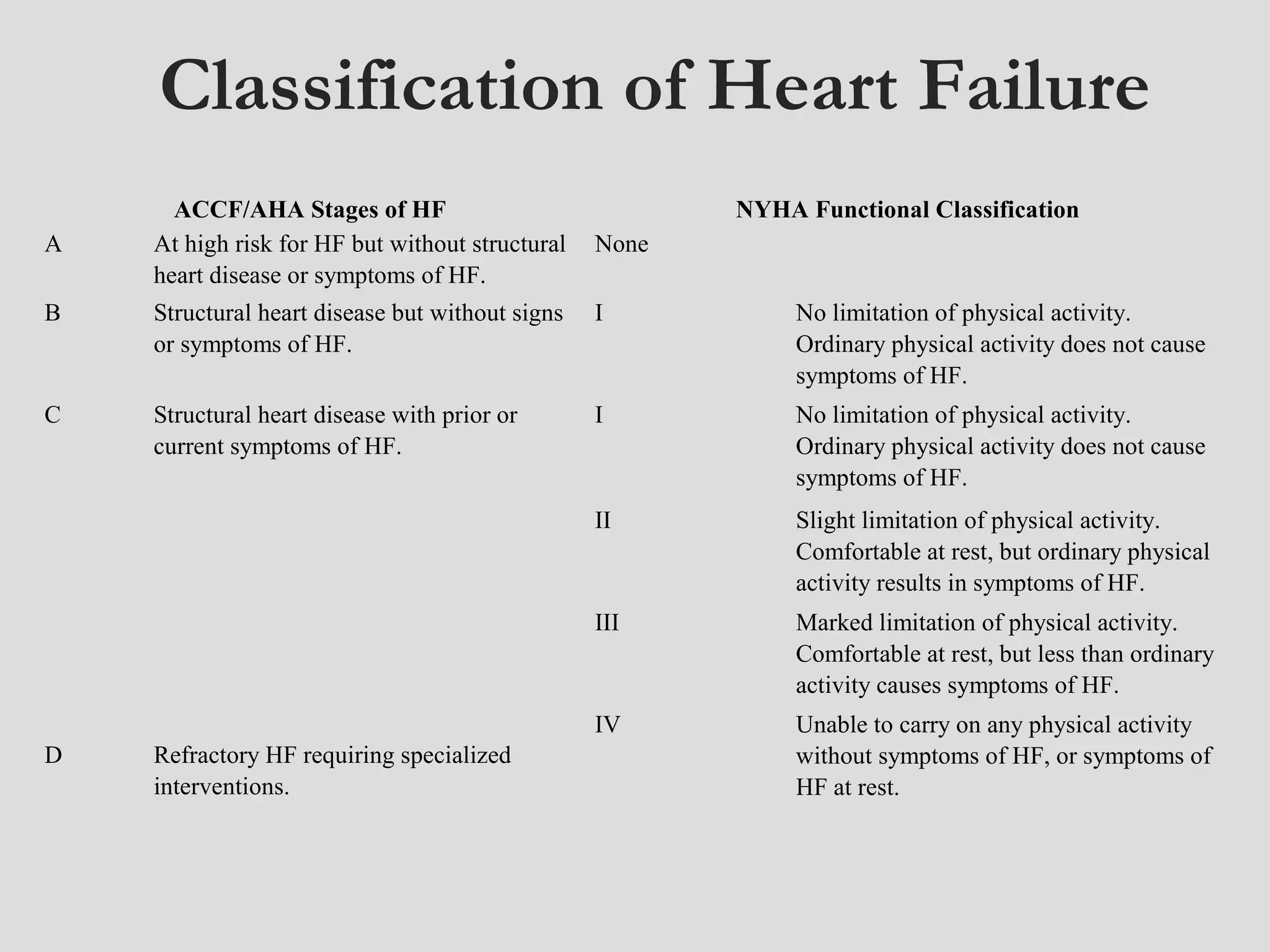
Classification of Heart Failure
ACCF/AHA Stages of HF NYHA Functional Classification
A At high risk for HF but without structural
heart disease or symptoms of HF.
None
B Structural heart disease but without signs
or symptoms of HF.
I No limitation of physical activity.
Ordinary physical activity does not cause
symptoms of HF.
C Structural heart disease with prior or
current symptoms of HF.
I No limitation of physical activity.
Ordinary physical activity does not cause
symptoms of HF.
II Slight limitation of physical activity.
Comfortable at rest, but ordinary physical
activity results in symptoms of HF.
III Marked limitation of physical activity.
Comfortable at rest, but less than ordinary
activity causes symptoms of HF.
IV Unable to carry on any physical activity
without symptoms of HF, or symptoms of
HF at rest.
D Refractory HF requiring specialized
interventions.
STAGE B HF (HFrEF) :
Recommendations
In all patients with a recent or remote history of MI or
ACS and reduced EF, evidence-based beta blockers
should be used to reduce mortality
I IIa IIb III
I IIa IIb III
Beta blockers should be used in all patients with a
reduced EF to prevent symptomatic HF, even if they do
not have a history of MI.
• Data with beta blockers are less convincing in
a population with known CAD, although in 1
trial carvedilol therapy in patients with stage
B and low LVEF was associated with a 31%
relative risk reduction in adverse long-term
outcomes.
Dargie HJ. Effect of carvedilol on outcome after myocardial infarction
in patients with left-ventricular dysfunction: the CAPRICORN
randomised trial. Lancet. 2001;357:1385–90.
Use of 1 of the 3 beta blockers proven to reduce
mortality (i.e., bisoprolol, carvedilol, and
sustained-release metoprolol succinate)
is recommended for all patients with current or
prior symptoms of HFrEF, unless contraindicated,
to reduce morbidity and mortality.
STAGE C HF (HFrEF) :
Recommendations
I IIaIIb III
Effect of metoprolol CR/XL in chronic heart failure: Metoprolol CR/XL
Randomised Intervention Trial in Congestive Heart Failure (MERIT-HF).
Lancet. 1999;353:2001–7.
STAGE C HF (HFpEF) :
Recommendations
The use of beta-blocking agents, ACE inhibitors,
and ARBs in patients with hypertension is
reasonable to control blood pressure in patients
with HFpEF
I IIa IIb III
Maintenance of GDMT During
Hospitalization
• Initiation of beta-blocker therapy is
recommended after optimization of
volume status and successful
discontinuation of intravenous diuretics,
vasodilators, and inotropic agents.
• Beta-blocker therapy should be initiated at
a low dose and only in stable patients.
• Caution should be used when initiating
beta blockers in patients who have
required inotropes during their hospital
course.
I IIa IIb III
Is Withdrawal of β-blockers necessary
During HF Hospitalization ?
• Continuation of beta blockers for most patients is
well tolerated and results in better outcomes
• Withholding of, or reduction in, β-blocker therapy
considered only in pts hospitalized after recent
initiation or increase in β-blocker therapy or with
marked volume overload or marginal/low cardiac
output
Metra M, Torp-Pedersen C, Cleland JG, et al. Should beta-blocker therapy be reduced or
withdrawn after an episode of decompensated heart failure?
Results from COMET. Eur J Heart Fail. 2007;9:901–9
β-Blockers in acute HF
• Ionotropic agents – Last chance drugs
• Abrupt stoppage of β-blockers  paradoxical
activation of the SNS , enhanced sensitivity to β-
agonists
• More severe the patient is, the more benefit from
β-blocker therapy & more risk in stopping chronic
β-blocker therapy
• Hospitalization for acute HF: in-hospital
mortality, short-term mortality, and combined
mortality and hospitalization are lower when β-
blockers are maintainedPrins et al .Effects of beta-blocker withdrawal in
acute decompensated heart failure:
a systematic review and meta-analysis.JACC 2015
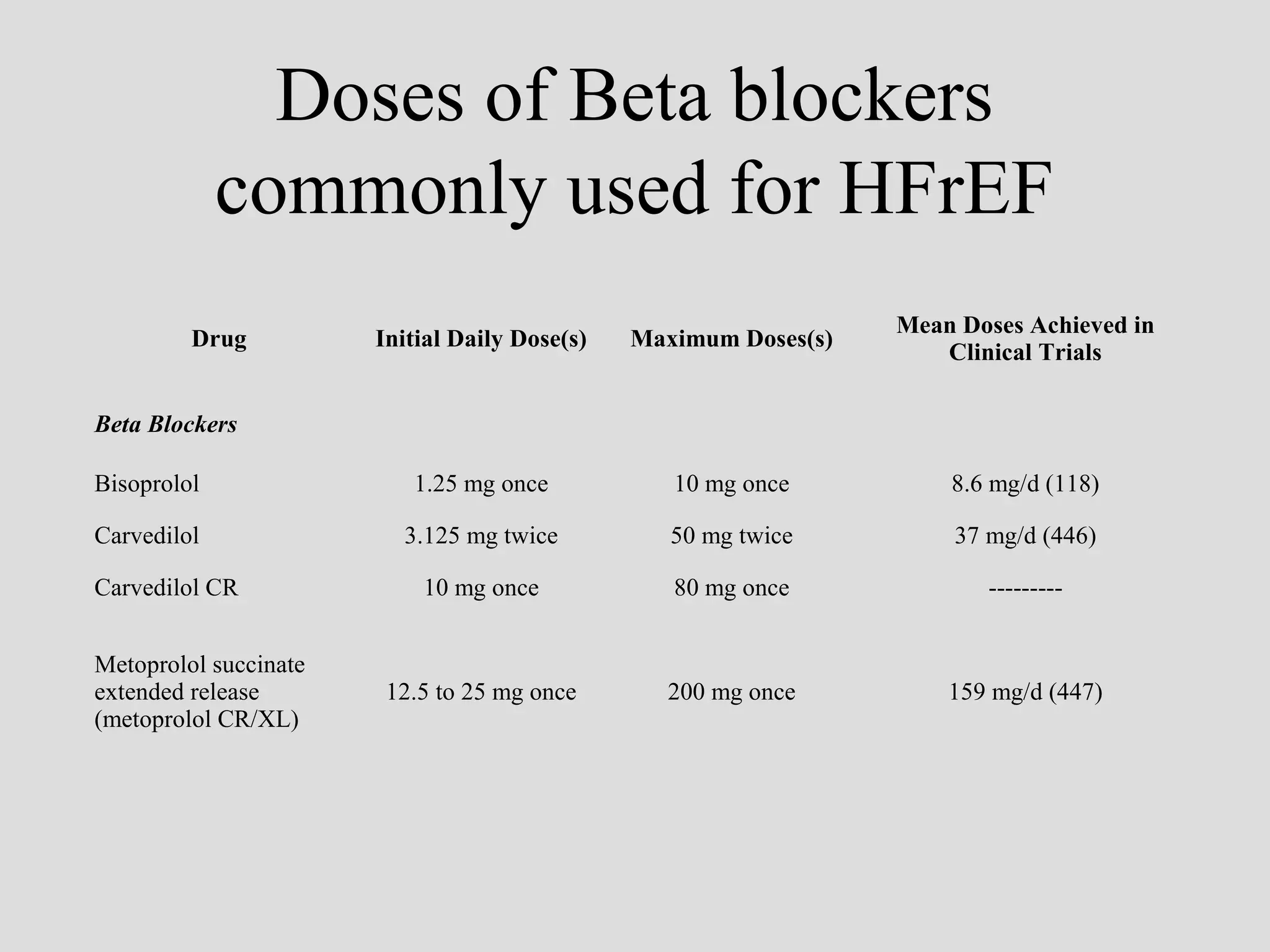
Doses of Beta blockers
commonly used for HFrEF
Drug Initial Daily Dose(s) Maximum Doses(s)
Mean Doses Achieved in
Clinical Trials
Beta Blockers
Bisoprolol 1.25 mg once 10 mg once 8.6 mg/d (118)
Carvedilol 3.125 mg twice 50 mg twice 37 mg/d (446)
Carvedilol CR 10 mg once 80 mg once ---------
Metoprolol succinate
extended release
(metoprolol CR/XL)
12.5 to 25 mg once 200 mg once 159 mg/d (447)
• Current data do not support a difference between
selective and nonselective β-blockers.
• Of note, the lipophilic β-blockers may be more
beneficial than hydrophilic β-blockers in reducing the
risk of sudden death.
Nebivolol
• Beta-1 selective blocker nebivolol demonstrated
a modest reduction in the primary endpoint of
all-cause mortality or cardiovascular
hospitalization
• But did not affect mortality alone in an elderly
population that included patients with HFpEF
• 1.25 mg o.d. to target dose 10 mg o.d.
SENIORS (Study of Effects of Nebivolol Intervention on Outcomes and
Rehospitalization in Seniors With Heart Failure).
J Am Coll Cardiol. 2009;53:2150–8.
Benefits of beta blockers
Long-term treatment with beta blockers can
•Lessen the symptoms of HF
•Improve pt’s clinical status and
•Enhance pt’s overall sense of well-being
•Reduce the risk of death and the combined
risk of death or hospitalization
Benefits irrespective of CAD,DM,Sex and race
MDC trial, CIBIS study, PRECISE trial, MERIT-HF
Beta blockers for Stage C HFrEF: Magnitude
of Benefit Demonstrated in RCTs
GDMT
RR Reduction
in Mortality
NNT for Mortality
Reduction
(Standardized to 36 mo)
RR Reduction
in HF
Hospitalizations
ACE inhibitor or
ARB
17% 26 31%
Beta blocker 34% 9 41%
Aldosterone
antagonist
30% 6 35%
Hydralazine/nitrate 43% 7 33%
Greater improvement of symptoms and
clinical status (NYHA class and overall well-
being) in pts with moderate to severe
symptoms than in those with mild symptoms
Beta Blockers: Initiation and
Maintenance
• Initiated at very low doses
• Gradual increments in dose if lower doses have been well
tolerated
• Vital signs and symptoms – monitored closely
• 85% of pts able to tolerate and achieve max planned trial
dose with this approach
• Can be safely started before discharge even in patients
hospitalized for HF
• Long-term treatment should be maintained, even if
symptoms do not improve
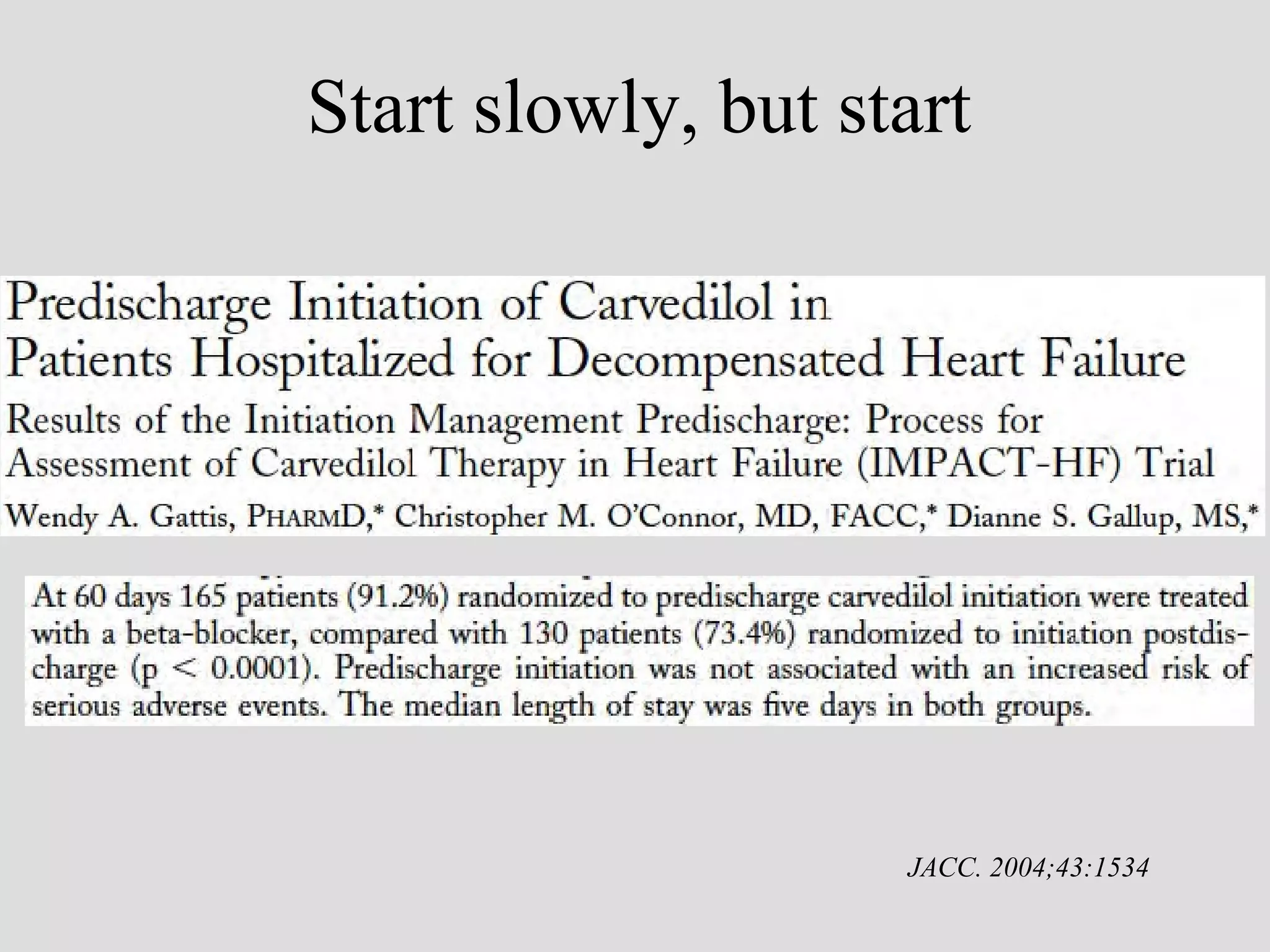
Start slowly, but start
JACC. 2004;43:1534
Caution
• In pts with a current or recent history of fluid
retention, beta blockers should not be prescribed
without diuretics
• Beta blockers may be considered in patients who
have reactive airway disease or asymptomatic
bradycardia but should be used cautiously in
patients with persistent symptoms of either
condition
• Abrupt withdrawal of treatment with a beta
blocker can lead to clinical deterioration and
should be avoided
Risks of beta blockers
1) Fluid retention and worsening HF
2) Bradycardia or heart block
3) Hypotension
4) Fatigue
AF and HF
• For pts who develop HF as a result of AF, a
rhythm control strategy should be pursued
• In pts with HF who develop AF, a rhythm-
control strategy has not been shown to be
superior to a rate-control strategy
• β-blockers are the preferred agents for
achieving rate control
Roy D, Talajic M, Nattel S, et al. Rhythm control versus rate control for atrial
fibrillation and heart failure. N Engl J Med. 2008;358:2667–77
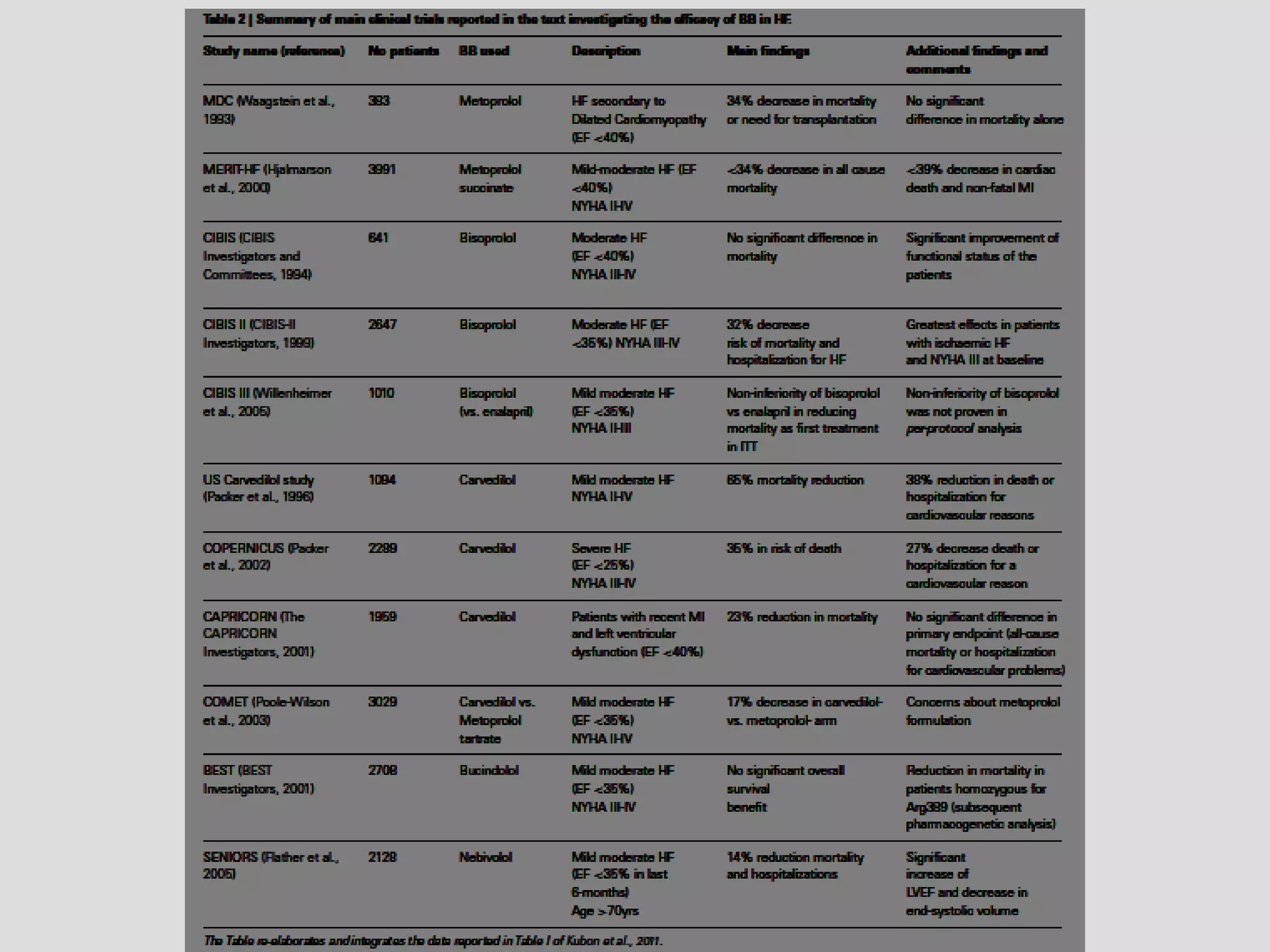
Major clinical trials of therapeutic interventions in
pts with HFrEF
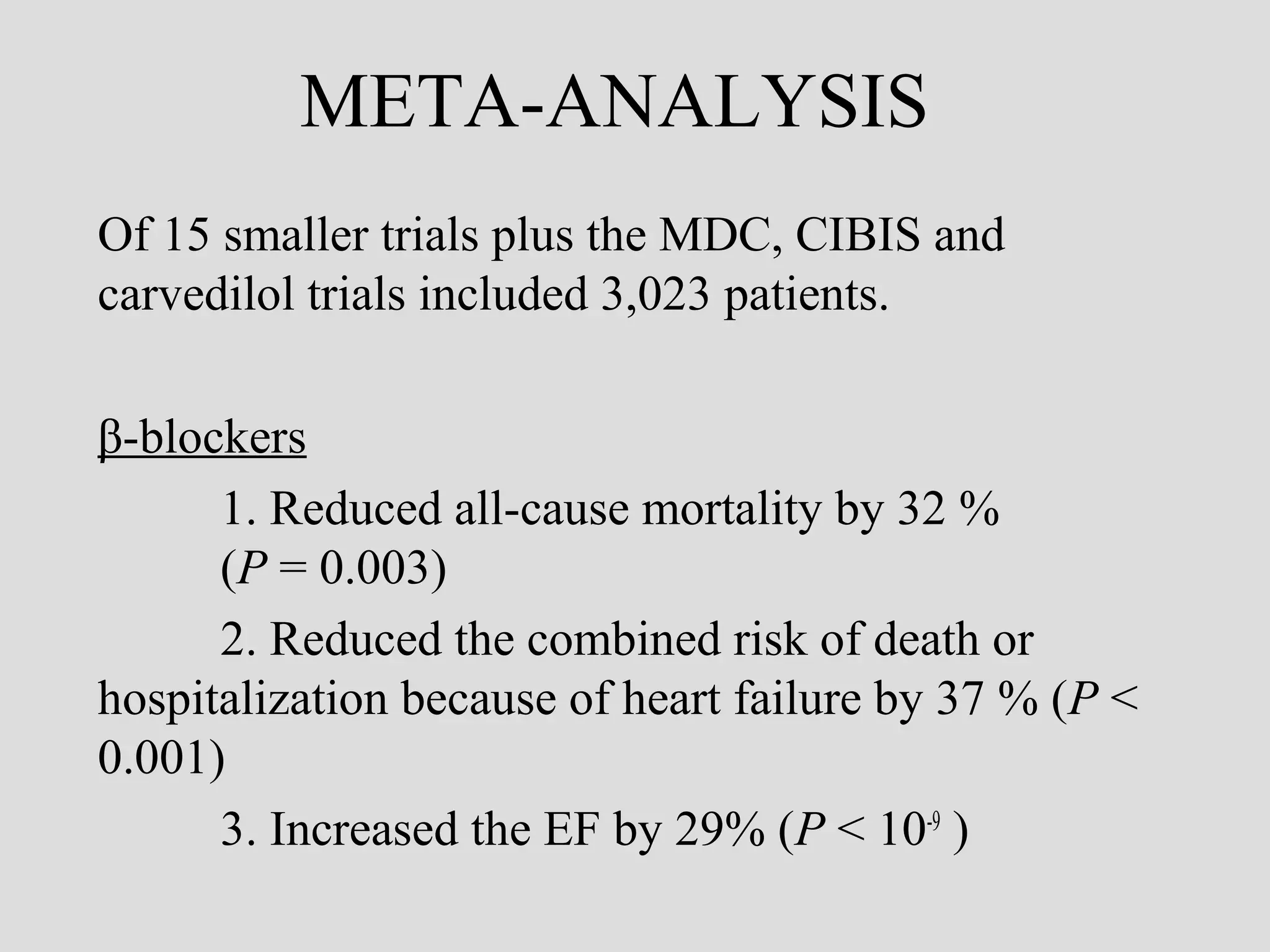
META-ANALYSIS
Of 15 smaller trials plus the MDC, CIBIS and
carvedilol trials included 3,023 patients.
β-blockers
1. Reduced all-cause mortality by 32 %
(P = 0.003)
2. Reduced the combined risk of death or
hospitalization because of heart failure by 37 % (P <
0.001)
3. Increased the EF by 29% (P < 10-9
)
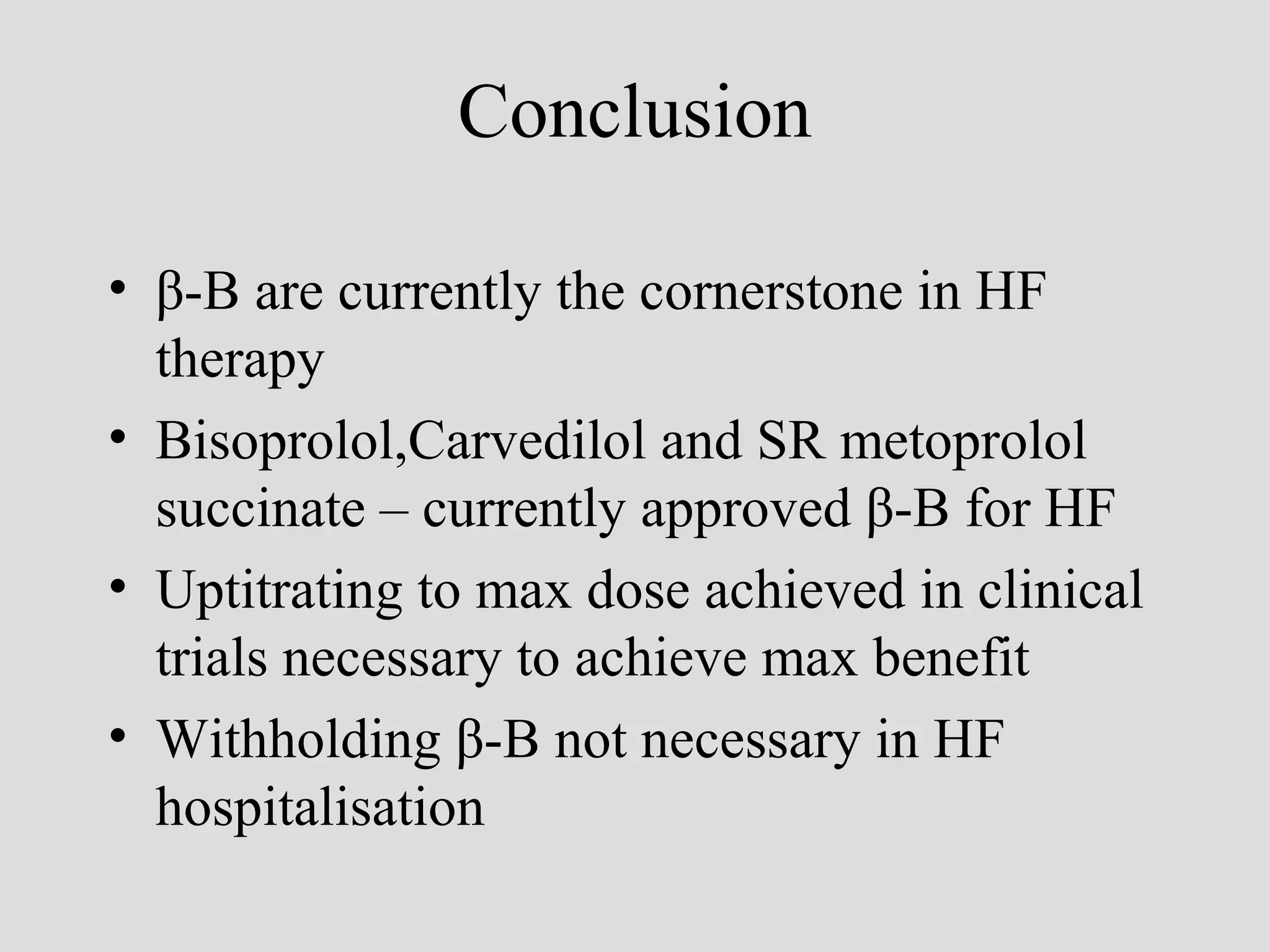
Conclusion
• β-B are currently the cornerstone in HF
therapy
• Bisoprolol,Carvedilol and SR metoprolol
succinate – currently approved β-B for HF
• Uptitrating to max dose achieved in clinical
trials necessary to achieve max benefit
• Withholding β-B not necessary in HF
hospitalisation

Beta blockers for heart failure

  • 1.
    Beta blockers forheart failure Dr. Mahendra Cardiology ,JIPMER
  • 2.
    Most hazardous drug Mosteffective therapy 1. Waagstein et al 1975 : Effect of chronic beta- adrenergic receptor blockade in congestive cardiomyopathy 2. Waagstein et al 1989 : Long-term beta-blockade in DCM.Effects of short- and long-term metoprolol followed by withdrawal and readministration of metoprolol. 3. CIBIS 1994 4. U.S. Carvedilol Heart Failure Study Group. 1996 N Engl J Med 5. CIBIS II. 1999 Lancet 6. MERIT-HF 2000 Β-Blocker status in chronic heart failure
  • 3.
    Shift in paradigmis because of understanding of CHF Purely hemodynamic disease Activation of the deleterious neurohormonal systems and possibly inflammatory processes are responsible
  • 4.
    Definitions I. Heart Failurewith Reduced Ejection Fraction (HFrEF) - EF ≤ 40% II. Heart Failure with Preserved Ejection Fraction (HFpEF) - EF ≥50% a. HFpEF, Borderline – EF 41% to 49% b. HFpEF, Improved – EF >40%
  • 5.
    Classification of HeartFailure ACCF/AHA Stages of HF NYHA Functional Classification A At high risk for HF but without structural heart disease or symptoms of HF. None B Structural heart disease but without signs or symptoms of HF. I No limitation of physical activity. Ordinary physical activity does not cause symptoms of HF. C Structural heart disease with prior or current symptoms of HF. I No limitation of physical activity. Ordinary physical activity does not cause symptoms of HF. II Slight limitation of physical activity. Comfortable at rest, but ordinary physical activity results in symptoms of HF. III Marked limitation of physical activity. Comfortable at rest, but less than ordinary activity causes symptoms of HF. IV Unable to carry on any physical activity without symptoms of HF, or symptoms of HF at rest. D Refractory HF requiring specialized interventions.
  • 6.
    STAGE B HF(HFrEF) : Recommendations In all patients with a recent or remote history of MI or ACS and reduced EF, evidence-based beta blockers should be used to reduce mortality I IIa IIb III I IIa IIb III Beta blockers should be used in all patients with a reduced EF to prevent symptomatic HF, even if they do not have a history of MI.
  • 7.
    • Data withbeta blockers are less convincing in a population with known CAD, although in 1 trial carvedilol therapy in patients with stage B and low LVEF was associated with a 31% relative risk reduction in adverse long-term outcomes. Dargie HJ. Effect of carvedilol on outcome after myocardial infarction in patients with left-ventricular dysfunction: the CAPRICORN randomised trial. Lancet. 2001;357:1385–90.
  • 8.
    Use of 1of the 3 beta blockers proven to reduce mortality (i.e., bisoprolol, carvedilol, and sustained-release metoprolol succinate) is recommended for all patients with current or prior symptoms of HFrEF, unless contraindicated, to reduce morbidity and mortality. STAGE C HF (HFrEF) : Recommendations I IIaIIb III Effect of metoprolol CR/XL in chronic heart failure: Metoprolol CR/XL Randomised Intervention Trial in Congestive Heart Failure (MERIT-HF). Lancet. 1999;353:2001–7.
  • 9.
    STAGE C HF(HFpEF) : Recommendations The use of beta-blocking agents, ACE inhibitors, and ARBs in patients with hypertension is reasonable to control blood pressure in patients with HFpEF I IIa IIb III
  • 10.
    Maintenance of GDMTDuring Hospitalization • Initiation of beta-blocker therapy is recommended after optimization of volume status and successful discontinuation of intravenous diuretics, vasodilators, and inotropic agents. • Beta-blocker therapy should be initiated at a low dose and only in stable patients. • Caution should be used when initiating beta blockers in patients who have required inotropes during their hospital course. I IIa IIb III
  • 11.
    Is Withdrawal ofβ-blockers necessary During HF Hospitalization ? • Continuation of beta blockers for most patients is well tolerated and results in better outcomes • Withholding of, or reduction in, β-blocker therapy considered only in pts hospitalized after recent initiation or increase in β-blocker therapy or with marked volume overload or marginal/low cardiac output Metra M, Torp-Pedersen C, Cleland JG, et al. Should beta-blocker therapy be reduced or withdrawn after an episode of decompensated heart failure? Results from COMET. Eur J Heart Fail. 2007;9:901–9
  • 12.
    β-Blockers in acuteHF • Ionotropic agents – Last chance drugs • Abrupt stoppage of β-blockers  paradoxical activation of the SNS , enhanced sensitivity to β- agonists • More severe the patient is, the more benefit from β-blocker therapy & more risk in stopping chronic β-blocker therapy • Hospitalization for acute HF: in-hospital mortality, short-term mortality, and combined mortality and hospitalization are lower when β- blockers are maintainedPrins et al .Effects of beta-blocker withdrawal in acute decompensated heart failure: a systematic review and meta-analysis.JACC 2015
  • 13.
    Doses of Betablockers commonly used for HFrEF Drug Initial Daily Dose(s) Maximum Doses(s) Mean Doses Achieved in Clinical Trials Beta Blockers Bisoprolol 1.25 mg once 10 mg once 8.6 mg/d (118) Carvedilol 3.125 mg twice 50 mg twice 37 mg/d (446) Carvedilol CR 10 mg once 80 mg once --------- Metoprolol succinate extended release (metoprolol CR/XL) 12.5 to 25 mg once 200 mg once 159 mg/d (447)
  • 14.
    • Current datado not support a difference between selective and nonselective β-blockers. • Of note, the lipophilic β-blockers may be more beneficial than hydrophilic β-blockers in reducing the risk of sudden death.
  • 16.
    Nebivolol • Beta-1 selectiveblocker nebivolol demonstrated a modest reduction in the primary endpoint of all-cause mortality or cardiovascular hospitalization • But did not affect mortality alone in an elderly population that included patients with HFpEF • 1.25 mg o.d. to target dose 10 mg o.d. SENIORS (Study of Effects of Nebivolol Intervention on Outcomes and Rehospitalization in Seniors With Heart Failure). J Am Coll Cardiol. 2009;53:2150–8.
  • 17.
    Benefits of betablockers Long-term treatment with beta blockers can •Lessen the symptoms of HF •Improve pt’s clinical status and •Enhance pt’s overall sense of well-being •Reduce the risk of death and the combined risk of death or hospitalization Benefits irrespective of CAD,DM,Sex and race MDC trial, CIBIS study, PRECISE trial, MERIT-HF
  • 18.
    Beta blockers forStage C HFrEF: Magnitude of Benefit Demonstrated in RCTs GDMT RR Reduction in Mortality NNT for Mortality Reduction (Standardized to 36 mo) RR Reduction in HF Hospitalizations ACE inhibitor or ARB 17% 26 31% Beta blocker 34% 9 41% Aldosterone antagonist 30% 6 35% Hydralazine/nitrate 43% 7 33%
  • 20.
    Greater improvement ofsymptoms and clinical status (NYHA class and overall well- being) in pts with moderate to severe symptoms than in those with mild symptoms
  • 21.
    Beta Blockers: Initiationand Maintenance • Initiated at very low doses • Gradual increments in dose if lower doses have been well tolerated • Vital signs and symptoms – monitored closely • 85% of pts able to tolerate and achieve max planned trial dose with this approach • Can be safely started before discharge even in patients hospitalized for HF • Long-term treatment should be maintained, even if symptoms do not improve
  • 22.
    Start slowly, butstart JACC. 2004;43:1534
  • 23.
    Caution • In ptswith a current or recent history of fluid retention, beta blockers should not be prescribed without diuretics • Beta blockers may be considered in patients who have reactive airway disease or asymptomatic bradycardia but should be used cautiously in patients with persistent symptoms of either condition • Abrupt withdrawal of treatment with a beta blocker can lead to clinical deterioration and should be avoided
  • 24.
    Risks of betablockers 1) Fluid retention and worsening HF 2) Bradycardia or heart block 3) Hypotension 4) Fatigue
  • 25.
    AF and HF •For pts who develop HF as a result of AF, a rhythm control strategy should be pursued • In pts with HF who develop AF, a rhythm- control strategy has not been shown to be superior to a rate-control strategy • β-blockers are the preferred agents for achieving rate control Roy D, Talajic M, Nattel S, et al. Rhythm control versus rate control for atrial fibrillation and heart failure. N Engl J Med. 2008;358:2667–77
  • 26.
    Major clinical trialsof therapeutic interventions in pts with HFrEF
  • 28.
    META-ANALYSIS Of 15 smallertrials plus the MDC, CIBIS and carvedilol trials included 3,023 patients. β-blockers 1. Reduced all-cause mortality by 32 % (P = 0.003) 2. Reduced the combined risk of death or hospitalization because of heart failure by 37 % (P < 0.001) 3. Increased the EF by 29% (P < 10-9 )
  • 30.
    Conclusion • β-B arecurrently the cornerstone in HF therapy • Bisoprolol,Carvedilol and SR metoprolol succinate – currently approved β-B for HF • Uptitrating to max dose achieved in clinical trials necessary to achieve max benefit • Withholding β-B not necessary in HF hospitalisation