Pulmonary Hypertension: Approach
to Diagnosis and management
Bhola Nath Gautam
Senior Resident
Dept. of Cardiology
JLN Medical College Ajmer
Approach to Diagnosis
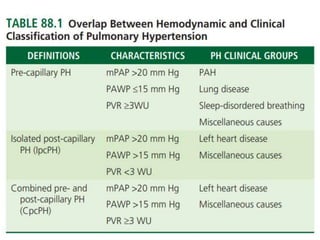
• Pulmonary hypertension is defined by a mean pulmonary arterial
pressure (mPAP) >20 mmHg at rest.
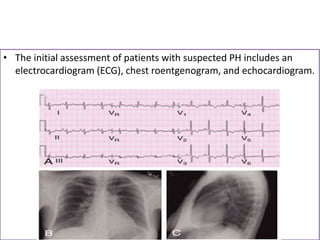
• The initial assessment of patients with suspected PH includes an
electrocardiogram (ECG), chest roentgenogram, and echocardiogram.
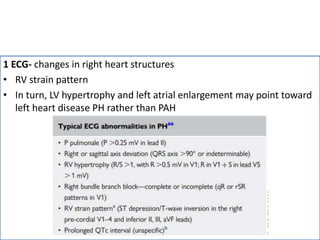
1 ECG- changes in right heart structures
• RV strain pattern
• In turn, LV hypertrophy and left atrial enlargement may point toward
left heart disease PH rather than PAH
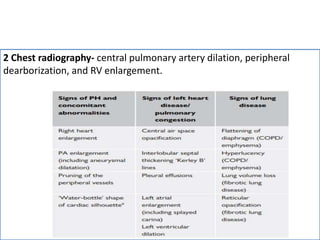
2 Chest radiography- central pulmonary artery dilation, peripheral
dearborization, and RV enlargement.
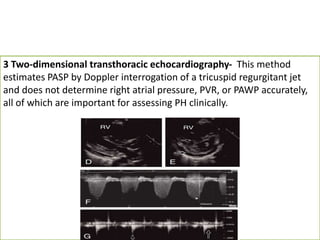
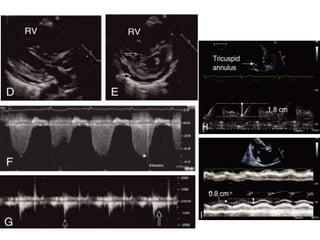
3 Two-dimensional transthoracic echocardiography- This method
estimates PASP by Doppler interrogation of a tricuspid regurgitant jet
and does not determine right atrial pressure, PVR, or PAWP accurately,
all of which are important for assessing PH clinically.
• In one-third of patients with proven PH, a sufficient tricuspid jet is
lacking and PASP is unmeasurable. Thus, echocardiography alone is
insufficient for diagnosing, classifying, and fully prognosticating
patients
• Decreased pulmonary vascular distensibility results in the formation
of a “notch” in the RV outflow tract Doppler envelope as well as
decreased pulmonary artery acceleration time. When these are
observed in the setting of a normal left atrial dimension, increased
PVR greater than 3.0 WU may be present.
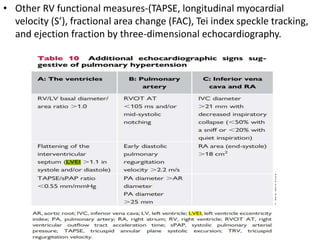
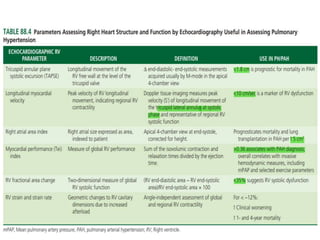
• Other RV functional measures-(TAPSE, longitudinal myocardial
velocity (S’), fractional area change (FAC), Tei index speckle tracking,
and ejection fraction by three-dimensional echocardiography.
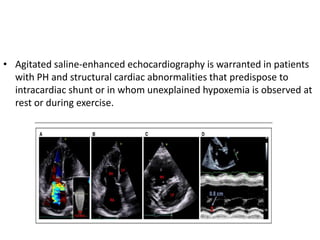
• Agitated saline-enhanced echocardiography is warranted in patients
with PH and structural cardiac abnormalities that predispose to
intracardiac shunt or in whom unexplained hypoxemia is observed at
rest or during exercise.
4 Pulmonary function tests and sleep study- Generally, pulmonary
function test with spirometry and lung diffusion capacity of carbon
monoxide (DLCO) is recommended in all patients suspected of PH.
• Patients with PAH may demonstrate modestly reduced lung volumes
in the absence of marked obstructive, restrictive, or combined
ventilatory defects that are more characteristic of parenchymal lung
disease.
5 Computed tomographic chest imaging and nuclear
ventilation/perfusion (V/Q) scintigraphy- Mismatched perfusion
defects on ventilation-perfusion (V/Q) scintigraphy is highly suggestive
of CTEPH.
• The CT signs suggesting the presence of PH include an enlarged PA
diameter, a PA-to-aorta ratio >0.9, and enlarged right heart
chambers.
• A combination of three parameters (PA diameter ≥30 mm, RVOT wall
thickness ≥6 mm, and septal deviation ≥140° [or RV:LV ratio ≥1]) is
highly predictive of PH.
6 Cardiac magnetic resonance (CMR) imaging- In PAH, the RV ejection
fraction at baseline and in response to treatment prognosticates
mortality, particularly when less than 35%.
• inverse association between RV ejection fraction and clinical outcome
in patients with PH from left heart disease.
• Increased RV end-systolic and end-diastolic volumes are phenotypic
patterns that correspond to uncoupled RV-PA pathophysiology but
require CMR
7 Exercise testing- Performance on 6-MWD correlates with workload,
heart rate, oxygen saturation, and dyspnea response (i.e., symptom
burden), but is dependent on gait speed, age, weight, and muscle mass
among other anthropometric variables.
8 Cardiac catheterization- RHC indications include shock, guidance for
pericardial disease, assessing constrictive versus restrictive
cardiomyopathy, and quantifying shunt.
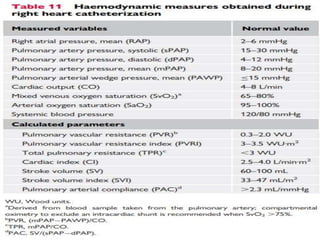
• A complete study includes the following three parts: oxyhemoglobin
saturation (SaO2 ) analysis in different vascular compartments,
intravascular and intracardiac pressure measurement, CO
assessment, and PAWP measurement.
• In the absence of congenital pulmonic stenosis, a meaningful
transpulmonary valvular gradient is not expected at rest.
• A RV end-diastolic pressure less than 10 mm Hg generally implies
preserved RV function.
• The PAWP is a measure of LVEDP in the absence of mitral valve
disease or pulmonary venous remodeling.
• It is essential to record the PAWP at end-expiration because wide
undulation of the thorax (particularly in COPD) .
• diastolic transpulmonary gradient (calculated as the diastolic PAP −
PAWP) ≥ 7 mm Hg and or PVR ≥3 WU with PAWP or LVEDP ≥15 mm
Hg suggests a contribution of left heart disease to PH.
• A known thrombus or tumour in the RV or RA, recently implanted (<1
month) pacemaker, mechanical right heart valve, and an acute
infection are contraindications to RHC;.
• In the supine position, the mid-thoracic level is recommended as the
zero reference level, which is at the level of the LA in most patients
• Pulmonary vascular resistance ([mPAP−PAWP]/CO) should be
calculated for each patient.
• All pressure measurements, including PAWP, should be performed at
end expiration (without breath-holding manoeuvre).
• In patients with large intrathoracic pressure changes during the
respiratory cycle (i.e. COPD, obesity, during exercise), it is appropriate
to average over at least three to four respiratory cycles.
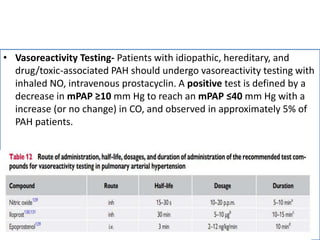
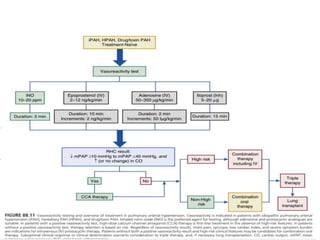
• Vasoreactivity Testing- Patients with idiopathic, hereditary, and
drug/toxic-associated PAH should undergo vasoreactivity testing with
inhaled NO, intravenous prostacyclin. A positive test is defined by a
decrease in mPAP ≥10 mm Hg to reach an mPAP ≤40 mm Hg with a
increase (or no change) in CO, and observed in approximately 5% of
PAH patients.
• Fluid Challenge- It is generally accepted that rapid infusion (over 5–
10 min) of 500 mL (7–10 mL/kg) of saline would be sufficient to
detect an abnormal increase in PAWP to ≥18 mmHg (suggestive of
HFpEF.
• A rise in PAWP to greater than 18 mm Hg is suggestive of pulmonary
PH-left heart disease,
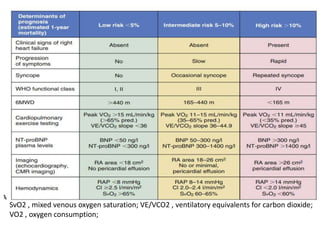
Risk Stratification
• The goal of therapy is to achieve the lowest risk level possible, which
generally means:
• 6-MWD greater than 440 m or pVO2 greater than 15 mL/min/kg,
right atrial area < 18 cm2 , cardiac index > 2.5 L/min/m2 , and absent
or low symptom burden with routine physical activity.
SvO2 , mixed venous oxygen saturation; VE/VCO2 , ventilatory equivalents for carbon dioxide;
VO2 , oxygen consumption;
INTEGRATED APPROACH TO DIAGNOSING PULMONARY
HYPERTENSION
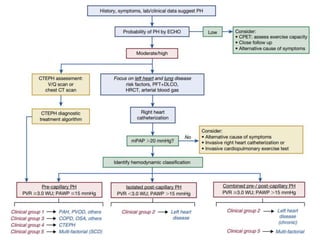
• Patients with suspected PH based on symptoms should be evaluated
further with ECG, chest roentgenography, and echocardiography.
• Patients with otherwise unexplained dyspnea that do not meet a
hemodynamic classification of PH may benefit from exercise RHC or
iCPET to unmask HFpEF or other etiologies as a cause of symptoms.
• In such patients, increased left atrial size greater than 4.4 cm, obesity,
atrial fibrillation, age greater than 60 years, treatment with ≥2 anti-
hypertensive drugs, echocardiographic E/e′ ratio, or estimated PASP
greater than 35 mm Hg may be sufficient to avoid invasive testing, as
the presence of these features point toward HFpEF.
• In patients suspected of idiopathic, hereditary, or drug/toxin PAH, a
positive hemodynamic response to testing with iNO is diagnostic for
vasoreactive PAH (although a negative response does not exclude
PAH).
• Compared to non-vasoreactive PAH patients, this subgroup is
associated with a favorable prognosis including disease resolution in
some patients when managed appropriately
Chronic Thromboembolic Pulmonary
Hypertension
• A diagnosis of CTEPH must be suspected in any patient with prior PE
and otherwise unexplained dyspnea or PH.
• In this subgroup, chronic thromboembolic disease (CTED), ventilatory
defects such as increased dead space ventilation and (near) normal
cardiopulmonary hemodynamics are reported.
TREATMENT
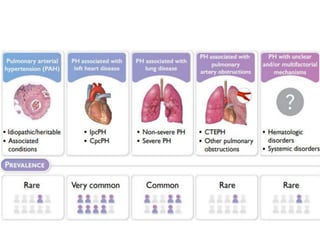
Pulmonary arterial hypertension (group 1)
• Supportive care with loop diuretics and supplemental oxygen
attenuates pulmonary vascular congestion and hypoxic pulmonary
vasoconstriction, which otherwise aggravate symptoms and worsen
RV function.
• Digoxin may increase CO by as much as 10% in patients with RV
failure due to PH, and attenuates the adverse effect of increased
circulating norepinephrine on pulmonary vascular function.
• In one meta-analysis of 469 PAH patients, exercise improved 6-MWD
by +53.3 m, pVO2 by +1.8 mL/kg, and PASP by −3.7 mm Hg at week
15.Inspiratory muscle training, too, is associated with an
improvement in PAH endpoints.
• Vaccination, it is recommended that patients with PAH be vaccinated
at least against influenza, Streptococcus pneumoniae, and SARS-CoV-
2.
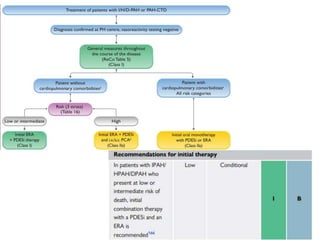
• In patients without a positive vasoreactivity test, therapy selection is
guided by clinical status:
• 1 New York Heart Association Functional Class (NYHA FC) IV,
• 2 cardiogenic shock by clinical or hemodynamic criteria (e.g., signs of
impaired distal perfusion, cardiac index <2.1 l/min/ m2 ),
• 3 syncope, or chest pain (indicative of either RV ischemia or LMCA
compression) are indications for continuous parenteral prostacyclin
therapy.
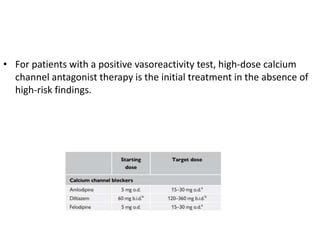
• For patients with a positive vasoreactivity test, high-dose calcium
channel antagonist therapy is the initial treatment in the absence of
high-risk findings.
PROGNOSIS OF PATIENTS WITH PH
• Pulmonary arterial hypertension registries report survival
rates of between 68% and 93% at 1 year and 39% and 77% at
3 years.
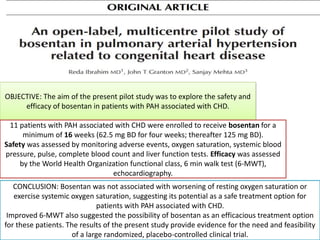
OBJECTIVE: The aim of the present pilot study was to explore the safety and
efficacy of bosentan in patients with PAH associated with CHD.
CONCLUSION: Bosentan was not associated with worsening of resting oxygen saturation or
exercise systemic oxygen saturation, suggesting its potential as a safe treatment option for
patients with PAH associated with CHD.
Improved 6-MWT also suggested the possibility of bosentan as an efficacious treatment option
for these patients. The results of the present study provide evidence for the need and feasibility
of a large randomized, placebo-controlled clinical trial.
11 patients with PAH associated with CHD were enrolled to receive bosentan for a
minimum of 16 weeks (62.5 mg BD for four weeks; thereafter 125 mg BD).
Safety was assessed by monitoring adverse events, oxygen saturation, systemic blood
pressure, pulse, complete blood count and liver function tests. Efficacy was assessed
by the World Health Organization functional class, 6 min walk test (6-MWT),
echocardiography.
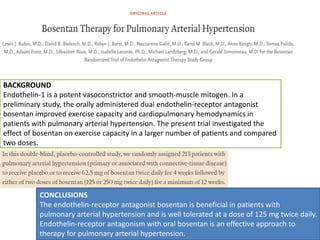
BACKGROUND
Endothelin-1 is a potent vasoconstrictor and smooth-muscle mitogen. In a
preliminary study, the orally administered dual endothelin-receptor antagonist
bosentan improved exercise capacity and cardiopulmonary hemodynamics in
patients with pulmonary arterial hypertension. The present trial investigated the
effect of bosentan on exercise capacity in a larger number of patients and compared
two doses.
CONCLUSIONS
The endothelin-receptor antagonist bosentan is beneficial in patients with
pulmonary arterial hypertension and is well tolerated at a dose of 125 mg twice daily.
Endothelin-receptor antagonism with oral bosentan is an effective approach to
therapy for pulmonary arterial hypertension.
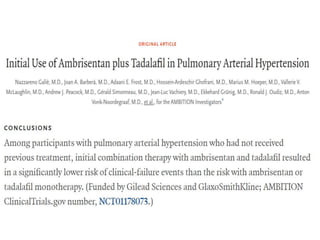
• The Ambrisentan and Tadalafil in Patients with Pulmonary Arterial
Hypertension (AMBITION) trial demonstrated a clear benefit in hard-
clinical events among incident, treatment PAH patients administered
combination ambrisentan (selective endothelin receptor-type A
antagonist) plus tadalafil (PDE-V inhibitor) compared with
monotherapy with either agent.
• At a median of 517 days, an endpoint of death, hospitalization for
PAH, disease progression, or unsatisfactory clinical response occurred
in 18%, 34%, and 28% of patients randomized to combination
therapy, ambrisentan monotherapy, and tadalafil monotherapy,
respectively.
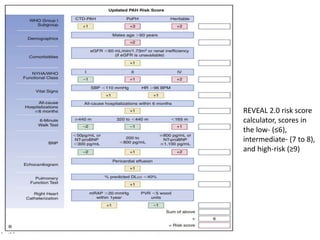
REVEAL 2.0 risk score
calculator, scores in
the low- (≤6),
intermediate- (7 to 8),
and high-risk (≥9)
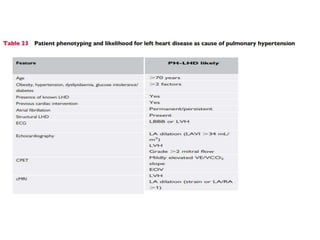
Pulmonary hypertension associated with left heart disease (group 2)
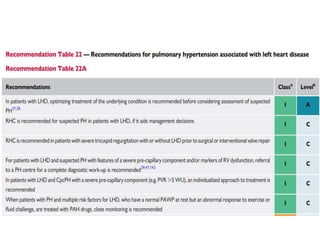
• Defined by an mPAP >20 mmHg and a PAWP >15 mmHg.
• The pathophysiology of PH-LHD combines several mechanisms:
• (1) an initial passive increase in LV filling pressures and backward
transmission into the pulmonary circulation;
• (2) PA endothelial dysfunction (including vasoconstriction);
• (3) vascular remodelling (which may occur in both venules and/or
arterioles);
• (4) RV dilatation/dysfunction and
• (5) altered RV–PA coupling
• asymptomatic mitral valve regurgitation in which PASP greater than
50 mm Hg is a strong indication for valve repair or replacement.
• For management of PH due to conventional HFpEF or HFrEF, diuretic
therapy remains the mainstay treatment.
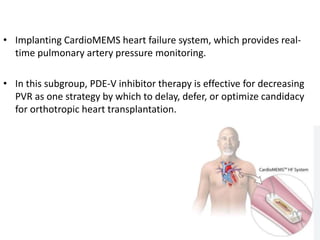
• Implanting CardioMEMS heart failure system, which provides real-
time pulmonary artery pressure monitoring.
• In this subgroup, PDE-V inhibitor therapy is effective for decreasing
PVR as one strategy by which to delay, defer, or optimize candidacy
for orthotropic heart transplantation.
• The 12-month mortality for patients with PH-LHD may be as
high as 32%.
Pulmonary hypertension associated with lung diseases and/ or
hypoxia (group 3
• two recent studies have demonstrated that a PVR >5 WU is a better
threshold for predicting worse prognosis in patients with PH
associated with both COPD and ILD.
• guidelines used PVR to distinguish between non-severe PH (PVR<5
WU) and severe PH (PVR>5 WU).
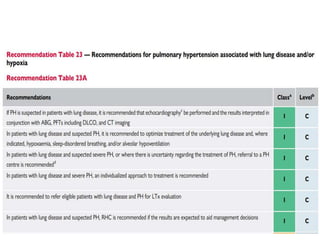
• The therapeutic approach to group 3 PH starts with optimizing the
treatment of the underlying lung disease, including supplementary
oxygen and non-invasive ventilation, where indicated, as well as
enrolment into pulmonary rehabilitation programmes.
• Registry data identified that 30% of patients with COPD and severe
PH, predominantly treated with PDE5is, had improved WHO-FC,
6MWD, and PVR vs. baseline, and those with a treatment response
had improved transplant-free survival.
• A cohort study in patients with PH-CLD reported 1-, 3-, and 5-year
survival rates of 79%, 48%, and 31%, respectively
Chronic thrombo-embolic pulmonary hypertension (group 4)
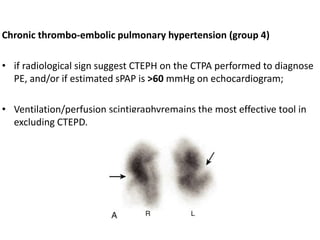
• if radiological sign suggest CTEPH on the CTPA performed to diagnose
PE, and/or if estimated sPAP is >60 mmHg on echocardiogram;
• Ventilation/perfusion scintigraphyremains the most effective tool in
excluding CTEPD.
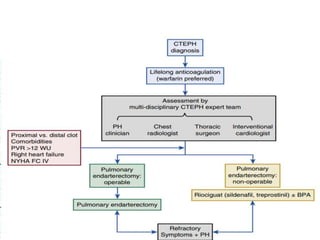
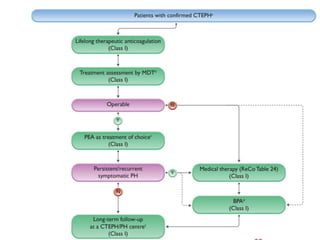
• Lifelong therapeutic anticoagulation, (VKAs are recommended by
experts is)recommended for patients with CTEPH, as recurrent
pulmonary thrombo-embolism accompanied by insufficient clot
resolution are key pathophysiological features of this disease.
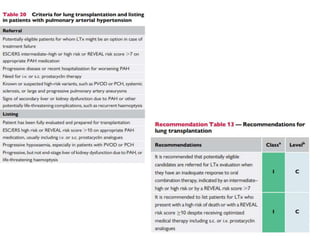
• Upon diagnosing CTEPH, all patients should be considered for
surgical pulmonary thromboendarterectomy.
• In one prospective study of 679 newly diagnosed CTEPH patients, the
3-year survival rate was 89% in operated patients compared to 70% in
nonoperated patients
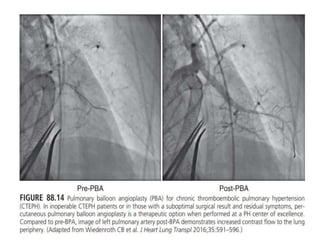
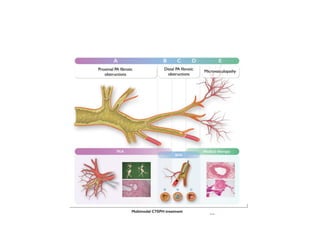
• In patients that are poor surgical candidates, have inoperable disease,
or decline surgery, percutaneous balloon pulmonary angioplasty
(BPA) at an expert referral center is a modern-day treatment option.
• Although angiographic evidence showing improvement in post-
stenotic blood flow following BPA is often evident immediately,
achieving significant clinical benefits from BPA requires multiple
procedural attempts, generally requiring separate hospitalizations
• In an international CTEPH registry, 3-year survival was 90% in
patients who underwent pulmonary thromboendarterectomy
(PTE) and 70% in those who did not
• peri-procedural complications reperfusion injury, hemoptysis, or
pulmonary artery perforation is reported in 15% of patients.
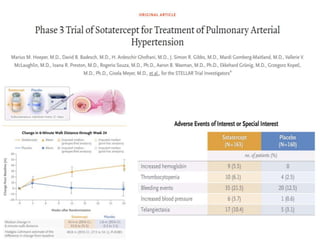
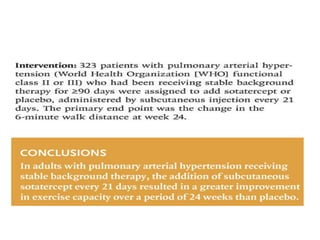
• In patients who are inoperable or in whom pulmonary
thromboendarterectomy is associated with residual PH, therapy with
the soluble guanylyl cyclase stimulator riociguat or the nonselective
ERA macitentan can be useful for improving functional status and
PVR.
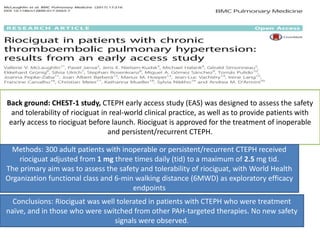
Back ground: CHEST-1 study, CTEPH early access study (EAS) was designed to assess the safety
and tolerability of riociguat in real-world clinical practice, as well as to provide patients with
early access to riociguat before launch. Riociguat is approved for the treatment of inoperable
and persistent/recurrent CTEPH.
Methods: 300 adult patients with inoperable or persistent/recurrent CTEPH received
riociguat adjusted from 1 mg three times daily (tid) to a maximum of 2.5 mg tid.
The primary aim was to assess the safety and tolerability of riociguat, with World Health
Organization functional class and 6-min walking distance (6MWD) as exploratory efficacy
endpoints
Conclusions: Riociguat was well tolerated in patients with CTEPH who were treatment
naïve, and in those who were switched from other PAH-targeted therapies. No new safety
signals were observed.
THANK YOU

Pulmonary Hypertension.pptx

  • 1.
    Pulmonary Hypertension: Approach toDiagnosis and management Bhola Nath Gautam Senior Resident Dept. of Cardiology JLN Medical College Ajmer
  • 2.
    Approach to Diagnosis •Pulmonary hypertension is defined by a mean pulmonary arterial pressure (mPAP) >20 mmHg at rest.
  • 5.
    • The initialassessment of patients with suspected PH includes an electrocardiogram (ECG), chest roentgenogram, and echocardiogram.
  • 6.
    1 ECG- changesin right heart structures • RV strain pattern • In turn, LV hypertrophy and left atrial enlargement may point toward left heart disease PH rather than PAH
  • 7.
    2 Chest radiography-central pulmonary artery dilation, peripheral dearborization, and RV enlargement.
  • 8.
    3 Two-dimensional transthoracicechocardiography- This method estimates PASP by Doppler interrogation of a tricuspid regurgitant jet and does not determine right atrial pressure, PVR, or PAWP accurately, all of which are important for assessing PH clinically.
  • 10.
    • In one-thirdof patients with proven PH, a sufficient tricuspid jet is lacking and PASP is unmeasurable. Thus, echocardiography alone is insufficient for diagnosing, classifying, and fully prognosticating patients • Decreased pulmonary vascular distensibility results in the formation of a “notch” in the RV outflow tract Doppler envelope as well as decreased pulmonary artery acceleration time. When these are observed in the setting of a normal left atrial dimension, increased PVR greater than 3.0 WU may be present.
  • 11.
    • Other RVfunctional measures-(TAPSE, longitudinal myocardial velocity (S’), fractional area change (FAC), Tei index speckle tracking, and ejection fraction by three-dimensional echocardiography.
  • 13.
    • Agitated saline-enhancedechocardiography is warranted in patients with PH and structural cardiac abnormalities that predispose to intracardiac shunt or in whom unexplained hypoxemia is observed at rest or during exercise.
  • 14.
    4 Pulmonary functiontests and sleep study- Generally, pulmonary function test with spirometry and lung diffusion capacity of carbon monoxide (DLCO) is recommended in all patients suspected of PH. • Patients with PAH may demonstrate modestly reduced lung volumes in the absence of marked obstructive, restrictive, or combined ventilatory defects that are more characteristic of parenchymal lung disease.
  • 15.
    5 Computed tomographicchest imaging and nuclear ventilation/perfusion (V/Q) scintigraphy- Mismatched perfusion defects on ventilation-perfusion (V/Q) scintigraphy is highly suggestive of CTEPH. • The CT signs suggesting the presence of PH include an enlarged PA diameter, a PA-to-aorta ratio >0.9, and enlarged right heart chambers. • A combination of three parameters (PA diameter ≥30 mm, RVOT wall thickness ≥6 mm, and septal deviation ≥140° [or RV:LV ratio ≥1]) is highly predictive of PH.
  • 16.
    6 Cardiac magneticresonance (CMR) imaging- In PAH, the RV ejection fraction at baseline and in response to treatment prognosticates mortality, particularly when less than 35%. • inverse association between RV ejection fraction and clinical outcome in patients with PH from left heart disease. • Increased RV end-systolic and end-diastolic volumes are phenotypic patterns that correspond to uncoupled RV-PA pathophysiology but require CMR
  • 17.
    7 Exercise testing-Performance on 6-MWD correlates with workload, heart rate, oxygen saturation, and dyspnea response (i.e., symptom burden), but is dependent on gait speed, age, weight, and muscle mass among other anthropometric variables.
  • 18.
    8 Cardiac catheterization-RHC indications include shock, guidance for pericardial disease, assessing constrictive versus restrictive cardiomyopathy, and quantifying shunt. • A complete study includes the following three parts: oxyhemoglobin saturation (SaO2 ) analysis in different vascular compartments, intravascular and intracardiac pressure measurement, CO assessment, and PAWP measurement. • In the absence of congenital pulmonic stenosis, a meaningful transpulmonary valvular gradient is not expected at rest. • A RV end-diastolic pressure less than 10 mm Hg generally implies preserved RV function.
  • 19.
    • The PAWPis a measure of LVEDP in the absence of mitral valve disease or pulmonary venous remodeling. • It is essential to record the PAWP at end-expiration because wide undulation of the thorax (particularly in COPD) . • diastolic transpulmonary gradient (calculated as the diastolic PAP − PAWP) ≥ 7 mm Hg and or PVR ≥3 WU with PAWP or LVEDP ≥15 mm Hg suggests a contribution of left heart disease to PH.
  • 20.
    • A knownthrombus or tumour in the RV or RA, recently implanted (<1 month) pacemaker, mechanical right heart valve, and an acute infection are contraindications to RHC;. • In the supine position, the mid-thoracic level is recommended as the zero reference level, which is at the level of the LA in most patients
  • 21.
    • Pulmonary vascularresistance ([mPAP−PAWP]/CO) should be calculated for each patient. • All pressure measurements, including PAWP, should be performed at end expiration (without breath-holding manoeuvre). • In patients with large intrathoracic pressure changes during the respiratory cycle (i.e. COPD, obesity, during exercise), it is appropriate to average over at least three to four respiratory cycles.
  • 23.
    • Vasoreactivity Testing-Patients with idiopathic, hereditary, and drug/toxic-associated PAH should undergo vasoreactivity testing with inhaled NO, intravenous prostacyclin. A positive test is defined by a decrease in mPAP ≥10 mm Hg to reach an mPAP ≤40 mm Hg with a increase (or no change) in CO, and observed in approximately 5% of PAH patients.
  • 24.
    • Fluid Challenge-It is generally accepted that rapid infusion (over 5– 10 min) of 500 mL (7–10 mL/kg) of saline would be sufficient to detect an abnormal increase in PAWP to ≥18 mmHg (suggestive of HFpEF. • A rise in PAWP to greater than 18 mm Hg is suggestive of pulmonary PH-left heart disease,
  • 25.
    Risk Stratification • Thegoal of therapy is to achieve the lowest risk level possible, which generally means: • 6-MWD greater than 440 m or pVO2 greater than 15 mL/min/kg, right atrial area < 18 cm2 , cardiac index > 2.5 L/min/m2 , and absent or low symptom burden with routine physical activity.
  • 26.
    SvO2 , mixedvenous oxygen saturation; VE/VCO2 , ventilatory equivalents for carbon dioxide; VO2 , oxygen consumption;
  • 27.
    INTEGRATED APPROACH TODIAGNOSING PULMONARY HYPERTENSION • Patients with suspected PH based on symptoms should be evaluated further with ECG, chest roentgenography, and echocardiography. • Patients with otherwise unexplained dyspnea that do not meet a hemodynamic classification of PH may benefit from exercise RHC or iCPET to unmask HFpEF or other etiologies as a cause of symptoms.
  • 28.
    • In suchpatients, increased left atrial size greater than 4.4 cm, obesity, atrial fibrillation, age greater than 60 years, treatment with ≥2 anti- hypertensive drugs, echocardiographic E/e′ ratio, or estimated PASP greater than 35 mm Hg may be sufficient to avoid invasive testing, as the presence of these features point toward HFpEF.
  • 30.
    • In patientssuspected of idiopathic, hereditary, or drug/toxin PAH, a positive hemodynamic response to testing with iNO is diagnostic for vasoreactive PAH (although a negative response does not exclude PAH). • Compared to non-vasoreactive PAH patients, this subgroup is associated with a favorable prognosis including disease resolution in some patients when managed appropriately
  • 32.
    Chronic Thromboembolic Pulmonary Hypertension •A diagnosis of CTEPH must be suspected in any patient with prior PE and otherwise unexplained dyspnea or PH. • In this subgroup, chronic thromboembolic disease (CTED), ventilatory defects such as increased dead space ventilation and (near) normal cardiopulmonary hemodynamics are reported.
  • 34.
    TREATMENT Pulmonary arterial hypertension(group 1) • Supportive care with loop diuretics and supplemental oxygen attenuates pulmonary vascular congestion and hypoxic pulmonary vasoconstriction, which otherwise aggravate symptoms and worsen RV function. • Digoxin may increase CO by as much as 10% in patients with RV failure due to PH, and attenuates the adverse effect of increased circulating norepinephrine on pulmonary vascular function.
  • 35.
    • In onemeta-analysis of 469 PAH patients, exercise improved 6-MWD by +53.3 m, pVO2 by +1.8 mL/kg, and PASP by −3.7 mm Hg at week 15.Inspiratory muscle training, too, is associated with an improvement in PAH endpoints. • Vaccination, it is recommended that patients with PAH be vaccinated at least against influenza, Streptococcus pneumoniae, and SARS-CoV- 2.
  • 36.
    • In patientswithout a positive vasoreactivity test, therapy selection is guided by clinical status: • 1 New York Heart Association Functional Class (NYHA FC) IV, • 2 cardiogenic shock by clinical or hemodynamic criteria (e.g., signs of impaired distal perfusion, cardiac index <2.1 l/min/ m2 ), • 3 syncope, or chest pain (indicative of either RV ischemia or LMCA compression) are indications for continuous parenteral prostacyclin therapy.
  • 37.
    • For patientswith a positive vasoreactivity test, high-dose calcium channel antagonist therapy is the initial treatment in the absence of high-risk findings.
  • 39.
    PROGNOSIS OF PATIENTSWITH PH • Pulmonary arterial hypertension registries report survival rates of between 68% and 93% at 1 year and 39% and 77% at 3 years.
  • 40.
    OBJECTIVE: The aimof the present pilot study was to explore the safety and efficacy of bosentan in patients with PAH associated with CHD. CONCLUSION: Bosentan was not associated with worsening of resting oxygen saturation or exercise systemic oxygen saturation, suggesting its potential as a safe treatment option for patients with PAH associated with CHD. Improved 6-MWT also suggested the possibility of bosentan as an efficacious treatment option for these patients. The results of the present study provide evidence for the need and feasibility of a large randomized, placebo-controlled clinical trial. 11 patients with PAH associated with CHD were enrolled to receive bosentan for a minimum of 16 weeks (62.5 mg BD for four weeks; thereafter 125 mg BD). Safety was assessed by monitoring adverse events, oxygen saturation, systemic blood pressure, pulse, complete blood count and liver function tests. Efficacy was assessed by the World Health Organization functional class, 6 min walk test (6-MWT), echocardiography.
  • 41.
    BACKGROUND Endothelin-1 is apotent vasoconstrictor and smooth-muscle mitogen. In a preliminary study, the orally administered dual endothelin-receptor antagonist bosentan improved exercise capacity and cardiopulmonary hemodynamics in patients with pulmonary arterial hypertension. The present trial investigated the effect of bosentan on exercise capacity in a larger number of patients and compared two doses. CONCLUSIONS The endothelin-receptor antagonist bosentan is beneficial in patients with pulmonary arterial hypertension and is well tolerated at a dose of 125 mg twice daily. Endothelin-receptor antagonism with oral bosentan is an effective approach to therapy for pulmonary arterial hypertension.
  • 42.
    • The Ambrisentanand Tadalafil in Patients with Pulmonary Arterial Hypertension (AMBITION) trial demonstrated a clear benefit in hard- clinical events among incident, treatment PAH patients administered combination ambrisentan (selective endothelin receptor-type A antagonist) plus tadalafil (PDE-V inhibitor) compared with monotherapy with either agent. • At a median of 517 days, an endpoint of death, hospitalization for PAH, disease progression, or unsatisfactory clinical response occurred in 18%, 34%, and 28% of patients randomized to combination therapy, ambrisentan monotherapy, and tadalafil monotherapy, respectively.
  • 46.
    REVEAL 2.0 riskscore calculator, scores in the low- (≤6), intermediate- (7 to 8), and high-risk (≥9)
  • 47.
    Pulmonary hypertension associatedwith left heart disease (group 2) • Defined by an mPAP >20 mmHg and a PAWP >15 mmHg. • The pathophysiology of PH-LHD combines several mechanisms: • (1) an initial passive increase in LV filling pressures and backward transmission into the pulmonary circulation; • (2) PA endothelial dysfunction (including vasoconstriction); • (3) vascular remodelling (which may occur in both venules and/or arterioles); • (4) RV dilatation/dysfunction and • (5) altered RV–PA coupling
  • 48.
    • asymptomatic mitralvalve regurgitation in which PASP greater than 50 mm Hg is a strong indication for valve repair or replacement. • For management of PH due to conventional HFpEF or HFrEF, diuretic therapy remains the mainstay treatment.
  • 49.
    • Implanting CardioMEMSheart failure system, which provides real- time pulmonary artery pressure monitoring. • In this subgroup, PDE-V inhibitor therapy is effective for decreasing PVR as one strategy by which to delay, defer, or optimize candidacy for orthotropic heart transplantation.
  • 52.
    • The 12-monthmortality for patients with PH-LHD may be as high as 32%.
  • 53.
    Pulmonary hypertension associatedwith lung diseases and/ or hypoxia (group 3 • two recent studies have demonstrated that a PVR >5 WU is a better threshold for predicting worse prognosis in patients with PH associated with both COPD and ILD. • guidelines used PVR to distinguish between non-severe PH (PVR<5 WU) and severe PH (PVR>5 WU).
  • 54.
    • The therapeuticapproach to group 3 PH starts with optimizing the treatment of the underlying lung disease, including supplementary oxygen and non-invasive ventilation, where indicated, as well as enrolment into pulmonary rehabilitation programmes.
  • 55.
    • Registry dataidentified that 30% of patients with COPD and severe PH, predominantly treated with PDE5is, had improved WHO-FC, 6MWD, and PVR vs. baseline, and those with a treatment response had improved transplant-free survival. • A cohort study in patients with PH-CLD reported 1-, 3-, and 5-year survival rates of 79%, 48%, and 31%, respectively
  • 57.
    Chronic thrombo-embolic pulmonaryhypertension (group 4) • if radiological sign suggest CTEPH on the CTPA performed to diagnose PE, and/or if estimated sPAP is >60 mmHg on echocardiogram; • Ventilation/perfusion scintigraphyremains the most effective tool in excluding CTEPD.
  • 58.
    • Lifelong therapeuticanticoagulation, (VKAs are recommended by experts is)recommended for patients with CTEPH, as recurrent pulmonary thrombo-embolism accompanied by insufficient clot resolution are key pathophysiological features of this disease. • Upon diagnosing CTEPH, all patients should be considered for surgical pulmonary thromboendarterectomy. • In one prospective study of 679 newly diagnosed CTEPH patients, the 3-year survival rate was 89% in operated patients compared to 70% in nonoperated patients
  • 59.
    • In patientsthat are poor surgical candidates, have inoperable disease, or decline surgery, percutaneous balloon pulmonary angioplasty (BPA) at an expert referral center is a modern-day treatment option. • Although angiographic evidence showing improvement in post- stenotic blood flow following BPA is often evident immediately, achieving significant clinical benefits from BPA requires multiple procedural attempts, generally requiring separate hospitalizations
  • 60.
    • In aninternational CTEPH registry, 3-year survival was 90% in patients who underwent pulmonary thromboendarterectomy (PTE) and 70% in those who did not
  • 62.
    • peri-procedural complicationsreperfusion injury, hemoptysis, or pulmonary artery perforation is reported in 15% of patients. • In patients who are inoperable or in whom pulmonary thromboendarterectomy is associated with residual PH, therapy with the soluble guanylyl cyclase stimulator riociguat or the nonselective ERA macitentan can be useful for improving functional status and PVR.
  • 63.
    Back ground: CHEST-1study, CTEPH early access study (EAS) was designed to assess the safety and tolerability of riociguat in real-world clinical practice, as well as to provide patients with early access to riociguat before launch. Riociguat is approved for the treatment of inoperable and persistent/recurrent CTEPH. Methods: 300 adult patients with inoperable or persistent/recurrent CTEPH received riociguat adjusted from 1 mg three times daily (tid) to a maximum of 2.5 mg tid. The primary aim was to assess the safety and tolerability of riociguat, with World Health Organization functional class and 6-min walking distance (6MWD) as exploratory efficacy endpoints Conclusions: Riociguat was well tolerated in patients with CTEPH who were treatment naïve, and in those who were switched from other PAH-targeted therapies. No new safety signals were observed.
  • 68.