“If students have not been told
where they are going, it is
unlikely that they will arrive.”
– Shirley Clark
Learning Intentions
“I can find evidence of current
assessment research
in my initial practice.”
Learning Intentions
“I can identify ways to use
assessment to inform my
instructional decisions .”
Learning Intentions
“I can become curious about
something in the research I
want to inquire further into.”
“Assessment is the beginning and the end
of my teaching. It defines my culture, my
relationships, my learning community, my
values, and my beliefs about teaching and
learning.” - Matt Rosati
Motivation 2.0
True or False:
Rewarding an
activity will get you
more of it. Punishing
an activity will get
you less of it.
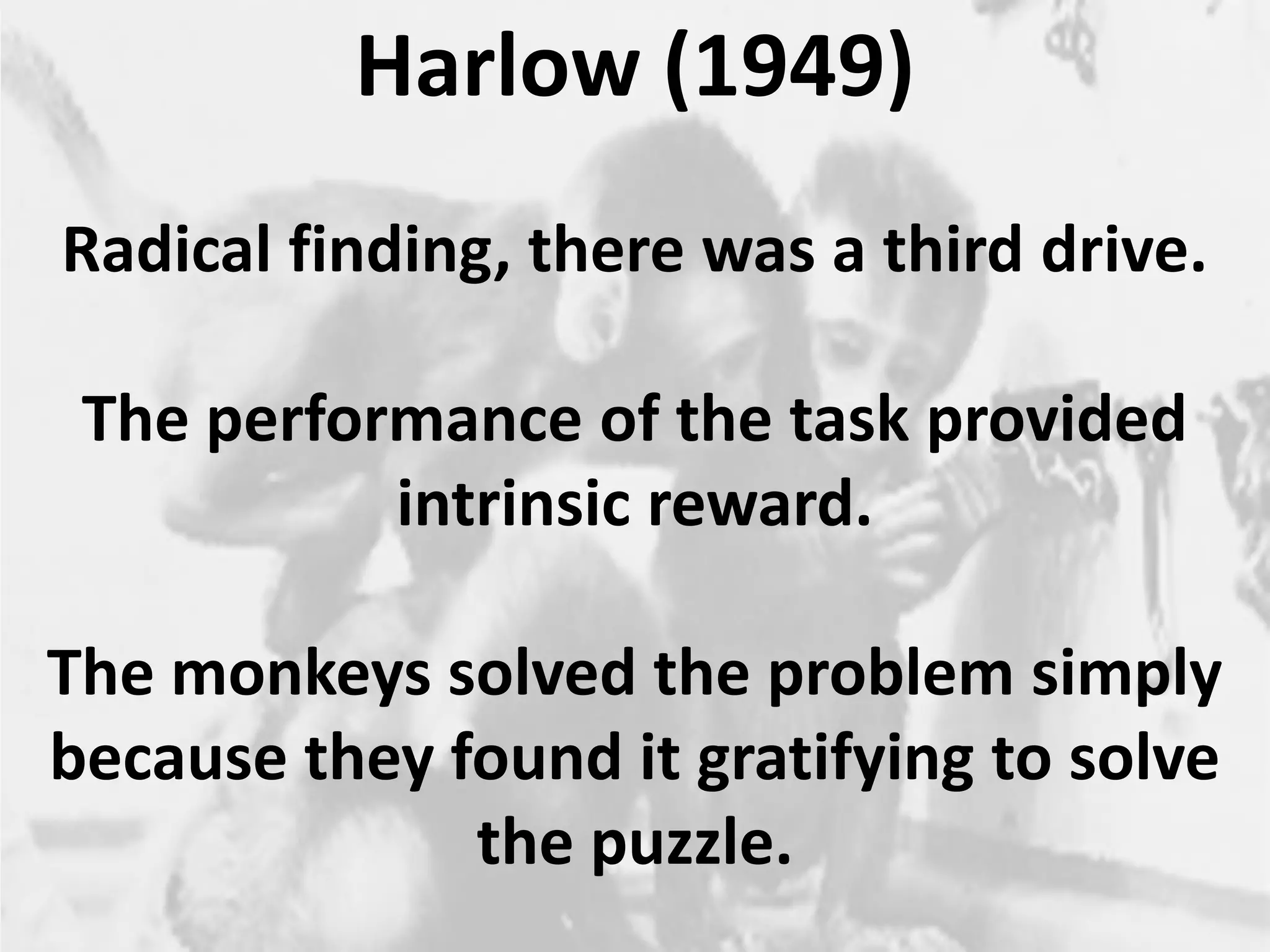
Harlow (1949)
Radical finding, there was a third drive.
The performance of the task provided
intrinsic reward.
The monkeys solved the problem simply
because they found it gratifying to solve
the puzzle.
2
Harlow (1949)
Rewarded the monkey with raisons.
“Introduction of food in the present experiment
served to disrupt performance, a phenomena not
reported in the literature.”
The monkeys made more errors and
solved the puzzles less frequently.
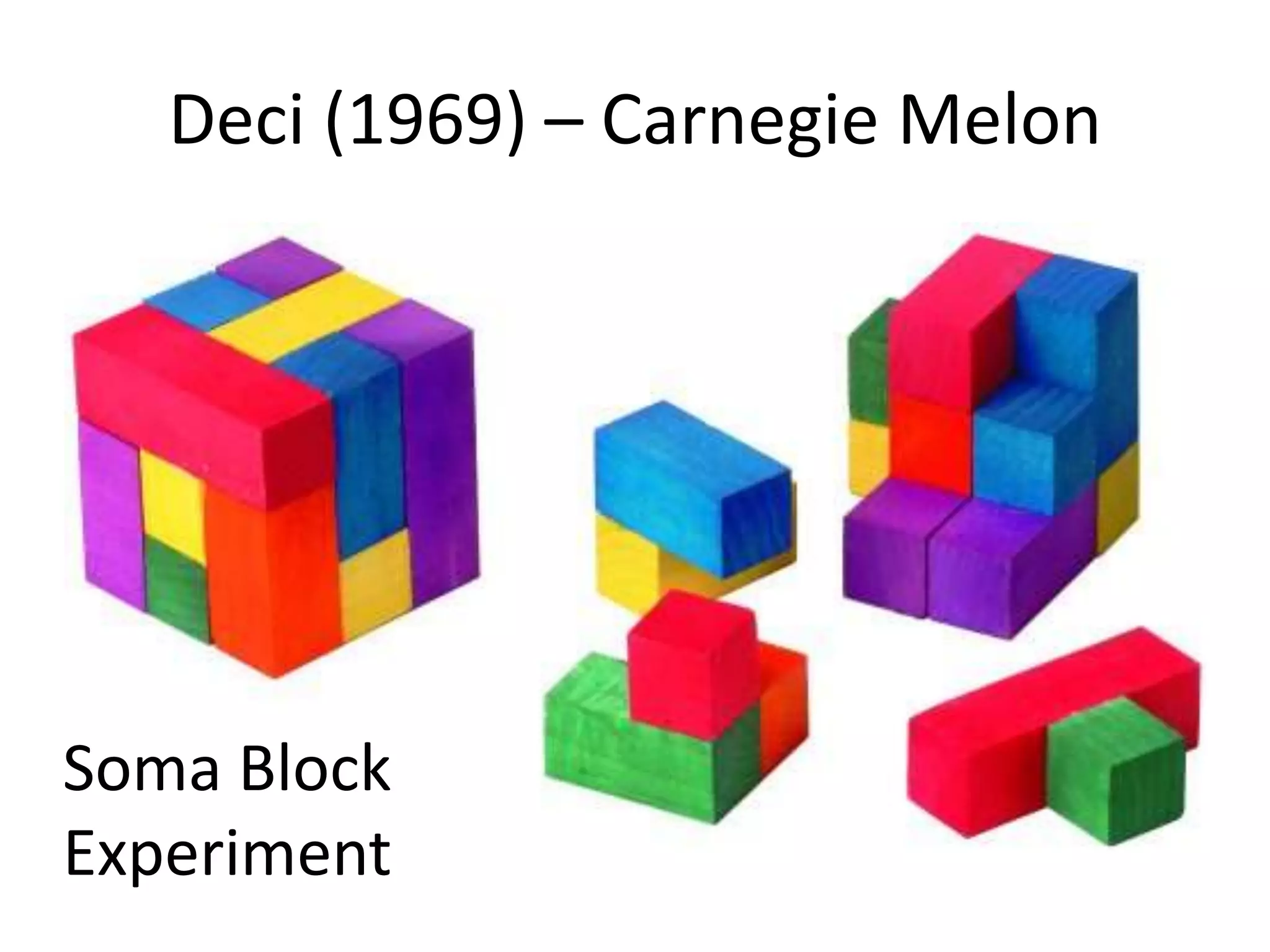
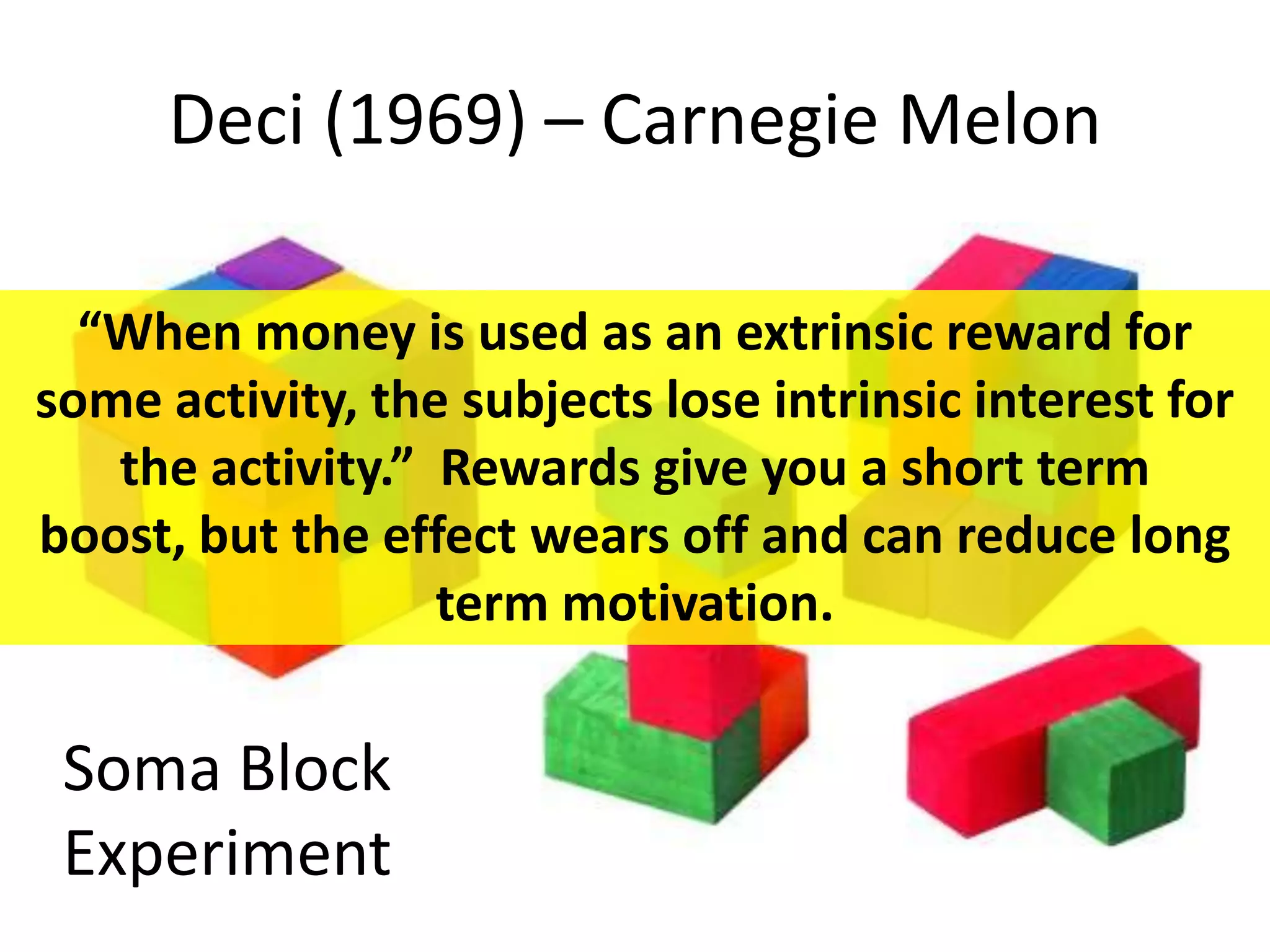
Deci (1969) – Carnegie Melon
Soma Block
Experiment
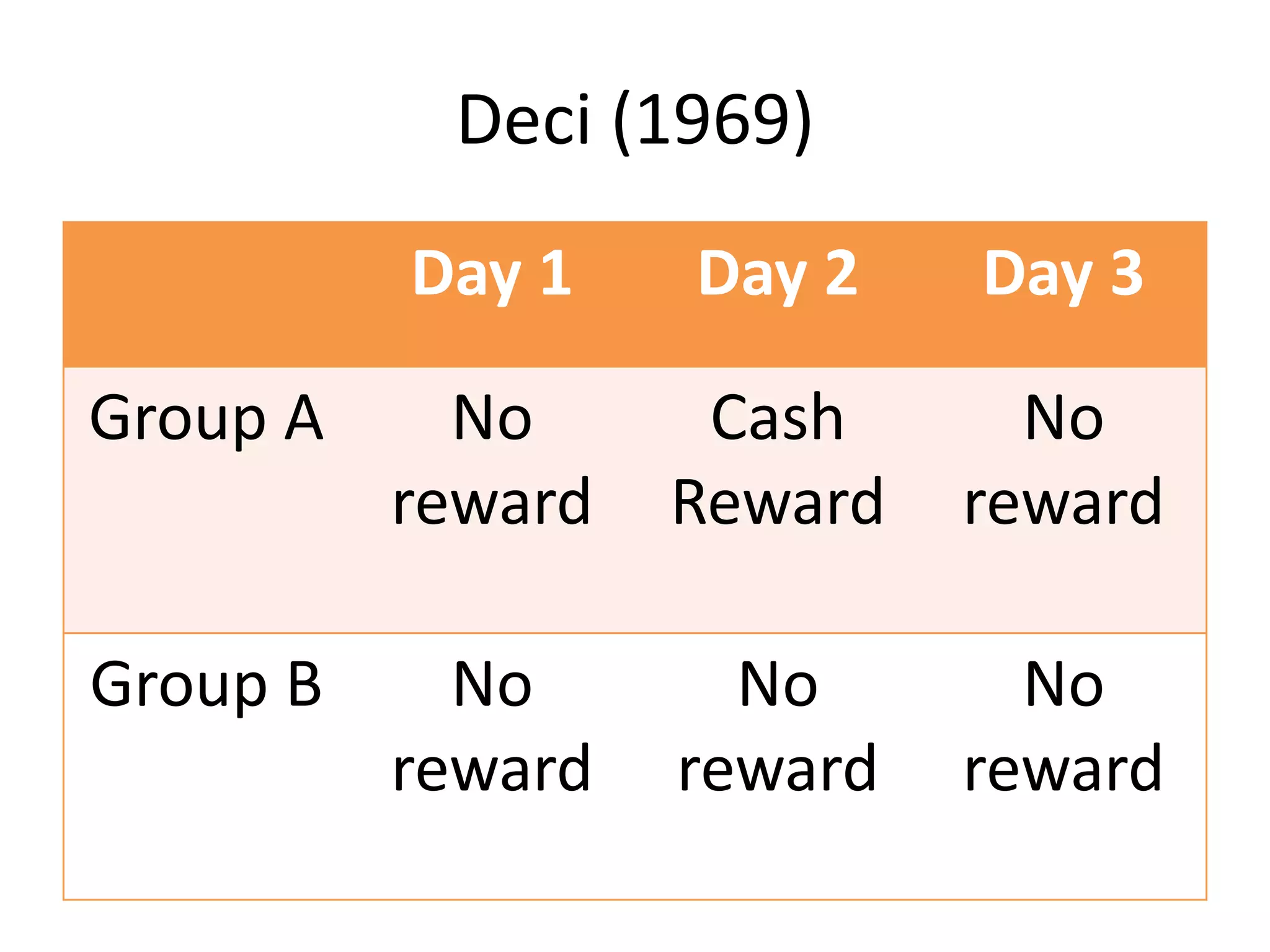
Deci (1969)
Day 1 Day 2 Day 3
Group A No
reward
Cash
Reward
No
reward
Group B No
reward
No
reward
No
reward
Deci (1969) – Carnegie Melon
Soma Block
Experiment
“When money is used as an extrinsic reward for
some activity, the subjects lose intrinsic interest for
the activity.” Rewards give you a short term
boost, but the effect wears off and can reduce long
term motivation.
Commissioned
vs.
Non-
Commissioned
Art
Rewards transform
interesting tasks
into drudgery.
Offering an award
signals that the
task is undesirable.
Focus on Short Term vs.
Long Term Benefits
When goals are imposed and
incentivized…
Focus is narrowed on
achieving only that goal.
and…
Here’s the kicker…
It leads to unethical
behaviour in an attempt to
reach the goal.
aka..
Cheating…
When rewards do work…
With routine and
mechanical tasks.
You can’t undermine
intrinsic motivation in
boring tasks.
Instructional Design
The Science of Learning
Instructional Design
90% of what we know about the brain we have
learned in approximately the last 2 years
Instructional Design
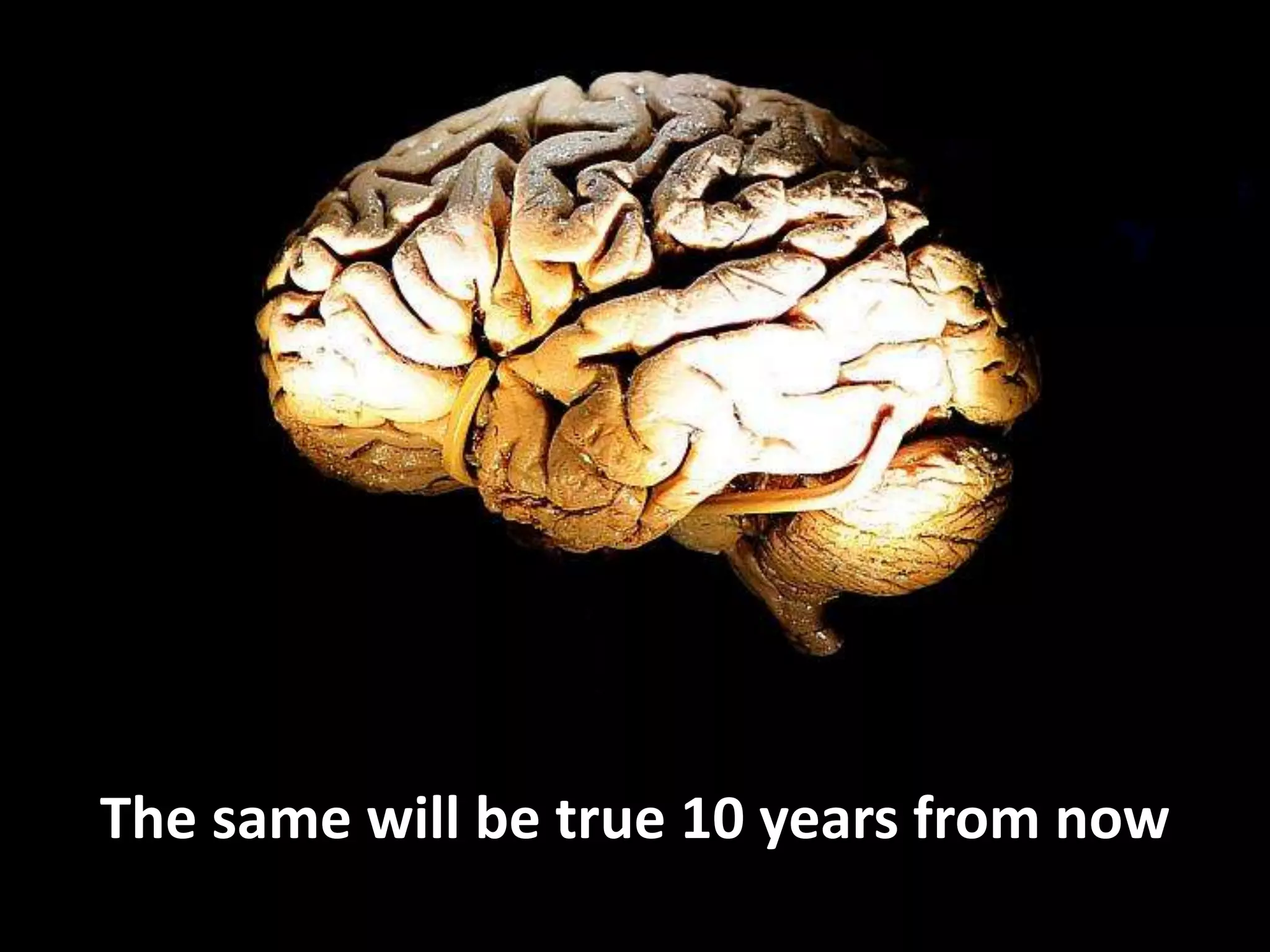
The same will be true 10 years from now
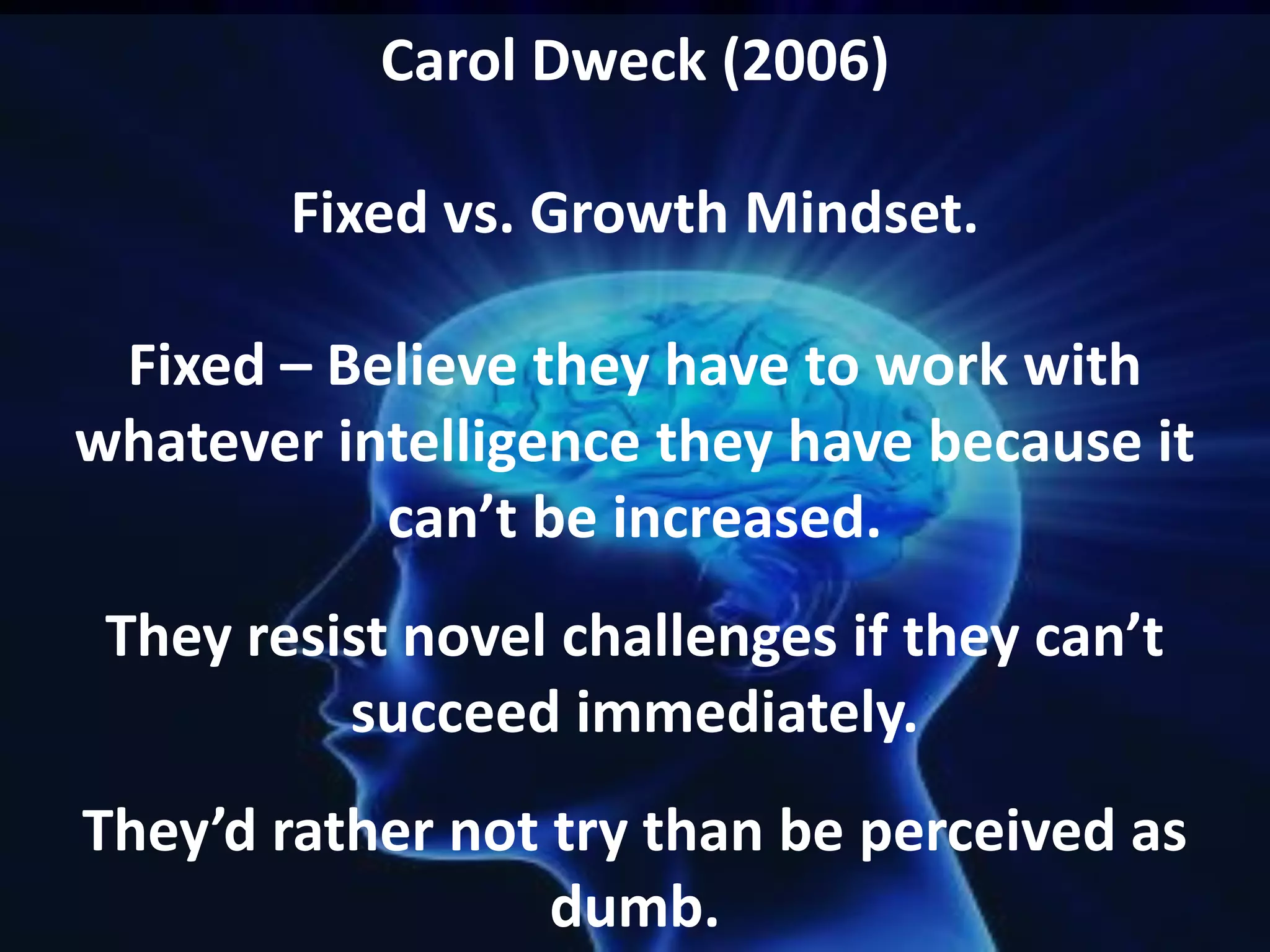
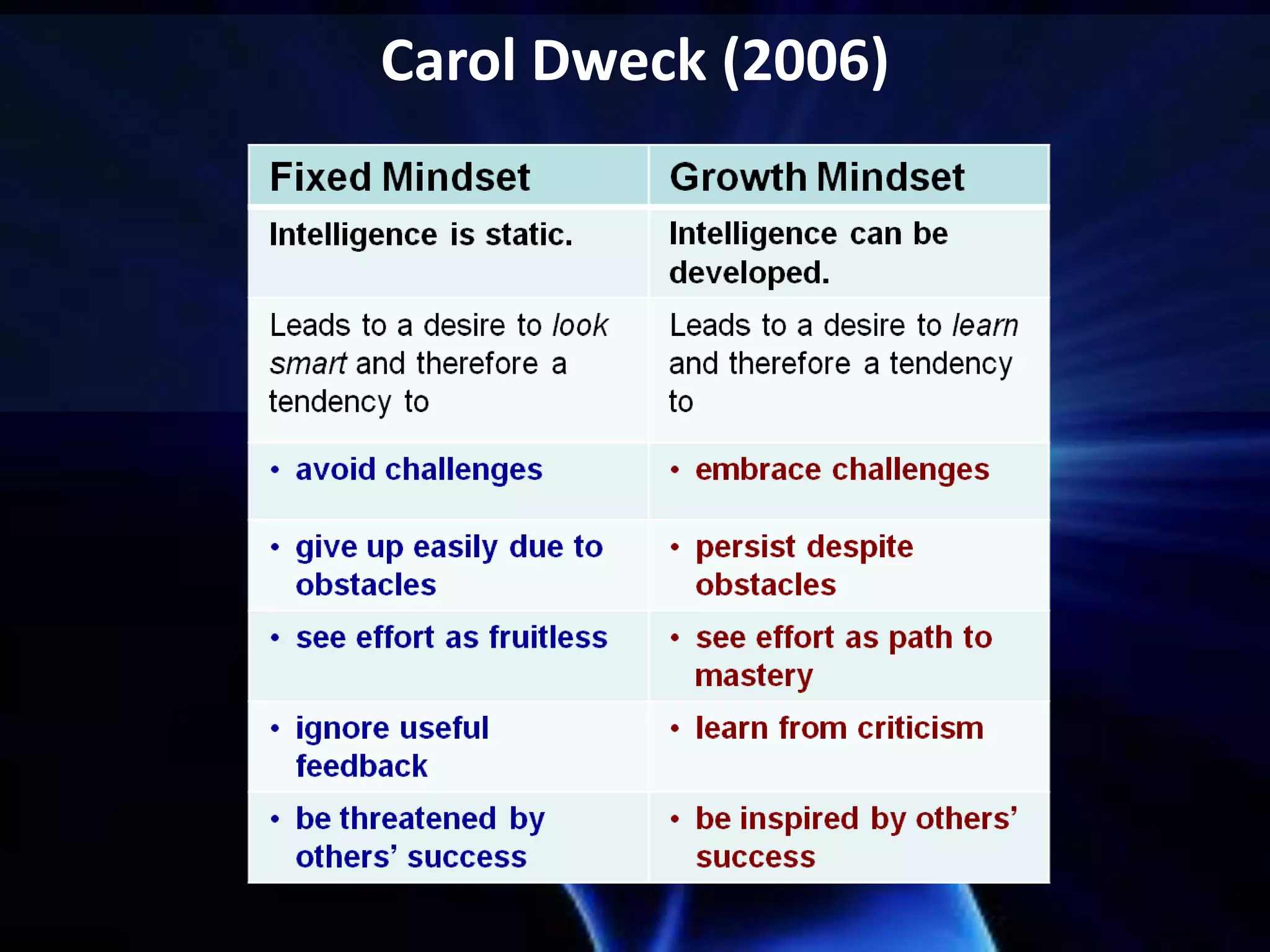
Carol Dweck (2006)
Fixed vs. Growth Mindset.
Fixed – Believe they have to work with
whatever intelligence they have because it
can’t be increased.
They resist novel challenges if they can’t
succeed immediately.
They’d rather not try than be perceived as
dumb.
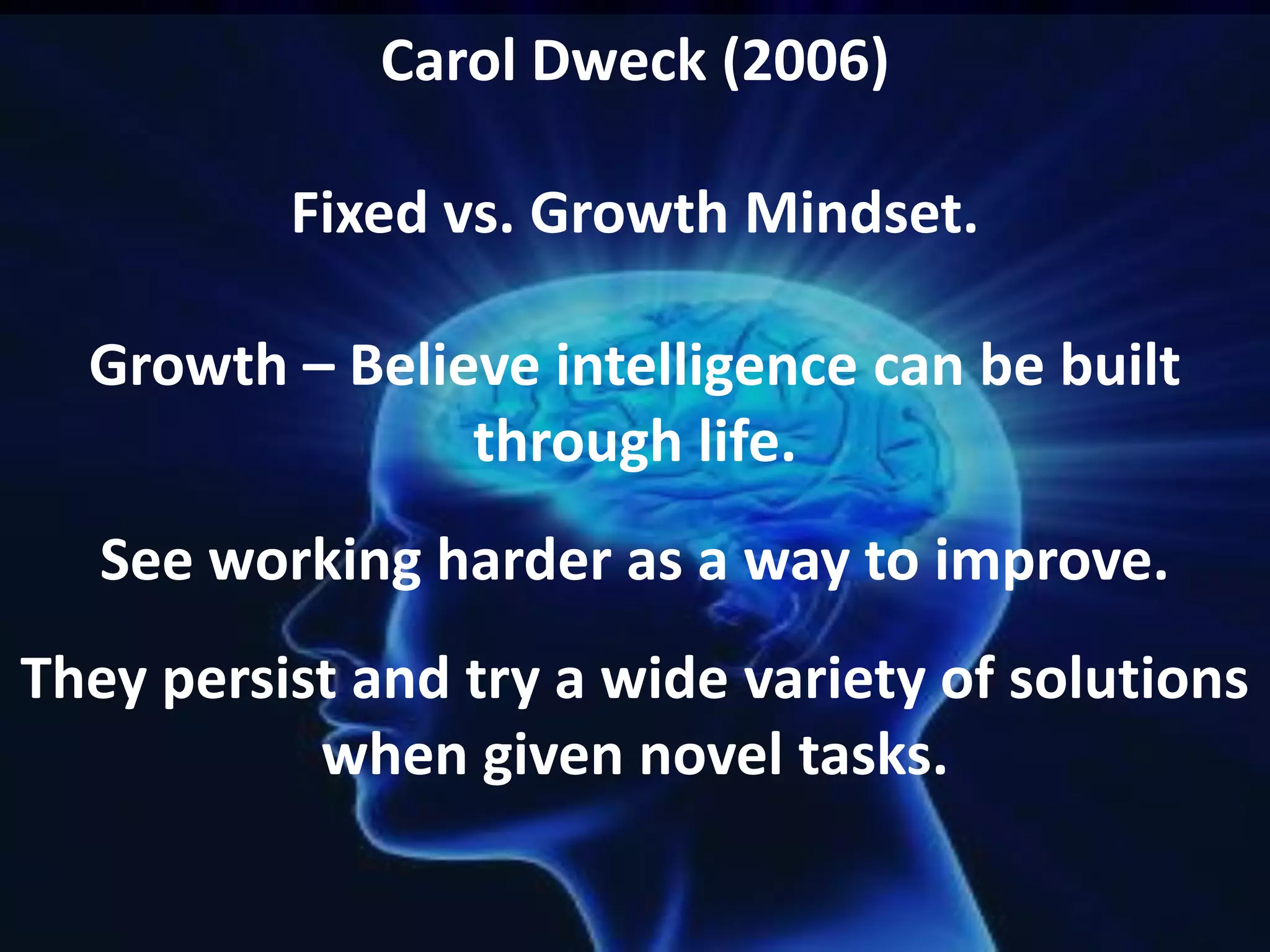
Carol Dweck (2006)
Fixed vs. Growth Mindset.
Growth – Believe intelligence can be built
through life.
See working harder as a way to improve.
They persist and try a wide variety of solutions
when given novel tasks.
Carol Dweck (2006)
Csikzentmihalyi (1990)
Flow Theory – The
exhilarating moments when
we feel in control, full of
purpose, and in the zone.
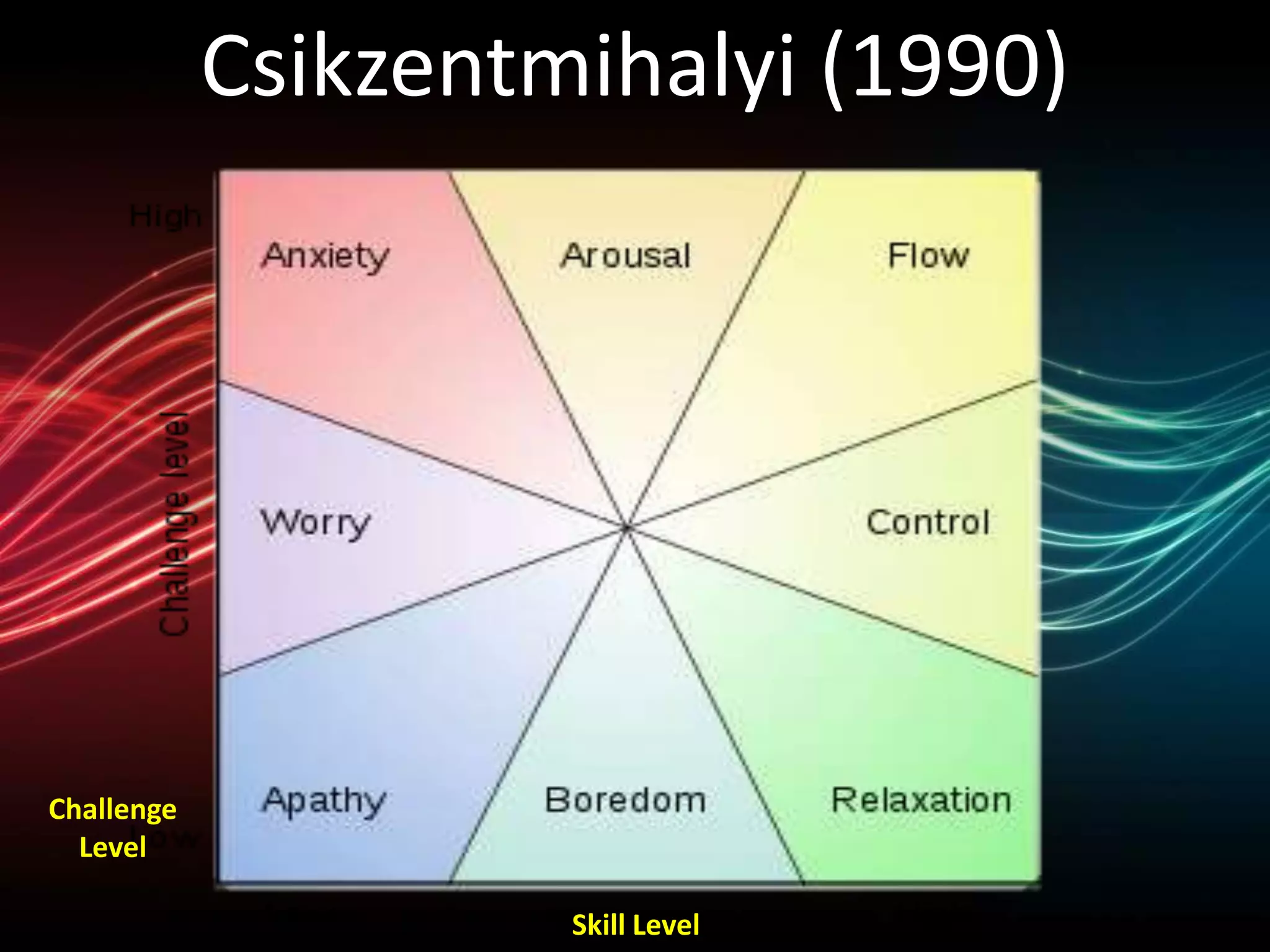
Csikzentmihalyi (1990)
Skill Level
Challenge
Level
Daniel Pink (2009)
Autonomy – People need autonomy
over task (what they do), time (when
they do it), team (who they do it
with), and technique (how they do it).
Daniel Pink (2009)
Mastery – Becoming better at
something that matters.
Daniel Pink (2009)
Purpose – Humans want to make a
contribution and to be part of a cause
greater and more enduring than
themselves.
Inside the Black Box: Raising
Standards Through Classroom
Assessment
When carried out effectively, informal
classroom assessment
with constructive feedback will raise
levels of attainment.
We know from research that effective
assessment for learning can
Improve student achievement
substantially, and helps low achievers the
most.
Source: Black and William, Inside the Black Box 1998
The effect sizes, that is the student gains in
learning triggered by formative
assessment, were among the largest ever
reported for educational interventions.
Source: Black and William, Inside the Black Box 1998
Formative Assessment:
5 Key Strategies…
sometimes 6!
Dylan Wiliam “Embedded Formative
Assessment” (2011)
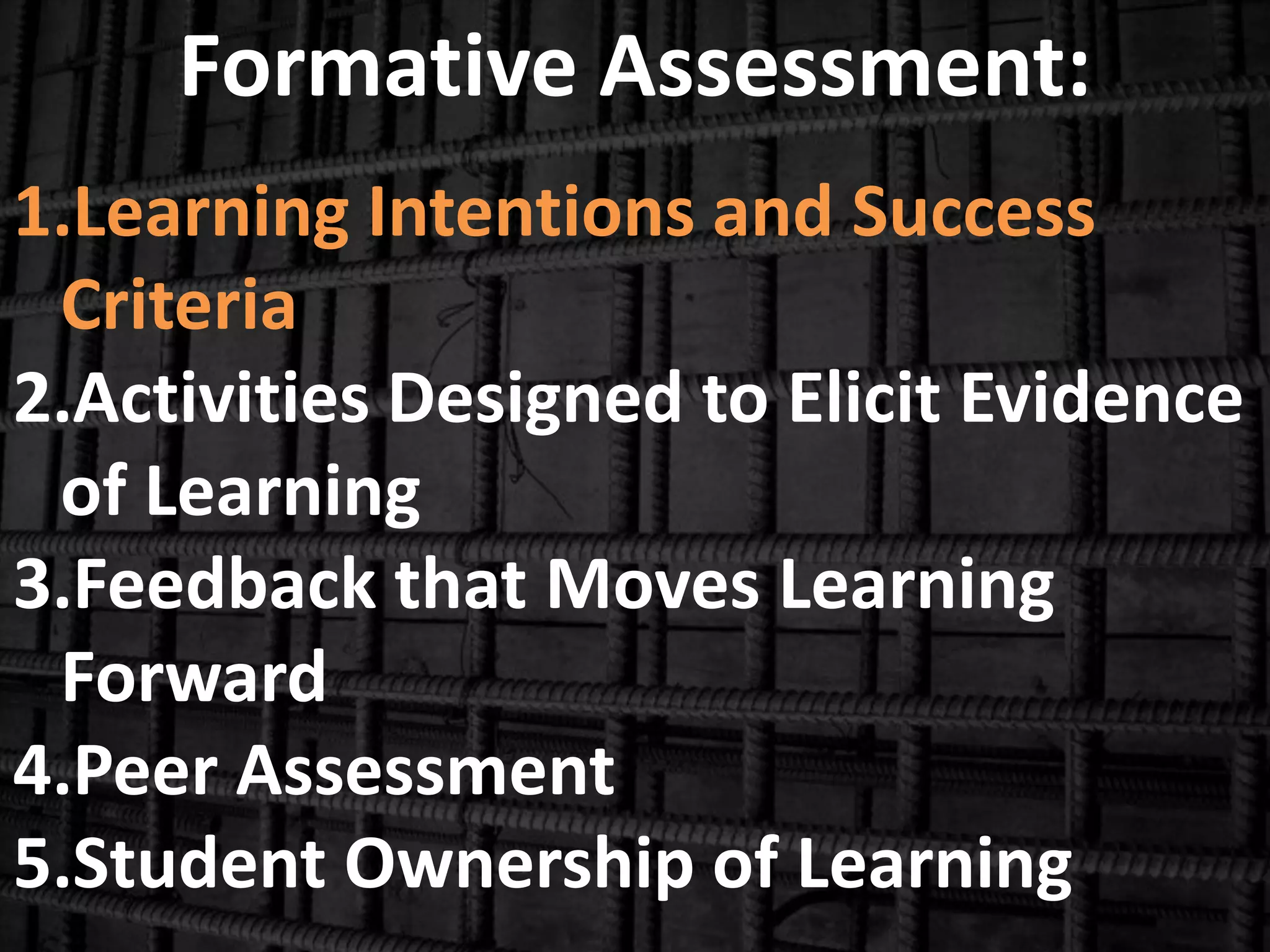
Formative Assessment:
1.Learning Intentions and Success
Criteria
2.Activities Designed to Elicit Evidence
of Learning
3.Feedback that Moves Learning
Forward
4.Peer Assessment
5.Student Ownership of Learning
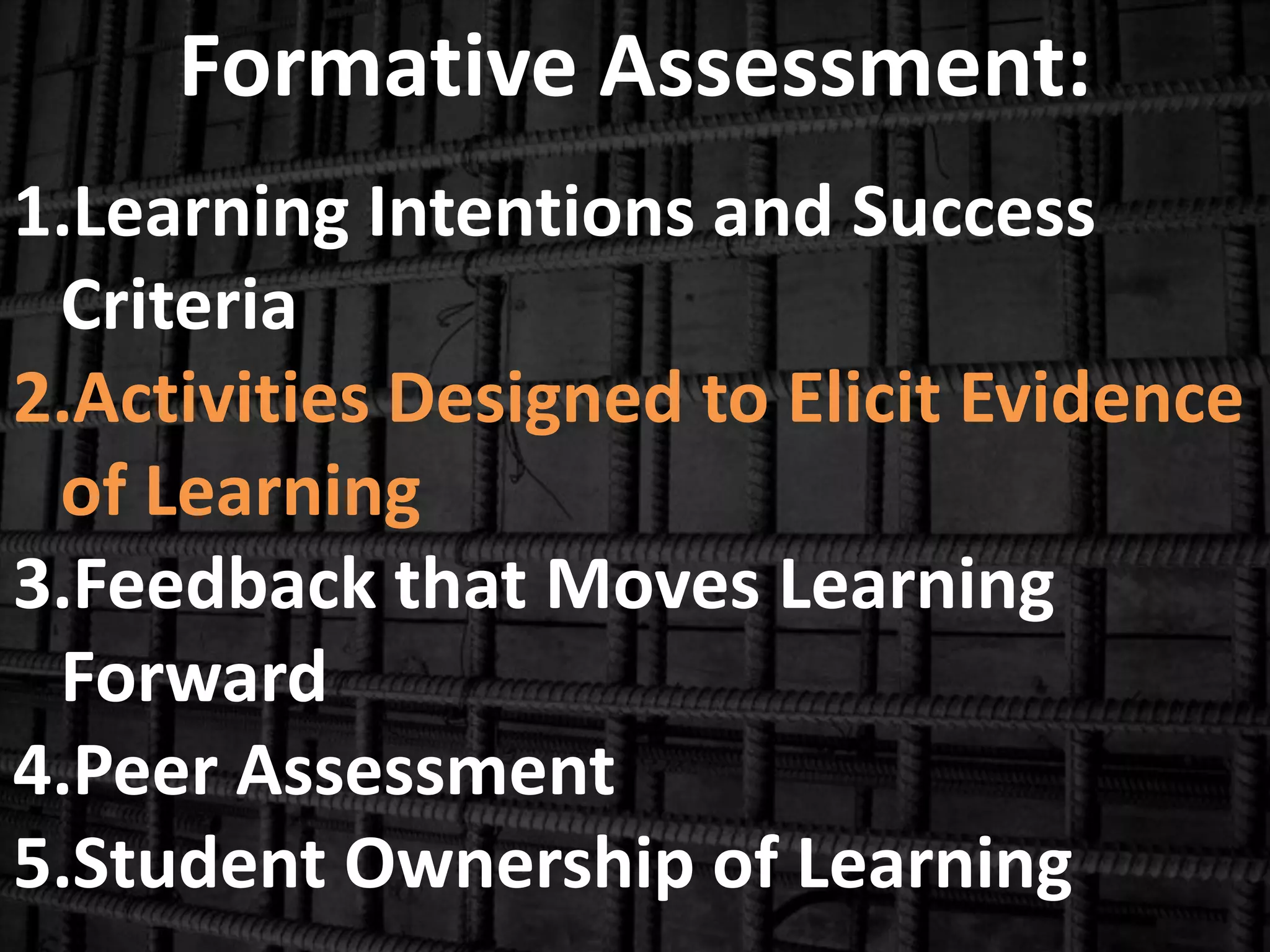
Formative Assessment:
1.Learning Intentions and Success
Criteria
2.Activities Designed to Elicit Evidence
of Learning
3.Feedback that Moves Learning
Forward
4.Peer Assessment
5.Student Ownership of Learning
Formative Assessment:
1.Learning Intentions and Success
Criteria
2.Activities Designed to Elicit Evidence
of Learning
3.Feedback that Moves Learning
Forward
4.Peer Assessment
5.Student Ownership of Learning
Formative Assessment:
1.Learning Intentions and Success
Criteria
2.Activities Designed to Elicit Evidence
of Learning
3.Feedback that Moves Learning
Forward
4.Peer Assessment
5.Student Ownership of Learning
Formative Assessment:
1.Learning Intentions and Success
Criteria
2.Activities Designed to Elicit Evidence
of Learning
3.Feedback that Moves Learning
Forward
4.Peer Assessment
5.Student Ownership of Learning
Summative Assessme
Preparing for
the ‘TEST’
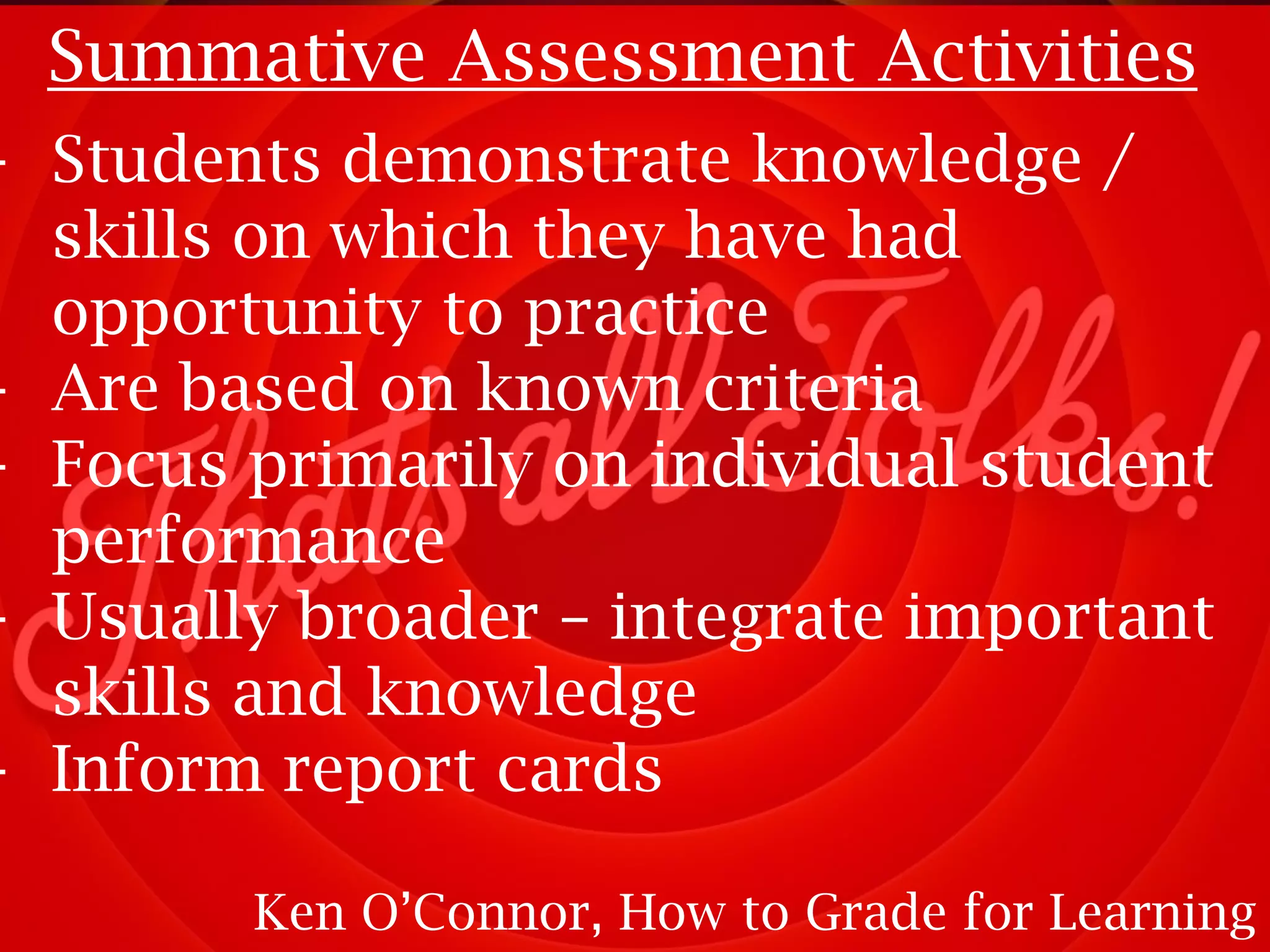
Summative Assessment Activities
- Students demonstrate knowledge /
skills on which they have had
opportunity to practice
- Are based on known criteria
- Focus primarily on individual student
performance
- Usually broader – integrate important
skills and knowledge
- Inform report cards
Ken O’Connor, How to Grade for Learning
Triangulation of Data
Damien Cooper, Talk About Assessment
Performance Task, Oral
Conference, Written Test Data
Authentic Tasks =
What Big People Do
Grant Wiggins
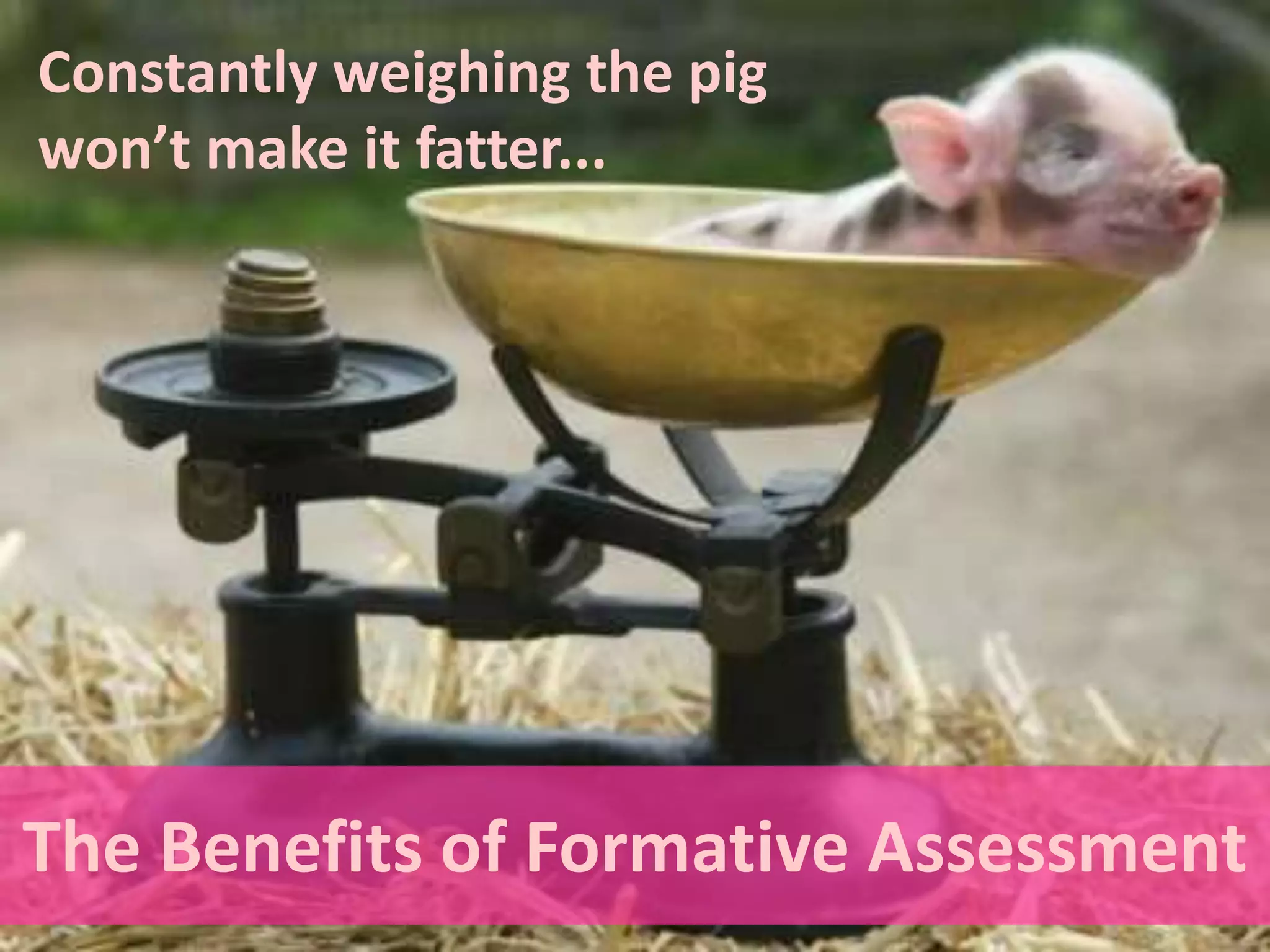
The Benefits of Formative Assessment
Constantly weighing the pig
won’t make it fatter...
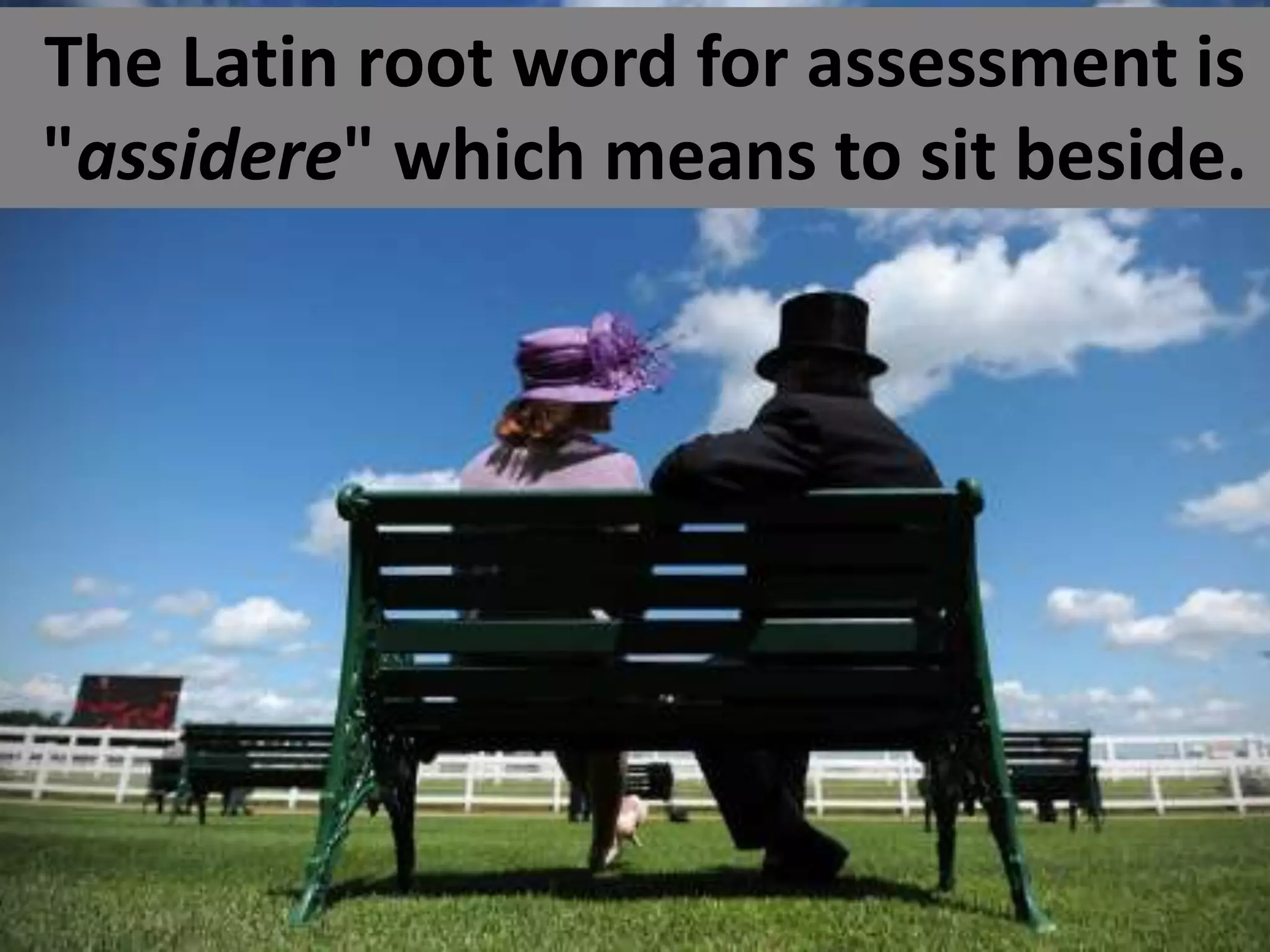
The Latin root word for assessment is
"assidere" which means to sit beside.
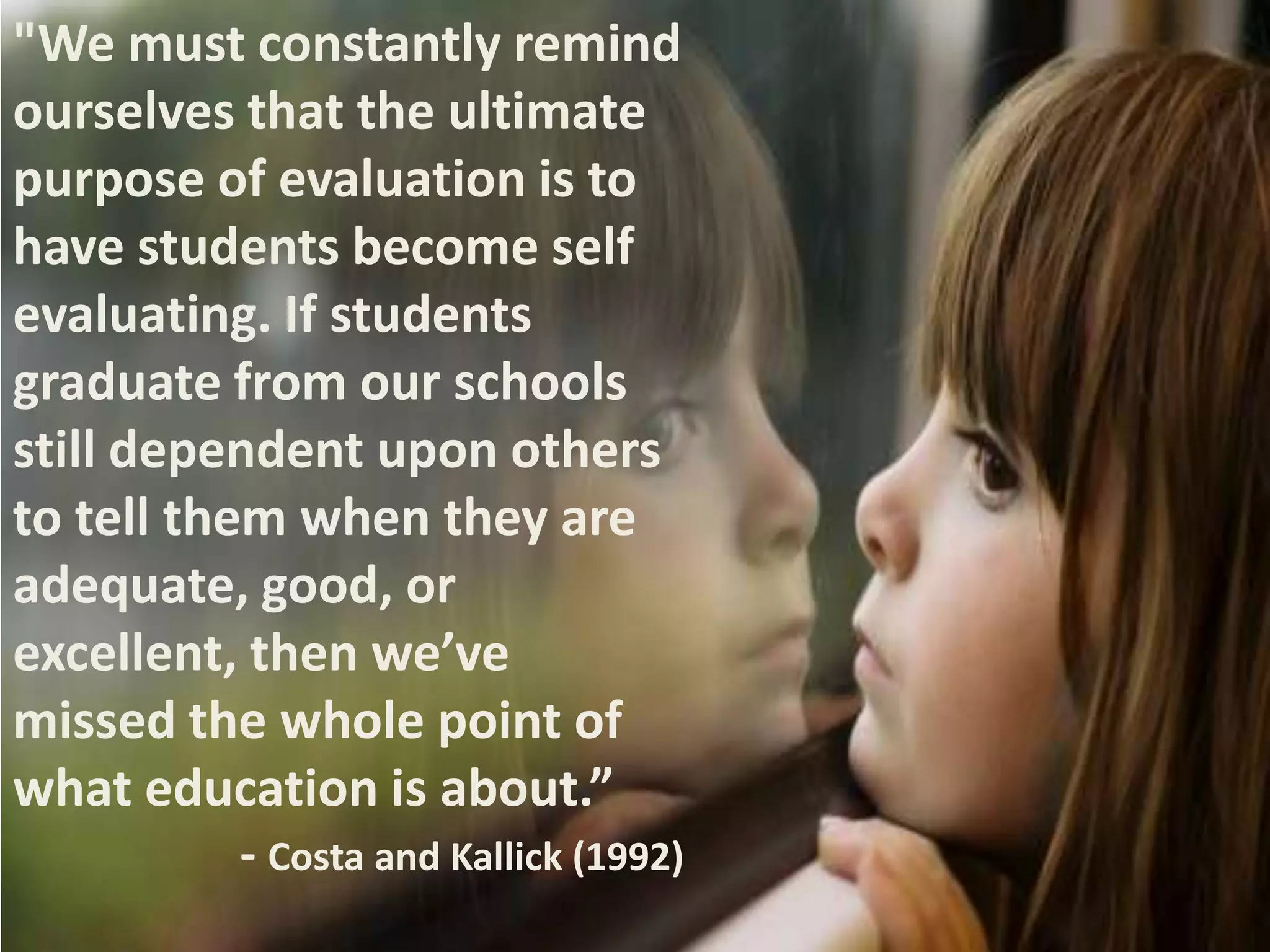
"We must constantly remind
ourselves that the ultimate
purpose of evaluation is to
have students become self
evaluating. If students
graduate from our schools
still dependent upon others
to tell them when they are
adequate, good, or
excellent, then we’ve
missed the whole point of
what education is about.”
- Costa and Kallick (1992)
Contact Information
Jonathan Vervaet
Email: jonathanvervaet@gmail.com
Twitter: @jonathanvervaet
Blog: jonathanvervaet.wordpress.com

Assessment in It's Many Guises

Editor's Notes

  • #3 JonathanLearning Intentions, Universal Designs for Learning, Backwards Design, Essential Questions, Enduring UnderstandingsWhatever way teachers choose to do it we are planning with the end mind.
  • #4 JonathanLearning Intentions, Universal Designs for Learning, Backwards Design, Essential Questions, Enduring UnderstandingsWhatever way teachers choose to do it we are planning with the end mind.
  • #5 JonathanLearning Intentions, Universal Designs for Learning, Backwards Design, Essential Questions, Enduring UnderstandingsWhatever way teachers choose to do it we are planning with the end mind.
  • #6 JonathanLearning Intentions, Universal Designs for Learning, Backwards Design, Essential Questions, Enduring UnderstandingsWhatever way teachers choose to do it we are planning with the end mind.
  • #7 BothWhy assessment has become foundational to our teaching. “It’s the glue...”
  • #57 Practice with out penalty.Descriptive feedback related to agreed upon criteria / performance standards.Raises level of student attainment, and helps struggling students the most.