








Planning with the
End in Mind:
Approaches to
Summative
Assessment
Presented by: Jonathan Vervaet
“If students have not been told
where they are going, it is
unlikely that they will arrive.”
– Shirley Clark
Learning Intentions
“I can find evidence of current
assessment and curriculum
design research in my current
practice.”
Learning Intentions
“I can become curious about
something in the research I
want to inquire further into.”
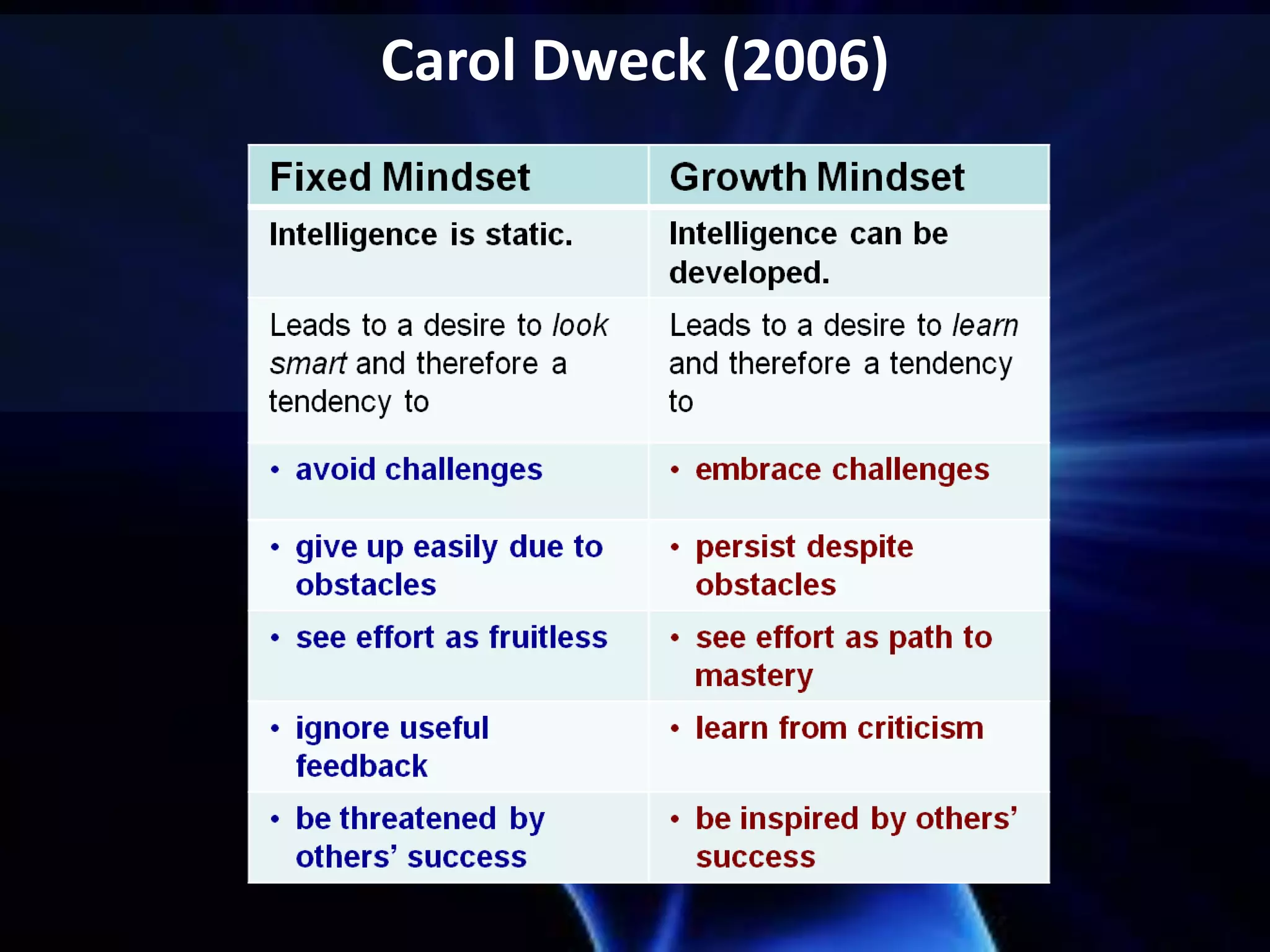
Carol Dweck (2006)
Csikzentmihalyi (1990)

Flow Theory – The
exhilarating moments when
we feel in control, full of
purpose, and in the zone.
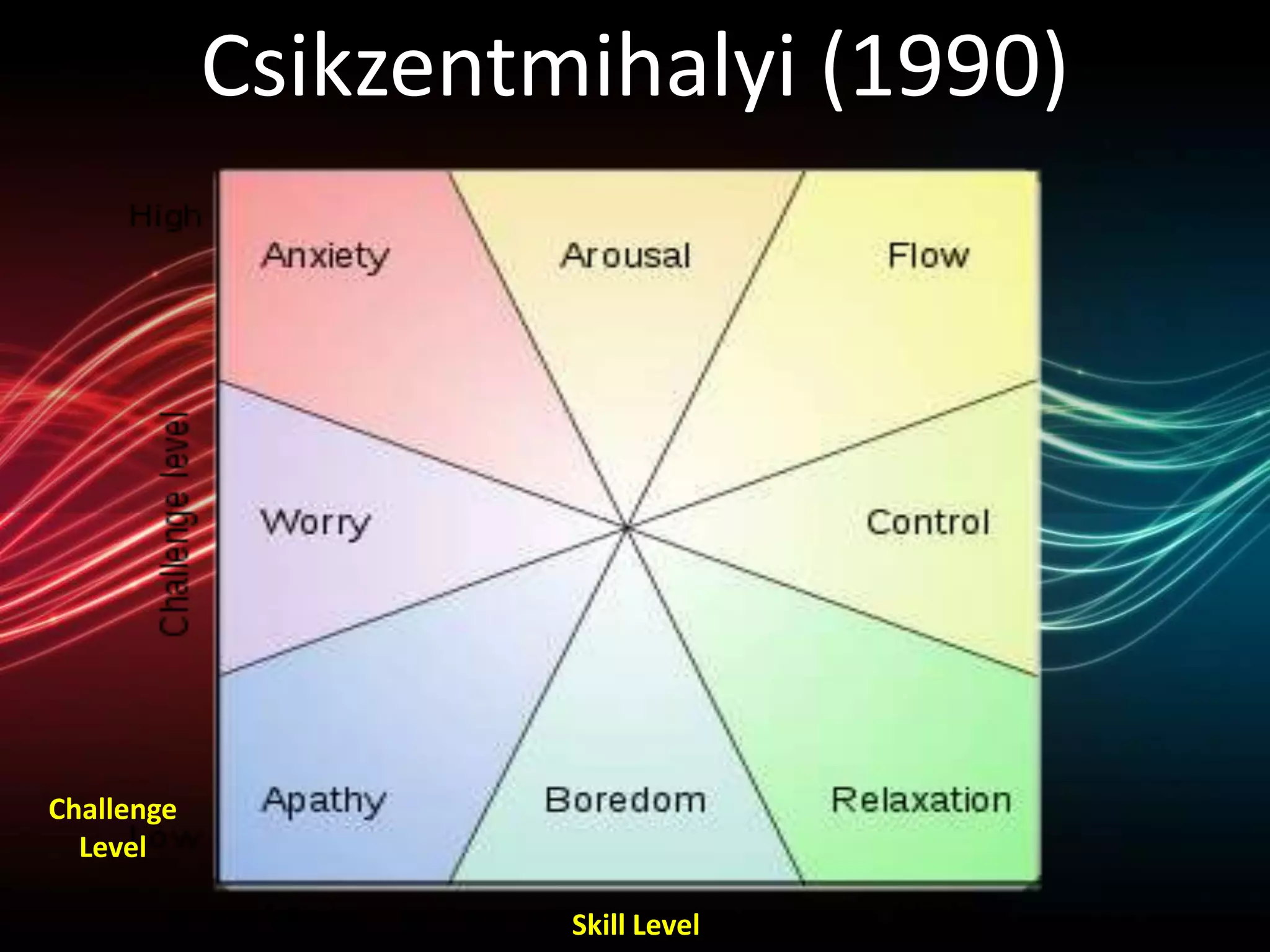
Csikzentmihalyi (1990)

Challenge
Level
Skill Level
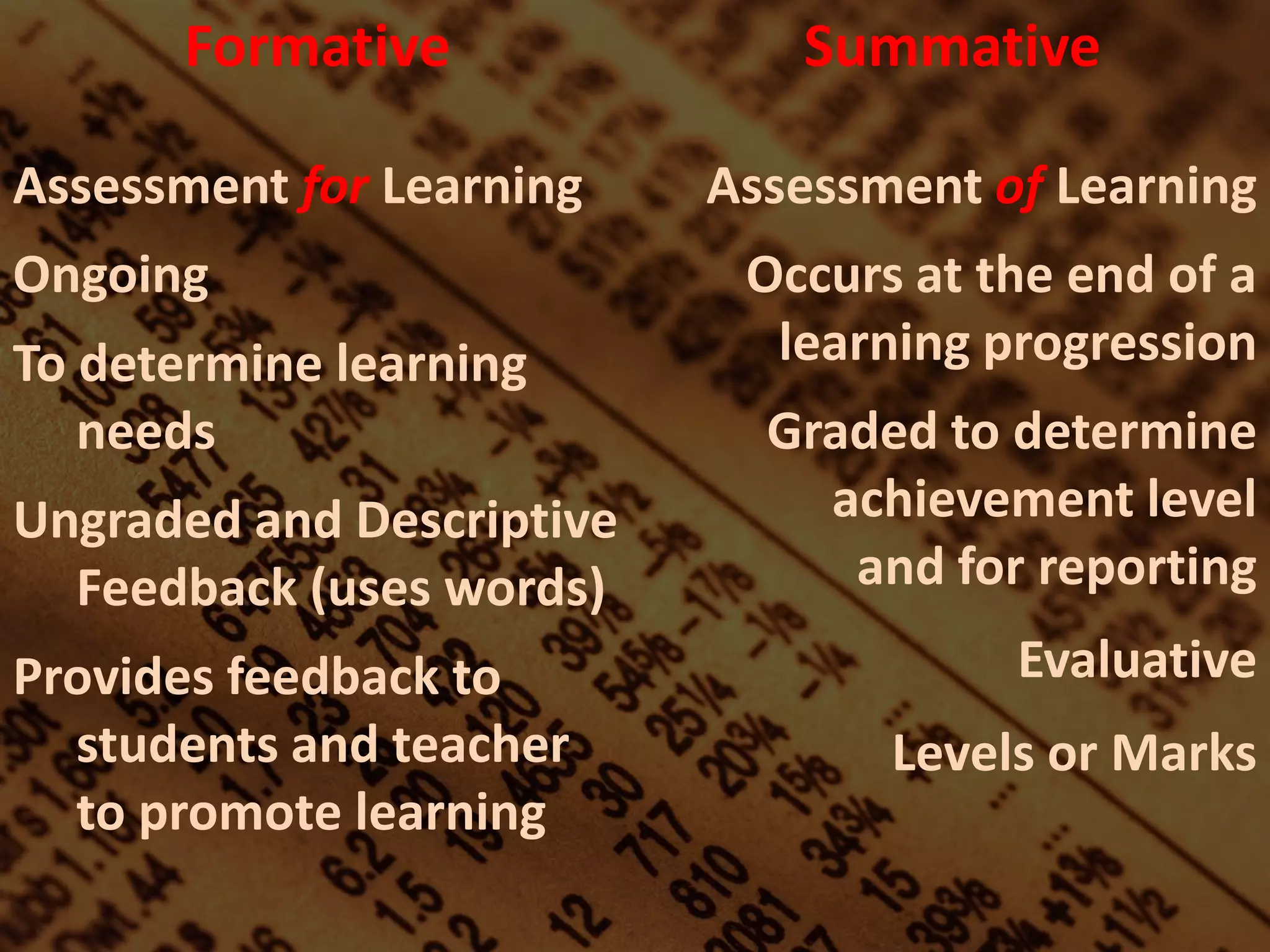
Formative
Assessment for Learning
Ongoing
To determine learning
needs

Ungraded and Descriptive
Feedback (uses words)
Provides feedback to
students and teacher
to promote learning

Summative
Assessment of Learning
Occurs at the end of a
learning progression
Graded to determine
achievement level
and for reporting
Evaluative

Levels or Marks
Formative Assessment:

5 Key Strategies…
sometimes 6!
Dylan Wiliam “Embedded Formative
Assessment” (2011)
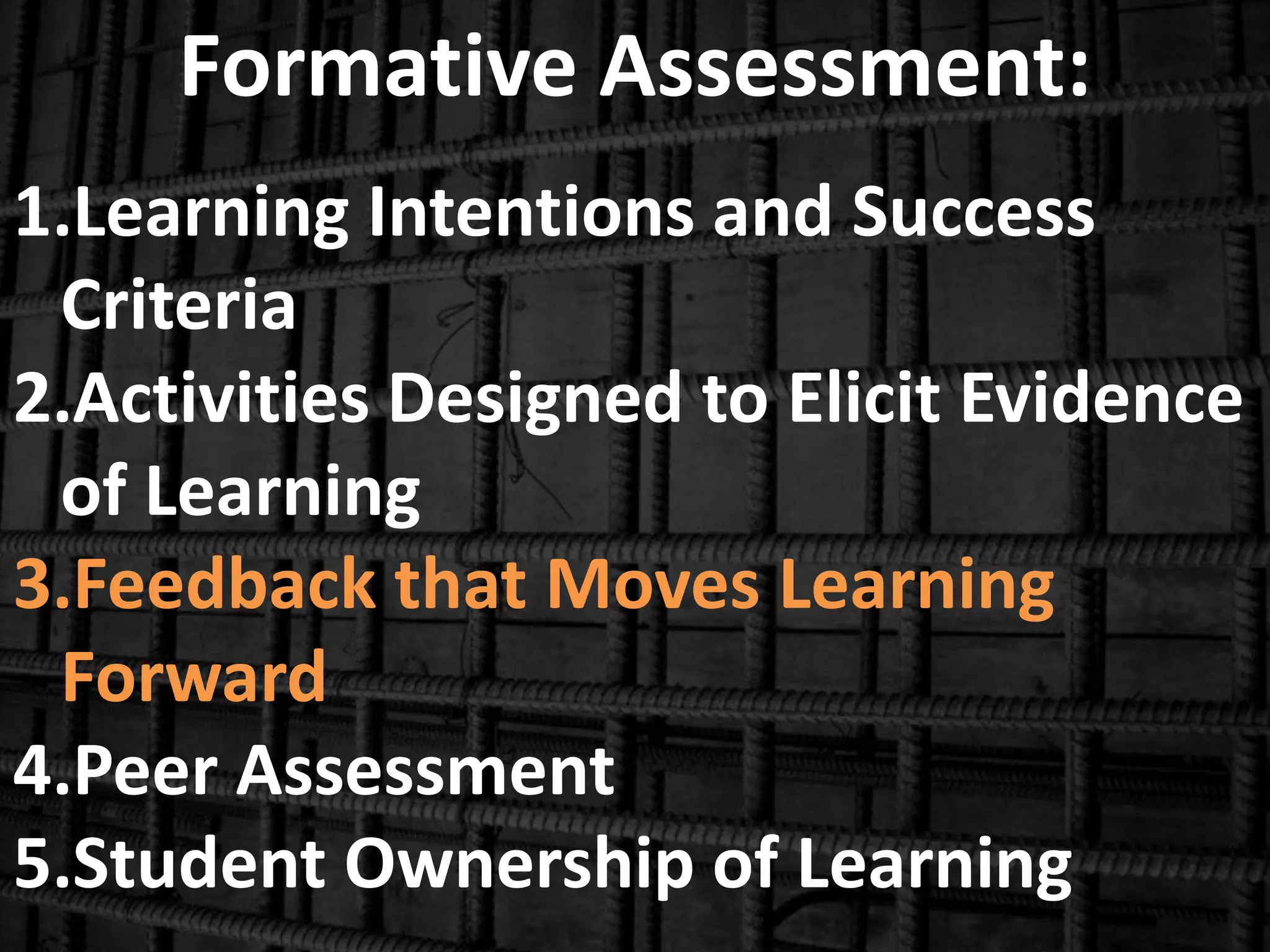
Formative Assessment:
1.Learning Intentions and Success
Criteria
2.Activities Designed to Elicit Evidence
of Learning
3.Feedback that Moves Learning
Forward
4.Peer Assessment
5.Student Ownership of Learning
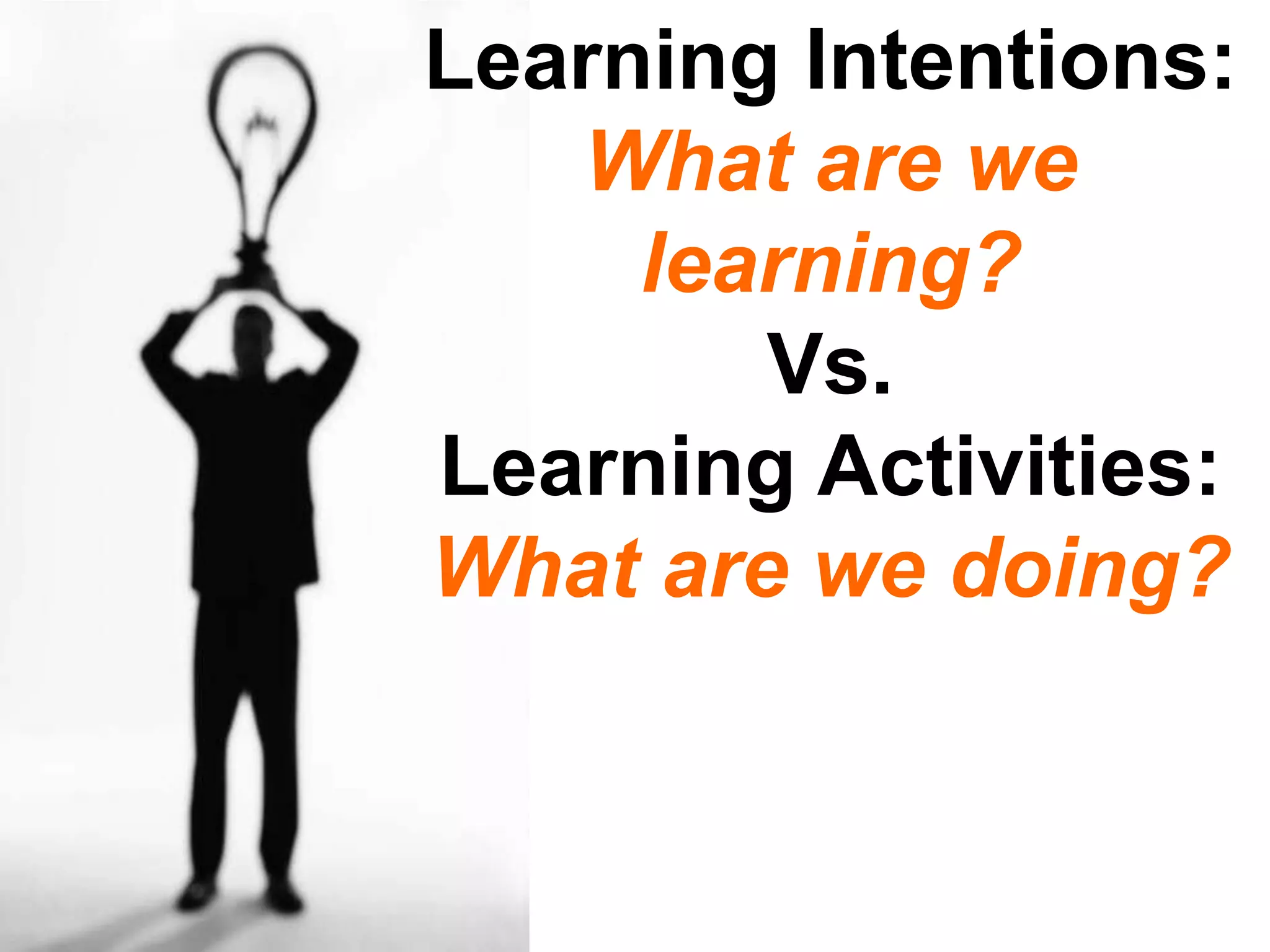
Learning Intentions:
What are we
learning?
Vs.
Learning Activities:
What are we doing?
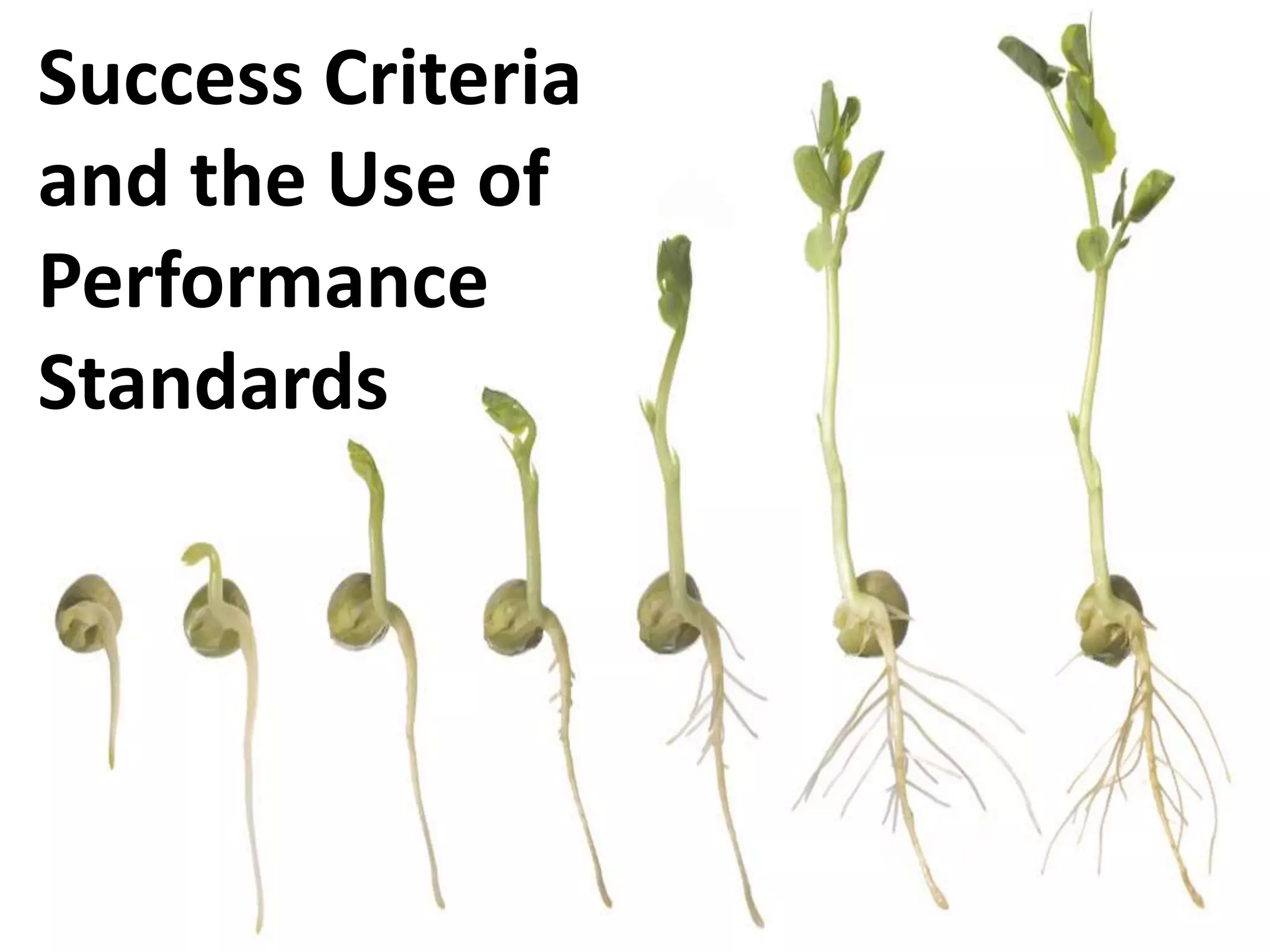
Success Criteria
and the Use of
Performance
Standards
Formative Assessment:
1.Learning Intentions and Success
Criteria
2.Activities Designed to Elicit Evidence
of Learning
3.Feedback that Moves Learning
Forward
4.Peer Assessment
5.Student Ownership of Learning
Determine
Acceptable Evidence
Performance
Tasks
Formative Assessment:
1.Learning Intentions and Success
Criteria
2.Activities Designed to Elicit Evidence
of Learning
3.Feedback that Moves Learning
Forward
4.Peer Assessment
5.Student Ownership of Learning
Constantly weighing the pig
won’t make it fatter...

The Benefits of Formative Assessment
Striking a New Balance: How can teachers
increase their use of formative assessment and
decrease their use of summative assessment?
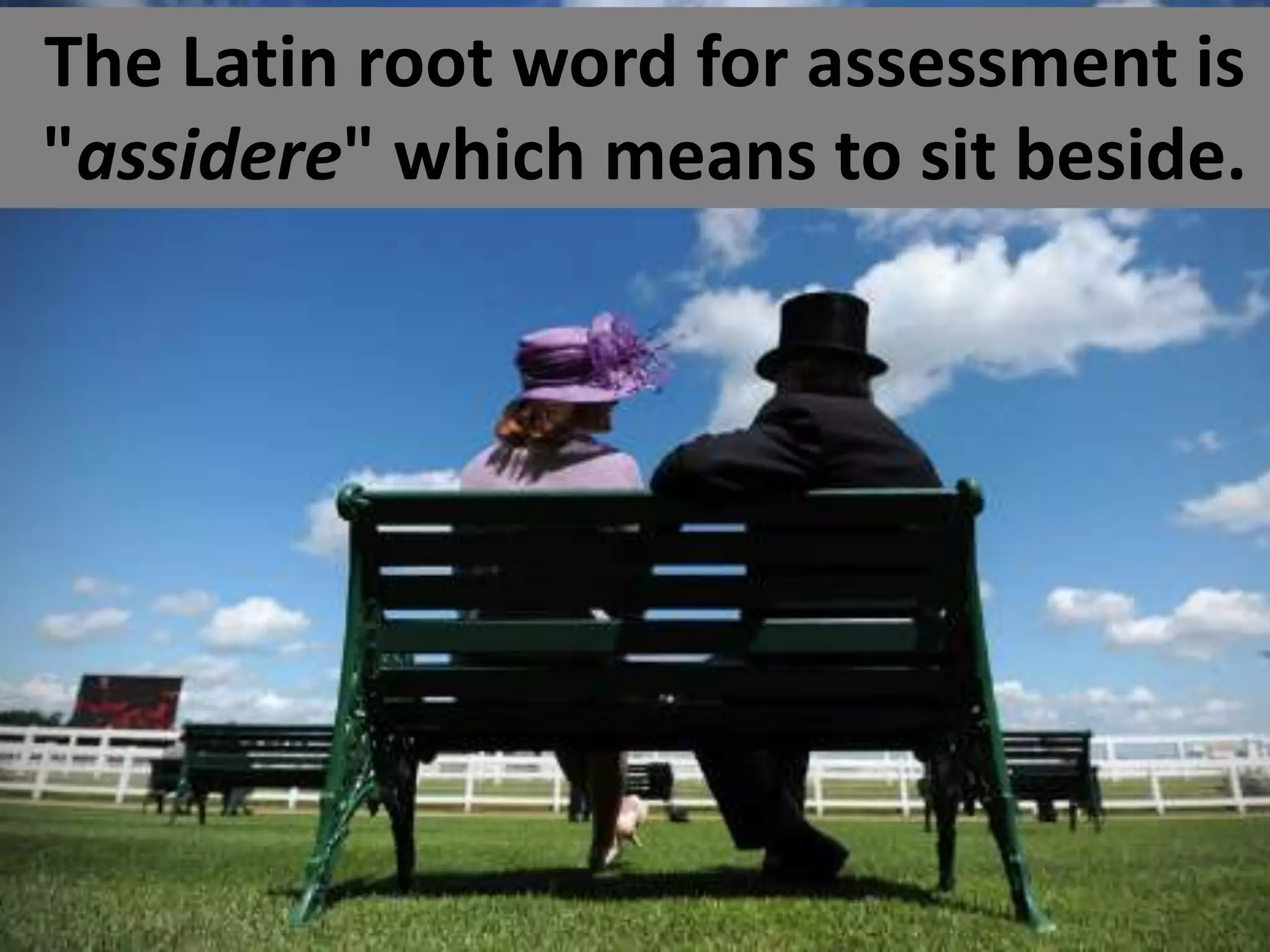
The Latin root word for assessment is
"assidere" which means to sit beside.
Formative Assessment:
1.Learning Intentions and Success
Criteria
2.Activities Designed to Elicit Evidence
of Learning
3.Feedback that Moves Learning
Forward
4.Peer Assessment
5.Student Ownership of Learning
“Covering”
Curriculum
The Prescribed
Learning Outcomes
are the goals, not
content coverage.
Use the textbook as a
resource, not the
syllabus.
Summative Assessme
Summative Assessment Activities

- Students demonstrate knowledge /
skills on which they have had
opportunity to practice
- Are based on known criteria
- Focus primarily on individual student
performance
- Usually broader – integrate important
skills and knowledge
- Inform report cards
Ken O’Connor, How to Grade for Learning
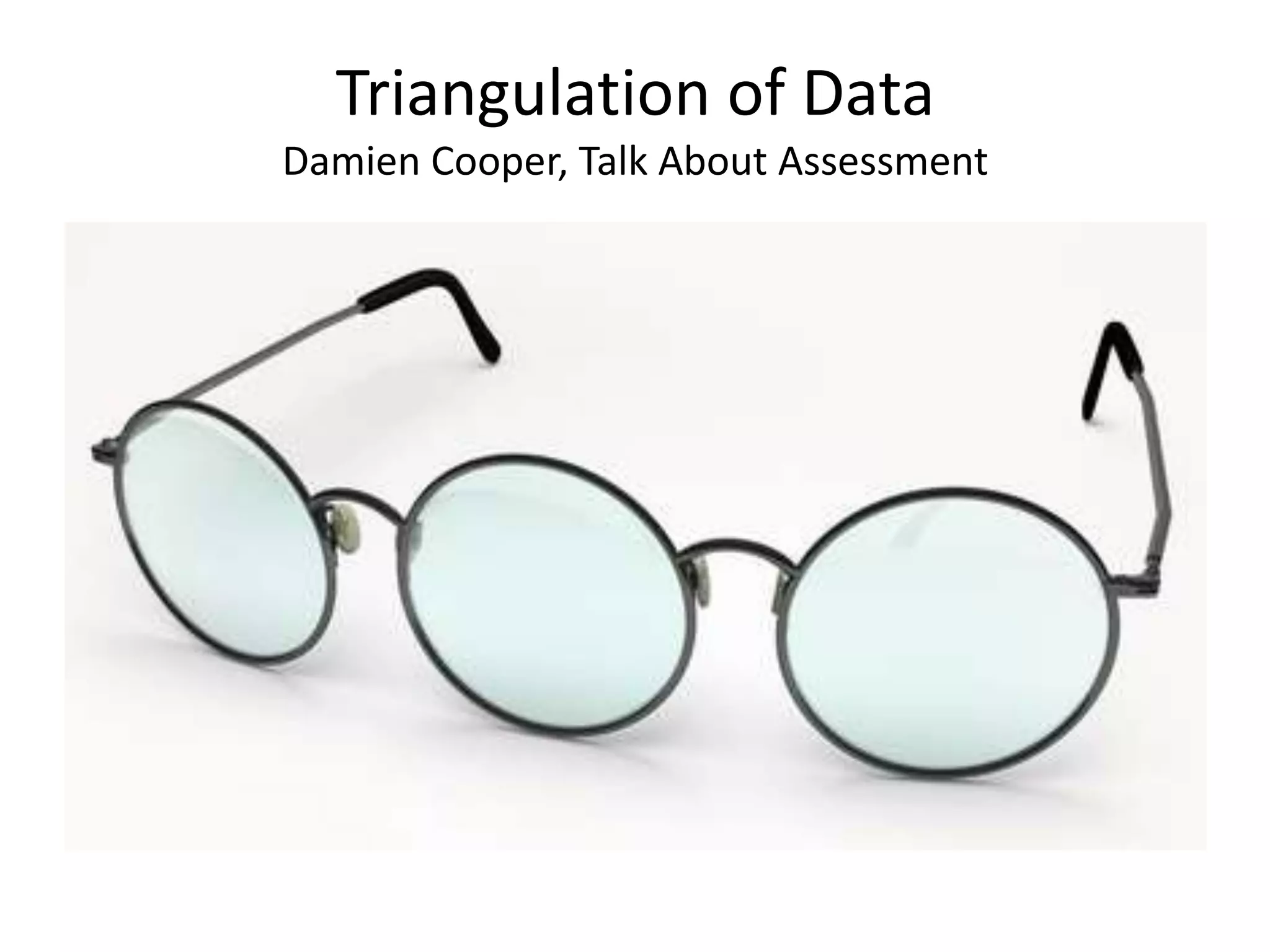
Triangulation of Data
Damien Cooper, Talk About Assessment
Performance Task, Oral Conference,
Written Test Data
Authentic Tasks =
What Big People Do
Grant Wiggins
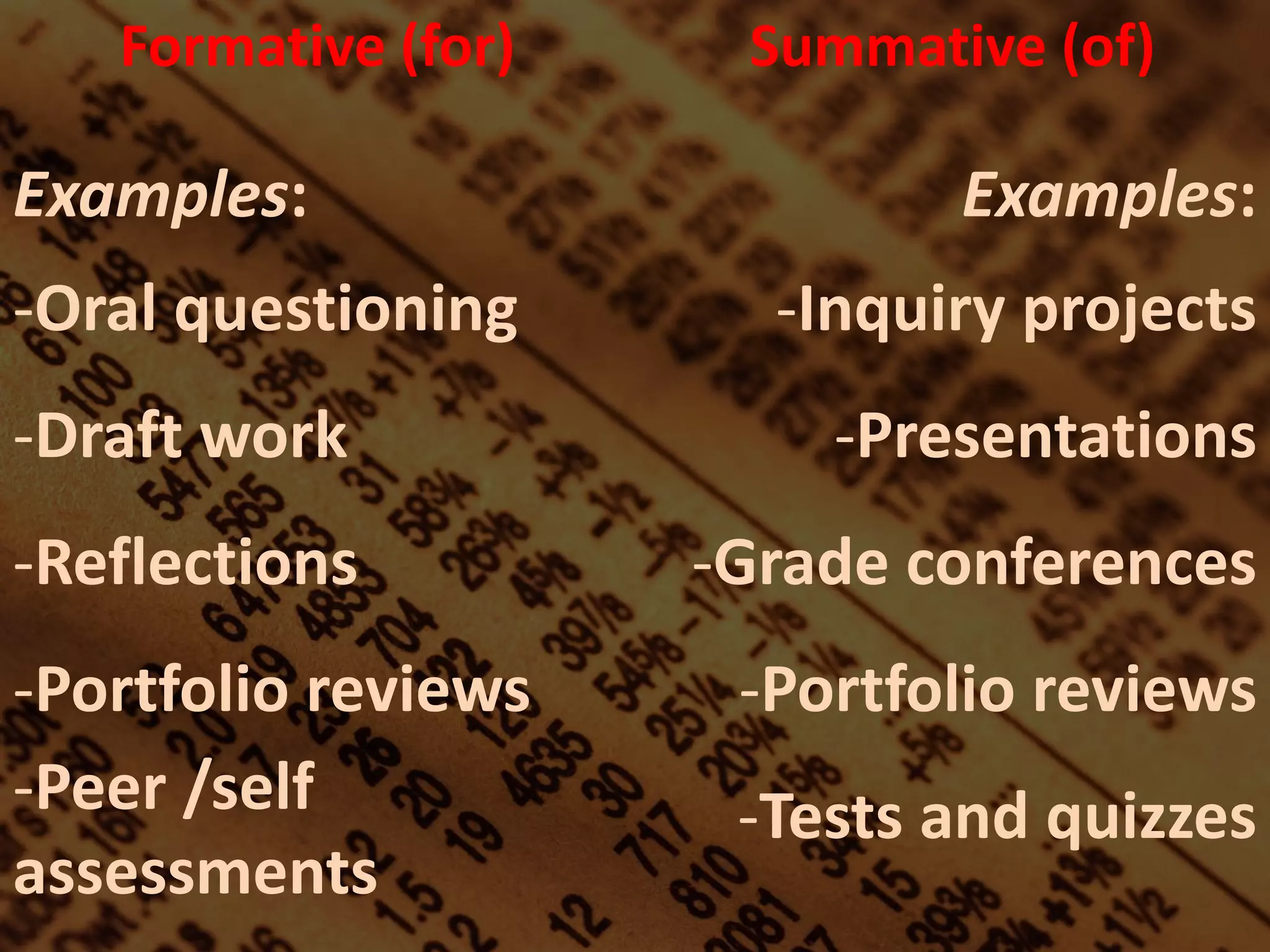
Formative (for)

Examples:
-Oral questioning

Summative (of)

Examples:
-Inquiry projects

-Draft work

-Presentations

-Reflections

-Grade conferences

-Portfolio reviews
-Peer /self
assessments

-Portfolio reviews

-Tests and quizzes
Communicating Student
Learning (Reporting)
• Shift from “reporting” to “communicating
student learning”
• Report on core competencies and key areas
of learning
• Focus on learning standards (curricular
competencies and content/concepts) in
areas of learning (subjects)
• Use clear performance standards-based
language
• Move toward meaningful
descriptions/collections/demonstrations of
student learning
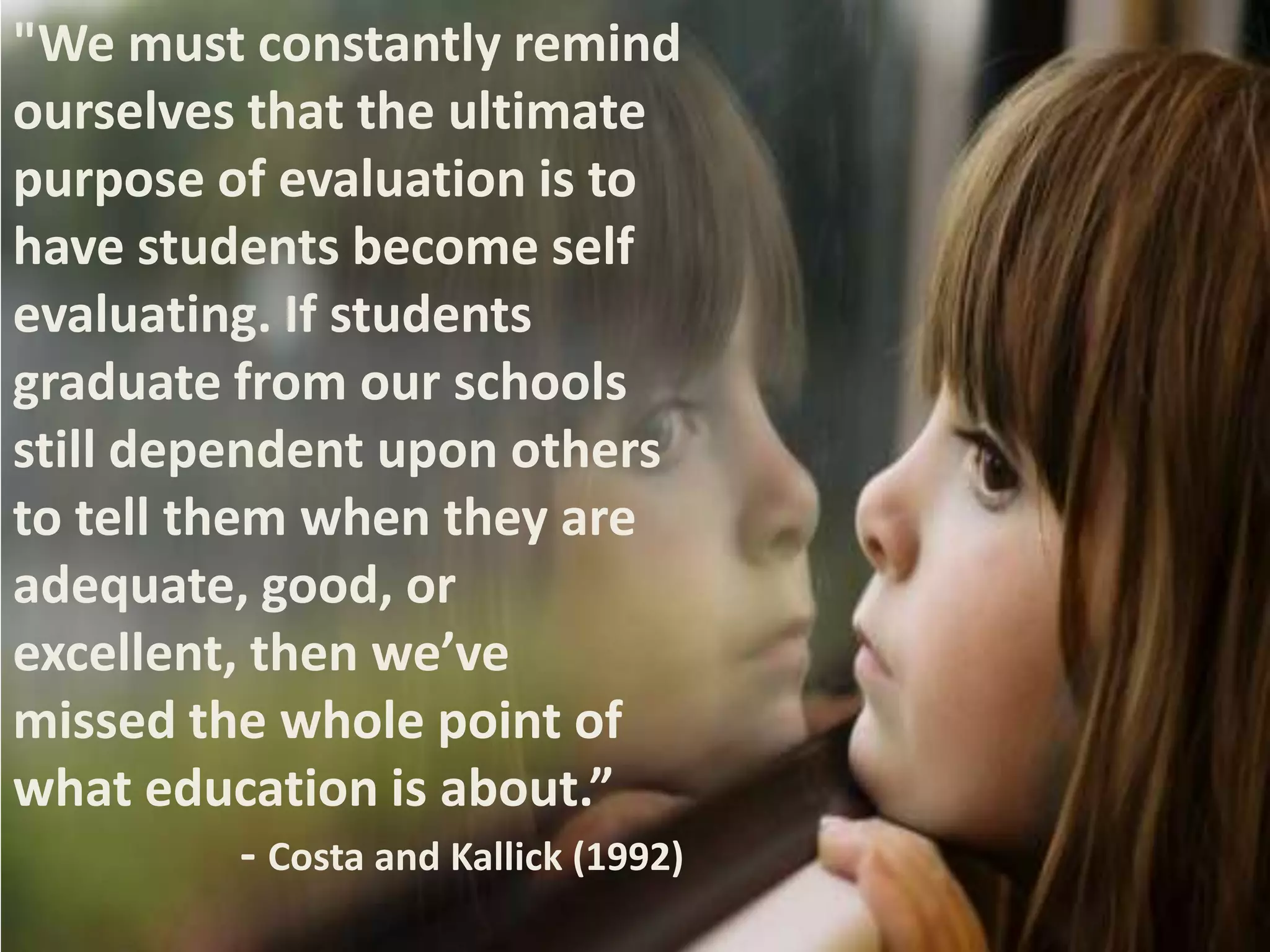
"We must constantly remind
ourselves that the ultimate
purpose of evaluation is to
have students become self
evaluating. If students
graduate from our schools
still dependent upon others
to tell them when they are
adequate, good, or
excellent, then we’ve
missed the whole point of
what education is about.”
- Costa and Kallick (1992)
“We know that sustained, collaborative,
inquiry based professional development
can help teachers develop new
understandings and approaches.”
Grade wide, interdisciplinary teaching
teams working on shared goals can make
a significant difference in student
learning.
Grading Practices That
Support Learning…

Teachers and
departments have a
shared understanding
or definition of each
grade or performance
level.
Contact Information

Jonathan Vervaet
Email: jonathanvervaet@gmail.com
or
Twitter: @jonathanvervaet

Planning With the End in Mind: Approaches to Summative Assessment

Editor's Notes

  • #3 JonathanLearning Intentions, Universal Designs for Learning, Backwards Design, Essential Questions, Enduring UnderstandingsWhatever way teachers choose to do it we are planning with the end mind.
  • #4 JonathanLearning Intentions, Universal Designs for Learning, Backwards Design, Essential Questions, Enduring UnderstandingsWhatever way teachers choose to do it we are planning with the end mind.
  • #5 JonathanLearning Intentions, Universal Designs for Learning, Backwards Design, Essential Questions, Enduring UnderstandingsWhatever way teachers choose to do it we are planning with the end mind.
  • #11 Nancy
  • #20 Practice with out penalty.Descriptive feedback related to agreed upon criteria / performance standards.Raises level of student attainment, and helps struggling students the most.
  • #21 Jonathan
  • #32 Nancy
  • #39 Nancy