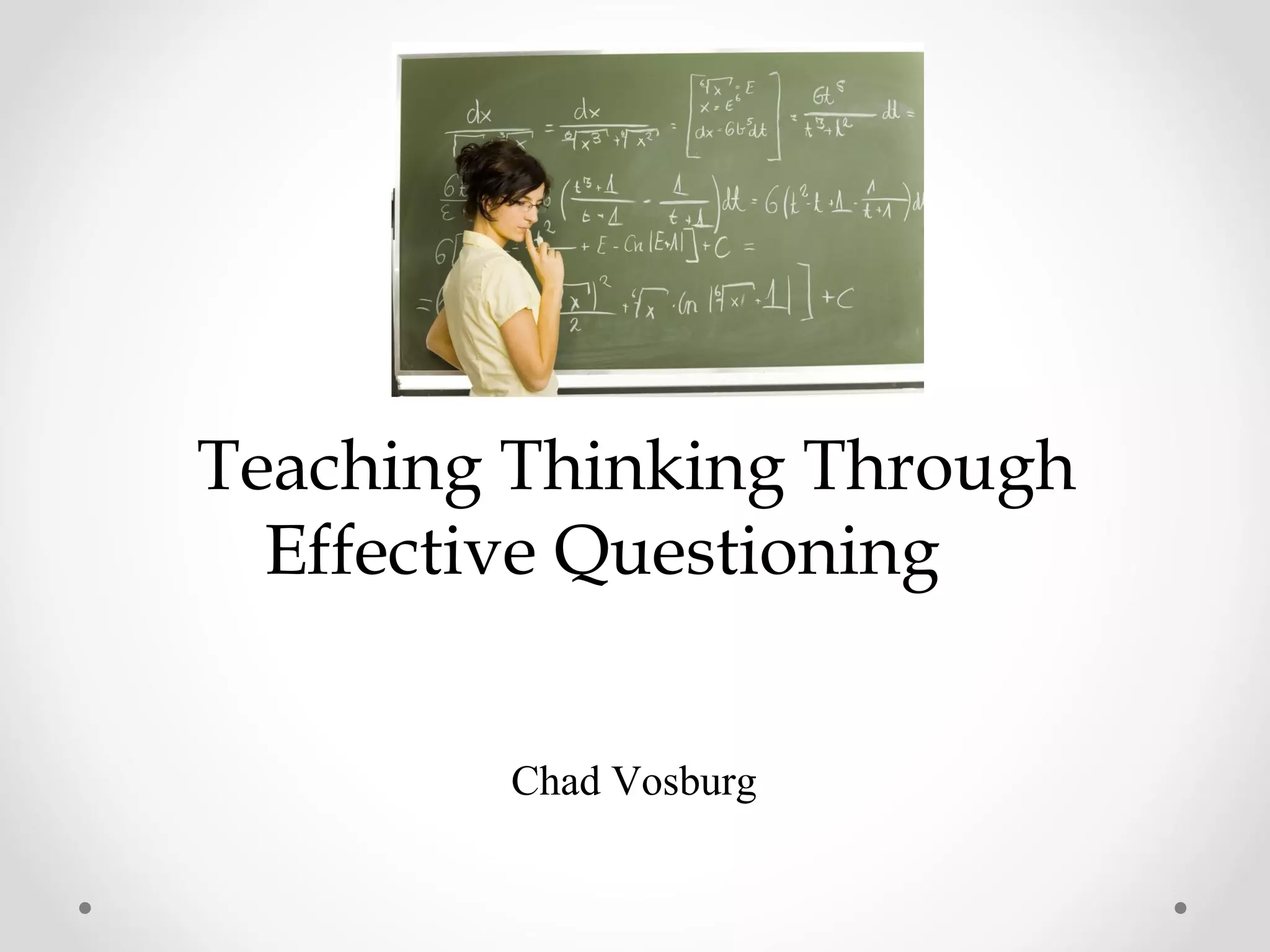
Teaching Thinking Through
  Effective Questioning


        Chad Vosburg
“The mind is not a vessel to be
 filled, but a fire to be ignited.”
 (Plutarch)
What is Higher-Order Thinking?
•   Transformation of information and ideas
•   Synthesise
•   Generalize
•   Explain
•   Hypothesise or arrive at a conclusion.
•   Students engage in construction of knowledge
What is Higher-Order Thinking?
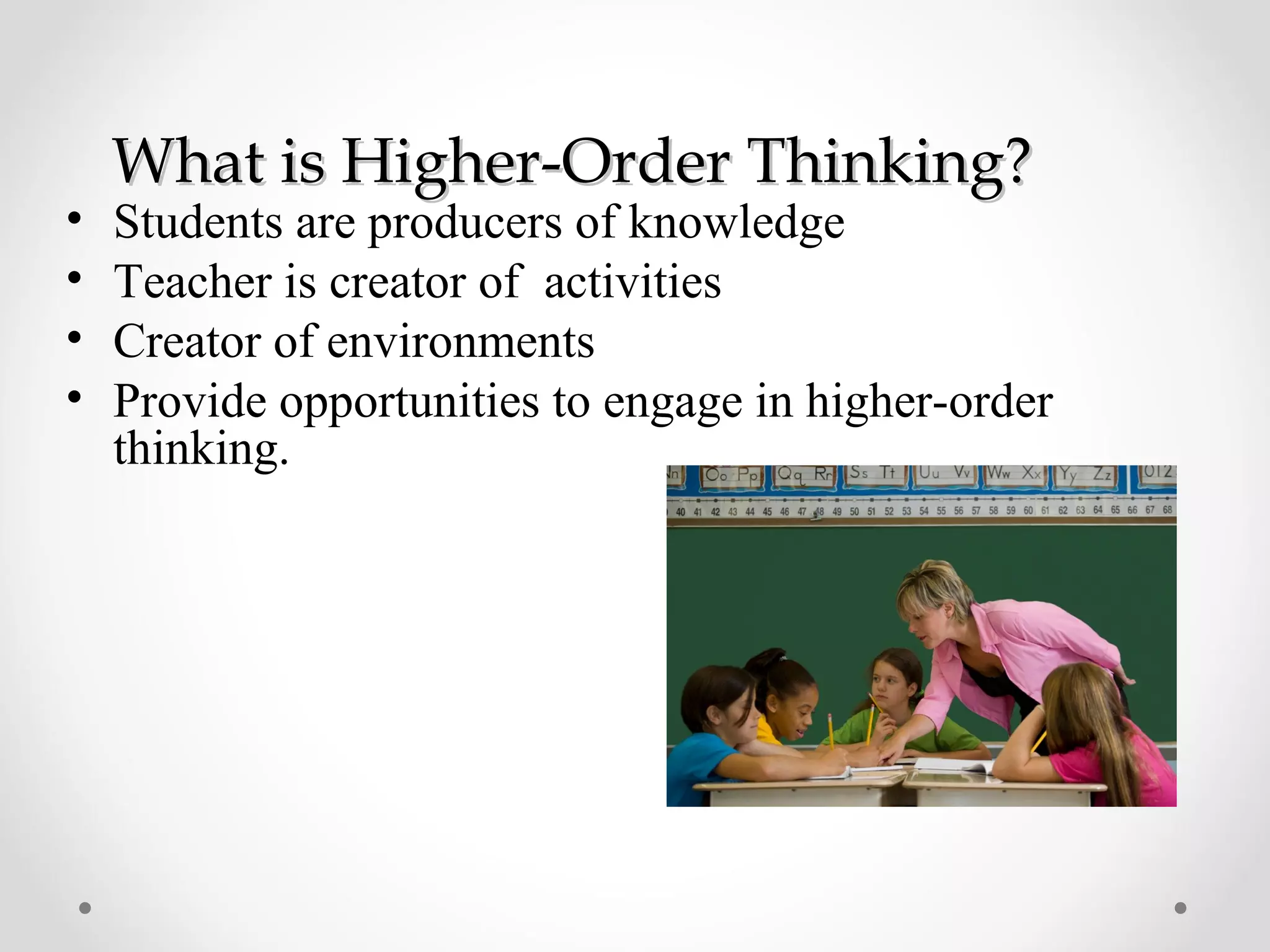
•   Students are producers of knowledge
•   Teacher is creator of activities
•   Creator of environments
•   Provide opportunities to engage in higher-order
    thinking.
Good Science Questions Help Students:
•   Make sense of concept
•   Provide open-ended opportunities
•   Unravel misconceptions
•   Encourage students to make connections
•   Accessible to all students
•   Lead students to wonder more about a topic
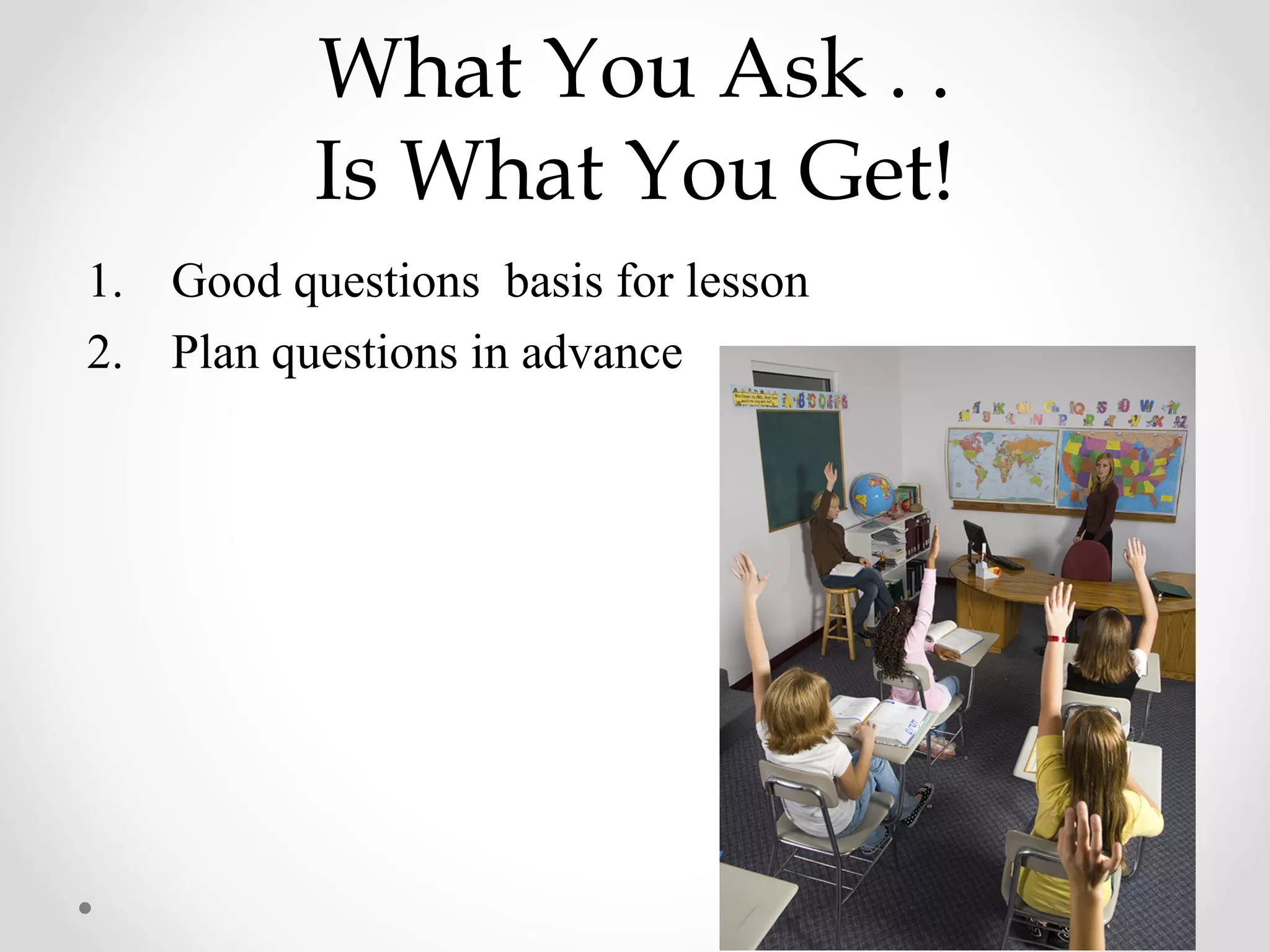
What You Ask . .
          Is What You Get!
1. Good questions basis for lesson
2. Plan questions in advance
How To Create Good Questions
Method 1 - Working Backward

Step 1: Identify a topic or lesson
Step 2: Think of a closed question and answer
Step 3: Create question that address answer
Method 1- Example
Step 1: Topic Precipitation in Maryland

Step 2: Closed question: The average rainfall in 5
  counties in Maryland are 27cm, 39cm, 45cm, 51cm,
  33cm. What is their average rainfall? (39mc)

Step 3: Good Question: Rainfall was averaged in 5
  Maryland counties. The average is 39cm. How old
  much rainfall could each county receive?
Method 2-Adapting a Standard Question

Step 1: Identify a topic
Step 2: Think of a standard question
Step 3: Adapt it to make a good
        question
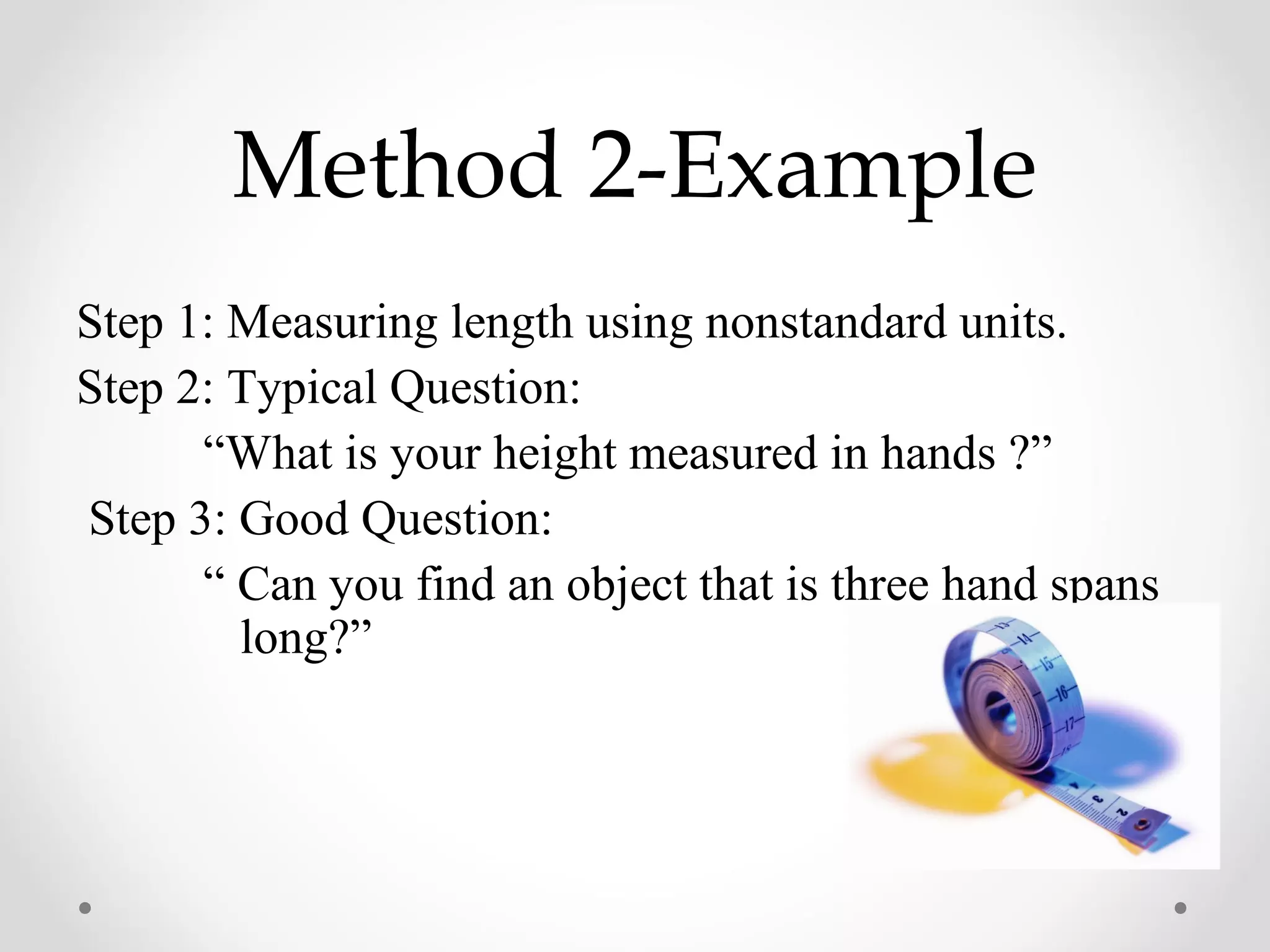
Method 2-Example
Step 1: Measuring length using nonstandard units.
Step 2: Typical Question:
      “What is your height measured in hands ?”
Step 3: Good Question:
      “ Can you find an object that is three hand spans
        long?”
Teacher’s Responsibilities
1.   Master content in the question
2.   Present question clearly
3.   Allow for individual approaches, methods, answers
4.   Use concrete materials
5.   Allow time for discovery
6.   Allow time for consolidation of answers
“A good teacher makes you
 think even when you don’t
 want to.”

            (Fisher, 1998, Teaching Thinking)
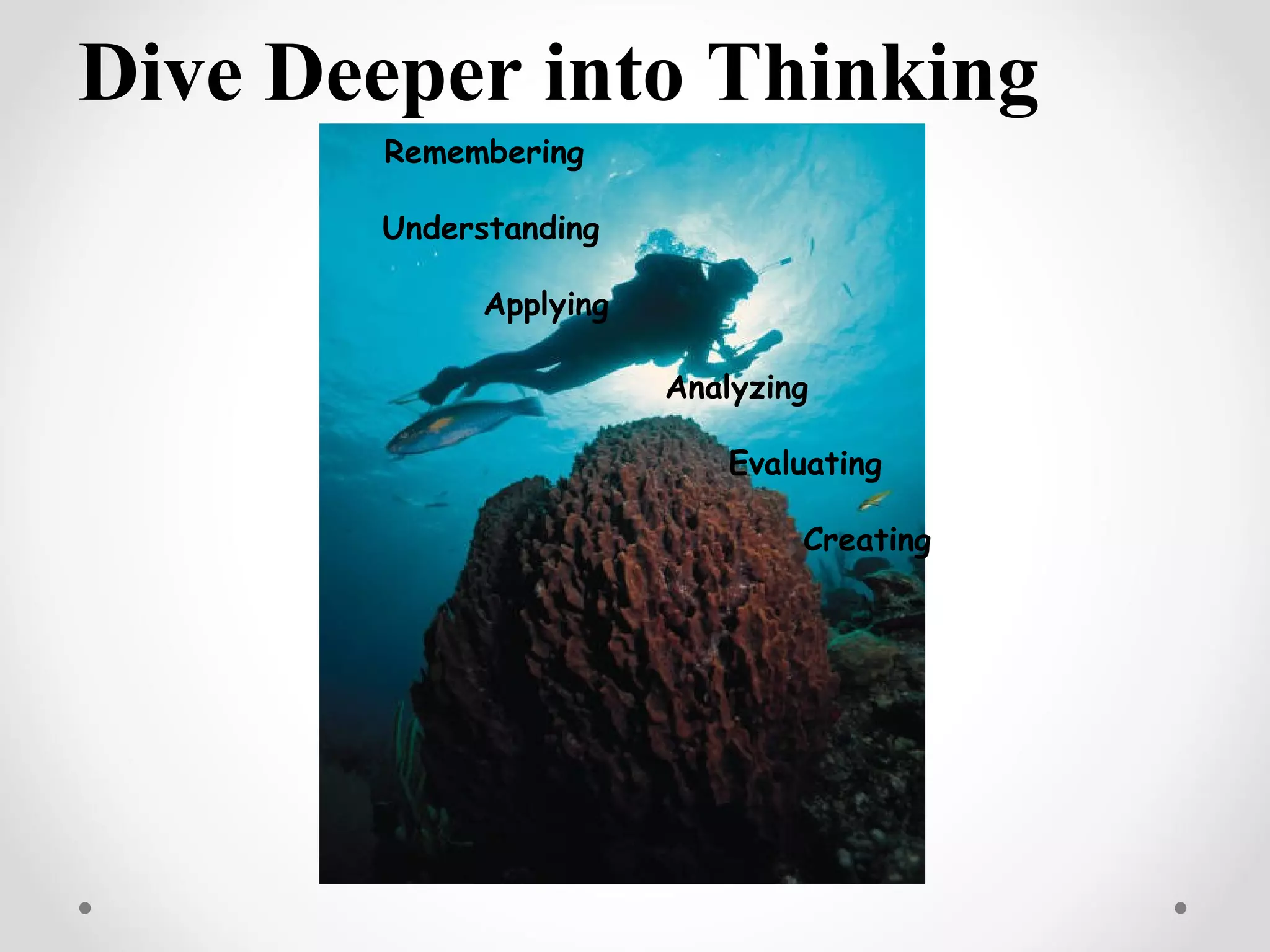
Dive Deeper into Thinking
       Remembering

       Understanding

             Applying

                        Analyzing

                            Evaluating

                                Creating
References
Fisher, R. (1998). Teaching thinking. London: Cassell.

Higher Order Thinking Questions

  • 1.
    Teaching Thinking Through Effective Questioning Chad Vosburg
  • 2.
    “The mind isnot a vessel to be filled, but a fire to be ignited.” (Plutarch)
  • 3.
    What is Higher-OrderThinking? • Transformation of information and ideas • Synthesise • Generalize • Explain • Hypothesise or arrive at a conclusion. • Students engage in construction of knowledge
  • 4.
    What is Higher-OrderThinking? • Students are producers of knowledge • Teacher is creator of activities • Creator of environments • Provide opportunities to engage in higher-order thinking.
  • 5.
    Good Science QuestionsHelp Students: • Make sense of concept • Provide open-ended opportunities • Unravel misconceptions • Encourage students to make connections • Accessible to all students • Lead students to wonder more about a topic
  • 6.
    What You Ask. . Is What You Get! 1. Good questions basis for lesson 2. Plan questions in advance
  • 7.
    How To CreateGood Questions Method 1 - Working Backward Step 1: Identify a topic or lesson Step 2: Think of a closed question and answer Step 3: Create question that address answer
  • 8.
    Method 1- Example Step1: Topic Precipitation in Maryland Step 2: Closed question: The average rainfall in 5 counties in Maryland are 27cm, 39cm, 45cm, 51cm, 33cm. What is their average rainfall? (39mc) Step 3: Good Question: Rainfall was averaged in 5 Maryland counties. The average is 39cm. How old much rainfall could each county receive?
  • 9.
    Method 2-Adapting aStandard Question Step 1: Identify a topic Step 2: Think of a standard question Step 3: Adapt it to make a good question
  • 10.
    Method 2-Example Step 1:Measuring length using nonstandard units. Step 2: Typical Question: “What is your height measured in hands ?” Step 3: Good Question: “ Can you find an object that is three hand spans long?”
  • 11.
    Teacher’s Responsibilities 1. Master content in the question 2. Present question clearly 3. Allow for individual approaches, methods, answers 4. Use concrete materials 5. Allow time for discovery 6. Allow time for consolidation of answers
  • 12.
    “A good teachermakes you think even when you don’t want to.” (Fisher, 1998, Teaching Thinking)
  • 13.
    Dive Deeper intoThinking Remembering Understanding Applying Analyzing Evaluating Creating
  • 14.
    References Fisher, R. (1998).Teaching thinking. London: Cassell.