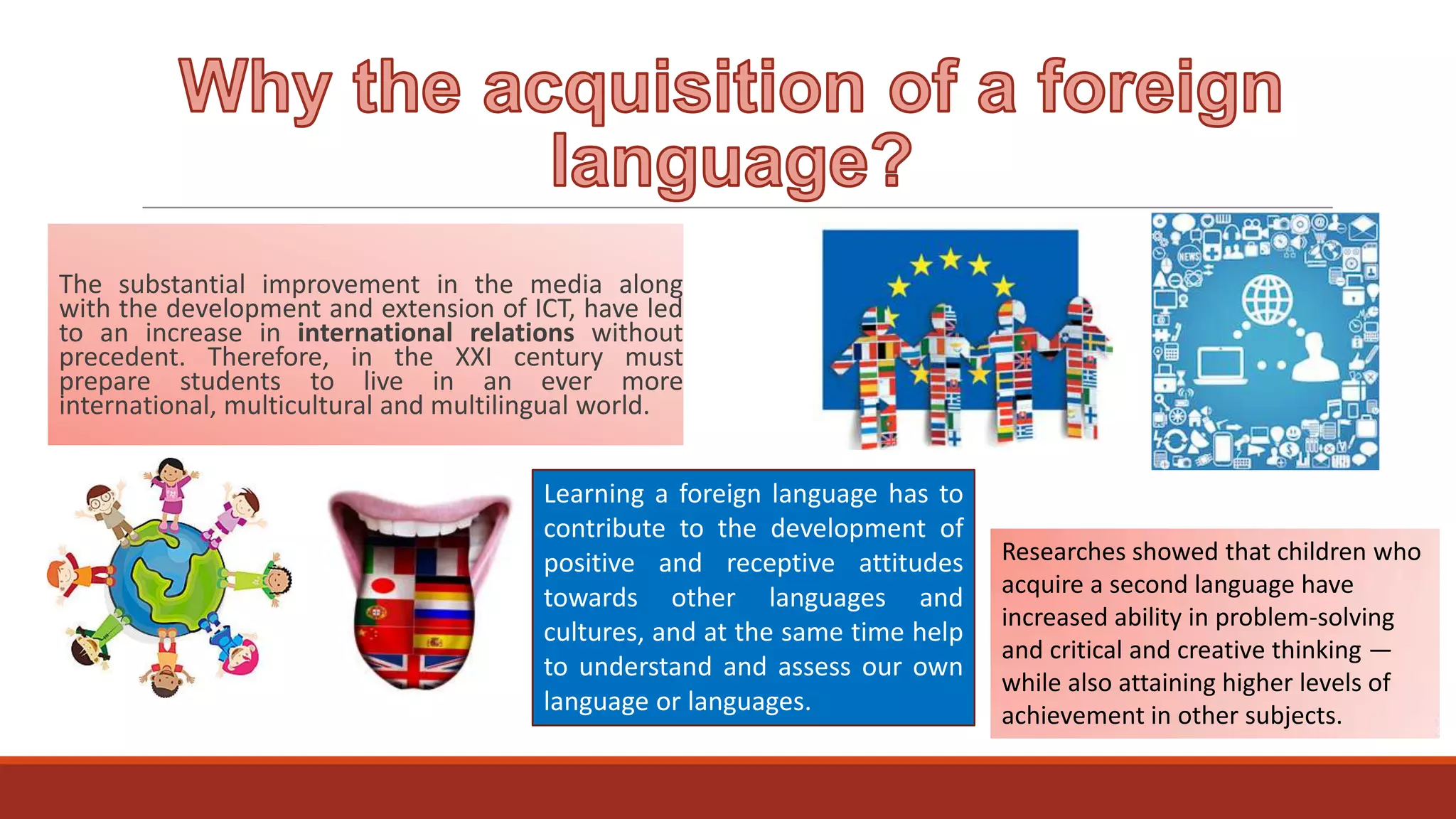
The substantial improvement in the media along
with the development and extension of ICT, have led
to an increase in international relations without
precedent. Therefore, in the XXI century must
prepare students to live in an ever more
international, multicultural and multilingual world.
Learning a foreign language has to
contribute to the development of
positive and receptive attitudes
towards other languages ​and
cultures, and at the same time help
to understand and assess our own
language or languages​​.

Researches showed that children who
acquire a second language have
increased ability in problem-solving
and critical and creative thinking —
while also attaining higher levels of
achievement in other subjects.
Non verbal
communication

Teacher
movement
MoTiVaTiOn
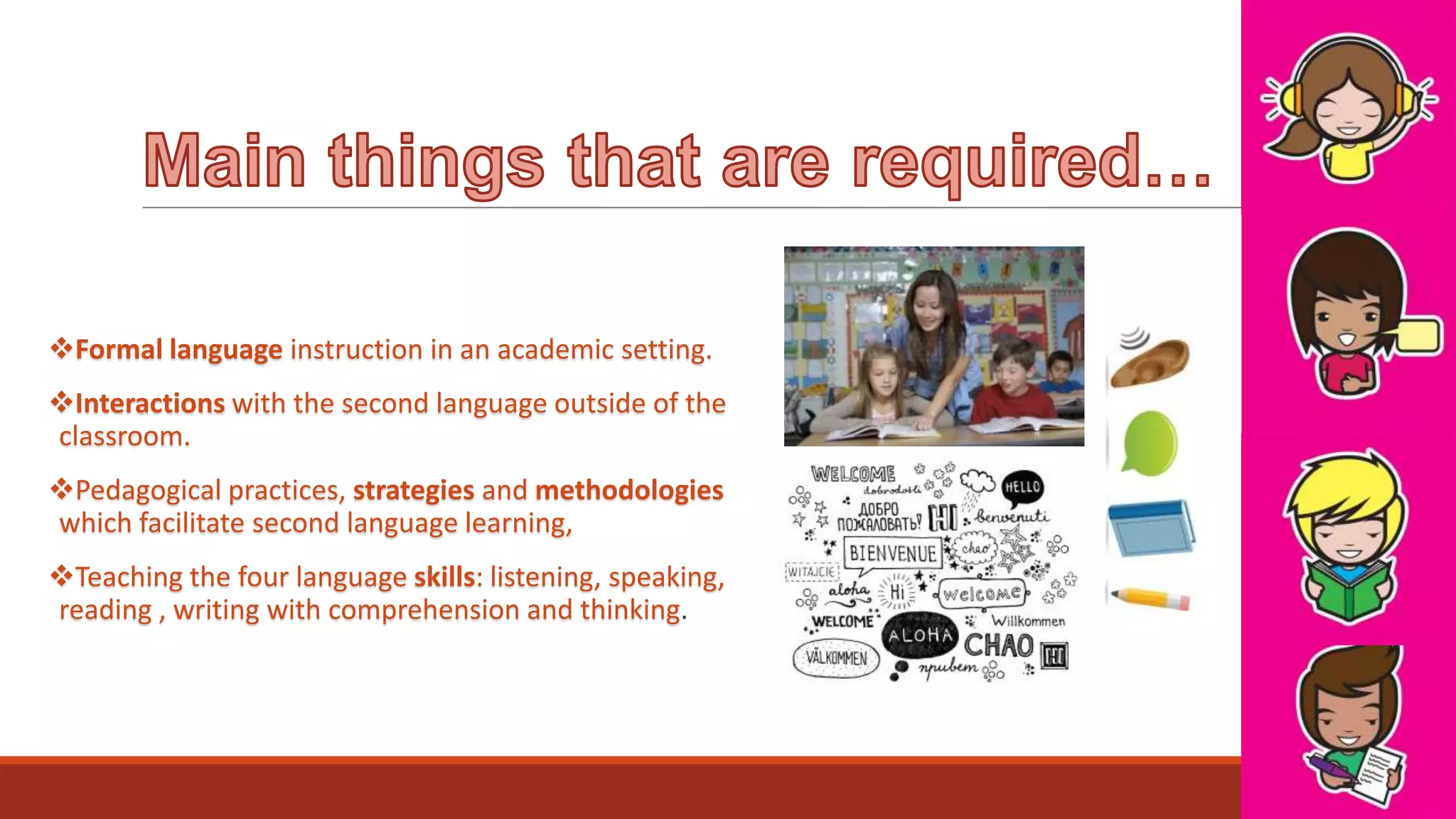
Formal language instruction in an academic setting.

Interactions with the second language outside of the
classroom.
Pedagogical practices, strategies and methodologies
which facilitate second language learning,

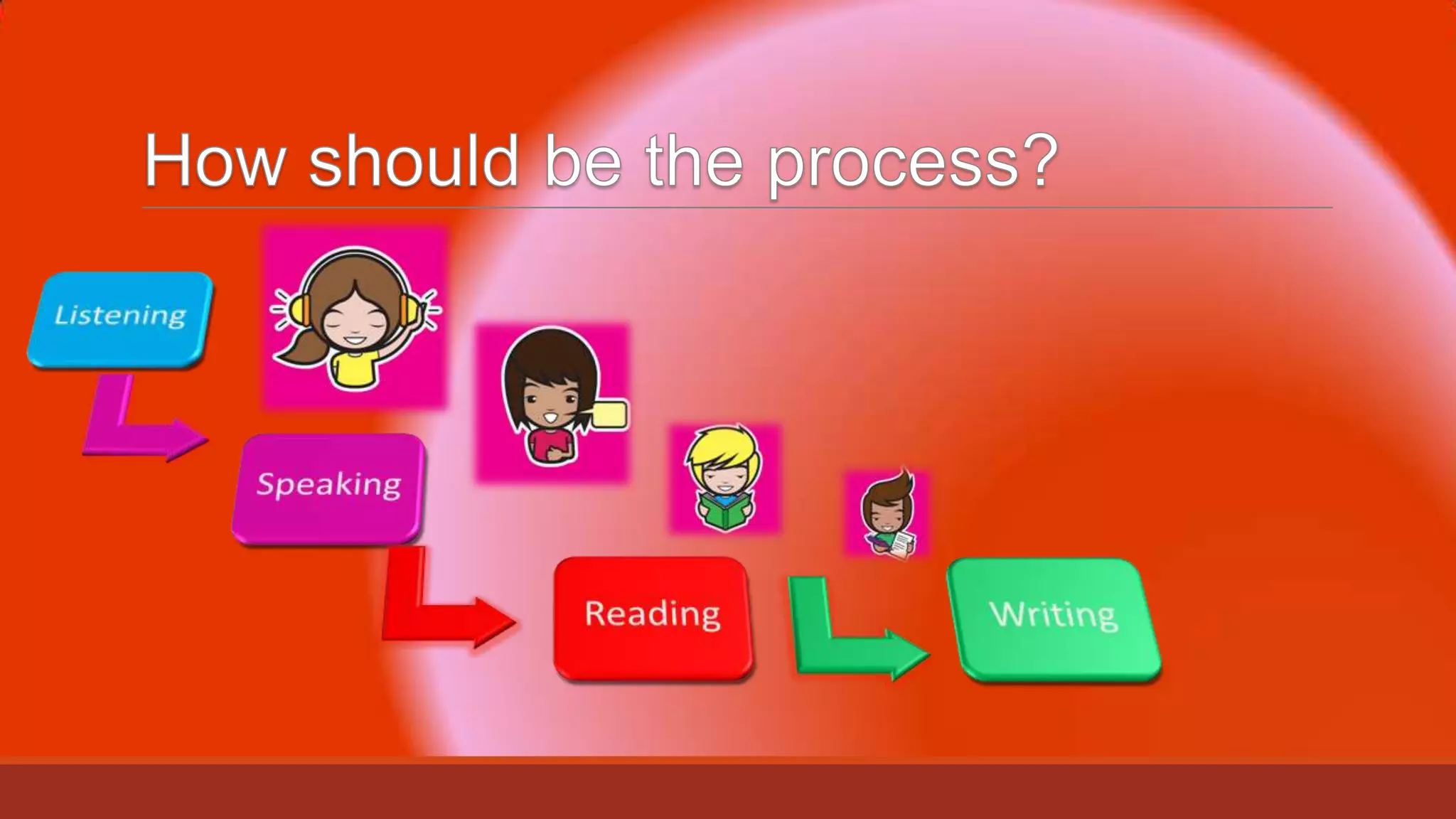
Teaching the four language skills: listening, speaking,
reading , writing with comprehension and thinking.
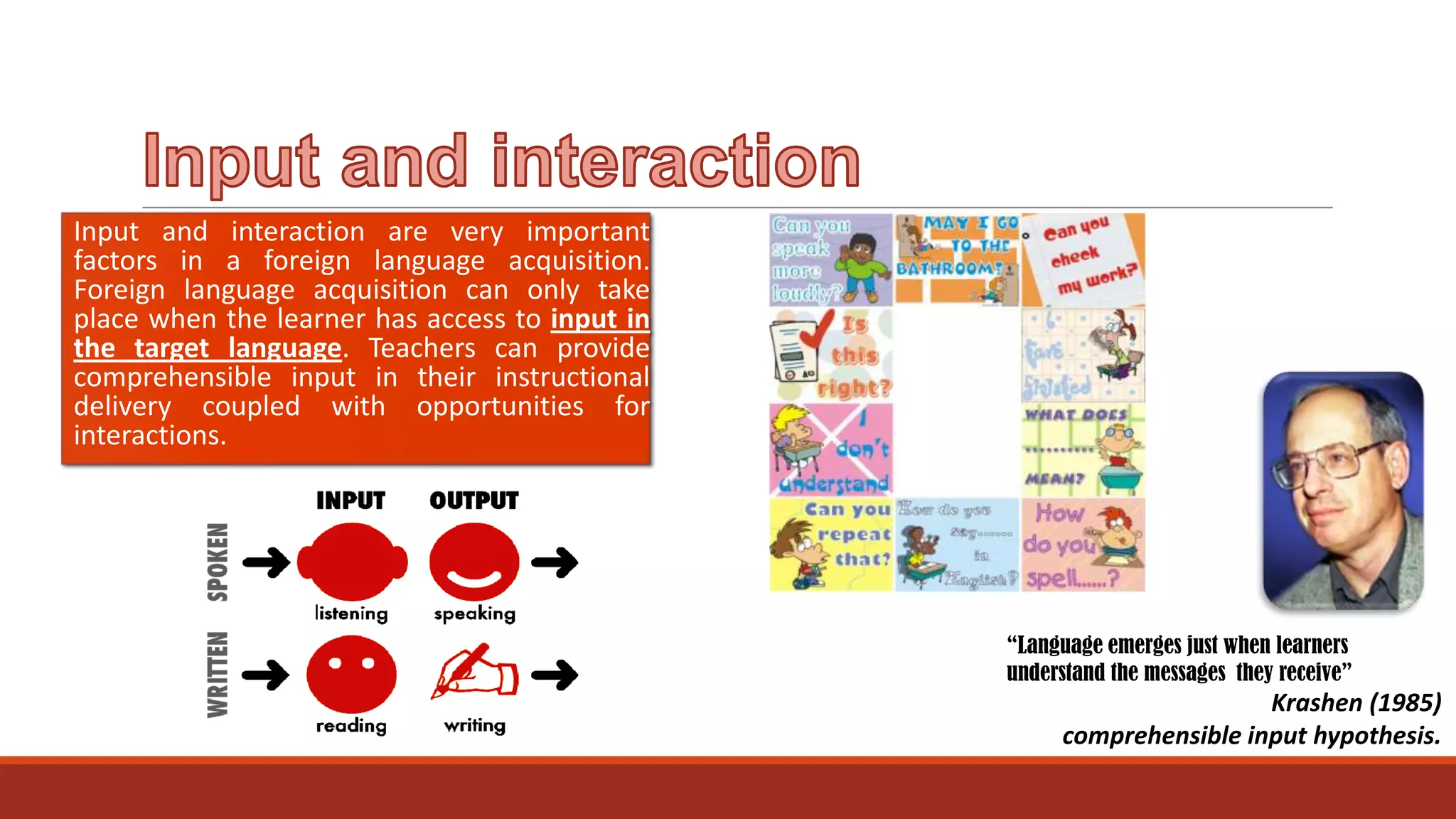
Input and interaction are very important
factors in a foreign language acquisition.
Foreign language acquisition can only take
place when the learner has access to input in
the target language. Teachers can provide
comprehensible input in their instructional
delivery coupled with opportunities for
interactions.

“Language emerges just when learners
understand the messages they receive”

Krashen (1985)
comprehensible input hypothesis.
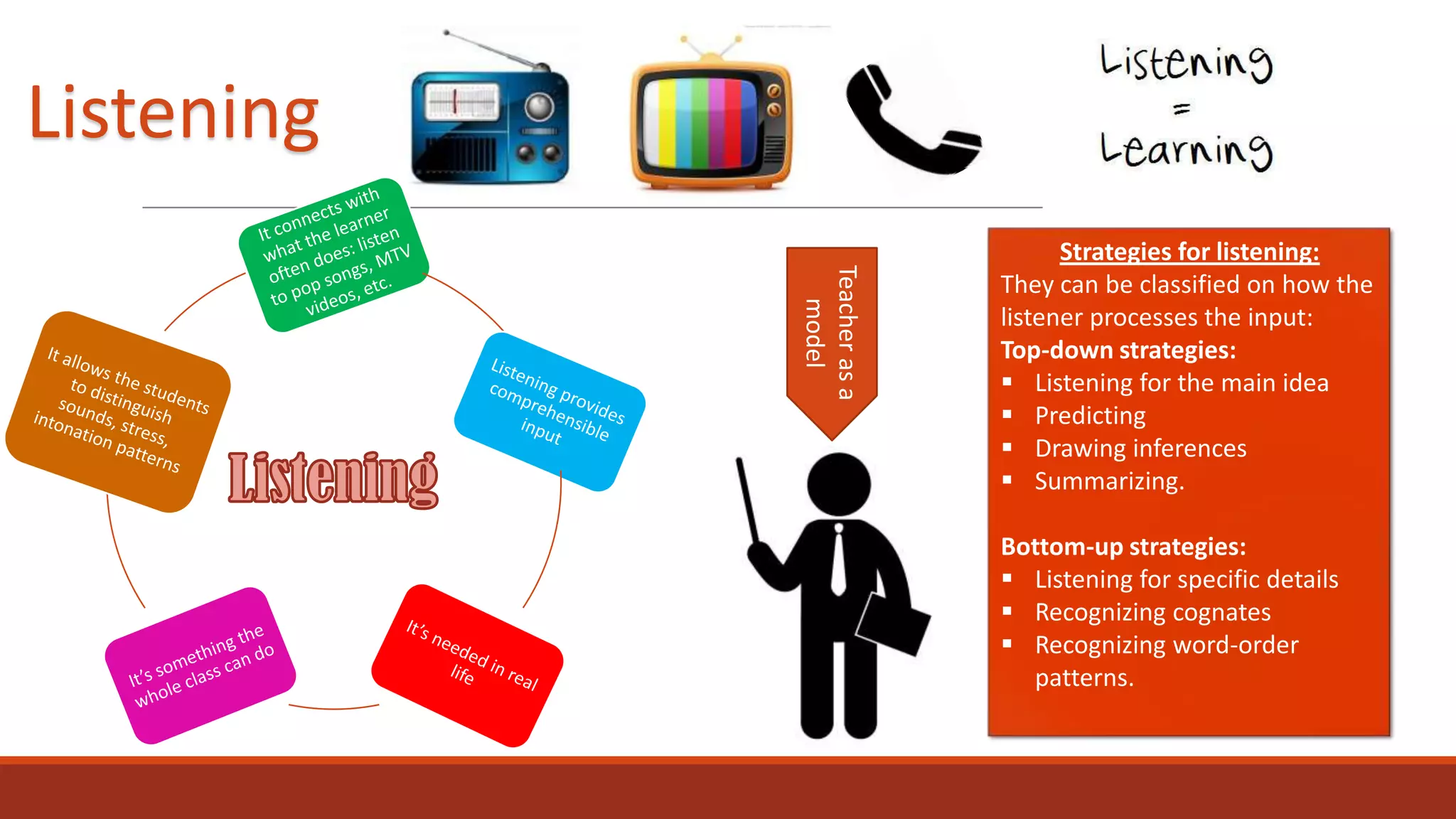
Listening
Teacher as a
model

Strategies for listening:
They can be classified on how the
listener processes the input:
Top-down strategies:
 Listening for the main idea
 Predicting
 Drawing inferences
 Summarizing.
Bottom-up strategies:
 Listening for specific details
 Recognizing cognates
 Recognizing word-order
patterns.
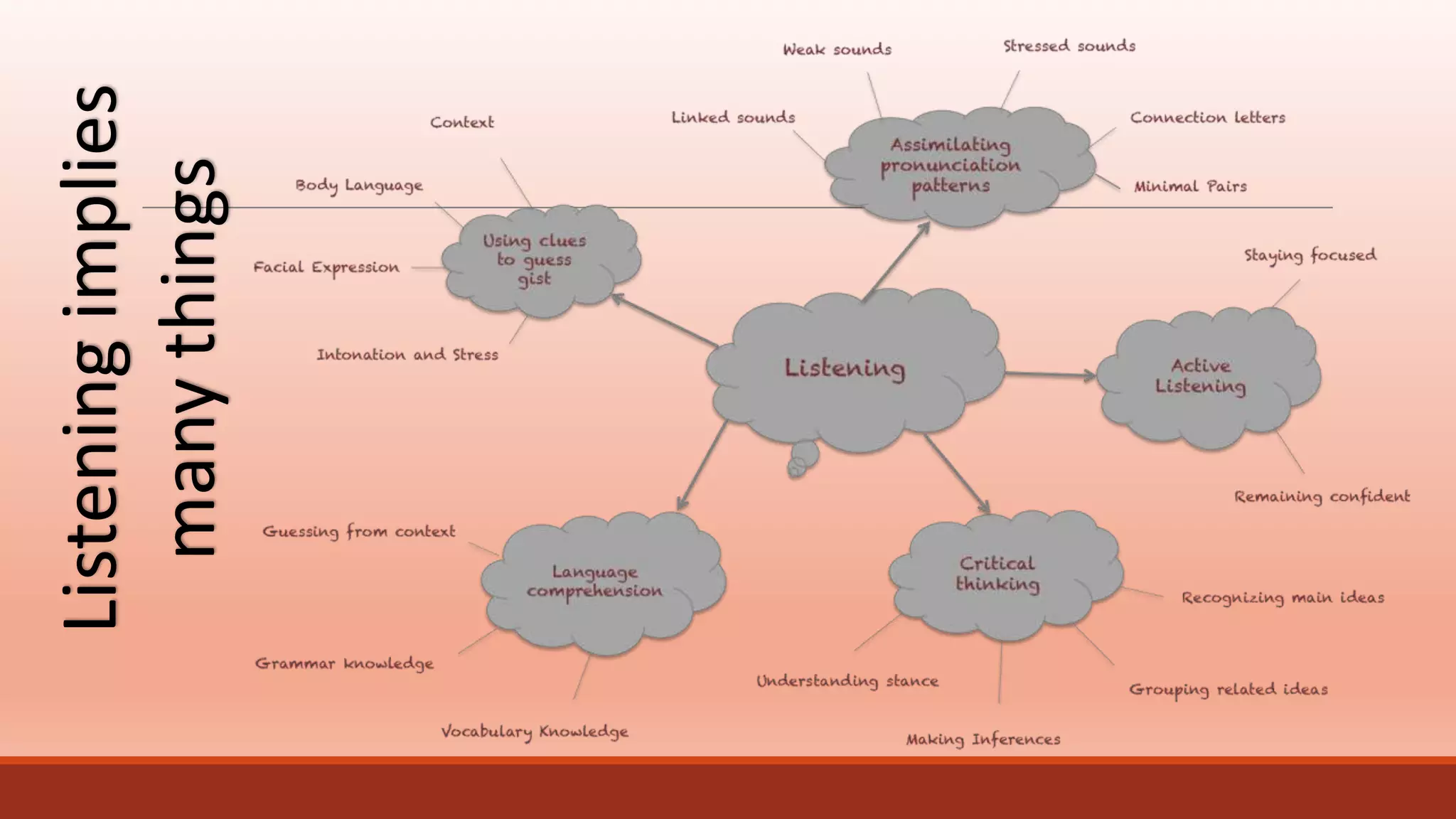
Listening implies
many things
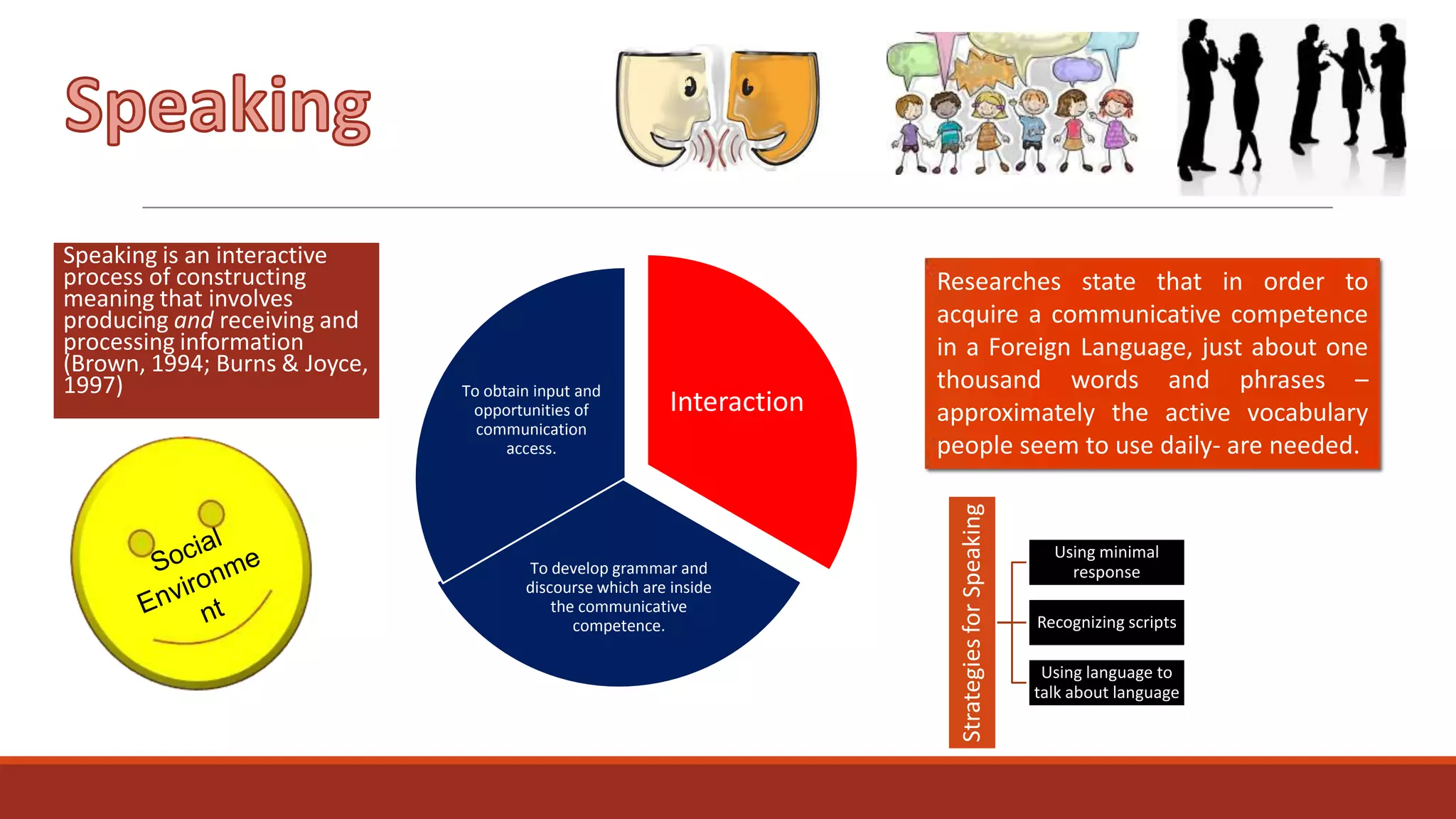
To obtain input and
opportunities of
communication
access.

Interaction

To develop grammar and
discourse which are inside
the communicative
competence.

Researches state that in order to
acquire a communicative competence
in a Foreign Language, just about one
thousand words and phrases –
approximately the active vocabulary
people seem to use daily- are needed.
Strategies for Speaking

Speaking is an interactive
process of constructing
meaning that involves
producing and receiving and
processing information
(Brown, 1994; Burns & Joyce,
1997)

Using minimal
response
Recognizing scripts
Using language to
talk about language
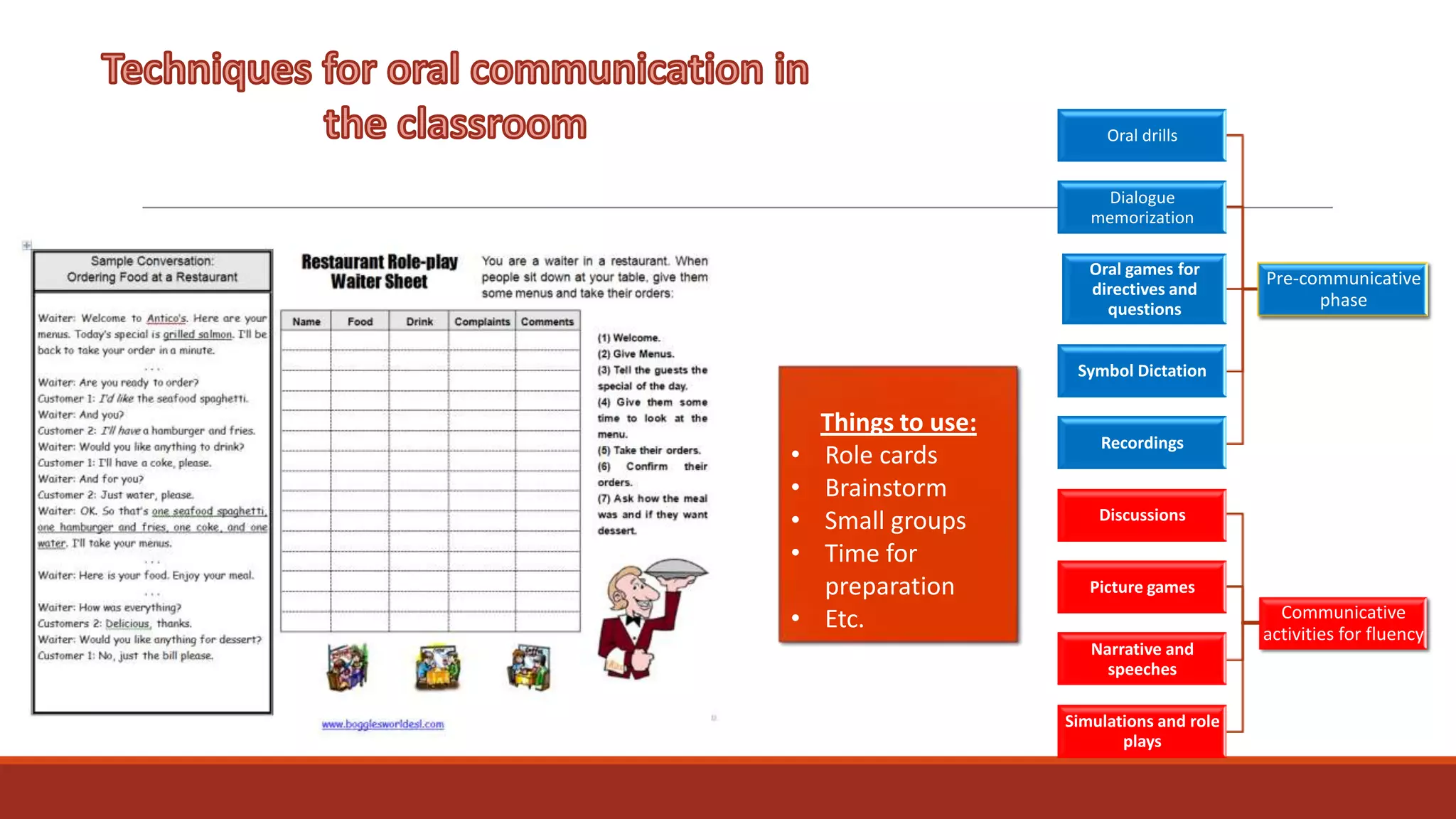
Oral drills
Dialogue
memorization
Oral games for
directives and
questions

Pre-communicative
phase

Symbol Dictation

•
•
•
•
•

Things to use:
Role cards
Brainstorm
Small groups
Time for
preparation
Etc.

Recordings

Discussions

Picture games
Narrative and
speeches
Simulations and role
plays

Communicative
activities for fluency
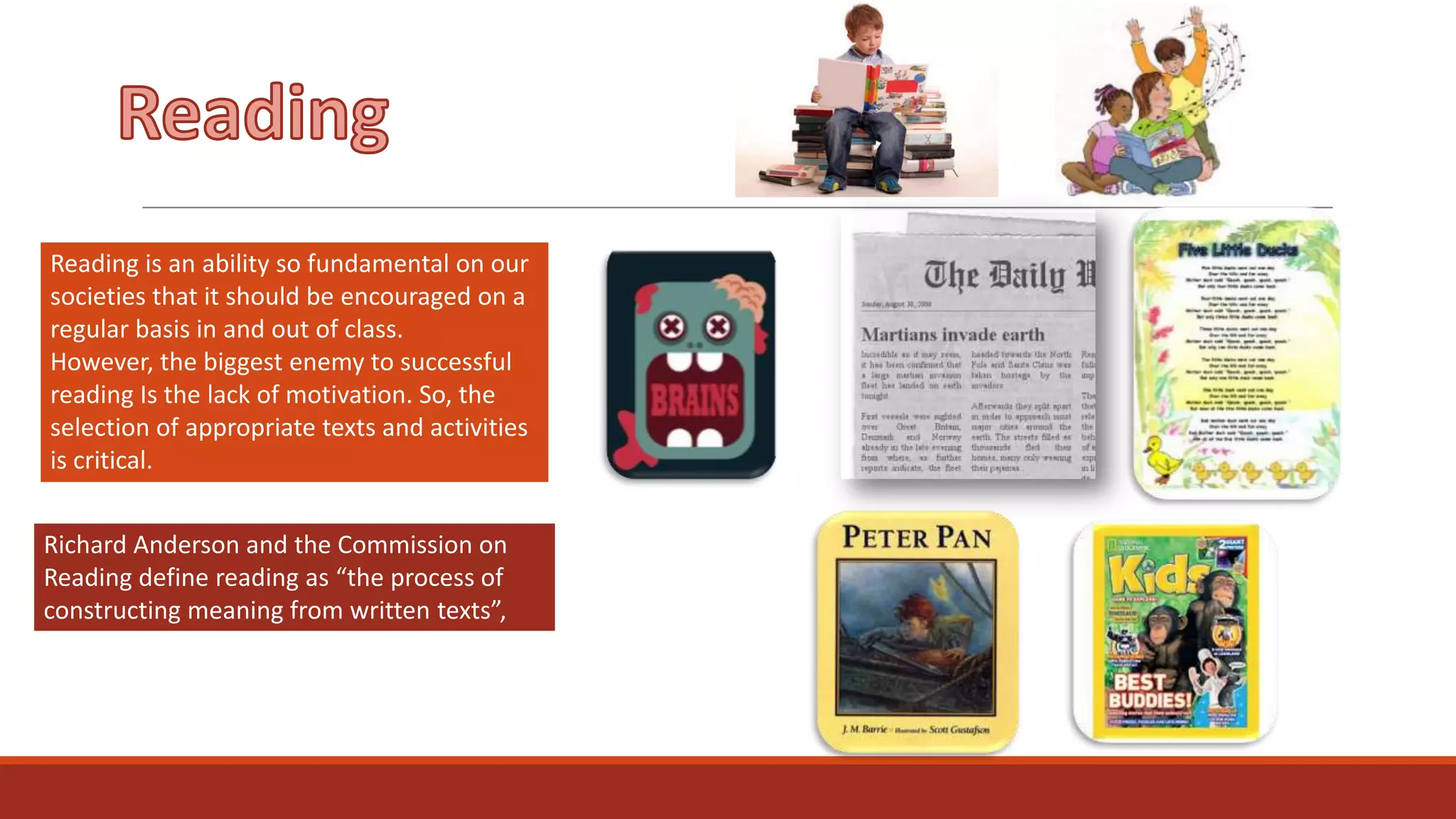
Reading is an ability so fundamental on our
societies that it should be encouraged on a
regular basis in and out of class.
However, the biggest enemy to successful
reading Is the lack of motivation. So, the
selection of appropriate texts and activities
is critical.
Richard Anderson and the Commission on
Reading define reading as “the process of
constructing meaning from written texts”,
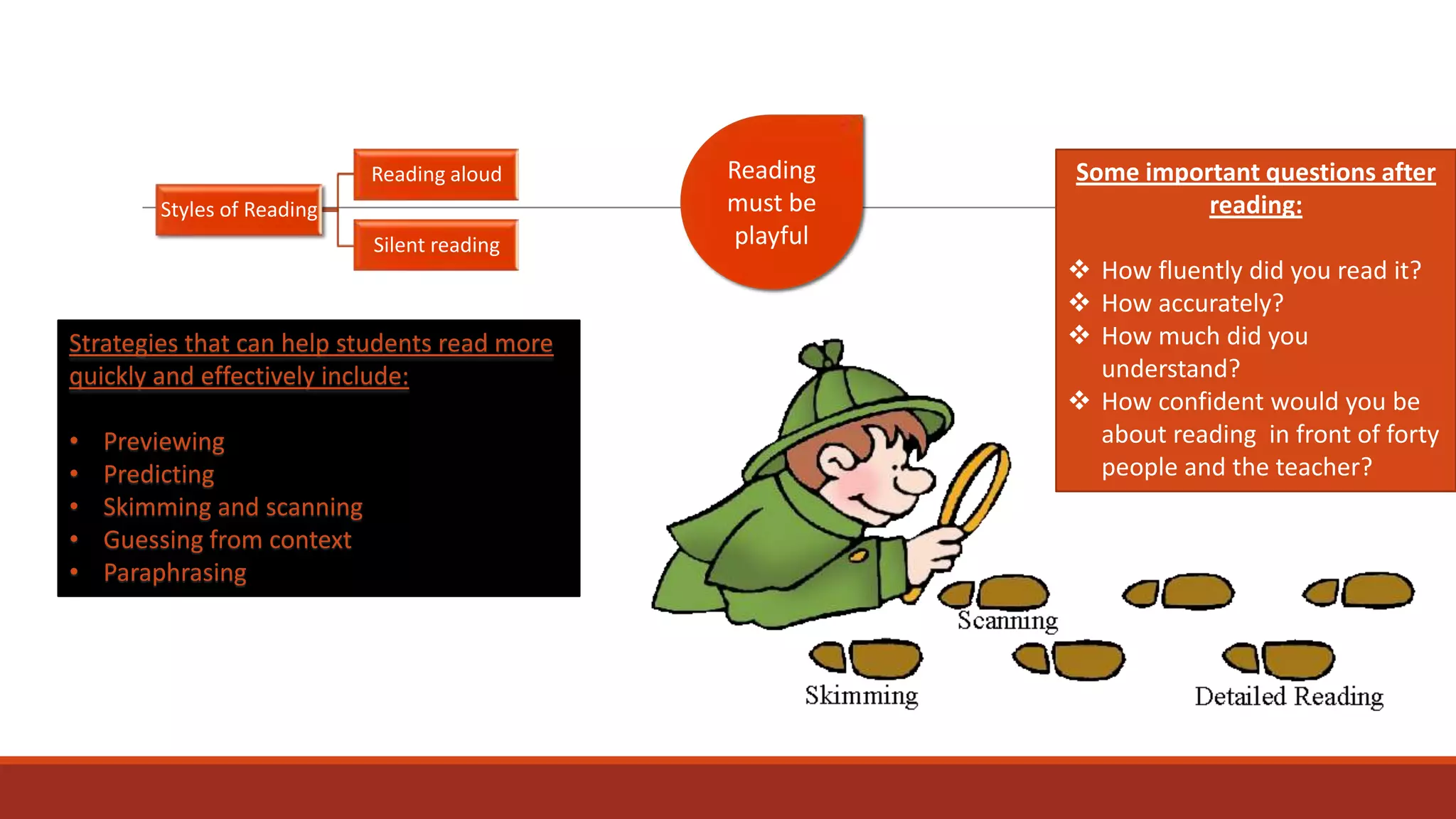
Reading aloud
Styles of Reading
Silent reading

Strategies that can help students read more
quickly and effectively include:

•
•
•
•
•

Previewing
Predicting
Skimming and scanning
Guessing from context
Paraphrasing

Reading
must be
playful

Some important questions after
reading:
 How fluently did you read it?
 How accurately?
 How much did you
understand?
 How confident would you be
about reading in front of forty
people and the teacher?
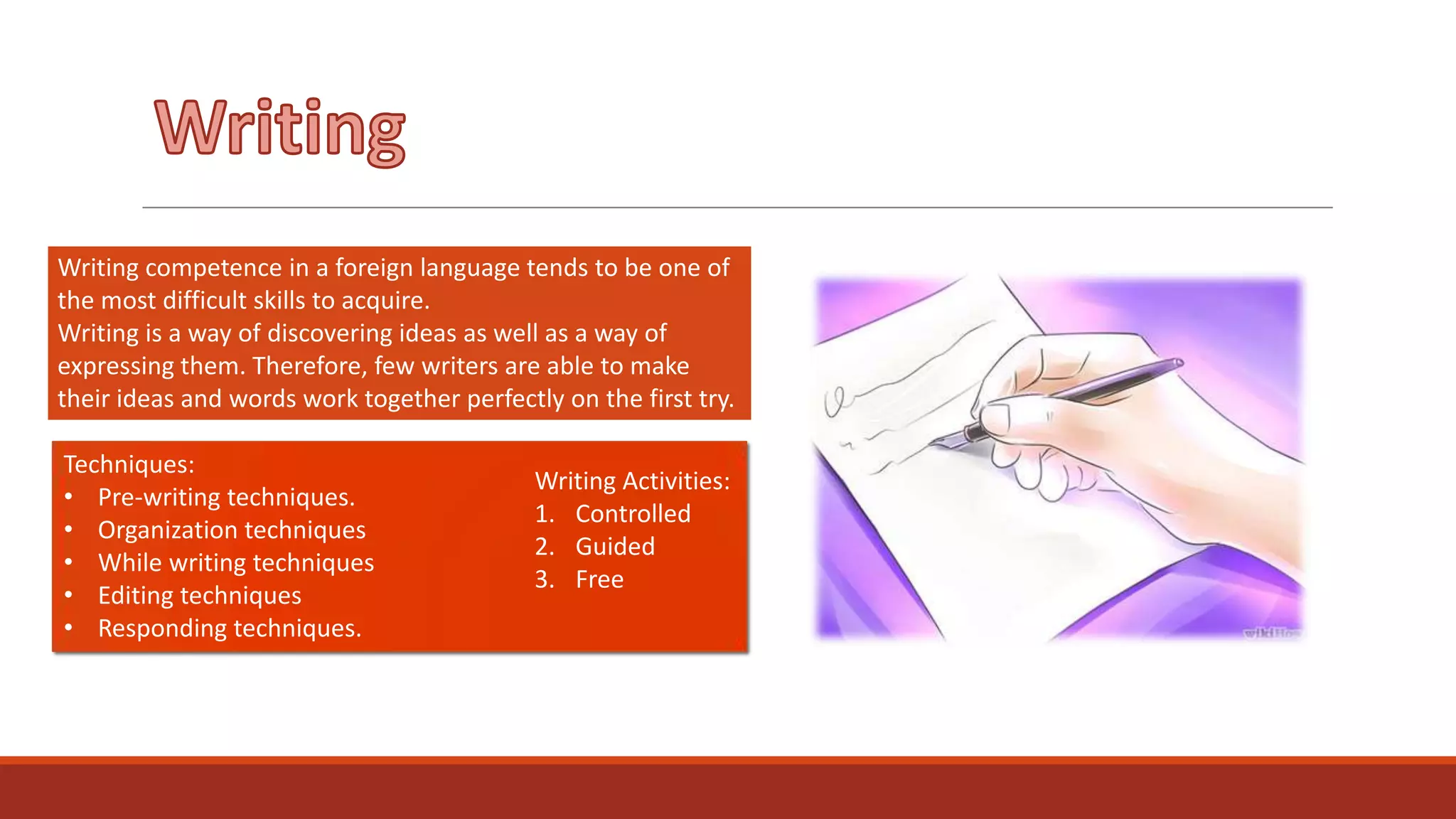
Writing competence in a foreign language tends to be one of
the most difficult skills to acquire.
Writing is a way of discovering ideas as well as a way of
expressing them. Therefore, few writers are able to make
their ideas and words work together perfectly on the first try.
Techniques:
• Pre-writing techniques.
• Organization techniques
• While writing techniques
• Editing techniques
• Responding techniques.

Writing Activities:
1. Controlled
2. Guided
3. Free
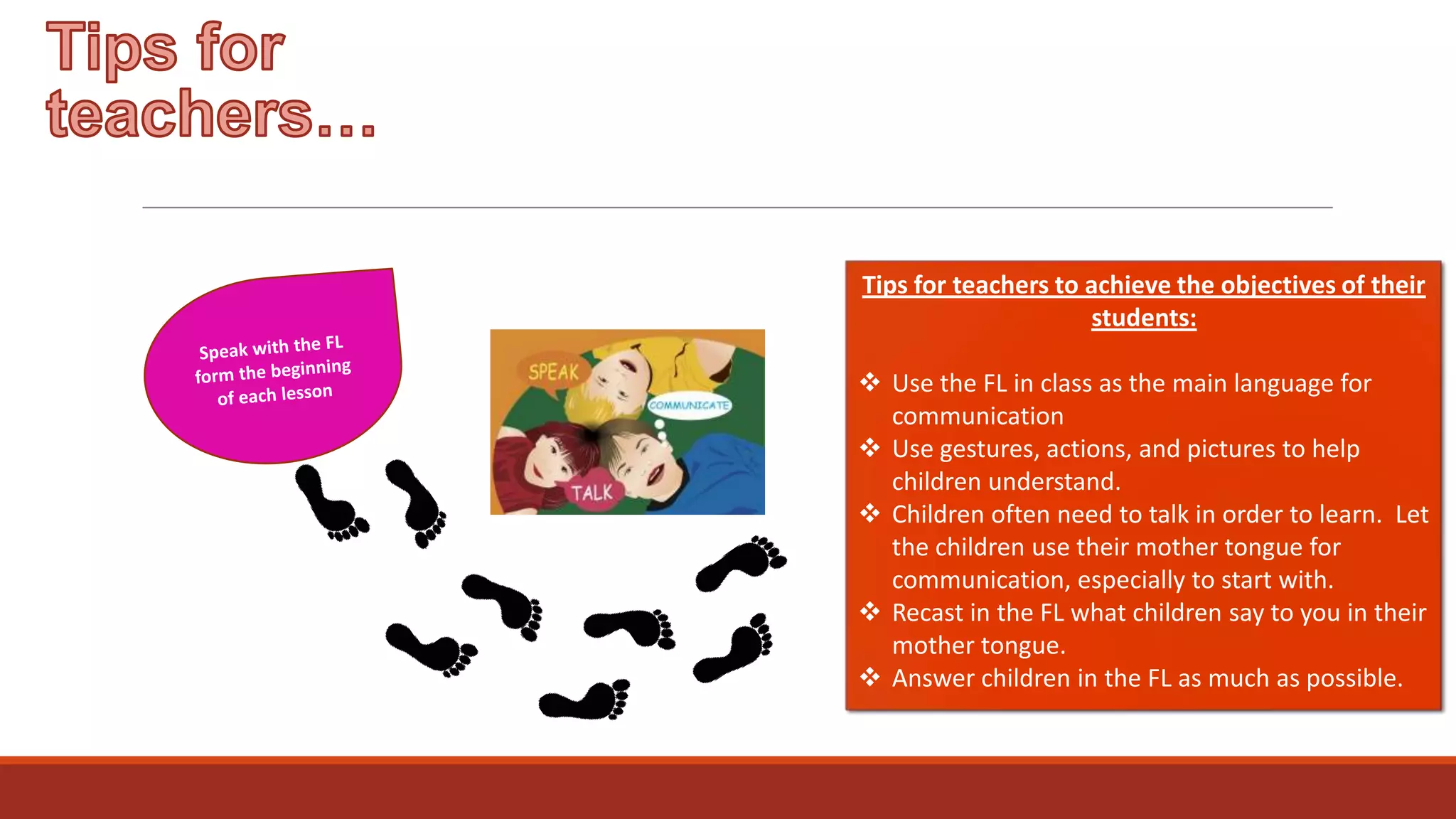
Tips for teachers to achieve the objectives of their
students:
 Use the FL in class as the main language for
communication
 Use gestures, actions, and pictures to help
children understand.
 Children often need to talk in order to learn. Let
the children use their mother tongue for
communication, especially to start with.
 Recast in the FL what children say to you in their
mother tongue.
 Answer children in the FL as much as possible.
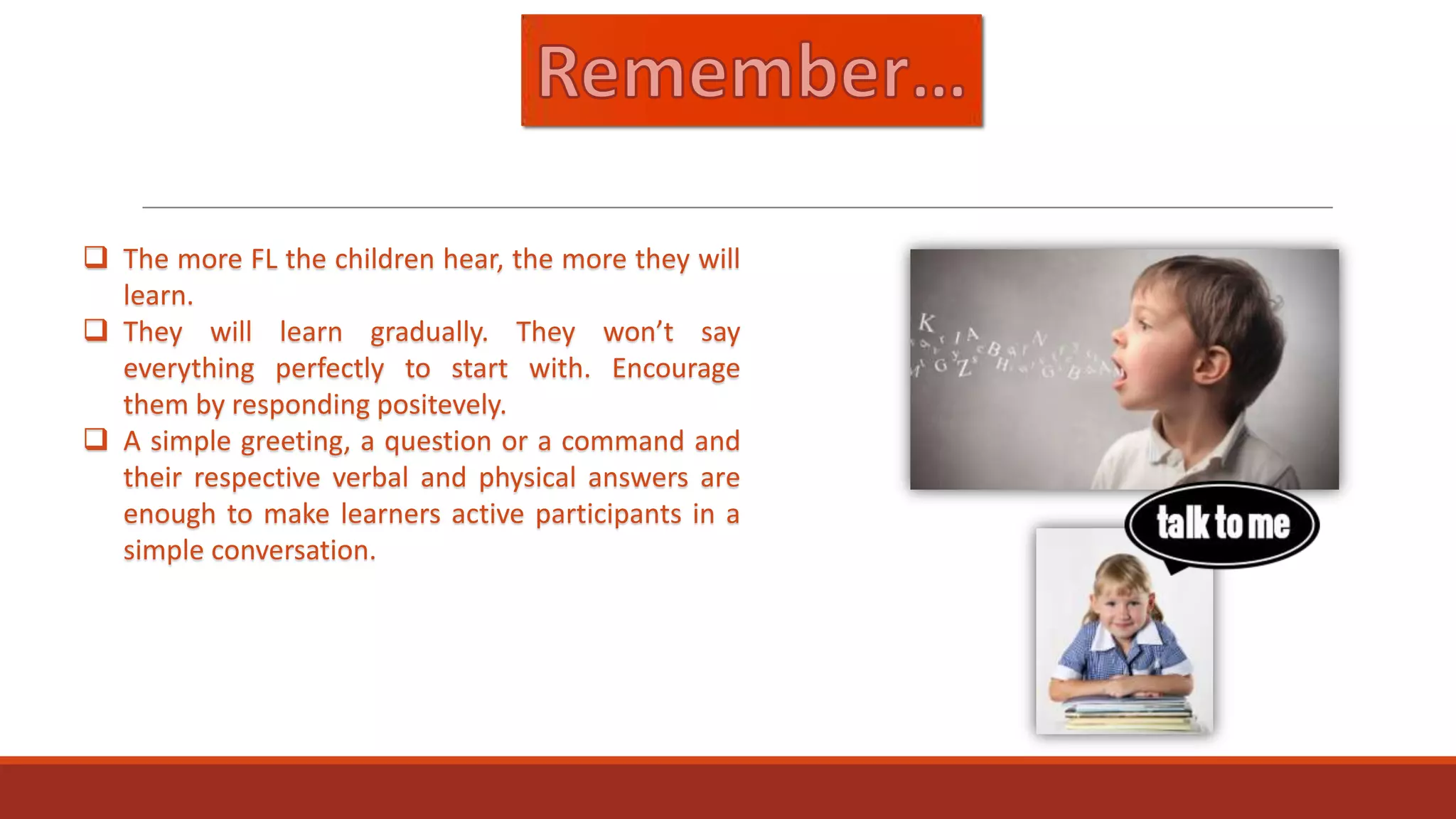
 The more FL the children hear, the more they will
learn.
 They will learn gradually. They won’t say
everything perfectly to start with. Encourage
them by responding positevely.
 A simple greeting, a question or a command and
their respective verbal and physical answers are
enough to make learners active participants in a
simple conversation.
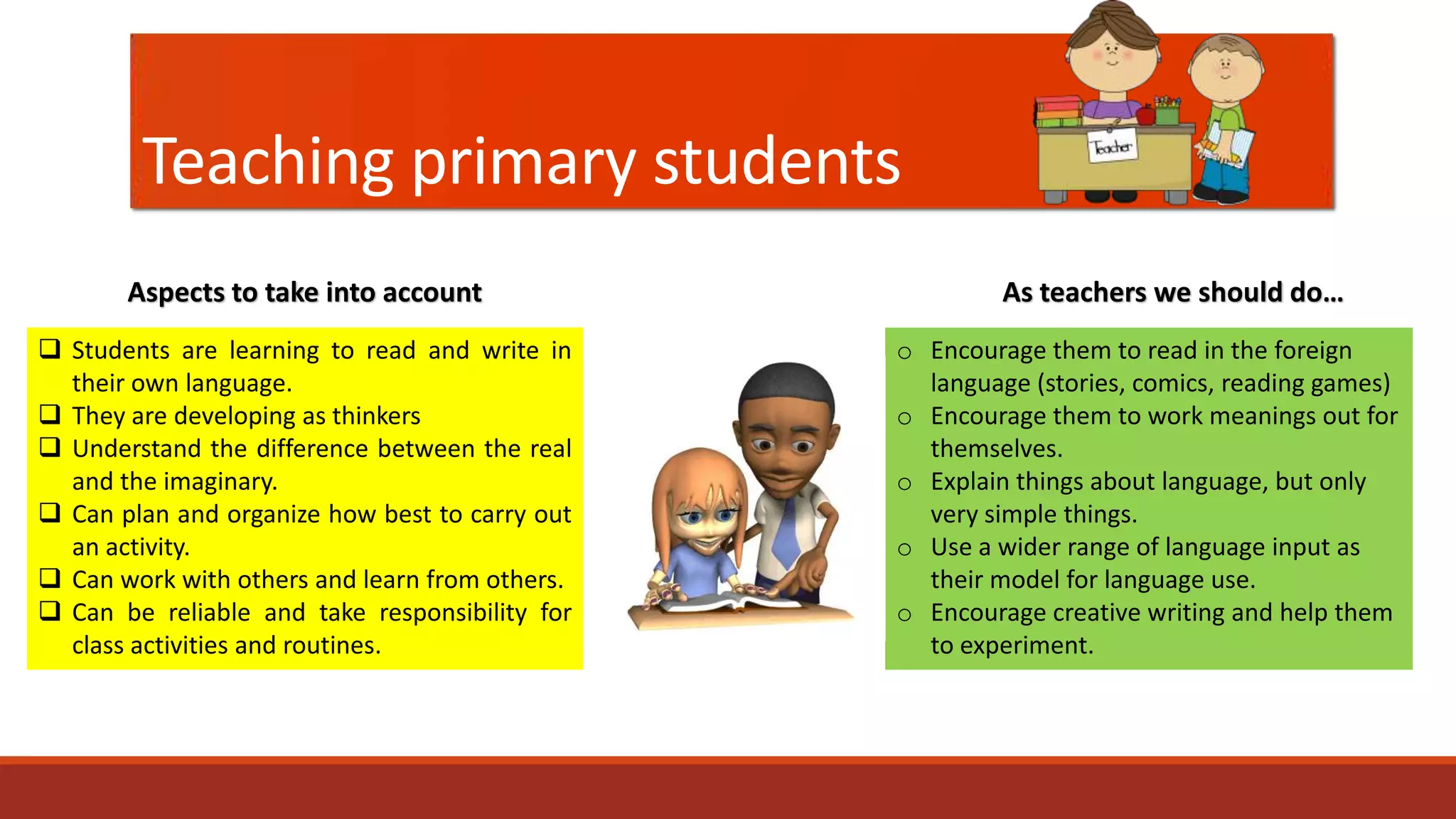
Teaching primary students
Aspects to take into account
 Students are learning to read and write in
their own language.
 They are developing as thinkers
 Understand the difference between the real
and the imaginary.
 Can plan and organize how best to carry out
an activity.
 Can work with others and learn from others.
 Can be reliable and take responsibility for
class activities and routines.

As teachers we should do…
o Encourage them to read in the foreign
language (stories, comics, reading games)
o Encourage them to work meanings out for
themselves.
o Explain things about language, but only
very simple things.
o Use a wider range of language input as
their model for language use.
o Encourage creative writing and help them
to experiment.
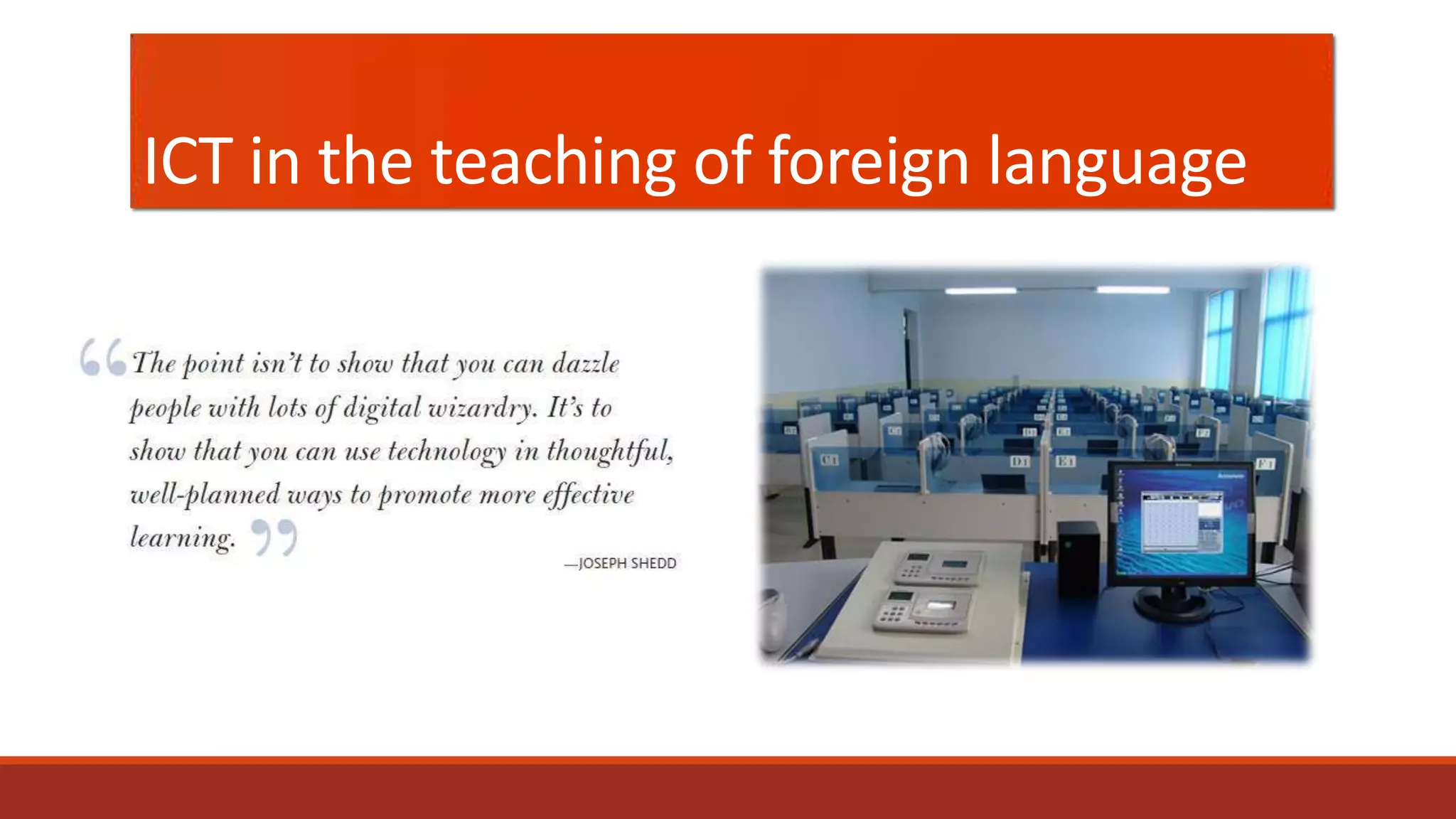
ICT in the teaching of foreign language
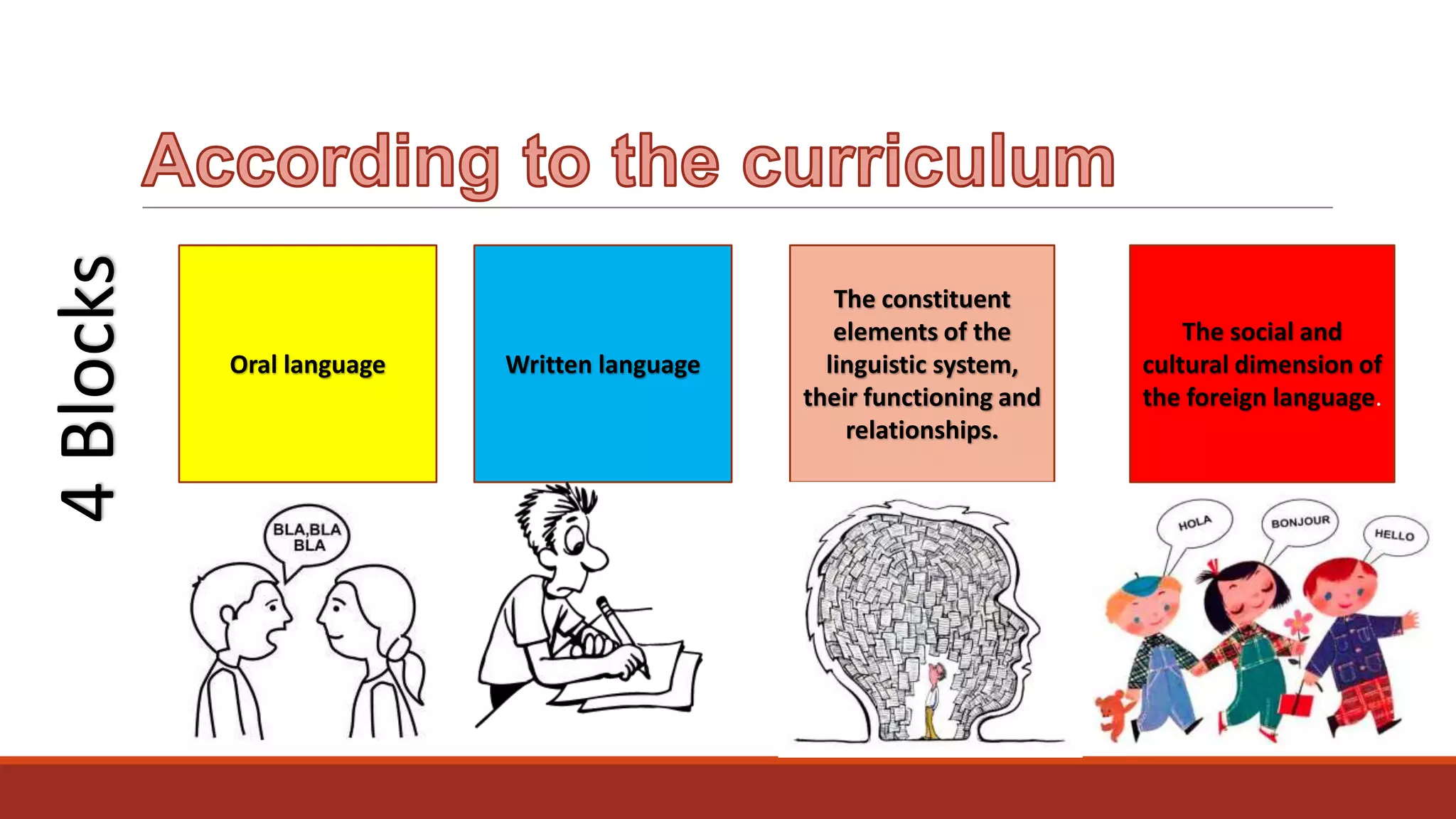
4 Blocks

Oral language

Written language

The constituent
elements of the
linguistic system,
their functioning and
relationships.

The social and
cultural dimension of
the foreign language.
The end

Aspects Related to the Acquisition of a Foreign Language

  • 2.
    The substantial improvementin the media along with the development and extension of ICT, have led to an increase in international relations without precedent. Therefore, in the XXI century must prepare students to live in an ever more international, multicultural and multilingual world. Learning a foreign language has to contribute to the development of positive and receptive attitudes towards other languages ​and cultures, and at the same time help to understand and assess our own language or languages​​. Researches showed that children who acquire a second language have increased ability in problem-solving and critical and creative thinking — while also attaining higher levels of achievement in other subjects.
  • 3.
  • 4.
  • 5.
    Formal language instructionin an academic setting. Interactions with the second language outside of the classroom. Pedagogical practices, strategies and methodologies which facilitate second language learning, Teaching the four language skills: listening, speaking, reading , writing with comprehension and thinking.
  • 7.
    Input and interactionare very important factors in a foreign language acquisition. Foreign language acquisition can only take place when the learner has access to input in the target language. Teachers can provide comprehensible input in their instructional delivery coupled with opportunities for interactions. “Language emerges just when learners understand the messages they receive” Krashen (1985) comprehensible input hypothesis.
  • 8.
    Listening Teacher as a model Strategiesfor listening: They can be classified on how the listener processes the input: Top-down strategies:  Listening for the main idea  Predicting  Drawing inferences  Summarizing. Bottom-up strategies:  Listening for specific details  Recognizing cognates  Recognizing word-order patterns.
  • 9.
  • 10.
    To obtain inputand opportunities of communication access. Interaction To develop grammar and discourse which are inside the communicative competence. Researches state that in order to acquire a communicative competence in a Foreign Language, just about one thousand words and phrases – approximately the active vocabulary people seem to use daily- are needed. Strategies for Speaking Speaking is an interactive process of constructing meaning that involves producing and receiving and processing information (Brown, 1994; Burns & Joyce, 1997) Using minimal response Recognizing scripts Using language to talk about language
  • 11.
    Oral drills Dialogue memorization Oral gamesfor directives and questions Pre-communicative phase Symbol Dictation • • • • • Things to use: Role cards Brainstorm Small groups Time for preparation Etc. Recordings Discussions Picture games Narrative and speeches Simulations and role plays Communicative activities for fluency
  • 12.
    Reading is anability so fundamental on our societies that it should be encouraged on a regular basis in and out of class. However, the biggest enemy to successful reading Is the lack of motivation. So, the selection of appropriate texts and activities is critical. Richard Anderson and the Commission on Reading define reading as “the process of constructing meaning from written texts”,
  • 13.
    Reading aloud Styles ofReading Silent reading Strategies that can help students read more quickly and effectively include: • • • • • Previewing Predicting Skimming and scanning Guessing from context Paraphrasing Reading must be playful Some important questions after reading:  How fluently did you read it?  How accurately?  How much did you understand?  How confident would you be about reading in front of forty people and the teacher?
  • 14.
    Writing competence ina foreign language tends to be one of the most difficult skills to acquire. Writing is a way of discovering ideas as well as a way of expressing them. Therefore, few writers are able to make their ideas and words work together perfectly on the first try. Techniques: • Pre-writing techniques. • Organization techniques • While writing techniques • Editing techniques • Responding techniques. Writing Activities: 1. Controlled 2. Guided 3. Free
  • 15.
    Tips for teachersto achieve the objectives of their students:  Use the FL in class as the main language for communication  Use gestures, actions, and pictures to help children understand.  Children often need to talk in order to learn. Let the children use their mother tongue for communication, especially to start with.  Recast in the FL what children say to you in their mother tongue.  Answer children in the FL as much as possible.
  • 16.
     The moreFL the children hear, the more they will learn.  They will learn gradually. They won’t say everything perfectly to start with. Encourage them by responding positevely.  A simple greeting, a question or a command and their respective verbal and physical answers are enough to make learners active participants in a simple conversation.
  • 17.
    Teaching primary students Aspectsto take into account  Students are learning to read and write in their own language.  They are developing as thinkers  Understand the difference between the real and the imaginary.  Can plan and organize how best to carry out an activity.  Can work with others and learn from others.  Can be reliable and take responsibility for class activities and routines. As teachers we should do… o Encourage them to read in the foreign language (stories, comics, reading games) o Encourage them to work meanings out for themselves. o Explain things about language, but only very simple things. o Use a wider range of language input as their model for language use. o Encourage creative writing and help them to experiment.
  • 19.
    ICT in theteaching of foreign language
  • 20.
    4 Blocks Oral language Writtenlanguage The constituent elements of the linguistic system, their functioning and relationships. The social and cultural dimension of the foreign language.
  • 22.