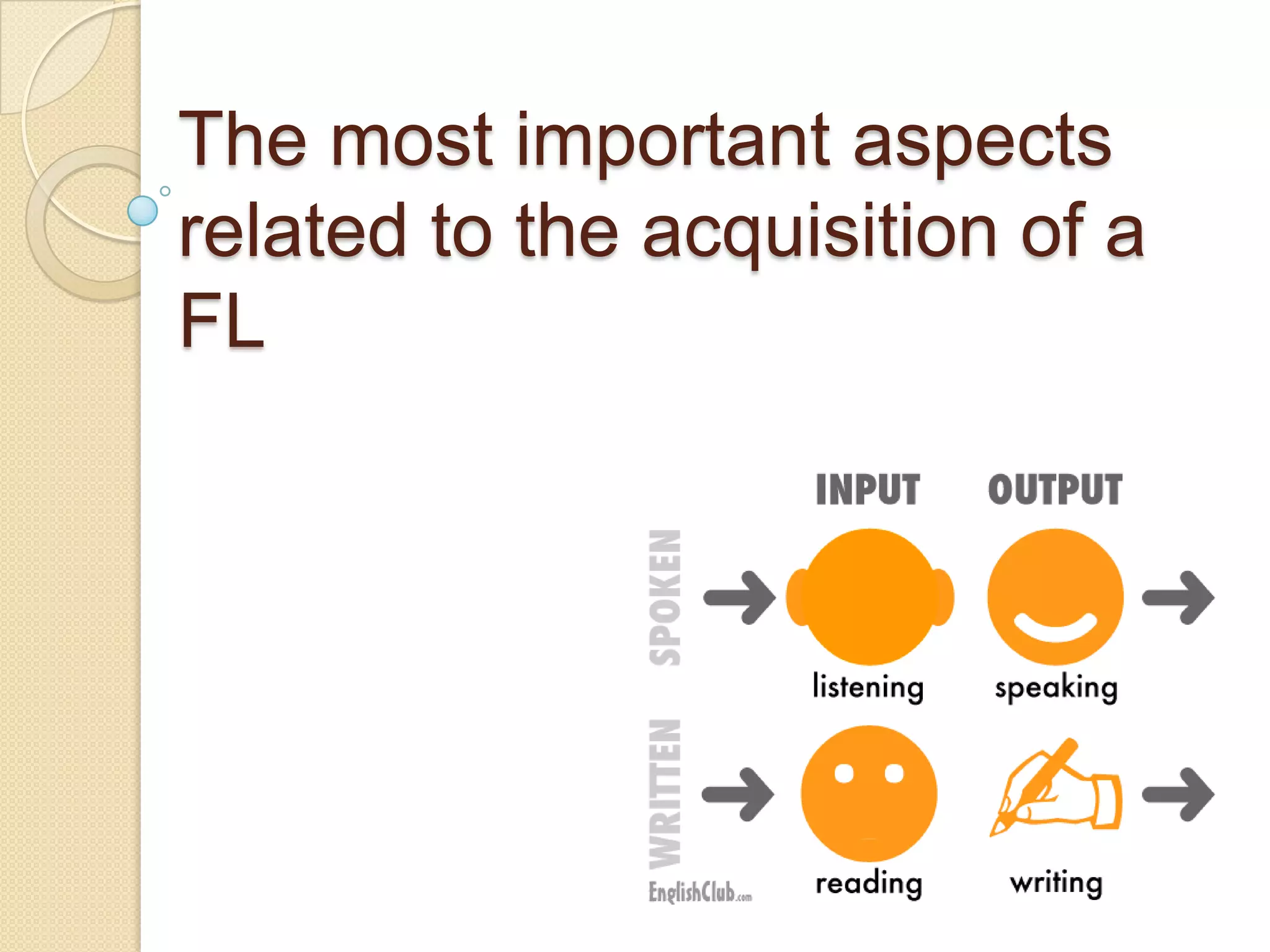
The most important aspects
related to the acquisition of a
FL
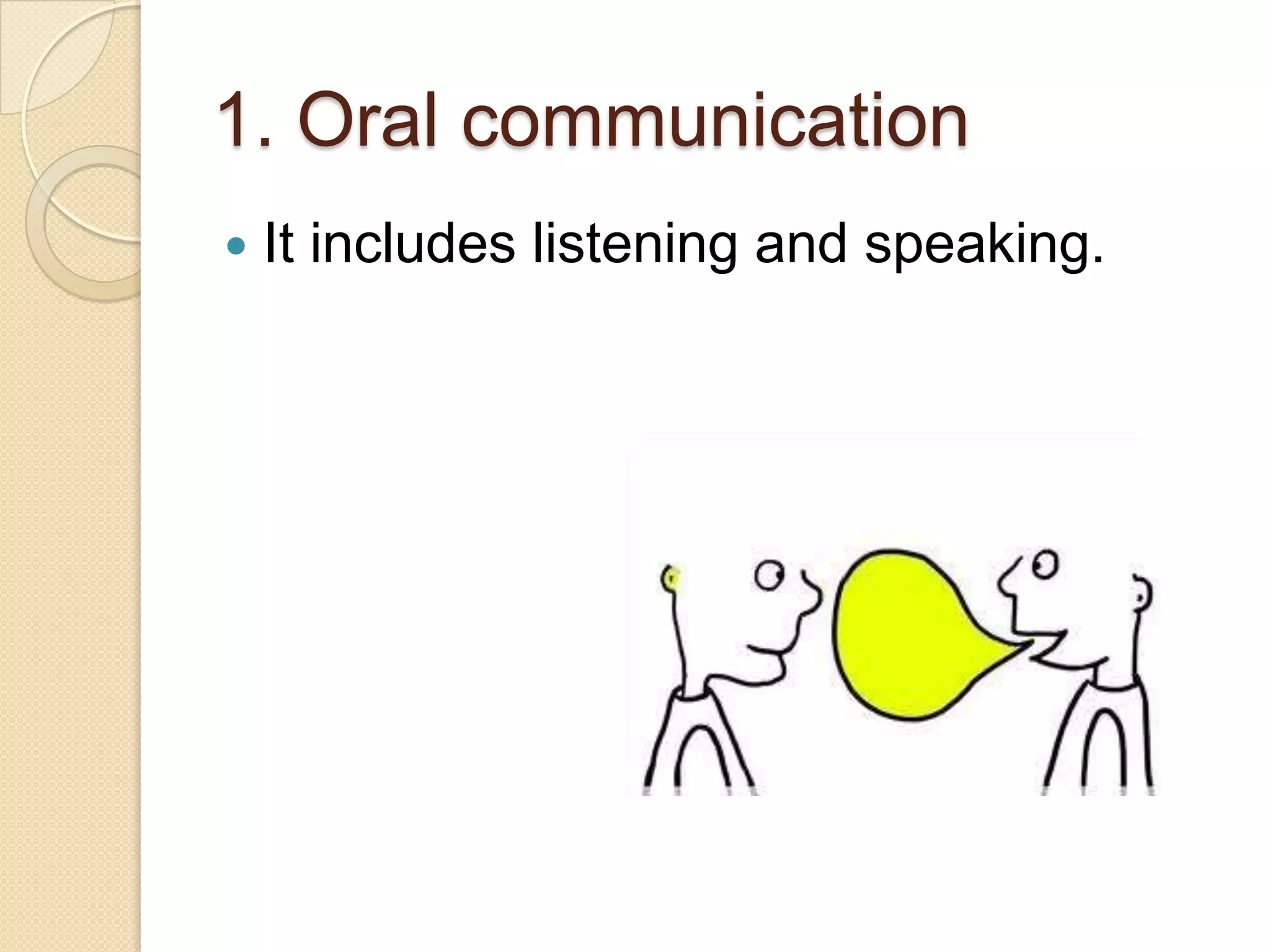
1. Oral communication


It includes listening and speaking.
It is important because…

Listening

- Listening provides a comprehensible
input
- It is essential for language
processing
- It’s needed in real life
- It allows students to distinguish
sounds,
stress
and
intonation
patterns.

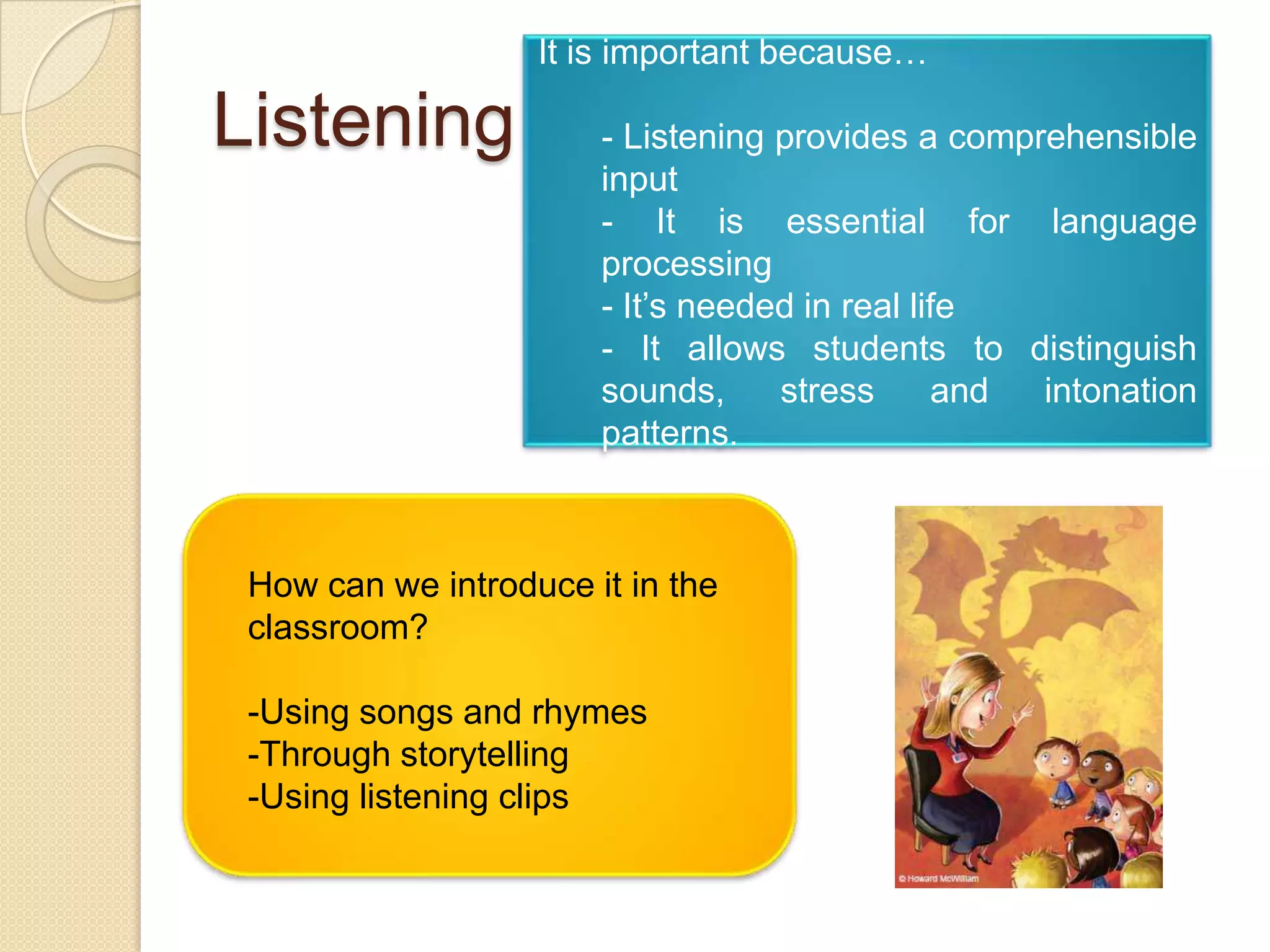
How can we introduce it in the
classroom?
-Using songs and rhymes
-Through storytelling
-Using listening clips
Speaking








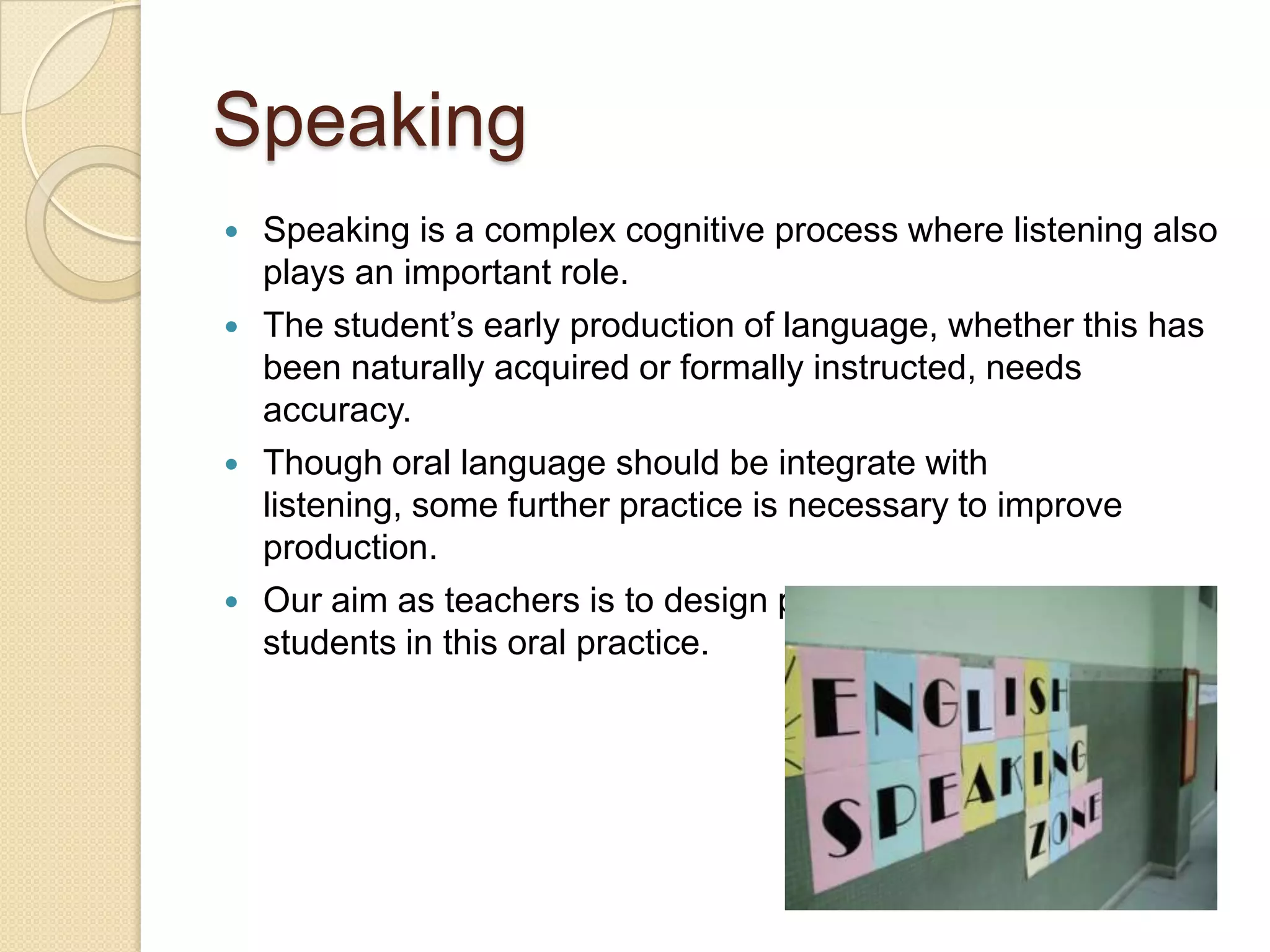
Speaking is a complex cognitive process where listening also
plays an important role.
The student’s early production of language, whether this has
been naturally acquired or formally instructed, needs
accuracy.
Though oral language should be integrate with
listening, some further practice is necessary to improve
production.
Our aim as teachers is to design procedures to involve
students in this oral practice.
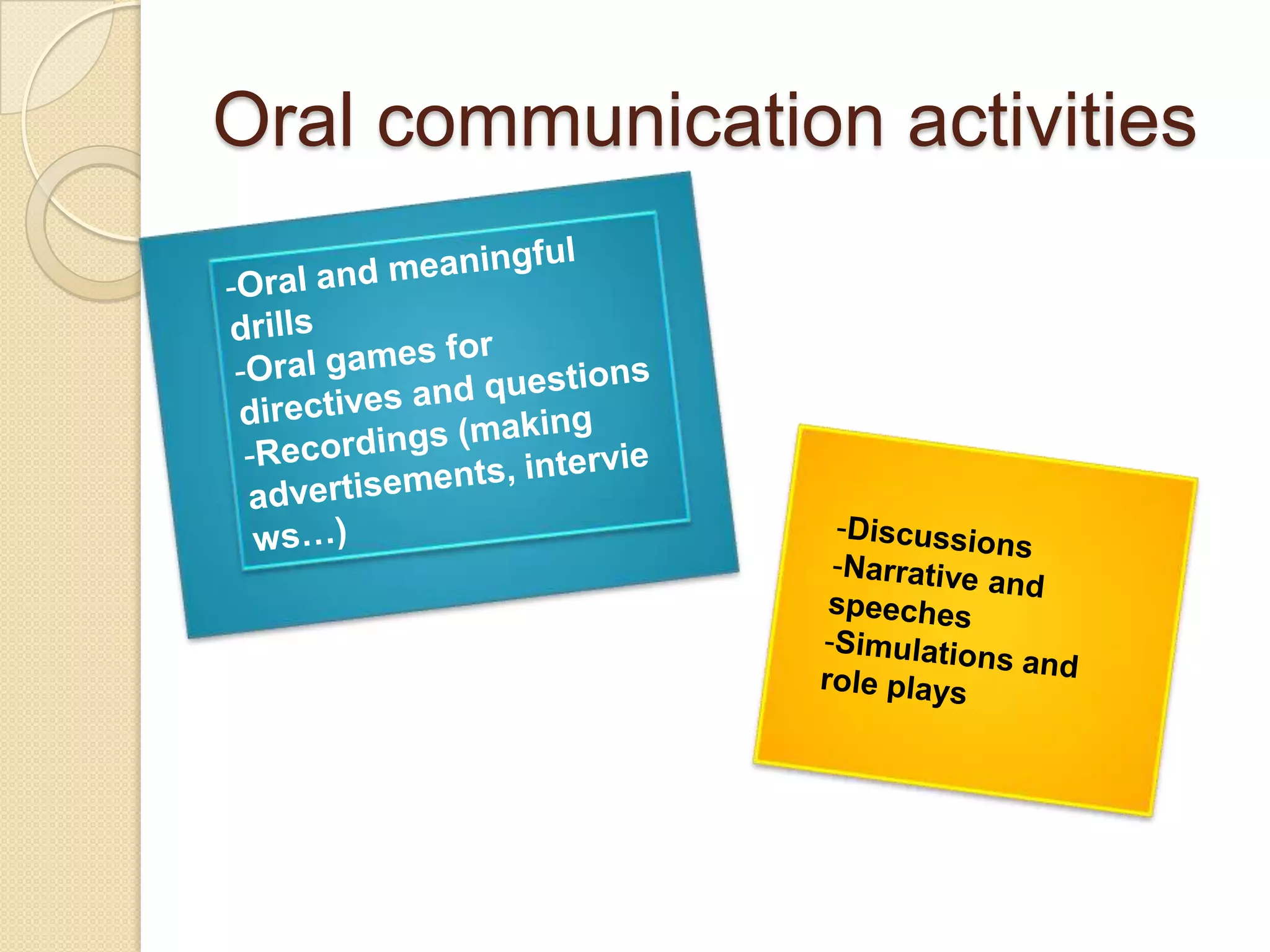
Oral communication activities
2. Reading


Reading in the classroo may serve as a reinforcement of the oral
input. This helps the recognition of the symbol-sound relationships
within a given semantic context.



Reading should be encouraged in and out the class. For that, it’s
necessary a selection of appropiates texts and activities according
to the students’ interests.
3. Writing
Not only reinforces the grammatical structures but
also help learners to learn.
 It can be the natural outlet and consolidation for
other skills
 It is a useful communication channel


Stages:
-Controlled Writing
-Guided Writing
- Free Writing
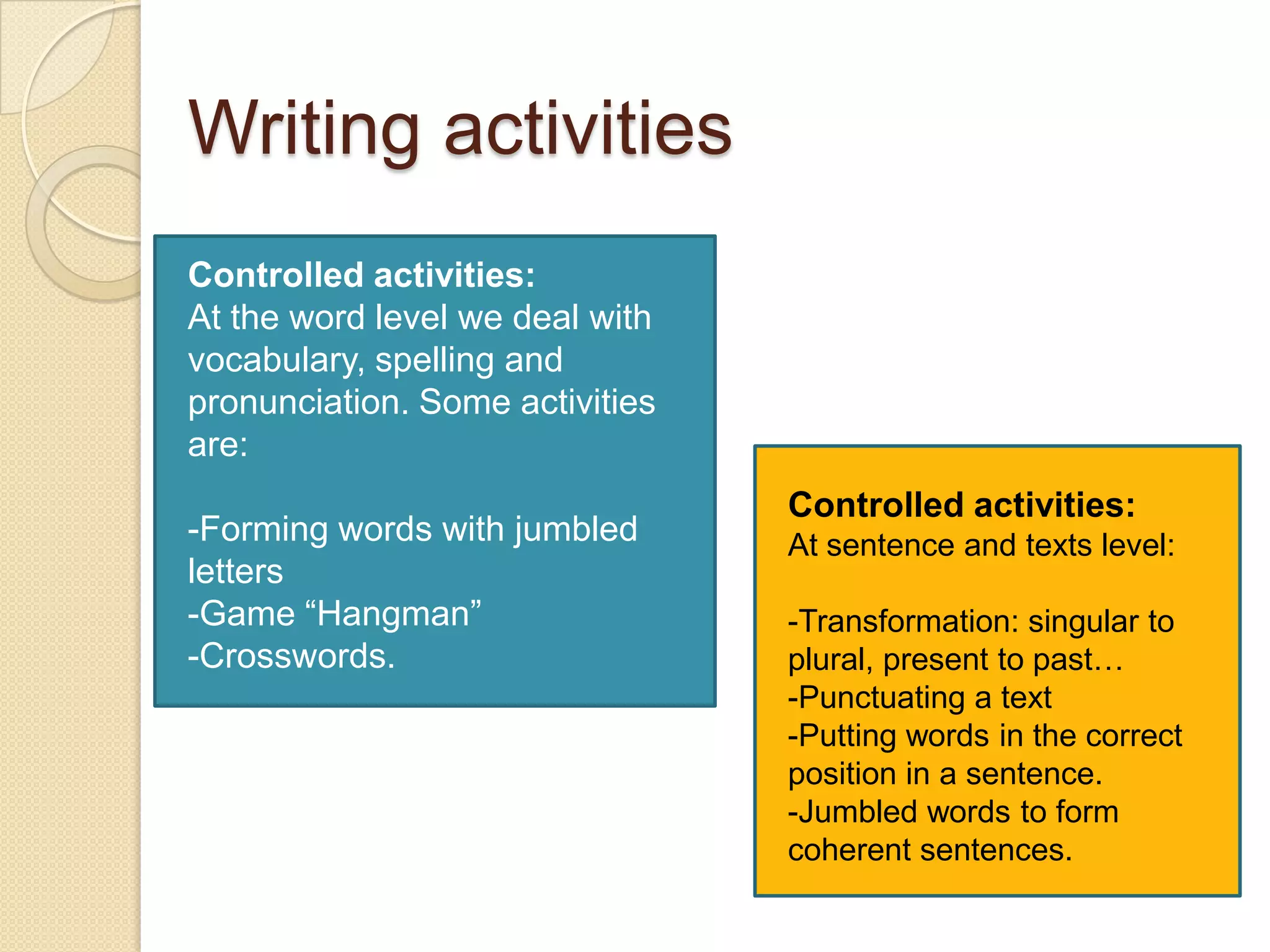
Writing activities
Controlled activities:
At the word level we deal with
vocabulary, spelling and
pronunciation. Some activities
are:
-Forming words with jumbled
letters
-Game “Hangman”
-Crosswords.

Controlled activities:
At sentence and texts level:
-Transformation: singular to
plural, present to past…
-Punctuating a text
-Putting words in the correct
position in a sentence.
-Jumbled words to form
coherent sentences.
Writing activities
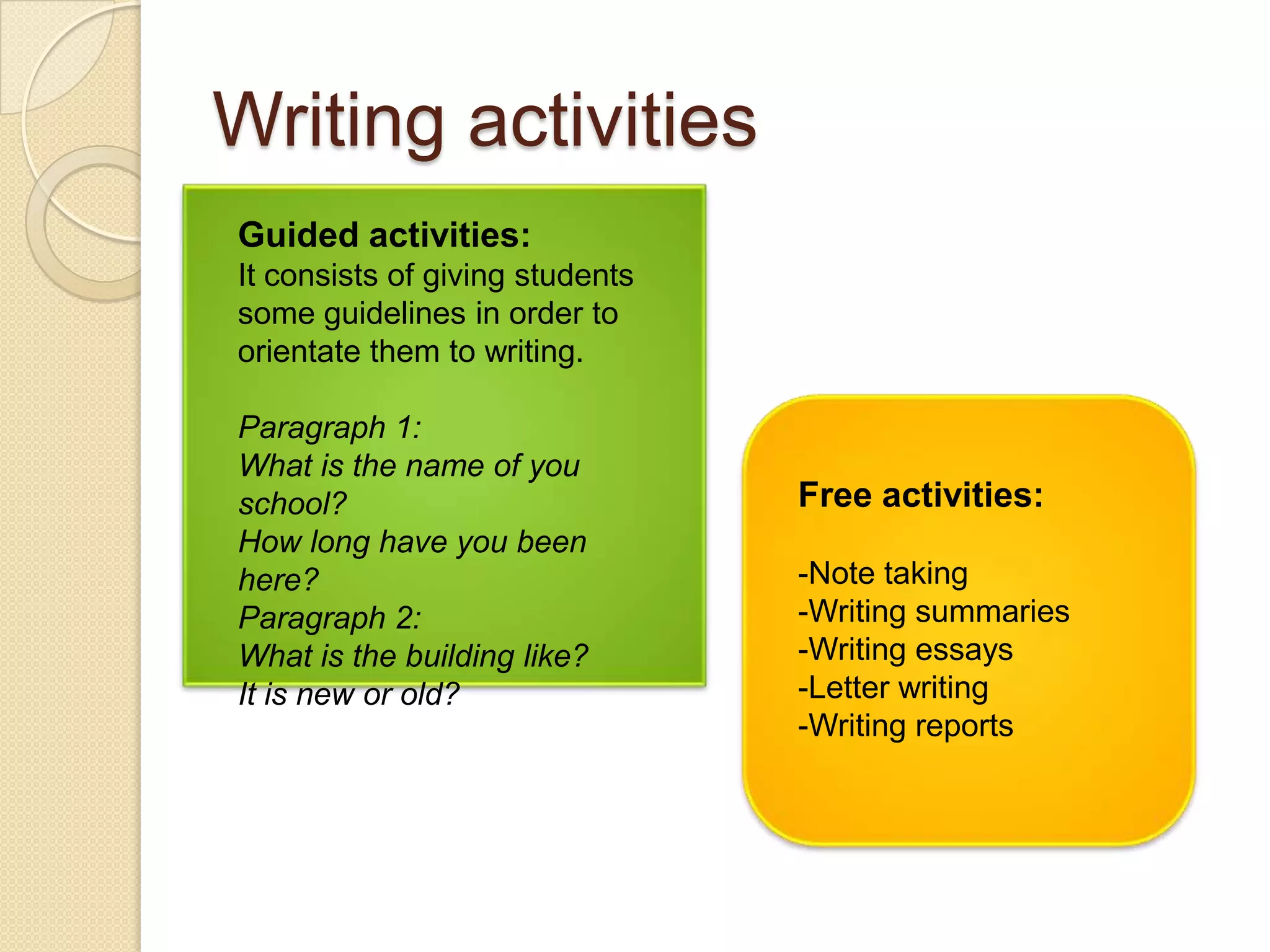
Guided activities:
It consists of giving students
some guidelines in order to
orientate them to writing.
Paragraph 1:
What is the name of you
school?
How long have you been
here?
Paragraph 2:
What is the building like?
It is new or old?

Free activities:
-Note taking
-Writing summaries
-Writing essays
-Letter writing
-Writing reports
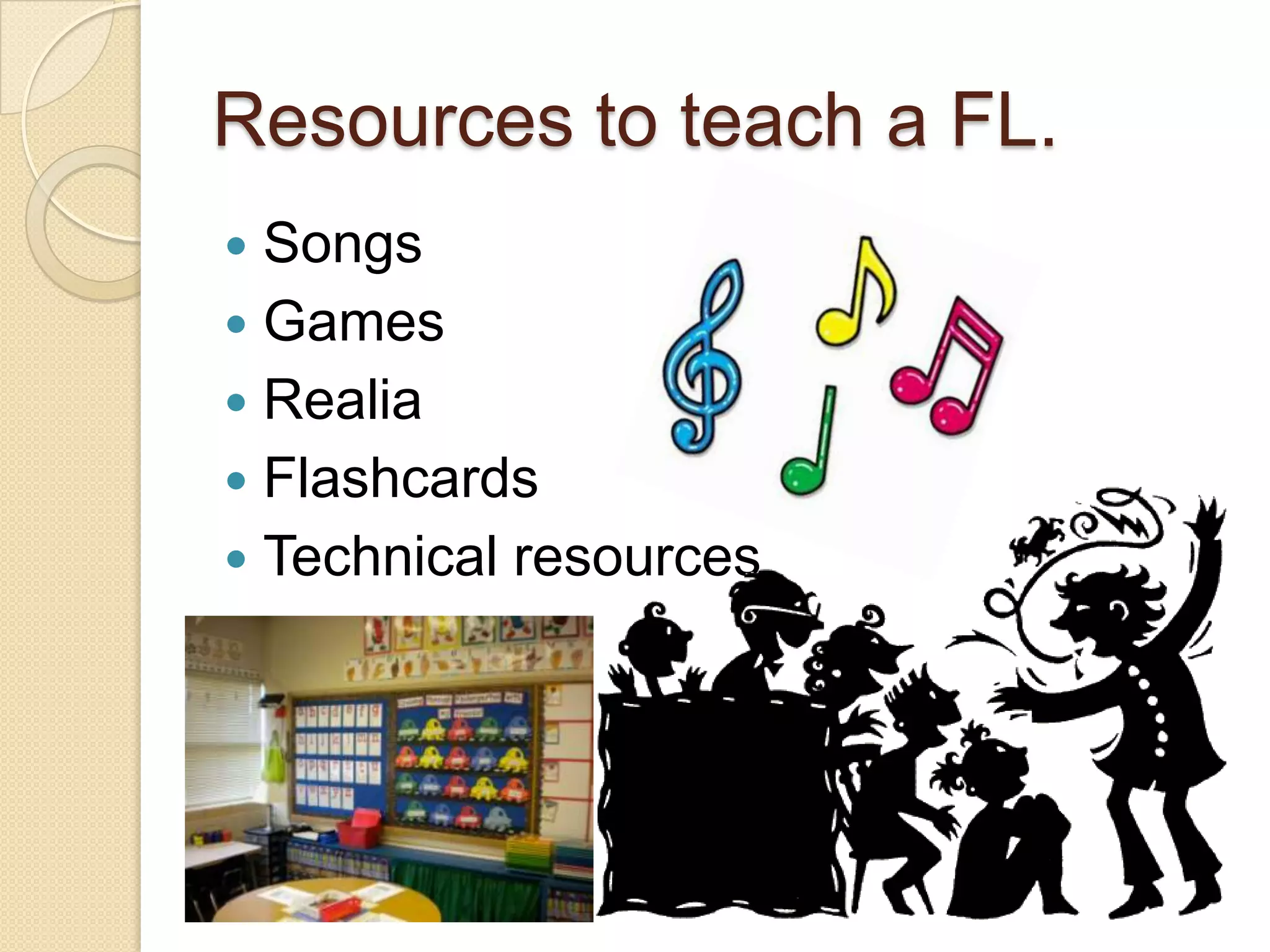
Resources to teach a FL.
Songs
 Games
 Realia
 Flashcards
 Technical resources

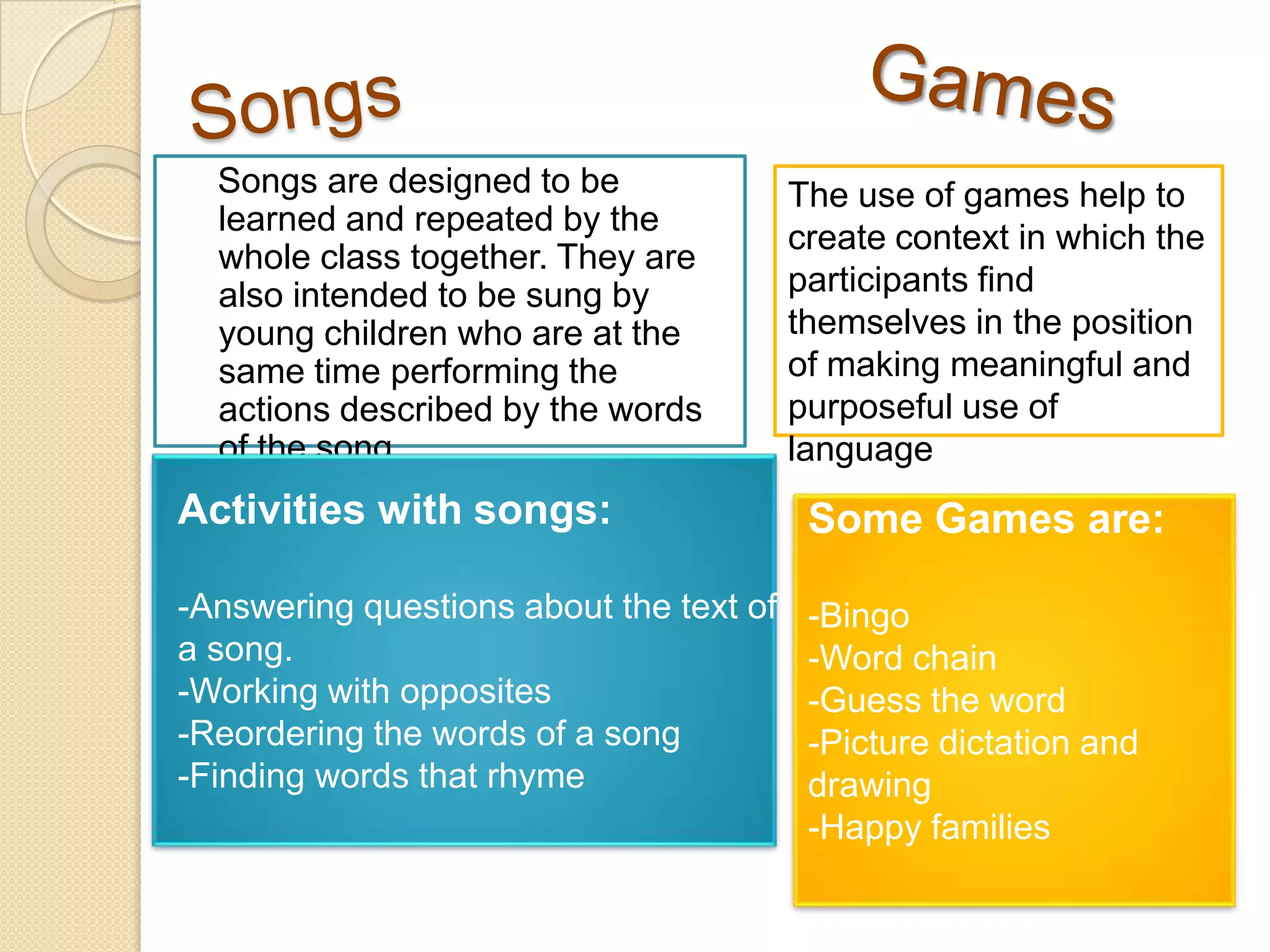
Songs are designed to be
learned and repeated by the
whole class together. They are
also intended to be sung by
young children who are at the
same time performing the
actions described by the words
of the song.

The use of games help to
create context in which the
participants find
themselves in the position
of making meaningful and
purposeful use of
language

Activities with songs:

Some Games are:

-Answering questions about the text of
a song.
-Working with opposites
-Reordering the words of a song
-Finding words that rhyme

-Bingo
-Word chain
-Guess the word
-Picture dictation and
drawing
-Happy families
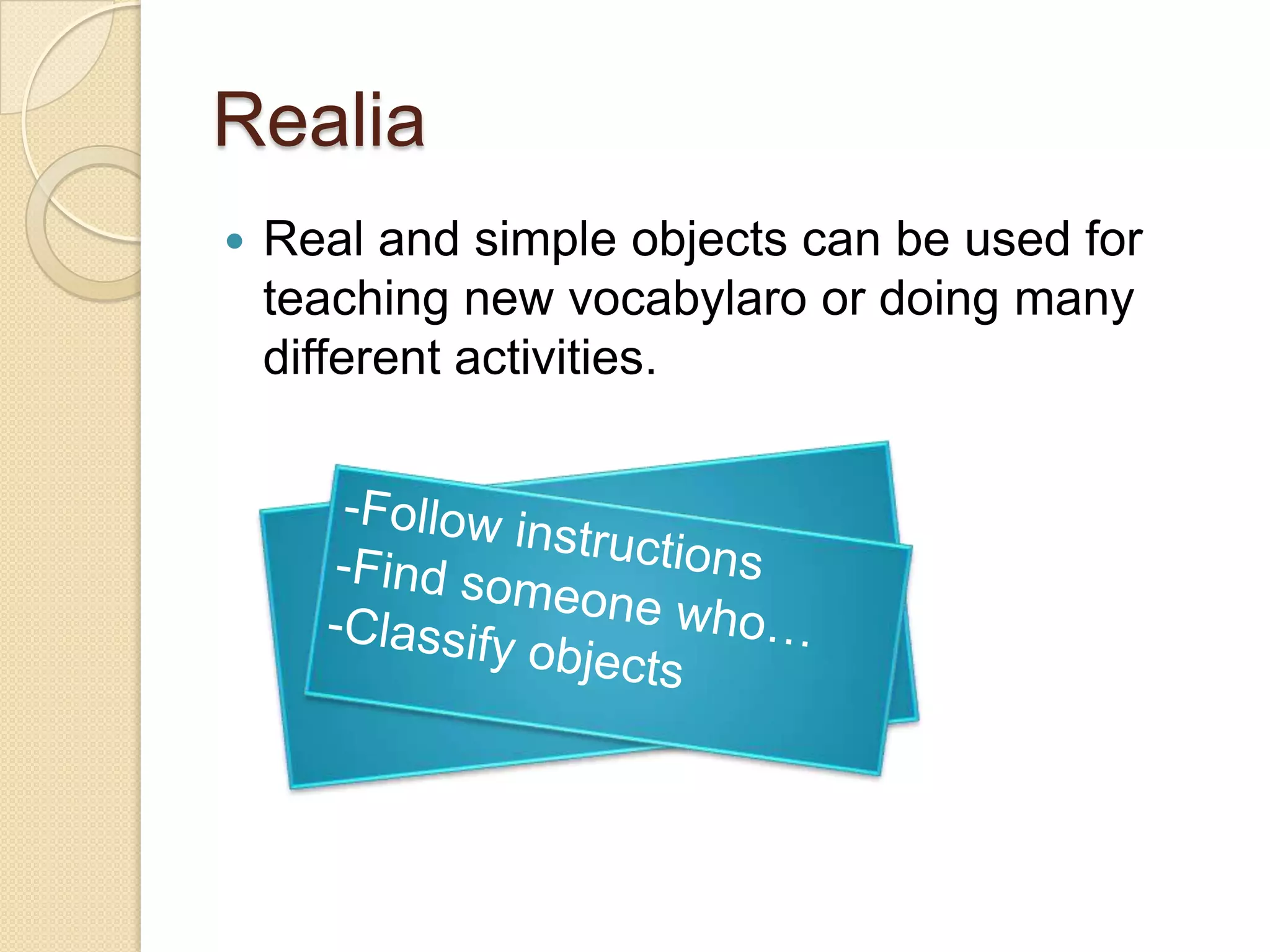
Realia


Real and simple objects can be used for
teaching new vocabylaro or doing many
different activities.
Flashcards


Can be stuck on the classroom walls to
create an atmosphere around the topic we
are working around.

-Show the flashcards
-Substitution dialogues
-Classify the pictures
-Picture dictionary


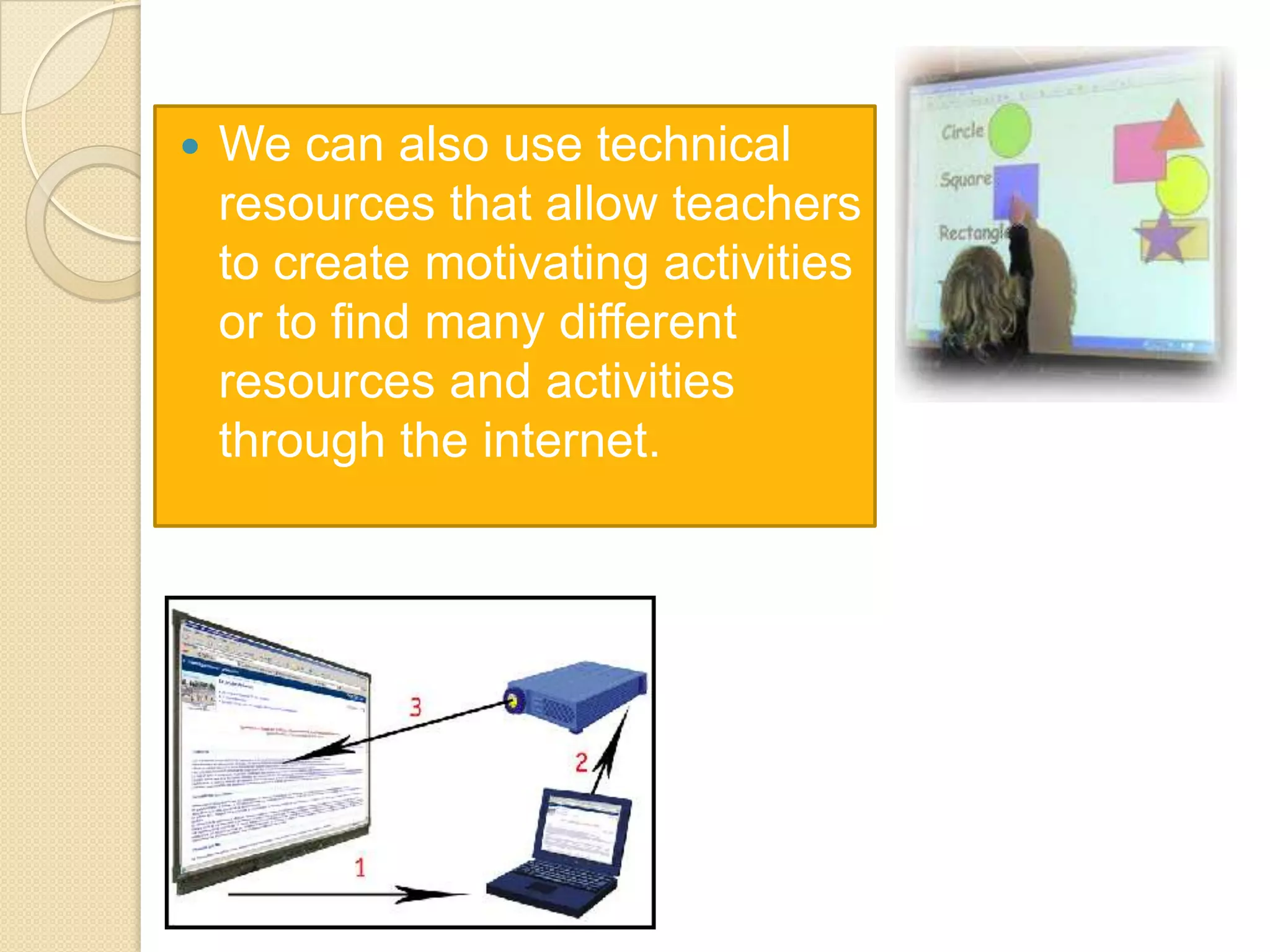
We can also use technical
resources that allow teachers
to create motivating activities
or to find many different
resources and activities
through the internet.

The most important aspects related to the acquisition

  • 1.
    The most importantaspects related to the acquisition of a FL
  • 2.
    1. Oral communication  Itincludes listening and speaking.
  • 3.
    It is importantbecause… Listening - Listening provides a comprehensible input - It is essential for language processing - It’s needed in real life - It allows students to distinguish sounds, stress and intonation patterns. How can we introduce it in the classroom? -Using songs and rhymes -Through storytelling -Using listening clips
  • 4.
    Speaking     Speaking is acomplex cognitive process where listening also plays an important role. The student’s early production of language, whether this has been naturally acquired or formally instructed, needs accuracy. Though oral language should be integrate with listening, some further practice is necessary to improve production. Our aim as teachers is to design procedures to involve students in this oral practice.
  • 5.
  • 6.
    2. Reading  Reading inthe classroo may serve as a reinforcement of the oral input. This helps the recognition of the symbol-sound relationships within a given semantic context.  Reading should be encouraged in and out the class. For that, it’s necessary a selection of appropiates texts and activities according to the students’ interests.
  • 7.
    3. Writing Not onlyreinforces the grammatical structures but also help learners to learn.  It can be the natural outlet and consolidation for other skills  It is a useful communication channel  Stages: -Controlled Writing -Guided Writing - Free Writing
  • 8.
    Writing activities Controlled activities: Atthe word level we deal with vocabulary, spelling and pronunciation. Some activities are: -Forming words with jumbled letters -Game “Hangman” -Crosswords. Controlled activities: At sentence and texts level: -Transformation: singular to plural, present to past… -Punctuating a text -Putting words in the correct position in a sentence. -Jumbled words to form coherent sentences.
  • 9.
    Writing activities Guided activities: Itconsists of giving students some guidelines in order to orientate them to writing. Paragraph 1: What is the name of you school? How long have you been here? Paragraph 2: What is the building like? It is new or old? Free activities: -Note taking -Writing summaries -Writing essays -Letter writing -Writing reports
  • 10.
    Resources to teacha FL. Songs  Games  Realia  Flashcards  Technical resources 
  • 11.
    Songs are designedto be learned and repeated by the whole class together. They are also intended to be sung by young children who are at the same time performing the actions described by the words of the song. The use of games help to create context in which the participants find themselves in the position of making meaningful and purposeful use of language Activities with songs: Some Games are: -Answering questions about the text of a song. -Working with opposites -Reordering the words of a song -Finding words that rhyme -Bingo -Word chain -Guess the word -Picture dictation and drawing -Happy families
  • 12.
    Realia  Real and simpleobjects can be used for teaching new vocabylaro or doing many different activities.
  • 13.
    Flashcards  Can be stuckon the classroom walls to create an atmosphere around the topic we are working around. -Show the flashcards -Substitution dialogues -Classify the pictures -Picture dictionary
  • 14.
     We can alsouse technical resources that allow teachers to create motivating activities or to find many different resources and activities through the internet.