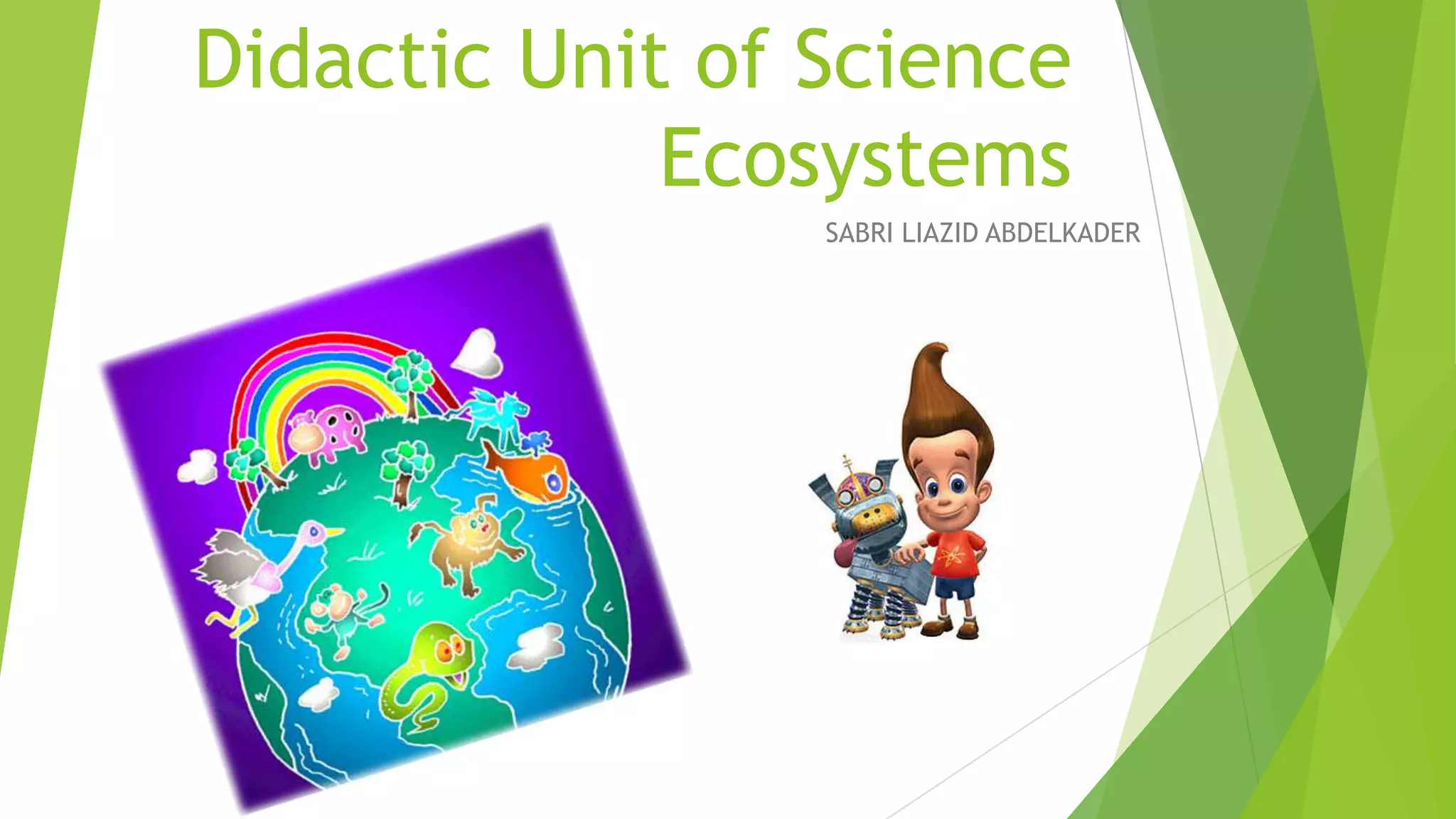
Didactic Unit of Science
Ecosystems
SABRI LIAZID ABDELKADER
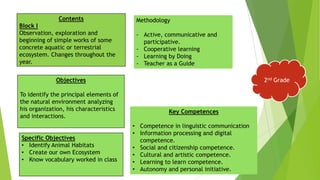
Contents
Block I
Observation, exploration and
beginning of simple works of some
concrete aquatic or terrestrial
ecosystem. Changes throughout the
year.

Methodology
- Active, communicative and
participative.
- Cooperative learning
- Learning by Doing
- Teacher as a Guide
2nd Grade

Objectives
To identify the principal elements of
the natural environment analyzing
his organization, his characteristics
and interactions.
Specific Objectives
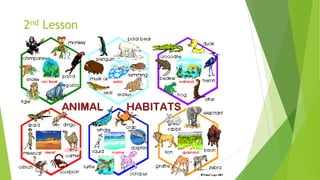
• Identify Animal Habitats
• Create our own Ecosystem
• Know vocabulary worked in class

Key Competences
• Competence in linguistic communication
• Information processing and digital
competence.
• Social and citizenship competence.
• Cultural and artistic competence.
• Learning to learn competence.
• Autonomy and personal initiative.
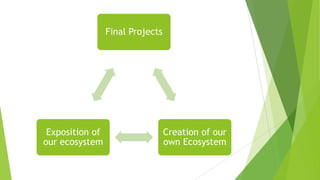
Final Projects

Exposition of
our ecosystem

Creation of our
own Ecosystem
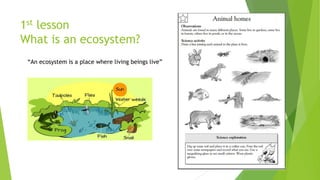
1st lesson
What is an ecosystem?
“An ecosystem is a place where living beings live”
2nd Lesson
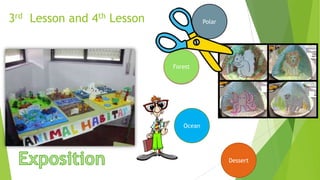
3rd Lesson and 4th Lesson

Polar

Forest

Ocean

Dessert
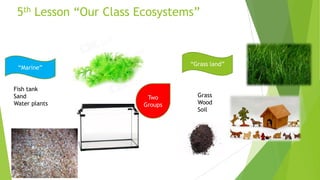
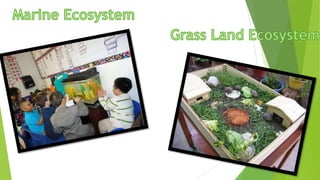
5th Lesson “Our Class Ecosystems”

“Grass land”

“Marine”
Fish tank
Sand
Water plants

Two
Groups

Grass
Wood
Soil
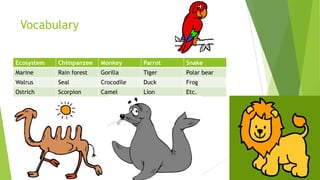
Vocabulary
Ecosystem

Chimpanzee

Monkey

Parrot

Snake

Marine

Rain forest

Gorilla

Tiger

Polar bear

Walrus

Seal

Crocodile

Duck

Frog

Ostrich

Scorpion

Camel

Lion

Etc.
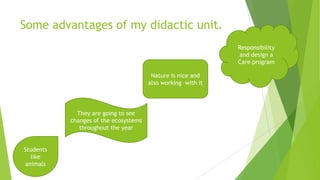
Some advantages of my didactic unit.
Responsibility
and design a
Care program
Nature is nice and
also working with it

They are going to see
changes of the ecosystems
throughout the year

Students
like
animals
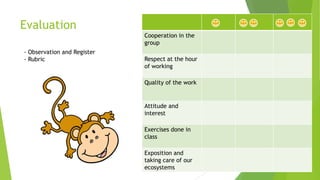
Evaluation
Cooperation in the
group

- Observation and Register
- Rubric

Respect at the hour
of working

Quality of the work

Attitude and
interest
Exercises done in
class
Exposition and
taking care of our
ecosystems
The end

Didactic unit of science