 Linguistic and innate power of the formal structures are
needed to process specific data of culture.
 Language can be used as a way to express the specific
knowledge of culture.
 The language and the cultures they reflect and express as
living organisms and permanent transformation and
development.
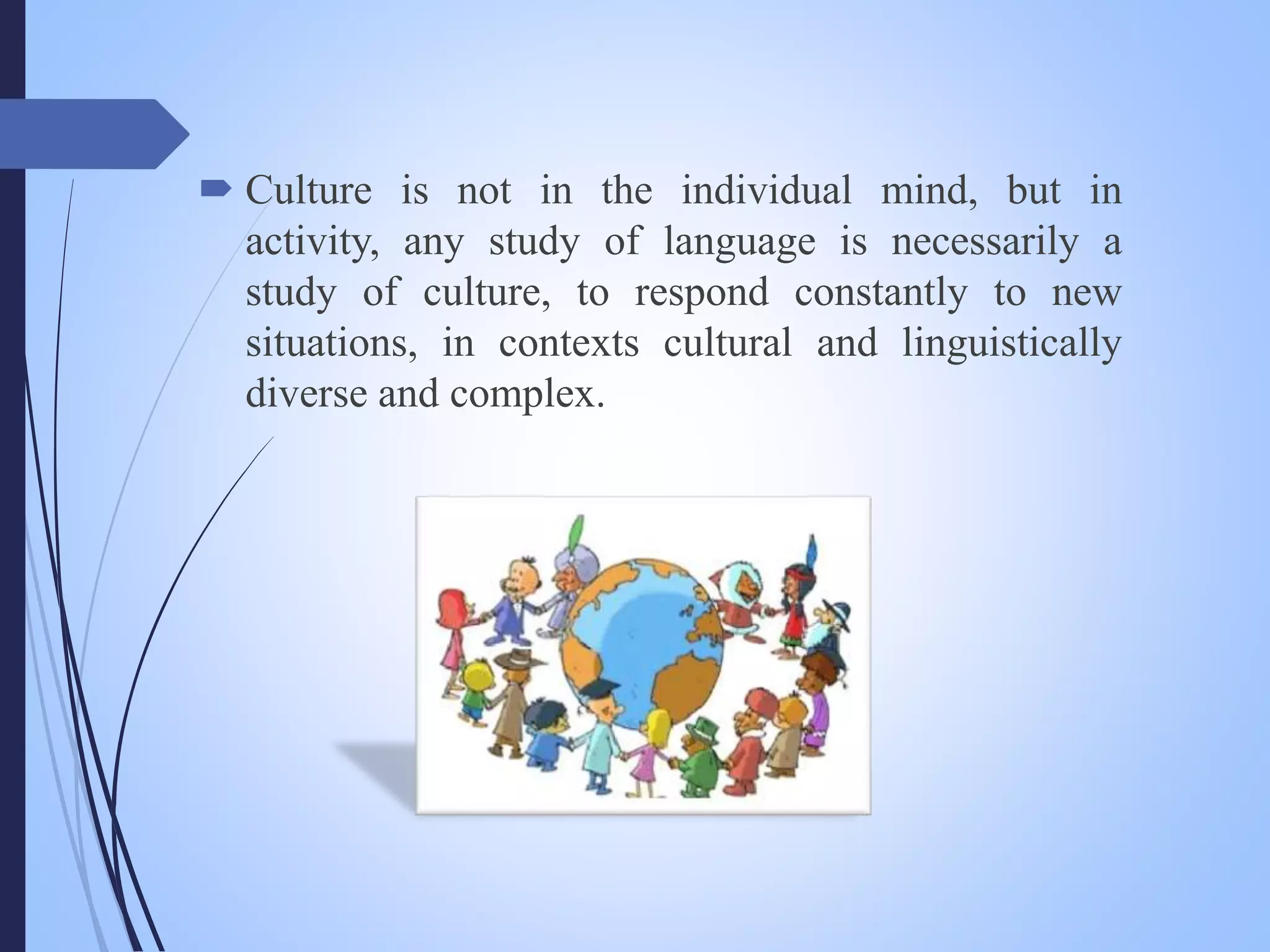
 Culture is not in the individual mind, but in
activity, any study of language is necessarily a
study of culture, to respond constantly to new
situations, in contexts cultural and linguistically
diverse and complex.
It existed controversy on foreign
language teaching between scholars
due to the language culture was not
being teaching and this is very
important to comprehend people
customs, history, and so on.
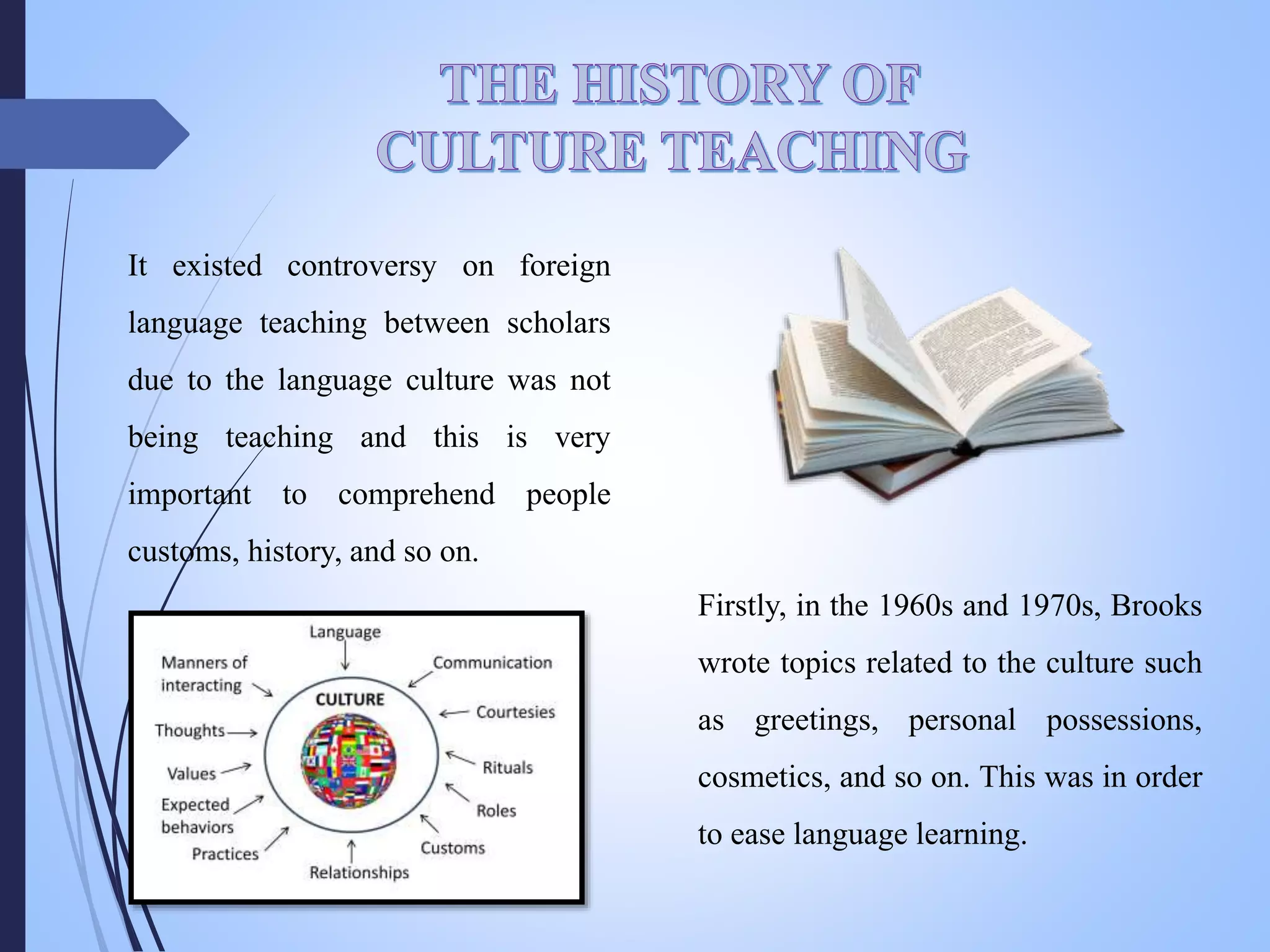
Firstly, in the 1960s and 1970s, Brooks
wrote topics related to the culture such
as greetings, personal possessions,
cosmetics, and so on. This was in order
to ease language learning.
The most important things for
language learners is the hidden
culture which is about values and
thought patters and not the high one
which is about historic elements.
Also, in the 1970s was changed
Audiolingual Method by a
communicative approach due to
it was most essential a natural
cultural interchanging instead of
a grammatical one.
Likewise, teachers have to teach
cultural language like an interpersonal
process so the pupils get acquainted to
the other language, due to the values
or mindset could be different to them.
It is necessary to know students
already got a culture before the knew
one. So, teaching culture brings
awareness and fosters the student’s
observation of details in
communication with native speakers
of the target language.
Culture is the foundation of
communication, language goes
beyond words and structures, it is
related to culture directly due to
culture explains who talks to
whom, how people encode
messages and so on.
Culture is viewed as some that go
beyond and cover more aspects and it
is not something that you can teach;
it is something that you acquire along
time.
So, it is necessary to show the way and
the classroom is the place which offers
the chance to learn by interacting each
other through festivals, ceremonies,
common expression, and so on
REFERENCES
 Thanasoulas D. (2001) The Importance of Teaching Culture
In The Foreign Language Classroom. Greece: Radical
Pedagogy

The importance of teaching language in the classroom

  • 2.
     Linguistic andinnate power of the formal structures are needed to process specific data of culture.  Language can be used as a way to express the specific knowledge of culture.  The language and the cultures they reflect and express as living organisms and permanent transformation and development.
  • 3.
     Culture isnot in the individual mind, but in activity, any study of language is necessarily a study of culture, to respond constantly to new situations, in contexts cultural and linguistically diverse and complex.
  • 4.
    It existed controversyon foreign language teaching between scholars due to the language culture was not being teaching and this is very important to comprehend people customs, history, and so on. Firstly, in the 1960s and 1970s, Brooks wrote topics related to the culture such as greetings, personal possessions, cosmetics, and so on. This was in order to ease language learning.
  • 5.
    The most importantthings for language learners is the hidden culture which is about values and thought patters and not the high one which is about historic elements. Also, in the 1970s was changed Audiolingual Method by a communicative approach due to it was most essential a natural cultural interchanging instead of a grammatical one. Likewise, teachers have to teach cultural language like an interpersonal process so the pupils get acquainted to the other language, due to the values or mindset could be different to them.
  • 6.
    It is necessaryto know students already got a culture before the knew one. So, teaching culture brings awareness and fosters the student’s observation of details in communication with native speakers of the target language. Culture is the foundation of communication, language goes beyond words and structures, it is related to culture directly due to culture explains who talks to whom, how people encode messages and so on.
  • 7.
    Culture is viewedas some that go beyond and cover more aspects and it is not something that you can teach; it is something that you acquire along time. So, it is necessary to show the way and the classroom is the place which offers the chance to learn by interacting each other through festivals, ceremonies, common expression, and so on
  • 8.
    REFERENCES  Thanasoulas D.(2001) The Importance of Teaching Culture In The Foreign Language Classroom. Greece: Radical Pedagogy