Licensed for single user. © 2018 ASHRAE, Inc.
Licensed
for
single
user.
©
2018
ASHRAE,
Inc.
2018 ASHRAE
HANDBOOK
REFRIGERATION
ASHRAE, 1791 Tullie Circle, N.E., Atlanta, GA 30329
www.ashrae.org
SI Edition
https://boilersinfo.com
© 2018 ASHRAE. All rights reserved.
DEDICATED TO THE ADVANCEMENT OF
THE PROFESSION AND ITS ALLIED INDUSTRIES
No part of this publication may be reproduced without permission in writing from
ASHRAE, except by a reviewer who may quote brief passages or reproduce illustrations in
a review with appropriate credit; nor may any part of this book be reproduced, stored in a
retrieval system, or transmitted in any way or by any means—electronic, photocopying,
recording, or other—without permission in writing from ASHRAE. Requests for permis-
sion should be submitted at www.ashrae.org/permissions.
Volunteer members of ASHRAE Technical Committees and others compiled the infor-
mation in this handbook, and it is generally reviewed and updated every four years. Com-
ments, criticisms, and suggestions regarding the subject matter are invited. Any errors or
omissions in the data should be brought to the attention of the Editor. Additions and correc-
tions to Handbook volumes in print will be published in the Handbook published the year
following their verification and, as soon as verified, on the ASHRAE Internet website.
DISCLAIMER
ASHRAE has compiled this publication with care, but ASHRAE has not investigated,
and ASHRAE expressly disclaims any duty to investigate, any product, service, process,
procedure, design, or the like that may be described herein. The appearance of any technical
data or editorial material in this publication does not constitute endorsement, warranty, or
guaranty by ASHRAE of any product, service, process, procedure, design, or the like.
ASHRAE does not warrant that the information in this publication is free of errors. The
entire risk of the use of any information in this publication is assumed by the user.
ISBN 978-1-939200-98-3
ISSN 1930-7217
The paper for this book is both acid- and elemental-chlorine-free and was manufactured
with pulp obtained from sources using sustainable forestry practices.
https://boilersinfo.com
CONTENTS
Contributors
ASHRAE Technical Committees, Task Groups, and Technical Resource Groups
ASHRAE Research: Improving the Quality of Life
Preface
SYSTEMS AND PRACTICES
Chapter 1. Halocarbon Refrigeration Systems (TC 10.3, Refrigerant Piping, Controls and Accessories)
2. Ammonia Refrigeration Systems (TC 10.3)
3. Carbon Dioxide Refrigeration Systems (TC 10.3)
4. Liquid Overfeed Systems (TC 10.1, Custom Engineered Refrigeration Systems)
5. Component Balancing in Refrigeration Systems (TC 10.1)
6. Refrigerant System Chemistry (TC 3.2, Refrigerant System Chemistry)
7. Control of Moisture and Other Contaminants in Refrigerant Systems (TC 3.3, Refrigerant
Contaminant Control)
8. Equipment and System Dehydrating, Charging, and Testing (TC 8.1, Positive Displacement
Compressors)
9. Refrigerant Containment, Recovery, Recycling, and Reclamation (TC 3.8, Refrigerant
Containment)
COMPONENTS AND EQUIPMENT
Chapter 10. Insulation Systems for Refrigerant Piping (TC 10.3)
11. Refrigerant Control Devices (TC 8.8, Refrigerant System Controls and Accessories)
12. Lubricants in Refrigerant Systems (TC 3.4, Lubrication)
13. Secondary Coolants in Refrigeration Systems (TC 10.1)
14. Forced-Circulation Air Coolers (TC 8.4, Air-to-Refrigerant Heat Transfer Equipment)
15. Retail Food Store Refrigeration and Equipment (TC 10.7, Commercial Food and Beverage
Refrigeration Equipment)
16. Food Service and General Commercial Refrigeration Equipment (TC 10.7)
17. Household Refrigerators and Freezers (TC 8.9, Residential Refrigerators and Food Freezers)
18. Absorption Equipment (TC 8.3, Absorption and Heat Operated Machines)
FOOD COOLING AND STORAGE
Chapter 19. Thermal Properties of Foods (TC 10.5, Refrigerated Processing and Storage)
20. Cooling and Freezing Times of Foods (TC 10.5)
21. Commodity Storage Requirements (TC 10.5)
22. Food Microbiology and Refrigeration (TC 10.5)
23. Refrigerated-Facility Design (TC 10.5)
24. Refrigerated-Facility Loads (TC 10.8, Refrigeration Load Calculations)
REFRIGERATED TRANSPORT
Chapter 25. Cargo Containers, Rail Cars, Trailers, and Trucks (TC 10.6, Transport Refrigeration)
https://boilersinfo.com
26. Marine Refrigeration (TC 10.6)
27. Air Transport (TC 10.6)
FOOD, BEVERAGE, AND FLORAL APPLICATIONS
Chapter 28. Methods of Precooling Fruits, Vegetables, and Cut Flowers (TC 10.5)
29. Industrial Food-Freezing Systems (TC 10.5)
30. Meat Products (TC 10.5)
31. Poultry Products (TC 10.5)
32. Fishery Products (TC 10.5)
33. Dairy Products (TC 10.5)
34. Eggs and Egg Products (TC 10.5)
35. Deciduous Tree and Vine Fruit (TC 10.5)
36. Citrus Fruit, Bananas, and Subtropical Fruit (TC 10.5)
37. Vegetables (TC 10.5)
38. Fruit Juice Concentrates and Chilled Juice Products (TC 10.5)
39. Beverages (TC 10.5)
40. Processed, Precooked, and Prepared Foods (TC 10.5)
41. Bakery Products (TC 10.5)
42. Chocolates, Candies, Nuts, Dried Fruits, and Dried Vegetables (TC 10.5)
INDUSTRIAL APPLICATIONS
Chapter 43. Ice Manufacture (TC 10.2, Automatic Icemaking Plants and Skating Rinks)
44. Ice Rinks (TC 10.2)
45. Concrete Dams and Subsurface Soils (TC 10.1)
46. Refrigeration in the Chemical Industry (TC 10.1)
LOW-TEMPERATURE APPLICATIONS
Chapter 47. Cryogenics (TC 10.1)
48. Ultralow-Temperature Refrigeration (TC 10.1)
49. Biomedical Applications of Cryogenic Refrigeration (TC 10.1)
GENERAL
Chapter 50. Terminology of Refrigeration (TC 10.1)
51. Codes and Standards
ADDITIONS AND CORRECTIONS
INDEX
Composite index to the 2015 HVAC Applications, 2016 HVAC Systems and Equipment,
2017 Fundamentals, and 2018 Refrigeration volumes
Comment Pages
https://boilersinfo.com
CONTRIBUTORS
In addition to the Technical Committees, the following individuals contributed significantly
to this volume. The appropriate chapter numbers follow each contributor’s name.
Caleb Nelson (1)
Azane, Inc.
Jim Caylor (2)
Caylor Engineering & Associates, PLLC
Greg Scrivener (2)
Cold Dynamics
Todd Jekel (2, 24)
Industrial Refrigeration Consortium,
University of Wisconsin-Madison
Brad Boggess (6)
Emerson Climate Technologies, Inc.
Warren Clough (6)
UTC Climate, Controls & Security
Ed Hessell (6)
Lanxess Solutions U.S., Inc.
Ngoc Dung (Rosine) Rohatgi (6)
Spauschus Associates, Inc.
Greg Smith (6)
Honeywell International
Jorge Cabrera (7)
Emerson
Angel Mendez (7)
CPI Fluid Engineering, The Lubrizol
Corporation
Elyse Sorenson (7)
Ingersoll Rand
Alexander D. Leyderman (8)
Triumph Group
Daniel J. Miles (9)
Vacuum Technology, Inc.
Gordon Hart (10)
Artek Engineering
Jim Young (10, 46)
ITW Insulation Systems
Willis J. Brayman (10, 46, 47, 48)
Brayman Insulation Consultants, LLC
Wendell Cornetet (11)
Sanhua International
Michael Ditello (11)
Sanhua International
Kirk Stifle (11)
Fujikoki America, Inc.
Julie Majurin (12)
CPI Fluid Engineering
Brian Fricke (14)
Oak Ridge National Laboratory
Kashif Nawaz, Ph.D. (14)
Oak Ridge National Laboratory
Kishan Padakannaya (14)
Johnson Controls, Inc.
Michael Chieffo (15, 16)
Zero Zone, Inc.
Dave Demma (15, 16)
United Refrigeration
Bruce R. Heirlmeier (15, 16)
Zero Zone, Inc.
Carl Roberts (15, 16)
Zero Zone, Inc.
John Dieckmann (17)
TIAX
Detlef Westphalen (17)
Navigant Consulting, Inc.
David Yashar (17)
National Institute of Standards and
Technology
Wayne K. Borrowman (23, 41, 44, 46,
47, 48)
CIMCO Refrigeration
Doug Scott (24)
VaCom Technologies
Casey Briscoe (25)
Ingersoll-Rand
Robert Chopko (25)
Carrier Transicold Corporation
Keonwoo Lee (25)
Carrier Transicold Corporation
William E. Murphy (25, 27)
Qiao Lu (27)
B/E Aerospace Division, Rockwell Collins
Richard Rusich (27)
UTC Aerospace
Igor Vaisman (27)
Thermal Product Solutions
James F. Thompson (28)
University of California–Davis
Don Fenton (28, 32, 35, 36)
Kansas State University
Michael Jahncke (32)
Virginia Polytechnic Institute
William Lape (33)
Dean Foods
Eric Smith (33, 37)
IIAR
Elhadi Yahia (35, 36)
Universidad Autonoma de Queretaro
Don Tragethon (37)
Western Precooling
Greg Schrivener (41)
Peter Morris (43)
North Star Ice Equipment Corporation
John Scott (43, 44)
Natural Resources Canada
Ronald H. Strong (44)
Arthur G. Sutherland (44)
Accent Refrigeration Systems, Ltd.
Daniel Dettmers (46, 47, 48, 50)
Industrial Refrigeration Consortium,
University of Wisconsin
James W. Young, Jr. (47, 48)
ITW Insulation
Ryan McGuine (50)
Industrial Refrigeration Consortium,
University of Wisconsin
Tom D. Wolgamot (50)
DC Engineering
ASHRAE HANDBOOK COMMITTEE
David P. Yuill, Chair
2018 Refrigeration Volume Subcommittee: Donald L. Fenton, Chair
Kelley P. Cramm Harry J. Enck D. Scott Fisher William E. Murphy
ASHRAE HANDBOOK STAFF
W. Stephen Comstock, Publisher
Director of Publications and Education
Mark S. Owen, Editor
Heather E. Kennedy, Managing Editor
Nancy F. Thysell, Typographer/Page Designer
David Soltis, Group Manager, and Jayne E. Jackson, Publication Traffic Administrator
Electronic Products and Publishing Services
https://boilersinfo.com
ASHRAE TECHNICAL COMMITTEES, TASK GROUPS, AND
TECHNICAL RESOURCE GROUPS
SECTION 1.0—FUNDAMENTALS AND GENERAL
1.1 Thermodynamics and Psychrometrics
1.2 Instruments and Measurements
1.3 Heat Transfer and Fluid Flow
1.4 Control Theory and Application
1.5 Computer Applications
1.6 Terminology
1.7 Business, Management & General Legal Education
1.8 Mechanical Systems Insulation
1.9 Electrical Systems
1.10 Cogeneration Systems
1.11 Electric Motors and Motor Control
1.12 Moisture Management in Buildings
1.13 Optimization
SECTION 2.0—ENVIRONMENTAL QUALITY
2.1 Physiology and Human Environment
2.2 Plant and Animal Environment
2.3 Gaseous Air Contaminants and Gas Contaminant Removal
Equipment
2.4 Particulate Air Contaminants and Particulate Contaminant
Removal Equipment
2.5 Global Climate Change
2.6 Sound and Vibration
2.7 Seismic, Wind, and Flood Resistant Design
2.8 Building Environmental Impacts and Sustainability
2.9 Ultraviolet Air and Surface Treatment
TG2 Heating Ventilation and Air-Conditioning Security (HVAC)
SECTION 3.0—MATERIALS AND PROCESSES
3.1 Refrigerants and Secondary Coolants
3.2 Refrigerant System Chemistry
3.3 Refrigerant Contaminant Control
3.4 Lubrication
3.6 Water Treatment
3.8 Refrigerant Containment
SECTION 4.0—LOAD CALCULATIONS AND ENERGY
REQUIREMENTS
4.1 Load Calculation Data and Procedures
4.2 Climatic Information
4.3 Ventilation Requirements and Infiltration
4.4 Building Materials and Building Envelope Performance
4.5 Fenestration
4.7 Energy Calculations
4.10 Indoor Environmental Modeling
TRG4 Indoor Air Quality Procedure Development
SECTION 5.0—VENTILATION AND AIR DISTRIBUTION
5.1 Fans
5.2 Duct Design
5.3 Room Air Distribution
5.4 Industrial Process Air Cleaning (Air Pollution Control)
5.5 Air-to-Air Energy Recovery
5.6 Control of Fire and Smoke
5.7 Evaporative Cooling
5.9 Enclosed Vehicular Facilities
5.10 Kitchen Ventilation
5.11 Humidifying Equipment
SECTION 6.0—HEATING EQUIPMENT, HEATING AND
COOLING SYSTEMS AND APPLICATIONS
6.1 Hydronic and Steam Equipment and Systems
6.2 District Energy
6.3 Central Forced Air Heating and Cooling Systems
6.5 Radiant Heating and Cooling
6.6 Service Water Heating Systems
6.7 Solar and Other Renewable Energies
6.8 Geothermal Heat Pump and Energy Recovery Applications
6.9 Thermal Storage
6.10 Fuels and Combustion
SECTION 7.0—BUILDING PERFORMANCE
7.1 Integrated Building Design
7.2 HVAC&R Construction & Design Build Technologies
7.3 Operation and Maintenance Management
7.4 Exergy Analysis for Sustainable Buildings (EXER)
7.5 Smart Building Systems
7.6 Building Energy Performance
7.7 Testing and Balancing
7.8 Owning and Operating Costs
7.9 Building Commissioning
SECTION 8.0—AIR-CONDITIONING AND REFRIGERATION
SYSTEM COMPONENTS
8.1 Positive Displacement Compressors
8.2 Centrifugal Machines
8.3 Absorption and Heat Operated Machines
8.4 Air-to-Refrigerant Heat Transfer Equipment
8.5 Liquid-to-Refrigerant Heat Exchangers
8.6 Cooling Towers and Evaporative Condensers
8.7 Variable Refrigerant Flow (VRF)
8.8 Refrigerant System Controls and Accessories
8.9 Residential Refrigerators and Food Freezers
8.10 Mechanical Dehumidification Equipment and Heat Pipes
8.11 Unitary and Room Air Conditioners and Heat Pumps
8.12 Desiccant Dehumidification Equipment and Components
SECTION 9.0—BUILDING APPLICATIONS
9.1 Large Building Air-Conditioning Systems
9.2 Industrial Air Conditioning and Ventilation
9.3 Transportation Air Conditioning
9.4 Justice Facilities
9.6 Healthcare Facilities
9.7 Educational Facilities
9.8 Large Building Air-Conditioning Applications
9.9 Mission Critical Facilities, Data Centers, Technology
Spaces and Electronic Equipment
9.10 Laboratory Systems
9.11 Clean Spaces
9.12 Tall Buildings
SECTION 10.0—REFRIGERATION SYSTEMS
10.1 Custom Engineered Refrigeration Systems
10.2 Automatic Icemaking Plants and Skating Rinks
10.3 Refrigerant Piping, Controls, and Accessories
10.5 Refrigerated Processing and Storage
10.6 Transport Refrigeration
10.7 Commercial Food and Beverage Refrigeration Equipment
10.8 Refrigeration Load Calculations
SECTION MTG—MULTIDISCIPLINARY TASK GROUPS
MTG.ACR Air Change Rate
MTG.ASEC Avoided Sources Energy Consumption Due to
Waste Heat Recovery and Heat Pump
Technologies
MTG.BD Building Dampness
MTG.BIM Building Information Modeling
MTG.EBO Effective Building Operations
MTG.HCDG Hot Climate Design Guide
MTG.IAST Impact of ASHRAE Standards and Technology on
Energy Savings/Performance
MTG.LowGWP Lower Global Warming Potential Alternative
Refrigerants
MTG.OBB Occupant Behavior in Buildings
https://boilersinfo.com
ASHRAE Research: Improving the Quality of Life
ASHRAE is the world’s foremost technical society in the fields
of heating, ventilation, air conditioning, and refrigeration. Its mem-
bers worldwide are individuals who share ideas, identify needs, sup-
port research, and write the industry’s standards for testing and
practice. The result is that engineers are better able to keep indoor
environments safe and productive while protecting and preserving
the outdoors for generations to come.
One of the ways that ASHRAE supports its members’ and indus-
try’s need for information is through ASHRAE Research. Thou-
sands of individuals and companies support ASHRAE Research
annually, enabling ASHRAE to report new data about material
properties and building physics and to promote the application of
innovative technologies.
Chapters in the ASHRAE Handbook are updated through the
experience of members of ASHRAE Technical Committees and
through results of ASHRAE Research reported at ASHRAE confer-
ences and published in ASHRAE special publications, ASHRAE
Transactions, and ASHRAE’s journal of archival research, Science
and Technology for the Built Environment.
For information about ASHRAE Research or to become a mem-
ber, contact ASHRAE, 1791 Tullie Circle N.E., Atlanta, GA 30329;
telephone: 404-636-8400; www.ashrae.org.
Preface
The 2018 ASHRAE Handbook—Refrigeration covers the refrig-
eration equipment and systems for applications other than human
comfort. This volume includes data and guidance on cooling, freez-
ing, and storing food; industrial and medical applications of refrig-
eration; and low-temperature refrigeration.
Some of this volume’s revisions are described as follows:
• Chapter 1, Halocarbon Refrigeration Systems, has added history,
background, and application information, and copper piping tables
were modified to remove sizes that are not feasible for field-
sweated installations.
• Chapter 6, Refrigerant System Chemistry, has been updated with
new research and new refrigerants, as well as added content on
lubricants.
• Chapter 7, Control of Moisture and Other Contaminants in Refrig-
erant Systems, has added content on how to determine required
water capacity, and on desiccant heating during adsorption.
• Chapter 8, Equipment and System Dehydrating, Charging, and
Testing, added a description of leak testing with a handheld mass
spectrometer.
• Chapter 9, Refrigerant Containment, Recovery, Recycling, and
Reclamation, has been updated with information on equipment
for handling multiple refrigerants.
• Chapter 10, Insulation Systems for Refrigerant Piping, has new
content on the use of low-permeance vapor retarder materials in
various combinations.
• Chapter 11, Refrigerant Control Devices, has revised content on
four-way reversing valve operation.
• Chapter 15, Retail Food Store Refrigeration and Equipment, con-
tains extensive updates covering industry statistics, current oper-
ational practice, standards, optimum temperature difference (TD)
for humidity control, refrigerant regulations, and new types of
equipment.
• Chapter 16, Food Service and General Commercial Refrigeration
Equipment, has been updated for currently available equipment
features.
• Chapter 17, Household Refrigerators and Freezers, has been up-
dated for current test standards and equipment types, with added
content on refrigerants and foam-blowing agents.
• Chapter 18, Absorption Systems, has been updated throughout
and includes many new figures to show system configurations.
• Chapter 24, Refrigerated-Facility Loads, has new guidance on
vapor retarder design approaches.
• Chapter 25, Cargo Containers, Rail Cars, Trailers, and Trucks, has
updated references and guidance reflecting current technologies,
including data transmission.
• Chapter 27, Air Transport, has a major new section on hybrid en-
vironmental control systems.
• Chapter 44, Ice Rinks, updated for current practice, also has new
information on heat recovery design.
• Chapter 46, Refrigeration in the Chemical Industry, contains new
guidance on insulation design and standards.
• Chapter 47, Cryogenics, has an update on insulation used for
cryogenic systems.
• Chapter 48, Ultralow-Temperature Refrigeration, has an update
on insulation used for ultralow-temperature systems.
• Chapter 50, Terminology of Refrigeration, has been updated for
changes in definitions from IIAR, OSHA, and EPA sources.
• Chapter 51, Codes and Standards, has been updated to list current
versions of selected publications from ASHRAE and others. Pub-
lications are listed by topic, and full contact information for pub-
lishing organizations is included.
This volume is published as a bound print volume, in PDF for-
mat, and online, in two editions: one using inch-pound (I-P) units of
measurement, the other using the International System of Units (SI).
Corrections to the 2015, 2016, and 2017 Handbook volumes can
be found on the ASHRAE website at www.ashrae.org and in the
Additions and Corrections section of the 2018 volume. Corrections
for the 2018 volume will be listed in subsequent volumes and on the
ASHRAE website.
Reader comments are enthusiastically invited. To suggest im-
provements for a chapter, please comment using the form on the
ASHRAE website or write to Handbook Editor, ASHRAE, 1791
Tullie Circle, Atlanta, GA 30329, or fax 678-539-2187, or e-mail
mowen@ashrae.org.
Mark S. Owen
Editor
https://boilersinfo.com
1.1
CHAPTER 1
HALOCARBON REFRIGERATION SYSTEMS
Application................................................................................. 1.1
System Safety.............................................................................. 1.2
Basic Piping Principles ............................................................. 1.2
Refrigerant Line Sizing .............................................................. 1.3
Piping at Multiple Compressors.............................................. 1.20
Piping at Various System Components.................................... 1.22
Discharge (Hot-Gas) Lines...................................................... 1.24
Defrost Gas Supply Lines ........................................................ 1.27
Heat Exchangers and Vessels .................................................. 1.27
Refrigeration Accessories ........................................................ 1.29
Pressure Control for Refrigerant Condensers......................... 1.33
Keeping Liquid from Crankcase During Off Cycles................ 1.35
Hot-Gas Bypass Arrangements................................................ 1.35
Minimizing Refrigerant Charge in Commercial Systems......... 1.36
Refrigerant Retrofitting............................................................ 1.37
Temperature Glide ................................................................... 1.37
EFRIGERATION is the process of moving heat from one loca-
Rtion to another by use of refrigerant in a closed cycle. Oil man-
agement; gas and liquid separation; subcooling, superheating, desu-
perheating, and piping of refrigerant liquid, gas, and two-phase flow
are all part of refrigeration. Applications include air conditioning,
commercial refrigeration, and industrial refrigeration. This chapter
focuses on systems that use halocarbons (halogenated hydrocar-
bons) as refrigerants. The most commonly used halogen refrigerants
are chlorine (Cl) and fluorine (F).
Halocarbon refrigerants are classified into four groups: chloro-
fluorocarbons (CFCs), which contain carbon, chlorine, and fluorine;
hydrochlorofluorocarbons (HCFCs), which consist of carbon, hydro-
gen, chlorine, and fluorine; hydrofluorocarbons (HFCs), which con-
tain carbon, hydrogen, and fluorine; and hydrofluoroolefins (HFOs),
which are HFC refrigerants derived from an alkene (olefin; i.e., an
unsaturated compound having at least one carbon-to-carbon double
bond). Examples of these refrigerants can be found in Chapter 29 of
the 2017 ASHRAE Handbook—Fundamentals.
Desired characteristics of a halocarbon refrigeration system may
include
• Year-round operation, regardless of outdoor ambient conditions
• Possiblewideloadvariations(0to100%capacity)duringshortperi-
ods without serious disruption of the required temperature levels
• Frost control for continuous-performance applications
• Oil management for different refrigerants under varying load and
temperature conditions
• A wide choice of heat exchange methods (e.g., dry expansion, liq-
uid overfeed, or flooded feed of the refrigerants) and use of second-
ary coolants such as salt brine, alcohol, glycol, and carbon dioxide.
• System efficiency, maintainability, and operating simplicity
• Operating pressures and pressure ratios that might require multi-
staging, cascading, etc.
A successful refrigeration system depends on good piping design
and an understanding of the required accessories. This chapter covers
the fundamentals of piping and system design as well as guidance on
new design considerations in light of increasing regulation on halo-
carbon refrigeration systems. Hydrocarbon refrigerant pipe friction
data can be found in petroleum industry handbooks. Use the refriger-
ant properties and information in Chapters 3, 29, and 30 of the 2017
ASHRAE Handbook—Fundamentals to calculate friction losses.
For information on refrigeration load, see Chapter 24. For R-502
information, refer to the 1998 ASHRAE Handbook—Refrigeration.
1. APPLICATION
Development of halocarbon refrigerants dates back to the 1920s.
The main refrigerants used then were ammonia (R-717), chloro-
methane (R-40), and sulfur dioxide (R-764), all of which have some
degree of toxicity and/or flammability. These first-generation re-
frigerants were an impediment to Frigidaire’s plans to expand into
refrigeration and air conditioning, so Frigidaire and DuPont collab-
orated to develop safer refrigerants. In 1928, Thomas Midgley, Jr., of
Frigidaire and his colleagues developed the first commercially avail-
able CFC refrigerant, dichlorodifluoromethane (R-12) (Giunta 2006).
Chlorinated halocarbon refrigerants represent the second genera-
tion of refrigerants (Calm 2008).
Concern about the use of halocarbon refrigerants began with a
1974 paper by two University of California professors, Frank Row-
land and Mario Molina, in which they highlighted the damage chlo-
rine could cause to the ozone layer in the stratosphere. This
publication eventually led to the Montreal Protocol Agreement in
1987 and its subsequent revisions, which restricted the production
and use of chlorinated halocarbon (CFC and HCFC) refrigerants. All
CFC refrigerant production was phased out in the United States at
the beginning of 1996. Replacement HFC, third-generation refrig-
erants were developed following these restrictions (Calm 2008).
Although HFC refrigerants do not contain chlorine and thus have
no effect on stratospheric ozone, they have come under heavy scru-
tiny because of their global warming potential (GWP): like CFCs
and HCFCs, they are greenhouse gases, and can trap radiant energy
(IPCC 1990). In October 2016, in Kigali, Rwanda, the 1987 Mon-
treal Protocol Agreement was revised to also include regulation of
HFC refrigerants as controlled substances. This Kigali Agreement
marks a commitment from a significant portion of the world to deal
with the global warming consequences of HFC gases. As phasedown
begins, interest in the future cost and availability of these refriger-
ants is likely to increase.
Indeed, portions of the United States and Europe already had
HFC regulations that predated the Kigali Agreement. The latest flu-
orinated greenhouse gas (F-gas) regulation in Europe adopted in
2014 (revised from the initial adoption in 2006) aims to reduce HFC
refrigerant sales to one-fifth of 2014 levels by 2030. Some HFCs
have already been banned where suitable alternatives are widely
available, and all systems require specific maintenance checks, ser-
vicing, and refrigerant reclamation when the system is decommis-
sioned. In the United States, California’s Global Warming Solutions
Act (Assembly Bill 32; www.arb.ca.gov/cc/ab32/ab32.htm) went
into effect in 2011; this bill’s early adoption measures began regu-
lating HFC refrigerants to reduce the environmental consequences
of greenhouse gases. These early adoption measures were designed
as the prelude to a proposed HFC phaseout, and include required ser-
vice practices; leak inspection; charge monitoring and record keep-
ing; system retrofit and retirement plans; and refrigerant distributor,
wholesaler, and reclaimer prohibitions.
HFO refrigerants have significantly lower GWP values than
HFCs, and are being developed and promoted as alternatives to HFC
refrigerants. However, HFOs are classed as mildly flammable, which
is an obvious barrier to adoption. Safety measures must be fully
The preparation of this chapter is assigned to TC 10.3, Refrigerant Piping.
Related Commercial Resources
https://boilersinfo.com
1.2 2018 ASHRAE Handbook—Refrigeration (SI)
developed and widely adopted for common use of mildly flammable
refrigerants to be feasible. For example, in the United States, entities
suchas ASHRAE,theU.S.EnvironmentalProtectionAgency(EPA),
and Underwriters Laboratories (UL) will need to reach a coordinated
agreement to allow broad use of these fourth-generation refriger-
ants before local and state codes will be in a position to allow their
use.
HFC refrigeration systems are still widely used and will continue
to be used during the transition to natural or other reduced-GWP
refrigerants, so many owners, engineers, and manufacturers seek to
reduce charge and build tighter systems to reduce the total system
charge on site and ensure that less refrigerant is released into the
atmosphere. Table 1 in Chapter 3 lists commonly used refrigerants
and their corresponding GWP values.
Also, using indirect and cascade systems to reduce the total
amount of refrigerant has become increasingly popular. These sys-
tems also reduce the possibility for leakage because large amounts of
interconnecting piping between the compressors and the heat load
are replaced mainly with glycol or CO2 piping. (See Chapter 9 for
more information on refrigerant containment, recovery, recycling,
and reclamation.)
2. SYSTEM SAFETY
ASHRAE Standard 15 and ASME Standard B31.5 should be
used as guides for safe practice because they are the basis of most
municipal and state codes. However, some ordinances require
heavier piping and other features. The designer should know the spe-
cific requirements of the installation site. Only A106 Grade A or B or
A53 Grade A or B should be considered for steel refrigerant piping.
The rated internal working pressure for Type L copper tubing de-
creases with (1) increasing metal operating temperature, (2) increas-
ing tubing size (OD), and (3) increasing temperature of joining
method. Hot methods used to join drawn pipe (e.g., brazing, weld-
ing) produce joints as strong as surrounding pipe, but reduce the
strength of the heated pipe material to that of annealed material. Par-
ticular attention should be paid when specifying copper in conjunc-
tion with newer, high-pressure refrigerants (e.g., R-404A, R-507A,
R-410A, R-407C) because some of these refrigerants can achieve op-
erating pressures as high as 3450 kPa and operating temperatures as
high as 150°C at a typical saturated condensing condition of 55°C.
Concentration calculations, based on the amount of refrigerant in
the system and the volume of the space where it is installed, are
needed to identify what safety features are required by the appropri-
ate codes. Whenever allowable concentration limits of the refriger-
ant may be exceeded in occupied spaces, additional safety measures
(e.g., leak detection, alarming, ventilation, automatic shutoff con-
trols) are typically required. Note that, because halocarbon refriger-
ants are heavier than air, leak detection sensors should be placed at
lower elevations in the space (typically 300 mm from the floor).
3. BASIC PIPING PRINCIPLES
The design and operation of refrigerant piping systems should
(1) ensure proper refrigerant feed to evaporators, (2) provide prac-
tical refrigerant line sizes without excessive pressure drop, (3) pre-
vent excessive amounts of lubricating oil from being trapped in any
part of the system, (4) protect the compressor at all times from loss
of lubricating oil, (5) prevent liquid refrigerant or oil slugs from en-
tering the compressor during operating and idle time, and (6) main-
tain a clean and dry system.
Refrigerant Line Velocities
Economics, pressure drop, noise, and oil entrainment establish
feasible design velocities in refrigerant lines (Table 1). Higher gas
velocities are sometimes found in relatively short suction lines on
comfort air-conditioning or other applications where the operating
time is only 2000 to 4000 h per year and where low initial cost of the
system may be more significant than low operating cost. Industrial or
commercial refrigeration applications, where equipment runs almost
continuously, should be designed with low refrigerant velocities for
most efficient compressor performance and low equipment operating
costs. An owning and operating cost analysis will reveal the best
choice of line sizes. (See Chapter 37 of the 2015 ASHRAE Hand-
book—HVAC Applications for information on owning and operating
costs.) Liquid drain lines from condensers to receivers should be sized
for 0.5 m/s or less to ensure positive gravity flow without incurring
back-up of liquid flow. Where calculated velocities exceed 0.5 m/s or
where liquid may trap in the drain line, preventing a reverse flow of
vapor from the receiver to the condenser, pressure equalization lines
should be installed from the receiver to the condenser drain header.
Liquid lines from receiver to evaporator should be sized to maintain
velocities below 1.5 m/s, thus minimizing or preventing liquid ham-
mer when solenoids or other electrically operated valves are used.
Refrigerant Flow Rates
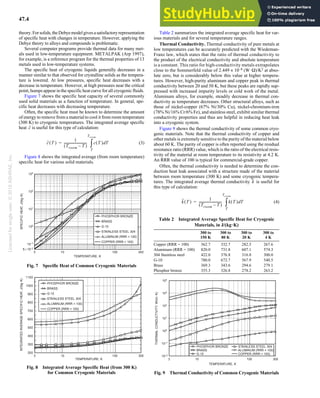
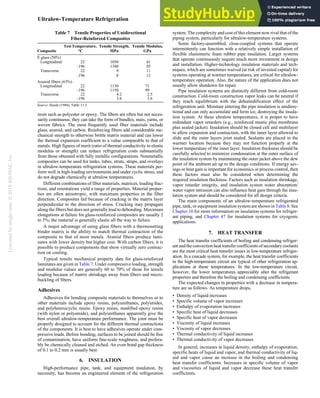
Refrigerant flow rates for R-22 and R-134a are indicated in Fig-
ures 1 and 2. To obtain total system flow rate, select the proper rate
value and multiply by system capacity. Enter curves using satu-
rated refrigerant temperature at the evaporator outlet and actual
liquid temperature entering the liquid feed device (including sub-
cooling in condensers and liquid-suction interchanger, if used).
Because Figures 1 and 2 are based on a saturated evaporator
temperature, they may indicate slightly higher refrigerant flow
rates than are actually in effect when suction vapor is superheated
above the conditions mentioned. Refrigerant flow rates may be
reduced approximately 0.5% for each 1 K increase in superheat in
the evaporator.
Suction-line superheating downstream of the evaporator from
line heat gain from external sources should not be used to reduce
evaluated mass flow, because it increases volumetric flow rate and
line velocity per unit of evaporator capacity, but not mass flow rate.
It should be considered when evaluating suction-line size for satis-
factory oil return up risers.
Suction gas superheating from use of a liquid-suction heat ex-
changer has an effect on oil return similar to that of suction-line
superheating. The liquid cooling that results from the heat exchange
Table 1 Recommended Gas Line Velocities
Suction line 4.5 to 20 m/s
Discharge line 10 to 18 m/s
Fig. 1 Flow Rate per Ton of Refrigeration for Refrigerant 22
Fig. 1 Flow Rate per Kilowatt of Refrigeration for
Refrigerant 22
https://boilersinfo.com
Halocarbon Refrigeration Systems 1.3
reduces mass flow rate per unit of refrigeration. This can be seen in
Figures 1 and 2 because the reduced temperature of the liquid sup-
plied to the evaporator feed valve has been taken into account
Superheat caused by heat in a space not intended to be cooled is
always detrimental because the volumetric flow rate increases with
no compensating gain in refrigerating effect.
4. REFRIGERANT LINE SIZING
When sizing refrigerant lines, designers must consider not only
the effects of velocity and pressure drop in the pipe on system per-
formance, but also system cost and safety. Although smaller pipes
may be cheaper, they inflict higher operating costs for the life of the
system because of excessive pressure drop. However, there are
diminishing efficiency benefits when moving to larger pipe sizes,
and it is necessary to strike a balance.
When considering safety, remember that rated working pressures
for any pipe material decrease as pipe diameters increase. Pipes
should be carefully selected, ensuring that internal system pressures
will not exceed the pipe’s rated working pressure while the system
is in operation or at standstill. It is also important to understand that
any brazed copper piping will be weakened by the annealing that
occurs during brazing. Typically, two separate working pressures
are published for copper: one for annealed copper and one for drawn
copper. Drawn copper working pressures should only be used if and
when pipes are fitted together without brazing (i.e., when mechan-
ical fittings are used).
Pressure Drop Considerations
Suction- and discharge-line pressure drops cause loss of com-
pressor capacity and increased power usage. Excessive liquid-line
pressure drops can cause liquid refrigerant to flash, resulting in
faulty expansion valve operation. Refrigeration systems are
designed so that friction pressure losses do not exceed a pressure
differential equivalent to a corresponding change in the saturation
boiling temperature. The primary measure for determining pressure
drops is a given change in saturation temperature.
Table 2 shows the approximate effect of refrigerant pressure drop
on an R-22 system operating at a 5°C saturated evaporator tempera-
ture with a 38°C saturated condensing temperature.
Pressure drop calculations are determined as normal pressure loss
associated with a change in saturation temperature of the refrigerant.
Typically, the refrigeration system is sized for pressure losses of 1 K
or less for each segment of the discharge, suction, and liquid lines.
Liquid Lines. Pressure drop should not be so large as to cause
gas formation in the liquid line, insufficient liquid pressure at the
liquid feed device, or both. Systems are normally designed so that
pressure drop in the liquid line from friction is not greater than that
corresponding to about a 0.5 to 1 K change in saturation tempera-
ture. See Tables 3 to 9 for liquid-line sizing information.
Liquid subcooling is the only method of overcoming liquid line
pressure loss to guarantee liquid at the expansion device in the evap-
orator. If subcooling is insufficient, flashing occurs in the liquid line
and degrades system efficiency.
Friction pressure drops in the liquid line are caused by accesso-
ries such as solenoid valves, filter-driers, and hand valves, as well as
by the actual pipe and fittings between the receiver outlet and the
refrigerant feed device at the evaporator.
Liquid-line risers are a source of pressure loss and add to the total
loss of the liquid line. Loss caused by risers is approximately
11.3 kPa per metre of liquid lift. Total loss is the sum of all friction
losses plus pressure loss from liquid risers.
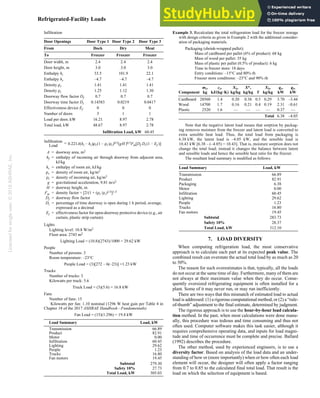
Example 1 shows the process of determining liquid-line size and
checking for total subcooling required.
Example 1. An R-22 refrigeration system using copper pipe operates at
5°C evaporator and 40°C condensing. Capacity is 14 kW, and the liquid
line is 50 m equivalent length with a riser of 6 m. Determine the liquid-
line size and total required subcooling.
Solution: From Table 3, the size of the liquid line at 1 K drop is 15 mm
OD. Use the equation in Note 3 of Table 3 to compute actual tempera-
ture drop. At 14 kW,
Refrigeration systems that have no liquid risers and have the
evaporator below the condenser/receiver benefit from a gain in pres-
sure caused by liquid weight and can tolerate larger friction losses
without flashing. Regardless of the liquid-line routing when flash-
ing occurs, overall efficiency is reduced, and the system may mal-
function.
The velocity of liquid leaving a partially filled vessel (e.g.,
receiver, shell-and-tube condenser) is limited by the height of the
liquid above the point at which the liquid line leaves the vessel,
whether or not the liquid at the surface is subcooled. Because liquid
in the vessel has a very low (or zero) velocity, the velocity V in the
liquid line (usually at the vena contracta) isV 2 = 2gh, where h is
the liquid height in the vessel. Gas pressure does not add to the
Fig. 2 Flow Rate per Ton of Refrigeration for Refrigerant
134a
Fig. 2 Flow Rate per Kilowatt of Refrigeration for
Refrigerant 134a
Table 2 Approximate Effect of Gas Line Pressure Drops on
R-22 Compressor Capacity and Powera
Line Loss, K Capacity, % Energy, %b
Suction line
0 100 100
1 96.8 104.3
2 93.6 107.3
Discharge line
0 100 100
1 99.2 102.7
2 98.4 105.7
aFor system operating at 5°C saturated evaporator temperature and 38°C saturated con-
densing temperature.
bEnergy percentage rated at kW (power)/kW (cooling).
Actual temperature drop = (50  0.02)(14.0/21.54)1.8 = 0.46 K
Estimated friction loss = 0.46(50 × 0.749) = 17.2 kPa
Loss for the riser = 6  11.3 = 67.8 kPa
Total pressure losses = 67.8 + 17.2 = 85.0 kPa
Saturation pressure at 40°C condensing
(see R-22 properties in Chapter 30, 2017 ASHRAE
Handbook—Fundamentals)
= 1533.6 kPa
Initial pressure at beginning of liquid line 1533.6 kPa
Total liquid line losses – 85.0 kPa
Net pressure at expansion device = 1448.6 kPa
The saturation temperature at 1448.6 kPa is 37.7°C.
Required subcooling to overcome the liquid losses = (40.0 – 37.7)
or 2.3 K
https://boilersinfo.com
1.4 2018 ASHRAE Handbook—Refrigeration (SI)
velocity unless gas is flowing in the same direction. As a result, both
gas and liquid flow through the line, limiting the rate of liquid flow.
If this factor is not considered, excess operating charges in receivers
and flooding of shell-and-tube condensers may result.
No specific data are available to precisely size a line leaving a
vessel. If the height of liquid above the vena contracta produces the
desired velocity, liquid leaves the vessel at the expected rate. Thus,
if the level in the vessel falls to one pipe diameter above the bottom
of the vessel from which the liquid line leaves, the capacity of cop-
per lines for R-22 at 6.4 g/s per kilowatt of refrigeration is approx-
imately as follows:
The whole liquid line need not be as large as the leaving connec-
tion. After the vena contracta, the velocity is about 40% less. If the
line continues down from the receiver, the value of h increases. For
a 700 kW capacity with R-22, the line from the bottom of the
receiver should be about 79 mm. After a drop of 1300 mm, a reduc-
tion to 54 mm is satisfactory.
Suction Lines. Suction lines are more critical than liquid and
discharge lines from a design and construction standpoint. Refrig-
erant lines should be sized to (1) provide a minimum pressure drop
at full load, (2) return oil from the evaporator to the compressor
under minimum load conditions, and (3) prevent oil from draining
from an active evaporator into an idle one. A pressure drop in the
suction line reduces a system’s capacity because it forces the com-
pressor to operate at a lower suction pressure to maintain a desired
evaporating temperature in the coil. The suction line is normally
sized to have a pressure drop from friction no greater than the
equivalent of about a 1 K change in saturation temperature. See
Tables 3 to 15 for suction line sizing information.
At suction temperatures lower than 5°C, the pressure drop equiv-
alent to a given temperature change decreases. For example, at –40°C
suction with R-22, the pressure drop equivalent to a 1 K change in sat-
uration temperature is about 4.9 kPa. Therefore, low-temperature
lines must be sized for a very low pressure drop, or higher equivalent
temperature losses, with resultant loss in equipment capacity, must be
accepted. For very low pressure drops, any suction or hot-gas risers
must be sized properly to ensure oil entrainment up the riser so that
oil is always returned to the compressor.
Where pipe size must be reduced to provide sufficient gas veloc-
ity to entrain oil up vertical risers at partial loads, greater pressure
drops are imposed at full load. These can usually be compensated for
by oversizing the horizontal and down run lines and components.
OD, mm kW
28 49
35 88
42 140
54 280
67 460
79 690
105 1440
Table 3 Suction, Discharge, and Liquid Line Capacities in Kilowatts for Refrigerant 22 (Single- or High-Stage Applications)
Nominal
Line
OD, mm
Suction Lines (t = 0.04 K/m) Discharge Linesc
(t = 0.02 K/m, p = 74.90) Liquid Linesa,b,c
Saturated Suction Temperature, °C
–40 –30 –20 –5 5 Saturated Suction
Temperature, °C Velocity =
0.5 m/s
t =
0.02 K/m
p = 749
Corresponding p, Pa/m
196 277 378 572 731 –40 –20 5
TYPE L COPPER LINE
12 0.32 0.50 0.75 1.28 1.76 2.30 2.44 2.60 7.08 11.24
15 0.61 0.95 1.43 2.45 3.37 4.37 4.65 4.95 11.49 21.54
18 1.06 1.66 2.49 4.26 5.85 7.59 8.06 8.59 17.41 37.49
22 1.88 2.93 4.39 7.51 10.31 13.32 14.15 15.07 26.66 66.18
28 3.73 5.82 8.71 14.83 20.34 26.24 27.89 29.70 44.57 131.0
35 6.87 10.70 15.99 27.22 37.31 48.03 51.05 54.37 70.52 240.7
42 11.44 17.80 26.56 45.17 61.84 79.50 84.52 90.00 103.4 399.3
54 22.81 35.49 52.81 89.69 122.7 157.3 167.2 178.1 174.1 794.2
67 40.81 63.34 94.08 159.5 218.3 279.4 297.0 316.3 269.9 1415.0
79 63.34 98.13 145.9 247.2 337.9 431.3 458.5 488.2 376.5 2190.9
105 136.0 210.3 312.2 527.8 721.9 919.7 977.6 1041.0 672.0 4697.0
STEEL LINE
10 0.47 0.72 1.06 1.78 2.42 3.04 3.23 3.44 10.66 15.96
15 0.88 1.35 1.98 3.30 4.48 5.62 5.97 6.36 16.98 29.62
20 1.86 2.84 4.17 6.95 9.44 11.80 12.55 13.36 29.79 62.55
25 3.52 5.37 7.87 13.11 17.82 22.29 23.70 25.24 48.19 118.2
32 7.31 11.12 16.27 27.11 36.79 46.04 48.94 52.11 83.56 244.4
40 10.98 16.71 24.45 40.67 55.21 68.96 73.31 78.07 113.7 366.6
50 21.21 32.23 47.19 78.51 106.4 132.9 141.3 150.5 187.5 707.5
65 33.84 51.44 75.19 124.8 169.5 211.4 224.7 239.3 267.3 1127.3
80 59.88 90.95 132.8 220.8 299.5 373.6 397.1 422.9 412.7 1991.3
100 122.3 185.6 270.7 450.1 610.6 761.7 809.7 862.2 711.2 4063.2
Notes:
1. Table capacities are in kilowatts of refrigeration.
p = pressure drop per unit equivalent length of line, Pa/m
t = corresponding change in saturation temperature, K/m
2. Line capacity for other saturation temperatures t and equivalent lengths Le
3. Saturation temperature t for other capacities and equivalent lengths Le
t = Table t
4. Values based on 40°C condensing temperature. Multiply table capacities by
the following factors for other condensing temperatures.
Condensing
Temperature, °C
Suction
Line
Discharge
Line
20 1.18 0.80
30 1.10 0.88
40 1.00 1.00
50 0.91 1.11
aSizing shown is recommended where any gas generated in receiver must return up condensate line to condenser without restricting condensate flow. Water-cooled condensers,
where receiver ambient temperature may be higher than refrigerant condensing temperature, fall into this category.
bLine pressure drop p is conservative; if subcooling is substantial or line is short, a smaller size line may be used. Applications with very little subcooling or very long lines may
require a larger line.
cSystem working pressures may exceed calculated allowable pressure in some listed type L annealed copper tubes at certain saturated condensing temperatures. Review maximum
working pressure allowances for the pipe material used before selecting pipe sizes to ensure the pipe is properly rated for system working and design pressures.
Line capacity Table capacity
Table Le
Actual Le
----------------------
-
Actual t

Table t

----------------------
-

 
 
 
0.55
=
Actual Le
Table Le
----------------------
-
 
  Actual capacity
Table capacity
------------------------------------
-
 
 
1.8
https://boilersinfo.com
Halocarbon Refrigeration Systems 1.5
Discharge Lines. Pressure loss in hot-gas lines increases the
required compressor power per unit of refrigeration and decreases
compressor capacity. Table 2 shows power losses for an R-22 sys-
tem at 5°C evaporator and 38°C condensing temperature. Pressure
drop is minimized by generously sizing lines for low friction losses,
but still maintaining refrigerant line velocities to entrain and carry
oil along at all loading conditions. Pressure drop is normally
designed not to exceed the equivalent of a 1 K change in saturation
temperature. Recommended sizing tables are based on a 0.02 K/m
change in saturation temperature.
Location and Arrangement of Piping
Refrigerant lines should be as short and direct as possible to
minimize tubing and refrigerant requirements and pressure drops.
Plan piping for a minimum number of joints using as few elbows
and other fittings as possible, but provide sufficient flexibility to
absorb compressor vibration and stresses caused by thermal ex-
pansion and contraction.
Arrange refrigerant piping so that normal inspection and servic-
ing of the compressor and other equipment is not hindered. Do not
obstruct the view of the oil-level sight glass or run piping so that it in-
terferes with removing compressor cylinder heads, end bells, access
plates, or any internal parts. Suction-line piping to the compressor
should be arranged so that it will not interfere with removal of the
compressor for servicing.
Provide adequate clearance between pipe and adjacent walls and
hangers or between pipes for insulation installation. Use sleeves that
are sized to allow installation of both pipe and insulation through
floors, walls, or ceilings. Set these sleeves before pouring concrete
or erecting brickwork.
Run piping so that it does not interfere with passages or obstruct
headroom, windows, and doors. Refer to ASHRAE Standard 15 and
other governing local codes for restrictions that may apply.
Protection Against Damage to Piping
Protection against damage is necessary, particularly for small
lines, which have a false appearance of strength. Where traffic is
heavy, provide protection against impact from carelessly handled
hand trucks, overhanging loads, ladders, and fork trucks.
Piping Insulation
All piping joints and fittings should be thoroughly leak tested
before insulation is sealed. Suction lines should be insulated to pre-
vent sweating and heat gain. Insulation covering lines on which
moisture can condense or lines subjected to outdoor conditions must
be vapor sealed to prevent any moisture travel through the insulation
or condensation in the insulation. Many commercially available
types are provided with an integral waterproof jacket for this pur-
pose. Although the liquid line ordinarily does not require insulation,
suction and liquid lines can be insulated as a unit on installations
where the two lines are clamped together. When it passes through a
warmer area, the liquid line should be insulated to minimize heat
gain. Hot-gas discharge lines usually are not insulated; however,
they should be insulated if necessary to prevent injury from high-
temperature surfaces, or if the heat dissipated is objectionable (e.g.,
in systems that use heat reclaim). In this case, discharge lines
upstream of the heat reclaim heat exchanger should be insulated.
Downstream lines (between the heat reclaim heat exchanger and
condenser) do not need to be insulated unless necessary to prevent
the refrigerant from condensing prematurely. Also, indoor hot-gas
discharge line insulation does not need a tight vapor seal because
moisture condensation is not an issue.
All joints and fittings should be covered, but it is not advisable to
do so until the system has been thoroughly leak tested. See Chapter
10 for additional information.
Vibration and Noise in Piping
Vibration transmitted through or generated in refrigerant piping
and the resulting objectionable noise can be eliminated or mini-
mized by proper piping design and support.
Two undesirable effects of vibration of refrigerant piping are
(1) physical damage to the piping, which can break brazed joints
and, consequently, lose charge; and (2) transmission of noise through
Table 4 Suction, Discharge, and Liquid Line Capacities in Kilowatts for Refrigerant 22 (Intermediate- or Low-Stage Duty)
Nominal
Type L
Copper Line
OD, mm
Suction Lines (t = 0.04 K/m)a
Discharge
Linesb
Liquid
Linesb
Saturated Suction Temperature, °C
–70 –60 –50 –40 –30
Corresponding p, Pa/m
31.0 51.3 81.5 121 228
12 0.09 0.16 0.27 0.47 0.73 0.74
See Table 3
15 0.17 0.31 0.52 0.90 1.39 1.43
18 0.29 0.55 0.91 1.57 2.43 2.49
22 0.52 0.97 1.62 2.78 4.30 4.41
28 1.05 1.94 3.22 5.52 8.52 8.74
35 1.94 3.60 5.95 10.17 15.68 16.08
42 3.26 6.00 9.92 16.93 26.07 26.73
54 6.54 12.03 19.83 33.75 51.98 53.28
67 11.77 21.57 35.47 60.38 92.76 95.06
79 18.32 33.54 55.20 93.72 143.69 174.22
105 39.60 72.33 118.66 201.20 308.02 316.13
Notes:
1. Table capacities are in kilowatts of refrigeration.
p = pressure drop per equivalent line length, Pa/m
t = corresponding change in saturation temperature, K/m
2. Line capacity for other saturation temperatures t and equivalent lengths Le
3. Saturation temperature t for other capacities and equivalent lengths Le
t = Table t
4. Refer to refrigerant property tables (Chapter 30 of the 2017 ASHRAE Hand-
book—Fundamentals) for pressure drop corresponding to t.
5. Values based on –15°C condensing temperature. Multiply table capacities by the
following factors for other condensing temperatures.
Condensing
Temperature, °C Suction Line Discharge Line
–30 1.08 0.74
–20 1.03 0.91
–10 0.98 1.09
0 0.91 1.29
aSee the section on Pressure Drop Considerations.
bSystem working pressures may exceed calculated allowable pressure in some listed type L annealed copper tubes at certain saturated condensing temperatures. Review maximum
working pressure allowances for the pipe material used before selecting pipe sizes to ensure the pipe is properly rated for system working and design pressures.
Line capacity Table capacity
Table Le
Actual Le
----------------------
-
Actual t

Table t

----------------------
-

 
 
0.55
=
Actual Le
Table Le
----------------------
-
 
  Actual capacity
Table capacity
------------------------------------
-
 
 1.8
https://boilersinfo.com
1.6 2018 ASHRAE Handbook—Refrigeration (SI)
the piping itself and through building construction that may come
into direct contact with the piping.
In refrigeration applications, piping vibration can be caused by
rigid connection of the refrigerant piping to a reciprocating compres-
sor. Vibration effects are evident in all lines directly connected to the
compressor or condensing unit. It is thus impossible to eliminate
vibration in piping; it is only possible to mitigate its effects.
Flexible metal hose is sometimes used to absorb vibration trans-
mission along smaller pipe sizes. For maximum effectiveness, it
should be installed parallel to the crankshaft. In some cases, two iso-
lators may be required, one in the horizontal line and the other in the
vertical line at the compressor. A rigid brace on the end of the flex-
ible hose away from the compressor is required to prevent vibration
of the hot-gas line beyond the hose.
Flexible metal hose is not as efficient in absorbing vibration on
larger pipes because it is not actually flexible unless the ratio of
length to diameter is relatively great. In practice, the length is often
limited, so flexibility is reduced in larger sizes. This problem is best
solved by using flexible piping and isolation hangers where the pip-
ing is secured to the structure.
When piping passes through walls, through floors, or inside fur-
ring, it must not touch any part of the building and must be supported
only by the hangers (provided to avoid transmitting vibration to the
building); this eliminates the possibility of walls or ceilings acting as
sounding boards or diaphragms. When piping is erected where
access is difficult after installation, it should be supported by isola-
tion hangers.
Vibration and noise from a piping system can also be caused by
gas pulsations from the compressor operation or from turbulence in
the gas, which increases at high velocities. It is usually more appar-
ent in the discharge line than in other parts of the system.
When gas pulsations caused by the compressor create vibration
and noise, they have a characteristic frequency that is a function of
the number of gas discharges by the compressor on each revo-
lution. This frequency is not necessarily equal to the number of
cylinders, because on some compressors two pistons operate to-
gether. It is also varied by the angular displacement of the cylin-
ders, such as in V-type compressors. Noise resulting from gas
pulsations is usually objectionable only when the piping system
amplifies the pulsation by resonance. On single-compressor
systems, resonance can be reduced by changing the size or length
of the resonating line or by installing a properly sized hot-gas muf-
fler in the discharge line immediately after the compressor dis-
charge valve. On a paralleled compressor system, a harmonic
frequency from the different speeds of multiple compressors may
be apparent. This noise can sometimes be reduced by installing
mufflers.
Table 5 Suction, Discharge, and Liquid Line Capacities in Kilowatts for Refrigerant 134a (Single- or High-Stage Applications)
Nominal
Line OD,
mm
Suction Lines (t = 0.04 K/m) Discharge Linesc
(t = 0.02 K/m, p = 538 Pa/m) Liquid Linesa,b,c
Saturated Suction Temperature, °C
–10 –5 0 5 10 Saturated Suction
Temperature, °C Velocity =
0.5 m/s
t = 0.02 K/m
p = 538 Pa/m
Corresponding p, Pa/m
318 368 425 487 555 –10 0 10
TYPE L COPPER LINE
12 0.62 0.76 0.92 1.11 1.33 1.69 1.77 1.84 6.51 8.50
15 1.18 1.45 1.76 2.12 2.54 3.23 3.37 3.51 10.60 16.30
18 2.06 2.52 3.60 3.69 4.42 5.61 5.85 6.09 16.00 28.40
22 3.64 4.45 5.40 6.50 7.77 9.87 10.30 10.70 24.50 50.10
28 7.19 8.80 10.70 12.80 15.30 19.50 20.30 21.10 41.00 99.50
35 13.20 16.10 19.50 23.50 28.10 35.60 37.20 38.70 64.90 183.00
42 21.90 26.80 32.40 39.00 46.50 59.00 61.60 64.10 95.20 304.00
54 43.60 53.20 64.40 77.30 92.20 117.00 122.00 127.00 160.00 605.00
67 77.70 94.60 115.00 138.00 164.00 208.00 217.00 226.00 248.00 1080.00
79 120.00 147.00 177.00 213.00 253.00 321.00 335.00 349.00 346.00 1670.00
105 257.00 313.00 379.00 454.00 541.00 686.00 715.00 744.00 618.00 3580.00
STEEL LINE
10 0.87 1.06 1.27 1.52 1.80 2.28 2.38 2.47 9.81 12.30
15 1.62 1.96 2.36 2.81 3.34 4.22 4.40 4.58 15.60 22.80
20 3.41 4.13 4.97 5.93 7.02 8.88 9.26 9.64 27.40 48.20
25 6.45 7.81 9.37 11.20 13.30 16.70 17.50 18.20 44.40 91.00
32 13.30 16.10 19.40 23.10 27.40 34.60 36.10 37.50 76.90 188.00
40 20.00 24.20 29.10 34.60 41.00 51.90 54.10 56.30 105.00 283.00
50 38.60 46.70 56.00 66.80 79.10 100.00 104.00 108.00 173.00 546.00
65 61.50 74.30 89.30 106.00 126.00 159.00 166.00 173.00 246.00 871.00
80 109.00 131.00 158.00 288.00 223.00 281.00 294.00 306.00 380.00 1540.00
100 222.00 268.00 322.00 383.00 454.00 573.00 598.00 622.00 655.00 3140.00
Notes:
1. Table capacities are in kilowatts of refrigeration.
p = pressure drop per equivalent line length, Pa/m
t = corresponding change in saturation temperature, K/m
2. Line capacity for other saturation temperatures t and equivalent lengths Le
3. Saturation temperature t for other capacities and equivalent lengths Le
t = Table t
4. Values based on 40°C condensing temperature. Multiply table capacities
by the following factors for other condensing temperatures.
Condensing
Temperature, °C
Suction
Line
Discharge
Line
20 1.239 0.682
30 1.120 0.856
40 1.0 1.0
50 0.888 1.110
aSizing is recommended where any gas generated in receiver must return up condensate line to condenser without restricting condensate flow. Water-cooled condensers, where
receiver ambient temperature may be higher than refrigerant condensing temperature, fall into this category.
bLine pressure drop p is conservative; if subcooling is substantial or line is short, a smaller size line may be used. Applications with very little subcooling or very long lines may
require a larger line.
cSystem working pressures may exceed calculated allowable pressure in some listed type L annealed copper tubes at certain saturated condensing temperatures. Review maximum
working pressure allowances for the pipe material used before selecting pipe sizes to ensure the pipe is properly rated for system working and design pressures.
Line capacity Table capacity
Table Le
Actual Le
----------------------
-
Actual t

Table t

----------------------
-

 
 
0.55
=
Actual Le
Table Le
----------------------
-
 
  Actual capacity
Table capacity
------------------------------------
-
 
 1.8
https://boilersinfo.com
Halocarbon Refrigeration Systems 1.7
Table 6 Suction, Discharge, and Liquid Line Capacities in Kilowatts for Refrigerant 404A (Single- or High-Stage Applications)
Line Size Suction Lines (t = 0.04 K/m) Discharge Lines (t = 0.02 K/m, p = 74.90)c
Liquid Lines (40°C)a,c
Type L
Copper,
OD,
mm
Saturated Suction Temperature, °C Saturated Suction Temperature, °C
–50 –40 –30 –20 –5 5 –50 –40 –30 –20 –5 5
Velocity =
0.5 m/s
t = 0.02 K/m
Drop
t = 0.05 K/m
Drop
Corresponding p, Pa/m Corresponding p, Pa/m
165.5 240.6 337.2 455.1 679.1 863.2 875.6 875.6 875.6 875.6 875.6 875.6 p = 875.6 p = 2189.1
12 0.16 0.27 0.43 0.67 1.19 1.69 1.73 1.87 2.00 2.13 2.31 2.42 4.1 8.0 13.3
15 0.30 0.52 0.83 1.28 2.27 3.22 3.29 3.55 3.81 4.05 4.40 4.61 6.7 15.3 25.2
18 0.53 0.90 1.45 2.22 3.94 5.57 5.71 6.16 6.59 7.02 7.62 7.99 10.1 26.6 43.7
22 0.94 1.59 2.55 3.91 6.93 9.79 10.00 10.79 11.56 12.30 13.36 14.01 15.5 46.8 76.7
28 1.86 3.14 5.04 7.72 13.66 19.25 19.68 21.23 22.74 24.21 26.29 27.57 26.0 92.5 151.1
35 3.43 5.78 9.26 14.15 25.00 35.17 35.96 38.78 41.54 44.23 48.03 50.37 41.1 169.3 276.3
42 5.71 9.61 15.36 23.46 41.32 58.16 59.48 64.15 68.72 73.16 79.45 83.32 60.3 280.4 456.2
54 11.37 19.12 30.50 46.57 81.90 114.98 117.62 126.86 135.89 144.67 157.11 164.76 101.4 556.9 903.2
67 20.31 34.10 54.30 82.75 145.45 203.96 208.67 225.07 241.08 256.66 278.73 292.29 157.3 989.8 1601.8
79 31.54 52.78 84.12 128.09 224.52 314.97 321.69 346.97 371.66 395.67 429.70 450.60 219.3 1529.9 2473.4
105 67.66 113.08 179.89 273.26 478.70 670.69 685.09 738.92 791.51 842.65 915.11 959.63 391.5 3264.9 5265.6
Steel
mm SCH
10 80 0.16 0.26 0.40 0.61 1.05 1.46 1.49 1.61 1.72 1.83 1.99 2.09 4.6 7.2 11.5
15 80 0.31 0.51 0.80 1.20 2.07 2.88 2.94 3.17 3.39 3.61 3.92 4.12 7.6 14.3 22.7
20 80 0.70 1.15 1.80 2.70 4.66 6.48 6.61 7.13 7.64 8.14 8.84 9.27 14.1 32.1 51.1
25 80 1.37 2.25 3.53 5.30 9.13 12.68 12.95 13.97 14.96 15.93 17.30 18.14 23.4 63.0 100.0
32 80 2.95 4.83 7.57 11.35 19.57 27.20 27.72 29.90 32.03 34.10 37.03 38.83 41.8 134.9 214.0
40 80 4.49 7.38 11.55 17.29 29.81 41.42 42.22 45.54 48.78 51.94 56.40 59.14 57.5 205.7 326.5
50 40 10.47 17.16 26.81 40.20 69.20 96.18 98.04 105.75 113.27 120.59 130.96 137.33 109.2 477.6 758.2
65 40 16.68 27.33 42.72 63.93 110.18 152.98 155.95 168.20 180.17 191.81 208.31 218.44 155.7 761.1 1205.9
80 40 29.51 48.38 75.47 112.96 194.49 270.35 275.59 297.25 318.40 338.98 368.13 386.03 240.5 1344.9 2131.2
100 40 60.26 98.60 153.84 230.29 396.56 550.03 560.67 604.72 647.76 689.61 748.91 785.34 414.3 2735.7 4335.6
125 40 108.75 177.97 277.71 415.78 714.27 991.91 1012.44 1091.99 1169.71 1245.28 1352.37 1418.15 650.6 4939.2 7819.0
150 40 176.25 287.77 449.08 671.57 1155.17 1604.32 1635.36 1763.85 1889.38 2011.45 2184.43 2290.69 940.3 7988.0 12 629.7
200 40 360.41 589.35 918.60 1373.79 2363.28 3277.89 3341.30 3603.84 3860.32 4109.73 4463.15 4680.25 1628.2 16 342.0 25 838.1
250 40 652.69 1065.97 1661.62 2485.16 4275.41 5930.04 6044.77 6519.73 6983.73 7434.94 8074.30 8467.06 2566.4 29 521.7 46 743.9
300 IDb 1044.01 1705.26 2658.28 3970.05 6830.36 9488.03 9671.59 10 431.52 11 173.92 11 895.85 12 918.83 13 547.24 3680.9 47 161.0 74 677.7
350 30 1351.59 2207.80 3436.53 5140.20 8843.83 12 266.49 12 503.79 13 486.26 14 446.06 15 379.40 16 701.95 17 514.38 4487.7 61 061.2 96 691.3
400 30 1947.52 3176.58 4959.92 7407.49 12 725.25 17 677.86 18 019.86 19 435.74 20 818.96 22 164.04 24 070.04 25 240.87 5944.7 87 994.9 139 346.8
aSizing shown is recommended where any gas generated
in receiver must return up condensate line to condenser
without restricting condensate flow. Water-cooled con-
densers, where receiver ambient temperature may be
higher than refrigerant condensing temperature, fall into
this category.
bPipe inside diameter is same as nominal pipe size.
cSystem working pressures may exceed calculated allow-
able pressure in some listed type L annealed copper
tubes at certain saturated condensing temperatures.
Review maximum working pressure allowances for the
pipe material used before selecting pipe sizes to ensure
the pipe is properly rated for system working and design
pressures.
Notes:
1. Table capacities are in kilowatts of refrigeration.
p = pressure drop per unit equivalent length of line, Pa/m
t = corresponding change in saturation temperature, K/m
2. Line capacity for other saturation temperatures t and equivalent lengths Le
Line capacity = Table capacity
3. Saturation temperature t for other capacities and equivalent lengths Le
t = Table t
4. Capacity (kW) based on standard refrigerant cycle of 40°C liquid and
saturated evaporator outlet temperature. Liquid capacity (kW) based
on –5°C evaporator temperature.
5. Thermophysical properties and viscosity data based on calculations
from NIST REFPROP program Version 6.01.
6. For brazed Type L copper tubing larger than 28 mm OD for discharge
or liquid service, see Safety Requirements section.
7. Values are based on 40°C condensing temperature. Multiply table
capacities by the following factors for other condensing temperatures.
Cond.
Temp.,
°C
Suc-
tion
Line
Dis-
charge
Line
20 1.344 0.812
30 1.177 0.906
40 1.000 1.000
50 0.809 1.035
Table Le
Actual Le
----------------------
-
Actual t

Table t

----------------------
-

 
 
0.55
Actual Le
Table Le
----------------------
-
 
  Actual capacity
Table capacity
------------------------------------
-
 
 1.8
https://boilersinfo.com
Licensed
for
single
user.
©
2018
ASHRAE,
Inc. 1.8 2018 ASHRAE Handbook—Refrigeration (SI)
Table 7 Suction, Discharge, and Liquid Line Capacities in Kilowatts for Refrigerant 507A (Single- or High-Stage Applications)
Line Size Suction Lines (t = 0.04 K/m) Discharge Lines (t = 0.02 K/m, p = 74.90)c
Liquid Lines (40°C)a,c
Type L
Copper,
OD,
mm
Saturated Suction Temperature, °C Saturated Suction Temperature, °C
–50 –40 –30 –20 –5 5 –50 –40 –30 –20 –5 5
Velocity =
0.5 m/s
t = 0.02 K/m
Drop
t = 0.05 K/m
Drop
Corresponding p, Pa/m Corresponding p, Pa/m
173.7 251.7 350.3 471.6 700.5 882.5 896.3 896.3 896.3 896.3 896.3 896.3 p = 896.3 p = 2240.8
12 0.16 0.28 0.44 0.68 1.21 1.70 1.72 1.86 2.00 2.13 2.32 2.43 4.0 7.9 13.0
15 0.31 0.53 0.85 1.30 2.31 3.24 3.27 3.54 3.80 4.05 4.41 4.63 6.5 15.0 24.7
18 0.55 0.92 1.47 2.26 4.00 5.61 5.66 6.12 6.57 7.01 7.63 8.01 9.8 26.1 42.8
22 0.97 1.63 2.60 3.98 7.02 9.85 9.93 10.73 11.52 12.29 13.37 14.04 15.0 45.9 75.1
28 1.91 3.22 5.14 7.85 13.83 19.38 19.53 21.12 22.67 24.18 26.31 27.63 25.1 90.5 147.8
35 3.52 5.91 9.42 14.37 25.28 35.40 35.68 38.58 41.42 44.17 48.07 50.47 39.7 165.6 270.0
42 5.86 9.82 15.65 23.83 41.86 58.55 59.03 63.82 68.52 73.07 79.52 83.50 58.2 274.8 447.1
54 11.68 19.55 31.07 47.24 82.83 115.76 116.74 126.22 135.51 144.51 157.26 165.12 98.0 544.0 883.9
67 20.86 34.83 55.25 84.08 147.12 205.36 206.75 223.53 239.99 255.92 278.52 292.43 151.9 967.0 1567.7
79 32.31 54.01 85.61 129.94 227.12 317.17 319.34 345.26 370.68 395.29 430.19 451.67 211.9 1497.3 2420.9
105 69.31 115.54 182.78 277.24 484.29 675.47
Steel
mm SCH
10 80 0.16 0.26 0.41 0.62 1.06 1.47 1.48 1.60 1.72 1.83 1.99 2.09 4.4 7.1 11.3
15 80 0.31 0.52 0.81 1.21 2.09 2.90 2.91 3.15 3.38 3.60 3.92 4.12 7.4 13.9 22.2
20 80 0.71 1.17 1.83 2.74 4.71 6.52 6.55 7.09 7.61 8.11 8.83 9.27 13.6 31.4 49.9
25 80 1.40 2.29 3.58 5.36 9.23 12.77 12.83 13.87 14.89 15.88 17.28 18.15 22.6 61.6 97.7
32 80 3.01 4.93 7.68 11.50 19.76 27.33 27.47 29.70 31.88 34.00 37.00 38.85 40.3 132.0 209.4
40 80 4.59 7.52 11.72 17.54 30.09 41.63 41.83 45.23 48.56 51.78 56.35 59.17 55.6 201.0 319.0
50 40 10.69 17.50 27.25 40.71 69.87 96.67 97.14 105.02 112.76 120.24 130.86 137.39 105.5 466.6 740.7
65 40 17.06 27.88 43.32 64.81 111.37 153.76 154.51 167.05 179.35 191.26 208.14 218.54 150.4 743.5 1178.1
80 40 30.20 49.26 76.63 114.52 196.37 271.72 273.05 295.22 316.95 338.00 367.84 386.21 232.3 1313.9 2082.0
100 40 61.60 100.39 156.20 233.20 400.40 552.81 555.50 600.59 644.81 687.62 748.33 785.70 400.3 2675.6 4235.5
125 40 111.17 181.20 281.64 421.03 721.18 998.16 1003.06 1084.49 1164.33 1241.63 1351.25 1418.74 628.6 4825.1 7638.5
150 40 179.98 292.99 455.44 680.92 1166.35 1612.43 1620.28 1751.80 1880.77 2005.64 2182.72 2291.73 908.5 7803.5 12 338.1
200 40 368.55 600.02 931.61 1393.04 2386.16 3294.46 3310.49 3579.22 3842.72 4097.86 4459.65 4682.37 1573.2 15 964.7 25 241.5
250 40 666.52 1085.29 1685.18 2516.51 4316.82 5960.02 5989.03 6475.19 6951.89 7413.46 8067.98 8470.90 2479.7 28 840.0 45 664.6
300 IDb 1067.53 1736.16 2695.93 4020.13 6896.51 9535.99 9582.41 10 360.26 11 122.98 11 861.49 12 908.71 13 553.39 3556.5 46 140.3 72 953.4
350 30 1380.23 2247.80 3485.20 5205.04 8929.47 12 328.49 12 388.50 13 394.13 14 380.20 15 334.97 16 688.86 17 522.33 4336.1 59 651.3 94 458.7
400 30 1991.54 3239.15 5030.17 7500.91 12 848.49 17 767.21 17 853.70 19 302.97 20 724.05 22 100.02 24 051.18 25 252.33 5743.9 85 963.1 136 129.3
aSizing shown is recommended where any gas generated
in receiver must return up condensate line to condenser
without restricting condensate flow. Water-cooled con-
densers, where receiver ambient temperature may be
higher than refrigerant condensing temperature, fall into
this category.
bPipe inside diameter is same as nominal pipe size.
cSystem working pressures may exceed calculated allow-
able pressure in some listed type L annealed copper
tubes at certain saturated condensing temperatures.
Review maximum working pressure allowances for the
pipe material used before selecting pipe sizes to ensure
the pipe is properly rated for system working and design
pressures.
Notes:
1. Table capacities are in kilowatts of refrigeration.
p = pressure drop per unit equivalent length of line, Pa/m
t = corresponding change in saturation temperature, K/m
2. Line capacity for other saturation temperatures t and equivalent lengths Le
Line capacity = Table capacity
3. Saturation temperature t for other capacities and equivalent lengths Le
t = Table t
4. Capacity (kW) based on standard refrigerant cycle of 40°C liquid and
saturated evaporator outlet temperature. Liquid capacity (kW) based
on –5°C evaporator temperature.
5. Thermophysical properties and viscosity data based on calculations
from NIST REFPROP program Version 6.01.
6. For brazed Type L copper tubing larger than 28 mm OD for discharge
or liquid service, see Safety Requirements section.
7. Values are based on 40°C condensing temperature. Multiply table
capacities by the following factors for other condensing temperatures.
Cond.
Temp.,
°C
Suc-
tion
Line
Dis-
charge
Line
20 1.357 0.765
30 1.184 0.908
40 1.000 1.000
50 0.801 1.021
Table Le
Actual Le
----------------------
-
Actual t

Table t

----------------------
-

 
 
0.55
Actual Le
Table Le
----------------------
-
 
  Actual capacity
Table capacity
------------------------------------
-
 
 1.8
Licensed
for
single
user.
©
2018
ASHRAE,
Inc.
Halocarbon Refrigeration Systems 1.9
Table 8 Suction, Discharge, and Liquid Line Capacities in Kilowatts for Refrigerant 410A (Single- or High-Stage Applications)
Line Size Suction Lines (t = 0.04 K/m) Discharge Lines (t = 0.02 K/m, p = 74.90)c
Liquid Lines (40°C)a,c
Type L
Copper,
OD,
mm
Saturated Suction Temperature, °C Saturated Suction Temperature, °C
–50 –40 –30 –20 –5 5 –50 –40 –30 –20 –5 5 Velo-
city =
0.5 m/s
t = 0.02 K/m
Drop
t = 0.05 K/m
Drop
Corresponding p, Pa/m Corresponding p, Pa/m
218.6 317.2 443.3 599.1 894.2 1137.6 1172.1 1172.1 1172.1 1172.1 1172.1 1172.1 p = 1179 p = 2935.8
12 0.32 0.52 0.80 1.20 2.05 2.83 3.47 3.60 3.73 3.84 4.00 4.07 6.2 14.3 23.5
15 0.61 0.99 1.54 2.29 3.90 5.37 6.60 6.85 7.09 7.31 7.60 7.75 10.1 27.2 44.6
18 1.06 1.72 2.68 3.98 6.76 9.30 11.43 11.87 12.29 12.67 13.16 13.42 15.4 47.3 77.2
22 1.87 3.04 4.72 7.00 11.89 16.32 20.04 20.81 21.54 22.20 23.08 23.53 23.5 83.0 135.3
28 3.72 6.03 9.32 13.82 23.43 32.11 39.44 40.95 42.39 43.70 45.42 46.31 39.3 163.7 266.4
35 6.84 11.07 17.11 25.33 42.82 58.75 72.05 74.82 77.46 79.84 82.98 84.62 62.2 299.6 486.0
42 11.39 18.39 28.38 42.00 70.89 97.02 119.01 123.57 127.93 131.87 137.06 139.76 91.3 495.7 804.1
54 22.70 36.61 56.35 83.26 140.29 191.84 235.35 244.38 253.00 260.80 271.06 276.39 153.7 982.0 1590.3
67 40.48 65.21 100.35 147.94 249.16 340.33 417.58 433.60 448.89 462.73 480.93 490.40 238.2 1746.4 2816.7
79 62.89 101.10 155.22 229.02 384.65 525.59 643.78 668.47 692.05 713.37 741.44 756.03 332.2 2695.2 4350.8
105 134.69 216.27 331.96 488.64 820.20 1119.32
Steel
mm SCH
10 80 0.31 0.49 0.74 1.08 1.80 2.44 2.98 3.10 3.21 3.31 3.44 3.50 6.9 12.7 20.1
15 80 0.61 0.97 1.47 2.14 3.54 4.80 5.87 6.09 6.31 6.50 6.76 6.89 11.5 25.0 39.6
20 80 1.39 2.19 3.32 4.82 7.98 10.81 13.21 13.72 14.20 14.64 15.22 15.52 21.3 56.2 89.1
25 80 2.72 4.30 6.50 9.45 15.63 21.16 25.86 26.85 27.80 28.66 29.79 30.37 35.5 110.2 174.5
32 80 5.86 9.24 13.95 20.26 33.47 45.30 55.37 57.50 59.53 61.36 63.77 65.03 63.2 235.9
40 80 8.94 14.09 21.28 30.91 50.97 68.99 84.33 87.57 90.66 93.45 97.13 99.04 87.1 359.8 568.9
50 40 20.81 32.75 49.39 71.75 118.34 160.19 195.83 203.34 210.51 217.00 225.54 229.98 165.4 835.4 1320.9
65 40 33.22 52.18 78.69 114.11 188.61 254.80 311.49 323.43 334.84 345.16 358.74 365.80 235.8 1328.6 2101.0
80 40 58.79 92.36 139.17 201.84 332.58 450.29 550.47 571.59 591.74 609.98 633.98 646.46 364.2 2347.8 3713.1
100 40 119.78 188.24 283.69 411.01 678.11 916.08 1121.21 1164.22 1205.28 1242.42 1291.30 1316.72 627.6 4787.0 7562.8
125 40 216.38 339.76 511.52 742.06 1221.40 1654.16 2022.16 2099.73 2173.77 2240.77 2328.92 2374.75 985.4 8622.2 13 639.9
150 40 350.32 549.37 827.18 1200.12 1975.34 2672.01 3266.45 3391.75 3511.36 3619.58 3761.97 3836.01 1424.2 13 944.5 22 032.9
200 40 717.23 1125.10 1692.00 2451.89 4041.21 5459.36 6673.89 6929.91 7174.29 7395.39 7686.32 7837.60 2466.2 28 528.0 45 016.9
250 40 1297.30 2035.01 3060.66 4435.35 7310.97 9876.55 12 073.76 12 536.92 12 979.03 13 379.03 13 905.35 14 179.04 3887.3 51 535.6 81 440.3
300 IDb 2075.09 3255.45 4896.39 7085.49 11 679.95 15 802.42 19 317.94 20 059.00 20 766.37 21 406.37 22 248.47 22 686.37 5575.3 82 451.9 130 304.0
350 30 2686.45 4214.83 6329.87 9173.88 15 122.98 20 429.97 24 974.96 25 933.02 26 847.53 27 674.95 28 763.66 29 329.79 6797.4 106 757.2 168 461.9
400 30 3870.92 6064.31 9135.88 13 220.36 21 760.24 29 442.67 35 992.70 37 373.41 38 691.36 39 883.80 41 452.79 42 268.67 9004.3 153 611.4 242 779.1
aSizing shown is recommended where any gas generated
in receiver must return up condensate line to condenser
without restricting condensate flow. Water-cooled con-
densers, where receiver ambient temperature may be
higher than refrigerant condensing temperature, fall into
this category.
bPipe inside diameter is same as nominal pipe size.
cSystem working pressures may exceed calculated allow-
able pressure in some listed type L annealed copper
tubes at certain saturated condensing temperatures.
Review maximum working pressure allowances for the
pipe material used before selecting pipe sizes to ensure
the pipe is properly rated for system working and design
pressures.
Notes:
1. Table capacities are in kilowatts of refrigeration.
p = pressure drop per unit equivalent length of line, Pa/m
t = corresponding change in saturation temperature, K/m
2. Line capacity for other saturation temperatures t and equivalent lengths Le
Line capacity = Table capacity
3. Saturation temperature t for other capacities and equivalent lengths Le
t = Table t
4. Capacity (kW) based on standard refrigerant cycle of 40°C liquid and
saturated evaporator outlet temperature. Liquid capacity (kW) based
on –5°C evaporator temperature.
5. Thermophysical properties and viscosity data based on calculations
from NIST REFPROP program Version 6.01.
6. For brazed Type L copper tubing larger than 15 mm OD for discharge
or liquid service, see Safety Requirements section.
7. Values are based on 40°C condensing temperature. Multiply table
capacities by the following factors for other condensing temperatures.
Cond.
Temp.,
°C
Suc-
tion
Line
Dis-
charge
Line
20 1.238 0.657
30 1.122 0.866
40 1.000 1.000
50 0.867 1.117
Table Le
Actual Le
----------------------
-
Actual t

Table t

----------------------
-

 
 
0.55
Actual Le
Table Le
----------------------
-
 
  Actual capacity
Table capacity
------------------------------------
-
 
 1.8
Licensed
for
single
user.
©
2018
ASHRAE,
Inc. 1.10 2018 ASHRAE Handbook—Refrigeration (SI)
Table 9 Suction, Discharge, and Liquid Line Capacities in Kilowatts for Refrigerant 407C (Single- or High-Stage Applications)
Line Size Suction Lines (t = 0.04 K/m) Discharge Lines (t = 0.02 K/m, p = 74.90)c
Liquid Lines (40°C)a,c
Type L
Copper,
OD,
mm
Saturated Suction Temperature, °C Saturated Suction Temperature, °C
–50 –40 –30 –20 –5 5 –50 –40 –30 –20 –5 5
Velocity =
0.5 m/s
t = 0.02 K/m
Drop
t = 0.05 K/m
Drop
Corresponding p, Pa/m Corresponding p, Pa/m
173.7 251.7 350.3 471.6 700.5 882.5 896.3 896.3 896.3 896.3 896.3 896.3 p = 896.3 p = 2240.8
12 0.16 0.28 0.44 0.68 1.21 1.70 1.72 1.86 2.00 2.13 2.32 2.43 4.0 7.9 13.0
15 0.31 0.53 0.85 1.30 2.31 3.24 3.27 3.54 3.80 4.05 4.41 4.63 6.5 15.0 24.7
18 0.55 0.92 1.47 2.26 4.00 5.61 5.66 6.12 6.57 7.01 7.63 8.01 9.8 26.1 42.8
22 0.97 1.63 2.60 3.98 7.02 9.85 9.93 10.73 11.52 12.29 13.37 14.04 15.0 45.9 75.1
28 1.91 3.22 5.14 7.85 13.83 19.38 19.53 21.12 22.67 24.18 26.31 27.63 25.1 90.5 147.8
35 3.52 5.91 9.42 14.37 25.28 35.40 35.68 38.58 41.42 44.17 48.07 50.47 39.7 165.6 270.0
42 5.86 9.82 15.65 23.83 41.86 58.55 59.03 63.82 68.52 73.07 79.52 83.50 58.2 274.8 447.1
54 11.68 19.55 31.07 47.24 82.83 115.76 116.74 126.22 135.51 144.51 157.26 165.12 98.0 544.0 883.9
67 20.86 34.83 55.25 84.08 147.12 205.36 206.75 223.53 239.99 255.92 278.52 292.43 151.9 967.0 1567.7
79 32.31 54.01 85.61 129.94 227.12 317.17 319.34 345.26 370.68 395.29 430.19 451.67 211.9 1497.3 2420.9
105 69.31 115.54 182.78 277.24 484.29 675.47 678.77 733.87 787.90 840.21 914.39 960.06 378.2 3189.5 5154.4
Steel
mm SCH
10 80 0.16 0.26 0.41 0.62 1.06 1.47 1.48 1.60 1.72 1.83 1.99 2.09 4.4 7.1 11.3
15 80 0.31 0.52 0.81 1.21 2.09 2.90 2.91 3.15 3.38 3.60 3.92 4.12 7.4 13.9 22.2
20 80 0.71 1.17 1.83 2.74 4.71 6.52 6.55 7.09 7.61 8.11 8.83 9.27 13.6 31.4 49.9
25 80 1.40 2.29 3.58 5.36 9.23 12.77 12.83 13.87 14.89 15.88 17.28 18.15 22.6 61.6 97.7
32 80 3.01 4.93 7.68 11.50 19.76 27.33 27.47 29.70 31.88 34.00 37.00 38.85 40.3 132.0 209.4
40 80 4.59 7.52 11.72 17.54 30.09 41.63 41.83 45.23 48.56 51.78 56.35 59.17 55.6 201.0 319.0
50 40 10.69 17.50 27.25 40.71 69.87 96.67 97.14 105.02 112.76 120.24 130.86 137.39 105.5 466.6 740.7
65 40 17.06 27.88 43.32 64.81 111.37 153.76 154.51 167.05 179.35 191.26 208.14 218.54 150.4 743.5 1178.1
80 40 30.20 49.26 76.63 114.52 196.37 271.72 273.05 295.22 316.95 338.00 367.84 386.21 232.3 1313.9 2082.0
100 40 61.60 100.39 156.20 233.20 400.40 552.81 555.50 600.59 644.81 687.62 748.33 785.70 400.3 2675.6 4235.5
125 40 111.17 181.20 281.64 421.03 721.18 998.16 1003.06 1084.49 1164.33 1241.63 1351.25 1418.74 628.6 4825.1 7638.5
150 40 179.98 292.99 455.44 680.92 1166.35 1612.43 1620.28 1751.80 1880.77 2005.64 2182.72 2291.73 908.5 7803.5 12 338.1
200 40 368.55 600.02 931.61 1393.04 2386.16 3294.46 3310.49 3579.22 3842.72 4097.86 4459.65 4682.37 1573.2 15 964.7 25 241.5
250 40 666.52 1085.29 1685.18 2516.51 4316.82 5960.02 5989.03 6475.19 6951.89 7413.46 8067.98 8470.90 2479.7 28 840.0 45 664.6
300 IDb 1067.53 1736.16 2695.93 4020.13 6896.51 9535.99 9582.41 10 360.26 11 122.98 11 861.49 12 908.71 13 553.39 3556.5 46 140.3 72 953.4
350 30 1380.23 2247.80 3485.20 5205.04 8929.47 12 328.49 12 388.50 13 394.13 14 380.20 15 334.97 16 688.86 17 522.33 4336.1 59 651.3 94 458.7
400 30 1991.54 3239.15 5030.17 7500.91 12 848.49 17 767.21 17 853.70 19 302.97 20 724.05 22 100.02 24 051.18 25 252.33 5743.9 85 963.1 136 129.3
aSizing shown is recommended where any gas generated
in receiver must return up condensate line to condenser
without restricting condensate flow. Water-cooled con-
densers, where receiver ambient temperature may be
higher than refrigerant condensing temperature, fall into
this category.
bPipe inside diameter is same as nominal pipe size.
cSystem working pressures may exceed calculated allow-
able pressure in some listed type L annealed copper
tubes at certain saturated condensing temperatures.
Review maximum working pressure allowances for the
pipe material used before selecting pipe sizes to ensure
the pipe is properly rated for system working and design
pressures.
Notes:
1. Table capacities are in kilowatts of refrigeration.
p = pressure drop per unit equivalent length of line, Pa/m
t = corresponding change in saturation temperature, K/m
2. Line capacity for other saturation temperatures t and equivalent lengths Le
Line capacity = Table capacity
3. Saturation temperature t for other capacities and equivalent lengths Le
t = Table t
4. Capacity (kW) based on standard refrigerant cycle of 40°C liquid and
saturated evaporator outlet temperature. Liquid capacity (kW) based
on –5°C evaporator temperature.
5. Thermophysical properties and viscosity data based on calculations
from NIST REFPROP program Version 6.01.
6. For brazed Type L copper tubing larger than 28 mm OD for discharge
or liquid service, see Safety Requirements section.
7. Values are based on 40°C condensing temperature. Multiply table
capacities by the following factors for other condensing temperatures.
Cond.
Temp.,
°C
Suc-
tion
Line
Dis-
charge
Line
20 1.357 0.765
30 1.184 0.908
40 1.000 1.000
50 0.801 1.021
Table Le
Actual Le
----------------------
-
Actual t

Table t

----------------------
-

 
 
0.55
Actual Le
Table Le
----------------------
-
 
  Actual capacity
Table capacity
------------------------------------
-
 
 1.8
Licensed
for
single
user.
©
2018
ASHRAE,
Inc.
Halocarbon Refrigeration Systems 1.11
Table 10 Suction Line Capacities in Kilowatts for Refrigerant 22 (Single- or High-Stage Applications)
for Pressure Drops of 0.02 and 0.01 K/m Equivalent
Nominal
Line OD,
mm
Saturated Suction Temperature, °C
–40 –30 –20 –5 5
t = 0.02 t = 0.01 t = 0.02 t = 0.01 t = 0.02 t = 0.01 t = 0.02 t = 0.01 t = 0.02 t = 0.01
p = 97.9 p = 49.0 p = 138 p = 69.2 p = 189 p = 94.6 p = 286 p = 143 p = 366 p = 183
TYPE L COPPER LINE
12 0.21 0.14 0.34 0.23 0.51 0.34 0.87 0.59 1.20 0.82
15 0.41 0.28 0.65 0.44 0.97 0.66 1.67 1.14 2.30 1.56
18 0.72 0.49 1.13 0.76 1.70 1.15 2.91 1.98 4.00 2.73
22 1.28 0.86 2.00 1.36 3.00 2.04 5.14 3.50 7.07 4.82
28 2.54 1.72 3.97 2.70 5.95 4.06 10.16 6.95 13.98 9.56
35 4.69 3.19 7.32 4.99 10.96 7.48 18.69 12.80 25.66 17.59
42 7.82 5.32 12.19 8.32 18.20 12.46 31.03 21.27 42.59 29.21
54 15.63 10.66 24.34 16.65 36.26 24.88 61.79 42.43 84.60 58.23
67 27.94 19.11 43.48 29.76 64.79 44.48 110.05 75.68 150.80 103.80
79 43.43 29.74 67.47 46.26 100.51 69.04 170.64 117.39 233.56 161.10
105 93.43 63.99 144.76 99.47 215.39 148.34 365.08 251.92 499.16 344.89
STEEL LINE
10 0.33 0.23 0.50 0.35 0.74 0.52 1.25 0.87 1.69 1.18
15 0.61 0.42 0.94 0.65 1.38 0.96 2.31 1.62 3.15 2.20
20 1.30 0.90 1.98 1.38 2.92 2.04 4.87 3.42 6.63 4.65
25 2.46 1.71 3.76 2.62 5.52 3.86 9.22 6.47 12.52 8.79
32 5.11 3.56 7.79 5.45 11.42 8.01 19.06 13.38 25.88 18.20
40 7.68 5.36 11.70 8.19 17.16 12.02 28.60 20.10 38.89 27.35
50 14.85 10.39 22.65 14.86 33.17 23.27 55.18 38.83 74.92 52.77
65 23.74 16.58 36.15 25.30 52.84 37.13 87.91 61.89 119.37 84.05
80 42.02 29.43 63.95 44.84 93.51 65.68 155.62 109.54 211.33 148.77
100 85.84 60.16 130.57 91.69 190.95 134.08 317.17 223.47 430.77 303.17
125 155.21 108.97 235.58 165.78 344.66 242.47 572.50 403.23 776.67 547.16
150 251.47 176.49 381.78 268.72 557.25 391.95 925.72 652.73 1255.93 885.79
200 515.37 362.01 781.63 550.49 1141.07 803.41 1895.86 1336.79 2572.39 1813.97
250 933.07 656.12 1413.53 996.65 2063.66 1454.75 3429.24 2417.91 4646.48 3280.83
300 1494.35 1050.57 2264.54 1593.85 3305.39 2330.50 5477.74 3867.63 7433.20 5248.20
p = pressure drop per unit equivalent line length, Pa/m
t = corresponding change in saturation temperature, K/m
Table 11 Suction Line Capacities in Kilowatts for Refrigerant 134a (Single- or High-Stage Applications)
for Pressure Drops of 0.02 and 0.01 K/m Equivalent
Nominal
Line OD,
mm
Saturated Suction Temperature, °C
–10 –5 0 5 10
t = 0.02 t = 0.01 t = 0.02 t = 0.01 t = 0.02 t = 0.01 t = 0.02 t = 0.01 t = 0.02 t = 0.01
p = 159 p = 79.3 p = 185 p = 92.4 p = 212 p = 106 p = 243 p = 121 p = 278 p = 139
TYPE L COPPER LINE
12 0.42 0.28 0.52 0.35 0.63 0.43 0.76 0.51 0.91 0.62
15 0.81 0.55 0.99 0.67 1.20 0.82 1.45 0.99 1.74 1.19
18 1.40 0.96 1.73 1.18 2.09 1.43 2.53 1.72 3.03 2.07
22 2.48 1.69 3.05 2.08 3.69 2.52 4.46 3.04 5.34 3.66
28 4.91 3.36 6.03 4.13 7.31 5.01 8.81 6.02 10.60 7.24
35 9.05 6.18 11.10 7.60 13.40 9.21 16.20 11.10 19.40 13.30
42 15.00 10.30 18.40 12.60 22.30 15.30 26.90 18.40 32.10 22.10
54 30.00 20.50 36.70 25.20 44.40 30.50 53.40 36.70 63.80 44.00
67 53.40 36.70 65.40 44.90 79.00 54.40 95.00 65.40 113.00 78.30
79 82.80 56.90 101.00 69.70 122.00 84.30 147.00 101.00 176.00 122.00
105 178.00 122.00 217.00 149.00 262.00 181.00 315.00 217.00 375.00 260.00
STEEL LINE
10 0.61 0.42 0.74 0.52 0.89 0.62 1.06 0.74 1.27 0.89
15 1.13 0.79 1.38 0.96 1.65 1.16 1.97 1.38 2.35 1.65
20 2.39 1.67 2.91 2.03 3.49 2.44 4.17 2.92 4.94 3.47
25 4.53 3.17 5.49 3.85 6.59 4.62 7.86 5.52 9.33 6.56
32 9.37 6.57 11.40 7.97 13.60 9.57 16.30 11.40 19.30 13.60
40 14.10 9.86 17.10 12.00 20.50 14.40 24.40 17.10 28.90 20.40
50 27.20 19.10 32.90 23.10 39.50 27.70 47.00 33.10 55.80 39.40
65 43.30 30.40 52.50 36.90 62.90 44.30 75.00 52.70 88.80 62.70
80 76.60 53.80 92.80 65.30 111.00 78.30 133.00 93.10 157.00 111.00
100 156.00 110.00 189.00 133.00 227.00 160.00 270.00 190.00 320.00 226.00
p = pressure drop per unit equivalent line length, Pa/m
t = corresponding change in saturation temperature, K/m
Licensed
for
single
user.
©
2018
ASHRAE,
Inc.
1.12 2018 ASHRAE Handbook—Refrigeration (SI)
Table 12 Suction Line Capacities in Kilowatts for Refrigerant 404A (Single- or High-Stage Applications)
Line Size Saturated Suction Temperature, °C
Type L
Copper,
OD, mm
–50 –40 –30 –20 –5 5
t = 0.02 t = 0.01 t = 0.005 t = 0.02 t = 0.01 t = 0.005 t = 0.02 t = 0.01 t = 0.005 t = 0.02 t = 0.01 t = 0.005 t = 0.02 t = 0.01 t = 0.005 t = 0.02 t = 0.01 t = 0.005
p = 82.7 p = 41.4 p = 20.7 p = 120.3 p = 60.2 p = 30.1 p = 168.6 p = 84.3 p = 42.1 p = 227.5 p = 113.8 p = 56.9 p = 339.6 p = 169.8 p = 84.9 p = 431.6 p = 215.8 p = 107.9
12 0.11 0.07 0.05 0.18 0.12 0.08 0.30 0.20 0.14 0.46 0.31 0.21 0.82 0.56 0.38 1.16 0.79 0.54
15 0.21 0.14 0.09 0.35 0.24 0.16 0.57 0.39 0.26 0.87 0.60 0.40 1.56 1.07 0.73 2.21 1.51 1.03
18 0.36 0.24 0.16 0.61 0.42 0.28 0.99 0.67 0.46 1.52 1.04 0.71 2.71 1.86 1.27 3.84 2.63 1.80
22 0.64 0.43 0.29 1.08 0.74 0.50 1.75 1.19 0.81 2.68 1.83 1.25 4.77 3.27 2.24 6.74 4.64 3.18
28 1.27 0.86 0.59 2.15 1.47 1.00 3.46 2.36 1.61 5.31 3.63 2.48 9.42 6.47 4.43 13.28 9.15 6.28
35 2.34 1.60 1.09 3.96 2.71 1.84 6.36 4.35 2.97 9.73 6.68 4.57 17.24 11.88 8.15 24.34 16.79 11.53
42 3.90 2.66 1.81 6.58 4.50 3.07 10.56 7.24 4.94 16.16 11.11 7.60 28.59 19.71 13.53 40.27 27.83 19.13
54 7.79 5.33 3.63 13.14 8.99 6.15 21.01 14.42 9.88 32.10 22.10 15.16 56.67 39.12 26.96 79.78 55.22 38.07
67 13.93 9.54 6.51 23.46 16.06 11.01 37.48 25.74 17.67 57.15 39.39 27.10 100.86 69.65 48.01 141.88 98.26 67.87
79 21.63 14.83 10.14 36.32 24.95 17.11 58.00 39.98 27.42 88.53 61.05 42.02 155.88 107.91 74.41 218.97 151.78 104.92
105 46.52 31.94 21.86 77.93 53.67 36.81 124.23 85.76 58.97 189.26 130.73 90.09 332.59 230.75 159.39 466.69 324.29 224.68
Steel
mm SCH
10 80 0.11 0.07 0.05 0.18 0.12 0.09 0.28 0.20 0.14 0.43 0.30 0.21 0.74 0.52 0.36 1.03 0.72 0.51
15 80 0.21 0.15 0.10 0.35 0.25 0.17 0.56 0.39 0.27 0.84 0.59 0.41 1.46 1.02 0.72 2.03 1.43 1.00
20 80 0.49 0.34 0.23 0.80 0.56 0.39 1.26 0.88 0.62 1.90 1.33 0.93 3.28 2.31 1.62 4.57 3.21 2.26
25 80 0.96 0.66 0.46 1.58 1.10 0.77 2.48 1.74 1.21 3.72 2.61 1.83 6.43 4.53 3.18 8.95 6.30 4.43
32 80 2.06 1.44 1.00 3.39 2.38 1.65 5.32 3.74 2.61 7.99 5.62 3.94 13.79 9.72 6.82 19.16 13.50 9.52
40 80 3.15 2.20 1.53 5.18 3.63 2.53 8.12 5.69 3.99 12.18 8.56 6.01 21.04 14.82 10.41 29.23 20.59 14.51
50 40 7.33 5.14 3.58 12.06 8.47 5.91 18.88 13.28 9.30 28.31 19.94 13.99 48.83 34.39 24.22 67.87 47.80 33.73
65 40 11.72 8.20 5.73 19.25 13.50 9.45 30.08 21.14 14.86 45.11 31.77 22.33 77.74 54.80 38.59 107.94 76.17 53.70
80 40 20.73 14.53 10.16 34.02 23.91 16.74 53.25 37.41 26.28 79.70 56.12 39.52 137.36 96.81 68.30 190.74 134.57 94.95
100 40 42.43 29.72 20.82 69.40 48.87 34.23 108.52 76.38 53.78 162.46 114.60 80.69 279.72 197.33 139.20 388.91 274.35 193.54
125 40 76.50 53.71 37.65 125.23 88.15 61.96 195.88 137.88 97.02 293.27 206.86 145.62 505.03 356.22 251.26 700.50 494.71 349.38
150 40 123.97 87.00 61.14 202.96 142.86 100.36 316.73 223.39 157.23 474.25 334.48 235.68 816.77 576.04 406.28 1132.90 800.04 564.98
200 40 254.09 178.72 125.53 415.04 292.83 205.95 647.78 456.97 322.29 970.08 684.08 482.62 1670.96 1178.30 830.92 2317.71 1636.61 1155.67
250 40 460.09 323.52 227.79 751.60 530.24 372.76 1173.25 827.24 583.58 1754.74 1239.01 874.01 3018.58 2131.38 1504.95 4186.92 2960.60 2090.45
300 ID* 735.84 518.07 364.71 1202.25 847.92 597.02 1874.13 1323.22 933.37 2807.26 1979.12 1398.01 4822.19 3409.82 2403.97 6698.68 4729.58 3344.33
350 30 952.57 670.58 472.04 1556.41 1097.86 772.66 2426.35 1713.06 1208.28 3629.13 2562.28 1809.93 6243.50 4408.09 3113.72 8673.32 6123.59 4323.43
400 30 1374.81 967.52 682.10 2242.69 1584.19 1114.80 3496.21 2468.35 1743.57 5229.67 3692.16 2607.92 8997.43 6362.16 4484.65 12479.89 8824.64 6230.18
Notes:
1. t = corresponding change in saturation temperature, K/m.
2. Capacity (kW) based on standard refrigerant cycle of 40°C liquid and saturated evaporator outlet temperature. Liquid capacity (kW) based on –5°C evaporator
temperature.
3. Thermophysical properties and viscosity data based on calculations from NIST REFPROP program Version 6.01.
4. Values are based on 40°C condensing temperature. Multiply table capacities by the following factors for other condensing temperatures.
*Pipe inside diameter is same as nominal pipe size.
Condensing
Temperature, °C
Suction
Line
Discharge
Line
20 1.344 0.812
30 1.177 0.906
40 1.000 1.000
50 0.809 1.035
Licensed
for
single
user.
©
2018
ASHRAE,
Inc.
Halocarbon Refrigeration Systems 1.13
Table 13 Suction Line Capacities in Kilowatts for Refrigerant 507A (Single- or High-Stage Applications)
Line Size Saturated Suction Temperature, °C
Type L
Copper,
OD, mm
–50 –40 –30 –20 –5 5
t = 0.02 t = 0.01 t = 0.005 t = 0.02 t = 0.01 t = 0.005 t = 0.02 t = 0.01 t = 0.005 t = 0.02 t = 0.01 t = 0.005 t = 0.02 t = 0.01 t = 0.005 t = 0.02 t = 0.01 t = 0.005
p = 86.9 p = 43.4 p = 21.7 p = 125.8 p = 62.9 p = 31.5 p = 175.1 p = 87.6 p = 43.8 p = 235.8 p = 117.9 p = 58.9 p = 350.3 p = 175.1 p = 87.6 p = 441.3 p = 220.6 p = 110.3
12 0.11 0.07 0.05 0.19 0.13 0.09 0.30 0.20 0.14 0.46 0.32 0.21 0.83 0.57 0.38 1.17 0.80 0.54
15 0.21 0.14 0.10 0.36 0.24 0.16 0.58 0.39 0.27 0.89 0.61 0.41 1.58 1.08 0.74 2.23 1.53 1.04
18 0.37 0.25 0.17 0.63 0.43 0.29 1.01 0.69 0.47 1.55 1.06 0.72 2.75 1.88 1.29 3.87 2.65 1.82
22 0.66 0.45 0.30 1.11 0.75 0.51 1.78 1.21 0.83 2.73 1.86 1.27 4.83 3.31 2.27 6.80 4.67 3.20
28 1.31 0.89 0.60 2.20 1.50 1.02 3.52 2.41 1.64 5.39 3.69 2.53 9.54 6.55 4.49 13.39 9.22 6.33
35 2.41 1.64 1.11 4.05 2.77 1.88 6.47 4.43 3.03 9.89 6.79 4.65 17.46 12.03 8.26 24.50 16.89 11.62
42 4.01 2.74 1.86 6.73 4.61 3.15 10.76 7.37 5.04 16.40 11.28 7.73 28.95 19.95 13.71 40.60 28.00 19.28
54 8.00 5.47 3.73 13.43 9.20 6.29 21.41 14.70 10.06 32.61 22.44 15.42 57.40 39.62 27.30 80.32 55.58 38.32
67 14.30 9.80 6.69 23.95 16.45 11.26 38.13 26.22 18.00 58.06 40.01 27.53 102.02 70.56 48.63 142.60 98.93 68.33
79 22.22 15.23 10.40 37.15 25.52 17.49 59.12 40.66 27.93 89.96 62.02 42.68 157.67 109.13 75.38 220.49 152.82 105.83
105 47.74 32.78 22.46 79.72 54.80 37.64 126.44 87.27 60.03 192.36 132.88 91.53 336.46 233.43 161.52 469.99 326.56 226.24
Steel
mm SCH
10 80 0.11 0.08 0.05 0.18 0.13 0.09 0.29 0.20 0.14 0.43 0.30 0.21 0.75 0.52 0.37 1.03 0.73 0.51
15 80 0.22 0.15 0.10 0.36 0.25 0.17 0.57 0.40 0.28 0.85 0.60 0.42 1.47 1.03 0.72 2.04 1.43 1.01
20 80 0.50 0.34 0.24 0.82 0.57 0.40 1.28 0.90 0.63 1.92 1.35 0.94 3.31 2.33 1.64 4.59 3.23 2.27
25 80 0.98 0.68 0.47 1.61 1.12 0.78 2.51 1.76 1.23 3.77 2.65 1.85 6.49 4.57 3.21 9.00 6.33 4.46
32 80 2.11 1.47 1.02 3.46 2.42 1.69 5.40 3.79 2.65 8.10 5.69 3.99 13.92 9.81 6.90 19.29 13.59 9.56
40 80 3.22 2.25 1.56 5.28 3.70 2.58 8.24 5.79 4.06 12.35 8.67 6.09 21.24 14.96 10.52 29.38 20.70 14.59
50 40 7.50 5.26 3.66 12.30 8.62 6.03 19.15 13.46 9.45 28.67 20.19 14.20 49.30 34.72 24.46 68.21 48.14 33.90
65 40 11.97 8.40 5.86 19.59 13.77 9.64 30.51 21.48 15.07 45.68 32.17 22.61 78.58 55.33 38.97 108.49 76.55 54.02
80 40 21.21 14.87 10.39 34.68 24.37 17.09 54.00 38.02 26.72 80.71 56.94 40.01 138.85 97.85 68.96 191.71 135.25 95.43
100 40 43.30 30.41 21.28 70.82 49.75 34.94 110.06 77.58 54.55 164.51 116.05 81.71 282.44 199.48 140.55 390.88 275.74 194.52
125 40 78.33 54.98 38.55 127.81 89.98 63.16 198.66 140.00 98.51 296.97 209.47 147.43 509.92 359.67 253.70 704.04 497.22 351.14
150 40 126.59 89.07 62.50 206.64 145.43 102.33 321.22 226.55 159.43 480.23 338.70 238.99 824.68 581.62 410.21 1138.62 804.08 567.84
200 40 259.48 182.50 128.37 423.13 298.14 209.65 657.85 463.90 326.85 982.32 692.92 488.63 1687.15 1189.71 840.10 2329.43 1644.89 1161.52
250 40 469.84 330.97 232.63 765.23 539.85 380.04 1189.87 838.96 591.84 1776.88 1254.64 885.04 3047.81 2152.06 1519.53 4208.08 2975.57 2101.01
300 ID* 751.43 529.04 372.46 1225.83 864.69 607.74 1903.47 1342.41 946.41 2842.68 2004.70 1415.67 4868.99 3442.84 2430.82 6732.54 4753.49 3361.24
350 30 972.76 685.81 482.78 1584.62 1117.74 787.98 2464.42 1737.32 1225.41 3674.91 2595.39 1832.75 6303.96 4450.78 3147.18 8717.17 6154.55 4345.29
400 30 1403.68 990.11 696.48 2286.84 1612.91 1136.96 3545.81 2507.22 1768.24 5304.13 3738.73 2640.86 9084.58 6423.78 4528.18 12542.98 8869.25 6261.68
Notes:
1. t = corresponding change in saturation temperature, K/m.
2. Capacity (kW) based on standard refrigerant cycle of 40°C liquid and saturated evaporator outlet temperature. Liquid capacity (kW) based on –5°C evaporator
temperature.
3. Thermophysical properties and viscosity data based on calculations from NIST REFPROP program Version 6.01.
4. Values are based on 40°C condensing temperature. Multiply table capacities by the following factors for other condensing temperatures.
*Pipe inside diameter is same as nominal pipe size.
Condensing
Temperature, °C
Suction
Line
Discharge
Line
20 1.357 0.765
30 1.184 0.908
40 1.000 1.000
50 0.801 1.021
Licensed
for
single
user.
©
2018
ASHRAE,
Inc. 1.14 2018 ASHRAE Handbook—Refrigeration (SI)
Table 14 Suction Line Capacities in Kilowatts for Refrigerant 410A (Single- or High-Stage Applications)
Line Size Saturated Suction Temperature, °C
Type L
Copper,
OD, mm
–50 –40 –30 –20 –5 5
t = 0.02 t = 0.01 t = 0.005 t = 0.02 t = 0.01 t = 0.005 t = 0.02 t = 0.01 t = 0.005 t = 0.02 t = 0.01 t = 0.005 t = 0.02 t = 0.01 t = 0.005 t = 0.02 t = 0.01 t = 0.005
p = 109.3 p = 54.6 p = 27.3 p = 158.6 p = 79.3 p = 39.6 p = 221.7 p = 110.8 p = 55.4 p = 299.6 p = 149.8 p = 74.9 p = 447.1 p = 223.6 p = 111.8 p = 568.8 p = 284.4 p = 142.2
12 0.21 0.14 0.10 0.35 0.24 0.16 0.55 0.37 0.25 0.82 0.56 0.38 1.40 0.96 0.65 1.94 1.32 0.90
15 0.41 0.28 0.19 0.67 0.46 0.31 1.05 0.71 0.48 1.57 1.07 0.72 2.68 1.83 1.25 3.69 2.53 1.73
18 0.72 0.49 0.33 1.17 0.80 0.54 1.83 1.24 0.84 2.73 1.86 1.27 4.65 3.19 2.17 6.41 4.39 3.01
22 1.27 0.86 0.59 2.08 1.41 0.96 3.22 2.20 1.50 4.81 3.28 2.24 8.19 5.61 3.84 11.26 7.74 5.31
28 2.54 1.73 1.17 4.12 2.81 1.91 6.39 4.37 2.98 9.51 6.51 4.44 16.15 11.09 7.61 22.19 15.28 10.50
35 4.67 3.19 2.16 7.59 5.18 3.53 11.75 8.04 5.50 17.44 11.95 8.18 29.56 20.38 13.99 40.66 27.99 19.28
42 7.79 5.31 3.62 12.63 8.63 5.89 19.50 13.37 9.15 28.92 19.88 13.61 49.03 33.75 23.19 67.28 46.41 31.96
54 15.56 10.63 7.25 25.15 17.23 11.77 38.82 26.67 18.26 57.48 39.55 27.17 97.22 67.10 46.17 133.10 92.11 63.61
67 27.80 19.04 12.99 44.92 30.80 21.09 69.13 47.55 32.64 102.34 70.53 48.52 172.78 119.50 82.35 236.73 163.91 113.23
79 43.12 29.57 20.23 69.55 47.85 32.76 107.18 73.87 50.66 158.27 109.33 75.23 267.04 184.82 127.67 365.38 253.23 175.38
105 92.76 63.67 43.59 149.23 102.78 70.55 229.65 158.20 108.97 338.41 234.20 161.33 569.83 395.31 273.54 778.82 541.15 374.91
Steel
mm SCH
10 80 0.21 0.15 0.10 0.34 0.24 0.16 0.52 0.36 0.25 0.76 0.53 0.37 1.27 0.89 0.62 1.71 1.21 0.84
15 80 0.43 0.29 0.20 0.68 0.47 0.33 1.03 0.72 0.50 1.50 1.05 0.73 2.49 1.75 1.23 3.38 2.38 1.67
20 80 0.97 0.67 0.46 1.53 1.07 0.74 2.33 1.63 1.13 3.39 2.38 1.66 5.61 3.95 2.77 7.61 5.35 3.76
25 80 1.90 1.32 0.92 3.01 2.11 1.47 4.57 3.20 2.23 6.65 4.67 3.27 11.00 7.74 5.44 14.91 10.49 7.38
32 80 4.10 2.86 1.99 6.48 4.53 3.16 9.81 6.88 4.82 14.28 10.02 7.03 23.58 16.61 11.67 31.97 22.53 15.84
40 80 6.27 4.37 3.04 9.89 6.94 4.84 14.96 10.51 7.36 21.74 15.29 10.73 35.97 25.34 17.82 48.69 34.30 24.16
50 40 14.60 10.22 7.13 23.03 16.16 11.32 34.78 24.45 17.16 50.53 35.59 25.03 83.50 58.81 41.43 113.04 79.77 56.18
65 40 23.29 16.31 11.41 36.74 25.77 18.08 55.41 39.02 27.37 80.52 56.70 39.85 133.08 93.70 66.01 179.78 126.86 89.51
80 40 41.31 28.96 20.23 65.02 45.70 32.04 98.08 69.05 48.53 142.24 100.36 70.52 235.15 165.75 116.80 317.68 224.14 158.14
100 40 84.29 59.20 41.43 132.64 93.25 65.51 199.89 140.72 99.07 289.94 204.54 144.02 478.33 337.88 238.04 647.74 456.93 322.34
125 40 152.27 107.03 75.04 239.36 168.49 118.43 360.80 254.27 178.92 523.41 369.19 259.89 863.60 609.14 429.66 1166.69 823.96 581.89
150 40 246.40 173.39 121.50 387.47 272.69 191.87 583.40 411.47 289.61 846.41 596.96 421.22 1396.67 985.04 694.73 1886.85 1332.47 940.98
200 40 505.05 355.23 249.51 793.40 558.74 393.11 1194.79 842.54 593.64 1731.34 1220.92 861.37 2857.36 2014.90 1422.80 3860.17 2725.80 1924.78
250 40 914.47 643.03 452.76 1434.85 1011.71 712.74 2161.06 1523.73 1074.91 3131.74 2211.30 1559.90 5161.78 3644.74 2573.47 6973.35 4930.92 3481.66
300 ID* 1462.58 1029.72 724.90 2298.53 1618.72 1139.56 3457.11 2438.12 1718.90 5010.22 3532.27 2495.13 8246.13 5830.80 4116.85 11 156.71 7877.16 5570.02
350 30 1893.35 1335.27 938.33 2971.29 2094.69 1477.51 4475.91 3155.35 2225.57 6477.03 4573.09 3230.24 10 676.40 7537.85 5330.07 14 445.51 10 198.90 7200.72
400 30 2732.08 1923.07 1353.65 4288.04 3022.68 2131.16 6439.96 4548.16 3211.53 9333.77 6589.52 4654.45 15 385.64 10 879.32 7668.93 20 785.39 14 697.52 10 376.43
Notes:
1. t = corresponding change in saturation temperature, K/m.
2. Capacity (kW) based on standard refrigerant cycle of 40°C liquid and saturated evaporator outlet temperature. Liquid capacity (kW) based on –5°C evaporator
temperature.
3. Thermophysical properties and viscosity data based on calculations from NIST REFPROP program Version 6.01.
4. Values are based on 40°C condensing temperature. Multiply table capacities by the following factors for other condensing temperatures.
*Pipe inside diameter is same as nominal pipe size.
Condensing
Temperature, °C
Suction
Line
Discharge
Line
20 1.238 0.657
30 1.122 0.866
40 1.000 1.000
50 0.867 1.117
Licensed
for
single
user.
©
2018
ASHRAE,
Inc.
Halocarbon Refrigeration Systems 1.15
Table 15 Suction Line Capacities in Kilowatts for Refrigerant 407C (Single- or High-Stage Applications)
Line Size Saturated Suction Temperature, °C
Type L
Copper,
OD, mm
–50 –40 –30 –20 –5 5
t = 0.02 t = 0.01 t = 0.005 t = 0.02 t = 0.01 t = 0.005 t = 0.02 t = 0.01 t = 0.005 t = 0.02 t = 0.01 t = 0.005 t = 0.02 t = 0.01 t = 0.005 t = 0.02 t = 0.01 t = 0.005
p = 56.8 p = 28.4 p = 14.2 p = 86.9 p = 43.4 p = 21.7 p = 127.2 p = 63.6 p = 31.8 p = 179.3 p = 89.6 p = 44.8 p = 281 p = 140.5 p = 70.2 p = 367.1 p = 183.6 p = 91.8
12 0.09 0.06 0.04 0.17 0.11 0.08 0.28 0.19 0.13 0.44 0.30 0.20 0.81 0.55 0.38 1.17 0.80 0.54
15 0.18 0.12 0.08 0.32 0.22 0.15 0.53 0.36 0.24 0.85 0.58 0.39 1.56 1.06 0.72 2.24 1.53 1.04
18 0.32 0.22 0.15 0.56 0.38 0.26 0.93 0.63 0.43 1.48 1.00 0.68 2.71 1.85 1.26 3.89 2.66 1.82
22 0.57 0.38 0.26 1.00 0.68 0.46 1.65 1.12 0.76 2.61 1.78 1.21 4.78 3.26 2.23 6.86 4.70 3.21
28 1.14 0.77 0.52 1.99 1.35 0.91 3.28 2.24 1.52 5.17 3.53 2.41 9.45 6.47 4.43 13.54 9.29 6.36
35 2.10 1.43 0.97 3.67 2.50 1.69 6.05 4.13 2.81 9.52 6.51 4.44 17.36 11.90 8.14 24.80 17.06 11.70
42 3.51 2.39 1.62 6.11 4.17 2.83 10.06 6.87 4.68 15.82 10.84 7.41 28.75 19.76 13.55 41.12 28.32 19.44
54 7.04 4.79 3.26 12.22 8.34 5.69 20.07 13.74 9.38 31.50 21.63 14.81 57.14 39.32 27.02 81.62 56.27 38.73
67 12.60 8.60 5.85 21.84 14.93 10.22 35.86 24.58 16.80 56.25 38.59 26.45 101.74 70.12 48.24 145.23 100.33 69.03
79 19.60 13.40 9.13 33.95 23.24 15.89 55.68 38.15 26.15 87.17 59.91 41.09 157.62 108.68 74.81 224.39 155.40 106.97
105 42.25 28.89 19.73 72.93 50.07 34.27 119.35 82.12 56.27 186.59 128.63 88.40 337.06 232.78 160.43 479.50 332.20 229.48
Steel
mm SCH
10 80 0.10 0.07 0.05 0.17 0.12 0.08 0.28 0.19 0.13 0.43 0.30 0.21 0.76 0.53 0.37 1.07 0.75 0.52
15 80 0.20 0.14 0.09 0.34 0.23 0.16 0.54 0.38 0.26 0.84 0.59 0.41 1.49 1.05 0.73 2.11 1.48 1.03
20 80 0.45 0.31 0.21 0.76 0.53 0.37 1.23 0.86 0.60 1.90 1.33 0.93 3.37 2.36 1.65 4.74 3.33 2.34
25 80 0.89 0.61 0.42 1.51 1.05 0.72 2.43 1.69 1.18 3.74 2.61 1.82 6.61 4.64 3.25 9.29 6.54 4.59
32 80 1.92 1.33 0.92 3.25 2.26 1.57 5.22 3.65 2.54 8.03 5.63 3.93 14.19 9.97 6.99 19.96 14.04 9.86
40 80 2.93 2.03 1.41 4.96 3.46 2.41 7.98 5.58 3.89 12.27 8.60 6.02 21.65 15.20 10.67 30.39 21.41 15.06
50 40 6.87 4.78 3.31 11.60 8.10 5.64 18.59 13.03 9.11 28.50 20.04 14.04 50.24 35.38 24.87 70.68 49.78 35.00
65 40 10.97 7.64 5.29 18.51 12.95 9.01 29.65 20.77 14.53 45.41 31.91 22.38 80.05 56.36 39.62 112.40 79.31 55.80
80 40 19.46 13.57 9.44 32.80 22.95 16.01 52.51 36.82 25.82 80.36 56.59 39.68 141.41 99.77 70.11 198.60 140.12 98.69
100 40 39.85 27.82 19.34 67.09 47.03 32.88 107.23 75.32 52.77 163.95 115.43 81.16 288.25 203.34 143.12 404.88 285.62 201.57
125 40 72.01 50.49 35.20 121.04 84.98 59.53 193.47 136.02 95.36 295.91 208.47 146.56 520.35 367.03 258.39 730.09 515.60 363.33
150 40 116.91 81.94 57.09 196.05 137.62 96.49 312.76 220.12 154.67 479.06 337.13 237.18 841.46 593.47 418.57 1180.67 833.78 588.29
200 40 239.49 168.19 117.67 401.96 282.75 198.35 641.19 451.12 317.28 979.77 690.92 486.09 1721.21 1213.78 856.37 2415.26 1705.51 1202.68
250 40 434.62 305.12 213.63 727.74 512.49 359.86 1161.16 818.01 575.07 1774.57 1251.23 881.14 3113.43 2198.37 1550.04 4369.17 3085.01 2178.30
300 ID* 695.90 489.17 342.30 1165.00 819.31 575.99 1854.62 1308.26 920.85 2834.60 1999.14 1409.65 4980.90 3511.61 2479.36 6979.76 4935.46 3479.49
350 30 900.71 632.96 443.54 1508.75 1062.23 746.66 2404.53 1693.25 1192.13 3669.84 2591.52 1824.48 6439.13 4546.34 3209.82 9037.00 6380.38 4504.75
400 30 1299.44 914.52 641.60 2173.71 1532.53 1077.06 3464.70 2443.72 1719.98 5288.11 3733.44 2633.11 9295.35 6550.98 4627.41 13 023.12 9194.30 6491.20
Notes:
1. t = corresponding change in saturation temperature, K/m.
2. Capacity (kW) based on standard refrigerant cycle of 40°C liquid and saturated evaporator outlet temperature. Liquid capacity (kW) based on –5°C evaporator
temperature.
3. Thermophysical properties and viscosity data based on calculations from NIST REFPROP program Version 6.01.
4. Values are based on 40°C condensing temperature. Multiply table capacities by the following factors for other condensing temperatures.
*Pipe inside diameter is same as nominal pipe size.
Condensing
Temperature, °C
Suction
Line
Discharge
Line
20 1.202 0.605
30 1.103 0.845
40 1.000 1.000
50 0.891 1.133
Licensed
for
single
user.
©
2018
ASHRAE,
Inc.
1.16 2018 ASHRAE Handbook—Refrigeration (SI)
When noise is caused by turbulence and isolating the line is not ef-
fective enough, installing a larger-diameter pipe to reduce gas ve-
locity is sometimes helpful. Also, changing to a line of heavier wall
or from copper to steel to change the pipe natural frequency may
help.
Refrigerant Line Capacity Tables
Tables 3 to 9 show line capacities in kilowatts of refrigeration for
R-22, R-134a, R-404A, R-507A, R-410A, and R-407C. Capacities
in the tables are based on the refrigerant flow that develops a friction
loss, per metre of equivalent pipe length, corresponding to a 0.04 K
change in the saturation temperature (t) in the suction line, and a
0.02 K change in the discharge line. The capacities shown for liquid
lines are for pressure losses corresponding to 0.02 and 0.05 K/m
change in saturation temperature and also for velocity corresponding
to 0.5 m/s. Tables 10 to 15 show capacities for the same refrigerants
based on reduced suction line pressure loss corresponding to 0.02
and 0.01 K/m equivalent length of pipe. These tables may be used
when designing system piping to minimize suction line pressure
drop.
The refrigerant line sizing capacity tables are based on the
Darcy-Weisbach relation and friction factors as computed by the
Colebrook function (Colebrook 1938, 1939). Tubing roughness
height is 1.5 m for copper and 46 m for steel pipe. Viscosity
extrapolations and adjustments for pressures other than 101.325 kPa
were based on correlation techniques as presented by Keating and
Matula (1969). Discharge gas superheat was 45 K for R-134a and
60 K for R-22.
The refrigerant cycle for determining capacity is based on satu-
rated gas leaving the evaporator. The calculations neglect the pres-
ence of oil and assume nonpulsating flow.
For additional charts and discussion of line sizing refer to
Atwood (1990), Timm (1991), and Wile (1977).
Equivalent Lengths of Valves and Fittings
Refrigerant line capacity tables are based on unit pressure drop
per metre length of straight pipe, or per combination of straight pipe,
fittings, and valves with friction drop equivalent to a metre of
straight pipe.
Generally, pressure drop through valves and fittings is determined
by establishing the equivalent straight length of pipe of the same size
with the same friction drop. Line sizing tables can then be used
directly. Tables 16 to 18 give equivalent lengths of straight pipe for
various fittings and valves, based on nominal pipe sizes.
The following example shows the use of various tables and charts
to size refrigerant lines.
Example 2. Determine the line size and pressure drop equivalent (in
degrees) for the suction line of a 105 kW R-22 system, operating at 5°C
suction and 38°C condensing temperatures. Suction line is copper tub-
ing, with 15 m of straight pipe and six long-radius elbows.
Solution: Add 50% to the straight length of pipe to establish a trial
equivalent length. Trial equivalent length is 15  1.5 = 22.5 m. From
Table 3 (for 5°C suction, 40.6°C condensing), 122.7 kW capacity in
54 mm OD results in a 0.04 K loss per metre equivalent length.
Straight pipe length = 15.0 m
Six 50 mm long-radius elbows at 1.0 m each (Table 16) = 6.0 m
Total equivalent length = 21.0 m
t = 0.04  21.0(105/122.7)1.8 = 0.63 K
Because 0.63 K is below the recommended 1 K, recompute for the next
smaller (42 mm) tube (i.e., t = 2.05 K). This temperature drop is too
large; therefore, the 54 mm tube is recommended.
Table 16 Fitting Losses in Equivalent Metres of Pipe
(Screwed, Welded, Flanged, Flared, and Brazed Connections)
Nominal
Pipe or
Tube Size,
mm
Smooth Bend Elbows Smooth Bend Tees
90°
Stda
90° Long-
Radiusb
90°
Streeta
45°
Stda
45°
Streeta
180°
Stda
Flow
Through
Branch
Straight-Through Flow
No
Reduction
Reduced
1/4
Reduced
1/2
10 0.4 0.3 0.7 0.2 0.3 0.7 0.8 0.3 0.4 0.4
15 0.5 0.3 0.8 0.2 0.4 0.8 0.9 0.3 0.4 0.5
20 0.6 0.4 1.0 0.3 0.5 1.0 1.2 0.4 0.6 0.6
25 0.8 0.5 1.2 0.4 0.6 1.2 1.5 0.5 0.7 0.8
32 1.0 0.7 1.7 0.5 0.9 1.7 2.1 0.7 0.9 1.0
40 1.2 0.8 1.9 0.6 1.0 1.9 2.4 0.8 1.1 1.2
50 1.5 1.0 2.5 0.8 1.4 2.5 3.0 1.0 1.4 1.5
65 1.8 1.2 3.0 1.0 1.6 3.0 3.7 1.2 1.7 1.8
80 2.3 1.5 3.7 1.2 2.0 3.7 4.6 1.5 2.1 2.3
90 2.7 1.8 4.6 1.4 2.2 4.6 5.5 1.8 2.4 2.7
100 3.0 2.0 5.2 1.6 2.6 5.2 6.4 2.0 2.7 3.0
125 4.0 2.5 6.4 2.0 3.4 6.4 7.6 2.5 3.7 4.0
150 4.9 3.0 7.6 2.4 4.0 7.6 9 3.0 4.3 4.9
200 6.1 4.0 — 3.0 — 10 12 4.0 5.5 6.1
250 7.6 4.9 — 4.0 — 13 15 4.9 7.0 7.6
300 9.1 5.8 — 4.9 — 15 18 5.8 7.9 9.1
350 10 7.0 — 5.5 — 17 21 7.0 9.1 10
400 12 7.9 — 6.1 — 19 24 7.9 11 12
450 13 8.8 — 7.0 — 21 26 8.8 12 13
500 15 10 — 7.9 — 25 30 10 13 15
600 18 12 — 9.1 — 29 35 12 15 18
aR/D approximately equal to 1. bR/D approximately equal to 1.5.
Licensed
for
single
user.
©
2018
ASHRAE,
Inc.
Halocarbon Refrigeration Systems 1.17
Oil Management in Refrigerant Lines
Oil Circulation. All compressors lose some lubricating oil during
normal operation. Because oil inevitably leaves the compressor with
the discharge gas, systems using halocarbon refrigerants must re-
turn this oil at the same rate at which it leaves (Cooper 1971).
Oil that leaves the compressor or oil separator reaches the con-
denser and dissolves in the liquid refrigerant, enabling it to pass
readily through the liquid line to the evaporator. In the evaporator,
the refrigerant evaporates, and the liquid phase becomes enriched
in oil. The concentration of refrigerant in the oil depends on the
evaporator temperature and types of refrigerant and oil used. The
viscosity of the oil/refrigerant solution is determined by the system
parameters. Oil separated in the evaporator is returned to the
compressor by gravity or by drag forces of the returning gas. Oil’s
effect on pressure drop is large, increasing the pressure drop by as
much as a factor of 10 (Alofs et al. 1990).
One of the most difficult problems in low-temperature refrigera-
tion systems using halocarbon refrigerants is returning lubrication
oil from the evaporator to the compressors. Except for most centrif-
ugal compressors and rarely used nonlubricated compressors, re-
frigerant continuously carries oil into the discharge line from the
compressor. Most of this oil can be removed from the stream by an
oil separator and returned to the compressor. Coalescing oil separa-
tors are far better than separators using only mist pads or baffles;
however, they are not 100% effective. Oil that finds its way into the
system must be managed.
Oil mixes well with halocarbon refrigerants at higher tempera-
tures. As temperature decreases, miscibility is reduced, and some oil
separates to form an oil-rich layer near the top of the liquid level in
a flooded evaporator. If the temperature is very low, the oil becomes
a gummy mass that prevents refrigerant controls from functioning,
blocks flow passages, and fouls heat transfer surfaces. Proper oil
management is often key to a properly functioning system.
Table 17 Special Fitting Losses in Equivalent Metres of Pipe
Nominal
Pipe or
Tube Size,
mm
Sudden Enlargement, d/D Sudden Contraction, d/D Sharp Edge Pipe Projection
1/4 1/2 3/4 1/4 1/2 3/4 Entrance Exit Entrance Exit
10 0.4 0.2 0.1 0.2 0.2 0.1 0.5 0.2 0.5 0.3
15 0.5 0.3 0.1 0.3 0.3 0.1 0.5 0.3 0.5 0.5
20 0.8 0.5 0.2 0.4 0.3 0.2 0.9 0.4 0.9 0.7
25 1.0 0.6 0.2 0.5 0.4 0.2 1.1 0.5 1.1 0.8
32 1.4 0.9 0.3 0.7 0.5 0.3 1.6 0.8 1.6 1.3
40 1.8 1.1 0.4 0.9 0.7 0.4 2.0 1.0 2.0 1.5
50 2.4 1.5 0.5 1.2 0.9 0.5 2.7 1.3 2.7 2.1
65 3.0 1.9 0.6 1.5 1.2 0.6 3.7 1.7 3.7 2.7
80 4.0 2.4 0.8 2.0 1.5 0.8 4.3 2.2 4.3 3.8
90 4.6 2.8 0.9 2.3 1.8 0.9 5.2 2.6 5.2 4.0
100 5.2 3.4 1.2 2.7 2.1 1.2 6.1 3.0 6.1 4.9
125 7.3 4.6 1.5 3.7 2.7 1.5 8.2 4.3 8.2 6.1
150 8.8 6.7 1.8 4.6 3.4 1.8 10 5.8 10 7.6
200 — 7.6 2.6 — 4.6 2.6 14 7.3 14 10
250 — 9.8 3.4 — 6.1 3.4 18 8.8 18 14
300 — 12.4 4.0 — 7.6 4.0 22 11 22 17
350 — — 4.9 — — 4.9 26 14 26 20
400 — — 5.5 — — 5.5 29 15 29 23
450 — — 6.1 — — 6.1 35 18 35 27
500 — — — — — — 43 21 43 33
600 — — — — — — 50 25 50 40
Note: Enter table for losses at smallest diameter d.
Table 18 Valve Losses in Equivalent Metres of Pipe
Nominal
Pipe or
Tube
Size, mm Globea
60°
Wye
45°
Wye Anglea Gateb
Swing
Checkc
Lift
Check
10 5.2 2.4 1.8 1.8 0.2 1.5 Globe
and
vertical
lift
same as
globe
valved
15 5.5 2.7 2.1 2.1 0.2 1.8
20 6.7 3.4 2.1 2.1 0.3 2.2
25 8.8 4.6 3.7 3.7 0.3 3.0
32 12 6.1 4.6 4.6 0.5 4.3
40 13 7.3 5.5 5.5 0.5 4.9
50 17 9.1 7.3 7.3 0.73 6.1
65 21 11 8.8 8.8 0.9 7.6
80 26 13 11 11 1.0 9.1
90 30 15 13 13 1.2 10
100 37 18 14 14 1.4 12
125 43 22 18 18 1.8 15
150 52 27 21 21 2.1 18
200 62 35 26 26 2.7 24 Angle
lift
same as
angle
valve
250 85 44 32 32 3.7 30
300 98 50 40 40 4.0 37
350 110 56 47 47 4.6 41
400 125 64 55 55 5.2 46
450 140 73 61 61 5.8 50
500 160 84 72 72 6.7 61
600 186 98 81 81 7.6 73
Note: Losses are for valves in fully open position and with screwed, welded, flanged, or
flared connections.
aThese losses do not apply to valves with needlepoint seats.
bRegular and short pattern plug cock valves, when fully open, have same loss as gate
valve. For valve losses of short pattern plug cocks above 150 mm, check with manu-
facturer.
cLosses also apply to the in-line, ball-type check valve.
dFor Y pattern globe lift check valve with seat approximately equal to the nominal pipe
diameter, use values of 60° wye valve for loss.
Licensed
for
single
user.
©
2018
ASHRAE,
Inc.
1.18 2018 ASHRAE Handbook—Refrigeration (SI)
In general, direct-expansion and liquid overfeed system
evaporators have fewer oil return problems than do flooded system
evaporators because refrigerant flows continuously at velocities high
enough to sweep oil from the evaporator. Low-temperature systems
using hot-gas defrost can also be designed to sweep oil out of the
circuit each time the system defrosts. This reduces the possibility of
oil coating the evaporator surface and hindering heat transfer.
Flooded evaporators can promote oil contamination of the evap-
orator charge because they may only return dry refrigerant vapor
back to the system. Skimming systems must sample the oil-rich
layer floating in the drum, a heat source must distill the refrigerant,
and the oil must be returned to the compressor. Because flooded
halocarbon systems can be elaborate, some designers avoid them.
SystemCapacityReduction.Usingautomaticcapacitycontrolon
compressors requires careful analysis and design. The compressor
can load and unload as it modulates with system load requirements
through a considerable range of capacity. A single compressor can
unload down to 25% of full-load capacity, and multiple compressors
connected in parallel can unload to a system capacity of 12.5% or
lower.Systempipingmustbedesignedtoreturnoilatthelowestload-
ing, yet not impose excessive pressure drops in the piping and equip-
ment at full load.
Oil Return up Suction Risers. Many refrigeration piping sys-
tems contain a suction riser because the evaporator is at a lower level
than the compressor. Oil circulating in the system can return up gas
risers only by being transported by returning gas or by auxiliary
means such as a trap and pump. The minimum conditions for oil
transport correlate with buoyancy forces (i.e., density difference
between liquid and vapor, and momentum flux of vapor) (Jacobs
et al. 1976).
The principal criteria determining the transport of oil are gas
velocity, gas density, and pipe inside diameter. Density of the oil/
refrigerant mixture plays a somewhat lesser role because it is almost
constant over a wide range. In addition, at temperatures somewhat
lower than –40°C, oil viscosity may be significant. Greater gas
velocities are required as temperature drops and the gas becomes
less dense. Higher velocities are also necessary if the pipe diameter
increases. Table 19 translates these criteria to minimum refrigera-
tion capacity requirements for oil transport. Suction risers must be
sized for minimum system capacity. Oil must be returned to the com-
pressor at the operating condition corresponding to the minimum
displacement and minimum suction temperature at which the com-
pressor will operate. When suction or evaporator pressure regulators
are used, suction risers must be sized for actual gas conditions in the
riser.
For a single compressor with capacity control, the minimum
capacity is the lowest capacity at which the unit can operate. For
multiple compressors with capacity control, the minimum capacity
is the lowest at which the last operating compressor can run.
Riser Sizing. The following example demonstrates the use of
Table 19 in establishing maximum riser sizes for satisfactory oil
transport down to minimum partial loading.
Example 3. Determine the maximum size suction riser that will transport
oil at minimum loading, using R-22 with a 120 kW compressor with
capacity in steps of 25, 50, 75, and 100%. Assume the minimum sys-
tem loading is 30 kW at 5°C suction and 40.6°C condensing tempera-
tures with 10 K superheat.
Solution: From Table 19, a 54 mm OD pipe at 5°C suction and 30°C
liquid temperature has a minimum capacity of 23.1 kW. From the chart
at the bottom of Table 19, the correction multiplier for 40°C suction
temperature is about 1. Therefore, 54 mm OD pipe is suitable.
Based on Table 19, the next smaller line size should be used for
marginal suction risers. When vertical riser sizes are reduced to pro-
vide satisfactory minimum gas velocities, pressure drop at full load
increases considerably; horizontal lines should be sized to keep total
pressure drop within practical limits. As long as horizontal lines are
level or pitched in the direction of the compressor, oil can be trans-
ported with normal design velocities.
Because most compressors have multiple capacity-reduction
features, gas velocities required to return oil up through vertical suc-
tion risers under all load conditions are difficult to maintain. When
the suction riser is sized to allow oil return at the minimum operat-
ing capacity of the system, pressure drop in this portion of the line
may be too great when operating at full load. If a correctly sized
suction riser imposes too great a pressure drop at full load, a double
suction riser should be used.
Oil Return up Suction Risers: Multistage Systems. Oil move-
ment in the suction lines of multistage systems requires the same
design approach as that for single-stage systems. For oil to flow up
along a pipe wall, a certain minimum drag of gas flow is required.
Drag can be represented by the friction gradient. The following siz-
ing data may be used for ensuring oil return up vertical suction lines
for refrigerants other than those listed in Tables 19 and 20. The line
size selected should provide a pressure drop equal to or greater than
that shown in the chart.
Double Suction Risers. Figure 3 shows two methods of double
suction riser construction. Oil return in this arrangement is accom-
plished at minimum loads, but it does not cause excessive pressure
drops at full load. Sizing and operation of a double suction riser are
as follows:
1. Riser A is sized to return oil at minimum load possible.
2. Riser B is sized for satisfactory pressure drop through both risers
at full load. The usual method is to size riser B so that the
combined cross-sectional area of A and B is equal to or slightly
greater than the cross-sectional area of a single pipe sized for
acceptable pressure drop at full load without regard for oil return
at minimum load. The combined cross-sectional area, however,
should not be greater than the cross-sectional area of a single pipe
that would return oil in an upflow riser under maximum load.
3. A trap is introduced between the two risers, as shown in both
methods. During part-load operation, gas velocity is not suffi-
cient to return oil through both risers, and the trap gradually fills
up with oil until riser B is sealed off. The gas then travels up riser
A only with enough velocity to carry oil along with it back into
the horizontal suction main.
The trap’s oil-holding capacity is limited by close-coupling the
fittings at the bottom of the risers. If this is not done, the trap can
accumulate enough oil during part-load operation to lower the com-
pressor crankcase oil level. Note in Figure 3 that riser lines A and B
Saturation
Temperature, °C
Line Size
50 mm or less Above 50 mm
–18 80 Pa/m 45 Pa/m
–46 100 Pa/m 57 Pa/m
Fig. 3 Double-Suction Riser Construction
Licensed
for
single
user.
©
2018
ASHRAE,
Inc.
Halocarbon Refrigeration Systems 1.19
form an inverted loop and enter the horizontal suction line from the
top. This prevents oil drainage into the risers, which may be idle
during part-load operation. The same purpose can be served by run-
ning risers horizontally into the main, provided that the main is
larger in diameter than either riser.
Often, double suction risers are essential on low-temperature
systems that can tolerate very little pressure drop. Any system using
these risers should include a suction trap (accumulator) and a means
of returning oil gradually.
For systems operating at higher suction temperatures, such as for
comfort air conditioning, single suction risers can be sized for oil
return at minimum load. Where single compressors are used with
capacity control, minimum capacity is usually 25 or 33% of maxi-
mum displacement. With this low ratio, pressure drop in single suc-
tion risers designed for oil return at minimum load is rarely serious
at full load.
When multiple compressors are used, one or more may shut
down while another continues to operate, and the maximum-to-
minimum ratio becomes much larger. This may make a double suc-
tion riser necessary.
The remaining suction line portions are sized to allow a practi-
cal pressure drop between the evaporators and compressors be-
cause oil is carried along in horizontal lines at relatively low gas
velocities. It is good practice to give some pitch to these lines to-
ward the compressor. Avoid traps, but when that is impossible, the
risers from them are treated the same as those leading from the
evaporators.
Preventing Oil Trapping in Idle Evaporators. Suction lines
should be designed so that oil from an active evaporator does not
drain into an idle one. Figure 4A shows multiple evaporators on
different floor levels with the compressor above. Each suction line
is brought upward and looped into the top of the common suction
line to prevent oil from draining into inactive coils.
Figure 4B shows multiple evaporators stacked on the same level,
with the compressor above. Oil cannot drain into the lowest evapo-
rator because the common suction line drops below the outlet of the
lowest evaporator before entering the suction riser.
Figure 4C shows multiple evaporators on the same level, with
the compressor located below. The suction line from each evapo-
rator drops down into the common suction line so that oil cannot
drain into an idle evaporator. An alternative arrangement is shown
in Figure 4D for cases where the compressor is above the evapo-
rators.
Figure 5 shows typical piping for evaporators above and below a
common suction line. All horizontal runs should be level or pitched
toward the compressor to ensure oil return.
Table 19 Minimum Refrigeration Capacity in Kilowatts for Oil Entrainment up Suction Risers
(Copper Tubing, ASTM B88M Type B, Metric Size)
Refrig-
erant
Saturated
Temp.,
°C
Suction
Gas
Temp., °C
Tubing Nominal OD, mm
12 15 18 22 28 35 42 54 67 79 105 130
22 –40 –35 0.182 0.334 0.561 0.956 1.817 3.223 5.203 9.977 14.258 26.155 53.963 93.419
–25 0.173 0.317 0.532 0.907 1.723 3.057 4.936 9.464 16.371 24.811 51.189 88.617
–15 0.168 0.307 0.516 0.880 1.672 2.967 4.791 9.185 15.888 24.080 49.681 86.006
–20 –15 0.287 0.527 0.885 1.508 2.867 5.087 8.213 15.748 27.239 41.283 85.173 147.449
–5 0.273 0.501 0.841 1.433 2.724 4.834 7.804 14.963 25.882 39.226 80.929 140.102
5 0.264 0.485 0.815 1.388 2.638 4.680 7.555 14.487 25.058 37.977 78.353 135.642
–5 0 0.389 0.713 1.198 2.041 3.879 6.883 11.112 21.306 36.854 55.856 115.240 199.499
10 0.369 0.676 1.136 1.935 3.678 6.526 10.535 20.200 34.940 52.954 109.254 189.136
20 0.354 0.650 1.092 1.861 3.537 6.275 10.131 19.425 33.600 50.924 105.065 181.884
5 10 0.470 0.862 1.449 2.468 4.692 8.325 13.441 25.771 44.577 67.560 139.387 241.302
20 0.440 0.807 1.356 2.311 4.393 7.794 12.582 24.126 41.731 63.246 130.488 225.896
30 0.422 0.774 1.301 2.217 4.213 7.476 12.069 23.141 40.027 60.665 125.161 216.675
134a –10 –5 0.274 0.502 0.844 1.437 2.732 4.848 7.826 15.006 25.957 39.340 81.164 140.509
5 0.245 0.450 0.756 1.287 2.447 4.342 7.010 13.440 23.248 35.235 72.695 125.847
15 0.238 0.436 0.732 1.247 2.370 4.206 6.790 13.019 22.519 34.129 70.414 121.898
–5 0 0.296 0.543 0.913 1.555 2.956 5.244 8.467 16.234 28.081 42.559 87.806 152.006
10 0.273 0.500 0.840 1.431 2.720 4.827 7.792 14.941 25.843 39.168 80.809 139.894
20 0.264 0.484 0.813 1.386 2.634 4.674 7.546 14.468 25.026 37.929 78.254 135.471
5 10 0.357 0.655 1.100 1.874 3.562 6.321 10.204 19.565 33.843 51.292 105.823 183.197
20 0.335 0.615 1.033 1.761 3.347 5.938 9.586 18.380 31.792 48.184 99.412 172.098
30 0.317 0.582 0.978 1.667 3.168 5.621 9.075 17.401 30.099 45.617 94.115 162.929
10 15 0.393 0.721 1.211 2.063 3.921 6.957 11.232 21.535 37.250 56.456 116.479 201.643
25 0.370 0.679 1.141 1.944 3.695 6.555 10.583 20.291 35.098 53.195 109.749 189.993
35 0.358 0.657 1.104 1.881 3.576 6.345 10.243 19.640 33.971 51.486 106.224 183.891
Notes:
1. Refrigeration capacity in kilowatts is based on saturated evaporator as shown in table and condensing
temperature of 40°C. For other liquid line temperatures, use correction factors in table at right.
2. Values computed using ISO 32 mineral oil for R-22 and R-502. R-134a computed using ISO 32
ester-based oil.
Refrig-
erant
Liquid Temperature, °C
20 30 50
22 1.17 1.08 0.91
134a 1.20 1.10 0.89
Licensed
for
single
user.
©
2018
ASHRAE,
Inc.
1.20 2018 ASHRAE Handbook—Refrigeration (SI)
Traps shown in the suction lines after the evaporator suction out-
let are recommended by thermal expansion valve manufacturers to
prevent erratic operation of the thermal expansion valve. Expan-
sion valve bulbs are located on the suction lines between the evap-
orator and these traps. The traps serve as drains and help prevent
liquid from accumulating under the expansion valve bulbs during
compressor off cycles. They are useful only where straight runs or
risers are encountered in the suction line leaving the evaporator
outlet.
5. PIPING AT MULTIPLE COMPRESSORS
Multiple compressors operating in parallel must be carefully
piped to ensure proper operation.
Suction Piping
Suction piping should be designed so that all compressors run at
the same suction pressure and oil is returned in equal proportions.
All suction lines should be brought into a common suction header to
return oil to each crankcase as uniformly as possible. Depending on
the type and size of compressors, oil may be returned by designing
the piping in one or more of the following schemes:
• Oil returned with the suction gas to each compressor
• Oil contained with a suction trap (accumulator) and returned to
the compressors through a controlled means
• Oil trapped in a discharge line separator and returned to the com-
pressors through a controlled means (see the section on Discharge
Piping)
The suction header is a means of distributing suction gas equally
to each compressor. Header design can freely pass the suction gas
and oil mixture or provide a suction trap for the oil. The header
should be run above the level of the compressor suction inlets so
oil can drain into the compressors by gravity.
Figure 6 shows a pyramidal or yoke-type suction header to max-
imize pressure and flow equalization at each of three compressor
suction inlets piped in parallel. This type of construction is recom-
mended for applications of three or more compressors in parallel.
For two compressors in parallel, a single feed between the two com-
pressor takeoffs is acceptable. Although not as good for equalizing
flow and pressure drops to all compressors, one alternative is to have
the suction line from evaporators enter at one end of the header
instead of using the yoke arrangement. The suction header may have
to be enlarged to minimize pressure drop and flow turbulence.
Suction headers designed to freely pass the gas/oil mixture
should have branch suction lines to compressors connected to the
side of the header. Return mains from the evaporators should not be
connected into the suction header to form crosses with the branch
suction lines to the compressors. The header should be full size
based on the largest mass flow of the suction line returning to the
Fig. 4 Suction Line Piping at Evaporator Coils
Fig. 5 Typical Piping from Evaporators Located above and
below Common Suction Line Fig. 6 Suction and Hot-Gas Headers for Multiple
Compressors
Licensed
for
single
user.
©
2018
ASHRAE,
Inc.
Halocarbon Refrigeration Systems 1.21
compressors. Takeoffs to the compressors should either be the same
size as the suction header or be constructed so that oil will not trap
in the suction header. Branch suction lines to the compressors
should not be reduced until the vertical drop is reached.
Suction traps are recommended wherever (1) parallel compres-
sors, (2) flooded evaporators, (3) double suction risers, (4) long
suction lines, (5) multiple expansion valves, (6) hot-gas defrost,
(7) reverse-cycle operation, or (8) suction-pressure regulators are
used.
Depending on system size, the suction header may be designed to
function as a suction trap. The suction header should be large enough
toprovidealow-velocityregionintheheadertoallowsuctiongasand
oil to separate. See the section on Low-Pressure Receiver Sizing in
Chapter 4 to find recommended velocities for separation. Suction gas
flowforindividualcompressorsshouldbetakenoffthetopofthesuc-
tion header. Oil can be returned to the compressor directly or through
a vessel equipped with a heater to boil off refrigerant and then allow
oil to drain to the compressors or other devices used to feed oil to the
compressors.
The suction trap must be sized for effective gas and liquid sepa-
ration. Adequate liquid volume and a means of disposing of it must
be provided. A liquid transfer pump or heater may be used. Chapter
4 has further information on separation and liquid transfer pumps.
An oil receiver equipped with a heater effectively evaporates liq-
uid refrigerant accumulated in the suction trap. It also ensures that
each compressor receives its share of oil. Either crankcase float
valves or external float switches and solenoid valves can be used to
control the oil flow to each compressor.
A gravity-feed oil receiver should be elevated to overcome the
pressure drop between it and the crankcase. The oil receiver should
be sized so that a malfunction of the oil control mechanism cannot
overfill an idle compressor.
Figure 7 shows a recommended hookup of multiple compres-
sors, suction trap (accumulator), oil receiver, and discharge line oil
separators. The oil receiver also provides a reserve supply of oil for
compressors where oil in the system outside the compressor varies
with system loading. The heater mechanism should always be sub-
merged.
Discharge Piping
The piping arrangement in Figure 6 is suggested for discharge
piping. The piping must be arranged to prevent refrigerant liquid
and oil from draining back into the heads of idle compressors. A
check valve in the discharge line may be necessary to prevent refrig-
erant and oil from entering the compressor heads by migration. It is
recommended that, after leaving the compressor head, the piping be
routed to a lower elevation so that a trap is formed to allow drain-
back of refrigerant and oil from the discharge line when flow rates
are reduced or the compressors are off. If an oil separator is used in
the discharge line, it may suffice as the trap for drainback for the dis-
charge line.
Avoid using a bullheaded tee at the junction of two compressor
branches and the main discharge header: this configuration causes
increased turbulence, increased pressure drop, and possible ham-
mering in the line.
When an oil separator is used on multiple-compressor arrange-
ments, oil must be piped to return to the compressors. This can be
done in various ways, depending on the oil management system
design. Oil may be returned to an oil receiver that is the supply for
control devices feeding oil back to the compressors.
Interconnecting Crankcases
When two or more compressors are interconnected, a method
must be provided to equalize the crankcases. Some compressor
designs do not operate correctly with simple equalization of the
crankcases. For these systems, it may be necessary to design a pos-
itive oil float control system for each compressor crankcase. A typ-
ical system allows oil to collect in a receiver that, in turn, supplies
oil to a device that meters it back into the compressor crankcase to
maintain a proper oil level (Figure 7).
Compressor systems that can be equalized should be placed on
foundations so that all oil equalizer tapping locations are exactly
level. If crankcase floats (as in Figure 7) are not used, an oil equal-
ization line should connect all crankcases to maintain uniform oil
levels. The oil equalizer may be run level with the tapping, or, for
convenient access to compressors, it may be run at the floor (Fig-
ure 8). It should never be run at a level higher than that of the tap-
ping.
For the oil equalizer line to work properly, equalize the crankcase
pressures by installing a gas equalizer line above the oil level. This
line may be run to provide head room (Figure 8) or run level with
tapping on the compressors. It should be piped so that oil or liquid
refrigerant will not be trapped.
Both lines should be the same size as the tapping on the largest
compressorandshouldbevalvedsothatanyonemachinecanbetaken
out for repair. The piping should be arranged to absorb vibration.
Fig. 7 Parallel Compressors with Gravity Oil Flow Fig. 8 Interconnecting Piping for Multiple Condensing Units
Licensed
for
single
user.
©
2018
ASHRAE,
Inc.
1.22 2018 ASHRAE Handbook—Refrigeration (SI)
6. PIPING AT VARIOUS SYSTEM COMPONENTS
Flooded Fluid Coolers
For a description of flooded fluid coolers, see Chapter 42 of the
2016 ASHRAE Handbook—HVAC Systems and Equipment.
Shell-and-tube flooded coolers designed to minimize liquid en-
trainment in the suction gas require a continuous liquid bleed line
(Figure 9) installed at some point in the cooler shell below the liquid
level to remove trapped oil. This continuous bleed of refrigerant liq-
uid and oil prevents the oil concentration in the cooler from getting
too high. The location of the liquid bleed connection on the shell de-
pends on the refrigerant and oil used. For refrigerants that are highly
miscible with the oil, the connection can be anywhere below the liq-
uid level.
Refrigerant 22 can have a separate oil-rich phase floating on a
refrigerant-rich layer. This becomes more pronounced as evaporat-
ing temperature drops. When R-22 is used with mineral oil, the bleed
line is usually taken off the shell just slightly below the liquid level,
or there may be more than one valved bleed connection at slightly
different levels so that the optimum point can be selected during
operation. With alkyl benzene lubricants, oil/refrigerant miscibility
may be high enough that the oil bleed connection can be anywhere
below the liquid level. The solubility charts in Chapter 12 give spe-
cific information.
Where the flooded cooler design requires an external surge drum
to separate liquid carryover from suction gas off the tube bundle, the
richest oil concentration may or may not be in the cooler. In some
cases, the surge drum has the highest concentration of oil. Here, the
refrigerant and oil bleed connection is taken from the surge drum.
The refrigerant and oil bleed from the cooler by gravity. The bleed
sometimes drains into the suction line so oil can be returned to the
compressor with the suction gas after the accompanying liquid re-
frigerant is vaporized in a liquid-suction heat interchanger. A better
method is to drain the refrigerant/oil bleed into a heated receiver that
boils refrigerant off to the suction line and drains oil back to the
compressor.
Refrigerant Feed Devices
For further information on refrigerant feed devices, see Chapter
11. The pilot-operated low-side float control (Figure 9) is some-
times selected for flooded systems using halocarbon refrigerants.
Except for small capacities, direct-acting low-side float valves are
impractical for these refrigerants. The displacer float controlling a
pneumatic valve works well for low-side liquid level control; it
allows the cooler level to be adjusted within the instrument without
disturbing the piping.
High-side float valves are practical only in single-evaporator sys-
tems, because distribution problems result when multiple evapora-
tors are used.
Float chambers should be located as near the liquid connection
on the cooler as possible because a long length of liquid line, even
if insulated, can pick up room heat and give an artificial liquid level
in the float chamber. Equalizer lines to the float chamber must be
amply sized to minimize the effect of heat transmission. The float
chamber and its equalizing lines must be insulated.
Each flooded cooler system must have a way of keeping oil con-
centration in the evaporator low, both to minimize the bleedoff
needed to keep oil concentration in the cooler low and to reduce sys-
tem losses from large stills. A highly efficient discharge gas/oil sep-
arator can be used for this purpose.
At low temperatures, periodic warm-up of the evaporator allows
recovery of oil accumulation in the chiller. If continuous operation
is required, dual chillers may be needed to deoil an oil-laden evap-
orator, or an oil-free compressor may be used.
Direct-Expansion Fluid Chillers
For details on these chillers, see Chapter 43 in the 2016 ASHRAE
Handbook—HVAC Systems and Equipment. Figure 10 shows
typical piping connections for a multicircuit direct-expansion
(DX) chiller. Each circuit contains its own thermostatic expansion
and solenoid valves. One solenoid valve can be wired to close at
reduced system capacity. The thermostatic expansion valve bulbs
should be located between the cooler and the liquid-suction inter-
changer, if used. Locating the bulb downstream from the inter-
changer can cause excessive cycling of the thermostatic expansion
valve because the flow of high-pressure liquid through the inter-
changer ceases when the thermostatic expansion valve closes;
consequently, no heat is available from the high-pressure liquid, and
the cooler must starve itself to obtain the superheat necessary to
open the valve. When the valve does open, excessive superheat
causes it to overfeed until the bulb senses liquid downstream from
the interchanger. Therefore, the remote bulb should be positioned
between the cooler and the interchanger.
Figure 11 shows a typical piping arrangement that has been suc-
cessful in packaged water chillers with DX coolers. With this
arrangement, automatic recycling pumpdown is needed on the lag
compressor to prevent leakage through compressor valves, allowing
migration to the cold evaporator circuit. It also prevents liquid from
slugging the compressor at start-up.
On larger systems, the limited size of thermostatic expansion
valves may require use of a pilot-operated liquid valve controlled by
a small thermostatic expansion valve (Figure 12). The equalizing
Fig. 9 Typical Piping at Flooded Fluid Cooler
Fig. 10 Two-Circuit Direct-Expansion Cooler Connections
(for Single-Compressor System)
Licensed
for
single
user.
©
2018
ASHRAE,
Inc.
Halocarbon Refrigeration Systems 1.23
connection and bulb of the pilot thermostatic expansion valve
should be treated as a direct-acting thermal expansion valve. A
small solenoid valve in the pilot line shuts off the high side from the
low during shutdown. However, the main liquid valve does not open
and close instantaneously.
Direct-Expansion Air Coils
For further information on these coils, see Chapter 23 of the 2016
ASHRAE Handbook—HVAC Systems and Equipment. The most
common ways of arranging DX coils are shown in Figures 13 and
14. The method shown in Figure 14 provides the superheat needed
to operate the thermostatic expansion valve and is effective for heat
transfer because leaving air contacts the coldest evaporator surface.
This arrangement is advantageous on low-temperature applications,
where the coil pressure drop represents an appreciable change in
evaporating temperature.
Direct-expansion air coils can be located in any position as long
as proper refrigerant distribution and continuous oil removal facili-
ties are provided.
Figure 13 shows top-feed, free-draining piping with a vertical
up-airflow coil. In Figure 14, which shows a horizontal-airflow coil,
suction is taken off the bottom header connection, providing free oil
draining. Many coils are supplied with connections at each end of the
suction header so that a free-draining connection can be used regard-
less of which side of the coil is up; the other end is then capped.
In Figure 15, a refrigerant upfeed coil is used with a vertical
downflow air arrangement. Here, the coil design must provide suf-
ficient gas velocity to entrain oil at lowest loadings and to carry it
into the suction line.
Pumpdown compressor control is desirable on all systems using
downfeed or upfeed evaporators, to protect the compressor against
a liquid slugback in cases where liquid can accumulate in the suc-
tion header and/or the coil on system off cycles. Pumpdown com-
pressor control is described in the section on Keeping Liquid from
Crankcase During Off Cycles.
Thermostatic expansion valve operation and application are de-
scribed in Chapter 11. Thermostatic expansion valves should be
sized carefully to avoid undersizing at full load and oversizing at
partial load. The refrigerant pressure drops through the system
(distributor, coil, condenser, and refrigerant lines, including liquid
lifts) must be properly evaluated to determine the correct pressure
drop available across the valve on which to base the selection. Vari-
ations in condensing pressure greatly affect the pressure available
across the valve, and hence its capacity.
Oversized thermostatic expansion valves result in cycling that
alternates flooding and starving the coil. This occurs because the
valve attempts to throttle at a capacity below its capability, which
Fig. 11 Typical Refrigerant Piping in Liquid Chilling
Package with Two Completely Separate Circuits
Fig. 12 Direct-Expansion Cooler with Pilot-Operated
Control Valve
Fig. 13 Direct-Expansion Evaporator
(Top-Feed, Free-Draining)
Fig. 14 Direct-Expansion Evaporator (Horizontal Airflow)
Licensed
for
single
user.
©
2018
ASHRAE,
Inc.
1.24 2018 ASHRAE Handbook—Refrigeration (SI)
causes periodic flooding of the liquid back to the compressor and
wide temperature variations in the air leaving the coil. Reduced
compressor capacity further aggravates this problem. Systems
having multiple coils can use solenoid valves located in the liquid
line feeding each evaporator or group of evaporators to close
them off individually as compressor capacity is reduced.
For information on defrosting, see Chapter 14.
Flooded Evaporators
Flooded evaporators may be desirable when a small temperature
differential is required between the refrigerant and the medium
being cooled. A small temperature differential is advantageous in
low-temperature applications.
In a flooded evaporator, the coil is kept full of refrigerant when
cooling is required. The refrigerant level is generally controlled
through a high- or low-side float control. Figure 16 represents a typ-
ical arrangement showing a low-side float control, oil return line,
and heat interchanger.
Circulation of refrigerant through the evaporator depends on grav-
ity and a thermosiphon effect. A mixture of liquid refrigerant and
vapor returns to the surge tank, and the vapor flows into the suction
line. A baffle installed in the surge tank helps prevent foam and liquid
from entering the suction line. A liquid refrigerant circulating pump
(Figure 17) provides a more positive way of obtaining a high circu-
lation rate.
Taking the suction line off the top of the surge tank causes diffi-
culties if no special provisions are made for oil return. For this rea-
son, the oil return lines in Figure 16 should be installed. These lines
are connected near the bottom of the float chamber and also just
below the liquid level in the surge tank (where an oil-rich liquid
refrigerant exists). They extend to a lower point on the suction line
to allow gravity flow. Included in this oil return line is (1) a solenoid
valve that is open only while the compressor is running and (2) a
metering valve that is adjusted to allow a constant but small-volume
return to the suction line. A liquid-line sight glass may be installed
downstream from the metering valve to serve as a convenient check
on liquid being returned.
Oil can be returned satisfactorily by taking a bleed of refrigerant
and oil from the pump discharge (Figure 17) and feeding it to the
heated oil receiver. If a low-side float is used, a jet ejector can be
used to remove oil from the quiescent float chamber.
7. DISCHARGE (HOT-GAS) LINES
Hot-gas lines should be designed to
• Avoid trapping oil at part-load operation
• Prevent condensed refrigerant and oil in the line from draining
back to the head of the compressor
• Have carefully selected connections from a common line to multi-
ple compressors
• Avoid developing excessive noise or vibration from hot-gas pul-
sations, compressor vibration, or both
Oil Transport up Risers at Normal Loads. Although a low
pressure drop is desired, oversized hot-gas lines can reduce gas
velocities to a point where the refrigerant will not transport oil.
Therefore, when using multiple compressors with capacity control,
hot-gas risers must transport oil at all possible loadings.
Minimum Gas Velocities for Oil Transport in Risers. Mini-
mum capacities for oil entrainment in hot-gas line risers are shown
in Table 20. On multiple-compressor installations, the lowest possi-
ble system loading should be calculated and a riser size selected to
give at least the minimum capacity indicated in the table for suc-
cessful oil transport.
In some installations with multiple compressors and with capac-
ity control, a vertical hot-gas line, sized to transport oil at minimum
load, has excessive pressure drop at maximum load. When this
problem exists, either a double riser or a single riser with an oil sep-
arator can be used.
Double Hot-Gas Risers. A double hot-gas riser can be used the
same way it is used in a suction line. Figure 18 shows the double
riser principle applied to a hot-gas line. Its operating principle and
sizing technique are described in the section on Double Suction
Risers.
Fig. 15 Direct-Expansion Evaporator (Bottom-Feed)
Fig. 16 Flooded Evaporator (Gravity Circulation)
Fig. 17 Flooded Evaporator (Forced Circulation)
Licensed
for
single
user.
©
2018
ASHRAE,
Inc.
Halocarbon Refrigeration Systems 1.25
Single Riser and Oil Separator. As an alternative, an oil sep-
arator in the discharge line just before the riser allows sizing the
riser for a low pressure drop. Any oil draining back down the riser
accumulates in the oil separator. With large multiple compressors,
separator capacity may dictate the use of individual units for each
compressor located between the discharge line and the main dis-
charge header. Horizontal lines should be level or pitched down-
ward in the direction of gas flow to facilitate travel of oil through the
system and back to the compressor.
Piping to Prevent Liquid and Oil from Draining to Compres-
sor Head. Whenever the condenser is located above the compressor,
the hot-gas line should be trapped near the compressor before ris-
ing to the condenser, especially if the hot-gas riser is long. This
minimizes the possibility of refrigerant, condensed in the line
during off cycles, draining back to the head of the compressor.
Also, any oil traveling up the pipe wall will not drain back to the
compressor head.
The loop in the hot-gas line (Figure 19) serves as a reservoir and
traps liquid resulting from condensation in the line during shut-
down, thus preventing gravity drainage of liquid and oil back to the
compressor head. A small high-pressure float drainer should be
installed at the bottom of the trap to drain any significant amount of
refrigerant condensate to a low-side component such as a suction
accumulator or low-pressure receiver. This float prevents excessive
build-up of liquid in the trap and possible liquid hammer when the
compressor is restarted.
For multiple-compressor arrangements, each discharge line
should have a check valve to prevent gas from active compressors
from condensing on heads of idle compressors.
For single-compressor applications, a tightly closing check valve
should be installed in the hot-gas line of the compressor whenever
the condenser and the receiver ambient temperature are higher than
that of the compressor. The check valve prevents refrigerant from
boiling off in the condenser or receiver and condensing on the com-
pressor heads during off cycles.
Table 20 Minimum Refrigeration Capacity in Kilowatts for Oil Entrainment up Hot-Gas Risers
(Copper Tubing, ASTM B88M Type B, Metric Size)
Refrigerant
Saturated
Discharge
Temp.,
°C
Discharge
Gas
Temp.,
°C
Tubing Diameter, Nominal OD, mm
12 15 18 22 28 35 42 54 67 79 105 130
22 20 60 0.563 0.032 0.735 2.956 5.619 9.969 16.094 30.859 43.377 80.897 116.904 288.938
70 0.549 1.006 1.691 2.881 5.477 9.717 15.687 30.078 52.027 48.851 162.682 281.630
80 0.535 0.982 1.650 2.811 5.343 9.480 15.305 29.346 50.761 76.933 158.726 173.780
30 70 0.596 1.092 1.836 3.127 5.945 10.547 17.028 32.649 56.474 85.591 176.588 305.702
80 0.579 1.062 1.785 3.040 5.779 10.254 16.554 31.740 54.901 83.208 171.671 297.190
90 0.565 0.035 1.740 2.964 5.635 9.998 16.140 30.948 53.531 81.131 167.386 289.773
40 80 0.618 1.132 1.903 3.242 6.163 10.934 17.653 33.847 58.546 88.732 183.069 316.922
90 0.601 1.103 1.853 3.157 6.001 10.647 17.189 32.959 47.009 86.403 178.263 308.603
100 0.584 1.071 1.800 3.067 5.830 10.343 16.698 32.018 55.382 83.936 173.173 299.791
50 90 0.630 1.156 1.943 3.310 6.291 11.162 18.020 34.552 59.766 90.580 186.882 323.523
100 0.611 1.121 1.884 3.209 6.100 10.823 17.473 33.503 57.951 87.831 181.209 313.702
110 0.595 1.092 1.834 3.125 5.941 10.540 17.016 32.627 56.435 85.532 176.467 305.493
134a 20 60 0.469 0.860 1.445 2.462 4.681 8.305 13.408 25.709 44.469 67.396 139.050 240.718
70 0.441 0.808 1.358 2.314 4.399 7.805 12.600 24.159 41.788 63.334 130.668 226.207
80 0.431 0.790 1.327 2.261 4.298 7.626 12.311 23.605 40.830 61.881 127.671 221.020
30 70 0.493 0.904 1.519 2.587 4.918 8.726 14.087 27.011 46.722 70.812 145.096 252.916
80 0.463 0.849 1.426 2.430 4.260 8.196 13.232 25.371 43.885 66.512 137.225 237.560
90 0.452 0.829 1.393 2.374 4.513 8.007 12.926 24.785 42.870 64.974 134.052 232.066
40 80 0.507 0.930 1.563 2.662 5.061 8.979 14.496 27.794 48.075 72.863 150.328 260.242
90 0.477 0.874 1.469 2.502 4.756 8.439 13.624 26.122 45.184 68.480 141.285 244.588
100 0.465 0.852 1.432 2.439 4.637 8.227 13.281 25.466 44.048 66.759 137.735 238.443
50 90 0.510 0.936 1.573 2.679 5.093 9.037 14.589 27.973 48.385 73.332 151.296 261.918
100 0.479 0.878 1.476 2.514 4.779 8.480 13.690 26.248 45.402 68.811 141.969 245.772
110 0.467 0.857 1.441 2.454 4.665 8.278 13.364 25.624 44.322 67.173 138.590 239.921
Notes:
1. Refrigeration capacity in kilowatts is based on saturated evaporator at
–5°C, and condensing temperature as shown in table. For other liq-
uid line temperatures, use correction factors in table at right.
2. Values computed using ISO 32 mineral oil for R-22, and ISO 32 ester-
based oil for R-134a.
Refrigerant
Saturated Suction Temperature, °C
–50 –40 –30 –20 0 5 10
22 0.87 0.90 0.93 0.96 — 1.02 —
134a — — — — 1.02 1.04 1.06
Fig. 18 Double Hot-Gas Riser
Licensed
for
single
user.
©
2018
ASHRAE,
Inc.
1.26 2018 ASHRAE Handbook—Refrigeration (SI)
Table 21 Refrigerant Flow Capacity Data For Defrost Lines
Pipe Size
Copper
Nominal
mm
R-22 Mass Flow Data, kg/s R-134a Mass Flow Data, kg/s R-404A Mass Flow Data, kg/s R-507A Mass Flow Data, kg/s R-410A Mass Flow Data, kg/s R-407C Mass Flow Data, kg/s
Velocity, m/s Velocity, m/s Velocity, m/s Velocity, m/s Velocity, m/s Velocity, m/s
5 10 15 5 10 15 5 10 15 5 10 15 5 10 15 5 10 15
12 0.012 0.024 0.035 0.016 0.032 0.049 0.024 0.047 0.071 0.025 0.050 0.075 0.024 0.048 0.071 0.016 0.032 0.048
15 0.019 0.038 0.057 0.026 0.053 0.079 0.039 0.077 0.116 0.041 0.081 0.122 0.039 0.077 0.116 0.026 0.051 0.077
18 0.029 0.058 0.087 0.040 0.080 0.119 0.058 0.117 0.175 0.062 0.123 0.185 0.059 0.117 0.176 0.039 0.078 0.117
22 0.044 0.088 0.133 0.061 0.122 0.183 0.089 0.179 0.268 0.094 0.189 0.283 0.090 0.179 0.269 0.060 0.119 0.179
28 0.074 0.148 0.222 0.102 0.204 0.305 0.149 0.299 0.448 0.158 0.316 0.474 0.150 0.300 0.450 0.100 0.200 0.299
35 0.120 0.230 0.350 0.160 0.320 0.480 0.236 0.473 0.709 0.250 0.500 0.750 0.237 0.474 0.711 0.158 0.316 0.474
42 0.170 0.340 0.510 0.240 0.470 0.710 0.347 0.694 1.041 0.367 0.733 1.100 0.348 0.696 1.044 0.232 0.463 0.695
54 0.290 0.580 0.870 0.400 0.800 1.190 0.584 1.168 1.752 0.617 1.234 1.851 0.586 1.171 1.757 0.390 0.780 1.169
67 0.450 0.890 1.340 0.620 1.230 1.850 0.905 1.811 2.716 0.956 1.913 2.869 0.908 1.816 2.723 0.604 1.208 1.813
79 0.620 1.250 1.870 0.860 1.720 2.580 1.263 2.525 3.788 1.334 2.668 4.002 1.266 2.532 3.798 0.843 1.685 2.528
105 1.110 2.230 3.340 1.530 3.070 4.600 2.254 4.507 6.761 2.381 4.762 7.143 2.260 4.520 6.780 1.504 3.008 4.512
130 1.730 3.460 5.180 2.380 4.760 7.140 3.496 6.992 10.488 3.693 7.387 11.080 3.505 7.011 10.516 2.333 4.666 6.999
156 2.500 5.010 7.510 3.450 6.900 10.300 5.064 10.128 15.192 5.350 10.700 16.050 5.078 10.156 15.233 3.380 6.759 10.139
206 4.330 8.660 13.000 5.970 11.900 17.900 8.762 17.525 26.287 9.258 18.516 27.773 8.787 17.573 26.360 5.848 11.696 17.544
257 6.730 13.500 20.200 9.280 18.600 27.800 13.624 27.248 40.873 14.395 28.789 43.184 13.662 27.324 40.985 9.093 18.186 27.279
Steel
Nominal
mm
10 0.018 0.035 0.053 0.024 0.049 0.073 0.026 0.053 0.079 0.028 0.056 0.083 0.026 0.053 0.079 0.018 0.035 0.053
15 0.028 0.056 0.084 0.039 0.078 0.116 0.044 0.088 0.132 0.046 0.093 0.139 0.044 0.088 0.132 0.029 0.059 0.088
20 0.049 0.099 0.148 0.068 0.136 0.204 0.081 0.162 0.243 0.086 0.171 0.257 0.081 0.162 0.244 0.054 0.108 0.162
25 0.080 0.160 0.240 0.110 0.220 0.330 0.135 0.270 0.404 0.142 0.285 0.427 0.135 0.270 0.405 0.090 0.180 0.270
32 0.139 0.280 0.420 0.191 0.382 0.570 0.240 0.481 0.721 0.254 0.508 0.762 0.241 0.482 0.723 0.160 0.321 0.481
40 0.190 0.380 0.570 0.260 0.520 0.780 0.331 0.662 0.993 0.350 0.700 1.049 0.332 0.664 0.996 0.221 0.442 0.663
50 0.310 0.620 0.930 0.430 0.860 1.280 0.629 1.257 1.886 0.664 1.329 1.993 0.630 1.261 1.891 0.420 0.839 1.259
65 0.440 0.890 1.330 0.610 1.220 1.830 0.896 1.793 2.689 0.947 1.894 2.841 0.899 1.798 2.696 0.598 1.196 1.795
80 0.680 1.370 2.050 0.940 1.890 2.830 1.384 2.768 4.153 1.462 2.925 4.387 1.388 2.776 4.164 0.924 1.848 2.771
100 1.180 2.360 3.540 1.620 3.250 4.870 2.385 4.770 7.156 2.520 5.040 7.560 2.392 4.784 7.175 1.592 3.184 4.776
125 1.850 3.700 5.550 2.550 5.100 7.650 3.745 7.491 11.236 3.957 7.914 11.871 3.756 7.511 11.267 2.500 4.999 7.499
150 2.680 5.350 8.030 3.690 7.370 11.100 5.413 10.826 16.239 5.719 11.438 17.157 5.428 10.856 16.284 3.613 7.225 10.838
200 4.630 9.260 13.900 6.380 12.800 19.100 9.373 18.747 28.120 9.903 19.806 29.710 9.399 18.798 28.197 6.256 12.512 18.767
250 7.300 14.600 21.900 10.100 20.100 30.200 14.774 29.549 44.323 15.610 31.220 46.829 14.815 29.630 44.446 9.861 19.721 29.582
300 10.500 20.900 31.400 14.400 28.900 43.300 21.190 42.381 63.571 22.388 44.777 67.165 21.249 42.498 63.747 14.143 28.285 42.428
350 — — — — — — 25.835 51.670 77.505 27.296 54.591 81.887 25.906 51.813 77.719 17.242 34.485 51.727
400 — — — — — — 34.223 68.446 102.669 36.158 72.315 108.473 34.317 68.635 102.952 22.840 45.681 68.521
Note: Refrigerant flow data based on saturated condensing temperature of 21°C
Licensed
for
single
user.
©
2018
ASHRAE,
Inc.
Halocarbon Refrigeration Systems 1.27
This check valve should be a piston type, which closes by gravity
when the compressor stops running. A spring-loaded check may
incur chatter (vibration), particularly on slow-speed reciprocating
compressors.
For compressors equipped with water-cooled oil coolers, a water
solenoid and water-regulating valve should be installed in the water
line so that the regulating valve maintains adequate cooling during
operation, and the solenoid stops flow during the off cycle to prevent
localized condensing of the refrigerant.
Hot-Gas (Discharge) Mufflers. Mufflers can be installed in hot-
gas lines to dampen discharge gas pulsations, reducing vibration and
noise. Mufflers should be installed in a horizontal or downflow por-
tion of the hot-gas line immediately after it leaves the compressor.
Because gas velocity through the muffler is substantially lower
than that through the hot-gas line, the muffler may form an oil trap.
The muffler should be installed to allow oil to flow through it and
not be trapped.
8. DEFROST GAS SUPPLY LINES
Sizing refrigeration lines to supply defrost gas to one or more
evaporators is not an exact science. The parameters associated with
sizing the defrost gas line are related to allowable pressure drop and
refrigerant flow rate during defrost.
Engineers use an estimated two times the evaporator load for
effective refrigerant flow rate to determine line sizing requirements.
Pressure drop is not as critical during the defrost cycle, and many
engineers use velocity as the criterion for determining line size. The
effective condensing temperature and average temperature of the
gas must be determined. The velocity determined at saturated con-
ditions gives a conservative line size.
Controlled testing (Stoecker 1984) showed that, in small coils
with R-22, the defrost flow rate tends to be higher as the condensing
temperature increases. The flow rate is on the order of two to three
times the normal evaporator flow rate, which supports the estimated
two times used by practicing engineers.
9. HEAT EXCHANGERS AND VESSELS
Receivers
Refrigerant receivers are vessels used to store excess refrigerant
circulated throughout the system. Their purpose is to
• Provide pumpdown storage capacity when another part of the sys-
tem must be serviced or the system must be shut down for an
extended time. In some water-cooled condenser systems, the con-
denser also serves as a receiver if the total refrigerant charge does
not exceed its storage capacity.
• Handle the excess refrigerant charge needed by air-cooled con-
densers that require flooding to maintain minimum condensing
pressures (see the section on Pressure Control for Refrigerant
Condensers).
• Receive refrigerant draining from the condenser, to allow the con-
denser to maintain its usable surface area for condensing.
• Accommodate a fluctuating charge in the low side on systems
where the operating charge in the evaporator varies for different
loading conditions. When an evaporator is fed with a thermal
expansion valve, hand expansion valve, or low-pressure float, the
operating charge in the evaporator varies considerably depending
on the loading. During low load, the evaporator requires a larger
charge because boiling is not as intense. When load increases, the
operating charge in the evaporator decreases, and the receiver
must store excess refrigerant.
Connections for Through-Type Receiver. When a through-
type receiver is used, liquid must always flow from condenser to
receiver. Pressure in the receiver must be lower than that in the con-
denser outlet. The receiver and its associated piping provide free
flow of liquid from the condenser to the receiver by equalizing pres-
sures between the two so that the receiver cannot build up a higher
pressure than the condenser.
If a vent is not used, piping between condenser and receiver
(condensate line) is sized so that liquid flows in one direction and
gas flows in the opposite direction. Sizing the condensate line for
0.5 m/s liquid velocity is usually adequate to attain this flow. Piping
should slope at least 20 mm/m and eliminate any natural liquid
traps. Figure 20 shows this configuration.
Piping between the condenser and the receiver can be equipped
with a separate vent (equalizer) line to allow receiver and condenser
pressures to equalize. This external vent line can be piped either
with or without a check valve in the vent line (see Figures 22 and
23). If there is no check valve, prevent discharge gas from discharg-
ing directly into the vent line; this should prevent a gas velocity
pressure component from being introduced on top of the liquid in
the receiver. When the piping configuration is unknown, install a
check valve in the vent with flow in the direction of the condenser.
The check valve should be selected for minimum opening pressure
(i.e., approximately 3.5 kPa). When determining condensate drop
leg height, allowance must be made to overcome both the pressure
drop across this check valve and the refrigerant pressure drop
Fig. 19 Hot-Gas Loop
Fig. 20 Shell-and-Tube Condenser to Receiver Piping
(Through-Type Receiver)
Licensed
for
single
user.
©
2018
ASHRAE,
Inc.
1.28 2018 ASHRAE Handbook—Refrigeration (SI)
through the condenser. This ensures that there will be no liquid
back-up into an operating condenser on a multiple-condenser appli-
cation when one or more of the condensers is idle. The condensate
line should be sized so that velocity does not exceed 0.75 m/s.
The vent line flow is from receiver to condenser when receiver
temperature is higher than condensing temperature. Flow is from
condenser to receiver when air temperature around the receiver is
below condensing temperature. Flow rate depends on this tem-
perature difference as well as on the receiver surface area. Vent
size can be calculated from this flow rate.
Connections for Surge-Type Receiver. The purpose of a surge-
type receiver is to allow liquid to flow to the expansion valve without
exposuretorefrigerantinthereceiver,sothatitcanremainsubcooled.
The receiver volume is available for liquid that is to be removed from
the system. Figure 21 shows an example of connections for a surge-
type receiver. Height h must be adequate for a liquid pressure at least
as large as the pressure loss through the condenser, liquid line, and
vent line at the maximum temperature difference between the
receiver ambient and the condensing temperature. Condenser pres-
sure drop at the greatest expected heat rejection should be obtained
from the manufacturer. The minimum value of h can then be calcu-
lated to determine whether the available height will allow the surge-
type receiver.
Multiple Condensers. Two or more condensers connected in
series or in parallel can be used in a single refrigeration system. If
connected in series, the pressure losses through each condenser
must be added. Condensers are more often arranged in parallel.
Pressure loss through any one of the parallel circuits is always
equal to that through any of the others, even if it results in filling
much of one circuit with liquid while gas passes through another.
Figure 22 shows a basic arrangement for parallel condensers
with a through-type receiver. Condensate drop legs must be long
enough to allow liquid levels in them to adjust to equalize pressure
losses between condensers at all operating conditions. Drop legs
should be 150 to 300 mm higher than calculated to ensure that liquid
outlets drain freely. This height provides a liquid pressure to offset
the largest condenser pressure loss. The liquid seal prevents gas
blow-by between condensers.
Large single condensers with multiple coil circuits should be
piped as though the independent circuits were parallel condensers.
For example, if the left condenser in Figure 22 has 14 kPa more
pressure drop than the right condenser, the liquid level on the left is
about 1.2 m higher than that on the right. If the condensate lines do
not have enough vertical height for this level difference, liquid will
back up into the condenser until pressure drop is the same through
both circuits. Enough surface may be covered to reduce condenser
capacity significantly.
Condensate drop legs should be sized based on 0.75 m/s velocity.
The main condensate lines should be based on 0.5 m/s. Depending
on prevailing local and/or national safety codes, a relief device may
have to be installed in the discharge piping.
Figure 23 shows a piping arrangement for parallel condensers
with a surge-type receiver. When the system is operating at reduced
load, flow paths through the circuits may not be symmetrical. Small
pressure differences are not unusual; therefore, the liquid line junc-
tion should be about 600 to 900 mm below the bottom of the con-
densers. The exact amount can be calculated from pressure loss
through each path at all possible operating conditions.
When condensers are water cooled, a single automatic water
valve for the condensers in one refrigeration system should be used.
Individual valves for each condenser in a single system cannot
maintain the same pressure and corresponding pressure drops.
With evaporative condensers (Figure 24), pressure loss may be
high. If parallel condensers are alike and all are operated, the differ-
ences may be small, and condenser outlets need not be more than 600
to 900 mm above the liquid line junction. If fans on one condenser
Fig. 21 Shell-and-Tube Condenser to Receiver Piping
(Surge-Type Receiver)
Fig. 22 Parallel Condensers with Through-Type Receiver
Fig. 23 Parallel Condensers with Surge-Type Receiver
Licensed
for
single
user.
©
2018
ASHRAE,
Inc.
Halocarbon Refrigeration Systems 1.29
are not operated while the fans on another condenser are, then the liq-
uid level in the one condenser must be high enough to compensate
for the pressure drop through the operating condenser.
When the available level difference between condenser outlets
and the liquid-line junction is sufficient, the receiver may be vented
to the condenser inlets (Figure 25). In this case, the surge-type
receiver can be used. The level difference must then be at least equal
to the greatest loss through any condenser circuit plus the greatest
vent line loss when the receiver ambient is greater than the condens-
ing temperature.
Air-Cooled Condensers
Refrigerant pressure drop through air-cooled condensers must be
obtained from the supplier for the particular unit at the specified
load. If refrigerant pressure drop is low enough and the arrangement
is practical, parallel condensers can be connected to allow for capac-
ity reduction to zero on one condenser without causing liquid back-
up in active condensers (Figure 26). Multiple condensers with high
pressure drops can be connected as shown in Figure 26, provided
that (1) the ambient at the receiver is equal to or lower than the inlet
air temperature to the condenser; (2) capacity control affects all
units equally; (3) all units operate when one operates, unless valved
off at both inlet and outlet; and (4) all units are of equal size.
A single condenser with any pressure drop can be connected to
a receiver without an equalizer and without trapping height if the
condenser outlet and the line from it to the receiver can be sized for
sewer flow without a trap or restriction, using a maximum velocity
of 0.5 m/s. A single condenser can also be connected with an
equalizer line to the hot-gas inlet if the vertical drop leg is suffi-
cient to balance refrigerant pressure drop through the condenser
and liquid line to the receiver.
If unit sizes are unequal, additional liquid height H, equivalent to
the difference in full-load pressure drop, is required. Usually, con-
densers of equal size are used in parallel applications.
If the receiver cannot be located in an ambient temperature below
the inlet air temperature for all operating conditions, sufficient extra
height of drop leg H is required to overcome the equivalent differ-
ences in saturation pressure of the receiver and the condenser. Sub-
cooling by the liquid leg tends to condense vapor in the receiver to
reach a balance between rate of condensation, at an intermediate
saturation pressure, and heat gain from ambient to the receiver. A
relatively large liquid leg is required to balance a small temperature
difference; therefore, this method is probably limited to marginal
cases. Liquid leaving the receiver is nonetheless saturated, and any
subcooling to prevent flashing in the liquid line must be obtained
downstream of the receiver. If the temperature of the receiver ambi-
ent is above the condensing pressure only at part-load conditions, it
may be acceptable to back liquid into the condensing surface, sac-
rificing the operating economy of lower part-load pressure for a
lower liquid leg requirement. The receiver must be adequately sized
to contain a minimum of the backed-up liquid so that the condenser
can be fully drained when full load is required. If a low-ambient
control system of backing liquid into the condenser is used, consult
the system supplier for proper piping.
10. REFRIGERATION ACCESSORIES
Liquid-Suction Heat Exchangers
Generally, liquid-suction heat exchangers subcool liquid refrig-
erant and superheat suction gas. They are used for one or more of the
following functions:
Fig. 24 Single-Circuit Evaporative Condenser with Receiver
and Liquid Subcooling Coil
Fig. 25 Multiple Evaporative Condensers with Equalization
to Condenser Inlets
Fig. 26 Multiple Air-Cooled Condensers
Licensed
for
single
user.
©
2018
ASHRAE,
Inc.
1.30 2018 ASHRAE Handbook—Refrigeration (SI)
• Increasing efficiency of the refrigeration cycle. Efficiency of the
thermodynamic cycle of certain halocarbon refrigerants can be
increased when the suction gas is superheated by removing heat
from the liquid. This increased efficiency must be evaluated
against the effect of pressure drop through the suction side of the
exchanger, which forces the compressor to operate at a lower suc-
tion pressure. Liquid-suction heat exchangers are most beneficial
at low suction temperatures. The increase in cycle efficiency for
systems operating in the air-conditioning range (down to about
–1°C evaporating temperature) usually does not justify their use.
The heat exchanger can be located wherever convenient.
• Subcooling liquid refrigerant to prevent flash gas at the expansion
valve. The heat exchanger should be located near the condenser or
receiver to achieve subcooling before pressure drop occurs.
• Evaporating small amounts of expected liquid refrigerant return-
ing from evaporators in certain applications. Many heat pumps
incorporating reversals of the refrigerant cycle include a suction-
line accumulator and liquid-suction heat exchanger arrangement
to trap liquid floodbacks and vaporize them slowly between cycle
reversals.
If an evaporator design makes a deliberate slight overfeed of
refrigerant necessary, either to improve evaporator performance or
to return oil out of the evaporator, a liquid-suction heat exchanger is
needed to evaporate the refrigerant.
A flooded water cooler usually incorporates an oil-rich liquid
bleed from the shell into the suction line for returning oil. The
liquid-suction heat exchanger boils liquid refrigerant out of the
mixture in the suction line. Exchangers used for this purpose should
be placed in a horizontal run near the evaporator. Several types of
liquid-suction heat exchangers are used.
Liquid and Suction Line Soldered Together. The simplest
form of heat exchanger is obtained by strapping or soldering the
suction and liquid lines together to obtain counterflow and then
insulating the lines as a unit. To maximize capacity, the liquid line
should always be on the bottom of the suction line, because liquid in
a suction line runs along the bottom (Figure 27). This arrangement
is limited by the amount of suction line available.
Shell-and-Coil or Shell-and-Tube Heat Exchangers (Figure
28). These units are usually installed so that the suction outlet drains
the shell. When the units are used to evaporate liquid refrigerant
returning in the suction line, the free-draining arrangement is not
recommended. Liquid refrigerant can run along the bottom of the
heat exchanger shell, having little contact with the warm liquid coil,
and drain into the compressor. By installing the heat exchanger at a
slight angle to the horizontal (Figure 29) with gas entering at the
bottom and leaving at the top, any liquid returning in the line is
trapped in the shell and held in contact with the warm liquid coil,
where most of it is vaporized. An oil return line, with a metering
valve and solenoid valve (open only when the compressor is run-
ning), is required to return oil that collects in the trapped shell.
Concentric Tube-in-Tube Heat Exchangers. The tube-in-
tube heat exchanger is not as efficient as the shell-and-finned-coil
type. It is, however, quite suitable for cleaning up small amounts
of excessive liquid refrigerant returning in the suction line. Figure
30 shows typical construction with available pipe and fittings.
Plate Heat Exchangers. Plate heat exchangers provide high-
efficiency heat transfer. They are very compact, have low pressure
drop, and are lightweight devices. They are good for use as liquid
subcoolers.
For air-conditioning applications, heat exchangers are recom-
mended for liquid subcooling or for clearing up excess liquid in the
suction line. For refrigeration applications, heat exchangers are rec-
ommended to increase cycle efficiency, as well as for liquid sub-
cooling and removing small amounts of excess liquid in the suction
line. Excessive superheating of the suction gas should be avoided.
Two-Stage Subcoolers
To take full advantage of the two-stage system, the refrigerant
liquid should be cooled to near the interstage temperature to reduce
the amount of flash gas handled by the low-stage compressor. The
net result is a reduction in total system power requirements. The
amount of gain from cooling to near interstage conditions varies
among refrigerants.
Figure 31 shows an open or flash-type cooler. This is the simplest
and least costly type, which has the advantage of cooling liquid to
the saturation temperature of the interstage pressure. One dis-
advantage is that the pressure of cooled liquid is reduced to inter-
stage pressure, leaving less pressure available for liquid transport.
Fig. 27 Soldered Tube Heat Exchanger
Fig. 28 Shell-and-Finned-Coil Heat Exchanger
Fig. 29 Shell-and-Finned-Coil Exchanger Installed to
Prevent Liquid Floodback
Fig. 30 Tube-in-Tube Heat Exchanger
Licensed
for
single
user.
©
2018
ASHRAE,
Inc.
Halocarbon Refrigeration Systems 1.31
Although the liquid temperature is reduced, the pressure drops cor-
respondingly, and the expansion device controlling flow to the
cooler must be large enough to pass all the liquid refrigerant flow.
Failure of this valve could allow a large flow of liquid to the upper-
stage compressor suction, which could seriously damage the com-
pressor.
Liquid from a flash cooler is saturated, and liquid from a cascade
condenser usually has little subcooling. In both cases, the liquid
temperature is usually lower than the temperature of the surround-
ings. Thus, it is important to avoid heat input and pressure losses
that would cause flash gas to form in the liquid line to the expansion
device or to recirculating pumps. Cold liquid lines should be insu-
lated, because expansion devices are usually designed to feed liquid,
not vapor.
Figure 32 shows the closed or heat exchanger type of subcooler.
It should have sufficient heat transfer surface to transfer heat from
the liquid to the evaporating refrigerant with a small final tempera-
ture difference. Pressure drop should be small, so that full pressure
is available for feeding liquid to the expansion device at the low-
temperature evaporator. The subcooler liquid control valve should
be sized to supply only the quantity of refrigerant required for the
subcooling. This prevents a tremendous quantity of liquid from
flowing to the upper-stage suction in the event of a valve failure.
Discharge Line Oil Separators
Oil is always in circulation in systems using halocarbon refrig-
erants. Refrigerant piping is designed to ensure that this oil passes
through the entire system and returns to the compressor as fast as it
leaves. Although well-designed piping systems can handle the oil in
most cases, a discharge-line oil separator can have certain advan-
tages in some applications (see Chapter 11), such as
• In systems where it is impossible to prevent substantial absorption
of refrigerant in the crankcase oil during shutdown periods. When
the compressor starts up with a violent foaming action, oil is
thrown out at an accelerated rate, and the separator immediately
returns a large portion of this oil to the crankcase. Normally, the
system should be designed with pumpdown control or crankcase
heaters to minimize liquid absorption in the crankcase.
• In systems using flooded evaporators, where refrigerant bleedoff
is necessary to remove oil from the evaporator. Oil separators
reduce the amount of bleedoff from the flooded cooler needed for
operation.
• In direct-expansion systems using coils or tube bundles that
require bottom feed for good liquid distribution and where refrig-
erant carryover from the top of the evaporator is essential for
proper oil removal.
• In low-temperature systems, where it is advantageous to have as
little oil as possible going through the low side.
• In screw-type compressor systems, where an oil separator is nec-
essary for proper operation. The oil separator is usually supplied
with the compressor unit assembly directly from the compressor
manufacturer.
• In multiple compressors operating in parallel. The oil separator
can be an integral part of the total system oil management system.
In applying oil separators in refrigeration systems, the following
potential hazards must be considered:
• Oil separators are not 100% efficient, and they do not eliminate
the need to design the complete system for oil return to the com-
pressor.
• Oil separators tend to condense out liquid refrigerant during com-
pressor off cycles and on compressor start-up. This is true if the
condenser is in a warm location, such as on a roof. During the off
cycle, the oil separator cools down and acts as a condenser for
refrigerant that evaporates in warmer parts of the system. A cool
oil separator may condense discharge gas and, on compressor
start-up, automatically drain it into the compressor crankcase. To
minimize this possibility, the drain connection from the oil sep-
arator can be connected into the suction line. This line should be
equipped with a shutoff valve, a fine filter, hand throttling and
solenoid valves, and a sight glass. The throttling valve should be
adjusted so that flow through this line is only a little greater than
would normally be expected to return oil through the suction line.
• The float valve is a mechanical device that may stick open or
closed. If it sticks open, hot gas will continuously bypass to the
compressor crankcase. If the valve sticks closed, no oil is returned
to the compressor. To minimize this problem, the separator can be
supplied without an internal float valve. A separate external float
trap can then be located in the oil drain line from the separator
preceded by a filter. Shutoff valves should isolate the filter and
trap. The filter and traps are also easy to service without stopping
the system.
The discharge line pipe size into and out of the oil separator
should be the full size determined for the discharge line. For sepa-
rators that have internal oil float mechanisms, allow enough room to
remove the oil float assembly for servicing.
Depending on system design, the oil return line from the separa-
tor may feed to one of the following locations:
• Directly to the compressor crankcase
• Directly into the suction line ahead of the compressor
• Into an oil reservoir or device used to collect oil, used for a spe-
cifically designed oil management system
When a solenoid valve is used in the oil return line, the valve
should be wired so that it is open when the compressor is running.
To minimize entrance of condensed refrigerant from the low side, a
thermostat may be installed and wired to control the solenoid in the
oil return line from the separator. The thermostat sensing element
should be located on the oil separator shell below the oil level and
Fig. 31 Flash-Type Cooler
Fig. 32 Closed-Type Subcooler
Licensed
for
single
user.
©
2018
ASHRAE,
Inc.
1.32 2018 ASHRAE Handbook—Refrigeration (SI)
set high enough so that the solenoid valve will not open until the
separator temperature is higher than the condensing temperature. A
superheat-controlled expansion valve can perform the same func-
tion. If a discharge line check valve is used, it should be downstream
of the oil separator.
Surge Drums or Accumulators
A surge drum is required on the suction side of almost all flooded
evaporators to prevent liquid slopover to the compressor. Exceptions
include shell-and-tube coolers and similar shell-type evaporators,
which provide ample surge space above the liquid level or contain
eliminators to separate gas and liquid. A horizontal surge drum is
sometimes used where headroom is limited.
The drum can be designed with baffles or eliminators to sepa-
rate liquid from the suction gas. More often, sufficient separation
space is allowed above the liquid level for this purpose. Usually,
the design is vertical, with a separation height above the liquid
level of 600 to 750 mm and with the shell diameter sized to keep
suction gas velocity low enough to allow liquid droplets to sepa-
rate. Because these vessels are also oil traps, it is necessary to pro-
vide oil bleed.
Although separators may be fabricated with length-to-diameter
(L/D) ratios of 1/1 up to 10/1, the lowest-cost separators are usually
for L/D ratios between 3/1 and 5/1.
Compressor Floodback Protection
Certain systems periodically flood the compressor with excessive
amounts of liquid refrigerant. When periodic floodback through the
suction line cannot be controlled, the compressor must be protected
against it.
The most satisfactory method appears to be a trap arrangement
that catches liquid floodback and (1) meters it slowly into the suc-
tion line, where the floodback is cleared up with a liquid-suction
heat interchanger; (2) evaporates the liquid 100% in the trap itself by
using a liquid coil or electric heater, and then automatically returns
oil to the suction line; or (3) returns it to the receiver or to one of the
evaporators. Figure 29 shows an arrangement that handles moderate
liquid floodback, disposing of liquid by a combination of boiling off
in the exchanger and limited bleedoff into the suction line. This
device, however, does not have sufficient trapping volume for most
heat pump applications or hot-gas defrost systems using reversal of
the refrigerant cycle.
For heavier floodback, a larger volume is required in the trap.
The arrangement shown in Figure 33 has been used successfully in
reverse-cycle heat pump applications using halocarbon refrigerants.
It consists of a suction-line accumulator with enough volume to
hold the maximum expected floodback and a large enough diameter
to separate liquid from suction gas. Trapped liquid is slowly bled off
through a properly sized and controlled drain line into the suction
line, where it is boiled off in a liquid-suction heat exchanger be-
tween cycle reversals.
With the alternative arrangement shown, the liquid/oil mixture is
heated to evaporate the refrigerant, and the remaining oil is drained
into the crankcase or suction line.
Refrigerant Driers and Moisture Indicators
The effect of moisture in refrigeration systems is discussed in
Chapters 6 and 7. Using a permanent refrigerant drier is recom-
mended on all systems and with all refrigerants. It is especially
important on low-temperature systems to prevent ice from forming
at expansion devices. A full-flow drier is always recommended in
hermetic compressor systems to keep the system dry and prevent
decomposition products from getting into the evaporator in the
event of a motor burnout.
Replaceable-element filter-driers are preferred for large systems
because the drying element can be replaced without breaking any
refrigerant connections. The drier is usually located in the liquid
line near the liquid receiver. It may be mounted horizontally or ver-
tically with the flange at the bottom, but it should never be mounted
vertically with the flange on top because any loose material would
then fall into the line when the drying element was removed.
A three-valve bypass is usually used, as shown in Figure 34, to
provide a way to isolate the drier for servicing. The refrigerant
charging connection should be located between the receiver outlet
valve and liquid-line drier so that all refrigerant added to the system
passes through the drier.
Reliable moisture indicators can be installed in refrigerant liquid
lines to provide a positive indication of when the drier cartridge
should be replaced.
Fig. 33 Compressor Floodback Protection Using
Accumulator with Controlled Bleed
Fig. 34 Drier with Piping Connections
Licensed
for
single
user.
©
2018
ASHRAE,
Inc.
Halocarbon Refrigeration Systems 1.33
Strainers
Strainers should be used in both liquid and suction lines to pro-
tect automatic valves and the compressor from foreign material,
such as pipe welding scale, rust, and metal chips. The strainer
should be mounted in a horizontal line, oriented so that the screen
can be replaced without loose particles falling into the system.
A liquid-line strainer should be installed before each automatic
valve to prevent particles from lodging on the valve seats. Where
multiple expansion valves with internal strainers are used at one loca-
tion, a single main liquid-line strainer will protect all of these. The
liquid-line strainer can be located anywhere in the line between the
condenser (or receiver) and the automatic valves, preferably near the
valves for maximum protection. Strainers should trap the particle size
that could affect valve operation. With pilot-operated valves, a very
fine strainer should be installed in the pilot line ahead of the valve.
Filter-driers dry the refrigerant and filter out particles far smaller
than those trapped by mesh strainers. No other strainer is needed in
the liquid line if a good filter-drier is used.
Refrigeration compressors are usually equipped with a built-in
suction strainer, which is adequate for the usual system with copper
piping. The suction line should be piped at the compressor so that
the built-in strainer is accessible for servicing.
Both liquid- and suction-line strainers should be adequately sized
to ensure sufficient foreign material storage capacity without exces-
sive pressure drop. In steel piping systems, an external suction-line
strainer is recommended in addition to the compressor strainer.
Liquid Indicators
Every refrigeration system should have a way to check for suf-
ficient refrigerant charge. Common devices used are liquid-line
sight glass, mechanical or electronic indicators, and an external
gage glass with equalizing connections and shutoff valves. A
properly installed sight glass shows bubbling when the charge is
insufficient.
Liquid indicators should be located in the liquid line as close as
possible to the receiver outlet, or to the condenser outlet if no
receiver is used (Figure 35). The sight glass is best installed in a
vertical section of line, far enough downstream from any valve
that the resulting disturbance does not appear in the glass. If the
sight glass is installed too far away from the receiver, the line pres-
sure drop may be sufficient to cause flashing and bubbles in the
glass, even if the charge is sufficient for a liquid seal at the receiver
outlet.
When sight glasses are installed near the evaporator, often no
amount of system overcharging will give a solid liquid condition at
the sight glass because of pressure drop in the liquid line or lift. Sub-
cooling is required here. An additional sight glass near the evapora-
tor may be needed to check the refrigerant condition at that point.
Sight glasses should be installed full size in the main liquid line.
In very large liquid lines, this may not be possible; the glass can then
be installed in a bypass or saddle mount that is arranged so that any
gas in the liquid line will tend to move to it. A sight glass with dou-
ble ports (for back lighting) and seal caps, which provide added
protection against leakage, is preferred. Moisture-liquid indicators
large enough to be installed directly in the liquid line serve the dual
purpose of liquid-line sight glass and moisture indicator.
Oil Receivers
Oil receivers serve as reservoirs for replenishing crankcase oil
pumped by the compressors and provide the means to remove
refrigerant dissolved in the oil. They are selected for systems having
any of the following components:
• Flooded or semiflooded evaporators with large refrigerant
charges
• Two or more compressors operated in parallel
• Long suction and discharge lines
• Double suction line risers
A typical hookup is shown in Figure 33. Outlets are arranged to
prevent oil from draining below the heater level to avoid heater
burnout and to prevent scale and dirt from being returned to the
compressor.
Purge Units
Noncondensable gas separation using a purge unit is useful on
most large refrigeration systems where suction pressure may fall
below atmospheric pressure (see Figure 30 of Chapter 2).
11. PRESSURE CONTROL FOR
REFRIGERANT CONDENSERS
For more information on pressure control, see Chapter 39 of the
2016 ASHRAE Handbook—HVAC Systems and Equipment.
Water-Cooled Condensers
With water-cooled condensers, pressure controls are used both to
maintain condensing pressure and to conserve water. On cooling
tower applications, they are used only where it is necessary to main-
tain condensing temperatures.
Condenser-Water-Regulating Valves
The shutoff pressure of the valve must be set slightly higher than
the saturation pressure of the refrigerant at the highest ambient tem-
perature expected when the system is not in operation. This ensures
that the valve will not pass water during off cycles. These valves are
usually sized to pass the design quantity of water at about a 170 to
200 kPa difference between design condensing pressure and valve
shutoff pressure. Chapter 11 has further information.
Water Bypass
In cooling tower applications, a simple bypass with a manual or
automatic valve responsive to pressure change can also be used to
maintain condensing pressure. Figure 36 shows an automatic three-
way valve arrangement. The valve divides water flow between the
condenser and the bypass line to maintain the desired condensing
pressure. This maintains a balanced flow of water on the tower and
pump.
Evaporative Condensers
Among the methods used for condensing pressure control with
evaporative condensers are (1) cycling the spray pump motor;
(2) cycling both fan and spray pump motors; (3) throttling the spray
water; (4) bypassing air around duct and dampers; (5) throttling air
via dampers, on either inlet or discharge; and (6) combinations of
these methods. For further information, see Chapter 39 of the 2016
ASHRAE Handbook—HVAC Systems and Equipment.
Fig. 35 Sight Glass and Charging Valve Locations
Licensed
for
single
user.
©
2018
ASHRAE,
Inc.
1.34 2018 ASHRAE Handbook—Refrigeration (SI)
In water pump cycling, a pressure control at the gas inlet starts
and stops the pump in response to pressure changes. The pump
sprays water over the condenser coils. As pressure drops, the pump
stops and the unit becomes an air-cooled condenser.
Constant pressure is difficult to maintain with coils of prime sur-
face tubing because as soon as the pump stops, the pressure goes up
and the pump starts again. This occurs because these coils have
insufficient capacity when operating as an air-cooled condenser.
The problem is not as acute with extended-surface coils. Short-
cycling results in excessive deposits of mineral and scale on the
tubes, decreasing the life of the water pump.
One method of controlling pressure is using cycle fans and pumps.
This minimizes water-side scaling. In colder climates, an indoor wa-
ter sump with a remote spray pump(s) is required. The fan cycling
sequence is as follows:
Upon dropping pressure
• Stop fans.
• If pressure continues to fall, stop pumps.
Upon rising pressure
• Start fans.
• If pressure continues to rise, start pumps.
Damper control (Figure 37) may be incorporated in systems re-
quiring more constant pressures (e.g., some systems using thermo-
static expansion valves). One drawback of dampers is formation of
ice on dampers and linkages.
Figure 38 incorporates an air bypass arrangement for controlling
pressure. A modulating motor, acting in response to a modulating
pressure control, positions dampers so that the mixture of recircu-
lated and cold inlet air maintains the desired pressure. In extremely
cold weather, most of the air is recirculated.
Air-Cooled Condensers
Methods for condensing pressure control with air-cooled con-
densers include (1) cycling fan motor, (2) air throttling or bypassing,
(3) coil flooding, and (4) fan motor speed control. The first two meth-
ods are described in the section on Evaporative Condensers.
The third method holds condensing pressure up by backing liq-
uid refrigerant up in the coil to cut down on effective condensing
surface. When pressure drops below the setting of the modulating
control valve, it opens, allowing discharge gas to enter the liquid
drain line. This restricts liquid refrigerant drainage and causes the
condenser to flood enough to maintain the condenser and receiver
pressure at the control valve setting. A pressure difference must be
available across the valve to open it. Although the condenser im-
poses sufficient pressure drop at full load, pressure drop may prac-
tically disappear at partial loading. Therefore, a positive restriction
must be placed parallel with the condenser and the control valve.
Systems using this type of control require extra refrigerant
charge.
In multiple-fan air-cooled condensers, it is common to cycle fans
off down to one fan and then to apply air throttling to that section or
modulate the fan motor speed. Consult the manufacturer before using
this method, because not all condensers are properly circuited for it.
Using ambient temperature change (rather than condensing pres-
sure) to modulate air-cooled condenser capacity prevents rapid
cycling of condenser capacity. A disadvantage of this method is that
the condensing pressure is not closely controlled.
Microchannel Condensers
The methods for low-ambient, condensing pressure control for
microchannel condensers are essentially the same as those used for
Fig. 36 Pressure Control for Condensers Used with Cooling
Towers (Water Bypass Modulation)
Fig. 37 Pressure Control for Evaporative Condenser (Air
Intake Modulation)
Fig. 38 Pressure Control for Evaporative Condenser
(Air Bypass Modulation)
Licensed
for
single
user.
©
2018
ASHRAE,
Inc.
Halocarbon Refrigeration Systems 1.35
standard air-cooled condensers. However, because most microchan-
nel condensers are made up of many individual heat exchangers,
there is an opportunity to mechanically isolate portions of the con-
denser to reduce the usable surface area. This type of control
scheme can be used instead of holding back excess refrigerant to
flood portions of the condenser.
12. KEEPING LIQUID FROM
CRANKCASE DURING OFF CYCLES
Control of reciprocating compressors should prevent excessive
accumulation of liquid refrigerant in the crankcase during off cycles.
Any one of the following control methods accomplishes this.
Automatic Pumpdown Control
(Direct-Expansion Air-Cooling Systems)
The most effective way to keep liquid out of the crankcase during
system shutdown is to operate the compressor on automatic pump-
down control. The recommended arrangement involves the follow-
ing devices and provisions:
• A liquid-line solenoid valve in the main liquid line or in the
branch to each evaporator.
• Compressor operation through a low-pressure cutout providing
for pumpdown whenever this device closes, regardless of whether
the balance of the system is operating.
• Electrical interlock of the liquid solenoid valve with the evapora-
tor fan, so refrigerant flow stops when the fan is out of operation.
• Electrical interlock of refrigerant solenoid valve with safety
devices (e.g., high-pressure cutout, oil safety switch, and motor
overloads), so that the refrigerant solenoid valve closes when the
compressor stops.
• Low-pressure control settings such that the cut-in point corre-
sponds to a saturated refrigerant temperature lower than any ex-
pected compressor ambient air temperature. If the cut-in setting is
any higher, liquid refrigerant can accumulate and condense in the
crankcase at a pressure corresponding to the ambient temperature.
Then, crankcase pressure would not rise high enough to reach the
cut-in point, and effective automatic pumpdown would not be
obtained.
Crankcase Oil Heater (Direct-Expansion Systems)
A crankcase oil heater with or without single (nonrecycling)
pumpout at the end of each operating cycle does not keep liquid
refrigerant out of the crankcase as effectively as automatic pump-
down control, but many compressors equalize too quickly after
stopping automatic pumpdown control. Crankcase oil heaters main-
tain the crankcase oil at a temperature higher than that of other parts
of the system, minimizing absorption of the refrigerant by the oil.
Operation with the single pumpout arrangement is as follows.
Whenever the temperature control device opens the circuit, or the
manual control switch is opened for shutdown purposes, the crank-
case heater is energized, and the compressor keeps running until it
cuts off on the low-pressure switch. Because the crankcase heater
remains energized during the complete off cycle, it is important that
a continuous live circuit be available to the heater during the off
time. The compressor cannot start again until the temperature con-
trol device or manual control switch closes, regardless of the posi-
tion of the low-pressure switch.
This control method requires
• A liquid-line solenoid valve in the main liquid line or in the
branch to each evaporator
• Use of a relay or the maintained contact of the compressor motor
auxiliary switch to obtain a single pumpout operation before stop-
ping the compressor
• A relay or auxiliary starter contact to energize the crankcase
heater during the compressor off cycle and deenergize it during
the compressor on cycle
• Electrical interlock of the refrigerant solenoid valve with the
evaporator fan, so that refrigerant flow is stopped when the fan is
out of operation
• Electrical interlock of refrigerant solenoid valve with safety de-
vices (e.g., high-pressure cutout, oil safety switch, and motor
overloads), so that the refrigerant flow valve closes when the
compressor stops
Control for Direct-Expansion Water Chillers
Automatic pumpdown control is undesirable for direct-expansion
water chillers because freezing is possible if excessive cycling
occurs. A crankcase heater is the best solution, with a solenoid valve
in the liquid line that closes when the compressor stops.
Effect of Short Operating Cycle
With reciprocating compressors, oil leaves the crankcase at an
accelerated rate immediately after starting. Therefore, each start
should be followed by a long enough operating period to allow the
oil level to recover. Controllers used for compressors should not
produce short-cycling of the compressor. Refer to the compressor
manufacturer’s literature for guidelines on maximum or minimum
cycles for a specified period.
13. HOT-GAS BYPASS ARRANGEMENTS
Most large reciprocating compressors are equipped with unloaders
that allow the compressor to start with most of its cylinders unloaded.
However, it may be necessary to further unload the compressor to
(1) reduce starting torque requirements so that the compressor can
be started both with low-starting-torque prime movers and on low-
current taps of reduced voltage starters and (2) allow capacity con-
trol down to 0% load conditions without stopping the compressor.
Full (100%) Unloading for Starting
Starting the compressor without load can be done with a manual
or automatic valve in a bypass line between the hot-gas and suction
lines at the compressor.
To prevent overheating, this valve is open only during the starting
period and closed after the compressor is up to full speed and full
voltage is applied to the motor terminals.
In the control sequence, the unloading bypass valve is energized
on demand of the control calling for compressor operation, equal-
izing pressures across the compressor. After an adequate delay, a
timing relay closes a pair of normally open contacts to start the com-
pressor. After a further time delay, a pair of normally closed timing
relay contacts opens, deenergizing the bypass valve.
Full (100%) Unloading for Capacity Control
Where full unloading is required for capacity control, hot-gas
bypass arrangements can be used in ways that will not overheat the
compressor. In using these arrangements, hot gas should not be
bypassed until after the last unloading step.
Hot-gas bypass should (1) give acceptable regulation throughout
the range of loads, (2) not cause excessive superheating of the suc-
tion gas, (3) not cause any refrigerant overfeed to the compressor,
and (4) maintain an oil return to the compressor.
Hot-gas bypass for capacity control is an artificial loading de-
vice that maintains a minimum evaporating pressure during con-
tinuous compressor operation, regardless of evaporator load. This
is usually done by an automatic or manual pressure-reducing valve
that establishes a constant pressure on the downstream side.
Four common methods of using hot-gas bypass are shown in Fig-
ure 39. Figure 39A shows the simplest type; it will dangerously
Licensed
for
single
user.
©
2018
ASHRAE,
Inc.
1.36 2018 ASHRAE Handbook—Refrigeration (SI)
overheat the compressor if used for protracted periods of time. Fig-
ure 39B shows the use of hot-gas bypass to the exit of the evaporator.
The expansion valve bulb should be placed at least 1.5 m down-
stream from the bypass point of entrance, and preferably further, to
ensure good mixing.
In Figure 39D, the hot-gas bypass enters after the evaporator
thermostatic expansion valve bulb. Another thermostatic expansion
valve supplies liquid directly to the bypass line for desuperheating.
It is always important to install the hot-gas bypass far enough back
in the system to maintain sufficient gas velocities in suction risers
and other components to ensure oil return at any evaporator loading.
Figure 39C shows the most satisfactory hot-gas bypass arrange-
ment. Here, the bypass is connected into the low side between the
expansion valve and entrance to the evaporator. If a distributor is
used, gas enters between the expansion valve and distributor.
Refrigerant distributors are commercially available with side inlet
connections that can be used for hot-gas bypass duty to a certain
extent. Pressure drop through the distributor tubes must be evalu-
ated to determine how much gas can be bypassed. This arrangement
provides good oil return.
Solenoid valves should be placed before the constant-pressure
bypass valve and before the thermal expansion valve used for liquid
injection desuperheating, so that these devices cannot function until
they are required.
Control valves for hot gas should be close to the main discharge
line because the line preceding the valve usually fills with liquid
when closed.
The hot-gas bypass line should be sized so that its pressure loss
is only a small percentage of the pressure drop across the valve.
Usually, it is the same size as the valve connections. When sizing the
valve, consult a control valve manufacturer to determine the mini-
mum compressor capacity that must be offset, refrigerant used, con-
densing pressure, and suction pressure.
When unloading (Figure 39C), pressure control requirements in-
crease considerably because the only heat delivered to the condenser is
that caused by the motor power delivered to the compressor. Dis-
charge pressure should be kept high enough that the hot-gas bypass
valve can deliver gas at the required rate. The condenser pressure con-
trol must be capable of meeting this condition.
14. MINIMIZING REFRIGERANT CHARGE IN
COMMERCIAL SYSTEMS
Preventing refrigerant leaks is the most effective way to reduce
halocarbons’ environmental effects. However, if a leak does occur,
the consequences are reduced if the system charge has been mini-
mized. There are many ways to reduce charge, but most require sig-
nificant system modifications; consequently, charge reduction is
usually performed during system remodeling or replacement.
One of the best opportunities to reduce refrigerant charge exists
in the distribution piping that feeds liquid to the evaporator from the
receiver and returns the suction gas to the compressor. Systems
serving numerous evaporators across a facility (e.g., in supermar-
kets) rely on a network of distribution piping, which can contain a
large portion of the entire system charge. For systems that use single
circuiting, in which each evaporator (or small group of adjacent
evaporators) has its own liquid and suction line piped back to the
compressor, charge can be significantly reduced by zoning the
loads. For loads operating at similar evaporator pressures, one suc-
tion and liquid line can run from the machinery room and branch out
closer to the load to feed multiple evaporators (loop piping). Expan-
sion, solenoid, and evaporator pressure regulating valves must be
Fig. 39 Hot-Gas Bypass Arrangements
Licensed
for
single
user.
©
2018
ASHRAE,
Inc.
Halocarbon Refrigeration Systems 1.37
next to the heat load in these systems, but benefits beyond reduced
charge include cheaper installation cost and less physical space
required to run the lines. Note that using hot-gas defrost with this
type of piping scheme is typically not preferred, because it requires
a third branched line that must also be field installed.
In the liquid feed lines, subcooling the liquid can further reduce
charge. Because subcooling increases the refrigerant’s quality, the
required mass flow rate is reduced, thus allowing use of smaller
liquid lines (and thus smaller-volume refrigerant charges) with
comparable velocities and pressure drops. Subcooling is typically
chosen for its energy benefits and is also often used to protect liq-
uid from flashing before it reaches the expansion valve, so the fact
that the refrigerant charge can be reduced is often considered a sec-
ondary benefit.
The other factor affecting the amount of refrigerant in the distri-
bution piping is the equipment location. Minimizing the distance
between the receiver and the evaporators also reduces the refrigerant
charge in the liquid piping. For this reason, some users install com-
pressor systems throughout their facilities instead of centralizing
them in a compressor room. Distributed systems typically use quieter
scroll compressors, along with special noise-reducing enclosures to
allow installations in more exposed and occupied areas.
Replacing or retrofitting a direct system to an indirect (or second-
ary) system is another way to reduce refrigerant charge in distribu-
tion piping. This method requires a much more dramatic change to
the system, but it is probably the most effective because it can
restrict the halocarbon refrigerant to a compact unit composed of a
compressor, condenser, and evaporator. The secondary fluid can
then be pumped through air-cooling heat exchangers at the load. In
this type of system, only a few evaporators are required and the dis-
tribution piping is eliminated, so the chance of refrigerant leaks is
dramatically reduced.
Opportunities to reduce charge also exist on the high-pressure
side of the system between the compressor and the receiver. In com-
parison to standard air-cooled condensers, systems that use water-
cooled condensers operate with a lower charge. If a condensing
water source is available, a flat-plate condenser can be mounted near
the compressors and used to reject heat from the high-pressure side
of the system to the water loop. Typically, bypass lines, variable-
speed pumps, and/or flow-restricting valves are used to maintain
minimum condensing pressures in water-cooled condensers. Be-
cause condenser flooding is no longer required, refrigerant charge
can be reduced.
Microchannel condensers also have lower charges than standard
air-cooled condensers but may require long runs of liquid piping in
installations with indoor compressors. In systems that require flood-
ing, microchannel condensers allow for reduced refrigerant charge
because of their smaller internal volume. Alternatively, in low ambi-
ent conditions, in conjunction with fan controls, entire banks of some
microchannel condensers can be isolated using solenoid valves if the
outlet piping is correctly trapped; this approach provides the same
benefit as condenser flooding, but requires less refrigerant.
15. REFRIGERANT RETROFITTING
Because of the halocarbon phaseout, many users are retrofitting
existing systems to use newer, more acceptable refrigerants (e.g.,
converting from the HCFC R-22 to the HFC R-407A). Such conver-
sions require planning and preparation.
The most glaring concern is the effect of the new refrigerant on
system capacity. Not only should the capacity of the compressor(s)
be considered, but also the capacity of every other component in the
system (condensers, evaporators, valves, etc.). Equipment and com-
ponent manufacturers often can provide the needed derating factors
to adjust capacities appropriately. Before any work begins, it is a
good idea to record how the system is performing: data such as high-
and low-side pressures and temperatures suggest how the system
should operate after the retrofit. Any available energy data should
also be recorded, so the system’s efficiency can be compared to
expectations.
Because pressure-temperature relationships will be different for
the new refrigerant, the contractor must be prepared to adjust all the
pressure controls and/or modify controller set points throughout the
system. Thermal expansion valves (TXV) require attention in any
retrofit. At the very least, the superheats need to be adjusted; often,
the temperature-sensing bulbs and nozzles must be changed out. The
designer should consult with the valve manufacturer to decide what
action should be taken, and whether the entire TXV should be re-
placed.
Changing out the system’s lubricating oil is also often required
during a retrofit. Mineral oils and alkylbenzene oils are often
replaced with POE oils to maintain oil miscibility with the new
refrigerant. It is always important to follow a thorough change-out
procedure to ensure that all traces of the existing oil are removed
from the system. A typical procedure includes (among other tasks)
draining the existing oil; changing out liquid driers, suction filters,
and oil filters; and recharging the system with the new oil. The
draining and recharging steps may need to be repeated more than
once to achieve the desired purity for the new oil. Traditionally, 95%
or higher purity is required.
Elastomeric gasket and seal materials in the system will also
react differently to new refrigerants and oils. Swell characteristics
of different elastomers can be referenced from Table 9 in Chapter
29 of the 2017 ASHRAE Handbook—Fundamentals; however, test-
ing is necessary to know exactly how gaskets and seals will react to
mixtures of different refrigerants and oils and what factors other
than swell may come into play, such as the overall integrity and
functionality of the material. For this reason, it is common practice
to change out all elastomeric gaskets and seals as part of the retrofit
procedure.
After the system is up and running with the new refrigerant and
oil, system performance can be evaluated to determine whether it is
performing as expected. Refrigerant and oil levels should also be
monitored until the correct levels are achieved, and filters should be
changed until the system is clean. Finally, it is always crucial to
make the appropriate signage and labeling modifications to prevent
anyone from topping off the system with the old refrigerant or oil.
16. TEMPERATURE GLIDE
It is not uncommon to retrofit existing systems from single-com-
ponent (azeotropic) refrigerants to blended, zeotropic refrigerants.
(See Chapter 2 of the 2017 ASHRAE Handbook—Fundamentals for
more information on zeotropic refrigerants.) In these scenarios, the
designer and contractor need to be aware of how the refrigerant’s
temperature glide behaves throughout the system and know how to
properly use the bubble, mean, and dew-point temperatures at the
evaporator and condenser to accurately calculate subcooling and
superheating. Beyond this, the designer must know what tempera-
tures to use to properly size equipment.
When a zeotropic refrigerant starts to condense in the condenser,
it does so at a constant pressure (ignoring pressure drop) at the
refrigerant’s dew-point temperature. As the refrigerant continues to
condense, its temperature drops until it reaches the bubble-point
temperature, at which point it is fully condensed. The liquid can
then be subcooled. Conversely, when the refrigerant starts to boil in
the evaporator, it starts at the bubble-point temperature and is not
fully evaporated until it reaches the dew-point temperature. The gas
can then be superheated. So, when calculating subcooling at the
condenser exit, the bubble-point temperature must represent the sat-
uration point; when calculating superheating at the evaporator exit,
the dew-point temperature must represent the saturation point.
Refrigerant manufacturers publish pressure-temperature charts that
Licensed
for
single
user.
©
2018
ASHRAE,
Inc.
1.38 2018 ASHRAE Handbook—Refrigeration (SI)
allow the bubble, mean, and dew-point temperatures to be easily ref-
erenced given a specific pressure.
This temperature change behavior during the phase-change pro-
cess is known as the refrigerant’s temperature glide and is caused
by the varying boiling points of the constituent refrigerants within
the mixture. Blended refrigerants essentially separate (fractionate)
during phase changes, so leaky condensers and evaporators create
concern: refrigerant composition changes can occur in the system,
leading to unpredictable system operation. For this reason, it is nec-
essary to only charge systems with refrigerant in the liquid state
unless the entire cylinder will be immediately used. Furthermore, if
a leak occurs and the system is repaired, the refrigerant composition
should be checked for significant changes before topping off the
system.
When calculating temperature differences to check the rated
capacity of existing condensers and evaporators, the mean tempera-
tures should be used along with any derating factors provided by the
manufacturer. When checking the capacity of existing compressors,
however, using mean temperatures yields a slightly smaller capacity
than they actually have because ANSI/AHRI Standard 540-2004
requires, when rating compressor capacities, that dew-point tem-
peratures be used as the reference temperatures at the corresponding
evaporating and condensing pressures. The challenge, however,
exists in accurately determining the dew-point temperatures. Sim-
ply adding half of the glide to the mean temperature may not be
accurate: it is difficult to determine what the actual mean tempera-
ture really must be for effective evaporator or condenser operation.
Because most published capacity data for heat exchangers are based
on temperature that is assumed to be constant during phase change,
supplemental derating factors must be used.
REFERENCES
ASHRAE members can access ASHRAE Journal articles and
ASHRAE research project final reports at technologyportal.ashrae
.org. Articles and reports are also available for purchase by nonmem-
bers inthe online ASHRAE Bookstore atwww.ashrae.org/bookstore.
AHRI. 2014. Performance rating of positive displacement refrigerant com-
pressors and compressor units. ANSI/AHRI Standard 540-2014. Air-
Conditioning, Heating, and Refrigeration Institute, Arlington, VA.
Alofs, D.J., M.M. Hasan, and H.J. Sauer, Jr. 1990. Influence of oil on pres-
sure drop in refrigerant compressor suction lines. ASHRAE Transactions
96:1.
ASHRAE. 2016. Safety standard for refrigeration systems. ANSI/ASHRAE
Standard 15-2016.
ASME. 2016. Refrigeration piping and heat transfer components. ANSI/
ASME Standard B31.5-2016. American Society of Mechanical Engi-
neers, New York.
ASTM. 2016. Standard specification for seamless copper water tube. Stan-
dard B88M. American Society for Testing and Materials, West Consho-
hocken, PA.
Atwood, T. 1990. Pipe sizing and pressure drop calculations for HFC-134a.
ASHRAE Journal 32(4):62-66.
Calm, J.M. 2008. The next generation of refrigerants—Historical review,
considerations, and outlook. Ecolibrium Nov.:24-33.
Colebrook, D.F. 1938, 1939. Turbulent flow in pipes. Journal of the Institute
of Engineers 11.
Cooper, W.D. 1971. Influence of oil-refrigerant relationships on oil return.
ASHRAE Symposium Bulletin PH71(2):6-10.
Giunta, C.J. 2006. Thomas Midgley, Jr. and the invention of chlorofluoro-
carbon refrigerants: It ain’t necessarily so. Bulletin for the History of
Chemistry 31(2):66-74.
IPCC. 1990. First Assessment Report (FAR): Overview chapter. Cambridge
University Press.
Jacobs, M.L., F.C. Scheideman, F.C. Kazem, and N.A. Macken. 1976. Oil
transport by refrigerant vapor. ASHRAE Transactions 81(2):318-329.
Keating, E.L., and R.A. Matula. 1969. Correlation and prediction of viscos-
ity and thermal conductivity of vapor refrigerants. ASHRAE Transac-
tions 75(1).
Stoecker, W.F. 1984. Selecting the size of pipes carrying hot gas to defrosted
evaporators. International Journal of Refrigeration 7(4):225-228.
Timm, M.L. 1991. An improved method for calculating refrigerant line pres-
sure drops. ASHRAE Transactions 97(1):194-203.
Wile, D.D. 1977. Refrigerant line sizing. ASHRAE.
Related Commercial Resources
Licensed
for
single
user.
©
2018
ASHRAE,
Inc.
2.1
CHAPTER 2
AMMONIA REFRIGERATION SYSTEMS
EQUIPMENT............................................................................. 2.1
Compressors .............................................................................. 2.1
Condensers................................................................................. 2.5
Evaporators ............................................................................... 2.9
Evaporator Piping ................................................................... 2.10
Vessels...................................................................................... 2.11
Piping....................................................................................... 2.14
Controls.................................................................................... 2.15
SYSTEMS.................................................................................. 2.19
Single-Stage Systems................................................................ 2.19
Economized Systems................................................................. 2.19
Multistage Systems................................................................... 2.19
Liquid Recirculation Systems................................................... 2.21
Safety Considerations............................................................... 2.26
USTOM-ENGINEERED ammonia (R-717) refrigeration sys-
Ctems often have design conditions that span a wide range of
evaporating and condensing temperatures. Examples are (1) a food
freezing plant operating from 10 to –45°C; (2) a candy storage
requiring 15°C db with precise humidity control; (3) a beef chill
room at –2 to –1°Cwith high humidity; (4) a distribution warehouse
requiring multiple temperatures for storing ice cream, frozen food,
meat, and produce and for docks; and (5) a chemical process requir-
ing multiple temperatures ranging from 15 to –50°C. Ammonia is
the refrigerant of choice for many industrial refrigeration systems.
See Chapter 24 for information on refrigeration load calculations.
The figures in this chapter are for illustrative purposes only, and
may not show all the required elements (e.g., valves). For safety
and minimum design criteria for ammonia systems, refer to
ASHRAE Standard 15, IIAR Bulletin 109, IIAR Standard 2, and
applicable state and local codes.
History of Ammonia Refrigeration
First synthesized in 1823, ammonia was first used as a refrigerant
in an ice-making vapor absorption system developed by Ferdinand
Carré, a French engineer and inventor, in 1858 (GPO 1893). The
Carré machine used an aqueous ammonia solution, with water as the
absorbent and ammonia as the refrigerant. This type of vapor absorp-
tion system remains in use today.
Use of ammonia as a refrigerant in vapor compression systems
followed. David Boyle established an ice production plant in Jeffer-
son, TX, in 1873 using an improved compressor design, and he later
set up the Boyle Ice Machine Co. in Chicago, IL, in 1878 (Balmer
2010; Woolrich and Clark n.d.). With the financial backing of sev-
eral breweries, Professor Carl von Linde of Munich, Germany, had
30 ice machines of his design built between 1875 and 1881 (Dincer
1997; Schmidt 1908).
The first commercial production of synthetic ammonia began in
1913 (IIAR n.d.). Worldwide annual production of ammonia is
approximately 135 million metric tons, of which 9.4 million metric
tons was produced in the United States in 2011 (USGS 2012). Over
80% of the ammonia produced is used in agriculture as fertilizer; less
than 2% is used as a refrigerant (ASHRAE 2017).
Of the three primary first-generation refrigerants used during the
1920s [i.e., ammonia (R-717), chloromethane (R-40), and sulfur
dioxide (R-764)], only ammonia remains in use today as a refriger-
ant. Ammonia is considered a natural refrigerant because it is a com-
mon, naturally occurring compound, and it naturally breaks down
into hydrogen and nitrogen.
Ammonia Refrigerant for HVAC Systems
There is renewed interest in using ammonia for HVAC systems,
in part because of the scheduled phaseout and increasing costs of
chlorofluorocarbon (CFC) and hydrochlorofluorocarbon (HCFC)
refrigerants. Ammonia secondary systems that circulate chilled water
or another secondary refrigerant are a viable alternative to halocar-
bon systems, although ammonia is inappropriate for direct refriger-
ation systems (ammonia in the air unit coils) for HVAC applications.
Ammonia packaged chilling units are available for HVAC applica-
tions. As with the installation of any air-conditioning unit, all appli-
cable codes, standards, and insurance requirements must be
followed.
1. EQUIPMENT
1.1 COMPRESSORS
Compressors available for single- and multistage applications in-
clude the following:
• Rotary vane
• Reciprocating
• Rotary screw
Rotaryvanecompressorsaretypicallyusedforlow-stage(booster)
compressor applications. Reciprocating and screw compressors can
be used as single-stage, low-stage (booster), or high-stage machines
and can also be internally compounded to provide multiple compres-
sion stages on one compressor body.
The reciprocating compressor is the most common compressor
used in small, 75 kW or less, single-stage or multistage systems. The
screw compressor is the predominant compressor above 75 kW, in
both single- and multistage systems. Various combinations of com-
pressors may be used in multistage systems. Rotary vane and screw
compressors are frequently used for the low-pressure stage, where
large volumes of gas must be moved. The high-pressure stage may
be a reciprocating or screw compressor.
When selecting a compressor, consider the following:
• System size and capacity requirements.
• Location, such as indoor or outdoor installation at ground level or
on the roof.
• Equipment noise.
• Part- or full-load operation.
• Winter and summer operation.
• Pulldown time required to reduce the temperature to desired con-
ditions for either initial or normal operation. The temperature
must be pulled down frequently for some applications for a pro-
cess load, whereas a large cold-storage warehouse may require
pulldown only once in its lifetime.
Lubricant Cooling. When a reciprocating compressor requires
lubricant cooling, an external heat exchanger using a refrigerant or
secondary cooling is usually added. Screw compressor lubricant
cooling is covered in detail in the section on Screw Compressors.
The preparation of this chapter is assigned to TC 10.3, Refrigerant Piping,
Controls and Accessories.
Related Commercial Resources
Licensed
for
single
user.
©
2018
ASHRAE,
Inc.
2.2 2018 ASHRAE Handbook—Refrigeration (SI)
Compressor Drives. The correct electric motor size(s) for a
multistage system is determined by pulldown load. When the final
low-stage operating level is –75°C, the pulldown load can be three
times the operating load. Positive-displacement reciprocating com-
pressor motors are usually selected for about 150% of operating
power requirements for 100% load. The compressor’s unloading
mechanism can be used to prevent motor overload. Electric motors
should not be overloaded, even when a service factor is indicated.
For screw compressor applications, motors should be sized by add-
ing 10% to the operating power. Screw compressors have built-in
unloading mechanisms to prevent motor overload. The motor
should not be oversized, because an oversized motor has a lower
power factor and lower efficiency at design and reduced loads.
Steam turbines or gasoline, natural gas, propane, or diesel inter-
nal combustion engines are used when electricity is unavailable, or
if the selected energy source is cheaper. Sometimes they are used in
combination with electricity to reduce peak demands. The power
output of a given engine size can vary as much as 15% depending on
the fuel selected.
Steam turbine drives for refrigerant compressors are usually
limited to very large installations where steam is already available
at moderate to high pressure. In all cases, torsional analysis is
required to determine what coupling must be used to dampen out
any pulsations transmitted from the compressor. For optimum effi-
ciency, a turbine should operate at a high speed that must be geared
down for reciprocating and possibly screw compressors. Neither
the gear reducer nor the turbine can tolerate a pulsating backlash
from the driven end, so torsional analysis and special couplings
are essential.
Advantages ofturbinesincludevariablespeed for capacitycontrol
and low operating and maintenance costs. Disadvantages include
higher initial costs and possible high noise levels. The turbine must
be started manually to bring the turbine housing up to temperature
slowly and to prevent excess condensate from entering the turbine.
The standard power rating of an engine is the absolute maximum,
not the recommended power available for continuous use. Also,
torque characteristics of internal combustion engines and electric
motors differ greatly. The proper engine selection is at 75% of its
maximum power rating. For longer life, the full-load speed should
be at least 10% below maximum engine speed.
Internal combustion engines, in some cases, can reduce operat-
ing cost below that for electric motors. Disadvantages include (1)
higher initial cost of the engine, (2) additional safety and starting
controls, (3) higher noise levels, (4) larger space requirements, (5)
air pollution, (6) requirement for heat dissipation, (7) higher main-
tenance costs, and (8) higher levels of vibration than with electric
motors. A torsional analysis must be made to determine the proper
coupling if engine drives are chosen.
Reciprocating Compressors
Piping. Figure 1 shows a typical piping arrangement for two
compressors operating in parallel off the same suction main. Suc-
tion mains should be laid out with the objective of returning only
clean, dry gas to the compressor. This usually requires a suction trap
sized adequately for gravity gas and liquid separation based on per-
missible gas velocities for specific temperatures. A dead-end trap
can usually trap only scale and lubricant. As an alternative, a shell-
and-coil accumulator with a warm liquid coil may be considered.
Suction mains running to and from the suction trap or accumulator
should be pitched toward the trap at 10 mm per metre for liquid
drainage. It is also good practice to connect compressor suction
branch piping above the centerline of the suction main.
In sizing suction mains and takeoffs from mains to compressors,
consider how pressure drop in the selected piping affects the com-
pressor size required. First costs and operating costs for compressor
and piping selections should be optimized.
Good suction line systems have a total friction drop of 0.5 to
1.5 K pressure drop equivalent. Practical suction line friction losses
should not exceed 0.01 K equivalent per metre equivalent length.
A well-designed discharge main has a total friction loss of 7 to
14 kPa. Generally, a slightly oversized discharge line is desirable
to hold down discharge pressure and, consequently, discharge
temperature and energy costs. Where possible, discharge mains
should be pitched (10 mm/m) toward the condenser without creat-
ing a liquid trap; otherwise, pitch should be toward the discharge
line separator.
High- and low-pressure cutouts and gages and lubricant pressure
failure cutout are installed on the compressor side of the stop valves
to protect the compressor.
Lubricant Separators. Lubricant separators are located in the dis-
charge line of each compressor (Figure 1A). A high-pressure float
valve drains lubricant back into the compressor crankcase or lubri-
cant receiver. The separator can be placed away from the compres-
sor, so any extra pipe length can be used to cool the discharge gas
Fig. 1 Schematic of Reciprocating Compressors Operating in Parallel
Licensed
for
single
user.
©
2018
ASHRAE,
Inc.
Ammonia Refrigeration Systems 2.3
before it enters the separator. This reduces the temperature of the
ammonia vapor and makes the separator more effective. A discharge
gas heat exchanger may also be used to cool the gas before it enters
the oil separator.
Liquid ammonia must not reach the crankcase. Often, a valve
(preferably automatic) is installed in the drain from the lubricant
separator, open only when the temperature at the bottom of the sep-
arator is higher than the condensing temperature. Some manufactur-
ers install a small electric heater at the bottom of a vertical lubricant
trap instead. The heater is actuated when the compressor is not oper-
ating. Separators exposed to cold must be insulated to prevent
ammonia condensation. Venting the high-pressure gas in the oil sep-
arator to the crankcase or suction line also helps prevent ammonia
condensation.
A filter is recommended in the drain line on the downstream side
of the high-pressure float valve.
Lubricant Receivers. Figure 1B shows two compressors on the
same suction line with one discharge-line lubricant separator. The
separator float drains into a lubricant receiver, which maintains a
reserve supply of lubricant for the compressors. Compressors
should be equipped with crankcase floats to regulate lubricant flow
to the crankcase.
Discharge Check Valves and Discharge Lines. Discharge check
valves on the downstream side of each lubricant separator prevent
high-pressure gas from flowing into an inactive compressor and
causing condensation (Figure 1A).
The discharge line from each compressor should enter the dis-
charge main at a 45° maximum angle in the horizontal plane so the
gas flows smoothly.
Unloaded Starting. Unloaded starting is frequently needed to
stay within the torque or current limitations of the motor. Most com-
pressors are unloaded either by holding each cylinder’s suction
valve open or by external bypassing. Control can be manual or auto-
matic.
Suction Gas Conditioning. Suction main piping should be insu-
lated, complete with vapor retarder to minimize thermal losses, to
prevent sweating and/or ice build-up on the piping, and to limit
superheat at the compressor. Additional superheat increases dis-
charge temperatures and reduces compressor capacity. Low dis-
charge temperatures in ammonia plants are important to reduce
lubricant carryover and because compressor lubricant can carbonize
at higher temperatures, which can cause cylinder wall scoring and
lubricant sludge throughout the system. Discharge temperatures
above 120°C should be avoided at all times. Lubricants should have
flash-point temperatures above the maximum expected compressor
discharge temperature.
Cooling. Generally, ammonia compressors are constructed with
internally cast cooling passages along the cylinders and/or in the
top heads. These passages provide space for circulating a heat
transfer medium, which minimizes heat conduction from the hot
discharge gas to the incoming suction gas and lubricant in the com-
pressor’s crankcase. An external lubricant cooler is supplied on
most reciprocating ammonia compressors. Water is usually the
medium circulated through these passages (water jackets) and the
lubricant cooler at a rate of about 2 mL/s per kilowatt of refrigera-
tion. Lubricant in the crankcase (depending on type of construc-
tion) is about 50°C. Temperatures above this level reduce the
lubricant’s lubricating properties.
For compressors operating in ambients above 0°C, water flow
controlled by a solenoid valve in the inlet line is desirable to auto-
mate the system and prevent any refrigerant condensing above the
pistons. When the compressor stops, water flow must be stopped to
keep residual gas from condensing and to conserve water. A water-
regulating valve, installed in the water supply line with the sensing
bulb in the water return line, is also recommended. This type of
cooling is shown in Figure 2.
The thermostat in the water line leaving the jacket serves as a safe-
ty cutout to stop the compressor if the temperature becomes too high.
For compressors where ambient temperatures may be below
0°C, a way to drain the jacket on shutdown to prevent freeze-up
must be provided. One method is shown in Figure 3. Water flow is
through the inlet line normally closed solenoid valve, which is ener-
gized when the compressor starts. Water then circulates through the
lubricant cooler and the jacket, and out through the water return line.
When the compressor stops, the solenoid valve in the water inlet line
is deenergized and stops water flow to the compressor. At the same
time, the drain line normally open solenoid valve deenergizes and
opens to drain the water out of the low point to wastewater treat-
ment. The check valves in the air vent lines open when pressure is
relieved and allow the jacket and cooler to be drained. Each flapper
check valve is installed so that water pressure closes it, but absence
of water pressure allows it to swing open.
For compressors in spaces below 0°C or where water quality is
very poor, cooling is best handled by using an inhibited glycol solu-
tion or other suitable fluid in the jackets and lubricant cooler and
cooling with a secondary heat exchanger. This method for cooling
reciprocating ammonia compressors eliminates fouling of the lubri-
cant cooler and jacket normally associated with city water or cool-
ing tower water.
Rotary Vane, Low-Stage Compressors
Piping. Rotary vane compressors have been used extensively as
low-stage compressors in ammonia refrigeration systems. Now,
however, the screw compressor has largely replaced the rotary vane
compressor for ammonia low-stage compressor applications. Pip-
ing requirements for rotary vane compressors are the same as for
Fig. 2 Jacket Water Cooling for Ambient
Temperatures Above Freezing
Fig. 3 Jacket Water Cooling for Ambient
Temperatures Below Freezing
Licensed
for
single
user.
©
2018
ASHRAE,
Inc.
2.4 2018 ASHRAE Handbook—Refrigeration (SI)
reciprocating compressors. Most rotary vane compressors are lubri-
cated by injectors because they have no crankcase. In some designs,
a lubricant separator, lubricant receiver, and cooler are required on
the discharge of these compressors; a pump recirculates lubricant to
the compressor for both cooling and lubrication. In other rotary vane
compressor designs, a discharge lubricant separator is not used, and
lubricant collects in the high-stage suction accumulator or inter-
cooler, from which it may be drained. Lubricant for the injectors
must periodically be added to a reservoir.
Cooling. The compressor jacket is cooled by circulating a cool-
ing fluid, such as a water/glycol solution or lubricant. Lubricant is
recommended, because it will not freeze and can serve both pur-
poses (Figure 4).
Screw Compressors
Helical screw compressors are the choice for most industrial re-
frigeration systems. All helical screw compressors have a constant-
volume (displacement) design. The volume index Vi refers to the in-
ternal volume ratio of the compressor (i.e., the reduction in volume
of the compressed gas from suction to discharge of the compressor).
Capacity control is accomplished by use of a slide valve, bypass
ports, or by controlling the speed [variable-frequency drive (VFD)].
The slide valve and bypass ports control capacity by only using a
portion of the screw(s) for the compression process.
Some compressors are designed with a fixed Vi. When Vi is fixed,
the compressor functions most efficiently at a certain compression
ratio (CR). In selecting a fixed Vi compressor, consider the average
CR rather than the maximum CR. A guide to proper compressor
selection is based on the equation Vi
k = CR, where k = 1.4 for ammo-
nia. For example, a screw compressor operating at 265 kPa suction
and 1350 kPa discharge has a CR = 5.09. Therefore, Vi = 3.2 (Vi =
CR1/k). Thus, a compressor with the Vi at or close to 3.2 is the best
selection. Because ambient conditions vary throughout the year, the
average condensing temperature may be 24°C (969 kPa). With the
lower discharge pressure, the average compressor CR is 3.65 and the
ideal Vi is 2.52. Therefore, a compressor with the Vi at or close to 2.5
is the proper selection to optimize efficiency.
Some compressors are equipped with a variable Vi control. This
makes compressor selection simpler, because the volume index can
vary for different operating conditions. Therefore, the internal
compression ratio can automatically match the external pressure
ratio. Typically, screw compressors with variable Vi can control
between 2.2 and 5.0 Vi. Variable-Vi compressors are beneficial over
a wide range of system pressure ratios to improve efficiency as con-
densing pressures vary.
Piping. Oil-flooded screw compressors are the most common
type of screw compressor used in refrigeration. Introduced in the late
1950s as an alternative to dry compressors with a symmetric rotor
profile, oil-flooded compressors rapidly gained acceptance in many
conventional reciprocating and small centrifugal applications. These
compressors typically have oil supplied to the compression area at a
volume rate of about 0.5% of the displacement volume. Some of this
oil is used for lubricating the bearings and shaft seal. Typically, par-
affinic or naphthenic mineral oils are used, though synthetics are
being used more frequently on some applications.
The oil fulfills three primary purposes: sealing, cooling, and
lubrication. The oil tends to fill any leakage paths between and
around the screws. This provides a good volumetric efficiency even
at high compression ratios. Normal volumetric efficiency exceeds
85% even with a compression ratio of 25. The oil sealing also helps
maintain good volumetric efficiency with decreased operating
speeds. The cooling function of the oil transfers much of the heat of
compression from the gas to the oil, keeping typical discharge tem-
peratures below 90°C. This allows high compression ratios without
the danger of oil breakdown. The oil’s lubrication function protects
the bearings, seals, and screw contact areas.
Oil injection to the screw compressor is normally achieved by
one of two methods:
• An oil pump operates and builds pressure over compressor dis-
charge pressure for oil injection. The pump may be required when
the screw compressor is operating at a low compression ratio or if
the compressor bearing design requires oil pressure greater than
compressor discharge pressure.
• Operation without a pump relies on the differential pressure across
the screw compressor as the driving force for the oil injection.
Some screw compressors may use a combination of both meth-
ods to achieve proper oil injection. The pump may only operate for
a period of time when the compression ratio is below a set value.
This option is shown schematically in Figure 5.
Oil injection requires an oil separator to remove the oil from the
high-pressure refrigerant. Oil separators are designed to satisfy re-
quirements of system type, refrigerant, and heat transfer equip-
ment being used. Modern separation equipment routinely limits
Fig. 4 Rotary Vane Booster Compressor Cooling
with Lubricant
Fig. 5 Screw Compressor Flow Diagram with
Optional Oil Pump
Licensed
for
single
user.
©
2018
ASHRAE,
Inc.
Ammonia Refrigeration Systems 2.5
oil carryover to the refrigeration system to less than 5 mg/kg of oil
in proportion to the circulated refrigerant.
Because the oil absorbs a significant amount of the heat of com-
pression in oil-flooded operation, oil cooling must be used to main-
tain low discharge temperatures. Common oil-cooling methods
include the following:
• Direct injection of liquid refrigerant into the screw compres-
sion process. The injected liquid refrigerant amount is normally
controlled by sensing the compressor discharge temperature. The
refrigerant is modulated with a thermal expansion valve to main-
tain a constant discharge temperature. Some of the injected liquid
mixes with the oil and reduces the amount of internal volume
available for suction gas to the compressor. Therefore, the com-
pressor capacity is reduced. In addition, the liquid absorbs heat
and expands to vapor, which requires additional power to com-
press. Screw compressors are normally designed with the liquid
injection ports as late as possible in the compression process, to
minimize the capacity and power penalties. Refrigerant liquid for
liquid-injection oil cooling must come from a dedicated supply.
The source may be the system receiver or a separate receiver; a 5
min uninterrupted supply of refrigerant liquid is usually adequate.
Refrigerant injection cooling is shown schematically in Figure 6.
Depending on the application, this cooling method usually de-
creases compressor efficiency and capacity but lowers equipment
cost.
• External water or glycol heat exchangers for oil cooling. With
this configuration, heat is removed from the oil by using an exter-
nal oil cooler. Cooling tower water, a separate evaporative cooler,
underfloor glycol, and various other sources of water or glycol are
used to circulate through the oil cooler heat exchanger and re-
move the heat of compression. A three-way oil temperature con-
trol valve is typically used in the compressor oil piping to control
oil temperature. This method of oil cooling does not affect com-
pressor efficiency or capacity. The external heat exchanger for oil
cooling is shown schematically in Figure 7.
• External refrigerant heat exchanger for oil cooling (thermosi-
phon). With this configuration, heat is removed from the oil by
using an external oil cooler and high-pressure liquid refrigerant
from the system. Indirect or thermosiphon lubricant cooling for
low-stage screw compressors rejects the lubricant cooling load to
the condenser or auxiliary cooling system; this load is not trans-
ferred to the high-stage compressor, thus improving system effi-
ciency. Thermosiphon lubricant cooling is the most common
method of oil cooling in refrigeration. In this system, high-
pressure refrigerant liquid from the condenser, which boils at
condensing temperature/pressure (usually 32 to 35°C design),
cools lubricant in a heat exchanger. The thermosiphon oil cooler is
also shown schematically in Figure 7. A typical thermosiphon oil-
cooling system with multiple heat exchangers is shown schemati-
cally in Figure 8. Note that the refrigerant liquid supply to the oil
cooler receives priority over the feed to the system low side. It is
important that the gas equalizing line (vent) off the top of the ther-
mosiphon receiver be adequately sized to match the oil cooler load
to prevent the thermosiphon receiver from becoming gas bound. It
is also good practice to slope the two-phase flow return line from
the oil cooler to the thermosiphon vessel down in the direction of
flow at 20 mm/m. A three-way oil control valve may also be used
to control oil temperature to the compressor.
1.2 CONDENSERS
As in all refrigeration systems, the condenser in an ammonia sys-
tem rejects the heat absorbed in the evaporator, as well as that added
by the compression process and other miscellaneous inputs, to a sink.
This rejection is usually to atmosphere, but can also be to bodies of
water (subject to local environmental restrictions). The most com-
mon condenser type is evaporative, which uses a primary surface coil
with air and water streams passing over the coil. A variation cools the
air before it passes over the coil, reducing water flow. Heat exchang-
ers such as shell-and-tube or plate types have also been used; these
typically require a cooling tower to supply the heat exchangers with
water. They can also transfer refrigeration system heat to other plant
processes that can use a relatively low-temperature (24 to 82°C) heat
source, such as boiler water preheat or process and cleanup water
heating. Air-cooled condensers can be used where water is scarce
and/or cost is high, but they offer sensible cooling only and the
refrigeration system design must allow for increased discharge pres-
sures.
Condensers are frequently selected on the basis of total heat
rejection at maximum system refrigeration load, but this assumes
the relatively steady-state operation found in most refrigerating
plants. Installations with seasonal startup or other intermittent oper-
ation must allow for pulldown loads, and the heat rejected at the start
of pulldown is often several times the amount rejected under normal
operating conditions. Compressor unloading or suction throttling
can be used to limit the maximum amount of heat rejected during
pulldown. If the condenser is not sized for pulldown conditions and
Fig. 6 Screw Compressor Flow Diagram with
Liquid Injection Oil Cooling
Fig. 7 Screw Compressor Flow Diagram with
External Heat Exchanger for Oil Cooling
Licensed
for
single
user.
©
2018
ASHRAE,
Inc.
2.6 2018 ASHRAE Handbook—Refrigeration (SI)
compressor capacity cannot be limited during this period, condens-
ing pressure might increase enough to shut down the system.
Condenser and Receiver Piping
It is important to remove the condensed liquid from the con-
denser continuously to clear the condensing heat transfer surface for
fresh vapor. Properly designed piping around the condensers and
receivers keeps the condensing surface at its highest efficiency by
draining liquid ammonia out of the condenser as soon as it con-
denses and keeping air and other noncondensables purged.
Horizontal Shell-and-Tube Condenser and Through-Type
Receiver. Figure 9 shows a horizontal water-cooled condenser
draining into a through (top inlet) receiver. Ammonia plants do not
always require controlled water flow to maintain pressure. Usually,
pressure is adequate to force the ammonia to the various evaporators
without water regulation. Each situation should be evaluated by
comparing water costs with input power cost savings at lower con-
denser pressures.
Evaporative Condensers
Evaporative condensers are typically selected based on the de-
sired maximum condensing pressure and the design wet-bulb tem-
perature at the installed location. The 1% design wet bulb is the
temperature that will be equaled or exceeded 1% of the year, or 87.6
hours. The resultant condensing pressure only equals or exceeds
the design condition 1.0% of the time if the design wet-bulb tem-
perature and peak design refrigeration load occur coincidentally.
This peak condition depends less on condenser size and is more a
function of how the load is calculated, what load diversity factor
exists or is used in the calculation, and what safety factor is used in
the calculations.
Location. If an evaporative condenser is located with insuffi-
cient space for air movement, the effect is the essentially same as
that imposed by an inlet damper, and the fan may not deliver enough
air. Such a location may also increase the chances of recirculating
evaporative condenser discharge air, which reduces condenser
capacity because the recirculated air has an increased wet-bulb tem-
perature. For forced-draft condensers, the high inlet velocity causes
a low-pressure region to develop around the fan inlet, inducing flow
of discharge air into that region. If the obstruction is from a second
condenser, the problem can be even more severe because discharge
air from the second condenser flows into the air intake of the first.
Induced-draft condensers are theoretically less prone to recircula-
tion; however, inadequate space between multiple induced-draft
condensers can still result in recirculation.
Prevailing winds can also contribute to recirculation. In many
areas, winds shift with the seasons; wind direction during the peak
high-humidity season is the most important consideration.
The tops of condensers should always be higher than any adja-
cent structure to eliminate downdrafts that might induce recircula-
tion. Where this is impractical, discharge hoods can be used to
discharge air far enough away from the fan intakes to avoid recircu-
lation. However, the additional static pressure imposed by a dis-
charge hood must be added to the fan system. Fan speed can be
increased slightly to obtain proper air volume.
In areas with ambient temperatures below 0°C, water in the
evaporative condenser drain pan and water circuit must be kept
from freezing. When the temperature is at or below freezing, the
evaporative condenser may be able to operate as a dry-coil unit
and still maintain acceptable condensing pressures. In some cases
(depending on weather, loads, and amount of condenser capacity),
Fig. 8 Thermosiphon System with Receiver Mounted Above Oil Cooler
Fig. 9 Horizontal Condenser and Top Inlet Receiver Piping
Licensed
for
single
user.
©
2018
ASHRAE,
Inc.
Ammonia Refrigeration Systems 2.7
the water pump(s) and piping could be drained and secured for the
season.
Another way to keep water from freezing is to drain the water in
the condenser sump to an indoor water tank, as shown in Figure 10.
When outdoor temperature drops, the condensing pressure drops,
and a pressure switch with its sensing element in the discharge pres-
sure line stops the water pump; the water is then drained into the
tank. An alternative is to use a thermostat that senses water or out-
door ambient temperature and stops the pump at low temperatures.
Exposed piping and any trapped water headers in the evaporative
condenser should be drained into the indoor water tank.
Air volume capacity control methods include fan cycling in re-
sponse to pressure controls, and two-speed or VFD fan motors.
Installation. For a relatively small refrigeration system, a single
evaporative condenser used with a through-type (top inlet) receiver
can be connected as shown in Figure 11. The receiver must always
be at the same pressure as the condensing pressure in the condenser
to allow gravity to drain condensed liquid ammonia out of the con-
denser tube bundle. This is accomplished by locating the receiver
below the elevation of the evaporative condenser outlets, by equal-
izing the receiver to the evaporative condenser inlet piping, and by
ensuring that condenser drain line piping velocity is sized for sewer
drainage (i.e., only partially full of liquid). For a single condenser
circuit, this is accomplished by equalizing through the condenser
drain line and limiting velocity to 0.5 m/s.
Liquid Traps. For a through-type (top inlet) receiver, liquid traps
are needed at the outlets when two or more condensers or condenser
coils are installed so that variations in pressure drop through each
condenser circuit do not interrupt continuous liquid draining from
the condenser (Figure 12). An equalizer line is also necessary to
ensure free drainage from condensers by keeping receiver and con-
denser pressures equal. For example, assume a 10 kPa pressure drop
in the operating condenser in Figure 12, which produces a lower
pressure (1290 kPa) at its outlet compared to the idle condenser
(1300 kPa) and the receiver (1300 kPa). The trap creates a liquid
seal so that a liquid height h of 1700 mm (equivalent to 10 kPa)
builds up in the vertical individual condenser drain piping and not in
the condenser coil.
The trap must have enough height above the vertical liquid leg to
accommodate a liquid height equal to the maximum pressure drop
encountered in the condenser. The example shows the extreme case
of one unit on and one off; however, the same phenomenon occurs
to a lesser degree with two condensers of differing pressure drops
when both are in full operation. Substantial differences in pressure
drop can also occur between two different brands of the same size
condenser or even different models produced by the same manufac-
turer.
The minimum recommended height of the vertical leg is 1500 mm
for ammonia. This vertical dimension h is shown in all evaporative
condenser piping diagrams. This height is satisfactory for operation
Fig. 10 Evaporative Condenser with Inside Water Tank
Fig. 11 Single Evaporative Condenser with Top Inlet Receiver
Fig. 12 Two Evaporative Condensers with Trapped
Piping to Receiver
Licensed
for
single
user.
©
2018
ASHRAE,
Inc.
2.8 2018 ASHRAE Handbook—Refrigeration (SI)
within reasonable ranges around normal design conditions, and is
based on the coil’s maximum condensing pressure drop. If service
valves are installed at the coil inlets and/or outlets, the pressure drops
imposed by these valves must be accounted for by increasing the
minimum 1500 mm drop-leg height by an amount equal to the valve
pressure drop in height of liquid refrigerant (Figure 13).
Noncondensable gases can accumulate in an ammonia refriger-
ation system from incomplete evacuation, fluid chemical break-
down, and air entering any portion of the system operating at less
than atmospheric pressure. These gases travel with the refrigerant
and into the condenser, but do not condense and cannot pass through
the liquid refrigerant filling the condenser outlet traps. Unless
purged from the condenser circuits, they blanket the heat transfer
surface and degrade condenser capability. Purging is accomplished
by dedicated equipment connected through solenoid valves to taps
located at the top of each condenser outlet. It is important to ensure
that each solenoid valve is energized individually and not in combi-
nation with another purge solenoid valve on another condenser tube
bundle, because this would connect the condenser outlets and by-
pass the traps.
Figures 14, 15, and 16 show various piping arrangements for
evaporative condensers.
Horizontal Shell-and-Tube Condenser and Through-Type
Receiver. Figure 9 shows a horizontal water-cooled condenser
draining into a through (top inlet) receiver. Ammonia plants do not
always require controlled water flow to maintain pressure. Usually,
pressure is adequate to force the ammonia to the various evaporators
without water regulation. Each situation should be evaluated by
comparing water costs with input power cost savings at lower con-
denser pressures.
Water piping should be arranged so that condenser tubes are
always filled with water. Air vents should be provided on condenser
heads and should have hand valves for manual purging.
Receivers must be below the condenser so that the condensing
surface is not flooded with ammonia. The piping should provide (1)
free drainage from the condenser and (2) static height of ammonia
above the first valve out of the condenser greater than the pressure
drop through the valve.
The drain line from condenser to receiver is designed on the basis
of 0.5 m/s maximum velocity to allow gas equalization between
condenser and receiver. See Table 2 for sizing criteria.
Parallel Horizontal Shell-and-Tube Condensers. Figure 17
shows two condensers operating in parallel with one through-type
(top inlet) receiver. The length of horizontal liquid drain lines to the
receiver should be minimized, with no traps allowed. The shells are
Fig. 13 Method of Reducing Condenser Outlet Sizes
Fig. 14 Piping for Shell-and-Tube and Evaporative
Condensers with Top Inlet Receiver
Fig. 15 Piping for Parallel Condensers with
Surge-Type Receiver
Licensed
for
single
user.
©
2018
ASHRAE,
Inc.
Ammonia Refrigeration Systems 2.9
equalized by keeping liquid velocity in the drain line less than
0.5 m/s. The drain line can be sized from Table 2.
Air-Cooled Condensers. This condensing mode is less com-
mon than evaporative, but is receiving more attention as water,
chemical treatment and sewer costs rise. Because air-cooled
equipment works by sensible heat transfer and the approach
between dry-bulb temperature and condensing temperature is
unlikely to be less than 11 K, the increase in condensing tempera-
ture and compressor power must be factored into any selection
process. Piping arrangements and airflow routing are similar to
those shown for evaporative condensers, but it is crucial that air-
cooled condensing tubes are installed level to drain liquid effec-
tively. A secondary heat transfer surface of plate or spiral fins is
common, and fin spacing is usually 1.7 to 3.2 mm. Airflow in
blow-through or draw-through configurations deposits any atmo-
spheric contaminants between the fins, and monthly cleaning is
usually required. See Figure 7 in Chapter 39 of the 2016 ASHRAE
Handbook—HVAC Systems and Equipment for an example of this
setup.
1.3 EVAPORATORS
Several types of evaporators are used in ammonia refrigeration
systems. Fan-coil, direct-expansion evaporators can be used, but
they are not generally recommended unless the suction tempera-
ture is –18°C or higher. This is partially because of the direct-
expansion coil’s relative inefficiency, but more importantly, also
because the low mass flow rate of ammonia is difficult to feed uni-
formly as a liquid to the coil. Instead, ammonia fan-coil units
designed for recirculation (overfeed) systems are preferred. Typi-
cally, in this type of system, high-pressure ammonia from the sys-
tem high stage flashes into a large vessel at the evaporator pressure,
from which it is pumped to the evaporators at an overfeed rate of
2.5:1 to 4:1. This type of system is standard and very efficient. See
Chapter 4 for more details.
Flooded shell-and-tube evaporators are often used in ammonia
systems in which indirect or secondary cooling fluids such as water,
brine, or glycol must be cooled.
Some problems that can become more acute at low temperatures
include changes in lubricant transport properties, loss of capacity
caused by static pressure from the depth of the pool of liquid refrig-
erant in the evaporator, deterioration of refrigerant boiling heat
transfer coefficients caused by lubricant logging, and higher spe-
cific volumes for the vapor.
The effect of pressure losses in the evaporator and suction pip-
ing is more acute in low-temperature systems because of the large
change in saturation temperatures and specific volume in relation
to pressure changes at these conditions. Systems that operate near
or below zero gage pressure are particularly affected by pressure
loss.
The depth of the pool of boiling refrigerant in a flooded evapo-
rator exerts a liquid pressure on the lower part of the heat transfer
surface. Therefore, the saturation temperature at this surface is
higher than that in the suction line, which is not affected by the liq-
uid pressure. This temperature gradient must be considered when
designing the evaporator.
Spray shell-and-tube evaporators, though not commonly used,
offer certain advantages. In this design, the evaporator’s liquid
depth penalty can be eliminated because the pool of liquid is below
the heat transfer surface. A refrigerant pump sprays liquid over the
surface. Pump energy is an additional heat load to the system, and
more refrigerant must be used to provide the net positive suction
pressure required by the pump. The pump is also an additional item
that must be maintained. This evaporator design also reduces the
refrigerant charge requirement compared to a flooded design (see
Chapter 4).
Fig. 16 Piping for Parallel Condensers with
Top Inlet Receiver
Fig. 17 Parallel Condensers with Top Inlet Receiver
Licensed
for
single
user.
©
2018
ASHRAE,
Inc.
2.10 2018 ASHRAE Handbook—Refrigeration (SI)
1.4 EVAPORATOR PIPING
Proper evaporator piping and control are necessary to keep the
cooled space at the desired temperature and also to adequately
protect the compressor from surges of liquid ammonia out of the
evaporator. The evaporators shown in this section show some meth-
ods used to accomplish these objectives. In some cases, combina-
tions of details on several illustrations have been used.
When using hot gas or electric heat for defrosting, the drain pan
and drain line must be heated to prevent the condensate from refreez-
ing. With hot gas, a heating coil is embedded in the drain pan. The
hot gas flows first through this coil and then into the evaporator coil.
With electric heat, an electric heating coil is used under the drain pan.
Wraparound or internal electric heating cables are used on the con-
densate drain line when the room temperature is below 0°C.
Figure 18 shows a thermostatic expansion valve on a unit cooler
using hot gas for automatic defrosting. Because this is an automatic
defrosting arrangement, hot gas must always be available at the hot-
gas solenoid valve near the unit. The system must contain multiple
evaporators so the compressor is running when the evaporator to be
defrosted is shut down. The hot-gas header must be kept in a space
where ammonia does not condense in the pipe. Otherwise, the coil
receives liquid ammonia at the start of defrosting and is unable to
take full advantage of the latent heat of hot-gas condensation enter-
ing the coil. This can also lead to severe hydraulic shock loads. If the
header must be in a cold space, the hot-gas main must be insulated
and a high-pressure float drainer installed to remove any accumu-
lated condensate.
The liquid- and suction-line solenoid valves are open during nor-
mal operation only and are closed during the defrost cycle. When
defrost starts, the hot-gas solenoid valve is opened. Refer to IIAR
Bulletin 116 for information on possible hydraulic shock when the
hot-gas defrost valve is opened after a defrost.
A defrost pressure regulator maintains a gage pressure of about
480 to 550 kPa in the coil.
Unit Cooler: Flooded Operation
Figure 19 shows a flooded evaporator with a close-coupled low-
pressure vessel for feeding ammonia into the coil and automatic
water defrost.
The lower float switch on the float column at the vessel controls
opening and closing of the liquid-line solenoid valve, regulating
ammonia feed into the unit to maintain a liquid level. The hand
expansion valve downstream of the solenoid valve should be
adjusted so that it does not feed ammonia into the vessel more
quickly than the vessel can accommodate while raising the suction
pressure of gas from the vessel no more than 7 to 14 kPa.
The static height of liquid in the vessel should be sufficient to
flood the coil with liquid under normal loads. The higher float
switch is to signal a high level of liquid in the vessel. It should be
wired into an alarm circuit or possibly a compressor shutdown cir-
cuit if there is no other compressor protection. The float switches
and/or columns should be insulated. With flooded coils having hor-
izontal headers, distribution between the multiple circuits is accom-
plished without distributing orifices.
A combination evaporator pressure regulator and stop valve is
used in the suction line from the vessel. During operation, the reg-
ulator maintains a nearly constant back pressure in the vessel. A
solenoid coil in the regulator mechanism closes it during the defrost
cycle. The liquid solenoid valve should also be closed at this time.
One of the best means of controlling room temperature is a room
thermostat that controls the effective setting of the evaporator pres-
sure regulator.
A spring-loaded relief valve is used around the suction pressure
regulator and is set so that the vessel is kept below 860 kPa (gage).
Other suction line pressure control arrangements, such as a dual
pressure regulator, can be used to eliminate the extra piping of the
relief valve.
A solenoid valve unaffected by downstream pressure is used in
the water line to the defrost header. The defrost header is con-
structed so that it drains at the end of the defrost cycle and the down-
stream side of the solenoid valve drains through a fixed orifice.
Unless the room is kept above 0°C, the drain line from the unit
should be wrapped with a heater cable or provided with another heat
source and then insulated to prevent defrost water from refreezing in
the line.
Water line length in the space leading up to the header and the
length of the drain line in the cooled space should be minimized. A
flapper or pipe trap on the end of the drain line prevents warm air
from flowing up the drain pipe and into the unit.
An air outlet damper may be closed during defrosting to prevent
thermal circulation of air through the unit, which affects the tem-
perature of the cooled space. The fan is stopped during defrost. This
type of defrosting requires a drain pan float switch for safety control.
If the drain pan fills with water, the switch overrides the time clock
to stop flow into the unit by closing the water solenoid valve.
Fig. 18 Piping for Thermostatic Expansion Valve Application
for Automatic Defrost on Unit Cooler
Fig. 19 Arrangement for Automatic Defrost of Air Blower
with Flooded Coil
Licensed
for
single
user.
©
2018
ASHRAE,
Inc.
Ammonia Refrigeration Systems 2.11
There should be a 5 min delay at the end of the water spray part
of the defrosting cycle so water can drain from the coil and pan. This
limits ice build-up in the drain pan and on the coils after the cycle is
completed.
When the cycle finishes, the low-pressure vessel may be at about
517 kPa (gage). When the unit is opened to the much-lower-pressure
suction main, some liquid surges out into the main; therefore, it may
be necessary to gradually bleed off this pressure before fully opening
the suction valve, to prevent thermal shock. Generally, a suction trap
in the engine room removes this liquid before the gas stream enters
the compressors.
The type of refrigerant control shown in Figure 20 can be used on
brine spray units where brine is sprayed over the coil at all times to
pick up the condensed water vapor from the airstream. The brine is
reconcentrated continually to remove water absorbed from the air-
stream.
High-Side Float Control
When a system has only one evaporator, a high-pressure float
control can be used to keep the condenser drained and to provide a
liquid seal between the high and low sides. Figure 20 shows a brine
or water cooler with this type of control. The high-side float should
be located near the evaporator to avoid insulating the liquid line.
The amount of ammonia in this type of system is critical: the
charge must be limited so that liquid will not surge into the suction
line under the highest loading in the evaporator. Some type of suc-
tion trap should be used. One method is to place a horizontal shell
above the cooler, with suction gas piped into the bottom and out the
top. The reduction of gas velocity in this shell causes liquid to sep-
arate from the gas and drop back into the chiller.
Coolers should include a liquid indicator. A reflex glass lens with
a large liquid chamber and vapor connections for boiling liquids and
a plastic frost shield to determine the actual level should be used. A
refrigeration thermostat measuring chilled-fluid temperature as it
exits the cooler should be wired into the compressor starting circuit
to prevent freezing.
A flow switch or differential pressure switch should prove flow
before the compressor starts. The fluid to be cooled should be piped
into the lower portion of the tube bundle and out of the top portion.
Low-Side Float Control
For multiple evaporator systems, low-side float valves are used to
control the refrigerant level in flooded evaporators. The low-pressure
float in Figure 21 has an equalizer line from the top of the float
chamber to the space above the tube bundle and an equalizer line out
of the lower side of the float chamber to the lower side of the tube
bundle.
For positive shutoff of liquid feed when the system stops, a sole-
noid valve in the liquid line is wired so that it is only energized when
the brine or water pump motor is operating and the compressor is
running.
A reflex glass lens with large liquid chamber and vapor connec-
tions for boiling liquids should be used with a plastic frost shield to
determine the actual level, and with front extensions as required.
These chambers or columns should be insulated to prevent false lev-
els caused by heat transfer from the surrounding environment.
Usually a high-level float switch is installed above the operating
level of the float to shut the liquid solenoid valve if the float should
overfeed.
1.5 VESSELS
High-Pressure Receivers. Industrial systems generally incorpo-
rate a central high-pressure refrigerant receiver, which serves as the
primary refrigerant storage location in the system. It handles refrig-
erant volume variations between the condenser and the system’s low
side during operation and pumpdowns for repairs or defrost. Ideally,
the receiver should be large enough to hold the entire system charge,
but this is not generally economical. The system should be analyzed
to determine the optimum receiver size. Receivers are commonly
equalized to the condenser inlet and operate at the same pressure as
the condenser. In some systems, the receiver is operated at a pres-
sure between the condensing pressure and the highest suction pres-
sure to allow for variations in condensing pressure without affecting
the system’s feed pressure. This type is commonly referred to as a
controlled-pressure receiver (CPR). Liquid from the condenser is
metered through a high-side control as it is condensed. CPR pres-
sure is maintained with a back-pressure regulator vented to an inter-
mediate pressure point. Winter or low-load operating conditions
may require a downstream pressure regulator to maintain a mini-
mum pressure.
If additional receiver capacity is needed for normal operation,
use extreme caution in the design. Designers usually remove the in-
adequate receiver and replace it with a larger one rather than install
an additional receiver in parallel. This procedure is best because
even slight differences in piping pressure or temperature can cause
the refrigerant to migrate to one receiver and not to the other.
Fig. 20 Arrangement for Horizontal Liquid Cooler
and High-Side Float
Fig. 21 Piping for Evaporator and Low-Side Float with
Horizontal Liquid Cooler
Licensed
for
single
user.
©
2018
ASHRAE,
Inc.
2.12 2018 ASHRAE Handbook—Refrigeration (SI)
Smaller auxiliary receivers can be incorporated to serve as
sources of high-pressure liquid for compressor injection or thermo-
siphon, lubricant cooling, high-temperature evaporators, and so forth.
Intercoolers (Gas and Liquid). An intercooler (subcooler/
desuperheater) is the intermediate vessel between the high and low
stages in a multistage system. One purpose is to cool discharge gas
of the low-stage compressor to prevent overheating the high-stage
compressor. This can be done by bubbling discharge gas from the
low-stage compressor through a bath of liquid refrigerant or by
mixing liquid normally entering the intermediate vessel with the
discharge gas as it enters above the liquid level. Heat removed from
the discharge gas is absorbed by evaporating part of the liquid and
eventually passes through the high-stage compressor to the con-
denser. Distributing the discharge gas below a level of liquid refrig-
erant separates out any lubricant carryover from the low-stage
compressor. If liquid in the intercooler is to be used for other pur-
poses, such as liquid makeup or feed to the low stage, periodic lubri-
cant removal is imperative.
Another purpose of the intercooler is to lower the liquid tempera-
ture used in the low stage of a two-stage system. Lowering refriger-
ant temperature in the intercooler with high-stage compressors
increases the refrigeration effect and reduces the low-stage compres-
sor’s required displacement, thus reducing its operating cost.
Intercoolers for two-stage compression systems can be shell-
and-coil or flash. Figure 22 depicts a shell-and-coil intercooler
incorporating an internal pipe coil for subcooling high-pressure liq-
uid before it is fed to the low stage of the system. Typically, the coil
subcools liquid to within 6 K of the intermediate temperature.
Vertical shell-and-coil intercoolers perform well in many appli-
cations using ammonia refrigerant systems. Horizontal designs are
possible but usually not practical. The vessel must be sized properly
to separate liquid from vapor that is returning to the high-stage com-
pressor. The superheated gas inlet pipe should extend below the liq-
uid level and have perforations or slots to distribute the gas evenly
in small bubbles. Adding a perforated baffle across the area of the
vessel slightly below the liquid level protects against violent surg-
ing. Always use a float switch that shuts down the high-stage com-
pressor when the liquid level gets too high. A means of maintaining
a liquid level for the subcooling coil and low-stage compressor
desuperheating is necessary if no high-stage evaporator overfeed
liquid is present. Electronic level controls (see Figure 30) can sim-
plify the use of multiple float switches and float valves to maintain
the various levels required.
The flash intercooler is similar in design to the shell-and-coil
intercooler, except for the coil. The high-pressure liquid is flash-
cooled to the intermediate temperature. Use caution in selecting a
flash intercooler because all the high-pressure liquid is flashed to
intermediate pressure. Though colder than that of the shell-and-coil
intercooler, liquid in the flash intercooler is not subcooled and is
susceptible to flashing from system pressure drop.Two-phase liquid
feed to control valves may cause premature failure because of the
wire-drawing effect of the liquid/vapor mixture.
Figure 23 shows a vertical shell-and-coil intercooler as piped
into a system. The liquid level is maintained in the intercooler by a
float that controls the solenoid valve feeding liquid into the shell
side of the intercooler. Gas from the first-stage compressor enters
the lower section of the intercooler, is distributed by a perforated
plate, and is then cooled to the saturation temperature correspond-
ing to intermediate pressure.
When sizing any intercooler, the designer must consider (1) low-
stage compressor capacity; (2) vapor desuperheating, liquid make-
up requirements for the subcooling coil load, or vapor cooling load
associated with the flash intercooler; and (3) any high-stage side
loading. The volume required for normal liquid levels, liquid surg-
ing from high-stage evaporators, feed valve malfunctions, and liq-
uid/vapor must also be analyzed.
Necessary accessories are the liquid level control device and
high-level float switch. Though not absolutely necessary, an auxil-
iary oil pot should also be considered.
Suction Accumulator. A suction accumulator (also known as
a knockout drum, suction trap, etc.) prevents liquid from entering
the suction of the compressor, whether on the high or low stage of
the system. Both vertical and horizontal vessels can be incorpo-
rated. Baffling and mist eliminator pads can enhance liquid sepa-
ration.
Suction accumulators, especially those not intentionally main-
taining a level of liquid, should have a way to remove any build-up of
ammonia liquid. Gas boil-out coils or electric heating elements are
costly and inefficient.
Although it is one of the more common and simplest means of
liquid removal, a liquid boil-out coil (Figure 24) has some draw-
backs. Generally, warm liquid flowing through the coil is the heat
source for liquid being boiled off. Liquid transfer pumps, gas-
powered transfer systems, or basic pressure differentials are a more
positive means of removing the liquid (Figures 25 and 26).
Accessories should include a high-level float switch for com-
pressor protection along with additional pump or transfer system
controls.
Vertical Suction Trap and Pump. Figure 27 shows the piping
of a vertical suction trap that uses a high-pressure ammonia pump to
transfer liquid from the system’s low-pressure side to the high-
pressure receiver. Float switches piped on a float column on the side
of the trap can start and stop the liquid ammonia pump, sound an
alarm in case of excess liquid, and sometimes stop the compressors.
When the liquid level in the suction trap reaches the setting of
the middle float switch, the liquid ammonia pump starts and re-
duces the liquid level to the setting of the lower float switch, which
stops the liquid ammonia pump. A check valve in the discharge line
of the ammonia pump prevents gas and liquid from flowing back-
ward through the pump when it is not in operation. Depending on
the type of check valve used, some installations have two valves in
a series as an extra precaution against pump backspin.
Compressor controls adequately designed for starting, stopping,
and capacity reduction result in minimal agitation, which helps sep-
arate vapor and liquid in the suction trap. Increasing compressor
capacity slowly and in small increments reduces liquid boiling in the
Fig. 22 Intercooler
Licensed
for
single
user.
©
2018
ASHRAE,
Inc.
Ammonia Refrigeration Systems 2.13
trap, which is caused by the refrigeration load of cooling the refrig-
erant and metal mass of the trap. If another compressor is started
when plant suction pressure increases, it should be brought on line
slowly to prevent a sudden pressure change in the suction trap.
A high level of liquid in a suction trap should activate an alarm or
stop the compressors. Although eliminating the cause is the most
effective way to reduce a high level of excess surging liquid, a more
immediate solution is to stop part of the compression system and
raise plant suction pressure slightly. Continuing high levels indicate
insufficient pump capacity or suction trap volume.
Liquid Level Indicators. Liquid level can be indicated by visual
indicators, electronic sensors, or a combination of the two. Visual
indicators include individual circular reflex level indicators (bull’s-
eyes) mounted on a pipe column or stand-alone linear reflex glass
Fig. 23 Arrangement for Compound System with Vertical Intercooler and Suction Trap
Fig. 24 Suction Accumulator with Warm Liquid Coil
Fig. 25 Equalized Pressure Pump Transfer System
Fig. 26 Gravity Transfer System
Licensed
for
single
user.
©
2018
ASHRAE,
Inc.
2.14 2018 ASHRAE Handbook—Refrigeration (SI)
assemblies (Figure 28). For operation at temperatures below the
frost point, transparent plastic frost shields covering the reflex sur-
faces are necessary. Also, the pipe column must be insulated, espe-
cially when control devices are attached to prevent false level
readings caused by heat influx.
Electronic level sensors can continuously monitor liquid level.
Digital or graphic displays of liquid level can be locally or remotely
monitored (Figure 29).
Level indicators should have adequate isolation valves, which
should incorporate stop check or excess-flow valves for isolation
and safety.
Purge Units. A noncondensable gas separator (purge unit) is
useful in most plants, especially when suction pressure is below
atmospheric pressure. Purge units on ammonia systems are piped to
carry noncondensables (air) from the receiver and condenser to the
purger, as shown in Figure 30. Suction from the coil should be taken
to one of the low-temperature suction vessel inlet mains. Ammonia
vapor and noncondensable gas are drawn into the purger, and the
ammonia condenses on the cold surface, sorting out the noncon-
densables. When the drum fills with air and other noncondensables,
a level control in the purger opens and allows them to be released.
Depending on operating conditions, a trace of ammonia may remain
in the noncondensable gases. The noncondensable gases are
diverted to a water bottle (generally with running water) to diffuse
the pungent odor of the ammonia. Ammonia systems, which are
inherently large, have multiple points where noncondensables can
collect. Purge units that can automatically sequence through the var-
ious points and remove noncondensables are available.
Ammonia’s affinity for water poses another system efficiency
concern. The presence of water increases the refrigerant temperature
above the saturated pressure. The increased temperature requires
lower operating pressures to maintain the same refrigerant tempera-
ture. Unlike noncondensable gases, which collect in the system’s
high side and result in higher condensing pressures, the presence of
water is less obvious. Water collects in the liquid phase and forms an
aqua/ammonia solution. Short of a complete system charge removal,
distillers (temporary or permanent) can be incorporated. Automatic
noncondensable and water removal units can provide continual
monitoring of system impurities.
1.6 PIPING
Local codes or ordinances governing ammonia mains should be
followed, in addition to the recommendations here.
Fig. 27 Piping for Vertical Suction Trap and
High-Pressure Pump
Fig. 28 Gage Glass Assembly for Ammonia
Fig. 29 Electronic Liquid Level Control
Fig. 30 Noncondensable Gas Purger Unit
Licensed
for
single
user.
©
2018
ASHRAE,
Inc.
Ammonia Refrigeration Systems 2.15
Recommended Material
Because copper and copper-bearing materials are attacked by
ammonia, they are not used in ammonia piping systems. Steel or
stainless steel piping, fittings, and valves of the proper pressure rat-
ing are suitable for ammonia gas and liquid.
Ammonia piping should conform to ASME Standard B31.5,
and to IIAR Standard 2, which states the following:
1. Liquid lines 40 mm and smaller shall be not less than Schedule
80 carbon steel pipe.
2. Liquid lines 50 to 150 mm shall be not less than Schedule 40 car-
bon steel pipe.
3. Liquid lines 200 to 300 mm shall be not less than Schedule 20
carbon steel pipe.
4. Vapor lines 150 mm and smaller shall be not less than Schedule
40 carbon steel pipe.
5. Vapor lines 200 to 300 mm shall be not less than Schedule 20 car-
bon steel pipe.
6. Vapor lines 350 mm and larger shall be not less than Schedule 10
carbon steel pipe.
7. All threaded pipe shall be Schedule 80.
8. Carbon steel pipe shall be ASTM Standard A53 Grade A or B,
Type E (electric resistance welded) or Type S (seamless); or
ASTM Standard A106 (seamless), except where temperature-
pressure criteria mandate a higher specification material. Stan-
dard A53 Type F is not permitted for ammonia piping.
Fittings
Couplings, elbows, and tees for threaded pipe are for a minimum
of 21 MPa design pressure and constructed of forged steel. Fittings
for welded pipe should match the type of pipe used (i.e., standard fit-
tings for standard pipe and extra-heavy fittings for extra-heavy pipe).
Tongue-and-groove or ANSI flanges should be used in ammo-
nia piping. Welded flanges for low-side piping can have a mini-
mum 1 MPa design pressure rating. On systems located in high
ambients, low-side piping and vessels should be designed for 1.4 to
1.6 MPa. The high side should be 1.7 MPa if the system uses water-
cooled or evaporative cooled condensing. Use 2.1 MPa minimum
for air-cooled designs.
Pipe Joints
Joints between lengths of pipe or between pipe and fittings can
be threaded if the pipe size is 32 mm or smaller. Pipe 40 mm or
larger should be welded. An all-welded piping system is superior.
Threaded Joints. Many sealants and compounds are available
for sealing threaded joints. The manufacturer’s instructions cover
compatibility and application method. Do not use excessive
amounts or apply on female threads because any excess can contam-
inate the system.
Welded Joints. Pipe should be cut and beveled before welding.
Use pipe alignment guides and provide a proper gap between pipe
ends so that a full-penetration weld is obtained. The weld should be
made by a qualified welder, using proper procedures such as the
Welding Procedure Specifications, prepared by the National Certi-
fied Pipe Welding Bureau (NCPWB).
Gasketed Joints. A compatible fiber gasket should be used with
flanges. Before tightening flange bolts to valves, controls, or flange
unions, properly align pipe and bolt holes. When flanges are used
to straighten pipe, they put stress on adjacent valves, compressors,
and controls, causing the operating mechanism to bind. To prevent
leaks, flange bolts are drawn up evenly when connecting the
flanges. Flanges at compressors and other system components must
not move or indicate stress when all bolts are loosened.
Union Joints. Steel (21 MPa) ground joint unions are used for
gage and pressure control lines with screwed valves and for joints
up to 20 mm. When tightening this type of joint, the two pipes
must be axially aligned. To be effective, the two parts of the union
must match perfectly. Ground joint unions should be avoided if at
all possible.
Pipe Location
Piping should be at least 2.3 m above the floor. Locate pipes care-
fully in relation to other piping and structural members, especially
when lines are to be insulated. The distance between insulated lines
should be at least three times the thickness of the insulation for
screwed fittings, and four times for flange fittings. The space
between the pipe and adjacent surfaces should be three-fourths of
these amounts.
Hangers located close to the vertical risers to and from compres-
sors keep the piping weight off the compressor. Pipe hangers should
be placed no more than 2.4 to 3 m apart, depending on pipe size, and
within 0.6 m of a change in direction of the piping. Hangers should
be designed to bear on the outside of insulated lines. Sheet metal
sleeves on the lower half of the insulation are usually sufficient.
Where piping penetrates a wall, a sleeve should be installed, and
where the pipe penetrating the wall is insulated, it must be ade-
quately sealed.
Piping to and from compressors and to other components
must provide for expansion and contraction. Sufficient flange or
union joints should be located in the piping so components can
be assembled easily during installation and also disassembled
for servicing.
Pipe Sizing
Table 1 presents practical suction line sizing data based on
0.005 K and 0.01 K differential pressure drop equivalent per metre
total equivalent length of pipe, assuming no liquid in the suction
line. For data on equivalent lengths of valves and fittings, refer to
Tables 10, 11, and 12 in Chapter 1. Table 2 lists data for sizing
suction and discharge lines at 0.02 K differential pressure drop
equivalent per metre equivalent length of pipe, and for sizing liq-
uid lines at 0.5 m/s. Charts prepared by Wile (1977) present pres-
sure drops in saturation temperature equivalents. For a complete
discussion of the basis of these line sizing charts, see Timm
(1991). Table 3 presents line sizing information for pumped liquid
lines, high-pressure liquid lines, hot-gas defrost lines, equalizing
lines, and thermosiphon lubricant cooling ammonia lines.
1.7 CONTROLS
Refrigerant flow controls are discussed in Chapter 11. The fol-
lowing precautions are necessary in the application of certain con-
trols in low-temperature systems.
Liquid Feed Control
Many controls available for single-stage, high-temperature sys-
tems may be used with some discretion on low-temperature sys-
tems. If the liquid level is controlled by a low-side float valve (with
the float in the chamber where the level is controlled), low pressure
and temperature have no appreciable effect on operation. External
float chambers, however, must be thoroughly insulated to prevent
heat influx that might cause boiling and an unstable level, affecting
the float response. Equalizing lines to external float chambers,
particularly the upper line, must be sized generously so that liquid
can reach the float chamber, and gas resulting from any evapo-
ration may be returned to the vessel without appreciable pressure
loss.
The superheat-controlled (thermostatic) expansion valve is gen-
erally used in direct-expansion evaporators. This valve operates on
the difference between bulb pressure, which is responsive to suction
temperature, and pressure below the diaphragm, which is the actual
suction pressure.
Licensed
for
single
user.
©
2018
ASHRAE,
Inc.
2.16 2018 ASHRAE Handbook—Refrigeration (SI)
The thermostatic expansion valve is designed to maintain a pre-
set superheat in suction gas. Although the pressure-sensing part of
the system responds almost immediately to a change in conditions,
the temperature-sensing bulb must overcome thermal inertia before
its effect is felt on the power element of the valve. Thus, when com-
pressor capacity decreases suddenly, the expansion valve may over-
feed before the bulb senses the presence of liquid in the suction line
and reduces the feed. Therefore, a suction accumulator should be
installed on direct-expansion low-temperature systems with multi-
ple expansion valves.
Controlling Load During Pulldown
System transients during pulldown can be managed by con-
trolling compressor capacity. Proper load control reduces compres-
sor capacity so that energy requirements stay within motor and
condenser capacities. On larger systems using screw compressors, a
current-sensing device reads motor amperage and adjusts the capac-
ity control device appropriately. Cylinders on reciprocating com-
pressors can be unloaded for similar control.
Alternatively, a downstream, outlet, or crankcase pressure regu-
lator can be installed in the suction line to throttle suction flow if the
pressure exceeds a preset limit. This regulator limits the compres-
sor’s suction pressure during pulldown. The disadvantage of this
device is the extra pressure drop it causes when the system is at
the desired operating conditions. To overcome some of this, the de-
signer can use external forces to drive the valve, causing it to be held
fully open when the pressure is below the maximum allowable. Sys-
tems using downstream pressure regulators and compressor unload-
ing must be carefully designed so that the two controls complement
each other.
Operation at Varying Loads and Temperatures
Compressor and evaporator capacity controls are similar for
multi- and single-stage systems. Control methods include compres-
sor capacity control, hot-gas bypass, or evaporator pressure regu-
lators. Low pressure can affect control systems by significantly
increasing the specific volume of the refrigerant gas and the pres-
sure drop. A small pressure reduction can cause a large percentage
capacity reduction.
System load usually cannot be reduced to near zero, because this
results in little or no flow of gas through the compressor and conse-
quent overheating. Additionally, high pressure ratios are detrimental
to the compressor if it is required to run at very low loads. If the com-
pressor cannot be allowed to cycle off during low load, an acceptable
alternative is a hot-gas bypass. High-pressure gas is fed to the low-
pressure side of the system through a downstream pressure regulator.
Table 1 Suction Line Capacities in Kilowatts for Ammonia with Pressure Drops of 0.005 and 0.01 K/m Equivalent
Steel Nominal Line
Size, mm
Saturated Suction Temperature, °C
–50 –40 –30
t = 0.005 K/m
p = 12.1 Pa/m
t = 0.01 K/m
p = 24.2 Pa/m
t = 0.005 K/m
p = 19.2 Pa/m
t = 0.01 K/m
p = 38.4 Pa/m
t = 0.005 K/m
p = 29.1 Pa/m
t = 0.01 K/m
p = 58.2 Pa/m
10 0.19 0.29 0.35 0.51 0.58 0.85
15 0.37 0.55 0.65 0.97 1.09 1.60
20 0.80 1.18 1.41 2.08 2.34 3.41
25 1.55 2.28 2.72 3.97 4.48 6.51
32 2.39 3.51 4.43 6.47 7.66 11.14
40 3.68 5.41 6.85 9.94 11.77 17.08
50 9.74 14.22 16.89 24.50 27.57 39.82
65 15.67 22.83 27.13 39.27 44.17 63.77
80 28.08 40.81 48.36 69.99 78.68 113.30
100 57.95 84.10 99.50 143.84 161.77 232.26
125 105.71 153.05 181.16 261.22 293.12 420.83
150 172.28 248.91 294.74 424.51 476.47 683.18
200 356.67 514.55 609.20 874.62 981.85 1402.03
250 649.99 937.58 1107.64 1589.51 1782.31 2545.46
300 1045.27 1504.96 1777.96 2550.49 2859.98 4081.54
Steel Nominal Line
Size, mm
Saturated Suction Temperature, °C
–20 –5 +5
t = 0.005 K/m
p = 42.2 Pa/m
t = 0.01 K/m
p = 84.4 Pa/m
t = 0.005 K/m
p = 69.2 Pa/m
t = 0.01 K/m
p = 138.3 Pa/m
t = 0.005 K/m
p = 92.6 Pa/m
t = 0.01 K/m
p = 185.3 Pa/m
10 0.91 1.33 1.66 2.41 2.37 3.42
15 1.72 2.50 3.11 4.50 4.42 6.37
20 3.66 5.31 6.61 9.53 9.38 13.46
25 6.98 10.10 12.58 18.09 17.79 25.48
32 12.47 18.03 19.22 28.67 28.32 36.02
40 19.08 27.48 29.45 42.27 43.22 54.88
50 42.72 61.51 76.29 109.28 107.61 153.66
65 68.42 98.23 122.06 174.30 171.62 245.00
80 121.52 174.28 216.15 308.91 304.12 433.79
100 249.45 356.87 442.76 631.24 621.94 885.81
125 452.08 646.25 800.19 1139.74 1124.47 1598.31
150 733.59 1046.77 1296.07 1846.63 1819.59 2590.21
200 1506.11 2149.60 2662.02 3784.58 3735.65 5303.12
250 2731.90 3895.57 4818.22 6851.91 6759.98 9589.56
300 4378.87 6237.23 7714.93 10 973.55 10 810.65 15 360.20
Note: Capacities are in kilowatts of refrigeration resulting in a line friction loss per unit equivalent pipe length (p in Pa/m), with corresponding change in saturation temperature
per unit length (t in K/m).
Licensed
for
single
user.
©
2018
ASHRAE,
Inc.
Ammonia Refrigeration Systems 2.17
The gas should be desuperheated by injecting it at a point in the sys-
tem where it is in contact with expanding liquid, such as immediately
downstream of the liquid feed to the evaporator. Otherwise, ex-
tremely high compressor discharge temperatures can result. The
artificial load supplied by high-pressure gas can fill the gap between
the actual load and the lowest stable compressor operating capacity.
Figure 31 shows such an arrangement.
Electronic Control
Microprocessor- and computer-based control systems are the
norm for control systems on individual compressors as well as for
whole-system control. Almost all screw compressors use micropro-
cessor control systems to monitor all safety functions and operating
conditions. These machines are frequently linked together with a
programmable controller or computer for sequencing multiple com-
pressors so that they load and unload in response to system fluctu-
ations in the most economical manner. Programmable controllers
are also used to replace multiple defrost time clocks on larger sys-
tems for more accurate and economical defrosting. Communica-
tions and data logging allow systems to operate at optimum
conditions under transient load conditions even when operators are
not in attendance.
Table 2 Suction, Discharge Line, and Liquid Capacities in Kilowatts for Ammonia (Single- or High-Stage Applications)
Steel
Nominal
Line Size,
mm
Suction Lines (t = 0.02 K/m)
Discharge Lines
t = 0.02 K/m, p = 684.0 Pa/m
Steel
Nominal
Line Size,
mm
Liquid Lines
Saturated Suction Temperature, °C Saturated Suction Temp., °C
Velocity =
0.5 m/s p = 450.0
–40
p = 76.9
–30
p = 116.3
–20
p = 168.8
–5
p = 276.6
+5
p = 370.5 –40 –20 +5
10 0.8 1.2 1.9 3.5 4.9 8.0 8.3 8.5 10 3.9 63.8
15 1.4 2.3 3.6 6.5 9.1 14.9 15.3 15.7 15 63.2 118.4
20 3.0 4.9 7.7 13.7 19.3 31.4 32.3 33.2 20 110.9 250.2
25 5.8 9.4 14.6 25.9 36.4 59.4 61.0 62.6 25 179.4 473.4
32 9.5 16.16 25.7 46.4 57.6 96.2 107.0 98.9 32 311.0 978.0
40 14.4 24.60 39.4 60.4 88.2 146.0 163.8 151.4 40 423.4 1469.4
50 35.4 57.2 88.1 155.7 218.6 355.2 364.9 374.7 50 697.8 2840.5
65 56.7 91.6 140.6 248.6 348.9 565.9 581.4 597.0 65 994.8 4524.8
80 101.0 162.4 249.0 439.8 616.9 1001.9 1029.3 1056.9 80 1536.3 8008.8
100 206.9 332.6 509.2 897.8 1258.6 2042.2 2098.2 2154.3 — — —
125 375.2 601.8 902.6 1622.0 2271.4 3682.1 3783.0 3884.2 — — —
150 608.7 975.6 1491.4 2625.4 3672.5 5954.2 6117.4 6281.0 — — —
200 1252.3 2003.3 3056.0 5382.5 7530.4 12 195.3 12 529.7 12 864.8 — — —
250 2271.0 3625.9 5539.9 9733.7 13619.6 22 028.2 22 632.2 23 237.5 — — —
300 3640.5 5813.5 8873.4 15568.9 21787.1 35 239.7 36 206.0 37 174.3 — — —
Notes:
1. Table capacities are in kilowatts of refrigeration.
4. Values are based on 30°C condensing temperature. Multiply table capacities by the fol-
lowing factors for other condensing temperatures:
p = pressure drop caused by line friction, Pa/m
t = corresponding change in saturation temperature, K/m Condensing
Temperature, °C
Suction
Lines
Discharge
Lines
2. Line capacity for other saturation temperatures t and equivalent lengths Le
Line capacity = Table capacity
20 1.04 0.86
30 1.00 1.00
3. Saturation temperature t for other capacities and equivalent lengths Le
40 0.96 1.24
50 0.91 1.43
t = Table t
5. Liquid line capacities based on –5°C suction.
Table 3 Liquid Ammonia Line Capacities in Kilowatts
Nominal
Size, mm
Pumped Liquid Overfeed Ratio
High-Pressure
Liquid
at 21 kPaa
Hot-Gas
Defrosta
Equalizer
High Sideb
Thermosiphon Lubricant Cooling
Lines Gravity Flowc
3:1 4:1 5:1 Supply Return Vent
15 35 26 21 106
20 77 58 46 243 32 176
25 151 114 92 472 56 352
32 329 246 197 1007 99 528
40 513 387 308 1544 106 791 59 35 60
50 1175 879 703 3573 176 1055 138 88 106
65 1875 1407 1125 5683 324 1759 249 155 187
80 2700 2026 1620 10 150 570 3517 385 255 323
100 4800 3600 2880 — 1154 7034 663 413 586
125 — — — — 2089 — 1041 649 1062
150 — — — — 3411 — 1504 938 1869
200 — — — — — — 2600 1622 3400
Source: Wile (1977).
aRating for hot-gas branch lines under 30 m with minimum inlet pressure of 724 kPa
(gage), defrost pressure of 483 kPa (gage), and –29°C evaporators designed for a 5.6 K
temperature differential
bLine sizes based on experience using total system evaporator kilowatts.
cFrom Frick Co. (2004). Values for line sizes above 100 mm are extrapolated.
Table Le
Actual Le
----------------------
-
Actual t

Table t

----------------------
-

 
 
0.55
Actual Le
Table Le
----------------------
-
 
  Actual capacity
Table capacity
------------------------------------
-
 
 
1.8
Licensed
for
single
user.
©
2018
ASHRAE,
Inc.
2.18 2018 ASHRAE Handbook—Refrigeration (SI)
Lubricant Management
Most lubricants are immiscible in ammonia and separate out of
the liquid easily when flow velocity is low or when temperatures are
lowered. Normally, lubricants can be easily drained from the sys-
tem. However, if the temperature is very low and the lubricant is not
properly selected, it becomes a gummy mass that prevents refrig-
erant controls from functioning, blocks flow passages, and fouls
heat transfer surfaces. Proper lubricant selection and management is
often the key to a properly functioning system.
In two-stage systems, proper design usually calls for lubricant
separators on both the high- and low-stage compressors. A properly
designed coalescing separator can remove almost all the lubricant
that is in droplet or aerosol form. Lubricant that reaches its saturation
vapor pressure and becomes a vapor cannot be removed by a separa-
tor. Separators that can cool the discharge gas condense much of the
vapor for consequent separation. Using lubricants that have very low
vapor pressures below 80°Ccan minimize carryover to 2 or 3 mg/kg.
Take care, however, to ensure that refrigerant is not condensed and
fed back into the compressor or separator, where it can lower lubric-
ity and cause compressor damage.
In general, direct-expansion and liquid overfeed system evapora-
tors have fewer lubricant return problems than do flooded system
evaporators because refrigerant flows continuously at good velo-
cities to sweep lubricant from the evaporator. Low-temperature sys-
tems using hot-gas defrost can also be designed to sweep lubricant
out of the circuit each time the system defrosts. This reduces the pos-
sibility of coating the evaporator surface and hindering heat transfer.
Flooded evaporators can promote lubricant build-up in the evap-
orator charge because they may only return refrigerant vapor back
to the system. In ammonia systems, the lubricant is simply drained
from the surge drum. At low temperatures, this procedure is diffi-
cult if the lubricant selected has a pour point above the evaporator
temperature.
Lubricant Removal from Ammonia Systems. Most lubricants
are miscible with liquid ammonia only in very small proportions.
The proportion decreases with the temperature, causing lubricant to
separate. Ammonia evaporation increases the lubricant ratio, caus-
ing more lubricant to separate. Increased density causes the lubri-
cant (saturated with ammonia at the existing pressure) to form a
separate layer below the ammonia liquid.
Unless lubricant is removed periodically or continuously from the
point where it collects, it can cover the heat transfer surface in the
evaporator, reducing performance. If gage lines or branches to level
controls are taken from low points (or lubricant is allowed to accu-
mulate), these lines will contain lubricant. The higher lubricant den-
sity is at a lower level than the ammonia liquid. Draining lubricant
from a properly located collection point is not difficult unless the
temperature is so low that the lubricant does not flow readily. In this
case, keeping the receiver at a higher temperature may be beneficial.
Alternatively, a lubricant with a lower pour point can be selected.
Lubricant in the system is saturated with ammonia at the existing
pressure. When the pressure is reduced, ammonia vapor separates,
causing foaming.
Draining lubricant from ammonia systems requires special care.
Ammonia in lubricant foam normally starts to evaporate and pro-
duces a smell. Operators should be made aware of this. On systems
where lubricant is drained from a still, a spring-loaded drain valve,
which closes if the valve handle is released, should be installed.
Valves
Stop Valves. These valves, also commonly called shutoff or iso-
lation valves, are generally manually operated, although motor-
actuated units are available. ASHRAE Standard 15 requires these
valves in the inlet and outlet lines to all condensers, compressors,
and liquid receivers. Additional valves are installed on vessels,
evaporators, and long lengths of pipe so they can be isolated in case
of leaks and to facilitate pumping out for servicing and evacuation.
Sections of liquid piping that can experience hydraulic lockup in
normal operation must be protected with a relief device (preferably
vented back into the system). Only qualified personnel should be
allowed to operate stop valves.
Installing globe-type stop valves with the valve stems horizontal
lessens the chance (1) for dirt or scale to lodge on the valve seat or
disk and cause it to leak or (2) for liquid or lubricant to pocket in the
area below the seat. Wet suction return lines (recirculation system)
should use angle valves or globe valves (with their stems horizontal)
to reduce the possibility of liquid pockets and reduce pressure drop.
Welded flanged or weld-in-line valves are desirable for all line
sizes; however, screwed valves may be used for 32 mm and smaller
lines. Ammonia globe and angle valves should have the following
features:
• Soft seating surfaces for positive shutoff (no copper or copper alloy)
• Back seating to allow repacking the valve stem while in service
• Arrangement that allows packing to be tightened easily
• All-steel construction (preferable)
• Bolted bonnets above 25 mm, threaded bonnets for 25 mm and
smaller
Consider seal cap valves in refrigerated areas and for all ammo-
nia piping. To keep pressure drop to a minimum, consider angle
valves (as opposed to globe valves).
Control Valves. Pressure regulators, solenoid valves, check
valves, gas-powered suction stop valves, and thermostatic expansion
valves can be flanged for easy assembly and removal. Alternative
weld-in line valves with nonwearing body parts are available. Valves
40 mm and larger should have socket- or butt-welded companion
flanges. Smaller valves can have threaded companion flanges.
A strainer should be used in front of self-contained control valves
to protect them from pipe construction material and dirt.
Solenoid Valves. Solenoid valve stems should be upright, with
their coils protected from moisture. They should have flexible
conduit connections, where allowed by codes, and an electric pilot
light wired in parallel to indicate when the coil is energized.
Solenoid valves for high-pressure liquid feed to evaporators
should have soft seats for positive shutoff. Solenoid valves for other
applications, such as in suction, hot-gas, or gravity feed lines,
should be selected for the pressure and temperature of the fluid
flowing and for the pressure drop available.
Relief Valves. Safety valves must be provided in conformance
with ASHRAE Standard 15 and Section VIII, Division 1, of the
ASME Boiler and Pressure Vessel Code. For ammonia systems,
IIAR Bulletin 109 also addresses the subject of safety valves.
Dual relief valve arrangements allow testing of the relief valves
(Figure 32). The three-way stop valve is constructed so that it is
always open to one of the relief valves if the other is removed to be
checked or repaired.
Isolated Line Sections
Sections of piping that can be isolated between hand valves or
check valves can be subjected to extreme hydraulic pressures if cold
Fig. 31 Hot-Gas Injection Evaporator for Operations
at Low Load
Licensed
for
single
user.
©
2018
ASHRAE,
Inc.
Ammonia Refrigeration Systems 2.19
liquid refrigerant is trapped in them and subsequently warmed. Addi-
tional pressure-relieving valves for such piping must be provided.
Insulation and Vapor Retarders
Chapter 10 covers insulation and vapor retarders. Insulation and
effective vapor retarders on low-temperature systems are very im-
portant. At low temperatures, the smallest leak in the vapor retarder
can allow ice to form inside the insulation, which can totally destroy
the integrity of the entire insulation system. The result can signifi-
cantly increase load and power usage.
2. SYSTEMS
In selecting an engineered ammonia refrigeration system, several
design options must be considered, including compression type
(single stage, economized, or multistage), evaporator liquid feed
type (direct expansion, flooded, or liquid recirculation), and second-
ary coolants selection.
2.1 SINGLE-STAGE SYSTEMS
The basic single-stage system consists of evaporator(s), a com-
pressor, a condenser, a refrigerant receiver (if used), and a refriger-
ant control device (expansion valve, float, etc.). Chapter 2 of the
2017 ASHRAE Handbook—Fundamentals discusses the compres-
sion refrigeration cycle.
2.2 ECONOMIZED SYSTEMS
Economized systems are frequently used with rotary screw com-
pressors. Figure 33 shows an arrangement of the basic components,
and Figure 34 shows an economizer/receiver with a screw compres-
sor. Subcooling the liquid refrigerant before it reaches the evapora-
tor reduces its enthalpy, resulting in a higher net refrigerating effect.
Economizing is beneficial because the vapor generated during sub-
cooling is injected into the compressor partway through its com-
pression cycle and must be compressed only from the economizer
port pressure (which is higher than suction pressure) to the dis-
charge pressure. This produces additional refrigerating capacity
with less unit energy input compared to a noneconomized system.
Economizing is most beneficial at high pressure ratios. Under most
conditions, economizing can provide operating efficiencies that
approach that of two-stage systems, but with much less complexity
and simpler maintenance.
Economized systems for variable loads should be selected care-
fully. At approximately 75% capacity, most screw compressors
revert to single-stage performance as the slide valve moves and
opens the economizer port to the compressor suction area.
A flash economizer, which is somewhat more efficient, may be
used instead of the shell-and-coil economizer (Figure 33). How-
ever, ammonia liquid delivery pressure is reduced to economizer
pressure. Additionally, the liquid is saturated at the lower pressure
and subject to flashing with any pressure drop unless another
means of subcooling is incorporated.
2.3 MULTISTAGE SYSTEMS
Multistage systems compress gas from the evaporator to the con-
denser in several stages. They are used to produce temperatures of
–25°C and below. This is not economical with single-stage com-
pression.
Single-stage reciprocating compression systems are generally
limited to between 35 and 70 kPa (gage) suction pressure. With
lubricant-injected economized rotary screw compressors, which
have lower discharge temperatures because of the lubricant cooling,
the low-suction temperature limit is about –40°C, but efficiency is
very low. Two-stage systems are used down to about –60°C evapo-
rator temperatures. Below this temperature, three-stage systems
should be considered.
Two-stage systems consist of one or more compressors that oper-
ate at low suction pressure and discharge at intermediate pressure
and have one or more compressors that operate at intermediate pres-
sure and discharge to the condenser (Figure 35).
Where either single- or two-stage compression systems can be
used, two-stage systems require less power and have lower operat-
ing costs, but they can have a higher initial equipment cost.
Fig. 32 Dual Relief Valve Fitting for Ammonia
Fig. 33 Shell-and-Coil Economizer Arrangement
Fig. 34 Screw Compressor with Economizer/Receiver
Licensed
for
single
user.
©
2018
ASHRAE,
Inc.
2.20 2018 ASHRAE Handbook—Refrigeration (SI)
As pressure ratios increase, single-stage ammonia systems en-
counter problems such as (1) high discharge temperatures on re-
ciprocating compressors causing lubricant to deteriorate, (2) loss
of volumetric efficiency as high pressure leaks back to the low-
pressure side through compressor clearances, and (3) excessive
stresses on compressor moving parts. Thus, manufacturers usually
limit the maximum pressure ratios for multicylinder reciprocating
machines to approximately 7 to 9. For screw compressors, which
incorporate cooling, compression ratio is not a limitation, but effi-
ciency deteriorates at high ratios.
When the overall system pressure ratio (absolute discharge pres-
sure divided by absolute suction pressure) begins to exceed these
limits, the pressure ratio across the compressor must be reduced.
This is usually done by using a multistage system. A properly
designed two-stage system exposes each of the two compressors to
a pressure ratio approximately equal to the square root of the overall
pressure ratio. In a three-stage system, each compressor is exposed
to a pressure ratio approximately equal to the cube root of the over-
all ratio. When screw compressors are used, this calculation does
not always guarantee the most efficient system.
Another advantage to multistaging is that successively subcool-
ing liquid at each stage of compression increases overall system
operating efficiency. Additionally, multistaging can accommodate
multiple loads at different suction pressures and temperatures in the
same refrigeration system. In some cases, two stages of compression
can be contained in a single compressor, such as an internally com-
pounded reciprocating compressor. In these units, one or more cyl-
inders are isolated from the others so they can act as independent
stages of compression. Internally compounded compressors are eco-
nomical for small systems that require low temperature.
Two-Stage Screw Compressor System
A typical two-stage, two-temperature screw compressor sys-
tem provides refrigeration for high- and low-temperature loads
(Figure 36). For example, the high-temperature stage supplies
refrigerant to all process areas operating between –2 and 10°C. A
–8°C intermediate suction temperature is selected. The low-
temperature stage requires a –37°C suction temperature for blast
freezers and continuous or spiral freezers.
The system uses a flash intercooler that doubles as a recirculator
for the –8°C load. It is the most efficient system available if the
screw compressor uses indirect lubricant cooling. If refrigerant in-
jection cooling is used, system efficiency decreases. This system is
efficient for several reasons:
• Approximately 50% of the booster (low-stage) compressor heat is
removed from the high-stage compressor load by the thermosi-
phon lubricant cooler.
Note: In any system, thermosiphon lubricant cooling for booster
and high-stage compressors is about 10% more efficient than in-
jection cooling. Also, plants with a two-stage screw compressor
system without intercooling or injection cooling can be converted
to a multistage system with indirect cooling to increase system ef-
ficiency approximately 15%.
• Flash intercoolers are more efficient than shell-and-coil intercool-
ers by several percent.
• Thermosiphon lubricant cooling of the high-stage screw compres-
sor provides the highest efficiency available. Installing indirect
cooling in plants with liquid injection cooling of screw compres-
sors can increase compressor efficiency by 3 to 4%.
Fig. 35 Two-Stage System with High- and
Low-Temperature Loads
Fig. 36 Compound Ammonia System with Screw Compressor Thermosiphon Cooled
Licensed
for
single
user.
©
2018
ASHRAE,
Inc.
Ammonia Refrigeration Systems 2.21
• Thermosiphon cooling saves 20 to 30% in electric energy during
low-temperature months. When outdoor air temperature is low, the
condensing pressure can be decreased to 600 to 700 kPa (gage) in
most ammonia systems. With liquid injection cooling using ther-
mal expansion valves, the condensing pressure can only be re-
duced to approximately 850 to 900 kPa (gage). Newer motorized
expansion valves can operate at lower condensing pressures.
• Variable-Vi compressors with microprocessor control require less
total energy when used as high-stage compressors. The controller
tracks compressor operating conditions to take advantage of am-
bient conditions as well as variations in load.
Converting Single-Stage into Two-Stage Systems
When plant refrigeration capacity must be increased and the
system is operating below about 70 kPa (gage) suction pressure, it
is usually more economical to increase capacity by adding a com-
pressor to operate as the low-stage compressor of a two-stage sys-
tem than to implement a general capacity increase. The existing
single-stage compressor then becomes the high-stage compressor
of the two-stage system. When converting, consider the following:
• The motor on the existing single-stage compressor may have to be
increased in size when used at a higher suction pressure.
• The suction trap should be checked for sizing at the increased gas
flow rate.
• An intercooler should be added to cool the low-stage compressor
discharge gas and to cool high-pressure liquid.
• A condenser may need to be added to handle the increased con-
densing load.
• A means of purging air should be added if plant suction gage pres-
sure is below zero.
• A means of automatically reducing compressor capacity should
be added so that the system will operate satisfactorily at reduced
system capacity points.
2.4 LIQUID RECIRCULATION SYSTEMS
The following discussion gives an overview of liquid recircula-
tion (liquid overfeed) systems. See Chapter 4 for more complete
information. For additional engineering details on liquid overfeed
systems, refer to Stoecker (1998).
Overfeed evaporators are preferred for ammonia systems be-
cause of their high heat transfer rates, and receive mechanically or
gas-pumped liquid at evaporator suction temperature. Flash gas pro-
duced by lowering liquid refrigerant from condensing to evaporat-
ing conditions is routed directly to one or more compressor suction
levels. This process takes place in one or more vessels; the vessel
that accomplishes the final temperature reduction and ultimately
transfers the reduced-temperature liquid to overfeed evaporators or
downstream vessels is called a recirculator.
The recirculator serves an equally important function by receiv-
ing and separating the two-phase fluid from the evaporator. The liq-
uid phase falls to the bottom of the vessel for evaporator redelivery;
the vapor phase flows to the appropriate compressor suction level.
Phase separation occurs by redirection and velocity reduction inside
the vessel. Because evaporator flows can vary, vessel dimensions
are determined by surge volume as well as the cross-sectional area
necessary for separation. Recirculator vessels can be vertical or
horizontal, but as with all horizontal vessels, increasingly rapid re-
duction of vapor volume and cross-sectional area must be accounted
for as liquid levels rise past 50%.
By definition, recirculators pump liquid refrigerant to the evapo-
rators. Mechanical centrifugal pumps using sealless construction are
most common, but positive-displacement pumps and gas pumping
arrangements are also available. A 170 kPa (gage) differential usual-
ly can deliver liquid to single-story installations. Calculations of static
head penalty are necessary for greater elevations and for evaporators
held at suction pressures substantially above recirculator pressure.
The pumps must supply liquid flow sufficient to feed each evaporator
at the design recirculated flow rate, which varies from 2.5 to 6 times
the evaporator’s evaporated liquid flow rate or higher, although 3 to
4 are common values (see Chapter 4). At least two pumps are always
present, and one pump is reserved for standby service. The lag pump
frequently keeps all service valves open so it can start automatically
in case of lead pump failure, and a discharge check valve is required
to prevent backflow while stationary (Figure 37).
Recirculator controls fall into two main groups: vessel liquid
level and pump operation. Low, operating, and high liquid levels
may be controlled by float switches and other single-point level sen-
sors, or by various analog electronic devices, which are often field
adjustable and display the vessel level percentage. High-level alarm
functions may be handled by these analog devices, but risk of mis-
calibration usually restricts high-level shutdown duty to mechanical
float switches wired directly to downstream compressors to prevent
damage from slugging. Good engineering practice installs these
level controls on a level column that can be isolated from the vessel
by valves, instead of directly on the vessel shell.
Pump controls include mechanical bypass regulators or solenoid
valves to bypass excess pumpage back to the recirculator during low
evaporator demand; VFDs have also been used for this purpose.
Sealless pump construction encloses the motor rotor and stator
windings in metallic cans, with refrigerant passed through a narrow
annular space between them to cool the motor and hydraulically
position the pump impeller. Many such pumps electronically mon-
itor the annular space gap and warn of impending maintenance
should bearing failure decrease this clearance. Motor amperage sen-
sors are also common.
Periodic recirculator maintenance consists of liquid-level control
calibration, pump repairs, and removal of oil from the vessel or level
column. As with all oil-draining operations, a log showing fre-
quency and volume of oil removal should be maintained to alert
operators of increased oil transfer to the vessel. A small, uninsulated
oil pot vessel is connected to the bottom of the recirculator vessel
shell to collect the oil, and is isolated before draining. The oil pot oil
discharge line should be fitted with a spring-loaded valve so an
operator can quickly evacuate the area in case of an accidental
ammonia release and the valve will automatically close.
Two less frequent but no less important maintenance functions
include inspection for vessel corrosion under insulation, and safety
relief valve (SRV) replacement. Recirculators are usually heavily
insulated because they operate at evaporator suction temperature, so
vapor barrier and insulation integrity are important to prevent mois-
ture from accumulating next to the vessel shell. This is usually
checked by removing carefully cut plugs of insulation and checking
vessel wall thickness with ultrasonic equipment, after which the plug
is replaced and sealed. The same inspection sites are checked peri-
odically, and wall thickness is compared with prior readings to pro-
vide an early warning of corrosion. SRVs are used on all vessels and
usually incorporate a three-way valve with dual SRVs for easier
replacement. Good engineering practice replaces atmospheric-
discharge SRVs every five years or as dictated by maintenance expe-
rience.
Liquid Recirculation in Single-Stage System. Figure 37 shows
the piping of a typical single-stage system with a low-pressure re-
ceiver and liquid ammonia recirculation feed.
Hot-Gas Defrost
This section is based on a technical paper by Briley and Lyons
(1992). Several methods are used for defrosting coils in areas below
4°C room temperature:
• Hot refrigerant gas (the predominant method)
• Water
Licensed
for
single
user.
©
2018
ASHRAE,
Inc.
2.22 2018 ASHRAE Handbook—Refrigeration (SI)
• Air
• Combinations of hot gas, water, and air
The evaporator (air unit) in a liquid recirculation system is cir-
cuited so that refrigerant flow provides maximum cooling effi-
ciency. The evaporator can also work as a condenser if the necessary
piping and flow modifications are made to receive hot-gas defrost
(HGD) refrigerant vapor instead of liquid. When in this mode and
with fans shut down, HGD vapor raises the primary and secondary
surface temperature of the coil enough to melt any ice and/or frost
so that it drains off. The HGD condenses to liquid in the process and
is returned to the refrigeration system. Note that the substantial
majority of heat transferred to the coil in this condensation process
is latent, not sensible. Although this method is effective, it can be
troublesome and inefficient if the piping system is not properly
designed.
Even with the evaporator fans stopped, 50% or more of the heat
given up by the refrigerant vapor may be lost to the space. Because
this heat transfer rate varies with the temperature difference
between coil surface and room air, the temperature/pressure of the
refrigerant during defrost should be minimized.
Another reason to maintain the lowest possible defrost tempera-
ture/pressure, particularly in freezers, is to keep the coil from steam-
ing. Steam increases refrigeration load, and the resulting icicle or
frost formation must be dealt with. Icicles increase maintenance
during cleanup, and ice formed during defrost tends to collect at the
fan rings and restrict fan operation.
Defrosting takes slightly longer at lower defrost pressures, and
defrost efficiency suffers slightly as a result. However, the lower
pressure also produces a lower defrosting temperature and raises
the overall defrosting efficiency because return vapor flow is
reduced.
It is important to minimize HGD flow from leaving the coil be-
fore it is condensed and vented to the compressor through the wet
return line. Float drainers allow liquid to pass but prevent gas flow,
thus retaining the HGD vapor in the evaporator until it transfers its
heat to the coil. A reduced amount of vapor can still pass through the
drainer, and vapor is also produced when the condensed liquid
refrigerant flashes from evaporator conditions down to a lower-
pressure part of the system. Energy efficiency improves as the work
required to compress this vapor decreases, so, in a two-stage sys-
tem, evaporator defrost relief should be vented to the intermediate
or high-stage compressor. Figure 38 shows a conventional hot-gas
defrost system for evaporator coils of 50 kW of refrigeration and be-
low. Note that the wet return is above the evaporator and that a sin-
gle riser is used.
Defrost Control. Because defrosting efficiency is low, fre-
quency and duration of defrosting should be kept to the minimum
necessary to keep the coils clean. Less defrosting is required during
winter than during hotter, more humid periods, so an effective
energy-saving measure is to reset defrost schedules in the winter.
Several methods are used to initiate the defrost cycle. Demand
defrost can be initiated by differential pressure sensors measuring
air pressure drop across the coil, ice thickness sensors, and other
devices. The coil is defrosted automatically only when necessary,
which minimizes defrost cycles, duration, and energy usage.
Demand initiation combined with a float drainer to send defrost
refrigerant condensate to an intermediate vessel is the most efficient
defrost system available (Figure 39). The most common method,
however, is time-initiated, time-terminated defrost; it includes
adjustable defrost duration and an adjustable number of defrost
cycles per 24 h period. This function is commonly provided by a
defrost timer or control system.
Estimates indicate that the load placed on a refrigeration system
by a coil during defrost is up to three times the operating design
load. Although estimates indicate that the maximum hot-gas flow
can be up to three times the normal refrigeration flow, note that hot-
gas flow varies during defrost depending on the amount of ice
remaining on the coils: flow is greatest when defrost begins, and
decreases as the ice melts and the coil warms. It is therefore not nec-
essary to engineer for the maximum flow, but for some lesser
amount. The lower flow imposed by reducing the hot-gas pipe and
valve sizes reduces the maximum hot-gas flow rate and makes the
system less vulnerable to various shocks. Estimates show that engi-
neering for hot-gas flow rates equal to the normal refrigeration flow
rate is adequate and only adds a small amount of time to the overall
defrost period to achieve a clean defrost.
Designing Hot-Gas Defrost Systems. There are several ap-
proaches to designing hot-gas defrost systems. Figure 39 shows a
typical demand defrost system for both upfeed and downfeed coils,
which returns defrost liquid to the system’s intermediate-pressure
level. A less efficient alternative is to direct defrost liquid into the
wet suction. A float drainer or thermostatic trap with a hot-gas reg-
ulator installed at the hot-gas inlet to the coil is an alternative to the
relief regulator (see Figure 39). When using a condensate drainer,
Fig. 37 Piping for Single-Stage System with Low-Pressure Receiver and Liquid Ammonia Recirculation
Licensed
for
single
user.
©
2018
ASHRAE,
Inc.
Ammonia Refrigeration Systems 2.23
Fig. 38 Conventional Hot-Gas Defrost Cycle
(For coils with 50 kW refrigeration capacity and below)
Fig. 39 Demand Defrost Cycle
(For coils with 50 kW refrigeration capacity and below)
Licensed
for
single
user.
©
2018
ASHRAE,
Inc.
2.24 2018 ASHRAE Handbook—Refrigeration (SI)
the device must never be allowed to stop flow completely during de-
frost, because this allows the condensed hot gas remaining in the
coil to pool in the lower circuits and become cold. Once this hap-
pens, defrosting of the lower circuits ceases. Water still running off
the upper circuits refreezes on the lower circuits, resulting in ice
build-up over successive defrosts. Any condensate drainer that can
cycle closed when condensate flow momentarily stops should be
bypassed with a metering valve or an orifice.
Sizing and Designing Hot-Gas Piping. Hot gas is supplied to
the evaporators in two ways:
• The preferred method is to install a pressure regulator set at
approximately 700 kPa (gage) in the equipment room at the hot-
gas takeoff and size the piping accordingly.
• The alternative is to install a pressure regulator at each evaporator
or group of evaporators and size the piping for minimum design
condensing pressure, which should be set such that pressure at the
coil’s outlet is approximately 480 kPa (gage). This normally
requires the regulator installed at the coil inlet to be set to about
620 kPa (gage).
A maximum of one-third of the coils in a system should be
defrosted at one time. If a system has 900 kW of refrigeration capac-
ity, the main hot-gas supply pipe could be sized for 300 kW of
refrigeration. Hot-gas mains should be sized one pipe size larger
than the values given in Table 3 for hot-gas branch lines under 30 m.
The outlet pressure-regulating valve should be sized in accordance
with the manufacturer’s data.
Reducing defrost hot-gas pressure in the equipment room has
advantages, notably that less liquid condenses in the hot-gas line as
the condensing temperature drops to 11 to 18°C. A typical equip-
ment room hot-gas pressure control system is shown in Figure 40. If
hot-gas lines in the system are trapped, a condensate drainer must be
installed at each trap and at the low point in the hot-gas line (Figure
41). Defrost condensate liquid return piping from coils where a float
or thermostatic valve is used should be one size larger than the liquid
feed piping to the coil.
Hot-gas defrost systems can be subject to hydraulic shock. See
the section on Avoiding Hydraulic Shock, under Safety Consider-
ations.
Soft Hot-Gas Defrost System. This system is particularly well
suited to large evaporators and should be used on all coils of 50 kW
of refrigeration or over. It eliminates the valve clatter, pipe move-
ments, and some of the noise associated with large coils during hot-
gas defrost. Soft hot-gas defrost can be used for upfeed or downfeed
coils; however, the piping systems differ (Figure 42). Coils operated
in the horizontal plane with vertical headers must be orificed. Ver-
tical coils with horizontal headers that usually are crossfed are also
orificed.
Soft hot-gas defrost is designed to increase coil pressure grad-
ually as defrost begins. This is accomplished by beginning the
HGD flow at approximately 25 to 30% of full flow by use of an
additional small solenoid valve, a multiple flow level solenoid
valve or modulating control valve such that evaporator pressure
rises to about 275 kPa (gage) in 3 to 5 min. HGD flow increases to
full design value after this delay and evaporator defrost occurs (see
Sequence of Operation in Figure 42). After defrost, similar logic
opens a small suction-line solenoid first so that the coil can be
brought down to operation pressure gradually before liquid is intro-
duced, the main suction control valve is opened and the fans
started. Evaporator pressure should be monitored by a pressure
sensor to prevent premature opening of the main suction control
valve to the suction line. Note that control valves are available to
provide the soft-gas feature in combination with the main hot-gas
valve capacity. There are also combination suction valves to pro-
vide pressure bleed down at the end of the defrost cycle.
The following additional features can make a soft hot-gas defrost
system operate more smoothly and help avoid shocks to the system:
• Regulating hot gas to approximately 725 kPa (gage) in the equip-
ment room gives the gas less chance of condensing in supply pip-
ing. Liquid in hot-gas systems may cause problems because of the
hydraulic shock created when the liquid is accelerated into an
evaporator (coil). Coil headers and pan coils may rupture as a re-
sult. See the section on Avoiding Hydraulic Shock, under Safety
Considerations.
• Draining condensate formed during the defrost period with a float
or thermostatic drainer eliminates hot-gas blowby normally asso-
ciated with pressure-regulating valves installed around the wet
suction return line pilot-operated check valve.
• Returning liquid ammonia to the intercooler or high-stage recir-
culator saves considerable energy. A 70 kW refrigeration coil de-
frosting for 12 min can condense up to 11 kg/min of ammonia, or
132 kg total. The enthalpy difference between returning to the
low-stage recirculator (–40°C) and the intermediate recirculator
(–7°C) is 148 kJ/kg, for 19.5 MJ total or 27 kW of refrigeration re-
moved from the –40°C booster for 12 min. This assumes that only
liquid is drained and is the saving when liquid is drained to the in-
termediate point, not the total cost to defrost. If a pressure-
regulating valve is used around the pilot-operated check valve,
this rate could double or triple because hot gas flows through
these valves in greater quantities.
Double-Riser Designs for Large Evaporator Coils
Static pressure penalty is the pressure/temperature loss associ-
ated with a refrigerant vapor stream bubbling through a liquid bath in
a wet return riser. If speed in the riser is high enough, it will carry
over a certain amount of liquid, thus reducing the penalty. For exam-
ple, at –40°C, ammonia has a density of 689.9 kg/m3, which is
equivalent to a pressure of 689.9(9.807 m/s2)/1000 = 6.77 kPa per
metre of depth. Thus, a 5 m riser has a column of liquid that exerts
5  6.77 = 33.9 kPa. At –40°C, ammonia has a saturation pressure of
71.7 kPa. At the bottom of the riser then, the pressure is 33.9 + 71.7 =
105.6 kPa, which is the saturation pressure of ammonia at –33°C.
Fig. 40 Equipment Room Hot-Gas Pressure Control System
Fig. 41 Hot-Gas Condensate Return Drainer
Licensed
for
single
user.
©
2018
ASHRAE,
Inc.
Ammonia Refrigeration Systems 2.25
This 7 K difference amounts to a 1.4 K penalty per metre of riser. If
a riser were oversized to the point that the vapor did not carry liquid
to the wet return, the evaporator would be at –33°Cinstead of –40°C.
This problem can be solved in several ways:
• Install the low-temperature recirculated suction (LTRS) line be-
low the evaporator. This method is very effective for downfeed
evaporators. The coil must drain freely, so its suction line should
not be trapped. This arrangement also ensures lubricant return to
the recirculator.
• Where the LTRS is above the evaporator, install a liquid return sys-
tem below the evaporator (Figure 43). This arrangement eliminates
static penalty, whichis particularly advantageous forplate, individ-
ual quick freeze, and spiral freezers.
• Use double risers from the evaporator to the LTRS (Figure 44).
If a single riser is sized for minimum pressure drop at full load, the
static pressure penalty is excessive at part load, and lubricant return
could be a problem. If the single riser is sized for minimum load, then
riser pressure drop is excessive and counterproductive.
Double risers solve these problems (Miller 1979). Figure 44
shows that, when maximum load occurs, both risers return vapor
and liquid to the wet suction. At minimum load, the large riser is
sealed by liquid ammonia in the large trap, and refrigerant vapor
flows through the small riser. A small trap on the small riser ensures
that some lubricant and liquid return to the wet suction.
Risers should be sized so that pressure drop, calculated on a dry-
gas basis, is at least 70 Pa/m. The larger riser is designed for
approximately 65 to 75% of the flow and the small one for the re-
mainder. This design results in a velocity of approximately 25 m/s
or higher. Some coils may require three risers (large, medium, and
small).
Over the years, freezer capacity has grown. As freezers became
larger, so did the evaporators (coils). Where these freezers are in line
and the product to be frozen is wet, the defrost cycle can be every 4
or 8 h. Many production lines limit defrost duration to 30 min. If
coils are large (some coils have a refrigeration capacity of 700 to
1000 kW), it is difficult to design a hot-gas defrost system that can
complete a safe defrost in 30 min. Sequential defrost systems, where
Fig. 42 Soft Hot-Gas Defrost Cycle
(For coils with 50 kW refrigeration capacity or above)
Fig. 43 Recirculated Liquid Return System
Licensed
for
single
user.
©
2018
ASHRAE,
Inc.
2.26 2018 ASHRAE Handbook—Refrigeration (SI)
coils are defrosted alternately during production, are feasible but
require special treatment.
2.5 SAFETY CONSIDERATIONS
Ammonia is an economical choice for industrial systems and has
superior thermodynamic properties, but it is considered toxic at low
concentration levels of 35 to 50 mg/kg. Large quantities of ammonia
should not be vented to enclosed areas near open flames or heavy
sparks, because ammonia at 16 to 25% by volume burns and can ex-
plode in air in the presence of an open flame.
The importance of ammonia piping is sometimes minimized
when the main emphasis is on selecting major equipment pieces.
Liquid and suction mains should be sized generously to provide low
pressure drop and avoid capacity or power penalties caused by inad-
equate piping. Hot-gas mains, on the other hand, should be sized
conservatively to control peak flow rates. In a large system with
many evaporators, not all of them defrost simultaneously, so mains
should only be engineered to provide sufficient hot gas for the num-
ber and size of coils that will defrost concurrently. Slight undersiz-
ing of the hot-gas piping is generally not a concern because the
period of peak flow is short and the defrost cycles of different coils
can be staggered. The benefit of smaller hot-gas piping is that the
mass of any slugs that form in the piping is smaller.
Avoiding Hydraulic Shock
Cold liquid refrigerant should not be confined between closed
valves in a pipe where the liquid can warm and expand to burst pip-
ing components.
Hydraulic shock, also known as water hammer, occurs in two-
phase systems experiencing pressure changes. Most engineers are
familiar with single-phase water hammer, as experienced in water
systems or occasionally in the liquid lines of refrigeration systems.
These shocks, though noisy, are not widely known to cause damage
in refrigeration systems. Damaging hydraulic shock events are
almost always of the condensation-induced type. They occur most
frequently in low-temperature ammonia systems and are often
associated with the onset or termination of hot-gas defrosting.
Failed system components are frequently evaporators, hot-gas inlet
piping components associated with the evaporators, or two-phase
suction piping and headers exiting the evaporators. Although
hydraulic shock piping failures occur suddenly, there are usually
reports of previous noise at the location of the failed component
associated with hot-gas defrosting.
ASHRAE research project RP-970 (Martin et al. 2008) found
that condensation-induced hydraulic shocks are the result of liquid
slugs in two-phase sections of the piping or equipment. The slugs
normally do not occur during the refrigeration cycle or the hot-gas
defrost cycle, but during the transition from refrigeration to hot
gas or back. During the transitions, pressure in the evaporator rises
at the beginning of the cycle (i.e., gas from the system’s high side
rushes into the low side), and is relieved at the end (i.e., gas rushes
out into the suction side). At the beginning of these transitions,
pressure imbalances are at their maximums, generating the highest
gas flows. If the gas flows are sufficiently large, they scoop up liq-
uid from traps or the bottom of two-phase pipes. Once the slug
forms, it begins to compress the gas in front of it. If this gas is
pushed into a partially filled evaporator or a section of piping with-
out an exit (e.g., the end of a suction header), it will compress even
more. Compression raises the saturation temperature of the gas to
a point where it starts to condense on the cold piping and cold liq-
uid ammonia. Martin et al. (2008) found that this condensation
maintained a reasonably fixed pressure difference across the slug,
and that the slug maintained a reasonably constant speed along the
6 m of straight test pipe. In tests where slugs occurred, pressure
differentials across the slugs varied from about 35 to 70 kPa, and
slug speeds from about 6 to 17 m/s. These slugs caused hydraulic
shock peak pressures of as much as 5.2 MPa (gage).
Conditions that are most conducive to development of hydraulic
shock in ammonia systems are suction pressures below 35 kPa
(gage) and defrost pressures of 480 kPa (gage) or more. During the
transition from refrigeration to defrost, liquid slugs can form in the
hot-gas piping. If the evaporator or its inlet hot-gas piping are not
thoroughly drained before defrosting begins, the slugs will impact
the standing liquid in the undrained evaporator and cause shocks,
possibly damaging the evaporator or its hot-gas inlet piping. During
the transition from defrost back to refrigeration, the 480+ kPa (gage)
gas in the evaporator is released into the suction piping. Liquid slugs
can come from traps in the suction piping or by picking up slower-
moving liquid in wet suction piping. These slugs can be dissipated
at suction line surge vessels, but if the suction piping arrangement is
such that an inlet to a dead-end section of piping becomes sealed,
and the dead-end section is sufficiently long compared to its diam-
eter, then a shock can occur as gas in the dead-end section condenses
and draw liquid into the section behind it. The shock occurs when
the gas is all condensed and the liquid hits the closure (e.g., an end
cap or a valve in the off position). This type of shock has been
known to occur in piping as large as 400 mm.
Low-temperature double pumper drum and low-temperature gas-
powered transfer systems can also be prone to hydraulic shocks,
because these systems use hot gas to move low-temperature liquid. If
slugs form in the gas lines or gas is pumped into the liquid lines, then
there is potential for hydraulic shock: trapped gas can condense,
causing the liquid to impact a closed valve or other piping element.
To decrease the possibility of hydraulic shocks in ammonia sys-
tems, adhere to the following engineering guidelines:
• Hot-gas piping should include no liquid traps. If traps are un-
avoidable, they should be equipped with liquid drainers.
• If hot-gas piping is installed in cold areas of the plant or outdoors,
the hot-gas condensate that forms in the piping should be drained
and prevented from affecting the evaporator when the hot-gas
valve opens.
• The evaporator must be fully drained before opening the hot-gas
valve, giving any liquid slugs in the hot gas free flow through the
evaporator to the suction piping. If the liquid slugs encounter
standing liquid in the evaporator, such as in the vertical evaporator
suction header of an upfeed coil, shocks can occur.
• Pay close attention to initial and sustained hot-gas flow rates when
sizing control valves and designing the control valve assemblies.
Emphasize keeping hot-gas piping and valves as small as possible,
to reduce the peak mass flow rate of the hot gas.
• Evaporator shutoff valves should be installed with their stems
horizontal.
Fig. 44 Double Low-Temperature Suction Risers
Licensed
for
single
user.
©
2018
ASHRAE,
Inc.
Ammonia Refrigeration Systems 2.27
• Wet suction lines should contain no traps, except for the trap in a
double riser assembly. Between each evaporator and the low-
pressure receiver, there should be no more than one high point in
the piping. This means that the suction branch to each evaporator
should contain a high point located above the suction main.
• Wet suction mains and branches should contain no dead-end sec-
tions. Be especially careful with valved crossovers between par-
allel suction lines, because these become dead ends when the
valve is closed.
• In liquid transfer vessels or the vessels of double pumper systems,
take extra precautions to ensure that the liquid level is maintained
between the 20% and 80% full marks. Draining a vessel or over-
filling puts gas in liquid lines or liquid in gas lines, and can cause
hydraulic shock.
Hazards Related to System Cleanliness
Rusting pipes and vessels in older systems containing ammonia
can create a safety hazard. Oblique x-ray photographs of welded
pipe joints and ultrasonic inspection of vessels may be used to dis-
close defects. Only vendor-certified parts for pipe, valving, and
pressure-containing components according to designated assembly
drawings should be used to reduce hazards.
Most service problems are caused by inadequate precautions
during design, construction, and installation (ASHRAE Standard 15;
IIAR Standard 2). Ammonia is a powerful solvent that removes dirt,
scale, sand, or moisture remaining in the pipes, valves, and fittings
during installation. These substances are swept along with the suc-
tion gas to the compressor, where they are a menace to the bearings,
pistons, cylinder walls, valves, and lubricant. Most compressors are
equipped with suction strainers and/or additional disposable strainer
liners for the large quantity of debris that can be present at initial
start-up.
Moving parts are often scored when a compressor is run for the
first time. Damage starts with minor scratches, which increase
progressively until they seriously affect compressor operation or
render it inoperative.
A system that has been carefully and properly installed with no
foreign matter or liquid entering the compressor will operate satis-
factorily for a long time. As piping is installed, it should be power
rotary wire brushed and blown out with compressed air. The piping
system should be blown out again with compressed air or nitrogen
before evacuation and charging. See ASHRAE Standard 15 for sys-
tem piping test pressure.
REFERENCES
ASHRAE members can access ASHRAE Journal articles and
ASHRAE research project final reports at technologyportal.ashrae
.org. Articles and reports are also available for purchase by nonmem-
bersintheonlineASHRAEBookstoreat www.ashrae.org/bookstore.
ASHRAE. 2017. ASHRAE position document: Ammonia as a refrigerant.
www.ashrae.org/File%20Library/docLib/About%20Us/Position
Documents/Ammonia-as-a-Refrigerant-PD-2017.pdf.
ASHRAE. 2007. Safety standard for refrigeration systems. ANSI/ASHRAE
Standard 15-2007.
ASME. 2010. Rules for construction of pressure vessels. Boiler and pres-
sure vessel code, Section VIII, Division 1. American Society of Mechan-
ical Engineers, New York.
ASME. 2010. Refrigeration piping and heat transfer components. ANSI/
ASME Standard B31.5-2010. American Society of Mechanical Engi-
neers, New York.
ASTM. 2007. Specification for pipe, steel, black and hot-dipped, zinc-
coated, welded and seamless. ANSI/ASTM Standard A53/A53M-07.
American Society for Testing and Materials, West Conshohocken, PA.
ASTM. 2008. Specification for seamless carbon steel pipe for high-
temperature service. ANSI/ASTM Standard A106/A106M-08. Ameri-
can Society for Testing and Materials, West Conshohocken, PA.
Balmer, R.T. 2010. Modern engineering thermodynamics, p. 548. Academic
Press, Waltham, MA.
Briley, G.C., and T.A. Lyons. 1992. Hot gas defrost systems for large evap-
orators in ammonia liquid overfeed systems. IIAR Technical Paper 163.
International Institute of Ammonia Refrigeration, Arlington, VA.
Dinçer, I. 1997. Heat transfer in food cooling applications, p. 125. Taylor &
Francis, Washington, D.C.
Frick Co. 2004. Thermosyphon oil cooling. Bulletin E70-90E (July). Frick
Company, Waynesboro, PA.
GPO. 1893. United States Congressional serial set, vol. 41, p. 655. Govern-
ment Printing Office, Washington D.C.
IIAR. No date. Ammonia: The natural refrigerant of choice. International
Institute of Ammonia Refrigeration, Alexandria, VA.
IIAR. 1992. Avoiding component failure in industrial refrigeration systems
caused by abnormal pressure or shock. Bulletin 116. International Insti-
tute of Ammonia Refrigeration, Arlington, VA.
IIAR. 1998. Minimum safety criteria for a safe ammonia refrigeration sys-
tem. Bulletin 109. International Institute of Ammonia Refrigeration,
Arlington, VA.
IIAR. 2014. Safe design of closed-circuit ammonia refrigeration systems.
ANSI/IIAR Standard 2-2014. International Institute of Ammonia Re-
frigeration, Arlington, VA.
Martin, C.S., R. Brown, J. Brown, L. Loyko, and R. Cole. 2008. Condensa-
tion-induced hydraulic shock laboratory study. ASHRAE Research Proj-
ect RP-970, Final Report.
Miller, D.K. 1979. Sizing dual-suction risers in liquid overfeed refrigeration
systems. Chemical Engineering (September 24).
NCPWB. No date. Welding procedure specifications. National Certified
Pipe Welding Bureau, Rockville, MD.
Schmidt, L.M. 1908. Principles and practice of artificial ice making and
refrigeration, p. 194. Philadelphia Book Co.
Stoecker, W.F. 1998. Industrial refrigeration handbook, Chapters 8 and 9.
McGraw-Hill, New York, NY.
Timm, M.L. 1991. An improved method for calculating refrigerant line pres-
sure drops. ASHRAE Transactions 97(1):194-203.
USGS. 2012. 2011 minerals yearbook. U.S. Geological Survey, Reston, VA.
Wile, D.D. 1977. Refrigerant line sizing. Final Report, ASHRAE Research
Project RP-185.
Woolrich, W.R., and C.T. Clark. No date. Refrigeration. Texas State Histor-
ical Association.
BIBLIOGRAPHY
BAC. 1983. Evaporative condenser engineering manual. Baltimore Aircoil
Company, Baltimore, MD.
Bradley, W.E. 1984. Piping evaporative condensers. In Proceedings of IIAR
Meeting, Chicago. International Institute of Ammonia Refrigeration,
Arlington, VA.
Cole, R.A. 1986. Avoiding refrigeration condenser problems. Heating/
Piping/Air-Conditioning, Parts I and II, 58(7, 8).
Dinçer, I. 1997. Heat transfer in food cooling applications. Taylor and Fran-
cis, Washington, D.C.
Glennon, C., and R.A. Cole. 1998. Case study of hydraulic shock events in
an ammonia refrigerating system. IIAR Technical Paper. International
Institute of Ammonia Refrigeration, Arlington, VA.
Loyko, L. 1989. Hydraulic shock in ammonia systems. IIAR Technical
Paper T-125. International Institute of Ammonia Refrigeration, Arling-
ton, VA.
Loyko, L. 1992. Condensation induced hydraulic shock. IIAR Technical
Paper. International Institute of Ammonia Refrigeration, Arlington, VA.
Nickerson, J.F. 1915. The development of refrigeration in the United States.
Ice and Refrigeration 49(4):170-177. Available at books.google.com
/books?id=YZc7AQAAMAAJ.
Nuckolls, A.H. 1933. The comparative life, fire, and explosion hazards of
common refrigerants. Miscellaneous Hazard 2375. Underwriters Labo-
ratory, Northbrook, IL.
Shelton, J.C., and A.M. Jacobi. 1997. A fundamental study of refrigerant
line transients: Part 1—Description of the problem and survey of relevant
literature. ASHRAE Transactions 103(1):65-87.
Licensed
for
single
user.
©
2018
ASHRAE,
Inc.
2.28 2018 ASHRAE Handbook—Refrigeration (SI)
Shelton, J.C., and A.M. Jacobi. 1997. A fundamental study of refrigerant
line transients: Part 2—Pressure excursion estimates and initiation mech-
anisms. ASHRAE Transactions 103(2):32-41.
Strong, A.P. 1984. Hot gas defrost—A-one-a-more-a-time. IIAR Techni-
cal Paper T-53. International Institute of Ammonia Refrigeration,
Arlington, VA.
Related Commercial Resources
Licensed
for
single
user.
©
2018
ASHRAE,
Inc.
3.1
CHAPTER 3
CARBON DIOXIDE REFRIGERATION SYSTEMS
Applications ............................................................................... 3.2
System Design............................................................................ 3.3
System Safety.............................................................................. 3.7
Piping......................................................................................... 3.7
Heat Exchangers and Vessels.................................................... 3.8
Compressors for CO2 Refrigeration Systems............................. 3.8
Lubricants .................................................................................. 3.9
Evaporators.............................................................................. 3.10
Defrost...................................................................................... 3.10
Installation, Start-up, and Commissioning .............................. 3.11
ARBON dioxide (R-744) is one of the naturally occurring
Ccompounds collectively known as “natural refrigerants.” It is
nonflammable and nontoxic, with no known carcinogenic, muta-
genic, or other toxic effects, and no dangerous products of combus-
tion. Using carbon dioxide in refrigerating systems can be considered
a form of carbon capture, with a potential beneficial effect on climate
change. It has no adverse local environmental effects. Carbon dioxide
exists in a gaseous state at normal temperatures and pressures within
the Earth’s atmosphere. Currently, the global average concentration
of CO2 is approximately 390 ppm by volume.
Carbon dioxide has a long history as a refrigerant. Since the
1860s, the properties of this natural refrigerant have been studied
and tested in refrigeration systems. In the early days of mechanical
refrigeration, few suitable chemical compounds were available as
refrigerants, and equipment available for refrigeration use was lim-
ited. Widespread availability made CO2 an attractive refrigerant.
The use of CO2 refrigeration systems became established in the
1890s and CO2 became the refrigerant of choice for freezing and
transporting perishable food products around the world. Meat and
other food products from Argentina, New Zealand and Australia
were shipped via refrigerated vessels to Europe for distribution and
consumption. Despite having traveled a several-week voyage span-
ning half the globe, the receiving consumer considered the condition
of the frozen meat to be comparable to the fresh product. By 1900,
over 300 refrigerated ships were delivering meat products from
many distant shores. In the same year, Great Britain imported
360,000 tons of refrigerated beef and lamb from Argentina, New
Zealand, and Australia. The following year, refrigerated banana
ships arrived from Jamaica, and tropical fruit became a lucrative
cargo for vessel owners. CO2 gained dominance as a refrigerant in
marine applications ranging from coolers and freezers for crew pro-
visions to systems designed to preserve an entire cargo of frozen
products.
Safety was the fundamental reason for CO2’s development and
growth. Marine CO2-refrigerated shipping rapidly gained popularity
for its reliability in the distribution of a wide variety of fresh food
products to many countries around the world. The CO2 marine
refrigeration industry saw phenomenal growth, and by 1910 some
1800 systems were in operation on ships transporting refrigerated
food products. By 1935, food producers shipped millions of tons of
food products including meats, dairy products, and fruits to Great
Britain annually. North America also was served by CO2 marine
refrigeration in both exporting and receiving food products.
The popularity of CO2 refrigeration systems reduced once suit-
able synthetic refrigerants became available. The development of
chlorodifluoromethane (R-22) in the 1940s started a move away
from CO2, and by the early 1960s it had been almost entirely re-
placed in all marine and land-based systems.
By 1950, the chlorofluorocarbons (CFCs) dominated the major-
ity of land-based refrigeration systems. This included a wide variety
of domestic and commercial CFC uses. The development of the her-
metic and semihermetic compressors accelerated the development
of systems containing CFCs. For the next 35 years, a number of CFC
refrigerants gained popularity, replacing practically all other refrig-
erants except ammonia, which maintained its dominant position in
industrial refrigeration systems.
In the 1970s, the atmospheric effects of CFC emissions were
highlighted. This lead to a concerted effort from governments, sci-
entists, and industrialists to limit these effects. Initially, this took the
form of quotas on production, but soon moved to a total phaseout,
first of CFCs and then of hydrochlorofluorocarbons (HCFCs).
The ozone depleting potential (ODP) rating of CFCs and HCFCs
prompted the development of hydrofluorocarbon (HFC) refriger-
ants. Subsequent environmental research shifted the focus from
ozone depletion to climate change, producing a second rating known
as the global warming potential (GWP). Table 1 presents GWPs for
several common refrigerants. Table 2 compares performance of cur-
rent refrigerants used in refrigeration systems.
In recent years, CO2 has once again become a refrigerant of great
interest. However, high-pressure CO2 systems (e.g., 3.4 MPa at a sat-
uration temperature of –1°C, or 6.7 MPa at 26.7°C) present some
challenges for containment and safety.
Advances in materials science since the 1950s enable the design
of cost-effective and efficient high-pressure carbon dioxide sys-
tems. The attraction of using CO2 in modern systems is based on its
The preparation of this chapter is assigned to TC 10.3, Refrigerant Piping,
Controls and Accessories.
Table 1 Refrigerant Data
Refrig-
erant
Number
Refrigerant
Group
Chemical
Formula
Temperature
at
101.3 kPa,
°C
Safety
Group
GWP at
100
Years
R-22 HCFC CHClF2 –40.8 A1 1700
R-134a HFC CF3CH2F –26.1 A1 1300
R-410A HFC blend HFC-32 (50%) –52.3 A1/A1 2000
HFC-125 (50%)
R-507A HFC blend HFC-125 (50%) –47.1 A1 3900
HFC-143a (50%)
R-717 Ammonia NH3 –33.3 B2 0
R-744 Carbon dioxide CO2 –78.4 A1 1
Source: Adapted from ANSI/ASHRAE Standard 34-2007.
Table 2 Comparative Refrigerant Performance per
Kilowatt of Refrigeration
Refrig-
erant
Number
Evapora-
tor
Pressure,
MPa
Con-
denser
Pressure,
MPa
Net Refrig-
erating
Effect,
kJ/kg
Refrigerant
Circulated,
kg/s
Specific
Volume of
Suction Gas,
m3/kg
R-22 0.3 1.19 162.2 1.7 × 10⁻³ 2.7 × 10⁻³
R-134a 0.16 0.77 147.6 1.9 × 10⁻³ 4.2 × 10⁻³
R-410A 0.48 1.87 167.6 1.7 × 10⁻³ 1.9 × 10⁻³
R-507A 0.38 1.46 110.0 2.6 × 10⁻³ 1.8 × 10⁻³
R-717 0.24 1.16 1100.9 0.26 × 10⁻³ 17.6 × 10⁻³
R-744 2.25 7.18 133.0 1.1 × 10⁻³ 0.58 × 10⁻³
Source: Adapted from Table 8 in Chapter 29 of the 2017 ASHRAE Handbook—Funda-
mentals. Conditions are –15°C and 30°C.
Related Commercial Resources
Licensed
for
single
user.
©
2018
ASHRAE,
Inc.
3.2 2018 ASHRAE Handbook—Refrigeration (SI)
attractive thermophysical properties: low viscosity, high thermal
conductivity, and high vapor density. These result in good heat
transfer in evaporators, condensers, and gas coolers, allowing selec-
tion of smaller equipment compared to CFCs and HFCs. Carbon
dioxide is unique as a refrigerant because it is being considered for
applications spanning the HVAC&R market, ranging from freezers
to heat pumps, and from domestic units up to large-scale industrial
plants.
CO2 has been proposed for use as the primary refrigerant in
mobile air conditioners, domestic appliances, supermarket display
cases, and vending machines. CO2 heat pump water heaters are
already commercially available in a many countries. In these appli-
cations, transcritical operation (i.e., rejection of heat above the crit-
ical point) is beneficial because it allows good temperature glide
matching between the water and supercritical CO2, which benefits
the coefficient of performance (COP). Large industrial systems use
CO2 as the low-temperature-stage refrigerant in cascade systems,
typically with ammonia or R-507A as high-temperature-stage
refrigerants. Medium-sized commercial systems also use CO2 as the
low-temperature-stage refrigerant in cascade system with HFCs or
hydrocarbons as high-temperature-stage refrigerants.
A distinguishing characteristic of CO2 is its phase change prop-
erties. CO2 is commercially marketed in solid form as well as in liq-
uid and gas cylinders. In solid form it is commonly called dry ice,
and is used in a variety of ways including as a cooling agent and as
a novelty or stage prop.
Solid CO2 sublimates to gas at –78.5°C at atmospheric pressure.
The latent heat is 571 kJ/kg. Gaseous CO2 is sold as a propellant and
is available in high-pressure cartridges in capacities from 4 g to
2.3 m3.
Liquid CO2 is dispensed and stored in large pressurized vessels
that are often fitted with an independent refrigeration system to con-
trol storage vessel pressure. Manufacturing facilities use it in both
liquid and gas phase, depending on the process or application.
Bigger quantities of CO2 (e.g., to replenish large storage tanks)
can be transported by pressurized railway containers and special-
ized road transport tanker trucks.
CO2 is considered a very-low-cost refrigerant at just a fraction of
the price of other common refrigerants in use today. Comparing
environmental concerns, safety issues, and cost differentials, CO2
has a positive future in mechanical refrigeration systems, serving as
both a primary and secondary refrigerant.
In considering CO2 as primary or secondary refrigerant, these
matter-phase state conditions of solid, liquid, and vapor should be
thoroughly understood. Of particular importance are the triple point
and critical point, which are shown in Figures 1 and 2.
The point of equilibrium where all three states coexist that is
known as the triple point. The second important pressure and
temperature point of recognition is the critical point where liquid
and vapor change state. CO2 critical temperature is 31°C; this is
considered to be low compared to all commonly used refrigerants.
1. APPLICATIONS
Transcritical CO2 Refrigeration
In a transcritical refrigeration cycle, CO2 is the sole refrigerant.
Typical operating pressures are much higher than traditional HFC
and ammonia operating pressures. As the name suggests, the heat
source and heat sink temperatures straddle the critical temperature.
Development on modern transcritical systems started in the early
1990s with a focus on mobile air-conditioning systems. However,
early marine systems clearly were capable of transcritical operation
in warm weather, according to their operating manuals. For exam-
ple, marine engineers sailing through the Suez Canal in the 1920s
reported that they had to throttle the “liquid” outlet from the con-
denser to achieve better efficiency if the sea water was too warm.
They did not call this transcritical operation and could not explain
why it was necessary, but their observation was correct.
The technology suggested for mobile air conditioning was also
adopted in the late 1990s for heat pumps, particularly air-source
heat pumps for domestic water heating. In Japan, researchers and
manufacturers have designed a full line of water-heating-system
equipment, from small residential units to large industrial applica-
tions, all incorporating transcritical CO2 heat pump technology. A
wide variety of such units was produced, with many different com-
pressor types, including reciprocating, rotary piston, and scroll.
Current commercial production of pure transcritical systems is
primarily in small-scale or retail applications such as soft drink
vending machines, mobile air conditioning, heat pumps, domestic
appliances, and supermarket display freezers. Commercial and
industrial systems at this time tend to use CO2 as secondary refrig-
erant in a two-phase cascade system in conjunction with more tra-
ditional primary refrigerants such as ammonia or an HFC.
In a transcritical cycle, the compressor raises the operating pres-
sure above the critical pressure and heat is rejected to atmosphere by
cooling the discharge gas without condensation. When the cooled
gas passes through an expansion device, it turns to a mixture of liquid
and gas. If the compressor discharge pressure is raised, the enthalpy
achieved at a given cold gas temperature is reduced, so there is an
optimum operating point balancing the additional energy input
required to deliver the higher discharge pressure against the addi-
tional cooling effect achieved through reduced enthalpy. Several
optimizing algorithms have been developed to maximize efficiency
Fig. 1 CO2 Expansion-Phase Changes
(Adapted from Vestergaard and Robinson 2003)
Fig. 2 CO2 Phase Diagram
(Adapted from Vestergaard and Robinson 2003)
Licensed
for
single
user.
©
2018
ASHRAE,
Inc.
Carbon Dioxide Refrigeration Systems 3.3
by measuring saturated suction pressure and gas cooler outlet tem-
perature and regulating the refrigerant flow to maintain an optimum
discharge pressure. Achieving as low a temperature at the gas cooler
outlet as possible is key to good efficiency, suggesting that there is a
need for evaporatively cooled gas coolers, although none are cur-
rently on the market. Other devices, such as expanders, have been
developed to achieve the same effect by reducing the enthalpy during
the expansion process and using the recovered work in the compres-
sor to augment the electrical input.
CO2 Cascade System
The cascade system consists of two independent refrigeration
systems that share a common cascade heat exchanger. The CO2 low-
temperature refrigerant condenser serves as the high-temperature
refrigerant evaporator; this thermally connects the two refrigeration
circuits. System size influences the design of the cascade heat
exchanger: large industrial refrigeration system may use a shell-
and-tube vessel, plate-and-frame heat exchanger, or plate-and-shell
type, whereas commercial systems are more likely to use brazed-
plate, coaxial, and tube-in-tube cascade heat exchangers. In chilling
systems, the liquid CO2 is pumped from the receiver vessel below
the cascade heat exchanger to the heat load. In low-temperature
applications, the high-pressure CO2 liquid is expanded to a lower
pressure and a compressor is used to bring the suction gas back up
to the condensing pressure.
Using a cascade system allows a reduced high-temperature
refrigerant charge. This can be important in industrial applications
to minimize the amount of ammonia on site, or in commercial sys-
tems to reduce HFC refrigerant losses.
CO2 cascade systems are configured for pumped liquid recircu-
lation, direct expansion, volatile secondary and combinations of
these that incorporate multiple liquid supply systems.
Low-temperature cascade refrigeration application include cold
storage facilities, plate freezers, ice machines, spiral and belt freez-
ers, blast freezers, freeze drying, supermarkets, and many other
food and industrial product freezing systems.
Some theoretical studies [e.g., Vermeeren et al. (2006)] have sug-
gested that cascade systems are inherently less efficient than two-
stage ammonia plants, but other system operators claim lower
energy bills for their new CO2 systems compared to traditional
ammonia plants. The theoretical studies are plausible because intro-
ducing an additional stage of heat transfer is bound to lower the
high-stage compressor suction. However, additional factors such as
the size of parasitic loads (e.g., oil pumps, hot gas leakage) on the
low-stage compressors, the effect of suction line losses, and the
adverse effect of oil in low-temperature ammonia plants all tend to
offset the theoretical advantage of two-stage ammonia system, and
in the aggregate the difference in energy consumption one way or
the other is likely to be small. Other factors, such as reduced ammo-
nia charge, simplified regulatory requirements, or reduced operator
staff, are likely to be at least as significant in the decision whether to
adopt CO2 cascades for industrial systems.
In commercial installations, the greatest benefit of a CO2 cascade
is the reduction in HFC inventory, and consequent probable reduc-
tion in HFC emission. Use of a cascade also enables the operator to
retain existing HFC compressor and condenser equipment when
refurbishing a facility by connecting it to a CO2 pump set and
replacing the evaporators and low-side piping. End users in Europe
and the United States suggest that CO2 cascade systems are simpler
and easier to maintain, with fewer controls requiring adjustment,
than the HFC systems that they are replacing. This indicates that
they are inherently more reliable and probably cheaper to maintain
than conventional systems. If the efficiency is equivalent, then the
cost of ownership will ultimately be cheaper. However, it is not clear
if these benefits derive from the higher level of engineering input
required to introduce the new technology, or whether they can be
maintained in the long term.
2. SYSTEM DESIGN
Transcritical CO2 Systems
Recent advances in system component design have made it pos-
sible to operate in previously unattainable pressure ranges. The
development of hermetic and semihermetic multistage CO2 com-
pressors provided the economical ability to design air-cooled tran-
scritical systems that are efficient, reliable, and cost effective. Today,
transcritical systems are commercially available in sizes from the
smallest appliances to entire supermarket systems. Figures 3 and 4
shows examples of simple transcritical systems. Heat rejection to
atmosphere is by cooling the supercritical CO2 gas without phase
change. For maximum efficiency, the gas cooler must be able to
operate as a condenser in colder weather, and the control system must
be able to switch from gas cooler operation (where outflow from the
air-cooled heat exchanger is restricted) to condenser operation
Fig. 3 Transcritical CO2 Refrigeration Cycle in Appliances
and Vending Machines
Fig. 4 CO2 Heat Pump for Ambient Heat to Hot Water
Licensed
for
single
user.
©
2018
ASHRAE,
Inc.
3.4 2018 ASHRAE Handbook—Refrigeration (SI)
(where the restriction is removed, as in a conventional system). Com-
pared to a typical direct HFC system, energy usage can be reduced by
5% in colder climates such as northern Europe, but may increase by
5% in warmer climates such as southern Europe or the United States.
In a heat pump or a refrigeration system with heat recovery, this dual
control is not necessary because the system operates transcritically at
all times.
CO2/HFC Cascade Systems
Cascade refrigeration systems in commercial applications gener-
ally use HFCs, or occasionally HCs, as the primary refrigerant.
Supermarkets have adopted cascade technology for operational and
economic reasons (the primary refrigerant charge can be reduced by
as much as 75%). Liquid CO2 is pumped to low-temperature display
cases and controlled via electronic expansion valve. The medium-
temperature display cases are supplied liquid from the same circuit
or from a dedicated pump system (Figures 5 and 6). Cascade sys-
tems in supermarkets have been designed to operate multitempera-
ture display cases and provide heat recovery to generate hot water or
space heating (Figure 7). In general, although a pump has been
introduced, energy consumption is not significantly different from a
traditional HFC system because the suction line losses are less and
the evaporator heat transfer performance is better. This can result in
a rise of up to 5 or 6 K in the evaporating temperature, offsetting the
pump’s power consumption and the temperature differential in the
cascade heat exchanger.
Ammonia/CO2 Cascade Refrigeration System
Industrial refrigeration applications often contain large amounts
of ammonia as an operating charge. Cascade systems provide an
opportunity to reduce the ammonia charge by approximately 90%
percent compared to a conventional ammonia system of the same
capacity.
Another significant difference is the operating pressures of CO2
compared to ammonia. The typical suction pressure at –28.9°C evap-
orating temperature is 24.1 kPa (gage) for ammonia and 1582.4 kPa
(gage) for CO2. In most industrial cascade systems, the ammonia
charge is limited to the compressor room and the condenser flat, re-
ducing the risk of leakage in production areas and cold storage rooms.
The cascade heat exchanger is the main component where the
two independent refrigeration systems are connected in single ves-
sel. CO2 vapors are condensed to liquid by evaporating ammonia
liquid to vapor. This cascade heat exchanger vessel must be con-
structed to withstand high pressures and temperature fluctuations to
meet the requirements of both refrigerants. Also, the two refriger-
ants are not compatible with each other, and cross-contamination re-
sults in blockage in the ammonia circuit and may put the system out
of commission for an extended period. The cascade heat exchanger
design must prevent internal leakage that can lead to the two refrig-
erants reacting together. Figure 8 shows a simplified ammonia cas-
cade system; note that no oil return is shown.
System Design Pressures
The system design pressure for a CO2 cascade system cannot be
determined in the traditional way, because the design temperatures
are typically above the critical point. The system designer must
therefore select suitable pressures for each part of the system, and en-
sure that the system is adequately protected against excess pressure
in abnormal circumstances (e.g., off-cycle, downtime, power loss).
Fig. 5 R-717/CO2 Cascade System with CO2
Hot-Gas Defrosting
(Adapted from Vestergaard 2007)
Fig. 6 CO2 Cascade System with Two Temperature Levels
(Adapted from Vestergaard 2007)
Licensed
for
single
user.
©
2018
ASHRAE,
Inc.
Carbon Dioxide Refrigeration Systems 3.5
For example, for a typical refrigerated warehouse or freezer cas-
cade system, the following pressures are appropriate:
CO2 Side
• System design working pressure (saturated suction temperature):
3.5 MPa (gage) (0.6°C)
• Relief valve settings: 3.4 MPa (gage)
• System emergency relief setting: 3.1 MPa (gage) (–3°C)
• CO2 discharge pressure setting: 2.2 MPa (gage) (–15°C)
Where the system uses hot-gas defrost, the part of the circuit
exposed to the high-pressure gas should be rated for 5.2 MPa or
higher.
Ammonia Side
• System design working pressure (saturated suction temperature):
2.1 MPa (gage) (53°C)
• Relief valve settings: 2.1 MPa (gage)
• Ammonia suction pressure setting: 108 kPa (gage) (–18°C)
• Ammonia discharge pressure setting: 1.1 MPa (gage) (32°C)
• Temperature difference on the cascade condenser: 2.8 K
On the CO2 side, the low-side temperature and coincident pres-
sure must be considered. The triple point for CO2 is –56.6°C. At
lower pressure, liquid turns to a solid; thus, the low-side criteria of
feasible applications are –56.6°C at a coincidental saturated suction
pressure of 414 kPa (gage). Therefore, the system must be dual-
stamped for 3.5 MPa (gage) and –56.6°C at 462 kPa (gage). To
achieve suitable material properties, stainless steel pipe may be
appropriate.
Valves
Valves in CO2 systems are generally similar to those in ammonia
plants, but must be suitably rated for high pressure. Where equip-
ment cannot operate at the required pressure differences, alternative
types may be used (e.g., replacing solenoid valves with electrically
driven ball valves).
Expanding saturated CO2 vapor can solidify, depending on oper-
ating pressure, so the relief valve should be located outside with no
downstream piping. If necessary, there should be a high-pressure
pipe from the vessel to the relief valve. This pipe should be sized to
ensure a suitably low pressure drop during full-flow operation.
The other very important consideration with the relief system is
its discharge location. The relief header must be located so that, if
there is a release, the discharge does not fall and collect in an area
where it may cause an asphyxiation hazard (e.g., in a courtyard, or
near the inlet of a rooftop makeup air unit).
CO2 relief valves are more likely to lift in abnormal circum-
stances than those used in ammonia or HFC systems, where the
valve will only lift in the event of a fire or a hydraulic lock. There-
fore, care should be taken when specifying relief valves for CO2 to
ensure that the valve can reseat to prevent loss of the total refriger-
ation charge. A pressure-regulating valve (e.g., an actuated ball
valve) may be installed in parallel with the safety relief valve to
allow controlled venting of the vapor at a set pressure slightly lower
than the relief valve setting.
For sizing relief valves, use the following equation:
C = f DL (1)
where
C = capacity required, kg/s of air
D = diameter of vessel, m
L = length of vessel, m
f = refrigerant-specific constant (0.5 for ammonia, 1.0 for CO2)
Some special considerations are necessary for liquid feed valve
assemblies to facilitate maintenance. Depending on the configura-
tion, it may not be feasible to drain the liquid out of a valve assembly
before maintenance is needed. Liquid CO2 in the valve assembly
cannot be vented directly to atmosphere because it will turn to dry
ice immediately. Between any two valves that can trap liquid, a liq-
uid drain valve should be installed on one side and a gas-pressuring
Fig. 7 Dual-Temperature Supermarket System: R-404A and CO2 with Cascade Condenser
Licensed
for
single
user.
©
2018
ASHRAE,
Inc.
3.6 2018 ASHRAE Handbook—Refrigeration (SI)
valve on the other. This facilitates pressurizing the valve train with
gas, pushing the liquid out without it changing phase inside the pipe.
CO2 Monitoring
CO2 is heavier than air, but the two gases mix well; it does not
take much air movement to prevent CO2 from stratifying. The most
practical place to measure CO2 concentrations is about 1.2 m above
the floor (i.e., the breathing zone for most people). Where CO2
might leak into a stairwell, pit, or other confined space, an addi-
tional detector should be located in the space to warn personnel in
the event of a high concentration.
Water in CO2 Systems
CO2, like HFCs, is very sensitive to any moisture within the sys-
tem. Air must be evacuated before charging the refrigerant at initial
start-up, to remove atmospheric moisture. Maintenance staff must
use caution when adding oil that may contain moisture. Investiga-
tions of valve problems in some CO2 installations revealed that
many problems are caused by water freezing in the system; well-
designed and well-maintained CO2 systems charged with dry CO2
and filter-driers run trouble free (Bellstedt et al. 2002).
Figure 9 shows the water solubility in the vapor phase of different
refrigerants. The acceptable level of water in CO2 systems is much
lower than with other common refrigerants. Figure 10 shows the
solubility of water in both liquid and vapor CO2 as function of
temperature. (Note that solubility in the liquid phase is much
higher.) Below these levels, water remains dissolved in the refriger-
ant and does not harm the system. If water is allowed to exceed the
Fig. 8 Dual-Temperature Ammonia (R-717) Cascade System
Fig. 9 Water Solubility in Various Refrigerants
(Adapted from Vestergaard 2007)
Licensed
for
single
user.
©
2018
ASHRAE,
Inc.
Carbon Dioxide Refrigeration Systems 3.7
maximum solubility limit in a CO2 system, problems may occur,
especially if the temperature is below 0°C. In this case, the water
freezes, and ice crystals may block control valves, solenoid valves,
filters, and other equipment.
If the water concentration in a CO2 system exceeds the saturation
limit, it creates carbonic acid, which can cause equipment failures
and possibly internal pipe corrosion. Filter-driers should be located
at all main liquid feed locations.
Because the entire CO2 system is at positive pressure during all
operating conditions, the most likely time for moisture penetration
is during charging. The appropriate specification for water content
depends on the size of the system and its intended operating tem-
perature. Chilling systems are more tolerant of water than freezers,
and industrial systems with large liquid receivers are likely to be
more tolerant than small direct-expansion (DX) circuits. It is imper-
ative that the CO2 is specified with a suitable water content. Refrig-
erant grade, with a content less than 5 ppm, is suitable for small
commercial systems; larger plant may use cryogenic grade, with a
content less than 20 ppm. The content should be certified by the ven-
dor and tested on site before installing in the system. On small sys-
tems, it may also be appropriate to charge through a filter-drier.
3. SYSTEM SAFETY
Safety is an important factor in the design of every refrigeration
system, and is one of the main reasons why carbon dioxide is
gaining acceptance as a refrigerant of the future. CO2 is a natural
refrigerant and considered environmentally safe. As a refrigerant, it
is not without potential risks, but they are substantially smaller than
those of other refrigerants. It is a slightly toxic, odorless, colorless
gas with a slightly pungent, acid taste. Carbon dioxide is a small but
important constituent of air. CO2 will not burn or support combus-
tion. An atmosphere containing of more than 10% CO2 will extin-
guish an open flame.
Mechanical failure in refrigeration equipment and piping can
course a rapid increase in concentration levels of CO2. When in-
haled at elevated concentrations, carbon dioxide may produce mild
narcotic effects, stimulation of the respiratory centre, and asphyxi-
ation, depending on concentration present.
In the United States, the Occupational Safety and Health Admin-
istration (OSHA) limits the permissible exposure limit (PEL) time
weighted average (TWA) concentration that must not be exceed
during any 8 h per day, 40 h per week, to 5000 ppm. The OSHA
short-term exposure limit (STEL), a 15 min TWA exposure that
should not be exceeded, is 30 000 ppm. In other countries (e.g., the
United Kingdom), the STEL is lower, at 15 000 ppm.
At atmospheric pressure, carbon dioxide is a solid, which sub-
limes to vapor at –56.6°C. All parts of a charged CO2 refrigerating
system are above atmospheric pressure. Do not attempt to break
piping joints or to remove valves or components without first ensur-
ing that the relevant parts of the system have been relieved of pres-
sure.
When reducing pressure or transferring liquid carbon dioxide,
care is necessary to guard against blockages caused by solid carbon
dioxide, which forms at pressures below 517 kPa. If a blockage
occurs, it must be treated with caution. No attempt should be made
to accelerate the release of pressure by heating the blocked compo-
nent.
In a room where people are present and the CO2 concentration
could exceed the refrigerant concentration limit of 0.9 kg/10 m3 in
the event of a leak, proper detection and ventilation are required.
When detectors sense a dangerous level of CO2 in a room, the alarm
system must be designed to make sure all people in the room are
evacuated and no one is allowed to reenter until concentration levels
return to acceptable ranges. Protective clothing, including gloves
and eyewear, should be standard in locations that contain CO2
equipment or controls, or where service work is done.
4. PIPING
Carbon Dioxide Piping Materials
When selecting piping material for CO2 refrigeration systems,
the operating pressure and temperature requirements must be under-
stood. Suitable piping materials may include copper, carbon steel,
stainless steel, and aluminum.
Many transcritical systems standardize on brazed air-conditioning
and refrigeration (ACR) copper piping for the low-pressure side of
the system, because of its availability. For pressures above 4.1 MPa,
the annealing effect of brazing can weaken copper pipe, so pipework
should be welded steel. Alternatively, cold-formed mechanical per-
manent joints can be used with copper pipe if the pipe and fittings
are suitably pressure rated. Small-diameter copper tubing meets the
requirement pressure ratings. The allowable internal pressure for
copper tubing in service is based on a formula used in ASME Stan-
dard B31 and ASTM Standard B280:
p = (2)
where
p = allowable pressure
S = allowable stress [i.e., allowable design strength for continuous
long-term service, from ASME (2007)]
tm = wall thickness
D = outside diameter
Carbon Steel Piping for CO2
Low-temperature seamless carbon steel pipe (ASTM Standard
A333) Grade 6 is suited for conditions within refrigeration systems.
Alternatively a number of common stainless steel alloys provide
adequate low temperature properties.
Stainless steel, aluminum, and carbon steel piping require qual-
ified welders for the piping installation.
Pipe Sizing
For the same pressure drop, CO2 has a corresponding tempera-
ture penalty 5 to 10 times smaller than ammonia and R-134a have
(Figure 11). For a large system with an inherently large pressure
drop, the temperature penalty with CO2 is substantially less than the
same pressure drop using another refrigerant.
Because of CO2’s physical properties (particularly density), the
vapor side of the system is much smaller than in a typical ammonia
system, but the liquid side is similar or even larger because CO2’s
Fig. 10 Water Solubility in CO2
(Adapted from Vestergaard 2007)
2Stm
D – 0.08tm
-----------------------------
-
Licensed
for
single
user.
©
2018
ASHRAE,
Inc.
3.8 2018 ASHRAE Handbook—Refrigeration (SI)
lower latent heat requires more mass flow (see Table 3). The pri-
mary method of sizing CO2 pipe is to define the allowable tempera-
ture loss that the system can handle, convert that to pressure loss,
then size the system so that the total pressure drop is less than or
equal to the allowable pressure drop.
5. HEAT EXCHANGERS AND VESSELS
CO2 operates at much higher pressures than most refrigerants for
any given operating temperature. If a vessel contained liquid CO2
and the pressure were lost through a refrigerant leak, the CO2 would
continue to refrigerate while the pressure reduced to atmospheric.
As the pressure dropped to 518 kPa, the liquid would change to a
solid and vapor at –56.6°C. (Conversely, as the pressure rises, the
solid turns back to liquid.) The CO2 would continue to cool down to
–78°C at atmospheric conditions. For a vessel, the typical design is
to be able to handle temperatures down to –56.6°C at 518 kPa. Nor-
mal operation of pumps and valves is not affected by this phase
change in the long term, although the plant obviously cannot operate
when full of solid. The main hazard associated with this behavior is
the effect of low temperature on the vessel materials.
Gravity Liquid Separator
This vessel is designed to separate the liquid out of two-phase
flow to protect the compressor from liquid entrainment. They can be
in either a vertical or horizontal configuration. The vessel can be
designed in accordance with Chapter 4, but using a factor of 0.03 for
CO2 compared with 0.06 for ammonia.
Recirculator
This vessel is a gravity liquid separator, but it also contains a
managed level of liquid, which is pumped out to the evaporators at
a specific flow rate. The circulating rate is the mass ratio of liquid
pumped to amount of vaporized liquid. A 4:1 circulating rate means
four units of liquid are pumped out and one unit evaporates. The
three remaining units of liquid return to the vessel as two-phase
flow. The vessel then separates the two-phase flow, collecting the
liquid and allowing the dry gas to exit to the compressors. The high
gas density of CO2 means that liquid takes up a greater proportion
of the wet suction volume than with ammonia, so there is a signifi-
cant advantage in reducing the circulating rate. Typically 2:1 can be
used for a cold store, whereas 4:1 would be preferred in this appli-
cation for ammonia.
Design of a recirculator vessel must consider liquid flow rates.
When sizing pump flow rates, the pump manufacturer’s recommen-
dations for liquid velocity should generally be followed:
• NH3 and most hydrocarbons (HCs): 1.0 m/s
• CO2, HCFCs, and HFCs: 0.75 m/s
Recirculator drop legs should be sized for a liquid velocity of less
than 0.075 to 0.10 m/s to allow vapor bubbles to rise and to prevent
oil entrainment in the pump suction line.
CO2’s liquid density is typically higher than the oil’s density; typ-
ical approximate values are 1200 kg/m3 for liquid CO2, 900 kg/m3
for oil, and 660 kg/m3 for liquid ammonia. Thus, unlike in ammonia
systems, oil that reaches the low side of a CO2 system tends to float
on the surface of the refrigerant. This makes oil recovery from the
recirculator more difficult, but, conversely, it means that oil is more
likely to remain in the high-pressure receiver, if one is fitted, float-
ing atop the liquid there.
Cascade Heat Exchanger
The CO2 compressor discharge in a low-temperature system or
the wet return in a pumped liquid chill system is piped to the cascade
heat exchanger, where the heat of rejection from the low stage is
removed by the high-stage system and condenses the CO2 discharge
gas to high-pressure liquid. The high-stage system absorbs the heat
of rejection from the low stage by evaporating the high-stage refrig-
erant.
There are several configuration of the cascade heat exchanger.
Industrial applications use conventional shell-and-tube, welded
plate-in-shell, and plate-and-frame heat exchangers. To reduce the
risk of cross-contamination, some projects use shell-and-tube heat
exchangers with double tube sheets, which are significantly more
expensive than single-tube sheet heat exchangers. In commercial
applications system capacity influences design criteria; equipment
options include brazed-plate, tube-in-tube, coaxial, shell-and-tube,
and plate and frame heat exchangers.
6. COMPRESSORS FOR CO2
REFRIGERATION SYSTEMS
Designing and manufacturing an efficient, reliable CO2 com-
pressor represented a challenge that required extensive research to
satisfy the complex criteria dictated by operating pressures that far
exceed those found in conventional refrigeration compressors.
Transcritical Compressors for Commercial
Refrigeration
In transcritical CO2 systems, the design working pressure exceed
10 MPa (gage) in air-cooled applications. Construction techniques
and materials must withstand the pressure ranges that are essential
for transcritical CO2 compression. With traditional reciprocating
compressors, one challenge is to provide enough surface on the
wrist pin and big-end bearings to carry the load created by the high
differential pressure. Development of new compressor types
included two-stage rotary hermetic units, redesigned scroll and
reciprocating compressors, and a hybrid piston configuration where
an eccentric lobe drives a roller piston rather than a connecting rod.
These are often fitted with inverter-type DC motors designed to
change speeds from 1800 to 6000 rpm to satisfy part-load and effi-
ciency requirements.
Table 3 Pipe Size Comparison Between NH3 and CO2
Description
CO2 at
–40°C
NH3 at
–40°C
Latent heat, kJ/kg 321.36 1386.83
Density of liquid, m3/kg 4.34 2.69
Density of vapor, m3/kg 0.04 1.55
Mass flow rate for 70 kW refrigeration effect, kg/s 0.22 0.05
Liquid volumetric flow rate, m3/s 0.95 0.14
Vapor volumetric flow rate, m3/s 8.4 × 10⁻³ 78.6 × 10⁻³
Liquid pipe sizes, mm (assumes 3:1 recirculation rate) 40NB 25NB
Vapor pipe sizes, mm 65NB 100NB
Fig. 11 Pressure Drop for Various Refrigerants
Licensed
for
single
user.
©
2018
ASHRAE,
Inc.
Carbon Dioxide Refrigeration Systems 3.9
Compressor manufacturers generally use one of three conven-
tional enclosure or housing styles (Figure 12): hermetic (used by ap-
pliance and heat pump manufacturers), modified semihermetic (used
in compressors for supermarkets), or open-style belt-driven com-
pressors (used in transport and industrial refrigeration compressors).
As different segments of the refrigeration industry developed
CO2 equipment, each individual segment gravitated to designs that
evolved from their standard compressor arrangements. For exam-
ple, in the automotive industry, the typical R-134a vehicle air-
conditioning compressor modified to operate with CO2 has a more
robust exterior enclosure, a more durable shaft seal arrangement,
and stronger bearing configurations with reduced component clear-
ances. However, the basic multiroller piston/swash plate, belt-driven
compressor design remains fundamentally similar.
High-pressure screw compressors are also in development for
commercial applications, in both single- and two-stage internally
compound versions.
Compressors for Industrial Applications
There are two primary types of compressors used for industrial
applications: rotary screw and reciprocating. These compressors
have been designed primarily for cascade systems with CO2 as the
low-temperature refrigerant. Modification requirements for the CO2
cascade system compressors are less demanding because the tem-
perature and pressure thresholds are lower than those of transcritical
compressors for commercial applications.
Depending on the operating parameters, the reciprocating com-
pressor crankcase pressure may be considerably higher when using
CO2. Therefore, standard gray cast iron material may not meet the
design specification criteria. Construction material strength may be
increased by selecting ductile cast iron for compressor casings in
both single- and two-stage versions. Internal moving components
and bearing surfaces may also require new materials that tolerate the
elevated pressures.
Typical screw compressors may also be modified to ductile cast
iron casings in lieu of gray iron for higher design working pressures.
Shorter rotor lengths may be required to reduce deflection at the
higher operating pressures of CO2 applications, and the discharge
port may be enlarged to improve the compressor efficiency with the
dense gas.
The same advantages and disadvantages apply to these two types
of compressors as with ammonia and most HFCs, with a few clari-
fications. Because CO2 has a greater density than ammonia and
HFCs commonly used in industrial applications, the displacement
volume needed in the CO2 compressor is comparatively less than
that required for other refrigerants. For example, at –40°C saturated
suction temperature, a CO2 refrigeration system’s displacement
requirement is approximately eight times less than ammonia for the
same refrigeration effect. Therefore, the compressors are approxi-
mately eight times smaller for the CO2 system.
High-pressure screw compressors are also in development for in-
dustrial applications, in both single- and two-stage internally com-
pound versions.
7. LUBRICANTS
There are several very suitable oils for use with CO2. Some oils
are fully miscible with the refrigerant and some are nonmiscible.
Each application requires a lubricant that meets specific tempera-
ture and miscibility characteristics. Lubricants include mineral oils,
alkyl benzene, polyalphaolefin (PAO), polyol ester (POE), and
polyalkyl glycol (PAG).
The development of a transcritical CO2 system requires specialty
lubricants because of the high pressure and thus higher bearing
loads. Antiwear properties and extreme pressures create a challenge
to provide a lubricant that achieves compressor longevity. Cascade
systems can use more traditional oils, and it may be possible to
reduce the risk of error by using the same lubricant in both sides of
the cascade.
Currently, ASHRAE and other organizations are performing
research with a variety of lubricants in different viscosity ranges to
assess the oil structure and thermodynamic behavior in CO2 systems
(Bobbo et al. 2006; Rohatgi 2010; Tsiji et al. 2004). POE and PAG
oils are widely accepted in today’s CO2 systems; however, the
dynamics of the refrigerant and oil mixture for different pressures,
temperatures and buoyancy levels have yet to be established for all
conditions. Chapter 12 covers details on CO2 lubricants.
In CO2, insoluble oils are less dense than the liquid refrigerant.
Providing a series of sampling points connected to an oil pot pro-
vides a means of finding the level of stratification and removing the
oil.
For fully soluble oils, a small side stream of liquid refrigerant is
passed through an oil rectifier, which can recover this oil from the
low temperature side and deliver it back to the compressor, as in
some R-22 applications. The oil rectifier is principally a shell-and-
tube heat exchanger, which uses the high-pressure liquid to heat the
refrigerant/oil sample. The tube side is connected to the bottom of
the surge drum, so that low-pressure liquid is boiled off, and the
remaining oil is directed to the suction line.
The oil rectifier liquid supply should be at least 1% of the plant
capacity. The oil rectifier does not affect the plant efficiency
because the liquid used subcools the remaining plant liquid. Typi-
cally, the oil rectifier is sized to maintain a concentration of 1% oil
in the CO2 charge. Oil carryover from a reciprocating compressor
with a standard oil separator is typically 10 to 20 ppm for CO2 oper-
ation.
Fig. 12 CO2 Transcritical Compressor Configuration Chart
Licensed
for
single
user.
©
2018
ASHRAE,
Inc.
3.10 2018 ASHRAE Handbook—Refrigeration (SI)
8. EVAPORATORS
Evaporator designs for CO2 cascade or transcritical systems are
similar to those for other refrigerants. If the design pressure is low
enough, then standard air coolers/plate freezers for either ammonia
or HFCs can be used for CO2 and yield similar capacity at the same
temperatures. The heat transfer coefficients in CO2 evaporators are
typically double those found in R-134a systems, and about half of
those in ammonia systems. However, the pressure/temperature
characteristic of CO2 offers the possibility to increase the mass flux
in the evaporator to achieve higher rates of heat transfer without suf-
fering from excessive saturated temperature drop. Air units spe-
cifically designed for CO2 with small stainless steel tube circuiting
(16, 13, or 9.5 mm) and aluminum fins, increase heat transfer per-
formance in industrial and commercial applications. Plate freezer
design can be optimized with significantly smaller channels, and
thus thinner plates, than are traditionally used for ammonia,
enabling up to 8% more product to be fitted into a given frame size.
Most CO2 evaporators control the liquid supply to coil distributor
with liquid overfeed or electronic controlled direct expansion
valves, development in flow control technology is being studied in
many research facilities to provide optimal performance and super-
heat conditions. Developments in microchannel evaporator technol-
ogy for smaller capacity systems have also provided excellent heat
transfer capabilities.
In low-temperature application where surface frosting accumu-
lates and coil defrosting is required, hot-gas defrost air units require
the design pressure to be in excess of 5.2 MPa (gage). If this is not
feasible, then electric defrost can be used. Provided the coil is
pumped down and vented during defrost, pressure will not rise
above the normal suction condition during an electric defrost.
For plate freezers, the low pressure drop (expressed as saturated
suction temperature) is significantly less for CO2 than for any other
refrigerant. This is because of (1) the pressure/temperature charac-
teristic and (2) the lower overfeed ratio that can be used. Freezing
times in plate freezers are dramatically reduced (up to one-third of
the cycle time required with ammonia). Defrost in plate freezers
must be by hot gas.
Copper pipe and aluminum fin evaporators have been success-
fully used in commercial and supermarket applications for several
years with CO2 in both cascade and transcritical installations. Com-
pared to HFC evaporators, these new units are typically smaller,
with reduced tube diameter and fewer, longer circuits to take full
advantage of the pressure/temperature characteristic. Conversion
from R-22 has been achieved in some installations by utilizing the
original electric defrost evaporators, rated for 2.6 MPa (gage). CO2
has also been deployed in cooling coils for vacuum freeze dryers
and in ice rinks floors. There are generally no problems with oil
fouling, provided an oil with a sufficiently low pour point is used.
9. DEFROST
Perhaps the greatest diversity in the system design is in the type
of defrost used, because of the greater degree of technical innova-
tion required to achieve a satisfactory result in coil defrosting. There
are significant differences in the installation costs of the different
systems, and they also result in different operating costs. For sys-
tems operating below 0°C where the evaporator is cooling air, effi-
cient and effective defrost is an essential part of the system. Some
types of freezers also require a defrost cycle to free the product at the
end of the freezing process of service. Tunnel freezers may well
require a quick, clean defrost of one of the coolers while the others
are in operation.
Electric Defrost
The majority of small carbon dioxide systems, particularly those
installed in supermarket display cases in the early 1990s and later,
used electric defrost. This technology was very familiar in the
commercial market, where it was probably the preferred method of
defrosting R-502 and R-22 systems. With electric defrost, it is im-
perative that the evaporator outlet valve (suction shutoff valve) is
open during defrost so that the coil is vented to suction; otherwise,
the high temperature produced by the electric heaters could cause
the cooler to burst. It therefore also becomes important to pump out
or drain the coil before starting defrost, because otherwise the initial
energy fed into the heaters only evaporates the liquid left in the coil,
and this gas imposes a false load on the compressor pack. Exactly
the same warnings apply to industrial systems, where electric de-
frost is becoming more common.
If electric defrost is used in a cold store with any refrigerant, then
each evaporator should be fitted with two heater control thermo-
stats. The first acts as the defrost termination, sensing when the coil
rises to a set level and switching off the heater. The second is a safety
stat, and should be wired directly into the control circuit for the
cooler, to ensure that all power to the fans, peripheral heaters, tray
heaters, and defrost heater elements is cut off in the event of exces-
sive temperature. One advantage of electric defrost in a carbon diox-
ide system is that, if the coil is vented, coil pressure will not rise
above the suction pressure during defrost. This is particularly appro-
priate for retrofit projects, where existing pipes and perhaps evapo-
rators are reused on a new carbon dioxide system.
The electric system comprises rod heaters embedded in the coil
block in spaces between the tubes. The total electrical heating ca-
pacity is 0.5 times the coil duty plus an allowance for the drip tray
heaters and fan peripheral heaters.
Hot-Gas Defrost
This is the most common form of defrost in industrial systems,
particularly on ammonia plant. The common name is rather mis-
leading, and the method of achieving defrost is often misunder-
stood. The gas does not need to be hot to melt frost, but it does need
it to be at a sufficiently high pressure that its saturation temperature
is well above 0°C. In ammonia plants, this is achieved by relieving
pressure from the evaporator through a pressure regulator, which is
factory-set at 0.5 MPa (gage), giving a condensing temperature of
about 7°C. Despite this, it is common to find hot-gas defrost systems
supplied by a plant that runs at a condensing temperature of 35°C to
deliver the required flow rate. This equates to a head pressure of
1.3 MPa (gage), which means that there is an 800 kPa pressure drop
between the high-pressure receiver and the evaporator. The real pen-
alty paid with this error in operation is that the rest of the plant is
running at the elevated pressure and consuming far more energy
than necessary. With carbon dioxide compressors supplying the gas,
there is no possibility of the same mistake: the typical compressor
used in this application is likely to be rated for 5 MPa (gage) allow-
able pressure, and so runs at about 4.5 MPa (gage), which gives a
condensing temperature in the coil of about 10°C. Numerous appli-
cations of this type have shown that this is perfectly adequate to
achieve a quick and clean defrost (Nielsen and Lund 2003). In some
arrangements, the defrost compressor suction draws from the main
carbon dioxide compressor discharge, and acts as a heat pump. This
has the benefit of reducing load on the high side of the cascade, and
offers significant energy savings. These can be increased if the
defrost machine is connected to the suction of the carbon dioxide
loop, because it then provides cooling in place of one of the main
carbon dioxide compressors. A concern about this system is that it
runs the compressor to its limits, but only intermittently, so there are
many starts and stops over a high differential. The maintenance
requirement on these machines is higher than normal because of this
harsh operating regime.
Reverse-Cycle Defrost
Reverse-cycle defrost is a special form of hot-gas defrost in
which heat is applied by condensing gas in the evaporator, but it is
Licensed
for
single
user.
©
2018
ASHRAE,
Inc.
Carbon Dioxide Refrigeration Systems 3.11
delivered by diverting all compressor discharge gas to the evapora-
tor and supplying high-pressure liquid to the system condenser, thus
producing reverse flow in part of the circuit and operating the plant
as a heat pump. Gas diversion is typically done with a single valve
(e.g., a four-port ball valve). Reverse-cycle defrost is most appropri-
ate in transcritical circuits, and is particularly suitable for use in low-
pressure receiver systems as described by Pearson (2001).
High Pressure Liquid Defrost
An alternative way of providing gas for defrosting is to pressur-
ize liquid and then evaporate it, using waste heat from the high-pres-
sure side of the cascade. This has the advantage that it does not
require a high-pressure compressor, but uses a small liquid pump
instead. The liquid evaporator stack is quite expensive, because it
comprises an evaporator, liquid separator, and superheater, but
ongoing development is helping to make this part of the system
more economical. This type of system has been used very success-
fully in cold and chill storage (Pearson and Cable 2003) and in a
plate freezer plant (Blackhurst 2002). It is particularly well suited to
the latter application because the defrost load is part of the product
freezing cycle and is large and frequent. The heat for evaporation is
provided by condensing ammonia on the other side of a plate-and-
shell heat exchanger; in cold and chill applications, where defrosts
are much less frequent, the heat is supplied by glycol from the oil-
cooling circuit on the ammonia stage.
Water Defrost
Water defrost can be used, although this is usually limited to coils
within spiral and belt freezers that require a cleandown cycle (e.g.,
IQF freezers, freeze-drying plants).
10. INSTALLATION, START-UP, AND
COMMISSIONING
It is imperative to take every feasible precaution to prevent mois-
ture from entering the system. Because CO2 operates at positive
pressure about the triple point, the most likely times for contamina-
tion are at start-up and during system charging.
When a system is complete and ready for pressure testing, a
series of cleansing processes should be used to ensure a totally dry
system. First, the system should be pulled into a deep vacuum
(98 kPa) and held with a vacuum pump running for a minimum of
1 hour for each 30 m3 of system to remove moisture. All low spots
that are not insulated should be inspected for evidence of moisture
(ice, condensation) and the vacuum process continued until any
moisture is gone. Hold the vacuum for 24 h. Break the vacuum with
dry nitrogen to bring the system up to design working pressure for
24 h. Soap-test every joint and flange. Repair as needed and repeat.
When confident of the system integrity, pull the system back into a
vacuum (98 kPa) and hold for 24 h to purge all nitrogen and other
contaminates.
Break the vacuum with CO2 gas. On a large system, this can be
very cumbersome, but trying to charge a system with liquid can
cause severe problems. First, as the liquid enters the vacuum, it
immediately solidifies and clogs the charging system. Secondly, the
shock of such low temperatures can cause the metal of the system to
crack. Only charge a CO2 system with gas until the system is up to
a minimum pressure of 1.4 MPa (gage). At this pressure, the corre-
sponding temperature is about –30°C, which will not shock the
metal of the system when liquid is introduced.
Daily maintenance and service of an ammonia/CO2 cascade sys-
tem is very similar to a conventional ammonia system, but is typi-
cally quicker and easier. When servicing equipment, remember the
following points:
• Do not trap liquid between two isolation valves. Trapped liquid
CO2 expands very quickly when heated and can easily reach
rupture pressure. CO2 gas can rise above design pressure when
trapped, so do not isolate gas where heat can be added to the equip-
ment and superheat the gas.
• Pumpdown of a piece of equipment (e.g., an evaporator) follows
typical procedure. The liquid isolation valve is closed, and the
evaporator fans are run to evaporate all of the remaining liquid.
When all of the liquid is out, the fans are turned off, the suction is
closed, and the unit is isolated with gas on it at suction pressure.
It is recommended to install service valves in the strainers of all
liquid solenoids and at each piece of equipment to enable the tech-
nician to vent the remaining pressure to atmosphere in a con-
trolled fashion. When service is complete, the unit must be pulled
back to a deep vacuum to remove all moisture. Break the vacuum
by opening up the evaporator to suction and allow the unit to fill
with CO2 gas and pressurize the coil. Then open the liquid. If the
liquid is opened before the unit is up to 1.4 MPa (gage), the liquid
will turn solid and clog the liquid supply line.
• Evacuation is particularly critical in CO2 systems because, unlike
ammonia, CO2 does not tolerate much water.
• It is not necessary to blow refrigerant out into a water container
(as with ammonia) or to pump refrigerant out with recovery units
(as with HFCs). After isolating a component, the CO2 contained
within can simply be released into the atmosphere. In addition,
when the component is opened for service, no extra time is
required waiting for the refrigerant smell to dissipate. The main
caution with releasing CO2 indoors is to ensure the room is well
ventilated and monitored by a CO2 detector to make sure the con-
centration of CO2 does not get too high.
• For systems that use soluble oils, an oil rectifier system distills the
oil out and sends it back to the compressors automatically.
• With systems that use insoluble oils, sampling ports must be add-
ed to the recirculator to drain off the oil, similar to an R-22 sys-
tem. Liquid CO2 is significantly more dense than lubricants, so
the oil tends to float on the surface of the liquid in the receiver.
• At initial start-up and during service, air and moisture may poten-
tially contaminate a CO2 system. However, during normal opera-
tion, the CO2 side of the system always operates at a positive
pressure in all areas of the plant, thereby preventing air and mois-
ture from entering the system. Air purgers are not needed, but
filter-driers are.
Making sure the CO2 does not get contaminated is very import-
ant. Samples of the system CO2 should be tested regularly to con-
firm the absence of water or other contaminants.
REFERENCES
ASHRAE members can access ASHRAE Journal articles and
ASHRAE research project final reports at technologyportal.ashrae
.org. Articles and reports are also available for purchase by nonmem-
bers inthe online ASHRAE Bookstore atwww.ashrae.org/bookstore.
ASHRAE. 2007. Designation and safety classification of refrigerants.
ANSI/ASHRAE Standard 34-2007.
ASME. 2001. Refrigeration piping and heat transfer components. Standard
B31.5. American Society of Mechanical Engineers, New York.
ASME. 2007. International boiler and pressure vessel code, section 1:
Power boilers. American Society of Mechanical Engineers, New York.
ASTM. 2013. Specification for seamless and welded steel pipe for low-
temperature service. Standard A333/A333M-13. American Society for
Testing and Materials, West Conshohocken, PA.
ASTM. 2008. Standard specification for seamless copper tube for air condi-
tioning and refrigeration field service. Standard B280-08. American
Society for Testing and Materials, West Conshohocken, PA.
Bellstedt, M., F. Elefsen, and S.S. Jensen. 2002. Application of CO2 refrig-
erant in industrial cold storage refrigeration plant. AIRAH Journal: Eco-
librium 1(5):25-30.
Blackhurst, D.R. 2002. CO2 vs. NH3: A comparison of two systems. Pro-
ceedings of the Institute of Refrigeration, vol. 99:29-39.
Licensed
for
single
user.
©
2018
ASHRAE,
Inc.
3.12 2018 ASHRAE Handbook—Refrigeration (SI)
Bobbo, S., M. Scattolini, R. Camporese, and L. Fedele. 2006. Solubility of
CO2 in some commercial POE oil. Proceedings of 7th IIR Conference.
IIAR. 2010. The carbon dioxide industrial refrigeration handbook. Interna-
tional Institute of Ammonia Refrigeration, Alexandria, VA.
Nielsen, P.S., and T. Lund 2003. Introducing a new ammonia/CO2 cascade
concept for large fishing vessels. Proceedings of IIAR Ammonia Refrig-
eration Conference, Albuquerque, NM, pp. 359-396.
Pearson, A.B., and P.J. Cable. 2003. A distribution warehouse with carbon
dioxide as the refrigerant. 21st IIR International Congress of Refrigera-
tion, Washington, D.C.
Pearson, S.F. 2001. Ammonia low pressure receivers. Air Conditioning and
Refrigeration Journal (January-March). Available at www.ishrae.in
/knowledge-bank-article-details/Ammonia-Low-Pressure-Receivers-/48.
Rohatgi, N.D. 2010. Stability of candidate lubricants for CO2 refrigeration.
ASHRAE Research Project RP-1409.
Tsiji, T., S. Tanaka, T. Hiaki, and R. Sato. 2004. Measurements of the bubble
point pressure for CO2 and lubricants. Fluid Phase Equilibria 219:87-92.
Vermeeren, R.J.F., A.Jurgens, and S.M. Van Der Sluis. 2006. Quick freezing
with carbon dioxide to achieve higher product quality. IIR Conference
Proceedings.
Vestergaard, N.P. 2007. CO2 refrigerant for industrial refrigeration. Dan-
foss Refrigeration and Air Conditioning Division.
Vestergaard,N.P., andM.Robinson. 2003.CO2 inrefrigeration applications.
Air Conditioning, Heating, and Refrigeration News (October).
BIBLIOGRAPHY
Bondinus, W.S. 1999. The rise and fall of carbon dioxide systems. ASHRAE
Journal 41(4):37-42.
Broderdorf, W., and D. Giza. 1993. CO2 subcooled refrigeration system.
Proceedings of IIAR Ammonia Refrigeration Conference.
Broesby-Olsen, F. 1998. International Symposium on HCFC Alternative
Refrigerants.
Christensen, O. 2006. System design for industrial ammonia/CO2 cascade
installations. Proceedings of IIAR Ammonia Refrigeration Conference.
Gillies, A.M. 2004. Design considerations when using carbon dioxide in
industrial refrigeration systems. Proceedings of IIR 6th Gustav Lorent-
zen Conference, Glasgow.
Handschuh, R. 2008. Design criteria for CO2 evaporators. In Natural refrig-
erants—Sustainable ozone- and climate-friendly alternatives to HCFCs,
pp. 273-282. V. Hasse, L. Ederberg, and D. Colbourne, eds. GTZ Prok-
lima, Eschborn, Germany.
IOR. 2009. Safety code of practice for carbon dioxide as a refrigerant. Insti-
tute of Refrigeration, Carshalton, U.K.
Lorentzen, G. 1994. The use of natural refrigerants, a complete solution to the
CFC/HCFC predicament. IIR ConferenceProceedings: New Applications
of Natural Working Fluids in Refrigeration and Air Conditioning.
Lorentzen, G. 1990. Trans-critical vapour compression cycle device. Patent
WO/07683.
Miller, H. 1985. Halls of Dartford 1785-1985. Ebury Press, UK.
Pearson, A. 2000. The use of CO2/NH3 cascade systems for low temperature
food refrigeration. IIAR 22nd Annual Meeting, Nashville, pp. 43-58.
Pearson, A. 2005. Evaporator performance in carbon dioxide systems. Pro-
ceedings of IIAR Ammonia Refrigeration Conference.
Pearson, A. 2006. Defrost options for carbon dioxide systems. Proceedings
of IIAR Ammonia Refrigeration Conference.
Pearson, S.F. 2004. Rational design for suction pipes to liquid refrigerant
pumps. Proceedings of IIR 6th Gustav Lorentzen Conference, Glasgow.
Pettersen, J. 1999. CO2 as a primary refrigerant. Presented at Institute of
Refrigeration Centenary Conference, London.
Renz, H. 1999. Semi-hermetic reciprocating and screw compressors for car-
bon dioxide cascade systems. 20th International Congress of Refrigera-
tion, IIR/IIF, Sydney. Available at www.equinoxe.hu/uploaded_files
/hutestechnika_letoltesek/av_9801_gb.pdf.
Saikawa, M. 2007. Development and progress of CO2 heat pump water
heater “Eco-Cute” in Japan.
Vestergaard, N.P. 2004. Getting to grips with carbon dioxide. RAC (Refrig-
eration and Air Conditioning).
Vestergaard, N.P. 2004. CO2 in subcritical refrigeration systems. Presented
at IIAR Conference, Orlando.
Woolrich, W.R. 1967. The men who created cold: A history of refrigeration.
Exposition Press, New York.
ACKNOWLEDGMENT
ASHRAE and International Institute of Ammonia Refrigeration
(IIAR) joint members contributed both to this chapter and to IIAR’s
Carbon Dioxide Industrial Refrigeration Handbook (IIAR 2010),
material from which was used in this chapter’s development.
Related Commercial Resources
Licensed
for
single
user.
©
2018
ASHRAE,
Inc.
4.1
CHAPTER 4
LIQUID OVERFEED SYSTEMS
Overfeed System Operation ....................................................... 4.2
Refrigerant Distribution ............................................................ 4.3
Oil in System .............................................................................. 4.3
Circulating Rate......................................................................... 4.4
Pump Selection and Installation................................................ 4.4
Controls ..................................................................................... 4.6
Evaporator Design..................................................................... 4.6
Refrigerant Charge .................................................................... 4.7
Start-Up and Operation ............................................................. 4.7
Line Sizing.................................................................................. 4.7
Low-Pressure Receiver
Sizing ...................................................................................... 4.7
VERFEED systems force liquid in excess of the amount
Oevaporated, either mechanically or by gas pressure, through
organized-flow evaporators, separate it from the vapor, and return
it to the evaporators. Mechanically pumped systems usually
pump from a vessel at the connected suction pressure (i.e., low-
temperature liquid). Gas-operated systems can be configured to
deliver either low-temperature liquid directly like the mechanically
pumped system, or subcooled liquid from a controlled pressure
receiver at an intermediate pressure. With the latter, the accumulated
overfed liquid is transferred from the low-pressure receiver back to
the controlled-pressure receiver.
Terminology
Low-pressure receiver. Sometimes referred to as an accumula-
tor or recirculator, this vessel acts as the separator for the mixture
of vapor and liquid returning from the evaporators, and as storage for
liquid feed to the pumping unit. For receivers that feed liquid to
loads, a constant refrigerant level is usually maintained by conven-
tional control devices.
Controlled-pressure receiver. In a gas-operated overfeed sys-
tem, this vessel is maintained at a pressure sufficient to feed liquid to
the loads and receives liquid from the condensers and from the gas-
operated transfer units.
Pumping unit. One or more mechanical pumps or gas-operated
liquid circulators are arranged to deliver overfeed liquid to the evap-
orators. The pumping unit is located below the low-pressure re-
ceiver.
Transfer unit (dump trap). This gas-operated pumping unit re-
turns overfed low-temperature liquid from the low-pressure receiver
to the controlled-pressure receiver.
Wet suction returns. These are connections between the evapo-
rator outlets and low-pressure receiver through which the mixture of
vapor and overfeed liquid is drawn back to the low-pressure receiver.
Liquid feeds. These are connections between the pumping unit
outlet and evaporator inlets.
Flow control regulators. These devices regulate liquid flow into
individual evaporators. They may be needle valves, fixed orifices,
calibrated manual regulating valves, or automatic valves designed to
provide a fixed liquid rate.
Advantages and Disadvantages
The main advantages of liquid overfeed systems are high system
efficiency,easyexpandability,andreducedoperatingexpenses.These
systems have lower energy cost and fewer operating hours because
• The evaporator surface is more effective because overfeeding
refrigerant improves heat transfer by completely wetting internal
tube surfaces.
• Compressors are inherently protected from ingesting liquid slugs
caused by fluctuating loads or malfunctioning controls because of
liquid separation from suction gas in the low-pressure receiver.
• With simple controls, evaporators can be hot-gas defrosted with
little disturbance to the system.
• Refrigerant feed to evaporators is independent of fluctuating con-
densing conditions caused by refrigerant load, and of ambient con-
dition variations, thereby allowing reduced-condensing-pressure
operation and increasing the efficiency of the refrigeration system.
Fixed flow control regulators do not need to be adjusted after initial
setting because the improved performance of liquid overfeed evap-
orators is relatively insensitive to the overfeed rate.
• Flash gas resulting from refrigerant throttling losses is removed at
the low-pressure receiver before entering the evaporators. This gas
is drawn directly to the compressors and eliminated as a factor in
system low-side piping design to the evaporators. It does not con-
tribute to increased pressure drops in the liquid feed piping to, or
overfeed lines from, the evaporators.
• Low-pressure receivers, refrigerant level controls and level indica-
tors, refrigerant pumps, and oil drains (if necessary) are generally
located in equipment rooms, which are under operator surveillance
or computer monitoring and have limited or controlled access.
• Because of ideal entering suction gas conditions, compressor life
is extended. There is less maintenance and fewer breakdowns. The
oil circulation rate to the evaporators is reduced because of the
low compressor discharge superheat and separation at the low-
pressure receiver (Scotland 1963).
• Liquid feed to the evaporators is more reliable because the liquid
state is subcooled (or pressurized), resulting in less possibility of
flashing in the liquid feed piping.
• Automatic operation is convenient.
The following are possible disadvantages:
• In most cases, the total refrigerant charge may be greater than
those used in other systems.
• Higher refrigerant flow rates to and from evaporators cause liquid
feed and wet return lines to be larger in diameter than high-
pressure liquid and suction lines for other systems.
• Piping insulation is generally required on all feed and return lines
to prevent condensation, frosting, and heat gain, and to preserve
the piping’s mechanical integrity, increasing capital cost of the
system.
• Installed cost may be greater, particularly for small systems or
those with fewer than three evaporators.
• Operation of the pumping unit requires energy, but usually much
less than the energy saved by the increased efficiency of the over-
all system.
• Pumping units may require maintenance.
• Mechanical pumps are subject to cavitation problems associated
with pumping a volatile fluid near its saturation condition (i.e.,
low available net positive suction pressure).
The preparation of this chapter is assigned to TC 10.1, Custom Engineered
Refrigeration Systems.
Related Commercial Resources
Licensed
for
single
user.
©
2018
ASHRAE,
Inc.
4.2 2018 ASHRAE Handbook—Refrigeration (SI)
• If flash gas enters the evaporator, the vapor is likely to bind the
hand expansion valve, causing the evaporator to be underfed with
refrigerant.
Generally, the more evaporators required, the more favorable the
initial costs for liquid overfeed compared to a gravity recirculated or
flooded system (Scotland 1970) because of simpler piping and con-
trols at the evaporators. Large liquid overfeed systems compare
favorably with thermostatic valve feed systems (e.g., direct- or dry
expansion) for the same reason. For small systems, the initial cost
for liquid overfeed may be higher than for direct expansion.
Ammonia Systems. For ammonia systems operating below
–18°Cevaporating temperature, a direct-expansion (DX) system may
not be an option: some manufacturers do not supply DX evaporators
because of control problems and unsatisfactory refrigerant distribu-
tion. Thus, ammonia systems use overfeed at smaller sizes than halo-
carbon-refrigerant systems do.
1. OVERFEED SYSTEM OPERATION
Mechanical Pump
Figure 1 shows a simplified mechanically pumped overfeed sys-
tem in which a constant liquid level is maintained in the low-pressure
receiver using a mechanical float. A mechanical pump circulates liq-
uid through the evaporator(s). The liquid portion of the two-phase
return mixture is separated in the low-pressure receiver. The now-dry
vapor is directed to the compressor(s) suction. As the liquid is evap-
orated at the evaporator, makeup liquid refrigerant from the high-
pressure receiver enters the low-pressure receiver by means of a
refrigerant metering device controlled by the low-side float.
Figure 2 shows a horizontal low-pressure receiver for pumping
saturated low-temperature liquid. In this configuration, the pump
moves refrigerant at its saturation condition. To keep the refrigerant
from flashing to vapor because of the pressure drop between the
vessel and pump suction, the suction piping and valves must be
designed for low pressure drop and the pump must have a liquid col-
umn above the pump suction to provide static pressure. The pump
must have low net positive suction pressure requirements; therefore,
most pumps for this duty are centrifugal. Because a centrifugal
pump can pass relatively large-diameter solids, there is no need for
a strainer in the pump suction; however, a dirt leg should be used to
reduce the risk of large solids getting into the pump. Also, a check
valve is required on the discharge of the pump to ensure that liquid
does not drain back out of the liquid feed piping and flood the low-
pressure receiver in the event of a power loss or pump failure.
Generally, minimum pump inlet pressure should be at least double
the pump’s net positive suction pressure requirement to avoid cavita-
tion. Liquid velocity in the piping to the pump suction should not
exceed 0.9 m/s. Net positive suction pressure and flow requirements
vary with pump type and design; consult the pump manufacturer for
specific requirements. The pump should be evaluated over the full
range ofoperationat low and highflow. Centrifugal pumpshaveaflat
curve and have difficulty with systems in which discharge pressure
fluctuates.
Gas Pump
Figure 3 shows a relatively uncommon basic refrigerant-
gas-pumped liquid overfeed system configured to delivery low-
temperature liquid directly to the evaporators, with pumping power
supplied by gas at condenser pressure. In this system, a level control
maintains a liquid level in the low-pressure receiver to feed the
pumping vessels or drums. There are two pumper drums; one is
filled by the low-pressure receiver, and the other is drained as hot
gas pushes liquid from the pumper drum to the evaporator. Pumper
drum B drains when hot gas enters the drum through valve B. To
function properly, the pumper drums must be correctly vented so
they can fill during the fill cycle.
A more common arrangement is shown in Figure 4. In this sys-
tem, high-pressure liquid is flashed into a controlled-pressure re-
ceiver that maintains constant liquid pressure at the evaporator
inlets, resulting in continuous liquid feed at constant pressure. Flash
gas is drawn into the low-pressure receiver through a receiver pres-
sure regulator. Excess liquid drains into a liquid dump trap from
the low-pressure receiver. Check valves and a three-way equalizing
valve transfer liquid into the controlled-pressure receiver during the
dump cycle. Refined versions of this arrangement are used for mul-
tistage systems.
Fig. 1 Liquid Overfeed with Mechanical Pump Fig. 2 Pump Circulation, Horizontal Separator
Fig. 3 Double-Pumper-Drum System
Licensed
for
single
user.
©
2018
ASHRAE,
Inc.
Liquid Overfeed Systems 4.3
2. REFRIGERANT DISTRIBUTION
To prevent underfeeding and excessive overfeeding of refriger-
ants and for balancing flow between multiple evaporators, meter-
ing devices regulate the liquid feed to each evaporator and/or
evaporator circuit. An automatic regulating device continuously
controls refrigerant feed to the design value. Other common de-
vices are hand expansion valves, calibrated regulating valves, ori-
fices, and distributors.
It is time-consuming to adjust hand expansion valves to achieve
ideal flow conditions. However, they have been used with success
in many installations. One factor to consider is that standard hand
expansion valves are designed to regulate flows caused by the rel-
atively high pressure differences between condensing and evapo-
rating pressure. In overfeed systems, large pressure differences do
not exist, so valves with larger orifices may be needed to cope with
the combination of increased refrigerant quantity and relatively
small pressure differences. Caution is necessary when using larger
orifices because controllability decreases as orifice size increases.
Calibrated, manually operated regulating valves reduce some of
the uncertainties involved in using conventional hand expansion
valves. To be effective, the valves should be adjusted to the manufac-
turer’s recommendations. Because refrigerant pressure in the liquid
feed lines is above saturation pressure, the lines should not contain
flash gas. However, liquid flashing can occur if excessive heat gains
by the refrigerant and/or high pressure drops build up in feed lines, in
overfeed systems using controlled-pressure liquid feed, or with gas-
pumped systems using a controlled-pressure receiver (Figure 4).
Orifices for distribution to each individual evaporator circuit
should be carefully designed and selected; once installed, they can-
not be adjusted. They are generally used only for top- and horizontal-
feed multicircuit evaporators and determined by the evaporator
manufacturer. Foreign matter and congealed oil globules can restrict
flow; a minimum orifice of 2.5 mm is recommended. With ammonia,
the circulation rate may have to be increased beyond that needed for
the minimum orifice size because of the small liquid volume nor-
mally circulated. Pumps and feed and return lines larger than mini-
mum may be needed. This does not apply to halocarbons because of
the greater liquid volume circulated as a result of fluid characteris-
tics.
Conventional multiple-outlet distributors with capillary tubes of
the type usually paired with thermostatic expansion valves have
been used successfully in liquid overfeed systems using a controlled-
pressure receiver. Capillary tubes may be installed downstream of a
distributor with oversized orifices to achieve the required pressure
reduction and efficient distribution.
Existing gravity-flooded evaporators with accumulators can be
connected in parallel with liquid overfeed systems. Changes may be
needed only for the feed to the accumulator, with suction lines from
the accumulator connected to the system wet return lines. An accept-
able arrangement is shown in Figure 5. Generally, gravity-flooded
evaporators have different circuiting arrangements from overfeed
evaporators. In many cases, the circulating rates developed by ther-
mosiphon action are greater than those used in conventional overfeed
systems.
Example 1. Find the orifice diameter of an ammonia overfeed evaporator
with a refrigeration load per circuit of 5.42 kW and a circulating rate of
4. Evaporating temperature is –35°C, pressure drop across the orifice is
34 kPa, and the coefficient of discharge for the orifice is 0.61. The cir-
culation per circuit is 23.1 mL/s.
Solution: Orifice diameter may be calculated as follows:
d = (1)
where
d = orifice diameter, mm
Q = discharge through orifice, mL/s
p = pressure drop through orifice, Pa
 = density of fluid at 35°C
= 683.7 kg/m3
Cd = coefficient of discharge for orifice
d = = 2.31 mm
Note: As noted in the text, use a 2.5 mm diameter orifice to avoid
clogging. The resultant pressure drop through the orifice for design
conditions will be 19 kPa.
3. OIL IN SYSTEM
Despite increasingly efficient oil separators applied to the com-
pressor discharge, oil still finds its way into the low-pressure sides of
Fig. 4 Constant-Pressure Liquid Overfeed System
Fig. 5 Liquid Overfeed System Connected on Common
System with Gravity-Flooded Evaporators
Q
Cd
-----
-
 
 
 
0.5

p
--
-
 
 
 
0.25
23.1
0.61
---------
-
 
 
 
0.5
683.7
34 1000

-----------------------
-
 
 
 
0.25
Licensed
for
single
user.
©
2018
ASHRAE,
Inc.
4.4 2018 ASHRAE Handbook—Refrigeration (SI)
systems. In ammonia overfeed systems, most of this oil can be
drained from low-pressure receivers with suitable oil drainage sub-
systems (e.g., oil pots). In low-temperature systems, a separate valved
and pressure-protected, uninsulated oil drain pot can be placed in a
warm space below the accumulator (Figure 6). The oil/ammonia
mixture flows by gravity into the pot; the refrigerant evaporates and
is vented back to the accumulator, and the oil remains. This arrange-
ment is shown in Figure 6. Because of oil’s low solubility in liquid
ammonia, thick oil globules circulate with the liquid and can restrict
flow through strainers, orifices, and regulators. To maintain high effi-
ciency, oil should be removed from the system by regular draining.
Except at low temperatures, halocarbons are miscible with oil.
Therefore, positive oil return to the compressor must be ensured.
There are many methods, including oil stills using both electric heat
and heat exchange from high-pressure liquid or vapor. Some ar-
rangements are discussed in Chapter 1. At low temperatures, oil
skimmers must be used because oil migrates to the top of the low-
pressure receiver.
Build-up of excessive oil in evaporators must not be allowed
because it rapidly decreases efficiency. This is particularly critical in
evaporators with high heat transfer rates associated with low vol-
umes, such as flake ice makers, ice cream freezers, and scraped-
surface heat exchangers. Because refrigerant flow rate is high,
excessive oil can accumulate and rapidly reduce efficiency.
4. CIRCULATING RATE
In a liquid overfeed system, the circulating number or rate is
the mass ratio of liquid pumped (i.e., delivered to the evaporator) to
amount of vaporized liquid. The amount of liquid vaporized is based
on the latent heat for the refrigerant at the evaporator temperature.
The overfeed rate is the ratio of liquid to vapor returning to the low-
pressure receiver. When vapor leaves an evaporator at saturated
vapor conditions with no excess liquid, the circulating rate is 1 and
the overfeed rate is 0. With a circulating rate of 4, the overfeed rate
at full load is 3. Most systems are designed for steady flow. With few
exceptions, load conditions may vary, causing fluctuating tempera-
tures outside and within the evaporator. Evaporator capacities vary
considerably; with constant refrigerant flow to the evaporator, the
overfeed rate fluctuates.
For each evaporator, there is an ideal circulating rate for every
loadingcondition that gives thebest evaporator efficiency (Lorentzen
1968; Lorentzen and Gronnerud 1967). With very few exceptions, it
is impractical to predict ideal circulating rates or to design a plant
for automatic adjustment of the rates to suit fluctuating loads. The
optimum rate can vary with heat load, pipe diameter, circuit length,
and number of parallel circuits to achieve the best performance.
High circulating rates can cause excessively high pressure drops
through evaporators and wet return lines. Return line sizing (see the
section on Line Sizing) can affect the ideal rates. Many evaporator
manufacturers specify recommended circulating rates for their
equipment. Rates in Table 1 agree with these recommendations.
Because of distribution considerations, higher circulating rates
are common with top-feed evaporators. In multicircuit systems,
refrigerant distribution is important to provide the best possible
results. Incorrect distribution can cause excessive overfeed or
starvation in some circuits. Manual or automatic regulating valves
can control flow for the optimum or design value.
Halocarbon liquid densities are about twice that of ammonia. If
halocarbons R-22, R-134a, and R-502 are circulated at the same rate as
ammonia, they require 6 to 8.3 times more energy for pumping to the
same height than the less-dense ammonia. Because pumping energy
must be added to the system load, halocarbon circulating rates are usu-
ally lower than those for ammonia. Ammonia has a relatively high
latent heat of vaporization, so for equal heat removal, much less
ammonia mass must be circulated compared to halocarbons.
Although halocarbons circulate at lower rates than ammonia, the
wetting process in the evaporators is still efficient because of the
liquid and vapor volume ratios. For example, at –40°C evaporating
temperature, with constant flow conditions in the wet return connec-
tions, similar ratios of liquid and vapor are experienced with a cir-
culating rate of 4 for ammonia and 2.5 for R-22, R-502, and R-134a.
With halocarbons, some additional wetting is also experienced
because of the solubility of the oil in these refrigerants.
Figure 7 provides a method for determining the liquid refrigerant
flow (Niederer 1964). The charts indicate the amount of refrigerant
vaporized in a 1 kW system with circulated operation having no
flash gas in the liquid feed line. The value obtained from the chart
may be multiplied by the desired circulating rate and total refriger-
ation to determine total flow.
Pressure drop through flow control regulators is usually 10 to
50% of the available feed pressure. Pressure at the outlet of the flow
regulators must be higher than the vapor pressure at the low-
pressure receiver by an amount equal to the total pressure drop of
the two-phase mixture through the evaporator, any evaporator pres-
sure regulator, and wet return lines. Pressure loss could be up to
35 kPa in a typical system. When using recommended liquid feed
sizing practices, assuming a single-story building, the frictional
pressure drop from pump discharge to evaporators is about 70 kPa.
Therefore, a pump for 140 to 170 kPa should be satisfactory in this
case, depending on the lengths and sizes of feed lines, quantity and
types of fittings, and vertical lift involved between the pump dis-
charge and evaporator.
5. PUMP SELECTION AND INSTALLATION
Types of Pumps
Mechanical pumps, gas-pressure-driven pumping systems, and
injector nozzle systems can be used for liquid overfeed systems.
Types of mechanical pump drives include open, semihermetic,
magnetic clutch, and hermetic. Rotor arrangements include posi-
tive rotary, centrifugal, and turbine vane. Positive rotary and gear
pumps are generally operated at slow speeds up to 900 rpm and are
used only for liquid transfer because of their high net-positive suc-
tion head requirements. Whatever type of pump is used, take care
Fig. 6 Oil Drain Pot Connected to Low-Pressure Receiver
Table 1 Recommended Minimum Circulating Rate
Refrigerant Circulating Rate*
Ammonia (R-717)
Top feed (large-diameter tubes) 6 to 7
Bottom feed (small-diameter tubes) 2 to 4
R-22, bottom feed 3
R-134a 2
*Circulating rate of 1 equals evaporating rate.
Licensed
for
single
user.
©
2018
ASHRAE,
Inc.
Liquid Overfeed Systems 4.5
to prevent flashing at the pump suction and/or within the pump
itself (i.e., cavitation).
Centrifugal pumps are typically used for systems requiring larger
volume flow rates. Regenerative turbines are used with relatively
high pressure and large swings in discharge pressure.
Open pumps are fitted with a wide variety of packing or seals.
For continuous duty, a mechanical seal with an oil reservoir or a
liquid refrigerant supply to cool, wash, and lubricate the seals is
commonly used. Experience with the particular application or the
recommendations of an experienced pump supplier are the best
guide for selecting the packing or seal. The motor and pump can be
magnetically coupled instead of shaft coupled to eliminate shaft
seals. A small immersion electric heater in the oil reservoir can be
used with low-temperature systems to ensure that the oil remains
fluid. Motors should have a service factor that compensates for drag
on the pump if the oil is cold or stiff.
Considerations include ambient temperatures, heat leakage, fluc-
tuating system pressures from compressor cycling, internal bypass
of liquid to pump suction, friction heat, motor heat conduction,
dynamic conditions, cycling of automatic evaporator liquid and suc-
tion stop valves, action of regulators, gas entrance with liquid, and
loss of subcooling by pressure drop. Another factor to consider is
the time lag caused by the heat capacity of pump suction, cavitation,
and net positive suction pressure factors (Lorentzen 1963).
The motor and stator of hermetic pumps are separated from the
refrigerant by a thin nonmagnetic membrane. The metal membrane
should be strong enough to withstand system design pressures. Nor-
mally, the motors are cooled and the bearings lubricated by liquid
refrigerant bypassed from the pump discharge. Regardless of pump
type, it is considered good practice to specify and install two pumps:
one operating and one standby.
Installing and Connecting Mechanical Pumps
Because of the sensitive suction conditions (i.e., refrigerant at
its boiling point) of mechanical pumps on overfeed systems, the
manufacturer’s application and installation specifications must
be followed closely. Suction connections should be as short as
possible, without restrictions, valves, or elbows. Angle or full-
flow ball valves should be used. Installing straight-pattern globe
valves with valve spindles in the 3 or 9 o’clock position elimi-
nates possible traps. Gas binding is more likely with high evapo-
rating pressures.
Installing a discharge check valve on centrifugal pumps prevents
backflow during pump failure or power interruptions, and subse-
quent flooding of the low-pressure accumulator. A minimum flow
bypass protects the pump from deadheading in the unlikely event that
all connected evaporators’ liquid feed solenoids are closed. A hydro-
static relief deviceshould be used with positive-displacement pumps.
Strainers are not installed in ammonia pump suction lines because, as
they fill, their pressure drop increases and is likely to cause the
mechanical pump to cavitate.
Pump suction connections to liquid legs (vertical drop legs
from low-pressure receivers) should be made above the bottom of
the legs to allow collection space for solids and sludge. Consider
using vortex eliminators, particularly when submersion of the suc-
tion inlet is insufficient to prevent the entrainment of gas bubbles
Fig. 7 Charts for Determining Rate of Refrigerant Feed (No Flash Gas)
Licensed
for
single
user.
©
2018
ASHRAE,
Inc.
4.6 2018 ASHRAE Handbook—Refrigeration (SI)
in liquid flowing to the pump suction. Lorentzen (1963, 1965)
gives more complete information.
Sizing the pump suction line is important. The general velocity
should be about 0.9 m/s. Small lines cause restrictions and higher
pressure drop; oversized lines can cause bubble formation during
evaporator temperature decrease because of the heat capacity of the
liquid and piping. Oversized lines also increase heat gain from ambi-
ent spaces. Oil heaters for the seal lubrication system keep the oil
fluid, particularly during operation below –18°C. Thermally insulat-
ing all cold surfaces of pumps, lines, and receivers decreases the like-
lihood of cavitation and increases the pump’s reliability and stability.
6. CONTROLS
The liquid level in the low-pressure receiver can be controlled by
conventional devices such as low-pressure float valves, combina-
tions of float switch and solenoid valve with manual hand expansion
valves, thermostatic level controls, combinations of electronic level
sensors with a manual or motorized expansion valve or pulse-width-
modulating valve, or other proven automatic devices. High-level
float switches are recommended for stopping compressors and/or
operating alarms, and are mandatory in some areas. Electronic level
sensors (e.g., capacitance probes) are commonly used for level con-
trol and alarms. The signal can be sent to the computer control sys-
tem to give operations staff continuous level feedback; however,
these systems still use mechanical float switches as high-level com-
pressor (or low-level pump) cutout safeties. Solenoid valves should
be installed on liquid lines (minimum sized) feeding low-pressure
receivers so that positive shutoff is automatically achieved with
system shutdown or power failure. This prevents excessive refriger-
ant from collecting in low-pressure receivers, which cancause carry-
over at start-up.
To prevent pumps from operating without liquid, low-level float
switches can be fitted on liquid legs or low on the float column. An
alternative device, a differential pressure switch connected across
pump discharge and suction connections, stops the pump without
interrupting liquid flow. Cavitation can also cause this control to
operate. When hand expansion valves are used to control the circu-
lation rate to evaporators, the number of turns the valve is opened
should be set for operation within the expected pump discharge
pressure ranges. Occasionally, with reduced inlet pressure, these
valves can starve the circuit or evaporator. Calibrated, manually
adjusted liquid flow regulators are available to meter the flow
according to the design conditions. Automatic flow-regulating
valves specifically for overfeed systems are available.
Liquid feed solenoid and suction stop valves should be selected
for refrigerant flow rates by mass or volume, not by refrigeration
ratings from capacity tables. Evaporator pressure regulators, if nec-
essary, should be sized according to the manufacturer’s ratings, with
allowance for expected overfeed rates. Notify the manufacturer that
valves being ordered are for overfeed application, because slight
modifications may be required. When evaporator pressure regula-
tors are used on overfeed systems for controlling air defrosting of
cooling units (particularly when fed with very-low-temperature liq-
uid), part of the refrigerant heat gain may be achieved by sensible,
not latent, effect as the refrigerant temperature increases to the sat-
uration temperature corresponding to the regulator pressure setting.
If the difference between the liquid feed and evaporating tempera-
tures is large, consider connecting the units to a different, higher-
temperature (or -pressure) liquid source.
When a check valve and a solenoid valve are paired on an over-
feed system liquid line, the check valve should be downstream from
the solenoid valve. Otherwise, when the solenoid valve is closed,
dangerous hydraulic pressure can build up from expansion of the
trapped liquid as it absorbs heat from the surrounding space. When
evaporator pressure regulators are used with overfed evaporators,
entering liquid pressure must be high enough to cause flow into the
evaporator.
Multievaporator systems must have minimum flow protection to
prevent pump cavitation. Minimum flow may be controlled with a
manually set hand expansion valve, orifice, or automatic flow regu-
lator. When some evaporator liquid feed solenoids are closed, excess
liquid is bypassed into the low-pressure receiver rather than forced
through the evaporators still in operation. This prevents higher evap-
orating temperatures from pressurizing evaporators and reducing
capacities of operating units.
Where low-temperature liquid feeds can be isolated manually,
automatically, or during a power failure, a relief device can be
installed to prevent damage from excessive hydraulic pressure.
Multicircuit systems must have a bypass hydrostatic relief valve in
the pump discharge downstream of the pump discharge check valve.
The hydrostatic relief valve’s pressure should be set considering the
back pressure on the valve from the low-pressure receiver. For
example, if the low-pressure receiver is set at 300 kPa (gage), the
maximum allowable pressure for the pump or piping is 900 kPa
(gage), and the relief valve opens on a differential pressure, the
valve should have 600 kPa set pressure. Hydrostatic relief devices,
in essence relief regulators, are relatively unaffected by back pres-
sure and can simply be set to open at 900 kPa (gage) in the previous
example.
7. EVAPORATOR DESIGN
Considerations
There is an ideal refrigerant feed and flow system for each evap-
orator design and liquid feed arrangement. An evaporator designed
for gravity-flooded operation cannot necessarily be converted to an
overfeed arrangement, and vice versa; neither can systems always
be designed to circulate the optimum flow rate under all load con-
ditions.
When top feed is used to ensure good distribution, a minimum
quantity per circuit must be circulated, generally about 30 mL/s. In
bottom-feed evaporators, distribution is less critical than in top or
horizontal feed because each circuit fills with liquid to equal the
pressure loss in other parallel circuits.
Circuit length in evaporators is determined by allowable pressure
drop, load per circuit, tubing diameter, overfeed rate, type of refrig-
erant, and heat transfer coefficients. The most efficient circuiting is
determined in most cases through laboratory tests conducted by the
evaporator manufacturers. Their recommendations should be fol-
lowed when designing systems.
Top Feed Versus Bottom Feed
System design must determine whether evaporators are to be top
fed or bottom fed, although both feed types can be installed in a sin-
gle system. Each feed type has its own unique advantages and dis-
advantages; no arrangement is best for all systems.
Advantages of top feed include
• Smaller refrigerant charge
• Quicker, simpler defrost valve arrangements
• Simpler suction valve trains for evaporators requiring defrost that
are regulated in refrigeration mode
For halocarbon systems with greater fluid densities, the refriger-
ant charge, oil return, and static pressure are very important.
Bottom feed is advantageous in that
• Distribution considerations are less critical
• Relative locations of evaporators and low-pressure receivers are
less important
• System design and layout are simpler
Licensed
for
single
user.
©
2018
ASHRAE,
Inc.
Liquid Overfeed Systems 4.7
• Reduced potential of hot-gas bypass at the end of the defrost cycle
using top-fed hot gas because of the presence of the distribution
orifices
• Lower system refrigerant flow rates
The top-feed system is limited by the relative location of com-
ponents. Because this system sometimes requires more refrigerant
circulation than bottom-feed systems, it has greater pumping re-
quirements, resulting in a larger refrigerant pump and possibly
larger feed and return lines, and increased line pressure drop penal-
ties. In bottom-feed evaporators, multiple headers with individual
inlets and outlets can be installed to reduce static pressure penalties.
For high lift of return overfeed lines from the evaporators, dual suc-
tion risers can be used to reduce static pressure penalties (Miller
1974, 1979).
Distribution must be considered when using a vertical refrigerant
feed, because of static pressure variations in the feed and return header
circuits. For example, for equal circuit loadings in a horizontal-
airflow unit cooler, using gradually smaller orifices for bottom-feed
circuits than for upper circuits can compensate for pressure differ-
ences.
When the top-feed arrangement allows for free draining into wet
suction return piping, particularly in air, water, or electric defrost
units, any liquid remaining in the coils rapidly drains to the low-
pressure receiver, allowing a quicker defrost. In this situation,
defrost is faster than in a comparable bottom-feed evaporator.
8. REFRIGERANT CHARGE
Overfeed systems need more refrigerant than dry expansion sys-
tems. Top-feed arrangements have smaller charges than bottom-
feed systems. The amount of charge depends on evaporator volume,
circulating rate, sizes of flow and return lines, operating tempera-
ture differences, and heat transfer coefficients. Generally, top-feed
evaporators operate with the refrigerant charge occupying about 25
to 40% of the evaporator volume. The refrigerant charge for the
bottom-feed arrangement occupies about 40 to 60% of the evapora-
tor volume, with corresponding variations in the wet returns. Under
some no-load conditions in bottom-fed evaporators, the charge may
approach 100% of the evaporator volume. In this case, the liquid
surge volume from full load to no load must be considered in sizing
the low-pressure receiver (Miller 1971, 1974).
Evaporators with high heat transfer rates, such as flake ice mak-
ers and scraped-surface heat exchangers, have small charges
because of small evaporator volumes. The amount of refrigerant in
the low side has a major effect on the size of the low-pressure
receiver, especially in horizontal vessels. The cross-sectional area
for vapor flow in horizontal vessels is reduced with increasing liquid
level. It is important to ascertain the evaporator refrigerant charge
with fluctuating loads for correct vessel design, particularly for a
low-pressure receiver that does not have a constant level control but
is fed through a high-pressure control.
9. START-UP AND OPERATION
All control devices should be checked before start-up. If mechan-
ical pumps are used, the direction of operation must be correct. Sys-
tem evacuation and charging procedures are similar to those for other
systems. The system must be operating under normal conditions to
determine the total required refrigerant charge. Liquid height is
established by liquid level indicators in the low-pressure receivers.
Calibrated, manually operated flow regulators should be set for
the design conditions and adjusted for better performance as neces-
sary. When hand expansion valves are used, the system should be
started by opening the valves about one-quarter to one-half turn.
When balancing is necessary, the regulators should be cut back on
units not starved of liquid, to force the liquid through underfed units.
The outlet temperature of the return line from each evaporator
should be the same as the main return line’s saturation temperature,
allowing for pressure drops. Starved units are indicated by tempera-
tures higher than those for adequately fed units. Excessive feed to a
circuit increases evaporator temperature because of excessive pres-
sure drop.
The minimum flow bypass from the liquid line to the low-
pressure receiver should be adjusted and checked to ensure that it is
functioning. During operation, the pump manufacturer’s recommen-
dations for lubrication and maintenance should be followed. Regular
oil draining procedures should be established for ammonia systems;
the quantities of oil added to and drained from each system should
be logged and compared, to determine whether oil is accumulating
out in the system. Oil should not be drained in halocarbon systems.
Because of oil’s miscibility with halocarbons at high temperatures, it
may be necessary to add oil to the system until an operating balance
is achieved (Soling 1971; Stoecker 1960).
Operating Costs and Efficiency
Operating costs for overfeed systems are generally lower than for
other systems (though not always, because of various inefficiencies
that exist from system to system and from plant to plant). For exist-
ing dry expansion plants converted to liquid overfeed, the operating
hours, power, and maintenance costs are reduced. Efficiency of
early gas pump systems has been improved by using high-side pres-
sure to circulate overfeed liquid. This type of system is indicated in
the controlled-pressure system shown in Figure 4.
Gas-pumped systems, which use higher-pressure refrigerant gas
to pump liquid directly to the evaporators or to return overfed liquid
to the controlled-pressure receiver, require additional compressor
volume flow rate, from which no useful refrigeration is obtained.
These systems may consume 4 to 10% or more of the compressor
power to maintain refrigerant flow.
If condensing pressure is reduced as much as 70 kPa, the com-
pressor power per unit of refrigeration drops by about 7%. Where
outdoor dry- and wet-bulb conditions allow, a mechanical pump can
be used to pump liquid with no effect on evaporator performance.
Gas-operated systems must, however, maintain the condensing
pressure within a much smaller range to reliably pump the liquid
and maintain the required overfeed rate.
10. LINE SIZING
The liquid feed line to the evaporator and wet return line to the
low-pressure receiver cannot be sized by the method described in
Chapter 22 of the 2017 ASHRAE Handbook—Fundamentals. Figure
7 can be used to size liquid feed lines. The circulating rate from Table
1 is multiplied by the evaporating rate. For example, an evaporator
with a circulating rate of 4 that forms vapor at a rate of 50 g/s needs
a feed line sized for 4  50 = 200 g/s.
Alternative ways to design wet returns include the following:
• Use one pipe size larger than calculated for vapor flow alone.
• Use a velocity selected for dry expansion reduced by the factor
. This method suggests that the wet-return
velocity for a circulating rate of 4 is = 0.5, or half that of the
acceptable dry-vapor velocity.
• Use the design method described by Chaddock et al. (1972). The
report includes tables of flow capacities at 0.036 K drop per metre
of horizontal lines for R-717 (ammonia), R-12, R-22, and R-502.
When sizing refrigerant lines, the following design precautions
should be taken:
• Carefully size overfeed return lines with vertical risers because
more liquid is held in risers than in horizontal pipe. This holdup
increases with reduced vapor flow and increases pressure loss
because of gravity and two-phase pressure drop.
1/Circulating Rate
1/4
Licensed
for
single
user.
©
2018
ASHRAE,
Inc.
4.8 2018 ASHRAE Handbook—Refrigeration (SI)
• Use double risers with halocarbons to maintain velocity at partial
loads and to reduce liquid static pressure loss (Miller 1979).
• Add the equivalent of a 100% liquid static height penalty to the
pressure drop allowance to compensate for liquid holdup in
ammonia systems that have unavoidable vertical risers.
• As alternatives in severe cases, provide traps and a means of
pumping liquids, or use dual-suction risers.
• Install low-pressure drop valves so the stems are horizontal or
nearly so (Chisholm 1971).
11. LOW-PRESSURE RECEIVER SIZING
Low-pressure receivers are also called recirculators, liquid sepa-
rators, suction traps, accumulators, liquid/vapor separators, flash
coolers, gas and liquid coolers, surge drums, knockout drums, slop
tanks, or low-side pressure vessels, depending on their function and
user preference.
Low-pressure receiver sizing is determined by the required liquid
holdup (i.e., ballast or reserve) volume and allowable gas velocity.
The volume must accommodate fluctuations of liquid in the evapo-
rators and overfeed return lines as a result of load changes (i.e.,
surge) and defrost periods. It must also handle swelling and foaming
of the liquid charge in the receiver, which is caused by boiling
caused by heat gain or pressure reduction during load fluxations. At
the same time, a liquid seal must be maintained on the supply line
for continuous-circulation devices. A separating space must be pro-
vided for gas velocity to slow enough to allow the liquid droplets to
fall out by gravity and ensure a minimum entrainment of liquid
droplets into the piping to the compressor suction. Space limitations
and design requirements result in a wide variety of configurations
(Lorentzen 1966; Miller 1971; Niemeyer 1961; Scheiman 1963,
1964; Sonders and Brown 1934; Stoecker 1960; Younger 1955).
In selecting a gas-and-liquid separator, adequate volume for the
liquid supply and a vapor space above the minimum liquid height
for liquid surge must be provided. This requires analysis of oper-
ating load variations. This, in turn, determines the maximum
operating liquid level. Figures 8 and 9 identify these levels and the
important parameters of vertical and horizontal gravity separators.
Vertical separators maintain the same separating area with level
variations, whereas separating areas in horizontal separators change
with level variations. Horizontal separators should have inlets and
outlets separated horizontally by at least the vertical separating
distance. A useful arrangement in horizontal separators distributes
the inlet flow into two or more connections to reduce turbulence and
horizontal velocity without reducing the residence time of the gas
flow within the shell (Miller 1971).
In horizontal separators, as the horizontal separating distance
increases beyond the vertical separating distance, the residence
time of vapor passing through increases so that higher velocities
than allowed in vertical separators can be tolerated. As the sepa-
rating distance reduces, the amount of liquid entrainment from
gravity separators increases. Table 2 shows the gravity separation
velocities. For surging loads or pulsating flow associated with
large step changes in capacity, the maximum steady-flow velocity
should be reduced to a value achieved by a suitable multiplier such
as 0.75.
The gas-and-liquid separator may be designed with internal
baffles or eliminators to separate liquid from the suction gas return-
ing from the top of the shell to the compressor. More often, these
Fig. 8 Basic Horizontal Gas-and-Liquid Separator
Table 2 Maximum Effective Separation Velocities for R-717,
R-22, R-12, and R-502, with Steady Flow Conditions
Temp.,
°C
Vertical
Separation
Distance, mm
Maximum Steady Flow Velocity, m/s
R-717 R-22 R-12 R-502
+10 250 0.15 0.07 0.08 0.06
610 0.64 0.31 0.36 0.25
910 0.71 0.39 0.43 0.32
–7 250 0.21 0.10 0.11 0.08
610 0.87 0.44 0.49 0.35
910 0.99 0.52 0.58 0.42
–23 250 0.31 0.14 0.16 0.11
610 1.29 0.61 0.69 0.49
910 1.43 0.72 0.81 0.59
–40 250 0.48 0.21 0.24 0.17
610 1.99 0.88 1.01 0.71
910 2.17 1.04 1.17 0.84
–57 250 0.80 0.33 0.37 0.25
610 3.30 1.36 1.54 1.08
910 3.54 1.57 1.78 1.25
Source: Adapted from Miller (1971).
Fig. 9 Basic Vertical Gravity Gas and Liquid Separator
Licensed
for
single
user.
©
2018
ASHRAE,
Inc.
Liquid Overfeed Systems 4.9
additional internal devices are not needed because there is enough
separation space above the liquid level in the vessel for gravity to be
used as the sole separation method. Such a design is usually of the
vertical type, with a separation height above the liquid level of 600
to 900 mm. The shell diameter is sized to keep suction gas velocity
low enough to allow liquid droplets to separate and not be entrained
with the returning suction gas off the top of the shell.
Although separators are made with length-to-diameter (L/D)
ratios of 1/1 increasing to 10/1, the least expensive separators usu-
ally have L/D ratios between 3/1 and 5/1. Vertical separators are
normally used for systems with reciprocating compressors. Hori-
zontal separators may be preferable where vertical height is critical
and/or where large volume space for liquid is required. The proce-
dures for designing vertical and horizontal separators are different.
A vertical gas-and-liquid separator is shown in Figure 9. The end
of the inlet pipe C1 is capped so that flow dispersion is directed
down toward the liquid level. The suggested opening is four times
the transverse internal area of the pipe. Height H1 with a 120° dis-
persion of the flow reaches approximately 70% of the internal diam-
eter of the shell.
An alternative inlet pipe with a downturned elbow or mitered
bend can be used. However, the jet effect of entering fluid must be
considered to avoid undue splashing. The pipe outlet must be a min-
imum distance of IDS/5 above the maximum liquid level in the
shell. H2 is measured from the outlet to the inside top of the shell. It
equals D + 0.5 times the depth of the curved portion of the head.
For the alternative location of C2, determine IDS from the fol-
lowing equation:
IDS = (2)
The maximum liquid height in the separator is a function of the
type of system in which the separator is being used. In some systems
this can be estimated, but in others, previous experience is the only
guide for selecting the proper liquid height. Accumulated liquid
must be returned to the system by a suitable means at a rate compa-
rable to its collection rate.
With a horizontal separator, the vertical separation distance used
is an average value. The top part of the horizontal shell restricts gas
flow so that the maximum vertical separation distance cannot be
used. If Ht represents the maximum vertical distance from the liquid
level to the inside top of the shell, the average separation distance as
a fraction of IDS is as follows:
The suction connection(s) for refrigerant gas leaving the hori-
zontal shell must be at or above the location established by the aver-
age distance for separation. The maximum cross-flow velocity of
gas establishes residence time for the gas and any entrained liquid
droplets in the shell. The most effective removal of entrainment
occurs when residence time is the maximum practical. Regardless
of the number of gas outlet connections for uniform distribution of
gas flow, the cross-sectional area of the gas space is
Ax = (3)
where
Ax = minimum transverse net cross-sectional area or gas space, mm2
D = average vertical separation distance, mm
Q = total quantity of gas leaving vessel, L/s
L = inside length of shell, mm
V = separation velocity for separation distance used, m/s
For nonuniform distribution of gas flow in the horizontal shell,
determine the minimum horizontal distance for gas flow from point
of entry to point of exit as follows:
RTL = (4)
where
RTL = residence time length, mm
Q = maximum flow for that portion of the shell, L/s
All connections must be sized for the flow rates and pressure drops
permissible and must be positioned to minimize liquid splashing.
Internal baffles or mist eliminators can reduce vessel diameter;
however, test correlations are necessary for a given configuration
and placement of these devices.
An alternative formula for determining separation velocities that
can be applied to separators is
v = k (5)
where
v = velocity of vapor, m/s
l = density of liquid, kg/m3
v = density of vapor, kg/m3
k = factor based on experience without regard to vertical separation
distance and surface tension for gravity separators
In gravity liquid/vapor separators that must separate heavy
entrainment from vapors, use a k of 0.03. This gives velocities
equivalent to those used for 300 to 350 mm vertical separation dis-
tance for R-717 and 350 to 400 mm vertical separation distance for
halocarbons. In knockout drums that separate light entrainment, use
a k of 0.06. This gives velocities equivalent to those used for
900 mm vertical separation distance for R-717 and for halocarbons.
REFERENCES
ASHRAE members can access ASHRAE Journal articles and
ASHRAE research project final reports at technologyportal.ashrae
.org. Articles and reports are also available for purchase by nonmem-
bers inthe online ASHRAE Bookstore atwww.ashrae.org/bookstore.
Chaddock, J.B., D.P. Werner, and C.G. Papachristou. 1972. Pressure drop in
the suction lines of refrigerant circulation systems. ASHRAE Transactions
78(2):114-123.
Chisholm, D. 1971. Prediction of pressure drop at pipe fittings during two-
phase flow. Proceedings of the IIR Conference, Washington, D.C.
Lorentzen, G. 1963. Conditions of cavitation in liquid pumps for refrigerant
circulation. Progress Refrigeration Science Technology I:497.
Lorentzen, G. 1965. How to design piping for liquid recirculation. Heating,
Piping & Air Conditioning (June):139.
Lorentzen, G. 1966. On the dimensioning of liquid separators for refrigera-
tion systems. Kältetechnik 18:89.
Lorentzen, G. 1968. Evaporator design and liquid feed regulation. Journal
of Refrigeration (November-December):160.
Lorentzen, G., and R. Gronnerud. 1967. On the design of recirculation type
evaporators. Kulde 21(4):55.
Miller, D.K. 1971. Recent methods for sizing liquid overfeed piping and
suction accumulator-receivers. Proceedings of the IIR Conference, Wash-
ington, D.C.
Miller, D.K. 1974. Refrigeration problems of a VCM carrying tanker. ASH-
RAE Journal 11.
Miller, D.K. 1979. Sizing dual suction risers in liquid overfeed refrigeration
systems. Chemical Engineering 9.
Niederer, D.H. 1964. Liquid recirculation systems—What rate of feed is rec-
ommended. The Air Conditioning & Refrigeration Business (December).
Niemeyer, E.R. 1961. Check these points when designing knockout drums.
Hydrocarbon Processing and Petroleum Refiner (June).
Scheiman, A.D. 1963. Size vapor-liquid separators quicker by nomograph.
Hydrocarbon Processing and Petroleum Refiner (October).
Ht /IDS D/IDS Ht /IDS D/IDS
0.1 0.068 0.6 0.492
0.2 0.140 0.7 0.592
0.3 0.215 0.8 0.693
0.4 0.298 0.9 0.793
0.5 0.392 1.0 0.893
1270Q
V
---------------
- C2
2
+
2000DQ
VL
--------------------
-
1000QD
VAx
--------------------
-
l v
–
v
---------------
-
Licensed
for
single
user.
©
2018
ASHRAE,
Inc.
4.10 2018 ASHRAE Handbook—Refrigeration (SI)
Scheiman, A.D. 1964. Horizontal vapor-liquid separators. Hydrocarbon Pro-
cessing and Petroleum Refiner (May).
Scotland, W.B. 1963. Discharge temperature considerations with multi-
cylinder ammonia compressors. Modern Refrigeration (February).
Scotland, W.B. 1970. Advantages, disadvantages and economics of liquid
overfeed systems. ASHRAE Symposium Bulletin KC-70-3: Liquid over-
feed systems.
Soling, S.P. 1971. Oil recovery from low temperature pump recirculating
hydrocarbon systems. ASHRAE Symposium Bulletin PH-71-2: Effect of
oil on the refrigeration system.
Sonders, M., and G.G. Brown. 1934. Design of fractionating columns, en-
trainment and capacity. Industrial & Engineering Chemistry (January).
Stoecker, W.F. 1960. How to design and operate flooded evaporators for
cooling air and liquids. Heating, Piping & Air Conditioning (December).
Younger, A.H. 1955. How to size future process vessels. Chemical Engi-
neering (May).
BIBLIOGRAPHY
Chaddock, J.B. 1976. Two-phase pressure drop in refrigerant liquid overfeed
systems—Design tables. ASHRAE Transactions 82(2):107-133.
Chaddock, J.B., H. Lau, and E. Skuchas. 1976. Two-phase pressure drop in
refrigerant liquid overfeed systems—Experimental measurements. ASH-
RAE Transactions 82(2):134-150.
Geltz, R.W. 1967. Pump overfeed evaporator refrigeration systems. Air Con-
ditioning, Heating & Refrigeration News (January 30, February 6, March
6, March 13, March 20, March 27).
Jekel, T.B., J.M. Fisher, and D.T. Reindl. 2001. Gravity separator fundamen-
tals and design. Proceedings of IIAR Ammonia Refrigeration Conference
and Exhibition.
Lorentzen, G., and A.O. Baglo. 1969. An investigation of a gas pump recir-
culation system. Proceedings of the Xth International Congress of
Refrigeration, p. 215. International Institute of Refrigeration, Paris.
Richards, W.V. 1959. Liquid ammonia recirculation systems. Industrial
Refrigeration (June):139.
Richards, W.V. 1970. Pumps and piping in liquid overfeed systems.
ASHRAE Symposium Bulletin KC-70-3: Liquid overfeed systems.
Richards, W.B. 1985. A critical look at old habits in ammonia vessel speci-
fications. Proceedings of IIAR Ammonia Refrigeration Conference.
Slipcevic, B. 1964. The calculation of the refrigerant charge in refrigerating
systems with circulation pumps. Kältetechnik 4:111.
Thompson, R.B. 1970. Control of evaporators in liquid overfeed systems.
ASHRAE Symposium Bulletin KC-70-3: Liquid overfeed systems.
Watkins, J.E. 1956. Improving refrigeration systems by applying established
principles. Industrial Refrigeration (June).
Wiencke, B. 2002. Sizing and design of gravity liquid separators in indus-
trial refrigeration. Proceedings of IIAR Ammonia Refrigeration Confer-
ence and Exhibition.
Related Commercial Resources
Licensed
for
single
user.
©
2018
ASHRAE,
Inc.
5.1
CHAPTER 5
COMPONENT BALANCING IN
REFRIGERATION SYSTEMS
Refrigeration System ....................................................................................................................... 5.1
Components..................................................................................................................................... 5.1
Selecting Design Balance Points .................................................................................................... 5.2
Energy and Mass Balances............................................................................................................. 5.3
System Performance........................................................................................................................ 5.4
HIS chapter describes methods and components used in bal-
Tancing a primary refrigeration system. A refrigerant is a fluid
used for heat transfer in a refrigeration system. The fluid absorbs
heat at a low temperature and pressure and transfers heat at a higher
temperature and pressure. Heat transfer can involve either a com-
plete or partial change of state in the case of a primary refrigerant.
Energy transfer is a function of the heat transfer coefficients; tem-
perature differences; and amount, type, and configuration of the heat
transfer surface and, hence, the heat flux on either side of the heat
transfer device.
1. REFRIGERATION SYSTEM
A typical basic direct-expansion refrigeration system includes
an evaporator, which vaporizes incoming refrigerant as it absorbs
heat, increasing the refrigerant’s heat content or enthalpy. A com-
pressor pulls vapor from the evaporator through suction piping and
compresses the refrigerant gas to a higher pressure and temperature.
The refrigerant gas then flows through the discharge piping to a
condenser, where it is condensed by rejecting its heat to a coolant
(e.g., other refrigerants, air, water, or air/water spray). The con-
densed liquid is supplied to a device that reduces pressure, cools the
liquid by flashing vapor, and meters the flow. The cooled liquid is
returned to the evaporator. For more information on the basic refrig-
eration cycle, see Chapter 2 of the 2017 ASHRAE Handbook—Fun-
damentals.
Gas compression theoretically follows a line of constant entropy.
In practice, adiabatic compression cannot occur because of friction
and other inefficiencies of the compressor. Therefore, the actual
compression line deviates slightly from the theoretical. Power to the
compressor shaft is added to the refrigerant, and compression
increases the refrigerant’s pressure, temperature, and enthalpy.
In applications with a large compression ratio (e.g., low-
temperature freezing, multitemperature applications), multiple
compressors in series are used to completely compress the refrigerant
gas. In multistage systems, interstage desuperheating of the lower-
stage compressor’s discharge gas protects the high-stage compressor.
Liquid refrigerant can also be subcooled at this interstage condition
and delivered to the evaporator for improved efficiencies.
An intermediate-temperature condenser can serve as a cascading
device. A low-temperature, high-pressure refrigerant condenses on
one side of the cascade condenser surface by giving up heat to a low-
pressure refrigerant that is boiling on the other side of the surface.
The vapor produced transfers energy to the next compressor (or
compressors); heat of compression is added and, at a higher pres-
sure, the last refrigerant is condensed on the final condenser surface.
Heat is rejected to air, water, or water spray. Saturation tempera-
tures of evaporation and condensation throughout the system fix the
terminal pressures against which the single or multiple compressors
must operate.
Generally, the smallest differential between saturated evaporator
and saturated condensing temperatures results in the lowest energy
requirement for compression. Liquid refrigerant cooling or subcool-
ing should be used where possible to improve efficiencies and min-
imize energy consumption.
Where intermediate pressures have not been specifically set for
system operation, the compressors automatically balance at their
respective suction and discharge pressures as a function of their rel-
ative displacements and compression efficiencies, depending on
load and temperature requirements. This chapter covers the tech-
nique used to determine the balance points for a typical brine chiller,
but the theory can be expanded to apply to single- and two-stage
systems with different types of evaporators, compressors, and con-
densers.
2. COMPONENTS
Evaporators may have flooded, direct-expansion, or liquid over-
feed cooling coils with or without fins. Evaporators are used to cool
air, gases, liquids, and solids; condense volatile substances; and
freeze products.
Ice-builder evaporators accumulate ice to store cooling energy for
later use. Embossed-plate evaporators are available (1) to cool a fall-
ing film of liquid; (2) to cool, condense, and/or freeze out volatile
substances from a fluid stream; or (3) to cool or freeze a product by
direct contact. Brazed- and welded-plate fluid chillers can be used to
improve efficiencies and reduce refrigerant charge.
Ice, wax, or food products are frozen and scraped from some
freezer surfaces. Electronic circuit boards, mechanical products, or
food products (where permitted) are flash-cooled by direct immer-
sion in boiling refrigerants. These are some of the diverse applica-
tions demanding innovative configurations and materials that
perform the function of an evaporator.
Compressors can be positive-displacement, reciprocating-piston,
rotary-vane, scroll, single and double dry and lubricant-flooded
screw devices, and single- or multistage centrifugals. They can be
operated in series or in parallel with each other, in which case spe-
cial controls may be required.
Drivers for compressors can be direct hermetic, semihermetic, or
open with mechanical seals on the compressor. In hermetic and semi-
hermetic drives, motor inefficiencies are added to the refrigerant as
heat. Open compressors are driven with electric motors, fuel-
powered reciprocating engines, or steam or gas turbines. Intermediate
gears, belts, and clutch drives may be included in the drive.
Cascade condensers are used with high-pressure, low-
temperature refrigerants (such as R-23) on the bottom cycle, and
high-temperature refrigerants (such as R-22, azeotropes, and re-
frigerant blends or zeotropes) on the upper cycle. Cascade con-
densers are manufactured in many forms, including shell-and-tube,
embossed plate, submerged, direct-expansion double coils, and
The preparation of this chapter is assigned to TC 10.1, Custom Engineered
Refrigeration Systems.
Related Commercial Resources
Licensed
for
single
user.
©
2018
ASHRAE,
Inc.
5.2 2018 ASHRAE Handbook—Refrigeration (SI)
brazed- or welded-plate heat exchangers. The high-pressure refrig-
erant from the compressor(s) on the lower cycle condenses at a
given intermediate temperature. A separate, lower-pressure refrig-
erant evaporates on the other side of the surface at a somewhat lower
temperature. Vapor formed from the second refrigerant is com-
pressed by the higher-cycle compressor(s) until it can be condensed
at an elevated temperature.
Desuperheating suction gas at intermediate pressures where mul-
tistage compressors balance is essential to reduce discharge tem-
peratures of the upper-stage compressor. Desuperheating also helps
reduce oil carryover and reduces energy requirements. Subcooling
improves the net refrigeration effect of the refrigerant supplied to the
next-lower-temperature evaporator and reduces system energy re-
quirements. The total heat is then rejected to a condenser.
Subcoolers can be of shell-and-tube, shell-and-coil, welded-
plate, or tube-in-tube construction. Friction losses reduce the liquid
pressure that feeds refrigerant to an evaporator. Subcoolers are
used to improve system efficiency and to prevent refrigerant liquid
from flashing because of pressure loss caused by friction and the
vertical rise in lines. Refrigerant blends (zeotropes) can take ad-
vantage of temperature glide on the evaporator side with a direct-
expansion-in-tube serpentine or coil configuration. In this case,
temperature glide from the bubble point to the dew point promotes
efficiency and lower surface requirements for the subcooler. A
flooded shell for the evaporating refrigerant requires use of only
the higher dew-point temperature.
Lubricant coolers remove friction heat and some of the super-
heat of compression. Heat is usually removed by water, air, or a
direct-expansion refrigerant.
Condensers that reject heat from the refrigeration system are
available in many standard forms, such as water- or brine-cooled
shell-and-tube, shell-and-coil, plate-and-frame, or tube-in-tube
condensers; water cascading or sprayed over plate or coil serpentine
models; and air-cooled, fin-coil condensers. Special heat pump con-
densers are available in other forms, such as tube-in-earth and sub-
merged tube bundle, or as serpentine and cylindrical coil condensers
that heat baths of boiling or single-phase fluids.
3. SELECTING DESIGN BALANCE POINTS
Refrigeration load at each designated evaporator pressure, refrig-
erant properties, liquid refrigerant temperature feeding each evapo-
rator, and evaporator design determine the required flow rate of
refrigerant in a system. The additional flow rates of refrigerant that
provide refrigerant liquid cooling, desuperheating, and compressor
lubricant cooling, where used, depend on the established liquid
refrigerant temperatures and intermediate pressures.
For a given refrigerant and flow rate, the suction line pressure
drop, suction gas temperature, pressure ratio and displacement, and
volumetric efficiency determine the required size and speed of rota-
tion for a positive displacement compressor. At low flow rates, par-
ticularly at very low temperatures and in long suction lines, heat
gain through insulation can significantly raise the suction tempera-
ture. Also, at low flow rates, a large, warm compressor casing and
suction plenum can further heat the refrigerant before it is com-
pressed. These heat gains increase the required displacement of a
compressor. The compressor manufacturer must recommend the
superheating factors to apply. The final suction gas temperature
from suction line heating is calculated by iteration.
Another concern is that more energy is required to compress
refrigerant to a given condenser pressure as the suction gas gains
more superheat. This can be seen by examining a pressure-enthalpy
diagram for a given refrigerant such as R-22, which is shown in
Figure 2 in Chapter 30 of the 2017 ASHRAE Handbook—Funda-
mentals. As suction superheat increases along the horizontal axis,
the slopes of the constant entropy lines of compression decrease.
This means that a greater enthalpy change must occur to produce a
given pressure rise. For a given flow, then, the power required for
compression is increased. With centrifugal compressors, pumping
capacity is related to wheel diameter and speed, as well as to volu-
metric flow and acoustic velocity of the refrigerant at the suction
entrance. If the thermodynamic pressure requirement becomes too
great for a given speed and volumetric flow, the centrifugal com-
pressor experiences periodic backflow and surging.
Figure 1 shows an example system of curves representing the
maximum refrigeration capacities for a brine chilling plant. The
example shows only one type of positive-displacement compressor
using a water-cooled condenser in a single-stage system operating
at a steady-state condition. The figure is a graphical method of
expressing the first law of thermodynamics with an energy balance
applied to a refrigeration system.
One set of nearly parallel curves (A) represents cooler capacity
at various brine temperatures versus saturated suction temperature
(a pressure condition) at the compressor, allowing for suction line
pressure drops. The (B) curves represent compressor capacities as
the saturated suction temperature varies and the saturated con-
denser temperature (a pressure condition) varies. The (C) curves
represent heat transferred to the condenser by the compressor. It is
calculated by adding the heat input at the evaporator to the energy
imparted to the refrigerant by the compressor. The (D) curves rep-
resent condenser performance at various saturated condenser tem-
peratures as the inlet temperature of a fixed quantity of cooling
water is varied.
The (E) curves represent the combined compressor and con-
denser performance as a “condensing unit” at various saturated suc-
tion temperatures for various cooling water temperatures. These
curves were cross plotted from the (C) and (D) curves back to the set
of brine cooler curves as indicated by the dashed construction lines
for the 27 and 33°Ccooling water temperatures. Another set of con-
struction lines (not shown) would be used for the 30°C cooling
water. The number of construction lines used can be increased as
necessary to adequately define curvature (usually no more than
three per condensing-unit performance line).
The intersections of curves (A) and (E) represent the maximum
capacities for the entire system at those conditions. For example,
these curves show that the system develops 532 kW of refrigeration
when cooling the brine to 7°C at 2.8°C(saturated) suction and using
27°C cooling water. At 33°C cooling water, capacity drops to
483 kW if the required brine temperature is 6°C and the required
saturated suction temperature is 1.7°C. The corresponding saturated
condensing temperature for 6°C brine with an accompanying suc-
tion temperature of 2.8°C and using 27°C water is graphically pro-
jected on the brine cooler line with a capacity of 532 kW of
refrigeration to meet a newly constructed 2.8°C saturated suction
temperature line (parallel to the 1°C and 3°C lines). At this junction,
draw a horizontal line to intersect the vertical saturated condensing
temperature scale at 34.2°C. The condenser heat rejection is appar-
ent from the (C) curves at a given balance point.
The equation at the bottom of Figure 1 may be used to determine
the shaft power required at the compressor for any given balance
point. A sixth set of curves could be drawn to indicate the power
requirement as a function of capacity versus saturated suction and
saturated condensing temperatures.
The same procedure can be repeated to calculate cascade system
performance. Rejected heat at the cascade condenser would be
treated as the chiller load in making a cross plot of the upper-cycle,
high-temperature refrigeration system.
For cooling air at the evaporator(s) and for condenser heat
rejection to ambient air or evaporative condensers, use the same
procedures. Performance of coils and expansion devices such as
thermostatic expansion valves may also be graphed, once the basic
Licensed
for
single
user.
©
2018
ASHRAE,
Inc.
Component Balancing in Refrigeration Systems 5.3
concept of heat and mechanical energy input equivalent combina-
tions is recognized. Chapter 2 of the 2017 ASHRAE Handbook—
Fundamentals has further information.
This method finds the natural balance points of compressors
operating at their maximum capacities. For multiple-stage loads at
several specific operating temperatures, the usual way of con-
trolling compressor capacities is with a suction pressure control
and compressor capacity control device. This control accommo-
dates any mismatch in pumping capabilities of multistage compres-
sors, instead of allowing each compressor to find its natural balance
point.
Computer programs could be developed to determine balance
points of complex systems. However, because applications, compo-
nents, and piping arrangements are so diverse, many designers use
available capacity performance data from vendors and plot balance
points for chosen components. Individual computer programs may
be available for specific components, which speeds the process.
4. ENERGY AND MASS BALANCES
A systematic, point-to-point flow analysis of the system (includ-
ing piping) is essential in accounting for pressure drops and heat
gains, particularly in long suction lines. Air-cooled condensers, in
particular, can have large pressure drops, which must be included in
the analysis to estimate a realistic balance. Making a flow diagram
of the system with designated pressures and temperatures, loads,
enthalpies, flow rates, and energy requirements helps identify all
important factors and components.
An overall energy and mass balance for the system is also essen-
tial to avoid mistakes. The overall system represented by the com-
plete flow diagram should be enclosed by a dotted-line envelope.
Any energy inputs to or outputs from the system that directly affect
the heat content of the refrigerant itself should cross the dotted line
and must enter the energy balance equations. Accurate estimates of
ambient heat gains through insulation and heat losses from discharge
Fig. 1 Brine Chiller Balance Curve
Licensed
for
single
user.
©
2018
ASHRAE,
Inc.
5.4 2018 ASHRAE Handbook—Refrigeration (SI)
lines (where they are significant) improve the comprehensiveness of
the energy balance and accuracy of equipment selections.
Cascade condenser loads and subcooler or desuperheating loads
carried by a refrigerant are internal to the system and thus do not
enter into the overall energy balance. The total energy entering the
system equals the total energy leaving the system. If calculations do
not show an energy balance within reasonable tolerances for the
accuracy of data used, then an omission occurred or a mistake was
made and should be corrected.
The dotted-envelope technique can be applied to any section of
the system, but all energy transmissions must be included in the
equations, including the enthalpies and mass flow rates of streams
that cross the dotted line.
5. SYSTEM PERFORMANCE
Rarely are sufficient sensors and instrumentation devices avail-
able, nor are conditions proper at a given job site to allow calcula-
tion of a comprehensive, accurate energy balance for an operating
system. Water-cooled condensers and oil coolers for heat rejection
and the use of electric motor drives, where motor efficiency and
power factor curves are available, offer the best hope for estimating
the actual performance of the individual components in a system.
Evaporator heat loads can be derived from measured heat rejection
and derived mechanical or measured electrical energy inputs. A
comprehensive flow diagram assists in a field survey.
Various coolant flow detection devices are available for direct
measurement inside a pipe and for measurement from outside the
pipe with variable degrees of accuracy. Sometimes flow rates may
be estimated by simply weighing or measuring an accumulation of
coolant over a brief time interval.
Temperature and pressure measurement devices should be cali-
brated and be of sufficient accuracy. Calibrated digital scanning
devices for comprehensive simultaneous readings are best. Electri-
cal power meters are not always available, so voltage and current at
each leg of a motor power connection must be measured. Voltage
drops for long power leads must be calculated when the voltage
measurement points are far removed from the motor. Motor load
versus efficiency and power factor curves must be used to determine
motor output to the system.
Gears and belt or chain drives have friction and windage power
losses that must be included in any meaningful analysis.
Stack gas flows and enthalpies for engine or gas turbine exhausts
as well as air inputs and speeds must be included. In this case, per-
formance curves issued by the vendor must be heavily relied on to
estimate the energy input to the system.
Calculating steam turbine performance requires measurements
of turbine speed, steam pressures and temperatures, and condensate
mass flow coupled with confidence that the vendor’s performance
curves truly represent the current mechanical condition. Plant per-
sonnel normally have difficulty in obtaining operating data at spec-
ified performance values.
Heat rejection from air-cooled and evaporative condensers or
coolers is extremely difficult to measure accurately because of
changing ambient temperatures and the extent and scope of airflow
measurements required. Often, one of the most important issues is
the wide variation or cycling of process flows, process tempera-
tures, and product refrigeration loads. Hot-gas false loading and
compressor continuous capacity modulations complicate any at-
tempt to make a meaningful analysis.
Prediction and measurement of performance of systems using
refrigerant blends (zeotropes) are especially challenging because of
temperature variations between bubble points and dew points.
Nevertheless, ideal conditions of nearly steady-state loads and
flows with a minimum of cycling sometimes occur frequently
enough to allow a reasonable analysis. Computer-controlled systems
can provide the necessary data for a more accurate system analysis.
Several sets of nearly simultaneous data at all points over a short time
enhance the accuracy of any calculation of performance of a given
system. In all cases, properly purging condensers and eliminating
excessive lubricant contamination of the refrigerant at the evapora-
tors are essential to determine system capabilities accurately.
Related Commercial Resources
Licensed
for
single
user.
©
2018
ASHRAE,
Inc.
6.1
CHAPTER 6
REFRIGERANT SYSTEM CHEMISTRY
Refrigerants..................................................................................................................................... 6.1
Lubricants ....................................................................................................................................... 6.1
System Reactions............................................................................................................................. 6.4
Compatibility of Materials .............................................................................................................. 6.9
Chemical Evaluation Techniques.................................................................................................. 6.12
YSTEM chemistry deals with any chemical reactions that could
Stake place in an HVAC&R system between refrigerants, lubri-
cants, and construction materials of various system components
(e.g., compressor, heat transfer coils, connecting tubing, expansion
device). Higher temperatures or contaminants such as air, moisture,
or residual process chemicals (e.g., metal cutting fluids, cleaning
agents) complicate chemical interactions between components.
Phase changes occur in the refrigeration cycle; in particular, the
temperature extremes from the highest discharge line temperature to
the lowest evaporating temperature are of importance to the end
user. This chapter covers the chemical aspects of refrigerants and
lubricants, and their compatibility with each other as well as with
system materials. Two distinct chemical evaluations are generally
undertaken when considering new refrigerant or lubricant candi-
dates: (1) chemical compatibility testing to assess the stability of
refrigerant and lubricant with each other and with system compo-
nents, and (2) material compatibility testing to assess the stability of
system component materials with refrigerant and/or lubricant. Lu-
bricants are extensively covered in Chapter 12, and contaminant
control is discussed in Chapter 7. Detailed information on various re-
frigerants is provided in Chapters 1 and 2 of this volume, and in
Chapters 29 and 30 of the 2017 ASHRAE Handbook—Fundamentals.
1. REFRIGERANTS
Refrigerants have been used in specially designed equipment to
provide cooling for people and cooling or refrigeration for food,
materials, and specific processes since the 1800s. Today’s refrig-
erants are chosen to provide the most efficient thermodynamic
performance affordably, safely, and with minimal effect on the envi-
ronment. Halocarbons have dominated air-conditioning and refrig-
eration applications since the 1950s, largely because of their
superior safety performance. Industrial and commercial applica-
tions have traditionally used ammonia, hydrocarbons, and carbon
dioxide refrigerants. This continues today, with the addition of
halocarbons in some applications.
Refrigerants are currently going through a transition driven by
global environmental concerns such as ozone depletion and climate
change. Traditional refrigerants, including CO2 (R-744) and hydro-
carbons, are seeing renewed interest, along with a new class of
unsaturated halocarbon chemistries referred to as hydrofluoroolefins
(HFOs). New HFO candidates such as R-1234yf, R-1234ze(E), R-
1233zd(E), R-1336mzz(Z), R-1224yd(Z), and HFO blends are of
particular interest because of their low global warming potential
(GWP). For details on environmental concerns, thermodynamic
properties, and refrigerant acceptability, see Chapter 29 of the 2017
ASHRAE Handbook—Fundamentals.
Refrigerant Standards
With the introduction of many new pure refrigerants and refrig-
erant blends, demand for refrigerant specification has necessarily
increased. The primary resource for refrigerant purity specification
and composition information is the Air Conditioning, Heating, and
Refrigeration Institute’s (AHRI) Standard 700; informative appen-
dices C and D of that standard discuss refrigerant analysis.
Refrigerant flammability is important to consider for many
refrigerant system applications (e.g., domestic refrigeration, air con-
ditioning). Flammability standards have been and are being devel-
oped worldwide for many refrigerants and refrigerant system
applications. For details on refrigerant flammability and combusti-
bility, see the latest revision of ASHRAE Standard 34.
2. LUBRICANTS
Lubricants in use and under consideration for the new refrigerants
are mineral oils, alkyl benzenes, polyol esters, polyalkylene glycols,
modified polyalkylene glycols, and polyvinyl ethers. Gunderson and
Hart (1962) and Rudnik (2013) give excellent introductions to syn-
thetic lubricants, including polyglycols and esters. Rudnik (2013)
also includes a specific chapter on refrigeration lubricants. A detailed
discussion of the various types of lubricants, their properties, and
areas of application is in Chapter 12. The following sections specifi-
cally address the stability and/or reactivity of lubricants in the pres-
ence of refrigerants, contaminants, and materials of construction.
Mineral Oils
Mineral oils were the lubricant of choice for the vast majority of
refrigeration applications for many decades when chlorofluorocar-
bons (CFCs) such as R-12 were the dominant refrigerant technology.
They are still used today in many applications using hydrochloroflu-
orocarbons (HCFCs) such as R-22 or hydrocarbon refrigerants such
as isobutane (R-600a). They remain the least expensive of all lubri-
cants used in refrigeration today. However, they are not miscible with
most HFC or HFO refrigerants, which was the primary reason for the
major shift to oxygenated synthetic lubricants in the early 1990s.
The primary limiting property of mineral oils for refrigeration
applications is pour point, which can vary greatly depending on the
exact hydrocarbon mix of the lubricant. Inadequate pour point prop-
erties make mineral oils unacceptable for applications requiring very
low evaporator temperatures (–40°C); this problem led to the first
use of synthetic lubricants in refrigeration systems (Rudnik 2013).
Mineral oils (or petroleum oils) are liquid hydrocarbons (mole-
cules made exclusively from carbon and hydrogen) having proper-
ties that vary depending on their molecular weight and the process
by which they are refined.
For typical applications, the numerous compounds in refrigeration
oils of mineral origin can be grouped into the following structures:
• Paraffins consist of all straight-chain and branched-carbon-
chain saturated hydrocarbons. Examples include isopentane and
n-pentane.
• Naphthenes (or cycloparaffins) are also completely saturated but
have cyclic or ring structures; cyclopentane is a typical example.
• Aromatics are unsaturated cyclic hydrocarbons containing one or
more rings characterized by alternate double bonds; benzene is a
typical example.
The preparation of this chapter is assigned to TC 3.2, Refrigerant System
Chemistry.
Related Commercial Resources
Licensed
for
single
user.
©
2018
ASHRAE,
Inc.
6.2 2018 ASHRAE Handbook—Refrigeration (SI)
• Nonhydrocarbon molecules contain atoms such as sulfur,
nitrogen, or oxygen in addition to carbon and hydrogen. Exam-
ples include the naturally occurring sulfur or sulfides in mineral
oil.
The preceding structural components do not necessarily exist in
pure states. Some examples of the various substructures are shown
in Figure 1.
The American Petroleum Institute (API) officially recognizes
three major groups of refined petroleum base stocks (Table 1).
In general, the cost of mineral oils is related to the degree of
refinement, with Group I being the least expensive. Group I base
oils with 50% of ring structures are commonly called naphthenic
base stocks.
Alkylbenzenes (ABs)
There are two basic types of alkylbenzenes: branched and linear.
A representative chemical structure is shown in Figure 2.
The viscosity of alkyl benzenes is controlled by the size of the
hydrocarbon chain, number of chains attached to the aromatic ring,
and degree of branching of the chains. One advantage of ABs in
comparison to mineral oils is improved solubility/miscibility in
HCFC refrigerants such as R-22. Although ABs contain an unsatu-
rated carbon ring structure, the ring size (six carbons), combined
with the relationship of the double bonds (called conjugation),
results in an extremely stable molecule. Alkylbenzenes also have a
lower pour point than mineral oils, which makes them the lubricant
of choice for very-low-temperature applications (–50°C) using
CFC and HCFC refrigerants.
In addition to good solubility with refrigerants, such as R-22 and
R-502, these lubricants have better high-temperature and oxidation
stability than mineral oil-based refrigeration oils.
Polyol Esters (POEs)
Polyol esters are manufactured by the reaction of a carboxylic
acid with an alcohol, as shown in Equation (1):
(1)
Commercial polyol esters currently used in refrigeration (Jolley
1991; Rudnik 2009) are almost exclusively of the four general
chemical structures shown in Figure 3. Polyol esters are widely used
as lubricants in HFC refrigerant systems, mainly because their prop-
erties can be adjusted to optimize their compatibility with a given
refrigerant. Although HFC refrigerants and POE lubricants are not
reactive under normal operating conditions of modern refrigeration
systems, the cohesive interactions of lubricant with refrigerant and
contaminants are an important aspect of system chemistry.
The cohesive properties of greatest importance are the mutual
miscibility and solubility of the POE and refrigerant. The refriger-
ant and lubricant should preferably remain as a single phase within
the total temperature and pressure operating range of the refrigera-
tion system. However, too much mutual compatibility (solubility
and miscibility) can lead to undesirable viscosity dilution of the
lubricant by the refrigerant, leading to insufficient lubrication of the
compressor. The objective is for the lubricant to be sufficiently mis-
cible with the refrigerant to ensure proper oil return to the compres-
sor while limiting solubility of the refrigerant in the lubricant to
avoid excessive lubricant viscosity reduction in the compressor.
Designing a POE lubricant for optimized miscibility with a partic-
ular HFC refrigerant can therefore be viewed as selective adjust-
ment of the relative cohesive properties of one liquid to nearly
Table 1 API Mineral Base Oil Designations
Group Sulfur, mass% Saturates, vol% Viscosity Index
I 0.03 and/or 90 80 to 119
II 0.03 and 90 80 to 119
III 0.03 and 90 >120
Source: Data from API Standard 1509, Appendix E, Section E.1.3.
**Group II+ is not an official API category, but has become a recognized industry
designation.
Fig. 1 Some Typical Chemical Substructure Components of
Mineral Oils
Fig. 2 Representative Chemical Structure of
Alkylbenzene (AB)
Fig. 3 General Structures of Polyol Ester (POE)
Refrigeration Lubricants
Licensed
for
single
user.
©
2018
ASHRAE,
Inc.
Refrigerant System Chemistry 6.3
match those of a second liquid. The viscosity and refrigerant misci-
bility of POE lubricants can be adjusted by proper selection of
polyol and carboxylic acid mixture (see Chapter 12).
Low-molecular-weight and low-viscosity esters such as NPG
polyol esters have good miscibility in HFC refrigerants regardless
of whether the acid groups are linear or branched. In general, the
miscibility of polyol esters decreases with increasing molecular
weight and linear acid content, because more refrigerant molecules
must organize around each ester molecule to achieve solubility. The
energy required to offset this decrease in entropy ultimately be-
comes too large and the ester agglomerates to form droplets and a
second phase. Polyol ester lubricants rapidly lose miscibility with
HFC refrigerants when linear carbon chain lengths exceed six car-
bons. Using branched-chain acids to prepare these lubricants can
greatly enhance refrigerant miscibility.
Polyalkylene Glycols (PAGs)
Polyalkylene glycols (PAGs) derive from the controlled polym-
erization of propylene oxide (PO), or a mixture of PO and ethylene
oxide (EO). The viscosity of PAGs is determined by the average
molecular weight of the polymer chain. PAGs are considered ver-
satile in the classes of synthetic lubricants. The PO/EO ratio can
be used to control the polarity of the lubricant. Thus, properties of
this lubricant class can be easily tailored to control viscosity while
also optimizing compatibility (miscibility/solubility) with a par-
ticular refrigerant. A general PAG chemical structure is shown in
Figure 4.
Polymerization is usually initiated either with an alcohol, such as
butyl alcohol, or by water. Initiation by a monoalcohol results in a
monol (mono-end-capped); initiation by water or a dialcohol results
in a diol (uncapped). Another type is the double-end-capped PAG, a
monocapped PAG that is further reacted with alkylating agents.
Double-end-capped PAGs are commonlubricants in automotive air-
conditioning systems using R-134a, because of their benefits in
boundary lubrication and refrigerant miscibility. PAGs have a very
high viscosity index, excellent lubricity, low pour point, and good
compatibility with most elastomers. However, they are susceptible
to depolymerization in the presence of trace amounts of strong
acids, bases, and free radicals. Major concerns are that these oils are
somewhat hygroscopic and are immiscible with mineral oils.
Uncapped and single-end-capped PAGs contain a terminal hydroxyl
group that can react with certain types of organic compounds. The
presence of the terminal hydroxyl group also makes uncapped and
single-end-capped PAGs more hygroscopic compared to double-
end-capped PAGs, so it may be difficult to reduce moisture to a level
acceptable for many refrigeration applications (200 mg/kg).
Finally, the high moisture content can affect PAGs’ dielectric
strength and thus eliminates them for many applications using a her-
metic compressor. However, double-end-capped PAGs have lower
moisture content and better resistance to depolymerization com-
pared to uncapped and mono-end-capped PAGs; there are also now
versions that reportedly have dielectric strengths high enough to be
used with hermetic compressors.
Polyalphaolefins
Polyalphaolefins (PAOs) are derived by controlled oligomer-
ization of linear alpha-olefins. PAOs are hydrocarbons and are
considered 100% synthetic. Because they are synthetic, they have
improved properties compared to mineral oils: a higher viscosity
index, lower pour point, and improved thermal stability. Viscosity
is controlled by the degree of polymerization of the olefin and by
the amount of rearrangement of the reactants and products to pro-
duce branched isomers. Two structures of pure nonbranched alpha-
olefin oligomers are shown in Figure 5.
PAOs are used in home appliance, commercial and industrial
refrigeration applications with ammonia (R-717), carbon dioxide
(R-744), and hydrocarbons (e.g., R-600, R-600a). They are also
used with R-744 in heat pump, beverage, home appliance, and
mobile AC applications.
Polyvinyl Ethers (PVEs)
These synthetic lubricants are used with HFC refrigerants such as
R-134a, R-404A, R-410A, and R-407C. PVEs belong to a special
class of polyalphaolefin (PAO) where the side chains contain oxy-
gen atoms (Figure 6). The groups R2 and R3 are usually C2 to C8
hydrocarbons. The oxygen atoms make the lubricant more polar and
miscible with HFC refrigerants than traditional PAOs.
PVEs are stable in the presence of moisture, but are hygroscopic
and typically have higher moisture content than POEs. Tominaga et
al. (2002) reported that PVEs have better lubricity under elastohy-
drodynamic lubrication (EHL) to boundary lubrication region than
POEs, and are used in air-conditioning systems mostly without fil-
ter-driers (as long as moisture in the system is less than a few hun-
dred parts per million). Kaneko et al. (2004) and Matsumoto et al.
(2010) evaluated PVE as a lubricant for air-conditioning systems
retrofitted from R-22 to either R-410A or R-407C. They concluded
that PVE can be successfully used as a lubricant in a retrofit system,
Fig. 4 Representative Chemical Structure of Polyalkylene
Glycol (PAG)
Fig. 5 General Structures of Polyalphaolefin (PAO)
Refrigeration Lubricant
Fig. 6 General Structure of Polyvinyl Ether (PVE)
Refrigeration Lubricant
Licensed
for
single
user.
©
2018
ASHRAE,
Inc.
6.4 2018 ASHRAE Handbook—Refrigeration (SI)
but the residual mineral oil in the system should be less than 2%, and
contaminants such as air and water should be removed from the sys-
tem during retrofit. When Ciantar et al. (2000) compared the perfor-
mances of POE and PVE lubricants in hermetic refrigeration
compressors operating with R-134a, they found no clear-cut differ-
ences in lubrication, although wear on steel was more significant
with POE and wear on aluminum was more significant with PVE.
No carboxylic compounds were observed with either lubricant.
3. SYSTEM REACTIONS
Thermal Stability
Halocarbons. All common halocarbon refrigerants have excel-
lent thermal stability, as shown in Table 2. Bier et al. (1990) studied
R-12, R-134a, and R-152a. For R-134a in contact with metals,
traces of hydrogen fluoride (HF) were detected after 10 days at
200°C. This decomposition did not increase much with time.
R-152a showed traces of HF at 180°C after five days in a steel con-
tainer. Bier et al. suggested that vinyl fluoride forms during thermal
decomposition of R-152a, and can then react with water to form
acetaldehyde. Hansen and Finsen (1992) conducted lifetime tests on
small hermetic compressors with a ternary mixture of R-22/152a/
124 and an alkyl benzene lubricant. In agreement with Bier et al.,
they found that vinyl fluoride and acetaldehyde formed in the com-
pressor. Aluminum, copper, and brass and solder joints lower the
temperature at which decomposition begins. Decomposition also
increases with time.
Under extreme conditions, such as above red heat or with molten
metal temperatures, refrigerants react exothermically to produce
metal halides and carbon. Extreme temperatures may occur in
devices such as centrifugal compressors if the impeller rubs against
the housing when the system malfunctions. Using R-12 as the test
refrigerant, Eiseman (1963) found that aluminum was most reac-
tive, followed by iron and stainless steel. Copper is relatively unre-
active. Using aluminum as the reactive metal, Eiseman reported that
R-14 causes the most vigorous reaction, followed by R-22, R-12,
R-114, R-11, and R-113. Dekleva et al. (1993) studied the reaction
of various CFCs, HCFCs, and HFCs in vapor tubes at very high tem-
peratures in the presence of various catalysts and measured the
onset temperature of decomposition. These data also showed HFCs
to be more thermally stable than CFCs and HCFCs, and that, when
molten aluminum is in contact with R-134a, a layer of unreactive
aluminum fluoride forms and inhibits further reaction.
Research indicates that commonly used refrigerant system des-
iccants catalyze the decomposition of some refrigerants at 150°C,
producing HCl and/or HF gas (Field 1995, 1996; Rohatgi 1998).
Because desiccants are normally applied to refrigerant systems in
areas of low operating temperatures, this increased reactivity is not
an issue, but nonetheless it is important for system engineers to be
aware of this phenomenon.
Average strengths of carbon/chlorine, carbon/hydrogen, and
carbon/fluorine bonds are 328, 412, and 441 kJ/mol, respectively
(Pauling 1960). The relative stabilities of refrigerants that contain
chlorine, hydrogen, and fluorine bonded to carbon can be understood
by considering these bond strengths. The CFCs have characteristic
reactions that depend largely on the presence of the C—Cl bond.
Spauschus and Doderer (1961) concluded that R-12 can react with
a hydrocarbon oil by exchanging a chlorine for a hydrogen. In this
reaction (characteristic of chlorine-containing refrigerants), R-12
forms the reduction product R-22, R-22 forms R-32 (Spauschus and
Doderer 1964), and R-115 forms R-125 (Parmelee 1965). For R-123,
Carrier (1989) demonstrated that the reduction product R-133a is
formed at high temperatures.
Factor and Miranda (1991) studied the reaction between R-12,
steel, and oil sludge. They concluded that it can proceed by a pre-
dominantly Friedel-Crafts mechanism in which Fe3+ compounds are
key catalysts. They also concluded that oil sludge can be formed by
a pathway that does not generate R-22. They suggest that, except for
the initial formation of Fe3+ salts, the free-radical mechanism plays
only a minor role. Further work is needed to clarify this mechanism.
Huttenlocher (1992) tested 23 refrigerant/lubricant combina-
tions for stability in sealed glass tubes. HFC refrigerants were
shown to be very stable even at temperatures much higher than nor-
mal operating temperatures. HCFC-124 and HCFC-142b were
slightly more reactive than the HFCs, but less reactive than CFC-12.
HCFC-123 was less reactive than CFC-11 by a factor of approxi-
mately 10.
Fluoroethers were studied as alternative refrigerants. Sealed-
glass-tube and Parr bomb stability tests with E-245 (CF3—CH2—
O—CHF2) showed evidence of an autocatalytic reaction with glass
that proceeds until either the glass or the fluoroether is consumed
(Doerr et al. 1993). High pressures (about 14 MPa) usually cause the
sealed glass tubes to explode.
Breakdown of CFCs and HCFCs can usually be tracked by
observing the concentration of reaction products formed. Alterna-
tively, the amount of fluoride and chloride formed in the system can
be observed. For HFCs, no chloride is formed, and reaction products
are highly unlikely because the C—F bond is strong. Decomposi-
tion of HFCs is usually tracked by measuring the fluoride ion con-
centration in the system (Spauschus 1991; Thomas and Pham 1989;
Thomas et al. 1993); according to this test, R-125, R-32, R-143a,
R-152a, and R-134a are quite stable.
The possibility that hydrogen fluoride released by the breakdown
of the refrigerants will react with glass of the sealed tube is a con-
cern. Sanvordenker (1985) confirmed this possibility with R-12;
however, Spauschus et al. (1992) found no evidence of fluoride on
the glass surface of sealed tubes with R-134a. Therefore, when pos-
sible, complementary methods such as gas chromatography should
be considered to confirm fluorinated refrigerant stability results
from sealed glass tubes.
Table 2 Inherent Thermal Stability of Halocarbon Refrigerants
Refrigerant Formula
Decomposition Rated at
200°C in Steel,
% per yra
Temperature at Which
Decomposition Readily
Observed in Laboratory,b °C
Temperature at Which 1%/
Year Decomposes in Absence
of Active Materials, °C
Major Gaseous
Decomposition
Productsc
22 CHClF2 — 430 250 CF2CF2,d HCl
11 CCl3F 2 590 300e R-12, Cl2
114 CClF2CClF2 1 590 380 R-12
115 CClF2CF3 — 630 390 R-13
12 CCl2F2 Less than 1 760 500 R-13, Cl2
13 CClF3 — 840 540f R-14, Cl2, R-116
Sources: Borchardt (1975), DuPont (1959, 1969), and Norton (1957).
aData from UL Standard 207.
bDecomposition rate is about 1% per min.
cData from Borchardt (1975).
dVarious side products are also produced, here and with other refrigerants, some
of which may be quite toxic.
eConditions were not found where this reaction proceeds homogeneously.
fRate behavior too complex to allow extrapolation to 1% per year.
Licensed
for
single
user.
©
2018
ASHRAE,
Inc.
Refrigerant System Chemistry 6.5
Figures 7 and 8 show sealed-tube test data for reaction rates of
R-22 and R-12 with oil in the presence of copper and mild steel.
Formation of chloride ion was taken as a measure of decomposition.
These figures show the extent to which temperature accelerates
reactions, and that R-22 is much less reactive than R-12. The data
only illustrate the chemical reactivities involved and do not repre-
sent actual rates in refrigeration systems.
Chemistry in CFC systems retrofitted to use HFC refrigerants
and their lubricants is an area of growing interest. Corr et al. (1992)
pointed out that a major problem is the effect of chlorinated residues
in the new system. Komatsuzaki et al. (1991) showed that R-12 and
R-113 degrade PAG lubricants. Powers and Rosen (1992) per-
formed sealed-tube tests and concluded that the threshold of reac-
tivity for R-12 in R-134a and PAG lubricant is between 1 and 3%.
In some widely reported instances, the use of counterfeit refrig-
erant caused violent reactions and unexpected explosions. Counter-
feit R-134a containing very reactive R-40 (methyl chloride or
chloromethane) has been found in mobile and stationary air condi-
tioning and in transport refrigeration systems. This practice has
resulted in fatalities in the mobile refrigeration industry. Other sys-
tems containing R-22, R-404A, and R-410A have also been contam-
inated (AHRI 2013; UNEP 2013). R-40-contaminated refrigerant in
an HVAC&R system may react with aluminum components to pro-
duce strong acids and other highly reactive compounds, which can
react violently with air and/or moisture when systems are opened for
service, resulting in a possible explosion.
ASHRAE research project RP-1665 (Hamilton 2014) examined
reactivity with system materials by identifying reaction mecha-
nisms and determining what reaction products are formed. The
study investigated the reactivity of R-40 in R-134a with POE lubri-
cant and various system materials, such as aluminum, copper, iron,
and filter-drier media. Key findings included the following:
• R-133a (chlorotrifluoroethane) is formed from defluorination of
R-134a followed by chlorination.
• There was no evidence of trimethyl aluminum (TMA), which was
unexpected because the reactions appeared to be pyrophoric.
• Aluminum metal reactivity with R-40 depends on catalysts to
accelerate the reaction. Generally, Al380 is more reactive than
Al100.
• Elevated levels of water can suppress the reaction of R-40.
• POE degrades in the presence of R-40 reaction products.
AHRI Standard 700 would have allowed up to 0.5% of R-40
under other volatile impurities, but Hamilton’s findings suggest this
is not acceptable. A limit for R-40 was subsequently added to AHRI
Standard 700, set to 300 mg/kg. Tests for detecting such contami-
nants can be conducted in the field or in the laboratory. Compounds
resulting from reaction of R-40 must be neutralized and rendered
safe before decommissioning or servicing any suspected contami-
nated systems. Recovering and disposal must be conducted by per-
sonnel trained in handling hazardous materials that may be
pyrophoric.
Ammonia. Reactions involving ammonia, oxygen, oil degrada-
tion acids, and moisture are common factors in the formation of
ammonia compressor deposits. Sedgwick (1966) suggested that
ammonia or ammonium hydroxide reacts with organic acids pro-
duced by oxidation of the compressor oil to form ammonium salts
(soaps), which can decompose further to form amides (sludge) and
water. The reaction is as follows in Equation (2):
NH3 + RCOOH  RCOONH4  RCONH2 + H2O (2)
Water may be consumed or released during the reaction, depend-
ing on system temperature, metallic catalysts, and pH (acidic or
basic). Keeping the system clean and dry, preventing entry of air, and
maintaining proper compressor temperatures can minimize com-
pressor deposits. Ester lubricants and ammonia are not used together,
because large quantities of soaps and sludge would be produced.
At atmospheric pressure in the presence of active catalysts such
as nickel and iron, ammonia starts to dissociate into nitrogen and
hydrogen at about 300°C. Because these high temperatures are
unlikely to occur in open compression systems, thermal stability has
not been found to be a problem. Ammonia attacks copper and its
alloys in the presence of even small amounts of moisture; therefore,
except for some specialty bronzes, copper-bearing and copper-
plated materials are not used in ammonia systems. (See the section
on Copper Plating for more information.)
Lubricants and Construction Materials. Sanvordenker (1991)
studied the thermal stability of PAG and ester lubricants and found
that, above 200°C, water is one of the decomposition products of
esters (in the presence of steel) and of PAG lubricants. Using polyol
esters is recommended with metal passivators to enhance their sta-
bility when in contact with metallic bearing surfaces, which can
experience 204°C temperatures. Sanvordenker presented data on
the kinetics of the thermal decomposition of polyol esters and PAGs.
These reactions are catalyzed by metal surfaces in the following
order: low-carbon steel  aluminum  copper (Naidu et al. 1988).
Lubricants and Refrigerants at High Temperature. Higher
system temperatures may occur when refrigerants such as CO2 or
R-32 are used. Rohatgi (2011) studied the stability of lubricants
Fig. 7 Stability of Refrigerant 22 Control System
(Kvalnes and Parmelee 1957)
Fig. 8 Stability of Refrigerant 12 Control System
(Kvalnes and Parmelee 1957)
Licensed
for
single
user.
©
2018
ASHRAE,
Inc.
6.6 2018 ASHRAE Handbook—Refrigeration (SI)
with CO2 under a number of conditions at high temperature, with
the following conclusions:
• Mineral oils and alkylbenzene lubricants were most stable in CO2.
Polyalkylene glycols (PAG) were less stable, followed by polyol
esters (POE).
• At 225°C, naphthenic mineral oil showed higher total acid num-
ber (TAN) than paraffinic mineral oil and alkylbenzene.
• Aged uncapped PAG showed lower TAN than aged dicapped
PAG, except when both the moisture level and the aging tempera-
ture were high.
• For POE lubricants, aged linear acid POE showed the highest TAN
values in all conditions of moisture and temperature, followed by
mixed acid POEs; branched acid POEs showed the lowest TANs.
• The concentration of dissolved iron in aged linear POE was
higher than that of the branched POE.
• Aging temperature had a greater effect than moisture on the pres-
ence of iron in the aged POE lubricants.
Rohatgi (2012) studied the stability of the low-global-warming-
potential hydrofluoroolefin (HFO) refrigerants R-1234yf and
R-1234ze, as well as a blend of R-1234yf and R-32 with POE and
PVE. The stability data in the presence of moisture correlated well
with earlier observations of POE hydrolysis at high temperature.
Fluoride ions in aged samples, indicative of refrigerant decomposi-
tion, were also detected, especially in the presence of air. Similar
results were observed independently by Fujikata (2010).
Contaminant Generation by High Temperature. Hermetic
motors can overheat well beyond design levels under adverse con-
ditions such as line voltage fluctuations, brownouts, or inadequate
airflow over condenser coils. Under these conditions, motor wind-
ing temperatures can exceed 150°C. Prolonged exposure to these
thermal excursions can damage motor insulation, depending on
thermal stability of the insulation materials, reactivity with the
refrigerant and lubricant, and temperature levels encountered.
Another potential for high temperatures is in the bearings. Oil-
film temperatures in hydrodynamically lubricated journal bearings
are usually not much higher than the bulk oil temperature; however,
in elastohydrodynamic films in bearings with a high slide/roll ratio,
the temperature can be hundreds of degrees above the bulk oil tem-
perature (Keping and Shizhu 1991). Local hot spots in boundary
lubrication can reach very high temperatures, but fortunately the
amount of material exposed to these temperatures is usually very
small. The appearance of methane or other small hydrocarbon mol-
ecules in the refrigerant indicates lubricant cracking by high bearing
temperatures.
Thermal decomposition of organic insulation materials and some
types of lubricants produces noncondensable gases such as carbon
dioxide and carbon monoxide. These gases circulate with the refrig-
erant, increasing the discharge pressure and lowering unit effi-
ciency. At the same time, compressor temperature and deterioration
rate of the insulation or lubricant increase. Liquid decomposition
products circulate with the lubricating oil either in solution or as col-
loidal suspensions. Dissolved and suspended decomposition prod-
ucts circulate throughout the refrigeration system, where they clog
oil passages; interfere with operation of expansion, suction, and dis-
charge valves; or plug capillary tubes or other fixed passages.
Appropriate control mechanisms in the refrigeration system min-
imize exposure to high temperatures. Identifying potential reactions,
performing adequate laboratory tests to qualify materials before field
use, and finding means to remove contaminants generated by high-
temperature excursions are equally important (see Chapter 7).
Hydrolysis of Halogenated Refrigerants and
Polyol Ester Lubricants
Halogenated refrigerants are susceptible to reaction with water
(hydrolysis), but the rates of reaction are so slow that they are
negligible (Table 3). Desiccants (see Chapter 7) are used to keep
refrigeration systems dry.
Lubricants such as PAGs and PVEs are not susceptible to hydro-
lysis; however, they may be formulated with antiwear additives that
do hydrolyze. As previously mentioned, an ester is the product of
the reaction between an alcohol (in this case, a polyol) and a car-
boxylic acid. The by-product of the esterification reaction is water,
and the reaction is reversible. The reverse reaction of an ester and
water to produce an alcohol and an organic acid is called hydrolysis.
Hydrolysis is the most important chemical stability concern asso-
ciated with esters. The degree to which esters are subject to hydroly-
sis is partially related to their processing parameters, degree of
esterification, and purity. It is common practice to use refrigeration-
grade esters that are free of even trace amounts of unreacted organic
acid, contain no more than 50 mg/kg moisture, and are free of soluble
metals (either remaining from catalysts used for the reaction or inci-
dental contamination). Ester hydrolysis is an autocatalytic reaction,
meaning that the organic acid formed acts as a catalyst for further
hydrolysis when water is present in the lubricant. The resistance of
an ester to hydrolysis is improved by using acids having a chemical
structure that physically blocks the potential reaction sites of water
with the ester. Dick et al. (1996) demonstrated that (1) using polyol
esters prepared with acids known as -branched acids significantly
reduced ester hydrolysis and (2) using -branched esters with certain
additives eliminated hydrolysis.
Hydrolysis is undesirable in refrigeration systems because the
free carboxylic acids produced can react with metal surfaces, pro-
ducing carboxylate soaps that can block or disable expansion
devices. Davis et al. (1996) reported that polyol ester hydrolysis
proceeds through an autocatalytic reaction, and determined reaction
rate constants for hydrolysis using sealed-tube tests. Jolley et al.
(1996) and others used compressor testing, along with variations of
the ASHRAE Standard 97 sealed-tube test, to examine the potential
for lubricant hydrolysis in operating systems. Hansen and Snitkjær
(1991) demonstrated ester hydrolysis in compressor life tests run
without desiccants and in sealed tubes. They detected hydrolysis by
measuring the total acid number and showed that desiccants can
reduce the extent of hydrolysis in a compressor. They concluded
that, with filter-driers, refrigeration systems using esters and R-134a
could be very reliable.
Greig (1992) ran the thermal and oxidation stability test (TOST)
by heating an oil/water emulsion to 95°C and bubbling oxygen
through it in the presence of steel and copper. Appropriate additives
can suppress hydrolysis of esters. Although agreeing that esters can
be used in refrigeration, Jolley et al. (1996) pointed out that some
additives are themselves subject to hydrolysis. Cottington and
Ravner (1969) and Jones et al. (1969) studied the effect of tricresyl
phosphate, a common antiwear agent, on ester decomposition. They
concluded that neopentyl polyol esters thermally degrade in contact
with mild steel at 260°C, but adding small percentages of tricresyl
phosphate can inhibit thermal degradation by promoting formation
of an iron oxide passivating film on the steel surface.
Table 3 Rate of Hydrolysis in Water
(Grams per Litre of Water per Year)
Refrigerant Formula
101.3 kPa at 30°C Saturation
Pressure at 50°C
with Steel
Water Alone With Steel
113 CCl2FCClF2 <0.005 50 40
11 CCl3F <0.005 10 28
12 CCl2F2 <0.005 1 10
21 CHCl2F <0.01 5 9
114 CClF2-CClF <0.005 1 3
22 CHClF2 <0.01 0.1 —
Source: DuPont (1959, 1969).
Licensed
for
single
user.
©
2018
ASHRAE,
Inc.
Refrigerant System Chemistry 6.7
Field and Henderson (1998) studied the effect of elevated levels
of organic acids and moisture on corrosion of metals in the presence
of R-134a and POE lubricant. Copper, brass, and aluminum showed
little corrosion, but cast iron and steel were severely corroded. At
200°C, iron caused the POE lubricant to break down, even in the
absence of additional acid and moisture. Similar chemistry was
reported by Klauss et al. (1970), who found that high-temperature
(315°C) decomposition of POE was catalyzed by iron. Naidu et al.
(1988) showed that this POE/iron reaction did not occur at a mea-
surable rate at 185°C. Cottington and Ravner (1969) reported that
the presence of tricresyl phosphate (TCP) inhibits the POE/iron
reaction, and Lilje (2000) concluded that the reaction is a high-
energy process and does not occur in properly operating refrigera-
tion systems. Field lubricant analysis data, after 5 years of opera-
tion, supported this conclusion: no lubricant degradation was
observed (Riemer and Hansen 1996). Kauffman (2006) evaluated
the catalytic effects of ferrous metals on the thermal degradation of
polyol esters. The results indicated that the rate of the ferrous-polyol
ester reactions depends on the hydrolytic stability, not the thermal
stability, of the polyol ester and that the initiating step of the reac-
tions is independent of temperature. Catalysts for the reactions are
soluble metal species. The presence of water or carboxylic acids
accelerates the reactions in the presence of metal, especially iron,
steel, or tin.
Oxidation of Oils
Oxidation is usually not a problem in hermetic systems using
hydrocarbon oils (e.g., mineral oils), because no oxygen is available
to react with the lubricant. However, if a system is not adequately
evacuated or if air is allowed to leak into the system, organic acids
and sludge can be formed. Cavestri (2007) performed long-term
compressor tests using predominantly HFC refrigerants, polyol
ester lubricants, and R-22, with mineral oil as controls. Air was the
most severe contaminant when alone, but decomposition was more
severe when water and some organic acids were added. These find-
ings were confirmed with long-term lower-temperature sealed tube
analysis. Clark et al. (1985) and Lockwood and Klaus (1981) found
that iron and copper catalyze the oxidative degradation of esters.
These reaction products are detrimental to the refrigeration system
and can cause failure. Komatsuzaki et al. (1991) suggested that the
oxidative breakdown products of PAG lubricants and perhaps of
esters are volatile, whereas those of mineral oils are more likely to
include sludge.
Effects of Lubricant Additives
Additives are often used to improve lubricant performance in
refrigeration systems, and have become more important as use of
HFC refrigerants has increased. Chlorine in CFC refrigerants acted
as a built-in antiwear/extreme pressure agent, so mineral-oil lubri-
cants needed minimal or no additive to provide wear protection.
However, HFC refrigerants such as R-134a do not contain chlorine
and thus do not provide this wear protection. Regardless, almost all
refrigeration lubricants contain a small amount of a phenolic anti-
oxidant, which is usually added to improve stability of the lubricant
during storage rather than for protection during use. Additives
common in other types of industrial lubricants such as detergents,
dispersants, rust inhibitors, etc., are not required for refrigeration
systems, which are closed systems free of moisture and oxygen.
Use of antiwear and extreme pressure (AW/EP) agents is be-
coming more commonplace as compressor manufacturers strive to
improve energy efficiency by using lower-viscosity-grade oils and
reduce cost by using less expensive construction materials on load-
bearing surfaces. Some systems that have aluminum wear surfaces
require an additive to supplement wear protection. Randles et al.
(1996) discuss the advantages and disadvantages of using additives
in polyol ester lubricants for refrigeration systems. The active
ingredient in antiwear additives is typically phosphorous, sulfur, or
both. Organic phosphates, phosphites, and phosphonates are typi-
cal phosphorous-containing antiwear agents (Faul and Braun 2007).
Tricresyl phosphate (TCP) is the best known of these. Sulfurized
olefins and disulfides are typical of sulfur-containing additives for
wear protection. Ashless (i.e., non-metal-containing) dithiophos-
phates, ashless dithiocarbamates, and triarylphosphorothionates
are all good examples of antiwear additives containing both phos-
phorus and sulfur. Vinci and Dick (1995) showed that additives
containing phosphorous can perform well as antiwear agents, and
that sulfur-containing additives are not thermally stable as deter-
mined by the ASHRAE Standard 97 sealed-tube stability test.
Note that the wear prevention mechanism of sulfur additives in-
volves decomposition of the organosulfur compound to form iron
sulfide surface coatings (Rudnick 2009). AW/EP additives are thus
an example where reaction chemistry can enhance lubricant per-
formance. Also, almost all lubricant additives used in refrigeration
are ashless, primarily because undesirable ion exchange can lead
to lubricant- and refrigerant-insoluble inorganic metal salts that
can affect performance of expansion devices and other compo-
nents.
Lubricity-enhancing agents are well known for many lubricant
formulations. Lubricity agents are typically long-chain epoxy
compounds or glycerol esters. Such additives can also act as acid
scavengers by reacting with any organic acids formed from decom-
position of the lubricant and converting them to much less reactive
alcohols, as shown in Equation (3) (Hasegawa et al. 2000). Vinci
and Dick (1995) showed that a combination of antiwear additive and
hydrolysis inhibitor can produce exceptional performance in pre-
venting both wear and capillary tube blockage in bench testing and
long-term compressor endurance tests.
(3)
Several additives can significantly enhance lubricant perfor-
mance at very low dosages (less than 0.1% mass). For example,
profoamant agents (Rudnick 2013), which are typically polydi-
methylsiloxanes, provide a steady-state level of foam above the
lubricant to partially fill the compressor shell headspace during
operation (Boyde et al. 2002). Such additives are most often used in
reciprocating compressors. The foam provides a mechanism for
dampening vibration of the shell, resulting in noise reduction.
Schmitz (1996) described use of a siloxane ester foaming agent for
noise reduction. Profoamants are an example of selective mismatch-
ing of cohesive properties to modify the surface tension of the lubri-
cant to form foam. It is important that just the right amount of foam
is created, and that foam height is stable during steady-state opera-
tion (Centers 1994). Excessive foaming leads to undesirable oil car-
ryover into the suction line of the compressor. Some mineral oils
were found to foam excessively, and small concentrations of poly-
dimethylsiloxanes were introduced to reduce the amount of foaming.
Swallow et al. (1995, 1996) suggested using additives to control the
release of refrigerant vapor from polyol ester lubricants. Sanvorden-
ker (1991) found that iron surfaces can catalyze the decomposition
of esters at 200°C, and proposed using a metal passivator additive
to minimize this effect in systems where high temperatures are pos-
sible.
Another class of additives is known as triazoles, which have been
used for several decades to protect soft copper and brass surfaces
from attack by aggressive elements such as sulfur. However, this
additive functions by the same mechanism with iron to passivate the
surface and thereby block the catalytic behavior of the metal surface
at high temperatures.
Licensed
for
single
user.
©
2018
ASHRAE,
Inc.
6.8 2018 ASHRAE Handbook—Refrigeration (SI)
Copper Plating
Copper plating is the formation of a copper film on steel surfaces
in refrigeration and air-conditioning compressors. A blush of copper
is often discernible on compressor bearing and valve surfaces when
machines are cut apart. After several hours of exposure to air, this
thin film becomes invisible, probably because metallic copper is
converted to copper oxide. In severe cases, the copper deposit
can build up to substantial thickness and interfere with com-
pressor operation. Extreme copper plating can cause compressor
failure.
Although the exact mechanism of copper plating is not com-
pletely understood, early work by Spauschus (1963), Steinle and
Bosch (1955), and Steinle and Seemann (1951, 1953) demonstrated
that three distinct steps must occur: (1) copper oxidation, (2) solu-
bilization and transport of copper ions, and (3) deposition of copper
onto iron or steel.
In step 1, copper oxidizes from the metallic (0 valent) state to
either the +1 or +2 oxidation state. Under normal operating condi-
tions, this chemical process does not occur with a lubricant, and is
unlikely to occur with carboxylic acids. The most likely source of
oxidizing agents is system contaminants, such as air (oxygen), chlo-
rine-containing species (CFC refrigerants or cleaning solvents, sol-
der fluxes), or strong acids.
Step 2 is dissolution of the copper ions. Spauschus postulated
that an organic complex of the copper and olefins is the soluble spe-
cies in mineral oils. Oxygen-containing lubricants are much more
likely to solubilize metal ions and/or complexes via coordination
with the oxygen atoms. Once soluble, the copper can move through-
out the refrigeration system.
Step 3 is deposition of the copper onto iron surfaces, an electro-
chemical process in which electrons transfer from iron to copper,
resulting in copper metal (0 valent) plating on the surface of the
iron and the concomitant generation of iron ions. This is most
likely to occur on hot, clean iron surfaces and is often seen on bear-
ing surfaces.
Thomas and Pham (1989) compared copper plating in R-12/
mineral oil and R-134a/PAG systems. They showed that R-134a/
PAG systems produce much less total copper (in solution and as
precipitate) than R-12/mineral oil systems, and that water did not
significantly affect the amount of copper produced. In an R-134a/
PAG system, copper is largely precipitated. In an R-12/mineral oil
system, copper is found in solution when dry and precipitates
when wet. Walker et al. (1960) found that water below the satura-
tion level has no significant effect on copper plating for R-12/
mineral oil systems. Spauschus (1963) observed that copper plat-
ing in sealed glass tubes is more prevalent with medium-refined
naphthenic pale oil than with highly refined white oil, and con-
cluded that the refrigerant/lubricant reaction is an essential pre-
cursor for gross copper plating. The excess acid produced by
refrigerant decomposition has little effect on copper solubility, but
facilitates plating. Herbe and Lundqvist (1996, 1997) examined a
large number of systems retrofitted from R-12 to R-134a for con-
taminants and copper plating. They reported that copper plating
does not occur in retrofitted systems where the level of contami-
nants is low.
ASHRAE research project RP-1249 examined the steps of cop-
per plating in refrigeration and air-conditioning systems (Kauffman
2005). The study used glass vial tests to simulate acidic oil drops
adhering to copper tubing and/or compressor steel surfaces with and
without air contamination, and analyzed copper plating removed
from field refrigeration systems. The findings were as follows:
• Copper plating is most likely an electrochemical process involv-
ing copper carboxylates.
• The steel surface must be corroded for copper plating to occur.
• Water promotes plating by encouraging steel surface corrosion
and providing a conductive path.
• Air only has an effect when copper metal surfaces are corroded.
• Passivation of steel surfaces does not inhibit copper plating.
• Copper platings created in the lab and field are similar in mor-
phology and composition.
• Copper plating occurs in stationary and nonwearing rotating steel
surfaces.
Corrosion
Corrosion of Refrigerant Piping and Heat Exchangers. Cor-
rosion on copper tubing used for refrigerant piping and heat
exchangers can cause leaks that release refrigerant to the atmo-
sphere, shorten equipment life, and result in property damage
because of failed temperature control. Corrosive mechanisms are
(1) stress corrosion cracking caused by ammonia and related com-
pounds from refrigerant-tube insulation material, (2) formicary cor-
rosion caused by acetic and formic acids (e.g., from interior house
paint, oak, engineered wood products, carpet, and adhesives), and
(3) sulfur corrosion caused by drywall out-gassing, biofeed synthe-
sis, organic fertilizers, and sewer gases.
Formicary Corrosion. Formicary (“ants’ nest”) corrosion com-
monly appears in copper tubing in air-conditioning and refrigera-
tion equipment, and also has been reported in heat pumps. Damage
typically is found in shielded areas (crevices) in closed heat
exchanger bundles or between copper tubing and aluminum fins.
Formicary corrosion occurs when air, moisture, and certain low-
molecular-mass organic compounds are present. Degradation prod-
ucts are carboxylic acids such as formic and acetic acids.
Control measures include removing any one of the causes,
selecting substances with low carboxylic content, and using more
corrosion-resistant alloys and hydrophobic coatings that reduce the
effect of humidity (Corbett and Severance 2005).
Even though formicary corrosion occurs outside the refrigeration
system, the problem can eventually affect the internal system
because of system conditions or migration of contaminants into the
system.
Effects of Unsaturated Contaminants on HFC or HFO
Refrigerants and Lubricants
In HVAC&R systems, unsaturated fluorocarbon contaminants in
refrigerants may result in reaction products that could cause prob-
lems in system performance or reliability. However, the 40 mg/kg
limit for unsaturated halogenated contaminants in new and
reclaimed refrigerants set by AHRI Standard 700 has proven to be
more restrictive than expected for reclaimers, recyclers, and
HVAC&R system providers. In addition, it may not be appropriate
to classify all unsaturated compounds as unstable and blanket them
under the same restrictive limit: compounds such as hydrofluoroole-
fins (HFOs) have been tested as low-global-warming-potential
(GWP) alternative refrigerants and shown to have acceptable stabil-
ity in some applications. Rohatgi (2016) examined the effects of
halogenated unsaturated contaminants in refrigerants on the stabil-
ity of refrigerant/lubricant systems, and recommended a concentra-
tion limit specific to the unsaturated contaminant, below which the
refrigerant/lubricant system is thermally stable. Based on criteria
such as visual changes, total acid numbers (TAN), organic anion
concentration, and dissolved metal concentrations after aging,
Rohatgi concluded that the R134a/POE system was as stable as the
control (without contaminant) when the concentration of its con-
taminants [R-1130, R-1130(E), R-1131, and R-1234yf] was less
than 1000 mg/kg. The R-1234yf/POE system was stable when its
contaminants [R-1225ye(Z), R-1233xf, and R-1243zf] were less
than 5000 mg/kg, whereas the R-123/mineral oil system was stable
when its contaminants (R-1122, R-1123, and R-1131) were less than
30 000 mg/kg. These maximum concentration limits were however
Licensed
for
single
user.
©
2018
ASHRAE,
Inc.
Refrigerant System Chemistry 6.9
based on sealed tube stability tests and would need to be balanced
against other safety concerns, such as toxicity, flammability, han-
dling and recycling practices.
4. COMPATIBILITY OF MATERIALS
The long-term reliability of air-conditioning and refrigeration
equipment depends on using system materials (e.g., motor materials,
elastomers, plastics, process chemicals) that are compatible with the
refrigerants and lubricants.
Process Chemicals
Process chemicals such as brazing flux, rust preventatives, and
industrial lubricants and cleaners may react adversely with the
refrigerant, lubricant, and construction materials used in HVAC&R
components. Cavestri and Schooley (1996) reviewed 64 commer-
cially available processing materials: three brazing fluxes; eight
coolants; fifteen detergents, degreasers, or cleaners; four iron phos-
phatizers; thirteen lubricants; seventeen rust inhibitors or preven-
tives; and four sealants. The study indicated that, for many process
chemicals that are initially miscible in the refrigerant/lubricant mix-
ture, aging at 175°C for 14 days can cause them to become immis-
cible. Dekleva et al. (1992) studied the potential effects of process
chemicals and materials on the long-term performance of home
appliances. They tested thirty-two process chemicals for solubility in
ester lubricant or mineral oil and refrigerant, and noted that assembly
oil and paraffin wax are potential capillary tube restrictors.
ASHRAE research projects RP-1158 and RP-1410 (Rohatgi
2003, 2014) were in-depth investigations of the reactions between R-
134a/POE and chemicals from various process fluids. More than two
hundred chemicals found in process fluids commonly used in the
refrigeration and air-conditioning industry were identified in the lit-
erature review and thirty-three chemicals were selected for testing in
the two research projects. The effects of temperature and concentra-
tions on the chemical reactions were determined as well as reaction
mechanisms. The results from these studies showed that many of the
chemicals found in process fluids would react with the R-134a/POE
system. Chemical reactions result in changes in a number of proper-
ties, such as darker lubricant color, cloudiness, deposit, film forma-
tion, darker metal color, dullness, corrosion, increased total acid
number (TAN), increased total organic acid (TOA), and presence of
reaction products or metals in solution. The extent of reaction
depends on the chemicals and its concentration, and the aging tem-
perature and time. However, the decision whether a chemical is safe
to use in a refrigeration system is highly subjective and depends on
the user, application, and equipment.
Brazing Fluxes
Use of aluminum materials in refrigeration and air conditioning
has increased in the last few years because of their low cost and mass,
and noncorrosivity. Potassium fluoroaluminate brazing flux has been
widely used in production of various types of aluminum heat
exchangers, especially for automobiles. The noncorrosive flux is
believed to react with moisture to produce hydrogen fluoride (HF).
Takemoto and Matsunawa (1996) experimentally demonstrated the
formation of HF from the reaction between flux and moisture result-
ing in the loss of flux during brazing. Swidersky (2001) summarized
the general development and current status of aluminum brazing
with noncorrosive fluxes and noted that the presence of post-braze
flux residues on a heat exchanger generally enhances its corrosion
resistance and found no indication of interactions between flux
residue and coolants, refrigerants, turbine oils, and polyalkylene gly-
col lubricants.
Meurer et al. (1998), in agreement with Swidersky, used the re-
sults of a comprehensive literature search on the role of different
contaminants in refrigeration cycles to build a test rig to examine
possible interactions between flux residues (with general formula of
K1-3AlF4-6) and the refrigeration system. They concluded that flame-
brazed tube joints are compatible with the mixture of R-134a and
PAG lubricant. Similarly, Schwiegel et al. (2003) reported that the
flux residue from cesium-containing noncorrosive fluxes showed no
effecton the R-134a/PAG system. Flohr et al.(2000) studiedpossible
interactions between flux residues and the R-407C/POE system and
concluded that “the presence of brazing flux residues has no negative
influence on the apparent running conditions and the stability of a re-
frigeration system operating on R-407C and POE lubricant, even un-
der worst conditions such as the absence of a filter dryer, and with an
artificially high moisture content. Even under worst case conditions,
there is no evidence that flux residue accelerates, contributes to or
catalyzes the decomposition of the lubricant, refrigerant components
or damage any other component of the system.” However, in dis-
agreement with Swidersky, Jeffcoate et al. (2007), during their inves-
tigation into “the effects of flux formulation and after brazing residue
on the pitting potential of the aluminum surface in various types of
coolants,” showed that there were significant quantities of fluoride
present in the coolants after the test, which indicated that fluoride
leached from the flux residue. They also noted, “the higher the flux
loading on the aluminum header material, the easier it is to initiate
corrosion.”
Electrical and Ground Insulation
Insulation on electric motors is affected by the refrigerant or
lubricant in two main ways: extraction of insulation polymer into
the fluid or absorption of the fluid by the polymer.
Extraction of insulation material causes embrittlement, delami-
nation, and general degradation of the material. In addition, ex-
tracted material can separate from solution, deposit out, and cause
mechanical components to stick or passages (e.g., capillary tubes)
to clog.
Refrigerant absorption can change the material’s dielectric
strength or physical integrity through softening or swelling. Rapid
desorption (off-gassing) of refrigerant caused by internal heating
can be very serious, because the resulting high internal pressures
cause blistering or voids to develop within the insulation, decreas-
ing its dielectric and physical strength.
In a compatibility study of 10 refrigerants and 7 lubricants with
24 motor materials, Doerr and Kujak (1993) showed that R-123 was
absorbed to the greatest extent, but R-22 caused more damage
because of more rapid desorption and higher internal pressures.
They also observed insulation damage after desorption of R-32,
R-134, and R-152a, but again not as much as with R-22.
Compatibility studies of motor materials have also been con-
ducted under retrofit conditions in which materials were exposed to
the original refrigerant/mineral oil followed by exposure to the ret-
rofit refrigerant and polyol ester lubricant (Doerr and Waite 1995,
1996a). Refrigerants studied included R-134a, R-407C, R-404A,
R-123, and R-245ca; most motor materials were unaffected, al-
though increased brittleness was observed in polyethylene tere-
phthalate (PET). Many motor insulation materials were completely
destroyed when exposed to ammonia. Magnet wire enamel was de-
graded, and PET sheet insulation completely disappeared, having
been converted to a terephthalic acid diamide precipitate (Doerr and
Waite 1996b).
Ratanaphruks et al. (1996) tested compatibility of metals, desic-
cants, motor materials, plastics, and elastomers with the HFCs
R-245ca, R-245fa, R-236ea, R-236fa, and HFE-125. Most metals
and desiccants were shown to be compatible. Corr et al. (1994) test-
ed compatibility with R-22 and R-502 replacements. Kujak and
Waite (1994) studied the effect on motor materials of HFC refriger-
ants with polyol ester lubricants containing elevated levels of mois-
ture and organic acids. They concluded that a 500 mg/kg moisture
level in polyol ester lubricant had a greater effect on the motor
Licensed
for
single
user.
©
2018
ASHRAE,
Inc.
6.10 2018 ASHRAE Handbook—Refrigeration (SI)
materials than an organic acid level of 2 mg KOH/g. Exposure to
R-134a/polyol ester with a high moisture level had less effect than
exposure to R-22/mineral oil with a low moisture level.
Ellis et al. (1996) developed an accelerated test to determine the
life of motor materials in alternative refrigerants using a simulated
stator unit. Hawley-Fedder (1996) studied breakdown products of a
simulated motor burnout in HFC refrigerant atmospheres.
Sheet insulation is used for slot liners, phase insulation, and
wedges in hermetic motors. The sheet material is most often a poly-
ester film or, in special applications, an aromatic polyamide mat,
used singly or in laminated layers. These films have excellent
dielectric properties and chemical compatibility with refrigerants
and oils.
The polyester film selected must contain little of the low-
molecular-mass polymers that exhibit temperature-dependent solu-
bility in lubricants. These low-molecular-mass polymers tend to
precipitate as noncohesive granules at low temperatures. Another
limitation of polyester film insulation is its susceptibility to degra-
dation by hydrolysis. Sundaresan and Finkenstadt (1991) discussed
the effect of synthetic lubricants on polyethylene terephthalate
(PET) films. Dick and Malone (1996) reported that low-viscosity
POEs tend to extract more low-oligomeric PET components than
higher-viscosity esters.
Magnet Wire Insulation
Magnet wire is coated with heat-cured enamels. The most com-
mon insulation is a modified polyester base coat followed by a poly-
amide imide top coat. Acrylic and polyvinyl formal enamels are
found on older motors. An enameled wire with an outer layer of
polyester-glass is used in larger hermetic motors for greater wire
separation and thermal stability.
Magnet wire insulation is the primary source of electrical insu-
lation and the most critical with respect to compatibility with
refrigerants. Most electrical tests (NEMA Standard MW 1000-03)
are conducted in air, which may not be valid for hermetic motors that
operate in refrigerant/lubricant atmosphere. For example, wire
enamels absorb R-22 up to 15 to 30% by mass (Hurtgen 1971) and at
different rates, depending on their chemical structure, degree of cure,
and conditions of exposure to the refrigerant. Refrigerant absorption
changes the electrical and physical properties of wire enamels. Fel-
lows et al. (1991) measured dielectric strength, Paschen curve mini-
mum, dielectric constant, and resistivity for 19 HFCs to predict
electrical properties of electrical insulation materials in the presence
of these refrigerants.
Wire enamels typically exhibit dielectric loss with increasing
temperature, as shown in Figure 9. Depending on the atmosphere
and degree of cure, each wire enamel or enamel/varnish combina-
tion exhibits a characteristic temperature tmax, above which dielec-
tric losses increase sharply. Table 4 shows values of tmax for several
hermetic enamels. Continued heating above tmax causes aging,
shown by the irreversible alteration of dielectric properties includ-
ing increased conductance of the insulating material.
Spauschus and Sellers (1969) showed that the change rate in con-
ductance is a quantitative measure of aging in a refrigerant environ-
ment. They proposed aging rates for varnished and unvarnished
enamels at two levels of R-22 pressure, typical of high- and low-side
hermetic motor operation.
Apart from the effects on long-term aging, R-22 can also affect
the short-term insulating properties of some wire enamels. Beacham
and Divers (1955) demonstrated that the resistance of polyvinyl
formal drops drastically when submerged in liquid R-22. A parallel
experiment using R-12 showed a much smaller drop, followed by
quick recovery to the original resistance. The relatively rapid per-
meation of R-22 into polyvinyl formal, coupled with R-22’s low
resistivity and other electrical properties of the two refrigerants,
explains the phenomenon.
With certain combinations of wire coatings and refrigerants, the
coatings can soften, resulting in insulation failure. Table 5 shows
data on softening measured in terms of abrasion resistance for a
number of wire enamels exposed to R-22. At the end of the shortest
soaking period, the urethane-modified polyvinyl formal had lost all
its abrasion resistance. The polyimide showed only a minimal
effect, although its abrasion resistance was originally among the
lowest. The other insulations lost abrasion resistance more slowly,
approaching, over three months, the level of the urethane-polyvinyl
formal.
Because of the time dependency of softening, which is related to
the rate of R-22 permeation into the enamel, Sanvordenker and
Larime (1971) proposed that comparative tests on magnet wire be
made only after the enamel is completely saturated with refrigerant,
so that the effect on enamel properties of long-term exposure to
R-22 can be evaluated.
Table 4 Maximum Temperature tmax for Hermetic Wire
Enamels in R-22 at 450 kPa
Enamel Type tmax, °C
Acrylic 108
Polyvinyl formal 136
Isocyanate-modified polyvinyl formal 151
Polyamide imide 183
Polyester imide 215
Polyimide 232
Table 5 Effect of Liquid R-22 on Abrasion Resistance
(Cycles to Failure)
Magnet Wire Insulation
As
Received
After Time in Liquid R-22
7 to 10
Days
One
Month
Three
Months
Urethane/polyvinyl formal batch 1 40 3 2 2
Urethane/polyvinyl formal batch 2 42 2 2 7
Polyester imide batch 1 44 15 18 6
Polyester imide batch 2 24 10 5 6
Dual-coat amide/imide top coat,
polyester base
79 35 23 11
Dual-coat, polyester 35 5 5 9
Polyimide 26 25 23 21
Source: Sanvordenker and Larime (1971).
Fig. 9 Loss Curves of Various Insulating Materials
(Spauschus and Sellers 1969)
Licensed
for
single
user.
©
2018
ASHRAE,
Inc.
Refrigerant System Chemistry 6.11
The second consequence of R-22 permeation is blistering, caused
by the rapid change in pressure and temperature after wire enamel is
exposed to R-22. Heating greatly increases the internal pressure as
the dissolved R-22 expands; because the polymer film has already
been softened, portions of the enamel lift up in the form of blisters.
Although blistered wire has a poor appearance, field experience indi-
cates that mild blistering is not cause for concern, as long as the
blisters do not break and the enamel film remains flexible.
Varnishes
After the stator of a low-voltage, random-wound electric motor
is wound, it is usually treated with a varnish in a dip-and-bake pro-
cess. High-voltage motors contain form-wound coils wrapped with
porous fiberglass, which is saturated with varnish and cured as an
additional layer. The cured varnish restrains adjacent wires from
relative motion caused by temperature changes and the magnetic
field. The windings have a tendency to move, and independent
movement of adjacent wires abrades and wears the insulation.
Many different resins are used for motor varnishes. The most
common are epoxies, polyesters, phenolics, and modified polyim-
ides. Characteristics important to a varnish are good bond strength to
the wire enamel; flexibility and strength under both heat and cold;
thermal stability; good dielectric properties; and chemical compati-
bility with wire enamel, sheet insulation, refrigerant, and lubricant.
Varnish compatibility is determined by exposing the cured var-
nish (in the form of a section of a thin disk and varnished magnet
wire in single strands, helical coils, and twisted pairs) to a refriger-
ant or refrigerant/oil mixture at elevated temperatures. The varnish’s
properties are then compared to samples not exposed to refrigerant,
and to other exposed samples after oven heating to rapidly remove
absorbed refrigerant. Disk sections are evaluated for absorption,
extraction, degradation, and embrittlement. The single strands are
wound around a mandrel, and the varnish is examined for flexibility
and effect on the wire enamel. In many cases, the varnish does not
flex as well as the enamel; if bound tightly to the enamel, the varnish
removes it from the copper wire. The helical coils are evaluated for
bond strength (ASTM Standard D2519) before and after exposure
to a refrigerant/lubricant mixture. The twisted pair is tested for
dielectric breakdown voltage or burnout time while subjected to
resistance heating (ASTM Standard D1676).
During compatibility testing of motor materials with alternative
refrigerants, researchers observed that varnish can absorb consider-
able amounts of refrigerant, especially R-123. Doerr (1992) studied
the effects of time and temperature on absorption and desorption
rates of R-123 and R-11 by epoxy motor varnishes. Absorption was
faster at higher temperatures. Desorption was slow even at tempera-
tures as high as 120°C. The equilibrium absorption value for R-123
was linearly dependent on temperature, with higher absorption at
lower temperatures. Absorption of R-11 remained the same at all
test temperatures.
Elastomers
Refrigerants, oils, or mixtures of both can, at times, extract filler
or plasticizer from an elastomer and change its physical or chemical
properties. This extracted material can harm the refrigeration sys-
tem by increasing its chemical reactivity or by clogging screens and
expansion devices. Many elastomers are unsuitable for use with
refrigerants because of excessive swelling or shrinkage (e.g., some
neoprenes tend to shrink in HFC refrigerants, and nitriles swell in
R-123). Hamed and Seiple (1993a, 1993b) provided swell data on
95 elastomers in 10 refrigerants and 7 lubricants. Compatibility data
on general classifications of elastomers such as neoprenes or nitriles
should be used with caution because results depend on the particular
formulation. Elastomeric behavior is strongly affected by the elas-
tomer’s specific formulation as well as by its general type.
Elastomers of the same family may behave differently. Their
compatibility partly depends on material processing and formula-
tions used. Therefore, candidate materials should be evaluated be-
fore approval to ensure they are acceptable for the application and
for the specific refrigerant/lubricant combinations.
Plastics
The effect of refrigerants on plastics usually decreases as the
amount of fluorine in the refrigerant molecule increases. For exam-
ple, R-12 has less effect than R-11, whereas R-13 is almost entirely
inert. Cavestri (1993) studied the compatibility of 23 engineering
plastics with HFC refrigerants and R-22 and lubricants.
Each type of plastic material should be tested for compatibility
with the refrigerant before use. Two samples of the same type of
plastic might be affected differently by the refrigerant because of
differences in polymer structure, relative molecular mass, and plas-
ticizer.
For details on refrigerant/lubricant compatibility with plastics,
elastomers, and motor materials, consult the reports of the Air-
Conditioning, Heating, and Refrigeration Technology Institute’s
(AHRTI) Materials Compatibility and Lubricants Research (MCLR)
program (see Bibliography).
Desiccants
Chapters 7 and 8 discuss using filter-driers to remove moisture
and acids and proper evacuation techniques to remove air and non-
condensables. Synthetic zeolites such as molecular sieves are effec-
tive desiccants used to remove water from refrigerants. Molecular
sieves with pore diameters smaller than the size of the refrigerant
molecule are preferable, so only water is selectively removed from
the system. Note that desiccants could cause deterioration of the
refrigerant, so use care when selecting desiccants for particular
applications.
Cohen (1993) investigated compatibilities of desiccants with
R-134a and refrigerant blends, and commonly used refrigerant sys-
tem desiccants were found to catalyze the decomposition of some
refrigerants at 150°C, producing HCl and/or HF gas (Field 1995,
1996; Rohatgi 1998). Hansen and Snitkjær (1991) demonstrated
POE lubricant hydrolysis in compressor life tests run without des-
iccants and in sealed tubes, and showed that desiccants can reduce
the extent of hydrolysis in a compressor. Desiccant compatibilities
with various other refrigerant/lubricant systems were also reported
by Ratanaphruks et al. (1996).
Material Compatibility Involving HFO Refrigerants
Recently, Majurin et al. (2014) reported on the compatibility of
HVAC&R system materials with low-GWP refrigerants. Nine types
of elastomers, three gaskets, five polymers, and ten different motor
materials (including phase insulation material, tie cord, varnish,
magnet wires, and a polymeric connector block material) were
exposed to R-1234yf, R-1234ze(E), and a three-refrigerant blend
(R-1234yf/R-1234ze(E)/R-32 at 33 mass% each) and two lubri-
cants (POE and PVE). Post-exposure evaluation of the seal and
polymer materials included changes in physical properties (appear-
ance, mass, volume, and tensile performance). For the motor mate-
rials, evaluation included changes in physical properties as well as
chemical insulation properties of the materials. Several of the mate-
rials tested (including three elastomers, two gaskets and five poly-
mers) were determined to be low risk for use with low GWP
refrigerants. Three elastomers (EPDM, butyl rubber, and nitrile-
based HNBR) were classified as medium risk, whereas three elas-
tomers (silicone, fluorocarbon, and one neoprene formulation), one
gasket, and one polymer (a polyester motor connector block mate-
rial) were classified as high risk with at least one of the refrigerants
tested.
Licensed
for
single
user.
©
2018
ASHRAE,
Inc.
6.12 2018 ASHRAE Handbook—Refrigeration (SI)
5. CHEMICAL EVALUATION TECHNIQUES
Chemical problems can often be attributed to inadequate testing
of a new material, improper application of a previously tested mate-
rial, or inadvertent introduction of contaminants into the system.
Three main techniques are used to chemically evaluate materials: (1)
sealed-tube or pressure vessel material tests, (2) component tests,
and (3) system tests.
Sealed-Tube or Pressure Vessel Material Tests
The sealed glass tube test, described in ASHRAE Standard 97-
2017, is widely used to assess stability of refrigerant system mate-
rials and to identify chemical reactions that are likely to occur in
operating units.
Generally, glass tubes are charged with refrigerant, oil, metal
strips, and other materials to be tested, and then sealed and aged at
elevated temperatures for a specified time. The tubes are inspected
for color and appearance and compared to control tubes that are pro-
cessed identically to the specimen tubes, but might contain a refer-
ence material rather than the test material. Contents can be analyzed
for changes by gas, ion, or liquid chromatography; infrared spec-
troscopy; specific ion electrode; or wet methods, such as total acid
number analysis.
The sealed-tube test was originally designed to compare lubri-
cants, but it is also effective in testing other materials. For example,
Huttenlocher (1972) evaluated zinc die castings, Guy et al. (1992)
reported on compatibilities of motor insulation materials and elas-
tomers, and Mays (1962) studied R-22 decomposition in the pres-
ence of 4A-type molecular sieve desiccants.
Although the sealed tube is very useful, it has some disadvan-
tages. Because chemical reactions likely to occur in a refrigeration
system are greatly magnified, results can be misinterpreted. Also,
reactions in which mechanical energy plays a role (e.g., in a failing
bearing) are not easily studied in a static sealed tube.
Despite its proven usefulness, the sealed-tube test is only a
screening tool and not a full simulation of a refrigeration system.
Sealed-tube tests alone should not be used to predict field behavior.
Material selection for refrigerant systems requires follow-up with
component or system tests or both.
Test constraints such as high pressure, high temperature, or large
testing material samples have led to many testing laboratories using
pressure vessels or autoclaves instead of sealed glass tubes for sta-
bility and compatibility testing. Rohatgi (2011) developed and doc-
umented an experimental protocol to study refrigerant/lubricant
systems in pressure vessels under high-pressure and high-tempera-
ture conditions, and proposed ASHRAE Guideline GPC38P (cur-
rently being finalized) will discuss using metal pressure vessels to
test materials used in refrigeration systems.
Component Tests
Component tests carry material evaluations a step beyond sealed-
tube tests: materials are tested not only in the proper environment,
but also under dynamic conditions. Motorette (enameled wire,
ground insulation, and other motor materials assembled into a sim-
ulated motor) tests used to evaluate hermetic motor insulation, as
described in UL Standard 984, are a good example of this type of
test. Component tests are conducted in large pressure vessels or
autoclaves in the presence of a lubricant and a refrigerant. Unlike
sealed-tube tests, in which temperature and pressure are the only
means of accelerating aging, autoclave tests can include external
stresses (e.g., mechanical vibration, on/off electrical voltages, liquid
refrigerant floodback) that may accelerate phenomena likely to
occur in an operating system.
System Tests
System tests can be divided into two major categories:
• Testing a sufficient number of systems under a broad spectrum of
operating conditions to obtain a good, statistical reference base.
Failure rates of units containing new materials can be compared
to those of units containing proven materials.
• Testing under well-controlled conditions, in which temperatures,
pressures, and other operating conditions are continuously moni-
tored. Refrigerant and lubricant are chemically analyzed before,
during, and after the test.
In most cases, tests are conducted under severe operating condi-
tions to obtain results quickly. Analyzing lubricant and refrigerant
samples during the test and inspecting the components after tear-
down can yield information on the (1) nature and rate of chemical
reactions taking place in the system, (2) products formed by these
reactions, and (3) possible effects on system life and performance.
Accurate interpretation of these data determines system operating
limits that keep chemical reactions at an acceptable level.
REFERENCES
ASHRAE members can access ASHRAE Journal articles and
ASHRAE research project final reports at technologyportal.ashrae
.org. Articles and reports are also available for purchase by nonmem-
bers inthe online ASHRAE Bookstore atwww.ashrae.org/bookstore.
AHRI. 2017. Specification for refrigerants. Standard 700-2017. Air-
Conditioning, Heating, and Refrigeration Institute, Arlington, VA.
AHRI. 2008. Appendix C to AHRI Standard 700—Analytical procedures
for ARI Standard 700-06. Standard 700c-2008. Air-Conditioning, Heat-
ing, and Refrigeration Institute, Arlington, VA.
AHRI. 2013. Reports of R-134a contaminated with R-40 and other refriger-
ants. White Paper. Air-Conditioning, Heating, and Refrigeration Insti-
tute, Arlington, VA. www.ahrinet.org/App_Content/ahri/files/Product%
20Section/AHRI_R_40_Contamination_white_paper.pdf.
API. 2014. Engine oil licensing and certification system. Standard 1509,
17th ed., Appendix E: API base oil interchangeability guidelines for pas-
senger car motor oils and diesel engine oils. American Petroleum Insti-
tute, Washington, D.C.
ASHRAE. 2016. Designation and safety classification of refrigerants. ANSI/
ASHRAE Standard 34-2016.
ASHRAE. 2017. Sealed glass tube method to test the chemical stability of
materials for use within refrigerant systems. ANSI/ASHRAE Standard
97-2007 (RA2017).
ASTM. 2011. Test methods for film-insulated magnet wire. ANSI/ASTM
Standard D1676-03(2011). American Society for Testing and Materials,
West Conshohocken, PA.
ASTM. 2012. Test method for bond strength of electrical insulating var-
nishes by the helical coil test. ANSI/ASTM Standard D2519-07(2012).
American Society for Testing and Materials, West Conshohocken, PA.
Beacham, E.A., and R.T. Divers. 1955. Some practical aspects of the dielec-
tric properties of refrigerants. Refrigerating Engineering (July):33.
Bier, K., M. Crone, M. Tuerk, W. Leuckel, M. Christill, and B. Leisen-
heimer. 1990. Studies of the thermal stability and ignition behavior and
combustion properties of the refrigerants R-152a and R-134a. DKV-
Tagungsbericht 17:169-191.
Borchardt, H.J. 1975. Du Pont innovation G(2).
Boyde, S., J. Randles, and R.I.G. Thompson. 2002. Reducing vibration with
advanced lubricants. Industrial Lubrication and Tribology 54(5):209-214.
Carrier. 1989. Decomposition rates of R-11 and R-123. Carrier Corporation,
Syracuse,NY.AvailablefromARTIrefrigerantdatabase.Air-Condition-
ing, Heating, and Refrigeration Institute, Arlington, VA.
Cavestri, R.C. 1993. Compatibility of refrigerants and lubricants with plas-
tics. Final Report DOE/CE 23810-15.ARTI refrigerant database (Decem-
ber). Air-Conditioning, Heating, and Refrigeration Institute, Arlington,
VA.
Cavestri, R. 2007. Partitioning of non-condensable gases of refrigerant,
lubricant and vapor phases. ASHRAE Research Project RP-1303, Final
Report.
Cavestri, R., and D. Schooley. 1996. Compatibility of manufacturing pro-
cess fluids with R-134a and polyolester lubricants. Final Report DOE/
CE/23810-55.
Licensed
for
single
user.
©
2018
ASHRAE,
Inc.
Refrigerant System Chemistry 6.13
Centers, P.W. 1994. Effect of polydimethylsiloxane concentration on ester
foaming tendency. Tribology Transactions 31(2):311-314.
Ciantar, C., M. Hadfield, A. Swallow, and A. Smith. 2000. The influence of
POE and PVE lubricant blends within hermetic refrigerating compres-
sors operating with HFC-134a refrigerant. Wear 241:53-64.
Clark, D.B., E.E. Klaus, and S.M. Hsu. 1985. The role of iron and copper in
the degradation of lubricating oils. Journal of ASLE (May):80-87. Soci-
ety of Tribologists and Lubrication Engineers, Park Ridge, IL.
Cohen, A.P. 1993. Test methods for the compatibility of desiccants with
alternative refrigerants. ASHRAE Transactions 99(1):408-412.
Corbett, R.A., and D. Severance. 2005. Development of a reproducible
screening method to determine the mechanism and effect of organic acids
and other contaminants on the corrosion of aluminum-finned copper-tube
heat exchange coils. ARTI-21CD/611-50055-01, Final Report. Air-
Conditioning, Heating, and Refrigeration Institute, Arlington, VA. www
.osti.gov/bridge/servlets/purl/877662-JuBIms/.
Corr, S., R.D. Gregson, G. Tompsett, A.L. Savage, and J.A. Schukraft. 1992.
Retrofitting large refrigeration systems with R-134a. Proceedings of the
International Refrigeration Conference—Energy Efficiency and New
Refrigerants, vol. 1, pp. 221-230. Purdue University, West Lafayette, IN.
Corr, S., P. Dowdle, G. Tompsett, R. Yost, T. Dekleva, J. Allison, and R.
Brutsch. 1994. Compatibility of non-metallic motor components with
RH22 and R-502 replacements. ASHRAE Winter Meeting, New Orle-
ans, LA. ARTI refrigerant database 4216. Air-Conditioning, Heating,
and Refrigeration Institute, Arlington, VA.
Cottington, R.L., and H. Ravner. 1969. Interactions in neopentyl polyol
ester-tricresyl phosphate-iron systems at 500°F. ASLE Transactions
12:280-286. Society of Tribologists and Lubrication Engineers, Park
Ridge, IL.
Davis, K.E., S.T. Jolley, and J.R. Shanklin. 1996. Hydrolytic stability of
polyolester refrigeration lubricants. ARTI refrigerant database. Air-
Conditioning, Heating, and Refrigeration Institute, Arlington, VA.
Dekleva, T.W., R. Yost, S. Corr, R.D. Gregson, G. Tompsett, T. Nishizawa,
and Y. Obata. 1992. Investigations into the potential effects of process
chemicals and materials on the long-term performance of home appli-
ances. Proceedings of the International CFC and Halon Alternatives
Conference, Washington, D.C.
Dekleva, T.W., A.A. Lindley, and P. Powell. 1993. Flammability and reac-
tivity of select HFCs and mixtures. ASHRAE Journal (12):40-47.
Dick, D.L., and G.R. Malone. 1996. Compatibility of polymeric materials
with low-viscosity refrigeration lubricants. Proceedings of the 1996
International Refrigeration Conference, Purdue University, West Lafay-
ette, IN, pp. 391-396.
Dick, D.L., J.N. Vinci, K.E. Davis, G.R. Malone, and S.T. Jolley. 1996. ARTI
refrigerant database. Air-Conditioning, Heating, and Refrigeration In-
stitute, Arlington, VA.
Doerr, R.G. 1992. Absorption of HCFC-123 and CFC-11 by epoxy motor
varnish. ASHRAE Transactions 98(2):227-234.
Doerr, R.G., and S.A. Kujak. 1993. Compatibility of refrigerants and lubri-
cants with motor materials. ASHRAE Journal 35(8):42-47.
Doerr, R.G., and T.D. Waite. 1995. Compatibility of refrigerants and lubri-
cants with motor materials under retrofit conditions. Proceedings of the
International CFC and Halon Alternatives Conference, Washington,
D.C., pp. 159-168.
Doerr, R.G., and T.D. Waite. 1996a. Compatibility of ammonia with motor
materials. ASHRAE Winter Meeting, Atlanta, GA. ARTI refrigerant
database. Air-Conditioning, Heating, and Refrigeration Institute, Ar-
lington, VA.
Doerr, R.G., and T.D. Waite. 1996b. Compatibility of refrigerants and lubri-
cants with motor materials under retrofit conditions. Final Report DOE/
CE 23810-63. ARTI refrigerant database. Air-Conditioning, Heating,
and Refrigeration Institute, Arlington, VA.
Doerr, R.G., D. Lambert, R. Schafer, and D. Steinke. 1993. Stability studies
of E-245 fluoroether, CF3—CH2—O—CHF2. ASHRAE Transactions
99(2):1137-1140.
DuPont. 1959. Properties and application of the “Freon” fluorinated hydro-
carbons. Technical Bulletin B-2. Freon Products Division, E.I. du Pont de
Nemours and Co.
DuPont. 1969. Stability of several “Freon” compounds at high temperatures.
Technical Bulletin XIA, Freon Products Division, E.I. du Pont de
Nemours and Co.
Eiseman, B.J., Jr. 1963. Reactions of chlorofluoro-hydrocarbons with met-
als. ASHRAE Journal 5(5):63.
Ellis, P.F., A.F. Ferguson, and K.T. Fuentes. 1996. Accelerated test methods
for predicting the life of motor materials exposed to refrigerant-lubricant
mixtures. Report DOE/CE 23810-69. ARTI refrigerant database. Air-
Conditioning, Heating, and Refrigeration Institute, Arlington, VA.
Factor, A., and P.M. Miranda. 1991. An investigation of the mechanism of
the R-12-oil-steel reaction. Wear 150:41-58.
Faul, J., and J. Braun. 2007. Operating medium for carbon dioxide-cooling
systems and air-conditioning systems. U.S. Patent 7,303,693 B2.
Fellows, B.R., R.C. Richard, and I.R. Shankland. 1991. Electrical character-
ization of alternative refrigerants. Proceedings of the XVIIIth Interna-
tional Congress of Refrigeration, Montreal, vol. 45, p. 398.
Field, J.E. 1995. Sealed tube comparisons of the compatibility of desiccants
with refrigerants and lubricants. DOE Report DOE/CE/23810-54.
Field, J.E. 1996. Decomposition of lubricants during analysis. ASHRAE
Annual Meeting, San Antonio, Seminar 32.
Field, J.E., and D.R. Henderson. 1998. Corrosion of metals in contact with
new refrigerants/lubricants at various moisture and organic acid levels.
ASHRAE Transactions 104(1).
Flohr, F., C. Meurer, H.W. Swidersky, and J.J. Belt. 2000. Perspectives of
aluminum as a construction material for stationary refrigeration and air-
conditioning systems. International Refrigeration Conference at Purdue,
West Lafayette, IN.
Fujikata, A., S. Tsutomu, S. Shigehiro, and K. Yoshikazu. 2010. Application
of low global warming potential refrigerants for room air conditioner. In-
ternational Symposium on Next-Generation Air Conditioning and Re-
frigeration Technology, Tokyo.
Greig, B.D. 1992. Formulated polyol ester lubricants for use with HFC-
134a. The role of additives and conversion of existing CFC-12 plant to
HFC-134a. Proceedings of the International CFC and Halon Alterna-
tives Conference, Washington, D.C., pp 135-145.
Gunderson, R.C., and A.W. Hart. 1962. Synthetic lubricants. Reinhold Pub-
lishing, New York.
Guy, P.D., G. Tompsett, and T.W. Dekleva. 1992. Compatibilities of non-
metallic materials with R-134a and alternative lubricants in refrigeration
systems. ASHRAE Transactions 98(1):804-816.
Hamed, G.R., and R.H. Seiple. 1993a. Compatibility of elastomers with
refrigerant/lubricant mixtures. ASHRAE Journal 35(8):173-176.
Hamed, G.R., and R.H. Seiple. 1993b. Compatibility of refrigerants and lu-
bricants with elastomers. Final Report DOE/CE 23810-14. ARTI refrig-
erant database. Air-Conditioning, Heating, and Refrigeration Institute,
Arlington, VA.
Hamilton, E. 2014. R-40 stability with HVAC&R system materials. ASH-
RAE Research Project RP-1665, Final Report.
Hansen, P.E., and L. Finsen. 1992. Lifetime and reliability of small hermetic
compressors using a ternary blend HCFC-22/HFC-152a/HCFC-124. In-
ternational Refrigeration Conference—Energy Efficiency and New Re-
frigerants, D. Tree, ed. Purdue University, West Lafayette, IN.
Hansen, P.E., and L. Snitkjær. 1991. Development of small hermetic com-
pressors for R-134a. Proceedings of the XVIIIth International Congress
of Refrigeration, Montreal, vol. 223, p. 1146.
Hasegawa, H., N. Ishida, U. Sasaki, and T. Ishikawa. 2000. Fluid composi-
tions containing refrigerator oils and chlorine-free fluorocarbon refriger-
ants. U.S. Patent 6,153,118.
Hawley-Fedder, R. 1996. Products of motor burnout. Report DOE/CE
23810-74. ARTI refrigerant database. Air-Conditioning, Heating, and
Refrigeration Institute, Arlington, VA.
Herbe, L., and P. Lundqvist. 1996. Refrigerant retrofit in Sweden—Field and
laboratory studies. Proceedings of the International Refrigeration Con-
ference, Purdue University, West Lafayette, IN, pp. 71-76.
Herbe, L., and P. Lundqvist. 1997. CFC and HCFC refrigerants retrofit—
Experiences and results. International Journal of Refrigeration 20(1):
49-54.
Hurtgen, J.R. 1971. R-22 blister testing of magnet wire. Proceedings of the
10th Electrical Insulation Conference, Chicago, pp. 183-185.
Huttenlocher, D.F. 1972. Accelerated sealed-tube test procedure for Refrig-
erant 22 reactions. Proceedings of the 1972 Purdue Compressor Technol-
ogy Conference, Purdue University, West Lafayette, IN.
Huttenlocher, D.F. 1992. Chemical and thermal stability of refrigerant-lubri-
cant mixtures with metals. Final Report DOE/CE 23810-5. ARTI refrig-
erant database. Air-Conditioning, Heating, and Refrigeration Institute,
Arlington, VA.
Licensed
for
single
user.
©
2018
ASHRAE,
Inc.
6.14 2018 ASHRAE Handbook—Refrigeration (SI)
Jeffcoate, C., M. Ranger, J. Grajzl, B. Yang, P. Woyciesjes, and A. Gershun.
2007. Investigation of interaction between coolant formulations and flux
loading/compositions in controlled atmosphere brazed (CAB) aluminum
surfaces in heat exchanger applications. Paper ID JAI100421. Journal of
ASTM International 4(1).
Jolley, S.T. 1991. The performance of synthetic ester lubricants in mobile air
conditioning systems. U.S. DOE Grant No. DE-F-G02-91 CE 23810.
Paper presented at the International CFC and Halon Alternatives Confer-
ence, Baltimore, MD, sponsored by The Alliance for Responsible CFC
Policy, Arlington, VA. ARTI refrigerant database RDB2C07. Air-Con-
ditioning, Heating, and Refrigeration Institute, Arlington, VA.
Jolley, S.T., K.E. Davis, and G.R. Malone. 1996. The effect of desiccants in
HFC refrigeration systems using ester lubricants. ARTI refrigerant da-
tabase. Air-Conditioning, Heating, and Refrigeration Institute, Arling-
ton, VA.
Jones, R.L., H.L. Ravner, and R.L. Cottington. 1969. Inhibition of iron-
catalyzed neopentyl polyol ester thermal degradation through passiva-
tion of the active metal surface by tricresyl phosphate. ASLE/ASME
Lubrication Conference, Houston, TX.
Kaneko, M., J.I. Yagi, S. Tominaga, M. Tamano, and S. Huto. 2004. The
evaluation of PVE (poly vinyl ether) as a lubricant for air conditioning
system converted from HCFC22 to either HFC410A or HFC407C. Inter-
national Refrigerating and Air Conditioning Conference, Purdue Univer-
sity, West Lafayette, IN. Paper 681.
Kauffman, R.E. 2005. Determine the mechanism for copper plating and
methods for its elimination from HVAC systems. ASHRAE Research
Project RP-1249, Final Report.
Kauffman, R.E. 2006. Mechanism for reaction between polyolester lubri-
cant and ferrous metals, part II: Research phase. ASHRAE Transactions
112(1):762.
Keping, H., and W. Shizhu. 1991. Analysis of maximum temperature for
thermo elastohydrodynamic lubrication in point contacts. Wear 150:110.
Klauss, E.E., E.J. Tewksbury, and S.S Fietelson. 1970. Thermal characteris-
tics of some organic esters. ASLE Transactions 13(1):11-20.
Komatsuzaki, S., Y. Homma, K. Kawashima, and Y. Itoh. 1991. Polyalkylene
glycol as lubricant for HCFC-134a compressors. Lubrication Engineer-
ing (Dec.):1018-1025.
Kujak, S.A., and T.D. Waite. 1994. Compatibility of motor materials with
polyolester lubricants: Effect of moisture and weak acids. Proceedings of
the International Refrigeration Conference, Purdue University, West
Lafayette, IN, pp. 425-429.
Kvalnes, D.E., and H.M. Parmelee. 1957. Behavior of Freon-12 and Freon-
22 in sealed-tube tests. Refrigerating Engineering (November):40.
Lilje, K. 2000. The impact of chemistry on the use of polyol ester lubricants
in refrigeration. ASHRAE Transactions 106(2):661-667.
Lockwood, F., and E.E. Klaus. 1981. Ester oxidation—The effect of an iron
surface. ASLE Transactions 25(2):236-244. Society of Tribologists and
Lubrication Engineers, Park Ridge, IL.
Majurin, J.A., S.J. Staats, and W. Gilles. 2014. Materials compatibility of
HVACR system materials with low GWP refrigerants. 15th International
Refrigeration and Air Conditioning Conference, Paper 2132, Purdue
University, West Lafayette, IN.
Matsumoto, T., M. Masato, and M. Tamano. 2010. Properties of polyvinyl-
ether (PVE) as a lubricant for air conditioning systems with HFC refrig-
erants—Data update. Paper 1076. International Refrigeration and Air
Conditioning Conference at Purdue, West Lafayette, IN.
Mays, R.L. 1962. Molecular sieve and gel-type desiccants for refrigerants.
ASHRAE Transactions 68:330.
Meurer, C., H. Konig, and D.C. Lauzon. 1998. Influence of residues from
aluminum brazing processes on refrigerating systems involving R-134a
and PAG lubricants. Paper 380. International Refrigeration and Air-Con-
ditioning Conference.
Naidu, S.K., B.E. Klaus, and J.L. Duda. 1988. Thermal stability of esters
under simulated boundary lubrication conditions. Wear 121:211-222.
NEMA. 2016. Magnet wire. Standard MW 1000-16. National Electrical
Manufacturer’s Association, Rosslyn, VA.
Norton, F.J. 1957. Rates of thermal decomposition of CHClF2 and Cl2F2.
Refrigerating Engineering (September):33.
Parmelee, H.M. 1965. Sealed-tube stability tests on refrigerant materials.
ASHRAE Transactions 71(1):154.
Pauling, L. 1960. The nature of the chemical bond and the structure of mol-
ecules and crystals. In An introduction to modern structural chemistry.
Cornell University, Ithaca, NY.
Powers, S., and S. Rosen. 1992. Compatibility testing of various percentages
of R-12 in R-134a and PAG lubricant. International CFC and Halon
Alternatives Conference, Washington, D.C.
Randles, S.J., P.J. Tayler, S.H. Colmery, R.W. Yost, A.J. Whittaker, and S.
Corr. 1996. The advantages and disadvantages of additives in polyol
esters: An overview. ARTI refrigerant database. Air-Conditioning, Heat-
ing, and Refrigeration Institute, Arlington, VA.
Ratanaphruks, K., M.W. Tufts, A.S. Ng, and N.D. Smith. 1996. Material
compatibility evaluations of HFC-245ca, HFC-245fa, HFE-125, HFC-
236ea, and HFC-236fa. Proceedings of the International Conference on
Ozone Protection Technologies, Washington, D.C., pp. 113-122.
Riemer, A., and P.E. Hansen. 1996. Analysis of R-134a cabinets from the
first series production in 1990. Proceedings of the 1996 International
Refrigeration Conference, Purdue University, West Lafayette, IN, pp.
501-505.
Rohatgi, N.D. 1998. Effects of temperature on desiccant catalysis of refrig-
erant and lubricant decompositions. DOE Report DOE/CE/23810-95.
Rohatgi, N.D 2003. Effect of system materials toward the breakdown of
POE lubricants and HFC refrigerants. ASHRAE Research Project RP-
1158, Final Report.
Rohatgi, N.D. 2011. Stability of candidate lubricants for CO2 refrigeration.
ASHRAE Research Project RP-1409, Final Report.
Rohatgi, N.D. 2012. Thermal and chemical stability of HFOs. 2012
ASHRAE/NIST Refrigerants Conference, Gaithersburg, MD.
Rohatgi, N.D. 2014. Effects of system materials towards the breakdown of
POE lubricants and HFC refrigerants. ASHRAE Research Project RP-
1410, Final Report.
Rohatgi, N.D. 2016. Effects of halogenated unsaturated contaminants on the
reliability of HVAC&R equipment. ASHRAE Transactions 122(2):80-
88.
Rudnick, L.R. 2009. Lubricant additives: Chemistry and applications, 2nd
ed., CRC Press, Boca Raton, FL.
Rudnick, L.R., ed. 2013. Synthetics, mineral oils and bio-based fluids,
Chapter 25. CRC Press, Boca Raton, FL.
Sanvordenker, K.S. 1985. Mechanism of oil-R12 reactions—The role of iron
catalyst in glass sealed tubes. ASHRAE Transactions 91(1A):356-363.
Sanvordenker, K.S. 1991. Durability of HFC-134a compressors—The role
of the lubricant. Proceedings of the 42nd Annual International Appliance
Technical Conference, University of Wisconsin, Madison.
Sanvordenker, K.S., and M.W. Larime. 1971. Screening tests for hermetic
magnet wire insulation. Proceedings of the 10th Electrical Insulation
Conference, Institute of Electrical and Electronics Engineers, Piscat-
away, NJ, pp. 122-136.
Schmitz, R. 1996. Method of making foam in an energy efficient compres-
sor. U.S. Patent 5,499,908.
Schwiegel, M., C. Meurer, H. Swidersky, and D. Lauzon. 2003. Compatibil-
ity of refrigerant R-134a and PAG oil in the presence of post-braze flux
residue from cesium-containing fluxes (NOCOLOK Cs flux). 2003
International Invitational Aluminum Brazing Seminar.
Sedgwick, N.V. 1966. The organic chemistry of nitrogen, 3rd ed. Clarendon
Press, Oxford, U.K.
Spauschus, H.O. 1963. Copper transfer in refrigeration oil solutions.
ASHRAE Journal 5:89.
Spauschus, H.O. 1991. Stability requirements of lubricants for alternative
refrigerants. Paper 148. XVIIIth International Congress of Refrigeration,
Montreal.
Spauschus, H.O., and G.C. Doderer. 1961. Reaction of Refrigerant 12 with
petroleum oils. ASHRAE Journal 3(2):65.
Spauschus, H.O., and G.C. Doderer. 1964. Chemical reactions of Refriger-
ant 22. ASHRAE Journal 6(10).
Spauschus, H.O., and R.A. Sellers. 1969. Aging of hermetic motor insula-
tion. IEEE Transactions E1-4(4):90.
Spauschus, H.O., G. Freeman, and T.L. Starr. 1992. Surface analysis of glass
from sealed tubes after aging with HFC-134a. ARTI refrigerant database
RDB2729. Air-Conditioning, Heating, and Refrigeration Institute, Ar-
lington, VA.
Steinle, H., and R. Bosch. 1955. Versuche über Kupferplattierung an Kalte-
maschinen. Kaltetechnik 7(4):101-104.
Steinle, H., and W. Seemann. 1951. Über die Kupferplattierung in Kalte-
maschinen. Kaltetechnik 3(8):194-197.
Steinle, H., and W. Seemann. 1953. Ursache der Kupferplattierung in Kal-
temaschinen. Kaltetechnik 5(4):90-94.
Licensed
for
single
user.
©
2018
ASHRAE,
Inc.
Refrigerant System Chemistry 6.15
Sundaresan, S.G., and W.R. Finkenstadt. 1991. Degradation of polyethylene
terephthalate films in the presence of lubricants for HFC-134a: A critical
issue for hermetic motor insulation systems. International Journal of
Refrigeration 14:317.
Swallow, A., A. Smith, and B. Greig. 1995. Control of refrigerant vapor
release from polyol ester/halocarbon working fluids. ASHRAE Trans-
actions 101(2):929-934.
Swallow, A.P., A.M. Smith, and D.G.V. Jones. 1996. Control of refrigerant
vapor release from polyolester/halocarbon working fluids. Proceedings
of the International Conference on Ozone Protection Technologies,
Washington, D.C., pp. 123-132.
Swidersky, H.-W. 2001. Aluminum brazing with non-corrosive fluxes- state
of the art and trends in NOCOLOK flux technology. International Con-
ference on Brazing, High Temperature Brazing and Diffusion Bonding,
Aachen, Germany.
Takemoto, T., and A. Matsunawa. 1996. Decomposition of non-corrosive
aluminum brazing flux during heating. Journal of Materials Science Let-
ters 15:301-303.
Thomas, R.H., and H.T. Pham. 1989. Evaluation of environmentally accept-
able refrigerant/lubricant mixtures for refrigeration and air conditioning.
SAE Passenger Car Meeting and Exposition. Society of Automotive
Engineers, Warrendale, PA.
Thomas, R.H., W.T. Wu, and R.H. Chen. 1993. The stability of R-32/125
and R-125/143a. ASHRAE Transactions 99(2).
Tominaga, S., T. Tazaki, and S. Hara. 2002. Various performance of polyvi-
nylether (PVE) lubricants with HFC refrigerants. Paper 600. Interna-
tional Refrigeration and Air Conditioning Conference.
UL. 2009. Refrigerant-containing components and accessories, nonelectri-
cal, 8th ed. ANSI/UL Standard 207-01. Underwriters Laboratories,
Northbrook, IL.
UL. 1996. Hermetic refrigerant motor-compressors, 7th ed. Standard 984-
96. Underwriters Laboratories, Northbrook, IL.
UNEP. 2013. Refrigerated container (reefer) explosion. Issue Paper. United
Nations Environment Programme, Nairobi. www.uneptie.org/ozonaction
/information/mmcfiles/7620-e-IssuePaper-R40_IIR.pdf.
Vinci, J.N., and D.L. Dick. 1995. Polyol ester lubricants for HFC refriger-
ants: A systematic protocol for additive selection. International CFC and
Halon Alternatives Conference, Baltimore, MD, sponsored by The Alli-
ance for Responsible CFC Policy, Arlington, VA.
Walker, W.O., S. Rosen, and S.L. Levy. 1960. A study of the factors influ-
encing the stability of mixtures of Refrigerant 22 and refrigerating oils.
ASHRAE Transactions 66:445.
BIBLIOGRAPHY
AHRTI. 1991-2001. Materials Compatibility and Lubricant Research
(MCLR) program. Air-Conditioning, Heating, and Refrigeration Tech-
nology Institute of the Air-Conditioning, Heating, and Refrigeration
Institute, Arlington, VA. www.ahrinet.org/Resources/Research/Public
-Sector-Research/Past-Programs.aspx and www.ahrinet.org/Resources
/Research/Public-Sector-Research/Technical-Results.
ASTM. 2017. Test method for acid number of petroleum products by poten-
tiometric titration. ANSI/ASTM Standard D664-11a(2017). American
Society for Testing and Materials, West Conshohocken, PA.
ASTM. 2015. Test method for concentration limits of flammability of chem-
icals (vapors and gases). Standard E681-09(2015). American Society for
Testing and Materials, West Conshohocken, PA.
Atwood, T., and J. Zheng. 1991. Cascade refrigeration systems: The HFC-23
solution. International CFC and Halon Alternatives Conference, Balti-
more, MD, sponsored by The Alliance for Responsible CFC Policy,
Arlington, VA, pp. 442-450.
Bateman, D.J., D.B. Bivens, R.A. Gorski, W.D. Wells, R.A. Lindstrom, R.A.
Morse, and R.L. Shimon. 1990. Refrigerant blends for the automotive air
conditioning aftermarket. SAE Technical Paper Series 900216. Society
of Automotive Engineers, Warrendale, PA.
Doerr, R.G., D. Lambert, R. Schafer, and D. Steinke. 1992. Stability and
compatibility studies of R-245ca, CHF2—CF2—CH2F, a potential low-
pressure refrigerant. International CFC and Halon Alternatives Confer-
ence, Washington, D.C., pp. 147-152.
Eiseman, B.J. 1968. Chemical processes. U.S. Patent 3,362,180.
Fedorko, G., G. Fredrick, and J.G. Hansel. 1987. Flammability charac-
teristics of chlorodifluoromethane (R-22)-oxygen-nitrogen mixtures.
ASHRAE Transactions 93(2):716-724.
Field, J.E. 2002. Corrosion of aluminum-fin, copper-tube heat exchanger
coils. Thirteenth Symposium on Improving Building Systems in Hot and
Humid Climates, Houston, p. 252.
Grob, D.P. 1991. Summary of flammability characteristics of R-152a,
R-141b, R-142b and analysis of effects in potential applications: House-
hold refrigerators. 42nd Annual International Appliance Technical Con-
ference, Batavia, IL.
Gross, T.P. 1990. Sealed tube tests—Grace ether (E-134). ARTI refrigerant
database RDB0904. Air-Conditioning, Heating, and Refrigeration Insti-
tute, Arlington, VA.
IPCC. 1995. Climate change 1995: The science of climate change. Contri-
bution of Working Group I to the Second Assessment of the Intergovern-
mental Panel on Climate Change. Cambridge University Press, U.K.
IPCC. 2001. Climate change 2001: The scientific basis. Contribution of
Working Group I to the Third Assessment Report of the Intergovernmen-
tal Panel on Climate Change. Cambridge University Press, U.K.
Jolley, S.T. 1997. Polyolester lubricants for use in environmentally friendly
refrigeration applications. American Chemical Society National Meet-
ing, San Francisco, CA. Preprints of Papers, Division of Petroleum
Chemistry 42(1):238-241.
Keuper, E.F. 1996. Performance characteristics of R-11, R-123 and R-245ca
in direct drive low pressure chillers. Proceedings of the International
Compressor Conference, Purdue University, West Lafayette, IN, pp.
749-754.
Keuper, E.F., F.B. Hamm, and P.R. Glamm. 1996. Evaluation of R-245ca for
commercial use in low pressure chiller. Final Report DOE/CE 23810-67.
ARTI refrigerant database (March). Air-Conditioning, Heating, and
Refrigeration Institute, Arlington, VA.
Krantz, J.C., and F.G. Rudo. 1966. The fluorinated anesthetics. In Handbook
of experimental pharmacology, O. Eichler, H. Herken, and A.D. Welch,
eds., vol. 20, part 1, pp. 501-564. Springer-Verlag, Berlin.
Lindley, A.A. 1992. KLEA 134a flammability characteristics at high-tem-
peratures and pressures. ARTI refrigerant database. Air-Conditioning,
Heating, and Refrigeration Institute, Arlington, VA.
O’Neill, G.J. 1992. Synthesis of fluorinated dimethyl ethers. U.K. Patent
Application 2,248,617.
O’Neill, G.J., and R.S. Holdsworth. 1990. Bis(difluoromethyl) ether refrig-
erant. U.S. Patent 4,961,321.
Powell, L. 1996. Field experience of HC’s in commercial applications. Pro-
ceedings of International Conference on Ozone Protection Technologies,
Washington, D.C., pp. 237-246.
Reed, P.R., and J.J. Rizzo. 1991. Combustibility and stability studies of CFC
substitutes with simulated motor failure in hermetic refrigeration equip-
ment. Proceedings of the XVIIIth International Congress of Refrigera-
tion, Montreal, vol. 2, pp. 888-891.
Reed, P.R., and H.O. Spauschus. 1991. HCFC-124: Applications, properties
and comparison with CFC-114. ASHRAE Journal 40(2).
Richard, R.G., and I.R. Shankland. 1991. Flammability of alternative refrig-
erants. Proceedings of the XVIIIth Congress of Refrigeration, Montreal,
p. 384.
Sand, J.R., and D.L. Andrjeski. 1982. Combustibility of chlorodifluorometh-
ane. ASHRAE Journal 24(5):38-40.
Sanvordenker, K.S. 1992. R-152a versus R-134a in a domestic refrigerator-
freezer, energy advantage or energy penalty. Proceedings of the Interna-
tional Refrigeration Conference—Energy Efficiency and New Refriger-
ants, Purdue University, West Lafayette, IN.
Simons, G.W., G.J. O’Neill, and J.A. Gribens. 1977. New aerosol propel-
lants for personal products. U.S. Patent 4,041,148.
Smith, N.D., K. Ratanaphruks, M.W. Tufts, and A.S. Ng. 1993. R-245ca: A
potential far-term alternative for R-11. ASHRAE Journal 35(2):19-23.
Terrell, R.C., L. Spears, A.J. Szur, J. Treadwell, and T.R. Ucciardi. 1971a.
General anesthetics. 1. Halogenated methyl ethers as anesthetics agents.
Journal of Medical Chemistry 14:517.
Terrell, R.C., L. Spears, T. Szur, T. Ucciardi, and J.F. Vitcha. 1971b. General
anesthetics. 3. Fluorinated methyl ethyl ethers as anesthetic agents. Jour-
nal of Medical Chemistry 14:604.
UL. 2006. Refrigerants, 2nd ed. ANSI/UL Standard 2182-06. Underwriters
Laboratories, Northbrook, IL.
Wang, B., J.L. Adcock, S.B. Mathur, and W.A. Van Hook. 1991. Vapor pres-
sures, liquid molar volumes, vapor non-idealities and critical properties
of some fluorinated ethers: CF3—O—CF2—O—CF3, CF3—O—CF2—
Licensed
for
single
user.
©
2018
ASHRAE,
Inc.
6.16 2018 ASHRAE Handbook—Refrigeration (SI)
CF2H, C—CF2—CF2—CF2—O—, CF3—O—CF2H, and CF3—O—
CH3 and of CCl3F and CF2ClH. Journal of Chemical Thermodynamics
23:699-710.
Womeldorf, C., and W. Grosshandler. 1995. Lean flammability limits as a
fundamental refrigerant property. Final Report DOE/CE 23810-68. ARTI
refrigerant database. Air-Conditioning, Heating, and Refrigeration In-
stitute, Arlington, VA.
Wuebbles, D.J., and J.M. Calm. 1997. An environmental rationale for reten-
tion of endangered chemicals. Science 278:1090-1091.
Zhigang, L., L. Xianding, Y. Jianmin, T. Xhoufang, J. Pingkun, C. Zhehua,
L. Dairu, R. Mingzhi, Z. Fan, and W. Hong. 1992. Application of
HFC152a/HCFC-22 blends in domestic refrigerators. ARTI refrigerant
database RDB2514. Air-Conditioning, Heating, and Refrigeration Insti-
tute, Arlington, VA.
Related Commercial Resources
Licensed
for
single
user.
©
2018
ASHRAE,
Inc.
7.1
CHAPTER 7
CONTROL OF MOISTURE AND OTHER CONTAMINANTS
IN REFRIGERANT SYSTEMS
Moisture .......................................................................................................................................... 7.1
Other Contaminants........................................................................................................................ 7.6
System Cleanup Procedure After Hermetic Motor Burnout ........................................................... 7.8
Contaminant Control During Retrofit........................................................................................... 7.10
Chiller Decontamination............................................................................................................... 7.10
System Sampling............................................................................................................................ 7.10
1. MOISTURE
OISTURE (water) is an important and universal contaminant
Min refrigeration systems. The amount of moisture in a refrig-
erant system must be kept below an allowable maximum for satis-
factory operation, efficiency, and longevity. Moisture must be
removed from components during manufacture, assembly, and ser-
vice to minimize the amount of moisture in the completed system.
Any moisture that enters during installation or servicing should be
removed promptly.
Sources of Moisture
Moisture in a refrigerant system results from
• Inadequate equipment drying in factories and service operations
• Introduction during installation or service operations in the field
• Leaks, resulting in entrance of moisture-laden air
• Leakage of water-cooled heat exchangers
• Oxidation of some hydrocarbon lubricants that produce moisture
• Wet lubricant, refrigerant, or desiccant
• Moisture entering a nonhermetic refrigerant system through hoses
and seals
Drying equipment in the factory is discussed in Chapter 5. Proper
installation and service procedures as given in ASHRAE Standard
147 minimize the second, third, and fourth sources. Lubricants are
discussed in Chapter 12. If purchased refrigerants and lubricants
meet specifications and are properly handled, the moisture content
generally remains satisfactory. See the section on Electrical Insula-
tion under Compatibility of Materials in Chapter 6 and the section on
Motor Burnouts in this chapter.
Effects of Moisture
Excess moisture in a refrigerating system can cause one or all of
the following undesirable effects:
• Ice formation in expansion valves, capillary tubes, or evaporators
• Corrosion of metals
• Copper plating
• Chemical damage to motor insulation in hermetic compressors or
other system materials
• Hydrolysis of lubricants and other materials
• Sludge formation
Ice or solid hydrate separates from refrigerants if the water con-
centration is high enough and the temperature low enough. Solid
hydrate, a complex molecule of refrigerant and water, can form at
temperatures higher than those required to separate ice. Liquid water
forms at temperatures above those required to separate ice or solid
hydrate. Ice forms during refrigerant evaporation when the relative
saturation of vapor reaches 100% at temperatures of 0°C or below.
Separation of water as ice or liquid also is related to the solubility
of water in a refrigerant. This solubility varies for different refriger-
ants and with temperature (Table 1). Various investigators found dif-
ferent results on water solubility in R-134a and R-123. The data
presented here are the best available. The greater the solubility of
water in a refrigerant, the less the possibility that ice or liquid water
will separate in a refrigerating system. The solubility of water in
ammonia, carbon dioxide, and sulfur dioxide is so high that ice or
liquid water separation does not occur.
The concentration of water by mass at equilibrium is greater in
the gas phase than in the liquid phase of R-12 (Elsey and Flowers
1949). The opposite is true for R-22 and R-502. The ratio of mass
concentrations differs for each refrigerant; it also varies with tem-
perature. Table 2 shows the distribution ratios of water in the vapor
phase to water in the liquid phase for common refrigerants. It can be
used to calculate the equilibrium water concentration of the liquid-
phase refrigerant if the gas phase concentration is known, and vice
versa. ASHRAE research project RP-1495 (Senediak 2013) showed
that these distribution ratios are not significantly affected by the
presence of up to 1% by mass lubricant.
Freezing at expansion valves or capillary tubes can occur when
excessive moisture is present in a refrigerating system. Formation
of ice or hydrate in evaporators can partially insulate the evaporator
and reduce efficiency or cause system failure. Excess moisture can
cause corrosion and enhance copper plating (Walker et al. 1962).
Other factors affecting copper plating are discussed in Chapter 6.
The preparation of this chapter is assigned to TC 3.3, Refrigerant Contami-
nant Control.
Table 1 Solubility of Water in Liquid Phase of
Certain Refrigerants, ppm (by mass)
Temp., °C R-11 R-12 R-22 R-123 R-134a R-290 R-410A R-600a
70 470 620 3900 2500 4100 1188 — 856
60 350 430 3100 2000 3200 784 7200 582
50 250 290 2500 1600 2500 504 4800 386
40 180 190 1900 1300 1900 315 3100 250
30 120 120 1500 1000 1400 185 2000 156
20 83 72 1100 740 1010 145 1200 124
10 55 43 810 550 720 108 700 96
0 35 24 581 400 500 65 400 56
–10 21 13 407 290 340 36 220 32
–20 13 7.0 277 200 230 18.2 110 16.8
–30 7 3.5 183 135 143 8.7 54 7.6
–40 4 1.6 116 88 87 3.8 25 2.9
–50 2 0.7 71 55 51 — — —
–60 1 0.3 42 33 28 — — —
–70 0.4 — 23 19 15 — — —
Related Commercial Resources
Licensed
for
single
user.
©
2018
ASHRAE,
Inc.
7.2 2018 ASHRAE Handbook—Refrigeration (SI)
The moisture required for freeze-up is a function of the amount
of refrigerant vapor formed during expansion and the distribution of
water between the liquid and gas phases downstream of the expan-
sion device. For example, in an R-12 system with a 43.3°C liquid
temperature and a –28.9°C evaporator temperature, refrigerant after
expansion is 41.3% vapor and 58.7% liquid (by mass). The percent-
age of vapor formed is determined by
% Vapor = 100 (1)
where
hL(liquid)= saturated liquid enthalpy for refrigerant at liquid temperature
hL(evap) = saturated liquid enthalpy for refrigerant at evaporating
temperature
hfg(evap) = latent heat of vaporization of refrigerant at evaporating
temperature
Table 1 lists the saturated water content of the R-12 liquid phase
at –30°C as 3.5 mg/kg. Table 2 is used to determine the saturated
vapor phase water content as
3.5 mg/kg  15.5 = 54 mg/kg
When the vapor contains more than the saturation quantity
(100% rh), free water will be present as a third phase. If the tem-
perature is below 0°C, ice will form. Using the saturated moisture
values and the liquid/vapor ratios, the critical water content of the
circulating refrigerant can be calculated as
Maintaining moisture levels below critical value keeps free water
from the low side of the system.
Excess moisture causes paper or polyester motor insulation to
become brittle, which can cause premature motor failure. However,
not all motor insulations are affected adversely by moisture. The
amountofwaterinarefrigerantsystemmustbesmallenoughtoavoid
ice separation, corrosion, and insulation breakdown.
Synthetic lubricants such as polyol esters (POEs), polyvinyl
ethers (PVEs), and polyalkylene glycols (PAGs), which are used
largely with hydrofluorocarbons (HFCs), absorb substantially more
moisture than do mineral oils, and do so very rapidly on exposure to
the atmosphere. Once present, the moisture is difficult to remove.
Hydrolysis of POEs can lead to formation of acids and alcohols that,
in turn, can negatively affect system durability and performance
(Griffith 1993). Thus, POEs, PVEs, and PAGs should not be exposed
to ambient air except very briefly during compressor installation.
Also, adequate driers are particularly important elements for equip-
ment containing these lubricants. Exact permissible moisture levels
in refrigerant systems are not known because so many factors are
involved. In lieu of recommended maximum moisture levels, sys-
tems should be kept as dry as feasible to provide sufficient safety
factor and minimize the detrimental impacts of moisture.
Drying Methods
Equipment in the field is dried by decontamination, evacuation,
and driers. Before opening equipment for service, refrigerant must
be isolated or recovered into an external storage container (see
Chapter 9). After installation or service, noncondensable gases (air)
should be removed with a vacuum pump connected preferably to
both suction and discharge service ports. The absolute pressure
should be reduced to 130 Pa or less, which is below the vapor pres-
sure of water at ambient temperature. External or internal heat may
be required to vaporize water in the system. Take care not to over-
heat the equipment. Even with these procedures, small amounts of
moisture trapped under a lubricant film, adsorbed by the motor
windings, or located far from the vacuum pump are difficult to
remove. System size and vacuum pump capability dictate how long
the system needs to be pulled down to ensure maximum moisture
removal. Evacuation will not remove any significant amount of
water from polyol ester lubricants used in HFC systems. For this
reason, it is best to drain the lubricant from the system before dehy-
dration, to reduce the dehydration time. A new lubricant charge
should be installed after dehydration is complete. Properly dispose
of all lubricants removed from the system, per local regulations.
It is good practice to install a drier. Larger systems frequently use
a drier with a replaceable core, which may need to be changed sev-
eral times before the proper degree of dryness is obtained. A mois-
ture indicator in the liquid line can indicate when the system has
been dried satisfactorily.
Special techniques are required to remove free water in a refrig-
eration or air-conditioning system from a burst tube or water chiller
leak. Refrigerant should be transferred to a pumpdown receiver or
recovered in a separate storage tank. Parts of the system may have to
be disassembled and the water drained from system low points. In
some large systems, the semihermetic or open-drive compressor
may need to be cleaned by disassembling and hand-wiping the var-
ious parts. Decontamination work should be performed before rein-
stalling compressors, particularly hermetic units. After reassembly,
the compressor should be dried further by passing dry nitrogen
through the system and by heating and evacuation. Using internal
heat, by circulating warmed water on the water side of water-cooled
equipment, is preferred. Drying may take an extended period and
require frequent changes of the vacuum pump lubricant. Liquid-line
driers should be replaced and temporary suction-line driers in-
stalled. During initial operation, driers need to be changed often.
Decontamination procedures use large temporary driers. Properly
performed decontamination eliminates the need for frequent on-
board liquid-line drier changes.
If refrigerant in the pumpdown receiver is to be reused, it must
be thoroughly dried before being reintroduced into the system. One
Table 2 Distribution Ratio of Water Between Vapor and
Liquid Phases of Certain Refrigerants
Temp.,
°C
Water in Vapor/Water in Liquid, mass %/mass %
R-
12
R-
22
R-
123
R-
134a
R-
290
R-
404A
R-
407C
R-
410A
R-
507A
–30 15.5 — — — — — — — —
–20 13.5 — — — — — — — —
–10 12.3 — — — — — — — —
–5 11.7 — — — — — — — —
0 10.9 — — — — — — — —
5 9.8 0.548 — 0.977 13.5 0.831 0.494 0.520 0.615
10 9.0 0.566 — 0.965 12.6 0.844 0.509 0.517 0.657
15 8.3 0.584 — 0.953 11.8 0.858 0.523 0.514 0.698
20 7.6 0.602 — 0.941 10.9 0.871 0.538 0.512 0.740
25 6.7 0.620 5.65 0.930 10.0 0.885 0.552 0.509 0.781
30 6.2 0.638 5.00 0.918 9.1 0.898 0.566 0.506 0.822
35 5.8 0.656 4.70 0.906 8.2 0.912 0.581 0.503 0.864
40 — 0.674 4.60 0.895 7.3 0.925 0.595 0.501 0.905
45 — 0.692 4.58 0.883 6.4 0.939 0.610 0.498 0.947
50 — 0.710 4.50 0.871 5.6 0.952 0.624 0.495 0.988
Data adapted from Gbur and Senediak (2006), except R-12 and R-290 data, which are
adapted from E.I. DuPont de Nemours & Company, and Kobayashi and Katz (1953),
respectively.
3.5  0.587 = 2.1 mg/kg
54.0  0.413 = 22.3 mg/kg
24.4 mg/kg
hL liquid
  hL evap
 
–
hfg evap
 
------------------------------------------------
Licensed
for
single
user.
©
2018
ASHRAE,
Inc.
Control of Moisture and Other Contaminants in Refrigerant Systems 7.3
method begins by drawing a liquid refrigerant sample and record-
ing the refrigerant temperature. If chemical analysis of the sample
by a qualified laboratory reveals a moisture content at or near the
water solubility in Table 1 at the recorded temperature, then free
water is probably present. In that case, a recovery unit with a suc-
tion filter-drier and/or a moisture/lubricant trap must be used to
transfer the bulk of the refrigerant from the receiver liquid port to
a separate tank. When the free water reaches the tank liquid port,
most of the remaining refrigerant can be recovered through the
receiver vapor port. The water can then be drained from the pump-
down receiver.
Moisture Indicators
Moisture-sensitive elements that change color according to mois-
ture content can gage the system’s moisture level; the color changes
at a low enough level to be safe. Manufacturers’ instructions must be
followed because the color change point is also affected by liquid-
line temperature and the refrigerant used.
Moisture Measurement
Techniques for measuring the amount of moisture in a compres-
sor, or in an entire system, are discussed in Chapter 8. The following
methods are used to measure the moisture content of various halo-
carbon refrigerants. The moisture content to be measured is gener-
ally in the milligram-per-kilogram range, and the procedures
require special laboratory equipment and techniques.
The Karl Fischer method is suitable for measuring the moisture
content of a refrigerant, even if it contains mineral oil. Although dif-
ferent firms have slightly different ways of performing this test and
get somewhat varying results, the method remains the common in-
dustry practice for determining moisture content in refrigerants. The
refrigerant sample is bubbled through predried methyl alcohol in a
special sealed glass flask; any water present remains with the alco-
hol. In volumetric titration, Karl Fischer reagent is added, and the
solution is immediately titrated to a “dead stop” electrometric end
point. The reagent reacts with any moisture present so that the
amount of water in the sample can be calculated from a previous cal-
ibration of the Karl Fischer reagent. In coulometric titration
(AHRI Standard 700C; ASHRAE Standard 35-2014), water is ti-
trated with electrochemically generated iodine. The instrument
measures the quantity of electric charge used to produce the iodine
and titrate the water and calculates the amount of water present.
These titration methods, considered among the most accurate, are
also suitable for measuring the moisture content of unused lubricant
or other liquids. Special instruments designed for this particular
analysis are available from laboratory supply companies. Haagen-
Smit et al. (1970) describe improvements in the equipment and tech-
nique that significantly reduce analysis time.
The gravimetric method for measuring moisture content of
refrigerants is described in ASHRAE Standard 63.1. It is not
widely used in the industry. In this method, a measured amount of
refrigerant vapor is passed through two tubes in series, each con-
taining phosphorus pentoxide (P2O5). Moisture present in the
refrigerant reacts chemically with the P2O5 and appears as an
increase in mass in the first tube. The second tube is used as a tare.
This method is satisfactory when the refrigerant is pure, but the
presence of lubricant produces inaccurate results, because the lubri-
cant is weighed as moisture. Approximately 200 g of refrigerant is
required for accurate results. Because the refrigerant must pass
slowly through the tube, analysis requires many hours.
DeGeiso and Stalzer (1969) discuss the electrolytic moisture
analyzer, which is suitable for high-purity refrigerants. Other
electronic hygrometers are available that sense moisture by adsorp-
tion of water on an anodized aluminum strip with a gold foil over-
lay (Dunne and Clancy 1984). Calibration is critical to obtain
maximum accuracy. These hygrometers give a continuous moisture
reading and respond rapidly enough to monitor changes. Data
showing drydown rates can be gathered with these instruments
(Cohen 1994). Brisken (1955) used this method in a study of mois-
ture migration in hermetic equipment.
Thrasher et al. (1993) used nuclear magnetic resonance spectros-
copy to determine the moisture solubilities in R-134a and R-123.
Another method, infrared spectroscopy, is used for moisture analy-
sis, but requires a large sample for precise results and is subject to
interference if lubricant is present in the refrigerant.
Desiccants
Desiccants used in refrigeration systems adsorb or react chemi-
cally with moisture contained in a liquid or gaseous refrigerant/
lubricant mixture. Solid desiccants, used widely as dehydrating
agents in refrigerant systems, remove moisture from both new and
field-installed equipment. The desiccant is contained in a device
called a drier (also spelled dryer) or filter-drier and can be installed
in either the liquid or the suction line of a refrigeration system.
Desiccants must remove most of the moisture and not react unfa-
vorably with any other materials in the system. Activated alumina,
silica gel, and molecular sieves are the most widely used desiccants
acceptable for refrigerant drying. Water is physically adsorbed on
the internal surfaces of these highly porous desiccant materials.
Activated alumina and silica gel have a wide range of pore sizes,
which are large enough to adsorb refrigerant, lubricant, additives,
and water molecules. Pore sizes of molecular sieves, however, are
uniform, with an aperture of approximately 0.3 nm for a type 3A
molecular sieve or 0.4 nm for a type 4A molecular sieve. The uni-
form openings exclude lubricant molecules from the adsorption
surfaces. Molecular sieves can be selected to exclude refrigerant
molecules, as well. This property gives the molecular sieve the ad-
vantage of increasing water capacity and improving chemical com-
patibility between refrigerant and desiccant (Cohen 1993, 1994;
Cohen and Blackwell 1995; Cohen and Tucker 1998). The drier or
desiccant manufacturer can provide information about which desic-
cant adsorbs or excludes a particular refrigerant.
The process of adsorbing water molecules by molecular sieve is
exothermic. As moisture is introduced to a molecular sieve or filter-
drier, the surrounding materials and fluids get warmer. When
exposing desiccants and desiccant-containing devices to moisture,
care is necessary to avoid excess heating near combustibles and to
ensure items intended for handling by hand are kept at reasonable
temperatures.
Drier manufacturers offer combinations of desiccants that can be
used in a single drier and may have advantages over a single desic-
cant because they can adsorb a greater variety of refrigeration con-
taminants. Two combinations are activated alumina with molecular
sieves and silica gel with molecular sieves. Activated carbon is also
used in some combinations.
Desiccants are available in granular, bead, and block forms. Solid
core desiccants, or block forms, consist of desiccant beads, granules,
or both held together by a binder (Walker 1963). The binder is
usually a nondesiccant material. Suitable filtration, adequate contact
between desiccant and refrigerant, and low pressure drop are
obtained by properly sizing the desiccant particles that make up the
core, and by the proper geometry of the core with respect to the flow-
ing refrigerant. Beaded molecular sieve desiccants have higher water
capacity per unit mass than solid-core desiccants. The composition
and form of the desiccant are varied by drier manufacturers to
achieve the desired properties.
Desiccants that take up water by chemical reaction are not recom-
mended. Calcium chloride reacts with water to form a corrosive liquid.
Barium oxide is known to cause explosions. Magnesium perchlorate
and barium perchlorate are powerful oxidizing agents, which are
potential explosion hazards in the presence of lubricant. Phosphorus
pentoxide is an excellent desiccant, but its fine powdery form makes it
Licensed
for
single
user.
©
2018
ASHRAE,
Inc.
7.4 2018 ASHRAE Handbook—Refrigeration (SI)
difficult to handle and produces a high resistance to gas and liquid
flow. A mixture of calcium oxide and sodium hydroxide, which has
limited use as an acid scavenger, should not be used as a desiccant.
Desiccants readily adsorb moisture and must be protected
against it until ready for use. Any moisture adsorbed before drier
installation reduces the capacity of the drier from its rated condition.
Desiccants can only be reactivated under laboratory conditions
(Table 3). Vacuum alone is insufficient for reactivation. Desiccant in
a refrigerating equipment drier should not be reactivated for reuse,
because of lubricant and other contaminants in the drier as well as
possible damage caused by overheating the drier shell.
Equilibrium Conditions of Desiccants. Desiccants in refrigera-
tion and air-conditioning systems function on the equilibrium prin-
ciple. If an activated desiccant contacts a moisture-laden refrigerant,
the water is adsorbed from the refrigerant/water mixture onto the
desiccant surface until the vapor pressures of the adsorbed water
(i.e., at the desiccant surface) and the water remaining in the refrig-
erant are equal. Conversely, if the vapor pressure of water on the des-
iccant surface is higher than that in the refrigerant, water is released
into the refrigerant/water mixture, and equilibrium is reestablished.
Adsorbent desiccants function by holding (adsorbing) moisture
on their internal surfaces. The amount of water adsorbed from a
refrigerant by an adsorbent at equilibrium is influenced by (1) the
adsorbent’s pore volume, pore size, and surface characteristics;
(2) temperature and moisture content of the refrigerant; and (3) sol-
ubility of water in the refrigerant.
Figures 1 to 3 are equilibrium curves (known as adsorption iso-
therms) for various adsorbent desiccants with R-12 and R-22.
These curves are representative of commercially available materi-
als. The adsorption isotherms are based on Gully et al.’s (1954) tech-
nique, as modified by ASHRAE Standard 35. ASHRAE Standards
35 and 63.1 define the moisture content of the refrigerant as equi-
librium point dryness (EPD), and the moisture held by the desiccant
as water capacity. The curves show that for any specified amount of
water in a particular refrigerant, the desiccant holds a corresponding
specific quantity of water.
Figures 1 and 2 show moisture equilibrium curves for three com-
mon adsorbent desiccants in drying R-12 and R-22 at 24°C. As
shown, desiccant capacity can vary widely for different refrigerants
when the same EPD is required. Generally, a refrigerant in which
moisture is more soluble requires more desiccant for adequate dry-
ing than one that has less solubility.
Figure 3 shows the effect of temperature on moisture equilib-
rium capacities of activated alumina and R-12. Much higher water
capacities are obtained at lower temperatures, demonstrating the
advantage of locating alumina driers at relatively cool spots in the
system. The effect of temperature on molecular sieves’ water
capacity is much smaller. AHRI Standard 711 requires determining
the water capacity for R-12 at an EPD of 15 mg/kg, and for R-22 at
60 mg/kg. Each determination must be made at 24°C (see Figures
1 and 2) and 52°C.
Figure 4 shows water capacity of a molecular sieve in liquid
R-134a at 52°C. These data were obtained using the Karl Fischer
method similar to that described in Dunne and Clancy (1984).
Cavestri and Schafer (1999) determined water capacities for three
common desiccants in R-134a when POE lubricant was added to
the refrigerant. Figures 5 and 6 show water capacity for type 3A
molecular sieves, activated alumina beads, and bonded activated
alumina cores in R-134a and 2% POE lubricant at 24°C and 52°C.
Figure 7 shows water capacity of a molecular sieve in liquid R-410A
at 52°C, adapted from Cohen and Tucker (1998).
Although the figures show that molecular sieves have greater
water capacities than activated alumina or silica gel at the indi-
cated EPD, all three desiccants are suitable if sufficient quantities
are used. Cost, operating temperature, other contaminants present,
and equilibrium capacity at the desired EPD must be considered
when choosing a desiccant for refrigerant drying. Consult the
desiccant manufacturer for information and equilibrium curves for
specific desiccant/refrigerant systems.
Table 3 Laboratory Reactivation of Desiccants
Desiccant Temperature, °C
Activated alumina 200 to 310
Silica gel 180 to 310
Molecular sieves 260 to 350
Fig. 1 Moisture Equilibrium Curves for Liquid R-12 and
Three Common Desiccants at 24°C
Fig. 2 Moisture Equilibrium Curves for Liquid R-22 and
Three Common Desiccants at 24°C
Licensed
for
single
user.
©
2018
ASHRAE,
Inc.
Control of Moisture and Other Contaminants in Refrigerant Systems 7.5
Activated carbon technically is not a desiccant, but it is often
used in filter-driers to scavenge waxes and insoluble resins. Other
common desiccants do not remove these contaminants, which can
plug expansion devices and reduce system capacity and efficiency.
Activated carbon is typically incorporated into bound desiccant
blocks along with molecular sieve and activated alumina.
Desiccant Applications
In addition to removing water, desiccants may adsorb or react
with acids, dyes, chemical additives, and refrigerant lubricant reac-
tion products.
Acids. Generally, acids can harm refrigerant systems. The
amount of acid a refrigerant system tolerates depends in part on the
size, mechanical design and construction of the system, type of
motor insulation, type of acid, and amount of water in the system.
Desiccants’ acid removal capacity is difficult to determine be-
cause the environment is complex. Hoffman and Lange (1962) and
Mays (1962) showed that desiccants remove acids from refrigerants
and lubricants by adsorption and/or chemical reaction. Hoffman and
Lange also showed that the loading of water on the desiccant, type
of desiccant, and type of acid play major roles in how well a desic-
cant removes acids from refrigerant systems. In addition, acids
formed in these systems can be inorganic, such as HCl and HF, or a
mixture of organic acids. All of these factors must be considered to
establish acid capacities of desiccants.
Cavestri and Schooley (1998) determined the inorganic acid
capacity of desiccants. Both molecular sieve and alumina desiccants
remove inorganic acids such as HCl and HF from refrigerant sys-
tems. Molecular sieves remove these acids through irreversible
chemisorption: the acids form their respective salts with the molec-
ular sieve’s sodium and potassium cations. Alumina removes such
acids principally by reversible physical adsorption.
Kauffman and Gunderson (2003) developed a test method for
organic acid capacity removal and applied it to refrigerant/oil/
carboxylic acid mixtures of R-22/mineral oil/oleic acid, R-134a/
POE/hexanoic acid, and R-410A/POE/hexanoic acid at room
temperature and 52°C. They found that activated alumina had the
highest organic acid capacity, followed by silica gel and molecular
sieves.
Colors. Colored materials frequently are adsorbed by activated
alumina and silica gel and occasionally by calcium sulfate and
molecular sieves. Leak detector dyes may lose their effectiveness in
Fig. 3 Temperature Effect on Moisture Equilibrium Curves
for Activated Alumina
Fig. 4 Moisture Equilibrium Curve for Molecular Sieve
in Liquid R-134a at 52°C
(Courtesy UOP, Reprinted with permission.)
Fig. 5 Moisture Equilibrium Curves for Three Common
Desiccants in Liquid R-134a and 2% POE Lubricant at 24°C
Fig. 6 Moisture Equilibrium Curves for Three Common
Desiccants in Liquid R-134a and 2% POE Lubricant at 52°C
Licensed
for
single
user.
©
2018
ASHRAE,
Inc.
7.6 2018 ASHRAE Handbook—Refrigeration (SI)
systems containing desiccants. The interaction of the dye and
drier should be evaluated before putting a dye in the system.
Lubricant Deterioration Products. Lubricants can react chem-
ically to produce substances that are adsorbed by desiccants. Some
of these are hydrophobic and, when adsorbed by the desiccant, may
reduce the rate at which it can adsorb liquid water. However, the rate
and capacity of the desiccant to remove water dissolved in the
refrigerant are not significantly impaired (Walker et al. 1955). Oft-
en, reaction products are sludges or powders that can be filtered out
mechanically by the drier.
Chemicals. Refrigerants that can be adsorbed by desiccants
cause the drier temperature to rise considerably when the refrigerant
is first admitted. This temperature rise is not the result of moisture in
the refrigerant, but the adsorption heat of the refrigerant. Lubricant
additives may be adsorbed by silica gel and activated alumina.
Because of small pore size, molecular sieves generally do not adsorb
additives or lubricant.
Driers
A drier is a device containing a desiccant. It collects and holds
moisture, but also acts as a filter and adsorber of acids and other con-
taminants.
To prevent moisture from freezing in the expansion valve or cap-
illary tube, a drier is installed in the liquid line close to these devices.
Avoid hot locations. Driers can function on the low-pressure side of
expansion devices, but this is not the preferred location (Jones 1969).
Moisture is reduced as liquid refrigerant passes through a drier.
However, Krause et al. (1960) showed that considerable time is
required to reach moisture equilibrium in a refrigeration unit. The
moisture is usually distributed throughout the entire system, and
time is required for the circulating refrigerant/lubricant mixture to
carry the moisture to the drier. Cohen (1994) and Cohen and Dunne
(1987) discuss the kinetics of drying refrigerants in circulating
systems.
Loose-filled driers should be mounted vertically, with downward
refrigerant flow. In this configuration, both gravity and drag forces
act in the downward direction on the beads. Settling of the beads
creates a void space at the top, which is not a problem.
Vertical orientation with upward flow, where gravity and drag act
in opposite directions, should be avoided because the flow will
likely fluidize the desiccant beads, causing the beads to move
against each other. This promotes attrition or abrasion of the beads,
producing fine particles that can contaminate the system. Settling
creates a void space between the retention screens, promoting flu-
idization.
Horizontal mounting should also be avoided with a loose-filled
drier because bead settling creates a void space that promotes fluid-
ization, and may also produce a channel around the beads that
reduces drying effectiveness.
Driers are also used to clean systems severely contaminated by
hermetic motor burnouts and mechanical failures (see the section on
System Cleanup Procedure after Hermetic Motor Burnout).
Drier Selection
The drier manufacturer’s selection chart lists the amount of des-
iccants, flow capacity, filter area, water capacity, and a specific rec-
ommendation on the type and refrigeration capacity of the drier for
various applications.
The equipment manufacturer must consider the following factors
when selecting a drier:
1. The desiccant is the heart of the drier and its selection is most
important. The section on Desiccants has further information.
2. The drier’s water capacity is measured as described in AHRI
Standard 711. Reference points are set arbitrarily to prevent con-
fusion arising from determinations made at other points. The spe-
cific refrigerant, amount of desiccant, and effect of temperature
are all considered in the statement of water capacity.
3. The liquid-line flow capacity is listed at 7 kPa pressure drop
across the drier by the official procedures of AHRI Standard 711
and ANSI/ASHRAE Standard 63.1. Rosen et al. (1965) de-
scribed a closed-loop method for evaluating filtration and flow
characteristics of liquid-line refrigerant driers. The flow capacity
of suction-line filters and filter-driers is determined according to
AHRI Standard 730 and ASHRAE Standard 78. AHRI Standard
730 gives recommended pressure drops for selecting suction-line
filter-driers for permanent and temporary installations. Flow ca-
pacity may be reduced quickly when critical quantities of solids
and semisolids are filtered out by the drier. Whenever flow ca-
pacity drops below the machine’s requirements, the drier should
be replaced.
4. Although limits for particle size vary with refrigerant system size
and design, and with the geometry and hardness of the particles,
manufacturers publish filtration capabilities for comparison.
2. OTHER CONTAMINANTS
Refrigerant filter-driers are the principal devices used to remove
contaminants from refrigeration systems. The filter-drier is not a
substitute for good workmanship or design, but a maintenance tool
necessary for continued and proper system performance. Contami-
nants removed by filter-driers include moisture, acids, hydrocar-
bons with a high molecular mass, oil decomposition products, and
insoluble material, such as metallic particles and copper oxide.
Metallic Contaminants and Dirt
Small contaminant particles frequently left in refrigerating sys-
tems during manufacture or servicing include chips of copper, steel,
or aluminum; copper or iron oxide; copper or iron chloride; welding
scale; brazing or soldering flux; sand; and other dirt. Some of these
contaminants, such as copper chloride, develop from normal wear or
chemical breakdown during system operation. Solid contaminants
vary widely in size, shape, and density. Solid contaminants create
problems by
• Scoring cylinder walls and bearings
• Lodging in the motor insulation of a hermetic system, where they
act as conductors between individual motor windings or abrade
the wire coating when flexing of the windings occurs
• Depositing on terminal blocks and serving as a conductor
Fig. 7 Moisture Equilibrium Curve for Molecular Sieve in
Liquid R-410A at 52°C
Adapted from Cohen and Tucker (1998)
Licensed
for
single
user.
©
2018
ASHRAE,
Inc.
Control of Moisture and Other Contaminants in Refrigerant Systems 7.7
• Plugging expansion valve screens, expansion valve ports, or cap-
illary tubing
• Depositing on suction or discharge valve seats, significantly re-
ducing compressor efficiency
• Plugging oil holes in compressor parts, leading to improper lubri-
cation
• Increasing the rate of chemical breakdown [e.g., at elevated tem-
peratures, R-22 decomposes more readily when in contact with
iron powder, iron oxide, or copper oxide (Norton 1957)]
• Plugging driers, filters, and filter-driers
Liquid-line filter-driers, suction filters, and strainers isolate con-
taminants from the compressor and expansion valve. Filters mini-
mize return of particulate matter to the compressor and expansion
valve, but the capacity of permanently installed liquid and/or suction
filters must accommodate this particulate matter without causing
excessive, energy-consuming pressure losses. Equipment manufac-
turers should consider the following procedures to ensure proper
operation during the design life:
1. Develop cleanliness specifications that include a reasonable
value for maximum residual matter. Some manufacturers specify
allowable quantities in terms of internal surface area. ASTM
Standard B280 allows a maximum of 37 mg of contaminants per
square metre of internal surface.
2. Multiply the factory contaminant level by a suitable safety factor
to allow for solid contaminants added during installation. This
factor depends on the type of system and the previous experience
of the installers, among other considerations.
3. Determine maximum pressure drop to be incurred by the suction
or liquid filter when loaded with the quantity of solid matter cal-
culated in Step 2.
4. Conduct filtration capability tests per ASHRAE Standard 63.2.
5. Select driers for each system per its capacity requirements and
test data. In addition to contaminant removal capacity, tests can
evaluate filter efficiency, maximum escaped particle size, and
average escaped particle size.
Very small particles passing through filters tend to accumulate in
the crankcase. Most compressors tolerate a small quantity of these
particles without allowing them into the oil pump inlet, where they
can damage running surfaces.
Organic Contaminants: Sludge, Wax, and Tars
Organic contaminants in a refrigerating system with a mineral oil
lubricant can appear when organic materials such as oil, insulation,
varnish, gaskets, and adhesives decompose. As opposed to inorganic
contaminants, these materials are mostly carbon, hydrogen, and oxy-
gen. Organic materials may be partially soluble in the refrigerant/
lubricant mixture or may become so when heated. They then circu-
late in the refrigerating system and can plug small orifices. Organic
contaminants in a refrigerating system using a synthetic polyol ester
lubricant may also generate sludge. The following contaminants
have demonstrated the ability to compromise system chemistry and
should be avoided:
• Paraffin (typically found in mineral oil lubricants)
• Silicone (found in some machine lubricants)
• Phthalate (found in some machine lubricants)
Whether mineral oil or synthetic lubricants are used, some
organic contaminants remain in a new refrigerating system during
manufacture or assembly. For example, excessive brazing paste
introduces a waxlike contaminant into the refrigerant stream. Cer-
tain cutting lubricants, corrosion inhibitors, or drawing compounds
frequently contain paraffin-based compounds. These lubricants can
leave a layer of paraffin on a component that may be removed by the
refrigerant/lubricant combination and generate insoluble material in
the refrigerant stream. Organic contamination also results during
the normal method of fabricating return bends. The die used during
forming is lubricated with these organic materials, and afterwards
the return bend is brazed to the tubes to form the evaporator and/or
condenser. During brazing, residual lubricant inside the tubing and
bends can be baked to a resinous deposit.
If organic materials are handled improperly, certain contami-
nants remain. Resins used in varnishes, wire coating, or casting seal-
ers may not be cured properly and can dissolve in the refrigerant/
lubricant mixture. Solvents used in washing stators may be ad-
sorbed by the wire film and later, during compressor operation,
carry chemically reactive organic extractables. Chips of varnish, in-
sulation, or fibers can detach and circulate in the system. Portions of
improperly selected or cured rubber parts or gaskets can dissolve in
the refrigerant.
Refrigeration-grade mineral oil decomposes under adverse
conditions to form a resinous liquid or a solid frequently found on
refrigeration filter-driers. These mineral oils decompose notice-
ably when exposed for as little as 2 h to temperatures as low as
120°C in an atmosphere of air or oxygen. The compressor manu-
facturer should perform all high-temperature dehydrating opera-
tions on the machines before adding the lubricant charge. In
addition, equipment manufacturers should not expose compres-
sors to processes requiring high temperatures unless the compres-
sors contain refrigerant or inert gas.
The result of organic contamination is frequently noticed at the
expansion device. Materials dissolved in the refrigerant/lubricant
mixture, under liquid line conditions, may precipitate at the lower
temperature in the expansion device, resulting in restricted or
plugged capillary tubes or sticky expansion valves. A few milli-
grams of these contaminants can render a system inoperative.
These materials have physical properties that range from a fluffy
powder to a solid resin entraining inorganic debris. If the contam-
inant is dissolved in the refrigerant/lubricant mixture in the liquid
line, it will not be removed by a filter-drier.
Chemical identification of these organic contaminants is very dif-
ficult. Fourier transform infrared spectroscopy (FTIR), gas chroma-
tography with mass spectroscopy (GCMS), liquid chromatography
with mass spectroscopy (LCMS), and other mass spectroscopy-
coupled analytical instruments can characterize the type of organic
groups and compounds present in contaminants. Materials found in
actual systems vary from waxlike aliphatic hydrocarbons to resinlike
materials containing double bonds, carbonyl groups, and carboxyl
groups. In some cases, organic compounds of copper and/or iron
have been identified.
These contaminants can be eliminated by carefully selecting
materials and strictly controlling cleanliness during manufacture
and assembly of the components as well as the final system.
Because heat degrades most organic materials and enhances chem-
ical reactions, avoid operating conditions with excessively high dis-
charge or bearing surface temperatures to prevent formation of
degradation products.
Residual Cleaning Agents
Mineral Oil Systems. Solvents used to clean compressor parts
are likely contaminants if left in refrigerating equipment. These
solvents are considered pure liquids without additives. If additives
are present, they are reactive materials and should not be in a re-
frigerating system. Some solvents are relatively harmless to the
chemical stability of the refrigerating system, whereas others initi-
ate or accelerate degradation reactions. For example, the common
mineral spirits solvents are considered harmless. Other common
compounds react rapidly with hydrocarbon lubricants (Elsey et al.
1952).
Polyol Ester Lubricated Systems. Typical solvents used in
cleaning mineral oil systems are not compatible with polyol ester
Licensed
for
single
user.
©
2018
ASHRAE,
Inc.
7.8 2018 ASHRAE Handbook—Refrigeration (SI)
lubricants. Several chemicals must be avoided to reduce or elimi-
nate possible contamination and sludge generation. In addition to
paraffin, silicone, and phthalate contaminants, a small amount of the
following contaminants can cause system failure:
• Chlorides (typically found in chlorinated solvents)
• Acid or alkali (found in some water-based cleaning fluids)
• Water (component of water-based cleaning fluids)
Noncondensable Gases
Gases, other than the refrigerant, are another contaminant fre-
quently found in refrigerating systems. These gases result (1) from
incomplete evacuation, (2) when functional materials release sorbed
gases or decompose to form gases at an elevated temperature during
system operation, (3) through low-side leaks, and (4) from chemical
reactions during system operation. Chemically reactive gases, such
as hydrogen chloride, attack other components, and, in extreme
cases, the refrigerating unit fails.
Chemically inert gases, which do not liquefy in the condenser,
reduce cooling efficiency. The quantity of inert, noncondensable
gas that is harmful depends on the design and size of the refrigerat-
ing unit and on the nature of the refrigerant. Its presence contributes
to higher-than-normal head pressures and resultant higher discharge
temperatures, which speed up undesirable chemical reactions.
Gases found in hermetic refrigeration units include nitrogen,
oxygen, carbon dioxide, carbon monoxide, methane, and hydro-
gen. The first three gases originate from incomplete air evacuation
or a low-side leak. Carbon dioxide and carbon monoxide usually
form when organic insulation is overheated. Hydrogen has been
detected when a compressor experiences serious bearing wear.
These gases are also found where a significant refrigerant/lubricant
reaction has occurred. Only trace amounts of these gases are pres-
ent in well-designed, properly functioning equipment.
DodererandSpauschus(1966),Gustafsson(1977),andSpauschus
and Olsen (1959) developed sampling and analytical techniques for
establishing the quantities of contaminant gases present in refriger-
ating systems. Kvalnes (1965), Parmelee (1965), and Spauschus and
Doderer (1961, 1964) applied gas analysis techniques to sealed-tube
tests to yield information on stability limitations of refrigerants, in
conjunction with other materials used in hermetic systems.
Motor Burnouts
Motor burnout is the final result of hermetic motor insulation
failure. During burnout, high temperatures and arc discharges can
severely deteriorate the insulation, producing large amounts of car-
bonaceous sludge, acid, water, and other contaminants. In addition,
a burnout can chemically alter the compressor lubricant, and/or
thermally decompose refrigerant in the vicinity of the burn. Prod-
ucts of burnout escape into the system, causing severe cleanup prob-
lems. If decomposition products are not removed, replacement
motors fail with increasing frequency.
Although the Refrigeration Service Engineers Society (RSES
1988) differentiates between mild and severe burnouts, many com-
pressor manufacturers’ service bulletins treat all burnouts alike. A
rapid burn from a spot failure in the motor winding results in a mild
burnout with little lubricant discoloration and no carbon deposits. A
severe burnout occurs when the compressor remains online and
burns over a longer period, resulting in highly discolored lubricant,
carbon deposits, and acid formation.
Because the condition of the lubricant can be used to indicate the
amount of contamination, the lubricant should be examined during
the cleanup process. Wojtkowski (1964) stated that acid in R-22/
mineral oil systems should not exceed 0.05 total acid number (mg
KOH per g oil). Commercial acid test kits can be used for this anal-
ysis. An acceptable acid number for other lubricants has not been
established.
Various methods are recommended for cleaning a system after
hermetic motor burnout (RSES 1988). However, the suction-line
filter-drier method is commonly used (see the section on System
Cleanup Procedure after Hermetic Motor Burnout).
Field Assembly
Proper field assembly and maintenance are essential for contam-
inant control in refrigerating systems and to prevent undesirable re-
frigerant emissions to the atmosphere. Driers may be too small or
carelessly handled so that drying capacity is lost. Improper tube-
joint soldering is a major source of water, flux, and oxide scale con-
tamination. Copper oxide scale from improper brazing is one of the
most frequently observed contaminants. Careless tube cutting and
handling can introduce excessive quantities of dirt and metal chips.
Take care to minimize these sources of internal contamination. For
example, bleed a dry, inert gas (e.g., nitrogen) inside the tube while
brazing. Do not use refrigerant gas for this purpose. In addition, be-
cause an assembled system cannot be dehydrated easily, oversized
driers should be installed. Even if components are delivered sealed
and dry, weather and the time the unit spends open during assembly
can introduce large amounts of moisture.
In addition to internal sources, external factors can cause a unit to
fail. Too small or too large transport tubing, mismatched or misap-
plied components, fouled air condensers, scaled heat exchangers,
inaccurate control settings, failed controls, and improper evacuation
are some of these factors.
3. SYSTEM CLEANUP PROCEDURE AFTER
HERMETIC MOTOR BURNOUT
This procedure is limited to positive-displacement hermetic
compressors. Centrifugal compressor systems are highly special-
ized and are frequently designed for a particular application. A
centrifugal system should be cleaned according to the manufac-
turer’s recommendations. All or part of the procedure can be used,
depending on factors such as severity of burnout and size of the
refrigeration system.
After a hermetic motor burnout, the system must be cleaned thor-
oughly to remove all contaminants. Otherwise, a repeat burnout will
likely occur. Failure to follow these minimum cleanup recommenda-
tions as quickly as possible increases the potential for repeat burnout.
Procedure
A. Make sure a burnout has occurred. Although a motor that will
not start appears to be a motor failure, the problem may be im-
proper voltage, starter malfunction, or a compressor mechanical
fault (RSES 1988). Investigation should include the following
steps:
1. Check for proper voltage.
2. Check that the compressor is cool to the touch. An open inter-
nal overload could prevent the compressor from starting.
3. Check the compressor motor for improper grounding using a
megohmmeter or a precision ohmmeter.
4. Check the external leads and starter components.
5. Obtain a small sample of oil from the compressor, examine it
for discoloration, and analyze it for acidity.
B. Safety. In addition to electrical hazards, service personnel
should be aware of the hazard of acid burns. If the lubricant or
sludge in a burned-out compressor must be touched, wear rubber
gloves to avoid a possible acid burn.
C. Cleanup after a burnout. Just as proper installation and ser-
vice procedures are essential to prevent compressor and system
failures, proper system cleanup and installation procedures
when installing the replacement compressor are also essential to
Licensed
for
single
user.
©
2018
ASHRAE,
Inc.
Control of Moisture and Other Contaminants in Refrigerant Systems 7.9
prevent repeat failures. Key elements of the recommended pro-
cedures are as follows:
1. U.S. federal regulations require that the refrigerant be isolated
in the system or recovered into an external storage container to
avoid discharge into the atmosphere. Before opening any por-
tion of the system for inspection or repairs, refrigerant should
be recovered from that portion until the vapor pressure reduc-
es to less than 103.4 kPa (absolute) for R-22 or 67.3 kPa (ab-
solute) for CFC or other HCFC systems with less than 90.7 kg
of charge, or 67.3 kPa (absolute) for R-22 or 50.1 kPa (abso-
lute) for systems with greater than 90.7 kg of charge.
2. Remove the burned-out compressor and install the replace-
ment. Save a sample of the new compressor lubricant that has
not been exposed to refrigerant and store in a sealed glass bot-
tle. This will be used later for comparison.
3. Install an oversized drier in the suction line to protect the
replacement compressor from any contaminants still in the
system. Install a pressure tap upstream of the filter-drier, to
allow measuring the pressure drop from tap to service valve
during the first hours of operation to determine whether the
suction line drier needs to be replaced.
4. Remove the old liquid-line drier, if one exists, and install a
replacement drier of the next larger capacity than is normal
for this system. Install a moisture indicator in the liquid line
if the system does not have one.
5. Evacuate and leak-check the system or portion opened to the at-
mosphere according to the manufacturer’s recommendations.
6. Recharge the system and begin operations according to the
manufacturer’s start-up instructions, typically as follows:
a. Observe pressure drop across the suction-line drier for the
first 4 h. Follow the manufacturer’s guide and replace dri-
ers as required.
b. After 24 to 48 h, check pressure drop and replace driers as
required. Take a lubricant sample and check with an acid
test kit. Compare the lubricant sample to the initial sample
saved when the replacement compressor was installed.
Cautiously smell the lubricant sample. Replace lubricant if
acidity persists or if color or odor indicates.
c. After 7 to 10 days or as required, repeat step b.
D. Additional suggestions
1. If sludge or carbon has backed up into the suction line, swab
it out or replace that section of the line.
2. If a change in the suction-line drier is required, change the
lubricant in the compressor each time the cores are changed,
if compressor design allows.
3. Remove the suction-line drier after several weeks of system
operation to avoid excessive pressure drop in the suction line.
This problem is particularly significant on commercial re-
frigeration systems.
4. Noncondensable gases may be produced during burnout. With
the system off, compare the head pressure to the saturation
pressure after stabilization at ambient temperature. Adequate
time must be allowed to ensure stabilization. If required,
purge the charge by recycling it or submit the purged material
for reclamation.
Special System Characteristics and Procedures
Because of unique system characteristics, the procedures de-
scribed here may require adaptations.
A. If a lubricant sample cannot be obtained from the new compres-
sor, find another way to get a sample from the system.
1. Install a tee and a trap in the suction line. An access valve at
the bottom of the trap allows easy lubricant drainage. Only
15 mL of lubricant is required for an acid analysis. Be cer-
tain the lubricant sample represents lubricant circulating in
the system. It may be necessary to drain the trap and dis-
card the first amount of lubricant collected, before collect-
ing the sample to be analyzed.
2. Make a trap from 35 mm copper tubing and valves. Attach
this trap to the suction and discharge gage port connections
with a charging hose. By blowing discharge gas through the
trap and into the suction valve, enough lubricant will be col-
lected in the trap for analysis. This trap becomes a tool that
can be used repeatedly on any system that has suction and
discharge service valves. Be sure to clean the trap after every
use to avoid cross contamination.
B. On semihermetic compressors, remove the cylinder head to
determine the severity of burnout. Dismantle the compressor for
solvent cleaning and hand wiping to remove contaminants.
Consult the manufacturer’s recommendations on compressor
rebuilding and motor replacement.
C. In rare instances on a close-coupled system, where it is not fea-
sible to install a suction-line drier, the system can be cleaned by
repeated changes of the cores in the liquid-line drier and
repeated lubricant changes.
D. On heat pumps, the four-way valve and compressor should be
carefully inspected after a burnout. In cleaning a heat pump after
a motor burnout, it is essential to remove any drier originally
installed in the liquid line. These driers may be replaced for
cleanup, or a biflow drier may be installed in the common revers-
ing liquid line.
E. Systems with a critical charge require a particular effort for
proper operation after cleanup. If an oversized liquid-line drier
is installed, an additional charge must be added. Check with
the drier manufacturer for specifications. However, no addi-
tional charge is required for the suction-line drier that may be
added.
F. The new compressor should not be used to pull a vacuum. Refer
to the manufacturer’s recommendations for evacuation. Nor-
mally, the following method is used, after determining that there
are no refrigerant leaks in the system:
a. Pull a high vacuum to an absolute pressure of less than
65 Pa for several hours.
b. Allow the system to stand several hours to be sure the vac-
uum is maintained. This requires a good vacuum pump and
an accurate high-vacuum gage.
4. CONTAMINANT CONTROL DURING
RETROFIT
Because of the phaseout of CFCs, existing refrigeration and
air-conditioning systems are commonly retrofitted to alternative re-
frigerants. Second-generation HCFCs and higher-global-warming-
potential (GWP) HFCs are also being replaced with HFOs and
natural refrigerants. The term “refrigerant” in this section refers to
a fluorocarbon working fluid offered as a possible replacement for
a CFC, HCFC, or HFC, whether that replacement consists of one
chemical, an azeotrope of two chemicals, or a blend of two or more
chemicals. The terms “retrofitting” and “conversion” are used inter-
changeably to mean modification of an existing refrigeration or air-
conditioning system originally designed to operate with a particular
refrigerant so that it can safely and effectively operate with an alter-
native refrigerant. This section only covers the contaminant control
aspects of such conversions. Consult equipment manufacturers for
guidance regarding the specifics of actual conversion. Industry
standards and manufacturers’ literature are also available that con-
tain supporting information (e.g., UL Standards 2170, 2171, and
2172).
Licensed
for
single
user.
©
2018
ASHRAE,
Inc.
7.10 2018 ASHRAE Handbook—Refrigeration (SI)
Contaminant control concerns for retrofitting a system to an al-
ternative refrigerant fall into the following categories:
• Cross-contamination of old and new refrigerants. This
should be avoided even though there are usually no chemical
compatibility problems between the original refrigerants and
their replacements. One problem with mixing refrigerants is that
it is difficult to determine system performance after retrofit.
Pressure/temperature relationships are different for a blend of
two refrigerants than for each refrigerant individually. A second
concern is that if the new refrigerant charge must be removed in
the future, the mixture may not be reclaimable (DuPont 1992).
The phaseout of HCFCs has coincided with a significant
increase in cross-contaminated refrigerants, especially R-22.
• Cross-contamination of old and new lubricant. Refrigerant
manufacturers claim some replacement refrigerants are direct
drop-ins, with no specific requirement for change in lubricant.
Depending on the particular refrigerant and type of system,
equipment manufacturers generally specify a recommended
replacement lubricant. In some cases, the new lubricant is
incompatible with the old one or with chlorinated residues pres-
ent. In other cases, the old lubricant is insoluble with the new
refrigerant and tends to collect in the evaporator, interfering
with heat transfer. For example, when mineral oil is replaced by
a polyol ester lubricant during retrofit to an HFC refrigerant, a
typical recommendation is to reduce the old oil content to 5% or
less of the nominal oil charge (Castrol 1992). Some retrofit rec-
ommendations specify lower levels of acceptable contamination
for polyol ester lubricant/HFC retrofits, so original equipment
manufacturers recommendations should be obtained before
attempting a conversion. On larger centrifugal systems, per-
forming a system cleanup to reduce oil concentration before ret-
rofit can prevent the need for several costly oil changes after the
retrofit, and can significantly diminish the need for later system
decontamination to address sludge build-up. Even when the
level of the original lubricant is significantly reduced, if the
replacement lubricant [e.g., POE (polar)] has a different polarity
than the original [e.g., mineral oil (nonpolar)], the solubility of
built-up residues in the system may change. This change in sol-
ubility may liberate sludge particles, which can cause blockages
in narrower parts of the system, such as control orifices and cap-
illary tubes, reducing system capacity or functionality. Larger
particulates can also cause premature compressor failure.
• Chemical compatibility of old system components with new
fluids. One of the preparatory steps in a retrofit is to confirm that
either the existing materials in the system are acceptable or that
replacement materials are on hand to be installed in the system
during the retrofit. Fluorocarbon refrigerants generally have sol-
vent properties, and some are very aggressive. This characteris-
tic can lead to swelling and extrusion of polymer O rings,
undermining their sealing capabilities. Material can also be
extracted from polymers, varnishes, and resins used in hermetic
motor windings. These extracts can then collect in expansion
devices, interfering with system operation. Residual manufac-
turing fluids such as those used to draw wire for compressor
motors can be extracted from components and deposited in
areas where they can interfere with operation. Suitable materials
of construction have been identified by equipment manufactur-
ers for use with HFC refrigerant systems.
Drier media must also be chemically compatible with the new re-
frigerant and effective in removing moisture, acid, and particulates
in the presence of the new refrigerant. Drier media commonly used
with CFC refrigerants tend to accept small HFC refrigerant mole-
cules and lose moisture retention capability (Cohen and Blackwell
1995), although some media have been developed that minimize
this tendency. Compatibility with next-generation, low-global-
warming-potential (LGWP), and natural refrigerants requires vali-
dation, as well.
5. CHILLER DECONTAMINATION
Chiller decontamination is used to clean reciprocating, rotary
screw, and centrifugal machines. Large volumes of refrigerant are
circulated through a contaminated chiller while continuously
being reclaimed. It has been used successfully to restore many
chillers to operating specifications. Some chillers have been saved
from early retirement by decontamination procedures. Variations
of the procedure are myriad and have been used for burnouts,
water-flooded barrels, particulate incursions, chemical contamina-
tion, brine leaks, and oil strips. One frequently used technique is
to perform numerous batch cycles, thus increasing the velocity-
based cleansing component. Excess oil is stripped out to improve
chiller heat transfer efficiency. The full oil charge can be removed
in preparation for refrigerant conversion.
Low-pressureunits require differentmachinery than high-pressure
units. It is best to integrate decontamination and mechanical
services early into one overall procedure. On machines that require
compressor rebuild, it is best to perform decontamination work
while the compressor is removed or before it is rebuilt, particularly
for reciprocating units. Larger-diameter or relocated access ports
may be requested. The oil sump will be drained. For chillers that
cannot be shut down, special online techniques have been developed
using reclamation. The overall plan is coordinated with operations
personnel to prevent service interruptions. For some decontamina-
tion projects, it is advantageous to have the water boxes open; in
other cases, closed. Intercoolers offer special challenges.
6. SYSTEM SAMPLING
Analysis of refrigerant and lubricant, either as follow-up to a
retrofit, for troubleshooting a refrigeration or chiller system, or as
part of a routine maintenance plan, helps validate system perfor-
mance and identify potential system problems before they become
serious issues. Refrigerant analysis can identify specific system
contaminants such as moisture, noncondensable gases, acids,
chlorides, particulate, high-boiling-point residue (e.g., lubricant),
and other refrigerants. Under AHRI Standard 700 procedures, the
analysis measures specific levels of each contaminant except for
chlorides and particulates, which are evaluated on a pass/fail
basis.
Lubricant analysis similarly measures several trace elements,
including additives formulated for the particular lubricant. Standard
lubricant analysis also measures viscosity, moisture, and total acid
number. For lubricants with suspended debris, consider ferro-
graphic analysis or inductively coupled plasma (ICP) testing for ele-
mental analysis or a particle count and size distribution. Debris can
also be filtered out and visually assessed by microscopy or compo-
sitionally analyzed by scanning electron microscope with electron
dispersive spectroscopy (SEM/EDS) and x-ray fluorescence (XRF)
for elements identification, x-ray diffraction (XRD) for compounds
identification, or other methods.
For chillers, water chemistry is also very important to maintain-
ing an efficient and reliable system. (Water treatment is addressed in
Chapter 49 of the 2015 ASHRAE Handbook—HVAC Applications.)
Note that contaminants usually infiltrate the system or are generated
very slowly. As a result, the system can become inefficient and dete-
riorate to the point of failure without noticeable warning. Regular,
periodic sampling and trending the results promotes more efficient
and reliable system operation, which can significantly reduce both
operating and maintenance costs.
Licensed
for
single
user.
©
2018
ASHRAE,
Inc.
Control of Moisture and Other Contaminants in Refrigerant Systems 7.11
Testing and Rating
Desiccants and driers are tested according to the procedures of
ASHRAE Standards 35 and 63.1. Driers are rated under AHRI Stan-
dard 711. Minimum standards for listing of refrigerant driers can be
found in UL Standard 207. ASHRAE Standard 63.2 specifies a test
method for filtration testing of filter-driers. Filtration capacity and
efficiency are rated in accordance with AHRI 716. Testing is con-
ducted on unused desiccants, filters, and filter-driers, and may not be
indicative of performance as installed. Note that many system con-
taminants or system additives can substantially alter contaminant-
holding capacity and refrigerant flow and pressure drop from test-
measured values.
REFERENCES
ASHRAE members can access ASHRAE Journal articles and
ASHRAE research project final reports at technologyportal.ashrae
.org. Articles and reports are also available for purchase by nonmem-
bersintheonlineASHRAEBookstoreat www.ashrae.org/bookstore.
AHRI. 2008. Appendix C to AHRI Standard 700—Analytical procedures
for AHRI Standard 700-2014. Standard 700C-2008. Air-Conditioning,
Heating, and Refrigeration Institute, Arlington, VA.
AHRI. 2009. Performance rating of liquid-line driers. ANSI/AHRI Standard
711-2009. Air-Conditioning, Heating, and Refrigeration Institute, Arling-
ton, VA.
AHRI. 2013. Flow capacity rating of suction-line filters and suction-line fil-
ter-driers. ANSI/AHRI Standard 730-2013. Air-Conditioning, Heating,
and Refrigeration Institute, Arlington, VA.
ASHRAE. 2014. Method of testing desiccants for refrigerant drying. Stan-
dard 35-2014.
ASHRAE. 2001. Method of testing liquid line refrigerant driers. ANSI/
ASHRAE Standard 63.1-1995 (RA 2001).
ASHRAE. 2017. Method of testing liquid line filter-drier filtration capabil-
ity. ANSI/ASHRAE Standard 63.2-2017.
ASHRAE. 2017. Method of testing flow capacity of suction line filter driers.
ANSI/ASHRAE Standard 78-1985 (RA 2017).
ASHRAE. 2013. Reducing the release of halogenated refrigerants from
refrigerating and air-conditioning equipment and systems. ANSI/
ASHRAE Standard 147-2013.
ASTM. 2013. Standard specification for seamless copper tube for air condi-
tioning and refrigeration field service. Standard B280-13. American
Society for Testing and Materials, West Conshohocken, PA.
Brisken, W.R. 1955. Moisture migration in hermetic refrigeration systems as
measured under various operating conditions. Refrigerating Engineering
(July):42.
Castrol. 1992. Technical Bulletin 2. Castrol Industrial North America,
Specialty Products Division, Irvine, CA.
Cavestri, R.C., and W.R. Schafer. 1999. Equilibrium water capacity of des-
iccants in mixtures of HFC refrigerants and appropriate lubricants.
ASHRAE Transactions 104(2):60-65.
Cavestri, R.C., and D.L. Schooley. 1998. Test methods for inorganic acid
removal capacity in desiccants used in liquid line driers. ASHRAE Trans-
actions 104(1B):1335-1340.
Cohen, A.P. 1993. Test methods for the compatibility of desiccants with
alternative refrigerants. ASHRAE Transactions 99(1):408-412.
Cohen, A.P. 1994. Compatibility and performance of molecular sieve desic-
cants with alternative refrigerants. Proceedings of the International Con-
ference: CFCs, The Day After. International Institute of Refrigeration,
Paris.
Cohen, A.P., and C.S. Blackwell. 1995. Inorganic fluoride uptake as a mea-
sure of relative compatibility of molecular sieve desiccants with fluoro-
carbon refrigerants. ASHRAE Transactions 101(2):341-347.
Cohen, A.P., and S.R. Dunne. 1987. Review of automotive air-conditioning
drydown rate studies—The kinetics of drying Refrigerant 12. ASHRAE
Transactions 93(2):725-735.
Cohen, A.P., and D.M. Tucker. 1998. Drying R-407C and R-410A refrigerant
blends with molecular sieve desiccants. ASHRAE Transactions 104(1A).
DeGeiso, R.C., and R.F. Stalzer. 1969. Comparison of methods of moisture
determination in refrigerants. ASHRAE Journal (April).
Doderer, G.C., and H.O. Spauschus. 1966. A sealed tube-gas chromatograph
method for measuring reaction of Refrigerant 12 with oil. ASHRAE
Transactions 72(2):IV.4.1-IV.4.4.
Dunne, S.R., and T.J. Clancy. 1984. Methods of testing desiccant for refrig-
eration drying. ASHRAE Transactions 90(1A):164-178.
DuPont. 1992. Acceptance specification for used refrigerants. Bulletin H-
31790-1. E.I. DuPont de Nemours and Company, Wilmington, DE.
Elsey, H.M., and L.C. Flowers. 1949. Equilibria in Freon-12—Water sys-
tems. Refrigerating Engineering (February):153.
Elsey, H.M., L.C. Flowers, and J.B. Kelley. 1952. A method of evaluating
refrigerator oils. Refrigerating Engineering (July):737.
Gbur, A., and J.M. Senediak. 2006. Distribution of water between vapor and
liquid phases of refrigerants. ASHRAE Transactions 112(1):241-248.
Griffith, R. 1993. Polyolesters are expensive, but probably a universal fit. Air
Conditioning, Heating & Refrigeration News (May 3):38.
Gully, A.J., H.A. Tooke, and L.H. Bartlett. 1954. Desiccant-refrigerant
moisture equilibria. Refrigerating Engineering (April):62.
Gustafsson, V. 1977. Determining the air content in small refrigeration sys-
tems. Purdue Compressor Technology Conference.
Haagen-Smit, I.W., P. King, T. Johns, and E.A. Berry. 1970. Chemical
design and performance of an improved Karl Fischer titrator. American
Laboratory (December).
Hoffman, J.E., and B.L. Lange. 1962. Acid removal by various desiccants.
ASHRAE Journal (February):61.
Jones, E. 1969. Liquid or suction line drying? Air Conditioning and Refrig-
eration Business (September).
Kauffman, R.E., and S.L. Gunderson. 2003. Test method for organic acid
removal by adsorbents used in liquid line filter driers. ASHRAE Transac-
tions 109(1):313-323.
Kobayashi, R., and D.L. Katz. 1953. Vapor-liquid equilibria for binary hy-
drocarbon-water systems. Industrial and Engineering Chemistry 45(2):
440-451.
Krause, W.O., A.B. Guise, and E.A. Beacham. 1960. Time factors in the
removal of moisture from refrigerating systems with desiccant type dri-
ers. ASHRAE Transactions 66:465-476.
Kvalnes, D.E. 1965. The sealed tube test for refrigeration oils. ASHRAE
Transactions 71(1):138-142.
Mays, R.L. 1962. Molecular sieve and gel-type desiccants for Refrigerants
12 and 22. ASHRAE Journal (August):73.
Norton, F.J. 1957. Rates of thermal decomposition of CHClF2 and CF2Cl2.
Refrigerating Engineering (September):33.
Parmelee, H.M. 1965. Sealed tube stability tests on refrigeration materials.
ASHRAE Transactions 71(1):154-161.
Rosen, S., A.A. Sakhnovsky, R.B.Tilney, and W.O. Walker.1965.A method
of evaluating filtration and flow characteristics of liquid line driers.
ASHRAE Transactions 71(1):200-205.
RSES. 1988. Standard procedure for replacement of components in a sealed
refrigerant system (compressor motor burnout). Refrigeration Service
Engineers Society, Des Plaines, IL.
Senediak, J.M. 2013. Effect of lubricant on distribution of water between
vapor and liquid phases of refrigerants. ASHRAE Research Project RP-
1495, Final Report.
Spauschus, H.O., and G.C. Doderer. 1961. Reaction of Refrigerant 12 with
petroleum oils. ASHRAE Journal (February):65.
Spauschus, H.O., and G.C. Doderer. 1964. Chemical reactions of Refriger-
ant 22. ASHRAE Journal (October):54.
Spauschus, H.O., and R.S. Olsen. 1959. Gas analysis—A new tool for deter-
mining the chemical stability of hermetic systems. Refrigerating Engi-
neering (February):25.
Thrasher,J.S., R. Timkovich,H.P.S. Kumar, and S.L. Hathcock. 1993. Mois-
ture solubility in Refrigerant 123 and Refrigerant 134a. ASHRAE Trans-
actions 100(1):346-357.
UL. 2009. Standard for refrigerant-containing components and accessories,
nonelectrical. ANSI/UL Standard 207-09. Underwriters Laboratories,
Northbrook, IL.
UL. 1993. Field conversion/retrofit of products to change to an alternative
refrigerant—Construction and operation. Standard 2170-93. Underwrit-
ers Laboratories, Northbrook, IL.
UL. 1993. Field conversion/retrofit of products to change to an alternative
refrigerant—Insulating material and refrigerant compatibility. Standard
2171-93. Underwriters Laboratories, Northbrook, IL.
Licensed
for
single
user.
©
2018
ASHRAE,
Inc.
7.12 2018 ASHRAE Handbook—Refrigeration (SI)
UL. 1993. Field conversion/retrofit of products to change to an alternative
refrigerant—Procedures and methods. Standard 2172-93. Underwriters
Laboratories, Northbrook, IL.
Walker, W.O. 1963. Latest ideas in use of desiccants and driers. Refrigerat-
ing Service & Contracting (August):24.
Walker, W.O., J.M. Malcolm, and H.C. Lynn. 1955. Hydrophobic behavior
of certain desiccants. Refrigerating Engineering (April):50.
Walker, W.O., S. Rosen, and S.L. Levy. 1962. Stability of mixtures of refrig-
erants and refrigerating oils. ASHRAE Journal (August):59.
Wojtkowski, E.F. 1964. System contamination and cleanup. ASHRAE Jour-
nal (June):49.
BIBLIOGRAPHY
Boing, J. 1973. Desiccants and driers. RSES Service Manual, Section 5, 620-
16B. Refrigeration Service Engineers Society, Des Plaines, IL.
Burgel, J., N. Knaup, and H. Lotz. 1988. Reduction of CFC-12 emission
from refrigerators in the FRG. International Journal of Refrigeration
11(4).
Byrne, J.J., M. Shows, and M.W. Abel. 1996. Investigation of flushing and
clean-out methods for refrigeration equipment to ensure system com-
patibility. Air-Conditioning and Refrigeration Technology Institute,
Arlington, VA. DOE/CE/23810-73.
DuPont. 1976. Mutual solubilities of water with fluorocarbons and fluoro-
carbon-hydrate formation. DuPont de Nemours and Company, Wilming-
ton, DE.
Guy, P.D., G. Tompsett, and T.W. Dekleva. 1992. Compatibilities of nonme-
tallic materials with R-134a and alternative lubricants in refrigeration
systems. ASHRAE Transactions 98(1):804-816.
Jones, E. 1964. Determining pressure drop and refrigerant flow capacities of
liquid line driers. ASHRAE Journal (February):70.
Kauffman, R.E. 1992. Sealed tube tests of refrigerants from field systems
before and after recycling. ASHRAE Transactions 99(2):414-424.
Kitamura, K., T. Ohara, S. Honda, and H. SakaKibara. 1993. A new
refrigerant-drying method in the automotive air conditioning system
using HFC-134a. ASHRAE Transactions 99(1):361-367.
Manz, K.W. 1988. Recovery of CFC refrigerants during service and recy-
cling by the filtration method. ASHRAE Transactions 94(2):2145-2151.
McCain, C.A. 1991. Refrigerant reclamation protects HVAC equipment
investment. ASHRAE Journal 33(4).
Parrish, W.R., A.G. Pollin, and T.W. Schmidt. 1982. Properties of ethane-
propane mixes, water solubility and liquid densities. Proceedings of the
Sixty-First Annual Convention, pp. 164-170. Gas Processors Associa-
tion, Tulsa, OK.
Sundaresan, S.G. 1989. Standards for acceptable levels of contaminants in
refrigerants. In CFCs—Time of Transition, pp. 220-223. ASHRAE.
Walker, W.O. 1960. Contaminating gases in refrigerating systems. In RSES
Service Manual, Section 5, 620-15. Refrigeration Service Engineers
Society, Des Plaines, IL.
Walker, W.O. 1985. Methyl alcohol in refrigeration. In RSES Service Man-
ual, Section 5, 620-17A. Refrigeration Service Engineers Society, Des
Plaines, IL.
Zahorsky, L.A. 1967. Field and laboratory studies of wax-like contaminants in
commercial refrigeration equipment. ASHRAE Transactions 73(1):II.1.1-
II.1.9.
Zhukoborshy, S.L. 1984. Application of natural zeolites in refrigeration in-
dustry. Proceedings of the International Symposium on Zeolites, Porto-
roz, Yugoslavia (September).
Related Commercial Resources
Licensed
for
single
user.
©
2018
ASHRAE,
Inc.
8.1
CHAPTER 8
EQUIPMENT AND SYSTEM DEHYDRATING,
CHARGING, AND TESTING
Dehydration (Moisture Removal) ................................................................................................... 8.1
Moisture Measurement.................................................................................................................... 8.3
Charging ......................................................................................................................................... 8.4
Testing for Leaks............................................................................................................................. 8.4
Performance Testing ....................................................................................................................... 8.5
ROPER dehydration, charging, and testing of packaged refrig-
Peration systems and components (compressors, evaporators,
and condensing coils) help ensure proper performance and extend
the life of refrigeration systems. This chapter covers the methods
used to perform these functions. It does not address criteria such as
allowable moisture content, refrigerant quantity, and performance,
which are specific to each machine.
1. DEHYDRATION (MOISTURE REMOVAL)
Factory dehydration may be feasible only for certain sizes of
equipment. On large equipment, which is open to the atmosphere
when connected in the field, factory treatment is usually limited to
purge and backfill, with an inert holding charge of nitrogen. In most
instances, this equipment is stored for short periods only, so this
method suffices until total system evacuation and charging can be
done at the time of installation.
Excess moisture in refrigeration systems may lead to freeze-up of
the capillary tube or expansion valve. It also has a negative effect on
thermal stability of certain refrigeration oils [e.g., polyol ester
(POE)]. (Chapter 7 has more information on moisture and other con-
taminants in refrigerant systems.)
Except for freeze-up, these effects are not normally detected by a
standard factory test.
It is important to use a dehydration technique that yields a safe
moisture level without adding foreign elements or solvents, because
contaminants can cause valve breakage, motor burnout, and bearing
and seal failure. In conjunction with dehydration, an accurate
method of moisture measurement must be established. Many fac-
tors, such as the size of the unit, its application, and type of refriger-
ant, determine acceptable moisture content. Table 1 shows moisture
limits recommended by various manufacturers for particular refrig-
eration system components.
Sources of Moisture
Moisture in refrigerant systems can be (1) retained on the sur-
faces of metals; (2) produced by combustion of a gas flame; (3) con-
tained in liquid fluxes, oil, and refrigerant; (4) absorbed in the
hermetic motor insulating materials; (5) derived from the factory
ambient at the point of unit assembly; and (6) provided by free water.
Moisture contained in the refrigerant has no effect on dehydration of
the component or unit at the factory. However, because the refriger-
ant is added after dehydration, it must be considered in determining
the overall moisture content of the completed unit. Moisture in oil
may or may not be removed during dehydration, depending on when
the oil is added to the component or system.
Bulk mineral oils, as received, have 20 to 30 mg/kg of moisture.
Synthetic POE lubricants have 50 to 85 mg/kg; they are highly
hygroscopic, so they must be handled appropriately to prevent
moisture contamination. Refrigerants have an accepted commer-
cial tolerance of 10 to 15 mg/kg on bulk shipments. Controls at the
factory are needed to ensure these moisture levels in the oils and
refrigerant are maintained.
Newer insulating materials in hermetic motors retain much less
moisture compared to the old rag paper and cotton-insulated motors.
However, tests by several manufacturers have shown that the stator
is still the major source of moisture in compressors.
Dehydration by Heat, Vacuum, or Dry Air
Heat may be applied by placing components in an oven or by
using infrared heaters. The oven temperature should be selected
carefully to prevent damage to the synthetics used and to avoid
breakdown of any residual run-in oil that may be present in compres-
sors. Oven temperatures of 80 to 170°C are usually maintained. Air
in the oven must be maintained at low humidity. When dehydrating
by heat alone, the time and escape area are critical; therefore, the size
of parts that can be economically dehydrated by this method is
restricted.
The vacuum method reduces the boiling point of water below the
ambient temperature. The moisture then changes to vapor, which is
pumped out by the vacuum pump. Table 3 in Chapter 1 of the 2017
ASHRAE Handbook—Fundamentals shows the relationship of tem-
perature and pressure for water at saturation.
Vacuum is classified according to the following absolute pressure
ranges:
Low Vacuum 101.325 to 3.5 kPa
Medium Vacuum 3500 to 0.130 Pa
High Vacuum 130 to 0.13 mPa
Very High Vacuum 130 to 0.13 Pa
Ultrahigh Vacuum 0.13 Pa and below
The degree of vacuum achieved and the time required to obtain
the specified moisture level are a function of the (1) type and size of
vacuum pump used, (2) internal volume of the component or system,
(3) size and composition of water-holding materials in the system,
(4) initial amount of moisture in the volume, (5) piping and fitting
sizes, (6) shape of the gas passages, and (7) external temperatures
maintained. The pumping rate of the vacuum pump is critical only if
the unit is not evacuated through a conductance-limiting orifice such
as a purge valve. Excessive moisture content, such as a pocket of
puddled water, takes a long time to remove because of the volume
expansion to vapor.
Vacuum measurements should be taken directly at the equipment
(or as close to it as possible) rather than at the vacuum pump. Small
tubing diameters or long tubing runs between the pump and the
equipment should be avoided because line/orifice pressure drops
reduce the actual evacuation level at the equipment.
The preparation of this chapter is assigned to TC 8.1, Positive Displacement
Compressors.
Related Commercial Resources
Licensed
for
single
user.
©
2018
ASHRAE,
Inc.
8.2 2018 ASHRAE Handbook—Refrigeration (SI)
If dry air or nitrogen is drawn or blown through the equipment
for dehydration, it removes moisture by becoming totally or par-
tially saturated. In systems with multiple or blind passages, flow
may not be sufficient to dehydrate. The flow rate should obtain opti-
mum moisture removal, and its success depends on the overall sys-
tem design and temperature.
Combination Methods
Each of these methods can be effective if controlled carefully, but
a combination of methods is preferred because of the shorter drying
time and more uniform dryness of the treated system.
Heat and Vacuum Method. Heat drives deeply sorbed moisture
to the surfaces of materials and removes it from walls; the vacuum
lowers the boiling point, making the pumping rate more effective.
The heat source can be an oven, infrared lamps, or an AC or DC
current circulating through the internal motor windings of semiher-
metic and hermetic compressors. Combinations of vacuum, heat,
and then vacuum again can also be used.
Heat and Dry-Air Method. Heat drives moisture from the mate-
rials. The dry air picks up this moisture and removes it from the
system or component. The dry air used should have a dew point
between –73 and –40°C. Heat sources are the same as those men-
tioned previously. Heat can be combined with a vacuum to acceler-
ate the process. The heat and dry-air method is effective with open,
hermetic, and semihermetic compressors. The heating temperature
should be selected carefully to prevent damage to compressor parts
or breakdown of any residual oil that may be present.
Table 1 Typical Factory Dehydration and Moisture-Measuring Methods for Refrigeration Systems
Component Dehydration Method Moisture Audit Moisture Limit
Coils and tubing 121°C oven, –57°C dry-air sweep Dew-point recorder 10 mg
Evaporator coils
Small –59°C dp dry-air sweep, 240 s P2O5 25 mg
Large –59°C dp dry-air sweep, 240 s P2O5 65 mg
Evaporators/condensers 149°C oven, 1 h, dry-air sweep Cold trap 200 mg
Dry-air sweep Nesbitt tube 90 mg/m2 surf. area
Condensing unit (1 to 25 kW) Purchase dry P2O5 25 to 85 mg
Dry-air sweep Nesbitt tube 90 mg/m2 surf. area
Air-conditioning unit Evacuate to 32 Pa P2O5 35 mg/kg
3 h winding heat, 0.5 h vacuum Refrigerant moisture check 25 mg/kg
Refrigerator 121°C oven, DC winding heat, vacuum Cold trap 200 mg
Freezer –59°C dp dry-air ambient, 40°C dp air sweep P2O5 10 mg/kg
Compressors
DC Winding Heat
0.5 h DC winding heat 177°C, 0.25 h vacuum/repeat Cold trap 200 mg
DC winding heat 88°C, 0.5 h vacuum Cold trap 1.200 mg
7 to 210 kW semihermetic DC winding heat, 30 min, evacuation, N2 charge Cold trap 1.000 to 3.500 mg
Oven Heat
121°C oven, 4 h vacuum Cold trap 180 mg
121°C oven, 5.5 h at –51°C dp air Cold trap 200 mg
2 to 40 kW hermetic 149°C oven 4 h, –59°C dp air 3.5 min Cold trap 150 to 400 mg
175 to 350 kW Oven at 132°C, 4 h evacuate to 133 Pa Cold trap 1000 mg
5 to 20 kW hermetic 171°C oven, –73°C dp dry air, 1.5 h Cold trap 100 to 500 mg
7 to 140 kW semihermetic 121°C oven, –73°C dp dry air, 3.5 h Cold trap 0.100 to 1.100 mg
20 to 525 kW open 79°C oven, evacuate to 133 Pa Cold trap 0.400 to 2.700 mg
Scroll, 7 to 35 kW hermetic 149°C oven 4 h, 50 s evacuation and 10 s –59°C
dp air charge/repeat 7 times
Cold trap 300 to 475 mg
Hot Dry Air, N2
10 to 20 kW Dry air at 135°C, 3 h Cold trap 250 mg
25 to 55 kW Dry air at 135°C, 0.5 h vacuum Cold trap 750 mg
70 to 140 kW Dry N2 sweep at 135°C, 3.5 h evacuate to 27 Pa Cold trap 750 mg
Dry N2 Flush
Reciprocating, semihermetic N2 run, dry N2 flush, N2 charge — —
Screw, hermetic/semihermetic R-22 run, dry N2 flush, N2 charge — —
Screw, open N2 run, dry N2 flush, N2 charge — —
Scroll, 18 to 140 kW, hermetic — —
Evacuation Only
Screw, open, 175 to 5300 kW Evacuate <200 Pa, N2 charge — —
Refrigerants As purchased Electronic analyzer Typically 10 mg/kg
Lubricants
Mineral oil As purchased Karl Fischer method 25 to 35 mg/kg
As purchased and evacuation Hygrometer 10 mg/kg
Synthetic polyol ester As purchased Karl Fischer method 50 to 85 mg/kg
dp = dew point
Licensed
for
single
user.
©
2018
ASHRAE,
Inc.
Equipment and System Dehydrating, Charging, and Testing 8.3
Advantages and limitations of the various methods depend
greatly on the system or component design and the results expected.
Goddard (1945) considered double evacuation with an air sweep
between vacuum applications to be the most effective method,
whereas Larsen and Elliot (1953) believed that the dry-air method, if
controlled carefully, is just as effective as the vacuum method and
much less expensive, although it incorporates a 1.5 h evacuation after
the hot-air purge. Tests by manufacturers show that a 138°C oven
bake for 1.5 h, followed by a 20 min evacuation, effectively dehy-
drates compressors that use newer insulating materials.
2. MOISTURE MEASUREMENT
Measuring the correct moisture level in a dehydrated system or
part is important but not always easy. Table 1 lists measuring meth-
ods used by various manufacturers, and others are described in the
literature. Few standards are available, however, and acceptable
moisture limits vary by manufacturer.
Cold-Trap Method. This common method of determining
residual moisture monitors the production dehydration system to
ensure that it produces equipment that meets the required moisture
specifications. After dehydration, an equipment sample is selected,
placed in an oven, and heated at 56 to 135°C (depending on the lim-
itations of the sample) for 4 to 6 h. During this time, a vacuum is
drawn through a cold-trap bottle immersed in an acetone and dry-
ice solution (or equivalent), which is generally held at about –73°C.
Vacuum levels are between 1.3 and 13 Pa, with lower levels pre-
ferred. Important factors are leaktightness of the vacuum system
and cleanliness and dryness of the cold-trap bottle.
Vacuum Leakback. Measuring the rate of vacuum leakback is
another means of checking components or systems to ensure that no
water vapor is present. This method is used primarily in conjunction
with a unit or system evacuation that removes the noncondensables
before final charging. It allows a check of each unit, but too rapid a
pressure build-up may signify a leak, as well as incomplete dehy-
dration. The time factor may be critical in this method and must be
examined carefully. Blair and Calhoun (1946) showed that a small
surface area in connection with a relatively large volume of water
may only build up vapor pressure slowly. This method also does not
give the actual condition of the charged system.
Dew Point. When dry air is used, a reasonably satisfactory check
for dryness is a dew-point reading of the air as it leaves the part
being dried. If airflow is relatively slow, there should be a marked
difference in dew point between air entering and leaving the part,
followed by a decrease in dew point of the leaving air until it even-
tually equals the dew point of the entering air. As is the case with all
systems and methods described in this chapter, acceptable values
depend on the size, use, and moisture limits desired. Different man-
ufacturers use different limits.
Gravimetric Method. In this method, described by ASHRAE
Standard 35, a controlled amount of refrigerant is passed through a
train of flasks containing phosphorus pentoxide (P2O5), and the
mass increase of the chemical (caused by the addition of moisture)
is measured. Although this method is satisfactory when the refrig-
erant is pure, any oil contamination produces inaccurate results.
This method must be used only in a laboratory or under carefully
controlled conditions. Also, it is time consuming and cannot be used
when production quantities are high. Furthermore, the method is not
effective in systems containing only small charges of refrigerant
because it requires 200 to 300 g of refrigerant for accurate results. If
it is used on systems where withdrawal of any amount of refrigerant
changes the performance, recharging is required.
Aluminum Oxide Hygrometer. This sensor consists of an alu-
minum strip that is anodized by a special process to provide a porous
oxide layer. A very thin coating of gold is evaporated over this struc-
ture. The aluminum base and gold layer form two electrodes that
essentially form an aluminum oxide capacitor.
In the sensor, water vapor passes through the gold layer and
comes to equilibrium on the pore walls of the aluminum oxide in
direct relation to the vapor pressure of water in the ambient surround-
ing the sensor. The number of water molecules absorbed in the oxide
structure determines the sensor’s electrical impedance, which mod-
ulates an electrical current output that is directly proportional to the
water vapor pressure. This device is suitable for both gases and liq-
uids over a temperature range of –110 to 70°C and a pressure range
of about 1 Pa to 34.5 MPa. The Henry’s Law constant (saturation
parts per million by mass of water for the fluid divided by the satu-
rated vapor pressure of water at a constant temperature) for each
fluid must be determined. For many fluids, this constant must be cor-
rected for the operating temperature at the sensor.
Christensen Moisture Detector. The Christensen moisture de-
tector is used for a quick check of uncharged components or units on
the production line. In this method, dry air is blown first through the
dehydrated part and then over a measured amount of calcium sulfate
(CaSO4). The temperature of the CaSO4 rises in proportion to the
quantity of water it absorbs, and desired limits can be set and mon-
itored. One manufacturer reports that coils were checked in 10 s
with this method. Moisture limits for this detector are 2 to 60 mg.
Corrections must be made for variations in desiccant grain size,
quantity of air passed through the desiccant, and differences in in-
strument and component temperatures.
Karl Fischer Method. In systems containing refrigerant and oil,
moisture may be determined by (1) measuring the dielectric strength
or (2) the Karl Fischer method (Reed 1954). In this method, a sample
is condensed and cooled in a mixture of chloroform, methyl alcohol,
and Karl Fischer reagent. The refrigerant is then allowed to evaporate
as the solution warms to room temperature. When the refrigerant has
evaporated, the remaining solution is titrated immediately to a dead-
stop electrometric end point, and the amount of moisture is deter-
mined. This method requires a 15 g sample of refrigerant and takes
about 20 min. Multiple checks are run to confirm results. This
method is generally considered inaccurate below 15 mg/kg; how-
ever, it can be used for checking complete systems because this
method does not require that oil be boiled off the refrigerant. Reed
points out that additives in the oil, if any, must be checked to ensure
that they do not interfere with the reactions of the method. The Karl
Fischer method may also be used for determining moisture in oil
alone (ASTM Standard D117; Morton and Fuchs 1960; Reed 1954).
An alternative method involves injecting a 5 to 10 g refrigerant
sample directly into Karl Fischer reagents at a constant flow rate
using a pressure-reducing device such as a capillary tube. After the
refrigerant is completely passed through the reagent, the moisture
content is determined by automatic titration of a dead stop electro-
metric end point. This method takes about 1 h to perform and is typ-
ically considered to be accurate to 5 mg/kg.
Electrolytic Water Analyzer. Taylor (1956) describes an elec-
trolytic water analyzer designed specifically to analyze moisture
levels in a continuous process, as well as in discrete samples. The
device passes the refrigerant sample, in vapor form, through a sen-
sitive element consisting of a phosphoric acid film surrounding two
platinum electrodes; the acid film absorbs moisture. When a DC
voltage is applied across the electrodes, water absorbed in the film
is electrolyzed into hydrogen and oxygen, and the resulting DC cur-
rent, in accordance with Faraday’s first law of electrolysis, flows in
proportion to the mass of the products electrolyzed. Liquids and
vapor may be analyzed because the device has an internal vaporizer.
This device handles the popular halocarbon refrigerants, but sam-
ples must be free of oils and other contaminants. In tests on desic-
cants, this method is quick and accurate.
Sight-Glass Indicator. In fully charged halocarbon systems, a
sight-glass indicator can be used in the refrigerant lines. This device
consists of a colored chemical button, visible through the sight
glass, that indicates excessive moisture by a change in color. This
Licensed
for
single
user.
©
2018
ASHRAE,
Inc.
8.4 2018 ASHRAE Handbook—Refrigeration (SI)
method requires that the system be run for a reasonable length of
time to allow moisture to circulate over the button. This method
compares moisture only qualitatively to a fixed standard. Sight-
glass indicators have been used on factory-dehydrated split systems
to ensure that they are dry after field installation and charging, and
are commonly used in conjunction with filter-driers to monitor
moisture in operating systems.
Special Considerations. Although all methods described in this
section can effectively measure moisture, their use in the factory
requires certain precautions. Operators must be trained in the use of
the equipment or, if the analysis is made in the laboratory, the proper
method of securing samples must be understood. Sample flasks
must be dry and free of contaminants; lines must be clean, dry, and
properly purged. Procedures for weighing the sample, time during
the cycle, and location of the sample part should be clearly defined
and followed carefully. Checks and calibrations of the equipment
must be made on a regular basis if consistent readings are to be
obtained.
3. CHARGING
The accuracy required when charging refrigerant or oil into a unit
depends on the size and application of the unit. Charging equipment
(manual or automatic) must also be adapted to the particular condi-
tions of the plant. Standard charging is used where extreme accu-
racy is not necessary or the production rate is not high. Fully
automatic charging boards check the vacuum in the units, evacuate
the charging line, and meter the desired amount of oil and refriger-
ant into the system. These devices are accurate and suitable for high
production.
Refrigerant and oil must be handled carefully during charging;
the place and time of oil and refrigerant charging greatly affect the
life of a system. To avoid unnecessary complications (foaming, oil
slugging, improper oil distribution, etc.), the unit should be charged
with oil before the refrigerant. Charging with refrigerant should
avoid liquid slugging during initial start-up; the best way to do this
is to charge the unit at the high-pressure side. Refrigerant lines must
be dry and clean, and all charging lines must be kept free of moisture
and noncondensable gases. Also, new containers must be connected
with proper purging devices. Carelessness in observing these pre-
cautions may lead to excess moisture and noncondensables in the
refrigeration system.
Oil storage and charging systems should be designed and main-
tained to avoid contamination and direct contact between oil and air.
Regular checks for moisture or contamination must be made at the
charging station to ensure that oil and refrigerant delivered to the
unit meet specifications. Compressors charged with oil for storage
or shipment must be charged with dry nitrogen. Compressors with-
out oil may be charged with dry air. In both cases, the suction and
discharge ports must be closed with rubber plugs or other means.
4. TESTING FOR LEAKS
Extended warranties and critical refrigerant charges add to the
importance of proper leak detection before charging.
For allowable leakage rates for certain refrigerants, see ASHRAE
Standard 147-2013. A system that has 100 to 200 g of refrigerant
and a 5 year warranty must have virtually no leak, whereas in a sys-
tem that has 4.5 to 9 kg of refrigerant, the loss of 30 g of refrigerant
in 1 year would not have much affect on system performance. Any
leak on the low-pressure side of a system operating below atmo-
spheric pressure may be dangerous regardless of the size of the re-
frigerant charge.
Before any leak testing is done, the component or system should
be strength tested at a pressure considerably higher than the leak
test pressure. This test ensures safety when the unit is being tested
under pressure in an exposed condition. Applicable design test
pressures for high- and low-side components have been established
by Underwriters Laboratories (UL), the American Society of
Mechanical Engineers (ASME), the American National Standards
Institute (ANSI), and ASHRAE. Units or components using com-
position gaskets as joint seals should have the final leak test after
dehydration. Retorquing bolts after dehydration helps to reduce
leaks past gaskets.
Leak Detection Methods
Water Submersion Testing. A water submersion test is a
method of leak and strength testing. The test article is pressurized to
the specified positive pressure and submerged in a well-lighted tank
filled with clean water. It may take a few minutes for a small bubbles
trace to develop to indicate a small leak. Note that bubbles can
develop on the surface as a result of outgassing, and development of
a trace is a key factor. This method of leak testing is not as sensitive
as the mass spectrometer or electronic leak detection methods, but is
suitable for high-volume production.
Soap Bubble Leak Detection. High-rate leaks from a pressur-
ized system can be found by applying a soapy liquid solution to the
suspected leak areas. Bubbles that form in the solution indicate
refrigerant leakage.
Fluorescent Leak Detection. This system involves infusing a
small quantity of a fluorescent additive into the oil/refrigerant
charge of an operating system. Leakage is observed as a yellow-
green glow under an ultraviolet (UV) lamp. This method is suitable
for halocarbon systems. Because the additive is in the oil, thorough
cleanup is needed after the leak is fixed to avoid a false positive
caused by leftover oil residue. It may also be a problem to identify
fluorescent glow in daylight.
Pressure Testing. The test article is sealed off under pressure or
vacuum, and any decrease or rise in pressure noted over time indi-
cates leakage. Dry nitrogen is often used as the medium for pressure
testing. Limitations of this method are the time required to conduct
the test, lack of sensitivity, and inability to determine the location of
any leak that may exist.
Electronic Leak Testing. The electronic leak detector consists of
a probe that draws air over a platinum diode, the positive ion emis-
sion of which is greatly increased in the presence of a halogen gas.
This increased emission is translated into a visible or audible signal.
Electronic leak testing has the disadvantages that every suspect area
must be explored and that contamination makes the instrument less
sensitive; however, it does have some advantages: mainly, increased
sensitivity. With a well-maintained detector, it is possible to identify
leakage at a rate of 10–3 mm3/s (standard), which is roughly equiva-
lent to the loss of 30 g of refrigerant in 100 years. The instrument also
can be desensitized to the point that leaks below a predetermined rate
are not found. Some models have an automatic compensating feature
to accomplish this.
The problem of contamination is more critical with improved
sensitivity, so the unit under test is placed in a chamber slightly pres-
surized with outdoor air, which keeps contaminants out of the pro-
duction area and carries contaminating gas from leaky units. An
audible signal allows the probe operator to concentrate on probing,
without having to watch a flame or dial. Equipment maintenance
presents a problem because the sensitivity of the probe must be
checked at short intervals. Any exposure to a large amount of refrig-
erant causes loss of probe sensitivity. A rough check (e.g., air under-
water testing) is frequently used to find large leaks before using the
electronic device.
Mass Spectrometer. In this method, the unit to be tested is evac-
uated and then surrounded by a helium-and-air mixture. The vacuum
is sampled through a mass spectrometer; any trace of helium indi-
cates one or more leaks. Many equipment manufacturers use the
mass spectrometer leak detection method because of its high sensi-
tivities: mass spectrometers can detect leaks of 10–7 mm3/s. This
Licensed
for
single
user.
©
2018
ASHRAE,
Inc.
Equipment and System Dehydrating, Charging, and Testing 8.5
method is normally used to measure the total leakage rate from all
joints simultaneously. The main limitation for this method is that the
costs for test equipment and consumables are higher than for other
leak detection methods. Test levels for production equipment are
typically set near 10–2 mm3/s.
The required concentration of helium depends on the maximum
leak permissible, the configuration of the system under test, the time
the system can be left in the helium atmosphere, and the vacuum
level in the system; the lower the vacuum level, the higher the
helium readings. The longer a unit is exposed to the helium atmo-
sphere, the lower the concentration necessary to maintain the
required sensitivity. If, because of the shape of the test unit, a leak is
distant from the point of sampling, a good vacuum must be drawn,
and sufficient time must be allowed for traces of helium to appear on
the mass spectrometer.
As with other methods described in this chapter, the best testing
procedure when using the spectrometer is to locate and characterize
calibrated leaks at extreme points of the test unit and then to adjust
exposure time and helium concentration to allow cost-effective test-
ing. One manufacturer reportedly found leaks of 1.4 g of refrigerant
per year by using a 10% concentration of helium and exposing the
tested system for 10 min.
The sensitivity of the mass spectrometer method can be limited
by the characteristics of the tested system. Because only the total
leakage rate is found, it is impossible to tell whether a leakage rate
of, for example, 30 g per year is caused by one fairly large leak or
several small leaks. If the desired sensitivity rejects units outside the
sensitivity range of tests listed earlier in this chapter, it is necessary
to use a helium probe to locate leaks. In this method, the compo-
nent or system to be probed is fully evacuated to clear it of helium;
then, while the system is connected to the mass spectrometer, a fine
jet of helium is sprayed over each joint or suspect area. With large
systems, a waiting period is necessary because some time is
required for the helium to pass from the leak point to the mass spec-
trometer. To save time, isolated areas (e.g., return bends on one end
of a coil) may be hooded and sprayed with helium to determine
whether the leak is in the region.
With a hand-held mass spectrometer, the unit to be tested is
pressurized with pure helium or a helium/nitrogen mixture, and
hand-held “sniffer” is used to check each joint and area of concern.
The required helium concentration and pressure depend on the max-
imum leak permissible. This method can be calibrated to detect
leaks of as low as 1.42 g of refrigerant per year, but it shares the
same disadvantages as electronic leak testing. Every joint and sus-
pect area should be explored.
Special Considerations
There are two general categories of leak detection: those that
allow a leak check before refrigerant is introduced into the system,
and those that require refrigerant. Methods that do not use refriger-
ant have the advantage that heat applied to repair a joint has no
harmful effects. On units containing refrigerant, the refrigerant must
be removed and the unit vented before any welding, brazing, or sol-
dering is attempted. This practice avoids refrigerant breakdown and
pressure build-up, which would prevent the successful completion
of a sound joint.
All leak-testing equipment must be calibrated frequently to
ensure maximum sensitivity. The electronic leak detector and the
mass spectrometer are usually calibrated with equipment furnished
by the manufacturer. Mass spectrometers are usually checked using
a flask containing helium. A glass orifice in the flask allows helium
to escape at a known rate; the operator calibrates the spectrometer
by comparing the measured escape rate with the standard.
The effectiveness of the detection system can best be checked
with calibrated leaks made of glass, which can be bought commer-
cially. These leaks can be built into a test unit and sent through the
normal leak detection cycles to evaluate the detection method’s
effectiveness. Ensure that the test leak site does not become closed;
the leakage rate of the test leak must be determined before and after
each system audit.
From a manufacturing standpoint, use of any leak detection
method should be secondary to leak prevention. Improper brazing
and welding techniques, unclean parts, untested sealing compounds
or improper fluxes and brazing materials, and poor-quality work re-
sult in leaks that occur in transit or later. Careful control and analysis
of each joint or leak point make it possible to concentrate tests on
areas where leaks are most likely to occur. If operators must scan
hundreds of joints on each unit, the probability of finding all leaks
is rather small, whereas concentration on a few suspect areas reduc-
es field failures considerably.
5. PERFORMANCE TESTING
Because there are many types and designs of refrigeration sys-
tems, this section only presents some specific information on com-
pressor testing and covers some important aspects of performance
testing of other components and complete systems.
Compressor Testing
The two prime considerations in compressor testing are power and
capacity. Secondary considerations are leakback rate, low-voltage
starting, noise, and vibration. The following are typical compressor
tests.
Testing Without Refrigerant. A number of tests measure com-
pressor power and capacity before the unit is exposed to refrigerant.
In cases where excessive power is caused by friction of running
gear, low-voltage tests spot defective units early in assembly. In
these tests, voltage is increased from a low or zero value to the value
that causes the compressor to break away, and this value is com-
pared with an established standard. When valves or valve plates are
accessible, the compressor can be tested by using an air pump for a
leakback. In this test, the air is put through the unit at fixed pressure
to determine the flow rate at which valves open. This flow rate is
then compared to an established standard. This method is effective
only when the valves are reasonably tight, and is difficult to use on
valves that must be run in before seating properly.
Take extreme care when using a compressor to pump air, because
the combination of oil, air, and high temperatures caused by com-
pression can result in a fire or explosion.
In a test using the compressor as an air pump, the discharge air-
flow is measured through a flowmeter, orifice, or other flow-measur-
ing device. Because air is compressed adiabatically in this test, the
discharge pressure must be low to prevent overheating of discharge
lines and oil oxidation if the test lasts longer than a few minutes. [The
discharge temperature of isentropic compression from ambient
condition is 140°C at 240 kPa (gage), but 280°C at 860 kPa (gage).]
When the compressor is run long enough to stabilize temperatures,
both power and flow can be compared with established limits. Dis-
charge temperature readings and speed measurements aid in analyz-
ing defective units. If a considerable amount of air is discharged or
trapped, the air used in the test must be dry enough to prevent con-
densation from causing rust or corrosion on the discharge side.
Another method of determining compressor performance re-
quires the compressor to pump from a free air inlet into a fixed vol-
ume. The time required to reach a given pressure is compared
against a maximum standard acceptable value. The pressure used in
this test is approximately 860 kPa (gage), so that a reasonable time
spread can be obtained. The time needed for measuring the com-
pressor’s capacity must be sufficient for accurate readings but short
enough to prevent overheating. Power readings can be recorded at
any time in the cycle. By shutting off the compressor, the leakback
rate can be measured as an additional check.
Licensed
for
single
user.
©
2018
ASHRAE,
Inc.
8.6 2018 ASHRAE Handbook—Refrigeration (SI)
In addition to the pump-up and leakback tests discussed previ-
ously, a vacuum test should also be performed. In this test, the suc-
tion side is closed off, with the discharge open to the atmosphere.
This test is typically performed on reciprocating compressors. The
normal vacuum obtained under these conditions is 6.5 to 10 kPa (ab-
solute). Abrupt closing of the suction side also allows the oil to serve
as a check on the pump’s priming capabilities because of the sup-
pression of the oil and attempt to deaerate. This test also checks for
porosity and leaking gaskets. To establish reasonable pump-up
times, leakback rates, and suctions, a large number of production
units must be tested to determine the range of production variation.
In any capacity test using air, only clean, dry air should be used,
to prevent compressor contamination.
Observing performance while testing compressors of known ca-
pacity and power best establishes the acceptance test limits de-
scribed. Take precautions to prevent oil in the compressors from
becoming acidic or contaminated.
Testing with Refrigerant. Calorimeter and flow meter testing
methods for rating positive-displacement compressors are described
in ASHRAE Standards 23.1 and 23.2. This type of testing is typi-
cally conducted on an audit basis. If the purpose of the testing is not
an accurate determination of the unit’s capacity and efficiency, alter-
native methods can be used, such as testing on vapor or desuperheat-
ing stands. The vapor stand requires an expansion device (TXV) and
a heat exchanger (or condenser) large enough to handle the heat
equivalent to the motor power. The gas compressed by the compres-
sor is cooled until its enthalpy is the same as that at suction condi-
tions. It is then adiabatically expanded back to the suction state. This
method eliminates the need for an evaporator and uses a smaller heat
exchanger (condenser). On small-capacity compressors, a piece of
tubing that connects discharge to suction and has a hand expansion
valve can be used effectively. The measure of performance is usually
the relationship of suction and discharge pressures to power. When a
water-cooled heat exchanger (condenser) is used, the discharge pres-
sure is usually known, and the water temperature rise and flow are
used as capacity indicators. Operation of the desuperheating stand is
similar, but in addition to a condenser and TXV, it also requires a
hot-gas bypass valve (HGBV). Liquid refrigerant from a condenser
and hot discharge gas are mixed by the HGBV to provide adequate
suction pressure and temperature to the compressor: the HGBV con-
trols suction pressure and the TXV, acting as a quench valve, controls
superheating. Note that higher range and stability during operation
are achieved by using a desuperheating stand instead of a vapor
stand.
As a further refinement, flow-measuring devices can be installed
in the refrigerant lines. This system is charge sensitive if predeter-
mined discharge and suction pressures and temperatures are to be
obtained. This is satisfactory when all units have the same capacity
and one test point is acceptable, because the charge desired can be
determined with little experimentation. When various sizes are to be
tested, however, or more than one test point is desired, a liquid
receiver after the condenser can be used for full-liquid expansion.
The refrigerant must be free of contamination, inert gases, and
moisture; the tubing and all other components should be clean and
sealed when they are not in use. For hermetic and semihermetic sys-
tems, a motor burnout on the test stand makes it imperative not to
use the stand until it has been thoroughly flushed and is absolutely
acid free. In all tests, oil migration must be observed carefully, and
the oil must be returned to the crankcase.
The length of a compressor performance test depends on various
factors. Stable conditions are required for accuracy. If oil pump or
oil charging problems are inherent, the compressor should be run
long enough to ensure that all defects are detected.
Testing Complete Systems
In a factory, any system may be tested at a controlled ambient
temperature or at an existing shop ambient temperature. In both
cases, tests must be run carefully, and any necessary corrections
must be made. Because measuring air temperature and flow is
difficult, production-line tests are usually more reliable when sec-
ondary conditions are used as capacity indicators. When testing
self-contained air conditioners, for example, a fixed load may be
applied to the evaporator using any air source and either a controlled
ambient or shop ambient temperature. As long as the load is
relatively constant, its absolute value is not important. Suction and
discharge pressures and temperatures can be used as an indirect
measure of capacity in units with air-cooled condensers. Air distri-
bution, velocity, or temperature over the test unit’s coil must be kept
constant during the test, and the test unit’s performance must then be
correlated with the performance of a standard unit. Power measure-
ments supplement the suction and discharge parameter readings.
For water-cooled units, in which water flow can be absolutely
controlled, capacity is best measured by the heat rejected from the
condenser. Suction and discharge pressures can be measured for the
analysis. Measurements of water temperature and flow, power,
cycle time, refrigerant pressures, and refrigerant temperatures are
reliable capacity indicators.
The primary function of the factory performance test is to ensure
that a unit is constructed and assembled properly. Therefore, all
equipment must be compared to a standard unit, which should be
typical of the unit used to pass the Air-Conditioning, Heating, and
Refrigeration Institute (AHRI) and Association of Home Appliance
Manufacturers (AHAM) certification programs for compressors
and other units. AHRI and AHAM provide rating standards with
applicable maximum and minimum tolerances. Several ASHRAE
and International Organization for Standardization (ISO) standards
specify applicable rating tests.
Normal causes of malfunction in a complete refrigeration system
are overcharging, undercharging, presence of noncondensable gases
in the system, blocked capillaries or tubes, and low compressor effi-
ciency. To determine the validity and sensitivity of any test proce-
dure, it is best to use a unit with known characteristics and then
establish limits for deviations from the test standard. If the estab-
lished limits for charging are ±30 g of refrigerant, for example, the
test unit is charged first with the correct amount of refrigerant and
then with 30 g more and 30 g less. If unit performance is not satis-
factory during testing, the established charge limits should be rede-
fined. This same procedure should be followed for all variables that
influence performance and cause deviations from established limits.
All equipment must be maintained carefully and calibrated if tests
are to have any significance. Gages must be checked at regular inter-
vals and protected from vibration. Capillary test lines must be kept
clean and free of contamination. Power leads must be kept in good
repair to eliminate high-resistance connection, and electrical meters
must be calibrated and protected to yield consistent data.
In plants where component testing and manufacturing control
have been so well managed that the average unit performs satisfac-
torily, units are tested only long enough to find major flaws. Sample
lot testing is sufficient to ensure product reliability. This approach is
sound and economical because complete testing taxes power and
plant capacity and is not necessary.
For refrigerators or freezers, the time, temperature, and power
measurements are used to evaluate performance. Performance is
evaluated by the time elapsed between start and first compressor
shutoff or by the average on-and-off period during a predetermined
number of cycles in a controlled or known ambient temperature.
Also, concurrent suction and discharge temperatures in connection
with power readings are used to establish conformity to standards.
On units where the necessary connections are available, pressure
Licensed
for
single
user.
©
2018
ASHRAE,
Inc.
Equipment and System Dehydrating, Charging, and Testing 8.7
readings may be taken. Such readings are usually possible only on
units where refrigerant loss is not critical because some loss is
caused by gages.
Units with complicated control circuits usually undergo an oper-
ational test to ensure that controls function within design specifica-
tions and operate in the proper sequence.
Testing of Components
Component testing must be based on a thorough understanding
of the use and purpose of the component. Pressure switches may be
calibrated and adjusted with air in a bench test and need not be
checked again if there is no danger of blocked passages or pulldown
tripout during the operation of the switch. However, if the switch is
brazed into the final assembly, precautions are needed to prevent
blocking the switch capillary.
Capillaries for refrigeration systems are checked by air testing.
When the capillary limits are known, it is relatively easy to establish
a flow rate and pressure drop test for eliminating crimped or
improperly sized tubing. When several capillaries are used in a dis-
tributor, a series of water manometers check for unbalanced flow
and can find damaged or incorrectly sized tubes.
In plants with good manufacturing control, only sample testing
of evaporators and condensers is necessary. Close control of coils
during manufacture leads to the detection of improper expansion,
poor bonding, split fins, or uneven spacing. Proper inspection elim-
inates the need for costly test equipment. In testing the sample,
either a complete evaporator or condenser or a section of the heat
transfer surface is tested. Because liquid-to-liquid is the most easily
and accurately measurable method of heat transfer, a tube or coil can
be tested by flowing water through it while it is immersed in a bath
of water. The temperature of the bath is kept constant, and the capac-
ity is calculated by measuring the coil flow rate and the temperature
differential between water entering and leaving the coil.
REFERENCES
ASHRAE members can access ASHRAE Journal articles and
ASHRAE research project final reports at technologyportal.ashrae
.org. Articles and reports are also available for purchase by nonmem-
bers inthe online ASHRAE Bookstore atwww.ashrae.org/bookstore.
ASHRAE. 2010. Methods of testing for rating positive displacement refrig-
erant compressors and condensing units that operate at subcritical tem-
peratures of the refrigerant. ANSI/ASHRAE Standard 23.1-2010.
ASHRAE. 2014. Methods of test for rating the performance of positive dis-
placement compressors that operate at supercritical pressures of the
refrigerants. ANSI/ASHRAE Standard 23.2-2014.
ASHRAE. 2014. Method of testing desiccants for refrigerant drying. ANSI/
ASHRAE Standard 35-2014.
ASHRAE. 2013. Reducing the release of halogenated refrigerants from re-
frigerating and air-conditioning equipment and systems. ANSI/ASHRAE
Standard 147-2013.
ASTM. 2010. Standard guide for sampling, test methods, and specifications
for electrical insulating oils of petroleum origin. Standard D117-10.
American Society for Testing and Materials, West Conshohocken, PA.
Blair, H.A., and J. Calhoun. 1946. Evacuation and dehydration of field
installations. Refrigerating Engineering (August):125.
Goddard, M.B. 1945. Moisture in Freon refrigerating systems. Refrigerating
Engineering (September):215.
Larsen, L.W., and J. Elliot. 1953. Factory methods for dehydrating refriger-
ation compressors. Refrigerating Engineering (December):1325.
Morton, J.D., and L.K. Fuchs. 1960. Determination of moisture in fluoro-
carbons. ASHRAE Transactions 66:434.
Reed, F.T. 1954. Moisture determination in refrigerant oil solutions by the
Karl Fischer method. Refrigerating Engineering (July):65.
Taylor, E.S. 1956. New instrument for moisture analysis of “Freon” fluori-
nated hydrocarbons. Refrigerating Engineering (July):41.
BIBLIOGRAPHY
ASHRAE. 2013. Designation and safety classification of refrigerants. ANSI/
ASHRAE Standard 34-2013.
Related Commercial Resources
Licensed
for
single
user.
©
2018
ASHRAE,
Inc.
9.1
CHAPTER 9
REFRIGERANT CONTAINMENT, RECOVERY,
RECYCLING, AND RECLAMATION
Emissions Types .............................................................................................................................. 9.1
Design ............................................................................................................................................. 9.1
Installation ...................................................................................................................................... 9.1
Servicing and Decommissioning..................................................................................................... 9.1
Training........................................................................................................................................... 9.2
Leak Detection ................................................................................................................................ 9.2
Recovery, Recycling, and Reclamation........................................................................................... 9.3
ONTAINMENT of refrigerant is an important consideration
Cduring installation, service, maintenance, and decommission-
ing of refrigeration systems. The potential environmental effect of
chlorofluorocarbon (CFC) and hydrochlorofluorocarbon (HCFC)
refrigerants on ozone depletion, and of these and the hydrofluorocar-
bon (HFC) and hydrofluoroolefin (HFO) refrigerants on global
warming, make it imperative that refrigerants are confined to closed
systems and recovered during service and at the end of life. Con-
tainment must be considered in all phases of a system’s life, includ-
ing (1) design and construction of leaktight and easily serviced
systems, (2) leak detection and repair, (3) recovery during service,
and (4) recovery at system disposal. Additional reference can be
found in ASHRAE Standard 147-2013.
1. EMISSIONS TYPES
Refrigerant emissions to the atmosphere are often generically
called losses, without distinguishing the causes. However, emission
types are very different, and their causes must be identified before
they can be controlled. Clodic (1997) identified six types:
• Sources of fugitive emissions cannot be precisely located.
• Tightness degradation is caused by temperature variations, pres-
sure cycling, and vibrations that can lead to unexpected and sig-
nificant increases of refrigerant emission rates.
• Component failures mostly originate from poor construction,
misapplication of a component, or faulty assembly.
• Losses during refrigerant handling occur mainly when charging
the system, and opening the system without previously recovering
the refrigerant.
• Accidental losses are unpredictable and are caused by events such
as fires, explosions, sabotage, theft, etc.
• Losses at equipment disposal are caused by intentionally venting,
rather than recovering, refrigerant at the end of system life.
2. DESIGN
The potential for leakage is first affected by system design. Every
attempt must be made to design systems that are (1) leaktight for the
length of their useful service lives, and (2) reliable, so as to minimize
the need for service. Selection of materials, joining techniques, and
design for easy installation and service access are critical factors in
designing leaktight systems.
For example, leaktight service valves should be installed to fa-
cilitate removal of replaceable components from the cooling sys-
tem. These valves should be located for effective liquid refrigerant
recovery.
Systems should be designed to minimize refrigerant charge to
reduce the amount of released refrigerant in case of accidental or cat-
astrophic loss. There are many opportunities for refrigerant charge
reduction in initial design. Heat exchangers, piping, and components
should be selected to reduce the amount of refrigerant in the system
while maintaining energy efficiency and performance.
3. INSTALLATION
Proper installation of air-conditioning and refrigeration systems
is critical to proper operation and containment during the useful life
of the equipment. Tight joints and proper piping materials are
required. Later service needs are minimized by proper cleaning of
joints before brazing, purging the system with an inert gas (e.g., dry
nitrogen) during brazing, and evacuation to remove noncondens-
ables before charging. An inert gas purge is used when brazing to
prevent formation of oxides, which can contaminate the system and
lead to the need for service. Proper charging, system performance
monitoring, and leak checks should be performed at installation.
Systems should be carefully charged per design specifications to
prevent overcharging. Overcharging can potentially lead to a serious
release of excess refrigerant, and make it impossible to transfer the
entire charge into the receiver for service. By leak testing at the time
of installation, the installer can verify the integrity of joints made in
the field and also has the opportunity to find manufacturing defects
before the system begins operation.
4. SERVICING AND DECOMMISSIONING
Proper service and maintenance are critical in reducing emis-
sions. Refrigerating systems must be monitored to ensure that they
are sealed, charged, and operating properly. The service technician
must study and maintain service records to determine any history of
leakage or malfunction. The equipment should be checked to detect
leaks before significant charge is lost. During system maintenance,
refrigerant should not be released; instead, it should be isolated in
the system or recovered by equipment capable of handling the spe-
cific refrigerant.
An up-to-date maintenance document allows the user to monitor
additions and removals of refrigerant, and whether recharging oper-
ations are actually associated with repairs of leaks. In a retrofit, the
new refrigerant must be noted in the service record and clearly
marked on equipment. Technicians must follow manufacturers’ ret-
rofit procedures, because some system components may be incom-
patible with different refrigerants. Failure to perform proper retrofits
may result in component or system failure and subsequent loss of
refrigerant.
When a system is decommissioned, refrigerant must be recovered
for recycling, reuse, or disposal. Special care is required to properly
The preparation of this chapter is assigned to TC 3.8, Refrigerant Contain-
ment.
Related Commercial Resources
Licensed
for
single
user.
©
2018
ASHRAE,
Inc.
9.2 2018 ASHRAE Handbook—Refrigeration (SI)
clean or reclaim used refrigerants to industry-recognized standards
(see AHRI Standard 700).
5. TRAINING
Technician training is essential for proper handling and contain-
ment of refrigerants. Training must provide a basic understanding of
the environmental effects of refrigerants; recovery, recycling, and
reclamation of refrigerants; leak detection and repairs; and an intro-
duction to new refrigerants. The service operator requires continu-
ous training to understand new designs, new refrigerants and their
compatibility with lubricants, new low-emission purge units, retro-
fitting requirements, and service practices.
6. LEAK DETECTION
Leak detection is a basic element for manufacturing, installing,
and servicing systems, because it makes it possible to measure and
improve containment of refrigerant. Leak detection must be per-
formed as the final step after the system is completed in the factory
or in the field. It is good practice to regularly leak test the equip-
ment.
There are three general types of leak detection: global, local, and
automated performance monitoring.
Global Detection
These methods indicate whether a leak exists, but do not identify
its location. They are useful at the end of construction, and when the
system is opened for repair or retrofit.
System Checking. The following approaches are applicable to a
system that has been emptied of its charge.
• Pressurize the system with a tracer gas and isolate it. A pressure
drop within a specified time indicates leakage.
• Evacuate the system and measure the vacuum level over a speci-
fied time. A pressure rise indicates leakage.
• Place the system in a chamber and charge the system with a tracer
gas. Then evacuate and monitor the chamber with a mass spec-
trometer or residual gas analyzer to detect an “inside-out” leak.
• Evacuate the system and place it in an atmosphere with a tracer
gas. Monitor for leaks with a mass spectrometer or residual gas
analyzer, sampling the internals of the system to detect an
“outside-in” leak.
Many of these tests use a tracer gas, often nitrogen for pressure
testing and typically helium or helium/nitrogen mix for mass spec-
trometer testing. When refrigerant is used as the tracer gas, it is
imperative that proper measures are taken to recover the refrigerant
and minimize losses.
Continuous Monitoring During Operation. Electronic leak
monitors or detectors in machinery rooms may be effective if (1) they
are sensitive enough to detect airborne refrigerant at the desired con-
centration in air, and (2) room air is circulated such that the airborne
refrigerant reaches the detector. Note, however, that these detectors
only monitor equipment in the machinery room, not components of
the system that are located elsewhere.
Receiver Monitoring. On large systems that have a receiver and
receiver-level monitoring device, the following procedure can mon-
itor refrigerant levels over time:
1. Set evaporator pressure regulator and solenoid valves fully open.
2. Close heat reclaim valve (if equipped).
3. Open split condenser valve (if equipped).
4. Ensure that no system or circuit is in defrost.
5. Pump refrigerant into receiver and condenser until pressure
reaches 35 kPa minimum.
6. Allow system to equalize and pump down again to 35 kPa min-
imum.
7. Check and record receiver level.
This level should remain fairly constant if all of the system set-
tings are consistent. From this record, large leaks over time can be
detected.
Local Detection
These methods pinpoint locations of leaks, and are usually used
during servicing. Sensitivity varies widely; it is usually stated as
ppm/volume but, for clarity, mass flow rates (g/year) are often used.
Table 1 compares sensitivities of various testing methods.
• Visual checks locate large leaks (85 g/year) by seeking telltale
traces of oil at joints.
• Soapy water detection (bubble testing) is simple and inexpen-
sive; a trained operator can pinpoint leaks as small as 50 g/year.
• Tracer color added to the oil/refrigerant mixture shows the leak’s
location. The tracer must be compatible with the various materials
used in the refrigeration circuit. Visually locating leaked ultravi-
olet (UV) sensitive dyes is enhanced by using a UV light of the
appropriate wavelength as recommended by the dye manufac-
turer. UV-protective goggles should be worn when working with
UV lights.
• Electronic detectors of different types can detect leaks as low as
1.5 to 50 g/year, according to their sensitivity. They must be used
with proper care and training.
• Ultrasonic detectors register high-frequency noise generated by
the flow of gas exiting through the leak, and are less sensitive than
electronic detectors; they are easily disturbed by air circulation.
• Helium and HFC mass spectrometers with probes or hoods can
detect leaks at very low levels (less than 1.5 g/year).
Automated Performance Monitoring Systems
Monitoring parameters such as temperatures and pressures helps
identify any change in the equipment. It also provides data useful
for performing diagnostics on the condition of heat exchanger
Table 1 Leak Test Sensitivity Comparison
Leak Detection Method
Leakage Rate at 101.325 kPa, cm3/s
1 10–1 10–2 10–3 10–4 10–5 10–6 10–7 10–9
Bubble testing (air under water) X X X
Pressure decay X X X
Vacuum decay (outside-in) X X X X
Acoustical (ultrasonic) X X X X
Atmospheric accumulation X X X X X
Halogen sniffer (heated diode) X X X X X X
Halogen sniffer (infrared) X X X X X X X
Hydrogen sniffing X X X X X X
Helium sniffing X X X X X X X
Mass spectrometer (hard vacuum) X X X X X X X X X
Licensed
for
single
user.
©
2018
ASHRAE,
Inc.
Refrigerant Containment, Recovery, Recycling, and Reclamation 9.3
surfaces, proper refrigerant pumping, and shortage of refrigerant
charge. Automated diagnostic programs are now being developed to
produce pre-alarm messages as soon as a decline in refrigerant
charge is observed. These developments are in their early stages, but
their general adoption would give better control over discovering
refrigerant leaks. Equipment room monitors are currently used. On
low-pressure systems, it is also possible to monitor equipment tight-
ness by monitoring purge unit run time, which can indicate leaks.
7. RECOVERY, RECYCLING, AND
RECLAMATION
The procedures involved in removing contaminants when recy-
cling refrigerants are similar to those discussed in Chapter 7. Ser-
vice techniques, proper handling and storage, and possible mixing
or cross contamination of refrigerants are of concern. Building own-
ers, equipment manufacturers, and contractors are concerned about
reintroducing refrigerants with unacceptable levels of contaminants
into refrigeration equipment. Contaminated refrigerant can nega-
tively affect system performance, and may lead to equipment failure
and release of refrigerant into the atmosphere.
Installation and Service Practices
Proper installation and service procedures, including proper evac-
uation and leak checking, are essential to minimize major repairs.
Service lines should be made of low-permeability hose material and
should include shutoff valves. Larger systems should include isola-
tion valves and pumpdown receivers. ASHRAE Standard 147
describes equipment, installation, and service requirements.
Recovering refrigerant to an external storage container and then
returning the refrigerant for cleanup inside the refrigeration system
is similar to the procedure described in Chapter 7. Some additional
air and moisture contamination may be introduced in the service
procedure. In general, because contaminants are distributed
throughout the system, the refrigeration system must be cleaned
regardless of whether the refrigerant is isolated in the receiver,
recovered into a storage container, recycled, reclaimed, or replaced
with new refrigerant. The advantage of new, reclaimed, or recycled
refrigerant is that a properly cleaned system is not recontaminated
by impure refrigerant.
Contaminants
Contaminants found in recovered refrigerants are discussed in
detail in Chapter 7. The main contaminants are moisture, acid,
noncondensables, particulates, high-boiling residue (lubricant and
sludge), and other condensable gases (Manz 1995).
Moisture is normally dissolved in the refrigerant or lubricant,
but sometimes free water is present. Moisture is removed by passing
the refrigerant through a desiccant such as that found in filter-drier.
Some moisture is also removed by lubricant separation.
Acid consists of organic and inorganic types. Organic acids are
normally contained in the lubricant and the filter-drier. Inorganic
acids, such as hydrochloric acid, are removed by noncondensable
purging, reaction with metal surfaces, and the filter-drier.
Noncondensable gases consist primarily of air, nitrogen, and car-
bon dioxide. These gases can come from refrigeration equipment or
can be introduced during servicing. Control consists of minimizing
infiltration through proper equipment construction and installation
(ASHRAE Standard 147). Proper service equipment construction,
connection techniques, and maintenance procedures (e.g., during fil-
ter-drier change) also reduce air contamination. Obtaining a deep
vacuum before introducing refrigerant into the system minimizes the
level of noncondensable contamination. Typically, a vapor purge is
used to remove noncondensables.
Particulates can be removed by strainers, suction filters, oil sep-
arators, oil filters, and liquid-line filter-driers.
High-boiling residues consist primarily of compressor lubricant
and sludge. Because different refrigeration systems use different
lubricants and because it is a collection point for other contami-
nants, the lubricant is often considered a contaminant. High-boiling
residues are removed by separators designed to extract lubricant
from vapor-phase refrigerant, or by distillation.
Other condensable gases consist mainly of other refrigerants,
typically introduced during servicing. They can also be generated in
small quantities by high-temperature operation or during a com-
pressor motor burnout or compressor mechanical failure. To main-
tain purity of the used refrigerant supply as well as the performance
and durability of the particular system, refrigerants should not be
mixed. In general, separation of other condensable gases, if possi-
ble, can only be done at a fully equipped reclamation center.
Mixed refrigerants are a special case of other condensable gases
in that the refrigerant would not meet product specifications even if
all moisture, acids, particulates, lubricant, and noncondensables
were removed. Refrigerants in a system should never be “topped
off” with another refrigerant, which would result in a mixed refrig-
erant with no defined pressure/temperature curve. Inadvertent mix-
ing may occur because of a failure to
• Dedicate and clearly mark containers for specific refrigerants
• Clear hoses or recovery equipment before switching to a different
refrigerant
• Test suspect refrigerant before consolidating it into large batches
• Use proper retrofit procedures as specified by the original equip-
ment manufacturer
Recovery
To recover means to remove refrigerant in any condition from a
system and to store it in an external container. Recovery reduces
refrigerantemissions to the atmosphere andisa necessary first orcon-
current step to either recycling or reclamation. The largest potential
for service-related emissions of refrigerant occurs during recovery.
These emissions consist of refrigerant left in the system (recovery
efficiency) and losses through service connections (Manz 1995).
The key to reducing emissions is proper recovery equipment and
techniques. The recovery equipment manufacturer and technician
must share this responsibility to minimize refrigerant loss to the at-
mosphere. Training in handling halocarbon refrigerants is required
to learn the proper techniques (RSES 1991).
Important: Recover refrigerants into an approved and properly
labeled container and keep containers for different refrigerants sep-
arate. Do not fill containers over 80% of capacity, because liquid
expansion with rising temperature could cause loss of refrigerant
through the pressure-relief valve, or even rupture of the container if
the container is 100% full of liquid.
Medium- and high-pressure refrigerants are commonly recov-
ered using a compressor-based recovery unit to pump the refriger-
ant directly into a storage container (Manz 1995), as shown in
Figure 1. Minimum functions include evaporation, compression,
condensation, storage, and control. Where possible, the recovery
unit should be connected to both the high- and low-side ports to
hasten the process. Removal of the refrigerant as a liquid, espe-
cially where the refrigerant is to be reclaimed, greatly speeds the
process (Clodic and Sauer 1994). As a variation, a refrigeration
unit may be used to cool the storage container to transfer the refrig-
erant directly. For low-pressure refrigerants (e.g., R-11), a com-
pressor or vacuum pump may be used to lower pressure in the
storage container and raise pressure in the vapor space of the refrig-
eration system so that the liquid refrigerant will flow without evap-
oration. An alternative is to use a liquid pump to transfer the
refrigerant (Manz 1995). A pumpdown unit (e.g., a condensing
unit) is required to remove vaporized refrigerant remaining after
Licensed
for
single
user.
©
2018
ASHRAE,
Inc.
9.4 2018 ASHRAE Handbook—Refrigeration (SI)
liquid removal is complete. Recovery systems for use at a factory
for charging or leak-testing operations are likely to be larger and of
specialized construction to meet the manufacturer’s specific needs
(Parker 1988).
Components, such as an accumulator, in which liquid could be
trapped may need to be gently heated with a thermostatically con-
trolled heating blanket or a warm-air gun to remove all the refriger-
ant. Good practice requires watching for a pressure rise after
recovery is completed to determine whether the recovery process
needs to be resumed to remove all refrigerant. Where visual inspec-
tion is possible, these components can be identified by frosting or
condensation on external surfaces to the level of the liquid refriger-
ant inside.
For fast refrigerant transfer, the entire liquid phase must be
recovered without evaporating it, or at most evaporating only a very
small fraction. Depending on the particular refrigeration circuit,
special methods need to be developed, access may have to be cre-
ated, and components may need to be modified; these modifications
must be simple and fast (Clodic and Sauer 1994). Importantly, any
changes made to enhance refrigerant transfer must maintain system
integrity and safety. Lubricant separation is essential in systems
where used refrigerant is to be introduced without reclaiming. It
may take longer to pump out vapor and separate lubricant, but the
resulting clean recovery units, storage containers, and refrigeration
systems are usually worth the extra time (Manz 1995).
Recycling
To recycle means to reduce contaminants in used refrigerants by
separating lubricant, removing noncondensables, and using devices
such as filter-driers to reduce moisture, acidity, and particulate mat-
ter. The term usually applies to procedures implemented at the field
job site or at a local service shop. Industry guidelines and federal
regulations (EPA 1996) specify maximum contaminant levels in
recycled refrigerant for certified recycling equipment under AHRI
Standard 740.
Recycling conserves supplies of refrigerants. A single-pass recy-
cling schematic is shown in Figure 2 (Manz 1995). In the single-
pass recycling unit, refrigerant is processed by oil separation and fil-
ter-drying in the recovery path. Typically, air and noncondensables
are not removed during recovery, but they are handled at a later time.
In a multiple-pass recycling unit (Figure 3) the refrigerant is
typically processed through an oil separator during recovery. The
filter-drier may be placed in the compressor suction line, a bypass
recycling loop, or both. During a continuous recycling loop, refrig-
erant is withdrawn from the storage tank, processed through filter-
driers, and returned to the storage container. Noncondensable
purge is accomplished during this recycling loop.
The primary function of the filter-drier is to remove moisture,
and its secondary function is to remove acid, particulate, and
sludge (Manz 1995). The filter-drier’s ability to remove moisture
and acid from used refrigerants is improved if the lubricant is
separated before passing through the filter-drier (Kauffman
1992). Moisture indicators are typically used to indicate when a
filter-drier change is required. For some refrigerants, these
devices cannot indicate a moisture level as low as the purity level
required by AHRI Standard 700. Devices such as an in situ mass
flow meter can be used to accurately determine when to change
the filter-drier and still meet purity requirements (Manz 1995).
Fig. 1 Recovery Components
Fig. 2 Single-Pass Recycling
Fig. 3 Multiple-Pass Recycling
Licensed
for
single
user.
©
2018
ASHRAE,
Inc.
Refrigerant Containment, Recovery, Recycling, and Reclamation 9.5
Important: The service technician must change recovery/
recycling unit filter-driers frequently, as directed by the indicators
and manufacturer’s instructions.
The primary advantage of recycling is that this operation can be
performed at the job site or at a local service shop, thus avoiding
transportation costs. The chance of mixing refrigerants is reduced
if recycling is done at the service shop instead of consolidating
refrigerant batches for shipment to a reclamation facility. Recy-
cling equipment cannot separate mixed refrigerants to bring them
back to product specifications.
A preliminary investigation of recycling refrigerants R-404A,
R-410A, and R-507 showed that the refrigerant blend compositions
changed less than 1% after 23 repetitions (Manz 1996). The study
showed similar moisture removal capabilities as for R-22 under the
test conditions. The most difficult contaminants to remove were
noncondensable gases (air).
Equipment Standards
Recovery and recycling equipment comes in various sizes,
shapes, and functions. AHRI Standard 740 establishes methods of
testing for rating performance by type of equipment, designated
refrigerants, liquid or vapor recovery rate, final recovery vacuum,
recycle rate, and trapped refrigerant. The standard requires that
refrigerant emissions caused by lubricant draining, noncondensable
purging, and clearing between refrigerant types not exceed 3% by
mass.
In the test method, recycled refrigerant is processed to determine
its level of contamination. Measurements include moisture content,
chloride ions, acidity, high-boiling residue, particulates/solids, and
noncondensables. Each refrigerant is sampled when the first filter-
drier is changed (i.e., when levels are expected to be highest).
The basic distinction between recycling and reclamation is best
shown by associating recycling equipment with certification (AHRI
Standard 740) and reclamation with analysis (AHRI Standard 700).
AHRI Standard 740 covers certification testing of recycling equip-
ment using a “standard contaminated refrigerant sample” in lieu of
chemical analysis of each batch. It allows comparison of equipment
performance under controlled conditions. In contrast, AHRI Stan-
dard 700 is based on chemical analysis of a refrigerant sample from
each batch after contaminant removal. AHRI Standard 700 allows re-
frigerant analysis and comparison of contaminant levels to product
specifications.
AHRI Standard 740 applies to single-refrigerant systems and
their normal contaminants. It does not apply to refrigerant systems
or storage containers with mixed refrigerants, and does not attempt
to rate equipment’s ability to remove different refrigerants and other
condensable gases from recovered refrigerant. Responsibility is
placed on the equipment operator to identify those situations and to
treat them accordingly. One uncertainty associated with recycled
refrigerants is describing purity levels when offering the refrigerant
for resale; appropriate field measurement techniques do not exist for
all contaminants listed in AHRI Standard 700.
The Society of Automotive Engineers (SAE) has standards for
refrigerant recovery equipment used to service motor vehicle air
conditioners.
Special Considerations and Equipment for Handling
Multiple Refrigerants
Different refrigerants must be kept separate. Storage containers
should meet applicable standards for transportation and use with
that refrigerant, as specified in AHRI Guideline K. Single-use cyl-
inders are not recommended (RSES 1991); however, newer versions
are available with top and bottom valves for easier connection to
recovery equipment. These single-use cylinders are virgin steel with
no previous residue of oil, moisture, particulates, acid, or rust, so
they maintain cleaner refrigerant when used as temporary refrigerant
receivers. If single-use cylinders are used, the remaining refrigerant
should be recovered before cylinder disposal.
Containers should be filled per AHRI Guideline K and marked
with the refrigerant type. Container colors for recovered refrigerants
and for new and reclaimed refrigerants are specified in AHRI
Guidelines K and N, respectively.
Recovery/recycling (R/R) equipment capable of handling more
than one refrigerant is readily available and often preferred. Equip-
ment should only be used for labeled refrigerants. When switching
refrigerants, a significant amount of the previous refrigerant re-
mains in the R/R equipment, particularly in the condenser section
(Manz 1991). Refrigerant must be removed from the R/R equip-
ment, preferably by connecting the condenser section to the com-
pressor suction with isolation/bypass valves and connecting the
compressor discharge directly to the storage container (Manz 1995).
After the bulk of the refrigerant has been removed, the system
should be evacuated before changing to the appropriate storage con-
tainer for the new refrigerant. This procedure should also include all
lines and connecting hoses and may include replacement of the fil-
ter-driers.
The need for purging noncondensables is determined by com-
paring the refrigerant pressure to the saturation pressure of pure re-
frigerant at the same temperature. Circulation to achieve thermal
equilibrium may be required to eliminate the effect of the tempera-
ture difference on pressures. A sealed bulb is often used to determine
the saturation pressure for a single-refrigerant system. When purg-
ing air from multiple-refrigerant R/R equipment, the difference in
saturation pressures between refrigerants far exceeds any allowable
partial pressure caused by noncondensables. Special equipment and/
or techniques are required (Manz 1991, 1995).
Refrigerant to be recovered may be vapor or liquid. To optimize
recovery, R/R equipment must be able to handle each of these states.
For some equipment, this may involve one hookup or piece of R/R
equipment for liquid and a separate one for vapor. In general, a single
hookup is desired. When handling multiple refrigerants, traditional
liquid-flow-control devices such as capillary tubes or expansion
valves either compromise performance or simply do not work. Pos-
sible solutions include (1) the operator watching a sight glass for liq-
uid flow and switching a valve; (2) multiple flow-control devices
with a refrigerant selection switch; and (3) a two-bulb expansion
valve, which controls temperature differential across the evaporator
(Manz 1991).
Reclamation
To reclaim means to process used refrigerant to new product
specifications. It usually implies use of processes or procedures
available only at a reprocessing or manufacturing facility. Chemical
analysis is required to determine that appropriate product specifica-
tions have been met. U.S. regulations (EPA 1996) require that
refrigerants meet AHRI Standard 700 contaminant levels to be sold.
The U.S. EPA (1996) requires use of certified reclaimers, based on
AHRI Standard 700.
Some equipment warranties, especially those for smaller con-
sumer appliances, may not allow use of refrigerants reclaimed to
purity levels specified in AHRI Standard 700. For small appliances
(e.g., refrigerators and freezers), consult the manufacturer’s litera-
ture before charging with reclaimed refrigerants.
Reclamation has traditionally been used for systems containing
more than 50 kg refrigerant (O’Meara 1988). The reclaimer often
furnishes shipping containers and labeling instructions. Many re-
claimers use air-conditioning and refrigeration wholesalers as col-
lection points for refrigerant. Refrigerant mixing at the consolida-
tion points is possible. One advantage of reclaimed refrigerants is
the availability of purity level data when offering the refrigerant for
Licensed
for
single
user.
©
2018
ASHRAE,
Inc.
9.6 2018 ASHRAE Handbook—Refrigeration (SI)
resale; this information is generally not available for recycled refrig-
erant.
Purity Standards
AHRI Standard 700 discusses halocarbon refrigerants, regard-
less of source, and defines acceptable levels of contaminants, which
are the same as the Federal Specifications for Fluorocarbon Refrig-
erants BB-F-1421B [superseded by A-A-58060, Fluorocarbon and
Other Refrigerants (2005)]. It specifies laboratory analysis methods
for each contaminant. Only fully equipped laboratories with trained
personnel are presently capable of performing the analysis.
Because AHRI Standard 700 is based on chemical analysis of a
sample from each batch after removal, it is not concerned with the
level of contaminants before removal (Manz 1995). This difference
from the “standard contaminated refrigerant sample” required in
AHRI Standard 740 is the basic distinction between analysis/recla-
mation and certification/recycling.
SAE Standards J1991 and J2099 list recycled refrigerant purity
levels for mobile air-conditioning systems using R-12 and R-134a,
respectively.
REFERENCES
ASHRAE members can access ASHRAE Journal articles and
ASHRAE research project final reports at technologyportal.ashrae
.org. Articles and reports are also available for purchase by nonmem-
bersintheonlineASHRAEBookstoreat www.ashrae.org/bookstore.
AHRI. 2017. Specifications for fluorocarbon refrigerants. Standard 700.
Air-Conditioning, Heating, and Refrigeration Institute, Arlington, VA.
AHRI. 2016. Refrigerant recovery/recycling equipment. Standard 740. Air-
Conditioning, Heating, and Refrigeration Institute, Arlington, VA.
AHRI. 2015. Containers for recovered non-flammable fluorocarbon refrig-
erants. Guideline K. Air-Conditioning, Heating, and Refrigeration Insti-
tute, Arlington, VA.
AHRI. 2017. Assignment of refrigerant color containers. Guideline N. Air-
Conditioning, Heating, and Refrigeration Institute, Arlington, VA.
ASHRAE. 2013. Reducing the release of halogenated refrigerants from
refrigerating and air-conditioning equipment and systems. ANSI/
ASHRAE Standard 147-2013.
Clodic, D. 1997. Zero leaks. ASHRAE.
Clodic, D., and F. Sauer. 1994. The refrigerant recovery book. ASHRAE.
EPA.1996.Regulations governingsale of refrigerant. 61FR68505.U.S.Fed-
eral Register, U.S. Government Printing Office, Washington, D.C.
Kauffman, R.E. 1992. Chemical analysis and recycling of used refrigerant
from field systems. ASHRAE Transactions 98(1).
Manz, K.W. 1991. How to handle multiple refrigerants in recovery and recy-
cling equipment. ASHRAE Journal 33(4).
Manz, K.W. 1995. The challenge of recycling refrigerants. Business News
Publishing, Troy, MI.
Manz, K.W. 1996. Recycling alternate refrigerants R-404A, R-410A, and
R-507. Proceedings of the International Conference on Ozone Protec-
tion Technologies, Frederick, MD, pp. 411-419.
O’Meara, D.R. 1988. Operating experiences of a refrigerant recovery ser-
vices company. ASHRAE Transactions 94(2).
Parker, R.W. 1988. Reclaiming refrigerant in OEM plants. ASHRAE Trans-
actions 94(2).
RSES. 1991. Refrigerant service for the 90’s, 1st ed. Refrigeration Service
Engineers Society, Des Plaines, IL.
SAE. 2011. Standard of purity for use in mobile air-conditioning systems.
Standard J1991. Society of Automotive Engineers, Warrendale, PA.
SAE. 2012. Standard of purity for recycled R-134a (HFC-134a) and R-
1234yf (HFO-1234yf) for use in mobile air-conditioning systems. Stan-
dard J2099. Society of Automotive Engineers, Warrendale, PA.
BIBLIOGRAPHY
ASNT. 2017. Nondestructive testing handbook, vol. 2: Leak testing, 4th ed.
American Society for Nondestructive Testing, Columbus, OH.
Kauffman, R.E. 1993. Sealed-tube tests of refrigerants from field systems
before and after recycling. ASHRAE Transactions 99(2):414-424.
Manz, K.W. 1988. Recovery of CFC refrigerants during service and recy-
cling by the filtration method. ASHRAE Transactions 94(2):2145-2151.
McCain, C.A. 1991. Refrigerant reclamation protects HVAC equipment
investment. ASHRAE Journal 33(4).
Related Commercial Resources
Licensed
for
single
user.
©
2018
ASHRAE,
Inc.
10.1
CHAPTER 10
INSULATION SYSTEMS FOR REFRIGERANT PIPING
Design Considerations for Below-Ambient Refrigerant Piping.................................................... 10.1
Insulation Properties at Below-Ambient Temperatures................................................................ 10.1
Insulation System Moisture Resistance......................................................................................... 10.2
Insulation Systems......................................................................................................................... 10.2
Installation Guidelines.................................................................................................................. 10.8
Maintenance of Insulation Systems............................................................................................. 10.11
HIS chapter is a guide to specifying insulation systems for
Trefrigeration piping, fittings, and vessels operated at temper-
atures ranging from 2 to –70°C. It does not deal with HVAC systems
or applications such as chilled-water systems. See Chapters 23, 25,
26, and 27 in the 2017 ASHRAE Handbook—Fundamentals for
information about insulation and vapor retarders (barriers) for these
systems.
The success of an insulation system for cold piping, such as re-
frigerant piping, depends on factors such as
• Correct refrigeration system design
• Correct specification of insulating system
• Correct specification of insulation thickness
• Correct installation of insulation and related materials such as va-
por retarders
• Quality and continuity of vapor retarding system
• Installation quality
• Adequate maintenance of the insulating system
Refrigerant piping includes lines that run at cold temperature, that
cycle between hot and cold, and even some that run at temperatures
above ambient. These pipes use various insulation materials and sys-
tems, and are insulated for the following reasons:
• Energy conservation
• Economics (to minimize annualized costs of ownership and oper-
ation)
• External surface condensation control
• Prevention of gas condensation inside the pipe
• Process control (i.e., for freeze protection and to limit temperature
change of process fluids)
• Personnel protection
• Fire protection
• Sound and vibration control
Design features for typical refrigeration insulation applications
recommended in this chapter may be followed unless they conflict
with applicable building codes. A qualified engineer may be con-
sulted to specify both the insulation material and its thickness (see
Tables 3 to 12) based on specific design conditions. All fabricated
pipe, valve, and fitting insulation should have dimensions and tol-
erances in accordance with ASTM Standards C450 and C585. All
materials used for thermal insulation should be installed in accor-
dance with project specifications. For guidance in writing project
specifications, consult the Midwest Insulation Contractors Associ-
ation’s (MICA) National Commercial and Industrial Insulation
Standards and manufacturers’ recommendations.
1. DESIGN CONSIDERATIONS FOR BELOW-
AMBIENT REFRIGERANT PIPING
Below-ambient refrigerant lines are insulated primarily to (1) min-
imize heat gain to the internal fluids, (2) control surface condensation,
and (3) prevent ice accumulations. Other reasons include noise
reduction and personnel protection. For most outdoor installations,
the thickness required to prevent surface condensation controls the
design. With appropriate design conditions and insulation prop-
erties, computer programs using the ASTM Standard C680 calcula-
tion methodology may be helpful in calculating the required
insulation thickness. Tables 3 to 12 give insulation thickness recom-
mendations for several design conditions for various insulation
materials. Note that these tables apply only to the conditions speci-
fied, and that the outdoor design conditions are a particularly harsh
scenario. If any of these conditions are different for a specific proj-
ect, then these tables are likely to no longer be accurate. Most insu-
lation manufacturers can provide insulation thickness tables for the
conditions of a specific project. The most economical insulation
thickness can be determined by considering both initial costs and
long-term energy savings. In practice, this requires the designer to
determine or assume values for a wide variety of variables that usu-
ally are not known with any degree of certainty. For insulation
applied to cold pipe, it is more common to specify the insulation
thickness that delivers a heat gain into the insulation system of
25 W/m2 of outer jacket surface. This popular rule of thumb was
used to generate Tables 3 to 12, because the variability of energy
costs and fluctuations of the myriad of economic parameters needed
to do a thorough economic analysis go beyond the scope of this
chapter.
In many refrigeration systems, operation is continuous; thus, the
vapor drive is unidirectional. Water vapor that condenses on the pipe
surface or in the insulation remains there (as liquid water or as ice)
unless removed by other means. An insulation system must deal with
this unidirectional vapor drive by providing a continuous, effective,
and low-permeance vapor retarder system to limit the amount of
water vapor entering the insulation system.
Various insulation and accessory materials are used in systems
for refrigerant piping. Successful system designs specify the best
solution for material selection, vapor retarder system (including
closures), installation procedures, operations, and maintenance to
achieve long-term satisfactory performance, meeting all criteria im-
posed by the owner, designer, engineer, and code officials.
2. INSULATION PROPERTIES AT
BELOW-AMBIENT TEMPERATURES
Insulation properties important for the design of below-ambient
systems include thermal conductivity, water vapor permeance, water
absorption, coefficient of thermal expansion, and wicking of water.
See Table 2 for material properties.
Thermal conductivity of insulation materials varies with tem-
perature, generally decreasing as temperature is reduced. For pipe
This preparation of this chapter is assigned to TC 10.3, Refrigerant Piping,
Controls and Accessories.
Related Commercial Resources
Licensed
for
single
user.
©
2018
ASHRAE,
Inc.
10.2 2018 ASHRAE Handbook—Refrigeration (SI)
insulation, thermal conductivity values are determined (under lab-
oratory conditions) by ASTM Standard C335-13. However, this
method is generally run only at above-ambient conditions, making
it of little use for other applications. In most cases, for below-
ambient conditions, thermal conductivity values are determined on
flat specimens under laboratory conditions using ASTM Standard
C177-13 or C518-17. Determining the effective thermal conductiv-
ity requires analysis using the conductivity versus temperature
relationship from ASTM Standard C1045 and the specific hot and
cold surface temperatures. The designer should be aware of the
method used and its inherent limitations.
Water vapor permeance is a measure of the time rate of water
vapor transmission through a unit area of material or construction
induced by a unit vapor pressure difference through two specific
surfaces, under specified temperature and humidity conditions. The
lower the permeance, the higher the resistance of the material or sys-
tem to passing water vapor. The unit of water vapor permeance is
ng/(Pa·s·m2), and data are determined by ASTM Standard E96-16.
As with thermal conductivity, permeance can vary with conditions.
Data for most insulation materials are determined using ASTM
Standard E96-16 at room temperature using the desiccant method
(procedure A: 0 and 50% rh on opposite sides of the specimen) or
water method (procedure B: 50% and 100% rh on opposite sides of
the specimen). Water vapor permeance can be critical in design
because water vapor can penetrate materials or systems that are
unaffected by liquid water. Water vapor diffusion is a particular con-
cern to insulation systems subjected to a thermal gradient. Pressure
differences between ambient conditions and the piping’s colder
operating conditions drive water vapor into the insulation. There it
may be retained as water vapor, condense to liquid water, or con-
dense and freeze to form ice, and can eventually cause physical
damage to the insulation system and equipment. Thermal properties
of insulation materials are negatively affected as the moisture or
vapor content of the insulation material increases.
The coefficient of thermal expansion is important both for in-
sulation systems that operate continuously at below-ambient con-
ditions and systems that cycle between below-ambient conditions
and elevated temperatures. Thermal contraction of insulation ma-
terials may be substantially different from that of the metal pipe.
A large difference in contraction between insulation and piping
may open joints in the insulation, which not only creates a thermal
short circuit at that point, but may also affect the integrity of the
entire system. Insulation materials that have large coefficients of
thermal expansion and do not have a high enough tensile or com-
pressive strength to compensate may shrink and subsequently
crack. At the high-temperature end of the cycle, the reverse is a
concern: high thermal expansion coefficients may cause perma-
nent warping or buckling in some insulation material, and this
stress on an external vapor retarder or weather barrier should be
considered. The possible negative consequences of expansion or
contraction of insulation can be eliminated by proper system de-
sign, including use of appropriately designed and spaced expan-
sion or contraction joints.
Water absorption is an insulation material’s ability to absorb and
hold liquid water. Water absorption is important where systems are
exposed to liquid water. This water may come from various external
sources such as rain, surface condensation, or washdown water. The
property of water absorption is especially important on outdoor sys-
tems and when vapor or weather retarder systems fail. Collected water
in an insulation system degrades thermal performance, enhances cor-
rosion potential, and shortens the system’s service life.
Wicking is the tendency of an insulation material to absorb liq-
uid through capillary action. Wicking is measured by partially sub-
merging a material and measuring both the mass of liquid that is
absorbed and the volume that the liquid has filled within the insu-
lation material.
3. INSULATION SYSTEM MOISTURE
RESISTANCE
There are two approaches to providing a vapor retarder (barrier)
for an insulation system for refrigerant piping:
• A low-permeance sheet, film, or mastic-type vapor retarder with
a permeance of 1.14 ng/(Pa·s·m2) on the outer surface of the
insulation system
• An insulation material with a permeability/thickness combination
that yields a permeance of 1.14 ng/(Pa·s·m2), sealed at all of the
circumferential and longitudinal joints with vapor retarder sealant
Historically, for low-permeance sheet, film, or mastic, discus-
sions of and requirements for vapor retarder permeance have
assumed flat, homogeneous pieces of the vapor retarder material
with no joints present. The actual vapor retarder system perfor-
mance, which is the critical issue, was not being tested. Although
permeance testing of complete systems is still not possible, the per-
meance of sealed vapor retarder joints in a flat geometry can be
examined using ASTM Standard C1809, which describes how
vapor retarder joints are to be created for testing permeance using
the common ASTM Standard E96 test method.
It is recommended that overlap and tape joints prepared using the
Standard C1809 procedure also be required to have a permeance of
1.14 ng/(Pa·s·m2), the same as the vapor retarder material.
For both approaches, seals at the joints and closures of the vapor
retarder or insulation material are very important to overall vapor
retarder system performance. It also is critical that the vapor retarder
system be continuous and without holes, tears, cracks, etc., that
would allow water vapor to enter the insulation system. Avoiding
any flaws that would provide a path from the external environment to
the pipe surface is of particular concern.
Refrigeration systems are often insulated to conserve energy and
prevent surface condensation. An insulation system’s resistance to
water and water vapor intrusion is a critical consideration for many
refrigerant piping installations. When the vapor retarder system
fails, water vapor moves into the insulation material. This may lead
to partial or complete failure of the insulation system. The problem
becomes more severe at lower operating temperatures and when
operating continuously at cold temperatures. The driving forces are
greater in these cases, and water vapor condenses and freezes on or
within the insulation. As more water vapor is absorbed, the insula-
tion material’s thermal conductivity increases, which leads to a
lower surface temperature. This lower surface temperature leads to
more condensation, which may cause physical damage to the insu-
lation system and equipment as a result of ice formation. With
refrigeration equipment operating at 2°C or lower, the problem may
be severe.
If a continuous low-permeance vapor retarder system is properly
installed with all joints and penetrations sealed and is not damaged
in any way, then the insulation material’s water resistance is not as
important. In practice, however, it is very difficult to achieve and
maintain perfect performance and continuity in a vapor retarder
system. Therefore, the insulation material’s water resistance is an
important design consideration. An insulation material’s water
absorption and water vapor permeability properties are good indi-
cators of its resistance to water. Because water intrusion into an
insulation system has numerous detrimental effects, better long-
term performance can be achieved by limiting this intrusion. For
these reasons, insulation materials with high resistance to moisture
(low absorption, low permeability, and low wicking) should be used
for refrigerant piping operating at temperatures below 2°C.
4. INSULATION SYSTEMS
The main elements of a below-ambient temperature insulation
system include
Licensed
for
single
user.
©
2018
ASHRAE,
Inc.
Insulation Systems for Refrigerant Piping 10.3
• Pipe or surface preparation
• Insulation material
• Insulation joint sealant/adhesive
• Vapor stops (dams) with sealed annular space between pipe and
pipe insulation
• Vapor retarders
• Tapes or sealants on vapor retarder joints
• Weather barrier/jacketing
Pipe Preparation for Corrosion Control
Before any insulation is applied, all equipment and pipe surfaces
to be insulated must be dry and clean of contaminants and rust. Cor-
rosion of any metal under any thermal insulation can occur for a
variety of reasons. The outer surface of the pipe should be properly
prepared before installing the insulation system. The pipe can be
primed to minimize the potential for corrosion. Careful consider-
ation during insulation system design is essential. The main concern
is to keep the piping surface dry throughout its service life. A dry,
insulated pipe surface will not have a corrosion problem. Wet, insu-
lated pipe surfaces are the problem.
Surfaces that operate continuously below –5°C (for insulated
carbon steel) or 60°C (for stainless steel) do not present major cor-
rosion problems. However, equipment or piping operating either
steadily or cyclically at or above these temperatures may have sig-
nificant corrosion problems if water or moisture is present. These
problems are aggravated by inadequate insulation thickness, im-
proper insulation material, improper insulation system design, in-
adequate insulation system water vapor permeance, and improper
installation of insulation.
Common flaws include the following:
• Incorrect insulation materials, joint sealants/adhesives, or vapor
retarder system used on below-ambient temperature systems
• Improper specification of insulation materials by generic type
rather than by specific material properties required for the in-
tended service
• Improper or unclear installation methods
Carbon Steel. Carbon steel corrodes not because it is insulated,
but because it is contacted by aerated water and/or a waterborne cor-
rosive chemical. For corrosion to occur, water must be present. Under
the right conditions, corrosion can occur under all types of insulation.
Examples of insulation system flaws that create corrosion-promoting
conditions include
• Annular space or crevice for water retention.
• Insulation material that may wick or absorb water.
• Insulation material that may contribute contaminants that can
increase the corrosion rate. However, water entering the insula-
tion systems (which is necessary for corrosion to occur) can bring
with it a near-inexhaustible supply of corrosive contaminants
from the ambient environment.
The corrosion rate of carbon steel depends on the temperature of
the steel surface and the contaminants in the water. The two primary
sources of water are infiltration of liquid water from external sur-
faces and condensation of water vapor on cold surfaces.
Infiltration occurs when water from external sources enters an
insulated system through breaks in the vapor retarder or in the insu-
lation itself. The breaks may result from inadequate design, incor-
rect installation, abuse, or poor maintenance practices. Infiltration
of external water can be reduced or prevented.
Condensation results when the metal temperature or insulation
surface temperature is lower than the dew point. Insulation systems
cannot always be made completely vaportight, so water vapor pres-
sure differences and condensation must be recognized in the system
design.
The main contaminants that exacerbate corrosion are chlorides
and sulfates, introduced during manufacture of the insulation or
from external sources. These contaminants may hydrolyze in water
to produce free acids, which are highly corrosive.
Table 1 lists a few of the many protective coating systems that
can be used for carbon steel. For other systems or for more details,
contact the coating or pipe manufacturer.
Copper. External stress corrosion cracking (ESCC) is a type of
localized corrosion of various metals, notably copper. For ESCC to
occur in a refrigeration system, the copper must undergo the com-
bined effects of sustained stress and a specific corrosive species.
During ESCC, copper degrades and localized chemical reactions
occur, often at the grain boundaries in the copper. The localized cor-
rosion attack creates a small crack that advances under the influence
of the tensile stress. The common form of ESCC (intergranular) in
copper results from grain boundary attack. Once the advancing
crack extends through the metal, the pressurized refrigerant leaks
from the line.
ESCC occurs in the presence of
• Oxygen (air).
• Tensile stress, either residual or applied. In copper, stress can be
put in the metal at the time of manufacture (residual) or during
installation (applied) of a refrigeration system.
• A corrosive chemical.
• Water (or moisture), which allows copper corrosion to occur.
The following precautions reduce the risk of ESCC in refrigera-
tion systems:
• Properly seal all seams and joints of the insulation to prevent con-
densation between insulation and copper tubing.
• Avoid introducing applied stress to copper during installation.
Applied stress can be caused by any manipulation, direct or indi-
rect, that stresses the copper tubing, such as applying stress to
align a copper tube with a fitting or physically damaging the cop-
per before installation.
Table 1 Protective Coating Systems for Carbon Steel Piping
Carbon Steel
System
Substrate No.
Temperature
Range Surface Profile Prime Coata Intermediate Coata Finish Coata
1 –45 to 60°C 50 to 75 m 125m high-build (HB) epoxy N/A 125 m HB epoxy
2 –45 to 60°C 50 to 100 m 180 to 250 m metallized alumi-
num
13 to 20 m of MIL-P-24441/1b
epoxy polyamide (EPA)
followed by 75 m of
MIL-P-24441/1c EPA
75 m of MIL-P-24441/2c EPA
3 93°C
maximum
50 to 75 m 50 to 75 m moisture-cured
urethane aluminum primer
50 to 75 m moisture-cured
micaceous aluminum
Two 75 m coats of acrylic
urethane
–45 to 150°C 50 to 75 m 150 m epoxy/phenolic or high-
temperature rated amine-cured
coal tar epoxy
N/A 150 m epoxy/phenolic or high-
temperature-rated amine-cured
coal tar epoxy
Note: Surface preparation per NACE Standard 2/SSPC-SP-10. aCoating thicknesses are typical dry film values. bMIL-P-24441, Part 1. cMIL-P-24441, Part 2.
Licensed
for
single
user.
©
2018
ASHRAE,
Inc.
10.4 2018 ASHRAE Handbook—Refrigeration (SI)
• Never use chlorinated solvents such as 1,1,1-trichloroethane to
clean refrigeration equipment. These solvents have been linked to
rapid corrosion.
• Use no acidic substances such as citric acid or acetic acid (vine-
gar) on copper. These acids are found in many cleaners.
• Make all soldered connections gastight because a leak could
cause the section of insulated copper tubing to fail. A gastight
connection prevents self-evaporating lubricating oil, and even
refrigerants, from reacting with moisture to produce corrosive
acidic materials such as acetic acid.
• Choose the appropriate thickness of insulation for the environ-
ment and operating condition to avoid condensation on tubing.
• Never mechanically constrict (e.g., compress with wire ties) or
adhere insulation to copper. This may result in water pooling
between the insulation and copper tubing.
• Prevent extraneous chemicals or chemical-bearing materials such
as corrosive cleaners containing ammonia and/or amine salts,
wood smoke, nitrites, and ground or trench water, from contacting
insulation or copper.
• Prevent water from entering between the insulation and the cop-
per. Where system layout is such that condensation may form and
run along uninsulated copper by gravity, completely adhere and
seal the beginning run of insulation to the copper or install vapor
stops.
• Use copper that complies with ASTM Standard B280-16. Buy
copper from a reputable manufacturer.
• When pressure-testing copper tubing, take care not to exceed its
specific yield point.
• When testing copper for leaks, use only a commercial refrigerant
leak detector solution specifically designed for that purpose.
Assume that all commercially available soap and detergent prod-
ucts contain ammonia or amine-based materials, all of which con-
tribute to formation of stress cracks.
• Replace any insulation that has become wetted or saturated with
refrigerant lubricating oils, which can react with moisture to form
corrosive materials.
Stainless Steel. Some grades of stainless steel piping are suscep-
tible to ESCC. ESCC occurs in austenitic stainless steel piping and
equipment when corrosive ions in the environment or insulation
material are transported in the presence of water to the hot stainless
steel surface. Evaporation of the water can concentrate the corrosive
ions, increasing the potential for ESCC. This situation occurs most
commonly beneath thermal insulation, but the presence of insula-
tion is not required: it simply provides a medium to hold and trans-
port water, with its corrosive ions (e.g., soluble chlorides), to the
metal surface.
Most ESCC failures occur when metal temperature is in the hot-
water range of 60 to 150°C. Below 60°C, the reaction rate is slow
and the evaporative concentration mechanism is not significant.
Equipment that cycles through the water dew-point temperature is
particularly susceptible. Water present at the low temperature evap-
orates at the higher temperature. During the high-temperature cycle,
corrosive ions dissolved in the water concentrate on the surface.
It is important to note that the following insulation thickness
tables apply only to the conditions specified and that the outdoor
design conditions are a particularly harsh scenario. If any of these
conditions are different for a specific project, then these tables are
likely to no longer be accurate. If the jacket emittance is lower than
is listed in the specified design conditions for a table, the required
insulation thickness is likely to increase. Most insulation manufac-
turers can provide insulation thickness tables for the conditions of a
specific project.
As with copper, sufficient tensile stress must be present in the
stainless steel for ESCC to develop. Most mill products, such as
sheet, plate, pipe, and tubing, contain enough residual processing
tensile stresses to develop cracks without additional applied stress.
When stainless steel is used, coatings may be applied to prevent
ESCC. Consult a metallurgist to avoid catastrophic piping system
failures.
Insulation Materials
All insulation must be stored in a cool, dry location and be pro-
tected from the weather before and during application. Vapor
retarder systems and weather barriers must be installed over dry
insulation. The insulation system (including all closure-type vapor
retarders) should have a low thermal conductivity with low water
vapor permeability.
Cellular glass, closed-cell phenolic, flexible elastomeric, poly-
isocyanurate, and extruded polystyrene insulation materials are
commonly used in refrigerant applications. Designers should spec-
ify compliance with the material properties for each insulation in
Table 2. Table 2 lists physical properties and Tables 3 to 12 list rec-
ommended thicknesses for pipe insulation based on condensation
control or for limiting heat gain.
Table 2 Properties of Insulation Materialsd,e
Cellular Glass Flexible Elastomeric Closed-Cell Phenolic Polyisocyanurate
Extruded
Polystyrene (XPS)
Specification containing material ASTM C552-17,
Type I, Grade 6
ASTM C534-16
Type I, Grade 1
ASTM C1126-15
Type III, Grade 1
ASTM C591-17 Type
IV, Grade 2
ASTM C578-17a
Type XIII
Suitable temp. range, °C –270 to 430 –30 to 104 –179 to 125 –183 to 150 –183 to 75
Flame spread ratinga 5 f 25 f f
Smoke developed ratinga 0 f 50 f f
Water vapor permeability,b ng/(s·Pa·m) 0.007 0.15 7.2 5.8 2.2
Thermal conductivity,c W/(m·K)
At –46°C mean temperature 0.034 0.035 0.028 0.027 0.029
At –20°C mean temperature 0.039 0.038 0.026 0.027 0.032
At +25°C mean temperature 0.045 0.040 0.026 0.027 0.037
At +50°C mean temperature 0.049 0.043 0.028 0.030 0.040
aTested in accordance with ASTM Standard E84 using the specimen preparation and mounting techniques of Standard E2231.
bTested in accordance with ASTM Standard E96, Procedure A. Cellular glass tested with ASTM Standard E96, Procedure B.
cTested at 180 days of age (under laboratory conditions) in accordance with ASTM Standard C177 or C518. All thermal conductivity values as a function of mean temperatures are
derived from testing flat insulation samples only.
dMost physical properties shown are taken from the applicable ASTM standards listed and represent requirements when tested at specific laboratory conditions. It is the design engi-
neer’s responsibility to ensure suitability of material under actual use conditions.
eProperties shown reflect performance requirements as listed in the specific year version of the referenced ASTM standard or other sources when this chapter was updated. Verify
current performance requirements by consulting the most recent ASTM standard or manufacturer’s data sheet.
fNo requirements for this property are contained in the relevant ASTM material standard. Consult manufacturer for more information.
Licensed
for
single
user.
©
2018
ASHRAE,
Inc.
Insulation Systems for Refrigerant Piping 10.5
• Cellular glass has excellent compressive strength, but it is rigid.
Density varies between 98 and 136 kg/m3, but does not greatly
affect thermal performance. It is fabricated for use on piping and
vessels. When installed on applications that are subject to exces-
sive vibration, the inner surface of the material may need to be
coated. The coefficient of thermal expansion for this material is
relatively close to that of carbon steel. When installed on refrig-
eration systems, provisions for expansion and contraction of the
insulation are usually only recommended for applications that
cycle from below-ambient to high temperatures. Cellular glass
has very low water vapor permeability and water absorption; see
information on vapor retarder systems in the section on Insulation
System Moisture Resistance.
• Flexible elastomerics are soft and flexible. This material is suit-
able for use on nonrigid tubing, and its density ranges from 48 to
136 kg/m3. Although vapor permeability can be as low as
0.146 ng/(s·Pa·m), this is still significantly higher than the per-
meance requirement for vapor retarders [1.14 ng/(s ·Pa·m2)]. For
this reason, in refrigeration piping, flexible elastomeric should be
used only with a vapor retarder applied to the exterior surface.
• Closed-cell phenolic foam insulation has a very low thermal con-
ductivity, and can provide the same thermal performance as other
insulations at a reduced thickness. Its density is 16 to 48 kg/m3.
This material also has low flammability.
• Polyisocyanurateinsulation has low thermal conductivity and ex-
cellent compressive strength. Density ranges from 29 to 96 kg/m3.
• Extruded polystyrene (XPS) insulation has good compressive
strength. Typical density range is 24 to 32 kg/m3.
Insulation Joint Sealant/Adhesive
All insulation materials that operate in below-ambient conditions
should be protected by a continuous vapor retarder system. Joint seal-
ants contribute to the effectiveness of this system. The sealant should
resist liquid water and water vapor, and should bond to the specific
insulation surface. The sealant should be applied at all seams, joints,
terminations, and penetrations to retard transfer of water and water
vapor into the system.
Vapor Retarders
Insulation materials should be protected by a continuous vapor
retarder system with a maximum permeance of 1.14 ng/(s ·Pa·m2),
either integral to the insulation or as a separate vapor retarder mate-
rial applied to the exterior surface of the insulation. At operating
temperatures below –18°C, strongly consider requiring the vapor
retarder to have a maximum permeance of 0.57 ng/(s·Pa·m2).
Service life of the insulation and pipe depends primarily on the
installed water vapor permeance of the system, comprised of the
permeance of the insulation, vapor retarders on the insulation, and
the sealing of all joints, seams, and penetrations. Therefore, the
vapor retarder must be free of discontinuities and unsealed
penetrations. It must be installed to allow expansion and contrac-
tion without compromising the vapor retarder’s integrity. The
Table 3 Cellular Glass Insulation Thickness for
Indoor Design Conditions, mm
(32°C Ambient Temperature, 80% Relative Humidity,
0.9 Emittance, 0 km/h Wind Velocity)
Nominal Pipe
Size, mm
Pipe Operating Temperature, °C
+4 –7 –18 –29 –40 –51 –62 –73
15 25 40 40 50 50 65 65 65
20 40 40 50 50 65 65 65 75
25 25 40 50 50 65 65 75 75
40 40 40 50 50 65 65 75 75
50 40 50 50 65 65 75 90 90
65 40 40 50 65 65 75 75 90
75 40 50 65 65 75 90 90 100
100 40 50 65 75 75 90 90 100
125 40 50 65 75 75 90 100 100
150 40 50 65 75 90 90 100 100
200 40 50 65 75 90 100 100 115
250 40 50 65 75 90 100 115 115
300 40 50 65 75 90 100 115 125
350 50 65 75 90 100 115 115 125
400 50 65 75 90 100 115 115 125
450 50 65 75 90 100 115 125 125
500 50 65 75 90 100 115 125 140
600 50 65 75 90 100 115 125 140
700 50 65 75 90 100 115 125 140
750 50 65 75 90 100 115 125 140
900 50 65 75 90 100 115 125 140
Vert Flat 50 65 90 100 115 125 150 165
Tk Top 50 65 90 100 115 125 150 165
Tk Bot. 50 65 90 100 115 125 150 165
Notes:
1. Insulation thickness shown is that required to prevent condensation on outside jacket
surface or limit heat gain to 25 W/m2, whichever thickness is greater, at the condi-
tions specified.
2. Thicknesses shown are applicable only to the conditions specified. Changing any
condition, even slightly, can influence the required thickness.
3. All thicknesses are in millimetres.
4. Values do not include safety factor. Actual operating conditions may vary. Consult a
design engineer for appropriate recommendation for the specific system.
5. Thickness calculated using ASTM Standard C680-14 methodology.
Table 4 Cellular Glass Insulation Thickness for
Outdoor Design Conditions, mm
(38°C Ambient Temperature, 94% Relative Humidity,
0.1 Emittance, 12 km/h Wind Velocity)
NominalPipe
Size, mm
Pipe Operating Temperature, °C
+4 –7 –18 –29 –40 –51 –62 –73
15 40 40 50 65 65 65 75 75
20 40 50 50 65 65 75 75 90
25 40 50 50 65 75 90 90 100
40 40 50 65 65 75 90 100 100
50 50 65 75 75 90 100 115 125
65 40 50 65 75 90 100 115 125
75 50 65 75 90 100 115 125 140
100 65 75 90 100 115 125 140 150
125 65 75 100 115 125 140 150 165
150 65 90 100 115 125 150 165 180
200 65 90 115 125 140 165 180 190
250 75 100 115 140 150 180 190 205
300 75 100 125 150 165 190 205 215
350 90 115 140 150 180 190 215 230
400 90 115 140 165 180 205 230 240
450 90 125 140 165 190 215 230 255
500 100 125 150 180 205 215 240 255
600 100 125 150 190 205 230 255 280
700 100 140 165 190 215 240 265 290
750 115 140 165 190 230 240 265 290
900 115 150 180 205 230 255 280 305
Vert Flat 180 240 290 345 395 445 495 >510
Tk Top 190 240 290 345 395 445 495 >510
Tk Bot. 180 240 290 345 395 445 495 >510
Notes:
1. Insulation thickness shown is that required to prevent condensation on outside jacket
surface or limit heat gain to 25 W/m2, whichever thickness is greater, at the condi-
tions specified.
2. Thicknesses shown are applicable only to the conditions specified. Changing any
condition, even slightly, can influence the required thickness.
3. All thicknesses are in millimetres.
4. Values do not include safety factor. Actual operating conditions may vary. Consult a
design engineer for appropriate recommendation for the specific system.
5. Thickness calculated using ASTM Standard C680-14 methodology.
Licensed
for
single
user.
©
2018
ASHRAE,
Inc.
10.6 2018 ASHRAE Handbook—Refrigeration (SI)
manufacturer should have specific design and installation instruc-
tions for their products.
Separate vapor retarder materials can be categorized into the
following types:
• Laminate material vapor retarders consist of multiple layers of
polymer film and aluminum foil laminated to one another and
may also include reinforcing layers. This type is applied to the
outer surface of the insulation by the manufacturer or fabricator,
or in the field. Flat pieces of this material without any joints have
a water vapor permeance of 0 ng/(s·Pa·m2). This type has longi-
tudinal and butt joints, so achieving a low system permeance
depends on complete sealing of all joints and seams. Joints may
be sealed with an adhesive applied to both overlapping surfaces,
double-sided tape applied between two overlapping surfaces, or a
single-sided tape applied over the joint between two mating sur-
faces. Manufacturers’ instructions must be strictly followed
during the installation. Materials in this category must be compli-
ant with ASTM Standard C1775.
• All-service jacket (ASJ) vapor retarders are applied to the insu-
lation surface by the manufacturer, fabricator, or in the field. This
type of jacket has a low water vapor permeance under ideal condi-
tions [1.14 ng/(s·Pa·m2)]. These jackets have longitudinal joints
and butt joints, so achieving low permeance depends on complete
sealing of all joints and seams. Joints may be sealed with an adhe-
sive applied to both overlapping surfaces, double-sided tape ap-
plied between two overlapping surfaces, or a single-sided tape
applied over the joint between two mating surfaces. Manufactur-
ers’ instructions must be strictly followed during installation.
Metal jacketing may damage ASJ jacketing, so use extra care
when installing these together.
There are two types of ASJ vapor retarder. The traditional ASJ
material has been available for many years and consists of lami-
nated white paper, reinforcing glass fiber scrim, and aluminum
foil. In plasticized ASJ (pASJ), the paper layer is either replaced
by or encapsulated by plastic. The traditional ASJ with exposed
paper has service limitations on below-ambient systems in humid
environments, such as those commonly encountered by insulation
systems on refrigerant piping. In such situations, condensation
can occur more frequently on the insulation’s outer surface (e.g.,
when relative humidity exceeds 90%). The moisture-sensitive
nature of paper and the relative frailty of uncoated aluminum foil
can be problematic in the potentially high-humidity environment
of unconditioned spaces with below-ambient applications. Expo-
sure to water, either from condensation or from ambient sources,
can cause degradation and distortion of the paper, higher likeli-
hood of mold growth, and aluminum foil corrosion, leading to
vapor retarder failure. The presence of leachable chloride can pro-
mote corrosion of the foil. With pASJ, the lack of exposed paper
may reduce these concerns, but the layer of aluminum foil provid-
ing the vapor-retarding performance is still very thin and fragile.
Also, cut edges expose any paper present, which could lead to
wicking of water through this exposed paper into the interior of
the pASJ.
Traditional ASJ vapor retarder with exposed paper is not
recommended for use in refrigerant piping applications, re-
gardless of pipe temperature or ambient environment. Plasti-
cized ASJ could be acceptable in HVAC applications (see Chapter
Table 5 Flexible Elastomeric Insulation Thickness for
Indoor Design Conditions, mm
(32°C Ambient Temperature, 80% Relative Humidity,
0.9 Emittance, 0 km/h Wind Velocity)
Nominal Pipe
Size, mm
Pipe Operating Temperature, °C
+4 –7 –18 –29 –40 –51 –62 –73
15 25 40 40 50 50 65 65 65
20 40 40 50 50 65 65 65 65
25 25 40 50 50 65 65 65 75
40 40 40 50 50 50 65 65 75
50 40 40 50 65 65 75 75 90
65 40 40 50 50 65 65 75 75
75 40 50 50 65 75 75 90 90
100 40 50 65 65 75 75 90 100
125 40 50 65 65 75 90 90 100
150 40 50 65 75 75 90 90 100
200 40 50 65 75 75 90 100 100
250 40 50 65 75 90 100 100 115
300 40 50 65 75 90 100 100 115
350 40 50 65 75 90 100 115 115
400 40 50 65 75 90 100 115 125
450 40 50 75 90 90 100 115 125
500 40 65 75 90 100 100 115 125
600 40 65 75 90 100 115 115 125
700 40 65 75 90 100 115 125 125
750 40 65 75 90 100 115 125 125
900 40 65 75 90 100 115 125 140
Vert Flat 50 65 75 90 115 125 140 150
Tk Top 40 65 75 90 115 125 140 150
Tk Bot. 50 65 75 90 115 125 140 150
Notes:
1. Insulation thickness shown is that required to prevent condensation on outside jacket
surface or limit heat gain to 25 W/m2, whichever thickness is greater, at the condi-
tions specified.
2. Thicknesses shown are applicable only to the conditions specified. Changing any
condition, even slightly, can influence the required thickness.
3. All thicknesses are in millimetres.
4. Values do not include safety factor. Actual operating conditions may vary. Consult a
design engineer for appropriate recommendation for the specific system.
5. Thickness calculated using ASTM Standard C680-14 methodology.
Table 6 Flexible Elastomeric Insulation Thickness for
Outdoor Design Conditions, mm
(38°C Ambient Temperature, 94% Relative Humidity,
0.1 Emittance, 12 km/h Wind Velocity.)
Nominal Pipe
Size, mm
Pipe Operating Temperature, °C
+4 –7 –18 –29 –40 –51 –62 –73
15 40 40 50 50 65 65 65 75
20 40 50 50 65 65 65 75 90
25 40 40 50 65 65 75 90 90
40 40 50 50 65 75 90 90 100
50 40 50 65 75 90 100 100 115
65 40 50 65 75 90 100 100 115
75 50 65 75 90 100 115 125 125
100 50 65 75 100 115 115 125 140
125 65 75 90 100 115 125 140 150
150 65 75 90 115 125 140 150 165
200 65 90 100 115 140 150 165 180
250 75 90 115 125 150 165 180 190
300 75 100 115 140 150 180 190 205
350 75 100 125 140 165 180 205 215
400 90 100 125 150 180 190 205 230
450 90 115 140 150 180 205 215 230
500 90 115 140 165 190 205 230 240
600 90 125 150 180 190 215 240 255
700 100 125 150 180 205 230 255 265
750 100 125 150 180 205 230 255 280
900 100 140 165 190 215 240 265 290
Vert Flat 165 215 265 320 370 420 455 495
Tk Top 165 215 265 320 370 420 455 495
Tk Bot. 165 215 265 320 370 420 455 495
Notes:
1. Insulation thickness shown is that required to prevent condensation on outside jacket
surface or limit heat gain to 25 W/m2, whichever thickness is greater, at the condi-
tions specified.
2. Thicknesses shown are applicable only to the conditions specified. Changing any
condition, even slightly, can influence the required thickness.
3. All thicknesses are in millimetres.
4. Values do not include safety factor. Actual operating conditions may vary. Consult a
design engineer for appropriate recommendation for the specific system.
5. Thickness calculated using ASTM Standard C680-14 methodology.
Licensed
for
single
user.
©
2018
ASHRAE,
Inc.
Insulation Systems for Refrigerant Piping 10.7
23 in the 2017 ASHRAE Handbook—Fundamentals) but has
questionable performance in refrigerant piping applications and
should only be used in nondemanding situations such as higher
pipe temperatures (greater than –18°C) and pipes in conditioned
spaces where the relative humidity is controlled so that it does not
exceed 50%.
Both ASJ and pASJ are typically the lowest-cost vapor retarder
alternatives, so they often are used by the contractor or fabricator
unless explicitly specified otherwise. Specifiers, engineers, and
facility owners should make an informed decision on allowable
vapor retarder types and should not leave selection of the vapor
retarder to the contractor or fabricator, because this is too likely to
lead to the inappropriate use of ASJ or pASJ in refrigeration
applications.
• Coatings, mastics, and heavy, paint-type products applied by
trowel, brush, or spraying, are available for covering insulation.
Material permeability is a function of the thickness applied, so
this must be very carefully controlled and monitored during
installation. Some products are recommended for indoor use only,
whereas others can be used indoors or outdoors. These products
may impart odors, and manufacturers’ instructions should be
meticulously followed. Ensure that mastics used are chemically
compatible with the insulation system.
Mastics should be applied in two coats (with an open-weave
fiber reinforcing mesh) to obtain a total dry-film thickness as rec-
ommended by the manufacturer. The mastic should be applied as
a continuous monolithic retarder and extend at least 50 mm over
any membrane, where applicable. This is typically done only at
valves and fittings. Mastics must be tied to the rest of the insulation
or bare pipe at the termination of the insulation, preferably with a
50 mm overlap to maintain retarder continuity.
• A modified asphalt or butyl rubber membrane retarder, con-
sisting of a rubberized layer adhered to a plastic film, is also an ac-
ceptable and commonly used vapor retarder. This type of retarder
has a low permeance of 1.14 ng/(s·Pa·m2). Some solvent-based
adhesives can attack this vapor retarder. All joints should have a
50 mm overlap to ensure adequate sealing. Other types of fin-
ishes may be appropriate, depending on environmental or other
factors.
• Homogeneous polyvinylidene chloride films are another com-
monly and successfully used vapor retarder. This type of vapor
retarder is available in thicknesses ranging from 50 to 150 m. Its
permeance is very low, depends on thickness, and ranges from
0.57 to 1.14 ng/(s·Pa·m2). Some solvent-based adhesives can
attack this vapor retarder. All joints should have a 25 to 50 mm
overlap to ensure adequate sealing and can be sealed with tapes
made from the same film, double-sided tape applied between two
overlapping surfaces, or various adhesives.
Weather Barrier Jacketing
Weather barrier jacketing on insulated pipes and vessels protects
the vapor retarder system and insulation from weather, ultraviolet
(UV) light, and physical abuse. Various plastic and metallic prod-
ucts are available for this purpose. Some specifications suggest that
the jacketing should preserve and protect the sometimes fragile
vapor retarder over the insulation. This being the case, bands must
be used to secure the jacket. Pop rivets, sheet metal screws, staples,
Table 7 Closed-Cell Phenolic Foam Insulation Thickness for
Indoor Design Conditions, mm
(32°C Ambient Temperature, 80% Relative Humidity,
0.9 Emittance, 0 km/h Wind Velocity)
Nominal Pipe
Size, mm
Pipe Operating Temperature, °C
+4 –7 –18 –29 –40 –51 –62 –73
15 25 25 25 40 40 40 40 50
20 25 25 40 40 40 50 50 50
25 25 25 25 40 40 40 50 50
40 25 25 40 40 40 50 50 50
50 25 25 40 40 40 50 50 65
65 25 25 40 40 40 40 50 50
75 25 25 40 40 50 50 65 65
100 25 25 40 40 50 50 65 65
125 25 40 40 50 50 65 65 65
150 25 40 40 50 50 65 65 75
200 25 40 40 50 50 65 65 75
250 25 40 40 50 50 65 65 75
300 25 25 40 50 50 65 65 75
350 25 40 40 50 65 65 75 75
400 25 40 40 50 65 65 75 75
450 25 40 40 50 65 65 75 90
500 25 40 40 50 65 65 75 90
600 25 40 40 50 65 65 75 90
700 25 40 50 50 65 65 75 90
750 25 40 50 50 65 75 75 90
900 25 40 50 50 65 75 75 90
Vert Flat 25 40 50 50 65 75 90 90
Tk Top 25 40 50 50 65 75 90 90
Tk Bot. 25 40 50 50 65 75 90 90
Notes:
1. Insulation thickness shown is that required to prevent condensation on outside jacket
surface or limit heat gain to 25 W/m2, whichever thickness is greater, at the condi-
tions specified.
2. Thicknesses shown are applicable only to the conditions specified. Changing any
condition, even slightly, can influence the required thickness.
3. All thicknesses are in millimetres.
4. Values do not include safety factor. Actual operating conditions may vary. Consult a
design engineer for appropriate recommendation for the specific system.
5. Thickness calculated using ASTM Standard C680-14 methodology.
Table 8 Closed-Cell Phenolic Foam Insulation Thickness for
Outdoor Design Conditions, mm
(38°C Ambient Temperature, 94% Relative Humidity,
0.1 Emittance, 12 km/h Wind Velocity)
Nominal Pipe
Size, mm
Pipe Operating Temperature, °C
+4 –7 –18 –29 –40 –51 –62 –73
15 25 25 40 40 40 40 50 50
20 25 40 40 40 40 50 50 50
25 25 25 40 40 40 50 50 65
40 25 25 40 40 50 50 50 65
50 25 40 40 50 50 65 65 75
65 25 40 40 40 50 50 65 75
75 25 40 50 50 65 65 75 90
100 40 40 50 65 65 75 75 90
125 40 50 50 65 75 75 90 100
150 40 50 50 65 75 90 90 100
200 40 50 65 65 75 90 100 115
250 40 50 65 75 90 100 115 125
300 40 50 65 75 90 100 115 125
350 50 65 75 90 100 115 125 140
400 50 65 75 90 100 115 125 140
450 50 65 75 90 115 125 140 150
500 50 65 75 100 115 125 140 150
600 50 75 90 100 115 125 150 165
700 65 75 90 100 125 140 150 165
750 65 75 90 115 125 140 150 180
900 65 75 100 115 125 150 165 180
Vert Flat 90 125 150 180 215 240 265 305
Tk Top 90 125 150 180 215 240 280 305
Tk Bot. 90 125 150 180 215 240 265 305
Notes:
1. Insulation thickness shown is that required to prevent condensation on outside jacket
surface or limit heat gain to 25 W/m2, whichever thickness is greater, at the conditions
specified.
2. Thicknesses shown are applicable only to the conditions specified. Changing any
condition, even slightly, can influence the required thickness.
3. All thicknesses are in millimetres.
4. Values do not include safety factor. Actual operating conditions may vary. Consult a
design engineer for appropriate recommendation for the specific system.
5. Thickness calculated using ASTM Standard C680-14 methodology.
Licensed
for
single
user.
©
2018
ASHRAE,
Inc.
10.8 2018 ASHRAE Handbook—Refrigeration (SI)
or any other items that puncture should not be used because they
will compromise the vapor retarder system. Use of such materials
may indicate that the installer does not understand the vapor retarder
concept, and corrective education steps should be taken.
Protective jacketing is designed to be installed over the vapor
retarder and insulation to prevent weather and physical damage. The
protective jacketing must be installed independently and in addition
to any factory- or field-applied vapor retarder. Ambient-temperature
cycling causes the jacketing to expand and contract. The manufac-
turer’s instructions should show how to install the jacketing to allow
this expansion and contraction.
Metal jacketing may be smooth, textured, embossed, or cor-
rugated aluminum or stainless steel with a minimum 0.076 mm
thick polysurlyn moisture barrier factory-heat-laminated to the inte-
rior surface (Young 2011). Note that this moisture barrier applied to
the metal jacketing helps prevent jacket and pipe corrosion; it does
not serve as a vapor retarder to prevent water vapor from entering
the insulation system. Metallic jackets are recommended for all out-
door piping.
Protective jacketing is required whenever piping is exposed to
washing, physical abuse, or traffic. White polyvinyl chloride (PVC)
(minimum 0.75 mm thick) is popular inside buildings where degra-
dation from sunlight is not a factor. Colors can be obtained at little,
if any, additional cost. All longitudinal and circumferential laps of
PVC jacketing should be seal welded using a solvent welding adhe-
sive. Laps should be located at the ten o’clock or two o’clock posi-
tions. A sliding lap (PVC) expansion/contraction joint should be
located near each endpoint and at intermediate joints no more than
6 m apart. Where very heavy abuse and/or hot, scalding washdowns
are encountered, a chlorinated polyvinyl chloride (CPVC) material
is required. These materials can withstand temperatures as high as
110°C, whereas standard PVC will warp and disfigure at 60°C.
Roof piping should be jacketed with minimum 0.41 mm (for
embossed or smooth aluminum) or 0.76 mm (for CPVC) thick
jacketing. On vertical and pitched lines, this jacketing should be
installed with a minimum 50 mm overlap arranged to shed any water
in the direction of the pitch. Only stainless steel bands should be
used to install this jacketing (13 mm wide by 0.50 mm thick Type
304 stainless) and spaced every 300 mm. Jacketing on valves and
fittings should match that of the adjacent piping.
See ASTM Standards C1729-17 and C1767-16a for additional
information on selecting and specifying aluminum and stainless
steel jacketing for insulation, respectively.
5. INSTALLATION GUIDELINES
Preliminary Preparation. Corrosion of any metal under any
thermal insulation can occur for many reasons. With any insula-
tion, the pipe can be primed to minimize the potential for corro-
sion. Before installing insulation,
• Complete all welding and other hot work.
• Complete hydrostatic and other performance testing.
• Remove oil, grease, loose scale, rust, and foreign matter from sur-
faces to be insulated.
• Pipe should be dry and free from condensate or frost.
Table 9 Polyisocyanurate Foam Insulation Thickness for
Indoor Design Conditions, mm
(32°C Ambient Temperature, 80% Relative Humidity,
0.9 Emittance, 0 km/h Wind Velocity)
Nominal Pipe
Size, mm
Pipe Operating Temperature, °C
+4 –7 –18 –29 –40 –51 –62 –73
15 25 25 40 40 40 50 50 50
20 25 40 40 40 50 50 50 65
25 25 25 40 40 50 50 50 65
40 25 25 40 50 50 50 50 65
50 25 40 40 50 50 65 65 65
65 25 40 40 40 50 50 65 65
75 25 40 40 50 50 65 65 75
100 25 40 40 50 65 65 75 75
125 25 40 50 50 65 65 75 75
150 25 40 50 50 65 75 75 90
200 25 40 50 50 65 75 75 90
250 25 40 50 50 65 75 75 90
300 25 40 50 50 65 75 90 90
350 25 40 50 65 75 75 90 100
400 25 40 50 65 75 75 90 100
450 25 40 50 65 75 75 90 100
500 25 40 50 65 75 75 90 100
600 25 40 50 65 75 90 90 100
700 25 40 50 65 75 90 90 100
750 25 40 50 65 75 90 90 100
900 25 40 50 65 75 90 100 100
Vert Flat 40 40 50 65 75 90 100 115
Tk Top 25 40 50 65 75 90 100 115
Tk Bot. 40 40 50 65 75 90 100 115
Notes:
1. Insulation thickness shown is that required to prevent condensation on outside jacket
surface or limit heat gain to 25 W/m2, whichever thickness is greater, at the condi-
tions specified.
2. Thicknesses shown are applicable only to the conditions specified. Changing any
condition, even slightly, can influence the required thickness.
3. All thicknesses are in millimetres.
4. Values do not include safety factor. Actual operating conditions may vary. Consult a
design engineer for appropriate recommendation for the specific system.
5. Thickness calculated using ASTM Standard C680-14 methodology.
Table 10 Polyisocyanurate Foam Insulation Thickness for
Outdoor Design Conditions, mm
(38°C Ambient Temperature, 94% Relative Humidity,
0.1 Emittance, 12 km/h Wind Velocity)
Nominal Pipe
Size, mm
Pipe Operating Temperature, °C
+4 –7 –18 –29 –40 –51 –62 –73
15 25 40 40 40 50 50 50 65
20 25 40 40 50 50 50 65 65
25 25 40 40 40 50 65 65 75
40 25 40 40 50 50 65 65 75
50 25 40 50 50 65 75 75 90
65 40 40 40 50 65 75 75 90
75 40 40 50 65 75 90 90 100
100 40 50 65 75 75 90 100 115
125 40 50 65 75 90 100 100 115
150 50 50 65 75 90 100 115 125
200 50 65 75 90 100 115 125 140
250 50 65 75 90 115 125 140 150
300 50 65 90 100 115 125 140 165
350 50 75 90 100 125 140 150 165
400 65 75 90 115 125 140 165 180
450 65 75 100 115 125 150 165 180
500 65 75 100 115 140 150 180 190
600 65 90 100 125 140 165 180 205
700 65 90 115 125 150 165 190 205
750 75 90 115 125 150 180 190 215
900 75 90 115 140 165 180 205 230
Vert Flat 115 150 190 230 265 305 345 380
Tk Top 115 150 190 230 265 305 345 380
Tk Bot. 115 150 190 230 265 305 345 380
Notes:
1. Insulation thickness shown is that required to prevent condensation on outside jacket
surface or limit heat gain to 25 W/m2, whichever thickness is greater, at the condi-
tions specified.
2. Thicknesses shown are applicable only to the conditions specified. Changing any
condition, even slightly, can influence the required thickness.
3. All thicknesses are in millimetres.
4. Values do not include safety factor. Actual operating conditions may vary. Consult a
design engineer for appropriate recommendation for the specific system.
5. Thickness calculated using ASTM Standard C680-14 methodology.
Licensed
for
single
user.
©
2018
ASHRAE,
Inc.
Insulation Systems for Refrigerant Piping 10.9
• Complete site touch-up of all shop coating, including preparation
and painting at field welds. (Note: do not use varnish on welds of
ammonia systems.)
Insulating Fittings and Joints. Insulation for fittings, flanges,
and valves should be the same thickness as for the pipe and must be
fully vapor sealed, including vapor sealing to adjoining vapor bar-
rier (VB) jackets. The following guidelines also apply:
• If valve design allows, valves should be insulated to the packing
glands.
• Stiffener rings, where provided on vacuum equipment and/or
piping, should be insulated with the same thickness and type of
insulation as specified for that piece of equipment or line. Rings
should be fully independently insulated.
• Where multiple layers of insulation are used, all joints should be
staggered or beveled where appropriate.
• Insulation should be applied with all joints fitted to eliminate voids.
Large voids should not be filled with vapor sealant or fibrous insu-
lation, but eliminated by refitting or replacing the insulation.
• All joints, except for contraction joints and the inner layer of a
double-layer system, should be sealed with either the proper ad-
hesive or a joint sealer during installation.
• Each line should be insulated as a single unit. Adjacent lines must
not be enclosed within a common insulation cover.
Planning Work. Insulations require special protection during
storage and installation to avoid physical abuse and to keep them
clean and dry. All insulation applied in one day should also have the
vapor retarder installed. When specified, at least one coat of vapor
retarder mastic should be applied the same day. If applying the first
coat is impractical, the insulation must be temporarily protected
with a moisture retarder, such as an appropriate polyethylene film,
and sealed to the pipe or equipment surface. All exposed insulation
terminations should be protected before work ends for the day.
Vapor Stops. Vapor stops should be installed using either sealant
or the appropriate adhesive at all directly attached pipe supports,
guides, and anchors, and at all locations requiring potential main-
tenance, such as valves, flanges, and instrumentation connections
to piping or equipment. All vapor stops must also seal the annular
space between pipe and pipe insulation at the vapor stop location.
If valves or flanges must be left uninsulated until after plant start-up,
temporary vapor stops should be installed using either sealant or the
appropriate adhesive approximately every 3 m on straight runs.
Securing Insulation. When applicable, the innermost layer of
insulation should be applied in two half-sections and secured with
19 mm wide pressure-sensitive filament tape spaced a maximum
of 230 mm apart and applied with a 50% circumferential overlap.
Single and outer layers more than 450 mm in diameter and inner
layers with radiused and beveled segments should be secured by
minimum 9.5 mm wide stainless steel bands spaced on 230 mm
maximum centers. Bands must be firmly tensioned and sealed.
Applying Vapor Retarder Coating and Mastic. First coat:
irregular surfaces and fittings should be vapor sealed by applying a
thin coat of vapor retarder mastic or finish with a minimum wet-
film thickness as recommended by the manufacturer. While the
mastic or finish is still tacky, an open-weave reinforcing mesh fab-
ric should be laid smoothly into the mastic or finish and thoroughly
embedded in the coating. Be careful not to rupture the weave. The
Table 11 Extruded Polystyrene (XPS) Foam Insulation
Thickness for Indoor Design Conditions, mm
(32°C Ambient Temperature, 80% Relative Humidity,
0.9 Emittance, 0 km/h Wind Velocity)
Nominal Pipe
Size, mm
Pipe Operating Temperature, °C
+4 –7 –18 –29 –40 –51 –62 –73
15 25 40 40 40 50 50 65 65
20 25 40 40 50 50 65 65 65
25 25 40 40 50 50 65 65 65
40 25 40 50 50 50 50 65 65
50 25 40 50 50 65 65 75 75
65 40 40 40 50 50 65 65 75
75 40 40 50 65 65 75 75 90
100 40 40 50 65 65 75 75 90
125 40 50 50 65 75 75 90 90
150 40 50 50 65 75 75 90 90
200 40 50 65 65 75 75 90 100
250 40 50 65 65 75 90 90 100
300 40 50 65 65 75 90 100 100
350 40 50 65 75 90 90 100 115
400 40 50 65 75 90 90 100 115
450 40 50 65 75 90 100 100 115
500 40 50 65 75 90 100 100 115
600 40 50 65 75 90 100 115 115
700 40 50 65 75 90 100 115 115
750 40 50 65 75 90 100 115 115
900 40 50 65 75 90 100 115 125
Vert Flat 40 50 75 90 100 115 125 140
Tk Top 40 50 75 90 100 115 125 140
Tk Bot. 40 50 75 90 100 115 125 140
Notes:
1. Insulation thickness shown is that required to prevent condensation on outside jacket
surface or limit heat gain to 25 W/m2, whichever thickness is greater, at the condi-
tions specified.
2. Thicknesses shown are applicable only to the conditions specified. Changing any
condition, even slightly, can influence the required thickness.
3. All thicknesses are in millimetres.
4. Values do not include safety factor. Actual operating conditions may vary. Consult a
design engineer for appropriate recommendation for the specific system.
5. Thickness calculated using ASTM Standard C680-14 methodology.
Table 12 Extruded Polystyrene (XPS) Foam Insulation
Thickness for Outdoor Design Conditions, mm
(38°C Ambient Temperature, 94% Relative Humidity,
0.1 Emittance, 12 km/h Wind Velocity)
Nominal Pipe
Size, mm
Pipe Operating Temperature, °C
+4 –7 –18 –29 –40 –51 –62 –73
15 40 40 40 50 50 65 65 65
20 40 40 50 50 65 65 65 75
25 40 40 50 50 65 65 75 90
40 40 50 50 50 65 75 75 90
50 40 50 65 65 75 90 100 100
65 40 50 50 65 75 90 90 100
75 50 65 65 75 90 100 115 115
100 50 65 75 90 100 115 115 125
125 50 65 75 90 100 115 125 140
150 50 75 90 100 115 125 140 150
200 65 75 90 100 125 140 150 165
250 65 90 100 115 125 150 165 180
300 65 90 100 125 140 150 180 190
350 75 90 115 125 150 165 180 190
400 75 100 115 140 150 180 190 205
450 75 100 125 140 165 180 190 215
500 75 100 125 150 165 190 205 215
600 90 115 140 150 180 190 215 230
700 90 115 140 165 180 205 230 240
750 90 115 140 165 190 205 230 240
900 100 125 150 180 205 215 240 265
Vert Flat 150 205 240 290 330 370 405 445
Tk Top 150 205 240 290 330 370 405 445
Tk Bot. 150 205 240 290 330 370 405 445
Notes:
1. Insulation thickness shown is that required to prevent condensation on outside jacket
surface or limit heat gain to 25 W/m2, whichever thickness is greater, at the condi-
tions specified.
2. Thicknesses shown are applicable only to the conditions specified. Changing any
condition, even slightly, can influence the required thickness.
3. All thicknesses are in millimetres.
4. Values do not include safety factor. Actual operating conditions may vary. Consult a
design engineer for appropriate recommendation for the specific system.
5. Thickness calculated using ASTM Standard C680-14 methodology.
Licensed
for
single
user.
©
2018
ASHRAE,
Inc.
10.10 2018 ASHRAE Handbook—Refrigeration (SI)
fabric should be overlapped a minimum of 50 mm at joints to pro-
vide strength equal to that maintained elsewhere.
Second coat: before the first coat is completely dry, a second coat
should be applied over the reinforcing mesh fabric with a smooth,
unbroken surface. The total thickness of mastic or finish should fol-
low the coating manufacturer’s recommendation for low-permeance
applications.
Pipe Supports and Hangers. When possible, the pipe hanger or
support should be located outside of the vapor retarder system and
jacketing. Supporting the pipe outside of the protective jacketing
eliminates the need to insulate over the pipe clamp, hanger rods, or
other attached support components. This method minimizes the
potential for vapor intrusion and thermal bridges because a contin-
uous envelope of the insulation system surrounds the pipe.
ASME Standard B31.5 establishes basic stress allowances for
piping material. Loading on the insulation material is a function of
its compressive strength. Table 13 suggests spacing for pipe sup-
ports. Related information is also in Chapter 46 of the 2016
ASHRAE Handbook—HVAC Systems and Equipment.
Insulation material may not have sufficient compressive resis-
tance to support loading at these support spacings, so force from the
piping and contents on the bearing area of the insulation should be
calculated. In refrigerant piping, bands or clevis hangers typically
are used with rolled metal shields/saddles or cradles between the
band or hanger and the insulation. Although the shields/saddles are
typically rolled to wrap the outer diameter of the insulation in a 180°
arc, the bearing area is calculated over a 120° arc of the outer cir-
cumference of the insulation multiplied by the shield/saddle length.
If the insulated pipe is subjected to point loading, such as where it
rests on a beam or a roller, the bearing area arc is reduced to 60° and
multiplied by the shield/saddle length. In this case, rolled plate may
be more suitable than lesser-thickness sheet metal. Make provisions
to secure the shield/saddle on both sides of the hanger (metal band),
and center the shield/saddle in the support. Table 14 lists lengths
and thicknesses for pipe shields/saddles.
Expansion Joints. Some installations require an expansion or
contraction joint. These joints are normally required in the innermost
layer of insulation, and may be constructed in the following manner:
1. Make a 25 mm break in insulation.
2. Tightly pack break with fibrous insulation material.
3. Secure insulation on either side of joint with stainless steel bands
that have been hand tightened.
4. Cover joint with appropriate properly sealed sheet/film vapor
retarder or vapor retarder mastic.
The presence and spacing of expansion/contraction joints is an
important design issue in insulation systems used on refrigerant pip-
ing. Spacing may be calculated using the following equation:
where
S = worst-case maximum spacing of contraction joints, m
Ti = temperature during insulation installation, °C
To = coldest service temperature of pipe, °C
i = coefficient of linear thermal expansion (COLTE) of insulation material,
mm/(m·K)
p = COLTE of pipe material, mm/(m·K)
L = pipe length, m
d = amount of expansion or contraction that can be absorbed by each
insulation contraction joint, mm
Table 13 Suggested Pipe Support Spacing for Straight
Horizontal Runs
Nominal Pipe OD,
mm
Standard Steel Pipea, b Copper Tube
Support Spacing, m
15 1.8 1.5
20 1.8 1.5
25 1.8 1.8
40 3.0 2.4
50 3.0 2.4
65 3.3 2.7
75 3.6 3.0
100 4.2 3.6
150 4.9 —
200 4.9 —
250 4.9 —
300 4.9 —
350 4.9 —
400 4.9 —
450 4.9 —
500 4.9 —
600 4.9 —
Source: Adapted from MSS Standard SP-69 and ASME Standard B31.1
aSpacing does not apply where span calculations are made or where concentrated loads
are placed between supports such as flanges, valves, specialties, etc.
bSuggested maximum spacing between pipe supports for horizontal straight runs of
standard and heavier pipe.
Table 14 Shield/Saddle Dimensions for Insulated Pipe
and Tubing
Nominal
Outside
Insulation
Diameter,* mm
Shield
Thickness,
gage (mm)
Shield Arc
Length,
mm
Shield
Length,
mm
Nominal
Shield
Radius,
mm
65 20 (0.91) 65 300 35
75 20 (0.91) 80 300 40
90 18 (1.22) 90 300 45
100 18 (1.22) 105 300 50
115 18 (1.22) 130 300 60
125 16 (1.52) 140 300 65
150 16 (1.52) 165 300 80
200 16 (1.52) 215 450 105
250 14 (1.91) 265 450 130
300 14 (1.91) 315 450 155
350 14 (1.91) 370 450 180
400 12 (2.67) 485 450 205
500 12 (2.67) 535 450 255
550 12 (2.67) 585 450 280
600 12 (2.67) 635 450 305
650 12 (2.67) 685 450 330
700 12 (2.67) 750 450 355
750 12 (2.67) 800 450 385
Source: Adapted from IIAR (2000) Ammonia Refrigeration Handbook.
Note: Support shield gages listed are for use with band-type hangers only. For point
loading, increase shield thickness and length.
*Insulation size tolerances can influence fit of a metal shield/saddle to outer surface of
insulation system. For more information, see ASTM Standard C585.
Table 15 COLTE Values for Various Materials
Material COLTE,a mm/(m·K)
Pipe
Carbon steel 0.0102
Stainless steel 0.0157
Aluminum 0.0202
Ductile iron 0.0092
Copperb 0.0169
Insulation
Cellular glass 0.0060
Flexible elastomeric N/A
Closed-cell phenolic 0.0510
Polyisocyanurate 0.0900
Polystyrene 0.0630
aMean COLTE between 21 and –70°C from Perry’s Chemical Engineer’s Handbook,
7th ed., Table 10-52.
bCOLTE between 20 and 100°C from Perry’s Chemical Engineer’s Handbook, 7th ed.,
Table 28-4.
S
L
Ti To
– i p
–

L
d
--
-

 
  1
+
----------------------------------------------------------------------------
-
=
Licensed
for
single
user.
©
2018
ASHRAE,
Inc.
Insulation Systems for Refrigerant Piping 10.11
Table 15 provides COLTEs for various pipe and insulation mate-
rials. The values can be used in this equation as i and p.
6. MAINTENANCE OF INSULATION
SYSTEMS
Periodic inspections of refrigerant piping systems are needed to
determine the presence of moisture, which degrades an insulation
system’s thermal efficiency, promotes corrosion under insulation
(CUI), and shortens its service life, and to identify any damaged
areas of the insulation system so that proper maintenance can be
conducted. The frequency of inspection should be determined by
the critical nature of the process, external environment, and age of
the insulation. A routine inspection should check for the following:
• Signs of moisture or ice on lower part of horizontal pipe, at bot-
tom elbow of a vertical pipe, and around pipe hangers and saddles
(moisture may migrate to low areas)
• Mechanical damage and jacketing penetrations, openings, or sep-
arations
• Evidence of corrosion on the metal jacketing
• Looseness of banding on jacketing
• CUI, particularly on couplings (e.g., groove and clamp bolts)
• Bead caulking failure, especially around flange and valve covers
• Loss of jacketing integrity and open seams around all intersecting
points (e.g., pipe transitions, branches, tees)
• Cloth visible through mastic or finish if pipe is protected by a
reinforced mastic weather barrier
An extensive inspection should also include the following:
• Using thermographic or radiographic equipment to identify areas
of concern.
• Designing a method to repair, close, and seal any cut in insulation
or vapor retarder to maintain a positive seal throughout the entire
system.
• Examining pipe surface for corrosion if insulation is wet.
The extent of moisture present in the insulation system and/or the
corrosion of the pipe determines the need to replace the insulation.
All wet parts of the insulation must be replaced.
REFERENCES
ASHRAE members can access ASHRAE Journal articles and
ASHRAE research project final reports at technologyportal.ashrae
.org. Articles and reports are also available for purchase by nonmem-
bersintheonlineASHRAEBookstoreat www.ashrae.org/bookstore.
ASME. 2016. Power piping. Standard B31.1-16. American Society of
Mechanical Engineers, New York.
ASME. 2016. Refrigeration piping and heat transfer components. Standard
B31.5. American Society of Mechanical Engineers, New York.
ASTM. 2016. Specification for seamless copper tube for air conditioning
and refrigeration field service. Standard B280-16. American Society of
Testing and Materials, West Conshohocken, PA.
ASTM. 2013. Test method for steady-state heat flux measurements and ther-
mal transmission properties by means of the guarded-hot-plate appara-
tus. Standard C177-13. American Society of Testing and Materials, West
Conshohocken, PA.
ASTM. 2010. Test method for steady-state heat transfer properties of pipe
insulation. Standard C335/C335M-10. American Society of Testing and
Materials, West Conshohocken, PA.
ASTM. 2014. Practice for fabrication of thermal insulating fitting covers for
NPS piping, and vessel lagging. Standard C450-08 (2014). American
Society of Testing and Materials, West Conshohocken, PA.
ASTM. 2017. Test method for steady-state thermal transmission properties
by means of the heat flow meter apparatus. Standard C518-17. American
Society of Testing and Materials, West Conshohocken, PA.
ASTM. 2016. Specification for preformed flexible elastomeric cellular ther-
mal insulation in sheet and tubular form. Standard C534/C534M-16.
American Society of Testing and Materials, West Conshohocken, PA.
ASTM. 2017. Specification for cellular glass thermal insulation. Standard
C552-17. American Society of Testing and Materials, West Consho-
hocken, PA.
ASTM. 2017. Specification for rigid, cellular polystyrene thermal insula-
tion. Standard C578-17a. American Society of Testing and Materials,
West Conshohocken, PA.
ASTM. 2016. Practice for inner and outer diameters of thermal insulation
for nominal sizes of pipe and tubing. Standard C585-10 (2016). Ameri-
can Society of Testing and Materials, West Conshohocken, PA.
ASTM. 2017. Specification for unfaced preformed rigid cellular polyisocy-
anurate thermal insulation. Standard C591-17. American Society of
Testing and Materials, West Conshohocken, PA.
ASTM. 2014. Standard practice for estimate of the heat gain or loss and the
surface temperatures of insulated flat, cylindrical, and spherical systems
by use of computer programs. Standard C680-14. American Society of
Testing and Materials, West Conshohocken, PA.
ASTM. 2013. Standard practice for calculating thermal transmission prop-
erties under steady-state conditions. Standard C1045-07 (2013). Ameri-
can Society of Testing and Materials, West Conshohocken, PA.
ASTM. 2015. Specification for faced or unfaced rigid cellular phenolic ther-
mal insulation. Standard C1126-15. American Society of Testing and
Materials, West Conshohocken, PA.
ASTM. 2017. Specification for aluminum jacketing for insulation. Standard
C1729-17. American Society of Testing and Materials, West Consho-
hocken, PA.
ASTM. 2016. Specification for stainless steel jacketing for insulation. Stan-
dard C1767-16a. American Society of Testing and Materials, West Con-
shohocken, PA.
ASTM. 2014. Standard specification for laminate protective jacket and tape
for use over thermal insulation for outdoor applications. Standard
C1775-14. American Society of Testing and Materials, West Consho-
hocken, PA.
ASTM. 2017. Test method for surface burning characteristics of building
materials. Standard E84-17a. American Society of Testing and Materi-
als, West Conshohocken, PA.
ASTM. 2016. Test methods for water vapor transmission of materials. Stan-
dard E96/E96M-16. American Society of Testing and Materials, West
Conshohocken, PA
ASTM. 2015. Practice for specimen preparation and mounting of pipe and
duct insulation materials to assess surface burning characteristics. Stan-
dard E2231-15. American Society of Testing and Materials, West Con-
shohocken, PA.
IIAR. 2014. Ammonia refrigeration piping handbook. International Institute
of Ammonia Refrigeration, Arlington, VA.
MICA. Annual. National commercial and industrial insulation standards.
Midwest Insulation Contractors Association, Omaha, NE.
MSS. 2003. Pipe hangers and supports—Selection and application. Stan-
dard SP-69-2003. Manufacturers Standardization Society of the Valve
and Fittings Industry, Inc., Vienna, VA.
NACE. 1999. Near-white metal blast cleaning. Standard 2/SSPC-SP 10.
National Association of Corrosion Engineers International, Houston, and
Steel Structures Painting Council, Pittsburgh.
NAIMA. 2012. 3E Plus®. North American Insulation Manufacturers Asso-
ciation, Alexandria, VA. www.pipeinsulation.org.
Perry, R.H., and D.W. Green. 1997. Perry’s chemical engineer’s handbook,
7th ed. McGraw-Hill.
U.S. Naval Seal Systems Command. 1991. Paint, epoxy-polyamide, exterior
topcoat, haze gray, formula 151, type I. Military Specification MIL-P-
24441/2C. Naval Publications and Forms Center, Philadelphia, PA.
Young, J.W. 2011. Preventing corrosion onthe interior surface of metal jack-
eting. Insulation Outlook (Nov.).
BIBLIOGRAPHY
Hedlin, C.P. 1977. Moisture gains by foam plastic roof insulations under
controlled temperature gradients. Journal of Cellular Plastics (Sept./
Oct.):313-326.
Lenox, R.S., and P.A. Hough. 1995. Minimizing corrosion of copper tubing
used in refrigeration systems. ASHRAE Journal 37:11.
Licensed
for
single
user.
©
2018
ASHRAE,
Inc.
10.12 2018 ASHRAE Handbook—Refrigeration (SI)
Kumaran, M.K. 1989. Vapor transport characteristics of mineral fiber insu-
lation from heat flow meter measurements. In ASTM STP 1039, Water
vapor transmission through building materials and systems: Mecha-
nisms and measurement, pp. 19-27. American Society of Testing and
Materials, West Conshohocken, PA.
Kumaran, M.K., M. Bomberg, and N.V. Schwartz. 1989. Water vapor trans-
mission and moisture accumulation in polyurethane and polyisocyanu-
rate foams. In ASTM STP 1039, Water vapor transmission through
building materials and systems: Mechanisms and measurement, pp. 63-
72. American Society of Testing and Materials, West Conshohocken,
PA.
Malloy, J.F. 1969. Thermal insulation. Van Nostrand Reinhold, New York.
NACE. 1997. Corrosion under insulation. National Association of Corro-
sion Engineers International, Houston.
NACE. 2016. Control of corrosion under thermal insulation and fireproofing
materials—A systems approach. Standard Practice SP0198-2010.
National Association of Corrosion Engineers, Houston.
Related Commercial Resources
Licensed
for
single
user.
©
2018
ASHRAE,
Inc.
11.1
CHAPTER 11
REFRIGERANT CONTROL DEVICES
CONTROL SWITCHES............................................................ 11.1
Pressure Switches .................................................................... 11.1
Temperature Switches (Thermostats) ...................................... 11.2
Differential Switches................................................................ 11.2
Float Switches.......................................................................... 11.3
CONTROL SENSORS.............................................................. 11.4
Pressure Transducers .............................................................. 11.4
Thermistors .............................................................................. 11.4
Resistance Temperature Detectors .......................................... 11.4
Thermocouples......................................................................... 11.4
Liquid Level Sensors................................................................ 11.4
CONTROL VALVES ................................................................ 11.5
Thermostatic Expansion Valves............................................... 11.5
Electric Expansion Valves ..................................................... 11.10
REGULATING AND THROTTLING VALVES...................... 11.11
Evaporator-Pressure-Regulating Valves............................... 11.12
Constant-Pressure Expansion Valves .................................... 11.14
Suction-Pressure-Regulating Valves...................................... 11.14
Condenser-Pressure-Regulating Valves ................................ 11.15
Discharge Bypass Valves ....................................................... 11.16
High-Side Float Valves .......................................................... 11.17
Low-Side Float Valves ........................................................... 11.17
Solenoid Valves ...................................................................... 11.18
Condensing Water Regulators ............................................... 11.20
Check Valves .......................................................................... 11.22
Relief Devices......................................................................... 11.22
DISCHARGE-LINE LUBRICANT SEPARATORS................. 11.23
CAPILLARY TUBES .............................................................. 11.24
Adiabatic Capillary Tube Selection Procedure ..................... 11.27
Capillary-Tube/Suction-Line Heat Exchanger
Selection Procedure............................................................ 11.29
SHORT-TUBE RESTRICTORS.............................................. 11.31
ONTROL of refrigerant flow, temperatures, pressures, and liq-
Cuid levels is essential in any refrigeration system. This chapter
describes a variety of devices and their application to accomplish
these important control functions.
Most examples, references, and capacity data in this chapter refer
to the more common refrigerants. For further information on control
fundamentals, see Chapter 7 of the 2017 ASHRAE Handbook—Fun-
damentals and Chapter 47 of the 2015 ASHRAE Handbook—HVAC
Applications.
1. CONTROL SWITCHES
A control switch includes both a sensor and a switch mechanism
capable of opening and/or closing an electrical circuit in response to
changes in the monitored parameter. The control switch operates one
or more sets of electrical contacts, which are used to open or close
water or refrigerant solenoid valves; engage and disengage automo-
tive compressor clutches; activate and deactivate relays, contactors,
magnetic starters, timers; etc. Control switches respond to a variety
of physical changes such as pressure, temperature, and liquid level.
Liquid-level-responsive controls use floats or electronic probes to
operate (directly or indirectly) one or more sets of electrical contacts.
Refrigeration control switches may be categorized into three
basic groups:
• Operating controls turn systems on and off (e.g., thermostats).
• Primary controls provide safe continuous operation (e.g., com-
pressor or condenser fan cycling).
• Limit controls protect a system from unsafe operation (e.g., high-
pressure cutout switch).
1.1 PRESSURE SWITCHES
Pressure-responsive switches have one or more power elements
(e.g., bellows, diaphragms, bourdon tubes) to produce the force
needed to operate the mechanism. Typically, pressure-switch power
elements are all metal, although some miniaturized devices for
specific applications, such as automotive air conditioning, may use
synthetic diaphragms. Refrigerant pressure is applied directly to the
element, which moves against a spring that can be adjusted to control
operation at the desired pressure (Figure 1). If the control is to oper-
ate in the subatmospheric (or vacuum) range, the bellows or dia-
phragm force is sometimes reversed to act in the same direction as
the adjusting spring.
The force available for doing work (i.e., operating the switch
mechanism) in this control depends on the pressure in the system
and the area of the bellows or diaphragm. With proper area, enough
force can be produced to operate heavy-duty switches. In switches
for high-pressure service, the minimum differential is relatively
large because of the high-gradient-range spring required.
Miniaturized pressure switches may incorporate one or more
snap disks, which provide positive snap action of the electrical con-
tacts. Snap-disk construction ensures consistent differential pressure
between on and off settings (Figure 2); it also substantially reduces
electrical contact bounce or flutter, which can damage compressor
clutch assemblies, relays, and electronic control modules. Some
snap-disk switches are built to provide multiple functions in a single
unit, such as high-pressure cutout (HPCO), high-side low-pressure
(HSLP), and high-side fan-cycling (HSFC) switches.
The preparation of this chapter is assigned to TC 8.8, Refrigerant System
Controls and Accessories. Fig. 1 Typical Pressure Switch
Related Commercial Resources
Licensed
for
single
user.
©
2018
ASHRAE,
Inc.
11.2 2018 ASHRAE Handbook—Refrigeration (SI)
Pressure switches in most refrigeration systems are used primar-
ily to start and stop the compressor, cycle condenser fans, and initi-
ate and terminate defrost cycles. Table 1 shows various types of
pressure switches with their corresponding functions.
1.2 TEMPERATURESWITCHES(THERMOSTATS)
Temperature-responsive switches have one or more metal power
elements (e.g., bellows, diaphragms, bourdon tubes, bimetallic snap
disks, bimetallic strips) that produce the force needed to operate the
switch.
An indirect temperature switch is a pressure switch with the
pressure-responsive element replaced by a temperature-responsive
element. The temperature-responsive element is a hermetically
sealed system comprised of a flexible member (diaphragm or bel-
lows) and a temperature-sensing element (bulb or tube) that are in
pressure communication with each other (Figure 3). The closed sys-
tem contains a temperature-responsive fluid.
The exact temperature/pressure or temperature/volume relation-
ship of the fluid used in the element allows the bulb temperature to
control the switch accurately. The switch is operated by changes in
pressure or volume that are proportional to changes in sensor tem-
perature.
A direct temperature switch typically contains a bimetallic
disk or strip that activates electrical contacts when the temperature
increases or decreases. As its temperature increases or decreases,
the bimetallic element bends or strains because of the two metals’
different coefficients of thermal expansion, and the linked electrical
contacts engage or disengage. The disk bimetallic element provides
snap action, which results in rapid and positive opening or closing of
the electrical contacts, minimizing arcing and bounce. A bimetallic
strip (Figure 4) produces very slow contact action and is only suit-
able for use in very-low-energy electrical circuits. This type of
switch is typically used for thermal limit control because the switch
differentials and precision may be inadequate for many primary
refrigerant control requirements.
1.3 DIFFERENTIAL SWITCHES
Differential control switches typically maintain a given differ-
ence in pressure or temperature between two pipelines, spaces, or
loads. An example is the lubricant pressure differential failure
switch used with reciprocating compressors that use forced-feed
lubrication.
Figure 5 is a schematic of a differential switch that uses bellows
as power elements. Figure 6 shows a differential pressure switch
used to protect compressors against low oil pressure. These controls
have two elements (either pressure or temperature sensitive) simul-
taneously sensing conditions at two locations. As shown, the two
elements are rigidly connected by a rod, so that motion of one
causes motion of the other. The connecting rod operates contacts (as
shown). The scale spring is used to set the differential pressure at
which the device operates. At the control point, the sum of forces
developed by the low-pressure bellows and spring balances the
force developed by the high-pressure bellows.
Instrument differential is the difference in pressure or tempera-
ture between the low- and the high-pressure elements for which the
Table 1 Various Types of Pressure Switches
Type Function
High-pressure cutout (HPCO) Stops compressor when excessive
pressure occurs
High-side low-pressure (HSLP) Prevents compressor operation under low
ambient or loss of refrigerant conditions
High-side fan-cycling (HSFC) Cycles condenser fan on and off to
provide proper condenser pressure
Low-side low-pressure (LSLP) Initiates defrost cycle; stops compressor
when low charge or system blockage
occurs
Low-side compressor cycling
(LSCC)
Cycles compressor on and off to provide
proper evaporator pressure and load
temperature
Lubricant pressure differential
failure (LPDF)
Stops compressor when difference
between oil pressure and crankcase
pressure is too low for adequate
lubrication
Fig. 2 Miniaturized Pressure Switch
Fig. 3 Indirect Temperature Switch
Fig. 4 Direct Temperature Switch
Licensed
for
single
user.
©
2018
ASHRAE,
Inc.
Refrigerant Control Devices 11.3
instrument is adjusted. Operating differential is the change in
differential pressure or temperature required to open or close the
switch contacts. It is actually the change in instrument differential
from cut-in to cutout for any setting. Operating differential can be
varied by a second spring that acts in the same direction as the first
and takes effect only at the cut-in or cutout point without affecting
the other spring. A second method is adjusting the distance between
collars Z-Z on the connecting rod (see Figure 5). The greater the dis-
tance between the collars, the greater the operating differential.
If a constant instrument differential is required on a temperature-
sensitive differential control switch throughout a large temperature
range, one element may contain a different temperature-responsive
fluid than the other.
A second type of differential-temperature control uses two sens-
ing bulbs and capillaries connected to one bellows with a liquid fill.
This is known as a constant-volume fill, because the operating point
depends on a constant volume of the two bulbs, capillaries, and bel-
lows. If the two bulbs have equal volume, a temperature rise in one
bulb requires an equivalent fall in the other’s temperature to main-
tain the operating point.
1.4 FLOAT SWITCHES
A float switch has a float ball, the movement of which operates
one or more sets of electrical contacts as the level of a liquid
changes. Float switches are connected by equalizing lines to the
vessel or an external column in which the liquid level is to be
maintained or monitored. The switch mechanism is generally her-
metically sealed. Small heaters can be incorporated to prevent mois-
ture from permeating the polycarbonate housing in cold operating
conditions. Other nonmechanical devices, such as capacitance
probes, use other methods to monitor the change in liquid level.
Operation and Selection
Some float switches (Figure 7) operate from movement of a mag-
netic armature located in the field of a permanent magnet. Others
use solid-state circuits in which a variable signal is generated by liq-
uid contact with a probe that replaces the float; this method is
adapted to remote-controlled applications and is preferred for
ultralow-temperature applications.
Application
The float switch can maintain or indicate the level of a liquid,
operate an alarm, control pump operation, or perform other func-
tions. A float switch, solenoid liquid valve, and hand expansion
valve combination can control refrigerant level on the high- or low-
pressure side of the refrigeration system in the same way that high-
or low-side float valves are used. The hand expansion valve, located
in the refrigerant liquid line immediately downstream of the sole-
noid valve, is initially adjusted to provide a refrigerant flow rate at
maximum load to keep the solenoid liquid valve in the open position
80 to 90% of the time; it need not be adjusted thereafter. From the
outlet side of the hand expansion valve, refrigerant passes through a
line and enters either the evaporator or the surge drum.
When the float switch is used for low-pressure level control, pre-
cautions must be taken to provide a calm liquid level that falls in
response to increased evaporator load and rises with decreased evap-
orator load. The same recommendations for insulation of the body
and liquid leg of the low-pressure float valve apply to the float switch
when it is used for refrigerant-level control on the low-pressure side
of the refrigeration system. To avoid floodback, controls should be
Fig. 5 Differential Switch Schematic
Fig. 6 Differential Pressure Switch
Fig. 7 Magnetic Float Switch
Licensed
for
single
user.
©
2018
ASHRAE,
Inc.
11.4 2018 ASHRAE Handbook—Refrigeration (SI)
wired to prevent the solenoid liquid valve from opening when the
solenoid suction valve closes or the compressor stops.
2. CONTROL SENSORS
The control sensor is the component in a control system that
measures and signals the value of a parameter but has no direct func-
tion control. Control sensors typically require an auxiliary source of
energy for proper operation. They may be integrated into electronic
circuits that provide the required energy and condition the sensor’s
signal to accomplish the desired function control.
2.1 PRESSURE TRANSDUCERS
Pressure transducers sense refrigerant pressure through a flexible
element (diaphragm, bourdon tube, or bellows) that is exposed to
the system refrigerant pressure. The pressure acts across the flexible
element’s effective area, producing a force that causes the flexible
element to strain against an opposing spring within the transducer.
The transducer uses a potentiometer, variable capacitor, strain gage,
or piezo element to translate the flexible element’s movement to a
proportional electrical output.
Transducers typically include additional electronic signal pro-
cessing circuitry to temperature-compensate, modify, amplify, and
linearize the final analog electrical output. Typically, the outside of
the pressure-sensing flexible element is exposed to atmospheric
pressure, and the transducer’s electrical output is proportional to the
refrigerant’s gage pressure. Transducers capable of measuring abso-
lute pressure are also available.
Transducers are usually used as control sensors in electronic con-
trol systems, where the continuous analog pressure signal provides
data to comprehensive algorithm-based control strategies. For
example, in automotive air-conditioning systems, engine load man-
agement can be significantly enhanced. Based on a correlation
between refrigerant pressure and compressor torque requirements,
the electronic engine controller uses the transducer signal to regu-
late engine air and fuel flow, compensating for compressor load
variations. This improves fuel economy and eliminates the power
drain experienced when the compressor starts. Transducers also
provide a signal to electronically controlled variable-displacement
compressors to adjust refrigerant flow from the evaporator, prevent-
ing excessive cooling of the air and further improving fuel economy.
2.2 THERMISTORS
Thermistors are cost-effective and reliable temperature sensors.
They are typically small and are available in a variety of configura-
tions and sheath materials. Thermistors are beads of semiconductor
materials with electrical resistances that change with temperature.
Materials with negative temperature coefficients (NTCs) (i.e., resis-
tance decreases as temperature increases) are frequently used. NTC
thermistors typically produce large changes in resistance with rela-
tively small changes of temperature, and their characteristic curve is
nonlinear (Figure 8).
Thermistors are used in electronic control systems that linearize
and otherwise process their resistance change into function control
actions such as driving step motors or bimetallic heat motors for
function modulation. Their analog signal can also be conditioned to
perform start/stop functions such as energizing relays, contactors,
or solenoid valves.
2.3 RESISTANCE TEMPERATURE
DETECTORS
Resistance temperature detectors (RTDs) are made of very fine
metal wire or films coiled or shaped into forms suitable for the
application. The elements may be mounted on a plate for surface
temperature measurements or encapsulated in a tubular sheath for
immersion or insertion into pressurized systems. Elements made of
platinum or copper have linear temperature-resistance character-
istics over limited temperature ranges. Platinum, for example, is lin-
ear within 0.3% from –18 to 150°C and minimizes long-term
changes caused by corrosion. RTDs are often mated with electronic
circuitry that produces a 4 to 20 mA current signal over a selected
temperature range. This arrangement eliminates error associated
with connecting line electrical resistance.
2.4 THERMOCOUPLES
Thermocouples are formed by the junction of two wires of dis-
similar metals. The electromotive force between the wires depends
on the wire material and the junction temperature. When the wires
are joined at both ends, a thermocouple circuit is formed. When the
junctions are at different temperatures, an electric current propor-
tional to the temperature difference between the two junctions flows
through the circuit. One junction, called the cold junction, is kept at
a constant known temperature (e.g., in an ice bath). The temperature
of the other (hot) junction is then determined by measuring the net
voltage in the circuit. Electronic circuitry is often arranged to
provide a built-in cold junction and linearization of the net voltage-
to-temperature relationship. The resulting signal can then be elec-
tronically conditioned and amplified to implement function control.
2.5 LIQUID LEVEL SENSORS
Capacitance probes (Figure 9) can provide a continuous range
of liquid-level monitoring. They compare the impedance value of
the amount of probe wetted with liquid refrigerant to that in the
vapor space. The output can be converted to a variable signal and
sent to a dedicated control device with multiple switch points or a
computer/programmable logic controller (PLC) for programming
or monitoring the refrigerant level. These probes can replace multi-
ple float switches and provide easy level adjustability.
Operation and Selection
The basic principle is that the electrical capacitance of a vertical
conducting rod, centered within a vertical conducting cylinder, var-
ies approximately in proportion to the liquid level in the enclosure.
The capability to accomplish this depends on the significant differ-
ence between the dielectric constants of the liquid and the vapor
above the liquid surface.
Capacitance probes are available in a variety of configurations,
using a full range of refrigerants. Active lengths vary from 150 mm
to 4 m; output signals vary from 0 to 5 or 1 to 6 V, 4 to 20 mA, or dig-
ital readout. Operating temperatures range from –73.3 to 65.6°C.
Both internal and external vessel mountings are available.
Fig. 8 Typical NTC Thermistor Characteristic
Licensed
for
single
user.
©
2018
ASHRAE,
Inc.
Refrigerant Control Devices 11.5
3. CONTROL VALVES
Control valves are used to start, stop, direct, and modulate refrig-
erant flow to satisfy system requirements in accordance with load
requirements. To ensure satisfactory performance, valves should be
protected from foreign material, excessive moisture, and corrosion
by properly sized strainers, filters, and/or filter-driers.
3.1 THERMOSTATIC EXPANSION VALVES
The thermostatic expansion valve controls the flow of liquid
refrigerant entering the evaporator in response to the superheat of
gas leaving the evaporator. It keeps the evaporator active without
allowing liquid to return through the suction line to the compressor.
This is done by controlling the mass flow of refrigerant entering the
evaporator so it equals the rate at which it can be completely vapor-
ized in the evaporator by heat absorption. Because this valve is
operated by superheat and responds to changes in superheat, a por-
tion of the evaporator must be used to superheat refrigerant gas.
Unlike the constant-pressure valve, the thermostatic expansion
valve is not limited to constant-load applications. It is used for con-
trolling refrigerant flow to all types of direct-expansion evaporators
in air-conditioning and in commercial (medium-temperature), low-
temperature, and ultralow-temperature refrigeration applications.
Operation
Figure 10 shows a schematic cross section of a typical thermo-
static expansion valve, with the principal components identified.
The following pressures and their equivalent forces govern thermo-
static expansion valve operation:
P1 = pressure of thermostatic element (a function of bulb’s
charge and temperature), which is applied to the top of
diaphragm and acts to open valve
P2 = evaporator pressure, which is applied under the diaphragm
through an equalizer passage and acts to close valve
P3 = pressure equivalent of superheat spring force, which is
applied underneath the diaphragm and is also a closing
force
At any constant operating condition, these pressures (forces) are
balanced and P1 = P2 + P3.
An additional force, which is small and not considered funda-
mental, arises from the pressure differential across the valve port. To
a degree, it can affect thermostatic expansion valve operation. For
the configuration shown in Figure 10, the force resulting from port
imbalance is the product of pressure drop across the port and the
area of the port; it is an opening force in this configuration. In other
designs, depending on the direction of flow through the valve, port
imbalance may result in a closing force.
The principal effect of port imbalance is on the stability of valve
control. As with any modulating control, if the ratio of the dia-
phragm area to the port is kept large, the unbalanced port effect is
minor. However, if this ratio is small or if system operating condi-
tions require, a balanced port valve can be used. Figure 11 shows a
typical balanced port design.
Figure 12 shows an evaporator operating with R-410A at a satu-
ration temperature of 4°C [814 kPa (gage)]. Liquid refrigerant
enters the expansion valve, is reduced in pressure and temperature at
the valve port, and enters the evaporator at point A as a mixture of
saturated liquid and vapor. As flow continues through the evapora-
tor, more of the refrigerant is evaporated. Assuming there is no pres-
sure drop, the refrigerant temperature remains at 4°C until the liquid
is entirely evaporated at point B. From this point, additional heat
absorption increases the temperature and superheats the refrigerant
gas, while the pressure remains constant at 814 kPa, until, at point C
(the evaporator’s outlet), the refrigerant gas temperature is 10°C. At
this point, the superheat is 6 K (10 – 4°C).
An increased heat load on the evaporator increases the tempera-
ture of refrigerant gas leaving the evaporator. The bulb of the valve
senses this increase, and the thermostatic charge pressure P1 in-
creases and causes the valve to open wider. The increased flow re-
sults in a higher evaporator pressure P2, and a balanced control point
is again established. Conversely, decreased heat load on the evapo-
rator decreases the temperature of refrigerant gas leaving the evapo-
rator and causes the thermostatic expansion valve to start closing.
The new control point, after an increase in valve opening, is at a
slightly higher operating superheat because of the spring rate of the
diaphragm and superheat spring. Conversely, decreased load results
Fig. 9 Capacitance Probe in (A) Vertical Receiver and (B)
Auxiliary Level Column
Fig. 10 Typical Thermostatic Expansion Valve
Licensed
for
single
user.
©
2018
ASHRAE,
Inc.
11.6 2018 ASHRAE Handbook—Refrigeration (SI)
in an operating superheat slightly lower than the original control
point.
These superheat changes in response to load changes are shown
by the gradient curve of Figure 13. Superheat at no load, distance 0-
A, is called static superheat and ensures sufficient spring force to
keep the valve closed during system shutdown. An increase in valve
capacity or load is approximately proportional to superheat until the
valve is fully open. Opening superheat, represented by the distance
A-B, is the superheat increase required to open the valve to match
the load; operating superheat is the sum of static and opening super-
heats.
Capacity
The factory superheat setting (static superheat setting) of ther-
mostatic expansion valves is made when the valve starts to open.
(See ASHRAE Standard 17 for methods of setting the thermostatic
expansion valve.) Valve manufacturers establish capacity ratings on
the basis of opening superheat, typically from 2 to 4 K, depending
on valve design, size, and application. Full-open capacities usually
exceed rated capacities by 10 to 40% to allow a reserve, represented
by the distance B-C in Figure 13, for manufacturing tolerances and
application contingencies.
A valve should not be selected on the basis of its reserve capacity,
which is available only at higher operating superheat. The added
superheat may have an adverse effect on performance. Because
valve gradients used for rating purposes are selected to produce
optimum modulation for a given valve design, manufacturers’ rec-
ommendations should be followed.
Thermostatic expansion valve capacities are normally published
for various evaporator temperatures and valve pressure drops. (See
AHRI Standard 751 and ASHRAE Standard 17 for testing and rat-
ing methods.) Nominal capacities apply at 4°C evaporator tempera-
ture. Capacities are reduced at lower evaporator temperatures,
because of the changed refrigerant pressure/temperature relation-
ship at lower temperatures. For example, if R-410A is used, the
change in saturated pressure between 4 and 7°C is 81.4 kPa,
whereas between –29 and –26°C the change is 33.8 kPa. Although
the valve responds to pressure changes, published capacities are
based on superheat change. Thus, the valve opening and, conse-
quently, valve capacity are less for a given superheat change at
lower evaporator temperatures.
Pressure drop across the valve port is always the net pressure
drop available at the valve, rather than the difference between com-
pressor discharge and compressor suction pressures. Allowances
must be made for the following:
• Pressure drop through condenser, receiver, liquid lines, fittings,
and liquid line accessories (filters, driers, solenoid valves, etc.).
• Static pressure in a vertical liquid line. If the thermostatic expan-
sion valve is at a higher level than the receiver, there will be a
pressure loss in the liquid line because of the static pressure of
liquid.
• Distributor pressure drop.
• Evaporator pressure drop.
• Pressure drop through suction line and accessories, such as evap-
orator pressure regulators, solenoid valves, accumulators, etc.
Fig. 11 Typical Balanced Port Thermostatic Expansion Valve
Fig. 12 Thermostatic Expansion Valve Controlling Flow
of Liquid R-410A Entering Evaporator, Assuming
R-410A Charge in Bulb
Fig. 13 Typical Gradient Curve for Thermostatic
Expansion Valves
Licensed
for
single
user.
©
2018
ASHRAE,
Inc.
Refrigerant Control Devices 11.7
Variations in valve capacity related to changes in system condi-
tions are approximately proportional to the following relationship:
q = C (hg – hf) (1)
where
q = refrigerating effect
C = thermostatic expansion valve flow constant
 = entering liquid density
p = valve pressure difference
hg = enthalpy of vapor exiting evaporator
hf = enthalpy of liquid entering thermostatic expansion valve
Thermostatic expansion valve capacity is dependent on vapor-
free liquid entering the valve. If there is flash gas in the entering
liquid, valve capacity is reduced substantially because
• Refrigerant mass flow passing through the valve is significantly
diminished because the two-phase flow has a lower density
• Flow of the compressible vapor fraction chokes at pressure ratios
that typically exist across expansion valves and further restricts
liquid-phase flow rate
• Vapor passing through the valve provides no refrigerating effect
Flashing of liquid refrigerant may be caused by pressure drop in
the liquid line, filter-drier, vertical lift, or a combination of these. If
refrigerant subcooling at the valve inlet is not adequate to prevent
flash gas from forming, additional subcooling means must be pro-
vided.
Thermostatic Charges
There are several principal types of thermostatic charges, each
with certain advantages and limitations.
Gas Charge. Conventional gas charges are limited liquid
charges that use the same refrigerant in the thermostatic element as
in the refrigeration system. The amount of charge is such that, at a
predetermined temperature, all of the liquid has vaporized and any
temperature increase above this point results in practically no
increase in element pressure. Figure 14 shows the pressure/
temperature relationship of an R-134a gas charge in the thermo-
static element. Because of the characteristic pressure-limiting fea-
ture of its thermostatic element, the gas-charged valve can provide
compressor motor overload protection on some systems by limiting
the maximum operating suction pressure (MOP). It also helps pre-
vent floodback (return of refrigerant liquid to the compressor
through the suction line) on starting. Increasing the superheat set-
ting lowers the MOP; decreasing the superheat setting raises the
MOP because the superheat spring and evaporator pressure balance
the element pressure through the diaphragm.
Gas-charged valves must be carefully applied to avoid loss of
control from the bulb. The small amount of charge in the bulb con-
denses at the coldest point. If the diaphragm chamber or connecting
tube becomes colder than the bulb, the valve will throttle or close at
a superheat different than the evaporator-leaving superheat, as
detailed in the section on Application.
Liquid Charge. Straight liquid charges use the same refrigerant
in the thermostatic element and refrigeration system. The volumes
of the bulb, bulb tubing, and diaphragm chamber are proportioned
so that the bulb contains some liquid under all temperatures. There-
fore, the bulb always controls valve operation, even with a colder
diaphragm chamber or bulb tubing.
The straight liquid charge (Figure 15) results in increased oper-
ating superheat as evaporator temperature decreases. This usually
limits use of the straight liquid charge to moderately high evaporator
temperatures. The valve setting required for a reasonable operating
superheat at a low evaporator temperature may cause floodback
during cooling at normal ambient temperatures.
Liquid Cross Charge. Liquid cross charges use a volatile liquid
that is different from the refrigerant in the system and can be mixed
with a noncondensable gas in the thermostatic element. Cross
charges have flatter pressure/temperature curves than the system
refrigerants with which they are used. Consequently, their superheat
characteristics differ considerably from those of straight liquid or
gas charges.
Cross charges in the commercial temperature range generally
have superheat characteristics that are nearly constant or that devi-
ate only moderately through the evaporator temperature range. This
charge, also shown in Figure 15, is generally used in the evaporator
temperature range of 4 to –18°C or slightly below.
For evaporator temperatures substantially below –18°C, a more
extreme cross charge may be used. At high evaporator temperatures,
the valve controls at a high superheat. As the evaporator temperature
falls to the normal operating range, the operating superheat also falls
to normal. This prevents floodback on starting, reduces load on the
compressor motor at start-up, and allows rapid pulldown of suction
p
Fig. 14 Pressure/Temperature Relationship of R-134a Gas
Charge in Thermostatic Element
Fig. 15 Typical Superheat Characteristics of Common
Thermostatic Charges
Licensed
for
single
user.
©
2018
ASHRAE,
Inc.
11.8 2018 ASHRAE Handbook—Refrigeration (SI)
pressure. To avoid floodback, valves with this type of charge must
be set for the optimum operating superheat at the lowest evaporator
temperature expected.
Gas Cross Charge. Gas cross charges combine features of the
gas charge and liquid cross charge. They use a limited amount of liq-
uid, thereby providing a maximum operating pressure. The liquid
used in the charge is different from the refrigerant in the system, and
is often mixed with a noncondensable gas, such as dry air or nitro-
gen. This type of charge provides superheat characteristics similar
to those of liquid cross charges (low temperature). Consequently, it
provides both the superheat characteristics of a cross charge, and the
maximum operating pressure of a gas charge (Figure 15).
Adsorption Charge. Typical adsorption charges depend on the
property of an adsorbent, such as silica gel or activated carbon, that
is used in the thermostatic element bulb to adsorb and desorb a gas
such as carbon dioxide, with accompanying changes in temperature.
The amount of adsorption or desorption changes the pressure in the
thermostatic element. Because adsorption charges respond primarily
to the temperature of the adsorbent material, they are the charges
least affected by the ambient temperature surrounding the bulb,
bulb tubing, and diaphragm chamber. The comparatively slow ther-
mal response of the adsorbent results in a charge characterized by
its stability. Superheat characteristics can be varied by using differ-
ent charge fluids, adsorbents, and/or charge pressures. The pressure-
limiting feature of the gas or gas cross charges is not available with
the adsorption charge.
Type of Equalization
Internal Equalizer. When the refrigerant pressure drop through
an evaporator is relatively low (e.g., equivalent to 1 K change in sat-
uration temperature), a thermostatic expansion valve that has an
internal equalizer may be used. Internal equalization describes
valve outlet pressure transmitted through an internal passage to the
underside of the diaphragm (see Figure 10).
Pressure drop in many evaporators is greater than the 1 K equiv-
alent. When a refrigerant distributor is used, pressure drop across
the distributor causes pressure at the expansion valve outlet to be
considerably higher than that at the evaporator outlet. As a result, an
internally equalized valve controls at an abnormally high superheat.
Under these conditions, the evaporator does not perform efficiently
because it is starved for refrigerant. Furthermore, the distributor
pressure drop is not constant, but varies with refrigerant flow rate
and therefore cannot be compensated for by adjusting the superheat
setting of the valve.
External Equalizer. Because evaporator and/or refrigerant dis-
tributor pressure drop causes poor system performance with an
internally equalized valve, a valve that has an external equalizer is
used. Instead of the internal communicating passage shown in Fig-
ure 10, an external connection to the underside of the diaphragm is
provided. The external equalizer line is connected either to the suc-
tion line, as shown in Figure 16, or into the evaporator at a point
downstream from the major pressure drop.
Alternative Construction Types
Pilot-operated thermostatic expansion valves are used on large
systems in which the required capacity per valve exceeds the range of
direct-operated valves. The pilot-operated valve consists of a piston-
type pilot-operated regulator, which is used as the main expansion
valve, and a low-capacity thermostatic expansion valve, which
serves as an external pilot valve. The small pilot thermostatic expan-
sion valve supplies pressure to the piston chamber or, depending on
the regulator design, bleeds pressure from the piston chamber in
response to a change in the operating superheat. Pilot operation
allows the use of a characterized port in the main expansion valve
to provide good modulation over a wide load range. Therefore, a
very carefully applied pilot-operated valve can perform well on
refrigerating systems that have some form of compressor capacity
reduction, such as cylinder unloading. Figure 17 shows such a valve
applied to a large-capacity direct-expansion chiller.
The auxiliary pilot controls should be sized to handle only the
pilot circuit flow. For example, in Figure 17 a small solenoid valve
in the pilot circuit, installed ahead of the thermostatic expansion
valve, converts the pilot-operated valve into a stop valve when the
solenoid valve is closed.
Equalization Features. When the compressor stops, a thermo-
static expansion valve usually moves to the closed position. This
movement sustains the difference in refrigerant pressures in the
evaporator and the condenser. Low-starting-torque motors require
that these pressures be equalized to reduce the torque needed to
restart the compressor. One way to provide pressure equalization is
to add, parallel to the main valve port, a small fixed auxiliary pas-
sageway, such as a slot or drilled hole in the valve seat or valve pin.
This opening allows limited fluid flow through the valve, even when
the valve is closed, and allows the system pressures to equalize on
the off cycle. The size of a fixed auxiliary passageway must be lim-
ited so its flow capacity is not greater than the smallest flow that
must be controlled in normal system operation. For a drilled hole,
the hole’s diameter should be bigger than the maximum allowable
particle size circulating in the system, to prevent permanent obstruc-
tions. Slots in the seat may be a more robust solution, because any
particle obstructing the slot would be flushed when the expansion
valve opens fully.
Another, more complex control is available for systems requiring
shorter equalizing times than can be achieved with the fixed auxil-
iary passageway. This control incorporates an auxiliary valve port,
which bypasses the primary port and is opened by the element dia-
phragm as it moves toward and beyond the position at which the pri-
mary valve port is closed. Flow capacity of an auxiliary valve port
can be considerably larger than that of the fixed auxiliary passage-
way, so pressures can equalize more rapidly.
Flooded System. Thermostatic expansion valves are seldom
applied to flooded evaporators because superheat is necessary for
Fig. 16 Bulb Location for Thermostatic Expansion Valve
Fig. 17 Pilot-Operated Thermostatic Expansion Valve Con-
trolling Liquid Refrigerant Flow to Direct-Expansion Chiller
Licensed
for
single
user.
©
2018
ASHRAE,
Inc.
Refrigerant Control Devices 11.9
proper valve control; only a few degrees of suction vapor superheat
in a flooded evaporator incurs a substantial loss in system capacity.
If the bulb is installed downstream from a liquid-to-suction heat
exchanger, a thermostatic expansion valve can be made to operate at
this point on a higher superheat. Valve control is likely to be poor
because of the variable rate of heat exchange as flow rates change
(see the section on Application).
Some expansion valves have modified thermostatic elements in
which electric heat is supplied to the bulb. The bulb is inserted in
direct contact with refrigerant liquid in a low-side accumulator. The
contact of cold refrigerant liquid with the bulb overrides the artifi-
cial heat source and throttles the expansion valve. As liquid falls
away from the bulb, the valve feed increases again. Although simi-
lar in construction to a thermostatic expansion valve, it is essentially
a modulating liquid-level control valve.
Desuperheating Valves. Thermostatic expansion valves with
special thermostatic charges are used to reduce gas temperatures
(superheat) on various air-conditioning and refrigeration systems.
Suction gas in a single-stage system can be desuperheated by inject-
ing liquid directly into the suction line. This cooling may be
required with or without discharge gas bypass used for compressor
capacity control. The line upstream of the valve bulb must be long
enough so the injected liquid refrigerant can mix adequately with
the gas being desuperheated. On compound compression systems,
an expansion valve may be used to inject liquid directly into the
interstage line upstream of the expansion valve bulb location to pro-
vide intercooling.
Application
Hunting is alternate overfeeding and starving of the refrigerant
feed to the evaporator. It produces sustained cyclic changes in the
pressure and temperature of refrigerant gas leaving the evaporator.
Extreme hunting reduces refrigeration system capacity because
mean evaporator pressure and temperature are lowered and com-
pressor capacity is reduced. If overfeeding of the expansion valve
causes intermittent flooding of liquid into the suction line, the com-
pressor may be damaged.
Although hunting is commonly attributed to the thermostatic
expansion valve, it is seldom solely responsible. One reason for
hunting is that all evaporators have a time lag. When the bulb signals
for a change in refrigerant flow, the refrigerant must traverse the
entire evaporator before a new signal reaches the bulb. This lag or
time lapse may cause continuous overshooting of the valve both
opening and closing. In addition, the thermostatic element, because
of its mass, has a time lag that may be in phase with the evaporator
lag and amplify the original overshooting.
It is possible to alter the thermostatic element’s response rate by
either using thermal ballast or changing the mass or heat capacity of
the bulb, thereby damping or even eliminating hunting. A change in
valve gradient may produce a similar result.
Slug flow or percolation in the evaporator can also cause hunting.
Under these conditions, liquid refrigerant moves in waves (slugs)
that fill a portion of the evaporator tube and erupt into the suction
line. These unevaporated slugs chill the bulb and temporarily reduce
the feed of the valve, resulting in intermittent starving of the evap-
orator.
On multiple-circuit evaporators, a lightly loaded or overfed cir-
cuit also floods into the suction line, chills the bulb, and throttles the
valve. Again, the effect is intermittent; when the valve feed is
reduced, flooding ceases and the valve reopens.
Hunting can be minimized or avoided in the following ways:
• Select the proper valve size from the valve capacity ratings rather
than nominal valve capacity; oversized valves aggravate hunting.
• Change the valve adjustment. A lower superheat setting usually
(but not always) increases hunting.
• Select the correct thermostatic element charge. Cross-charged
elements are less susceptible to hunting.
• Design the evaporator section for even flow of refrigerant and air.
Uniform heat transfer from the evaporator is only possible if
refrigerant is distributed by a properly selected and applied refrig-
erant distributor and air distribution is controlled by a properly
designed housing. (Air-cooling and dehumidifying coils, includ-
ing refrigerant distributors, are detailed in Chapter 23 of the 2016
ASHRAE Handbook—HVAC Systems and Equipment.)
• Size and arrange suction piping correctly.
• Locate and apply the bulb correctly.
• Select the best location for the external equalizer line connection.
Bulb Location. Most installation requirements are met by strap-
ping the bulb to the suction line to obtain good thermal contact
between them. Normally, the bulb is attached to a horizontal line
upstream of the external equalizer connection (if used) at a 3 or 9
o’clock position as close to the evaporator as possible. The bulb is
not normally placed near or after suction-line traps, but some
designers test and prove locations that differ from these recommen-
dations. A good moisture-resistant insulation over the bulb and
suction line diminishes the adverse effect of varying ambient tem-
peratures at the bulb location.
Occasionally, the bulb of the thermostatic expansion valve is
installed downstream from a liquid-suction heat exchanger to com-
pensate for a capacity shortage caused by an undersized evaporator.
Although this procedure seems to be a simple method of maximiz-
ing evaporator capacity, installing the bulb downstream of the heat
exchanger is undesirable from a control standpoint. As the valve
modulates, the liquid flow rate through the heat exchanger changes,
causing the rate of heat transfer to the suction vapor to change. An
exaggerated valve response follows, resulting in hunting. There may
be a bulb location downstream from the heat exchanger that reduces
hunting considerably. However, the danger of floodback to the com-
pressor normally overshadows the need to attempt this method.
Certain installations require increased bulb sensitivity as a pro-
tection against floodback. The bulb, if located properly in a well in
the suction line, has a rapid response because of its direct contact
with the refrigerant stream. Bulb sensitivity can be increased by
using a bulb smaller than is normally supplied. However, using a
smaller bulb is limited to gas-charged valves. Good piping practice
also affects expansion valve performance.
Figure 18 shows the proper piping arrangement when the suction
line runs above the evaporator. A lubricant trap that is as short as
possible is located downstream from the bulb. The vertical riser(s)
must be sized to produce a refrigerant velocity that ensures contin-
uous return of lubricant to the compressor. The terminal end of the
riser(s) enters the horizontal run at the top of the suction line; this
avoids interference from overfeeding any other expansion valve or
any drainback during the off cycle.
If circulated with lubricant-miscible refrigerant, a heavy concen-
tration of lubricant elevates the refrigerant’s boiling temperature.
The response of the thermostatic charge of the expansion valve is
related to the saturation pressure and temperature of pure refriger-
ant. In an operating system, the false pressure/temperature signals
of lubricant-rich refrigerants cause floodback or operating super-
heats considerably lower than indicated, and quite often cause
erratic valve operation. To keep lubricant concentration at an
acceptable level, either the lubricant pumping rate of the compres-
sor must be reduced or an effective lubricant separator must be used.
The external equalizer line is ordinarily connected at the evap-
orator outlet, as shown in Figure 18. It may also be connected at the
evaporator inlet or at any other point in the evaporator downstream
of the major pressure drop. On evaporators with long refrigerant cir-
cuits that have inherent lag, hunting may be minimized by changing
the connection point of the external equalizer line.
Licensed
for
single
user.
©
2018
ASHRAE,
Inc.
11.10 2018 ASHRAE Handbook—Refrigeration (SI)
In application, the various parts of the valve’s thermostatic ele-
ment are simultaneously exposed to different thermal influences
from the surrounding ambient air and the refrigerant system. In
some situations, cold refrigerant exiting the valve dominates and
cools the thermostatic element to below the bulb temperature. When
this occurs with a gas-charged or gas cross-charged valve, the
charge condenses at the coldest point in the element and control of
refrigerant feed moves from the bulb to the thermostatic element
(diaphragm chamber). Pressure applied to the top of the diaphragm
diminishes to saturation pressure at the cold point. Extreme starving
of the evaporator, progressing to complete cessation of refrigerant
flow, is characteristic. For this reason, gas-charged or gas cross-
charged valves should be applied only to multicircuited evaporators
that use refrigerant distributors. The distributor typically provides
sufficient pressure drop to maintain a saturation temperature at the
valve outlet well above the temperature at the bulb location.
Internally equalized gas-charged or gas cross-charged valves
should only be considered in very carefully selected applications
where the risk of loss of control can be minimized. Some gas cross-
charge formulations may be slightly less susceptible to the described
loss of control than are straight gas charges, but they are far from
immune. Gas-charged and gas cross-charged valves with specially
constructed thermostatic power elements that positively isolate the
charge fluids in the temperature-sensing element (bulb) have been
applied in situations where there was high risk of control loss and the
pressure-limiting feature of a gas-charged valve was required.
Gas-charged bulbless valves, frequently called block valves
(Figure 19), are practically immune to loss of control because the
thermostatic element (diaphragm chamber) is located at the evapo-
rator outlet. The valve is constructed so that the temperature-sensing
function of the remote bulb is integrated into the thermostatic ele-
ment by purposely confining all of the charge fluid to this chamber.
Liquid, liquid cross-charged, and adsorption-charged valves are
not susceptible to the same type of loss of control that gas-charged
or gas cross-charged valves are. However, exposure to extreme
ambient temperature environments causes shifting of operating
superheats. The degree of superheat shift depends on the severity of
the thermal exposure. High ambient temperatures surrounding ther-
mally sensitive parts of the valve typically lower operating super-
heats, and vice versa. Gas-charged and gas cross-charged valves,
including bulbless or block valves, respond to high ambient expo-
sure similarly but starve the evaporator when exposed to ambient
temperatures below evaporator outlet refrigerant temperatures.
3.2 ELECTRIC EXPANSION VALVES
Application of an electric expansion valve requires a valve,
controller, and control sensors. The control sensors may include
pressure transducers, thermistors, resistance temperature devices
(RTDs), or other pressure and temperature sensors. See Chapter 37
in the 2017 ASHRAE Handbook—Fundamentals for a discussion of
instrumentation. Specific types should be discussed with the electric
valve and electronic controller manufacturers to ensure compatibil-
ity of all components.
Electric valves typically have four basic types of actuation:
• Heat motor operated
• Magnetically modulated
• Pulse-width-modulated (on/off type)
• Step-motor-driven
Heat motor valves may be one of two types. In one type, one or
more bimetallic elements are heated electrically, causing them to
deflect. The bimetallic elements are linked mechanically to a valve
pin or poppet; as the bimetallic element deflects, the valve pin or
poppet follows the element movement. In the second type, a volatile
fluid is contained within an electrically heated chamber so that the
regulated temperature (and pressure) is controlled by electrical
power input to the heater. The regulated pressure acts on a dia-
phragm or bellows, which is balanced against atmospheric air pres-
sure or refrigerant pressure. The diaphragm is linked to a pin or
poppet, as shown in Figure 20.
Fig. 18 Bulb Location When Suction Main Is
Above Evaporator
Fig. 19 Typical Block Valve
Fig. 20 Fluid-Filled Heat-Motor Valve
Licensed
for
single
user.
©
2018
ASHRAE,
Inc.
Refrigerant Control Devices 11.11
A magnetically modulated (analog) valve functions by modu-
lation of an electromagnet; a solenoid armature compresses a spring
progressively as a function of magnetic force (Figure 21). The mod-
ulating armature may be connected to a valve pin or poppet directly
or may be used as the pilot element to operate a much larger valve.
When the modulating armature operates a pin or poppet directly, the
valve may be of a pressure-balanced port design so that pressure
differential has little or no influence on valve opening.
The pulse-width-modulated valve is an on/off solenoid valve
with special features that allow it to function as an expansion valve
through a life of millions of cycles (Figure 22). Although the valve is
either fully opened or closed, it operates as a variable metering
device by rapidly pulsing the valve open and closed. For example, if
50% flow is needed, the valve will be open 50% of the time and
closed 50% of the time. The duration of each opening, or pulse, is
regulated by the electronics.
A step motor is a multiphase motor designed to rotate in discrete
fractions of a revolution, based on the number of signals or “steps”
sent by the controller. The controller tracks the number of steps and
can offer fine control of the valve position with a high level of
repeatability. Step motors are used in instrument drives, plotters,
and other applications where accurate positioning is required. When
used to drive expansion valves, a lead screw changes the rotary
motion of the rotor to a linear motion suitable for moving a valve pin
or poppet (Figure 23A). The lead screw may be driven directly from
the rotor, or a reduction gearbox may be placed between the motor
and lead screw. The motor may be hermetically sealed within the
refrigerant environment, or the rotor may be enclosed in a thin-
walled, nonmagnetic, pressuretight metal tube, similar to those used
in solenoid valves, which is surrounded by the stator such that the
rotor is in the refrigerant environment and the stator is outside the
refrigerant environment. In some designs, the motor and gearbox
can operate outside the refrigerant system with an appropriate stem
seal (Figure 23B).
Electric expansion valves may be controlled by either digital or
analog electronic circuits. Electronic control gives additional flexi-
bility over traditional mechanical valves to consider control
schemes that would otherwise be impossible, including stopped or
full flow when required.
The electric expansion valve, with properly designed electronic
controllers and sensors, offers a refrigerant flow control means that
is not refrigerant specific, has a very wide load range, can often be
set remotely, and can respond to a variety of input parameters.
4. REGULATING AND
THROTTLING VALVES
Regulating and throttling valves are used in refrigeration systems
to perform a variety of functions. Valves that respond to and control
their own inlet pressure are called upstream, inlet, or back pres-
sure regulators. This type of regulator, when located in an evapo-
rator vapor outlet line, responds to evaporator outlet pressure and is
commonly called an evaporator pressure regulator. A special
three-way version of an upstream pressure regulator is designed
specifically for air-cooled condenser pressure regulation during
cold-weather operation. Valves that respond to and control their
own outlet pressure are called downstream or outlet pressure reg-
ulators. Downstream pressure regulators located in a compressor
suction line regulate compressor suction pressure and may also be
called suction-pressure regulators, crankcase pressure regulators, or
holdback valves; they are typically used to prevent compressor
motor overload. A downstream pressure regulator located at an
evaporator inlet to feed liquid refrigerant into the evaporator at a
constant evaporator pressure is known as a constant-pressure or
automatic expansion valve.
A third category of pressure regulator, a differential pressure
regulator, responds to the difference between its own inlet and out-
let pressures.
Electronically controlled, electrically operated evaporator-
pressure-regulating valves have been developed to control tem-
perature in food merchandising refrigerators and other refrigerated
spaces (Figure 24). This type of valve regulates evaporator pressure,
although it typically responds to temperature in the space or load as
well as pressure in the evaporator or suction line, rather than pres-
sure alone. The system consists of a temperature sensor, pressure
transducer, an electronic control circuit that has been programmed
by the manufacturer with a control strategy or algorithm, and an
electrically driven evaporator-pressure-regulating valve. The set
point may be set or changed on site or at a remote location through
communication software. The valve responds to the difference
Fig. 21 Magnetically Modulated Valve
Fig. 22 Pulse-Width-Modulated Valve
Fig. 23 Step Motor with (A) Lead Screw and
(B) Gear Drive with Stem Seal
Licensed
for
single
user.
©
2018
ASHRAE,
Inc.
11.12 2018 ASHRAE Handbook—Refrigeration (SI)
between set-point temperature and the sensed temperature in the
space or load. A sensed temperature above the set point drives the
valve further open, thereby reducing evaporator pressure and satu-
ration temperature; a sensed temperature below set point modulates
the valve in the closing direction, which increases evaporator pres-
sure. During defrost, the control circuit usually closes the valve.
Additional information on the drive and sensing mechanisms used
with this valve type is given in the sections on Electric Expansion
Valves and on Control Sensors.
Electronically controlled pressure-regulating valves may also be
used in various other applications, such as discharge gas bypass
capacity reduction, compressor suction throttling, condenser pres-
sure regulation, gas defrost systems, and heat reclaim schemes.
4.1 EVAPORATOR-PRESSURE-REGULATING
VALVES
The evaporator pressure regulator is a regulating valve designed
to control its own inlet pressure. Typically installed in the suction
line exiting an evaporator, it regulates that evaporator’s outlet pres-
sure, which is the regulator’s upstream or inlet pressure. For this
reason, evaporator pressure regulators are also called upstream
pressure regulators. They are most frequently used to prevent evap-
orator pressure (and saturation temperature) from dropping below a
desired minimum. As declining regulator inlet pressure approaches
the regulator set point, the valve throttles, thereby maintaining the
desired minimum evaporator pressure (and temperature). Evaporator
pressure regulators are often used to balance evaporator capacity
with varying load conditions and to protect against freezing at low
loads, such as in water chillers.
The work required to drive pilot-operated valves is most com-
monly produced by harnessing the pressure loss caused by flow
through the valve. Direct-operated regulating valves are powered by
relatively large changes in the controlled variable (in this case, inlet
pressure). Pilot- and direct-operated evaporator pressure regulators
may be classified as self powered. Evaporator pressure regulators
are sometimes driven by a high-pressure refrigerant liquid or gas
flowing from the system’s high-pressure side, as well as electrically.
These types are usually considered to be externally powered.
Operation
Direct-operated evaporator-pressure-regulating valves are
relatively simple, as shown in Figure 25. The inlet pressure acts on
the bottom of the seat disk and opposes the spring. The outlet pres-
sure acts on the bottom of the bellows and the top of the seat disc. Be-
cause the effective areas of the bellows and the port are equal, these
two forces cancel each other, and the valve responds to inlet pressure
only. When inlet pressure rises above the equivalent pressure exerted
by the spring force, the valve begins to open. When inlet pressure
falls, the spring moves the valve in the closing direction. In opera-
tion, the valve assumes an intermediate throttling position that bal-
ances the refrigerant flow rate with evaporator load.
Because both spring and bellows must be compressed through
the entire opening valve stroke, a significant change in inlet pressure
is required to open the valve to its rated capacity. Inlet pressure
changes of 35 to 70 kPa or more, depending on design, are typically
required to move direct-operated evaporator pressure regulators
from their closed position to their rated flow capacity. Therefore,
these valves have relatively high gradients and the system may
experience significant changes in regulated evaporator pressure
when large load changes occur.
Pilot-operated evaporator-pressure-regulating valves are
either self powered or driven by high pressure. The self-powered
regulator (Figure 26) starts to open when the inlet pressure ap-
proaches the equivalent pressure setting of the diaphragm spring.
The diaphragm lifts to allow inlet pressure to flow through the pilot
Fig. 24 Electronically Controlled, Electrically Operated
Evaporator Pressure Regulator
Fig. 25 Direct-Operated Evaporator Pressure Regulator
Fig. 26 Pilot-Operated Evaporator Pressure Regulator
(Self-Powered)
Licensed
for
single
user.
©
2018
ASHRAE,
Inc.
Refrigerant Control Devices 11.13
port, which increases the pressure above the piston. This increase
moves the piston down, causing the main valve to open. Flow
through the opening valve relieves evaporator pressure into the suc-
tion line. As evaporator pressure diminishes, the diaphragm throt-
tles flow through the pilot port, a bleed hole in the piston relieves
pressure above the piston to the low-pressure outlet side of the main
valve, and the main spring moves the valve in the closing direction.
Balanced flow rates through the pilot port and piston bleed hole es-
tablish a stable piston pressure that balances against the main
spring. The main valve assumes an intermediate throttling position
that allows the refrigerant flow rate required to satisfy the evapora-
tor load. Pilot-operated regulators have relatively low gradients and
are capable of precise pressure regulation in evaporators that expe-
rience large load changes. Typically, pressure loss of up to 14 kPa
may be needed to move the valve to its fully open position.
Suction stop service can be provided with this style regulator by
adding a pilot solenoid valve in the equalizer flow passage to pre-
vent inlet pressure from reaching the underside of the pressure pilot
diaphragm regardless of inlet pressure. Suction stop service is often
required to facilitate and control evaporator defrost.
High-pressure-driven pilot-operated regulating valves are of
a normally open design and require high-pressure liquid or gas to
provide a closing force. One advantage of this design over self-
powered regulators is that it does not require any suction-pressure
drop across the valve or large inlet pressure change to operate.
When valve inlet pressure increases above set point (Figure 27), the
diaphragm moves up against the spring, allowing the pilot valve pin
spring to move the pilot valve pin, pin carrier, and push rods (not
shown) up toward closing the pilot valve port. Gas or liquid from the
high-pressure side of the system is throttled by the pilot valve, and
pressure in the top of the piston chamber bleeds to the valve’s down-
stream side through a bleed orifice. As pressure on top of the piston
diminishes, the main body spring moves the valve piston in the
opening direction.
As inlet pressure diminishes, increased flow of high-pressure liq-
uid or gas through the pilot valve drives the piston down toward a
closed position.
A solenoid valve may be used to the drive the piston to the closed
position for suction stop service, either by closing the bleed orifice
or by supplying high pressure directly to the top of the piston cham-
ber. Note that, in the latter arrangement, a continuous but very small
flow of liquid or gas from the system high side is discharged into the
suction line downstream of the regulator while the valve is closed. In
some applications, this bleed may enhance compressor cooling and
lubricant return.
Selection
Selection of evaporator-pressure-regulating valves is based on
the flow capacity required to satisfy the load imposed on the evap-
orator being regulated and the pressure drop available across the
regulator. For example, if an evaporator is to be regulated to a pres-
sure of 200 kPa (gage) and the regulator discharges into a suction
line that normally operates or is maintained at 140 kPa (gage), the
regulator should be selected to satisfy the evaporator load at a
60 kPa pressure loss across the valve. To select direct-operated
regulators, consider the high gradient of this design; ensure that
the variation of inlet pressure that occurs with load changes is
acceptable for the application. For example, a direct-operated reg-
ulator set at high-load operating conditions to protect against
chiller freeze-up may allow evaporator pressure to drop into the
freeze-up danger zone at low loads because of the large reduction
in inlet pressure needed to throttle the valve to near-closed stroke.
Externally powered regulators should be selected to satisfy the
flow requirements imposed by the evaporator load at pressure
drops compatible with the application.
Grossly oversized regulating valves are very susceptible to un-
stable operation, which may in turn upset the stability of other con-
trols in the system, significantly degrade system performance, and
risk damage to other system components.
Application
Evaporator pressure regulators are used on air-cooling evapora-
tors to control frosting or prevent excessive dehumidification. They
are also used on water and brine chillers to protect against freezing
under low-load conditions.
When multiple evaporators are connected to a common suction
line, as shown in Figure 28, evaporator pressure regulators may be
installed to control evaporator pressure in each individual unit or in
a group of units operating at the same pressure. The regulators
maintain the desired saturation temperature in evaporators serving
the high- and medium-temperature loads; those for low-temperature
loads may be directly connected to the suction main. In these sys-
tems, the compressor(s) are loaded, unloaded, and cycled to main-
tain suction main pressure as the combined evaporator loads vary.
The pilot-operated self-powered evaporator pressure regulator,
with internal pilot passage, receives its source of pressure to both
power the valve and sense the controlled pressure at the regulator
inlet connection. A regulator with an external pilot connection
allows a choice of remote pressure source for both controlled pres-
sure sensing and driving the valve. The external pilot connection can
also facilitate use of remote pressure and solenoid pilot valves. Fig-
ure 28 shows a pilot solenoid valve installed in the external pilot
line. This arrangement allows the regulator to function as a suction
stop valve as well as an evaporator pressure regulator. The suction
Fig. 27 Pilot-Operated Evaporator Pressure Regulator
(High-Pressure-Driven) Fig. 28 Evaporator Pressure Regulators in Multiple System
Licensed
for
single
user.
©
2018
ASHRAE,
Inc.
11.14 2018 ASHRAE Handbook—Refrigeration (SI)
stop feature is particularly useful on a flooded evaporator to prevent
the refrigerant from leaving the evaporator when the load is satisfied
and the evaporator is deactivated. The stop feature is also effective
during evaporator defrost cycles, especially with gas defrost sys-
tems. When regulator inlet pressure is unstable to the point of upset-
ting regulator performance, the external pilot connection may be
used to facilitate use of volume chambers and other non-flow-
restricting damping means to smooth the pilot pressure source
before it enters the regulator pilot connection.
A remote pressure pilot installed in the external pilot line can be
located to facilitate manual adjustment of the pressure setting when
the main regulator must be installed in an inaccessible location.
Multiple pilots, including temperature-actuated pilots, pressure
pilots, and solenoid pilot stop valves, may be connected in various
parallel-series arrangements to the external pilot connection, thus
allowing the main valve to function in different modes and pressure
settings, depending on which pilot is selected to control. The con-
trolling pilot is then selected by activating the appropriate solenoid
stop valve. Pressure pilots may also be adapted to accept connec-
tion to pneumatic control systems, allowing automatic resetting of
the pressure pilot as part of a much more comprehensive control
strategy.
Although evaporator pressure regulation is the most common use
of upstream pressure regulators, they are also used in a variety of
other refrigeration system applications. Upstream pressure regula-
tors may be adapted for internal pressure relief, air-cooled con-
denser pressure regulation during low ambient operation, and liquid
receiver pressure regulation.
4.2 CONSTANT-PRESSURE EXPANSION
VALVES
The constant-pressure expansion valve is a downstream pressure
regulator that is positioned to respond to evaporator pressure changes
and meter the mass flow of liquid refrigerant entering the evaporator
to maintain a constant evaporator pressure.
Operation
Figure 29 shows a cross section of a typical constant-pressure
expansion valve. The valve has both an adjustable opening spring,
which exerts its force on top of the diaphragm in an opening direc-
tion, and a spring beneath the diaphragm, which exerts its force in a
closing direction. Evaporator pressure is admitted beneath the dia-
phragm, through either an internal or external equalizer passage,
and the combined forces of evaporator pressure and closing spring
counterbalance the adjustable opening spring force.
During normal system operation, a small increase in evaporator
pressure pushes the diaphragm up against the adjustable opening
spring, allowing the closing spring to move the pin in a closing
direction. This restricts refrigerant flow and limits evaporator pres-
sure. When evaporator pressure drops below the valve setting (a
decrease in load), the opening spring moves the valve pin in an
opening direction. As a result, refrigerant flow increases and raises
the evaporator pressure, bringing the three primary forces in the
valve back into balance.
Because constant-pressure expansion valves respond to evapora-
tor load changes inversely, their primary application is in systems
that have nearly constant evaporator loading.
Selection
The constant-pressure expansion valve should be selected to pro-
vide the required liquid refrigerant flow capacity at the expected
pressure drop across the valve, and should have an adjustable pres-
sure range that includes the required design evaporator (valve out-
let) pressure. The system designer should decide whether off-cycle
pressure equalization is required.
Application
Constant-pressure expansion valves overfeed the evaporator as
load diminishes, and underfeed as load increases. Their primary
function is to balance liquid flow rate with compressor capacity at
constant evaporator pressure/temperature as loading varies, protect-
ing against product freezing at low loads and compressor motor
overload when evaporator loading increases. Because the valve
responds inversely to evaporator load variations, other means to pro-
tect the compressor against liquid floodback at low loads and over-
heating at high loads (e.g., suction-line accumulators, enhanced
compressor cooling or liquid injection devices) are needed in sys-
tems that experience significant load variation.
Constant-pressure expansion valves are best suited to simple
single-compressor/single-evaporator systems when constant evapo-
rator temperature is important and significant load variation does
not occur. They are commonly used in drink dispensers, food dis-
pensers, drinking fountains, ice cream freezers, and self-contained
room air conditioners. They are typically direct-operated devices;
however, they may be pilot-operated for applications requiring very
large capacity. They are also used to regulate hot gas in discharge
bypass capacity reduction arrangements, as described in the section
on Discharge Bypass Valves.
Constant-pressure expansion valves close in response to the
abrupt increase in evaporator pressure when the compressor cycles
off, preventing flow during the off cycle. A small, fixed auxiliary
passageway, described in the section on Thermostatic Expansion
Valves, can also be built into constant-pressure expansion valves to
provide off-cycle pressure equalization for use with low-starting-
torque compressor motors.
4.3 SUCTION-PRESSURE-REGULATING VALVES
The suction-pressure regulator is a downstream pressure regula-
tor positioned in a compressor suction line to respond to and limit
compressor suction pressure. Typically, they are used to prevent
compressor motor overload from high suction pressure related to
warm start-up, defrost termination, and intermittent high evaporator
loading.
Operation
Direct-acting suction-pressure regulators respond to their own
outlet or downstream pressure. They are relatively simple devices, as
shown in Figure 30. The valve outlet pressure acts on the bottom of
the disk and exerts a closing force, which is opposed by the adjust-
able spring force. The inlet pressure acts on the underside of the
Fig. 29 Constant-Pressure Expansion Valve
Licensed
for
single
user.
©
2018
ASHRAE,
Inc.
Refrigerant Control Devices 11.15
bellows and the top of the seat disk. Because the effective areas of the
bellows and port are equal, these two forces cancel each other and the
valve responds to outlet pressure only. When outlet pressure falls
below the equivalent force exerted by the spring, the seat disk moves
in an opening direction to maintain outlet pressure. If outlet pressure
rises, the seat disk moves in a closing direction and throttles the
refrigerant flow to limit the downstream pressure. The proper pres-
sure setting for a specific system is one that is low enough to protect
the compressor from overload without unnecessarily compromising
system capacity. Because both spring and bellows must be com-
pressed through the entire closing valve stroke, a significant change
in outlet pressure is required to close the valve to its minimum capac-
ity. Outlet pressure changes of 35 to 70 kPa or more, depending on
design, are typically required to move direct-operated downstream
pressure regulators from open position to near closed position.
Therefore, these valves have relatively high gradients, and regulated
suction pressure may change significantly when large changes in
load occur.
Pilot-operated suction-pressure regulators are available for
larger systems and applications requiring more precise pressure
regulation over wide load and inlet pressure variations. Their design
is significantly more complex, because of pilot operation. The
method of operation is similar to that described for pilot-operated
evaporator pressure regulators. However, in downstream pressure
regulators, the pilot is reverse acting and functions similarly to the
constant-pressure expansion valve. Suction stop service can also be
provided with this type of regulator.
Selection
The suction-pressure regulator should be selected to provide the
required flow capacity at a low pressure loss to minimize system
capacity penalty. However, take care to avoid oversizing, which can
lead to unstable regulator operation. The significant change in outlet
pressure required to stroke direct-operated regulators should also be
considered during selection.
Application
Suction-pressure-regulating valves are primarily used to prevent
compressor motor overload caused by excessive suction pressure
related to warm evaporator start-up, defrost termination, or intermit-
tent high-load operation. These regulating valves are typically
designed to operate at normal refrigeration system low-side pres-
sures and temperatures. However, similar-type downstream pres-
sure regulators may be modified to include suitable seat materials
and high-gradient springs for application in system high-side pres-
sure and temperature conditions. For example, they may be used in
a variety of schemes to maintain necessary operating pressures in
air-cooled condensers during cold-weather operation. Additionally,
modified regulators are used to bypass compressor discharge gas in
refrigeration system capacity reduction schemes, as mentioned in
the application sections in the Constant-Pressure Expansion Valves
and Discharge Bypass Valves sections.
4.4 CONDENSER-PRESSURE-
REGULATING VALVES
Various pressure-regulating valves are used to maintain suffi-
cient pressure in air-cooled condensers during cold-weather opera-
tion. Both single- and two-valve arrangements have been used for
this purpose. See Chapter 1 in this volume and Chapter 39 of the
2016 ASHRAE Handbook—HVAC Systems and Equipment for more
information.
Operation
The first valve in the two-valve arrangement shown in Figure 31
is typically an upstream pressure regulator that is constructed and
operates similarly to the evaporator-pressure-regulating valves
shown in Figures 25 to 27. Pilot-operated regulators are typically
used to meet the flow capacity requirements of large systems. They
may have special features that make them suitable for high-pressure
and high-temperature operating conditions. This control may be
Fig. 30 Direct-Acting Suction-Pressure Regulator
Fig. 31 Condenser Pressure Regulation
(Two-Valve Arrangement)
Licensed
for
single
user.
©
2018
ASHRAE,
Inc.
11.16 2018 ASHRAE Handbook—Refrigeration (SI)
installed at either the condenser inlet or outlet; the outlet is usually
preferred because a smaller valve can satisfy the system’s flow ca-
pacity requirements. It throttles when the condenser outlet or com-
pressor discharge pressure falls as a result of cold-weather operating
conditions.
The second valve in the two-valve arrangement is installed in a
condenser bypass line. It may be a downstream pressure regulator
similar to the suction-pressure regulator in Figure 30, or a differential
pressure regulator as in Figure 31. The differential regulator is often
preferred for simplicity; however, the minimum opening differential
pressure must be greater than the pressure drop across the condenser
at full-load summer operating conditions. As the first valve throttles
in response to falling compressor discharge or condenser outlet pres-
sure, the second valve opens and allows hot gas to bypass the con-
denser to mix with and warm the cold liquid entering the receiver,
thereby maintaining adequate high-side saturation pressure.
Special-purpose three-way pressure-regulating valves similar to
that shown in Figure 32 are also used for condenser pressure regu-
lation. The valve in Figure 32 is a direct-acting pressure regulator
with a second inlet that performs the hot-gas bypass function, elim-
inating the need for the second valve in the two-valve system
described previously. The three-way valve simultaneously throttles
liquid flow from the condenser and bypasses hot compressor dis-
charge gas to the valve outlet, where it mixes with and warms liquid
entering the receiver, thereby maintaining adequate high-side satu-
rated liquid pressure.
In the three-way valve, the lower side of a flexible metal dia-
phragm is exposed to system high-side pressure, while the upper side
is exposed to a noncondensable gas charge (usually dry nitrogen or
air). A pushrod links the diaphragm to the valve poppet, which seats
on either the upper or lower port and throttles either discharge gas or
liquid from the condenser, respectively. Valves that respond to con-
denser pressure are frequently used; however, valve designs that
respond to receiver pressure are available.
During system start-up in extremely cold weather, the poppet
may be tight against the lower seat, stopping all liquid flow from the
condenser and bypassing discharge gas into the receiver until ade-
quate system high-side pressure is generated. During stable opera-
tion in cold weather, the poppet modulates at an intermediate
position, with liquid flow from the condensing coil mixing with
compressor discharge gas in the valve outlet and flowing to the
receiver. With higher condensing pressure during warm weather, the
poppet seats tightly against the upper port, allowing free flow of liq-
uid from condenser to receiver and preventing compressor dis-
charge gas from bypassing the condenser.
The three-way condenser-pressure-regulating valve set point is
usually not field adjustable. The pressure setting is established by
the pressure of the gas charge placed in the dome above the dia-
phragm during manufacture. Some designs allow field selection
between two factory-predetermined set points.
Application
Systems using pressure regulators for air-cooled condenser pres-
sure control during cold-weather operation require careful design.
Condenser pressure is maintained by partially filling the condenser
with liquid refrigerant, reducing the effective condensing surface
available. The condenser is flooded with liquid refrigerant to the
point of balancing condenser capacity at low ambient with con-
denser loading. The system must have adequate refrigerant charge
and receiver capacity to maintain a liquid seal at the expansion valve
inlet while allowing sufficient liquid for head pressure control to
accumulate in the condenser. If the system cycles off or otherwise
becomes idle during cold weather, the receiver must be kept warm
during the off time so that adequate liquid pressure is available at
start-up. When receivers are exposed to low temperatures, it may be
necessary to provide receiver heaters and insulation to ensure start-
up capability. A check valve at the receiver inlet may be advisable.
Because these systems necessarily contain abnormally large
refrigerant charges, careful consideration must be given to con-
trolling refrigerant migration during system idle times under
adverse ambient temperatures.
4.5 DISCHARGE BYPASS VALVES
The discharge bypass valve (or hot-gas bypass valve) is a down-
stream pressure regulator located between the compressor discharge
line and the system low-pressure side, and responds to evaporator
pressure changes to maintain a desired minimum evaporator pres-
sure. Typically, they are used to limit the minimum evaporator pres-
sure during periods of reduced load to prevent coil icing or to avoid
operating the compressor at a lower suction pressure than recom-
mended. See Chapter 1 for more information.
Operation
A typical mechanical discharge bypass valve has the same basic
configuration as the constant-pressure expansion valve in Figure 29.
Construction materials for the discharge bypass valves are suitable
for application at high pressure and temperature.
The equivalent pressure from the adjustable spring is balanced
across the diaphragm against system evaporator pressure. When
evaporator pressure falls below the valve setting, the spring strokes
the valve member in the opening direction.
Selection
Discharge bypass valves are rated on the basis of allowable evap-
orator temperature change from closed position to rated opening.
This is 3 K for most air-conditioning applications, although capacity
multipliers for other changes are available to make the appropriate
valve selection. Because several basic system factors are involved
in appropriate selection, it is important to know the type of refrig-
erant, minimum allowable evaporating temperature at the reduced-
load condition, compressor capacity at minimum allowable evapo-
rating temperature, minimum evaporator load at which the system
is to be operated, and condensing temperature when minimum load
exists.
Fig. 32 Three-Way Condenser-Pressure-Regulating Valve
Licensed
for
single
user.
©
2018
ASHRAE,
Inc.
Refrigerant Control Devices 11.17
Application
Refrigeration systems experience load variations to some degree
throughout the year and may use discharge bypass valves to balance
compressor capacity with system load. Depending on the system
size and type of compressor used, this valve type may be used in
place of compressor cylinder unloaders or to handle the unloading
requirements below the last step of cylinder unloading. Depending
on the system components and configuration, hot gas may be intro-
duced (1) directly into the suction line or (2) into the evaporator inlet
through a specially designed refrigerant distributor, where it mixes
with cold refrigerant from the system thermostatic expansion valve
to control suction gas temperature before the gas reaches the com-
pressor. If the hot gas is introduced directly into the suction line, be
careful to prevent the compressor from overheating (see Chapter 1
for recommendations).
The location of the discharge bypass valve and necessary
accessories depend on the type of system (see Chapter 1). Valve
manufacturers’ literature gives proper locations and piping rec-
ommendations for their products.
In variable-displacement compressors (widely used in auto-
motive air-conditioning systems), a discharge bypass valve (also
called a compressor-control valve) is located between the dis-
charge and crankcase of the compressor. This bypass valve regu-
lates pressure in the crankcase and maintains balance between the
suction, discharge, and crankcase pressures, thereby establishing
the angular position of the wobble or swash plate (for piston com-
pressors), which results in regulating the compressor’s displace-
ment. The compressor-control valve can be pneumatically driven
(bellows) or electronically driven (direct solenoid or solenoid act-
ing on bellows).
4.6 HIGH-SIDE FLOAT VALVES
Operation
A high-side float valve controls the mass flow of refrigerant liq-
uid entering the evaporator so it equals the rate at which the refrig-
erant gas is pumped from the evaporator by the compressor. Figure
33 shows a cross section of a typical valve. The refrigerant liquid
flows from the condenser into the high-side float valve body, where
it raises the float and moves the valve pin in an opening direction,
allowing the liquid to pass through the valve port, expand, and flow
into the evaporator or low-pressure receiver. Most of the system
refrigerant charge is contained in the evaporator or low-pressure
receiver at all times.
Selection
For acceptable performance, the high-side float valve is
selected for the refrigerant and a rated capacity neither too large
nor too small. The orifice is sized for the maximum required
capacity with the minimum pressure drop across the valve. The
valve operated by the float may be a pin-and-port construction
(Figure 33), a butterfly valve, a balanced double-ported valve, or
a sliding gate or spool valve. The internal bypass vent tube allows
installation of the high-side float valve near the evaporator and
above the condenser without danger of the float valve becoming
gas bound. Some large-capacity valves use a high-side float valve
for pilot operation of a diaphragm or piston spring-loaded expan-
sion valve. This arrangement can improve modulation over a wide
range of load and pressure-drop conditions.
Application
A refrigeration system in which a high-side float valve is typi-
cally used may be a simple single evaporator/compressor/condenser
system or have a low-pressure liquid receiver with multiple evapo-
rators and compressors. The high-pressure receiver or liquid sump
at the condenser outlet can be quite small. A full-sized high-
pressure receiver may be required for pumping out flooded evapo-
rator(s) and/or low-pressure receivers. The amount of refrigerant
charge is critical with a high-side float valve in simple single evap-
orator/compressor/condenser systems. An excessive charge causes
floodback, whereas insufficient charge reduces system capacity.
4.7 LOW-SIDE FLOAT VALVES
Operation
The low-side float valve performs the same function as the high-
side float valve, but it is connected to the low-pressure side of the
system. When the evaporator or low-pressure receiver liquid level
drops, the float opens the valve. Liquid refrigerant then flows from
the liquid line through the valve port and directly into the evaporator
or surge drum. In another design, the refrigerant flows through the
valve port, passes through a remote feed line, and enters the evapo-
rator through a separate connection. (A typical direct-feed valve
construction is shown in Figure 34.) The low-side float system is a
flooded system.
Selection
Low-side float valves are selected in the same way as the high-
side float valves discussed previously.
Application
In these systems, the refrigerant charge is not critical. The low-
side float valve can be used with multiple evaporators such that
some evaporators may be controlled by other low-side float valves
and some by thermostatic expansion valves.
The float valve is mounted either directly in the evaporator or
surge drum or in an external chamber connected to the evaporator
or surge chamber by equalizing lines (i.e., a gas line at the top and
Fig. 33 High-Side Float Valve Fig. 34 Low-Side Float Valve
Licensed
for
single
user.
©
2018
ASHRAE,
Inc.
11.18 2018 ASHRAE Handbook—Refrigeration (SI)
a liquid line at the bottom). In the externally mounted type, the float
valve is separated from the float chamber by a gland that maintains
a calm level of liquid in the float chamber for steady actuation of
the valve.
In evaporators with high boiling rates or restricted liquid and gas
passages, the boiling action of the liquid raises the refrigerant level
during operation. When the compressor stops or the solenoid suc-
tion valve closes, boiling of the liquid refrigerant ceases, and the
refrigerant level in the evaporator drops. Under these conditions,
the high-pressure liquid line supplying the low-side float valve
should be shut off by a solenoid valve to prevent overfilling the
evaporator. Otherwise, excess refrigerant will enter the evaporator
on the off cycle, which can cause floodback when the compressor
starts or the suction solenoid valve opens.
When a low-side float valve is used, ensure that the float is in
a calm liquid level that falls properly in response to increased
evaporator load and rises with decreased evaporator load. In low-
temperature systems particularly, it is important that the equalizer
lines between the evaporator and either the float chamber or surge
drum be generously sized to eliminate any reverse response of the
refrigerant liquid level near the float. Where the low-side float valve
is located in a nonrefrigerated room, the equalizing liquid and gas
lines and float chamber must be well insulated to provide a calm liq-
uid level for the float.
4.8 SOLENOID VALVES
Solenoid valves, also called solenoid-operated valves, are
comprised of a soft-iron armature positioned in the central axis of a
copper wire coil. When electric current flows through the coil,
a magnetic field is created that draws the movable armature to it.
The armature opens or closes a valve port as it is moved by the mag-
netic field. This basic operating mechanism is adapted to a wide
variety of valve designs and sizes for refrigerant service.
Solenoid valves for refrigerant service are typically two-position
devices (i.e., solenoid energized or deenergized). In energized
mode, the armature, sometimes called a plunger or core, is drawn
into the coil by the magnetic field. The electromagnetic coil must
provide the work required to (1) overcome the spring or gravity as
well as (2) open or close the valve. In deenergized mode, the arma-
ture is moved to the extended end of its stroke by a spring, or in
some designs by gravity.
Refrigerant-service solenoid valves enclose the plunger in a thin-
walled nonmagnetic metal tube (usually nonmagnetic stainless
steel). One end of the tube is closed pressuretight by welding or braz-
ing a soft-iron-bearing magnetic metal plug into the tube. The open
end is adapted to the valve body, usually in axial alignment with the
valve port. This construction eliminates the need for a dynamic stem
seal between the solenoid operator and the valve. Figure 35 shows a
semihermetic construction in which the tube, top plug, and lower nut
are welded or brazed together. The tube assembly is threaded to the
valve body using a metal-to-metal pressuretight seal that eliminates
the need for synthetic materials. Some small valves are made com-
pletely hermetic by welding or brazing the valve body to the enclos-
ing tube containing the magnetically movable plunger assembly.
Most often, the connection between magnetic assembly and valve
body is made pressuretight with synthetic gaskets or O rings, as
shown in Figure 36.
The copper wire electromagnetic coil, with its associated electri-
cal insulation system, is closely fitted to the outer diameter of the
enclosing tube. This arrangement places the coil and insulation out-
side the pressurized refrigerant environment. The electromagnetic
circuit includes the plunger, top plug, metallic housing surrounding
the copper wire coil assembly, and any metal spacers or sleeves used
to properly position the coil on the tube, as shown in Figure 35.
These components are fabricated of soft-iron-bearing magnetic
materials and are absolutely essential to acceptable solenoid valve
performance. Combined, they form a well-defined and complete
magnetic circuit. Many contemporary designs use molded resin coil
assemblies that encapsulate the coil and outer soft-iron housing
within the resin. This construction enhances heat dissipation, pro-
tects electrical parts from moisture and mechanical damage, and
simplifies field assembly.
Operation
Several valve designs can be reliably operated with a relatively
low-powered solenoid, which helps to minimize energy consump-
tion. The major force that must be overcome by the solenoid operator
to open a normally closed valve or close a normally open valve is
related to the port area multiplied by the pressure differential across
the valve when it is closed. The maximum pressure differential that
Fig. 35 Normally Closed Direct-Acting Solenoid Valve with
Hammer-Blow Feature
Fig. 36 Normally Closed Pilot-Operated Solenoid Valve with
Direct-Lift Feature
Licensed
for
single
user.
©
2018
ASHRAE,
Inc.
Refrigerant Control Devices 11.19
a specific solenoid valve will reliably open against is called the
maximum operating pressure differential (MOPD). To provide
acceptable MOPD for refrigeration applications with reasonably
powered solenoids, it is necessary to design valves with small ports.
Small-ported valves can satisfy low-flow-capacity requirements and
pilot duty applications. Thus, direct-acting solenoid valves are lim-
ited to low-capacity or low-MOPD applications. Large-capacity and
high-MOPD applications use pilot-operated valves similar to those
in Figures 36 and 37.
Solenoid valves are divided into two basic categories related to
flow capacity and MOPD:
• Direct-acting valves (see Figure 35) are capable of relatively
small flow capacities with MOPDs suitable for most refrigerant
applications, are useful as pilots on larger valves, and can be
designed for medium flow capacities with low MOPD.
• Pilot-operated valves (see Figures 36 and 37) are capable of
large flow capacities with a full range of MOPDs suitable for
refrigerant applications. They have small direct-acting valves
embedded in the main valve body that pilot the main valve.
Opening the pilot port creates a pressure imbalance within the
main valve mechanism, causing it to open.
These basic categories are each divided into several subcate-
gories:
• Two-way normally closed valves have one inlet, one outlet, and
one port that is closed when the solenoid is deenergized. This is
by far the most common configuration in a wide variety of refrig-
erant stop services.
• Two-way normally open valves have one inlet, one outlet, and
one port that is open when the solenoid is deenergized. This con-
figuration is particularly useful in applications requiring a valve
that will fail to a normally open position.
• Three-way diverting valves have one inlet and two outlets; each
outlet is associated with its own port so that when the solenoid is
deenergized, flow from the common inlet exits through outlet 1,
and when the solenoid is energized, outlet 1 is stopped and flow
exits through outlet 2. This type may be used to divert hot com-
pressor discharge gas from the normal condenser to the heat
reclaim heat exchanger.
• Three-way mixing valves have two inlets and one outlet; each
inlet is associated with its own port so that when the solenoid is
deenergized, refrigerant flows from inlet 1 to the common outlet,
and when the solenoid is energized, refrigerant flows from inlet 2
to the common outlet. This style, in the direct-acting version, may
be used to activate compressor cylinder unloading mechanisms or
as a pilot for large gas-powered valves that use system high-side
pressure to close normally open stop valves.
• Four-way reversing valves have two inlets and two outlets. One
connection always functions as an inlet. Another one of the four
always functions as an outlet. Flow in the remaining two connec-
tions is reversed when the solenoid is energized or deenergized.
This configuration is used almost exclusively to switch heat pumps
between cooling and heating modes. The direct-acting version is
used to pilot the main valve, and both main and pilot valves are
most often hybrid spool valves. Figures 38 and 39 show these
valves schematically in deenergized and energized modes, respec-
tively.
Figure 35 shows a direct-acting normally closed two-way valve
with a long-stroke solenoid that uses a “lost-motion hammer-blow”
mechanism to hit the valve pin and overcome the pressure differen-
tial force holding the valve closed. This design, though providing
some additional opening capability, is less reliable with respect to
MOPD repeatability and has a shorter cyclic life because of the
high-momentum impacts between plunger, pin, and top plug. It also
relies entirely on gravity to move the valve in the closing direction
when the solenoid is deenergized. This reliance limits installation to
an upright position with the magnetic assembly on top.
A common design of direct-acting solenoid is the direct-lift type
such as the solenoid operator portion of the pilot-operated valve in
Figure 36. The short stroke minimizes mechanical damage related
to impact of the plunger with the top plug and minimizes inrush
current in alternating current systems. The closing spring allows
installation in any position. Some solenoids of this short-stroke
design can survive extended periods of time in failure mode (i.e.,
when the coil is energized but the valve fails to open because of
excessive pressure, low voltage, or other reasons) without signifi-
cant damage to the coil.
Fig. 37 Normally Closed Pilot-Operated Solenoid Valve with
Hammer-Blow and Mechanically Linked Piston-Pin Plunger
Fig. 38 Four-Way Refrigerant-Reversing Valve Used in Heat
Pumps (Shown in Heating Mode)
Licensed
for
single
user.
©
2018
ASHRAE,
Inc.
11.20 2018 ASHRAE Handbook—Refrigeration (SI)
Figure 36 also shows a pilot-operated valve that uses a semi-
flexible diaphragm to operate the main valve. When the solenoid is
energized, the pilot port (shown centered over the main port) opens
and allows pressure above the diaphragm to diminish as it dis-
charges to low pressure at the valve outlet. The higher valve inlet
pressure on the underside of the diaphragm surrounding the main
port causes the diaphragm to move up, opening the main port to full
flow. The ratio of diaphragm area to port area as well as the relative
flow rates of bleed hole D and the pilot port are carefully balanced
in the design. This ensures that adequate opening force develops to
meet the MOPD requirements of the valve specification. When the
solenoid is deenergized, the plunger moves down, closing the pilot
port, and inlet pressure flowing through bleed hole D allows pres-
sure above the diaphragm to equalize with valve inlet pressure. The
entire top of the diaphragm is exposed to inlet pressure; on the bot-
tom side, only the annular area surrounding the port is exposed to
inlet pressure; the center portion is exposed to outlet pressure. The
net effect of the pressure and area differences is a force that pushes
the diaphragm down to close the main port. The spring in the top of
the plunger causes the plunger to follow the falling pilot port, keep-
ing it sealed and providing additional downward push on the dia-
phragm to help close the main port. In the valve of Figure 36, the
pilot operator is centrally located directly over the main port. In this
configuration, the diaphragm stroke is limited. When larger dia-
phragm strokes are required for greater flow capacity, the pilot oper-
ator and pilot port are relocated to a point beyond the perimeter of
the diaphragm over the main valve outlet connection. Separate flow
passages in the valve body are provided to conduct pilot port flow
from the top of the diaphragm to the valve outlet. This arrangement
is usually called an “offset pilot” and retains the benefits of a short-
stroke solenoid operator while allowing a diaphragm stroke com-
mensurate with full flow through the main port.
The pilot-operated valve shown in Figure 37 operates according
to the same principles as the diaphragm valve, but uses a piston
instead of a diaphragm. The carefully controlled annular clearance
between piston and inside bore of the valve body is often used to
perform the function of bleed hole D (shown in Figure 36), elimi-
nating the need for a separate bleed hole in the piston. The valve in
Figure 37 uses a long-stroke hammer-blow pilot operator, which
allows long main valve strokes to accommodate large flow capacity
requirements without offsetting the pilot. The centered pilot allows
mechanically linking the main piston to the plunger assembly to
help hold the valve wide open at near-zero pressure drops in low-
temperature suction-line applications.
Figure 38 shows a four-way valve, piloted by a four-way direct
acting valve shown in the deenergized (heating) position. The
reversing valve can be installed to allow for either heating or cooling
when energized, depending on the heat pump designer’s preference;
this setup cannot be changed after the system is in operation. While
the heat pump compressor operates, the high-pressure refrigerant
vapor is pumped into reversing valve tube D. A small amount of the
flow is carried by capillary tube K to the direct-acting pilot valve.
This pilot valve sends this small flow into chamber E of the revers-
ing valve through capillary tube L. The pilot valve also connects
chamber F to reversing valve tube S attached to the compressor suc-
tion port by way of capillary tubes M and N. The flows applied to
chambers E and F build a pressure difference that moves and holds
the reversing valve main slide C in its required position. While in
position, slide C allows flow from tube D to go along flow path H
and out of the reversing valve through tube B. This tube is connected
to the indoor heat exchanger. Refrigerant vapor returning from the
outdoor heat exchanger enters tube A of the reversing valve and is
directed by slide C along flow path J and out the reversing valve tube
S. Tube S is connected to the compressor suction port.
Figure 39 shows the reversing valve in its energized (cooling)
position. To reach and maintain this position, the capillary tube
flows are now from tube D through capillary tubes K and M to
chamber F. There is also a small flow from chamber E going to the
compressor suction through capillary tubes L and N. As the revers-
ing valve shifts, refrigerant flow from the compressor follows inter-
nal path P going out through tube A and flow to suction follows path
Q and out tube S. The outdoor heat exchanger is now the condenser,
and the indoor heat exchanger is the evaporator. The system has
reversed to cooling mode.
Application
Solenoid valves are generally vulnerable to particles in the re-
frigerant stream and should be protected by a strainer or filter-drier.
Attitude-sensitive valves must be carefully oriented and properly
supported to ensure reliable operation. Take care to avoid overheat-
ing sensitive valve parts when installation involves soldering, braz-
ing, or welding.
Electrical service provided to solenoid operators deserves care-
ful attention. Most solenoid valve performance failures are related
to improper or inadequate provision of electric power to the sole-
noid. Undervoltage when attempting to open seriously compro-
mises MOPD and causes a failure to open. Continued application of
power to an alternating current (AC) solenoid coil installed on a
valve that is unable to open overheats the coil and may lead to pre-
mature coil failure, even at undervoltage. Although direct current
(DC) solenoids may tolerate a little more voltage variation, over-
voltage leads to overheating, even when the valve successfully
opens, and shortens coil life; undervoltage reduces the MOPD.
The probability of experiencing undervoltage at the moment of
opening with AC systems increases when a control transformer of
limited capacity supplies power to the solenoid. This type of trans-
former is commonly used to supply power to low-voltage control
systems using class 2 wiring. The situation is aggravated when more
than one device served by the same transformer is energized simul-
taneously.
4.9 CONDENSING WATER REGULATORS
Condensing water regulators are used for head pressure control
during year-round operation of refrigeration systems. Additional
Fig. 39 Four-Way Refrigerant-Reversing Valve
(Shown in Cooling Mode)
Licensed
for
single
user.
©
2018
ASHRAE,
Inc.
Refrigerant Control Devices 11.21
information can be found in Chapter 14 of the 2016 ASHRAE Hand-
book—HVAC Systems and Equipment, in the section on Chiller
Plant Operation Optimization in Chapter 47 of the 2015 ASHRAE
Handbook—HVAC Applications, and in Chapter 1 of this volume,
under Head Pressure Control for Refrigerant Condensers.
Two-Way Regulators
Condensing water regulators modulate the quantity of water pass-
ing through a water-cooled refrigerant condenser in response to the
condensing pressure. They are available for use with most refriger-
ants, including ammonia (R-717). Most manufacturers stress that
these valves are designed for use only as operating devices. Where
system closure, improper flow, or loss of pressure caused by valve
failure can result in personal injury, damage, or loss of property, sep-
arate safety devices must be added to the system.
These devices are used on vapor-cycle refrigeration systems to
maintain satisfactory condensing pressure. The regulator automati-
cally modulates to correct for both variations in temperature or pres-
sure of the water supply and variations in the quantity of refrigerant
gas being pumped into the condenser.
Operation. The condensing water regulator consists of a valve
and an actuator linked together, as shown in Figure 40. The actuator
consists of a metallic bellows and adjustable spring combination
connected to the system high side.
After a compressor starts, the compressor discharge pressure
begins to rise. When the opening pressure setting of the regulator
spring is reached, the bellows moves to open the valve disk gradu-
ally. The regulator continues to open as condenser pressure rises,
until water flow balances the required heat rejection. At this point,
the condenser pressure is stabilized. When the compressor stops,
the continuing water flow through the regulator causes the con-
denser pressure to drop gradually, and the regulator becomes fully
closed when the opening pressure setting of the regulator is
reached.
Selection. The regulator should be selected from the manufac-
turer’s data on the basis of maximum required flow, minimum avail-
able pressure drop, water temperature, and system operating
conditions to avoid hunting or internal erosion caused by high pres-
sure drops through an oversized valve because it operates only par-
tially open for most of its duty cycle. Also, depending on the
specific refrigerant being used, special components may be required
(e.g., stainless steel rather than brass bellows for ammonia).
The water flow required depends on condenser performance,
temperature of available water, quantity of heat that must be rejected
to the water, and desired operating condenser pressure. For a given
opening of the valve, which corresponds to a given pressure rise
above the regulator opening point, the flow rate handled by a given
size of water regulator is a function of the available water-pressure
drop across the valve seat.
Application. Because there are two types of control action avail-
able (direct- or reverse-acting), these regulators can be used for var-
ious applications (e.g., water-cooled condensers, bypass service on
refrigeration systems, ice machines, heat pump systems that control
water temperature). For equipment with a large water flow require-
ment, a small regulator is used as a pilot valve for a diaphragm main
valve.
Manufacturers of these types of devices have technical literature
to help in applying their products to specific systems.
Three-Way Regulators
These regulators are similar to two-way regulators, but they
have an additional port, which opens to bypass water around the
condenser as the port controlling water flow to the condenser closes
(Figure 41). Thus, flow through the cooling tower decking or
sprays and the circulating pump is maintained, although the water
supply to individual or multiple condensers is modulated for con-
trol.
Operation. The three-way regulator operates similar to the two-
way regulator. Low refrigerant head pressure, which may result
from low cooling-tower water temperature, decreases the refriger-
ation system’s cooling ability rapidly. The three-way regulator
senses the compressor head pressure and allows cooling water to
flow to the condenser, bypass the condenser, or flow to both the
condenser and bypass line to provide correct refrigerant head pres-
sures.
The regulator allows water flow to the tower through the bypass
line, even though the condenser does not require cooling. This pro-
vides an adequate head of water at the tower at all times so the tower
can operate efficiently with minimum maintenance on nozzles and
wetting surfaces.
Selection. Selection considerations are the same as for two-way
regulators, including the cautions about oversizing.
Application. Pressure-actuated three-way regulators are used
for condensing units cooled by atmospheric or forced-draft cooling
towers requiring individual condenser pressure control. They may
be used on single or multiple condenser piping arrangements to the
tower to provide the most economical and efficient use.
These regulators must be supplemented by other means if cool-
ing towers are to be operated in freezing weather. An indoor sump
is usually required, and a temperature-actuated three-way water
control valve diverts condenser leaving water directly to the sump
when the water becomes too cold.
Strainers are not generally required with water regulators.
Fig. 40 Two-Way Condensing Water Regulator Fig. 41 Three-Way Condensing Water Regulator
Licensed
for
single
user.
©
2018
ASHRAE,
Inc.
11.22 2018 ASHRAE Handbook—Refrigeration (SI)
4.10 CHECK VALVES
Refrigerant check valves are normally used in refrigerant lines in
which pressure reversals can cause undesirable reverse flows. A
check valve is usually opened by a portion of the pressure drop.
Closing usually occurs either when pressure reverses or when the
pressure drop across the check valve is less than the minimum open-
ing pressure drop in the normal flow direction.
The conventional large check valve uses piston construction in a
globe-pattern valve body, whereas in-line designs are common for
50 mm or smaller valves. Either design may include a closing
spring; a heavier spring gives more reliable and tighter closing but
requires a greater pressure differential to open. Conventional check
valves may be designed to open at less than 7 kPa, but they may not
be reliable below –32°C because the light closing springs may not
overcome viscous lubricants.
Seat Materials
Although precision metal seats may be manufactured nearly bub-
bletight, they are not economical for refrigerant check valves. Seats
made of synthetic elastomers provide excellent sealing at medium
and high temperatures, but may leak at low temperatures because of
their lack of resilience. Because high temperatures deteriorate most
elastomers suitable for refrigerants, plastic materials have become
more widely used, despite being susceptible to damage by large
pieces of foreign matter.
Applications
In compressor discharge lines, check valves are used to prevent
flow from the condenser to the compressor during the off cycle or to
prevent flow from an operating compressor to an idle compressor.
Although a 14 to 42 kPa pressure drop is tolerable, the check valve
must resist pulsations caused by the compressor and the temperature
of discharge gas. Also, the valve must be bubbletight to prevent liq-
uid refrigerant from accumulating at the compressor discharge
valves or in the crankcase.
In liquid lines, a check valve prevents reverse flow through the
unused expansion device on a heat pump or prevents back-up into
the low-pressure liquid line of a recirculating system during defrost-
ing. Although a 14 to 42 kPa pressure drop is usually acceptable, the
check-valve seat must be bubbletight.
In the suction line of a low-temperature evaporator, a check valve
may be used to prevent transfer of refrigerant vapor to a lower-
temperature evaporator on the same suction main. In this case, the
pressure drop must be less than 14 kPa, the valve seating must be
reasonably tight, and the check valve must be reliable at low tem-
peratures.
In hot-gas defrost lines, check valves may be used in the branch
hot-gas lines connecting the individual evaporators to prevent cross-
feed of refrigerant during the cooling cycle when defrost is not tak-
ing place. In addition, check valves are used in the hot-gas line
between the hot-gas heating coil in the drain pan and the evaporator
to prevent pan coil sweating during the refrigeration cycle. Tolera-
ble pressure drop is typically 14 to 42 kPa, seating must be nearly
bubbletight, and seat materials must withstand high temperatures.
Be careful when sizing check valves, because oversized check
valves may chatter or pulsate.
4.11 RELIEF DEVICES
A refrigerant relief device has either a safety or functional use. A
safety relief device is designed to relieve positively at its set pressure
for one crucial occasion without prior leakage. Relief may be to the
atmosphere or to the low-pressure side.
A functional relief device is a control valve that may be required
to open, modulate, and close with repeatedly accurate performance.
Relief is usually from a portion of the system at higher pressure to
a portion at lower pressure. Design refinements of the functional
relief valve usually make it unsuitable or uneconomical as a safety
relief device
Safety Relief Valves
These valves are most commonly a pop-type design, which open
abruptly when the inlet pressure exceeds the outlet pressure by the
valve setting pressure (Figure 42). Seat configuration is such that
once lift begins, the resulting increased active seat area causes the
valve seat to pop wide open against the force of the setting spring.
Because the flow rate is measured at a pressure of 10% above the
setting, the valve must open within this 10% increase in pressure.
This relief valve operates on a fixed pressure differential from
inlet to outlet. Because the valve is affected by back pressure, a rup-
ture disk must not be installed at the valve outlet.
Relief valve seats are made of metal, plastic, lead alloy, or syn-
thetic elastomers. Elastomers are commonly used because they have
greater resilience and, consequently, reseat more tightly than other
materials. Some valves that have lead-alloy seats have an emer-
gency manual reseating stem that allows reforming the seating sur-
face by tapping the stem lightly with a hammer. Advantages of the
pop-type relief valve are simplicity of design, low initial cost, and
high discharge capacity.
Capacities of pressure-relief valves are determined by test in
accordance with the provisions of the ASME Boiler and Pressure
Vessel Code. Relief valves approved by the National Board of Boiler
and Pressure Vessel Inspectors are stamped with the applicable code
symbol(s). (Consult the Boiler and Pressure Vessel Code for spe-
cific text and marking details.) In addition, the pressure setting and
capacity are stamped on the valve.
When relief valves are used on pressure vessels of 0.28 m3 inter-
nal gross volume or more, a relief system consisting of a three-way
valve and two relief valves in parallel is required.
Pressure Setting. The maximum pressure setting for a relief
device is limited by the design working pressure of the vessel to be
protected. Pressure vessels normally have a safety factor of 5.
Therefore, the minimum bursting pressure is five times the rated
design working pressure (design pressure). The relief device must
have enough discharge capacity to prevent pressure in the vessel
from rising more than 10% above its design pressure. Because the
capacity of a relief device is measured at 10% above its stamped set-
ting, the setting cannot exceed the design pressure of the vessel.
Fig. 42 Pop-Type Safety Relief Valves
Licensed
for
single
user.
©
2018
ASHRAE,
Inc.
Refrigerant Control Devices 11.23
To prevent loss of refrigerant through pressure-relief devices
during normal operating conditions, the relief setting must be sub-
stantially higher than the system operating pressure. For rupture
members, the setting should be 50% above a static system pressure
and 100% above a maximum pulsating pressure. Failure to provide
this margin of safety causes fatigue of the frangible member and
rupture well below the stamped setting.
For relief valves, the setting should be 25% above maximum sys-
tem pressure. This provides sufficient spring force on the valve seat
to maintain a tight seal and still allow for setting tolerances and other
factors that cause settings to vary. Although relief valves are set at the
factory to be close to the stamped setting, the variation may be as
much as 10% after the valves have been stored or placed in service.
Discharge Piping. The size of the discharge pipe from the
pressure-relief device or fusible plug must not be less than the size
of the pressure-relief device or fusible plug outlet. The maximum
length of discharge piping can be obtained using the table or for-
mula provided in section 9.7.9 of ASHRAE Standard 15-2016.
Selection and Installation. When selecting and installing a
relief device,
• Select a relief device with sufficient capacity for code require-
ments and suitable for the type of refrigerant used.
• Use the proper size and length of discharge tube or pipe.
• Do not discharge the relief device before installation or when
pressure-testing the system.
• For systems containing large quantities of refrigerant, use a three-
way valve and two relief valves.
• Design pressure vessels and piping to allow the relief valve to be
set at least 25% above maximum system pressure.
Functional Relief Valves
Functional relief valves are usually of the diaphragm type: sys-
tem pressure acts on a diaphragm that lifts the valve disk from the
seat (Figure 43). The other side of the diaphragm is exposed to both
the adjusting spring and atmospheric pressure. The ratio of effective
diaphragm area to seat area is high, so outlet pressure has little effect
on the operating point of the valve.
Because the diaphragm’s lift is not great, the diaphragm valve is
frequently built as the pilot or servo of a larger piston-operated main
valve to provide both sensitivity and high flow capacity. Construc-
tion and performance are similar to the previously described pilot-
operated evaporator pressure regulator, except that diaphragm valves
are constructed for higher pressures. Thus, they are suitable for
use as defrost relief from evaporator to suction pressure, as large-
capacity relief from a pressure vessel to the low side, or as a liquid
refrigerant pump relief from pump discharge to the accumulator to
prevent excessive pump pressures when some evaporators are
valved closed.
Other Safety Relief Devices
Fusible plugs and rupture disks (Figure 44) provide similar
safety relief. The former contains a fusible member that melts at a
predetermined temperature corresponding to the safe saturation
pressure of the refrigerant, but is limited in application to pressure
vessels with internal gross volumes of 0.08 m3 or less and internal
diameters of 152 mm or less. The rupture member contains a pre-
formed disk designed to burst at a predetermined pressure. These
devices may be used as stand-alone devices or installed at the inlet
to a safety relief valve.
When these devices are installed in series with a safety relief
valve, the chamber created by the two valves must have a pressure
gage or other suitable indicator. A rupture disk will not burst at its
design pressure if back pressure builds up in the chamber.
The rated relieving capacity of a relief valve alone must be mul-
tiplied by 0.9 when it is installed in series with a rupture disk (unless
the relief valve has been rated in combination with the rupture disk).
Discharge Capacity. The minimum required discharge capacity
of the pressure-relief device or fusible plug for each pressure vessel
is determined by the following formula, specified by ASHRAE
Standard 15:
C = fDL (2)
where
C = minimum required air discharge capacity of relief device, kg/s
D = outside diameter of vessel, m
L = length of vessel, m
f = factor dependent on refrigerant, as shown in Table 2
Equation (2) determines the required relief capacity for a pres-
sure vessel containing liquid refrigerant. See ASHRAE Standard 15
for other relief device requirements, including relief of overpressure
caused by compressor flow rate capacity.
5. DISCHARGE-LINE LUBRICANT
SEPARATORS
The discharge-line lubricant separator removes lubricant
from the discharge gas of helical rotary (screw) and reciprocating
compressors. Lubricant is separated by (1) reducing gas velocity,
Fig. 43 Diaphragm Relief Valve Fig. 44 Safety Relief Devices
Licensed
for
single
user.
©
2018
ASHRAE,
Inc.
11.24 2018 ASHRAE Handbook—Refrigeration (SI)
(2) changing direction of flow, (3) impingement on baffles, (4) mesh
pads or screens, (5) centrifugal force, or (6) coalescent filters. The
separator reduces the amount of lubricant reaching the low-pressure
side, helps maintain the lubricant charge in the compressor sump,
and muffles the sound of gas flow.
Figure 45 shows one type of separator incorporating inlet and
outlet screens and a high-side float valve. A space below the float
valve allows for dirt or carbon sludge. When lubricant accumulates
it raises the float ball, then passes through a needle valve and returns
to the low-pressure crankcase. When the level falls, the needle valve
closes, preventing release of hot gas into the crankcase. Insulation
and electric heaters may be added to prevent refrigerant from con-
densing when the separator is exposed to low temperatures. Many
types of horizontal and vertical flow separators are manufactured
with centrifuges, baffles, wire mesh pads, and/or cylindrical filters.
Selection
Separators are usually given capacity ratings for several refriger-
ants at several suction and condensing temperatures. Another method
rates capacity in terms of compressor displacement volume. Some
separators also show a marked reduction in separation efficiency at
some stated minimum capacity. Because compressor capacity in-
creases when suction pressure rises or condensing pressure drops,
system capacity at its lowest compression ratio should be the crite-
rion for selecting the separator.
Application
Discharge-line lubricant separators are commonly used for
ammonia or hydrocarbon refrigerant systems to reduce evaporator
fouling. With lubricant-soluble halocarbon refrigerants, only cer-
tain flooded systems, low-temperature systems, or systems with
long suction lines or other lubricant return problems may need lubri-
cant separators. (See Chapters 1 and 2 for more information about
lubricant separators.)
6. CAPILLARY TUBES
The capillary tube is popular for smaller single-compressor/sin-
gle-evaporator systems such as household refrigerators and freez-
ers, dehumidifiers, and room air conditioners. Capillary tube use
may extend to larger single-compressor/single-evaporator systems,
such as unitary air conditioners up to 35 kW capacity.
The capillary operates on the principle that liquid passes through
it much more readily than vapor. It is a length of drawn copper tub-
ing with a small inner diameter. (The term “capillary tube” is a mis-
nomer because the inner bore, though narrow, is much too large to
allow capillary action.) When used for controlling refrigerant flow,
it connects the outlet of the condenser to the inlet of the evaporator.
In some applications, the capillary tube is soldered to the suction
line and the combination is called a capillary-tube/suction-line
heat exchanger system. Refrigeration systems that use a capillary
tube without the heat exchanger are often referred to as adiabatic
capillary tube systems.
A high-pressure liquid receiver is not normally used with a cap-
illary tube; consequently, less refrigerant charge is needed. In a few
applications (e.g., household refrigerators, freezers, room air condi-
tioners, heat pumps), a suction-line accumulator may be used.
Because the capillary tube allows pressure to equalize when the
refrigerator is off, a compressor motor with a low starting torque
may be used. A capillary tube system does not control as well over
as wide a range of conditions as does a thermostatic expansion
valve; however, a capillary tube may be less expensive and may pro-
vide adequate control for some systems.
Theory
A capillary tube passes liquid much more readily than vapor
because of the latter’s increased volume; as a result, it is a practical
metering device. When a capillary tube is sized to allow the
desired flow of refrigerant, a liquid seal develops at its inlet. If the
system becomes unbalanced, some vapor (uncondensed refriger-
ant) enters the capillary tube. This vapor reduces the mass flow of
refrigerant considerably, which increases condenser pressure and
causes subcooling at the condenser exit and capillary tube inlet.
The result is increased mass flow of refrigerant through the capil-
lary tube. If properly sized for the application, the capillary tube
compensates automatically for load and system variations and
gives acceptable performance over a limited range of operating
conditions.
A common flow condition is to have subcooled liquid at the
entrance to the capillary tube. Bolstad and Jordan (1948) described
the flow behavior from temperature and pressure measurements
along the tube (Figure 46) as follows:
With subcooled liquid entering the capillary tube, the pressure
distribution along the tube is similar to that shown in the graph. At
the entrance to the tube, section 0-1, a slight pressure drop occurs,
usually unreadable on the gauges. From point 1 to point 2, the
Table 2 Values of f for Discharge Capacity of Pressure
Relief Devices
Refrigerant f
On the low side of a limited-charge cascade system:
R-13, R-13B1, R-503 0.163
R-14 0.203
R-23, R-170, R-508A, R-508B, R-744, R-1150 0.082
Other applications:
R-11, R-32, R-113, R-123, R-142b, R-152a, R-290, R-600,
R-600a, R-764
0.082
R-12, R-22, R-114, R-124, R-134a, R-401A, R-401B,
R-401C, R-405A, R-406A, R-407C, R-407D, R-407E,
R-409A, R-409B, R-411A, R-411B, R-411C, R-412A,
R-414A, R-414B, R-500, R-1270
0.131
R-115, R-402A, R-403B, R-404A, R-407B, R-410A,
R-410B, R-502, R-507A, R-509A
0.203
R-143a, R-402B, R-403A, R-407A, R-408A, R-413A 0.163
R-717 0.041
R-718 0.016
Notes:
1.Listed values of f do not apply if fuels are used within 6.1 m of pressure vessel. In this
case, use methods in API (2014, 2015) to size pressure-relief device.
2.When one pressure-relief device or fusible plug is used to protect more than one pres-
sure vessel, required capacity is the sum of capacities required for each pressure vessel.
3.For refrigerants not listed, consult ASHRAE Standard 15.
Fig. 45 Discharge-Line Lubricant Separator
Licensed
for
single
user.
©
2018
ASHRAE,
Inc.
Refrigerant Control Devices 11.25
pressure drop is linear. In the portion of the tube 0-1-2, the
refrigerant is entirely in the liquid state, and at point 2, the first
bubble of vapor forms. From point 2 to the end of the tube, the
pressure drop is not linear, and the pressure drop per unit length
increases as the end of the tube is approached. For this portion of
the tube, both the saturated liquid and saturated vapor phases are
present, with the percent and volume of vapor increasing in the
direction of flow. In most of the runs, a significant pressure drop
occurred from the end of the tube into the evaporator space.
With a saturation temperature scale corresponding to the pres-
sure scale superimposed along the vertical axis, the observed tem-
peratures may be plotted in a more efficient way than if a uniform
temperature scale were used. The temperature is constant for the
first portion of the tube 0-1-2. At point 2, the pressure has dropped
to the saturation pressure corresponding to this temperature. Fur-
ther pressure drop beyond point 2 is accompanied by a corre-
sponding drop in temperature, the temperature being the
saturation temperature corresponding to the pressure. As a con-
sequence, the pressure and temperature lines coincide from point
2 to the end of the tube.
Li et al. (1990) and Mikol (1963) showed that the first vapor bub-
ble is not generated at the point where the liquid pressure reaches the
saturation pressure (point 2 on Figure 46), but rather the refrigerant
remains in the liquid phase for some limited length past point 2,
reaching a pressure below the saturation pressure. This delayed
evaporation, often referred to as a metastable or superheated liquid
condition, must be accounted for in analytical modeling of the cap-
illary tube, or the mass flow rate of refrigerant will be underesti-
mated (Kuehl and Goldschmidt 1991; Wolf et al. 1995).
The rate of refrigerant flow through a capillary tube always
increases with an increase in inlet pressure. Flow rate also increases
with a decrease in external outlet pressure down to a certain critical
value, below which flow does not change (choked flow). Figure 46
shows a case in which outlet pressure inside the capillary tube has
reached the critical value (point 3), which is higher than the external
pressure (point 4). This condition is typical for normal operation.
The point at which the first gas bubble appears is called the bubble
point. The preceding portion of capillary tube is called the liquid
length, and that following is called the two-phase length.
System Design Factors
A capillary tube must be compatible with other components. In
general, once the compressor and heat exchangers have been
selected to meet the required design conditions, capillary tube size
and system charge are determined. However, detailed design con-
siderations may be different for different applications (e.g., domes-
tic refrigerator, window air conditioner, residential heat pump).
Capillary tube size and system charge together are used to deter-
mine subcooling and superheat for a given design. Performance at
off-design conditions should also be checked. Capillary tube sys-
tems are generally much more sensitive to the amount of refrigerant
charge than expansion valve systems.
The high-pressure side must be designed for use with a capillary
tube. To prevent rupture in case the capillary tube becomes blocked,
the high-side volume should be sufficient to contain the entire
refrigerant charge. A sufficient refrigerant storage volume (e.g.,
additional condenser tubes) may also be needed to protect against
excessive discharge pressures during high-load conditions.
Pressure equalization during the off period is another concern in
designing the high side. When the compressor stops, refrigerant
continues to pass through the capillary tube from the high side to the
low side until pressures are equal. If liquid is trapped in the high
side, it will evaporate during the off cycle, pass through the capillary
tube to the low side as a warm gas, condense, and add latent heat to
the evaporator. Therefore, good liquid drainage to the capillary tube
during this equalization interval should be provided. Liquid trap-
ping may also increase the time for the pressure to equalize after the
compressor stops. If this interval is too long, pressures may not be
sufficiently equalized to allow low-starting-torque motor compres-
sors to start when the thermostat calls for cooling.
The maximum quantity of refrigerant is in the evaporator during
the off cycle and the minimum during the running cycle. Suction
piping should be arranged to reduce the adverse effects of the
variable-charge distribution. A suitable suction-line accumulator is
sometimes needed.
Capacity Balance Characteristic
Selection of a capillary tube depends on the application and
anticipated range of operating conditions. One approach to the
problem involves the concept of capacity balance. A refrigeration
system operates at capacity balance when the capillary tube’s resis-
tance is sufficient to maintain a liquid seal at its entrance without
excess liquid accumulating in the high side (Figure 47). Only one
such capacity balance point exists for any given compressor dis-
charge pressure. A curve through the capacity balance points for a
range of compressor discharge and suction pressures (as in Figure
48) is called the capacity balance characteristic of the system.
Ambient temperatures for a typical air-cooled system are shown in
Figure 48. A given set of compressor discharge and suction pres-
sures associated with condenser and evaporator pressure drops
establish the capillary tube inlet and outlet pressures.
The capacity balance characteristic curve for any combination of
compressor and capillary tube may be determined experimentally
by the arrangement shown in Figure 49. Although Figure 49 shows
the capillary tube suction-line heat exchanger application, a similar
test setup without heat exchange would be used for adiabatic capil-
lary tube systems. This test arrangement makes it possible to vary
suction and discharge pressures independently until capacity bal-
ance is obtained. The desired suction pressure may be obtained by
regulating heat input to the low side, usually by electric heaters. The
desired discharge pressure may be obtained by a suitably controlled
water-cooled condenser. A liquid indicator is located at the entrance
to the capillary tube. The usual test procedure is to hold high-side
pressure constant and, with gas bubbling through the sight glass,
slowly increase suction pressure until a liquid seal forms at the
Fig. 46 Pressure and Temperature Distribution along
Typical Capillary Tube
(Bolstad and Jordan 1948)
Licensed
for
single
user.
©
2018
ASHRAE,
Inc.
11.26 2018 ASHRAE Handbook—Refrigeration (SI)
capillary tube entrance. Repeating this procedure at various dis-
charge pressures determines the capacity balance characteristic
curve similar to that shown in Figure 48. This equipment may also be
used as a calorimeter to determine refrigerating system capacity.
Optimum Selection and Refrigerant Charge
Always investigate whether initial capillary tube selection and
charge are optimum for the unit, even in simple applications such as
a room air-conditioning unit. The refrigerant charge in the unit can
be varied using a small refrigerant bottle (valved off and sitting on
a scale) connected to the circuit. The interconnecting line must be
flexible and arranged so that it is filled with vapor instead of liquid.
The charge is brought in or removed from the unit by heating or
cooling the bottle.
The only test for varying capillary tube restriction is to remove
the tube, install a new capillary tube, and determine the optimum
charge, as outlined previously. Occasionally, pinching the capillary
tube is used to determine whether increased resistance is needed.
The refrigeration system should be operated through its expected
range of conditions to determine power requirements and cooling
capacity for any given selection and charge combination.
Application
Processing and Inspection. To prevent mechanical clogging by
foreign particles, a strainer should be installed ahead of the capillary
tube. Also, all parts of the system must be evacuated adequately to
eliminate water vapor and noncondensable gases, which may cause
clogging by freezing and/or corrosion. The lubricant should be free
from wax separation at the minimum operating temperature.
The interior surface of the capillary tube should be smooth and
uniform in diameter. Although plug-drawn copper is more common,
wire-drawn or sunk tubes are also available. Life tests should be
conducted at low evaporator temperatures and high condensing
temperatures to check the possibility of corrosion and plugging.
Material specifications for seamless copper tube are given in ASTM
Standard B75, and for hard-drawn copper tubes in ASTM Standard
B360.
Establish a procedure to ensure uniform flow capacities, within
reasonable tolerances, for all capillary tubes used in product manu-
facture. The following procedure is a good example:
1. Remove the final capillary tube, determined from tests, from the
unit and rate its airflow capacity using the wet-test meter method
described in ASHRAE Standard 28.
2. Produce master capillary tubes using the wet-test meter airflow
equipment, to provide maximum and minimum flow capacities
for the particular unit. The maximum-flow capillary tube has a
flow capacity equal to that of the test capillary tube, plus a spec-
ified tolerance. The minimum-flow capillary tube has a flow
capacity equal to that of the test capillary tube, less a specified
tolerance.
3. Send one sample of the maximum and minimum capillary tubes
to the manufacturer, to be used as tolerance guides for elements
Fig. 47 Effect of Capillary Tube Selection on
Refrigerant Distribution
Fig. 48 Capacity Balance Characteristic of Capillary System
Fig. 49 Test Setup for Determining Capacity Balance
Characteristic of Compressor, Capillary, and Heat Exchanger
Licensed
for
single
user.
©
2018
ASHRAE,
Inc.
Refrigerant Control Devices 11.27
supplied for a particular unit. Also send samples to the inspec-
tion group for quality control.
Considerations. In selecting a capillary tube for a specific appli-
cation, practical considerations influence the length. For example,
the minimum length is determined by geometric considerations
such as the physical distance between the high and low sides and the
length of capillary tube required for optimum heat exchange. It may
also be dictated by exit velocity, noise, and the possibility of plug-
ging with foreign materials. Maximum length may be determined
primarily by cost. It is fortunate, therefore, that flow characteristics
of a capillary tube can be adjusted independently by varying either
its bore or its length. Thus, it is feasible to select the most convenient
length independently and then (within certain limits) select a bore to
give the desired flow. An alternative procedure is to select a standard
bore and then adjust the length, as required.
ASTM Standard B360 lists standard diameters and wall thick-
nesses for capillary tubes. Many nonstandard tubes are also used,
resulting in nonuniform interior surfaces and variations in flow.
6.1 ADIABATIC CAPILLARY TUBE
SELECTION PROCEDURE
Wolf et al. (1995) developed refrigerant-specific rating charts to
predict refrigerant flow rates through adiabatic capillary tubes. The
methodology involves determining two quantities from a series of
curves, similar to rating charts for R-12 and R-22 developed by
Hopkins (1950). The two quantities necessary to predict refrigerant
flow rate through the adiabatic capillary tube are a flow rate through
a reference capillary tube and a flow factor , which is a geometric
correction factor. These two quantities are multiplied together to
calculate the flow rate.
Figures 50 and 51 are rating charts for pure R-134a through adi-
abatic capillary tubes. Figure 50 plots the capillary tube flow rate as
a function of inlet condition and inlet pressure for a reference
capillary tube geometry of 0.86 mm ID and 3300 mm length. Figure
51 is a geometric correction factor. Using the desired capillary tube
geometry,  may be determined and then multiplied with the flow
rate from Figure 50 to determine the predicted capillary tube flow
rate. Note: For quality inlet conditions for R-134a, an additional cor-
rection factor of 0.95 is necessary to obtain the proper results.
Figures 52 to 54 present the rating charts for pure R-410A
through adiabatic capillary tubes. The method of selection from
these charts is identical to that previously presented for R-134a,
except that an additional correction factor for quality inlet condi-
tions is not used. A separate flow factor chart (Figure 54), however,
is provided to determine the value of the geometric correction factor
for quality inlet conditions. The same methodology using Figures
55, 56, and 57 can be used to determine the mass flow rate of R-22
through adiabatic capillary tubes. Wolf et al. (1995) developed addi-
tional rating charts for R-152a.
Fig. 50 Mass Flow Rate of R-134a Through Capillary Tube
(Capillary tube ID is 0.86 mm and length is 3300 mm)
Fig. 51 Flow Rate Correction Factor  for R-134a
Fig. 52 Mass Flow Rate of R-410A Through Capillary Tube
(Capillary tube ID is 0.86 mm and length is 3300 mm)
Fig. 53 Flow Rate Correction Factor  for R-410A for
Subcooled Condition at Capillary Tube Inlet
Licensed
for
single
user.
©
2018
ASHRAE,
Inc.
11.28 2018 ASHRAE Handbook—Refrigeration (SI)
Wolf et al. (1995) also presented limited performance results for
refrigerants R-134a, R-22, and R-410A with 1.5% lubricant. Though
these results did indicate a 1 to 2% increase in refrigerant mass flow
through the capillary tubes, this was considered insignificant.
Generalized Prediction Equations. Based on tests with R-134a,
R-22, and R-410A, Wolf et al. (1995) developed a general method
for predicting refrigerant mass flow rate through a capillary tube. In
this method, the Buckingham  theorem was applied to the physical
factors and fluid properties that affect capillary tube flow rate. Phys-
ical factors include capillary tube diameter and length, capillary
tube inlet pressure, and refrigerant inlet condition; fluid properties
included specific volume, viscosity, surface tension, specific heat,
and latent heat of vaporization. The result of this analysis was a
group of eight dimensionless  terms shown in Table 3.
All fluid properties for respective  terms, both liquid and vapor,
are evaluated at the saturation state using the capillary tube inlet
temperature. Separate 5 terms are presented for subcooled and
two-phase refrigerant conditions at the capillary tube entrance.
Note: The bubble formation term 3 is statistically insignificant and,
therefore, does not appear in prediction Equations (3) and (4).
Regression analysis of the refrigerant flow rate data for the sub-
cooled inlet results produced the following equation for subcooled
inlet conditions:
Fig. 54 Flow Rate Correction Factor  for R-410A for Two-
Phase Condition at Capillary Tube Inlet
Fig. 55 Mass Flow Rate of R-22 Through Capillary Tube
(Capillary tube diameter is 1.68 mm ID and length is 1524 mm)
Table 3 Capillary Tube Dimensionless Parameters
 Term Definition Description
1 Lc/dc Geometry effect
2 dc
2hfg/vf
2f
2 Vaporization effect
3 dc/vf f
2 Bubble formation
4 dc
2Pin/vf f
2 Inlet pressure
5 (subcooled) dc
2cptsc/vf
2f
2 Inlet condition
5 (quality) x Inlet condition
6 vg /vf Density effect
7 (f – g)/g Viscous effect
8 /dcf Flow rate
where
cp = liquid specific heat f = liquid viscosity
dc = capillary tube diameter g = vapor viscosity
hfg = latent heat or vaporization f = liquid specific volume
Lc = capillary tube length g = vapor specific volume
= mass flow rate Pin = capillary tube inlet pressure
x = quality (decimal)  = surface tension
tsc = degree of subcooling
Fig. 56 Flow Rate Correction Factor  for R-22 for Subcooled
Condition at Capillary Tube Inlet
Fig. 57 Flow Rate Correction Factor  for R-22 for
Two-Phase Condition at Capillary Tube Inlet
m
·
m
·
Licensed
for
single
user.
©
2018
ASHRAE,
Inc.
Refrigerant Control Devices 11.29
8 = 1.89251
–0.4842
–0.8244
1.3695
0.01876
0.7737
0.265 (3)
where 5 = dc
2
cptsc/f
2
f
2
and 1 K  tsc  17 K.
The following includes the 5 term that only includes the qual-
ity x.
8 = 187.271
–0.6352
–0.1894
0.6455
–0.1636
–0.2137
–0.483 (4)
where 5 = quality x from 0.03  x  0.25.
Wolf et al. (1995) compared these equations to R-134a results by
Dirik et al. (1994) and R-22 results by Kuehl and Goldschmidt
(1990). Wolf et al. also compared experimental results with R-152a
and predictions by Equations (3) and (4) and found agreement
within 5%. In addition, less than 1% of the R-134a, R-22, and
R-410A experimental results used by Wolf et al. to develop correla-
tion Equations (3) and (4) were outside ±5% of the flow rates pre-
dicted by the equations.
Sample Calculations
Example 1. Determine mass flow rate of R-134a through a capillary tube of
1.10 mm ID, 3 m long, operating without heat exchange at 1.4 MPa inlet
pressure and 15 K subcooling.
Solution: From Figure 50 at 1.4 MPa and 15 K subcooling, the flow rate
of HFC-134a for a capillary tube 0.864 mm ID and 3.302 m long is
7.5 kg/h. The flow factor  from Figure 51 for a capillary tube of
1.10 mm ID and 3.0 m long is 2.0. The predicted R-134a flow rate is
then 7.5 × 2.0 = 15.0 kg/h.
Example 2. Determine the mass flow rate of R-134a through a capillary
tube of 0.65 mm ID, 2.5 m long, operating without heat exchange at
1.2 MPa inlet pressure and 5% vapor content at the capillary tube inlet.
Solution: From Figure 50, at 1.2 MPa and 5% quality, the flow rate of
R-134a for a capillary tube 0.864 mm ID and 3.302 m long is 4.0 kg/h.
The flow factor  from Figure 51 for a capillary tube of 0.65 mm ID
and 2.5 m long is 0.5. The predicted R-134a flow rate is then 0.95 ×
4.0 × 0.5 = 1.9 kg/h, where 0.95 is the additional correction factor for
R-134a quality inlet conditions.
Example 3. Determine the mass flow rate of R-410A through a capillary
tube of 0.95 mm ID, 3.5 m long, operating without heat exchange,
2.5 MPa inlet pressure, and 20 K subcooling at the capillary tube inlet.
Solution: From Figure 52, at 2.5 MPa and 20 K subcooling, the flow
rate of R-410A for a capillary tube of 0.86 mm ID and 3.3 m long is
12.0 kg/h. The flow factor  from Figure 53 for a capillary tube of
0.95 mm ID and 3.5 m long is 1.25. The predicted R-410A flow rate is
then 12.0 × 1.25 = 15.0 kg/h.
Example 4. Determine the mass flow rate of R-22 through a capillary tube
of 1.75 mm ID, 2.0 m long, operating without heat exchange, 1.5 MPa
inlet pressure, and 5% vapor content at the capillary tube inlet.
Solution: From Figure 55, at 1.5 MPa and 5% quality, the flow rate of
R-22 for a capillary tube of 1.68 mm ID and 1.524 m long is 40 kg/h.
The flow factor  from Figure 57 for a capillary tube of 1.75 mm
ID and 2.0 m long is 1.0. The predicted R-22 flow rate is then 40 ×
1.0 = 40 kg/h.
6.2 CAPILLARY-TUBE/SUCTION-LINE HEAT
EXCHANGER SELECTION PROCEDURE
In some refrigeration applications, a portion of the capillary tube
is soldered to or in contact with the suction line such that heat
exchange occurs between warm fluid in the capillary tube and rela-
tively cooler refrigerant vapor in the suction line. The addition of the
capillary-tube/suction-line heat exchanger to the refrigeration cycle
can have several advantages. For some refrigerants, the addition
increases the system’s COP and volumetric capacity. Domanski
et al. (1994) reported that this is not the case for all refrigerants and
that some refrigeration systems may decrease in COP, depending on
the particular refrigerant in the system. In typical household refrig-
erators, the suction line is soldered to the capillary tube so that heat
exchanged with the suction line prevents condensation on the sur-
face of the suction line during operation. The capillary-tube/suction-
line heat exchanger also ensures that superheated refrigerant vapor
exists at the compressor inlet and eliminates the possibility of liquid
refrigerant returning to the compressor.
When a suction-line heat exchanger is used, the excess capillary
length may be coiled and located at either end of the heat exchanger.
Although more heat is exchanged with the excess coiled at the evap-
orator, system stability may be enhanced with the excess coiled at
the condenser. Coils and bends should be formed carefully to avoid
local restrictions. The effect of forming on the restriction should be
considered when specifying the capillary.
Capillary Tube Selection
Wolf and Pate (2002) developed refrigerant-specific rating charts
to predict refrigerant flow rates through capillary-tube/suction-line
heat exchangers. The methodology involves determining four quan-
tities (three for quality inlet conditions) from a series of curves and
multiplying the results together to obtain the flow rate prediction.
The calculation procedure is very similar to the adiabatic capillary
tube selection process, with the exception of the additional flow rate
factors. Figures 58 to 62 are the rating charts for pure R-134a
through capillary-tube/suction-line heat exchangers. Figure 58 plots
refrigerant flow rate as a function of capillary tube inlet pressure and
Fig. 58 Inlet Condition Rating Chart for R-134a
Fig. 59 Capillary Tube Geometry Correction Factor for
Subcooled R134a Inlet Conditions
Licensed
for
single
user.
©
2018
ASHRAE,
Inc.
11.30 2018 ASHRAE Handbook—Refrigeration (SI)
inlet condition for a reference heat exchanger configuration (Dc =
0.86 mm, Lc = 3300 mm, and Lhx = 1524 mm). The thermodynamic
state of the refrigerant vapor at the suction-line inlet to the heat
exchanger has also been fixed (267 kPa and 11 K superheat). Figure
59 plots flow rate correction factor 1 as a function of capillary tube
diameter and length for subcooled inlet conditions at the capillary
tube inlet. Figure 60 plots flow rate correction factor 2 as a function
of suction-line inlet pressure and superheat level at the inlet to the
suction line for subcooled inlet conditions at the capillary tube inlet.
Figure 61 plots flow rate correction factor 3 as a function of heat
exchange length for subcooled inlet conditions at the capillary tube
inlet. Figure 62 is the capillary tube geometry correction factor for
quality inlet conditions at the capillary tube inlet, and Figure 63 is
the suction-line condition correction factor for quality inlet condi-
tions at the capillary tube inlet. There is no 3 correction factor for
heat exchange length for quality inlet conditions. In general, heat
exchange length delays the onset of vaporization of the refrigerant
inside the capillary tube. However, without recondensation in the
capillary tube as a result of the heat exchange effect, there is no
vaporization for two-phase conditions at the capillary tube inlet.
To predict refrigerant mass flow rate for other conditions and
geometries, multiply the necessary correction factors by the refer-
ence flow rate from Figure 58. Additional design variables exam-
ined by Wolf and Pate (2002) were the adiabatic upstream entrance
length and inner diameter of the suction-line tubing. For adiabatic
entrance lengths from 152 to 610 mm, there was no observed effect.
There was also no effect observed that could be attributed to the
inner diameter of the suction line. Because of their lack of effect,
these two design variables are not included when predicting refrig-
erant flow rate.
Generalized Prediction Equations
Based on tests with R-134a, R-22, R-410A, and R-600a, Wolf
and Pate (2002) developed a general method for predicting
refrigerant mass flow rate through a capillary-tube/suction-line heat
exchanger. In this method, the Buckingham  theorem was applied to
the physical factors and fluid properties that affect capillary tube
flow rate through a capillary-tube/suction-line heat exchanger. Phys-
ical factors included capillary tube diameter, capillary tube length,
suction-line diameter, heat exchange length, adiabatic entrance
length of the capillary tube, capillary tube inlet pressure and condi-
tion, and suction-line inlet pressure and condition. Fluid properties
included specific volume, viscosity, specific heat, and latent heat of
vaporization. The result of this analysis was a group of 15 dimen-
sionless  parameters, shown in Table 4.
All fluid properties for the respective  terms are evaluated at the
capillary tube inlet temperature. Separate 7 terms are presented for
subcooled and quality inlet conditions to the capillary tube. The 
terms in Table 4 that do not appear in Equations (5) and (6) were
Fig. 60 Suction-Line Condition Correction Factor for R-134a
Subcooled Inlet Conditions
Fig. 61 Heat Exchange Length Correction Factor for
R-134a Subcooled Inlet Conditions
Fig. 62 Capillary Tube Geometry Correction Factor for
R-134a Quality Inlet Conditions
Fig. 63 Suction-Line Condition Correction Factor for R-134a
Quality Inlet Conditions
Licensed
for
single
user.
©
2018
ASHRAE,
Inc.
Refrigerant Control Devices 11.31
statistically insignificant and were not included in the final correla-
tions.
Regression analysis of refrigerant flow rate data for subcooled
inlet conditions produced the following equation:
9 = 0.076021
0.45833
0.077515
0.73426
0.12047
0.037748
0.0408511
0.1768 (5)
where 7 = TscCpfc Dc
2/fc
2 fc
2 and 1 K  Tsc  17 K.
Equation (6) is valid for quality inlet conditions and contains the
quality inlet term 7 = 1 – x.
9 = 0.019601
0.31275
1.0596
0.36627
4.7598
0.04965 (6)
where x = quality (decimal) from 0.02  x  0.10.
Wolf and Pate (2002) compared these equations to R-152a test
results as well as published R-134a, R-152a, and R-12 data. Excel-
lent agreement (10%) was observed in nearly all cases. The only
exception was the R-134a results by Dirik et al. (1994). Equation (5)
overpredicted these results by an average of 45%. However, the adi-
abatic entrance length used was approximately 3400 mm, indicating
that very long adiabatic entrance lengths may decrease refrigerant
flow rates.
For further information on other refrigerants, please see the Bib-
liography.
Sample Calculations
Example 5. Determine the mass flow rate of R-134a through a capillary
tube of 1 mm ID and 4.0 m long operating with heat exchange at
1.2 MPa capillary inlet pressure and 10 K subcooling. The heat
exchange length is 1.8 m, and suction-line inlet conditions are 210 kPa
and 10 K superheat.
Solution: From Figure 58, at 1.2 MPa and 10 K subcooling, the flow
rate for a capillary tube 0.86 mm ID and 3.3 m long is 11 kg/h. The
capillary tube geometry correction factor from Figure 59 is 0.95. The
suction-line inlet correction factor from Figure 60 is 0.982, and the heat
exchange length factor from Figure 61 is 1.018. The predicted mass
flow rate is then 11 × 0.95 × 0.982 × 1.018 = 10.5 kg/h.
Example 6. Determine the mass flow rate of R-134a through a capillary
tube of 0.76 mm ID and 2.0 m long operating with heat exchange at
1.0 MPa capillary inlet pressure and 6% quality. The heat exchange
length is 1.4 m, and suction-line inlet conditions are 239 kPa and 5 K
superheat.
Solution: From Figure 58, at 1.0 MPa and 6% quality, the flow rate for
a capillary tube 0.86 mm ID and 3.3 m long is 4.5 kg/h. The capillary
tube geometry correction factor from Figure 62 is 0.90. The suction-
line inlet correction factor from Figure 63 is 0.95. There is no heat
exchange length correction factor for quality inlet conditions, so the
predicted mass flow rate is then 4.5 × 0.90 × 0.95 = 3.9 kg/h.
7. SHORT-TUBE RESTRICTORS
Application
Short-tube restrictors are widely used in residential air condi-
tioners and heat pumps. They offer low cost, high reliability, ease of
inspection and replacement, and potential elimination of check
valves in the design of a heat pump. Because of their pressure-
equalizing characteristics, short-tube restrictors allow the use of a
low-starting-torque compressor motor.
Short-tube restrictors, as used in residential systems, are typi-
cally 10 to 13 mm in length, with a length-to-diameter (L/D) ratio
greater than 3 and less than 20. Short-tube restrictors are also called
plug orifices or orifices, although the latter is reserved for restric-
tors with an L/D ratio less than 3. Capillary tubes have an L/D ratio
much greater than 20.
An orifice tube, a type of short-tube restrictor, is commonly used
in automotive air conditioners. Its L/D ratio falls between that of a
capillary tube and a short-tube restrictor. Most automotive applica-
tions use orifice tubes with L/D ratios between 21 and 35 and inside
diameters from 1 to 2 mm. An orifice tube allows the evaporator to
operate in a flooded condition, which may improve performance on
some systems. To prevent liquid from flooding the compressor, an
accumulator/dehydrator is installed to separate liquid from vapor
and to allow a small amount of lubricant to return to the compressor.
However, the accumulator/dehydrator does cause a pressure drop
penalty on the suction side.
There are two basic designs for short-tube restrictors: stationary
and movable. Movable short-tube restrictors consist of a piston that
moves within its housing (Figure 64). A movable short-tube restric-
tor restricts refrigerant flow in one direction. In the opposite direc-
tion, the refrigerant pushes the restrictor off its seat, opening a larger
area for the flow. The stationary design is used in units that cool
only; movable short-tube restrictors are used in heat pumps that
require different flow restrictions for cooling and heating modes.
Two movable short-tube restrictors, installed in series and faced in
opposite directions, eliminate the need for check valves, which
would be needed for capillary tubes and thermostatic expansion
valves.
Table 4 Capillary-Tube/Suction-Line Heat Exchanger
Dimensionless Parameters
 Parameter Definition Description
1 Lc /Dc Geometry effect
2 Li /Dc Geometry effect
3 Lhx /Dc Geometry effect
4 Ds /Dc Geometry effect
5 Pcapin Dc
2 /f c
2 f cT Inlet pressure
6 Psuctin Dc
2 /f c
2 f c Inlet pressure
7 (subcooled) TscCpfc Dc
2 /f c
2
fc
2
Inlet condition
7 (quality) 1 – x Inlet condition
8 TshCpf c Dc
2 /f c
2
fc
2
Inlet condition
9 Flow rate
10 gc/fc Density effect
11 (fc – gc)/f c Viscous effect
12 hfgc Dc
2/fc
2f c
2 Vaporization effect
13 gs /f c Viscous effect
14 gs /f c Density effect
15 Cpgs/Cpfc Specific heat effect
where
Cpfc = capillary inlet liquid specific heat
Cpgs = suction inlet vapor specific heat
Dc = capillary tube inside diameter (0.66 to 1.1 mm)
Ds = suction line inside diameter (5 to 8 mm)
hfgc = capillary inlet latent heat of vaporization
Lc = capillary tube length (2032 to 4572 mm)
Lhx = heat exchange length (508 to 2540 mm)
Li = adiabatic entrance length (152 to 610 mm)
= mass flow rate
Pcapin = capillary tube inlet pressure
Psuctin = suction line inlet pressure
x = quality (2 to 10%)
Tsc = capillary tube inlet subcool level (1 to 17 K)
Tsh = suction line inlet superheat (3 to 22 K)
fc = capillary inlet liquid viscosity
gc = capillary inlet vapor viscosity
gs = suction inlet vapor viscosity
fc = capillary inlet liquid specific volume
gc = capillary inlet vapor specific volume
gs = suction inlet vapor specific volume
m
· /Dc fc
m
·
Licensed
for
single
user.
©
2018
ASHRAE,
Inc.
11.32 2018 ASHRAE Handbook—Refrigeration (SI)
The refrigerant mass flow rate through a short-tube restrictor
depends strongly on upstream subcooling and upstream pressure.
For a given inlet pressure, inlet subcooling, and downstream pressure
below the saturation pressure corresponding to the inlet temperature,
flow has a very weak dependence on the downstream pressure, indi-
cating a nearly choked flow. This flow dependence is shown in Fig-
ure 65, which presents R-22 test data obtained on a 12.7 mm long,
laboratory-made short-tube restrictor at three different downstream
pressures and the same upstream pressure.
A significant drop in downstream pressure from approximately
1275 kPa to 580 kPa produces a smaller increase in the mass flow
rate than does a modest change of downstream pressure from
1410 kPa to 1275 kPa. Pressure drops only slightly along the
length of the short-tube restrictor. The large pressure drop at the
entrance is caused by rapid fluid acceleration and inlet losses. The
large pressure drop in the exit plane, typical for heat pump oper-
ating conditions and represented in Figure 65 by the bottom pres-
sure line, indicates that choked flow nearly occurred.
Among geometric parameters, the short-tube restrictor diame-
ter has the strongest influence on mass flow rate. Chamfering the
inlet of the short-tube restrictor may increase the mass flow rate by
as much as 25%, depending on the L/D ratio and chamfer depth.
Chamfering the exit causes no appreciable change in mass flow
rate.
Although refrigerant flow inside a short tube is different from
flow inside a capillary tube, choked flow is common for both,
making both types of tubes suitable as metering devices. Systems
equipped with short-tube restrictors, as with capillary tubes, must
be precisely charged with the proper amount of refrigerant. Inher-
ently, a short-tube restrictor does not control as well over a wide
range of operating conditions as does a thermostatic expansion
valve. However, its performance is generally good in a properly
charged system.
Selection
Figures 66 to 69, from Aaron and Domanski (1990), can be used
for preliminary evaluation of the mass flow rate of R-22 at a given
inlet pressure and subcooling in air-conditioning and heat pump
applications (i.e., applications in which downstream pressure is
below the saturation pressure of refrigerant at the inlet). The method
requires determination of mass flow rate for the reference short tube
from Figure 66 and modifying the reference flow rate with multi-
pliers that account for the short-tube geometry according to the
equation
Fig. 64 Schematic of Movable Short-Tube Restrictor
Fig. 65 R-22 Pressure Profile at Various Downstream
Pressures with Constant Upstream Conditions:
L = 12.7 mm, D = 1.35 mm, Subcooling 13.9 K
(Adapted from Aaron and Domanski 1990)
Fig. 66 R-22 Mass Flow Rate Versus Condenser Pressure for
Reference Short Tube: L = 12.7 mm, D = 1.35 mm, Sharp-Edged
(Adapted from Aaron and Domanski 1990)
Licensed
for
single
user.
©
2018
ASHRAE,
Inc.
Refrigerant Control Devices 11.33
123 (7)
where
= mass flow rate for short tube
= mass flow rate for reference short tube from Figure 66
1 = correction factor for tube geometry from Figure 67
2 = correction factor for L/D versus subcooling from Figure 68
3 = correction factor for chamfered inlet from Figure 69
Aaron and Domanski (1990) also provide a more accurate cor-
relation than the graphical method. Neglecting downstream pres-
sure on the graphs may introduce an error in the prediction as
compared to the correlation results; however, this discrepancy
should not exceed 3% because of the choked-flow condition at the
tube exit. Note: The lines for 0 and 22.2 K subcooling in Figure 66
were obtained by extrapolation beyond the test data and may carry
a large error.
Additional research has been done to add several other refriger-
ants’ capacity ratings to this section. However, only data for R-410A
and R-407c have been published in ASHRAE Transactions (Payne
and O’Neal 1998, 1999).
Example 7. Determine the mass flow rate of R-22 through a short-tube
restrictor 9.5 mm long, of 1.52 mm ID, and chamfered 0.25 mm deep at
an angle of 45°. The inlet pressure is 1.8 MPa, and subcooling is 5.6 K.
Solution: From Figure 66, for 1.8 MPa and 5.6 K subcooling, the flow
rate for the reference short tube is 31.5 kg/h. The value for 1 from
Figure 67 is 1.62. The value for 2 from Figure 68 for 5.6 K subcool-
ing and L/D = 9.5/1.52 = 6.25 is 0.895. The value of 3 from Figure 69
for L/D = 6.25 and a chamfer depth of 0.25 mm is 1.098. Thus, the pre-
dicted mass flow rate through the restrictor is 31.5 × 1.62 × 0.895 ×
1.098 = 50.2 g/s.
Fig. 67 Correction Factor for Short-Tube Geometry (R-22)
(Adapted from Aaron and Domanski 1990)
Fig. 68 Correction Factor for L/D Versus Subcooling (R-22)
(Adapted from Aaron and Domanski 1990)
m
· m
·
r
=
m
·
m
·
r
Fig. 69 Correction Factor for Inlet Chamfering (R-22)
(Adapted from Aaron and Domanski 1990)
Licensed
for
single
user.
©
2018
ASHRAE,
Inc.
11.34 2018 ASHRAE Handbook—Refrigeration (SI)
REFERENCES
ASHRAE members can access ASHRAE Journal articles and
ASHRAE research project final reports at technologyportal.ashrae
.org. Articles and reports are also available for purchase by nonmem-
bersintheonlineASHRAEBookstoreat www.ashrae.org/bookstore.
Aaron, D.A., and P.A. Domanski. 1990. Experimentation, analysis, and cor-
relation of Refrigerant-22 flow through short tube restrictors. ASHRAE
Transactions 96(1):729-742.
AHRI. 2016. Performance rating of thermostatic refrigerant expansion
valves. AHRI Standard 751-2016. Air-Conditioning and Refrigeration
Institute, Arlington, VA.
API. 2014. Sizing, selection, and installation of pressure-relieving devices,
Part I—Sizing and selection, 9th ed. Standard 520, Part 1. American
Petroleum Institute, Washington, D.C.
API. 2015. Sizing, selection, and installation of pressure-relieving devices,
Part II—Installation, 6th ed. Standard 520, Part 2. American Petroleum
Institute, Washington, D.C.
ASHRAE. 2016. Safety standard for refrigeration systems. ANSI/ASHRAE
Standard 15-2016.
ASHRAE. 2015. Method of testing capacity of thermostatic refrigerant
expansion valves. ANSI/ASHRAE Standard 17-2015.
ASHRAE. 2010. Method of testing flow capacity of refrigerant capillary
tubes. ANSI/ASHRAE Standard 28-1996 (RA2010).
ASME. 2015. Boiler and pressure vessel code. American Society of Me-
chanical Engineers, New York.
ASTM. 2011. Standard specification for seamless copper tube. Standard
B75-11. American Society for Testing and Materials, West Consho-
hocken, PA.
ASTM. 2015. Standard specification for hard-drawn copper capillary tube
for restrictor applications. Standard B360-15. American Society for
Testing and Materials, West Conshohocken, PA.
Bolstad, M.M., and R.C. Jordan. 1948. Theory and use of the capillary tube
expansion device. Refrigerating Engineering (December):519.
Dirik, E., C. Inan, and M.Y. Tanes. 1994. Numerical and experimental studies
on adiabatic and non-adiabatic capillary tubes with HFC-134a. Proceed-
ings of the International Refrigeration Conference, Purdue University,
West Lafayette, IN.
Domanski, P.A., D.A. Didion, and J.P. Doyle. 1994. Evaluation of suction
line-liquid line heat exchange in the refrigeration cycle. International
Journal of Refrigeration 17(7):487-493.
Hopkins, N.E. 1950. Rating the restrictor tube. Refrigerating Engineering
(November):1087.
Kuehl, S.J., and V.W. Goldschmidt. 1990. Steady flow of R-22 through cap-
illary tubes: Test data. ASHRAE Transactions 96(1):719-728.
Kuehl, S.J., and V.W. Goldschmidt. 1991. Modeling of steady flows of R-22
through capillary tubes. ASHRAE Transactions 97(1):139-148.
Li, R.Y., S. Lin, Z.Y. Chen, and Z.H. Chen. 1990. Metastable flow of R-12
through capillary tubes. International Journal of Refrigeration 13(3):
181-186.
Mikol, E.P. 1963. Adiabatic single and two-phase flow in small bore tubes.
ASHRAE Journal 5(11):75-86.
Payne, W.V., and D.L. O’Neal. 1998. Mass flow characteristics of R-407c
through short tube orifices. ASHRAE Transactions 104(1).
Payne, W.V., and D.L. O’Neal. 1999. Multiphase flow of refrigerant 410A
through short tube orifices. ASHRAE Transactions 105(2).
Wolf, D.A., and M.B. Pate. 2002. Performance of a suction line/capillary-
tube heat exchanger with alternative refrigerants. ASHRAE Research
Project RP-948, Final Report.
Wolf, D.A., R.R. Bittle, and M.B. Pate. 1995. Adiabatic capillary tube
performance with alternative refrigerants. ASHRAE Research Project
RP-762, Final Report.
BIBLIOGRAPHY
Bittle, R.R., and M.B. Pate. 1996. A theoretical model for predicting adia-
batic capillary tube performance with alternative refrigerants. ASHRAE
Transactions 102(2):52-64.
Bittle, R.R., D.A. Wolf, and M.B. Pate. 1998. A generalized performance
prediction method for adiabatic capillary tubes. International Journal of
HVAC&R Research (now Science and Technology for the Built Environ-
ment) 4(1):27-43.
Kuehl, S.J., and V.W. Goldschmidt. 1990. Transient response of fixed area
expansion devices. ASHRAE Transactions 96(1):743-750.
Marcy, G.P. 1949. Pressure drop with change of phase in a capillary tube.
Refrigerating Engineering (January):53.
Pate, M.B., and D.R. Tree. 1987. An analysis of choked flow conditions in
a capillary tube–suction line heat exchanger. ASHRAE Transactions
93(1):368-380.
Schulz, U. 1985. State of the art: The capillary tube for, and in, vapor com-
pression systems. ASHRAE Transactions 91(1):92-105.
Whitesel, H.A. 1957a. Capillary two-phase flow. Refrigerating Engineering
(April):42.
Whitesel, H.A. 1957b. Capillary two-phase flow—Part II. Refrigerating
Engineering (September):35.
Wijaya, H. 1991. An experimental evaluation of adiabatic capillary tube per-
formance for HFC-134a and CFC-12, pp. 474-483. Proceedings of the
International CFC and Halon Alternatives Conference. Alliance of
Responsible CFC Policy, Arlington, VA.
Related Commercial Resources
Licensed
for
single
user.
©
2018
ASHRAE,
Inc.
12.1
CHAPTER 12
LUBRICANTS IN REFRIGERANT SYSTEMS
Tests for Boundary and Mixed Lubrication............................. 12.1
Refrigeration Lubricant Requirements .................................... 12.2
Synthetic Lubricants ................................................................ 12.3
Mineral Oil Composition and Component Characteristics..... 12.6
Lubricant Additives.................................................................. 12.8
Lubricant Properties................................................................ 12.8
Lubricant/Refrigerant Solutions ............................................ 12.12
Lubricant Influence on Lubricant Return.............................. 12.19
Lubricant Influence on System Performance......................... 12.23
Wax Separation (Floc Tests).................................................. 12.25
Solubility of Hydrocarbon Gases........................................... 12.27
Lubricants for Carbon Dioxide.............................................. 12.27
Solubility of Water in Lubricants ........................................... 12.31
Solubility of Air in Lubricants................................................ 12.32
Foaming and Antifoam Agents............................................... 12.32
Oxidation Resistance.............................................................. 12.32
Chemical Stability .................................................................. 12.32
Retrofitting from CFC/HCFC to Other Refrigerants............. 12.33
HE primary function of a lubricant is to reduce friction and
Tminimize wear. It achieves this by interposing a film between
moving surfaces that reduces direct solid-to-solid contact or lowers
the coefficient of friction.
Understanding the role of a lubricant requires analysis of the sur-
faces to be lubricated. Although bearing surfaces and other machined
parts may appear and feel smooth, close examination reveals micro-
scopic peaks (asperities) and valleys. Lubricant, in sufficient amounts,
creates a layer thicker than the maximum height of the mating asper-
ities, so that moving parts ride on a lubricant cushion.
These dual conditions are not always easily attained. For exam-
ple, when the shaft of a horizontal journal bearing is at rest, static
loads squeeze out the lubricant, producing a discontinuous film with
metal-to-metal contact at the bottom of the shaft. When the shaft
begins to turn, there is no layer of liquid lubricant separating the sur-
faces. As the shaft picks up speed, lubricating fluid is drawn into the
converging clearance between the bearing and the shaft, generating
a hydrodynamic pressure that eventually can support the load on an
uninterrupted fluid film (Fuller 1984).
Various regimes or conditions of lubrication can exist when sur-
faces are in motion with respect to one another:
• Full fluid film or hydrodynamic lubrication (HL). Mating surfaces
are completely separated by the lubricant film.
• Mixed fluid film or quasi-hydrodynamic (or elastohydrodynamic)
lubrication (EHL). Occasional or random surface contact occurs.
• Boundary lubrication. Gross surface-to-surface contact occurs
because the bulk lubricant film is too thin to separate the mating
surfaces.
Various lubricants are used to separate and lubricate contacting
surfaces. Separation can be maintained by a boundary layer on a
metal surface, a fluid film, or a combination of both.
In addition, lubricants also remove heat, provide a seal to keep out
contaminants or to retain pressures, inhibit corrosion, and remove
debris created by wear. Lubricating oils are best suited to meet these
various requirements.
Viscosity is the most important property to consider in choosing
a lubricant under full fluid film (HL) or mixed fluid film (EHL) con-
ditions. Under boundary conditions, the asperities are the contact
points that take much, if not all, of the load. The resulting contact
pressures are usually enough to cause welding and surface deforma-
tion. However, even under these conditions, wear can be controlled
effectively with nonfluid, multimolecular films formed on the sur-
face. These films must be strong enough to resist rupturing, yet have
acceptable frictional and shear characteristics to reduce surface
fatigue, adhesion, abrasion, and corrosion, which are the four major
sources (either singularly or together) of rapid wear under boundary
conditions.
Additives (e.g., oiliness agents, lubricity improvers, antiwear ad-
ditives) have also been developed to improve lubrication under
boundary and mixed lubrication conditions. They form a film on the
metal surface through polar (physical) attraction and/or chemical
action. These films or coatings result in lower coefficients of fric-
tion under loads. In chemical action, the temperature increase from
friction-generated heat causes a reaction between the additive and
the metal surface. Films such as iron sulfide and iron phosphate can
form, depending on the additives and energy available for the reac-
tion. In some instances, organic phosphates and phosphites are used
in refrigeration oils to improve boundary and mixed lubrication.
The nature and condition of the metal surfaces are important. Re-
frigeration compressor designers often treat ferrous pistons, shafts,
and wrist pins with phosphating processes that impart a crystalline,
soft, and smooth film of metal phosphate to the surface. This film
helps provide the lubrication needed during break-in.
1. TESTS FOR BOUNDARY AND MIXED
LUBRICATION
Film strength or load-carrying ability often describe lubricant
lubricity characteristics under boundary conditions. Both mixed and
boundary lubrication are evaluated by the same tests, but test condi-
tions are usually less severe for mixed. Laboratory tests to evaluate
lubricants measure the degree of scoring, welding, or wear. How-
ever, bench tests cannot be expected to accurately simulate actual
field performance in a given compressor and are, therefore, merely
screening devices. Some tests have been standardized by ASTM and
other organizations.
The four-ball extreme-pressure method (ASTM Standard
D2783) compares the antiwear property of lubricants under pure
boundary conditions in two ways. In this test, a steel ball under load
is rotated against three stationary steel balls of identical diameter
placed in a chuck while immersed in the test oil. One measurement
determines a load wear index by measuring the average wear scar of
the three stationary balls from 10 trials of increasing load, until the
load reaches the weld point (i.e., the load at which all four balls
become welded by frictional heat). A lower average wear scar results
in a higher load wear index. A second measurement defines the max-
imum load-carrying capability in terms of weld point.
The four-ball wear test (ASTM Standard D4172) uses the same
type of ball arrangement to measure the wear-preventive character-
istics of lubricants under lower loads and longer test periods. Lubri-
cants’ antiwear properties can be compared by measuring the
average wear scar (in millimetres) of the three stationary balls for a
single trial. The smaller the average wear scar, the better the wear
prevention properties of the lubricant.
The preparation of this chapter is assigned to TC 3.4, Lubrication.
Related Commercial Resources
Licensed
for
single
user.
©
2018
ASHRAE,
Inc.
12.2 2018 ASHRAE Handbook—Refrigeration (SI)
The Falex pin and V-block method (ASTM Standard D2670)
allows wear measurement during the test itself, and scar width on
the V-blocks and/or mass loss of the pin is used to measure antiwear
properties. Load-carrying capability can also be measured by fail-
ure (ASTM Standard D3233), which can be caused by excess wear
or extreme frictional resistance.
The Timken method (ASTM Standard D2782) determines the
load at which rupture of the lubricant film occurs, and the Alpha
LFW-1 machine (Falex block-on-ring tester; ASTM Standard
D2714) measures frictional force and wear.
The FZG gear test method (ASTM Standard D5182) [Institute
for Machine Elements Gear Research Centre (FZG), Technical Uni-
versity of Munich] provides useful information on how a lubricant
performs in a gear box. Specific applications include gear-driven
centrifugal compressors in which lubricant dilution by refrigerant is
expected to be quite low.
However, because all these machines operate in air, available
data may not apply to a refrigerant environment. Divers (1958)
questioned the validity of tests in air, because several oils that per-
formed poorly in Falex testing have been used successfully in re-
frigerant systems. Murray et al. (1956) suggest that halocarbon
refrigerants can aid in boundary lubrication. R-12, for example,
when run hot in the absence of oil, reacted with steel surfaces to
form a lubricating film. Jonsson and Hoglund (1993) showed that
the presence of refrigerant lowers both the viscosity and pressure-
viscosity coefficient of the lubricant, and thus the film thickness
under EHL conditions. These studies emphasize the need for labo-
ratory testing in a simulated refrigerant environment.
In Huttenlocher’s (1969) simulation method, refrigerant vapor
is bubbled through the lubricant reservoir both before the test to
displace the dissolved air, and continually during the test to main-
tain a blanket of refrigerant on the lubricant surface. Using the
Falex tester, Huttenlocher showed the beneficial effect of R-22 on
the load-carrying capability of the same lubricant compared with
air or nitrogen. Sanvordenker and Gram (1974) describe a further
modification of the Falex test using a sealed sample system.
Both R-12 (a CFC) and R-22 (an HCFC) atmospheres improved
a lubricant’s boundary lubrication characteristics when compared
with tests in air. HFC refrigerants, which are chlorine-free, contrib-
ute to increased wear, compared to a chlorinated refrigerant with the
same lubricant.
Komatsuzaki and Homma (1991) used a modified four-ball tester
to determine antiseizure and antiwear properties of R-12 and R-22 in
mineral oil and R-134a in a propylene glycol. Davis and Cusano
(1992) used a high-pressure tribometer (HPT) fitted with a high-
pressure chamber up to 1.72 MPa to determine friction and wear of
R-22 in mineral oil and alkylbenzene, and R-134a in polyalkylene
glycol and pentaerythritol polyesters. Muraki et al. (2002) found
greater breakdown of fluorinated ether (HFC-245mc) compared to
R-134a, using x-ray photoelectron spectroscopy (XPS) to study sur-
face films generated in a ball-on-ring tribometer under boundary
conditions. Films that form as a result of refrigerant degradation pro-
vide greater protection against wear and friction compared to appli-
cations where the films are not formed. Nunez et al. (2008) used an
HPT in a pin-on-disk configuration under a constant 1.4 MPa pres-
ence of CO2; XPS analysis showed that interactions between CO2
and moisture in PAG lubricants formed carbonate layers.
Advanced surface analyses (e.g., XPS) in the presence of refrig-
erants can lead to a good understanding and correlation of lubrica-
tion performance. Care must be taken, however, to include test
parameters that are as close as possible to the actual hardware envi-
ronments, such as base material from which test specimens are
made, their surface condition, processing methods, and operating
temperature. There are several bearings or rubbing surfaces in a
refrigerant compressor, each of which may use different materials
and may operate under different conditions. A different test may be
required for each bearing. Moreover, bearings in hermetic compres-
sors have very small clearances. Permissible bearing wear is mini-
mal because wear debris remains in the system and can cause other
problems even if clearances stay within working limits. Compressor
system mechanics must be understood to perform and interpret sim-
ulated tests.
Some aspects of compressor lubrication are not suitable for labo-
ratory simulation. For instance, return of liquid refrigerant to the
compressor can cause lubricant to dilute or wash away from the bear-
ings, creating conditions of boundary lubrication. Tests using oper-
ating refrigerant compressors have also been considered (e.g., DIN
Standard 8978). The test is functional for a given compressor system
and may allow comparison of lubricants within that class of com-
pressors. However, it is not designed to be a generalized test for the
boundary lubricating capability of a lubricant. Other tests using
radioactive tracers in refrigerant systems have given useful results
(Rembold and Lo 1966).
Although most boundary lubrication testing is performed at or
near atmospheric pressure, testing some refrigerants at atmospheric
pressures yields less meaningful results. Atmospheric or low-
pressure sealed operation with refrigerant bubbled through the lubri-
cant during the test has yielded positive results for refrigerants with
a normal evaporation pressure within 1 MPa of the testing pressure
under the normal compressor operating temperature range. Refriger-
ants that operate at high pressure, such as CO2, and zeotropic refrig-
erant blends, such as R-410A, require testing at near-operation
elevated test pressures.
2. REFRIGERATION LUBRICANT
REQUIREMENTS
Regardless of size or system application, refrigerant compres-
sors are classified as either positive-displacement or dynamic. Both
function to increase the pressure of the refrigerant vapor. Positive-
displacement compressors increase refrigerant pressure by reducing
the volume of a compression chamber through work applied to the
mechanism (scroll, reciprocating, rotary, and screw). In contrast,
dynamic compressors increase refrigerant pressure by continuous
transfer of angular momentum from the rotating member. As the gas
decelerates, the imparted momentum is converted into a pressure
rise. Centrifugal compressors function based on these principles.
Refrigerant compressors require lubricant to do more than sim-
ply lubricate bearings and mechanism elements. Oil delivered to the
mechanism serves as a barrier that separates gas on the discharge
side from gas on the suction side. Oil also acts as a coolant, trans-
ferring heat from the bearings and mechanism elements to the
crankcase sump, which, in turn, transfers heat to the surroundings.
Moreover, oil helps reduce noise generated by moving parts inside
the compressor. Generally, the higher the lubricant’s viscosity, the
better the sealing and noise reduction capabilities.
A hermetic system, in which the motor is exposed to the lubricant,
requires a lubricant with electrical insulating properties. Refrigerant
gas normally carries some lubricant with it as it flows through the
condenser, flow control device, and evaporator. This lubricant must
return to the compressor in a reasonable time and must have adequate
fluidity at low temperatures. It must also be free of suspended matter
or components such as wax that might clog the flow control device or
deposit in the evaporator and adversely affect heat transfer. In a her-
metic system, the lubricant is typically charged only once, so it must
function for the compressor’s lifetime. The chemical stability re-
quired of the lubricant in the presence of refrigerants, metals, motor
insulation, and extraneous contaminants is perhaps the most import-
ant characteristic distinguishing refrigeration lubricants from those
used for all other applications (see Chapter 6).
Although compression components of centrifugal compressors
require no internal lubrication, rotating shaft bearings, seals, and
Licensed
for
single
user.
©
2018
ASHRAE,
Inc.
Lubricants in Refrigerant Systems 12.3
couplings must be adequately lubricated. Turbine or other types of
lubricants can be used when the lubricant is not in contact or circu-
lated with the refrigerant.
An ideal lubricant does not exist; a compromise must be made to
balance the requirements. A high-viscosity lubricant seals gas pres-
sure best and provides maximum protection against wear, but may
offer more frictional resistance and increase energy consumption by
the compressor. Slight foaming can reduce noise, but excessive
foaming can carry too much lubricant into the cylinder and cause
structural damage. Lubricants that are most stable chemically are
not necessarily good lubricants. Moreover, because refrigerant
dilutes the lubricant and travels with it, the lubricant exists in a
refrigeration system as a refrigerant/lubricant solution. This mixture
dictates the lubricant’s ability to lubricate a compressor, and can
affect other properties, such as oil return, in the rest of the refriger-
ation system. It also ultimately determines the lubricant’s effect on
system performance in terms of heat transfer and system efficien-
cies. In general, the lubricant should be sufficiently miscible with
the refrigerant to ensure proper oil return to the compressor and
minimize any negative effect of a separate oil phase on heat
exchanger devices in the system, while having limited solubility
with the refrigerant to avoid excessive lubricant viscosity reduction
in the compressor.
Although a precise relationship between composition and perfor-
mance is not easily attainable, standard ASTM bench tests are use-
ful to provide quality control information on lubricants. Other
properties, particularly those involving interactions with a refrig-
erant, must be determined by special tests described in ASHRAE
standards and refrigeration literature. These standard and special-
ized tests are reviewed in more detail in the section on Lubricant
Properties.
3. SYNTHETIC LUBRICANTS
Refrigeration lubricants are generally categorized as either syn-
thetics or mineral oil.
For many decades, mineral oils were the lubricant of choice for
the vast majority of refrigeration applications when chlorofluorocar-
bons (CFCs) such as R-12 were the dominant refrigerant technology.
They are still used today in applications with hydrochlorofluorocar-
bons (HCFCs) such as R-22, hydrocarbon refrigerants such as isobu-
tane (R-600a), and chlorinated olefin refrigerants. One advantage of
mineral oils is their comparatively low cost. However, they are not
miscible with HFC refrigerants, and this was the primary reason for
the major shift to oxygenated synthetic lubricants in the early 1990s
(Rudnik 2005). Similarly to the HFC refrigerants, mineral oils also
have insufficient miscibility with many fluorinated olefin refrigerant
chemistries, such as R-1234yf and R-1234ze(E) and blends of these
olefin refrigerants with HFCs.
The limited solubility of mineral oils with R-22 and R-502
originally led to the investigation of synthetic lubricants for re-
frigeration use. In addition, mineral oils’ lack of solubility in non-
chlorinated fluorocarbon refrigerants, such as R-134a and R-32, led
to the commercial use of many synthetic lubricants. Gunderson and
Hart (1962) describe a number of synthetic lubricants, such as syn-
thetic paraffins, polyglycols, dibasic acid esters, neopentyl esters,
silicones, silicate esters, and fluorinated compounds. Sanvordenker
and Larime (1972) describe the properties of synthetic lubricants,
alkylbenzenes, and phosphate esters in regard to refrigeration appli-
cations using chlorinated fluorocarbon refrigerants. Rudnik (2005)
provides an introduction to synthetic lubricants, and also has a spe-
cific chapter dedicated to refrigeration lubricants. Phosphate esters
are unsuitable for refrigeration use because of their poor thermal
stability. Although very stable and compatible with refrigerants, flu-
orocarbon lubricants are expensive. Among the others, only syn-
thetic paraffins have relatively poor miscibility with R-22. Dibasic
acid esters, neopentyl esters, silicate esters, and polyglycols all have
excellent viscosity/temperature relationships and remain miscible
with R-22 and R-502 to very low temperatures. At this time, syn-
thetic lubricants include polyalkylene glycols, polyvinyl ethers, and
polyol esters for use with HFC refrigerants and corresponding re-
frigerant blends; alkylbenzene for R-22 and R-502 service; and
polyalphaolefins for use with ammonia (R-717) and subcritical CO2
(R-744) refrigerant applications. Polyol esters, polyalkylene gly-
cols, and polyalphaolefins are used in various transcritical R-744 re-
frigeration applications.
Alkylbenzenes (ABs)
There are two basic types of alkylbenzenes: branched and linear.
A representative chemical structure is shown in Figure 1.
The defining chemical feature of ABs is the aromatic benzene
ring. Its viscosity is controlled by the size of the hydrocarbon chain,
number of chains attached to the aromatic ring, and degree of
branching of the chains. One advantage of ABs in comparison to
mineral oils is improved solubility/miscibility in HCFC refrigerants
such as R-22. Although ABs contain an unsaturated carbon ring
structure, the ring size (six carbons), combined with the relationship
of the double bonds (called conjugation), results in an extremely sta-
ble molecule. Alkylbenzenes also have a lower pour point than
mineral oils, which makes them the lubricant of choice for very-
low-temperature applications (<–50°C) of HCFC refrigerants.
Alkylbenzenes are synthesized by reacting an olefin or chlori-
nated paraffin with benzene in the presence of a catalyst. Catalysts
commonly used for this reaction are aluminum chloride and hydro-
fluoric acid. After the catalyst is removed, the product is distilled
into fractions. The relative size of these fractions can be changed by
adjusting the relative molecular mass of the side chain (olefin or
chlorinated paraffin) and by changing other variables. The quality of
alkylbenzene refrigeration lubricant varies, depending on the type
(branched or linear) and manufacturing process. In addition to good
solubility with refrigerants, such as R-22 and R-502, these lubri-
cants have better high-temperature and oxidation stability than
mineral oil-based refrigeration oils. Properties of an alkylbenzene
product are included in Table 1.
Polyalkylene Glycols (PAGs)
Polyalkylene glycols (PAGs) derive from the controlled polym-
erization of propylene oxide (PO), or a mixture of PO and ethylene
oxide (EO). The viscosity of PAGs is determined by the average
molecular weight of the polymer chain. PAGs are considered one of
the most versatile classes of synthetic lubricants. The PO/EO ratio
can be used to control the polarity of the lubricant. Thus, properties
of this lubricant class can be easily tailored to control viscosity
while also optimizing compatibility (miscibility/solubility) with a
particular refrigerant. A general PAG chemical structure is shown in
Figure 2.
Fig. 1 Representative Chemical Structure of
Alkylbenzene (AB)
Licensed
for
single
user.
©
2018
ASHRAE,
Inc.
12.4 2018 ASHRAE Handbook—Refrigeration (SI)
Polymerization is usually initiated either with an alcohol, such as
butyl alcohol, or by water. Initiation by a monoalcohol results in a
monol (mono-end-capped); initiation by water or a dialcohol results
in a diol (uncapped). Another type is the double-end-capped PAG, a
monocapped PAG that is further reacted with alkylating agents.
PAGsarecommonlubricantsinautomotiveair-conditioningsystems
using R-134a, where the double-end-capped type is used extensively
because of its benefits in boundary lubrication and refrigerant misci-
bility. PAGs have averyhigh viscosity index, excellent lubricity, low
pour point, and good compatibility with most elastomers. However,
they are susceptible to depolymerization in the presence of trace
amounts of strong acids, bases, and free radicals. Major concerns are
that these oils are somewhat hygroscopic and are immiscible with
mineral oils. Uncapped and single-end-capped PAGs contain a ter-
minal hydroxyl group that can react with certain types of organic
compounds. The presence of the terminal hydroxyl group also makes
uncapped and single-end-capped PAGs more hygroscopic compared
to double-end-capped PAGs, so it may be difficult to reduce moisture
to a level acceptable for many refrigeration applications (200 mg/
kg). Finally, the high moisture content can affect PAGs’ dielectric
strength and thus eliminates them for many applications using a her-
metic compressor. However, double-end-capped PAGs have lower
moisture content and better resistance to depolymerization in com-
parison to uncapped and mono-end-capped PAGs; there are also now
versions that reportedly have dielectric strengths high enough to be
used with hermetic compressors.
Polyalphaolefins (PAOs)
Polyalphaolefins, as their name implies, are derived from the
controlled oligomerization of linear -olefins. The first step in
manufacture is synthesizing a mixture of oligomers in the presence
of a Lewis acid, Ziegler-Natta, or metallocene. Boron trifluoride-
alcohol complex (BF3·ROH) is a commonly used Lewis acid cata-
lyst. Several parameters (e.g., temperature, type of promoters) can
be varied to control the molecular mass and structural isomer distri-
bution of the oligomers formed. The second step involves hydroge-
nation processing of the unsaturated oligomers in the presence of a
metal catalyst. PAOs have good miscibility with CFCs such as R-12
and R-114. Some R-22 applications have been tried but are limited
by the low miscibility of the fluid in R-22. PAOs are immiscible in
R-134a (Short 1990), and are mainly used as an immiscible oil in
ammonia systems.
Although PAOs are hydrocarbons and can be considered syn-
thetic relatives of mineral oils, they have (compared to mineral oils)
vastly improved properties, such as higher viscosity index, lower
pour point, and improved thermal stability. Viscosity is controlled
by the degree of polymerization of the olefin and by the amount of
rearrangement of the reactants and products to produce branched
isomers. Some representative structures of pure alphaolefin (non-
branched) oligomers are shown in Figure 3.
Table 1 Typical Properties of Refrigeration Lubricants at ISO 32 Viscosity Grade
Lubricant Type
Viscosity,
mm2/s at
40°Ca
Viscosity
Indexb
Specific
Gravity at
15.6°Cc
Pour
Point, °Cd
Flash
Point, °Ce
Dielectric
Strength,
kVf
Critical Solution Temperature at
10 vol% Oil in Refrigerant, °C
R-22 R-134a R-410A
Mineral oil (MO) Naphthenic 33.1 0 0.913 –43 171 30 –4 — —
Paraffinic 34.2 95 0.862 –18 202 35 27 — —
Alkybenzene (AB) 31.7 27 0.872 –45 177 30 –73 — —
Polyol ester (POE) Branched acid 30.7 81 0.959 –18 229 35 <–48 –38 –15
Mixed acid 32.0 118 0.982 –57 260 35 <–48 –40 –25
Polyalkylene glycol (PAG) Single end capped 33.0 169 0.970 <–51 208 30 — <–51 <–51
Double end capped 30.0 216 0.993 <–51 216 30 — <–51 <–51
Polyvinyl ether 32.4 78 0.923 –45 202 30 — <–55 <–55
Note: Footnotes denote method used:
aASTM Standard D445
bASTM Standard D2270
cASTM Standard D1298
dASTM Standard D97
eASTM Standard D92
fASTM Standard D877
Fig. 2 Representative Chemical Structure of Polyalkylene
Glycol (PAG)
Fig. 3 Representative Idealized Chemical Structures of
Polyalphaolefins
Licensed
for
single
user.
©
2018
ASHRAE,
Inc.
Lubricants in Refrigerant Systems 12.5
The viscosity grade of refrigeration lubricants is most often
defined by the kinematic viscosity at 40°C ± 10% (ISO viscosity
grade), but the viscosity scale of PAOs is usually designated by
kinematic viscosity at 100°C. Representative oligomer composi-
tions for various viscosity grades are shown in Table 2, where both
viscosity grades are correlated.
Polyol Esters (POE)
Esters are manufactured by the reaction of a carboxylic acid with
an alcohol:
(1)
The predominant esters used for refrigeration applications are the
neopentyl polyol esters. Neopentyl esters [polyol esters (POEs)] are
derived from a reaction between a neopentyl polyol (usually pen-
taerythritol, trimethylolpropane, or neopentyl glycol) and a linear or
branched carboxylic acid. For higher viscosities, a dipentaerythritol
is often used. Acids are usually selected to give the correct viscosity
and fluidity at low temperatures along with suitable miscibility per-
formance with the refrigerant. Complex polyol esters are derived by
a sequential reaction of the polyol with a dibasic acid followed by
reaction with mixed monoacids (Short 1990). This results in lubri-
cants with a higher relative molecular mass, high viscosity indices,
and higher ISO viscosity grades. Polyol ester lubricants are used
commercially with HFC refrigerants in all types of compressors, as
well as with single-component HFO refrigerants, including R-1234yf
and R-1234ze(E), and refrigerant blends containing HFOs.
Polyol esters are favored in refrigeration applications because
they have greater thermal stability than other types of esters. The
improved thermal stability is derived from the chemical structure of
the alcohol used in the synthesis of the ester. Normal esters are pre-
pared with branched or linear alcohols that contain a hydrogen atom
attached to the beta carbon (i.e., the carbon adjacent to the one pos-
sessing the alcohol group). This hydrogen can undergo an intramo-
lecular reaction with the oxygen atoms of the ester at high
temperature to form an olefin and a carboxylic acid:
(2a)
Neopentyl polyols are a specific group of alcohols that do not
contain a hydrogen attached to the beta carbon of the alcohol group,
and thus the mechanism for high-temperature thermal rearrange-
ment is eliminated:
(2b)
Commercially relevant neopentyl polyols used in the manufac-
ture of refrigeration lubricants are shown in Figure 4.
The most common carboxylic acids used to make POE refriger-
ation lubricants are shown in Table 3 and represent a range of C5 to
C10 linear and branched acids.
Table 2 Typical Physical Properties and Composition of PAO
Lubricants
PAO 4 PAO 6 PAO 8 PAO 10
ISO viscosity grade 16 32 46 68
Kinematic viscosity at 40°C, mm2/s 16.7 30.9 46.3 64.5
Kinematic viscosity at 100°C, mm2/s 3.8 6.0 7.7 9.9
Viscosity index 124 143 136 137
Decene oligomer composition, %
Dimer 0.6 0.1 0 0
Trimer 84.4 33.9 6.0 1.1
Tetramer 14.5 43.5 55.7 42.5
Pentamer 0.5 17.4 27.2 32.3
Table 3 Carboxylic Acids Commonly Used in the Manufacture of Polyol Ester Refrigeration Lubricants
Number of
Carbons Linear Branched
5
Valeric Acid 2-Methylbutanoic Acid
7
n-Heptanoic Acid
8
n-Octanoic Acid 2-Ethylhexanoic Acid
9
3,5,5-Trimethylhexanoic Acid
10
n-Decanoic Acid
Licensed
for
single
user.
©
2018
ASHRAE,
Inc.
12.6 2018 ASHRAE Handbook—Refrigeration (SI)
By reacting one or more neopolyols with various mixtures of car-
boxylic acids, it is possible to create a vast number of POEs with a
wide range of viscosity grades (ISO 5 to 400) and properties, includ-
ing polarity and solubility. Thus, an advantage of POEs as refrigera-
tion lubricants is that their properties can be finely optimized for a
particular refrigerant and application. Several examples of refrig-
eration lubricants are shown in Table 4 to show how the properties
can be controlled by proper selection of polyol and organic acid.
Polyvinyl Ethers (PVEs)
PVEs belong to a special class of polyalphaolefin where the side
chains contain oxygen atoms in the form of ether groups (Figure 5).
The groups R2 and R3 are usually C2-C8 hydrocarbons. R1 and R4
can be alkyl, alkylene glycol, or polyoxyalkylene glycol units. The
oxygen atoms make the lubricant more polar and miscible with HFC
refrigerants.
PVEs are stable in the presence of moisture, but are hygroscopic
and typically have higher moisture content than POEs.
These synthetic lubricants are commonly used for air-conditioning
and refrigeration applications using HFC refrigerants such as R-134a,
R-404A, R-410A, and R-407C. Like POEs, PVEs are also miscible
with HFO refrigerants, including R-1234yf and R-1234ze(E), as
well as with refrigerant blends containing HFOs. PVEs are also
used in certain applications with natural refrigerants such as carbon
dioxide.
Because PVEs can be adjusted to optimal kinematic viscosity by
the precise control of the polymerization reaction, it is possible to
optimize the molecular design for various applications. Although
PVEs are more hygroscopic than POEs, they are very resistant to
hydrolysis and will not react chemically with moisture to form acid
and a metallic soap, by-products that can cause corrosion and cap-
illary tube clogging, respectively.
Like POEs, mineral oils, and ABs, PVEs have high electrical
resistivity. Other performance advantages of PVEs include good
solubility with process fluids, and selective surface activity, which
has been thought to contribute to enhanced performance of phos-
phorus-containing antiwear additives.
4. MINERAL OIL COMPOSITION AND
COMPONENT CHARACTERISTICS
Mineral oils (MOs; also called petroleum oils) are liquid hydro-
carbons (molecules made exclusively from carbon and hydrogen)
with properties that vary depending on their molecular mass and the
processes by which they are refined.
For typical applications, the numerous compounds in refrigera-
tion oils of mineral origin can be grouped into the following struc-
tures: (1) paraffins, (2) naphthenes (cycloparaffins), (3) aromatics,
and (4) nonhydrocarbons. Paraffins consist of all straight-chain
and branched-carbon-chain saturated hydrocarbons. Isopentane and
n-pentane are examples of paraffinic hydrocarbons. Naphthenes
are also completely saturated but consist of cyclic or ring structures;
cyclopentane is a typical example. Aromatics are unsaturated cyclic
hydrocarbons containing one or more rings characterized by alter-
nate double bonds; benzene is a typical example. Nonhydrocarbon
Table 4 Examples of Polyol Ester Lubricants Used in Refrigeration
POE 1 POE 2 POE 3 POE 4 POE 5 POE 6 POE 7 POE 8 POE 9 POE 10 POE 11
Kinematic viscosity at 40°C, mm2/s 5.8 7.5 19 32 32 46 65 68 72 220 400
Viscosity index N/A 125 140 118 115 83 96 150 120 88 88
Pour point, °C –66 –62 –59 –57 –57 –7 –40 –46 –44 –28 –16
Flash point, °C 216 182 243 260 246 245 256 279 277 254 288
Low Temperature Critical Solution Temperature, °C (10 volume % lubricant in refrigerant)
R-134a < –60 < –60 < –60 –38 < –60 –27 –46 Not miscible –30 –20 –20
R-410A < –50 < –40 –38 –24 –57 N/A –33 Not miscible –11 N/A Not miscible
R-404A < –60 < –60 < –60 < –60 < –60 No data < –60 Not miscible < –60 N/A No data
Falex ASTM Standard D3233 pin and vee
block load test (direct load at failure)
750 650 850 900 750 650 750 1100 875 800 800
Composition
P
ASHRAE 2018-REFRIGERATION.pdf

ASHRAE 2018-REFRIGERATION.pdf

  • 1.
    Licensed for singleuser. © 2018 ASHRAE, Inc.
  • 2.
    Licensed for single user. © 2018 ASHRAE, Inc. 2018 ASHRAE HANDBOOK REFRIGERATION ASHRAE, 1791Tullie Circle, N.E., Atlanta, GA 30329 www.ashrae.org SI Edition https://boilersinfo.com
  • 3.
    © 2018 ASHRAE.All rights reserved. DEDICATED TO THE ADVANCEMENT OF THE PROFESSION AND ITS ALLIED INDUSTRIES No part of this publication may be reproduced without permission in writing from ASHRAE, except by a reviewer who may quote brief passages or reproduce illustrations in a review with appropriate credit; nor may any part of this book be reproduced, stored in a retrieval system, or transmitted in any way or by any means—electronic, photocopying, recording, or other—without permission in writing from ASHRAE. Requests for permis- sion should be submitted at www.ashrae.org/permissions. Volunteer members of ASHRAE Technical Committees and others compiled the infor- mation in this handbook, and it is generally reviewed and updated every four years. Com- ments, criticisms, and suggestions regarding the subject matter are invited. Any errors or omissions in the data should be brought to the attention of the Editor. Additions and correc- tions to Handbook volumes in print will be published in the Handbook published the year following their verification and, as soon as verified, on the ASHRAE Internet website. DISCLAIMER ASHRAE has compiled this publication with care, but ASHRAE has not investigated, and ASHRAE expressly disclaims any duty to investigate, any product, service, process, procedure, design, or the like that may be described herein. The appearance of any technical data or editorial material in this publication does not constitute endorsement, warranty, or guaranty by ASHRAE of any product, service, process, procedure, design, or the like. ASHRAE does not warrant that the information in this publication is free of errors. The entire risk of the use of any information in this publication is assumed by the user. ISBN 978-1-939200-98-3 ISSN 1930-7217 The paper for this book is both acid- and elemental-chlorine-free and was manufactured with pulp obtained from sources using sustainable forestry practices. https://boilersinfo.com
  • 4.
    CONTENTS Contributors ASHRAE Technical Committees,Task Groups, and Technical Resource Groups ASHRAE Research: Improving the Quality of Life Preface SYSTEMS AND PRACTICES Chapter 1. Halocarbon Refrigeration Systems (TC 10.3, Refrigerant Piping, Controls and Accessories) 2. Ammonia Refrigeration Systems (TC 10.3) 3. Carbon Dioxide Refrigeration Systems (TC 10.3) 4. Liquid Overfeed Systems (TC 10.1, Custom Engineered Refrigeration Systems) 5. Component Balancing in Refrigeration Systems (TC 10.1) 6. Refrigerant System Chemistry (TC 3.2, Refrigerant System Chemistry) 7. Control of Moisture and Other Contaminants in Refrigerant Systems (TC 3.3, Refrigerant Contaminant Control) 8. Equipment and System Dehydrating, Charging, and Testing (TC 8.1, Positive Displacement Compressors) 9. Refrigerant Containment, Recovery, Recycling, and Reclamation (TC 3.8, Refrigerant Containment) COMPONENTS AND EQUIPMENT Chapter 10. Insulation Systems for Refrigerant Piping (TC 10.3) 11. Refrigerant Control Devices (TC 8.8, Refrigerant System Controls and Accessories) 12. Lubricants in Refrigerant Systems (TC 3.4, Lubrication) 13. Secondary Coolants in Refrigeration Systems (TC 10.1) 14. Forced-Circulation Air Coolers (TC 8.4, Air-to-Refrigerant Heat Transfer Equipment) 15. Retail Food Store Refrigeration and Equipment (TC 10.7, Commercial Food and Beverage Refrigeration Equipment) 16. Food Service and General Commercial Refrigeration Equipment (TC 10.7) 17. Household Refrigerators and Freezers (TC 8.9, Residential Refrigerators and Food Freezers) 18. Absorption Equipment (TC 8.3, Absorption and Heat Operated Machines) FOOD COOLING AND STORAGE Chapter 19. Thermal Properties of Foods (TC 10.5, Refrigerated Processing and Storage) 20. Cooling and Freezing Times of Foods (TC 10.5) 21. Commodity Storage Requirements (TC 10.5) 22. Food Microbiology and Refrigeration (TC 10.5) 23. Refrigerated-Facility Design (TC 10.5) 24. Refrigerated-Facility Loads (TC 10.8, Refrigeration Load Calculations) REFRIGERATED TRANSPORT Chapter 25. Cargo Containers, Rail Cars, Trailers, and Trucks (TC 10.6, Transport Refrigeration) https://boilersinfo.com
  • 5.
    26. Marine Refrigeration(TC 10.6) 27. Air Transport (TC 10.6) FOOD, BEVERAGE, AND FLORAL APPLICATIONS Chapter 28. Methods of Precooling Fruits, Vegetables, and Cut Flowers (TC 10.5) 29. Industrial Food-Freezing Systems (TC 10.5) 30. Meat Products (TC 10.5) 31. Poultry Products (TC 10.5) 32. Fishery Products (TC 10.5) 33. Dairy Products (TC 10.5) 34. Eggs and Egg Products (TC 10.5) 35. Deciduous Tree and Vine Fruit (TC 10.5) 36. Citrus Fruit, Bananas, and Subtropical Fruit (TC 10.5) 37. Vegetables (TC 10.5) 38. Fruit Juice Concentrates and Chilled Juice Products (TC 10.5) 39. Beverages (TC 10.5) 40. Processed, Precooked, and Prepared Foods (TC 10.5) 41. Bakery Products (TC 10.5) 42. Chocolates, Candies, Nuts, Dried Fruits, and Dried Vegetables (TC 10.5) INDUSTRIAL APPLICATIONS Chapter 43. Ice Manufacture (TC 10.2, Automatic Icemaking Plants and Skating Rinks) 44. Ice Rinks (TC 10.2) 45. Concrete Dams and Subsurface Soils (TC 10.1) 46. Refrigeration in the Chemical Industry (TC 10.1) LOW-TEMPERATURE APPLICATIONS Chapter 47. Cryogenics (TC 10.1) 48. Ultralow-Temperature Refrigeration (TC 10.1) 49. Biomedical Applications of Cryogenic Refrigeration (TC 10.1) GENERAL Chapter 50. Terminology of Refrigeration (TC 10.1) 51. Codes and Standards ADDITIONS AND CORRECTIONS INDEX Composite index to the 2015 HVAC Applications, 2016 HVAC Systems and Equipment, 2017 Fundamentals, and 2018 Refrigeration volumes Comment Pages https://boilersinfo.com
  • 6.
    CONTRIBUTORS In addition tothe Technical Committees, the following individuals contributed significantly to this volume. The appropriate chapter numbers follow each contributor’s name. Caleb Nelson (1) Azane, Inc. Jim Caylor (2) Caylor Engineering & Associates, PLLC Greg Scrivener (2) Cold Dynamics Todd Jekel (2, 24) Industrial Refrigeration Consortium, University of Wisconsin-Madison Brad Boggess (6) Emerson Climate Technologies, Inc. Warren Clough (6) UTC Climate, Controls & Security Ed Hessell (6) Lanxess Solutions U.S., Inc. Ngoc Dung (Rosine) Rohatgi (6) Spauschus Associates, Inc. Greg Smith (6) Honeywell International Jorge Cabrera (7) Emerson Angel Mendez (7) CPI Fluid Engineering, The Lubrizol Corporation Elyse Sorenson (7) Ingersoll Rand Alexander D. Leyderman (8) Triumph Group Daniel J. Miles (9) Vacuum Technology, Inc. Gordon Hart (10) Artek Engineering Jim Young (10, 46) ITW Insulation Systems Willis J. Brayman (10, 46, 47, 48) Brayman Insulation Consultants, LLC Wendell Cornetet (11) Sanhua International Michael Ditello (11) Sanhua International Kirk Stifle (11) Fujikoki America, Inc. Julie Majurin (12) CPI Fluid Engineering Brian Fricke (14) Oak Ridge National Laboratory Kashif Nawaz, Ph.D. (14) Oak Ridge National Laboratory Kishan Padakannaya (14) Johnson Controls, Inc. Michael Chieffo (15, 16) Zero Zone, Inc. Dave Demma (15, 16) United Refrigeration Bruce R. Heirlmeier (15, 16) Zero Zone, Inc. Carl Roberts (15, 16) Zero Zone, Inc. John Dieckmann (17) TIAX Detlef Westphalen (17) Navigant Consulting, Inc. David Yashar (17) National Institute of Standards and Technology Wayne K. Borrowman (23, 41, 44, 46, 47, 48) CIMCO Refrigeration Doug Scott (24) VaCom Technologies Casey Briscoe (25) Ingersoll-Rand Robert Chopko (25) Carrier Transicold Corporation Keonwoo Lee (25) Carrier Transicold Corporation William E. Murphy (25, 27) Qiao Lu (27) B/E Aerospace Division, Rockwell Collins Richard Rusich (27) UTC Aerospace Igor Vaisman (27) Thermal Product Solutions James F. Thompson (28) University of California–Davis Don Fenton (28, 32, 35, 36) Kansas State University Michael Jahncke (32) Virginia Polytechnic Institute William Lape (33) Dean Foods Eric Smith (33, 37) IIAR Elhadi Yahia (35, 36) Universidad Autonoma de Queretaro Don Tragethon (37) Western Precooling Greg Schrivener (41) Peter Morris (43) North Star Ice Equipment Corporation John Scott (43, 44) Natural Resources Canada Ronald H. Strong (44) Arthur G. Sutherland (44) Accent Refrigeration Systems, Ltd. Daniel Dettmers (46, 47, 48, 50) Industrial Refrigeration Consortium, University of Wisconsin James W. Young, Jr. (47, 48) ITW Insulation Ryan McGuine (50) Industrial Refrigeration Consortium, University of Wisconsin Tom D. Wolgamot (50) DC Engineering ASHRAE HANDBOOK COMMITTEE David P. Yuill, Chair 2018 Refrigeration Volume Subcommittee: Donald L. Fenton, Chair Kelley P. Cramm Harry J. Enck D. Scott Fisher William E. Murphy ASHRAE HANDBOOK STAFF W. Stephen Comstock, Publisher Director of Publications and Education Mark S. Owen, Editor Heather E. Kennedy, Managing Editor Nancy F. Thysell, Typographer/Page Designer David Soltis, Group Manager, and Jayne E. Jackson, Publication Traffic Administrator Electronic Products and Publishing Services https://boilersinfo.com
  • 7.
    ASHRAE TECHNICAL COMMITTEES,TASK GROUPS, AND TECHNICAL RESOURCE GROUPS SECTION 1.0—FUNDAMENTALS AND GENERAL 1.1 Thermodynamics and Psychrometrics 1.2 Instruments and Measurements 1.3 Heat Transfer and Fluid Flow 1.4 Control Theory and Application 1.5 Computer Applications 1.6 Terminology 1.7 Business, Management & General Legal Education 1.8 Mechanical Systems Insulation 1.9 Electrical Systems 1.10 Cogeneration Systems 1.11 Electric Motors and Motor Control 1.12 Moisture Management in Buildings 1.13 Optimization SECTION 2.0—ENVIRONMENTAL QUALITY 2.1 Physiology and Human Environment 2.2 Plant and Animal Environment 2.3 Gaseous Air Contaminants and Gas Contaminant Removal Equipment 2.4 Particulate Air Contaminants and Particulate Contaminant Removal Equipment 2.5 Global Climate Change 2.6 Sound and Vibration 2.7 Seismic, Wind, and Flood Resistant Design 2.8 Building Environmental Impacts and Sustainability 2.9 Ultraviolet Air and Surface Treatment TG2 Heating Ventilation and Air-Conditioning Security (HVAC) SECTION 3.0—MATERIALS AND PROCESSES 3.1 Refrigerants and Secondary Coolants 3.2 Refrigerant System Chemistry 3.3 Refrigerant Contaminant Control 3.4 Lubrication 3.6 Water Treatment 3.8 Refrigerant Containment SECTION 4.0—LOAD CALCULATIONS AND ENERGY REQUIREMENTS 4.1 Load Calculation Data and Procedures 4.2 Climatic Information 4.3 Ventilation Requirements and Infiltration 4.4 Building Materials and Building Envelope Performance 4.5 Fenestration 4.7 Energy Calculations 4.10 Indoor Environmental Modeling TRG4 Indoor Air Quality Procedure Development SECTION 5.0—VENTILATION AND AIR DISTRIBUTION 5.1 Fans 5.2 Duct Design 5.3 Room Air Distribution 5.4 Industrial Process Air Cleaning (Air Pollution Control) 5.5 Air-to-Air Energy Recovery 5.6 Control of Fire and Smoke 5.7 Evaporative Cooling 5.9 Enclosed Vehicular Facilities 5.10 Kitchen Ventilation 5.11 Humidifying Equipment SECTION 6.0—HEATING EQUIPMENT, HEATING AND COOLING SYSTEMS AND APPLICATIONS 6.1 Hydronic and Steam Equipment and Systems 6.2 District Energy 6.3 Central Forced Air Heating and Cooling Systems 6.5 Radiant Heating and Cooling 6.6 Service Water Heating Systems 6.7 Solar and Other Renewable Energies 6.8 Geothermal Heat Pump and Energy Recovery Applications 6.9 Thermal Storage 6.10 Fuels and Combustion SECTION 7.0—BUILDING PERFORMANCE 7.1 Integrated Building Design 7.2 HVAC&R Construction & Design Build Technologies 7.3 Operation and Maintenance Management 7.4 Exergy Analysis for Sustainable Buildings (EXER) 7.5 Smart Building Systems 7.6 Building Energy Performance 7.7 Testing and Balancing 7.8 Owning and Operating Costs 7.9 Building Commissioning SECTION 8.0—AIR-CONDITIONING AND REFRIGERATION SYSTEM COMPONENTS 8.1 Positive Displacement Compressors 8.2 Centrifugal Machines 8.3 Absorption and Heat Operated Machines 8.4 Air-to-Refrigerant Heat Transfer Equipment 8.5 Liquid-to-Refrigerant Heat Exchangers 8.6 Cooling Towers and Evaporative Condensers 8.7 Variable Refrigerant Flow (VRF) 8.8 Refrigerant System Controls and Accessories 8.9 Residential Refrigerators and Food Freezers 8.10 Mechanical Dehumidification Equipment and Heat Pipes 8.11 Unitary and Room Air Conditioners and Heat Pumps 8.12 Desiccant Dehumidification Equipment and Components SECTION 9.0—BUILDING APPLICATIONS 9.1 Large Building Air-Conditioning Systems 9.2 Industrial Air Conditioning and Ventilation 9.3 Transportation Air Conditioning 9.4 Justice Facilities 9.6 Healthcare Facilities 9.7 Educational Facilities 9.8 Large Building Air-Conditioning Applications 9.9 Mission Critical Facilities, Data Centers, Technology Spaces and Electronic Equipment 9.10 Laboratory Systems 9.11 Clean Spaces 9.12 Tall Buildings SECTION 10.0—REFRIGERATION SYSTEMS 10.1 Custom Engineered Refrigeration Systems 10.2 Automatic Icemaking Plants and Skating Rinks 10.3 Refrigerant Piping, Controls, and Accessories 10.5 Refrigerated Processing and Storage 10.6 Transport Refrigeration 10.7 Commercial Food and Beverage Refrigeration Equipment 10.8 Refrigeration Load Calculations SECTION MTG—MULTIDISCIPLINARY TASK GROUPS MTG.ACR Air Change Rate MTG.ASEC Avoided Sources Energy Consumption Due to Waste Heat Recovery and Heat Pump Technologies MTG.BD Building Dampness MTG.BIM Building Information Modeling MTG.EBO Effective Building Operations MTG.HCDG Hot Climate Design Guide MTG.IAST Impact of ASHRAE Standards and Technology on Energy Savings/Performance MTG.LowGWP Lower Global Warming Potential Alternative Refrigerants MTG.OBB Occupant Behavior in Buildings https://boilersinfo.com
  • 8.
    ASHRAE Research: Improvingthe Quality of Life ASHRAE is the world’s foremost technical society in the fields of heating, ventilation, air conditioning, and refrigeration. Its mem- bers worldwide are individuals who share ideas, identify needs, sup- port research, and write the industry’s standards for testing and practice. The result is that engineers are better able to keep indoor environments safe and productive while protecting and preserving the outdoors for generations to come. One of the ways that ASHRAE supports its members’ and indus- try’s need for information is through ASHRAE Research. Thou- sands of individuals and companies support ASHRAE Research annually, enabling ASHRAE to report new data about material properties and building physics and to promote the application of innovative technologies. Chapters in the ASHRAE Handbook are updated through the experience of members of ASHRAE Technical Committees and through results of ASHRAE Research reported at ASHRAE confer- ences and published in ASHRAE special publications, ASHRAE Transactions, and ASHRAE’s journal of archival research, Science and Technology for the Built Environment. For information about ASHRAE Research or to become a mem- ber, contact ASHRAE, 1791 Tullie Circle N.E., Atlanta, GA 30329; telephone: 404-636-8400; www.ashrae.org. Preface The 2018 ASHRAE Handbook—Refrigeration covers the refrig- eration equipment and systems for applications other than human comfort. This volume includes data and guidance on cooling, freez- ing, and storing food; industrial and medical applications of refrig- eration; and low-temperature refrigeration. Some of this volume’s revisions are described as follows: • Chapter 1, Halocarbon Refrigeration Systems, has added history, background, and application information, and copper piping tables were modified to remove sizes that are not feasible for field- sweated installations. • Chapter 6, Refrigerant System Chemistry, has been updated with new research and new refrigerants, as well as added content on lubricants. • Chapter 7, Control of Moisture and Other Contaminants in Refrig- erant Systems, has added content on how to determine required water capacity, and on desiccant heating during adsorption. • Chapter 8, Equipment and System Dehydrating, Charging, and Testing, added a description of leak testing with a handheld mass spectrometer. • Chapter 9, Refrigerant Containment, Recovery, Recycling, and Reclamation, has been updated with information on equipment for handling multiple refrigerants. • Chapter 10, Insulation Systems for Refrigerant Piping, has new content on the use of low-permeance vapor retarder materials in various combinations. • Chapter 11, Refrigerant Control Devices, has revised content on four-way reversing valve operation. • Chapter 15, Retail Food Store Refrigeration and Equipment, con- tains extensive updates covering industry statistics, current oper- ational practice, standards, optimum temperature difference (TD) for humidity control, refrigerant regulations, and new types of equipment. • Chapter 16, Food Service and General Commercial Refrigeration Equipment, has been updated for currently available equipment features. • Chapter 17, Household Refrigerators and Freezers, has been up- dated for current test standards and equipment types, with added content on refrigerants and foam-blowing agents. • Chapter 18, Absorption Systems, has been updated throughout and includes many new figures to show system configurations. • Chapter 24, Refrigerated-Facility Loads, has new guidance on vapor retarder design approaches. • Chapter 25, Cargo Containers, Rail Cars, Trailers, and Trucks, has updated references and guidance reflecting current technologies, including data transmission. • Chapter 27, Air Transport, has a major new section on hybrid en- vironmental control systems. • Chapter 44, Ice Rinks, updated for current practice, also has new information on heat recovery design. • Chapter 46, Refrigeration in the Chemical Industry, contains new guidance on insulation design and standards. • Chapter 47, Cryogenics, has an update on insulation used for cryogenic systems. • Chapter 48, Ultralow-Temperature Refrigeration, has an update on insulation used for ultralow-temperature systems. • Chapter 50, Terminology of Refrigeration, has been updated for changes in definitions from IIAR, OSHA, and EPA sources. • Chapter 51, Codes and Standards, has been updated to list current versions of selected publications from ASHRAE and others. Pub- lications are listed by topic, and full contact information for pub- lishing organizations is included. This volume is published as a bound print volume, in PDF for- mat, and online, in two editions: one using inch-pound (I-P) units of measurement, the other using the International System of Units (SI). Corrections to the 2015, 2016, and 2017 Handbook volumes can be found on the ASHRAE website at www.ashrae.org and in the Additions and Corrections section of the 2018 volume. Corrections for the 2018 volume will be listed in subsequent volumes and on the ASHRAE website. Reader comments are enthusiastically invited. To suggest im- provements for a chapter, please comment using the form on the ASHRAE website or write to Handbook Editor, ASHRAE, 1791 Tullie Circle, Atlanta, GA 30329, or fax 678-539-2187, or e-mail mowen@ashrae.org. Mark S. Owen Editor https://boilersinfo.com
  • 9.
    1.1 CHAPTER 1 HALOCARBON REFRIGERATIONSYSTEMS Application................................................................................. 1.1 System Safety.............................................................................. 1.2 Basic Piping Principles ............................................................. 1.2 Refrigerant Line Sizing .............................................................. 1.3 Piping at Multiple Compressors.............................................. 1.20 Piping at Various System Components.................................... 1.22 Discharge (Hot-Gas) Lines...................................................... 1.24 Defrost Gas Supply Lines ........................................................ 1.27 Heat Exchangers and Vessels .................................................. 1.27 Refrigeration Accessories ........................................................ 1.29 Pressure Control for Refrigerant Condensers......................... 1.33 Keeping Liquid from Crankcase During Off Cycles................ 1.35 Hot-Gas Bypass Arrangements................................................ 1.35 Minimizing Refrigerant Charge in Commercial Systems......... 1.36 Refrigerant Retrofitting............................................................ 1.37 Temperature Glide ................................................................... 1.37 EFRIGERATION is the process of moving heat from one loca- Rtion to another by use of refrigerant in a closed cycle. Oil man- agement; gas and liquid separation; subcooling, superheating, desu- perheating, and piping of refrigerant liquid, gas, and two-phase flow are all part of refrigeration. Applications include air conditioning, commercial refrigeration, and industrial refrigeration. This chapter focuses on systems that use halocarbons (halogenated hydrocar- bons) as refrigerants. The most commonly used halogen refrigerants are chlorine (Cl) and fluorine (F). Halocarbon refrigerants are classified into four groups: chloro- fluorocarbons (CFCs), which contain carbon, chlorine, and fluorine; hydrochlorofluorocarbons (HCFCs), which consist of carbon, hydro- gen, chlorine, and fluorine; hydrofluorocarbons (HFCs), which con- tain carbon, hydrogen, and fluorine; and hydrofluoroolefins (HFOs), which are HFC refrigerants derived from an alkene (olefin; i.e., an unsaturated compound having at least one carbon-to-carbon double bond). Examples of these refrigerants can be found in Chapter 29 of the 2017 ASHRAE Handbook—Fundamentals. Desired characteristics of a halocarbon refrigeration system may include • Year-round operation, regardless of outdoor ambient conditions • Possiblewideloadvariations(0to100%capacity)duringshortperi- ods without serious disruption of the required temperature levels • Frost control for continuous-performance applications • Oil management for different refrigerants under varying load and temperature conditions • A wide choice of heat exchange methods (e.g., dry expansion, liq- uid overfeed, or flooded feed of the refrigerants) and use of second- ary coolants such as salt brine, alcohol, glycol, and carbon dioxide. • System efficiency, maintainability, and operating simplicity • Operating pressures and pressure ratios that might require multi- staging, cascading, etc. A successful refrigeration system depends on good piping design and an understanding of the required accessories. This chapter covers the fundamentals of piping and system design as well as guidance on new design considerations in light of increasing regulation on halo- carbon refrigeration systems. Hydrocarbon refrigerant pipe friction data can be found in petroleum industry handbooks. Use the refriger- ant properties and information in Chapters 3, 29, and 30 of the 2017 ASHRAE Handbook—Fundamentals to calculate friction losses. For information on refrigeration load, see Chapter 24. For R-502 information, refer to the 1998 ASHRAE Handbook—Refrigeration. 1. APPLICATION Development of halocarbon refrigerants dates back to the 1920s. The main refrigerants used then were ammonia (R-717), chloro- methane (R-40), and sulfur dioxide (R-764), all of which have some degree of toxicity and/or flammability. These first-generation re- frigerants were an impediment to Frigidaire’s plans to expand into refrigeration and air conditioning, so Frigidaire and DuPont collab- orated to develop safer refrigerants. In 1928, Thomas Midgley, Jr., of Frigidaire and his colleagues developed the first commercially avail- able CFC refrigerant, dichlorodifluoromethane (R-12) (Giunta 2006). Chlorinated halocarbon refrigerants represent the second genera- tion of refrigerants (Calm 2008). Concern about the use of halocarbon refrigerants began with a 1974 paper by two University of California professors, Frank Row- land and Mario Molina, in which they highlighted the damage chlo- rine could cause to the ozone layer in the stratosphere. This publication eventually led to the Montreal Protocol Agreement in 1987 and its subsequent revisions, which restricted the production and use of chlorinated halocarbon (CFC and HCFC) refrigerants. All CFC refrigerant production was phased out in the United States at the beginning of 1996. Replacement HFC, third-generation refrig- erants were developed following these restrictions (Calm 2008). Although HFC refrigerants do not contain chlorine and thus have no effect on stratospheric ozone, they have come under heavy scru- tiny because of their global warming potential (GWP): like CFCs and HCFCs, they are greenhouse gases, and can trap radiant energy (IPCC 1990). In October 2016, in Kigali, Rwanda, the 1987 Mon- treal Protocol Agreement was revised to also include regulation of HFC refrigerants as controlled substances. This Kigali Agreement marks a commitment from a significant portion of the world to deal with the global warming consequences of HFC gases. As phasedown begins, interest in the future cost and availability of these refriger- ants is likely to increase. Indeed, portions of the United States and Europe already had HFC regulations that predated the Kigali Agreement. The latest flu- orinated greenhouse gas (F-gas) regulation in Europe adopted in 2014 (revised from the initial adoption in 2006) aims to reduce HFC refrigerant sales to one-fifth of 2014 levels by 2030. Some HFCs have already been banned where suitable alternatives are widely available, and all systems require specific maintenance checks, ser- vicing, and refrigerant reclamation when the system is decommis- sioned. In the United States, California’s Global Warming Solutions Act (Assembly Bill 32; www.arb.ca.gov/cc/ab32/ab32.htm) went into effect in 2011; this bill’s early adoption measures began regu- lating HFC refrigerants to reduce the environmental consequences of greenhouse gases. These early adoption measures were designed as the prelude to a proposed HFC phaseout, and include required ser- vice practices; leak inspection; charge monitoring and record keep- ing; system retrofit and retirement plans; and refrigerant distributor, wholesaler, and reclaimer prohibitions. HFO refrigerants have significantly lower GWP values than HFCs, and are being developed and promoted as alternatives to HFC refrigerants. However, HFOs are classed as mildly flammable, which is an obvious barrier to adoption. Safety measures must be fully The preparation of this chapter is assigned to TC 10.3, Refrigerant Piping. Related Commercial Resources https://boilersinfo.com
  • 10.
    1.2 2018 ASHRAEHandbook—Refrigeration (SI) developed and widely adopted for common use of mildly flammable refrigerants to be feasible. For example, in the United States, entities suchas ASHRAE,theU.S.EnvironmentalProtectionAgency(EPA), and Underwriters Laboratories (UL) will need to reach a coordinated agreement to allow broad use of these fourth-generation refriger- ants before local and state codes will be in a position to allow their use. HFC refrigeration systems are still widely used and will continue to be used during the transition to natural or other reduced-GWP refrigerants, so many owners, engineers, and manufacturers seek to reduce charge and build tighter systems to reduce the total system charge on site and ensure that less refrigerant is released into the atmosphere. Table 1 in Chapter 3 lists commonly used refrigerants and their corresponding GWP values. Also, using indirect and cascade systems to reduce the total amount of refrigerant has become increasingly popular. These sys- tems also reduce the possibility for leakage because large amounts of interconnecting piping between the compressors and the heat load are replaced mainly with glycol or CO2 piping. (See Chapter 9 for more information on refrigerant containment, recovery, recycling, and reclamation.) 2. SYSTEM SAFETY ASHRAE Standard 15 and ASME Standard B31.5 should be used as guides for safe practice because they are the basis of most municipal and state codes. However, some ordinances require heavier piping and other features. The designer should know the spe- cific requirements of the installation site. Only A106 Grade A or B or A53 Grade A or B should be considered for steel refrigerant piping. The rated internal working pressure for Type L copper tubing de- creases with (1) increasing metal operating temperature, (2) increas- ing tubing size (OD), and (3) increasing temperature of joining method. Hot methods used to join drawn pipe (e.g., brazing, weld- ing) produce joints as strong as surrounding pipe, but reduce the strength of the heated pipe material to that of annealed material. Par- ticular attention should be paid when specifying copper in conjunc- tion with newer, high-pressure refrigerants (e.g., R-404A, R-507A, R-410A, R-407C) because some of these refrigerants can achieve op- erating pressures as high as 3450 kPa and operating temperatures as high as 150°C at a typical saturated condensing condition of 55°C. Concentration calculations, based on the amount of refrigerant in the system and the volume of the space where it is installed, are needed to identify what safety features are required by the appropri- ate codes. Whenever allowable concentration limits of the refriger- ant may be exceeded in occupied spaces, additional safety measures (e.g., leak detection, alarming, ventilation, automatic shutoff con- trols) are typically required. Note that, because halocarbon refriger- ants are heavier than air, leak detection sensors should be placed at lower elevations in the space (typically 300 mm from the floor). 3. BASIC PIPING PRINCIPLES The design and operation of refrigerant piping systems should (1) ensure proper refrigerant feed to evaporators, (2) provide prac- tical refrigerant line sizes without excessive pressure drop, (3) pre- vent excessive amounts of lubricating oil from being trapped in any part of the system, (4) protect the compressor at all times from loss of lubricating oil, (5) prevent liquid refrigerant or oil slugs from en- tering the compressor during operating and idle time, and (6) main- tain a clean and dry system. Refrigerant Line Velocities Economics, pressure drop, noise, and oil entrainment establish feasible design velocities in refrigerant lines (Table 1). Higher gas velocities are sometimes found in relatively short suction lines on comfort air-conditioning or other applications where the operating time is only 2000 to 4000 h per year and where low initial cost of the system may be more significant than low operating cost. Industrial or commercial refrigeration applications, where equipment runs almost continuously, should be designed with low refrigerant velocities for most efficient compressor performance and low equipment operating costs. An owning and operating cost analysis will reveal the best choice of line sizes. (See Chapter 37 of the 2015 ASHRAE Hand- book—HVAC Applications for information on owning and operating costs.) Liquid drain lines from condensers to receivers should be sized for 0.5 m/s or less to ensure positive gravity flow without incurring back-up of liquid flow. Where calculated velocities exceed 0.5 m/s or where liquid may trap in the drain line, preventing a reverse flow of vapor from the receiver to the condenser, pressure equalization lines should be installed from the receiver to the condenser drain header. Liquid lines from receiver to evaporator should be sized to maintain velocities below 1.5 m/s, thus minimizing or preventing liquid ham- mer when solenoids or other electrically operated valves are used. Refrigerant Flow Rates Refrigerant flow rates for R-22 and R-134a are indicated in Fig- ures 1 and 2. To obtain total system flow rate, select the proper rate value and multiply by system capacity. Enter curves using satu- rated refrigerant temperature at the evaporator outlet and actual liquid temperature entering the liquid feed device (including sub- cooling in condensers and liquid-suction interchanger, if used). Because Figures 1 and 2 are based on a saturated evaporator temperature, they may indicate slightly higher refrigerant flow rates than are actually in effect when suction vapor is superheated above the conditions mentioned. Refrigerant flow rates may be reduced approximately 0.5% for each 1 K increase in superheat in the evaporator. Suction-line superheating downstream of the evaporator from line heat gain from external sources should not be used to reduce evaluated mass flow, because it increases volumetric flow rate and line velocity per unit of evaporator capacity, but not mass flow rate. It should be considered when evaluating suction-line size for satis- factory oil return up risers. Suction gas superheating from use of a liquid-suction heat ex- changer has an effect on oil return similar to that of suction-line superheating. The liquid cooling that results from the heat exchange Table 1 Recommended Gas Line Velocities Suction line 4.5 to 20 m/s Discharge line 10 to 18 m/s Fig. 1 Flow Rate per Ton of Refrigeration for Refrigerant 22 Fig. 1 Flow Rate per Kilowatt of Refrigeration for Refrigerant 22 https://boilersinfo.com
  • 11.
    Halocarbon Refrigeration Systems1.3 reduces mass flow rate per unit of refrigeration. This can be seen in Figures 1 and 2 because the reduced temperature of the liquid sup- plied to the evaporator feed valve has been taken into account Superheat caused by heat in a space not intended to be cooled is always detrimental because the volumetric flow rate increases with no compensating gain in refrigerating effect. 4. REFRIGERANT LINE SIZING When sizing refrigerant lines, designers must consider not only the effects of velocity and pressure drop in the pipe on system per- formance, but also system cost and safety. Although smaller pipes may be cheaper, they inflict higher operating costs for the life of the system because of excessive pressure drop. However, there are diminishing efficiency benefits when moving to larger pipe sizes, and it is necessary to strike a balance. When considering safety, remember that rated working pressures for any pipe material decrease as pipe diameters increase. Pipes should be carefully selected, ensuring that internal system pressures will not exceed the pipe’s rated working pressure while the system is in operation or at standstill. It is also important to understand that any brazed copper piping will be weakened by the annealing that occurs during brazing. Typically, two separate working pressures are published for copper: one for annealed copper and one for drawn copper. Drawn copper working pressures should only be used if and when pipes are fitted together without brazing (i.e., when mechan- ical fittings are used). Pressure Drop Considerations Suction- and discharge-line pressure drops cause loss of com- pressor capacity and increased power usage. Excessive liquid-line pressure drops can cause liquid refrigerant to flash, resulting in faulty expansion valve operation. Refrigeration systems are designed so that friction pressure losses do not exceed a pressure differential equivalent to a corresponding change in the saturation boiling temperature. The primary measure for determining pressure drops is a given change in saturation temperature. Table 2 shows the approximate effect of refrigerant pressure drop on an R-22 system operating at a 5°C saturated evaporator tempera- ture with a 38°C saturated condensing temperature. Pressure drop calculations are determined as normal pressure loss associated with a change in saturation temperature of the refrigerant. Typically, the refrigeration system is sized for pressure losses of 1 K or less for each segment of the discharge, suction, and liquid lines. Liquid Lines. Pressure drop should not be so large as to cause gas formation in the liquid line, insufficient liquid pressure at the liquid feed device, or both. Systems are normally designed so that pressure drop in the liquid line from friction is not greater than that corresponding to about a 0.5 to 1 K change in saturation tempera- ture. See Tables 3 to 9 for liquid-line sizing information. Liquid subcooling is the only method of overcoming liquid line pressure loss to guarantee liquid at the expansion device in the evap- orator. If subcooling is insufficient, flashing occurs in the liquid line and degrades system efficiency. Friction pressure drops in the liquid line are caused by accesso- ries such as solenoid valves, filter-driers, and hand valves, as well as by the actual pipe and fittings between the receiver outlet and the refrigerant feed device at the evaporator. Liquid-line risers are a source of pressure loss and add to the total loss of the liquid line. Loss caused by risers is approximately 11.3 kPa per metre of liquid lift. Total loss is the sum of all friction losses plus pressure loss from liquid risers. Example 1 shows the process of determining liquid-line size and checking for total subcooling required. Example 1. An R-22 refrigeration system using copper pipe operates at 5°C evaporator and 40°C condensing. Capacity is 14 kW, and the liquid line is 50 m equivalent length with a riser of 6 m. Determine the liquid- line size and total required subcooling. Solution: From Table 3, the size of the liquid line at 1 K drop is 15 mm OD. Use the equation in Note 3 of Table 3 to compute actual tempera- ture drop. At 14 kW, Refrigeration systems that have no liquid risers and have the evaporator below the condenser/receiver benefit from a gain in pres- sure caused by liquid weight and can tolerate larger friction losses without flashing. Regardless of the liquid-line routing when flash- ing occurs, overall efficiency is reduced, and the system may mal- function. The velocity of liquid leaving a partially filled vessel (e.g., receiver, shell-and-tube condenser) is limited by the height of the liquid above the point at which the liquid line leaves the vessel, whether or not the liquid at the surface is subcooled. Because liquid in the vessel has a very low (or zero) velocity, the velocity V in the liquid line (usually at the vena contracta) isV 2 = 2gh, where h is the liquid height in the vessel. Gas pressure does not add to the Fig. 2 Flow Rate per Ton of Refrigeration for Refrigerant 134a Fig. 2 Flow Rate per Kilowatt of Refrigeration for Refrigerant 134a Table 2 Approximate Effect of Gas Line Pressure Drops on R-22 Compressor Capacity and Powera Line Loss, K Capacity, % Energy, %b Suction line 0 100 100 1 96.8 104.3 2 93.6 107.3 Discharge line 0 100 100 1 99.2 102.7 2 98.4 105.7 aFor system operating at 5°C saturated evaporator temperature and 38°C saturated con- densing temperature. bEnergy percentage rated at kW (power)/kW (cooling). Actual temperature drop = (50  0.02)(14.0/21.54)1.8 = 0.46 K Estimated friction loss = 0.46(50 × 0.749) = 17.2 kPa Loss for the riser = 6  11.3 = 67.8 kPa Total pressure losses = 67.8 + 17.2 = 85.0 kPa Saturation pressure at 40°C condensing (see R-22 properties in Chapter 30, 2017 ASHRAE Handbook—Fundamentals) = 1533.6 kPa Initial pressure at beginning of liquid line 1533.6 kPa Total liquid line losses – 85.0 kPa Net pressure at expansion device = 1448.6 kPa The saturation temperature at 1448.6 kPa is 37.7°C. Required subcooling to overcome the liquid losses = (40.0 – 37.7) or 2.3 K https://boilersinfo.com
  • 12.
    1.4 2018 ASHRAEHandbook—Refrigeration (SI) velocity unless gas is flowing in the same direction. As a result, both gas and liquid flow through the line, limiting the rate of liquid flow. If this factor is not considered, excess operating charges in receivers and flooding of shell-and-tube condensers may result. No specific data are available to precisely size a line leaving a vessel. If the height of liquid above the vena contracta produces the desired velocity, liquid leaves the vessel at the expected rate. Thus, if the level in the vessel falls to one pipe diameter above the bottom of the vessel from which the liquid line leaves, the capacity of cop- per lines for R-22 at 6.4 g/s per kilowatt of refrigeration is approx- imately as follows: The whole liquid line need not be as large as the leaving connec- tion. After the vena contracta, the velocity is about 40% less. If the line continues down from the receiver, the value of h increases. For a 700 kW capacity with R-22, the line from the bottom of the receiver should be about 79 mm. After a drop of 1300 mm, a reduc- tion to 54 mm is satisfactory. Suction Lines. Suction lines are more critical than liquid and discharge lines from a design and construction standpoint. Refrig- erant lines should be sized to (1) provide a minimum pressure drop at full load, (2) return oil from the evaporator to the compressor under minimum load conditions, and (3) prevent oil from draining from an active evaporator into an idle one. A pressure drop in the suction line reduces a system’s capacity because it forces the com- pressor to operate at a lower suction pressure to maintain a desired evaporating temperature in the coil. The suction line is normally sized to have a pressure drop from friction no greater than the equivalent of about a 1 K change in saturation temperature. See Tables 3 to 15 for suction line sizing information. At suction temperatures lower than 5°C, the pressure drop equiv- alent to a given temperature change decreases. For example, at –40°C suction with R-22, the pressure drop equivalent to a 1 K change in sat- uration temperature is about 4.9 kPa. Therefore, low-temperature lines must be sized for a very low pressure drop, or higher equivalent temperature losses, with resultant loss in equipment capacity, must be accepted. For very low pressure drops, any suction or hot-gas risers must be sized properly to ensure oil entrainment up the riser so that oil is always returned to the compressor. Where pipe size must be reduced to provide sufficient gas veloc- ity to entrain oil up vertical risers at partial loads, greater pressure drops are imposed at full load. These can usually be compensated for by oversizing the horizontal and down run lines and components. OD, mm kW 28 49 35 88 42 140 54 280 67 460 79 690 105 1440 Table 3 Suction, Discharge, and Liquid Line Capacities in Kilowatts for Refrigerant 22 (Single- or High-Stage Applications) Nominal Line OD, mm Suction Lines (t = 0.04 K/m) Discharge Linesc (t = 0.02 K/m, p = 74.90) Liquid Linesa,b,c Saturated Suction Temperature, °C –40 –30 –20 –5 5 Saturated Suction Temperature, °C Velocity = 0.5 m/s t = 0.02 K/m p = 749 Corresponding p, Pa/m 196 277 378 572 731 –40 –20 5 TYPE L COPPER LINE 12 0.32 0.50 0.75 1.28 1.76 2.30 2.44 2.60 7.08 11.24 15 0.61 0.95 1.43 2.45 3.37 4.37 4.65 4.95 11.49 21.54 18 1.06 1.66 2.49 4.26 5.85 7.59 8.06 8.59 17.41 37.49 22 1.88 2.93 4.39 7.51 10.31 13.32 14.15 15.07 26.66 66.18 28 3.73 5.82 8.71 14.83 20.34 26.24 27.89 29.70 44.57 131.0 35 6.87 10.70 15.99 27.22 37.31 48.03 51.05 54.37 70.52 240.7 42 11.44 17.80 26.56 45.17 61.84 79.50 84.52 90.00 103.4 399.3 54 22.81 35.49 52.81 89.69 122.7 157.3 167.2 178.1 174.1 794.2 67 40.81 63.34 94.08 159.5 218.3 279.4 297.0 316.3 269.9 1415.0 79 63.34 98.13 145.9 247.2 337.9 431.3 458.5 488.2 376.5 2190.9 105 136.0 210.3 312.2 527.8 721.9 919.7 977.6 1041.0 672.0 4697.0 STEEL LINE 10 0.47 0.72 1.06 1.78 2.42 3.04 3.23 3.44 10.66 15.96 15 0.88 1.35 1.98 3.30 4.48 5.62 5.97 6.36 16.98 29.62 20 1.86 2.84 4.17 6.95 9.44 11.80 12.55 13.36 29.79 62.55 25 3.52 5.37 7.87 13.11 17.82 22.29 23.70 25.24 48.19 118.2 32 7.31 11.12 16.27 27.11 36.79 46.04 48.94 52.11 83.56 244.4 40 10.98 16.71 24.45 40.67 55.21 68.96 73.31 78.07 113.7 366.6 50 21.21 32.23 47.19 78.51 106.4 132.9 141.3 150.5 187.5 707.5 65 33.84 51.44 75.19 124.8 169.5 211.4 224.7 239.3 267.3 1127.3 80 59.88 90.95 132.8 220.8 299.5 373.6 397.1 422.9 412.7 1991.3 100 122.3 185.6 270.7 450.1 610.6 761.7 809.7 862.2 711.2 4063.2 Notes: 1. Table capacities are in kilowatts of refrigeration. p = pressure drop per unit equivalent length of line, Pa/m t = corresponding change in saturation temperature, K/m 2. Line capacity for other saturation temperatures t and equivalent lengths Le 3. Saturation temperature t for other capacities and equivalent lengths Le t = Table t 4. Values based on 40°C condensing temperature. Multiply table capacities by the following factors for other condensing temperatures. Condensing Temperature, °C Suction Line Discharge Line 20 1.18 0.80 30 1.10 0.88 40 1.00 1.00 50 0.91 1.11 aSizing shown is recommended where any gas generated in receiver must return up condensate line to condenser without restricting condensate flow. Water-cooled condensers, where receiver ambient temperature may be higher than refrigerant condensing temperature, fall into this category. bLine pressure drop p is conservative; if subcooling is substantial or line is short, a smaller size line may be used. Applications with very little subcooling or very long lines may require a larger line. cSystem working pressures may exceed calculated allowable pressure in some listed type L annealed copper tubes at certain saturated condensing temperatures. Review maximum working pressure allowances for the pipe material used before selecting pipe sizes to ensure the pipe is properly rated for system working and design pressures. Line capacity Table capacity Table Le Actual Le ---------------------- - Actual t  Table t  ---------------------- -        0.55 = Actual Le Table Le ---------------------- -     Actual capacity Table capacity ------------------------------------ -     1.8 https://boilersinfo.com
  • 13.
    Halocarbon Refrigeration Systems1.5 Discharge Lines. Pressure loss in hot-gas lines increases the required compressor power per unit of refrigeration and decreases compressor capacity. Table 2 shows power losses for an R-22 sys- tem at 5°C evaporator and 38°C condensing temperature. Pressure drop is minimized by generously sizing lines for low friction losses, but still maintaining refrigerant line velocities to entrain and carry oil along at all loading conditions. Pressure drop is normally designed not to exceed the equivalent of a 1 K change in saturation temperature. Recommended sizing tables are based on a 0.02 K/m change in saturation temperature. Location and Arrangement of Piping Refrigerant lines should be as short and direct as possible to minimize tubing and refrigerant requirements and pressure drops. Plan piping for a minimum number of joints using as few elbows and other fittings as possible, but provide sufficient flexibility to absorb compressor vibration and stresses caused by thermal ex- pansion and contraction. Arrange refrigerant piping so that normal inspection and servic- ing of the compressor and other equipment is not hindered. Do not obstruct the view of the oil-level sight glass or run piping so that it in- terferes with removing compressor cylinder heads, end bells, access plates, or any internal parts. Suction-line piping to the compressor should be arranged so that it will not interfere with removal of the compressor for servicing. Provide adequate clearance between pipe and adjacent walls and hangers or between pipes for insulation installation. Use sleeves that are sized to allow installation of both pipe and insulation through floors, walls, or ceilings. Set these sleeves before pouring concrete or erecting brickwork. Run piping so that it does not interfere with passages or obstruct headroom, windows, and doors. Refer to ASHRAE Standard 15 and other governing local codes for restrictions that may apply. Protection Against Damage to Piping Protection against damage is necessary, particularly for small lines, which have a false appearance of strength. Where traffic is heavy, provide protection against impact from carelessly handled hand trucks, overhanging loads, ladders, and fork trucks. Piping Insulation All piping joints and fittings should be thoroughly leak tested before insulation is sealed. Suction lines should be insulated to pre- vent sweating and heat gain. Insulation covering lines on which moisture can condense or lines subjected to outdoor conditions must be vapor sealed to prevent any moisture travel through the insulation or condensation in the insulation. Many commercially available types are provided with an integral waterproof jacket for this pur- pose. Although the liquid line ordinarily does not require insulation, suction and liquid lines can be insulated as a unit on installations where the two lines are clamped together. When it passes through a warmer area, the liquid line should be insulated to minimize heat gain. Hot-gas discharge lines usually are not insulated; however, they should be insulated if necessary to prevent injury from high- temperature surfaces, or if the heat dissipated is objectionable (e.g., in systems that use heat reclaim). In this case, discharge lines upstream of the heat reclaim heat exchanger should be insulated. Downstream lines (between the heat reclaim heat exchanger and condenser) do not need to be insulated unless necessary to prevent the refrigerant from condensing prematurely. Also, indoor hot-gas discharge line insulation does not need a tight vapor seal because moisture condensation is not an issue. All joints and fittings should be covered, but it is not advisable to do so until the system has been thoroughly leak tested. See Chapter 10 for additional information. Vibration and Noise in Piping Vibration transmitted through or generated in refrigerant piping and the resulting objectionable noise can be eliminated or mini- mized by proper piping design and support. Two undesirable effects of vibration of refrigerant piping are (1) physical damage to the piping, which can break brazed joints and, consequently, lose charge; and (2) transmission of noise through Table 4 Suction, Discharge, and Liquid Line Capacities in Kilowatts for Refrigerant 22 (Intermediate- or Low-Stage Duty) Nominal Type L Copper Line OD, mm Suction Lines (t = 0.04 K/m)a Discharge Linesb Liquid Linesb Saturated Suction Temperature, °C –70 –60 –50 –40 –30 Corresponding p, Pa/m 31.0 51.3 81.5 121 228 12 0.09 0.16 0.27 0.47 0.73 0.74 See Table 3 15 0.17 0.31 0.52 0.90 1.39 1.43 18 0.29 0.55 0.91 1.57 2.43 2.49 22 0.52 0.97 1.62 2.78 4.30 4.41 28 1.05 1.94 3.22 5.52 8.52 8.74 35 1.94 3.60 5.95 10.17 15.68 16.08 42 3.26 6.00 9.92 16.93 26.07 26.73 54 6.54 12.03 19.83 33.75 51.98 53.28 67 11.77 21.57 35.47 60.38 92.76 95.06 79 18.32 33.54 55.20 93.72 143.69 174.22 105 39.60 72.33 118.66 201.20 308.02 316.13 Notes: 1. Table capacities are in kilowatts of refrigeration. p = pressure drop per equivalent line length, Pa/m t = corresponding change in saturation temperature, K/m 2. Line capacity for other saturation temperatures t and equivalent lengths Le 3. Saturation temperature t for other capacities and equivalent lengths Le t = Table t 4. Refer to refrigerant property tables (Chapter 30 of the 2017 ASHRAE Hand- book—Fundamentals) for pressure drop corresponding to t. 5. Values based on –15°C condensing temperature. Multiply table capacities by the following factors for other condensing temperatures. Condensing Temperature, °C Suction Line Discharge Line –30 1.08 0.74 –20 1.03 0.91 –10 0.98 1.09 0 0.91 1.29 aSee the section on Pressure Drop Considerations. bSystem working pressures may exceed calculated allowable pressure in some listed type L annealed copper tubes at certain saturated condensing temperatures. Review maximum working pressure allowances for the pipe material used before selecting pipe sizes to ensure the pipe is properly rated for system working and design pressures. Line capacity Table capacity Table Le Actual Le ---------------------- - Actual t  Table t  ---------------------- -      0.55 = Actual Le Table Le ---------------------- -     Actual capacity Table capacity ------------------------------------ -    1.8 https://boilersinfo.com
  • 14.
    1.6 2018 ASHRAEHandbook—Refrigeration (SI) the piping itself and through building construction that may come into direct contact with the piping. In refrigeration applications, piping vibration can be caused by rigid connection of the refrigerant piping to a reciprocating compres- sor. Vibration effects are evident in all lines directly connected to the compressor or condensing unit. It is thus impossible to eliminate vibration in piping; it is only possible to mitigate its effects. Flexible metal hose is sometimes used to absorb vibration trans- mission along smaller pipe sizes. For maximum effectiveness, it should be installed parallel to the crankshaft. In some cases, two iso- lators may be required, one in the horizontal line and the other in the vertical line at the compressor. A rigid brace on the end of the flex- ible hose away from the compressor is required to prevent vibration of the hot-gas line beyond the hose. Flexible metal hose is not as efficient in absorbing vibration on larger pipes because it is not actually flexible unless the ratio of length to diameter is relatively great. In practice, the length is often limited, so flexibility is reduced in larger sizes. This problem is best solved by using flexible piping and isolation hangers where the pip- ing is secured to the structure. When piping passes through walls, through floors, or inside fur- ring, it must not touch any part of the building and must be supported only by the hangers (provided to avoid transmitting vibration to the building); this eliminates the possibility of walls or ceilings acting as sounding boards or diaphragms. When piping is erected where access is difficult after installation, it should be supported by isola- tion hangers. Vibration and noise from a piping system can also be caused by gas pulsations from the compressor operation or from turbulence in the gas, which increases at high velocities. It is usually more appar- ent in the discharge line than in other parts of the system. When gas pulsations caused by the compressor create vibration and noise, they have a characteristic frequency that is a function of the number of gas discharges by the compressor on each revo- lution. This frequency is not necessarily equal to the number of cylinders, because on some compressors two pistons operate to- gether. It is also varied by the angular displacement of the cylin- ders, such as in V-type compressors. Noise resulting from gas pulsations is usually objectionable only when the piping system amplifies the pulsation by resonance. On single-compressor systems, resonance can be reduced by changing the size or length of the resonating line or by installing a properly sized hot-gas muf- fler in the discharge line immediately after the compressor dis- charge valve. On a paralleled compressor system, a harmonic frequency from the different speeds of multiple compressors may be apparent. This noise can sometimes be reduced by installing mufflers. Table 5 Suction, Discharge, and Liquid Line Capacities in Kilowatts for Refrigerant 134a (Single- or High-Stage Applications) Nominal Line OD, mm Suction Lines (t = 0.04 K/m) Discharge Linesc (t = 0.02 K/m, p = 538 Pa/m) Liquid Linesa,b,c Saturated Suction Temperature, °C –10 –5 0 5 10 Saturated Suction Temperature, °C Velocity = 0.5 m/s t = 0.02 K/m p = 538 Pa/m Corresponding p, Pa/m 318 368 425 487 555 –10 0 10 TYPE L COPPER LINE 12 0.62 0.76 0.92 1.11 1.33 1.69 1.77 1.84 6.51 8.50 15 1.18 1.45 1.76 2.12 2.54 3.23 3.37 3.51 10.60 16.30 18 2.06 2.52 3.60 3.69 4.42 5.61 5.85 6.09 16.00 28.40 22 3.64 4.45 5.40 6.50 7.77 9.87 10.30 10.70 24.50 50.10 28 7.19 8.80 10.70 12.80 15.30 19.50 20.30 21.10 41.00 99.50 35 13.20 16.10 19.50 23.50 28.10 35.60 37.20 38.70 64.90 183.00 42 21.90 26.80 32.40 39.00 46.50 59.00 61.60 64.10 95.20 304.00 54 43.60 53.20 64.40 77.30 92.20 117.00 122.00 127.00 160.00 605.00 67 77.70 94.60 115.00 138.00 164.00 208.00 217.00 226.00 248.00 1080.00 79 120.00 147.00 177.00 213.00 253.00 321.00 335.00 349.00 346.00 1670.00 105 257.00 313.00 379.00 454.00 541.00 686.00 715.00 744.00 618.00 3580.00 STEEL LINE 10 0.87 1.06 1.27 1.52 1.80 2.28 2.38 2.47 9.81 12.30 15 1.62 1.96 2.36 2.81 3.34 4.22 4.40 4.58 15.60 22.80 20 3.41 4.13 4.97 5.93 7.02 8.88 9.26 9.64 27.40 48.20 25 6.45 7.81 9.37 11.20 13.30 16.70 17.50 18.20 44.40 91.00 32 13.30 16.10 19.40 23.10 27.40 34.60 36.10 37.50 76.90 188.00 40 20.00 24.20 29.10 34.60 41.00 51.90 54.10 56.30 105.00 283.00 50 38.60 46.70 56.00 66.80 79.10 100.00 104.00 108.00 173.00 546.00 65 61.50 74.30 89.30 106.00 126.00 159.00 166.00 173.00 246.00 871.00 80 109.00 131.00 158.00 288.00 223.00 281.00 294.00 306.00 380.00 1540.00 100 222.00 268.00 322.00 383.00 454.00 573.00 598.00 622.00 655.00 3140.00 Notes: 1. Table capacities are in kilowatts of refrigeration. p = pressure drop per equivalent line length, Pa/m t = corresponding change in saturation temperature, K/m 2. Line capacity for other saturation temperatures t and equivalent lengths Le 3. Saturation temperature t for other capacities and equivalent lengths Le t = Table t 4. Values based on 40°C condensing temperature. Multiply table capacities by the following factors for other condensing temperatures. Condensing Temperature, °C Suction Line Discharge Line 20 1.239 0.682 30 1.120 0.856 40 1.0 1.0 50 0.888 1.110 aSizing is recommended where any gas generated in receiver must return up condensate line to condenser without restricting condensate flow. Water-cooled condensers, where receiver ambient temperature may be higher than refrigerant condensing temperature, fall into this category. bLine pressure drop p is conservative; if subcooling is substantial or line is short, a smaller size line may be used. Applications with very little subcooling or very long lines may require a larger line. cSystem working pressures may exceed calculated allowable pressure in some listed type L annealed copper tubes at certain saturated condensing temperatures. Review maximum working pressure allowances for the pipe material used before selecting pipe sizes to ensure the pipe is properly rated for system working and design pressures. Line capacity Table capacity Table Le Actual Le ---------------------- - Actual t  Table t  ---------------------- -      0.55 = Actual Le Table Le ---------------------- -     Actual capacity Table capacity ------------------------------------ -    1.8 https://boilersinfo.com
  • 15.
    Halocarbon Refrigeration Systems1.7 Table 6 Suction, Discharge, and Liquid Line Capacities in Kilowatts for Refrigerant 404A (Single- or High-Stage Applications) Line Size Suction Lines (t = 0.04 K/m) Discharge Lines (t = 0.02 K/m, p = 74.90)c Liquid Lines (40°C)a,c Type L Copper, OD, mm Saturated Suction Temperature, °C Saturated Suction Temperature, °C –50 –40 –30 –20 –5 5 –50 –40 –30 –20 –5 5 Velocity = 0.5 m/s t = 0.02 K/m Drop t = 0.05 K/m Drop Corresponding p, Pa/m Corresponding p, Pa/m 165.5 240.6 337.2 455.1 679.1 863.2 875.6 875.6 875.6 875.6 875.6 875.6 p = 875.6 p = 2189.1 12 0.16 0.27 0.43 0.67 1.19 1.69 1.73 1.87 2.00 2.13 2.31 2.42 4.1 8.0 13.3 15 0.30 0.52 0.83 1.28 2.27 3.22 3.29 3.55 3.81 4.05 4.40 4.61 6.7 15.3 25.2 18 0.53 0.90 1.45 2.22 3.94 5.57 5.71 6.16 6.59 7.02 7.62 7.99 10.1 26.6 43.7 22 0.94 1.59 2.55 3.91 6.93 9.79 10.00 10.79 11.56 12.30 13.36 14.01 15.5 46.8 76.7 28 1.86 3.14 5.04 7.72 13.66 19.25 19.68 21.23 22.74 24.21 26.29 27.57 26.0 92.5 151.1 35 3.43 5.78 9.26 14.15 25.00 35.17 35.96 38.78 41.54 44.23 48.03 50.37 41.1 169.3 276.3 42 5.71 9.61 15.36 23.46 41.32 58.16 59.48 64.15 68.72 73.16 79.45 83.32 60.3 280.4 456.2 54 11.37 19.12 30.50 46.57 81.90 114.98 117.62 126.86 135.89 144.67 157.11 164.76 101.4 556.9 903.2 67 20.31 34.10 54.30 82.75 145.45 203.96 208.67 225.07 241.08 256.66 278.73 292.29 157.3 989.8 1601.8 79 31.54 52.78 84.12 128.09 224.52 314.97 321.69 346.97 371.66 395.67 429.70 450.60 219.3 1529.9 2473.4 105 67.66 113.08 179.89 273.26 478.70 670.69 685.09 738.92 791.51 842.65 915.11 959.63 391.5 3264.9 5265.6 Steel mm SCH 10 80 0.16 0.26 0.40 0.61 1.05 1.46 1.49 1.61 1.72 1.83 1.99 2.09 4.6 7.2 11.5 15 80 0.31 0.51 0.80 1.20 2.07 2.88 2.94 3.17 3.39 3.61 3.92 4.12 7.6 14.3 22.7 20 80 0.70 1.15 1.80 2.70 4.66 6.48 6.61 7.13 7.64 8.14 8.84 9.27 14.1 32.1 51.1 25 80 1.37 2.25 3.53 5.30 9.13 12.68 12.95 13.97 14.96 15.93 17.30 18.14 23.4 63.0 100.0 32 80 2.95 4.83 7.57 11.35 19.57 27.20 27.72 29.90 32.03 34.10 37.03 38.83 41.8 134.9 214.0 40 80 4.49 7.38 11.55 17.29 29.81 41.42 42.22 45.54 48.78 51.94 56.40 59.14 57.5 205.7 326.5 50 40 10.47 17.16 26.81 40.20 69.20 96.18 98.04 105.75 113.27 120.59 130.96 137.33 109.2 477.6 758.2 65 40 16.68 27.33 42.72 63.93 110.18 152.98 155.95 168.20 180.17 191.81 208.31 218.44 155.7 761.1 1205.9 80 40 29.51 48.38 75.47 112.96 194.49 270.35 275.59 297.25 318.40 338.98 368.13 386.03 240.5 1344.9 2131.2 100 40 60.26 98.60 153.84 230.29 396.56 550.03 560.67 604.72 647.76 689.61 748.91 785.34 414.3 2735.7 4335.6 125 40 108.75 177.97 277.71 415.78 714.27 991.91 1012.44 1091.99 1169.71 1245.28 1352.37 1418.15 650.6 4939.2 7819.0 150 40 176.25 287.77 449.08 671.57 1155.17 1604.32 1635.36 1763.85 1889.38 2011.45 2184.43 2290.69 940.3 7988.0 12 629.7 200 40 360.41 589.35 918.60 1373.79 2363.28 3277.89 3341.30 3603.84 3860.32 4109.73 4463.15 4680.25 1628.2 16 342.0 25 838.1 250 40 652.69 1065.97 1661.62 2485.16 4275.41 5930.04 6044.77 6519.73 6983.73 7434.94 8074.30 8467.06 2566.4 29 521.7 46 743.9 300 IDb 1044.01 1705.26 2658.28 3970.05 6830.36 9488.03 9671.59 10 431.52 11 173.92 11 895.85 12 918.83 13 547.24 3680.9 47 161.0 74 677.7 350 30 1351.59 2207.80 3436.53 5140.20 8843.83 12 266.49 12 503.79 13 486.26 14 446.06 15 379.40 16 701.95 17 514.38 4487.7 61 061.2 96 691.3 400 30 1947.52 3176.58 4959.92 7407.49 12 725.25 17 677.86 18 019.86 19 435.74 20 818.96 22 164.04 24 070.04 25 240.87 5944.7 87 994.9 139 346.8 aSizing shown is recommended where any gas generated in receiver must return up condensate line to condenser without restricting condensate flow. Water-cooled con- densers, where receiver ambient temperature may be higher than refrigerant condensing temperature, fall into this category. bPipe inside diameter is same as nominal pipe size. cSystem working pressures may exceed calculated allow- able pressure in some listed type L annealed copper tubes at certain saturated condensing temperatures. Review maximum working pressure allowances for the pipe material used before selecting pipe sizes to ensure the pipe is properly rated for system working and design pressures. Notes: 1. Table capacities are in kilowatts of refrigeration. p = pressure drop per unit equivalent length of line, Pa/m t = corresponding change in saturation temperature, K/m 2. Line capacity for other saturation temperatures t and equivalent lengths Le Line capacity = Table capacity 3. Saturation temperature t for other capacities and equivalent lengths Le t = Table t 4. Capacity (kW) based on standard refrigerant cycle of 40°C liquid and saturated evaporator outlet temperature. Liquid capacity (kW) based on –5°C evaporator temperature. 5. Thermophysical properties and viscosity data based on calculations from NIST REFPROP program Version 6.01. 6. For brazed Type L copper tubing larger than 28 mm OD for discharge or liquid service, see Safety Requirements section. 7. Values are based on 40°C condensing temperature. Multiply table capacities by the following factors for other condensing temperatures. Cond. Temp., °C Suc- tion Line Dis- charge Line 20 1.344 0.812 30 1.177 0.906 40 1.000 1.000 50 0.809 1.035 Table Le Actual Le ---------------------- - Actual t  Table t  ---------------------- -      0.55 Actual Le Table Le ---------------------- -     Actual capacity Table capacity ------------------------------------ -    1.8 https://boilersinfo.com
  • 16.
    Licensed for single user. © 2018 ASHRAE, Inc. 1.8 2018ASHRAE Handbook—Refrigeration (SI) Table 7 Suction, Discharge, and Liquid Line Capacities in Kilowatts for Refrigerant 507A (Single- or High-Stage Applications) Line Size Suction Lines (t = 0.04 K/m) Discharge Lines (t = 0.02 K/m, p = 74.90)c Liquid Lines (40°C)a,c Type L Copper, OD, mm Saturated Suction Temperature, °C Saturated Suction Temperature, °C –50 –40 –30 –20 –5 5 –50 –40 –30 –20 –5 5 Velocity = 0.5 m/s t = 0.02 K/m Drop t = 0.05 K/m Drop Corresponding p, Pa/m Corresponding p, Pa/m 173.7 251.7 350.3 471.6 700.5 882.5 896.3 896.3 896.3 896.3 896.3 896.3 p = 896.3 p = 2240.8 12 0.16 0.28 0.44 0.68 1.21 1.70 1.72 1.86 2.00 2.13 2.32 2.43 4.0 7.9 13.0 15 0.31 0.53 0.85 1.30 2.31 3.24 3.27 3.54 3.80 4.05 4.41 4.63 6.5 15.0 24.7 18 0.55 0.92 1.47 2.26 4.00 5.61 5.66 6.12 6.57 7.01 7.63 8.01 9.8 26.1 42.8 22 0.97 1.63 2.60 3.98 7.02 9.85 9.93 10.73 11.52 12.29 13.37 14.04 15.0 45.9 75.1 28 1.91 3.22 5.14 7.85 13.83 19.38 19.53 21.12 22.67 24.18 26.31 27.63 25.1 90.5 147.8 35 3.52 5.91 9.42 14.37 25.28 35.40 35.68 38.58 41.42 44.17 48.07 50.47 39.7 165.6 270.0 42 5.86 9.82 15.65 23.83 41.86 58.55 59.03 63.82 68.52 73.07 79.52 83.50 58.2 274.8 447.1 54 11.68 19.55 31.07 47.24 82.83 115.76 116.74 126.22 135.51 144.51 157.26 165.12 98.0 544.0 883.9 67 20.86 34.83 55.25 84.08 147.12 205.36 206.75 223.53 239.99 255.92 278.52 292.43 151.9 967.0 1567.7 79 32.31 54.01 85.61 129.94 227.12 317.17 319.34 345.26 370.68 395.29 430.19 451.67 211.9 1497.3 2420.9 105 69.31 115.54 182.78 277.24 484.29 675.47 Steel mm SCH 10 80 0.16 0.26 0.41 0.62 1.06 1.47 1.48 1.60 1.72 1.83 1.99 2.09 4.4 7.1 11.3 15 80 0.31 0.52 0.81 1.21 2.09 2.90 2.91 3.15 3.38 3.60 3.92 4.12 7.4 13.9 22.2 20 80 0.71 1.17 1.83 2.74 4.71 6.52 6.55 7.09 7.61 8.11 8.83 9.27 13.6 31.4 49.9 25 80 1.40 2.29 3.58 5.36 9.23 12.77 12.83 13.87 14.89 15.88 17.28 18.15 22.6 61.6 97.7 32 80 3.01 4.93 7.68 11.50 19.76 27.33 27.47 29.70 31.88 34.00 37.00 38.85 40.3 132.0 209.4 40 80 4.59 7.52 11.72 17.54 30.09 41.63 41.83 45.23 48.56 51.78 56.35 59.17 55.6 201.0 319.0 50 40 10.69 17.50 27.25 40.71 69.87 96.67 97.14 105.02 112.76 120.24 130.86 137.39 105.5 466.6 740.7 65 40 17.06 27.88 43.32 64.81 111.37 153.76 154.51 167.05 179.35 191.26 208.14 218.54 150.4 743.5 1178.1 80 40 30.20 49.26 76.63 114.52 196.37 271.72 273.05 295.22 316.95 338.00 367.84 386.21 232.3 1313.9 2082.0 100 40 61.60 100.39 156.20 233.20 400.40 552.81 555.50 600.59 644.81 687.62 748.33 785.70 400.3 2675.6 4235.5 125 40 111.17 181.20 281.64 421.03 721.18 998.16 1003.06 1084.49 1164.33 1241.63 1351.25 1418.74 628.6 4825.1 7638.5 150 40 179.98 292.99 455.44 680.92 1166.35 1612.43 1620.28 1751.80 1880.77 2005.64 2182.72 2291.73 908.5 7803.5 12 338.1 200 40 368.55 600.02 931.61 1393.04 2386.16 3294.46 3310.49 3579.22 3842.72 4097.86 4459.65 4682.37 1573.2 15 964.7 25 241.5 250 40 666.52 1085.29 1685.18 2516.51 4316.82 5960.02 5989.03 6475.19 6951.89 7413.46 8067.98 8470.90 2479.7 28 840.0 45 664.6 300 IDb 1067.53 1736.16 2695.93 4020.13 6896.51 9535.99 9582.41 10 360.26 11 122.98 11 861.49 12 908.71 13 553.39 3556.5 46 140.3 72 953.4 350 30 1380.23 2247.80 3485.20 5205.04 8929.47 12 328.49 12 388.50 13 394.13 14 380.20 15 334.97 16 688.86 17 522.33 4336.1 59 651.3 94 458.7 400 30 1991.54 3239.15 5030.17 7500.91 12 848.49 17 767.21 17 853.70 19 302.97 20 724.05 22 100.02 24 051.18 25 252.33 5743.9 85 963.1 136 129.3 aSizing shown is recommended where any gas generated in receiver must return up condensate line to condenser without restricting condensate flow. Water-cooled con- densers, where receiver ambient temperature may be higher than refrigerant condensing temperature, fall into this category. bPipe inside diameter is same as nominal pipe size. cSystem working pressures may exceed calculated allow- able pressure in some listed type L annealed copper tubes at certain saturated condensing temperatures. Review maximum working pressure allowances for the pipe material used before selecting pipe sizes to ensure the pipe is properly rated for system working and design pressures. Notes: 1. Table capacities are in kilowatts of refrigeration. p = pressure drop per unit equivalent length of line, Pa/m t = corresponding change in saturation temperature, K/m 2. Line capacity for other saturation temperatures t and equivalent lengths Le Line capacity = Table capacity 3. Saturation temperature t for other capacities and equivalent lengths Le t = Table t 4. Capacity (kW) based on standard refrigerant cycle of 40°C liquid and saturated evaporator outlet temperature. Liquid capacity (kW) based on –5°C evaporator temperature. 5. Thermophysical properties and viscosity data based on calculations from NIST REFPROP program Version 6.01. 6. For brazed Type L copper tubing larger than 28 mm OD for discharge or liquid service, see Safety Requirements section. 7. Values are based on 40°C condensing temperature. Multiply table capacities by the following factors for other condensing temperatures. Cond. Temp., °C Suc- tion Line Dis- charge Line 20 1.357 0.765 30 1.184 0.908 40 1.000 1.000 50 0.801 1.021 Table Le Actual Le ---------------------- - Actual t  Table t  ---------------------- -      0.55 Actual Le Table Le ---------------------- -     Actual capacity Table capacity ------------------------------------ -    1.8
  • 17.
    Licensed for single user. © 2018 ASHRAE, Inc. Halocarbon Refrigeration Systems1.9 Table 8 Suction, Discharge, and Liquid Line Capacities in Kilowatts for Refrigerant 410A (Single- or High-Stage Applications) Line Size Suction Lines (t = 0.04 K/m) Discharge Lines (t = 0.02 K/m, p = 74.90)c Liquid Lines (40°C)a,c Type L Copper, OD, mm Saturated Suction Temperature, °C Saturated Suction Temperature, °C –50 –40 –30 –20 –5 5 –50 –40 –30 –20 –5 5 Velo- city = 0.5 m/s t = 0.02 K/m Drop t = 0.05 K/m Drop Corresponding p, Pa/m Corresponding p, Pa/m 218.6 317.2 443.3 599.1 894.2 1137.6 1172.1 1172.1 1172.1 1172.1 1172.1 1172.1 p = 1179 p = 2935.8 12 0.32 0.52 0.80 1.20 2.05 2.83 3.47 3.60 3.73 3.84 4.00 4.07 6.2 14.3 23.5 15 0.61 0.99 1.54 2.29 3.90 5.37 6.60 6.85 7.09 7.31 7.60 7.75 10.1 27.2 44.6 18 1.06 1.72 2.68 3.98 6.76 9.30 11.43 11.87 12.29 12.67 13.16 13.42 15.4 47.3 77.2 22 1.87 3.04 4.72 7.00 11.89 16.32 20.04 20.81 21.54 22.20 23.08 23.53 23.5 83.0 135.3 28 3.72 6.03 9.32 13.82 23.43 32.11 39.44 40.95 42.39 43.70 45.42 46.31 39.3 163.7 266.4 35 6.84 11.07 17.11 25.33 42.82 58.75 72.05 74.82 77.46 79.84 82.98 84.62 62.2 299.6 486.0 42 11.39 18.39 28.38 42.00 70.89 97.02 119.01 123.57 127.93 131.87 137.06 139.76 91.3 495.7 804.1 54 22.70 36.61 56.35 83.26 140.29 191.84 235.35 244.38 253.00 260.80 271.06 276.39 153.7 982.0 1590.3 67 40.48 65.21 100.35 147.94 249.16 340.33 417.58 433.60 448.89 462.73 480.93 490.40 238.2 1746.4 2816.7 79 62.89 101.10 155.22 229.02 384.65 525.59 643.78 668.47 692.05 713.37 741.44 756.03 332.2 2695.2 4350.8 105 134.69 216.27 331.96 488.64 820.20 1119.32 Steel mm SCH 10 80 0.31 0.49 0.74 1.08 1.80 2.44 2.98 3.10 3.21 3.31 3.44 3.50 6.9 12.7 20.1 15 80 0.61 0.97 1.47 2.14 3.54 4.80 5.87 6.09 6.31 6.50 6.76 6.89 11.5 25.0 39.6 20 80 1.39 2.19 3.32 4.82 7.98 10.81 13.21 13.72 14.20 14.64 15.22 15.52 21.3 56.2 89.1 25 80 2.72 4.30 6.50 9.45 15.63 21.16 25.86 26.85 27.80 28.66 29.79 30.37 35.5 110.2 174.5 32 80 5.86 9.24 13.95 20.26 33.47 45.30 55.37 57.50 59.53 61.36 63.77 65.03 63.2 235.9 40 80 8.94 14.09 21.28 30.91 50.97 68.99 84.33 87.57 90.66 93.45 97.13 99.04 87.1 359.8 568.9 50 40 20.81 32.75 49.39 71.75 118.34 160.19 195.83 203.34 210.51 217.00 225.54 229.98 165.4 835.4 1320.9 65 40 33.22 52.18 78.69 114.11 188.61 254.80 311.49 323.43 334.84 345.16 358.74 365.80 235.8 1328.6 2101.0 80 40 58.79 92.36 139.17 201.84 332.58 450.29 550.47 571.59 591.74 609.98 633.98 646.46 364.2 2347.8 3713.1 100 40 119.78 188.24 283.69 411.01 678.11 916.08 1121.21 1164.22 1205.28 1242.42 1291.30 1316.72 627.6 4787.0 7562.8 125 40 216.38 339.76 511.52 742.06 1221.40 1654.16 2022.16 2099.73 2173.77 2240.77 2328.92 2374.75 985.4 8622.2 13 639.9 150 40 350.32 549.37 827.18 1200.12 1975.34 2672.01 3266.45 3391.75 3511.36 3619.58 3761.97 3836.01 1424.2 13 944.5 22 032.9 200 40 717.23 1125.10 1692.00 2451.89 4041.21 5459.36 6673.89 6929.91 7174.29 7395.39 7686.32 7837.60 2466.2 28 528.0 45 016.9 250 40 1297.30 2035.01 3060.66 4435.35 7310.97 9876.55 12 073.76 12 536.92 12 979.03 13 379.03 13 905.35 14 179.04 3887.3 51 535.6 81 440.3 300 IDb 2075.09 3255.45 4896.39 7085.49 11 679.95 15 802.42 19 317.94 20 059.00 20 766.37 21 406.37 22 248.47 22 686.37 5575.3 82 451.9 130 304.0 350 30 2686.45 4214.83 6329.87 9173.88 15 122.98 20 429.97 24 974.96 25 933.02 26 847.53 27 674.95 28 763.66 29 329.79 6797.4 106 757.2 168 461.9 400 30 3870.92 6064.31 9135.88 13 220.36 21 760.24 29 442.67 35 992.70 37 373.41 38 691.36 39 883.80 41 452.79 42 268.67 9004.3 153 611.4 242 779.1 aSizing shown is recommended where any gas generated in receiver must return up condensate line to condenser without restricting condensate flow. Water-cooled con- densers, where receiver ambient temperature may be higher than refrigerant condensing temperature, fall into this category. bPipe inside diameter is same as nominal pipe size. cSystem working pressures may exceed calculated allow- able pressure in some listed type L annealed copper tubes at certain saturated condensing temperatures. Review maximum working pressure allowances for the pipe material used before selecting pipe sizes to ensure the pipe is properly rated for system working and design pressures. Notes: 1. Table capacities are in kilowatts of refrigeration. p = pressure drop per unit equivalent length of line, Pa/m t = corresponding change in saturation temperature, K/m 2. Line capacity for other saturation temperatures t and equivalent lengths Le Line capacity = Table capacity 3. Saturation temperature t for other capacities and equivalent lengths Le t = Table t 4. Capacity (kW) based on standard refrigerant cycle of 40°C liquid and saturated evaporator outlet temperature. Liquid capacity (kW) based on –5°C evaporator temperature. 5. Thermophysical properties and viscosity data based on calculations from NIST REFPROP program Version 6.01. 6. For brazed Type L copper tubing larger than 15 mm OD for discharge or liquid service, see Safety Requirements section. 7. Values are based on 40°C condensing temperature. Multiply table capacities by the following factors for other condensing temperatures. Cond. Temp., °C Suc- tion Line Dis- charge Line 20 1.238 0.657 30 1.122 0.866 40 1.000 1.000 50 0.867 1.117 Table Le Actual Le ---------------------- - Actual t  Table t  ---------------------- -      0.55 Actual Le Table Le ---------------------- -     Actual capacity Table capacity ------------------------------------ -    1.8
  • 18.
    Licensed for single user. © 2018 ASHRAE, Inc. 1.10 2018ASHRAE Handbook—Refrigeration (SI) Table 9 Suction, Discharge, and Liquid Line Capacities in Kilowatts for Refrigerant 407C (Single- or High-Stage Applications) Line Size Suction Lines (t = 0.04 K/m) Discharge Lines (t = 0.02 K/m, p = 74.90)c Liquid Lines (40°C)a,c Type L Copper, OD, mm Saturated Suction Temperature, °C Saturated Suction Temperature, °C –50 –40 –30 –20 –5 5 –50 –40 –30 –20 –5 5 Velocity = 0.5 m/s t = 0.02 K/m Drop t = 0.05 K/m Drop Corresponding p, Pa/m Corresponding p, Pa/m 173.7 251.7 350.3 471.6 700.5 882.5 896.3 896.3 896.3 896.3 896.3 896.3 p = 896.3 p = 2240.8 12 0.16 0.28 0.44 0.68 1.21 1.70 1.72 1.86 2.00 2.13 2.32 2.43 4.0 7.9 13.0 15 0.31 0.53 0.85 1.30 2.31 3.24 3.27 3.54 3.80 4.05 4.41 4.63 6.5 15.0 24.7 18 0.55 0.92 1.47 2.26 4.00 5.61 5.66 6.12 6.57 7.01 7.63 8.01 9.8 26.1 42.8 22 0.97 1.63 2.60 3.98 7.02 9.85 9.93 10.73 11.52 12.29 13.37 14.04 15.0 45.9 75.1 28 1.91 3.22 5.14 7.85 13.83 19.38 19.53 21.12 22.67 24.18 26.31 27.63 25.1 90.5 147.8 35 3.52 5.91 9.42 14.37 25.28 35.40 35.68 38.58 41.42 44.17 48.07 50.47 39.7 165.6 270.0 42 5.86 9.82 15.65 23.83 41.86 58.55 59.03 63.82 68.52 73.07 79.52 83.50 58.2 274.8 447.1 54 11.68 19.55 31.07 47.24 82.83 115.76 116.74 126.22 135.51 144.51 157.26 165.12 98.0 544.0 883.9 67 20.86 34.83 55.25 84.08 147.12 205.36 206.75 223.53 239.99 255.92 278.52 292.43 151.9 967.0 1567.7 79 32.31 54.01 85.61 129.94 227.12 317.17 319.34 345.26 370.68 395.29 430.19 451.67 211.9 1497.3 2420.9 105 69.31 115.54 182.78 277.24 484.29 675.47 678.77 733.87 787.90 840.21 914.39 960.06 378.2 3189.5 5154.4 Steel mm SCH 10 80 0.16 0.26 0.41 0.62 1.06 1.47 1.48 1.60 1.72 1.83 1.99 2.09 4.4 7.1 11.3 15 80 0.31 0.52 0.81 1.21 2.09 2.90 2.91 3.15 3.38 3.60 3.92 4.12 7.4 13.9 22.2 20 80 0.71 1.17 1.83 2.74 4.71 6.52 6.55 7.09 7.61 8.11 8.83 9.27 13.6 31.4 49.9 25 80 1.40 2.29 3.58 5.36 9.23 12.77 12.83 13.87 14.89 15.88 17.28 18.15 22.6 61.6 97.7 32 80 3.01 4.93 7.68 11.50 19.76 27.33 27.47 29.70 31.88 34.00 37.00 38.85 40.3 132.0 209.4 40 80 4.59 7.52 11.72 17.54 30.09 41.63 41.83 45.23 48.56 51.78 56.35 59.17 55.6 201.0 319.0 50 40 10.69 17.50 27.25 40.71 69.87 96.67 97.14 105.02 112.76 120.24 130.86 137.39 105.5 466.6 740.7 65 40 17.06 27.88 43.32 64.81 111.37 153.76 154.51 167.05 179.35 191.26 208.14 218.54 150.4 743.5 1178.1 80 40 30.20 49.26 76.63 114.52 196.37 271.72 273.05 295.22 316.95 338.00 367.84 386.21 232.3 1313.9 2082.0 100 40 61.60 100.39 156.20 233.20 400.40 552.81 555.50 600.59 644.81 687.62 748.33 785.70 400.3 2675.6 4235.5 125 40 111.17 181.20 281.64 421.03 721.18 998.16 1003.06 1084.49 1164.33 1241.63 1351.25 1418.74 628.6 4825.1 7638.5 150 40 179.98 292.99 455.44 680.92 1166.35 1612.43 1620.28 1751.80 1880.77 2005.64 2182.72 2291.73 908.5 7803.5 12 338.1 200 40 368.55 600.02 931.61 1393.04 2386.16 3294.46 3310.49 3579.22 3842.72 4097.86 4459.65 4682.37 1573.2 15 964.7 25 241.5 250 40 666.52 1085.29 1685.18 2516.51 4316.82 5960.02 5989.03 6475.19 6951.89 7413.46 8067.98 8470.90 2479.7 28 840.0 45 664.6 300 IDb 1067.53 1736.16 2695.93 4020.13 6896.51 9535.99 9582.41 10 360.26 11 122.98 11 861.49 12 908.71 13 553.39 3556.5 46 140.3 72 953.4 350 30 1380.23 2247.80 3485.20 5205.04 8929.47 12 328.49 12 388.50 13 394.13 14 380.20 15 334.97 16 688.86 17 522.33 4336.1 59 651.3 94 458.7 400 30 1991.54 3239.15 5030.17 7500.91 12 848.49 17 767.21 17 853.70 19 302.97 20 724.05 22 100.02 24 051.18 25 252.33 5743.9 85 963.1 136 129.3 aSizing shown is recommended where any gas generated in receiver must return up condensate line to condenser without restricting condensate flow. Water-cooled con- densers, where receiver ambient temperature may be higher than refrigerant condensing temperature, fall into this category. bPipe inside diameter is same as nominal pipe size. cSystem working pressures may exceed calculated allow- able pressure in some listed type L annealed copper tubes at certain saturated condensing temperatures. Review maximum working pressure allowances for the pipe material used before selecting pipe sizes to ensure the pipe is properly rated for system working and design pressures. Notes: 1. Table capacities are in kilowatts of refrigeration. p = pressure drop per unit equivalent length of line, Pa/m t = corresponding change in saturation temperature, K/m 2. Line capacity for other saturation temperatures t and equivalent lengths Le Line capacity = Table capacity 3. Saturation temperature t for other capacities and equivalent lengths Le t = Table t 4. Capacity (kW) based on standard refrigerant cycle of 40°C liquid and saturated evaporator outlet temperature. Liquid capacity (kW) based on –5°C evaporator temperature. 5. Thermophysical properties and viscosity data based on calculations from NIST REFPROP program Version 6.01. 6. For brazed Type L copper tubing larger than 28 mm OD for discharge or liquid service, see Safety Requirements section. 7. Values are based on 40°C condensing temperature. Multiply table capacities by the following factors for other condensing temperatures. Cond. Temp., °C Suc- tion Line Dis- charge Line 20 1.357 0.765 30 1.184 0.908 40 1.000 1.000 50 0.801 1.021 Table Le Actual Le ---------------------- - Actual t  Table t  ---------------------- -      0.55 Actual Le Table Le ---------------------- -     Actual capacity Table capacity ------------------------------------ -    1.8
  • 19.
    Licensed for single user. © 2018 ASHRAE, Inc. Halocarbon Refrigeration Systems1.11 Table 10 Suction Line Capacities in Kilowatts for Refrigerant 22 (Single- or High-Stage Applications) for Pressure Drops of 0.02 and 0.01 K/m Equivalent Nominal Line OD, mm Saturated Suction Temperature, °C –40 –30 –20 –5 5 t = 0.02 t = 0.01 t = 0.02 t = 0.01 t = 0.02 t = 0.01 t = 0.02 t = 0.01 t = 0.02 t = 0.01 p = 97.9 p = 49.0 p = 138 p = 69.2 p = 189 p = 94.6 p = 286 p = 143 p = 366 p = 183 TYPE L COPPER LINE 12 0.21 0.14 0.34 0.23 0.51 0.34 0.87 0.59 1.20 0.82 15 0.41 0.28 0.65 0.44 0.97 0.66 1.67 1.14 2.30 1.56 18 0.72 0.49 1.13 0.76 1.70 1.15 2.91 1.98 4.00 2.73 22 1.28 0.86 2.00 1.36 3.00 2.04 5.14 3.50 7.07 4.82 28 2.54 1.72 3.97 2.70 5.95 4.06 10.16 6.95 13.98 9.56 35 4.69 3.19 7.32 4.99 10.96 7.48 18.69 12.80 25.66 17.59 42 7.82 5.32 12.19 8.32 18.20 12.46 31.03 21.27 42.59 29.21 54 15.63 10.66 24.34 16.65 36.26 24.88 61.79 42.43 84.60 58.23 67 27.94 19.11 43.48 29.76 64.79 44.48 110.05 75.68 150.80 103.80 79 43.43 29.74 67.47 46.26 100.51 69.04 170.64 117.39 233.56 161.10 105 93.43 63.99 144.76 99.47 215.39 148.34 365.08 251.92 499.16 344.89 STEEL LINE 10 0.33 0.23 0.50 0.35 0.74 0.52 1.25 0.87 1.69 1.18 15 0.61 0.42 0.94 0.65 1.38 0.96 2.31 1.62 3.15 2.20 20 1.30 0.90 1.98 1.38 2.92 2.04 4.87 3.42 6.63 4.65 25 2.46 1.71 3.76 2.62 5.52 3.86 9.22 6.47 12.52 8.79 32 5.11 3.56 7.79 5.45 11.42 8.01 19.06 13.38 25.88 18.20 40 7.68 5.36 11.70 8.19 17.16 12.02 28.60 20.10 38.89 27.35 50 14.85 10.39 22.65 14.86 33.17 23.27 55.18 38.83 74.92 52.77 65 23.74 16.58 36.15 25.30 52.84 37.13 87.91 61.89 119.37 84.05 80 42.02 29.43 63.95 44.84 93.51 65.68 155.62 109.54 211.33 148.77 100 85.84 60.16 130.57 91.69 190.95 134.08 317.17 223.47 430.77 303.17 125 155.21 108.97 235.58 165.78 344.66 242.47 572.50 403.23 776.67 547.16 150 251.47 176.49 381.78 268.72 557.25 391.95 925.72 652.73 1255.93 885.79 200 515.37 362.01 781.63 550.49 1141.07 803.41 1895.86 1336.79 2572.39 1813.97 250 933.07 656.12 1413.53 996.65 2063.66 1454.75 3429.24 2417.91 4646.48 3280.83 300 1494.35 1050.57 2264.54 1593.85 3305.39 2330.50 5477.74 3867.63 7433.20 5248.20 p = pressure drop per unit equivalent line length, Pa/m t = corresponding change in saturation temperature, K/m Table 11 Suction Line Capacities in Kilowatts for Refrigerant 134a (Single- or High-Stage Applications) for Pressure Drops of 0.02 and 0.01 K/m Equivalent Nominal Line OD, mm Saturated Suction Temperature, °C –10 –5 0 5 10 t = 0.02 t = 0.01 t = 0.02 t = 0.01 t = 0.02 t = 0.01 t = 0.02 t = 0.01 t = 0.02 t = 0.01 p = 159 p = 79.3 p = 185 p = 92.4 p = 212 p = 106 p = 243 p = 121 p = 278 p = 139 TYPE L COPPER LINE 12 0.42 0.28 0.52 0.35 0.63 0.43 0.76 0.51 0.91 0.62 15 0.81 0.55 0.99 0.67 1.20 0.82 1.45 0.99 1.74 1.19 18 1.40 0.96 1.73 1.18 2.09 1.43 2.53 1.72 3.03 2.07 22 2.48 1.69 3.05 2.08 3.69 2.52 4.46 3.04 5.34 3.66 28 4.91 3.36 6.03 4.13 7.31 5.01 8.81 6.02 10.60 7.24 35 9.05 6.18 11.10 7.60 13.40 9.21 16.20 11.10 19.40 13.30 42 15.00 10.30 18.40 12.60 22.30 15.30 26.90 18.40 32.10 22.10 54 30.00 20.50 36.70 25.20 44.40 30.50 53.40 36.70 63.80 44.00 67 53.40 36.70 65.40 44.90 79.00 54.40 95.00 65.40 113.00 78.30 79 82.80 56.90 101.00 69.70 122.00 84.30 147.00 101.00 176.00 122.00 105 178.00 122.00 217.00 149.00 262.00 181.00 315.00 217.00 375.00 260.00 STEEL LINE 10 0.61 0.42 0.74 0.52 0.89 0.62 1.06 0.74 1.27 0.89 15 1.13 0.79 1.38 0.96 1.65 1.16 1.97 1.38 2.35 1.65 20 2.39 1.67 2.91 2.03 3.49 2.44 4.17 2.92 4.94 3.47 25 4.53 3.17 5.49 3.85 6.59 4.62 7.86 5.52 9.33 6.56 32 9.37 6.57 11.40 7.97 13.60 9.57 16.30 11.40 19.30 13.60 40 14.10 9.86 17.10 12.00 20.50 14.40 24.40 17.10 28.90 20.40 50 27.20 19.10 32.90 23.10 39.50 27.70 47.00 33.10 55.80 39.40 65 43.30 30.40 52.50 36.90 62.90 44.30 75.00 52.70 88.80 62.70 80 76.60 53.80 92.80 65.30 111.00 78.30 133.00 93.10 157.00 111.00 100 156.00 110.00 189.00 133.00 227.00 160.00 270.00 190.00 320.00 226.00 p = pressure drop per unit equivalent line length, Pa/m t = corresponding change in saturation temperature, K/m
  • 20.
    Licensed for single user. © 2018 ASHRAE, Inc. 1.12 2018 ASHRAEHandbook—Refrigeration (SI) Table 12 Suction Line Capacities in Kilowatts for Refrigerant 404A (Single- or High-Stage Applications) Line Size Saturated Suction Temperature, °C Type L Copper, OD, mm –50 –40 –30 –20 –5 5 t = 0.02 t = 0.01 t = 0.005 t = 0.02 t = 0.01 t = 0.005 t = 0.02 t = 0.01 t = 0.005 t = 0.02 t = 0.01 t = 0.005 t = 0.02 t = 0.01 t = 0.005 t = 0.02 t = 0.01 t = 0.005 p = 82.7 p = 41.4 p = 20.7 p = 120.3 p = 60.2 p = 30.1 p = 168.6 p = 84.3 p = 42.1 p = 227.5 p = 113.8 p = 56.9 p = 339.6 p = 169.8 p = 84.9 p = 431.6 p = 215.8 p = 107.9 12 0.11 0.07 0.05 0.18 0.12 0.08 0.30 0.20 0.14 0.46 0.31 0.21 0.82 0.56 0.38 1.16 0.79 0.54 15 0.21 0.14 0.09 0.35 0.24 0.16 0.57 0.39 0.26 0.87 0.60 0.40 1.56 1.07 0.73 2.21 1.51 1.03 18 0.36 0.24 0.16 0.61 0.42 0.28 0.99 0.67 0.46 1.52 1.04 0.71 2.71 1.86 1.27 3.84 2.63 1.80 22 0.64 0.43 0.29 1.08 0.74 0.50 1.75 1.19 0.81 2.68 1.83 1.25 4.77 3.27 2.24 6.74 4.64 3.18 28 1.27 0.86 0.59 2.15 1.47 1.00 3.46 2.36 1.61 5.31 3.63 2.48 9.42 6.47 4.43 13.28 9.15 6.28 35 2.34 1.60 1.09 3.96 2.71 1.84 6.36 4.35 2.97 9.73 6.68 4.57 17.24 11.88 8.15 24.34 16.79 11.53 42 3.90 2.66 1.81 6.58 4.50 3.07 10.56 7.24 4.94 16.16 11.11 7.60 28.59 19.71 13.53 40.27 27.83 19.13 54 7.79 5.33 3.63 13.14 8.99 6.15 21.01 14.42 9.88 32.10 22.10 15.16 56.67 39.12 26.96 79.78 55.22 38.07 67 13.93 9.54 6.51 23.46 16.06 11.01 37.48 25.74 17.67 57.15 39.39 27.10 100.86 69.65 48.01 141.88 98.26 67.87 79 21.63 14.83 10.14 36.32 24.95 17.11 58.00 39.98 27.42 88.53 61.05 42.02 155.88 107.91 74.41 218.97 151.78 104.92 105 46.52 31.94 21.86 77.93 53.67 36.81 124.23 85.76 58.97 189.26 130.73 90.09 332.59 230.75 159.39 466.69 324.29 224.68 Steel mm SCH 10 80 0.11 0.07 0.05 0.18 0.12 0.09 0.28 0.20 0.14 0.43 0.30 0.21 0.74 0.52 0.36 1.03 0.72 0.51 15 80 0.21 0.15 0.10 0.35 0.25 0.17 0.56 0.39 0.27 0.84 0.59 0.41 1.46 1.02 0.72 2.03 1.43 1.00 20 80 0.49 0.34 0.23 0.80 0.56 0.39 1.26 0.88 0.62 1.90 1.33 0.93 3.28 2.31 1.62 4.57 3.21 2.26 25 80 0.96 0.66 0.46 1.58 1.10 0.77 2.48 1.74 1.21 3.72 2.61 1.83 6.43 4.53 3.18 8.95 6.30 4.43 32 80 2.06 1.44 1.00 3.39 2.38 1.65 5.32 3.74 2.61 7.99 5.62 3.94 13.79 9.72 6.82 19.16 13.50 9.52 40 80 3.15 2.20 1.53 5.18 3.63 2.53 8.12 5.69 3.99 12.18 8.56 6.01 21.04 14.82 10.41 29.23 20.59 14.51 50 40 7.33 5.14 3.58 12.06 8.47 5.91 18.88 13.28 9.30 28.31 19.94 13.99 48.83 34.39 24.22 67.87 47.80 33.73 65 40 11.72 8.20 5.73 19.25 13.50 9.45 30.08 21.14 14.86 45.11 31.77 22.33 77.74 54.80 38.59 107.94 76.17 53.70 80 40 20.73 14.53 10.16 34.02 23.91 16.74 53.25 37.41 26.28 79.70 56.12 39.52 137.36 96.81 68.30 190.74 134.57 94.95 100 40 42.43 29.72 20.82 69.40 48.87 34.23 108.52 76.38 53.78 162.46 114.60 80.69 279.72 197.33 139.20 388.91 274.35 193.54 125 40 76.50 53.71 37.65 125.23 88.15 61.96 195.88 137.88 97.02 293.27 206.86 145.62 505.03 356.22 251.26 700.50 494.71 349.38 150 40 123.97 87.00 61.14 202.96 142.86 100.36 316.73 223.39 157.23 474.25 334.48 235.68 816.77 576.04 406.28 1132.90 800.04 564.98 200 40 254.09 178.72 125.53 415.04 292.83 205.95 647.78 456.97 322.29 970.08 684.08 482.62 1670.96 1178.30 830.92 2317.71 1636.61 1155.67 250 40 460.09 323.52 227.79 751.60 530.24 372.76 1173.25 827.24 583.58 1754.74 1239.01 874.01 3018.58 2131.38 1504.95 4186.92 2960.60 2090.45 300 ID* 735.84 518.07 364.71 1202.25 847.92 597.02 1874.13 1323.22 933.37 2807.26 1979.12 1398.01 4822.19 3409.82 2403.97 6698.68 4729.58 3344.33 350 30 952.57 670.58 472.04 1556.41 1097.86 772.66 2426.35 1713.06 1208.28 3629.13 2562.28 1809.93 6243.50 4408.09 3113.72 8673.32 6123.59 4323.43 400 30 1374.81 967.52 682.10 2242.69 1584.19 1114.80 3496.21 2468.35 1743.57 5229.67 3692.16 2607.92 8997.43 6362.16 4484.65 12479.89 8824.64 6230.18 Notes: 1. t = corresponding change in saturation temperature, K/m. 2. Capacity (kW) based on standard refrigerant cycle of 40°C liquid and saturated evaporator outlet temperature. Liquid capacity (kW) based on –5°C evaporator temperature. 3. Thermophysical properties and viscosity data based on calculations from NIST REFPROP program Version 6.01. 4. Values are based on 40°C condensing temperature. Multiply table capacities by the following factors for other condensing temperatures. *Pipe inside diameter is same as nominal pipe size. Condensing Temperature, °C Suction Line Discharge Line 20 1.344 0.812 30 1.177 0.906 40 1.000 1.000 50 0.809 1.035
  • 21.
    Licensed for single user. © 2018 ASHRAE, Inc. Halocarbon Refrigeration Systems1.13 Table 13 Suction Line Capacities in Kilowatts for Refrigerant 507A (Single- or High-Stage Applications) Line Size Saturated Suction Temperature, °C Type L Copper, OD, mm –50 –40 –30 –20 –5 5 t = 0.02 t = 0.01 t = 0.005 t = 0.02 t = 0.01 t = 0.005 t = 0.02 t = 0.01 t = 0.005 t = 0.02 t = 0.01 t = 0.005 t = 0.02 t = 0.01 t = 0.005 t = 0.02 t = 0.01 t = 0.005 p = 86.9 p = 43.4 p = 21.7 p = 125.8 p = 62.9 p = 31.5 p = 175.1 p = 87.6 p = 43.8 p = 235.8 p = 117.9 p = 58.9 p = 350.3 p = 175.1 p = 87.6 p = 441.3 p = 220.6 p = 110.3 12 0.11 0.07 0.05 0.19 0.13 0.09 0.30 0.20 0.14 0.46 0.32 0.21 0.83 0.57 0.38 1.17 0.80 0.54 15 0.21 0.14 0.10 0.36 0.24 0.16 0.58 0.39 0.27 0.89 0.61 0.41 1.58 1.08 0.74 2.23 1.53 1.04 18 0.37 0.25 0.17 0.63 0.43 0.29 1.01 0.69 0.47 1.55 1.06 0.72 2.75 1.88 1.29 3.87 2.65 1.82 22 0.66 0.45 0.30 1.11 0.75 0.51 1.78 1.21 0.83 2.73 1.86 1.27 4.83 3.31 2.27 6.80 4.67 3.20 28 1.31 0.89 0.60 2.20 1.50 1.02 3.52 2.41 1.64 5.39 3.69 2.53 9.54 6.55 4.49 13.39 9.22 6.33 35 2.41 1.64 1.11 4.05 2.77 1.88 6.47 4.43 3.03 9.89 6.79 4.65 17.46 12.03 8.26 24.50 16.89 11.62 42 4.01 2.74 1.86 6.73 4.61 3.15 10.76 7.37 5.04 16.40 11.28 7.73 28.95 19.95 13.71 40.60 28.00 19.28 54 8.00 5.47 3.73 13.43 9.20 6.29 21.41 14.70 10.06 32.61 22.44 15.42 57.40 39.62 27.30 80.32 55.58 38.32 67 14.30 9.80 6.69 23.95 16.45 11.26 38.13 26.22 18.00 58.06 40.01 27.53 102.02 70.56 48.63 142.60 98.93 68.33 79 22.22 15.23 10.40 37.15 25.52 17.49 59.12 40.66 27.93 89.96 62.02 42.68 157.67 109.13 75.38 220.49 152.82 105.83 105 47.74 32.78 22.46 79.72 54.80 37.64 126.44 87.27 60.03 192.36 132.88 91.53 336.46 233.43 161.52 469.99 326.56 226.24 Steel mm SCH 10 80 0.11 0.08 0.05 0.18 0.13 0.09 0.29 0.20 0.14 0.43 0.30 0.21 0.75 0.52 0.37 1.03 0.73 0.51 15 80 0.22 0.15 0.10 0.36 0.25 0.17 0.57 0.40 0.28 0.85 0.60 0.42 1.47 1.03 0.72 2.04 1.43 1.01 20 80 0.50 0.34 0.24 0.82 0.57 0.40 1.28 0.90 0.63 1.92 1.35 0.94 3.31 2.33 1.64 4.59 3.23 2.27 25 80 0.98 0.68 0.47 1.61 1.12 0.78 2.51 1.76 1.23 3.77 2.65 1.85 6.49 4.57 3.21 9.00 6.33 4.46 32 80 2.11 1.47 1.02 3.46 2.42 1.69 5.40 3.79 2.65 8.10 5.69 3.99 13.92 9.81 6.90 19.29 13.59 9.56 40 80 3.22 2.25 1.56 5.28 3.70 2.58 8.24 5.79 4.06 12.35 8.67 6.09 21.24 14.96 10.52 29.38 20.70 14.59 50 40 7.50 5.26 3.66 12.30 8.62 6.03 19.15 13.46 9.45 28.67 20.19 14.20 49.30 34.72 24.46 68.21 48.14 33.90 65 40 11.97 8.40 5.86 19.59 13.77 9.64 30.51 21.48 15.07 45.68 32.17 22.61 78.58 55.33 38.97 108.49 76.55 54.02 80 40 21.21 14.87 10.39 34.68 24.37 17.09 54.00 38.02 26.72 80.71 56.94 40.01 138.85 97.85 68.96 191.71 135.25 95.43 100 40 43.30 30.41 21.28 70.82 49.75 34.94 110.06 77.58 54.55 164.51 116.05 81.71 282.44 199.48 140.55 390.88 275.74 194.52 125 40 78.33 54.98 38.55 127.81 89.98 63.16 198.66 140.00 98.51 296.97 209.47 147.43 509.92 359.67 253.70 704.04 497.22 351.14 150 40 126.59 89.07 62.50 206.64 145.43 102.33 321.22 226.55 159.43 480.23 338.70 238.99 824.68 581.62 410.21 1138.62 804.08 567.84 200 40 259.48 182.50 128.37 423.13 298.14 209.65 657.85 463.90 326.85 982.32 692.92 488.63 1687.15 1189.71 840.10 2329.43 1644.89 1161.52 250 40 469.84 330.97 232.63 765.23 539.85 380.04 1189.87 838.96 591.84 1776.88 1254.64 885.04 3047.81 2152.06 1519.53 4208.08 2975.57 2101.01 300 ID* 751.43 529.04 372.46 1225.83 864.69 607.74 1903.47 1342.41 946.41 2842.68 2004.70 1415.67 4868.99 3442.84 2430.82 6732.54 4753.49 3361.24 350 30 972.76 685.81 482.78 1584.62 1117.74 787.98 2464.42 1737.32 1225.41 3674.91 2595.39 1832.75 6303.96 4450.78 3147.18 8717.17 6154.55 4345.29 400 30 1403.68 990.11 696.48 2286.84 1612.91 1136.96 3545.81 2507.22 1768.24 5304.13 3738.73 2640.86 9084.58 6423.78 4528.18 12542.98 8869.25 6261.68 Notes: 1. t = corresponding change in saturation temperature, K/m. 2. Capacity (kW) based on standard refrigerant cycle of 40°C liquid and saturated evaporator outlet temperature. Liquid capacity (kW) based on –5°C evaporator temperature. 3. Thermophysical properties and viscosity data based on calculations from NIST REFPROP program Version 6.01. 4. Values are based on 40°C condensing temperature. Multiply table capacities by the following factors for other condensing temperatures. *Pipe inside diameter is same as nominal pipe size. Condensing Temperature, °C Suction Line Discharge Line 20 1.357 0.765 30 1.184 0.908 40 1.000 1.000 50 0.801 1.021
  • 22.
    Licensed for single user. © 2018 ASHRAE, Inc. 1.14 2018ASHRAE Handbook—Refrigeration (SI) Table 14 Suction Line Capacities in Kilowatts for Refrigerant 410A (Single- or High-Stage Applications) Line Size Saturated Suction Temperature, °C Type L Copper, OD, mm –50 –40 –30 –20 –5 5 t = 0.02 t = 0.01 t = 0.005 t = 0.02 t = 0.01 t = 0.005 t = 0.02 t = 0.01 t = 0.005 t = 0.02 t = 0.01 t = 0.005 t = 0.02 t = 0.01 t = 0.005 t = 0.02 t = 0.01 t = 0.005 p = 109.3 p = 54.6 p = 27.3 p = 158.6 p = 79.3 p = 39.6 p = 221.7 p = 110.8 p = 55.4 p = 299.6 p = 149.8 p = 74.9 p = 447.1 p = 223.6 p = 111.8 p = 568.8 p = 284.4 p = 142.2 12 0.21 0.14 0.10 0.35 0.24 0.16 0.55 0.37 0.25 0.82 0.56 0.38 1.40 0.96 0.65 1.94 1.32 0.90 15 0.41 0.28 0.19 0.67 0.46 0.31 1.05 0.71 0.48 1.57 1.07 0.72 2.68 1.83 1.25 3.69 2.53 1.73 18 0.72 0.49 0.33 1.17 0.80 0.54 1.83 1.24 0.84 2.73 1.86 1.27 4.65 3.19 2.17 6.41 4.39 3.01 22 1.27 0.86 0.59 2.08 1.41 0.96 3.22 2.20 1.50 4.81 3.28 2.24 8.19 5.61 3.84 11.26 7.74 5.31 28 2.54 1.73 1.17 4.12 2.81 1.91 6.39 4.37 2.98 9.51 6.51 4.44 16.15 11.09 7.61 22.19 15.28 10.50 35 4.67 3.19 2.16 7.59 5.18 3.53 11.75 8.04 5.50 17.44 11.95 8.18 29.56 20.38 13.99 40.66 27.99 19.28 42 7.79 5.31 3.62 12.63 8.63 5.89 19.50 13.37 9.15 28.92 19.88 13.61 49.03 33.75 23.19 67.28 46.41 31.96 54 15.56 10.63 7.25 25.15 17.23 11.77 38.82 26.67 18.26 57.48 39.55 27.17 97.22 67.10 46.17 133.10 92.11 63.61 67 27.80 19.04 12.99 44.92 30.80 21.09 69.13 47.55 32.64 102.34 70.53 48.52 172.78 119.50 82.35 236.73 163.91 113.23 79 43.12 29.57 20.23 69.55 47.85 32.76 107.18 73.87 50.66 158.27 109.33 75.23 267.04 184.82 127.67 365.38 253.23 175.38 105 92.76 63.67 43.59 149.23 102.78 70.55 229.65 158.20 108.97 338.41 234.20 161.33 569.83 395.31 273.54 778.82 541.15 374.91 Steel mm SCH 10 80 0.21 0.15 0.10 0.34 0.24 0.16 0.52 0.36 0.25 0.76 0.53 0.37 1.27 0.89 0.62 1.71 1.21 0.84 15 80 0.43 0.29 0.20 0.68 0.47 0.33 1.03 0.72 0.50 1.50 1.05 0.73 2.49 1.75 1.23 3.38 2.38 1.67 20 80 0.97 0.67 0.46 1.53 1.07 0.74 2.33 1.63 1.13 3.39 2.38 1.66 5.61 3.95 2.77 7.61 5.35 3.76 25 80 1.90 1.32 0.92 3.01 2.11 1.47 4.57 3.20 2.23 6.65 4.67 3.27 11.00 7.74 5.44 14.91 10.49 7.38 32 80 4.10 2.86 1.99 6.48 4.53 3.16 9.81 6.88 4.82 14.28 10.02 7.03 23.58 16.61 11.67 31.97 22.53 15.84 40 80 6.27 4.37 3.04 9.89 6.94 4.84 14.96 10.51 7.36 21.74 15.29 10.73 35.97 25.34 17.82 48.69 34.30 24.16 50 40 14.60 10.22 7.13 23.03 16.16 11.32 34.78 24.45 17.16 50.53 35.59 25.03 83.50 58.81 41.43 113.04 79.77 56.18 65 40 23.29 16.31 11.41 36.74 25.77 18.08 55.41 39.02 27.37 80.52 56.70 39.85 133.08 93.70 66.01 179.78 126.86 89.51 80 40 41.31 28.96 20.23 65.02 45.70 32.04 98.08 69.05 48.53 142.24 100.36 70.52 235.15 165.75 116.80 317.68 224.14 158.14 100 40 84.29 59.20 41.43 132.64 93.25 65.51 199.89 140.72 99.07 289.94 204.54 144.02 478.33 337.88 238.04 647.74 456.93 322.34 125 40 152.27 107.03 75.04 239.36 168.49 118.43 360.80 254.27 178.92 523.41 369.19 259.89 863.60 609.14 429.66 1166.69 823.96 581.89 150 40 246.40 173.39 121.50 387.47 272.69 191.87 583.40 411.47 289.61 846.41 596.96 421.22 1396.67 985.04 694.73 1886.85 1332.47 940.98 200 40 505.05 355.23 249.51 793.40 558.74 393.11 1194.79 842.54 593.64 1731.34 1220.92 861.37 2857.36 2014.90 1422.80 3860.17 2725.80 1924.78 250 40 914.47 643.03 452.76 1434.85 1011.71 712.74 2161.06 1523.73 1074.91 3131.74 2211.30 1559.90 5161.78 3644.74 2573.47 6973.35 4930.92 3481.66 300 ID* 1462.58 1029.72 724.90 2298.53 1618.72 1139.56 3457.11 2438.12 1718.90 5010.22 3532.27 2495.13 8246.13 5830.80 4116.85 11 156.71 7877.16 5570.02 350 30 1893.35 1335.27 938.33 2971.29 2094.69 1477.51 4475.91 3155.35 2225.57 6477.03 4573.09 3230.24 10 676.40 7537.85 5330.07 14 445.51 10 198.90 7200.72 400 30 2732.08 1923.07 1353.65 4288.04 3022.68 2131.16 6439.96 4548.16 3211.53 9333.77 6589.52 4654.45 15 385.64 10 879.32 7668.93 20 785.39 14 697.52 10 376.43 Notes: 1. t = corresponding change in saturation temperature, K/m. 2. Capacity (kW) based on standard refrigerant cycle of 40°C liquid and saturated evaporator outlet temperature. Liquid capacity (kW) based on –5°C evaporator temperature. 3. Thermophysical properties and viscosity data based on calculations from NIST REFPROP program Version 6.01. 4. Values are based on 40°C condensing temperature. Multiply table capacities by the following factors for other condensing temperatures. *Pipe inside diameter is same as nominal pipe size. Condensing Temperature, °C Suction Line Discharge Line 20 1.238 0.657 30 1.122 0.866 40 1.000 1.000 50 0.867 1.117
  • 23.
    Licensed for single user. © 2018 ASHRAE, Inc. Halocarbon Refrigeration Systems1.15 Table 15 Suction Line Capacities in Kilowatts for Refrigerant 407C (Single- or High-Stage Applications) Line Size Saturated Suction Temperature, °C Type L Copper, OD, mm –50 –40 –30 –20 –5 5 t = 0.02 t = 0.01 t = 0.005 t = 0.02 t = 0.01 t = 0.005 t = 0.02 t = 0.01 t = 0.005 t = 0.02 t = 0.01 t = 0.005 t = 0.02 t = 0.01 t = 0.005 t = 0.02 t = 0.01 t = 0.005 p = 56.8 p = 28.4 p = 14.2 p = 86.9 p = 43.4 p = 21.7 p = 127.2 p = 63.6 p = 31.8 p = 179.3 p = 89.6 p = 44.8 p = 281 p = 140.5 p = 70.2 p = 367.1 p = 183.6 p = 91.8 12 0.09 0.06 0.04 0.17 0.11 0.08 0.28 0.19 0.13 0.44 0.30 0.20 0.81 0.55 0.38 1.17 0.80 0.54 15 0.18 0.12 0.08 0.32 0.22 0.15 0.53 0.36 0.24 0.85 0.58 0.39 1.56 1.06 0.72 2.24 1.53 1.04 18 0.32 0.22 0.15 0.56 0.38 0.26 0.93 0.63 0.43 1.48 1.00 0.68 2.71 1.85 1.26 3.89 2.66 1.82 22 0.57 0.38 0.26 1.00 0.68 0.46 1.65 1.12 0.76 2.61 1.78 1.21 4.78 3.26 2.23 6.86 4.70 3.21 28 1.14 0.77 0.52 1.99 1.35 0.91 3.28 2.24 1.52 5.17 3.53 2.41 9.45 6.47 4.43 13.54 9.29 6.36 35 2.10 1.43 0.97 3.67 2.50 1.69 6.05 4.13 2.81 9.52 6.51 4.44 17.36 11.90 8.14 24.80 17.06 11.70 42 3.51 2.39 1.62 6.11 4.17 2.83 10.06 6.87 4.68 15.82 10.84 7.41 28.75 19.76 13.55 41.12 28.32 19.44 54 7.04 4.79 3.26 12.22 8.34 5.69 20.07 13.74 9.38 31.50 21.63 14.81 57.14 39.32 27.02 81.62 56.27 38.73 67 12.60 8.60 5.85 21.84 14.93 10.22 35.86 24.58 16.80 56.25 38.59 26.45 101.74 70.12 48.24 145.23 100.33 69.03 79 19.60 13.40 9.13 33.95 23.24 15.89 55.68 38.15 26.15 87.17 59.91 41.09 157.62 108.68 74.81 224.39 155.40 106.97 105 42.25 28.89 19.73 72.93 50.07 34.27 119.35 82.12 56.27 186.59 128.63 88.40 337.06 232.78 160.43 479.50 332.20 229.48 Steel mm SCH 10 80 0.10 0.07 0.05 0.17 0.12 0.08 0.28 0.19 0.13 0.43 0.30 0.21 0.76 0.53 0.37 1.07 0.75 0.52 15 80 0.20 0.14 0.09 0.34 0.23 0.16 0.54 0.38 0.26 0.84 0.59 0.41 1.49 1.05 0.73 2.11 1.48 1.03 20 80 0.45 0.31 0.21 0.76 0.53 0.37 1.23 0.86 0.60 1.90 1.33 0.93 3.37 2.36 1.65 4.74 3.33 2.34 25 80 0.89 0.61 0.42 1.51 1.05 0.72 2.43 1.69 1.18 3.74 2.61 1.82 6.61 4.64 3.25 9.29 6.54 4.59 32 80 1.92 1.33 0.92 3.25 2.26 1.57 5.22 3.65 2.54 8.03 5.63 3.93 14.19 9.97 6.99 19.96 14.04 9.86 40 80 2.93 2.03 1.41 4.96 3.46 2.41 7.98 5.58 3.89 12.27 8.60 6.02 21.65 15.20 10.67 30.39 21.41 15.06 50 40 6.87 4.78 3.31 11.60 8.10 5.64 18.59 13.03 9.11 28.50 20.04 14.04 50.24 35.38 24.87 70.68 49.78 35.00 65 40 10.97 7.64 5.29 18.51 12.95 9.01 29.65 20.77 14.53 45.41 31.91 22.38 80.05 56.36 39.62 112.40 79.31 55.80 80 40 19.46 13.57 9.44 32.80 22.95 16.01 52.51 36.82 25.82 80.36 56.59 39.68 141.41 99.77 70.11 198.60 140.12 98.69 100 40 39.85 27.82 19.34 67.09 47.03 32.88 107.23 75.32 52.77 163.95 115.43 81.16 288.25 203.34 143.12 404.88 285.62 201.57 125 40 72.01 50.49 35.20 121.04 84.98 59.53 193.47 136.02 95.36 295.91 208.47 146.56 520.35 367.03 258.39 730.09 515.60 363.33 150 40 116.91 81.94 57.09 196.05 137.62 96.49 312.76 220.12 154.67 479.06 337.13 237.18 841.46 593.47 418.57 1180.67 833.78 588.29 200 40 239.49 168.19 117.67 401.96 282.75 198.35 641.19 451.12 317.28 979.77 690.92 486.09 1721.21 1213.78 856.37 2415.26 1705.51 1202.68 250 40 434.62 305.12 213.63 727.74 512.49 359.86 1161.16 818.01 575.07 1774.57 1251.23 881.14 3113.43 2198.37 1550.04 4369.17 3085.01 2178.30 300 ID* 695.90 489.17 342.30 1165.00 819.31 575.99 1854.62 1308.26 920.85 2834.60 1999.14 1409.65 4980.90 3511.61 2479.36 6979.76 4935.46 3479.49 350 30 900.71 632.96 443.54 1508.75 1062.23 746.66 2404.53 1693.25 1192.13 3669.84 2591.52 1824.48 6439.13 4546.34 3209.82 9037.00 6380.38 4504.75 400 30 1299.44 914.52 641.60 2173.71 1532.53 1077.06 3464.70 2443.72 1719.98 5288.11 3733.44 2633.11 9295.35 6550.98 4627.41 13 023.12 9194.30 6491.20 Notes: 1. t = corresponding change in saturation temperature, K/m. 2. Capacity (kW) based on standard refrigerant cycle of 40°C liquid and saturated evaporator outlet temperature. Liquid capacity (kW) based on –5°C evaporator temperature. 3. Thermophysical properties and viscosity data based on calculations from NIST REFPROP program Version 6.01. 4. Values are based on 40°C condensing temperature. Multiply table capacities by the following factors for other condensing temperatures. *Pipe inside diameter is same as nominal pipe size. Condensing Temperature, °C Suction Line Discharge Line 20 1.202 0.605 30 1.103 0.845 40 1.000 1.000 50 0.891 1.133
  • 24.
    Licensed for single user. © 2018 ASHRAE, Inc. 1.16 2018 ASHRAEHandbook—Refrigeration (SI) When noise is caused by turbulence and isolating the line is not ef- fective enough, installing a larger-diameter pipe to reduce gas ve- locity is sometimes helpful. Also, changing to a line of heavier wall or from copper to steel to change the pipe natural frequency may help. Refrigerant Line Capacity Tables Tables 3 to 9 show line capacities in kilowatts of refrigeration for R-22, R-134a, R-404A, R-507A, R-410A, and R-407C. Capacities in the tables are based on the refrigerant flow that develops a friction loss, per metre of equivalent pipe length, corresponding to a 0.04 K change in the saturation temperature (t) in the suction line, and a 0.02 K change in the discharge line. The capacities shown for liquid lines are for pressure losses corresponding to 0.02 and 0.05 K/m change in saturation temperature and also for velocity corresponding to 0.5 m/s. Tables 10 to 15 show capacities for the same refrigerants based on reduced suction line pressure loss corresponding to 0.02 and 0.01 K/m equivalent length of pipe. These tables may be used when designing system piping to minimize suction line pressure drop. The refrigerant line sizing capacity tables are based on the Darcy-Weisbach relation and friction factors as computed by the Colebrook function (Colebrook 1938, 1939). Tubing roughness height is 1.5 m for copper and 46 m for steel pipe. Viscosity extrapolations and adjustments for pressures other than 101.325 kPa were based on correlation techniques as presented by Keating and Matula (1969). Discharge gas superheat was 45 K for R-134a and 60 K for R-22. The refrigerant cycle for determining capacity is based on satu- rated gas leaving the evaporator. The calculations neglect the pres- ence of oil and assume nonpulsating flow. For additional charts and discussion of line sizing refer to Atwood (1990), Timm (1991), and Wile (1977). Equivalent Lengths of Valves and Fittings Refrigerant line capacity tables are based on unit pressure drop per metre length of straight pipe, or per combination of straight pipe, fittings, and valves with friction drop equivalent to a metre of straight pipe. Generally, pressure drop through valves and fittings is determined by establishing the equivalent straight length of pipe of the same size with the same friction drop. Line sizing tables can then be used directly. Tables 16 to 18 give equivalent lengths of straight pipe for various fittings and valves, based on nominal pipe sizes. The following example shows the use of various tables and charts to size refrigerant lines. Example 2. Determine the line size and pressure drop equivalent (in degrees) for the suction line of a 105 kW R-22 system, operating at 5°C suction and 38°C condensing temperatures. Suction line is copper tub- ing, with 15 m of straight pipe and six long-radius elbows. Solution: Add 50% to the straight length of pipe to establish a trial equivalent length. Trial equivalent length is 15  1.5 = 22.5 m. From Table 3 (for 5°C suction, 40.6°C condensing), 122.7 kW capacity in 54 mm OD results in a 0.04 K loss per metre equivalent length. Straight pipe length = 15.0 m Six 50 mm long-radius elbows at 1.0 m each (Table 16) = 6.0 m Total equivalent length = 21.0 m t = 0.04  21.0(105/122.7)1.8 = 0.63 K Because 0.63 K is below the recommended 1 K, recompute for the next smaller (42 mm) tube (i.e., t = 2.05 K). This temperature drop is too large; therefore, the 54 mm tube is recommended. Table 16 Fitting Losses in Equivalent Metres of Pipe (Screwed, Welded, Flanged, Flared, and Brazed Connections) Nominal Pipe or Tube Size, mm Smooth Bend Elbows Smooth Bend Tees 90° Stda 90° Long- Radiusb 90° Streeta 45° Stda 45° Streeta 180° Stda Flow Through Branch Straight-Through Flow No Reduction Reduced 1/4 Reduced 1/2 10 0.4 0.3 0.7 0.2 0.3 0.7 0.8 0.3 0.4 0.4 15 0.5 0.3 0.8 0.2 0.4 0.8 0.9 0.3 0.4 0.5 20 0.6 0.4 1.0 0.3 0.5 1.0 1.2 0.4 0.6 0.6 25 0.8 0.5 1.2 0.4 0.6 1.2 1.5 0.5 0.7 0.8 32 1.0 0.7 1.7 0.5 0.9 1.7 2.1 0.7 0.9 1.0 40 1.2 0.8 1.9 0.6 1.0 1.9 2.4 0.8 1.1 1.2 50 1.5 1.0 2.5 0.8 1.4 2.5 3.0 1.0 1.4 1.5 65 1.8 1.2 3.0 1.0 1.6 3.0 3.7 1.2 1.7 1.8 80 2.3 1.5 3.7 1.2 2.0 3.7 4.6 1.5 2.1 2.3 90 2.7 1.8 4.6 1.4 2.2 4.6 5.5 1.8 2.4 2.7 100 3.0 2.0 5.2 1.6 2.6 5.2 6.4 2.0 2.7 3.0 125 4.0 2.5 6.4 2.0 3.4 6.4 7.6 2.5 3.7 4.0 150 4.9 3.0 7.6 2.4 4.0 7.6 9 3.0 4.3 4.9 200 6.1 4.0 — 3.0 — 10 12 4.0 5.5 6.1 250 7.6 4.9 — 4.0 — 13 15 4.9 7.0 7.6 300 9.1 5.8 — 4.9 — 15 18 5.8 7.9 9.1 350 10 7.0 — 5.5 — 17 21 7.0 9.1 10 400 12 7.9 — 6.1 — 19 24 7.9 11 12 450 13 8.8 — 7.0 — 21 26 8.8 12 13 500 15 10 — 7.9 — 25 30 10 13 15 600 18 12 — 9.1 — 29 35 12 15 18 aR/D approximately equal to 1. bR/D approximately equal to 1.5.
  • 25.
    Licensed for single user. © 2018 ASHRAE, Inc. Halocarbon Refrigeration Systems1.17 Oil Management in Refrigerant Lines Oil Circulation. All compressors lose some lubricating oil during normal operation. Because oil inevitably leaves the compressor with the discharge gas, systems using halocarbon refrigerants must re- turn this oil at the same rate at which it leaves (Cooper 1971). Oil that leaves the compressor or oil separator reaches the con- denser and dissolves in the liquid refrigerant, enabling it to pass readily through the liquid line to the evaporator. In the evaporator, the refrigerant evaporates, and the liquid phase becomes enriched in oil. The concentration of refrigerant in the oil depends on the evaporator temperature and types of refrigerant and oil used. The viscosity of the oil/refrigerant solution is determined by the system parameters. Oil separated in the evaporator is returned to the compressor by gravity or by drag forces of the returning gas. Oil’s effect on pressure drop is large, increasing the pressure drop by as much as a factor of 10 (Alofs et al. 1990). One of the most difficult problems in low-temperature refrigera- tion systems using halocarbon refrigerants is returning lubrication oil from the evaporator to the compressors. Except for most centrif- ugal compressors and rarely used nonlubricated compressors, re- frigerant continuously carries oil into the discharge line from the compressor. Most of this oil can be removed from the stream by an oil separator and returned to the compressor. Coalescing oil separa- tors are far better than separators using only mist pads or baffles; however, they are not 100% effective. Oil that finds its way into the system must be managed. Oil mixes well with halocarbon refrigerants at higher tempera- tures. As temperature decreases, miscibility is reduced, and some oil separates to form an oil-rich layer near the top of the liquid level in a flooded evaporator. If the temperature is very low, the oil becomes a gummy mass that prevents refrigerant controls from functioning, blocks flow passages, and fouls heat transfer surfaces. Proper oil management is often key to a properly functioning system. Table 17 Special Fitting Losses in Equivalent Metres of Pipe Nominal Pipe or Tube Size, mm Sudden Enlargement, d/D Sudden Contraction, d/D Sharp Edge Pipe Projection 1/4 1/2 3/4 1/4 1/2 3/4 Entrance Exit Entrance Exit 10 0.4 0.2 0.1 0.2 0.2 0.1 0.5 0.2 0.5 0.3 15 0.5 0.3 0.1 0.3 0.3 0.1 0.5 0.3 0.5 0.5 20 0.8 0.5 0.2 0.4 0.3 0.2 0.9 0.4 0.9 0.7 25 1.0 0.6 0.2 0.5 0.4 0.2 1.1 0.5 1.1 0.8 32 1.4 0.9 0.3 0.7 0.5 0.3 1.6 0.8 1.6 1.3 40 1.8 1.1 0.4 0.9 0.7 0.4 2.0 1.0 2.0 1.5 50 2.4 1.5 0.5 1.2 0.9 0.5 2.7 1.3 2.7 2.1 65 3.0 1.9 0.6 1.5 1.2 0.6 3.7 1.7 3.7 2.7 80 4.0 2.4 0.8 2.0 1.5 0.8 4.3 2.2 4.3 3.8 90 4.6 2.8 0.9 2.3 1.8 0.9 5.2 2.6 5.2 4.0 100 5.2 3.4 1.2 2.7 2.1 1.2 6.1 3.0 6.1 4.9 125 7.3 4.6 1.5 3.7 2.7 1.5 8.2 4.3 8.2 6.1 150 8.8 6.7 1.8 4.6 3.4 1.8 10 5.8 10 7.6 200 — 7.6 2.6 — 4.6 2.6 14 7.3 14 10 250 — 9.8 3.4 — 6.1 3.4 18 8.8 18 14 300 — 12.4 4.0 — 7.6 4.0 22 11 22 17 350 — — 4.9 — — 4.9 26 14 26 20 400 — — 5.5 — — 5.5 29 15 29 23 450 — — 6.1 — — 6.1 35 18 35 27 500 — — — — — — 43 21 43 33 600 — — — — — — 50 25 50 40 Note: Enter table for losses at smallest diameter d. Table 18 Valve Losses in Equivalent Metres of Pipe Nominal Pipe or Tube Size, mm Globea 60° Wye 45° Wye Anglea Gateb Swing Checkc Lift Check 10 5.2 2.4 1.8 1.8 0.2 1.5 Globe and vertical lift same as globe valved 15 5.5 2.7 2.1 2.1 0.2 1.8 20 6.7 3.4 2.1 2.1 0.3 2.2 25 8.8 4.6 3.7 3.7 0.3 3.0 32 12 6.1 4.6 4.6 0.5 4.3 40 13 7.3 5.5 5.5 0.5 4.9 50 17 9.1 7.3 7.3 0.73 6.1 65 21 11 8.8 8.8 0.9 7.6 80 26 13 11 11 1.0 9.1 90 30 15 13 13 1.2 10 100 37 18 14 14 1.4 12 125 43 22 18 18 1.8 15 150 52 27 21 21 2.1 18 200 62 35 26 26 2.7 24 Angle lift same as angle valve 250 85 44 32 32 3.7 30 300 98 50 40 40 4.0 37 350 110 56 47 47 4.6 41 400 125 64 55 55 5.2 46 450 140 73 61 61 5.8 50 500 160 84 72 72 6.7 61 600 186 98 81 81 7.6 73 Note: Losses are for valves in fully open position and with screwed, welded, flanged, or flared connections. aThese losses do not apply to valves with needlepoint seats. bRegular and short pattern plug cock valves, when fully open, have same loss as gate valve. For valve losses of short pattern plug cocks above 150 mm, check with manu- facturer. cLosses also apply to the in-line, ball-type check valve. dFor Y pattern globe lift check valve with seat approximately equal to the nominal pipe diameter, use values of 60° wye valve for loss.
  • 26.
    Licensed for single user. © 2018 ASHRAE, Inc. 1.18 2018 ASHRAEHandbook—Refrigeration (SI) In general, direct-expansion and liquid overfeed system evaporators have fewer oil return problems than do flooded system evaporators because refrigerant flows continuously at velocities high enough to sweep oil from the evaporator. Low-temperature systems using hot-gas defrost can also be designed to sweep oil out of the circuit each time the system defrosts. This reduces the possibility of oil coating the evaporator surface and hindering heat transfer. Flooded evaporators can promote oil contamination of the evap- orator charge because they may only return dry refrigerant vapor back to the system. Skimming systems must sample the oil-rich layer floating in the drum, a heat source must distill the refrigerant, and the oil must be returned to the compressor. Because flooded halocarbon systems can be elaborate, some designers avoid them. SystemCapacityReduction.Usingautomaticcapacitycontrolon compressors requires careful analysis and design. The compressor can load and unload as it modulates with system load requirements through a considerable range of capacity. A single compressor can unload down to 25% of full-load capacity, and multiple compressors connected in parallel can unload to a system capacity of 12.5% or lower.Systempipingmustbedesignedtoreturnoilatthelowestload- ing, yet not impose excessive pressure drops in the piping and equip- ment at full load. Oil Return up Suction Risers. Many refrigeration piping sys- tems contain a suction riser because the evaporator is at a lower level than the compressor. Oil circulating in the system can return up gas risers only by being transported by returning gas or by auxiliary means such as a trap and pump. The minimum conditions for oil transport correlate with buoyancy forces (i.e., density difference between liquid and vapor, and momentum flux of vapor) (Jacobs et al. 1976). The principal criteria determining the transport of oil are gas velocity, gas density, and pipe inside diameter. Density of the oil/ refrigerant mixture plays a somewhat lesser role because it is almost constant over a wide range. In addition, at temperatures somewhat lower than –40°C, oil viscosity may be significant. Greater gas velocities are required as temperature drops and the gas becomes less dense. Higher velocities are also necessary if the pipe diameter increases. Table 19 translates these criteria to minimum refrigera- tion capacity requirements for oil transport. Suction risers must be sized for minimum system capacity. Oil must be returned to the com- pressor at the operating condition corresponding to the minimum displacement and minimum suction temperature at which the com- pressor will operate. When suction or evaporator pressure regulators are used, suction risers must be sized for actual gas conditions in the riser. For a single compressor with capacity control, the minimum capacity is the lowest capacity at which the unit can operate. For multiple compressors with capacity control, the minimum capacity is the lowest at which the last operating compressor can run. Riser Sizing. The following example demonstrates the use of Table 19 in establishing maximum riser sizes for satisfactory oil transport down to minimum partial loading. Example 3. Determine the maximum size suction riser that will transport oil at minimum loading, using R-22 with a 120 kW compressor with capacity in steps of 25, 50, 75, and 100%. Assume the minimum sys- tem loading is 30 kW at 5°C suction and 40.6°C condensing tempera- tures with 10 K superheat. Solution: From Table 19, a 54 mm OD pipe at 5°C suction and 30°C liquid temperature has a minimum capacity of 23.1 kW. From the chart at the bottom of Table 19, the correction multiplier for 40°C suction temperature is about 1. Therefore, 54 mm OD pipe is suitable. Based on Table 19, the next smaller line size should be used for marginal suction risers. When vertical riser sizes are reduced to pro- vide satisfactory minimum gas velocities, pressure drop at full load increases considerably; horizontal lines should be sized to keep total pressure drop within practical limits. As long as horizontal lines are level or pitched in the direction of the compressor, oil can be trans- ported with normal design velocities. Because most compressors have multiple capacity-reduction features, gas velocities required to return oil up through vertical suc- tion risers under all load conditions are difficult to maintain. When the suction riser is sized to allow oil return at the minimum operat- ing capacity of the system, pressure drop in this portion of the line may be too great when operating at full load. If a correctly sized suction riser imposes too great a pressure drop at full load, a double suction riser should be used. Oil Return up Suction Risers: Multistage Systems. Oil move- ment in the suction lines of multistage systems requires the same design approach as that for single-stage systems. For oil to flow up along a pipe wall, a certain minimum drag of gas flow is required. Drag can be represented by the friction gradient. The following siz- ing data may be used for ensuring oil return up vertical suction lines for refrigerants other than those listed in Tables 19 and 20. The line size selected should provide a pressure drop equal to or greater than that shown in the chart. Double Suction Risers. Figure 3 shows two methods of double suction riser construction. Oil return in this arrangement is accom- plished at minimum loads, but it does not cause excessive pressure drops at full load. Sizing and operation of a double suction riser are as follows: 1. Riser A is sized to return oil at minimum load possible. 2. Riser B is sized for satisfactory pressure drop through both risers at full load. The usual method is to size riser B so that the combined cross-sectional area of A and B is equal to or slightly greater than the cross-sectional area of a single pipe sized for acceptable pressure drop at full load without regard for oil return at minimum load. The combined cross-sectional area, however, should not be greater than the cross-sectional area of a single pipe that would return oil in an upflow riser under maximum load. 3. A trap is introduced between the two risers, as shown in both methods. During part-load operation, gas velocity is not suffi- cient to return oil through both risers, and the trap gradually fills up with oil until riser B is sealed off. The gas then travels up riser A only with enough velocity to carry oil along with it back into the horizontal suction main. The trap’s oil-holding capacity is limited by close-coupling the fittings at the bottom of the risers. If this is not done, the trap can accumulate enough oil during part-load operation to lower the com- pressor crankcase oil level. Note in Figure 3 that riser lines A and B Saturation Temperature, °C Line Size 50 mm or less Above 50 mm –18 80 Pa/m 45 Pa/m –46 100 Pa/m 57 Pa/m Fig. 3 Double-Suction Riser Construction
  • 27.
    Licensed for single user. © 2018 ASHRAE, Inc. Halocarbon Refrigeration Systems1.19 form an inverted loop and enter the horizontal suction line from the top. This prevents oil drainage into the risers, which may be idle during part-load operation. The same purpose can be served by run- ning risers horizontally into the main, provided that the main is larger in diameter than either riser. Often, double suction risers are essential on low-temperature systems that can tolerate very little pressure drop. Any system using these risers should include a suction trap (accumulator) and a means of returning oil gradually. For systems operating at higher suction temperatures, such as for comfort air conditioning, single suction risers can be sized for oil return at minimum load. Where single compressors are used with capacity control, minimum capacity is usually 25 or 33% of maxi- mum displacement. With this low ratio, pressure drop in single suc- tion risers designed for oil return at minimum load is rarely serious at full load. When multiple compressors are used, one or more may shut down while another continues to operate, and the maximum-to- minimum ratio becomes much larger. This may make a double suc- tion riser necessary. The remaining suction line portions are sized to allow a practi- cal pressure drop between the evaporators and compressors be- cause oil is carried along in horizontal lines at relatively low gas velocities. It is good practice to give some pitch to these lines to- ward the compressor. Avoid traps, but when that is impossible, the risers from them are treated the same as those leading from the evaporators. Preventing Oil Trapping in Idle Evaporators. Suction lines should be designed so that oil from an active evaporator does not drain into an idle one. Figure 4A shows multiple evaporators on different floor levels with the compressor above. Each suction line is brought upward and looped into the top of the common suction line to prevent oil from draining into inactive coils. Figure 4B shows multiple evaporators stacked on the same level, with the compressor above. Oil cannot drain into the lowest evapo- rator because the common suction line drops below the outlet of the lowest evaporator before entering the suction riser. Figure 4C shows multiple evaporators on the same level, with the compressor located below. The suction line from each evapo- rator drops down into the common suction line so that oil cannot drain into an idle evaporator. An alternative arrangement is shown in Figure 4D for cases where the compressor is above the evapo- rators. Figure 5 shows typical piping for evaporators above and below a common suction line. All horizontal runs should be level or pitched toward the compressor to ensure oil return. Table 19 Minimum Refrigeration Capacity in Kilowatts for Oil Entrainment up Suction Risers (Copper Tubing, ASTM B88M Type B, Metric Size) Refrig- erant Saturated Temp., °C Suction Gas Temp., °C Tubing Nominal OD, mm 12 15 18 22 28 35 42 54 67 79 105 130 22 –40 –35 0.182 0.334 0.561 0.956 1.817 3.223 5.203 9.977 14.258 26.155 53.963 93.419 –25 0.173 0.317 0.532 0.907 1.723 3.057 4.936 9.464 16.371 24.811 51.189 88.617 –15 0.168 0.307 0.516 0.880 1.672 2.967 4.791 9.185 15.888 24.080 49.681 86.006 –20 –15 0.287 0.527 0.885 1.508 2.867 5.087 8.213 15.748 27.239 41.283 85.173 147.449 –5 0.273 0.501 0.841 1.433 2.724 4.834 7.804 14.963 25.882 39.226 80.929 140.102 5 0.264 0.485 0.815 1.388 2.638 4.680 7.555 14.487 25.058 37.977 78.353 135.642 –5 0 0.389 0.713 1.198 2.041 3.879 6.883 11.112 21.306 36.854 55.856 115.240 199.499 10 0.369 0.676 1.136 1.935 3.678 6.526 10.535 20.200 34.940 52.954 109.254 189.136 20 0.354 0.650 1.092 1.861 3.537 6.275 10.131 19.425 33.600 50.924 105.065 181.884 5 10 0.470 0.862 1.449 2.468 4.692 8.325 13.441 25.771 44.577 67.560 139.387 241.302 20 0.440 0.807 1.356 2.311 4.393 7.794 12.582 24.126 41.731 63.246 130.488 225.896 30 0.422 0.774 1.301 2.217 4.213 7.476 12.069 23.141 40.027 60.665 125.161 216.675 134a –10 –5 0.274 0.502 0.844 1.437 2.732 4.848 7.826 15.006 25.957 39.340 81.164 140.509 5 0.245 0.450 0.756 1.287 2.447 4.342 7.010 13.440 23.248 35.235 72.695 125.847 15 0.238 0.436 0.732 1.247 2.370 4.206 6.790 13.019 22.519 34.129 70.414 121.898 –5 0 0.296 0.543 0.913 1.555 2.956 5.244 8.467 16.234 28.081 42.559 87.806 152.006 10 0.273 0.500 0.840 1.431 2.720 4.827 7.792 14.941 25.843 39.168 80.809 139.894 20 0.264 0.484 0.813 1.386 2.634 4.674 7.546 14.468 25.026 37.929 78.254 135.471 5 10 0.357 0.655 1.100 1.874 3.562 6.321 10.204 19.565 33.843 51.292 105.823 183.197 20 0.335 0.615 1.033 1.761 3.347 5.938 9.586 18.380 31.792 48.184 99.412 172.098 30 0.317 0.582 0.978 1.667 3.168 5.621 9.075 17.401 30.099 45.617 94.115 162.929 10 15 0.393 0.721 1.211 2.063 3.921 6.957 11.232 21.535 37.250 56.456 116.479 201.643 25 0.370 0.679 1.141 1.944 3.695 6.555 10.583 20.291 35.098 53.195 109.749 189.993 35 0.358 0.657 1.104 1.881 3.576 6.345 10.243 19.640 33.971 51.486 106.224 183.891 Notes: 1. Refrigeration capacity in kilowatts is based on saturated evaporator as shown in table and condensing temperature of 40°C. For other liquid line temperatures, use correction factors in table at right. 2. Values computed using ISO 32 mineral oil for R-22 and R-502. R-134a computed using ISO 32 ester-based oil. Refrig- erant Liquid Temperature, °C 20 30 50 22 1.17 1.08 0.91 134a 1.20 1.10 0.89
  • 28.
    Licensed for single user. © 2018 ASHRAE, Inc. 1.20 2018 ASHRAEHandbook—Refrigeration (SI) Traps shown in the suction lines after the evaporator suction out- let are recommended by thermal expansion valve manufacturers to prevent erratic operation of the thermal expansion valve. Expan- sion valve bulbs are located on the suction lines between the evap- orator and these traps. The traps serve as drains and help prevent liquid from accumulating under the expansion valve bulbs during compressor off cycles. They are useful only where straight runs or risers are encountered in the suction line leaving the evaporator outlet. 5. PIPING AT MULTIPLE COMPRESSORS Multiple compressors operating in parallel must be carefully piped to ensure proper operation. Suction Piping Suction piping should be designed so that all compressors run at the same suction pressure and oil is returned in equal proportions. All suction lines should be brought into a common suction header to return oil to each crankcase as uniformly as possible. Depending on the type and size of compressors, oil may be returned by designing the piping in one or more of the following schemes: • Oil returned with the suction gas to each compressor • Oil contained with a suction trap (accumulator) and returned to the compressors through a controlled means • Oil trapped in a discharge line separator and returned to the com- pressors through a controlled means (see the section on Discharge Piping) The suction header is a means of distributing suction gas equally to each compressor. Header design can freely pass the suction gas and oil mixture or provide a suction trap for the oil. The header should be run above the level of the compressor suction inlets so oil can drain into the compressors by gravity. Figure 6 shows a pyramidal or yoke-type suction header to max- imize pressure and flow equalization at each of three compressor suction inlets piped in parallel. This type of construction is recom- mended for applications of three or more compressors in parallel. For two compressors in parallel, a single feed between the two com- pressor takeoffs is acceptable. Although not as good for equalizing flow and pressure drops to all compressors, one alternative is to have the suction line from evaporators enter at one end of the header instead of using the yoke arrangement. The suction header may have to be enlarged to minimize pressure drop and flow turbulence. Suction headers designed to freely pass the gas/oil mixture should have branch suction lines to compressors connected to the side of the header. Return mains from the evaporators should not be connected into the suction header to form crosses with the branch suction lines to the compressors. The header should be full size based on the largest mass flow of the suction line returning to the Fig. 4 Suction Line Piping at Evaporator Coils Fig. 5 Typical Piping from Evaporators Located above and below Common Suction Line Fig. 6 Suction and Hot-Gas Headers for Multiple Compressors
  • 29.
    Licensed for single user. © 2018 ASHRAE, Inc. Halocarbon Refrigeration Systems1.21 compressors. Takeoffs to the compressors should either be the same size as the suction header or be constructed so that oil will not trap in the suction header. Branch suction lines to the compressors should not be reduced until the vertical drop is reached. Suction traps are recommended wherever (1) parallel compres- sors, (2) flooded evaporators, (3) double suction risers, (4) long suction lines, (5) multiple expansion valves, (6) hot-gas defrost, (7) reverse-cycle operation, or (8) suction-pressure regulators are used. Depending on system size, the suction header may be designed to function as a suction trap. The suction header should be large enough toprovidealow-velocityregionintheheadertoallowsuctiongasand oil to separate. See the section on Low-Pressure Receiver Sizing in Chapter 4 to find recommended velocities for separation. Suction gas flowforindividualcompressorsshouldbetakenoffthetopofthesuc- tion header. Oil can be returned to the compressor directly or through a vessel equipped with a heater to boil off refrigerant and then allow oil to drain to the compressors or other devices used to feed oil to the compressors. The suction trap must be sized for effective gas and liquid sepa- ration. Adequate liquid volume and a means of disposing of it must be provided. A liquid transfer pump or heater may be used. Chapter 4 has further information on separation and liquid transfer pumps. An oil receiver equipped with a heater effectively evaporates liq- uid refrigerant accumulated in the suction trap. It also ensures that each compressor receives its share of oil. Either crankcase float valves or external float switches and solenoid valves can be used to control the oil flow to each compressor. A gravity-feed oil receiver should be elevated to overcome the pressure drop between it and the crankcase. The oil receiver should be sized so that a malfunction of the oil control mechanism cannot overfill an idle compressor. Figure 7 shows a recommended hookup of multiple compres- sors, suction trap (accumulator), oil receiver, and discharge line oil separators. The oil receiver also provides a reserve supply of oil for compressors where oil in the system outside the compressor varies with system loading. The heater mechanism should always be sub- merged. Discharge Piping The piping arrangement in Figure 6 is suggested for discharge piping. The piping must be arranged to prevent refrigerant liquid and oil from draining back into the heads of idle compressors. A check valve in the discharge line may be necessary to prevent refrig- erant and oil from entering the compressor heads by migration. It is recommended that, after leaving the compressor head, the piping be routed to a lower elevation so that a trap is formed to allow drain- back of refrigerant and oil from the discharge line when flow rates are reduced or the compressors are off. If an oil separator is used in the discharge line, it may suffice as the trap for drainback for the dis- charge line. Avoid using a bullheaded tee at the junction of two compressor branches and the main discharge header: this configuration causes increased turbulence, increased pressure drop, and possible ham- mering in the line. When an oil separator is used on multiple-compressor arrange- ments, oil must be piped to return to the compressors. This can be done in various ways, depending on the oil management system design. Oil may be returned to an oil receiver that is the supply for control devices feeding oil back to the compressors. Interconnecting Crankcases When two or more compressors are interconnected, a method must be provided to equalize the crankcases. Some compressor designs do not operate correctly with simple equalization of the crankcases. For these systems, it may be necessary to design a pos- itive oil float control system for each compressor crankcase. A typ- ical system allows oil to collect in a receiver that, in turn, supplies oil to a device that meters it back into the compressor crankcase to maintain a proper oil level (Figure 7). Compressor systems that can be equalized should be placed on foundations so that all oil equalizer tapping locations are exactly level. If crankcase floats (as in Figure 7) are not used, an oil equal- ization line should connect all crankcases to maintain uniform oil levels. The oil equalizer may be run level with the tapping, or, for convenient access to compressors, it may be run at the floor (Fig- ure 8). It should never be run at a level higher than that of the tap- ping. For the oil equalizer line to work properly, equalize the crankcase pressures by installing a gas equalizer line above the oil level. This line may be run to provide head room (Figure 8) or run level with tapping on the compressors. It should be piped so that oil or liquid refrigerant will not be trapped. Both lines should be the same size as the tapping on the largest compressorandshouldbevalvedsothatanyonemachinecanbetaken out for repair. The piping should be arranged to absorb vibration. Fig. 7 Parallel Compressors with Gravity Oil Flow Fig. 8 Interconnecting Piping for Multiple Condensing Units
  • 30.
    Licensed for single user. © 2018 ASHRAE, Inc. 1.22 2018 ASHRAEHandbook—Refrigeration (SI) 6. PIPING AT VARIOUS SYSTEM COMPONENTS Flooded Fluid Coolers For a description of flooded fluid coolers, see Chapter 42 of the 2016 ASHRAE Handbook—HVAC Systems and Equipment. Shell-and-tube flooded coolers designed to minimize liquid en- trainment in the suction gas require a continuous liquid bleed line (Figure 9) installed at some point in the cooler shell below the liquid level to remove trapped oil. This continuous bleed of refrigerant liq- uid and oil prevents the oil concentration in the cooler from getting too high. The location of the liquid bleed connection on the shell de- pends on the refrigerant and oil used. For refrigerants that are highly miscible with the oil, the connection can be anywhere below the liq- uid level. Refrigerant 22 can have a separate oil-rich phase floating on a refrigerant-rich layer. This becomes more pronounced as evaporat- ing temperature drops. When R-22 is used with mineral oil, the bleed line is usually taken off the shell just slightly below the liquid level, or there may be more than one valved bleed connection at slightly different levels so that the optimum point can be selected during operation. With alkyl benzene lubricants, oil/refrigerant miscibility may be high enough that the oil bleed connection can be anywhere below the liquid level. The solubility charts in Chapter 12 give spe- cific information. Where the flooded cooler design requires an external surge drum to separate liquid carryover from suction gas off the tube bundle, the richest oil concentration may or may not be in the cooler. In some cases, the surge drum has the highest concentration of oil. Here, the refrigerant and oil bleed connection is taken from the surge drum. The refrigerant and oil bleed from the cooler by gravity. The bleed sometimes drains into the suction line so oil can be returned to the compressor with the suction gas after the accompanying liquid re- frigerant is vaporized in a liquid-suction heat interchanger. A better method is to drain the refrigerant/oil bleed into a heated receiver that boils refrigerant off to the suction line and drains oil back to the compressor. Refrigerant Feed Devices For further information on refrigerant feed devices, see Chapter 11. The pilot-operated low-side float control (Figure 9) is some- times selected for flooded systems using halocarbon refrigerants. Except for small capacities, direct-acting low-side float valves are impractical for these refrigerants. The displacer float controlling a pneumatic valve works well for low-side liquid level control; it allows the cooler level to be adjusted within the instrument without disturbing the piping. High-side float valves are practical only in single-evaporator sys- tems, because distribution problems result when multiple evapora- tors are used. Float chambers should be located as near the liquid connection on the cooler as possible because a long length of liquid line, even if insulated, can pick up room heat and give an artificial liquid level in the float chamber. Equalizer lines to the float chamber must be amply sized to minimize the effect of heat transmission. The float chamber and its equalizing lines must be insulated. Each flooded cooler system must have a way of keeping oil con- centration in the evaporator low, both to minimize the bleedoff needed to keep oil concentration in the cooler low and to reduce sys- tem losses from large stills. A highly efficient discharge gas/oil sep- arator can be used for this purpose. At low temperatures, periodic warm-up of the evaporator allows recovery of oil accumulation in the chiller. If continuous operation is required, dual chillers may be needed to deoil an oil-laden evap- orator, or an oil-free compressor may be used. Direct-Expansion Fluid Chillers For details on these chillers, see Chapter 43 in the 2016 ASHRAE Handbook—HVAC Systems and Equipment. Figure 10 shows typical piping connections for a multicircuit direct-expansion (DX) chiller. Each circuit contains its own thermostatic expansion and solenoid valves. One solenoid valve can be wired to close at reduced system capacity. The thermostatic expansion valve bulbs should be located between the cooler and the liquid-suction inter- changer, if used. Locating the bulb downstream from the inter- changer can cause excessive cycling of the thermostatic expansion valve because the flow of high-pressure liquid through the inter- changer ceases when the thermostatic expansion valve closes; consequently, no heat is available from the high-pressure liquid, and the cooler must starve itself to obtain the superheat necessary to open the valve. When the valve does open, excessive superheat causes it to overfeed until the bulb senses liquid downstream from the interchanger. Therefore, the remote bulb should be positioned between the cooler and the interchanger. Figure 11 shows a typical piping arrangement that has been suc- cessful in packaged water chillers with DX coolers. With this arrangement, automatic recycling pumpdown is needed on the lag compressor to prevent leakage through compressor valves, allowing migration to the cold evaporator circuit. It also prevents liquid from slugging the compressor at start-up. On larger systems, the limited size of thermostatic expansion valves may require use of a pilot-operated liquid valve controlled by a small thermostatic expansion valve (Figure 12). The equalizing Fig. 9 Typical Piping at Flooded Fluid Cooler Fig. 10 Two-Circuit Direct-Expansion Cooler Connections (for Single-Compressor System)
  • 31.
    Licensed for single user. © 2018 ASHRAE, Inc. Halocarbon Refrigeration Systems1.23 connection and bulb of the pilot thermostatic expansion valve should be treated as a direct-acting thermal expansion valve. A small solenoid valve in the pilot line shuts off the high side from the low during shutdown. However, the main liquid valve does not open and close instantaneously. Direct-Expansion Air Coils For further information on these coils, see Chapter 23 of the 2016 ASHRAE Handbook—HVAC Systems and Equipment. The most common ways of arranging DX coils are shown in Figures 13 and 14. The method shown in Figure 14 provides the superheat needed to operate the thermostatic expansion valve and is effective for heat transfer because leaving air contacts the coldest evaporator surface. This arrangement is advantageous on low-temperature applications, where the coil pressure drop represents an appreciable change in evaporating temperature. Direct-expansion air coils can be located in any position as long as proper refrigerant distribution and continuous oil removal facili- ties are provided. Figure 13 shows top-feed, free-draining piping with a vertical up-airflow coil. In Figure 14, which shows a horizontal-airflow coil, suction is taken off the bottom header connection, providing free oil draining. Many coils are supplied with connections at each end of the suction header so that a free-draining connection can be used regard- less of which side of the coil is up; the other end is then capped. In Figure 15, a refrigerant upfeed coil is used with a vertical downflow air arrangement. Here, the coil design must provide suf- ficient gas velocity to entrain oil at lowest loadings and to carry it into the suction line. Pumpdown compressor control is desirable on all systems using downfeed or upfeed evaporators, to protect the compressor against a liquid slugback in cases where liquid can accumulate in the suc- tion header and/or the coil on system off cycles. Pumpdown com- pressor control is described in the section on Keeping Liquid from Crankcase During Off Cycles. Thermostatic expansion valve operation and application are de- scribed in Chapter 11. Thermostatic expansion valves should be sized carefully to avoid undersizing at full load and oversizing at partial load. The refrigerant pressure drops through the system (distributor, coil, condenser, and refrigerant lines, including liquid lifts) must be properly evaluated to determine the correct pressure drop available across the valve on which to base the selection. Vari- ations in condensing pressure greatly affect the pressure available across the valve, and hence its capacity. Oversized thermostatic expansion valves result in cycling that alternates flooding and starving the coil. This occurs because the valve attempts to throttle at a capacity below its capability, which Fig. 11 Typical Refrigerant Piping in Liquid Chilling Package with Two Completely Separate Circuits Fig. 12 Direct-Expansion Cooler with Pilot-Operated Control Valve Fig. 13 Direct-Expansion Evaporator (Top-Feed, Free-Draining) Fig. 14 Direct-Expansion Evaporator (Horizontal Airflow)
  • 32.
    Licensed for single user. © 2018 ASHRAE, Inc. 1.24 2018 ASHRAEHandbook—Refrigeration (SI) causes periodic flooding of the liquid back to the compressor and wide temperature variations in the air leaving the coil. Reduced compressor capacity further aggravates this problem. Systems having multiple coils can use solenoid valves located in the liquid line feeding each evaporator or group of evaporators to close them off individually as compressor capacity is reduced. For information on defrosting, see Chapter 14. Flooded Evaporators Flooded evaporators may be desirable when a small temperature differential is required between the refrigerant and the medium being cooled. A small temperature differential is advantageous in low-temperature applications. In a flooded evaporator, the coil is kept full of refrigerant when cooling is required. The refrigerant level is generally controlled through a high- or low-side float control. Figure 16 represents a typ- ical arrangement showing a low-side float control, oil return line, and heat interchanger. Circulation of refrigerant through the evaporator depends on grav- ity and a thermosiphon effect. A mixture of liquid refrigerant and vapor returns to the surge tank, and the vapor flows into the suction line. A baffle installed in the surge tank helps prevent foam and liquid from entering the suction line. A liquid refrigerant circulating pump (Figure 17) provides a more positive way of obtaining a high circu- lation rate. Taking the suction line off the top of the surge tank causes diffi- culties if no special provisions are made for oil return. For this rea- son, the oil return lines in Figure 16 should be installed. These lines are connected near the bottom of the float chamber and also just below the liquid level in the surge tank (where an oil-rich liquid refrigerant exists). They extend to a lower point on the suction line to allow gravity flow. Included in this oil return line is (1) a solenoid valve that is open only while the compressor is running and (2) a metering valve that is adjusted to allow a constant but small-volume return to the suction line. A liquid-line sight glass may be installed downstream from the metering valve to serve as a convenient check on liquid being returned. Oil can be returned satisfactorily by taking a bleed of refrigerant and oil from the pump discharge (Figure 17) and feeding it to the heated oil receiver. If a low-side float is used, a jet ejector can be used to remove oil from the quiescent float chamber. 7. DISCHARGE (HOT-GAS) LINES Hot-gas lines should be designed to • Avoid trapping oil at part-load operation • Prevent condensed refrigerant and oil in the line from draining back to the head of the compressor • Have carefully selected connections from a common line to multi- ple compressors • Avoid developing excessive noise or vibration from hot-gas pul- sations, compressor vibration, or both Oil Transport up Risers at Normal Loads. Although a low pressure drop is desired, oversized hot-gas lines can reduce gas velocities to a point where the refrigerant will not transport oil. Therefore, when using multiple compressors with capacity control, hot-gas risers must transport oil at all possible loadings. Minimum Gas Velocities for Oil Transport in Risers. Mini- mum capacities for oil entrainment in hot-gas line risers are shown in Table 20. On multiple-compressor installations, the lowest possi- ble system loading should be calculated and a riser size selected to give at least the minimum capacity indicated in the table for suc- cessful oil transport. In some installations with multiple compressors and with capac- ity control, a vertical hot-gas line, sized to transport oil at minimum load, has excessive pressure drop at maximum load. When this problem exists, either a double riser or a single riser with an oil sep- arator can be used. Double Hot-Gas Risers. A double hot-gas riser can be used the same way it is used in a suction line. Figure 18 shows the double riser principle applied to a hot-gas line. Its operating principle and sizing technique are described in the section on Double Suction Risers. Fig. 15 Direct-Expansion Evaporator (Bottom-Feed) Fig. 16 Flooded Evaporator (Gravity Circulation) Fig. 17 Flooded Evaporator (Forced Circulation)
  • 33.
    Licensed for single user. © 2018 ASHRAE, Inc. Halocarbon Refrigeration Systems1.25 Single Riser and Oil Separator. As an alternative, an oil sep- arator in the discharge line just before the riser allows sizing the riser for a low pressure drop. Any oil draining back down the riser accumulates in the oil separator. With large multiple compressors, separator capacity may dictate the use of individual units for each compressor located between the discharge line and the main dis- charge header. Horizontal lines should be level or pitched down- ward in the direction of gas flow to facilitate travel of oil through the system and back to the compressor. Piping to Prevent Liquid and Oil from Draining to Compres- sor Head. Whenever the condenser is located above the compressor, the hot-gas line should be trapped near the compressor before ris- ing to the condenser, especially if the hot-gas riser is long. This minimizes the possibility of refrigerant, condensed in the line during off cycles, draining back to the head of the compressor. Also, any oil traveling up the pipe wall will not drain back to the compressor head. The loop in the hot-gas line (Figure 19) serves as a reservoir and traps liquid resulting from condensation in the line during shut- down, thus preventing gravity drainage of liquid and oil back to the compressor head. A small high-pressure float drainer should be installed at the bottom of the trap to drain any significant amount of refrigerant condensate to a low-side component such as a suction accumulator or low-pressure receiver. This float prevents excessive build-up of liquid in the trap and possible liquid hammer when the compressor is restarted. For multiple-compressor arrangements, each discharge line should have a check valve to prevent gas from active compressors from condensing on heads of idle compressors. For single-compressor applications, a tightly closing check valve should be installed in the hot-gas line of the compressor whenever the condenser and the receiver ambient temperature are higher than that of the compressor. The check valve prevents refrigerant from boiling off in the condenser or receiver and condensing on the com- pressor heads during off cycles. Table 20 Minimum Refrigeration Capacity in Kilowatts for Oil Entrainment up Hot-Gas Risers (Copper Tubing, ASTM B88M Type B, Metric Size) Refrigerant Saturated Discharge Temp., °C Discharge Gas Temp., °C Tubing Diameter, Nominal OD, mm 12 15 18 22 28 35 42 54 67 79 105 130 22 20 60 0.563 0.032 0.735 2.956 5.619 9.969 16.094 30.859 43.377 80.897 116.904 288.938 70 0.549 1.006 1.691 2.881 5.477 9.717 15.687 30.078 52.027 48.851 162.682 281.630 80 0.535 0.982 1.650 2.811 5.343 9.480 15.305 29.346 50.761 76.933 158.726 173.780 30 70 0.596 1.092 1.836 3.127 5.945 10.547 17.028 32.649 56.474 85.591 176.588 305.702 80 0.579 1.062 1.785 3.040 5.779 10.254 16.554 31.740 54.901 83.208 171.671 297.190 90 0.565 0.035 1.740 2.964 5.635 9.998 16.140 30.948 53.531 81.131 167.386 289.773 40 80 0.618 1.132 1.903 3.242 6.163 10.934 17.653 33.847 58.546 88.732 183.069 316.922 90 0.601 1.103 1.853 3.157 6.001 10.647 17.189 32.959 47.009 86.403 178.263 308.603 100 0.584 1.071 1.800 3.067 5.830 10.343 16.698 32.018 55.382 83.936 173.173 299.791 50 90 0.630 1.156 1.943 3.310 6.291 11.162 18.020 34.552 59.766 90.580 186.882 323.523 100 0.611 1.121 1.884 3.209 6.100 10.823 17.473 33.503 57.951 87.831 181.209 313.702 110 0.595 1.092 1.834 3.125 5.941 10.540 17.016 32.627 56.435 85.532 176.467 305.493 134a 20 60 0.469 0.860 1.445 2.462 4.681 8.305 13.408 25.709 44.469 67.396 139.050 240.718 70 0.441 0.808 1.358 2.314 4.399 7.805 12.600 24.159 41.788 63.334 130.668 226.207 80 0.431 0.790 1.327 2.261 4.298 7.626 12.311 23.605 40.830 61.881 127.671 221.020 30 70 0.493 0.904 1.519 2.587 4.918 8.726 14.087 27.011 46.722 70.812 145.096 252.916 80 0.463 0.849 1.426 2.430 4.260 8.196 13.232 25.371 43.885 66.512 137.225 237.560 90 0.452 0.829 1.393 2.374 4.513 8.007 12.926 24.785 42.870 64.974 134.052 232.066 40 80 0.507 0.930 1.563 2.662 5.061 8.979 14.496 27.794 48.075 72.863 150.328 260.242 90 0.477 0.874 1.469 2.502 4.756 8.439 13.624 26.122 45.184 68.480 141.285 244.588 100 0.465 0.852 1.432 2.439 4.637 8.227 13.281 25.466 44.048 66.759 137.735 238.443 50 90 0.510 0.936 1.573 2.679 5.093 9.037 14.589 27.973 48.385 73.332 151.296 261.918 100 0.479 0.878 1.476 2.514 4.779 8.480 13.690 26.248 45.402 68.811 141.969 245.772 110 0.467 0.857 1.441 2.454 4.665 8.278 13.364 25.624 44.322 67.173 138.590 239.921 Notes: 1. Refrigeration capacity in kilowatts is based on saturated evaporator at –5°C, and condensing temperature as shown in table. For other liq- uid line temperatures, use correction factors in table at right. 2. Values computed using ISO 32 mineral oil for R-22, and ISO 32 ester- based oil for R-134a. Refrigerant Saturated Suction Temperature, °C –50 –40 –30 –20 0 5 10 22 0.87 0.90 0.93 0.96 — 1.02 — 134a — — — — 1.02 1.04 1.06 Fig. 18 Double Hot-Gas Riser
  • 34.
    Licensed for single user. © 2018 ASHRAE, Inc. 1.26 2018 ASHRAEHandbook—Refrigeration (SI) Table 21 Refrigerant Flow Capacity Data For Defrost Lines Pipe Size Copper Nominal mm R-22 Mass Flow Data, kg/s R-134a Mass Flow Data, kg/s R-404A Mass Flow Data, kg/s R-507A Mass Flow Data, kg/s R-410A Mass Flow Data, kg/s R-407C Mass Flow Data, kg/s Velocity, m/s Velocity, m/s Velocity, m/s Velocity, m/s Velocity, m/s Velocity, m/s 5 10 15 5 10 15 5 10 15 5 10 15 5 10 15 5 10 15 12 0.012 0.024 0.035 0.016 0.032 0.049 0.024 0.047 0.071 0.025 0.050 0.075 0.024 0.048 0.071 0.016 0.032 0.048 15 0.019 0.038 0.057 0.026 0.053 0.079 0.039 0.077 0.116 0.041 0.081 0.122 0.039 0.077 0.116 0.026 0.051 0.077 18 0.029 0.058 0.087 0.040 0.080 0.119 0.058 0.117 0.175 0.062 0.123 0.185 0.059 0.117 0.176 0.039 0.078 0.117 22 0.044 0.088 0.133 0.061 0.122 0.183 0.089 0.179 0.268 0.094 0.189 0.283 0.090 0.179 0.269 0.060 0.119 0.179 28 0.074 0.148 0.222 0.102 0.204 0.305 0.149 0.299 0.448 0.158 0.316 0.474 0.150 0.300 0.450 0.100 0.200 0.299 35 0.120 0.230 0.350 0.160 0.320 0.480 0.236 0.473 0.709 0.250 0.500 0.750 0.237 0.474 0.711 0.158 0.316 0.474 42 0.170 0.340 0.510 0.240 0.470 0.710 0.347 0.694 1.041 0.367 0.733 1.100 0.348 0.696 1.044 0.232 0.463 0.695 54 0.290 0.580 0.870 0.400 0.800 1.190 0.584 1.168 1.752 0.617 1.234 1.851 0.586 1.171 1.757 0.390 0.780 1.169 67 0.450 0.890 1.340 0.620 1.230 1.850 0.905 1.811 2.716 0.956 1.913 2.869 0.908 1.816 2.723 0.604 1.208 1.813 79 0.620 1.250 1.870 0.860 1.720 2.580 1.263 2.525 3.788 1.334 2.668 4.002 1.266 2.532 3.798 0.843 1.685 2.528 105 1.110 2.230 3.340 1.530 3.070 4.600 2.254 4.507 6.761 2.381 4.762 7.143 2.260 4.520 6.780 1.504 3.008 4.512 130 1.730 3.460 5.180 2.380 4.760 7.140 3.496 6.992 10.488 3.693 7.387 11.080 3.505 7.011 10.516 2.333 4.666 6.999 156 2.500 5.010 7.510 3.450 6.900 10.300 5.064 10.128 15.192 5.350 10.700 16.050 5.078 10.156 15.233 3.380 6.759 10.139 206 4.330 8.660 13.000 5.970 11.900 17.900 8.762 17.525 26.287 9.258 18.516 27.773 8.787 17.573 26.360 5.848 11.696 17.544 257 6.730 13.500 20.200 9.280 18.600 27.800 13.624 27.248 40.873 14.395 28.789 43.184 13.662 27.324 40.985 9.093 18.186 27.279 Steel Nominal mm 10 0.018 0.035 0.053 0.024 0.049 0.073 0.026 0.053 0.079 0.028 0.056 0.083 0.026 0.053 0.079 0.018 0.035 0.053 15 0.028 0.056 0.084 0.039 0.078 0.116 0.044 0.088 0.132 0.046 0.093 0.139 0.044 0.088 0.132 0.029 0.059 0.088 20 0.049 0.099 0.148 0.068 0.136 0.204 0.081 0.162 0.243 0.086 0.171 0.257 0.081 0.162 0.244 0.054 0.108 0.162 25 0.080 0.160 0.240 0.110 0.220 0.330 0.135 0.270 0.404 0.142 0.285 0.427 0.135 0.270 0.405 0.090 0.180 0.270 32 0.139 0.280 0.420 0.191 0.382 0.570 0.240 0.481 0.721 0.254 0.508 0.762 0.241 0.482 0.723 0.160 0.321 0.481 40 0.190 0.380 0.570 0.260 0.520 0.780 0.331 0.662 0.993 0.350 0.700 1.049 0.332 0.664 0.996 0.221 0.442 0.663 50 0.310 0.620 0.930 0.430 0.860 1.280 0.629 1.257 1.886 0.664 1.329 1.993 0.630 1.261 1.891 0.420 0.839 1.259 65 0.440 0.890 1.330 0.610 1.220 1.830 0.896 1.793 2.689 0.947 1.894 2.841 0.899 1.798 2.696 0.598 1.196 1.795 80 0.680 1.370 2.050 0.940 1.890 2.830 1.384 2.768 4.153 1.462 2.925 4.387 1.388 2.776 4.164 0.924 1.848 2.771 100 1.180 2.360 3.540 1.620 3.250 4.870 2.385 4.770 7.156 2.520 5.040 7.560 2.392 4.784 7.175 1.592 3.184 4.776 125 1.850 3.700 5.550 2.550 5.100 7.650 3.745 7.491 11.236 3.957 7.914 11.871 3.756 7.511 11.267 2.500 4.999 7.499 150 2.680 5.350 8.030 3.690 7.370 11.100 5.413 10.826 16.239 5.719 11.438 17.157 5.428 10.856 16.284 3.613 7.225 10.838 200 4.630 9.260 13.900 6.380 12.800 19.100 9.373 18.747 28.120 9.903 19.806 29.710 9.399 18.798 28.197 6.256 12.512 18.767 250 7.300 14.600 21.900 10.100 20.100 30.200 14.774 29.549 44.323 15.610 31.220 46.829 14.815 29.630 44.446 9.861 19.721 29.582 300 10.500 20.900 31.400 14.400 28.900 43.300 21.190 42.381 63.571 22.388 44.777 67.165 21.249 42.498 63.747 14.143 28.285 42.428 350 — — — — — — 25.835 51.670 77.505 27.296 54.591 81.887 25.906 51.813 77.719 17.242 34.485 51.727 400 — — — — — — 34.223 68.446 102.669 36.158 72.315 108.473 34.317 68.635 102.952 22.840 45.681 68.521 Note: Refrigerant flow data based on saturated condensing temperature of 21°C
  • 35.
    Licensed for single user. © 2018 ASHRAE, Inc. Halocarbon Refrigeration Systems1.27 This check valve should be a piston type, which closes by gravity when the compressor stops running. A spring-loaded check may incur chatter (vibration), particularly on slow-speed reciprocating compressors. For compressors equipped with water-cooled oil coolers, a water solenoid and water-regulating valve should be installed in the water line so that the regulating valve maintains adequate cooling during operation, and the solenoid stops flow during the off cycle to prevent localized condensing of the refrigerant. Hot-Gas (Discharge) Mufflers. Mufflers can be installed in hot- gas lines to dampen discharge gas pulsations, reducing vibration and noise. Mufflers should be installed in a horizontal or downflow por- tion of the hot-gas line immediately after it leaves the compressor. Because gas velocity through the muffler is substantially lower than that through the hot-gas line, the muffler may form an oil trap. The muffler should be installed to allow oil to flow through it and not be trapped. 8. DEFROST GAS SUPPLY LINES Sizing refrigeration lines to supply defrost gas to one or more evaporators is not an exact science. The parameters associated with sizing the defrost gas line are related to allowable pressure drop and refrigerant flow rate during defrost. Engineers use an estimated two times the evaporator load for effective refrigerant flow rate to determine line sizing requirements. Pressure drop is not as critical during the defrost cycle, and many engineers use velocity as the criterion for determining line size. The effective condensing temperature and average temperature of the gas must be determined. The velocity determined at saturated con- ditions gives a conservative line size. Controlled testing (Stoecker 1984) showed that, in small coils with R-22, the defrost flow rate tends to be higher as the condensing temperature increases. The flow rate is on the order of two to three times the normal evaporator flow rate, which supports the estimated two times used by practicing engineers. 9. HEAT EXCHANGERS AND VESSELS Receivers Refrigerant receivers are vessels used to store excess refrigerant circulated throughout the system. Their purpose is to • Provide pumpdown storage capacity when another part of the sys- tem must be serviced or the system must be shut down for an extended time. In some water-cooled condenser systems, the con- denser also serves as a receiver if the total refrigerant charge does not exceed its storage capacity. • Handle the excess refrigerant charge needed by air-cooled con- densers that require flooding to maintain minimum condensing pressures (see the section on Pressure Control for Refrigerant Condensers). • Receive refrigerant draining from the condenser, to allow the con- denser to maintain its usable surface area for condensing. • Accommodate a fluctuating charge in the low side on systems where the operating charge in the evaporator varies for different loading conditions. When an evaporator is fed with a thermal expansion valve, hand expansion valve, or low-pressure float, the operating charge in the evaporator varies considerably depending on the loading. During low load, the evaporator requires a larger charge because boiling is not as intense. When load increases, the operating charge in the evaporator decreases, and the receiver must store excess refrigerant. Connections for Through-Type Receiver. When a through- type receiver is used, liquid must always flow from condenser to receiver. Pressure in the receiver must be lower than that in the con- denser outlet. The receiver and its associated piping provide free flow of liquid from the condenser to the receiver by equalizing pres- sures between the two so that the receiver cannot build up a higher pressure than the condenser. If a vent is not used, piping between condenser and receiver (condensate line) is sized so that liquid flows in one direction and gas flows in the opposite direction. Sizing the condensate line for 0.5 m/s liquid velocity is usually adequate to attain this flow. Piping should slope at least 20 mm/m and eliminate any natural liquid traps. Figure 20 shows this configuration. Piping between the condenser and the receiver can be equipped with a separate vent (equalizer) line to allow receiver and condenser pressures to equalize. This external vent line can be piped either with or without a check valve in the vent line (see Figures 22 and 23). If there is no check valve, prevent discharge gas from discharg- ing directly into the vent line; this should prevent a gas velocity pressure component from being introduced on top of the liquid in the receiver. When the piping configuration is unknown, install a check valve in the vent with flow in the direction of the condenser. The check valve should be selected for minimum opening pressure (i.e., approximately 3.5 kPa). When determining condensate drop leg height, allowance must be made to overcome both the pressure drop across this check valve and the refrigerant pressure drop Fig. 19 Hot-Gas Loop Fig. 20 Shell-and-Tube Condenser to Receiver Piping (Through-Type Receiver)
  • 36.
    Licensed for single user. © 2018 ASHRAE, Inc. 1.28 2018 ASHRAEHandbook—Refrigeration (SI) through the condenser. This ensures that there will be no liquid back-up into an operating condenser on a multiple-condenser appli- cation when one or more of the condensers is idle. The condensate line should be sized so that velocity does not exceed 0.75 m/s. The vent line flow is from receiver to condenser when receiver temperature is higher than condensing temperature. Flow is from condenser to receiver when air temperature around the receiver is below condensing temperature. Flow rate depends on this tem- perature difference as well as on the receiver surface area. Vent size can be calculated from this flow rate. Connections for Surge-Type Receiver. The purpose of a surge- type receiver is to allow liquid to flow to the expansion valve without exposuretorefrigerantinthereceiver,sothatitcanremainsubcooled. The receiver volume is available for liquid that is to be removed from the system. Figure 21 shows an example of connections for a surge- type receiver. Height h must be adequate for a liquid pressure at least as large as the pressure loss through the condenser, liquid line, and vent line at the maximum temperature difference between the receiver ambient and the condensing temperature. Condenser pres- sure drop at the greatest expected heat rejection should be obtained from the manufacturer. The minimum value of h can then be calcu- lated to determine whether the available height will allow the surge- type receiver. Multiple Condensers. Two or more condensers connected in series or in parallel can be used in a single refrigeration system. If connected in series, the pressure losses through each condenser must be added. Condensers are more often arranged in parallel. Pressure loss through any one of the parallel circuits is always equal to that through any of the others, even if it results in filling much of one circuit with liquid while gas passes through another. Figure 22 shows a basic arrangement for parallel condensers with a through-type receiver. Condensate drop legs must be long enough to allow liquid levels in them to adjust to equalize pressure losses between condensers at all operating conditions. Drop legs should be 150 to 300 mm higher than calculated to ensure that liquid outlets drain freely. This height provides a liquid pressure to offset the largest condenser pressure loss. The liquid seal prevents gas blow-by between condensers. Large single condensers with multiple coil circuits should be piped as though the independent circuits were parallel condensers. For example, if the left condenser in Figure 22 has 14 kPa more pressure drop than the right condenser, the liquid level on the left is about 1.2 m higher than that on the right. If the condensate lines do not have enough vertical height for this level difference, liquid will back up into the condenser until pressure drop is the same through both circuits. Enough surface may be covered to reduce condenser capacity significantly. Condensate drop legs should be sized based on 0.75 m/s velocity. The main condensate lines should be based on 0.5 m/s. Depending on prevailing local and/or national safety codes, a relief device may have to be installed in the discharge piping. Figure 23 shows a piping arrangement for parallel condensers with a surge-type receiver. When the system is operating at reduced load, flow paths through the circuits may not be symmetrical. Small pressure differences are not unusual; therefore, the liquid line junc- tion should be about 600 to 900 mm below the bottom of the con- densers. The exact amount can be calculated from pressure loss through each path at all possible operating conditions. When condensers are water cooled, a single automatic water valve for the condensers in one refrigeration system should be used. Individual valves for each condenser in a single system cannot maintain the same pressure and corresponding pressure drops. With evaporative condensers (Figure 24), pressure loss may be high. If parallel condensers are alike and all are operated, the differ- ences may be small, and condenser outlets need not be more than 600 to 900 mm above the liquid line junction. If fans on one condenser Fig. 21 Shell-and-Tube Condenser to Receiver Piping (Surge-Type Receiver) Fig. 22 Parallel Condensers with Through-Type Receiver Fig. 23 Parallel Condensers with Surge-Type Receiver
  • 37.
    Licensed for single user. © 2018 ASHRAE, Inc. Halocarbon Refrigeration Systems1.29 are not operated while the fans on another condenser are, then the liq- uid level in the one condenser must be high enough to compensate for the pressure drop through the operating condenser. When the available level difference between condenser outlets and the liquid-line junction is sufficient, the receiver may be vented to the condenser inlets (Figure 25). In this case, the surge-type receiver can be used. The level difference must then be at least equal to the greatest loss through any condenser circuit plus the greatest vent line loss when the receiver ambient is greater than the condens- ing temperature. Air-Cooled Condensers Refrigerant pressure drop through air-cooled condensers must be obtained from the supplier for the particular unit at the specified load. If refrigerant pressure drop is low enough and the arrangement is practical, parallel condensers can be connected to allow for capac- ity reduction to zero on one condenser without causing liquid back- up in active condensers (Figure 26). Multiple condensers with high pressure drops can be connected as shown in Figure 26, provided that (1) the ambient at the receiver is equal to or lower than the inlet air temperature to the condenser; (2) capacity control affects all units equally; (3) all units operate when one operates, unless valved off at both inlet and outlet; and (4) all units are of equal size. A single condenser with any pressure drop can be connected to a receiver without an equalizer and without trapping height if the condenser outlet and the line from it to the receiver can be sized for sewer flow without a trap or restriction, using a maximum velocity of 0.5 m/s. A single condenser can also be connected with an equalizer line to the hot-gas inlet if the vertical drop leg is suffi- cient to balance refrigerant pressure drop through the condenser and liquid line to the receiver. If unit sizes are unequal, additional liquid height H, equivalent to the difference in full-load pressure drop, is required. Usually, con- densers of equal size are used in parallel applications. If the receiver cannot be located in an ambient temperature below the inlet air temperature for all operating conditions, sufficient extra height of drop leg H is required to overcome the equivalent differ- ences in saturation pressure of the receiver and the condenser. Sub- cooling by the liquid leg tends to condense vapor in the receiver to reach a balance between rate of condensation, at an intermediate saturation pressure, and heat gain from ambient to the receiver. A relatively large liquid leg is required to balance a small temperature difference; therefore, this method is probably limited to marginal cases. Liquid leaving the receiver is nonetheless saturated, and any subcooling to prevent flashing in the liquid line must be obtained downstream of the receiver. If the temperature of the receiver ambi- ent is above the condensing pressure only at part-load conditions, it may be acceptable to back liquid into the condensing surface, sac- rificing the operating economy of lower part-load pressure for a lower liquid leg requirement. The receiver must be adequately sized to contain a minimum of the backed-up liquid so that the condenser can be fully drained when full load is required. If a low-ambient control system of backing liquid into the condenser is used, consult the system supplier for proper piping. 10. REFRIGERATION ACCESSORIES Liquid-Suction Heat Exchangers Generally, liquid-suction heat exchangers subcool liquid refrig- erant and superheat suction gas. They are used for one or more of the following functions: Fig. 24 Single-Circuit Evaporative Condenser with Receiver and Liquid Subcooling Coil Fig. 25 Multiple Evaporative Condensers with Equalization to Condenser Inlets Fig. 26 Multiple Air-Cooled Condensers
  • 38.
    Licensed for single user. © 2018 ASHRAE, Inc. 1.30 2018 ASHRAEHandbook—Refrigeration (SI) • Increasing efficiency of the refrigeration cycle. Efficiency of the thermodynamic cycle of certain halocarbon refrigerants can be increased when the suction gas is superheated by removing heat from the liquid. This increased efficiency must be evaluated against the effect of pressure drop through the suction side of the exchanger, which forces the compressor to operate at a lower suc- tion pressure. Liquid-suction heat exchangers are most beneficial at low suction temperatures. The increase in cycle efficiency for systems operating in the air-conditioning range (down to about –1°C evaporating temperature) usually does not justify their use. The heat exchanger can be located wherever convenient. • Subcooling liquid refrigerant to prevent flash gas at the expansion valve. The heat exchanger should be located near the condenser or receiver to achieve subcooling before pressure drop occurs. • Evaporating small amounts of expected liquid refrigerant return- ing from evaporators in certain applications. Many heat pumps incorporating reversals of the refrigerant cycle include a suction- line accumulator and liquid-suction heat exchanger arrangement to trap liquid floodbacks and vaporize them slowly between cycle reversals. If an evaporator design makes a deliberate slight overfeed of refrigerant necessary, either to improve evaporator performance or to return oil out of the evaporator, a liquid-suction heat exchanger is needed to evaporate the refrigerant. A flooded water cooler usually incorporates an oil-rich liquid bleed from the shell into the suction line for returning oil. The liquid-suction heat exchanger boils liquid refrigerant out of the mixture in the suction line. Exchangers used for this purpose should be placed in a horizontal run near the evaporator. Several types of liquid-suction heat exchangers are used. Liquid and Suction Line Soldered Together. The simplest form of heat exchanger is obtained by strapping or soldering the suction and liquid lines together to obtain counterflow and then insulating the lines as a unit. To maximize capacity, the liquid line should always be on the bottom of the suction line, because liquid in a suction line runs along the bottom (Figure 27). This arrangement is limited by the amount of suction line available. Shell-and-Coil or Shell-and-Tube Heat Exchangers (Figure 28). These units are usually installed so that the suction outlet drains the shell. When the units are used to evaporate liquid refrigerant returning in the suction line, the free-draining arrangement is not recommended. Liquid refrigerant can run along the bottom of the heat exchanger shell, having little contact with the warm liquid coil, and drain into the compressor. By installing the heat exchanger at a slight angle to the horizontal (Figure 29) with gas entering at the bottom and leaving at the top, any liquid returning in the line is trapped in the shell and held in contact with the warm liquid coil, where most of it is vaporized. An oil return line, with a metering valve and solenoid valve (open only when the compressor is run- ning), is required to return oil that collects in the trapped shell. Concentric Tube-in-Tube Heat Exchangers. The tube-in- tube heat exchanger is not as efficient as the shell-and-finned-coil type. It is, however, quite suitable for cleaning up small amounts of excessive liquid refrigerant returning in the suction line. Figure 30 shows typical construction with available pipe and fittings. Plate Heat Exchangers. Plate heat exchangers provide high- efficiency heat transfer. They are very compact, have low pressure drop, and are lightweight devices. They are good for use as liquid subcoolers. For air-conditioning applications, heat exchangers are recom- mended for liquid subcooling or for clearing up excess liquid in the suction line. For refrigeration applications, heat exchangers are rec- ommended to increase cycle efficiency, as well as for liquid sub- cooling and removing small amounts of excess liquid in the suction line. Excessive superheating of the suction gas should be avoided. Two-Stage Subcoolers To take full advantage of the two-stage system, the refrigerant liquid should be cooled to near the interstage temperature to reduce the amount of flash gas handled by the low-stage compressor. The net result is a reduction in total system power requirements. The amount of gain from cooling to near interstage conditions varies among refrigerants. Figure 31 shows an open or flash-type cooler. This is the simplest and least costly type, which has the advantage of cooling liquid to the saturation temperature of the interstage pressure. One dis- advantage is that the pressure of cooled liquid is reduced to inter- stage pressure, leaving less pressure available for liquid transport. Fig. 27 Soldered Tube Heat Exchanger Fig. 28 Shell-and-Finned-Coil Heat Exchanger Fig. 29 Shell-and-Finned-Coil Exchanger Installed to Prevent Liquid Floodback Fig. 30 Tube-in-Tube Heat Exchanger
  • 39.
    Licensed for single user. © 2018 ASHRAE, Inc. Halocarbon Refrigeration Systems1.31 Although the liquid temperature is reduced, the pressure drops cor- respondingly, and the expansion device controlling flow to the cooler must be large enough to pass all the liquid refrigerant flow. Failure of this valve could allow a large flow of liquid to the upper- stage compressor suction, which could seriously damage the com- pressor. Liquid from a flash cooler is saturated, and liquid from a cascade condenser usually has little subcooling. In both cases, the liquid temperature is usually lower than the temperature of the surround- ings. Thus, it is important to avoid heat input and pressure losses that would cause flash gas to form in the liquid line to the expansion device or to recirculating pumps. Cold liquid lines should be insu- lated, because expansion devices are usually designed to feed liquid, not vapor. Figure 32 shows the closed or heat exchanger type of subcooler. It should have sufficient heat transfer surface to transfer heat from the liquid to the evaporating refrigerant with a small final tempera- ture difference. Pressure drop should be small, so that full pressure is available for feeding liquid to the expansion device at the low- temperature evaporator. The subcooler liquid control valve should be sized to supply only the quantity of refrigerant required for the subcooling. This prevents a tremendous quantity of liquid from flowing to the upper-stage suction in the event of a valve failure. Discharge Line Oil Separators Oil is always in circulation in systems using halocarbon refrig- erants. Refrigerant piping is designed to ensure that this oil passes through the entire system and returns to the compressor as fast as it leaves. Although well-designed piping systems can handle the oil in most cases, a discharge-line oil separator can have certain advan- tages in some applications (see Chapter 11), such as • In systems where it is impossible to prevent substantial absorption of refrigerant in the crankcase oil during shutdown periods. When the compressor starts up with a violent foaming action, oil is thrown out at an accelerated rate, and the separator immediately returns a large portion of this oil to the crankcase. Normally, the system should be designed with pumpdown control or crankcase heaters to minimize liquid absorption in the crankcase. • In systems using flooded evaporators, where refrigerant bleedoff is necessary to remove oil from the evaporator. Oil separators reduce the amount of bleedoff from the flooded cooler needed for operation. • In direct-expansion systems using coils or tube bundles that require bottom feed for good liquid distribution and where refrig- erant carryover from the top of the evaporator is essential for proper oil removal. • In low-temperature systems, where it is advantageous to have as little oil as possible going through the low side. • In screw-type compressor systems, where an oil separator is nec- essary for proper operation. The oil separator is usually supplied with the compressor unit assembly directly from the compressor manufacturer. • In multiple compressors operating in parallel. The oil separator can be an integral part of the total system oil management system. In applying oil separators in refrigeration systems, the following potential hazards must be considered: • Oil separators are not 100% efficient, and they do not eliminate the need to design the complete system for oil return to the com- pressor. • Oil separators tend to condense out liquid refrigerant during com- pressor off cycles and on compressor start-up. This is true if the condenser is in a warm location, such as on a roof. During the off cycle, the oil separator cools down and acts as a condenser for refrigerant that evaporates in warmer parts of the system. A cool oil separator may condense discharge gas and, on compressor start-up, automatically drain it into the compressor crankcase. To minimize this possibility, the drain connection from the oil sep- arator can be connected into the suction line. This line should be equipped with a shutoff valve, a fine filter, hand throttling and solenoid valves, and a sight glass. The throttling valve should be adjusted so that flow through this line is only a little greater than would normally be expected to return oil through the suction line. • The float valve is a mechanical device that may stick open or closed. If it sticks open, hot gas will continuously bypass to the compressor crankcase. If the valve sticks closed, no oil is returned to the compressor. To minimize this problem, the separator can be supplied without an internal float valve. A separate external float trap can then be located in the oil drain line from the separator preceded by a filter. Shutoff valves should isolate the filter and trap. The filter and traps are also easy to service without stopping the system. The discharge line pipe size into and out of the oil separator should be the full size determined for the discharge line. For sepa- rators that have internal oil float mechanisms, allow enough room to remove the oil float assembly for servicing. Depending on system design, the oil return line from the separa- tor may feed to one of the following locations: • Directly to the compressor crankcase • Directly into the suction line ahead of the compressor • Into an oil reservoir or device used to collect oil, used for a spe- cifically designed oil management system When a solenoid valve is used in the oil return line, the valve should be wired so that it is open when the compressor is running. To minimize entrance of condensed refrigerant from the low side, a thermostat may be installed and wired to control the solenoid in the oil return line from the separator. The thermostat sensing element should be located on the oil separator shell below the oil level and Fig. 31 Flash-Type Cooler Fig. 32 Closed-Type Subcooler
  • 40.
    Licensed for single user. © 2018 ASHRAE, Inc. 1.32 2018 ASHRAEHandbook—Refrigeration (SI) set high enough so that the solenoid valve will not open until the separator temperature is higher than the condensing temperature. A superheat-controlled expansion valve can perform the same func- tion. If a discharge line check valve is used, it should be downstream of the oil separator. Surge Drums or Accumulators A surge drum is required on the suction side of almost all flooded evaporators to prevent liquid slopover to the compressor. Exceptions include shell-and-tube coolers and similar shell-type evaporators, which provide ample surge space above the liquid level or contain eliminators to separate gas and liquid. A horizontal surge drum is sometimes used where headroom is limited. The drum can be designed with baffles or eliminators to sepa- rate liquid from the suction gas. More often, sufficient separation space is allowed above the liquid level for this purpose. Usually, the design is vertical, with a separation height above the liquid level of 600 to 750 mm and with the shell diameter sized to keep suction gas velocity low enough to allow liquid droplets to sepa- rate. Because these vessels are also oil traps, it is necessary to pro- vide oil bleed. Although separators may be fabricated with length-to-diameter (L/D) ratios of 1/1 up to 10/1, the lowest-cost separators are usually for L/D ratios between 3/1 and 5/1. Compressor Floodback Protection Certain systems periodically flood the compressor with excessive amounts of liquid refrigerant. When periodic floodback through the suction line cannot be controlled, the compressor must be protected against it. The most satisfactory method appears to be a trap arrangement that catches liquid floodback and (1) meters it slowly into the suc- tion line, where the floodback is cleared up with a liquid-suction heat interchanger; (2) evaporates the liquid 100% in the trap itself by using a liquid coil or electric heater, and then automatically returns oil to the suction line; or (3) returns it to the receiver or to one of the evaporators. Figure 29 shows an arrangement that handles moderate liquid floodback, disposing of liquid by a combination of boiling off in the exchanger and limited bleedoff into the suction line. This device, however, does not have sufficient trapping volume for most heat pump applications or hot-gas defrost systems using reversal of the refrigerant cycle. For heavier floodback, a larger volume is required in the trap. The arrangement shown in Figure 33 has been used successfully in reverse-cycle heat pump applications using halocarbon refrigerants. It consists of a suction-line accumulator with enough volume to hold the maximum expected floodback and a large enough diameter to separate liquid from suction gas. Trapped liquid is slowly bled off through a properly sized and controlled drain line into the suction line, where it is boiled off in a liquid-suction heat exchanger be- tween cycle reversals. With the alternative arrangement shown, the liquid/oil mixture is heated to evaporate the refrigerant, and the remaining oil is drained into the crankcase or suction line. Refrigerant Driers and Moisture Indicators The effect of moisture in refrigeration systems is discussed in Chapters 6 and 7. Using a permanent refrigerant drier is recom- mended on all systems and with all refrigerants. It is especially important on low-temperature systems to prevent ice from forming at expansion devices. A full-flow drier is always recommended in hermetic compressor systems to keep the system dry and prevent decomposition products from getting into the evaporator in the event of a motor burnout. Replaceable-element filter-driers are preferred for large systems because the drying element can be replaced without breaking any refrigerant connections. The drier is usually located in the liquid line near the liquid receiver. It may be mounted horizontally or ver- tically with the flange at the bottom, but it should never be mounted vertically with the flange on top because any loose material would then fall into the line when the drying element was removed. A three-valve bypass is usually used, as shown in Figure 34, to provide a way to isolate the drier for servicing. The refrigerant charging connection should be located between the receiver outlet valve and liquid-line drier so that all refrigerant added to the system passes through the drier. Reliable moisture indicators can be installed in refrigerant liquid lines to provide a positive indication of when the drier cartridge should be replaced. Fig. 33 Compressor Floodback Protection Using Accumulator with Controlled Bleed Fig. 34 Drier with Piping Connections
  • 41.
    Licensed for single user. © 2018 ASHRAE, Inc. Halocarbon Refrigeration Systems1.33 Strainers Strainers should be used in both liquid and suction lines to pro- tect automatic valves and the compressor from foreign material, such as pipe welding scale, rust, and metal chips. The strainer should be mounted in a horizontal line, oriented so that the screen can be replaced without loose particles falling into the system. A liquid-line strainer should be installed before each automatic valve to prevent particles from lodging on the valve seats. Where multiple expansion valves with internal strainers are used at one loca- tion, a single main liquid-line strainer will protect all of these. The liquid-line strainer can be located anywhere in the line between the condenser (or receiver) and the automatic valves, preferably near the valves for maximum protection. Strainers should trap the particle size that could affect valve operation. With pilot-operated valves, a very fine strainer should be installed in the pilot line ahead of the valve. Filter-driers dry the refrigerant and filter out particles far smaller than those trapped by mesh strainers. No other strainer is needed in the liquid line if a good filter-drier is used. Refrigeration compressors are usually equipped with a built-in suction strainer, which is adequate for the usual system with copper piping. The suction line should be piped at the compressor so that the built-in strainer is accessible for servicing. Both liquid- and suction-line strainers should be adequately sized to ensure sufficient foreign material storage capacity without exces- sive pressure drop. In steel piping systems, an external suction-line strainer is recommended in addition to the compressor strainer. Liquid Indicators Every refrigeration system should have a way to check for suf- ficient refrigerant charge. Common devices used are liquid-line sight glass, mechanical or electronic indicators, and an external gage glass with equalizing connections and shutoff valves. A properly installed sight glass shows bubbling when the charge is insufficient. Liquid indicators should be located in the liquid line as close as possible to the receiver outlet, or to the condenser outlet if no receiver is used (Figure 35). The sight glass is best installed in a vertical section of line, far enough downstream from any valve that the resulting disturbance does not appear in the glass. If the sight glass is installed too far away from the receiver, the line pres- sure drop may be sufficient to cause flashing and bubbles in the glass, even if the charge is sufficient for a liquid seal at the receiver outlet. When sight glasses are installed near the evaporator, often no amount of system overcharging will give a solid liquid condition at the sight glass because of pressure drop in the liquid line or lift. Sub- cooling is required here. An additional sight glass near the evapora- tor may be needed to check the refrigerant condition at that point. Sight glasses should be installed full size in the main liquid line. In very large liquid lines, this may not be possible; the glass can then be installed in a bypass or saddle mount that is arranged so that any gas in the liquid line will tend to move to it. A sight glass with dou- ble ports (for back lighting) and seal caps, which provide added protection against leakage, is preferred. Moisture-liquid indicators large enough to be installed directly in the liquid line serve the dual purpose of liquid-line sight glass and moisture indicator. Oil Receivers Oil receivers serve as reservoirs for replenishing crankcase oil pumped by the compressors and provide the means to remove refrigerant dissolved in the oil. They are selected for systems having any of the following components: • Flooded or semiflooded evaporators with large refrigerant charges • Two or more compressors operated in parallel • Long suction and discharge lines • Double suction line risers A typical hookup is shown in Figure 33. Outlets are arranged to prevent oil from draining below the heater level to avoid heater burnout and to prevent scale and dirt from being returned to the compressor. Purge Units Noncondensable gas separation using a purge unit is useful on most large refrigeration systems where suction pressure may fall below atmospheric pressure (see Figure 30 of Chapter 2). 11. PRESSURE CONTROL FOR REFRIGERANT CONDENSERS For more information on pressure control, see Chapter 39 of the 2016 ASHRAE Handbook—HVAC Systems and Equipment. Water-Cooled Condensers With water-cooled condensers, pressure controls are used both to maintain condensing pressure and to conserve water. On cooling tower applications, they are used only where it is necessary to main- tain condensing temperatures. Condenser-Water-Regulating Valves The shutoff pressure of the valve must be set slightly higher than the saturation pressure of the refrigerant at the highest ambient tem- perature expected when the system is not in operation. This ensures that the valve will not pass water during off cycles. These valves are usually sized to pass the design quantity of water at about a 170 to 200 kPa difference between design condensing pressure and valve shutoff pressure. Chapter 11 has further information. Water Bypass In cooling tower applications, a simple bypass with a manual or automatic valve responsive to pressure change can also be used to maintain condensing pressure. Figure 36 shows an automatic three- way valve arrangement. The valve divides water flow between the condenser and the bypass line to maintain the desired condensing pressure. This maintains a balanced flow of water on the tower and pump. Evaporative Condensers Among the methods used for condensing pressure control with evaporative condensers are (1) cycling the spray pump motor; (2) cycling both fan and spray pump motors; (3) throttling the spray water; (4) bypassing air around duct and dampers; (5) throttling air via dampers, on either inlet or discharge; and (6) combinations of these methods. For further information, see Chapter 39 of the 2016 ASHRAE Handbook—HVAC Systems and Equipment. Fig. 35 Sight Glass and Charging Valve Locations
  • 42.
    Licensed for single user. © 2018 ASHRAE, Inc. 1.34 2018 ASHRAEHandbook—Refrigeration (SI) In water pump cycling, a pressure control at the gas inlet starts and stops the pump in response to pressure changes. The pump sprays water over the condenser coils. As pressure drops, the pump stops and the unit becomes an air-cooled condenser. Constant pressure is difficult to maintain with coils of prime sur- face tubing because as soon as the pump stops, the pressure goes up and the pump starts again. This occurs because these coils have insufficient capacity when operating as an air-cooled condenser. The problem is not as acute with extended-surface coils. Short- cycling results in excessive deposits of mineral and scale on the tubes, decreasing the life of the water pump. One method of controlling pressure is using cycle fans and pumps. This minimizes water-side scaling. In colder climates, an indoor wa- ter sump with a remote spray pump(s) is required. The fan cycling sequence is as follows: Upon dropping pressure • Stop fans. • If pressure continues to fall, stop pumps. Upon rising pressure • Start fans. • If pressure continues to rise, start pumps. Damper control (Figure 37) may be incorporated in systems re- quiring more constant pressures (e.g., some systems using thermo- static expansion valves). One drawback of dampers is formation of ice on dampers and linkages. Figure 38 incorporates an air bypass arrangement for controlling pressure. A modulating motor, acting in response to a modulating pressure control, positions dampers so that the mixture of recircu- lated and cold inlet air maintains the desired pressure. In extremely cold weather, most of the air is recirculated. Air-Cooled Condensers Methods for condensing pressure control with air-cooled con- densers include (1) cycling fan motor, (2) air throttling or bypassing, (3) coil flooding, and (4) fan motor speed control. The first two meth- ods are described in the section on Evaporative Condensers. The third method holds condensing pressure up by backing liq- uid refrigerant up in the coil to cut down on effective condensing surface. When pressure drops below the setting of the modulating control valve, it opens, allowing discharge gas to enter the liquid drain line. This restricts liquid refrigerant drainage and causes the condenser to flood enough to maintain the condenser and receiver pressure at the control valve setting. A pressure difference must be available across the valve to open it. Although the condenser im- poses sufficient pressure drop at full load, pressure drop may prac- tically disappear at partial loading. Therefore, a positive restriction must be placed parallel with the condenser and the control valve. Systems using this type of control require extra refrigerant charge. In multiple-fan air-cooled condensers, it is common to cycle fans off down to one fan and then to apply air throttling to that section or modulate the fan motor speed. Consult the manufacturer before using this method, because not all condensers are properly circuited for it. Using ambient temperature change (rather than condensing pres- sure) to modulate air-cooled condenser capacity prevents rapid cycling of condenser capacity. A disadvantage of this method is that the condensing pressure is not closely controlled. Microchannel Condensers The methods for low-ambient, condensing pressure control for microchannel condensers are essentially the same as those used for Fig. 36 Pressure Control for Condensers Used with Cooling Towers (Water Bypass Modulation) Fig. 37 Pressure Control for Evaporative Condenser (Air Intake Modulation) Fig. 38 Pressure Control for Evaporative Condenser (Air Bypass Modulation)
  • 43.
    Licensed for single user. © 2018 ASHRAE, Inc. Halocarbon Refrigeration Systems1.35 standard air-cooled condensers. However, because most microchan- nel condensers are made up of many individual heat exchangers, there is an opportunity to mechanically isolate portions of the con- denser to reduce the usable surface area. This type of control scheme can be used instead of holding back excess refrigerant to flood portions of the condenser. 12. KEEPING LIQUID FROM CRANKCASE DURING OFF CYCLES Control of reciprocating compressors should prevent excessive accumulation of liquid refrigerant in the crankcase during off cycles. Any one of the following control methods accomplishes this. Automatic Pumpdown Control (Direct-Expansion Air-Cooling Systems) The most effective way to keep liquid out of the crankcase during system shutdown is to operate the compressor on automatic pump- down control. The recommended arrangement involves the follow- ing devices and provisions: • A liquid-line solenoid valve in the main liquid line or in the branch to each evaporator. • Compressor operation through a low-pressure cutout providing for pumpdown whenever this device closes, regardless of whether the balance of the system is operating. • Electrical interlock of the liquid solenoid valve with the evapora- tor fan, so refrigerant flow stops when the fan is out of operation. • Electrical interlock of refrigerant solenoid valve with safety devices (e.g., high-pressure cutout, oil safety switch, and motor overloads), so that the refrigerant solenoid valve closes when the compressor stops. • Low-pressure control settings such that the cut-in point corre- sponds to a saturated refrigerant temperature lower than any ex- pected compressor ambient air temperature. If the cut-in setting is any higher, liquid refrigerant can accumulate and condense in the crankcase at a pressure corresponding to the ambient temperature. Then, crankcase pressure would not rise high enough to reach the cut-in point, and effective automatic pumpdown would not be obtained. Crankcase Oil Heater (Direct-Expansion Systems) A crankcase oil heater with or without single (nonrecycling) pumpout at the end of each operating cycle does not keep liquid refrigerant out of the crankcase as effectively as automatic pump- down control, but many compressors equalize too quickly after stopping automatic pumpdown control. Crankcase oil heaters main- tain the crankcase oil at a temperature higher than that of other parts of the system, minimizing absorption of the refrigerant by the oil. Operation with the single pumpout arrangement is as follows. Whenever the temperature control device opens the circuit, or the manual control switch is opened for shutdown purposes, the crank- case heater is energized, and the compressor keeps running until it cuts off on the low-pressure switch. Because the crankcase heater remains energized during the complete off cycle, it is important that a continuous live circuit be available to the heater during the off time. The compressor cannot start again until the temperature con- trol device or manual control switch closes, regardless of the posi- tion of the low-pressure switch. This control method requires • A liquid-line solenoid valve in the main liquid line or in the branch to each evaporator • Use of a relay or the maintained contact of the compressor motor auxiliary switch to obtain a single pumpout operation before stop- ping the compressor • A relay or auxiliary starter contact to energize the crankcase heater during the compressor off cycle and deenergize it during the compressor on cycle • Electrical interlock of the refrigerant solenoid valve with the evaporator fan, so that refrigerant flow is stopped when the fan is out of operation • Electrical interlock of refrigerant solenoid valve with safety de- vices (e.g., high-pressure cutout, oil safety switch, and motor overloads), so that the refrigerant flow valve closes when the compressor stops Control for Direct-Expansion Water Chillers Automatic pumpdown control is undesirable for direct-expansion water chillers because freezing is possible if excessive cycling occurs. A crankcase heater is the best solution, with a solenoid valve in the liquid line that closes when the compressor stops. Effect of Short Operating Cycle With reciprocating compressors, oil leaves the crankcase at an accelerated rate immediately after starting. Therefore, each start should be followed by a long enough operating period to allow the oil level to recover. Controllers used for compressors should not produce short-cycling of the compressor. Refer to the compressor manufacturer’s literature for guidelines on maximum or minimum cycles for a specified period. 13. HOT-GAS BYPASS ARRANGEMENTS Most large reciprocating compressors are equipped with unloaders that allow the compressor to start with most of its cylinders unloaded. However, it may be necessary to further unload the compressor to (1) reduce starting torque requirements so that the compressor can be started both with low-starting-torque prime movers and on low- current taps of reduced voltage starters and (2) allow capacity con- trol down to 0% load conditions without stopping the compressor. Full (100%) Unloading for Starting Starting the compressor without load can be done with a manual or automatic valve in a bypass line between the hot-gas and suction lines at the compressor. To prevent overheating, this valve is open only during the starting period and closed after the compressor is up to full speed and full voltage is applied to the motor terminals. In the control sequence, the unloading bypass valve is energized on demand of the control calling for compressor operation, equal- izing pressures across the compressor. After an adequate delay, a timing relay closes a pair of normally open contacts to start the com- pressor. After a further time delay, a pair of normally closed timing relay contacts opens, deenergizing the bypass valve. Full (100%) Unloading for Capacity Control Where full unloading is required for capacity control, hot-gas bypass arrangements can be used in ways that will not overheat the compressor. In using these arrangements, hot gas should not be bypassed until after the last unloading step. Hot-gas bypass should (1) give acceptable regulation throughout the range of loads, (2) not cause excessive superheating of the suc- tion gas, (3) not cause any refrigerant overfeed to the compressor, and (4) maintain an oil return to the compressor. Hot-gas bypass for capacity control is an artificial loading de- vice that maintains a minimum evaporating pressure during con- tinuous compressor operation, regardless of evaporator load. This is usually done by an automatic or manual pressure-reducing valve that establishes a constant pressure on the downstream side. Four common methods of using hot-gas bypass are shown in Fig- ure 39. Figure 39A shows the simplest type; it will dangerously
  • 44.
    Licensed for single user. © 2018 ASHRAE, Inc. 1.36 2018 ASHRAEHandbook—Refrigeration (SI) overheat the compressor if used for protracted periods of time. Fig- ure 39B shows the use of hot-gas bypass to the exit of the evaporator. The expansion valve bulb should be placed at least 1.5 m down- stream from the bypass point of entrance, and preferably further, to ensure good mixing. In Figure 39D, the hot-gas bypass enters after the evaporator thermostatic expansion valve bulb. Another thermostatic expansion valve supplies liquid directly to the bypass line for desuperheating. It is always important to install the hot-gas bypass far enough back in the system to maintain sufficient gas velocities in suction risers and other components to ensure oil return at any evaporator loading. Figure 39C shows the most satisfactory hot-gas bypass arrange- ment. Here, the bypass is connected into the low side between the expansion valve and entrance to the evaporator. If a distributor is used, gas enters between the expansion valve and distributor. Refrigerant distributors are commercially available with side inlet connections that can be used for hot-gas bypass duty to a certain extent. Pressure drop through the distributor tubes must be evalu- ated to determine how much gas can be bypassed. This arrangement provides good oil return. Solenoid valves should be placed before the constant-pressure bypass valve and before the thermal expansion valve used for liquid injection desuperheating, so that these devices cannot function until they are required. Control valves for hot gas should be close to the main discharge line because the line preceding the valve usually fills with liquid when closed. The hot-gas bypass line should be sized so that its pressure loss is only a small percentage of the pressure drop across the valve. Usually, it is the same size as the valve connections. When sizing the valve, consult a control valve manufacturer to determine the mini- mum compressor capacity that must be offset, refrigerant used, con- densing pressure, and suction pressure. When unloading (Figure 39C), pressure control requirements in- crease considerably because the only heat delivered to the condenser is that caused by the motor power delivered to the compressor. Dis- charge pressure should be kept high enough that the hot-gas bypass valve can deliver gas at the required rate. The condenser pressure con- trol must be capable of meeting this condition. 14. MINIMIZING REFRIGERANT CHARGE IN COMMERCIAL SYSTEMS Preventing refrigerant leaks is the most effective way to reduce halocarbons’ environmental effects. However, if a leak does occur, the consequences are reduced if the system charge has been mini- mized. There are many ways to reduce charge, but most require sig- nificant system modifications; consequently, charge reduction is usually performed during system remodeling or replacement. One of the best opportunities to reduce refrigerant charge exists in the distribution piping that feeds liquid to the evaporator from the receiver and returns the suction gas to the compressor. Systems serving numerous evaporators across a facility (e.g., in supermar- kets) rely on a network of distribution piping, which can contain a large portion of the entire system charge. For systems that use single circuiting, in which each evaporator (or small group of adjacent evaporators) has its own liquid and suction line piped back to the compressor, charge can be significantly reduced by zoning the loads. For loads operating at similar evaporator pressures, one suc- tion and liquid line can run from the machinery room and branch out closer to the load to feed multiple evaporators (loop piping). Expan- sion, solenoid, and evaporator pressure regulating valves must be Fig. 39 Hot-Gas Bypass Arrangements
  • 45.
    Licensed for single user. © 2018 ASHRAE, Inc. Halocarbon Refrigeration Systems1.37 next to the heat load in these systems, but benefits beyond reduced charge include cheaper installation cost and less physical space required to run the lines. Note that using hot-gas defrost with this type of piping scheme is typically not preferred, because it requires a third branched line that must also be field installed. In the liquid feed lines, subcooling the liquid can further reduce charge. Because subcooling increases the refrigerant’s quality, the required mass flow rate is reduced, thus allowing use of smaller liquid lines (and thus smaller-volume refrigerant charges) with comparable velocities and pressure drops. Subcooling is typically chosen for its energy benefits and is also often used to protect liq- uid from flashing before it reaches the expansion valve, so the fact that the refrigerant charge can be reduced is often considered a sec- ondary benefit. The other factor affecting the amount of refrigerant in the distri- bution piping is the equipment location. Minimizing the distance between the receiver and the evaporators also reduces the refrigerant charge in the liquid piping. For this reason, some users install com- pressor systems throughout their facilities instead of centralizing them in a compressor room. Distributed systems typically use quieter scroll compressors, along with special noise-reducing enclosures to allow installations in more exposed and occupied areas. Replacing or retrofitting a direct system to an indirect (or second- ary) system is another way to reduce refrigerant charge in distribu- tion piping. This method requires a much more dramatic change to the system, but it is probably the most effective because it can restrict the halocarbon refrigerant to a compact unit composed of a compressor, condenser, and evaporator. The secondary fluid can then be pumped through air-cooling heat exchangers at the load. In this type of system, only a few evaporators are required and the dis- tribution piping is eliminated, so the chance of refrigerant leaks is dramatically reduced. Opportunities to reduce charge also exist on the high-pressure side of the system between the compressor and the receiver. In com- parison to standard air-cooled condensers, systems that use water- cooled condensers operate with a lower charge. If a condensing water source is available, a flat-plate condenser can be mounted near the compressors and used to reject heat from the high-pressure side of the system to the water loop. Typically, bypass lines, variable- speed pumps, and/or flow-restricting valves are used to maintain minimum condensing pressures in water-cooled condensers. Be- cause condenser flooding is no longer required, refrigerant charge can be reduced. Microchannel condensers also have lower charges than standard air-cooled condensers but may require long runs of liquid piping in installations with indoor compressors. In systems that require flood- ing, microchannel condensers allow for reduced refrigerant charge because of their smaller internal volume. Alternatively, in low ambi- ent conditions, in conjunction with fan controls, entire banks of some microchannel condensers can be isolated using solenoid valves if the outlet piping is correctly trapped; this approach provides the same benefit as condenser flooding, but requires less refrigerant. 15. REFRIGERANT RETROFITTING Because of the halocarbon phaseout, many users are retrofitting existing systems to use newer, more acceptable refrigerants (e.g., converting from the HCFC R-22 to the HFC R-407A). Such conver- sions require planning and preparation. The most glaring concern is the effect of the new refrigerant on system capacity. Not only should the capacity of the compressor(s) be considered, but also the capacity of every other component in the system (condensers, evaporators, valves, etc.). Equipment and com- ponent manufacturers often can provide the needed derating factors to adjust capacities appropriately. Before any work begins, it is a good idea to record how the system is performing: data such as high- and low-side pressures and temperatures suggest how the system should operate after the retrofit. Any available energy data should also be recorded, so the system’s efficiency can be compared to expectations. Because pressure-temperature relationships will be different for the new refrigerant, the contractor must be prepared to adjust all the pressure controls and/or modify controller set points throughout the system. Thermal expansion valves (TXV) require attention in any retrofit. At the very least, the superheats need to be adjusted; often, the temperature-sensing bulbs and nozzles must be changed out. The designer should consult with the valve manufacturer to decide what action should be taken, and whether the entire TXV should be re- placed. Changing out the system’s lubricating oil is also often required during a retrofit. Mineral oils and alkylbenzene oils are often replaced with POE oils to maintain oil miscibility with the new refrigerant. It is always important to follow a thorough change-out procedure to ensure that all traces of the existing oil are removed from the system. A typical procedure includes (among other tasks) draining the existing oil; changing out liquid driers, suction filters, and oil filters; and recharging the system with the new oil. The draining and recharging steps may need to be repeated more than once to achieve the desired purity for the new oil. Traditionally, 95% or higher purity is required. Elastomeric gasket and seal materials in the system will also react differently to new refrigerants and oils. Swell characteristics of different elastomers can be referenced from Table 9 in Chapter 29 of the 2017 ASHRAE Handbook—Fundamentals; however, test- ing is necessary to know exactly how gaskets and seals will react to mixtures of different refrigerants and oils and what factors other than swell may come into play, such as the overall integrity and functionality of the material. For this reason, it is common practice to change out all elastomeric gaskets and seals as part of the retrofit procedure. After the system is up and running with the new refrigerant and oil, system performance can be evaluated to determine whether it is performing as expected. Refrigerant and oil levels should also be monitored until the correct levels are achieved, and filters should be changed until the system is clean. Finally, it is always crucial to make the appropriate signage and labeling modifications to prevent anyone from topping off the system with the old refrigerant or oil. 16. TEMPERATURE GLIDE It is not uncommon to retrofit existing systems from single-com- ponent (azeotropic) refrigerants to blended, zeotropic refrigerants. (See Chapter 2 of the 2017 ASHRAE Handbook—Fundamentals for more information on zeotropic refrigerants.) In these scenarios, the designer and contractor need to be aware of how the refrigerant’s temperature glide behaves throughout the system and know how to properly use the bubble, mean, and dew-point temperatures at the evaporator and condenser to accurately calculate subcooling and superheating. Beyond this, the designer must know what tempera- tures to use to properly size equipment. When a zeotropic refrigerant starts to condense in the condenser, it does so at a constant pressure (ignoring pressure drop) at the refrigerant’s dew-point temperature. As the refrigerant continues to condense, its temperature drops until it reaches the bubble-point temperature, at which point it is fully condensed. The liquid can then be subcooled. Conversely, when the refrigerant starts to boil in the evaporator, it starts at the bubble-point temperature and is not fully evaporated until it reaches the dew-point temperature. The gas can then be superheated. So, when calculating subcooling at the condenser exit, the bubble-point temperature must represent the sat- uration point; when calculating superheating at the evaporator exit, the dew-point temperature must represent the saturation point. Refrigerant manufacturers publish pressure-temperature charts that
  • 46.
    Licensed for single user. © 2018 ASHRAE, Inc. 1.38 2018 ASHRAEHandbook—Refrigeration (SI) allow the bubble, mean, and dew-point temperatures to be easily ref- erenced given a specific pressure. This temperature change behavior during the phase-change pro- cess is known as the refrigerant’s temperature glide and is caused by the varying boiling points of the constituent refrigerants within the mixture. Blended refrigerants essentially separate (fractionate) during phase changes, so leaky condensers and evaporators create concern: refrigerant composition changes can occur in the system, leading to unpredictable system operation. For this reason, it is nec- essary to only charge systems with refrigerant in the liquid state unless the entire cylinder will be immediately used. Furthermore, if a leak occurs and the system is repaired, the refrigerant composition should be checked for significant changes before topping off the system. When calculating temperature differences to check the rated capacity of existing condensers and evaporators, the mean tempera- tures should be used along with any derating factors provided by the manufacturer. When checking the capacity of existing compressors, however, using mean temperatures yields a slightly smaller capacity than they actually have because ANSI/AHRI Standard 540-2004 requires, when rating compressor capacities, that dew-point tem- peratures be used as the reference temperatures at the corresponding evaporating and condensing pressures. The challenge, however, exists in accurately determining the dew-point temperatures. Sim- ply adding half of the glide to the mean temperature may not be accurate: it is difficult to determine what the actual mean tempera- ture really must be for effective evaporator or condenser operation. Because most published capacity data for heat exchangers are based on temperature that is assumed to be constant during phase change, supplemental derating factors must be used. REFERENCES ASHRAE members can access ASHRAE Journal articles and ASHRAE research project final reports at technologyportal.ashrae .org. Articles and reports are also available for purchase by nonmem- bers inthe online ASHRAE Bookstore atwww.ashrae.org/bookstore. AHRI. 2014. Performance rating of positive displacement refrigerant com- pressors and compressor units. ANSI/AHRI Standard 540-2014. Air- Conditioning, Heating, and Refrigeration Institute, Arlington, VA. Alofs, D.J., M.M. Hasan, and H.J. Sauer, Jr. 1990. Influence of oil on pres- sure drop in refrigerant compressor suction lines. ASHRAE Transactions 96:1. ASHRAE. 2016. Safety standard for refrigeration systems. ANSI/ASHRAE Standard 15-2016. ASME. 2016. Refrigeration piping and heat transfer components. ANSI/ ASME Standard B31.5-2016. American Society of Mechanical Engi- neers, New York. ASTM. 2016. Standard specification for seamless copper water tube. Stan- dard B88M. American Society for Testing and Materials, West Consho- hocken, PA. Atwood, T. 1990. Pipe sizing and pressure drop calculations for HFC-134a. ASHRAE Journal 32(4):62-66. Calm, J.M. 2008. The next generation of refrigerants—Historical review, considerations, and outlook. Ecolibrium Nov.:24-33. Colebrook, D.F. 1938, 1939. Turbulent flow in pipes. Journal of the Institute of Engineers 11. Cooper, W.D. 1971. Influence of oil-refrigerant relationships on oil return. ASHRAE Symposium Bulletin PH71(2):6-10. Giunta, C.J. 2006. Thomas Midgley, Jr. and the invention of chlorofluoro- carbon refrigerants: It ain’t necessarily so. Bulletin for the History of Chemistry 31(2):66-74. IPCC. 1990. First Assessment Report (FAR): Overview chapter. Cambridge University Press. Jacobs, M.L., F.C. Scheideman, F.C. Kazem, and N.A. Macken. 1976. Oil transport by refrigerant vapor. ASHRAE Transactions 81(2):318-329. Keating, E.L., and R.A. Matula. 1969. Correlation and prediction of viscos- ity and thermal conductivity of vapor refrigerants. ASHRAE Transac- tions 75(1). Stoecker, W.F. 1984. Selecting the size of pipes carrying hot gas to defrosted evaporators. International Journal of Refrigeration 7(4):225-228. Timm, M.L. 1991. An improved method for calculating refrigerant line pres- sure drops. ASHRAE Transactions 97(1):194-203. Wile, D.D. 1977. Refrigerant line sizing. ASHRAE. Related Commercial Resources
  • 47.
    Licensed for single user. © 2018 ASHRAE, Inc. 2.1 CHAPTER 2 AMMONIA REFRIGERATIONSYSTEMS EQUIPMENT............................................................................. 2.1 Compressors .............................................................................. 2.1 Condensers................................................................................. 2.5 Evaporators ............................................................................... 2.9 Evaporator Piping ................................................................... 2.10 Vessels...................................................................................... 2.11 Piping....................................................................................... 2.14 Controls.................................................................................... 2.15 SYSTEMS.................................................................................. 2.19 Single-Stage Systems................................................................ 2.19 Economized Systems................................................................. 2.19 Multistage Systems................................................................... 2.19 Liquid Recirculation Systems................................................... 2.21 Safety Considerations............................................................... 2.26 USTOM-ENGINEERED ammonia (R-717) refrigeration sys- Ctems often have design conditions that span a wide range of evaporating and condensing temperatures. Examples are (1) a food freezing plant operating from 10 to –45°C; (2) a candy storage requiring 15°C db with precise humidity control; (3) a beef chill room at –2 to –1°Cwith high humidity; (4) a distribution warehouse requiring multiple temperatures for storing ice cream, frozen food, meat, and produce and for docks; and (5) a chemical process requir- ing multiple temperatures ranging from 15 to –50°C. Ammonia is the refrigerant of choice for many industrial refrigeration systems. See Chapter 24 for information on refrigeration load calculations. The figures in this chapter are for illustrative purposes only, and may not show all the required elements (e.g., valves). For safety and minimum design criteria for ammonia systems, refer to ASHRAE Standard 15, IIAR Bulletin 109, IIAR Standard 2, and applicable state and local codes. History of Ammonia Refrigeration First synthesized in 1823, ammonia was first used as a refrigerant in an ice-making vapor absorption system developed by Ferdinand Carré, a French engineer and inventor, in 1858 (GPO 1893). The Carré machine used an aqueous ammonia solution, with water as the absorbent and ammonia as the refrigerant. This type of vapor absorp- tion system remains in use today. Use of ammonia as a refrigerant in vapor compression systems followed. David Boyle established an ice production plant in Jeffer- son, TX, in 1873 using an improved compressor design, and he later set up the Boyle Ice Machine Co. in Chicago, IL, in 1878 (Balmer 2010; Woolrich and Clark n.d.). With the financial backing of sev- eral breweries, Professor Carl von Linde of Munich, Germany, had 30 ice machines of his design built between 1875 and 1881 (Dincer 1997; Schmidt 1908). The first commercial production of synthetic ammonia began in 1913 (IIAR n.d.). Worldwide annual production of ammonia is approximately 135 million metric tons, of which 9.4 million metric tons was produced in the United States in 2011 (USGS 2012). Over 80% of the ammonia produced is used in agriculture as fertilizer; less than 2% is used as a refrigerant (ASHRAE 2017). Of the three primary first-generation refrigerants used during the 1920s [i.e., ammonia (R-717), chloromethane (R-40), and sulfur dioxide (R-764)], only ammonia remains in use today as a refriger- ant. Ammonia is considered a natural refrigerant because it is a com- mon, naturally occurring compound, and it naturally breaks down into hydrogen and nitrogen. Ammonia Refrigerant for HVAC Systems There is renewed interest in using ammonia for HVAC systems, in part because of the scheduled phaseout and increasing costs of chlorofluorocarbon (CFC) and hydrochlorofluorocarbon (HCFC) refrigerants. Ammonia secondary systems that circulate chilled water or another secondary refrigerant are a viable alternative to halocar- bon systems, although ammonia is inappropriate for direct refriger- ation systems (ammonia in the air unit coils) for HVAC applications. Ammonia packaged chilling units are available for HVAC applica- tions. As with the installation of any air-conditioning unit, all appli- cable codes, standards, and insurance requirements must be followed. 1. EQUIPMENT 1.1 COMPRESSORS Compressors available for single- and multistage applications in- clude the following: • Rotary vane • Reciprocating • Rotary screw Rotaryvanecompressorsaretypicallyusedforlow-stage(booster) compressor applications. Reciprocating and screw compressors can be used as single-stage, low-stage (booster), or high-stage machines and can also be internally compounded to provide multiple compres- sion stages on one compressor body. The reciprocating compressor is the most common compressor used in small, 75 kW or less, single-stage or multistage systems. The screw compressor is the predominant compressor above 75 kW, in both single- and multistage systems. Various combinations of com- pressors may be used in multistage systems. Rotary vane and screw compressors are frequently used for the low-pressure stage, where large volumes of gas must be moved. The high-pressure stage may be a reciprocating or screw compressor. When selecting a compressor, consider the following: • System size and capacity requirements. • Location, such as indoor or outdoor installation at ground level or on the roof. • Equipment noise. • Part- or full-load operation. • Winter and summer operation. • Pulldown time required to reduce the temperature to desired con- ditions for either initial or normal operation. The temperature must be pulled down frequently for some applications for a pro- cess load, whereas a large cold-storage warehouse may require pulldown only once in its lifetime. Lubricant Cooling. When a reciprocating compressor requires lubricant cooling, an external heat exchanger using a refrigerant or secondary cooling is usually added. Screw compressor lubricant cooling is covered in detail in the section on Screw Compressors. The preparation of this chapter is assigned to TC 10.3, Refrigerant Piping, Controls and Accessories. Related Commercial Resources
  • 48.
    Licensed for single user. © 2018 ASHRAE, Inc. 2.2 2018 ASHRAEHandbook—Refrigeration (SI) Compressor Drives. The correct electric motor size(s) for a multistage system is determined by pulldown load. When the final low-stage operating level is –75°C, the pulldown load can be three times the operating load. Positive-displacement reciprocating com- pressor motors are usually selected for about 150% of operating power requirements for 100% load. The compressor’s unloading mechanism can be used to prevent motor overload. Electric motors should not be overloaded, even when a service factor is indicated. For screw compressor applications, motors should be sized by add- ing 10% to the operating power. Screw compressors have built-in unloading mechanisms to prevent motor overload. The motor should not be oversized, because an oversized motor has a lower power factor and lower efficiency at design and reduced loads. Steam turbines or gasoline, natural gas, propane, or diesel inter- nal combustion engines are used when electricity is unavailable, or if the selected energy source is cheaper. Sometimes they are used in combination with electricity to reduce peak demands. The power output of a given engine size can vary as much as 15% depending on the fuel selected. Steam turbine drives for refrigerant compressors are usually limited to very large installations where steam is already available at moderate to high pressure. In all cases, torsional analysis is required to determine what coupling must be used to dampen out any pulsations transmitted from the compressor. For optimum effi- ciency, a turbine should operate at a high speed that must be geared down for reciprocating and possibly screw compressors. Neither the gear reducer nor the turbine can tolerate a pulsating backlash from the driven end, so torsional analysis and special couplings are essential. Advantages ofturbinesincludevariablespeed for capacitycontrol and low operating and maintenance costs. Disadvantages include higher initial costs and possible high noise levels. The turbine must be started manually to bring the turbine housing up to temperature slowly and to prevent excess condensate from entering the turbine. The standard power rating of an engine is the absolute maximum, not the recommended power available for continuous use. Also, torque characteristics of internal combustion engines and electric motors differ greatly. The proper engine selection is at 75% of its maximum power rating. For longer life, the full-load speed should be at least 10% below maximum engine speed. Internal combustion engines, in some cases, can reduce operat- ing cost below that for electric motors. Disadvantages include (1) higher initial cost of the engine, (2) additional safety and starting controls, (3) higher noise levels, (4) larger space requirements, (5) air pollution, (6) requirement for heat dissipation, (7) higher main- tenance costs, and (8) higher levels of vibration than with electric motors. A torsional analysis must be made to determine the proper coupling if engine drives are chosen. Reciprocating Compressors Piping. Figure 1 shows a typical piping arrangement for two compressors operating in parallel off the same suction main. Suc- tion mains should be laid out with the objective of returning only clean, dry gas to the compressor. This usually requires a suction trap sized adequately for gravity gas and liquid separation based on per- missible gas velocities for specific temperatures. A dead-end trap can usually trap only scale and lubricant. As an alternative, a shell- and-coil accumulator with a warm liquid coil may be considered. Suction mains running to and from the suction trap or accumulator should be pitched toward the trap at 10 mm per metre for liquid drainage. It is also good practice to connect compressor suction branch piping above the centerline of the suction main. In sizing suction mains and takeoffs from mains to compressors, consider how pressure drop in the selected piping affects the com- pressor size required. First costs and operating costs for compressor and piping selections should be optimized. Good suction line systems have a total friction drop of 0.5 to 1.5 K pressure drop equivalent. Practical suction line friction losses should not exceed 0.01 K equivalent per metre equivalent length. A well-designed discharge main has a total friction loss of 7 to 14 kPa. Generally, a slightly oversized discharge line is desirable to hold down discharge pressure and, consequently, discharge temperature and energy costs. Where possible, discharge mains should be pitched (10 mm/m) toward the condenser without creat- ing a liquid trap; otherwise, pitch should be toward the discharge line separator. High- and low-pressure cutouts and gages and lubricant pressure failure cutout are installed on the compressor side of the stop valves to protect the compressor. Lubricant Separators. Lubricant separators are located in the dis- charge line of each compressor (Figure 1A). A high-pressure float valve drains lubricant back into the compressor crankcase or lubri- cant receiver. The separator can be placed away from the compres- sor, so any extra pipe length can be used to cool the discharge gas Fig. 1 Schematic of Reciprocating Compressors Operating in Parallel
  • 49.
    Licensed for single user. © 2018 ASHRAE, Inc. Ammonia Refrigeration Systems2.3 before it enters the separator. This reduces the temperature of the ammonia vapor and makes the separator more effective. A discharge gas heat exchanger may also be used to cool the gas before it enters the oil separator. Liquid ammonia must not reach the crankcase. Often, a valve (preferably automatic) is installed in the drain from the lubricant separator, open only when the temperature at the bottom of the sep- arator is higher than the condensing temperature. Some manufactur- ers install a small electric heater at the bottom of a vertical lubricant trap instead. The heater is actuated when the compressor is not oper- ating. Separators exposed to cold must be insulated to prevent ammonia condensation. Venting the high-pressure gas in the oil sep- arator to the crankcase or suction line also helps prevent ammonia condensation. A filter is recommended in the drain line on the downstream side of the high-pressure float valve. Lubricant Receivers. Figure 1B shows two compressors on the same suction line with one discharge-line lubricant separator. The separator float drains into a lubricant receiver, which maintains a reserve supply of lubricant for the compressors. Compressors should be equipped with crankcase floats to regulate lubricant flow to the crankcase. Discharge Check Valves and Discharge Lines. Discharge check valves on the downstream side of each lubricant separator prevent high-pressure gas from flowing into an inactive compressor and causing condensation (Figure 1A). The discharge line from each compressor should enter the dis- charge main at a 45° maximum angle in the horizontal plane so the gas flows smoothly. Unloaded Starting. Unloaded starting is frequently needed to stay within the torque or current limitations of the motor. Most com- pressors are unloaded either by holding each cylinder’s suction valve open or by external bypassing. Control can be manual or auto- matic. Suction Gas Conditioning. Suction main piping should be insu- lated, complete with vapor retarder to minimize thermal losses, to prevent sweating and/or ice build-up on the piping, and to limit superheat at the compressor. Additional superheat increases dis- charge temperatures and reduces compressor capacity. Low dis- charge temperatures in ammonia plants are important to reduce lubricant carryover and because compressor lubricant can carbonize at higher temperatures, which can cause cylinder wall scoring and lubricant sludge throughout the system. Discharge temperatures above 120°C should be avoided at all times. Lubricants should have flash-point temperatures above the maximum expected compressor discharge temperature. Cooling. Generally, ammonia compressors are constructed with internally cast cooling passages along the cylinders and/or in the top heads. These passages provide space for circulating a heat transfer medium, which minimizes heat conduction from the hot discharge gas to the incoming suction gas and lubricant in the com- pressor’s crankcase. An external lubricant cooler is supplied on most reciprocating ammonia compressors. Water is usually the medium circulated through these passages (water jackets) and the lubricant cooler at a rate of about 2 mL/s per kilowatt of refrigera- tion. Lubricant in the crankcase (depending on type of construc- tion) is about 50°C. Temperatures above this level reduce the lubricant’s lubricating properties. For compressors operating in ambients above 0°C, water flow controlled by a solenoid valve in the inlet line is desirable to auto- mate the system and prevent any refrigerant condensing above the pistons. When the compressor stops, water flow must be stopped to keep residual gas from condensing and to conserve water. A water- regulating valve, installed in the water supply line with the sensing bulb in the water return line, is also recommended. This type of cooling is shown in Figure 2. The thermostat in the water line leaving the jacket serves as a safe- ty cutout to stop the compressor if the temperature becomes too high. For compressors where ambient temperatures may be below 0°C, a way to drain the jacket on shutdown to prevent freeze-up must be provided. One method is shown in Figure 3. Water flow is through the inlet line normally closed solenoid valve, which is ener- gized when the compressor starts. Water then circulates through the lubricant cooler and the jacket, and out through the water return line. When the compressor stops, the solenoid valve in the water inlet line is deenergized and stops water flow to the compressor. At the same time, the drain line normally open solenoid valve deenergizes and opens to drain the water out of the low point to wastewater treat- ment. The check valves in the air vent lines open when pressure is relieved and allow the jacket and cooler to be drained. Each flapper check valve is installed so that water pressure closes it, but absence of water pressure allows it to swing open. For compressors in spaces below 0°C or where water quality is very poor, cooling is best handled by using an inhibited glycol solu- tion or other suitable fluid in the jackets and lubricant cooler and cooling with a secondary heat exchanger. This method for cooling reciprocating ammonia compressors eliminates fouling of the lubri- cant cooler and jacket normally associated with city water or cool- ing tower water. Rotary Vane, Low-Stage Compressors Piping. Rotary vane compressors have been used extensively as low-stage compressors in ammonia refrigeration systems. Now, however, the screw compressor has largely replaced the rotary vane compressor for ammonia low-stage compressor applications. Pip- ing requirements for rotary vane compressors are the same as for Fig. 2 Jacket Water Cooling for Ambient Temperatures Above Freezing Fig. 3 Jacket Water Cooling for Ambient Temperatures Below Freezing
  • 50.
    Licensed for single user. © 2018 ASHRAE, Inc. 2.4 2018 ASHRAEHandbook—Refrigeration (SI) reciprocating compressors. Most rotary vane compressors are lubri- cated by injectors because they have no crankcase. In some designs, a lubricant separator, lubricant receiver, and cooler are required on the discharge of these compressors; a pump recirculates lubricant to the compressor for both cooling and lubrication. In other rotary vane compressor designs, a discharge lubricant separator is not used, and lubricant collects in the high-stage suction accumulator or inter- cooler, from which it may be drained. Lubricant for the injectors must periodically be added to a reservoir. Cooling. The compressor jacket is cooled by circulating a cool- ing fluid, such as a water/glycol solution or lubricant. Lubricant is recommended, because it will not freeze and can serve both pur- poses (Figure 4). Screw Compressors Helical screw compressors are the choice for most industrial re- frigeration systems. All helical screw compressors have a constant- volume (displacement) design. The volume index Vi refers to the in- ternal volume ratio of the compressor (i.e., the reduction in volume of the compressed gas from suction to discharge of the compressor). Capacity control is accomplished by use of a slide valve, bypass ports, or by controlling the speed [variable-frequency drive (VFD)]. The slide valve and bypass ports control capacity by only using a portion of the screw(s) for the compression process. Some compressors are designed with a fixed Vi. When Vi is fixed, the compressor functions most efficiently at a certain compression ratio (CR). In selecting a fixed Vi compressor, consider the average CR rather than the maximum CR. A guide to proper compressor selection is based on the equation Vi k = CR, where k = 1.4 for ammo- nia. For example, a screw compressor operating at 265 kPa suction and 1350 kPa discharge has a CR = 5.09. Therefore, Vi = 3.2 (Vi = CR1/k). Thus, a compressor with the Vi at or close to 3.2 is the best selection. Because ambient conditions vary throughout the year, the average condensing temperature may be 24°C (969 kPa). With the lower discharge pressure, the average compressor CR is 3.65 and the ideal Vi is 2.52. Therefore, a compressor with the Vi at or close to 2.5 is the proper selection to optimize efficiency. Some compressors are equipped with a variable Vi control. This makes compressor selection simpler, because the volume index can vary for different operating conditions. Therefore, the internal compression ratio can automatically match the external pressure ratio. Typically, screw compressors with variable Vi can control between 2.2 and 5.0 Vi. Variable-Vi compressors are beneficial over a wide range of system pressure ratios to improve efficiency as con- densing pressures vary. Piping. Oil-flooded screw compressors are the most common type of screw compressor used in refrigeration. Introduced in the late 1950s as an alternative to dry compressors with a symmetric rotor profile, oil-flooded compressors rapidly gained acceptance in many conventional reciprocating and small centrifugal applications. These compressors typically have oil supplied to the compression area at a volume rate of about 0.5% of the displacement volume. Some of this oil is used for lubricating the bearings and shaft seal. Typically, par- affinic or naphthenic mineral oils are used, though synthetics are being used more frequently on some applications. The oil fulfills three primary purposes: sealing, cooling, and lubrication. The oil tends to fill any leakage paths between and around the screws. This provides a good volumetric efficiency even at high compression ratios. Normal volumetric efficiency exceeds 85% even with a compression ratio of 25. The oil sealing also helps maintain good volumetric efficiency with decreased operating speeds. The cooling function of the oil transfers much of the heat of compression from the gas to the oil, keeping typical discharge tem- peratures below 90°C. This allows high compression ratios without the danger of oil breakdown. The oil’s lubrication function protects the bearings, seals, and screw contact areas. Oil injection to the screw compressor is normally achieved by one of two methods: • An oil pump operates and builds pressure over compressor dis- charge pressure for oil injection. The pump may be required when the screw compressor is operating at a low compression ratio or if the compressor bearing design requires oil pressure greater than compressor discharge pressure. • Operation without a pump relies on the differential pressure across the screw compressor as the driving force for the oil injection. Some screw compressors may use a combination of both meth- ods to achieve proper oil injection. The pump may only operate for a period of time when the compression ratio is below a set value. This option is shown schematically in Figure 5. Oil injection requires an oil separator to remove the oil from the high-pressure refrigerant. Oil separators are designed to satisfy re- quirements of system type, refrigerant, and heat transfer equip- ment being used. Modern separation equipment routinely limits Fig. 4 Rotary Vane Booster Compressor Cooling with Lubricant Fig. 5 Screw Compressor Flow Diagram with Optional Oil Pump
  • 51.
    Licensed for single user. © 2018 ASHRAE, Inc. Ammonia Refrigeration Systems2.5 oil carryover to the refrigeration system to less than 5 mg/kg of oil in proportion to the circulated refrigerant. Because the oil absorbs a significant amount of the heat of com- pression in oil-flooded operation, oil cooling must be used to main- tain low discharge temperatures. Common oil-cooling methods include the following: • Direct injection of liquid refrigerant into the screw compres- sion process. The injected liquid refrigerant amount is normally controlled by sensing the compressor discharge temperature. The refrigerant is modulated with a thermal expansion valve to main- tain a constant discharge temperature. Some of the injected liquid mixes with the oil and reduces the amount of internal volume available for suction gas to the compressor. Therefore, the com- pressor capacity is reduced. In addition, the liquid absorbs heat and expands to vapor, which requires additional power to com- press. Screw compressors are normally designed with the liquid injection ports as late as possible in the compression process, to minimize the capacity and power penalties. Refrigerant liquid for liquid-injection oil cooling must come from a dedicated supply. The source may be the system receiver or a separate receiver; a 5 min uninterrupted supply of refrigerant liquid is usually adequate. Refrigerant injection cooling is shown schematically in Figure 6. Depending on the application, this cooling method usually de- creases compressor efficiency and capacity but lowers equipment cost. • External water or glycol heat exchangers for oil cooling. With this configuration, heat is removed from the oil by using an exter- nal oil cooler. Cooling tower water, a separate evaporative cooler, underfloor glycol, and various other sources of water or glycol are used to circulate through the oil cooler heat exchanger and re- move the heat of compression. A three-way oil temperature con- trol valve is typically used in the compressor oil piping to control oil temperature. This method of oil cooling does not affect com- pressor efficiency or capacity. The external heat exchanger for oil cooling is shown schematically in Figure 7. • External refrigerant heat exchanger for oil cooling (thermosi- phon). With this configuration, heat is removed from the oil by using an external oil cooler and high-pressure liquid refrigerant from the system. Indirect or thermosiphon lubricant cooling for low-stage screw compressors rejects the lubricant cooling load to the condenser or auxiliary cooling system; this load is not trans- ferred to the high-stage compressor, thus improving system effi- ciency. Thermosiphon lubricant cooling is the most common method of oil cooling in refrigeration. In this system, high- pressure refrigerant liquid from the condenser, which boils at condensing temperature/pressure (usually 32 to 35°C design), cools lubricant in a heat exchanger. The thermosiphon oil cooler is also shown schematically in Figure 7. A typical thermosiphon oil- cooling system with multiple heat exchangers is shown schemati- cally in Figure 8. Note that the refrigerant liquid supply to the oil cooler receives priority over the feed to the system low side. It is important that the gas equalizing line (vent) off the top of the ther- mosiphon receiver be adequately sized to match the oil cooler load to prevent the thermosiphon receiver from becoming gas bound. It is also good practice to slope the two-phase flow return line from the oil cooler to the thermosiphon vessel down in the direction of flow at 20 mm/m. A three-way oil control valve may also be used to control oil temperature to the compressor. 1.2 CONDENSERS As in all refrigeration systems, the condenser in an ammonia sys- tem rejects the heat absorbed in the evaporator, as well as that added by the compression process and other miscellaneous inputs, to a sink. This rejection is usually to atmosphere, but can also be to bodies of water (subject to local environmental restrictions). The most com- mon condenser type is evaporative, which uses a primary surface coil with air and water streams passing over the coil. A variation cools the air before it passes over the coil, reducing water flow. Heat exchang- ers such as shell-and-tube or plate types have also been used; these typically require a cooling tower to supply the heat exchangers with water. They can also transfer refrigeration system heat to other plant processes that can use a relatively low-temperature (24 to 82°C) heat source, such as boiler water preheat or process and cleanup water heating. Air-cooled condensers can be used where water is scarce and/or cost is high, but they offer sensible cooling only and the refrigeration system design must allow for increased discharge pres- sures. Condensers are frequently selected on the basis of total heat rejection at maximum system refrigeration load, but this assumes the relatively steady-state operation found in most refrigerating plants. Installations with seasonal startup or other intermittent oper- ation must allow for pulldown loads, and the heat rejected at the start of pulldown is often several times the amount rejected under normal operating conditions. Compressor unloading or suction throttling can be used to limit the maximum amount of heat rejected during pulldown. If the condenser is not sized for pulldown conditions and Fig. 6 Screw Compressor Flow Diagram with Liquid Injection Oil Cooling Fig. 7 Screw Compressor Flow Diagram with External Heat Exchanger for Oil Cooling
  • 52.
    Licensed for single user. © 2018 ASHRAE, Inc. 2.6 2018 ASHRAEHandbook—Refrigeration (SI) compressor capacity cannot be limited during this period, condens- ing pressure might increase enough to shut down the system. Condenser and Receiver Piping It is important to remove the condensed liquid from the con- denser continuously to clear the condensing heat transfer surface for fresh vapor. Properly designed piping around the condensers and receivers keeps the condensing surface at its highest efficiency by draining liquid ammonia out of the condenser as soon as it con- denses and keeping air and other noncondensables purged. Horizontal Shell-and-Tube Condenser and Through-Type Receiver. Figure 9 shows a horizontal water-cooled condenser draining into a through (top inlet) receiver. Ammonia plants do not always require controlled water flow to maintain pressure. Usually, pressure is adequate to force the ammonia to the various evaporators without water regulation. Each situation should be evaluated by comparing water costs with input power cost savings at lower con- denser pressures. Evaporative Condensers Evaporative condensers are typically selected based on the de- sired maximum condensing pressure and the design wet-bulb tem- perature at the installed location. The 1% design wet bulb is the temperature that will be equaled or exceeded 1% of the year, or 87.6 hours. The resultant condensing pressure only equals or exceeds the design condition 1.0% of the time if the design wet-bulb tem- perature and peak design refrigeration load occur coincidentally. This peak condition depends less on condenser size and is more a function of how the load is calculated, what load diversity factor exists or is used in the calculation, and what safety factor is used in the calculations. Location. If an evaporative condenser is located with insuffi- cient space for air movement, the effect is the essentially same as that imposed by an inlet damper, and the fan may not deliver enough air. Such a location may also increase the chances of recirculating evaporative condenser discharge air, which reduces condenser capacity because the recirculated air has an increased wet-bulb tem- perature. For forced-draft condensers, the high inlet velocity causes a low-pressure region to develop around the fan inlet, inducing flow of discharge air into that region. If the obstruction is from a second condenser, the problem can be even more severe because discharge air from the second condenser flows into the air intake of the first. Induced-draft condensers are theoretically less prone to recircula- tion; however, inadequate space between multiple induced-draft condensers can still result in recirculation. Prevailing winds can also contribute to recirculation. In many areas, winds shift with the seasons; wind direction during the peak high-humidity season is the most important consideration. The tops of condensers should always be higher than any adja- cent structure to eliminate downdrafts that might induce recircula- tion. Where this is impractical, discharge hoods can be used to discharge air far enough away from the fan intakes to avoid recircu- lation. However, the additional static pressure imposed by a dis- charge hood must be added to the fan system. Fan speed can be increased slightly to obtain proper air volume. In areas with ambient temperatures below 0°C, water in the evaporative condenser drain pan and water circuit must be kept from freezing. When the temperature is at or below freezing, the evaporative condenser may be able to operate as a dry-coil unit and still maintain acceptable condensing pressures. In some cases (depending on weather, loads, and amount of condenser capacity), Fig. 8 Thermosiphon System with Receiver Mounted Above Oil Cooler Fig. 9 Horizontal Condenser and Top Inlet Receiver Piping
  • 53.
    Licensed for single user. © 2018 ASHRAE, Inc. Ammonia Refrigeration Systems2.7 the water pump(s) and piping could be drained and secured for the season. Another way to keep water from freezing is to drain the water in the condenser sump to an indoor water tank, as shown in Figure 10. When outdoor temperature drops, the condensing pressure drops, and a pressure switch with its sensing element in the discharge pres- sure line stops the water pump; the water is then drained into the tank. An alternative is to use a thermostat that senses water or out- door ambient temperature and stops the pump at low temperatures. Exposed piping and any trapped water headers in the evaporative condenser should be drained into the indoor water tank. Air volume capacity control methods include fan cycling in re- sponse to pressure controls, and two-speed or VFD fan motors. Installation. For a relatively small refrigeration system, a single evaporative condenser used with a through-type (top inlet) receiver can be connected as shown in Figure 11. The receiver must always be at the same pressure as the condensing pressure in the condenser to allow gravity to drain condensed liquid ammonia out of the con- denser tube bundle. This is accomplished by locating the receiver below the elevation of the evaporative condenser outlets, by equal- izing the receiver to the evaporative condenser inlet piping, and by ensuring that condenser drain line piping velocity is sized for sewer drainage (i.e., only partially full of liquid). For a single condenser circuit, this is accomplished by equalizing through the condenser drain line and limiting velocity to 0.5 m/s. Liquid Traps. For a through-type (top inlet) receiver, liquid traps are needed at the outlets when two or more condensers or condenser coils are installed so that variations in pressure drop through each condenser circuit do not interrupt continuous liquid draining from the condenser (Figure 12). An equalizer line is also necessary to ensure free drainage from condensers by keeping receiver and con- denser pressures equal. For example, assume a 10 kPa pressure drop in the operating condenser in Figure 12, which produces a lower pressure (1290 kPa) at its outlet compared to the idle condenser (1300 kPa) and the receiver (1300 kPa). The trap creates a liquid seal so that a liquid height h of 1700 mm (equivalent to 10 kPa) builds up in the vertical individual condenser drain piping and not in the condenser coil. The trap must have enough height above the vertical liquid leg to accommodate a liquid height equal to the maximum pressure drop encountered in the condenser. The example shows the extreme case of one unit on and one off; however, the same phenomenon occurs to a lesser degree with two condensers of differing pressure drops when both are in full operation. Substantial differences in pressure drop can also occur between two different brands of the same size condenser or even different models produced by the same manufac- turer. The minimum recommended height of the vertical leg is 1500 mm for ammonia. This vertical dimension h is shown in all evaporative condenser piping diagrams. This height is satisfactory for operation Fig. 10 Evaporative Condenser with Inside Water Tank Fig. 11 Single Evaporative Condenser with Top Inlet Receiver Fig. 12 Two Evaporative Condensers with Trapped Piping to Receiver
  • 54.
    Licensed for single user. © 2018 ASHRAE, Inc. 2.8 2018 ASHRAEHandbook—Refrigeration (SI) within reasonable ranges around normal design conditions, and is based on the coil’s maximum condensing pressure drop. If service valves are installed at the coil inlets and/or outlets, the pressure drops imposed by these valves must be accounted for by increasing the minimum 1500 mm drop-leg height by an amount equal to the valve pressure drop in height of liquid refrigerant (Figure 13). Noncondensable gases can accumulate in an ammonia refriger- ation system from incomplete evacuation, fluid chemical break- down, and air entering any portion of the system operating at less than atmospheric pressure. These gases travel with the refrigerant and into the condenser, but do not condense and cannot pass through the liquid refrigerant filling the condenser outlet traps. Unless purged from the condenser circuits, they blanket the heat transfer surface and degrade condenser capability. Purging is accomplished by dedicated equipment connected through solenoid valves to taps located at the top of each condenser outlet. It is important to ensure that each solenoid valve is energized individually and not in combi- nation with another purge solenoid valve on another condenser tube bundle, because this would connect the condenser outlets and by- pass the traps. Figures 14, 15, and 16 show various piping arrangements for evaporative condensers. Horizontal Shell-and-Tube Condenser and Through-Type Receiver. Figure 9 shows a horizontal water-cooled condenser draining into a through (top inlet) receiver. Ammonia plants do not always require controlled water flow to maintain pressure. Usually, pressure is adequate to force the ammonia to the various evaporators without water regulation. Each situation should be evaluated by comparing water costs with input power cost savings at lower con- denser pressures. Water piping should be arranged so that condenser tubes are always filled with water. Air vents should be provided on condenser heads and should have hand valves for manual purging. Receivers must be below the condenser so that the condensing surface is not flooded with ammonia. The piping should provide (1) free drainage from the condenser and (2) static height of ammonia above the first valve out of the condenser greater than the pressure drop through the valve. The drain line from condenser to receiver is designed on the basis of 0.5 m/s maximum velocity to allow gas equalization between condenser and receiver. See Table 2 for sizing criteria. Parallel Horizontal Shell-and-Tube Condensers. Figure 17 shows two condensers operating in parallel with one through-type (top inlet) receiver. The length of horizontal liquid drain lines to the receiver should be minimized, with no traps allowed. The shells are Fig. 13 Method of Reducing Condenser Outlet Sizes Fig. 14 Piping for Shell-and-Tube and Evaporative Condensers with Top Inlet Receiver Fig. 15 Piping for Parallel Condensers with Surge-Type Receiver
  • 55.
    Licensed for single user. © 2018 ASHRAE, Inc. Ammonia Refrigeration Systems2.9 equalized by keeping liquid velocity in the drain line less than 0.5 m/s. The drain line can be sized from Table 2. Air-Cooled Condensers. This condensing mode is less com- mon than evaporative, but is receiving more attention as water, chemical treatment and sewer costs rise. Because air-cooled equipment works by sensible heat transfer and the approach between dry-bulb temperature and condensing temperature is unlikely to be less than 11 K, the increase in condensing tempera- ture and compressor power must be factored into any selection process. Piping arrangements and airflow routing are similar to those shown for evaporative condensers, but it is crucial that air- cooled condensing tubes are installed level to drain liquid effec- tively. A secondary heat transfer surface of plate or spiral fins is common, and fin spacing is usually 1.7 to 3.2 mm. Airflow in blow-through or draw-through configurations deposits any atmo- spheric contaminants between the fins, and monthly cleaning is usually required. See Figure 7 in Chapter 39 of the 2016 ASHRAE Handbook—HVAC Systems and Equipment for an example of this setup. 1.3 EVAPORATORS Several types of evaporators are used in ammonia refrigeration systems. Fan-coil, direct-expansion evaporators can be used, but they are not generally recommended unless the suction tempera- ture is –18°C or higher. This is partially because of the direct- expansion coil’s relative inefficiency, but more importantly, also because the low mass flow rate of ammonia is difficult to feed uni- formly as a liquid to the coil. Instead, ammonia fan-coil units designed for recirculation (overfeed) systems are preferred. Typi- cally, in this type of system, high-pressure ammonia from the sys- tem high stage flashes into a large vessel at the evaporator pressure, from which it is pumped to the evaporators at an overfeed rate of 2.5:1 to 4:1. This type of system is standard and very efficient. See Chapter 4 for more details. Flooded shell-and-tube evaporators are often used in ammonia systems in which indirect or secondary cooling fluids such as water, brine, or glycol must be cooled. Some problems that can become more acute at low temperatures include changes in lubricant transport properties, loss of capacity caused by static pressure from the depth of the pool of liquid refrig- erant in the evaporator, deterioration of refrigerant boiling heat transfer coefficients caused by lubricant logging, and higher spe- cific volumes for the vapor. The effect of pressure losses in the evaporator and suction pip- ing is more acute in low-temperature systems because of the large change in saturation temperatures and specific volume in relation to pressure changes at these conditions. Systems that operate near or below zero gage pressure are particularly affected by pressure loss. The depth of the pool of boiling refrigerant in a flooded evapo- rator exerts a liquid pressure on the lower part of the heat transfer surface. Therefore, the saturation temperature at this surface is higher than that in the suction line, which is not affected by the liq- uid pressure. This temperature gradient must be considered when designing the evaporator. Spray shell-and-tube evaporators, though not commonly used, offer certain advantages. In this design, the evaporator’s liquid depth penalty can be eliminated because the pool of liquid is below the heat transfer surface. A refrigerant pump sprays liquid over the surface. Pump energy is an additional heat load to the system, and more refrigerant must be used to provide the net positive suction pressure required by the pump. The pump is also an additional item that must be maintained. This evaporator design also reduces the refrigerant charge requirement compared to a flooded design (see Chapter 4). Fig. 16 Piping for Parallel Condensers with Top Inlet Receiver Fig. 17 Parallel Condensers with Top Inlet Receiver
  • 56.
    Licensed for single user. © 2018 ASHRAE, Inc. 2.10 2018 ASHRAEHandbook—Refrigeration (SI) 1.4 EVAPORATOR PIPING Proper evaporator piping and control are necessary to keep the cooled space at the desired temperature and also to adequately protect the compressor from surges of liquid ammonia out of the evaporator. The evaporators shown in this section show some meth- ods used to accomplish these objectives. In some cases, combina- tions of details on several illustrations have been used. When using hot gas or electric heat for defrosting, the drain pan and drain line must be heated to prevent the condensate from refreez- ing. With hot gas, a heating coil is embedded in the drain pan. The hot gas flows first through this coil and then into the evaporator coil. With electric heat, an electric heating coil is used under the drain pan. Wraparound or internal electric heating cables are used on the con- densate drain line when the room temperature is below 0°C. Figure 18 shows a thermostatic expansion valve on a unit cooler using hot gas for automatic defrosting. Because this is an automatic defrosting arrangement, hot gas must always be available at the hot- gas solenoid valve near the unit. The system must contain multiple evaporators so the compressor is running when the evaporator to be defrosted is shut down. The hot-gas header must be kept in a space where ammonia does not condense in the pipe. Otherwise, the coil receives liquid ammonia at the start of defrosting and is unable to take full advantage of the latent heat of hot-gas condensation enter- ing the coil. This can also lead to severe hydraulic shock loads. If the header must be in a cold space, the hot-gas main must be insulated and a high-pressure float drainer installed to remove any accumu- lated condensate. The liquid- and suction-line solenoid valves are open during nor- mal operation only and are closed during the defrost cycle. When defrost starts, the hot-gas solenoid valve is opened. Refer to IIAR Bulletin 116 for information on possible hydraulic shock when the hot-gas defrost valve is opened after a defrost. A defrost pressure regulator maintains a gage pressure of about 480 to 550 kPa in the coil. Unit Cooler: Flooded Operation Figure 19 shows a flooded evaporator with a close-coupled low- pressure vessel for feeding ammonia into the coil and automatic water defrost. The lower float switch on the float column at the vessel controls opening and closing of the liquid-line solenoid valve, regulating ammonia feed into the unit to maintain a liquid level. The hand expansion valve downstream of the solenoid valve should be adjusted so that it does not feed ammonia into the vessel more quickly than the vessel can accommodate while raising the suction pressure of gas from the vessel no more than 7 to 14 kPa. The static height of liquid in the vessel should be sufficient to flood the coil with liquid under normal loads. The higher float switch is to signal a high level of liquid in the vessel. It should be wired into an alarm circuit or possibly a compressor shutdown cir- cuit if there is no other compressor protection. The float switches and/or columns should be insulated. With flooded coils having hor- izontal headers, distribution between the multiple circuits is accom- plished without distributing orifices. A combination evaporator pressure regulator and stop valve is used in the suction line from the vessel. During operation, the reg- ulator maintains a nearly constant back pressure in the vessel. A solenoid coil in the regulator mechanism closes it during the defrost cycle. The liquid solenoid valve should also be closed at this time. One of the best means of controlling room temperature is a room thermostat that controls the effective setting of the evaporator pres- sure regulator. A spring-loaded relief valve is used around the suction pressure regulator and is set so that the vessel is kept below 860 kPa (gage). Other suction line pressure control arrangements, such as a dual pressure regulator, can be used to eliminate the extra piping of the relief valve. A solenoid valve unaffected by downstream pressure is used in the water line to the defrost header. The defrost header is con- structed so that it drains at the end of the defrost cycle and the down- stream side of the solenoid valve drains through a fixed orifice. Unless the room is kept above 0°C, the drain line from the unit should be wrapped with a heater cable or provided with another heat source and then insulated to prevent defrost water from refreezing in the line. Water line length in the space leading up to the header and the length of the drain line in the cooled space should be minimized. A flapper or pipe trap on the end of the drain line prevents warm air from flowing up the drain pipe and into the unit. An air outlet damper may be closed during defrosting to prevent thermal circulation of air through the unit, which affects the tem- perature of the cooled space. The fan is stopped during defrost. This type of defrosting requires a drain pan float switch for safety control. If the drain pan fills with water, the switch overrides the time clock to stop flow into the unit by closing the water solenoid valve. Fig. 18 Piping for Thermostatic Expansion Valve Application for Automatic Defrost on Unit Cooler Fig. 19 Arrangement for Automatic Defrost of Air Blower with Flooded Coil
  • 57.
    Licensed for single user. © 2018 ASHRAE, Inc. Ammonia Refrigeration Systems2.11 There should be a 5 min delay at the end of the water spray part of the defrosting cycle so water can drain from the coil and pan. This limits ice build-up in the drain pan and on the coils after the cycle is completed. When the cycle finishes, the low-pressure vessel may be at about 517 kPa (gage). When the unit is opened to the much-lower-pressure suction main, some liquid surges out into the main; therefore, it may be necessary to gradually bleed off this pressure before fully opening the suction valve, to prevent thermal shock. Generally, a suction trap in the engine room removes this liquid before the gas stream enters the compressors. The type of refrigerant control shown in Figure 20 can be used on brine spray units where brine is sprayed over the coil at all times to pick up the condensed water vapor from the airstream. The brine is reconcentrated continually to remove water absorbed from the air- stream. High-Side Float Control When a system has only one evaporator, a high-pressure float control can be used to keep the condenser drained and to provide a liquid seal between the high and low sides. Figure 20 shows a brine or water cooler with this type of control. The high-side float should be located near the evaporator to avoid insulating the liquid line. The amount of ammonia in this type of system is critical: the charge must be limited so that liquid will not surge into the suction line under the highest loading in the evaporator. Some type of suc- tion trap should be used. One method is to place a horizontal shell above the cooler, with suction gas piped into the bottom and out the top. The reduction of gas velocity in this shell causes liquid to sep- arate from the gas and drop back into the chiller. Coolers should include a liquid indicator. A reflex glass lens with a large liquid chamber and vapor connections for boiling liquids and a plastic frost shield to determine the actual level should be used. A refrigeration thermostat measuring chilled-fluid temperature as it exits the cooler should be wired into the compressor starting circuit to prevent freezing. A flow switch or differential pressure switch should prove flow before the compressor starts. The fluid to be cooled should be piped into the lower portion of the tube bundle and out of the top portion. Low-Side Float Control For multiple evaporator systems, low-side float valves are used to control the refrigerant level in flooded evaporators. The low-pressure float in Figure 21 has an equalizer line from the top of the float chamber to the space above the tube bundle and an equalizer line out of the lower side of the float chamber to the lower side of the tube bundle. For positive shutoff of liquid feed when the system stops, a sole- noid valve in the liquid line is wired so that it is only energized when the brine or water pump motor is operating and the compressor is running. A reflex glass lens with large liquid chamber and vapor connec- tions for boiling liquids should be used with a plastic frost shield to determine the actual level, and with front extensions as required. These chambers or columns should be insulated to prevent false lev- els caused by heat transfer from the surrounding environment. Usually a high-level float switch is installed above the operating level of the float to shut the liquid solenoid valve if the float should overfeed. 1.5 VESSELS High-Pressure Receivers. Industrial systems generally incorpo- rate a central high-pressure refrigerant receiver, which serves as the primary refrigerant storage location in the system. It handles refrig- erant volume variations between the condenser and the system’s low side during operation and pumpdowns for repairs or defrost. Ideally, the receiver should be large enough to hold the entire system charge, but this is not generally economical. The system should be analyzed to determine the optimum receiver size. Receivers are commonly equalized to the condenser inlet and operate at the same pressure as the condenser. In some systems, the receiver is operated at a pres- sure between the condensing pressure and the highest suction pres- sure to allow for variations in condensing pressure without affecting the system’s feed pressure. This type is commonly referred to as a controlled-pressure receiver (CPR). Liquid from the condenser is metered through a high-side control as it is condensed. CPR pres- sure is maintained with a back-pressure regulator vented to an inter- mediate pressure point. Winter or low-load operating conditions may require a downstream pressure regulator to maintain a mini- mum pressure. If additional receiver capacity is needed for normal operation, use extreme caution in the design. Designers usually remove the in- adequate receiver and replace it with a larger one rather than install an additional receiver in parallel. This procedure is best because even slight differences in piping pressure or temperature can cause the refrigerant to migrate to one receiver and not to the other. Fig. 20 Arrangement for Horizontal Liquid Cooler and High-Side Float Fig. 21 Piping for Evaporator and Low-Side Float with Horizontal Liquid Cooler
  • 58.
    Licensed for single user. © 2018 ASHRAE, Inc. 2.12 2018 ASHRAEHandbook—Refrigeration (SI) Smaller auxiliary receivers can be incorporated to serve as sources of high-pressure liquid for compressor injection or thermo- siphon, lubricant cooling, high-temperature evaporators, and so forth. Intercoolers (Gas and Liquid). An intercooler (subcooler/ desuperheater) is the intermediate vessel between the high and low stages in a multistage system. One purpose is to cool discharge gas of the low-stage compressor to prevent overheating the high-stage compressor. This can be done by bubbling discharge gas from the low-stage compressor through a bath of liquid refrigerant or by mixing liquid normally entering the intermediate vessel with the discharge gas as it enters above the liquid level. Heat removed from the discharge gas is absorbed by evaporating part of the liquid and eventually passes through the high-stage compressor to the con- denser. Distributing the discharge gas below a level of liquid refrig- erant separates out any lubricant carryover from the low-stage compressor. If liquid in the intercooler is to be used for other pur- poses, such as liquid makeup or feed to the low stage, periodic lubri- cant removal is imperative. Another purpose of the intercooler is to lower the liquid tempera- ture used in the low stage of a two-stage system. Lowering refriger- ant temperature in the intercooler with high-stage compressors increases the refrigeration effect and reduces the low-stage compres- sor’s required displacement, thus reducing its operating cost. Intercoolers for two-stage compression systems can be shell- and-coil or flash. Figure 22 depicts a shell-and-coil intercooler incorporating an internal pipe coil for subcooling high-pressure liq- uid before it is fed to the low stage of the system. Typically, the coil subcools liquid to within 6 K of the intermediate temperature. Vertical shell-and-coil intercoolers perform well in many appli- cations using ammonia refrigerant systems. Horizontal designs are possible but usually not practical. The vessel must be sized properly to separate liquid from vapor that is returning to the high-stage com- pressor. The superheated gas inlet pipe should extend below the liq- uid level and have perforations or slots to distribute the gas evenly in small bubbles. Adding a perforated baffle across the area of the vessel slightly below the liquid level protects against violent surg- ing. Always use a float switch that shuts down the high-stage com- pressor when the liquid level gets too high. A means of maintaining a liquid level for the subcooling coil and low-stage compressor desuperheating is necessary if no high-stage evaporator overfeed liquid is present. Electronic level controls (see Figure 30) can sim- plify the use of multiple float switches and float valves to maintain the various levels required. The flash intercooler is similar in design to the shell-and-coil intercooler, except for the coil. The high-pressure liquid is flash- cooled to the intermediate temperature. Use caution in selecting a flash intercooler because all the high-pressure liquid is flashed to intermediate pressure. Though colder than that of the shell-and-coil intercooler, liquid in the flash intercooler is not subcooled and is susceptible to flashing from system pressure drop.Two-phase liquid feed to control valves may cause premature failure because of the wire-drawing effect of the liquid/vapor mixture. Figure 23 shows a vertical shell-and-coil intercooler as piped into a system. The liquid level is maintained in the intercooler by a float that controls the solenoid valve feeding liquid into the shell side of the intercooler. Gas from the first-stage compressor enters the lower section of the intercooler, is distributed by a perforated plate, and is then cooled to the saturation temperature correspond- ing to intermediate pressure. When sizing any intercooler, the designer must consider (1) low- stage compressor capacity; (2) vapor desuperheating, liquid make- up requirements for the subcooling coil load, or vapor cooling load associated with the flash intercooler; and (3) any high-stage side loading. The volume required for normal liquid levels, liquid surg- ing from high-stage evaporators, feed valve malfunctions, and liq- uid/vapor must also be analyzed. Necessary accessories are the liquid level control device and high-level float switch. Though not absolutely necessary, an auxil- iary oil pot should also be considered. Suction Accumulator. A suction accumulator (also known as a knockout drum, suction trap, etc.) prevents liquid from entering the suction of the compressor, whether on the high or low stage of the system. Both vertical and horizontal vessels can be incorpo- rated. Baffling and mist eliminator pads can enhance liquid sepa- ration. Suction accumulators, especially those not intentionally main- taining a level of liquid, should have a way to remove any build-up of ammonia liquid. Gas boil-out coils or electric heating elements are costly and inefficient. Although it is one of the more common and simplest means of liquid removal, a liquid boil-out coil (Figure 24) has some draw- backs. Generally, warm liquid flowing through the coil is the heat source for liquid being boiled off. Liquid transfer pumps, gas- powered transfer systems, or basic pressure differentials are a more positive means of removing the liquid (Figures 25 and 26). Accessories should include a high-level float switch for com- pressor protection along with additional pump or transfer system controls. Vertical Suction Trap and Pump. Figure 27 shows the piping of a vertical suction trap that uses a high-pressure ammonia pump to transfer liquid from the system’s low-pressure side to the high- pressure receiver. Float switches piped on a float column on the side of the trap can start and stop the liquid ammonia pump, sound an alarm in case of excess liquid, and sometimes stop the compressors. When the liquid level in the suction trap reaches the setting of the middle float switch, the liquid ammonia pump starts and re- duces the liquid level to the setting of the lower float switch, which stops the liquid ammonia pump. A check valve in the discharge line of the ammonia pump prevents gas and liquid from flowing back- ward through the pump when it is not in operation. Depending on the type of check valve used, some installations have two valves in a series as an extra precaution against pump backspin. Compressor controls adequately designed for starting, stopping, and capacity reduction result in minimal agitation, which helps sep- arate vapor and liquid in the suction trap. Increasing compressor capacity slowly and in small increments reduces liquid boiling in the Fig. 22 Intercooler
  • 59.
    Licensed for single user. © 2018 ASHRAE, Inc. Ammonia Refrigeration Systems2.13 trap, which is caused by the refrigeration load of cooling the refrig- erant and metal mass of the trap. If another compressor is started when plant suction pressure increases, it should be brought on line slowly to prevent a sudden pressure change in the suction trap. A high level of liquid in a suction trap should activate an alarm or stop the compressors. Although eliminating the cause is the most effective way to reduce a high level of excess surging liquid, a more immediate solution is to stop part of the compression system and raise plant suction pressure slightly. Continuing high levels indicate insufficient pump capacity or suction trap volume. Liquid Level Indicators. Liquid level can be indicated by visual indicators, electronic sensors, or a combination of the two. Visual indicators include individual circular reflex level indicators (bull’s- eyes) mounted on a pipe column or stand-alone linear reflex glass Fig. 23 Arrangement for Compound System with Vertical Intercooler and Suction Trap Fig. 24 Suction Accumulator with Warm Liquid Coil Fig. 25 Equalized Pressure Pump Transfer System Fig. 26 Gravity Transfer System
  • 60.
    Licensed for single user. © 2018 ASHRAE, Inc. 2.14 2018 ASHRAEHandbook—Refrigeration (SI) assemblies (Figure 28). For operation at temperatures below the frost point, transparent plastic frost shields covering the reflex sur- faces are necessary. Also, the pipe column must be insulated, espe- cially when control devices are attached to prevent false level readings caused by heat influx. Electronic level sensors can continuously monitor liquid level. Digital or graphic displays of liquid level can be locally or remotely monitored (Figure 29). Level indicators should have adequate isolation valves, which should incorporate stop check or excess-flow valves for isolation and safety. Purge Units. A noncondensable gas separator (purge unit) is useful in most plants, especially when suction pressure is below atmospheric pressure. Purge units on ammonia systems are piped to carry noncondensables (air) from the receiver and condenser to the purger, as shown in Figure 30. Suction from the coil should be taken to one of the low-temperature suction vessel inlet mains. Ammonia vapor and noncondensable gas are drawn into the purger, and the ammonia condenses on the cold surface, sorting out the noncon- densables. When the drum fills with air and other noncondensables, a level control in the purger opens and allows them to be released. Depending on operating conditions, a trace of ammonia may remain in the noncondensable gases. The noncondensable gases are diverted to a water bottle (generally with running water) to diffuse the pungent odor of the ammonia. Ammonia systems, which are inherently large, have multiple points where noncondensables can collect. Purge units that can automatically sequence through the var- ious points and remove noncondensables are available. Ammonia’s affinity for water poses another system efficiency concern. The presence of water increases the refrigerant temperature above the saturated pressure. The increased temperature requires lower operating pressures to maintain the same refrigerant tempera- ture. Unlike noncondensable gases, which collect in the system’s high side and result in higher condensing pressures, the presence of water is less obvious. Water collects in the liquid phase and forms an aqua/ammonia solution. Short of a complete system charge removal, distillers (temporary or permanent) can be incorporated. Automatic noncondensable and water removal units can provide continual monitoring of system impurities. 1.6 PIPING Local codes or ordinances governing ammonia mains should be followed, in addition to the recommendations here. Fig. 27 Piping for Vertical Suction Trap and High-Pressure Pump Fig. 28 Gage Glass Assembly for Ammonia Fig. 29 Electronic Liquid Level Control Fig. 30 Noncondensable Gas Purger Unit
  • 61.
    Licensed for single user. © 2018 ASHRAE, Inc. Ammonia Refrigeration Systems2.15 Recommended Material Because copper and copper-bearing materials are attacked by ammonia, they are not used in ammonia piping systems. Steel or stainless steel piping, fittings, and valves of the proper pressure rat- ing are suitable for ammonia gas and liquid. Ammonia piping should conform to ASME Standard B31.5, and to IIAR Standard 2, which states the following: 1. Liquid lines 40 mm and smaller shall be not less than Schedule 80 carbon steel pipe. 2. Liquid lines 50 to 150 mm shall be not less than Schedule 40 car- bon steel pipe. 3. Liquid lines 200 to 300 mm shall be not less than Schedule 20 carbon steel pipe. 4. Vapor lines 150 mm and smaller shall be not less than Schedule 40 carbon steel pipe. 5. Vapor lines 200 to 300 mm shall be not less than Schedule 20 car- bon steel pipe. 6. Vapor lines 350 mm and larger shall be not less than Schedule 10 carbon steel pipe. 7. All threaded pipe shall be Schedule 80. 8. Carbon steel pipe shall be ASTM Standard A53 Grade A or B, Type E (electric resistance welded) or Type S (seamless); or ASTM Standard A106 (seamless), except where temperature- pressure criteria mandate a higher specification material. Stan- dard A53 Type F is not permitted for ammonia piping. Fittings Couplings, elbows, and tees for threaded pipe are for a minimum of 21 MPa design pressure and constructed of forged steel. Fittings for welded pipe should match the type of pipe used (i.e., standard fit- tings for standard pipe and extra-heavy fittings for extra-heavy pipe). Tongue-and-groove or ANSI flanges should be used in ammo- nia piping. Welded flanges for low-side piping can have a mini- mum 1 MPa design pressure rating. On systems located in high ambients, low-side piping and vessels should be designed for 1.4 to 1.6 MPa. The high side should be 1.7 MPa if the system uses water- cooled or evaporative cooled condensing. Use 2.1 MPa minimum for air-cooled designs. Pipe Joints Joints between lengths of pipe or between pipe and fittings can be threaded if the pipe size is 32 mm or smaller. Pipe 40 mm or larger should be welded. An all-welded piping system is superior. Threaded Joints. Many sealants and compounds are available for sealing threaded joints. The manufacturer’s instructions cover compatibility and application method. Do not use excessive amounts or apply on female threads because any excess can contam- inate the system. Welded Joints. Pipe should be cut and beveled before welding. Use pipe alignment guides and provide a proper gap between pipe ends so that a full-penetration weld is obtained. The weld should be made by a qualified welder, using proper procedures such as the Welding Procedure Specifications, prepared by the National Certi- fied Pipe Welding Bureau (NCPWB). Gasketed Joints. A compatible fiber gasket should be used with flanges. Before tightening flange bolts to valves, controls, or flange unions, properly align pipe and bolt holes. When flanges are used to straighten pipe, they put stress on adjacent valves, compressors, and controls, causing the operating mechanism to bind. To prevent leaks, flange bolts are drawn up evenly when connecting the flanges. Flanges at compressors and other system components must not move or indicate stress when all bolts are loosened. Union Joints. Steel (21 MPa) ground joint unions are used for gage and pressure control lines with screwed valves and for joints up to 20 mm. When tightening this type of joint, the two pipes must be axially aligned. To be effective, the two parts of the union must match perfectly. Ground joint unions should be avoided if at all possible. Pipe Location Piping should be at least 2.3 m above the floor. Locate pipes care- fully in relation to other piping and structural members, especially when lines are to be insulated. The distance between insulated lines should be at least three times the thickness of the insulation for screwed fittings, and four times for flange fittings. The space between the pipe and adjacent surfaces should be three-fourths of these amounts. Hangers located close to the vertical risers to and from compres- sors keep the piping weight off the compressor. Pipe hangers should be placed no more than 2.4 to 3 m apart, depending on pipe size, and within 0.6 m of a change in direction of the piping. Hangers should be designed to bear on the outside of insulated lines. Sheet metal sleeves on the lower half of the insulation are usually sufficient. Where piping penetrates a wall, a sleeve should be installed, and where the pipe penetrating the wall is insulated, it must be ade- quately sealed. Piping to and from compressors and to other components must provide for expansion and contraction. Sufficient flange or union joints should be located in the piping so components can be assembled easily during installation and also disassembled for servicing. Pipe Sizing Table 1 presents practical suction line sizing data based on 0.005 K and 0.01 K differential pressure drop equivalent per metre total equivalent length of pipe, assuming no liquid in the suction line. For data on equivalent lengths of valves and fittings, refer to Tables 10, 11, and 12 in Chapter 1. Table 2 lists data for sizing suction and discharge lines at 0.02 K differential pressure drop equivalent per metre equivalent length of pipe, and for sizing liq- uid lines at 0.5 m/s. Charts prepared by Wile (1977) present pres- sure drops in saturation temperature equivalents. For a complete discussion of the basis of these line sizing charts, see Timm (1991). Table 3 presents line sizing information for pumped liquid lines, high-pressure liquid lines, hot-gas defrost lines, equalizing lines, and thermosiphon lubricant cooling ammonia lines. 1.7 CONTROLS Refrigerant flow controls are discussed in Chapter 11. The fol- lowing precautions are necessary in the application of certain con- trols in low-temperature systems. Liquid Feed Control Many controls available for single-stage, high-temperature sys- tems may be used with some discretion on low-temperature sys- tems. If the liquid level is controlled by a low-side float valve (with the float in the chamber where the level is controlled), low pressure and temperature have no appreciable effect on operation. External float chambers, however, must be thoroughly insulated to prevent heat influx that might cause boiling and an unstable level, affecting the float response. Equalizing lines to external float chambers, particularly the upper line, must be sized generously so that liquid can reach the float chamber, and gas resulting from any evapo- ration may be returned to the vessel without appreciable pressure loss. The superheat-controlled (thermostatic) expansion valve is gen- erally used in direct-expansion evaporators. This valve operates on the difference between bulb pressure, which is responsive to suction temperature, and pressure below the diaphragm, which is the actual suction pressure.
  • 62.
    Licensed for single user. © 2018 ASHRAE, Inc. 2.16 2018 ASHRAEHandbook—Refrigeration (SI) The thermostatic expansion valve is designed to maintain a pre- set superheat in suction gas. Although the pressure-sensing part of the system responds almost immediately to a change in conditions, the temperature-sensing bulb must overcome thermal inertia before its effect is felt on the power element of the valve. Thus, when com- pressor capacity decreases suddenly, the expansion valve may over- feed before the bulb senses the presence of liquid in the suction line and reduces the feed. Therefore, a suction accumulator should be installed on direct-expansion low-temperature systems with multi- ple expansion valves. Controlling Load During Pulldown System transients during pulldown can be managed by con- trolling compressor capacity. Proper load control reduces compres- sor capacity so that energy requirements stay within motor and condenser capacities. On larger systems using screw compressors, a current-sensing device reads motor amperage and adjusts the capac- ity control device appropriately. Cylinders on reciprocating com- pressors can be unloaded for similar control. Alternatively, a downstream, outlet, or crankcase pressure regu- lator can be installed in the suction line to throttle suction flow if the pressure exceeds a preset limit. This regulator limits the compres- sor’s suction pressure during pulldown. The disadvantage of this device is the extra pressure drop it causes when the system is at the desired operating conditions. To overcome some of this, the de- signer can use external forces to drive the valve, causing it to be held fully open when the pressure is below the maximum allowable. Sys- tems using downstream pressure regulators and compressor unload- ing must be carefully designed so that the two controls complement each other. Operation at Varying Loads and Temperatures Compressor and evaporator capacity controls are similar for multi- and single-stage systems. Control methods include compres- sor capacity control, hot-gas bypass, or evaporator pressure regu- lators. Low pressure can affect control systems by significantly increasing the specific volume of the refrigerant gas and the pres- sure drop. A small pressure reduction can cause a large percentage capacity reduction. System load usually cannot be reduced to near zero, because this results in little or no flow of gas through the compressor and conse- quent overheating. Additionally, high pressure ratios are detrimental to the compressor if it is required to run at very low loads. If the com- pressor cannot be allowed to cycle off during low load, an acceptable alternative is a hot-gas bypass. High-pressure gas is fed to the low- pressure side of the system through a downstream pressure regulator. Table 1 Suction Line Capacities in Kilowatts for Ammonia with Pressure Drops of 0.005 and 0.01 K/m Equivalent Steel Nominal Line Size, mm Saturated Suction Temperature, °C –50 –40 –30 t = 0.005 K/m p = 12.1 Pa/m t = 0.01 K/m p = 24.2 Pa/m t = 0.005 K/m p = 19.2 Pa/m t = 0.01 K/m p = 38.4 Pa/m t = 0.005 K/m p = 29.1 Pa/m t = 0.01 K/m p = 58.2 Pa/m 10 0.19 0.29 0.35 0.51 0.58 0.85 15 0.37 0.55 0.65 0.97 1.09 1.60 20 0.80 1.18 1.41 2.08 2.34 3.41 25 1.55 2.28 2.72 3.97 4.48 6.51 32 2.39 3.51 4.43 6.47 7.66 11.14 40 3.68 5.41 6.85 9.94 11.77 17.08 50 9.74 14.22 16.89 24.50 27.57 39.82 65 15.67 22.83 27.13 39.27 44.17 63.77 80 28.08 40.81 48.36 69.99 78.68 113.30 100 57.95 84.10 99.50 143.84 161.77 232.26 125 105.71 153.05 181.16 261.22 293.12 420.83 150 172.28 248.91 294.74 424.51 476.47 683.18 200 356.67 514.55 609.20 874.62 981.85 1402.03 250 649.99 937.58 1107.64 1589.51 1782.31 2545.46 300 1045.27 1504.96 1777.96 2550.49 2859.98 4081.54 Steel Nominal Line Size, mm Saturated Suction Temperature, °C –20 –5 +5 t = 0.005 K/m p = 42.2 Pa/m t = 0.01 K/m p = 84.4 Pa/m t = 0.005 K/m p = 69.2 Pa/m t = 0.01 K/m p = 138.3 Pa/m t = 0.005 K/m p = 92.6 Pa/m t = 0.01 K/m p = 185.3 Pa/m 10 0.91 1.33 1.66 2.41 2.37 3.42 15 1.72 2.50 3.11 4.50 4.42 6.37 20 3.66 5.31 6.61 9.53 9.38 13.46 25 6.98 10.10 12.58 18.09 17.79 25.48 32 12.47 18.03 19.22 28.67 28.32 36.02 40 19.08 27.48 29.45 42.27 43.22 54.88 50 42.72 61.51 76.29 109.28 107.61 153.66 65 68.42 98.23 122.06 174.30 171.62 245.00 80 121.52 174.28 216.15 308.91 304.12 433.79 100 249.45 356.87 442.76 631.24 621.94 885.81 125 452.08 646.25 800.19 1139.74 1124.47 1598.31 150 733.59 1046.77 1296.07 1846.63 1819.59 2590.21 200 1506.11 2149.60 2662.02 3784.58 3735.65 5303.12 250 2731.90 3895.57 4818.22 6851.91 6759.98 9589.56 300 4378.87 6237.23 7714.93 10 973.55 10 810.65 15 360.20 Note: Capacities are in kilowatts of refrigeration resulting in a line friction loss per unit equivalent pipe length (p in Pa/m), with corresponding change in saturation temperature per unit length (t in K/m).
  • 63.
    Licensed for single user. © 2018 ASHRAE, Inc. Ammonia Refrigeration Systems2.17 The gas should be desuperheated by injecting it at a point in the sys- tem where it is in contact with expanding liquid, such as immediately downstream of the liquid feed to the evaporator. Otherwise, ex- tremely high compressor discharge temperatures can result. The artificial load supplied by high-pressure gas can fill the gap between the actual load and the lowest stable compressor operating capacity. Figure 31 shows such an arrangement. Electronic Control Microprocessor- and computer-based control systems are the norm for control systems on individual compressors as well as for whole-system control. Almost all screw compressors use micropro- cessor control systems to monitor all safety functions and operating conditions. These machines are frequently linked together with a programmable controller or computer for sequencing multiple com- pressors so that they load and unload in response to system fluctu- ations in the most economical manner. Programmable controllers are also used to replace multiple defrost time clocks on larger sys- tems for more accurate and economical defrosting. Communica- tions and data logging allow systems to operate at optimum conditions under transient load conditions even when operators are not in attendance. Table 2 Suction, Discharge Line, and Liquid Capacities in Kilowatts for Ammonia (Single- or High-Stage Applications) Steel Nominal Line Size, mm Suction Lines (t = 0.02 K/m) Discharge Lines t = 0.02 K/m, p = 684.0 Pa/m Steel Nominal Line Size, mm Liquid Lines Saturated Suction Temperature, °C Saturated Suction Temp., °C Velocity = 0.5 m/s p = 450.0 –40 p = 76.9 –30 p = 116.3 –20 p = 168.8 –5 p = 276.6 +5 p = 370.5 –40 –20 +5 10 0.8 1.2 1.9 3.5 4.9 8.0 8.3 8.5 10 3.9 63.8 15 1.4 2.3 3.6 6.5 9.1 14.9 15.3 15.7 15 63.2 118.4 20 3.0 4.9 7.7 13.7 19.3 31.4 32.3 33.2 20 110.9 250.2 25 5.8 9.4 14.6 25.9 36.4 59.4 61.0 62.6 25 179.4 473.4 32 9.5 16.16 25.7 46.4 57.6 96.2 107.0 98.9 32 311.0 978.0 40 14.4 24.60 39.4 60.4 88.2 146.0 163.8 151.4 40 423.4 1469.4 50 35.4 57.2 88.1 155.7 218.6 355.2 364.9 374.7 50 697.8 2840.5 65 56.7 91.6 140.6 248.6 348.9 565.9 581.4 597.0 65 994.8 4524.8 80 101.0 162.4 249.0 439.8 616.9 1001.9 1029.3 1056.9 80 1536.3 8008.8 100 206.9 332.6 509.2 897.8 1258.6 2042.2 2098.2 2154.3 — — — 125 375.2 601.8 902.6 1622.0 2271.4 3682.1 3783.0 3884.2 — — — 150 608.7 975.6 1491.4 2625.4 3672.5 5954.2 6117.4 6281.0 — — — 200 1252.3 2003.3 3056.0 5382.5 7530.4 12 195.3 12 529.7 12 864.8 — — — 250 2271.0 3625.9 5539.9 9733.7 13619.6 22 028.2 22 632.2 23 237.5 — — — 300 3640.5 5813.5 8873.4 15568.9 21787.1 35 239.7 36 206.0 37 174.3 — — — Notes: 1. Table capacities are in kilowatts of refrigeration. 4. Values are based on 30°C condensing temperature. Multiply table capacities by the fol- lowing factors for other condensing temperatures: p = pressure drop caused by line friction, Pa/m t = corresponding change in saturation temperature, K/m Condensing Temperature, °C Suction Lines Discharge Lines 2. Line capacity for other saturation temperatures t and equivalent lengths Le Line capacity = Table capacity 20 1.04 0.86 30 1.00 1.00 3. Saturation temperature t for other capacities and equivalent lengths Le 40 0.96 1.24 50 0.91 1.43 t = Table t 5. Liquid line capacities based on –5°C suction. Table 3 Liquid Ammonia Line Capacities in Kilowatts Nominal Size, mm Pumped Liquid Overfeed Ratio High-Pressure Liquid at 21 kPaa Hot-Gas Defrosta Equalizer High Sideb Thermosiphon Lubricant Cooling Lines Gravity Flowc 3:1 4:1 5:1 Supply Return Vent 15 35 26 21 106 20 77 58 46 243 32 176 25 151 114 92 472 56 352 32 329 246 197 1007 99 528 40 513 387 308 1544 106 791 59 35 60 50 1175 879 703 3573 176 1055 138 88 106 65 1875 1407 1125 5683 324 1759 249 155 187 80 2700 2026 1620 10 150 570 3517 385 255 323 100 4800 3600 2880 — 1154 7034 663 413 586 125 — — — — 2089 — 1041 649 1062 150 — — — — 3411 — 1504 938 1869 200 — — — — — — 2600 1622 3400 Source: Wile (1977). aRating for hot-gas branch lines under 30 m with minimum inlet pressure of 724 kPa (gage), defrost pressure of 483 kPa (gage), and –29°C evaporators designed for a 5.6 K temperature differential bLine sizes based on experience using total system evaporator kilowatts. cFrom Frick Co. (2004). Values for line sizes above 100 mm are extrapolated. Table Le Actual Le ---------------------- - Actual t  Table t  ---------------------- -      0.55 Actual Le Table Le ---------------------- -     Actual capacity Table capacity ------------------------------------ -     1.8
  • 64.
    Licensed for single user. © 2018 ASHRAE, Inc. 2.18 2018 ASHRAEHandbook—Refrigeration (SI) Lubricant Management Most lubricants are immiscible in ammonia and separate out of the liquid easily when flow velocity is low or when temperatures are lowered. Normally, lubricants can be easily drained from the sys- tem. However, if the temperature is very low and the lubricant is not properly selected, it becomes a gummy mass that prevents refrig- erant controls from functioning, blocks flow passages, and fouls heat transfer surfaces. Proper lubricant selection and management is often the key to a properly functioning system. In two-stage systems, proper design usually calls for lubricant separators on both the high- and low-stage compressors. A properly designed coalescing separator can remove almost all the lubricant that is in droplet or aerosol form. Lubricant that reaches its saturation vapor pressure and becomes a vapor cannot be removed by a separa- tor. Separators that can cool the discharge gas condense much of the vapor for consequent separation. Using lubricants that have very low vapor pressures below 80°Ccan minimize carryover to 2 or 3 mg/kg. Take care, however, to ensure that refrigerant is not condensed and fed back into the compressor or separator, where it can lower lubric- ity and cause compressor damage. In general, direct-expansion and liquid overfeed system evapora- tors have fewer lubricant return problems than do flooded system evaporators because refrigerant flows continuously at good velo- cities to sweep lubricant from the evaporator. Low-temperature sys- tems using hot-gas defrost can also be designed to sweep lubricant out of the circuit each time the system defrosts. This reduces the pos- sibility of coating the evaporator surface and hindering heat transfer. Flooded evaporators can promote lubricant build-up in the evap- orator charge because they may only return refrigerant vapor back to the system. In ammonia systems, the lubricant is simply drained from the surge drum. At low temperatures, this procedure is diffi- cult if the lubricant selected has a pour point above the evaporator temperature. Lubricant Removal from Ammonia Systems. Most lubricants are miscible with liquid ammonia only in very small proportions. The proportion decreases with the temperature, causing lubricant to separate. Ammonia evaporation increases the lubricant ratio, caus- ing more lubricant to separate. Increased density causes the lubri- cant (saturated with ammonia at the existing pressure) to form a separate layer below the ammonia liquid. Unless lubricant is removed periodically or continuously from the point where it collects, it can cover the heat transfer surface in the evaporator, reducing performance. If gage lines or branches to level controls are taken from low points (or lubricant is allowed to accu- mulate), these lines will contain lubricant. The higher lubricant den- sity is at a lower level than the ammonia liquid. Draining lubricant from a properly located collection point is not difficult unless the temperature is so low that the lubricant does not flow readily. In this case, keeping the receiver at a higher temperature may be beneficial. Alternatively, a lubricant with a lower pour point can be selected. Lubricant in the system is saturated with ammonia at the existing pressure. When the pressure is reduced, ammonia vapor separates, causing foaming. Draining lubricant from ammonia systems requires special care. Ammonia in lubricant foam normally starts to evaporate and pro- duces a smell. Operators should be made aware of this. On systems where lubricant is drained from a still, a spring-loaded drain valve, which closes if the valve handle is released, should be installed. Valves Stop Valves. These valves, also commonly called shutoff or iso- lation valves, are generally manually operated, although motor- actuated units are available. ASHRAE Standard 15 requires these valves in the inlet and outlet lines to all condensers, compressors, and liquid receivers. Additional valves are installed on vessels, evaporators, and long lengths of pipe so they can be isolated in case of leaks and to facilitate pumping out for servicing and evacuation. Sections of liquid piping that can experience hydraulic lockup in normal operation must be protected with a relief device (preferably vented back into the system). Only qualified personnel should be allowed to operate stop valves. Installing globe-type stop valves with the valve stems horizontal lessens the chance (1) for dirt or scale to lodge on the valve seat or disk and cause it to leak or (2) for liquid or lubricant to pocket in the area below the seat. Wet suction return lines (recirculation system) should use angle valves or globe valves (with their stems horizontal) to reduce the possibility of liquid pockets and reduce pressure drop. Welded flanged or weld-in-line valves are desirable for all line sizes; however, screwed valves may be used for 32 mm and smaller lines. Ammonia globe and angle valves should have the following features: • Soft seating surfaces for positive shutoff (no copper or copper alloy) • Back seating to allow repacking the valve stem while in service • Arrangement that allows packing to be tightened easily • All-steel construction (preferable) • Bolted bonnets above 25 mm, threaded bonnets for 25 mm and smaller Consider seal cap valves in refrigerated areas and for all ammo- nia piping. To keep pressure drop to a minimum, consider angle valves (as opposed to globe valves). Control Valves. Pressure regulators, solenoid valves, check valves, gas-powered suction stop valves, and thermostatic expansion valves can be flanged for easy assembly and removal. Alternative weld-in line valves with nonwearing body parts are available. Valves 40 mm and larger should have socket- or butt-welded companion flanges. Smaller valves can have threaded companion flanges. A strainer should be used in front of self-contained control valves to protect them from pipe construction material and dirt. Solenoid Valves. Solenoid valve stems should be upright, with their coils protected from moisture. They should have flexible conduit connections, where allowed by codes, and an electric pilot light wired in parallel to indicate when the coil is energized. Solenoid valves for high-pressure liquid feed to evaporators should have soft seats for positive shutoff. Solenoid valves for other applications, such as in suction, hot-gas, or gravity feed lines, should be selected for the pressure and temperature of the fluid flowing and for the pressure drop available. Relief Valves. Safety valves must be provided in conformance with ASHRAE Standard 15 and Section VIII, Division 1, of the ASME Boiler and Pressure Vessel Code. For ammonia systems, IIAR Bulletin 109 also addresses the subject of safety valves. Dual relief valve arrangements allow testing of the relief valves (Figure 32). The three-way stop valve is constructed so that it is always open to one of the relief valves if the other is removed to be checked or repaired. Isolated Line Sections Sections of piping that can be isolated between hand valves or check valves can be subjected to extreme hydraulic pressures if cold Fig. 31 Hot-Gas Injection Evaporator for Operations at Low Load
  • 65.
    Licensed for single user. © 2018 ASHRAE, Inc. Ammonia Refrigeration Systems2.19 liquid refrigerant is trapped in them and subsequently warmed. Addi- tional pressure-relieving valves for such piping must be provided. Insulation and Vapor Retarders Chapter 10 covers insulation and vapor retarders. Insulation and effective vapor retarders on low-temperature systems are very im- portant. At low temperatures, the smallest leak in the vapor retarder can allow ice to form inside the insulation, which can totally destroy the integrity of the entire insulation system. The result can signifi- cantly increase load and power usage. 2. SYSTEMS In selecting an engineered ammonia refrigeration system, several design options must be considered, including compression type (single stage, economized, or multistage), evaporator liquid feed type (direct expansion, flooded, or liquid recirculation), and second- ary coolants selection. 2.1 SINGLE-STAGE SYSTEMS The basic single-stage system consists of evaporator(s), a com- pressor, a condenser, a refrigerant receiver (if used), and a refriger- ant control device (expansion valve, float, etc.). Chapter 2 of the 2017 ASHRAE Handbook—Fundamentals discusses the compres- sion refrigeration cycle. 2.2 ECONOMIZED SYSTEMS Economized systems are frequently used with rotary screw com- pressors. Figure 33 shows an arrangement of the basic components, and Figure 34 shows an economizer/receiver with a screw compres- sor. Subcooling the liquid refrigerant before it reaches the evapora- tor reduces its enthalpy, resulting in a higher net refrigerating effect. Economizing is beneficial because the vapor generated during sub- cooling is injected into the compressor partway through its com- pression cycle and must be compressed only from the economizer port pressure (which is higher than suction pressure) to the dis- charge pressure. This produces additional refrigerating capacity with less unit energy input compared to a noneconomized system. Economizing is most beneficial at high pressure ratios. Under most conditions, economizing can provide operating efficiencies that approach that of two-stage systems, but with much less complexity and simpler maintenance. Economized systems for variable loads should be selected care- fully. At approximately 75% capacity, most screw compressors revert to single-stage performance as the slide valve moves and opens the economizer port to the compressor suction area. A flash economizer, which is somewhat more efficient, may be used instead of the shell-and-coil economizer (Figure 33). How- ever, ammonia liquid delivery pressure is reduced to economizer pressure. Additionally, the liquid is saturated at the lower pressure and subject to flashing with any pressure drop unless another means of subcooling is incorporated. 2.3 MULTISTAGE SYSTEMS Multistage systems compress gas from the evaporator to the con- denser in several stages. They are used to produce temperatures of –25°C and below. This is not economical with single-stage com- pression. Single-stage reciprocating compression systems are generally limited to between 35 and 70 kPa (gage) suction pressure. With lubricant-injected economized rotary screw compressors, which have lower discharge temperatures because of the lubricant cooling, the low-suction temperature limit is about –40°C, but efficiency is very low. Two-stage systems are used down to about –60°C evapo- rator temperatures. Below this temperature, three-stage systems should be considered. Two-stage systems consist of one or more compressors that oper- ate at low suction pressure and discharge at intermediate pressure and have one or more compressors that operate at intermediate pres- sure and discharge to the condenser (Figure 35). Where either single- or two-stage compression systems can be used, two-stage systems require less power and have lower operat- ing costs, but they can have a higher initial equipment cost. Fig. 32 Dual Relief Valve Fitting for Ammonia Fig. 33 Shell-and-Coil Economizer Arrangement Fig. 34 Screw Compressor with Economizer/Receiver
  • 66.
    Licensed for single user. © 2018 ASHRAE, Inc. 2.20 2018 ASHRAEHandbook—Refrigeration (SI) As pressure ratios increase, single-stage ammonia systems en- counter problems such as (1) high discharge temperatures on re- ciprocating compressors causing lubricant to deteriorate, (2) loss of volumetric efficiency as high pressure leaks back to the low- pressure side through compressor clearances, and (3) excessive stresses on compressor moving parts. Thus, manufacturers usually limit the maximum pressure ratios for multicylinder reciprocating machines to approximately 7 to 9. For screw compressors, which incorporate cooling, compression ratio is not a limitation, but effi- ciency deteriorates at high ratios. When the overall system pressure ratio (absolute discharge pres- sure divided by absolute suction pressure) begins to exceed these limits, the pressure ratio across the compressor must be reduced. This is usually done by using a multistage system. A properly designed two-stage system exposes each of the two compressors to a pressure ratio approximately equal to the square root of the overall pressure ratio. In a three-stage system, each compressor is exposed to a pressure ratio approximately equal to the cube root of the over- all ratio. When screw compressors are used, this calculation does not always guarantee the most efficient system. Another advantage to multistaging is that successively subcool- ing liquid at each stage of compression increases overall system operating efficiency. Additionally, multistaging can accommodate multiple loads at different suction pressures and temperatures in the same refrigeration system. In some cases, two stages of compression can be contained in a single compressor, such as an internally com- pounded reciprocating compressor. In these units, one or more cyl- inders are isolated from the others so they can act as independent stages of compression. Internally compounded compressors are eco- nomical for small systems that require low temperature. Two-Stage Screw Compressor System A typical two-stage, two-temperature screw compressor sys- tem provides refrigeration for high- and low-temperature loads (Figure 36). For example, the high-temperature stage supplies refrigerant to all process areas operating between –2 and 10°C. A –8°C intermediate suction temperature is selected. The low- temperature stage requires a –37°C suction temperature for blast freezers and continuous or spiral freezers. The system uses a flash intercooler that doubles as a recirculator for the –8°C load. It is the most efficient system available if the screw compressor uses indirect lubricant cooling. If refrigerant in- jection cooling is used, system efficiency decreases. This system is efficient for several reasons: • Approximately 50% of the booster (low-stage) compressor heat is removed from the high-stage compressor load by the thermosi- phon lubricant cooler. Note: In any system, thermosiphon lubricant cooling for booster and high-stage compressors is about 10% more efficient than in- jection cooling. Also, plants with a two-stage screw compressor system without intercooling or injection cooling can be converted to a multistage system with indirect cooling to increase system ef- ficiency approximately 15%. • Flash intercoolers are more efficient than shell-and-coil intercool- ers by several percent. • Thermosiphon lubricant cooling of the high-stage screw compres- sor provides the highest efficiency available. Installing indirect cooling in plants with liquid injection cooling of screw compres- sors can increase compressor efficiency by 3 to 4%. Fig. 35 Two-Stage System with High- and Low-Temperature Loads Fig. 36 Compound Ammonia System with Screw Compressor Thermosiphon Cooled
  • 67.
    Licensed for single user. © 2018 ASHRAE, Inc. Ammonia Refrigeration Systems2.21 • Thermosiphon cooling saves 20 to 30% in electric energy during low-temperature months. When outdoor air temperature is low, the condensing pressure can be decreased to 600 to 700 kPa (gage) in most ammonia systems. With liquid injection cooling using ther- mal expansion valves, the condensing pressure can only be re- duced to approximately 850 to 900 kPa (gage). Newer motorized expansion valves can operate at lower condensing pressures. • Variable-Vi compressors with microprocessor control require less total energy when used as high-stage compressors. The controller tracks compressor operating conditions to take advantage of am- bient conditions as well as variations in load. Converting Single-Stage into Two-Stage Systems When plant refrigeration capacity must be increased and the system is operating below about 70 kPa (gage) suction pressure, it is usually more economical to increase capacity by adding a com- pressor to operate as the low-stage compressor of a two-stage sys- tem than to implement a general capacity increase. The existing single-stage compressor then becomes the high-stage compressor of the two-stage system. When converting, consider the following: • The motor on the existing single-stage compressor may have to be increased in size when used at a higher suction pressure. • The suction trap should be checked for sizing at the increased gas flow rate. • An intercooler should be added to cool the low-stage compressor discharge gas and to cool high-pressure liquid. • A condenser may need to be added to handle the increased con- densing load. • A means of purging air should be added if plant suction gage pres- sure is below zero. • A means of automatically reducing compressor capacity should be added so that the system will operate satisfactorily at reduced system capacity points. 2.4 LIQUID RECIRCULATION SYSTEMS The following discussion gives an overview of liquid recircula- tion (liquid overfeed) systems. See Chapter 4 for more complete information. For additional engineering details on liquid overfeed systems, refer to Stoecker (1998). Overfeed evaporators are preferred for ammonia systems be- cause of their high heat transfer rates, and receive mechanically or gas-pumped liquid at evaporator suction temperature. Flash gas pro- duced by lowering liquid refrigerant from condensing to evaporat- ing conditions is routed directly to one or more compressor suction levels. This process takes place in one or more vessels; the vessel that accomplishes the final temperature reduction and ultimately transfers the reduced-temperature liquid to overfeed evaporators or downstream vessels is called a recirculator. The recirculator serves an equally important function by receiv- ing and separating the two-phase fluid from the evaporator. The liq- uid phase falls to the bottom of the vessel for evaporator redelivery; the vapor phase flows to the appropriate compressor suction level. Phase separation occurs by redirection and velocity reduction inside the vessel. Because evaporator flows can vary, vessel dimensions are determined by surge volume as well as the cross-sectional area necessary for separation. Recirculator vessels can be vertical or horizontal, but as with all horizontal vessels, increasingly rapid re- duction of vapor volume and cross-sectional area must be accounted for as liquid levels rise past 50%. By definition, recirculators pump liquid refrigerant to the evapo- rators. Mechanical centrifugal pumps using sealless construction are most common, but positive-displacement pumps and gas pumping arrangements are also available. A 170 kPa (gage) differential usual- ly can deliver liquid to single-story installations. Calculations of static head penalty are necessary for greater elevations and for evaporators held at suction pressures substantially above recirculator pressure. The pumps must supply liquid flow sufficient to feed each evaporator at the design recirculated flow rate, which varies from 2.5 to 6 times the evaporator’s evaporated liquid flow rate or higher, although 3 to 4 are common values (see Chapter 4). At least two pumps are always present, and one pump is reserved for standby service. The lag pump frequently keeps all service valves open so it can start automatically in case of lead pump failure, and a discharge check valve is required to prevent backflow while stationary (Figure 37). Recirculator controls fall into two main groups: vessel liquid level and pump operation. Low, operating, and high liquid levels may be controlled by float switches and other single-point level sen- sors, or by various analog electronic devices, which are often field adjustable and display the vessel level percentage. High-level alarm functions may be handled by these analog devices, but risk of mis- calibration usually restricts high-level shutdown duty to mechanical float switches wired directly to downstream compressors to prevent damage from slugging. Good engineering practice installs these level controls on a level column that can be isolated from the vessel by valves, instead of directly on the vessel shell. Pump controls include mechanical bypass regulators or solenoid valves to bypass excess pumpage back to the recirculator during low evaporator demand; VFDs have also been used for this purpose. Sealless pump construction encloses the motor rotor and stator windings in metallic cans, with refrigerant passed through a narrow annular space between them to cool the motor and hydraulically position the pump impeller. Many such pumps electronically mon- itor the annular space gap and warn of impending maintenance should bearing failure decrease this clearance. Motor amperage sen- sors are also common. Periodic recirculator maintenance consists of liquid-level control calibration, pump repairs, and removal of oil from the vessel or level column. As with all oil-draining operations, a log showing fre- quency and volume of oil removal should be maintained to alert operators of increased oil transfer to the vessel. A small, uninsulated oil pot vessel is connected to the bottom of the recirculator vessel shell to collect the oil, and is isolated before draining. The oil pot oil discharge line should be fitted with a spring-loaded valve so an operator can quickly evacuate the area in case of an accidental ammonia release and the valve will automatically close. Two less frequent but no less important maintenance functions include inspection for vessel corrosion under insulation, and safety relief valve (SRV) replacement. Recirculators are usually heavily insulated because they operate at evaporator suction temperature, so vapor barrier and insulation integrity are important to prevent mois- ture from accumulating next to the vessel shell. This is usually checked by removing carefully cut plugs of insulation and checking vessel wall thickness with ultrasonic equipment, after which the plug is replaced and sealed. The same inspection sites are checked peri- odically, and wall thickness is compared with prior readings to pro- vide an early warning of corrosion. SRVs are used on all vessels and usually incorporate a three-way valve with dual SRVs for easier replacement. Good engineering practice replaces atmospheric- discharge SRVs every five years or as dictated by maintenance expe- rience. Liquid Recirculation in Single-Stage System. Figure 37 shows the piping of a typical single-stage system with a low-pressure re- ceiver and liquid ammonia recirculation feed. Hot-Gas Defrost This section is based on a technical paper by Briley and Lyons (1992). Several methods are used for defrosting coils in areas below 4°C room temperature: • Hot refrigerant gas (the predominant method) • Water
  • 68.
    Licensed for single user. © 2018 ASHRAE, Inc. 2.22 2018 ASHRAEHandbook—Refrigeration (SI) • Air • Combinations of hot gas, water, and air The evaporator (air unit) in a liquid recirculation system is cir- cuited so that refrigerant flow provides maximum cooling effi- ciency. The evaporator can also work as a condenser if the necessary piping and flow modifications are made to receive hot-gas defrost (HGD) refrigerant vapor instead of liquid. When in this mode and with fans shut down, HGD vapor raises the primary and secondary surface temperature of the coil enough to melt any ice and/or frost so that it drains off. The HGD condenses to liquid in the process and is returned to the refrigeration system. Note that the substantial majority of heat transferred to the coil in this condensation process is latent, not sensible. Although this method is effective, it can be troublesome and inefficient if the piping system is not properly designed. Even with the evaporator fans stopped, 50% or more of the heat given up by the refrigerant vapor may be lost to the space. Because this heat transfer rate varies with the temperature difference between coil surface and room air, the temperature/pressure of the refrigerant during defrost should be minimized. Another reason to maintain the lowest possible defrost tempera- ture/pressure, particularly in freezers, is to keep the coil from steam- ing. Steam increases refrigeration load, and the resulting icicle or frost formation must be dealt with. Icicles increase maintenance during cleanup, and ice formed during defrost tends to collect at the fan rings and restrict fan operation. Defrosting takes slightly longer at lower defrost pressures, and defrost efficiency suffers slightly as a result. However, the lower pressure also produces a lower defrosting temperature and raises the overall defrosting efficiency because return vapor flow is reduced. It is important to minimize HGD flow from leaving the coil be- fore it is condensed and vented to the compressor through the wet return line. Float drainers allow liquid to pass but prevent gas flow, thus retaining the HGD vapor in the evaporator until it transfers its heat to the coil. A reduced amount of vapor can still pass through the drainer, and vapor is also produced when the condensed liquid refrigerant flashes from evaporator conditions down to a lower- pressure part of the system. Energy efficiency improves as the work required to compress this vapor decreases, so, in a two-stage sys- tem, evaporator defrost relief should be vented to the intermediate or high-stage compressor. Figure 38 shows a conventional hot-gas defrost system for evaporator coils of 50 kW of refrigeration and be- low. Note that the wet return is above the evaporator and that a sin- gle riser is used. Defrost Control. Because defrosting efficiency is low, fre- quency and duration of defrosting should be kept to the minimum necessary to keep the coils clean. Less defrosting is required during winter than during hotter, more humid periods, so an effective energy-saving measure is to reset defrost schedules in the winter. Several methods are used to initiate the defrost cycle. Demand defrost can be initiated by differential pressure sensors measuring air pressure drop across the coil, ice thickness sensors, and other devices. The coil is defrosted automatically only when necessary, which minimizes defrost cycles, duration, and energy usage. Demand initiation combined with a float drainer to send defrost refrigerant condensate to an intermediate vessel is the most efficient defrost system available (Figure 39). The most common method, however, is time-initiated, time-terminated defrost; it includes adjustable defrost duration and an adjustable number of defrost cycles per 24 h period. This function is commonly provided by a defrost timer or control system. Estimates indicate that the load placed on a refrigeration system by a coil during defrost is up to three times the operating design load. Although estimates indicate that the maximum hot-gas flow can be up to three times the normal refrigeration flow, note that hot- gas flow varies during defrost depending on the amount of ice remaining on the coils: flow is greatest when defrost begins, and decreases as the ice melts and the coil warms. It is therefore not nec- essary to engineer for the maximum flow, but for some lesser amount. The lower flow imposed by reducing the hot-gas pipe and valve sizes reduces the maximum hot-gas flow rate and makes the system less vulnerable to various shocks. Estimates show that engi- neering for hot-gas flow rates equal to the normal refrigeration flow rate is adequate and only adds a small amount of time to the overall defrost period to achieve a clean defrost. Designing Hot-Gas Defrost Systems. There are several ap- proaches to designing hot-gas defrost systems. Figure 39 shows a typical demand defrost system for both upfeed and downfeed coils, which returns defrost liquid to the system’s intermediate-pressure level. A less efficient alternative is to direct defrost liquid into the wet suction. A float drainer or thermostatic trap with a hot-gas reg- ulator installed at the hot-gas inlet to the coil is an alternative to the relief regulator (see Figure 39). When using a condensate drainer, Fig. 37 Piping for Single-Stage System with Low-Pressure Receiver and Liquid Ammonia Recirculation
  • 69.
    Licensed for single user. © 2018 ASHRAE, Inc. Ammonia Refrigeration Systems2.23 Fig. 38 Conventional Hot-Gas Defrost Cycle (For coils with 50 kW refrigeration capacity and below) Fig. 39 Demand Defrost Cycle (For coils with 50 kW refrigeration capacity and below)
  • 70.
    Licensed for single user. © 2018 ASHRAE, Inc. 2.24 2018 ASHRAEHandbook—Refrigeration (SI) the device must never be allowed to stop flow completely during de- frost, because this allows the condensed hot gas remaining in the coil to pool in the lower circuits and become cold. Once this hap- pens, defrosting of the lower circuits ceases. Water still running off the upper circuits refreezes on the lower circuits, resulting in ice build-up over successive defrosts. Any condensate drainer that can cycle closed when condensate flow momentarily stops should be bypassed with a metering valve or an orifice. Sizing and Designing Hot-Gas Piping. Hot gas is supplied to the evaporators in two ways: • The preferred method is to install a pressure regulator set at approximately 700 kPa (gage) in the equipment room at the hot- gas takeoff and size the piping accordingly. • The alternative is to install a pressure regulator at each evaporator or group of evaporators and size the piping for minimum design condensing pressure, which should be set such that pressure at the coil’s outlet is approximately 480 kPa (gage). This normally requires the regulator installed at the coil inlet to be set to about 620 kPa (gage). A maximum of one-third of the coils in a system should be defrosted at one time. If a system has 900 kW of refrigeration capac- ity, the main hot-gas supply pipe could be sized for 300 kW of refrigeration. Hot-gas mains should be sized one pipe size larger than the values given in Table 3 for hot-gas branch lines under 30 m. The outlet pressure-regulating valve should be sized in accordance with the manufacturer’s data. Reducing defrost hot-gas pressure in the equipment room has advantages, notably that less liquid condenses in the hot-gas line as the condensing temperature drops to 11 to 18°C. A typical equip- ment room hot-gas pressure control system is shown in Figure 40. If hot-gas lines in the system are trapped, a condensate drainer must be installed at each trap and at the low point in the hot-gas line (Figure 41). Defrost condensate liquid return piping from coils where a float or thermostatic valve is used should be one size larger than the liquid feed piping to the coil. Hot-gas defrost systems can be subject to hydraulic shock. See the section on Avoiding Hydraulic Shock, under Safety Consider- ations. Soft Hot-Gas Defrost System. This system is particularly well suited to large evaporators and should be used on all coils of 50 kW of refrigeration or over. It eliminates the valve clatter, pipe move- ments, and some of the noise associated with large coils during hot- gas defrost. Soft hot-gas defrost can be used for upfeed or downfeed coils; however, the piping systems differ (Figure 42). Coils operated in the horizontal plane with vertical headers must be orificed. Ver- tical coils with horizontal headers that usually are crossfed are also orificed. Soft hot-gas defrost is designed to increase coil pressure grad- ually as defrost begins. This is accomplished by beginning the HGD flow at approximately 25 to 30% of full flow by use of an additional small solenoid valve, a multiple flow level solenoid valve or modulating control valve such that evaporator pressure rises to about 275 kPa (gage) in 3 to 5 min. HGD flow increases to full design value after this delay and evaporator defrost occurs (see Sequence of Operation in Figure 42). After defrost, similar logic opens a small suction-line solenoid first so that the coil can be brought down to operation pressure gradually before liquid is intro- duced, the main suction control valve is opened and the fans started. Evaporator pressure should be monitored by a pressure sensor to prevent premature opening of the main suction control valve to the suction line. Note that control valves are available to provide the soft-gas feature in combination with the main hot-gas valve capacity. There are also combination suction valves to pro- vide pressure bleed down at the end of the defrost cycle. The following additional features can make a soft hot-gas defrost system operate more smoothly and help avoid shocks to the system: • Regulating hot gas to approximately 725 kPa (gage) in the equip- ment room gives the gas less chance of condensing in supply pip- ing. Liquid in hot-gas systems may cause problems because of the hydraulic shock created when the liquid is accelerated into an evaporator (coil). Coil headers and pan coils may rupture as a re- sult. See the section on Avoiding Hydraulic Shock, under Safety Considerations. • Draining condensate formed during the defrost period with a float or thermostatic drainer eliminates hot-gas blowby normally asso- ciated with pressure-regulating valves installed around the wet suction return line pilot-operated check valve. • Returning liquid ammonia to the intercooler or high-stage recir- culator saves considerable energy. A 70 kW refrigeration coil de- frosting for 12 min can condense up to 11 kg/min of ammonia, or 132 kg total. The enthalpy difference between returning to the low-stage recirculator (–40°C) and the intermediate recirculator (–7°C) is 148 kJ/kg, for 19.5 MJ total or 27 kW of refrigeration re- moved from the –40°C booster for 12 min. This assumes that only liquid is drained and is the saving when liquid is drained to the in- termediate point, not the total cost to defrost. If a pressure- regulating valve is used around the pilot-operated check valve, this rate could double or triple because hot gas flows through these valves in greater quantities. Double-Riser Designs for Large Evaporator Coils Static pressure penalty is the pressure/temperature loss associ- ated with a refrigerant vapor stream bubbling through a liquid bath in a wet return riser. If speed in the riser is high enough, it will carry over a certain amount of liquid, thus reducing the penalty. For exam- ple, at –40°C, ammonia has a density of 689.9 kg/m3, which is equivalent to a pressure of 689.9(9.807 m/s2)/1000 = 6.77 kPa per metre of depth. Thus, a 5 m riser has a column of liquid that exerts 5  6.77 = 33.9 kPa. At –40°C, ammonia has a saturation pressure of 71.7 kPa. At the bottom of the riser then, the pressure is 33.9 + 71.7 = 105.6 kPa, which is the saturation pressure of ammonia at –33°C. Fig. 40 Equipment Room Hot-Gas Pressure Control System Fig. 41 Hot-Gas Condensate Return Drainer
  • 71.
    Licensed for single user. © 2018 ASHRAE, Inc. Ammonia Refrigeration Systems2.25 This 7 K difference amounts to a 1.4 K penalty per metre of riser. If a riser were oversized to the point that the vapor did not carry liquid to the wet return, the evaporator would be at –33°Cinstead of –40°C. This problem can be solved in several ways: • Install the low-temperature recirculated suction (LTRS) line be- low the evaporator. This method is very effective for downfeed evaporators. The coil must drain freely, so its suction line should not be trapped. This arrangement also ensures lubricant return to the recirculator. • Where the LTRS is above the evaporator, install a liquid return sys- tem below the evaporator (Figure 43). This arrangement eliminates static penalty, whichis particularly advantageous forplate, individ- ual quick freeze, and spiral freezers. • Use double risers from the evaporator to the LTRS (Figure 44). If a single riser is sized for minimum pressure drop at full load, the static pressure penalty is excessive at part load, and lubricant return could be a problem. If the single riser is sized for minimum load, then riser pressure drop is excessive and counterproductive. Double risers solve these problems (Miller 1979). Figure 44 shows that, when maximum load occurs, both risers return vapor and liquid to the wet suction. At minimum load, the large riser is sealed by liquid ammonia in the large trap, and refrigerant vapor flows through the small riser. A small trap on the small riser ensures that some lubricant and liquid return to the wet suction. Risers should be sized so that pressure drop, calculated on a dry- gas basis, is at least 70 Pa/m. The larger riser is designed for approximately 65 to 75% of the flow and the small one for the re- mainder. This design results in a velocity of approximately 25 m/s or higher. Some coils may require three risers (large, medium, and small). Over the years, freezer capacity has grown. As freezers became larger, so did the evaporators (coils). Where these freezers are in line and the product to be frozen is wet, the defrost cycle can be every 4 or 8 h. Many production lines limit defrost duration to 30 min. If coils are large (some coils have a refrigeration capacity of 700 to 1000 kW), it is difficult to design a hot-gas defrost system that can complete a safe defrost in 30 min. Sequential defrost systems, where Fig. 42 Soft Hot-Gas Defrost Cycle (For coils with 50 kW refrigeration capacity or above) Fig. 43 Recirculated Liquid Return System
  • 72.
    Licensed for single user. © 2018 ASHRAE, Inc. 2.26 2018 ASHRAEHandbook—Refrigeration (SI) coils are defrosted alternately during production, are feasible but require special treatment. 2.5 SAFETY CONSIDERATIONS Ammonia is an economical choice for industrial systems and has superior thermodynamic properties, but it is considered toxic at low concentration levels of 35 to 50 mg/kg. Large quantities of ammonia should not be vented to enclosed areas near open flames or heavy sparks, because ammonia at 16 to 25% by volume burns and can ex- plode in air in the presence of an open flame. The importance of ammonia piping is sometimes minimized when the main emphasis is on selecting major equipment pieces. Liquid and suction mains should be sized generously to provide low pressure drop and avoid capacity or power penalties caused by inad- equate piping. Hot-gas mains, on the other hand, should be sized conservatively to control peak flow rates. In a large system with many evaporators, not all of them defrost simultaneously, so mains should only be engineered to provide sufficient hot gas for the num- ber and size of coils that will defrost concurrently. Slight undersiz- ing of the hot-gas piping is generally not a concern because the period of peak flow is short and the defrost cycles of different coils can be staggered. The benefit of smaller hot-gas piping is that the mass of any slugs that form in the piping is smaller. Avoiding Hydraulic Shock Cold liquid refrigerant should not be confined between closed valves in a pipe where the liquid can warm and expand to burst pip- ing components. Hydraulic shock, also known as water hammer, occurs in two- phase systems experiencing pressure changes. Most engineers are familiar with single-phase water hammer, as experienced in water systems or occasionally in the liquid lines of refrigeration systems. These shocks, though noisy, are not widely known to cause damage in refrigeration systems. Damaging hydraulic shock events are almost always of the condensation-induced type. They occur most frequently in low-temperature ammonia systems and are often associated with the onset or termination of hot-gas defrosting. Failed system components are frequently evaporators, hot-gas inlet piping components associated with the evaporators, or two-phase suction piping and headers exiting the evaporators. Although hydraulic shock piping failures occur suddenly, there are usually reports of previous noise at the location of the failed component associated with hot-gas defrosting. ASHRAE research project RP-970 (Martin et al. 2008) found that condensation-induced hydraulic shocks are the result of liquid slugs in two-phase sections of the piping or equipment. The slugs normally do not occur during the refrigeration cycle or the hot-gas defrost cycle, but during the transition from refrigeration to hot gas or back. During the transitions, pressure in the evaporator rises at the beginning of the cycle (i.e., gas from the system’s high side rushes into the low side), and is relieved at the end (i.e., gas rushes out into the suction side). At the beginning of these transitions, pressure imbalances are at their maximums, generating the highest gas flows. If the gas flows are sufficiently large, they scoop up liq- uid from traps or the bottom of two-phase pipes. Once the slug forms, it begins to compress the gas in front of it. If this gas is pushed into a partially filled evaporator or a section of piping with- out an exit (e.g., the end of a suction header), it will compress even more. Compression raises the saturation temperature of the gas to a point where it starts to condense on the cold piping and cold liq- uid ammonia. Martin et al. (2008) found that this condensation maintained a reasonably fixed pressure difference across the slug, and that the slug maintained a reasonably constant speed along the 6 m of straight test pipe. In tests where slugs occurred, pressure differentials across the slugs varied from about 35 to 70 kPa, and slug speeds from about 6 to 17 m/s. These slugs caused hydraulic shock peak pressures of as much as 5.2 MPa (gage). Conditions that are most conducive to development of hydraulic shock in ammonia systems are suction pressures below 35 kPa (gage) and defrost pressures of 480 kPa (gage) or more. During the transition from refrigeration to defrost, liquid slugs can form in the hot-gas piping. If the evaporator or its inlet hot-gas piping are not thoroughly drained before defrosting begins, the slugs will impact the standing liquid in the undrained evaporator and cause shocks, possibly damaging the evaporator or its hot-gas inlet piping. During the transition from defrost back to refrigeration, the 480+ kPa (gage) gas in the evaporator is released into the suction piping. Liquid slugs can come from traps in the suction piping or by picking up slower- moving liquid in wet suction piping. These slugs can be dissipated at suction line surge vessels, but if the suction piping arrangement is such that an inlet to a dead-end section of piping becomes sealed, and the dead-end section is sufficiently long compared to its diam- eter, then a shock can occur as gas in the dead-end section condenses and draw liquid into the section behind it. The shock occurs when the gas is all condensed and the liquid hits the closure (e.g., an end cap or a valve in the off position). This type of shock has been known to occur in piping as large as 400 mm. Low-temperature double pumper drum and low-temperature gas- powered transfer systems can also be prone to hydraulic shocks, because these systems use hot gas to move low-temperature liquid. If slugs form in the gas lines or gas is pumped into the liquid lines, then there is potential for hydraulic shock: trapped gas can condense, causing the liquid to impact a closed valve or other piping element. To decrease the possibility of hydraulic shocks in ammonia sys- tems, adhere to the following engineering guidelines: • Hot-gas piping should include no liquid traps. If traps are un- avoidable, they should be equipped with liquid drainers. • If hot-gas piping is installed in cold areas of the plant or outdoors, the hot-gas condensate that forms in the piping should be drained and prevented from affecting the evaporator when the hot-gas valve opens. • The evaporator must be fully drained before opening the hot-gas valve, giving any liquid slugs in the hot gas free flow through the evaporator to the suction piping. If the liquid slugs encounter standing liquid in the evaporator, such as in the vertical evaporator suction header of an upfeed coil, shocks can occur. • Pay close attention to initial and sustained hot-gas flow rates when sizing control valves and designing the control valve assemblies. Emphasize keeping hot-gas piping and valves as small as possible, to reduce the peak mass flow rate of the hot gas. • Evaporator shutoff valves should be installed with their stems horizontal. Fig. 44 Double Low-Temperature Suction Risers
  • 73.
    Licensed for single user. © 2018 ASHRAE, Inc. Ammonia Refrigeration Systems2.27 • Wet suction lines should contain no traps, except for the trap in a double riser assembly. Between each evaporator and the low- pressure receiver, there should be no more than one high point in the piping. This means that the suction branch to each evaporator should contain a high point located above the suction main. • Wet suction mains and branches should contain no dead-end sec- tions. Be especially careful with valved crossovers between par- allel suction lines, because these become dead ends when the valve is closed. • In liquid transfer vessels or the vessels of double pumper systems, take extra precautions to ensure that the liquid level is maintained between the 20% and 80% full marks. Draining a vessel or over- filling puts gas in liquid lines or liquid in gas lines, and can cause hydraulic shock. Hazards Related to System Cleanliness Rusting pipes and vessels in older systems containing ammonia can create a safety hazard. Oblique x-ray photographs of welded pipe joints and ultrasonic inspection of vessels may be used to dis- close defects. Only vendor-certified parts for pipe, valving, and pressure-containing components according to designated assembly drawings should be used to reduce hazards. Most service problems are caused by inadequate precautions during design, construction, and installation (ASHRAE Standard 15; IIAR Standard 2). Ammonia is a powerful solvent that removes dirt, scale, sand, or moisture remaining in the pipes, valves, and fittings during installation. These substances are swept along with the suc- tion gas to the compressor, where they are a menace to the bearings, pistons, cylinder walls, valves, and lubricant. Most compressors are equipped with suction strainers and/or additional disposable strainer liners for the large quantity of debris that can be present at initial start-up. Moving parts are often scored when a compressor is run for the first time. Damage starts with minor scratches, which increase progressively until they seriously affect compressor operation or render it inoperative. A system that has been carefully and properly installed with no foreign matter or liquid entering the compressor will operate satis- factorily for a long time. As piping is installed, it should be power rotary wire brushed and blown out with compressed air. The piping system should be blown out again with compressed air or nitrogen before evacuation and charging. See ASHRAE Standard 15 for sys- tem piping test pressure. REFERENCES ASHRAE members can access ASHRAE Journal articles and ASHRAE research project final reports at technologyportal.ashrae .org. Articles and reports are also available for purchase by nonmem- bersintheonlineASHRAEBookstoreat www.ashrae.org/bookstore. ASHRAE. 2017. ASHRAE position document: Ammonia as a refrigerant. www.ashrae.org/File%20Library/docLib/About%20Us/Position Documents/Ammonia-as-a-Refrigerant-PD-2017.pdf. ASHRAE. 2007. Safety standard for refrigeration systems. ANSI/ASHRAE Standard 15-2007. ASME. 2010. Rules for construction of pressure vessels. Boiler and pres- sure vessel code, Section VIII, Division 1. American Society of Mechan- ical Engineers, New York. ASME. 2010. Refrigeration piping and heat transfer components. ANSI/ ASME Standard B31.5-2010. American Society of Mechanical Engi- neers, New York. ASTM. 2007. Specification for pipe, steel, black and hot-dipped, zinc- coated, welded and seamless. ANSI/ASTM Standard A53/A53M-07. American Society for Testing and Materials, West Conshohocken, PA. ASTM. 2008. Specification for seamless carbon steel pipe for high- temperature service. ANSI/ASTM Standard A106/A106M-08. Ameri- can Society for Testing and Materials, West Conshohocken, PA. Balmer, R.T. 2010. Modern engineering thermodynamics, p. 548. Academic Press, Waltham, MA. Briley, G.C., and T.A. Lyons. 1992. Hot gas defrost systems for large evap- orators in ammonia liquid overfeed systems. IIAR Technical Paper 163. International Institute of Ammonia Refrigeration, Arlington, VA. Dinçer, I. 1997. Heat transfer in food cooling applications, p. 125. Taylor & Francis, Washington, D.C. Frick Co. 2004. Thermosyphon oil cooling. Bulletin E70-90E (July). Frick Company, Waynesboro, PA. GPO. 1893. United States Congressional serial set, vol. 41, p. 655. Govern- ment Printing Office, Washington D.C. IIAR. No date. Ammonia: The natural refrigerant of choice. International Institute of Ammonia Refrigeration, Alexandria, VA. IIAR. 1992. Avoiding component failure in industrial refrigeration systems caused by abnormal pressure or shock. Bulletin 116. International Insti- tute of Ammonia Refrigeration, Arlington, VA. IIAR. 1998. Minimum safety criteria for a safe ammonia refrigeration sys- tem. Bulletin 109. International Institute of Ammonia Refrigeration, Arlington, VA. IIAR. 2014. Safe design of closed-circuit ammonia refrigeration systems. ANSI/IIAR Standard 2-2014. International Institute of Ammonia Re- frigeration, Arlington, VA. Martin, C.S., R. Brown, J. Brown, L. Loyko, and R. Cole. 2008. Condensa- tion-induced hydraulic shock laboratory study. ASHRAE Research Proj- ect RP-970, Final Report. Miller, D.K. 1979. Sizing dual-suction risers in liquid overfeed refrigeration systems. Chemical Engineering (September 24). NCPWB. No date. Welding procedure specifications. National Certified Pipe Welding Bureau, Rockville, MD. Schmidt, L.M. 1908. Principles and practice of artificial ice making and refrigeration, p. 194. Philadelphia Book Co. Stoecker, W.F. 1998. Industrial refrigeration handbook, Chapters 8 and 9. McGraw-Hill, New York, NY. Timm, M.L. 1991. An improved method for calculating refrigerant line pres- sure drops. ASHRAE Transactions 97(1):194-203. USGS. 2012. 2011 minerals yearbook. U.S. Geological Survey, Reston, VA. Wile, D.D. 1977. Refrigerant line sizing. Final Report, ASHRAE Research Project RP-185. Woolrich, W.R., and C.T. Clark. No date. Refrigeration. Texas State Histor- ical Association. BIBLIOGRAPHY BAC. 1983. Evaporative condenser engineering manual. Baltimore Aircoil Company, Baltimore, MD. Bradley, W.E. 1984. Piping evaporative condensers. In Proceedings of IIAR Meeting, Chicago. International Institute of Ammonia Refrigeration, Arlington, VA. Cole, R.A. 1986. Avoiding refrigeration condenser problems. Heating/ Piping/Air-Conditioning, Parts I and II, 58(7, 8). Dinçer, I. 1997. Heat transfer in food cooling applications. Taylor and Fran- cis, Washington, D.C. Glennon, C., and R.A. Cole. 1998. Case study of hydraulic shock events in an ammonia refrigerating system. IIAR Technical Paper. International Institute of Ammonia Refrigeration, Arlington, VA. Loyko, L. 1989. Hydraulic shock in ammonia systems. IIAR Technical Paper T-125. International Institute of Ammonia Refrigeration, Arling- ton, VA. Loyko, L. 1992. Condensation induced hydraulic shock. IIAR Technical Paper. International Institute of Ammonia Refrigeration, Arlington, VA. Nickerson, J.F. 1915. The development of refrigeration in the United States. Ice and Refrigeration 49(4):170-177. Available at books.google.com /books?id=YZc7AQAAMAAJ. Nuckolls, A.H. 1933. The comparative life, fire, and explosion hazards of common refrigerants. Miscellaneous Hazard 2375. Underwriters Labo- ratory, Northbrook, IL. Shelton, J.C., and A.M. Jacobi. 1997. A fundamental study of refrigerant line transients: Part 1—Description of the problem and survey of relevant literature. ASHRAE Transactions 103(1):65-87.
  • 74.
    Licensed for single user. © 2018 ASHRAE, Inc. 2.28 2018 ASHRAEHandbook—Refrigeration (SI) Shelton, J.C., and A.M. Jacobi. 1997. A fundamental study of refrigerant line transients: Part 2—Pressure excursion estimates and initiation mech- anisms. ASHRAE Transactions 103(2):32-41. Strong, A.P. 1984. Hot gas defrost—A-one-a-more-a-time. IIAR Techni- cal Paper T-53. International Institute of Ammonia Refrigeration, Arlington, VA. Related Commercial Resources
  • 75.
    Licensed for single user. © 2018 ASHRAE, Inc. 3.1 CHAPTER 3 CARBON DIOXIDEREFRIGERATION SYSTEMS Applications ............................................................................... 3.2 System Design............................................................................ 3.3 System Safety.............................................................................. 3.7 Piping......................................................................................... 3.7 Heat Exchangers and Vessels.................................................... 3.8 Compressors for CO2 Refrigeration Systems............................. 3.8 Lubricants .................................................................................. 3.9 Evaporators.............................................................................. 3.10 Defrost...................................................................................... 3.10 Installation, Start-up, and Commissioning .............................. 3.11 ARBON dioxide (R-744) is one of the naturally occurring Ccompounds collectively known as “natural refrigerants.” It is nonflammable and nontoxic, with no known carcinogenic, muta- genic, or other toxic effects, and no dangerous products of combus- tion. Using carbon dioxide in refrigerating systems can be considered a form of carbon capture, with a potential beneficial effect on climate change. It has no adverse local environmental effects. Carbon dioxide exists in a gaseous state at normal temperatures and pressures within the Earth’s atmosphere. Currently, the global average concentration of CO2 is approximately 390 ppm by volume. Carbon dioxide has a long history as a refrigerant. Since the 1860s, the properties of this natural refrigerant have been studied and tested in refrigeration systems. In the early days of mechanical refrigeration, few suitable chemical compounds were available as refrigerants, and equipment available for refrigeration use was lim- ited. Widespread availability made CO2 an attractive refrigerant. The use of CO2 refrigeration systems became established in the 1890s and CO2 became the refrigerant of choice for freezing and transporting perishable food products around the world. Meat and other food products from Argentina, New Zealand and Australia were shipped via refrigerated vessels to Europe for distribution and consumption. Despite having traveled a several-week voyage span- ning half the globe, the receiving consumer considered the condition of the frozen meat to be comparable to the fresh product. By 1900, over 300 refrigerated ships were delivering meat products from many distant shores. In the same year, Great Britain imported 360,000 tons of refrigerated beef and lamb from Argentina, New Zealand, and Australia. The following year, refrigerated banana ships arrived from Jamaica, and tropical fruit became a lucrative cargo for vessel owners. CO2 gained dominance as a refrigerant in marine applications ranging from coolers and freezers for crew pro- visions to systems designed to preserve an entire cargo of frozen products. Safety was the fundamental reason for CO2’s development and growth. Marine CO2-refrigerated shipping rapidly gained popularity for its reliability in the distribution of a wide variety of fresh food products to many countries around the world. The CO2 marine refrigeration industry saw phenomenal growth, and by 1910 some 1800 systems were in operation on ships transporting refrigerated food products. By 1935, food producers shipped millions of tons of food products including meats, dairy products, and fruits to Great Britain annually. North America also was served by CO2 marine refrigeration in both exporting and receiving food products. The popularity of CO2 refrigeration systems reduced once suit- able synthetic refrigerants became available. The development of chlorodifluoromethane (R-22) in the 1940s started a move away from CO2, and by the early 1960s it had been almost entirely re- placed in all marine and land-based systems. By 1950, the chlorofluorocarbons (CFCs) dominated the major- ity of land-based refrigeration systems. This included a wide variety of domestic and commercial CFC uses. The development of the her- metic and semihermetic compressors accelerated the development of systems containing CFCs. For the next 35 years, a number of CFC refrigerants gained popularity, replacing practically all other refrig- erants except ammonia, which maintained its dominant position in industrial refrigeration systems. In the 1970s, the atmospheric effects of CFC emissions were highlighted. This lead to a concerted effort from governments, sci- entists, and industrialists to limit these effects. Initially, this took the form of quotas on production, but soon moved to a total phaseout, first of CFCs and then of hydrochlorofluorocarbons (HCFCs). The ozone depleting potential (ODP) rating of CFCs and HCFCs prompted the development of hydrofluorocarbon (HFC) refriger- ants. Subsequent environmental research shifted the focus from ozone depletion to climate change, producing a second rating known as the global warming potential (GWP). Table 1 presents GWPs for several common refrigerants. Table 2 compares performance of cur- rent refrigerants used in refrigeration systems. In recent years, CO2 has once again become a refrigerant of great interest. However, high-pressure CO2 systems (e.g., 3.4 MPa at a sat- uration temperature of –1°C, or 6.7 MPa at 26.7°C) present some challenges for containment and safety. Advances in materials science since the 1950s enable the design of cost-effective and efficient high-pressure carbon dioxide sys- tems. The attraction of using CO2 in modern systems is based on its The preparation of this chapter is assigned to TC 10.3, Refrigerant Piping, Controls and Accessories. Table 1 Refrigerant Data Refrig- erant Number Refrigerant Group Chemical Formula Temperature at 101.3 kPa, °C Safety Group GWP at 100 Years R-22 HCFC CHClF2 –40.8 A1 1700 R-134a HFC CF3CH2F –26.1 A1 1300 R-410A HFC blend HFC-32 (50%) –52.3 A1/A1 2000 HFC-125 (50%) R-507A HFC blend HFC-125 (50%) –47.1 A1 3900 HFC-143a (50%) R-717 Ammonia NH3 –33.3 B2 0 R-744 Carbon dioxide CO2 –78.4 A1 1 Source: Adapted from ANSI/ASHRAE Standard 34-2007. Table 2 Comparative Refrigerant Performance per Kilowatt of Refrigeration Refrig- erant Number Evapora- tor Pressure, MPa Con- denser Pressure, MPa Net Refrig- erating Effect, kJ/kg Refrigerant Circulated, kg/s Specific Volume of Suction Gas, m3/kg R-22 0.3 1.19 162.2 1.7 × 10⁻³ 2.7 × 10⁻³ R-134a 0.16 0.77 147.6 1.9 × 10⁻³ 4.2 × 10⁻³ R-410A 0.48 1.87 167.6 1.7 × 10⁻³ 1.9 × 10⁻³ R-507A 0.38 1.46 110.0 2.6 × 10⁻³ 1.8 × 10⁻³ R-717 0.24 1.16 1100.9 0.26 × 10⁻³ 17.6 × 10⁻³ R-744 2.25 7.18 133.0 1.1 × 10⁻³ 0.58 × 10⁻³ Source: Adapted from Table 8 in Chapter 29 of the 2017 ASHRAE Handbook—Funda- mentals. Conditions are –15°C and 30°C. Related Commercial Resources
  • 76.
    Licensed for single user. © 2018 ASHRAE, Inc. 3.2 2018 ASHRAEHandbook—Refrigeration (SI) attractive thermophysical properties: low viscosity, high thermal conductivity, and high vapor density. These result in good heat transfer in evaporators, condensers, and gas coolers, allowing selec- tion of smaller equipment compared to CFCs and HFCs. Carbon dioxide is unique as a refrigerant because it is being considered for applications spanning the HVAC&R market, ranging from freezers to heat pumps, and from domestic units up to large-scale industrial plants. CO2 has been proposed for use as the primary refrigerant in mobile air conditioners, domestic appliances, supermarket display cases, and vending machines. CO2 heat pump water heaters are already commercially available in a many countries. In these appli- cations, transcritical operation (i.e., rejection of heat above the crit- ical point) is beneficial because it allows good temperature glide matching between the water and supercritical CO2, which benefits the coefficient of performance (COP). Large industrial systems use CO2 as the low-temperature-stage refrigerant in cascade systems, typically with ammonia or R-507A as high-temperature-stage refrigerants. Medium-sized commercial systems also use CO2 as the low-temperature-stage refrigerant in cascade system with HFCs or hydrocarbons as high-temperature-stage refrigerants. A distinguishing characteristic of CO2 is its phase change prop- erties. CO2 is commercially marketed in solid form as well as in liq- uid and gas cylinders. In solid form it is commonly called dry ice, and is used in a variety of ways including as a cooling agent and as a novelty or stage prop. Solid CO2 sublimates to gas at –78.5°C at atmospheric pressure. The latent heat is 571 kJ/kg. Gaseous CO2 is sold as a propellant and is available in high-pressure cartridges in capacities from 4 g to 2.3 m3. Liquid CO2 is dispensed and stored in large pressurized vessels that are often fitted with an independent refrigeration system to con- trol storage vessel pressure. Manufacturing facilities use it in both liquid and gas phase, depending on the process or application. Bigger quantities of CO2 (e.g., to replenish large storage tanks) can be transported by pressurized railway containers and special- ized road transport tanker trucks. CO2 is considered a very-low-cost refrigerant at just a fraction of the price of other common refrigerants in use today. Comparing environmental concerns, safety issues, and cost differentials, CO2 has a positive future in mechanical refrigeration systems, serving as both a primary and secondary refrigerant. In considering CO2 as primary or secondary refrigerant, these matter-phase state conditions of solid, liquid, and vapor should be thoroughly understood. Of particular importance are the triple point and critical point, which are shown in Figures 1 and 2. The point of equilibrium where all three states coexist that is known as the triple point. The second important pressure and temperature point of recognition is the critical point where liquid and vapor change state. CO2 critical temperature is 31°C; this is considered to be low compared to all commonly used refrigerants. 1. APPLICATIONS Transcritical CO2 Refrigeration In a transcritical refrigeration cycle, CO2 is the sole refrigerant. Typical operating pressures are much higher than traditional HFC and ammonia operating pressures. As the name suggests, the heat source and heat sink temperatures straddle the critical temperature. Development on modern transcritical systems started in the early 1990s with a focus on mobile air-conditioning systems. However, early marine systems clearly were capable of transcritical operation in warm weather, according to their operating manuals. For exam- ple, marine engineers sailing through the Suez Canal in the 1920s reported that they had to throttle the “liquid” outlet from the con- denser to achieve better efficiency if the sea water was too warm. They did not call this transcritical operation and could not explain why it was necessary, but their observation was correct. The technology suggested for mobile air conditioning was also adopted in the late 1990s for heat pumps, particularly air-source heat pumps for domestic water heating. In Japan, researchers and manufacturers have designed a full line of water-heating-system equipment, from small residential units to large industrial applica- tions, all incorporating transcritical CO2 heat pump technology. A wide variety of such units was produced, with many different com- pressor types, including reciprocating, rotary piston, and scroll. Current commercial production of pure transcritical systems is primarily in small-scale or retail applications such as soft drink vending machines, mobile air conditioning, heat pumps, domestic appliances, and supermarket display freezers. Commercial and industrial systems at this time tend to use CO2 as secondary refrig- erant in a two-phase cascade system in conjunction with more tra- ditional primary refrigerants such as ammonia or an HFC. In a transcritical cycle, the compressor raises the operating pres- sure above the critical pressure and heat is rejected to atmosphere by cooling the discharge gas without condensation. When the cooled gas passes through an expansion device, it turns to a mixture of liquid and gas. If the compressor discharge pressure is raised, the enthalpy achieved at a given cold gas temperature is reduced, so there is an optimum operating point balancing the additional energy input required to deliver the higher discharge pressure against the addi- tional cooling effect achieved through reduced enthalpy. Several optimizing algorithms have been developed to maximize efficiency Fig. 1 CO2 Expansion-Phase Changes (Adapted from Vestergaard and Robinson 2003) Fig. 2 CO2 Phase Diagram (Adapted from Vestergaard and Robinson 2003)
  • 77.
    Licensed for single user. © 2018 ASHRAE, Inc. Carbon Dioxide RefrigerationSystems 3.3 by measuring saturated suction pressure and gas cooler outlet tem- perature and regulating the refrigerant flow to maintain an optimum discharge pressure. Achieving as low a temperature at the gas cooler outlet as possible is key to good efficiency, suggesting that there is a need for evaporatively cooled gas coolers, although none are cur- rently on the market. Other devices, such as expanders, have been developed to achieve the same effect by reducing the enthalpy during the expansion process and using the recovered work in the compres- sor to augment the electrical input. CO2 Cascade System The cascade system consists of two independent refrigeration systems that share a common cascade heat exchanger. The CO2 low- temperature refrigerant condenser serves as the high-temperature refrigerant evaporator; this thermally connects the two refrigeration circuits. System size influences the design of the cascade heat exchanger: large industrial refrigeration system may use a shell- and-tube vessel, plate-and-frame heat exchanger, or plate-and-shell type, whereas commercial systems are more likely to use brazed- plate, coaxial, and tube-in-tube cascade heat exchangers. In chilling systems, the liquid CO2 is pumped from the receiver vessel below the cascade heat exchanger to the heat load. In low-temperature applications, the high-pressure CO2 liquid is expanded to a lower pressure and a compressor is used to bring the suction gas back up to the condensing pressure. Using a cascade system allows a reduced high-temperature refrigerant charge. This can be important in industrial applications to minimize the amount of ammonia on site, or in commercial sys- tems to reduce HFC refrigerant losses. CO2 cascade systems are configured for pumped liquid recircu- lation, direct expansion, volatile secondary and combinations of these that incorporate multiple liquid supply systems. Low-temperature cascade refrigeration application include cold storage facilities, plate freezers, ice machines, spiral and belt freez- ers, blast freezers, freeze drying, supermarkets, and many other food and industrial product freezing systems. Some theoretical studies [e.g., Vermeeren et al. (2006)] have sug- gested that cascade systems are inherently less efficient than two- stage ammonia plants, but other system operators claim lower energy bills for their new CO2 systems compared to traditional ammonia plants. The theoretical studies are plausible because intro- ducing an additional stage of heat transfer is bound to lower the high-stage compressor suction. However, additional factors such as the size of parasitic loads (e.g., oil pumps, hot gas leakage) on the low-stage compressors, the effect of suction line losses, and the adverse effect of oil in low-temperature ammonia plants all tend to offset the theoretical advantage of two-stage ammonia system, and in the aggregate the difference in energy consumption one way or the other is likely to be small. Other factors, such as reduced ammo- nia charge, simplified regulatory requirements, or reduced operator staff, are likely to be at least as significant in the decision whether to adopt CO2 cascades for industrial systems. In commercial installations, the greatest benefit of a CO2 cascade is the reduction in HFC inventory, and consequent probable reduc- tion in HFC emission. Use of a cascade also enables the operator to retain existing HFC compressor and condenser equipment when refurbishing a facility by connecting it to a CO2 pump set and replacing the evaporators and low-side piping. End users in Europe and the United States suggest that CO2 cascade systems are simpler and easier to maintain, with fewer controls requiring adjustment, than the HFC systems that they are replacing. This indicates that they are inherently more reliable and probably cheaper to maintain than conventional systems. If the efficiency is equivalent, then the cost of ownership will ultimately be cheaper. However, it is not clear if these benefits derive from the higher level of engineering input required to introduce the new technology, or whether they can be maintained in the long term. 2. SYSTEM DESIGN Transcritical CO2 Systems Recent advances in system component design have made it pos- sible to operate in previously unattainable pressure ranges. The development of hermetic and semihermetic multistage CO2 com- pressors provided the economical ability to design air-cooled tran- scritical systems that are efficient, reliable, and cost effective. Today, transcritical systems are commercially available in sizes from the smallest appliances to entire supermarket systems. Figures 3 and 4 shows examples of simple transcritical systems. Heat rejection to atmosphere is by cooling the supercritical CO2 gas without phase change. For maximum efficiency, the gas cooler must be able to operate as a condenser in colder weather, and the control system must be able to switch from gas cooler operation (where outflow from the air-cooled heat exchanger is restricted) to condenser operation Fig. 3 Transcritical CO2 Refrigeration Cycle in Appliances and Vending Machines Fig. 4 CO2 Heat Pump for Ambient Heat to Hot Water
  • 78.
    Licensed for single user. © 2018 ASHRAE, Inc. 3.4 2018 ASHRAEHandbook—Refrigeration (SI) (where the restriction is removed, as in a conventional system). Com- pared to a typical direct HFC system, energy usage can be reduced by 5% in colder climates such as northern Europe, but may increase by 5% in warmer climates such as southern Europe or the United States. In a heat pump or a refrigeration system with heat recovery, this dual control is not necessary because the system operates transcritically at all times. CO2/HFC Cascade Systems Cascade refrigeration systems in commercial applications gener- ally use HFCs, or occasionally HCs, as the primary refrigerant. Supermarkets have adopted cascade technology for operational and economic reasons (the primary refrigerant charge can be reduced by as much as 75%). Liquid CO2 is pumped to low-temperature display cases and controlled via electronic expansion valve. The medium- temperature display cases are supplied liquid from the same circuit or from a dedicated pump system (Figures 5 and 6). Cascade sys- tems in supermarkets have been designed to operate multitempera- ture display cases and provide heat recovery to generate hot water or space heating (Figure 7). In general, although a pump has been introduced, energy consumption is not significantly different from a traditional HFC system because the suction line losses are less and the evaporator heat transfer performance is better. This can result in a rise of up to 5 or 6 K in the evaporating temperature, offsetting the pump’s power consumption and the temperature differential in the cascade heat exchanger. Ammonia/CO2 Cascade Refrigeration System Industrial refrigeration applications often contain large amounts of ammonia as an operating charge. Cascade systems provide an opportunity to reduce the ammonia charge by approximately 90% percent compared to a conventional ammonia system of the same capacity. Another significant difference is the operating pressures of CO2 compared to ammonia. The typical suction pressure at –28.9°C evap- orating temperature is 24.1 kPa (gage) for ammonia and 1582.4 kPa (gage) for CO2. In most industrial cascade systems, the ammonia charge is limited to the compressor room and the condenser flat, re- ducing the risk of leakage in production areas and cold storage rooms. The cascade heat exchanger is the main component where the two independent refrigeration systems are connected in single ves- sel. CO2 vapors are condensed to liquid by evaporating ammonia liquid to vapor. This cascade heat exchanger vessel must be con- structed to withstand high pressures and temperature fluctuations to meet the requirements of both refrigerants. Also, the two refriger- ants are not compatible with each other, and cross-contamination re- sults in blockage in the ammonia circuit and may put the system out of commission for an extended period. The cascade heat exchanger design must prevent internal leakage that can lead to the two refrig- erants reacting together. Figure 8 shows a simplified ammonia cas- cade system; note that no oil return is shown. System Design Pressures The system design pressure for a CO2 cascade system cannot be determined in the traditional way, because the design temperatures are typically above the critical point. The system designer must therefore select suitable pressures for each part of the system, and en- sure that the system is adequately protected against excess pressure in abnormal circumstances (e.g., off-cycle, downtime, power loss). Fig. 5 R-717/CO2 Cascade System with CO2 Hot-Gas Defrosting (Adapted from Vestergaard 2007) Fig. 6 CO2 Cascade System with Two Temperature Levels (Adapted from Vestergaard 2007)
  • 79.
    Licensed for single user. © 2018 ASHRAE, Inc. Carbon Dioxide RefrigerationSystems 3.5 For example, for a typical refrigerated warehouse or freezer cas- cade system, the following pressures are appropriate: CO2 Side • System design working pressure (saturated suction temperature): 3.5 MPa (gage) (0.6°C) • Relief valve settings: 3.4 MPa (gage) • System emergency relief setting: 3.1 MPa (gage) (–3°C) • CO2 discharge pressure setting: 2.2 MPa (gage) (–15°C) Where the system uses hot-gas defrost, the part of the circuit exposed to the high-pressure gas should be rated for 5.2 MPa or higher. Ammonia Side • System design working pressure (saturated suction temperature): 2.1 MPa (gage) (53°C) • Relief valve settings: 2.1 MPa (gage) • Ammonia suction pressure setting: 108 kPa (gage) (–18°C) • Ammonia discharge pressure setting: 1.1 MPa (gage) (32°C) • Temperature difference on the cascade condenser: 2.8 K On the CO2 side, the low-side temperature and coincident pres- sure must be considered. The triple point for CO2 is –56.6°C. At lower pressure, liquid turns to a solid; thus, the low-side criteria of feasible applications are –56.6°C at a coincidental saturated suction pressure of 414 kPa (gage). Therefore, the system must be dual- stamped for 3.5 MPa (gage) and –56.6°C at 462 kPa (gage). To achieve suitable material properties, stainless steel pipe may be appropriate. Valves Valves in CO2 systems are generally similar to those in ammonia plants, but must be suitably rated for high pressure. Where equip- ment cannot operate at the required pressure differences, alternative types may be used (e.g., replacing solenoid valves with electrically driven ball valves). Expanding saturated CO2 vapor can solidify, depending on oper- ating pressure, so the relief valve should be located outside with no downstream piping. If necessary, there should be a high-pressure pipe from the vessel to the relief valve. This pipe should be sized to ensure a suitably low pressure drop during full-flow operation. The other very important consideration with the relief system is its discharge location. The relief header must be located so that, if there is a release, the discharge does not fall and collect in an area where it may cause an asphyxiation hazard (e.g., in a courtyard, or near the inlet of a rooftop makeup air unit). CO2 relief valves are more likely to lift in abnormal circum- stances than those used in ammonia or HFC systems, where the valve will only lift in the event of a fire or a hydraulic lock. There- fore, care should be taken when specifying relief valves for CO2 to ensure that the valve can reseat to prevent loss of the total refriger- ation charge. A pressure-regulating valve (e.g., an actuated ball valve) may be installed in parallel with the safety relief valve to allow controlled venting of the vapor at a set pressure slightly lower than the relief valve setting. For sizing relief valves, use the following equation: C = f DL (1) where C = capacity required, kg/s of air D = diameter of vessel, m L = length of vessel, m f = refrigerant-specific constant (0.5 for ammonia, 1.0 for CO2) Some special considerations are necessary for liquid feed valve assemblies to facilitate maintenance. Depending on the configura- tion, it may not be feasible to drain the liquid out of a valve assembly before maintenance is needed. Liquid CO2 in the valve assembly cannot be vented directly to atmosphere because it will turn to dry ice immediately. Between any two valves that can trap liquid, a liq- uid drain valve should be installed on one side and a gas-pressuring Fig. 7 Dual-Temperature Supermarket System: R-404A and CO2 with Cascade Condenser
  • 80.
    Licensed for single user. © 2018 ASHRAE, Inc. 3.6 2018 ASHRAEHandbook—Refrigeration (SI) valve on the other. This facilitates pressurizing the valve train with gas, pushing the liquid out without it changing phase inside the pipe. CO2 Monitoring CO2 is heavier than air, but the two gases mix well; it does not take much air movement to prevent CO2 from stratifying. The most practical place to measure CO2 concentrations is about 1.2 m above the floor (i.e., the breathing zone for most people). Where CO2 might leak into a stairwell, pit, or other confined space, an addi- tional detector should be located in the space to warn personnel in the event of a high concentration. Water in CO2 Systems CO2, like HFCs, is very sensitive to any moisture within the sys- tem. Air must be evacuated before charging the refrigerant at initial start-up, to remove atmospheric moisture. Maintenance staff must use caution when adding oil that may contain moisture. Investiga- tions of valve problems in some CO2 installations revealed that many problems are caused by water freezing in the system; well- designed and well-maintained CO2 systems charged with dry CO2 and filter-driers run trouble free (Bellstedt et al. 2002). Figure 9 shows the water solubility in the vapor phase of different refrigerants. The acceptable level of water in CO2 systems is much lower than with other common refrigerants. Figure 10 shows the solubility of water in both liquid and vapor CO2 as function of temperature. (Note that solubility in the liquid phase is much higher.) Below these levels, water remains dissolved in the refriger- ant and does not harm the system. If water is allowed to exceed the Fig. 8 Dual-Temperature Ammonia (R-717) Cascade System Fig. 9 Water Solubility in Various Refrigerants (Adapted from Vestergaard 2007)
  • 81.
    Licensed for single user. © 2018 ASHRAE, Inc. Carbon Dioxide RefrigerationSystems 3.7 maximum solubility limit in a CO2 system, problems may occur, especially if the temperature is below 0°C. In this case, the water freezes, and ice crystals may block control valves, solenoid valves, filters, and other equipment. If the water concentration in a CO2 system exceeds the saturation limit, it creates carbonic acid, which can cause equipment failures and possibly internal pipe corrosion. Filter-driers should be located at all main liquid feed locations. Because the entire CO2 system is at positive pressure during all operating conditions, the most likely time for moisture penetration is during charging. The appropriate specification for water content depends on the size of the system and its intended operating tem- perature. Chilling systems are more tolerant of water than freezers, and industrial systems with large liquid receivers are likely to be more tolerant than small direct-expansion (DX) circuits. It is imper- ative that the CO2 is specified with a suitable water content. Refrig- erant grade, with a content less than 5 ppm, is suitable for small commercial systems; larger plant may use cryogenic grade, with a content less than 20 ppm. The content should be certified by the ven- dor and tested on site before installing in the system. On small sys- tems, it may also be appropriate to charge through a filter-drier. 3. SYSTEM SAFETY Safety is an important factor in the design of every refrigeration system, and is one of the main reasons why carbon dioxide is gaining acceptance as a refrigerant of the future. CO2 is a natural refrigerant and considered environmentally safe. As a refrigerant, it is not without potential risks, but they are substantially smaller than those of other refrigerants. It is a slightly toxic, odorless, colorless gas with a slightly pungent, acid taste. Carbon dioxide is a small but important constituent of air. CO2 will not burn or support combus- tion. An atmosphere containing of more than 10% CO2 will extin- guish an open flame. Mechanical failure in refrigeration equipment and piping can course a rapid increase in concentration levels of CO2. When in- haled at elevated concentrations, carbon dioxide may produce mild narcotic effects, stimulation of the respiratory centre, and asphyxi- ation, depending on concentration present. In the United States, the Occupational Safety and Health Admin- istration (OSHA) limits the permissible exposure limit (PEL) time weighted average (TWA) concentration that must not be exceed during any 8 h per day, 40 h per week, to 5000 ppm. The OSHA short-term exposure limit (STEL), a 15 min TWA exposure that should not be exceeded, is 30 000 ppm. In other countries (e.g., the United Kingdom), the STEL is lower, at 15 000 ppm. At atmospheric pressure, carbon dioxide is a solid, which sub- limes to vapor at –56.6°C. All parts of a charged CO2 refrigerating system are above atmospheric pressure. Do not attempt to break piping joints or to remove valves or components without first ensur- ing that the relevant parts of the system have been relieved of pres- sure. When reducing pressure or transferring liquid carbon dioxide, care is necessary to guard against blockages caused by solid carbon dioxide, which forms at pressures below 517 kPa. If a blockage occurs, it must be treated with caution. No attempt should be made to accelerate the release of pressure by heating the blocked compo- nent. In a room where people are present and the CO2 concentration could exceed the refrigerant concentration limit of 0.9 kg/10 m3 in the event of a leak, proper detection and ventilation are required. When detectors sense a dangerous level of CO2 in a room, the alarm system must be designed to make sure all people in the room are evacuated and no one is allowed to reenter until concentration levels return to acceptable ranges. Protective clothing, including gloves and eyewear, should be standard in locations that contain CO2 equipment or controls, or where service work is done. 4. PIPING Carbon Dioxide Piping Materials When selecting piping material for CO2 refrigeration systems, the operating pressure and temperature requirements must be under- stood. Suitable piping materials may include copper, carbon steel, stainless steel, and aluminum. Many transcritical systems standardize on brazed air-conditioning and refrigeration (ACR) copper piping for the low-pressure side of the system, because of its availability. For pressures above 4.1 MPa, the annealing effect of brazing can weaken copper pipe, so pipework should be welded steel. Alternatively, cold-formed mechanical per- manent joints can be used with copper pipe if the pipe and fittings are suitably pressure rated. Small-diameter copper tubing meets the requirement pressure ratings. The allowable internal pressure for copper tubing in service is based on a formula used in ASME Stan- dard B31 and ASTM Standard B280: p = (2) where p = allowable pressure S = allowable stress [i.e., allowable design strength for continuous long-term service, from ASME (2007)] tm = wall thickness D = outside diameter Carbon Steel Piping for CO2 Low-temperature seamless carbon steel pipe (ASTM Standard A333) Grade 6 is suited for conditions within refrigeration systems. Alternatively a number of common stainless steel alloys provide adequate low temperature properties. Stainless steel, aluminum, and carbon steel piping require qual- ified welders for the piping installation. Pipe Sizing For the same pressure drop, CO2 has a corresponding tempera- ture penalty 5 to 10 times smaller than ammonia and R-134a have (Figure 11). For a large system with an inherently large pressure drop, the temperature penalty with CO2 is substantially less than the same pressure drop using another refrigerant. Because of CO2’s physical properties (particularly density), the vapor side of the system is much smaller than in a typical ammonia system, but the liquid side is similar or even larger because CO2’s Fig. 10 Water Solubility in CO2 (Adapted from Vestergaard 2007) 2Stm D – 0.08tm ----------------------------- -
  • 82.
    Licensed for single user. © 2018 ASHRAE, Inc. 3.8 2018 ASHRAEHandbook—Refrigeration (SI) lower latent heat requires more mass flow (see Table 3). The pri- mary method of sizing CO2 pipe is to define the allowable tempera- ture loss that the system can handle, convert that to pressure loss, then size the system so that the total pressure drop is less than or equal to the allowable pressure drop. 5. HEAT EXCHANGERS AND VESSELS CO2 operates at much higher pressures than most refrigerants for any given operating temperature. If a vessel contained liquid CO2 and the pressure were lost through a refrigerant leak, the CO2 would continue to refrigerate while the pressure reduced to atmospheric. As the pressure dropped to 518 kPa, the liquid would change to a solid and vapor at –56.6°C. (Conversely, as the pressure rises, the solid turns back to liquid.) The CO2 would continue to cool down to –78°C at atmospheric conditions. For a vessel, the typical design is to be able to handle temperatures down to –56.6°C at 518 kPa. Nor- mal operation of pumps and valves is not affected by this phase change in the long term, although the plant obviously cannot operate when full of solid. The main hazard associated with this behavior is the effect of low temperature on the vessel materials. Gravity Liquid Separator This vessel is designed to separate the liquid out of two-phase flow to protect the compressor from liquid entrainment. They can be in either a vertical or horizontal configuration. The vessel can be designed in accordance with Chapter 4, but using a factor of 0.03 for CO2 compared with 0.06 for ammonia. Recirculator This vessel is a gravity liquid separator, but it also contains a managed level of liquid, which is pumped out to the evaporators at a specific flow rate. The circulating rate is the mass ratio of liquid pumped to amount of vaporized liquid. A 4:1 circulating rate means four units of liquid are pumped out and one unit evaporates. The three remaining units of liquid return to the vessel as two-phase flow. The vessel then separates the two-phase flow, collecting the liquid and allowing the dry gas to exit to the compressors. The high gas density of CO2 means that liquid takes up a greater proportion of the wet suction volume than with ammonia, so there is a signifi- cant advantage in reducing the circulating rate. Typically 2:1 can be used for a cold store, whereas 4:1 would be preferred in this appli- cation for ammonia. Design of a recirculator vessel must consider liquid flow rates. When sizing pump flow rates, the pump manufacturer’s recommen- dations for liquid velocity should generally be followed: • NH3 and most hydrocarbons (HCs): 1.0 m/s • CO2, HCFCs, and HFCs: 0.75 m/s Recirculator drop legs should be sized for a liquid velocity of less than 0.075 to 0.10 m/s to allow vapor bubbles to rise and to prevent oil entrainment in the pump suction line. CO2’s liquid density is typically higher than the oil’s density; typ- ical approximate values are 1200 kg/m3 for liquid CO2, 900 kg/m3 for oil, and 660 kg/m3 for liquid ammonia. Thus, unlike in ammonia systems, oil that reaches the low side of a CO2 system tends to float on the surface of the refrigerant. This makes oil recovery from the recirculator more difficult, but, conversely, it means that oil is more likely to remain in the high-pressure receiver, if one is fitted, float- ing atop the liquid there. Cascade Heat Exchanger The CO2 compressor discharge in a low-temperature system or the wet return in a pumped liquid chill system is piped to the cascade heat exchanger, where the heat of rejection from the low stage is removed by the high-stage system and condenses the CO2 discharge gas to high-pressure liquid. The high-stage system absorbs the heat of rejection from the low stage by evaporating the high-stage refrig- erant. There are several configuration of the cascade heat exchanger. Industrial applications use conventional shell-and-tube, welded plate-in-shell, and plate-and-frame heat exchangers. To reduce the risk of cross-contamination, some projects use shell-and-tube heat exchangers with double tube sheets, which are significantly more expensive than single-tube sheet heat exchangers. In commercial applications system capacity influences design criteria; equipment options include brazed-plate, tube-in-tube, coaxial, shell-and-tube, and plate and frame heat exchangers. 6. COMPRESSORS FOR CO2 REFRIGERATION SYSTEMS Designing and manufacturing an efficient, reliable CO2 com- pressor represented a challenge that required extensive research to satisfy the complex criteria dictated by operating pressures that far exceed those found in conventional refrigeration compressors. Transcritical Compressors for Commercial Refrigeration In transcritical CO2 systems, the design working pressure exceed 10 MPa (gage) in air-cooled applications. Construction techniques and materials must withstand the pressure ranges that are essential for transcritical CO2 compression. With traditional reciprocating compressors, one challenge is to provide enough surface on the wrist pin and big-end bearings to carry the load created by the high differential pressure. Development of new compressor types included two-stage rotary hermetic units, redesigned scroll and reciprocating compressors, and a hybrid piston configuration where an eccentric lobe drives a roller piston rather than a connecting rod. These are often fitted with inverter-type DC motors designed to change speeds from 1800 to 6000 rpm to satisfy part-load and effi- ciency requirements. Table 3 Pipe Size Comparison Between NH3 and CO2 Description CO2 at –40°C NH3 at –40°C Latent heat, kJ/kg 321.36 1386.83 Density of liquid, m3/kg 4.34 2.69 Density of vapor, m3/kg 0.04 1.55 Mass flow rate for 70 kW refrigeration effect, kg/s 0.22 0.05 Liquid volumetric flow rate, m3/s 0.95 0.14 Vapor volumetric flow rate, m3/s 8.4 × 10⁻³ 78.6 × 10⁻³ Liquid pipe sizes, mm (assumes 3:1 recirculation rate) 40NB 25NB Vapor pipe sizes, mm 65NB 100NB Fig. 11 Pressure Drop for Various Refrigerants
  • 83.
    Licensed for single user. © 2018 ASHRAE, Inc. Carbon Dioxide RefrigerationSystems 3.9 Compressor manufacturers generally use one of three conven- tional enclosure or housing styles (Figure 12): hermetic (used by ap- pliance and heat pump manufacturers), modified semihermetic (used in compressors for supermarkets), or open-style belt-driven com- pressors (used in transport and industrial refrigeration compressors). As different segments of the refrigeration industry developed CO2 equipment, each individual segment gravitated to designs that evolved from their standard compressor arrangements. For exam- ple, in the automotive industry, the typical R-134a vehicle air- conditioning compressor modified to operate with CO2 has a more robust exterior enclosure, a more durable shaft seal arrangement, and stronger bearing configurations with reduced component clear- ances. However, the basic multiroller piston/swash plate, belt-driven compressor design remains fundamentally similar. High-pressure screw compressors are also in development for commercial applications, in both single- and two-stage internally compound versions. Compressors for Industrial Applications There are two primary types of compressors used for industrial applications: rotary screw and reciprocating. These compressors have been designed primarily for cascade systems with CO2 as the low-temperature refrigerant. Modification requirements for the CO2 cascade system compressors are less demanding because the tem- perature and pressure thresholds are lower than those of transcritical compressors for commercial applications. Depending on the operating parameters, the reciprocating com- pressor crankcase pressure may be considerably higher when using CO2. Therefore, standard gray cast iron material may not meet the design specification criteria. Construction material strength may be increased by selecting ductile cast iron for compressor casings in both single- and two-stage versions. Internal moving components and bearing surfaces may also require new materials that tolerate the elevated pressures. Typical screw compressors may also be modified to ductile cast iron casings in lieu of gray iron for higher design working pressures. Shorter rotor lengths may be required to reduce deflection at the higher operating pressures of CO2 applications, and the discharge port may be enlarged to improve the compressor efficiency with the dense gas. The same advantages and disadvantages apply to these two types of compressors as with ammonia and most HFCs, with a few clari- fications. Because CO2 has a greater density than ammonia and HFCs commonly used in industrial applications, the displacement volume needed in the CO2 compressor is comparatively less than that required for other refrigerants. For example, at –40°C saturated suction temperature, a CO2 refrigeration system’s displacement requirement is approximately eight times less than ammonia for the same refrigeration effect. Therefore, the compressors are approxi- mately eight times smaller for the CO2 system. High-pressure screw compressors are also in development for in- dustrial applications, in both single- and two-stage internally com- pound versions. 7. LUBRICANTS There are several very suitable oils for use with CO2. Some oils are fully miscible with the refrigerant and some are nonmiscible. Each application requires a lubricant that meets specific tempera- ture and miscibility characteristics. Lubricants include mineral oils, alkyl benzene, polyalphaolefin (PAO), polyol ester (POE), and polyalkyl glycol (PAG). The development of a transcritical CO2 system requires specialty lubricants because of the high pressure and thus higher bearing loads. Antiwear properties and extreme pressures create a challenge to provide a lubricant that achieves compressor longevity. Cascade systems can use more traditional oils, and it may be possible to reduce the risk of error by using the same lubricant in both sides of the cascade. Currently, ASHRAE and other organizations are performing research with a variety of lubricants in different viscosity ranges to assess the oil structure and thermodynamic behavior in CO2 systems (Bobbo et al. 2006; Rohatgi 2010; Tsiji et al. 2004). POE and PAG oils are widely accepted in today’s CO2 systems; however, the dynamics of the refrigerant and oil mixture for different pressures, temperatures and buoyancy levels have yet to be established for all conditions. Chapter 12 covers details on CO2 lubricants. In CO2, insoluble oils are less dense than the liquid refrigerant. Providing a series of sampling points connected to an oil pot pro- vides a means of finding the level of stratification and removing the oil. For fully soluble oils, a small side stream of liquid refrigerant is passed through an oil rectifier, which can recover this oil from the low temperature side and deliver it back to the compressor, as in some R-22 applications. The oil rectifier is principally a shell-and- tube heat exchanger, which uses the high-pressure liquid to heat the refrigerant/oil sample. The tube side is connected to the bottom of the surge drum, so that low-pressure liquid is boiled off, and the remaining oil is directed to the suction line. The oil rectifier liquid supply should be at least 1% of the plant capacity. The oil rectifier does not affect the plant efficiency because the liquid used subcools the remaining plant liquid. Typi- cally, the oil rectifier is sized to maintain a concentration of 1% oil in the CO2 charge. Oil carryover from a reciprocating compressor with a standard oil separator is typically 10 to 20 ppm for CO2 oper- ation. Fig. 12 CO2 Transcritical Compressor Configuration Chart
  • 84.
    Licensed for single user. © 2018 ASHRAE, Inc. 3.10 2018 ASHRAEHandbook—Refrigeration (SI) 8. EVAPORATORS Evaporator designs for CO2 cascade or transcritical systems are similar to those for other refrigerants. If the design pressure is low enough, then standard air coolers/plate freezers for either ammonia or HFCs can be used for CO2 and yield similar capacity at the same temperatures. The heat transfer coefficients in CO2 evaporators are typically double those found in R-134a systems, and about half of those in ammonia systems. However, the pressure/temperature characteristic of CO2 offers the possibility to increase the mass flux in the evaporator to achieve higher rates of heat transfer without suf- fering from excessive saturated temperature drop. Air units spe- cifically designed for CO2 with small stainless steel tube circuiting (16, 13, or 9.5 mm) and aluminum fins, increase heat transfer per- formance in industrial and commercial applications. Plate freezer design can be optimized with significantly smaller channels, and thus thinner plates, than are traditionally used for ammonia, enabling up to 8% more product to be fitted into a given frame size. Most CO2 evaporators control the liquid supply to coil distributor with liquid overfeed or electronic controlled direct expansion valves, development in flow control technology is being studied in many research facilities to provide optimal performance and super- heat conditions. Developments in microchannel evaporator technol- ogy for smaller capacity systems have also provided excellent heat transfer capabilities. In low-temperature application where surface frosting accumu- lates and coil defrosting is required, hot-gas defrost air units require the design pressure to be in excess of 5.2 MPa (gage). If this is not feasible, then electric defrost can be used. Provided the coil is pumped down and vented during defrost, pressure will not rise above the normal suction condition during an electric defrost. For plate freezers, the low pressure drop (expressed as saturated suction temperature) is significantly less for CO2 than for any other refrigerant. This is because of (1) the pressure/temperature charac- teristic and (2) the lower overfeed ratio that can be used. Freezing times in plate freezers are dramatically reduced (up to one-third of the cycle time required with ammonia). Defrost in plate freezers must be by hot gas. Copper pipe and aluminum fin evaporators have been success- fully used in commercial and supermarket applications for several years with CO2 in both cascade and transcritical installations. Com- pared to HFC evaporators, these new units are typically smaller, with reduced tube diameter and fewer, longer circuits to take full advantage of the pressure/temperature characteristic. Conversion from R-22 has been achieved in some installations by utilizing the original electric defrost evaporators, rated for 2.6 MPa (gage). CO2 has also been deployed in cooling coils for vacuum freeze dryers and in ice rinks floors. There are generally no problems with oil fouling, provided an oil with a sufficiently low pour point is used. 9. DEFROST Perhaps the greatest diversity in the system design is in the type of defrost used, because of the greater degree of technical innova- tion required to achieve a satisfactory result in coil defrosting. There are significant differences in the installation costs of the different systems, and they also result in different operating costs. For sys- tems operating below 0°C where the evaporator is cooling air, effi- cient and effective defrost is an essential part of the system. Some types of freezers also require a defrost cycle to free the product at the end of the freezing process of service. Tunnel freezers may well require a quick, clean defrost of one of the coolers while the others are in operation. Electric Defrost The majority of small carbon dioxide systems, particularly those installed in supermarket display cases in the early 1990s and later, used electric defrost. This technology was very familiar in the commercial market, where it was probably the preferred method of defrosting R-502 and R-22 systems. With electric defrost, it is im- perative that the evaporator outlet valve (suction shutoff valve) is open during defrost so that the coil is vented to suction; otherwise, the high temperature produced by the electric heaters could cause the cooler to burst. It therefore also becomes important to pump out or drain the coil before starting defrost, because otherwise the initial energy fed into the heaters only evaporates the liquid left in the coil, and this gas imposes a false load on the compressor pack. Exactly the same warnings apply to industrial systems, where electric de- frost is becoming more common. If electric defrost is used in a cold store with any refrigerant, then each evaporator should be fitted with two heater control thermo- stats. The first acts as the defrost termination, sensing when the coil rises to a set level and switching off the heater. The second is a safety stat, and should be wired directly into the control circuit for the cooler, to ensure that all power to the fans, peripheral heaters, tray heaters, and defrost heater elements is cut off in the event of exces- sive temperature. One advantage of electric defrost in a carbon diox- ide system is that, if the coil is vented, coil pressure will not rise above the suction pressure during defrost. This is particularly appro- priate for retrofit projects, where existing pipes and perhaps evapo- rators are reused on a new carbon dioxide system. The electric system comprises rod heaters embedded in the coil block in spaces between the tubes. The total electrical heating ca- pacity is 0.5 times the coil duty plus an allowance for the drip tray heaters and fan peripheral heaters. Hot-Gas Defrost This is the most common form of defrost in industrial systems, particularly on ammonia plant. The common name is rather mis- leading, and the method of achieving defrost is often misunder- stood. The gas does not need to be hot to melt frost, but it does need it to be at a sufficiently high pressure that its saturation temperature is well above 0°C. In ammonia plants, this is achieved by relieving pressure from the evaporator through a pressure regulator, which is factory-set at 0.5 MPa (gage), giving a condensing temperature of about 7°C. Despite this, it is common to find hot-gas defrost systems supplied by a plant that runs at a condensing temperature of 35°C to deliver the required flow rate. This equates to a head pressure of 1.3 MPa (gage), which means that there is an 800 kPa pressure drop between the high-pressure receiver and the evaporator. The real pen- alty paid with this error in operation is that the rest of the plant is running at the elevated pressure and consuming far more energy than necessary. With carbon dioxide compressors supplying the gas, there is no possibility of the same mistake: the typical compressor used in this application is likely to be rated for 5 MPa (gage) allow- able pressure, and so runs at about 4.5 MPa (gage), which gives a condensing temperature in the coil of about 10°C. Numerous appli- cations of this type have shown that this is perfectly adequate to achieve a quick and clean defrost (Nielsen and Lund 2003). In some arrangements, the defrost compressor suction draws from the main carbon dioxide compressor discharge, and acts as a heat pump. This has the benefit of reducing load on the high side of the cascade, and offers significant energy savings. These can be increased if the defrost machine is connected to the suction of the carbon dioxide loop, because it then provides cooling in place of one of the main carbon dioxide compressors. A concern about this system is that it runs the compressor to its limits, but only intermittently, so there are many starts and stops over a high differential. The maintenance requirement on these machines is higher than normal because of this harsh operating regime. Reverse-Cycle Defrost Reverse-cycle defrost is a special form of hot-gas defrost in which heat is applied by condensing gas in the evaporator, but it is
  • 85.
    Licensed for single user. © 2018 ASHRAE, Inc. Carbon Dioxide RefrigerationSystems 3.11 delivered by diverting all compressor discharge gas to the evapora- tor and supplying high-pressure liquid to the system condenser, thus producing reverse flow in part of the circuit and operating the plant as a heat pump. Gas diversion is typically done with a single valve (e.g., a four-port ball valve). Reverse-cycle defrost is most appropri- ate in transcritical circuits, and is particularly suitable for use in low- pressure receiver systems as described by Pearson (2001). High Pressure Liquid Defrost An alternative way of providing gas for defrosting is to pressur- ize liquid and then evaporate it, using waste heat from the high-pres- sure side of the cascade. This has the advantage that it does not require a high-pressure compressor, but uses a small liquid pump instead. The liquid evaporator stack is quite expensive, because it comprises an evaporator, liquid separator, and superheater, but ongoing development is helping to make this part of the system more economical. This type of system has been used very success- fully in cold and chill storage (Pearson and Cable 2003) and in a plate freezer plant (Blackhurst 2002). It is particularly well suited to the latter application because the defrost load is part of the product freezing cycle and is large and frequent. The heat for evaporation is provided by condensing ammonia on the other side of a plate-and- shell heat exchanger; in cold and chill applications, where defrosts are much less frequent, the heat is supplied by glycol from the oil- cooling circuit on the ammonia stage. Water Defrost Water defrost can be used, although this is usually limited to coils within spiral and belt freezers that require a cleandown cycle (e.g., IQF freezers, freeze-drying plants). 10. INSTALLATION, START-UP, AND COMMISSIONING It is imperative to take every feasible precaution to prevent mois- ture from entering the system. Because CO2 operates at positive pressure about the triple point, the most likely times for contamina- tion are at start-up and during system charging. When a system is complete and ready for pressure testing, a series of cleansing processes should be used to ensure a totally dry system. First, the system should be pulled into a deep vacuum (98 kPa) and held with a vacuum pump running for a minimum of 1 hour for each 30 m3 of system to remove moisture. All low spots that are not insulated should be inspected for evidence of moisture (ice, condensation) and the vacuum process continued until any moisture is gone. Hold the vacuum for 24 h. Break the vacuum with dry nitrogen to bring the system up to design working pressure for 24 h. Soap-test every joint and flange. Repair as needed and repeat. When confident of the system integrity, pull the system back into a vacuum (98 kPa) and hold for 24 h to purge all nitrogen and other contaminates. Break the vacuum with CO2 gas. On a large system, this can be very cumbersome, but trying to charge a system with liquid can cause severe problems. First, as the liquid enters the vacuum, it immediately solidifies and clogs the charging system. Secondly, the shock of such low temperatures can cause the metal of the system to crack. Only charge a CO2 system with gas until the system is up to a minimum pressure of 1.4 MPa (gage). At this pressure, the corre- sponding temperature is about –30°C, which will not shock the metal of the system when liquid is introduced. Daily maintenance and service of an ammonia/CO2 cascade sys- tem is very similar to a conventional ammonia system, but is typi- cally quicker and easier. When servicing equipment, remember the following points: • Do not trap liquid between two isolation valves. Trapped liquid CO2 expands very quickly when heated and can easily reach rupture pressure. CO2 gas can rise above design pressure when trapped, so do not isolate gas where heat can be added to the equip- ment and superheat the gas. • Pumpdown of a piece of equipment (e.g., an evaporator) follows typical procedure. The liquid isolation valve is closed, and the evaporator fans are run to evaporate all of the remaining liquid. When all of the liquid is out, the fans are turned off, the suction is closed, and the unit is isolated with gas on it at suction pressure. It is recommended to install service valves in the strainers of all liquid solenoids and at each piece of equipment to enable the tech- nician to vent the remaining pressure to atmosphere in a con- trolled fashion. When service is complete, the unit must be pulled back to a deep vacuum to remove all moisture. Break the vacuum by opening up the evaporator to suction and allow the unit to fill with CO2 gas and pressurize the coil. Then open the liquid. If the liquid is opened before the unit is up to 1.4 MPa (gage), the liquid will turn solid and clog the liquid supply line. • Evacuation is particularly critical in CO2 systems because, unlike ammonia, CO2 does not tolerate much water. • It is not necessary to blow refrigerant out into a water container (as with ammonia) or to pump refrigerant out with recovery units (as with HFCs). After isolating a component, the CO2 contained within can simply be released into the atmosphere. In addition, when the component is opened for service, no extra time is required waiting for the refrigerant smell to dissipate. The main caution with releasing CO2 indoors is to ensure the room is well ventilated and monitored by a CO2 detector to make sure the con- centration of CO2 does not get too high. • For systems that use soluble oils, an oil rectifier system distills the oil out and sends it back to the compressors automatically. • With systems that use insoluble oils, sampling ports must be add- ed to the recirculator to drain off the oil, similar to an R-22 sys- tem. Liquid CO2 is significantly more dense than lubricants, so the oil tends to float on the surface of the liquid in the receiver. • At initial start-up and during service, air and moisture may poten- tially contaminate a CO2 system. However, during normal opera- tion, the CO2 side of the system always operates at a positive pressure in all areas of the plant, thereby preventing air and mois- ture from entering the system. Air purgers are not needed, but filter-driers are. Making sure the CO2 does not get contaminated is very import- ant. Samples of the system CO2 should be tested regularly to con- firm the absence of water or other contaminants. REFERENCES ASHRAE members can access ASHRAE Journal articles and ASHRAE research project final reports at technologyportal.ashrae .org. Articles and reports are also available for purchase by nonmem- bers inthe online ASHRAE Bookstore atwww.ashrae.org/bookstore. ASHRAE. 2007. Designation and safety classification of refrigerants. ANSI/ASHRAE Standard 34-2007. ASME. 2001. Refrigeration piping and heat transfer components. Standard B31.5. American Society of Mechanical Engineers, New York. ASME. 2007. International boiler and pressure vessel code, section 1: Power boilers. American Society of Mechanical Engineers, New York. ASTM. 2013. Specification for seamless and welded steel pipe for low- temperature service. Standard A333/A333M-13. American Society for Testing and Materials, West Conshohocken, PA. ASTM. 2008. Standard specification for seamless copper tube for air condi- tioning and refrigeration field service. Standard B280-08. American Society for Testing and Materials, West Conshohocken, PA. Bellstedt, M., F. Elefsen, and S.S. Jensen. 2002. Application of CO2 refrig- erant in industrial cold storage refrigeration plant. AIRAH Journal: Eco- librium 1(5):25-30. Blackhurst, D.R. 2002. CO2 vs. NH3: A comparison of two systems. Pro- ceedings of the Institute of Refrigeration, vol. 99:29-39.
  • 86.
    Licensed for single user. © 2018 ASHRAE, Inc. 3.12 2018 ASHRAEHandbook—Refrigeration (SI) Bobbo, S., M. Scattolini, R. Camporese, and L. Fedele. 2006. Solubility of CO2 in some commercial POE oil. Proceedings of 7th IIR Conference. IIAR. 2010. The carbon dioxide industrial refrigeration handbook. Interna- tional Institute of Ammonia Refrigeration, Alexandria, VA. Nielsen, P.S., and T. Lund 2003. Introducing a new ammonia/CO2 cascade concept for large fishing vessels. Proceedings of IIAR Ammonia Refrig- eration Conference, Albuquerque, NM, pp. 359-396. Pearson, A.B., and P.J. Cable. 2003. A distribution warehouse with carbon dioxide as the refrigerant. 21st IIR International Congress of Refrigera- tion, Washington, D.C. Pearson, S.F. 2001. Ammonia low pressure receivers. Air Conditioning and Refrigeration Journal (January-March). Available at www.ishrae.in /knowledge-bank-article-details/Ammonia-Low-Pressure-Receivers-/48. Rohatgi, N.D. 2010. Stability of candidate lubricants for CO2 refrigeration. ASHRAE Research Project RP-1409. Tsiji, T., S. Tanaka, T. Hiaki, and R. Sato. 2004. Measurements of the bubble point pressure for CO2 and lubricants. Fluid Phase Equilibria 219:87-92. Vermeeren, R.J.F., A.Jurgens, and S.M. Van Der Sluis. 2006. Quick freezing with carbon dioxide to achieve higher product quality. IIR Conference Proceedings. Vestergaard, N.P. 2007. CO2 refrigerant for industrial refrigeration. Dan- foss Refrigeration and Air Conditioning Division. Vestergaard,N.P., andM.Robinson. 2003.CO2 inrefrigeration applications. Air Conditioning, Heating, and Refrigeration News (October). BIBLIOGRAPHY Bondinus, W.S. 1999. The rise and fall of carbon dioxide systems. ASHRAE Journal 41(4):37-42. Broderdorf, W., and D. Giza. 1993. CO2 subcooled refrigeration system. Proceedings of IIAR Ammonia Refrigeration Conference. Broesby-Olsen, F. 1998. International Symposium on HCFC Alternative Refrigerants. Christensen, O. 2006. System design for industrial ammonia/CO2 cascade installations. Proceedings of IIAR Ammonia Refrigeration Conference. Gillies, A.M. 2004. Design considerations when using carbon dioxide in industrial refrigeration systems. Proceedings of IIR 6th Gustav Lorent- zen Conference, Glasgow. Handschuh, R. 2008. Design criteria for CO2 evaporators. In Natural refrig- erants—Sustainable ozone- and climate-friendly alternatives to HCFCs, pp. 273-282. V. Hasse, L. Ederberg, and D. Colbourne, eds. GTZ Prok- lima, Eschborn, Germany. IOR. 2009. Safety code of practice for carbon dioxide as a refrigerant. Insti- tute of Refrigeration, Carshalton, U.K. Lorentzen, G. 1994. The use of natural refrigerants, a complete solution to the CFC/HCFC predicament. IIR ConferenceProceedings: New Applications of Natural Working Fluids in Refrigeration and Air Conditioning. Lorentzen, G. 1990. Trans-critical vapour compression cycle device. Patent WO/07683. Miller, H. 1985. Halls of Dartford 1785-1985. Ebury Press, UK. Pearson, A. 2000. The use of CO2/NH3 cascade systems for low temperature food refrigeration. IIAR 22nd Annual Meeting, Nashville, pp. 43-58. Pearson, A. 2005. Evaporator performance in carbon dioxide systems. Pro- ceedings of IIAR Ammonia Refrigeration Conference. Pearson, A. 2006. Defrost options for carbon dioxide systems. Proceedings of IIAR Ammonia Refrigeration Conference. Pearson, S.F. 2004. Rational design for suction pipes to liquid refrigerant pumps. Proceedings of IIR 6th Gustav Lorentzen Conference, Glasgow. Pettersen, J. 1999. CO2 as a primary refrigerant. Presented at Institute of Refrigeration Centenary Conference, London. Renz, H. 1999. Semi-hermetic reciprocating and screw compressors for car- bon dioxide cascade systems. 20th International Congress of Refrigera- tion, IIR/IIF, Sydney. Available at www.equinoxe.hu/uploaded_files /hutestechnika_letoltesek/av_9801_gb.pdf. Saikawa, M. 2007. Development and progress of CO2 heat pump water heater “Eco-Cute” in Japan. Vestergaard, N.P. 2004. Getting to grips with carbon dioxide. RAC (Refrig- eration and Air Conditioning). Vestergaard, N.P. 2004. CO2 in subcritical refrigeration systems. Presented at IIAR Conference, Orlando. Woolrich, W.R. 1967. The men who created cold: A history of refrigeration. Exposition Press, New York. ACKNOWLEDGMENT ASHRAE and International Institute of Ammonia Refrigeration (IIAR) joint members contributed both to this chapter and to IIAR’s Carbon Dioxide Industrial Refrigeration Handbook (IIAR 2010), material from which was used in this chapter’s development. Related Commercial Resources
  • 87.
    Licensed for single user. © 2018 ASHRAE, Inc. 4.1 CHAPTER 4 LIQUID OVERFEEDSYSTEMS Overfeed System Operation ....................................................... 4.2 Refrigerant Distribution ............................................................ 4.3 Oil in System .............................................................................. 4.3 Circulating Rate......................................................................... 4.4 Pump Selection and Installation................................................ 4.4 Controls ..................................................................................... 4.6 Evaporator Design..................................................................... 4.6 Refrigerant Charge .................................................................... 4.7 Start-Up and Operation ............................................................. 4.7 Line Sizing.................................................................................. 4.7 Low-Pressure Receiver Sizing ...................................................................................... 4.7 VERFEED systems force liquid in excess of the amount Oevaporated, either mechanically or by gas pressure, through organized-flow evaporators, separate it from the vapor, and return it to the evaporators. Mechanically pumped systems usually pump from a vessel at the connected suction pressure (i.e., low- temperature liquid). Gas-operated systems can be configured to deliver either low-temperature liquid directly like the mechanically pumped system, or subcooled liquid from a controlled pressure receiver at an intermediate pressure. With the latter, the accumulated overfed liquid is transferred from the low-pressure receiver back to the controlled-pressure receiver. Terminology Low-pressure receiver. Sometimes referred to as an accumula- tor or recirculator, this vessel acts as the separator for the mixture of vapor and liquid returning from the evaporators, and as storage for liquid feed to the pumping unit. For receivers that feed liquid to loads, a constant refrigerant level is usually maintained by conven- tional control devices. Controlled-pressure receiver. In a gas-operated overfeed sys- tem, this vessel is maintained at a pressure sufficient to feed liquid to the loads and receives liquid from the condensers and from the gas- operated transfer units. Pumping unit. One or more mechanical pumps or gas-operated liquid circulators are arranged to deliver overfeed liquid to the evap- orators. The pumping unit is located below the low-pressure re- ceiver. Transfer unit (dump trap). This gas-operated pumping unit re- turns overfed low-temperature liquid from the low-pressure receiver to the controlled-pressure receiver. Wet suction returns. These are connections between the evapo- rator outlets and low-pressure receiver through which the mixture of vapor and overfeed liquid is drawn back to the low-pressure receiver. Liquid feeds. These are connections between the pumping unit outlet and evaporator inlets. Flow control regulators. These devices regulate liquid flow into individual evaporators. They may be needle valves, fixed orifices, calibrated manual regulating valves, or automatic valves designed to provide a fixed liquid rate. Advantages and Disadvantages The main advantages of liquid overfeed systems are high system efficiency,easyexpandability,andreducedoperatingexpenses.These systems have lower energy cost and fewer operating hours because • The evaporator surface is more effective because overfeeding refrigerant improves heat transfer by completely wetting internal tube surfaces. • Compressors are inherently protected from ingesting liquid slugs caused by fluctuating loads or malfunctioning controls because of liquid separation from suction gas in the low-pressure receiver. • With simple controls, evaporators can be hot-gas defrosted with little disturbance to the system. • Refrigerant feed to evaporators is independent of fluctuating con- densing conditions caused by refrigerant load, and of ambient con- dition variations, thereby allowing reduced-condensing-pressure operation and increasing the efficiency of the refrigeration system. Fixed flow control regulators do not need to be adjusted after initial setting because the improved performance of liquid overfeed evap- orators is relatively insensitive to the overfeed rate. • Flash gas resulting from refrigerant throttling losses is removed at the low-pressure receiver before entering the evaporators. This gas is drawn directly to the compressors and eliminated as a factor in system low-side piping design to the evaporators. It does not con- tribute to increased pressure drops in the liquid feed piping to, or overfeed lines from, the evaporators. • Low-pressure receivers, refrigerant level controls and level indica- tors, refrigerant pumps, and oil drains (if necessary) are generally located in equipment rooms, which are under operator surveillance or computer monitoring and have limited or controlled access. • Because of ideal entering suction gas conditions, compressor life is extended. There is less maintenance and fewer breakdowns. The oil circulation rate to the evaporators is reduced because of the low compressor discharge superheat and separation at the low- pressure receiver (Scotland 1963). • Liquid feed to the evaporators is more reliable because the liquid state is subcooled (or pressurized), resulting in less possibility of flashing in the liquid feed piping. • Automatic operation is convenient. The following are possible disadvantages: • In most cases, the total refrigerant charge may be greater than those used in other systems. • Higher refrigerant flow rates to and from evaporators cause liquid feed and wet return lines to be larger in diameter than high- pressure liquid and suction lines for other systems. • Piping insulation is generally required on all feed and return lines to prevent condensation, frosting, and heat gain, and to preserve the piping’s mechanical integrity, increasing capital cost of the system. • Installed cost may be greater, particularly for small systems or those with fewer than three evaporators. • Operation of the pumping unit requires energy, but usually much less than the energy saved by the increased efficiency of the over- all system. • Pumping units may require maintenance. • Mechanical pumps are subject to cavitation problems associated with pumping a volatile fluid near its saturation condition (i.e., low available net positive suction pressure). The preparation of this chapter is assigned to TC 10.1, Custom Engineered Refrigeration Systems. Related Commercial Resources
  • 88.
    Licensed for single user. © 2018 ASHRAE, Inc. 4.2 2018 ASHRAEHandbook—Refrigeration (SI) • If flash gas enters the evaporator, the vapor is likely to bind the hand expansion valve, causing the evaporator to be underfed with refrigerant. Generally, the more evaporators required, the more favorable the initial costs for liquid overfeed compared to a gravity recirculated or flooded system (Scotland 1970) because of simpler piping and con- trols at the evaporators. Large liquid overfeed systems compare favorably with thermostatic valve feed systems (e.g., direct- or dry expansion) for the same reason. For small systems, the initial cost for liquid overfeed may be higher than for direct expansion. Ammonia Systems. For ammonia systems operating below –18°Cevaporating temperature, a direct-expansion (DX) system may not be an option: some manufacturers do not supply DX evaporators because of control problems and unsatisfactory refrigerant distribu- tion. Thus, ammonia systems use overfeed at smaller sizes than halo- carbon-refrigerant systems do. 1. OVERFEED SYSTEM OPERATION Mechanical Pump Figure 1 shows a simplified mechanically pumped overfeed sys- tem in which a constant liquid level is maintained in the low-pressure receiver using a mechanical float. A mechanical pump circulates liq- uid through the evaporator(s). The liquid portion of the two-phase return mixture is separated in the low-pressure receiver. The now-dry vapor is directed to the compressor(s) suction. As the liquid is evap- orated at the evaporator, makeup liquid refrigerant from the high- pressure receiver enters the low-pressure receiver by means of a refrigerant metering device controlled by the low-side float. Figure 2 shows a horizontal low-pressure receiver for pumping saturated low-temperature liquid. In this configuration, the pump moves refrigerant at its saturation condition. To keep the refrigerant from flashing to vapor because of the pressure drop between the vessel and pump suction, the suction piping and valves must be designed for low pressure drop and the pump must have a liquid col- umn above the pump suction to provide static pressure. The pump must have low net positive suction pressure requirements; therefore, most pumps for this duty are centrifugal. Because a centrifugal pump can pass relatively large-diameter solids, there is no need for a strainer in the pump suction; however, a dirt leg should be used to reduce the risk of large solids getting into the pump. Also, a check valve is required on the discharge of the pump to ensure that liquid does not drain back out of the liquid feed piping and flood the low- pressure receiver in the event of a power loss or pump failure. Generally, minimum pump inlet pressure should be at least double the pump’s net positive suction pressure requirement to avoid cavita- tion. Liquid velocity in the piping to the pump suction should not exceed 0.9 m/s. Net positive suction pressure and flow requirements vary with pump type and design; consult the pump manufacturer for specific requirements. The pump should be evaluated over the full range ofoperationat low and highflow. Centrifugal pumpshaveaflat curve and have difficulty with systems in which discharge pressure fluctuates. Gas Pump Figure 3 shows a relatively uncommon basic refrigerant- gas-pumped liquid overfeed system configured to delivery low- temperature liquid directly to the evaporators, with pumping power supplied by gas at condenser pressure. In this system, a level control maintains a liquid level in the low-pressure receiver to feed the pumping vessels or drums. There are two pumper drums; one is filled by the low-pressure receiver, and the other is drained as hot gas pushes liquid from the pumper drum to the evaporator. Pumper drum B drains when hot gas enters the drum through valve B. To function properly, the pumper drums must be correctly vented so they can fill during the fill cycle. A more common arrangement is shown in Figure 4. In this sys- tem, high-pressure liquid is flashed into a controlled-pressure re- ceiver that maintains constant liquid pressure at the evaporator inlets, resulting in continuous liquid feed at constant pressure. Flash gas is drawn into the low-pressure receiver through a receiver pres- sure regulator. Excess liquid drains into a liquid dump trap from the low-pressure receiver. Check valves and a three-way equalizing valve transfer liquid into the controlled-pressure receiver during the dump cycle. Refined versions of this arrangement are used for mul- tistage systems. Fig. 1 Liquid Overfeed with Mechanical Pump Fig. 2 Pump Circulation, Horizontal Separator Fig. 3 Double-Pumper-Drum System
  • 89.
    Licensed for single user. © 2018 ASHRAE, Inc. Liquid Overfeed Systems4.3 2. REFRIGERANT DISTRIBUTION To prevent underfeeding and excessive overfeeding of refriger- ants and for balancing flow between multiple evaporators, meter- ing devices regulate the liquid feed to each evaporator and/or evaporator circuit. An automatic regulating device continuously controls refrigerant feed to the design value. Other common de- vices are hand expansion valves, calibrated regulating valves, ori- fices, and distributors. It is time-consuming to adjust hand expansion valves to achieve ideal flow conditions. However, they have been used with success in many installations. One factor to consider is that standard hand expansion valves are designed to regulate flows caused by the rel- atively high pressure differences between condensing and evapo- rating pressure. In overfeed systems, large pressure differences do not exist, so valves with larger orifices may be needed to cope with the combination of increased refrigerant quantity and relatively small pressure differences. Caution is necessary when using larger orifices because controllability decreases as orifice size increases. Calibrated, manually operated regulating valves reduce some of the uncertainties involved in using conventional hand expansion valves. To be effective, the valves should be adjusted to the manufac- turer’s recommendations. Because refrigerant pressure in the liquid feed lines is above saturation pressure, the lines should not contain flash gas. However, liquid flashing can occur if excessive heat gains by the refrigerant and/or high pressure drops build up in feed lines, in overfeed systems using controlled-pressure liquid feed, or with gas- pumped systems using a controlled-pressure receiver (Figure 4). Orifices for distribution to each individual evaporator circuit should be carefully designed and selected; once installed, they can- not be adjusted. They are generally used only for top- and horizontal- feed multicircuit evaporators and determined by the evaporator manufacturer. Foreign matter and congealed oil globules can restrict flow; a minimum orifice of 2.5 mm is recommended. With ammonia, the circulation rate may have to be increased beyond that needed for the minimum orifice size because of the small liquid volume nor- mally circulated. Pumps and feed and return lines larger than mini- mum may be needed. This does not apply to halocarbons because of the greater liquid volume circulated as a result of fluid characteris- tics. Conventional multiple-outlet distributors with capillary tubes of the type usually paired with thermostatic expansion valves have been used successfully in liquid overfeed systems using a controlled- pressure receiver. Capillary tubes may be installed downstream of a distributor with oversized orifices to achieve the required pressure reduction and efficient distribution. Existing gravity-flooded evaporators with accumulators can be connected in parallel with liquid overfeed systems. Changes may be needed only for the feed to the accumulator, with suction lines from the accumulator connected to the system wet return lines. An accept- able arrangement is shown in Figure 5. Generally, gravity-flooded evaporators have different circuiting arrangements from overfeed evaporators. In many cases, the circulating rates developed by ther- mosiphon action are greater than those used in conventional overfeed systems. Example 1. Find the orifice diameter of an ammonia overfeed evaporator with a refrigeration load per circuit of 5.42 kW and a circulating rate of 4. Evaporating temperature is –35°C, pressure drop across the orifice is 34 kPa, and the coefficient of discharge for the orifice is 0.61. The cir- culation per circuit is 23.1 mL/s. Solution: Orifice diameter may be calculated as follows: d = (1) where d = orifice diameter, mm Q = discharge through orifice, mL/s p = pressure drop through orifice, Pa  = density of fluid at 35°C = 683.7 kg/m3 Cd = coefficient of discharge for orifice d = = 2.31 mm Note: As noted in the text, use a 2.5 mm diameter orifice to avoid clogging. The resultant pressure drop through the orifice for design conditions will be 19 kPa. 3. OIL IN SYSTEM Despite increasingly efficient oil separators applied to the com- pressor discharge, oil still finds its way into the low-pressure sides of Fig. 4 Constant-Pressure Liquid Overfeed System Fig. 5 Liquid Overfeed System Connected on Common System with Gravity-Flooded Evaporators Q Cd ----- -       0.5  p -- -       0.25 23.1 0.61 --------- -       0.5 683.7 34 1000  ----------------------- -       0.25
  • 90.
    Licensed for single user. © 2018 ASHRAE, Inc. 4.4 2018 ASHRAEHandbook—Refrigeration (SI) systems. In ammonia overfeed systems, most of this oil can be drained from low-pressure receivers with suitable oil drainage sub- systems (e.g., oil pots). In low-temperature systems, a separate valved and pressure-protected, uninsulated oil drain pot can be placed in a warm space below the accumulator (Figure 6). The oil/ammonia mixture flows by gravity into the pot; the refrigerant evaporates and is vented back to the accumulator, and the oil remains. This arrange- ment is shown in Figure 6. Because of oil’s low solubility in liquid ammonia, thick oil globules circulate with the liquid and can restrict flow through strainers, orifices, and regulators. To maintain high effi- ciency, oil should be removed from the system by regular draining. Except at low temperatures, halocarbons are miscible with oil. Therefore, positive oil return to the compressor must be ensured. There are many methods, including oil stills using both electric heat and heat exchange from high-pressure liquid or vapor. Some ar- rangements are discussed in Chapter 1. At low temperatures, oil skimmers must be used because oil migrates to the top of the low- pressure receiver. Build-up of excessive oil in evaporators must not be allowed because it rapidly decreases efficiency. This is particularly critical in evaporators with high heat transfer rates associated with low vol- umes, such as flake ice makers, ice cream freezers, and scraped- surface heat exchangers. Because refrigerant flow rate is high, excessive oil can accumulate and rapidly reduce efficiency. 4. CIRCULATING RATE In a liquid overfeed system, the circulating number or rate is the mass ratio of liquid pumped (i.e., delivered to the evaporator) to amount of vaporized liquid. The amount of liquid vaporized is based on the latent heat for the refrigerant at the evaporator temperature. The overfeed rate is the ratio of liquid to vapor returning to the low- pressure receiver. When vapor leaves an evaporator at saturated vapor conditions with no excess liquid, the circulating rate is 1 and the overfeed rate is 0. With a circulating rate of 4, the overfeed rate at full load is 3. Most systems are designed for steady flow. With few exceptions, load conditions may vary, causing fluctuating tempera- tures outside and within the evaporator. Evaporator capacities vary considerably; with constant refrigerant flow to the evaporator, the overfeed rate fluctuates. For each evaporator, there is an ideal circulating rate for every loadingcondition that gives thebest evaporator efficiency (Lorentzen 1968; Lorentzen and Gronnerud 1967). With very few exceptions, it is impractical to predict ideal circulating rates or to design a plant for automatic adjustment of the rates to suit fluctuating loads. The optimum rate can vary with heat load, pipe diameter, circuit length, and number of parallel circuits to achieve the best performance. High circulating rates can cause excessively high pressure drops through evaporators and wet return lines. Return line sizing (see the section on Line Sizing) can affect the ideal rates. Many evaporator manufacturers specify recommended circulating rates for their equipment. Rates in Table 1 agree with these recommendations. Because of distribution considerations, higher circulating rates are common with top-feed evaporators. In multicircuit systems, refrigerant distribution is important to provide the best possible results. Incorrect distribution can cause excessive overfeed or starvation in some circuits. Manual or automatic regulating valves can control flow for the optimum or design value. Halocarbon liquid densities are about twice that of ammonia. If halocarbons R-22, R-134a, and R-502 are circulated at the same rate as ammonia, they require 6 to 8.3 times more energy for pumping to the same height than the less-dense ammonia. Because pumping energy must be added to the system load, halocarbon circulating rates are usu- ally lower than those for ammonia. Ammonia has a relatively high latent heat of vaporization, so for equal heat removal, much less ammonia mass must be circulated compared to halocarbons. Although halocarbons circulate at lower rates than ammonia, the wetting process in the evaporators is still efficient because of the liquid and vapor volume ratios. For example, at –40°C evaporating temperature, with constant flow conditions in the wet return connec- tions, similar ratios of liquid and vapor are experienced with a cir- culating rate of 4 for ammonia and 2.5 for R-22, R-502, and R-134a. With halocarbons, some additional wetting is also experienced because of the solubility of the oil in these refrigerants. Figure 7 provides a method for determining the liquid refrigerant flow (Niederer 1964). The charts indicate the amount of refrigerant vaporized in a 1 kW system with circulated operation having no flash gas in the liquid feed line. The value obtained from the chart may be multiplied by the desired circulating rate and total refriger- ation to determine total flow. Pressure drop through flow control regulators is usually 10 to 50% of the available feed pressure. Pressure at the outlet of the flow regulators must be higher than the vapor pressure at the low- pressure receiver by an amount equal to the total pressure drop of the two-phase mixture through the evaporator, any evaporator pres- sure regulator, and wet return lines. Pressure loss could be up to 35 kPa in a typical system. When using recommended liquid feed sizing practices, assuming a single-story building, the frictional pressure drop from pump discharge to evaporators is about 70 kPa. Therefore, a pump for 140 to 170 kPa should be satisfactory in this case, depending on the lengths and sizes of feed lines, quantity and types of fittings, and vertical lift involved between the pump dis- charge and evaporator. 5. PUMP SELECTION AND INSTALLATION Types of Pumps Mechanical pumps, gas-pressure-driven pumping systems, and injector nozzle systems can be used for liquid overfeed systems. Types of mechanical pump drives include open, semihermetic, magnetic clutch, and hermetic. Rotor arrangements include posi- tive rotary, centrifugal, and turbine vane. Positive rotary and gear pumps are generally operated at slow speeds up to 900 rpm and are used only for liquid transfer because of their high net-positive suc- tion head requirements. Whatever type of pump is used, take care Fig. 6 Oil Drain Pot Connected to Low-Pressure Receiver Table 1 Recommended Minimum Circulating Rate Refrigerant Circulating Rate* Ammonia (R-717) Top feed (large-diameter tubes) 6 to 7 Bottom feed (small-diameter tubes) 2 to 4 R-22, bottom feed 3 R-134a 2 *Circulating rate of 1 equals evaporating rate.
  • 91.
    Licensed for single user. © 2018 ASHRAE, Inc. Liquid Overfeed Systems4.5 to prevent flashing at the pump suction and/or within the pump itself (i.e., cavitation). Centrifugal pumps are typically used for systems requiring larger volume flow rates. Regenerative turbines are used with relatively high pressure and large swings in discharge pressure. Open pumps are fitted with a wide variety of packing or seals. For continuous duty, a mechanical seal with an oil reservoir or a liquid refrigerant supply to cool, wash, and lubricate the seals is commonly used. Experience with the particular application or the recommendations of an experienced pump supplier are the best guide for selecting the packing or seal. The motor and pump can be magnetically coupled instead of shaft coupled to eliminate shaft seals. A small immersion electric heater in the oil reservoir can be used with low-temperature systems to ensure that the oil remains fluid. Motors should have a service factor that compensates for drag on the pump if the oil is cold or stiff. Considerations include ambient temperatures, heat leakage, fluc- tuating system pressures from compressor cycling, internal bypass of liquid to pump suction, friction heat, motor heat conduction, dynamic conditions, cycling of automatic evaporator liquid and suc- tion stop valves, action of regulators, gas entrance with liquid, and loss of subcooling by pressure drop. Another factor to consider is the time lag caused by the heat capacity of pump suction, cavitation, and net positive suction pressure factors (Lorentzen 1963). The motor and stator of hermetic pumps are separated from the refrigerant by a thin nonmagnetic membrane. The metal membrane should be strong enough to withstand system design pressures. Nor- mally, the motors are cooled and the bearings lubricated by liquid refrigerant bypassed from the pump discharge. Regardless of pump type, it is considered good practice to specify and install two pumps: one operating and one standby. Installing and Connecting Mechanical Pumps Because of the sensitive suction conditions (i.e., refrigerant at its boiling point) of mechanical pumps on overfeed systems, the manufacturer’s application and installation specifications must be followed closely. Suction connections should be as short as possible, without restrictions, valves, or elbows. Angle or full- flow ball valves should be used. Installing straight-pattern globe valves with valve spindles in the 3 or 9 o’clock position elimi- nates possible traps. Gas binding is more likely with high evapo- rating pressures. Installing a discharge check valve on centrifugal pumps prevents backflow during pump failure or power interruptions, and subse- quent flooding of the low-pressure accumulator. A minimum flow bypass protects the pump from deadheading in the unlikely event that all connected evaporators’ liquid feed solenoids are closed. A hydro- static relief deviceshould be used with positive-displacement pumps. Strainers are not installed in ammonia pump suction lines because, as they fill, their pressure drop increases and is likely to cause the mechanical pump to cavitate. Pump suction connections to liquid legs (vertical drop legs from low-pressure receivers) should be made above the bottom of the legs to allow collection space for solids and sludge. Consider using vortex eliminators, particularly when submersion of the suc- tion inlet is insufficient to prevent the entrainment of gas bubbles Fig. 7 Charts for Determining Rate of Refrigerant Feed (No Flash Gas)
  • 92.
    Licensed for single user. © 2018 ASHRAE, Inc. 4.6 2018 ASHRAEHandbook—Refrigeration (SI) in liquid flowing to the pump suction. Lorentzen (1963, 1965) gives more complete information. Sizing the pump suction line is important. The general velocity should be about 0.9 m/s. Small lines cause restrictions and higher pressure drop; oversized lines can cause bubble formation during evaporator temperature decrease because of the heat capacity of the liquid and piping. Oversized lines also increase heat gain from ambi- ent spaces. Oil heaters for the seal lubrication system keep the oil fluid, particularly during operation below –18°C. Thermally insulat- ing all cold surfaces of pumps, lines, and receivers decreases the like- lihood of cavitation and increases the pump’s reliability and stability. 6. CONTROLS The liquid level in the low-pressure receiver can be controlled by conventional devices such as low-pressure float valves, combina- tions of float switch and solenoid valve with manual hand expansion valves, thermostatic level controls, combinations of electronic level sensors with a manual or motorized expansion valve or pulse-width- modulating valve, or other proven automatic devices. High-level float switches are recommended for stopping compressors and/or operating alarms, and are mandatory in some areas. Electronic level sensors (e.g., capacitance probes) are commonly used for level con- trol and alarms. The signal can be sent to the computer control sys- tem to give operations staff continuous level feedback; however, these systems still use mechanical float switches as high-level com- pressor (or low-level pump) cutout safeties. Solenoid valves should be installed on liquid lines (minimum sized) feeding low-pressure receivers so that positive shutoff is automatically achieved with system shutdown or power failure. This prevents excessive refriger- ant from collecting in low-pressure receivers, which cancause carry- over at start-up. To prevent pumps from operating without liquid, low-level float switches can be fitted on liquid legs or low on the float column. An alternative device, a differential pressure switch connected across pump discharge and suction connections, stops the pump without interrupting liquid flow. Cavitation can also cause this control to operate. When hand expansion valves are used to control the circu- lation rate to evaporators, the number of turns the valve is opened should be set for operation within the expected pump discharge pressure ranges. Occasionally, with reduced inlet pressure, these valves can starve the circuit or evaporator. Calibrated, manually adjusted liquid flow regulators are available to meter the flow according to the design conditions. Automatic flow-regulating valves specifically for overfeed systems are available. Liquid feed solenoid and suction stop valves should be selected for refrigerant flow rates by mass or volume, not by refrigeration ratings from capacity tables. Evaporator pressure regulators, if nec- essary, should be sized according to the manufacturer’s ratings, with allowance for expected overfeed rates. Notify the manufacturer that valves being ordered are for overfeed application, because slight modifications may be required. When evaporator pressure regula- tors are used on overfeed systems for controlling air defrosting of cooling units (particularly when fed with very-low-temperature liq- uid), part of the refrigerant heat gain may be achieved by sensible, not latent, effect as the refrigerant temperature increases to the sat- uration temperature corresponding to the regulator pressure setting. If the difference between the liquid feed and evaporating tempera- tures is large, consider connecting the units to a different, higher- temperature (or -pressure) liquid source. When a check valve and a solenoid valve are paired on an over- feed system liquid line, the check valve should be downstream from the solenoid valve. Otherwise, when the solenoid valve is closed, dangerous hydraulic pressure can build up from expansion of the trapped liquid as it absorbs heat from the surrounding space. When evaporator pressure regulators are used with overfed evaporators, entering liquid pressure must be high enough to cause flow into the evaporator. Multievaporator systems must have minimum flow protection to prevent pump cavitation. Minimum flow may be controlled with a manually set hand expansion valve, orifice, or automatic flow regu- lator. When some evaporator liquid feed solenoids are closed, excess liquid is bypassed into the low-pressure receiver rather than forced through the evaporators still in operation. This prevents higher evap- orating temperatures from pressurizing evaporators and reducing capacities of operating units. Where low-temperature liquid feeds can be isolated manually, automatically, or during a power failure, a relief device can be installed to prevent damage from excessive hydraulic pressure. Multicircuit systems must have a bypass hydrostatic relief valve in the pump discharge downstream of the pump discharge check valve. The hydrostatic relief valve’s pressure should be set considering the back pressure on the valve from the low-pressure receiver. For example, if the low-pressure receiver is set at 300 kPa (gage), the maximum allowable pressure for the pump or piping is 900 kPa (gage), and the relief valve opens on a differential pressure, the valve should have 600 kPa set pressure. Hydrostatic relief devices, in essence relief regulators, are relatively unaffected by back pres- sure and can simply be set to open at 900 kPa (gage) in the previous example. 7. EVAPORATOR DESIGN Considerations There is an ideal refrigerant feed and flow system for each evap- orator design and liquid feed arrangement. An evaporator designed for gravity-flooded operation cannot necessarily be converted to an overfeed arrangement, and vice versa; neither can systems always be designed to circulate the optimum flow rate under all load con- ditions. When top feed is used to ensure good distribution, a minimum quantity per circuit must be circulated, generally about 30 mL/s. In bottom-feed evaporators, distribution is less critical than in top or horizontal feed because each circuit fills with liquid to equal the pressure loss in other parallel circuits. Circuit length in evaporators is determined by allowable pressure drop, load per circuit, tubing diameter, overfeed rate, type of refrig- erant, and heat transfer coefficients. The most efficient circuiting is determined in most cases through laboratory tests conducted by the evaporator manufacturers. Their recommendations should be fol- lowed when designing systems. Top Feed Versus Bottom Feed System design must determine whether evaporators are to be top fed or bottom fed, although both feed types can be installed in a sin- gle system. Each feed type has its own unique advantages and dis- advantages; no arrangement is best for all systems. Advantages of top feed include • Smaller refrigerant charge • Quicker, simpler defrost valve arrangements • Simpler suction valve trains for evaporators requiring defrost that are regulated in refrigeration mode For halocarbon systems with greater fluid densities, the refriger- ant charge, oil return, and static pressure are very important. Bottom feed is advantageous in that • Distribution considerations are less critical • Relative locations of evaporators and low-pressure receivers are less important • System design and layout are simpler
  • 93.
    Licensed for single user. © 2018 ASHRAE, Inc. Liquid Overfeed Systems4.7 • Reduced potential of hot-gas bypass at the end of the defrost cycle using top-fed hot gas because of the presence of the distribution orifices • Lower system refrigerant flow rates The top-feed system is limited by the relative location of com- ponents. Because this system sometimes requires more refrigerant circulation than bottom-feed systems, it has greater pumping re- quirements, resulting in a larger refrigerant pump and possibly larger feed and return lines, and increased line pressure drop penal- ties. In bottom-feed evaporators, multiple headers with individual inlets and outlets can be installed to reduce static pressure penalties. For high lift of return overfeed lines from the evaporators, dual suc- tion risers can be used to reduce static pressure penalties (Miller 1974, 1979). Distribution must be considered when using a vertical refrigerant feed, because of static pressure variations in the feed and return header circuits. For example, for equal circuit loadings in a horizontal- airflow unit cooler, using gradually smaller orifices for bottom-feed circuits than for upper circuits can compensate for pressure differ- ences. When the top-feed arrangement allows for free draining into wet suction return piping, particularly in air, water, or electric defrost units, any liquid remaining in the coils rapidly drains to the low- pressure receiver, allowing a quicker defrost. In this situation, defrost is faster than in a comparable bottom-feed evaporator. 8. REFRIGERANT CHARGE Overfeed systems need more refrigerant than dry expansion sys- tems. Top-feed arrangements have smaller charges than bottom- feed systems. The amount of charge depends on evaporator volume, circulating rate, sizes of flow and return lines, operating tempera- ture differences, and heat transfer coefficients. Generally, top-feed evaporators operate with the refrigerant charge occupying about 25 to 40% of the evaporator volume. The refrigerant charge for the bottom-feed arrangement occupies about 40 to 60% of the evapora- tor volume, with corresponding variations in the wet returns. Under some no-load conditions in bottom-fed evaporators, the charge may approach 100% of the evaporator volume. In this case, the liquid surge volume from full load to no load must be considered in sizing the low-pressure receiver (Miller 1971, 1974). Evaporators with high heat transfer rates, such as flake ice mak- ers and scraped-surface heat exchangers, have small charges because of small evaporator volumes. The amount of refrigerant in the low side has a major effect on the size of the low-pressure receiver, especially in horizontal vessels. The cross-sectional area for vapor flow in horizontal vessels is reduced with increasing liquid level. It is important to ascertain the evaporator refrigerant charge with fluctuating loads for correct vessel design, particularly for a low-pressure receiver that does not have a constant level control but is fed through a high-pressure control. 9. START-UP AND OPERATION All control devices should be checked before start-up. If mechan- ical pumps are used, the direction of operation must be correct. Sys- tem evacuation and charging procedures are similar to those for other systems. The system must be operating under normal conditions to determine the total required refrigerant charge. Liquid height is established by liquid level indicators in the low-pressure receivers. Calibrated, manually operated flow regulators should be set for the design conditions and adjusted for better performance as neces- sary. When hand expansion valves are used, the system should be started by opening the valves about one-quarter to one-half turn. When balancing is necessary, the regulators should be cut back on units not starved of liquid, to force the liquid through underfed units. The outlet temperature of the return line from each evaporator should be the same as the main return line’s saturation temperature, allowing for pressure drops. Starved units are indicated by tempera- tures higher than those for adequately fed units. Excessive feed to a circuit increases evaporator temperature because of excessive pres- sure drop. The minimum flow bypass from the liquid line to the low- pressure receiver should be adjusted and checked to ensure that it is functioning. During operation, the pump manufacturer’s recommen- dations for lubrication and maintenance should be followed. Regular oil draining procedures should be established for ammonia systems; the quantities of oil added to and drained from each system should be logged and compared, to determine whether oil is accumulating out in the system. Oil should not be drained in halocarbon systems. Because of oil’s miscibility with halocarbons at high temperatures, it may be necessary to add oil to the system until an operating balance is achieved (Soling 1971; Stoecker 1960). Operating Costs and Efficiency Operating costs for overfeed systems are generally lower than for other systems (though not always, because of various inefficiencies that exist from system to system and from plant to plant). For exist- ing dry expansion plants converted to liquid overfeed, the operating hours, power, and maintenance costs are reduced. Efficiency of early gas pump systems has been improved by using high-side pres- sure to circulate overfeed liquid. This type of system is indicated in the controlled-pressure system shown in Figure 4. Gas-pumped systems, which use higher-pressure refrigerant gas to pump liquid directly to the evaporators or to return overfed liquid to the controlled-pressure receiver, require additional compressor volume flow rate, from which no useful refrigeration is obtained. These systems may consume 4 to 10% or more of the compressor power to maintain refrigerant flow. If condensing pressure is reduced as much as 70 kPa, the com- pressor power per unit of refrigeration drops by about 7%. Where outdoor dry- and wet-bulb conditions allow, a mechanical pump can be used to pump liquid with no effect on evaporator performance. Gas-operated systems must, however, maintain the condensing pressure within a much smaller range to reliably pump the liquid and maintain the required overfeed rate. 10. LINE SIZING The liquid feed line to the evaporator and wet return line to the low-pressure receiver cannot be sized by the method described in Chapter 22 of the 2017 ASHRAE Handbook—Fundamentals. Figure 7 can be used to size liquid feed lines. The circulating rate from Table 1 is multiplied by the evaporating rate. For example, an evaporator with a circulating rate of 4 that forms vapor at a rate of 50 g/s needs a feed line sized for 4  50 = 200 g/s. Alternative ways to design wet returns include the following: • Use one pipe size larger than calculated for vapor flow alone. • Use a velocity selected for dry expansion reduced by the factor . This method suggests that the wet-return velocity for a circulating rate of 4 is = 0.5, or half that of the acceptable dry-vapor velocity. • Use the design method described by Chaddock et al. (1972). The report includes tables of flow capacities at 0.036 K drop per metre of horizontal lines for R-717 (ammonia), R-12, R-22, and R-502. When sizing refrigerant lines, the following design precautions should be taken: • Carefully size overfeed return lines with vertical risers because more liquid is held in risers than in horizontal pipe. This holdup increases with reduced vapor flow and increases pressure loss because of gravity and two-phase pressure drop. 1/Circulating Rate 1/4
  • 94.
    Licensed for single user. © 2018 ASHRAE, Inc. 4.8 2018 ASHRAEHandbook—Refrigeration (SI) • Use double risers with halocarbons to maintain velocity at partial loads and to reduce liquid static pressure loss (Miller 1979). • Add the equivalent of a 100% liquid static height penalty to the pressure drop allowance to compensate for liquid holdup in ammonia systems that have unavoidable vertical risers. • As alternatives in severe cases, provide traps and a means of pumping liquids, or use dual-suction risers. • Install low-pressure drop valves so the stems are horizontal or nearly so (Chisholm 1971). 11. LOW-PRESSURE RECEIVER SIZING Low-pressure receivers are also called recirculators, liquid sepa- rators, suction traps, accumulators, liquid/vapor separators, flash coolers, gas and liquid coolers, surge drums, knockout drums, slop tanks, or low-side pressure vessels, depending on their function and user preference. Low-pressure receiver sizing is determined by the required liquid holdup (i.e., ballast or reserve) volume and allowable gas velocity. The volume must accommodate fluctuations of liquid in the evapo- rators and overfeed return lines as a result of load changes (i.e., surge) and defrost periods. It must also handle swelling and foaming of the liquid charge in the receiver, which is caused by boiling caused by heat gain or pressure reduction during load fluxations. At the same time, a liquid seal must be maintained on the supply line for continuous-circulation devices. A separating space must be pro- vided for gas velocity to slow enough to allow the liquid droplets to fall out by gravity and ensure a minimum entrainment of liquid droplets into the piping to the compressor suction. Space limitations and design requirements result in a wide variety of configurations (Lorentzen 1966; Miller 1971; Niemeyer 1961; Scheiman 1963, 1964; Sonders and Brown 1934; Stoecker 1960; Younger 1955). In selecting a gas-and-liquid separator, adequate volume for the liquid supply and a vapor space above the minimum liquid height for liquid surge must be provided. This requires analysis of oper- ating load variations. This, in turn, determines the maximum operating liquid level. Figures 8 and 9 identify these levels and the important parameters of vertical and horizontal gravity separators. Vertical separators maintain the same separating area with level variations, whereas separating areas in horizontal separators change with level variations. Horizontal separators should have inlets and outlets separated horizontally by at least the vertical separating distance. A useful arrangement in horizontal separators distributes the inlet flow into two or more connections to reduce turbulence and horizontal velocity without reducing the residence time of the gas flow within the shell (Miller 1971). In horizontal separators, as the horizontal separating distance increases beyond the vertical separating distance, the residence time of vapor passing through increases so that higher velocities than allowed in vertical separators can be tolerated. As the sepa- rating distance reduces, the amount of liquid entrainment from gravity separators increases. Table 2 shows the gravity separation velocities. For surging loads or pulsating flow associated with large step changes in capacity, the maximum steady-flow velocity should be reduced to a value achieved by a suitable multiplier such as 0.75. The gas-and-liquid separator may be designed with internal baffles or eliminators to separate liquid from the suction gas return- ing from the top of the shell to the compressor. More often, these Fig. 8 Basic Horizontal Gas-and-Liquid Separator Table 2 Maximum Effective Separation Velocities for R-717, R-22, R-12, and R-502, with Steady Flow Conditions Temp., °C Vertical Separation Distance, mm Maximum Steady Flow Velocity, m/s R-717 R-22 R-12 R-502 +10 250 0.15 0.07 0.08 0.06 610 0.64 0.31 0.36 0.25 910 0.71 0.39 0.43 0.32 –7 250 0.21 0.10 0.11 0.08 610 0.87 0.44 0.49 0.35 910 0.99 0.52 0.58 0.42 –23 250 0.31 0.14 0.16 0.11 610 1.29 0.61 0.69 0.49 910 1.43 0.72 0.81 0.59 –40 250 0.48 0.21 0.24 0.17 610 1.99 0.88 1.01 0.71 910 2.17 1.04 1.17 0.84 –57 250 0.80 0.33 0.37 0.25 610 3.30 1.36 1.54 1.08 910 3.54 1.57 1.78 1.25 Source: Adapted from Miller (1971). Fig. 9 Basic Vertical Gravity Gas and Liquid Separator
  • 95.
    Licensed for single user. © 2018 ASHRAE, Inc. Liquid Overfeed Systems4.9 additional internal devices are not needed because there is enough separation space above the liquid level in the vessel for gravity to be used as the sole separation method. Such a design is usually of the vertical type, with a separation height above the liquid level of 600 to 900 mm. The shell diameter is sized to keep suction gas velocity low enough to allow liquid droplets to separate and not be entrained with the returning suction gas off the top of the shell. Although separators are made with length-to-diameter (L/D) ratios of 1/1 increasing to 10/1, the least expensive separators usu- ally have L/D ratios between 3/1 and 5/1. Vertical separators are normally used for systems with reciprocating compressors. Hori- zontal separators may be preferable where vertical height is critical and/or where large volume space for liquid is required. The proce- dures for designing vertical and horizontal separators are different. A vertical gas-and-liquid separator is shown in Figure 9. The end of the inlet pipe C1 is capped so that flow dispersion is directed down toward the liquid level. The suggested opening is four times the transverse internal area of the pipe. Height H1 with a 120° dis- persion of the flow reaches approximately 70% of the internal diam- eter of the shell. An alternative inlet pipe with a downturned elbow or mitered bend can be used. However, the jet effect of entering fluid must be considered to avoid undue splashing. The pipe outlet must be a min- imum distance of IDS/5 above the maximum liquid level in the shell. H2 is measured from the outlet to the inside top of the shell. It equals D + 0.5 times the depth of the curved portion of the head. For the alternative location of C2, determine IDS from the fol- lowing equation: IDS = (2) The maximum liquid height in the separator is a function of the type of system in which the separator is being used. In some systems this can be estimated, but in others, previous experience is the only guide for selecting the proper liquid height. Accumulated liquid must be returned to the system by a suitable means at a rate compa- rable to its collection rate. With a horizontal separator, the vertical separation distance used is an average value. The top part of the horizontal shell restricts gas flow so that the maximum vertical separation distance cannot be used. If Ht represents the maximum vertical distance from the liquid level to the inside top of the shell, the average separation distance as a fraction of IDS is as follows: The suction connection(s) for refrigerant gas leaving the hori- zontal shell must be at or above the location established by the aver- age distance for separation. The maximum cross-flow velocity of gas establishes residence time for the gas and any entrained liquid droplets in the shell. The most effective removal of entrainment occurs when residence time is the maximum practical. Regardless of the number of gas outlet connections for uniform distribution of gas flow, the cross-sectional area of the gas space is Ax = (3) where Ax = minimum transverse net cross-sectional area or gas space, mm2 D = average vertical separation distance, mm Q = total quantity of gas leaving vessel, L/s L = inside length of shell, mm V = separation velocity for separation distance used, m/s For nonuniform distribution of gas flow in the horizontal shell, determine the minimum horizontal distance for gas flow from point of entry to point of exit as follows: RTL = (4) where RTL = residence time length, mm Q = maximum flow for that portion of the shell, L/s All connections must be sized for the flow rates and pressure drops permissible and must be positioned to minimize liquid splashing. Internal baffles or mist eliminators can reduce vessel diameter; however, test correlations are necessary for a given configuration and placement of these devices. An alternative formula for determining separation velocities that can be applied to separators is v = k (5) where v = velocity of vapor, m/s l = density of liquid, kg/m3 v = density of vapor, kg/m3 k = factor based on experience without regard to vertical separation distance and surface tension for gravity separators In gravity liquid/vapor separators that must separate heavy entrainment from vapors, use a k of 0.03. This gives velocities equivalent to those used for 300 to 350 mm vertical separation dis- tance for R-717 and 350 to 400 mm vertical separation distance for halocarbons. In knockout drums that separate light entrainment, use a k of 0.06. This gives velocities equivalent to those used for 900 mm vertical separation distance for R-717 and for halocarbons. REFERENCES ASHRAE members can access ASHRAE Journal articles and ASHRAE research project final reports at technologyportal.ashrae .org. Articles and reports are also available for purchase by nonmem- bers inthe online ASHRAE Bookstore atwww.ashrae.org/bookstore. Chaddock, J.B., D.P. Werner, and C.G. Papachristou. 1972. Pressure drop in the suction lines of refrigerant circulation systems. ASHRAE Transactions 78(2):114-123. Chisholm, D. 1971. Prediction of pressure drop at pipe fittings during two- phase flow. Proceedings of the IIR Conference, Washington, D.C. Lorentzen, G. 1963. Conditions of cavitation in liquid pumps for refrigerant circulation. Progress Refrigeration Science Technology I:497. Lorentzen, G. 1965. How to design piping for liquid recirculation. Heating, Piping & Air Conditioning (June):139. Lorentzen, G. 1966. On the dimensioning of liquid separators for refrigera- tion systems. Kältetechnik 18:89. Lorentzen, G. 1968. Evaporator design and liquid feed regulation. Journal of Refrigeration (November-December):160. Lorentzen, G., and R. Gronnerud. 1967. On the design of recirculation type evaporators. Kulde 21(4):55. Miller, D.K. 1971. Recent methods for sizing liquid overfeed piping and suction accumulator-receivers. Proceedings of the IIR Conference, Wash- ington, D.C. Miller, D.K. 1974. Refrigeration problems of a VCM carrying tanker. ASH- RAE Journal 11. Miller, D.K. 1979. Sizing dual suction risers in liquid overfeed refrigeration systems. Chemical Engineering 9. Niederer, D.H. 1964. Liquid recirculation systems—What rate of feed is rec- ommended. The Air Conditioning & Refrigeration Business (December). Niemeyer, E.R. 1961. Check these points when designing knockout drums. Hydrocarbon Processing and Petroleum Refiner (June). Scheiman, A.D. 1963. Size vapor-liquid separators quicker by nomograph. Hydrocarbon Processing and Petroleum Refiner (October). Ht /IDS D/IDS Ht /IDS D/IDS 0.1 0.068 0.6 0.492 0.2 0.140 0.7 0.592 0.3 0.215 0.8 0.693 0.4 0.298 0.9 0.793 0.5 0.392 1.0 0.893 1270Q V --------------- - C2 2 + 2000DQ VL -------------------- - 1000QD VAx -------------------- - l v – v --------------- -
  • 96.
    Licensed for single user. © 2018 ASHRAE, Inc. 4.10 2018 ASHRAEHandbook—Refrigeration (SI) Scheiman, A.D. 1964. Horizontal vapor-liquid separators. Hydrocarbon Pro- cessing and Petroleum Refiner (May). Scotland, W.B. 1963. Discharge temperature considerations with multi- cylinder ammonia compressors. Modern Refrigeration (February). Scotland, W.B. 1970. Advantages, disadvantages and economics of liquid overfeed systems. ASHRAE Symposium Bulletin KC-70-3: Liquid over- feed systems. Soling, S.P. 1971. Oil recovery from low temperature pump recirculating hydrocarbon systems. ASHRAE Symposium Bulletin PH-71-2: Effect of oil on the refrigeration system. Sonders, M., and G.G. Brown. 1934. Design of fractionating columns, en- trainment and capacity. Industrial & Engineering Chemistry (January). Stoecker, W.F. 1960. How to design and operate flooded evaporators for cooling air and liquids. Heating, Piping & Air Conditioning (December). Younger, A.H. 1955. How to size future process vessels. Chemical Engi- neering (May). BIBLIOGRAPHY Chaddock, J.B. 1976. Two-phase pressure drop in refrigerant liquid overfeed systems—Design tables. ASHRAE Transactions 82(2):107-133. Chaddock, J.B., H. Lau, and E. Skuchas. 1976. Two-phase pressure drop in refrigerant liquid overfeed systems—Experimental measurements. ASH- RAE Transactions 82(2):134-150. Geltz, R.W. 1967. Pump overfeed evaporator refrigeration systems. Air Con- ditioning, Heating & Refrigeration News (January 30, February 6, March 6, March 13, March 20, March 27). Jekel, T.B., J.M. Fisher, and D.T. Reindl. 2001. Gravity separator fundamen- tals and design. Proceedings of IIAR Ammonia Refrigeration Conference and Exhibition. Lorentzen, G., and A.O. Baglo. 1969. An investigation of a gas pump recir- culation system. Proceedings of the Xth International Congress of Refrigeration, p. 215. International Institute of Refrigeration, Paris. Richards, W.V. 1959. Liquid ammonia recirculation systems. Industrial Refrigeration (June):139. Richards, W.V. 1970. Pumps and piping in liquid overfeed systems. ASHRAE Symposium Bulletin KC-70-3: Liquid overfeed systems. Richards, W.B. 1985. A critical look at old habits in ammonia vessel speci- fications. Proceedings of IIAR Ammonia Refrigeration Conference. Slipcevic, B. 1964. The calculation of the refrigerant charge in refrigerating systems with circulation pumps. Kältetechnik 4:111. Thompson, R.B. 1970. Control of evaporators in liquid overfeed systems. ASHRAE Symposium Bulletin KC-70-3: Liquid overfeed systems. Watkins, J.E. 1956. Improving refrigeration systems by applying established principles. Industrial Refrigeration (June). Wiencke, B. 2002. Sizing and design of gravity liquid separators in indus- trial refrigeration. Proceedings of IIAR Ammonia Refrigeration Confer- ence and Exhibition. Related Commercial Resources
  • 97.
    Licensed for single user. © 2018 ASHRAE, Inc. 5.1 CHAPTER 5 COMPONENT BALANCINGIN REFRIGERATION SYSTEMS Refrigeration System ....................................................................................................................... 5.1 Components..................................................................................................................................... 5.1 Selecting Design Balance Points .................................................................................................... 5.2 Energy and Mass Balances............................................................................................................. 5.3 System Performance........................................................................................................................ 5.4 HIS chapter describes methods and components used in bal- Tancing a primary refrigeration system. A refrigerant is a fluid used for heat transfer in a refrigeration system. The fluid absorbs heat at a low temperature and pressure and transfers heat at a higher temperature and pressure. Heat transfer can involve either a com- plete or partial change of state in the case of a primary refrigerant. Energy transfer is a function of the heat transfer coefficients; tem- perature differences; and amount, type, and configuration of the heat transfer surface and, hence, the heat flux on either side of the heat transfer device. 1. REFRIGERATION SYSTEM A typical basic direct-expansion refrigeration system includes an evaporator, which vaporizes incoming refrigerant as it absorbs heat, increasing the refrigerant’s heat content or enthalpy. A com- pressor pulls vapor from the evaporator through suction piping and compresses the refrigerant gas to a higher pressure and temperature. The refrigerant gas then flows through the discharge piping to a condenser, where it is condensed by rejecting its heat to a coolant (e.g., other refrigerants, air, water, or air/water spray). The con- densed liquid is supplied to a device that reduces pressure, cools the liquid by flashing vapor, and meters the flow. The cooled liquid is returned to the evaporator. For more information on the basic refrig- eration cycle, see Chapter 2 of the 2017 ASHRAE Handbook—Fun- damentals. Gas compression theoretically follows a line of constant entropy. In practice, adiabatic compression cannot occur because of friction and other inefficiencies of the compressor. Therefore, the actual compression line deviates slightly from the theoretical. Power to the compressor shaft is added to the refrigerant, and compression increases the refrigerant’s pressure, temperature, and enthalpy. In applications with a large compression ratio (e.g., low- temperature freezing, multitemperature applications), multiple compressors in series are used to completely compress the refrigerant gas. In multistage systems, interstage desuperheating of the lower- stage compressor’s discharge gas protects the high-stage compressor. Liquid refrigerant can also be subcooled at this interstage condition and delivered to the evaporator for improved efficiencies. An intermediate-temperature condenser can serve as a cascading device. A low-temperature, high-pressure refrigerant condenses on one side of the cascade condenser surface by giving up heat to a low- pressure refrigerant that is boiling on the other side of the surface. The vapor produced transfers energy to the next compressor (or compressors); heat of compression is added and, at a higher pres- sure, the last refrigerant is condensed on the final condenser surface. Heat is rejected to air, water, or water spray. Saturation tempera- tures of evaporation and condensation throughout the system fix the terminal pressures against which the single or multiple compressors must operate. Generally, the smallest differential between saturated evaporator and saturated condensing temperatures results in the lowest energy requirement for compression. Liquid refrigerant cooling or subcool- ing should be used where possible to improve efficiencies and min- imize energy consumption. Where intermediate pressures have not been specifically set for system operation, the compressors automatically balance at their respective suction and discharge pressures as a function of their rel- ative displacements and compression efficiencies, depending on load and temperature requirements. This chapter covers the tech- nique used to determine the balance points for a typical brine chiller, but the theory can be expanded to apply to single- and two-stage systems with different types of evaporators, compressors, and con- densers. 2. COMPONENTS Evaporators may have flooded, direct-expansion, or liquid over- feed cooling coils with or without fins. Evaporators are used to cool air, gases, liquids, and solids; condense volatile substances; and freeze products. Ice-builder evaporators accumulate ice to store cooling energy for later use. Embossed-plate evaporators are available (1) to cool a fall- ing film of liquid; (2) to cool, condense, and/or freeze out volatile substances from a fluid stream; or (3) to cool or freeze a product by direct contact. Brazed- and welded-plate fluid chillers can be used to improve efficiencies and reduce refrigerant charge. Ice, wax, or food products are frozen and scraped from some freezer surfaces. Electronic circuit boards, mechanical products, or food products (where permitted) are flash-cooled by direct immer- sion in boiling refrigerants. These are some of the diverse applica- tions demanding innovative configurations and materials that perform the function of an evaporator. Compressors can be positive-displacement, reciprocating-piston, rotary-vane, scroll, single and double dry and lubricant-flooded screw devices, and single- or multistage centrifugals. They can be operated in series or in parallel with each other, in which case spe- cial controls may be required. Drivers for compressors can be direct hermetic, semihermetic, or open with mechanical seals on the compressor. In hermetic and semi- hermetic drives, motor inefficiencies are added to the refrigerant as heat. Open compressors are driven with electric motors, fuel- powered reciprocating engines, or steam or gas turbines. Intermediate gears, belts, and clutch drives may be included in the drive. Cascade condensers are used with high-pressure, low- temperature refrigerants (such as R-23) on the bottom cycle, and high-temperature refrigerants (such as R-22, azeotropes, and re- frigerant blends or zeotropes) on the upper cycle. Cascade con- densers are manufactured in many forms, including shell-and-tube, embossed plate, submerged, direct-expansion double coils, and The preparation of this chapter is assigned to TC 10.1, Custom Engineered Refrigeration Systems. Related Commercial Resources
  • 98.
    Licensed for single user. © 2018 ASHRAE, Inc. 5.2 2018 ASHRAEHandbook—Refrigeration (SI) brazed- or welded-plate heat exchangers. The high-pressure refrig- erant from the compressor(s) on the lower cycle condenses at a given intermediate temperature. A separate, lower-pressure refrig- erant evaporates on the other side of the surface at a somewhat lower temperature. Vapor formed from the second refrigerant is com- pressed by the higher-cycle compressor(s) until it can be condensed at an elevated temperature. Desuperheating suction gas at intermediate pressures where mul- tistage compressors balance is essential to reduce discharge tem- peratures of the upper-stage compressor. Desuperheating also helps reduce oil carryover and reduces energy requirements. Subcooling improves the net refrigeration effect of the refrigerant supplied to the next-lower-temperature evaporator and reduces system energy re- quirements. The total heat is then rejected to a condenser. Subcoolers can be of shell-and-tube, shell-and-coil, welded- plate, or tube-in-tube construction. Friction losses reduce the liquid pressure that feeds refrigerant to an evaporator. Subcoolers are used to improve system efficiency and to prevent refrigerant liquid from flashing because of pressure loss caused by friction and the vertical rise in lines. Refrigerant blends (zeotropes) can take ad- vantage of temperature glide on the evaporator side with a direct- expansion-in-tube serpentine or coil configuration. In this case, temperature glide from the bubble point to the dew point promotes efficiency and lower surface requirements for the subcooler. A flooded shell for the evaporating refrigerant requires use of only the higher dew-point temperature. Lubricant coolers remove friction heat and some of the super- heat of compression. Heat is usually removed by water, air, or a direct-expansion refrigerant. Condensers that reject heat from the refrigeration system are available in many standard forms, such as water- or brine-cooled shell-and-tube, shell-and-coil, plate-and-frame, or tube-in-tube condensers; water cascading or sprayed over plate or coil serpentine models; and air-cooled, fin-coil condensers. Special heat pump con- densers are available in other forms, such as tube-in-earth and sub- merged tube bundle, or as serpentine and cylindrical coil condensers that heat baths of boiling or single-phase fluids. 3. SELECTING DESIGN BALANCE POINTS Refrigeration load at each designated evaporator pressure, refrig- erant properties, liquid refrigerant temperature feeding each evapo- rator, and evaporator design determine the required flow rate of refrigerant in a system. The additional flow rates of refrigerant that provide refrigerant liquid cooling, desuperheating, and compressor lubricant cooling, where used, depend on the established liquid refrigerant temperatures and intermediate pressures. For a given refrigerant and flow rate, the suction line pressure drop, suction gas temperature, pressure ratio and displacement, and volumetric efficiency determine the required size and speed of rota- tion for a positive displacement compressor. At low flow rates, par- ticularly at very low temperatures and in long suction lines, heat gain through insulation can significantly raise the suction tempera- ture. Also, at low flow rates, a large, warm compressor casing and suction plenum can further heat the refrigerant before it is com- pressed. These heat gains increase the required displacement of a compressor. The compressor manufacturer must recommend the superheating factors to apply. The final suction gas temperature from suction line heating is calculated by iteration. Another concern is that more energy is required to compress refrigerant to a given condenser pressure as the suction gas gains more superheat. This can be seen by examining a pressure-enthalpy diagram for a given refrigerant such as R-22, which is shown in Figure 2 in Chapter 30 of the 2017 ASHRAE Handbook—Funda- mentals. As suction superheat increases along the horizontal axis, the slopes of the constant entropy lines of compression decrease. This means that a greater enthalpy change must occur to produce a given pressure rise. For a given flow, then, the power required for compression is increased. With centrifugal compressors, pumping capacity is related to wheel diameter and speed, as well as to volu- metric flow and acoustic velocity of the refrigerant at the suction entrance. If the thermodynamic pressure requirement becomes too great for a given speed and volumetric flow, the centrifugal com- pressor experiences periodic backflow and surging. Figure 1 shows an example system of curves representing the maximum refrigeration capacities for a brine chilling plant. The example shows only one type of positive-displacement compressor using a water-cooled condenser in a single-stage system operating at a steady-state condition. The figure is a graphical method of expressing the first law of thermodynamics with an energy balance applied to a refrigeration system. One set of nearly parallel curves (A) represents cooler capacity at various brine temperatures versus saturated suction temperature (a pressure condition) at the compressor, allowing for suction line pressure drops. The (B) curves represent compressor capacities as the saturated suction temperature varies and the saturated con- denser temperature (a pressure condition) varies. The (C) curves represent heat transferred to the condenser by the compressor. It is calculated by adding the heat input at the evaporator to the energy imparted to the refrigerant by the compressor. The (D) curves rep- resent condenser performance at various saturated condenser tem- peratures as the inlet temperature of a fixed quantity of cooling water is varied. The (E) curves represent the combined compressor and con- denser performance as a “condensing unit” at various saturated suc- tion temperatures for various cooling water temperatures. These curves were cross plotted from the (C) and (D) curves back to the set of brine cooler curves as indicated by the dashed construction lines for the 27 and 33°Ccooling water temperatures. Another set of con- struction lines (not shown) would be used for the 30°C cooling water. The number of construction lines used can be increased as necessary to adequately define curvature (usually no more than three per condensing-unit performance line). The intersections of curves (A) and (E) represent the maximum capacities for the entire system at those conditions. For example, these curves show that the system develops 532 kW of refrigeration when cooling the brine to 7°C at 2.8°C(saturated) suction and using 27°C cooling water. At 33°C cooling water, capacity drops to 483 kW if the required brine temperature is 6°C and the required saturated suction temperature is 1.7°C. The corresponding saturated condensing temperature for 6°C brine with an accompanying suc- tion temperature of 2.8°C and using 27°C water is graphically pro- jected on the brine cooler line with a capacity of 532 kW of refrigeration to meet a newly constructed 2.8°C saturated suction temperature line (parallel to the 1°C and 3°C lines). At this junction, draw a horizontal line to intersect the vertical saturated condensing temperature scale at 34.2°C. The condenser heat rejection is appar- ent from the (C) curves at a given balance point. The equation at the bottom of Figure 1 may be used to determine the shaft power required at the compressor for any given balance point. A sixth set of curves could be drawn to indicate the power requirement as a function of capacity versus saturated suction and saturated condensing temperatures. The same procedure can be repeated to calculate cascade system performance. Rejected heat at the cascade condenser would be treated as the chiller load in making a cross plot of the upper-cycle, high-temperature refrigeration system. For cooling air at the evaporator(s) and for condenser heat rejection to ambient air or evaporative condensers, use the same procedures. Performance of coils and expansion devices such as thermostatic expansion valves may also be graphed, once the basic
  • 99.
    Licensed for single user. © 2018 ASHRAE, Inc. Component Balancing inRefrigeration Systems 5.3 concept of heat and mechanical energy input equivalent combina- tions is recognized. Chapter 2 of the 2017 ASHRAE Handbook— Fundamentals has further information. This method finds the natural balance points of compressors operating at their maximum capacities. For multiple-stage loads at several specific operating temperatures, the usual way of con- trolling compressor capacities is with a suction pressure control and compressor capacity control device. This control accommo- dates any mismatch in pumping capabilities of multistage compres- sors, instead of allowing each compressor to find its natural balance point. Computer programs could be developed to determine balance points of complex systems. However, because applications, compo- nents, and piping arrangements are so diverse, many designers use available capacity performance data from vendors and plot balance points for chosen components. Individual computer programs may be available for specific components, which speeds the process. 4. ENERGY AND MASS BALANCES A systematic, point-to-point flow analysis of the system (includ- ing piping) is essential in accounting for pressure drops and heat gains, particularly in long suction lines. Air-cooled condensers, in particular, can have large pressure drops, which must be included in the analysis to estimate a realistic balance. Making a flow diagram of the system with designated pressures and temperatures, loads, enthalpies, flow rates, and energy requirements helps identify all important factors and components. An overall energy and mass balance for the system is also essen- tial to avoid mistakes. The overall system represented by the com- plete flow diagram should be enclosed by a dotted-line envelope. Any energy inputs to or outputs from the system that directly affect the heat content of the refrigerant itself should cross the dotted line and must enter the energy balance equations. Accurate estimates of ambient heat gains through insulation and heat losses from discharge Fig. 1 Brine Chiller Balance Curve
  • 100.
    Licensed for single user. © 2018 ASHRAE, Inc. 5.4 2018 ASHRAEHandbook—Refrigeration (SI) lines (where they are significant) improve the comprehensiveness of the energy balance and accuracy of equipment selections. Cascade condenser loads and subcooler or desuperheating loads carried by a refrigerant are internal to the system and thus do not enter into the overall energy balance. The total energy entering the system equals the total energy leaving the system. If calculations do not show an energy balance within reasonable tolerances for the accuracy of data used, then an omission occurred or a mistake was made and should be corrected. The dotted-envelope technique can be applied to any section of the system, but all energy transmissions must be included in the equations, including the enthalpies and mass flow rates of streams that cross the dotted line. 5. SYSTEM PERFORMANCE Rarely are sufficient sensors and instrumentation devices avail- able, nor are conditions proper at a given job site to allow calcula- tion of a comprehensive, accurate energy balance for an operating system. Water-cooled condensers and oil coolers for heat rejection and the use of electric motor drives, where motor efficiency and power factor curves are available, offer the best hope for estimating the actual performance of the individual components in a system. Evaporator heat loads can be derived from measured heat rejection and derived mechanical or measured electrical energy inputs. A comprehensive flow diagram assists in a field survey. Various coolant flow detection devices are available for direct measurement inside a pipe and for measurement from outside the pipe with variable degrees of accuracy. Sometimes flow rates may be estimated by simply weighing or measuring an accumulation of coolant over a brief time interval. Temperature and pressure measurement devices should be cali- brated and be of sufficient accuracy. Calibrated digital scanning devices for comprehensive simultaneous readings are best. Electri- cal power meters are not always available, so voltage and current at each leg of a motor power connection must be measured. Voltage drops for long power leads must be calculated when the voltage measurement points are far removed from the motor. Motor load versus efficiency and power factor curves must be used to determine motor output to the system. Gears and belt or chain drives have friction and windage power losses that must be included in any meaningful analysis. Stack gas flows and enthalpies for engine or gas turbine exhausts as well as air inputs and speeds must be included. In this case, per- formance curves issued by the vendor must be heavily relied on to estimate the energy input to the system. Calculating steam turbine performance requires measurements of turbine speed, steam pressures and temperatures, and condensate mass flow coupled with confidence that the vendor’s performance curves truly represent the current mechanical condition. Plant per- sonnel normally have difficulty in obtaining operating data at spec- ified performance values. Heat rejection from air-cooled and evaporative condensers or coolers is extremely difficult to measure accurately because of changing ambient temperatures and the extent and scope of airflow measurements required. Often, one of the most important issues is the wide variation or cycling of process flows, process tempera- tures, and product refrigeration loads. Hot-gas false loading and compressor continuous capacity modulations complicate any at- tempt to make a meaningful analysis. Prediction and measurement of performance of systems using refrigerant blends (zeotropes) are especially challenging because of temperature variations between bubble points and dew points. Nevertheless, ideal conditions of nearly steady-state loads and flows with a minimum of cycling sometimes occur frequently enough to allow a reasonable analysis. Computer-controlled systems can provide the necessary data for a more accurate system analysis. Several sets of nearly simultaneous data at all points over a short time enhance the accuracy of any calculation of performance of a given system. In all cases, properly purging condensers and eliminating excessive lubricant contamination of the refrigerant at the evapora- tors are essential to determine system capabilities accurately. Related Commercial Resources
  • 101.
    Licensed for single user. © 2018 ASHRAE, Inc. 6.1 CHAPTER 6 REFRIGERANT SYSTEMCHEMISTRY Refrigerants..................................................................................................................................... 6.1 Lubricants ....................................................................................................................................... 6.1 System Reactions............................................................................................................................. 6.4 Compatibility of Materials .............................................................................................................. 6.9 Chemical Evaluation Techniques.................................................................................................. 6.12 YSTEM chemistry deals with any chemical reactions that could Stake place in an HVAC&R system between refrigerants, lubri- cants, and construction materials of various system components (e.g., compressor, heat transfer coils, connecting tubing, expansion device). Higher temperatures or contaminants such as air, moisture, or residual process chemicals (e.g., metal cutting fluids, cleaning agents) complicate chemical interactions between components. Phase changes occur in the refrigeration cycle; in particular, the temperature extremes from the highest discharge line temperature to the lowest evaporating temperature are of importance to the end user. This chapter covers the chemical aspects of refrigerants and lubricants, and their compatibility with each other as well as with system materials. Two distinct chemical evaluations are generally undertaken when considering new refrigerant or lubricant candi- dates: (1) chemical compatibility testing to assess the stability of refrigerant and lubricant with each other and with system compo- nents, and (2) material compatibility testing to assess the stability of system component materials with refrigerant and/or lubricant. Lu- bricants are extensively covered in Chapter 12, and contaminant control is discussed in Chapter 7. Detailed information on various re- frigerants is provided in Chapters 1 and 2 of this volume, and in Chapters 29 and 30 of the 2017 ASHRAE Handbook—Fundamentals. 1. REFRIGERANTS Refrigerants have been used in specially designed equipment to provide cooling for people and cooling or refrigeration for food, materials, and specific processes since the 1800s. Today’s refrig- erants are chosen to provide the most efficient thermodynamic performance affordably, safely, and with minimal effect on the envi- ronment. Halocarbons have dominated air-conditioning and refrig- eration applications since the 1950s, largely because of their superior safety performance. Industrial and commercial applica- tions have traditionally used ammonia, hydrocarbons, and carbon dioxide refrigerants. This continues today, with the addition of halocarbons in some applications. Refrigerants are currently going through a transition driven by global environmental concerns such as ozone depletion and climate change. Traditional refrigerants, including CO2 (R-744) and hydro- carbons, are seeing renewed interest, along with a new class of unsaturated halocarbon chemistries referred to as hydrofluoroolefins (HFOs). New HFO candidates such as R-1234yf, R-1234ze(E), R- 1233zd(E), R-1336mzz(Z), R-1224yd(Z), and HFO blends are of particular interest because of their low global warming potential (GWP). For details on environmental concerns, thermodynamic properties, and refrigerant acceptability, see Chapter 29 of the 2017 ASHRAE Handbook—Fundamentals. Refrigerant Standards With the introduction of many new pure refrigerants and refrig- erant blends, demand for refrigerant specification has necessarily increased. The primary resource for refrigerant purity specification and composition information is the Air Conditioning, Heating, and Refrigeration Institute’s (AHRI) Standard 700; informative appen- dices C and D of that standard discuss refrigerant analysis. Refrigerant flammability is important to consider for many refrigerant system applications (e.g., domestic refrigeration, air con- ditioning). Flammability standards have been and are being devel- oped worldwide for many refrigerants and refrigerant system applications. For details on refrigerant flammability and combusti- bility, see the latest revision of ASHRAE Standard 34. 2. LUBRICANTS Lubricants in use and under consideration for the new refrigerants are mineral oils, alkyl benzenes, polyol esters, polyalkylene glycols, modified polyalkylene glycols, and polyvinyl ethers. Gunderson and Hart (1962) and Rudnik (2013) give excellent introductions to syn- thetic lubricants, including polyglycols and esters. Rudnik (2013) also includes a specific chapter on refrigeration lubricants. A detailed discussion of the various types of lubricants, their properties, and areas of application is in Chapter 12. The following sections specifi- cally address the stability and/or reactivity of lubricants in the pres- ence of refrigerants, contaminants, and materials of construction. Mineral Oils Mineral oils were the lubricant of choice for the vast majority of refrigeration applications for many decades when chlorofluorocar- bons (CFCs) such as R-12 were the dominant refrigerant technology. They are still used today in many applications using hydrochloroflu- orocarbons (HCFCs) such as R-22 or hydrocarbon refrigerants such as isobutane (R-600a). They remain the least expensive of all lubri- cants used in refrigeration today. However, they are not miscible with most HFC or HFO refrigerants, which was the primary reason for the major shift to oxygenated synthetic lubricants in the early 1990s. The primary limiting property of mineral oils for refrigeration applications is pour point, which can vary greatly depending on the exact hydrocarbon mix of the lubricant. Inadequate pour point prop- erties make mineral oils unacceptable for applications requiring very low evaporator temperatures (–40°C); this problem led to the first use of synthetic lubricants in refrigeration systems (Rudnik 2013). Mineral oils (or petroleum oils) are liquid hydrocarbons (mole- cules made exclusively from carbon and hydrogen) having proper- ties that vary depending on their molecular weight and the process by which they are refined. For typical applications, the numerous compounds in refrigeration oils of mineral origin can be grouped into the following structures: • Paraffins consist of all straight-chain and branched-carbon- chain saturated hydrocarbons. Examples include isopentane and n-pentane. • Naphthenes (or cycloparaffins) are also completely saturated but have cyclic or ring structures; cyclopentane is a typical example. • Aromatics are unsaturated cyclic hydrocarbons containing one or more rings characterized by alternate double bonds; benzene is a typical example. The preparation of this chapter is assigned to TC 3.2, Refrigerant System Chemistry. Related Commercial Resources
  • 102.
    Licensed for single user. © 2018 ASHRAE, Inc. 6.2 2018 ASHRAEHandbook—Refrigeration (SI) • Nonhydrocarbon molecules contain atoms such as sulfur, nitrogen, or oxygen in addition to carbon and hydrogen. Exam- ples include the naturally occurring sulfur or sulfides in mineral oil. The preceding structural components do not necessarily exist in pure states. Some examples of the various substructures are shown in Figure 1. The American Petroleum Institute (API) officially recognizes three major groups of refined petroleum base stocks (Table 1). In general, the cost of mineral oils is related to the degree of refinement, with Group I being the least expensive. Group I base oils with 50% of ring structures are commonly called naphthenic base stocks. Alkylbenzenes (ABs) There are two basic types of alkylbenzenes: branched and linear. A representative chemical structure is shown in Figure 2. The viscosity of alkyl benzenes is controlled by the size of the hydrocarbon chain, number of chains attached to the aromatic ring, and degree of branching of the chains. One advantage of ABs in comparison to mineral oils is improved solubility/miscibility in HCFC refrigerants such as R-22. Although ABs contain an unsatu- rated carbon ring structure, the ring size (six carbons), combined with the relationship of the double bonds (called conjugation), results in an extremely stable molecule. Alkylbenzenes also have a lower pour point than mineral oils, which makes them the lubricant of choice for very-low-temperature applications (–50°C) using CFC and HCFC refrigerants. In addition to good solubility with refrigerants, such as R-22 and R-502, these lubricants have better high-temperature and oxidation stability than mineral oil-based refrigeration oils. Polyol Esters (POEs) Polyol esters are manufactured by the reaction of a carboxylic acid with an alcohol, as shown in Equation (1): (1) Commercial polyol esters currently used in refrigeration (Jolley 1991; Rudnik 2009) are almost exclusively of the four general chemical structures shown in Figure 3. Polyol esters are widely used as lubricants in HFC refrigerant systems, mainly because their prop- erties can be adjusted to optimize their compatibility with a given refrigerant. Although HFC refrigerants and POE lubricants are not reactive under normal operating conditions of modern refrigeration systems, the cohesive interactions of lubricant with refrigerant and contaminants are an important aspect of system chemistry. The cohesive properties of greatest importance are the mutual miscibility and solubility of the POE and refrigerant. The refriger- ant and lubricant should preferably remain as a single phase within the total temperature and pressure operating range of the refrigera- tion system. However, too much mutual compatibility (solubility and miscibility) can lead to undesirable viscosity dilution of the lubricant by the refrigerant, leading to insufficient lubrication of the compressor. The objective is for the lubricant to be sufficiently mis- cible with the refrigerant to ensure proper oil return to the compres- sor while limiting solubility of the refrigerant in the lubricant to avoid excessive lubricant viscosity reduction in the compressor. Designing a POE lubricant for optimized miscibility with a partic- ular HFC refrigerant can therefore be viewed as selective adjust- ment of the relative cohesive properties of one liquid to nearly Table 1 API Mineral Base Oil Designations Group Sulfur, mass% Saturates, vol% Viscosity Index I 0.03 and/or 90 80 to 119 II 0.03 and 90 80 to 119 III 0.03 and 90 >120 Source: Data from API Standard 1509, Appendix E, Section E.1.3. **Group II+ is not an official API category, but has become a recognized industry designation. Fig. 1 Some Typical Chemical Substructure Components of Mineral Oils Fig. 2 Representative Chemical Structure of Alkylbenzene (AB) Fig. 3 General Structures of Polyol Ester (POE) Refrigeration Lubricants
  • 103.
    Licensed for single user. © 2018 ASHRAE, Inc. Refrigerant System Chemistry6.3 match those of a second liquid. The viscosity and refrigerant misci- bility of POE lubricants can be adjusted by proper selection of polyol and carboxylic acid mixture (see Chapter 12). Low-molecular-weight and low-viscosity esters such as NPG polyol esters have good miscibility in HFC refrigerants regardless of whether the acid groups are linear or branched. In general, the miscibility of polyol esters decreases with increasing molecular weight and linear acid content, because more refrigerant molecules must organize around each ester molecule to achieve solubility. The energy required to offset this decrease in entropy ultimately be- comes too large and the ester agglomerates to form droplets and a second phase. Polyol ester lubricants rapidly lose miscibility with HFC refrigerants when linear carbon chain lengths exceed six car- bons. Using branched-chain acids to prepare these lubricants can greatly enhance refrigerant miscibility. Polyalkylene Glycols (PAGs) Polyalkylene glycols (PAGs) derive from the controlled polym- erization of propylene oxide (PO), or a mixture of PO and ethylene oxide (EO). The viscosity of PAGs is determined by the average molecular weight of the polymer chain. PAGs are considered ver- satile in the classes of synthetic lubricants. The PO/EO ratio can be used to control the polarity of the lubricant. Thus, properties of this lubricant class can be easily tailored to control viscosity while also optimizing compatibility (miscibility/solubility) with a par- ticular refrigerant. A general PAG chemical structure is shown in Figure 4. Polymerization is usually initiated either with an alcohol, such as butyl alcohol, or by water. Initiation by a monoalcohol results in a monol (mono-end-capped); initiation by water or a dialcohol results in a diol (uncapped). Another type is the double-end-capped PAG, a monocapped PAG that is further reacted with alkylating agents. Double-end-capped PAGs are commonlubricants in automotive air- conditioning systems using R-134a, because of their benefits in boundary lubrication and refrigerant miscibility. PAGs have a very high viscosity index, excellent lubricity, low pour point, and good compatibility with most elastomers. However, they are susceptible to depolymerization in the presence of trace amounts of strong acids, bases, and free radicals. Major concerns are that these oils are somewhat hygroscopic and are immiscible with mineral oils. Uncapped and single-end-capped PAGs contain a terminal hydroxyl group that can react with certain types of organic compounds. The presence of the terminal hydroxyl group also makes uncapped and single-end-capped PAGs more hygroscopic compared to double- end-capped PAGs, so it may be difficult to reduce moisture to a level acceptable for many refrigeration applications (200 mg/kg). Finally, the high moisture content can affect PAGs’ dielectric strength and thus eliminates them for many applications using a her- metic compressor. However, double-end-capped PAGs have lower moisture content and better resistance to depolymerization com- pared to uncapped and mono-end-capped PAGs; there are also now versions that reportedly have dielectric strengths high enough to be used with hermetic compressors. Polyalphaolefins Polyalphaolefins (PAOs) are derived by controlled oligomer- ization of linear alpha-olefins. PAOs are hydrocarbons and are considered 100% synthetic. Because they are synthetic, they have improved properties compared to mineral oils: a higher viscosity index, lower pour point, and improved thermal stability. Viscosity is controlled by the degree of polymerization of the olefin and by the amount of rearrangement of the reactants and products to pro- duce branched isomers. Two structures of pure nonbranched alpha- olefin oligomers are shown in Figure 5. PAOs are used in home appliance, commercial and industrial refrigeration applications with ammonia (R-717), carbon dioxide (R-744), and hydrocarbons (e.g., R-600, R-600a). They are also used with R-744 in heat pump, beverage, home appliance, and mobile AC applications. Polyvinyl Ethers (PVEs) These synthetic lubricants are used with HFC refrigerants such as R-134a, R-404A, R-410A, and R-407C. PVEs belong to a special class of polyalphaolefin (PAO) where the side chains contain oxy- gen atoms (Figure 6). The groups R2 and R3 are usually C2 to C8 hydrocarbons. The oxygen atoms make the lubricant more polar and miscible with HFC refrigerants than traditional PAOs. PVEs are stable in the presence of moisture, but are hygroscopic and typically have higher moisture content than POEs. Tominaga et al. (2002) reported that PVEs have better lubricity under elastohy- drodynamic lubrication (EHL) to boundary lubrication region than POEs, and are used in air-conditioning systems mostly without fil- ter-driers (as long as moisture in the system is less than a few hun- dred parts per million). Kaneko et al. (2004) and Matsumoto et al. (2010) evaluated PVE as a lubricant for air-conditioning systems retrofitted from R-22 to either R-410A or R-407C. They concluded that PVE can be successfully used as a lubricant in a retrofit system, Fig. 4 Representative Chemical Structure of Polyalkylene Glycol (PAG) Fig. 5 General Structures of Polyalphaolefin (PAO) Refrigeration Lubricant Fig. 6 General Structure of Polyvinyl Ether (PVE) Refrigeration Lubricant
  • 104.
    Licensed for single user. © 2018 ASHRAE, Inc. 6.4 2018 ASHRAEHandbook—Refrigeration (SI) but the residual mineral oil in the system should be less than 2%, and contaminants such as air and water should be removed from the sys- tem during retrofit. When Ciantar et al. (2000) compared the perfor- mances of POE and PVE lubricants in hermetic refrigeration compressors operating with R-134a, they found no clear-cut differ- ences in lubrication, although wear on steel was more significant with POE and wear on aluminum was more significant with PVE. No carboxylic compounds were observed with either lubricant. 3. SYSTEM REACTIONS Thermal Stability Halocarbons. All common halocarbon refrigerants have excel- lent thermal stability, as shown in Table 2. Bier et al. (1990) studied R-12, R-134a, and R-152a. For R-134a in contact with metals, traces of hydrogen fluoride (HF) were detected after 10 days at 200°C. This decomposition did not increase much with time. R-152a showed traces of HF at 180°C after five days in a steel con- tainer. Bier et al. suggested that vinyl fluoride forms during thermal decomposition of R-152a, and can then react with water to form acetaldehyde. Hansen and Finsen (1992) conducted lifetime tests on small hermetic compressors with a ternary mixture of R-22/152a/ 124 and an alkyl benzene lubricant. In agreement with Bier et al., they found that vinyl fluoride and acetaldehyde formed in the com- pressor. Aluminum, copper, and brass and solder joints lower the temperature at which decomposition begins. Decomposition also increases with time. Under extreme conditions, such as above red heat or with molten metal temperatures, refrigerants react exothermically to produce metal halides and carbon. Extreme temperatures may occur in devices such as centrifugal compressors if the impeller rubs against the housing when the system malfunctions. Using R-12 as the test refrigerant, Eiseman (1963) found that aluminum was most reac- tive, followed by iron and stainless steel. Copper is relatively unre- active. Using aluminum as the reactive metal, Eiseman reported that R-14 causes the most vigorous reaction, followed by R-22, R-12, R-114, R-11, and R-113. Dekleva et al. (1993) studied the reaction of various CFCs, HCFCs, and HFCs in vapor tubes at very high tem- peratures in the presence of various catalysts and measured the onset temperature of decomposition. These data also showed HFCs to be more thermally stable than CFCs and HCFCs, and that, when molten aluminum is in contact with R-134a, a layer of unreactive aluminum fluoride forms and inhibits further reaction. Research indicates that commonly used refrigerant system des- iccants catalyze the decomposition of some refrigerants at 150°C, producing HCl and/or HF gas (Field 1995, 1996; Rohatgi 1998). Because desiccants are normally applied to refrigerant systems in areas of low operating temperatures, this increased reactivity is not an issue, but nonetheless it is important for system engineers to be aware of this phenomenon. Average strengths of carbon/chlorine, carbon/hydrogen, and carbon/fluorine bonds are 328, 412, and 441 kJ/mol, respectively (Pauling 1960). The relative stabilities of refrigerants that contain chlorine, hydrogen, and fluorine bonded to carbon can be understood by considering these bond strengths. The CFCs have characteristic reactions that depend largely on the presence of the C—Cl bond. Spauschus and Doderer (1961) concluded that R-12 can react with a hydrocarbon oil by exchanging a chlorine for a hydrogen. In this reaction (characteristic of chlorine-containing refrigerants), R-12 forms the reduction product R-22, R-22 forms R-32 (Spauschus and Doderer 1964), and R-115 forms R-125 (Parmelee 1965). For R-123, Carrier (1989) demonstrated that the reduction product R-133a is formed at high temperatures. Factor and Miranda (1991) studied the reaction between R-12, steel, and oil sludge. They concluded that it can proceed by a pre- dominantly Friedel-Crafts mechanism in which Fe3+ compounds are key catalysts. They also concluded that oil sludge can be formed by a pathway that does not generate R-22. They suggest that, except for the initial formation of Fe3+ salts, the free-radical mechanism plays only a minor role. Further work is needed to clarify this mechanism. Huttenlocher (1992) tested 23 refrigerant/lubricant combina- tions for stability in sealed glass tubes. HFC refrigerants were shown to be very stable even at temperatures much higher than nor- mal operating temperatures. HCFC-124 and HCFC-142b were slightly more reactive than the HFCs, but less reactive than CFC-12. HCFC-123 was less reactive than CFC-11 by a factor of approxi- mately 10. Fluoroethers were studied as alternative refrigerants. Sealed- glass-tube and Parr bomb stability tests with E-245 (CF3—CH2— O—CHF2) showed evidence of an autocatalytic reaction with glass that proceeds until either the glass or the fluoroether is consumed (Doerr et al. 1993). High pressures (about 14 MPa) usually cause the sealed glass tubes to explode. Breakdown of CFCs and HCFCs can usually be tracked by observing the concentration of reaction products formed. Alterna- tively, the amount of fluoride and chloride formed in the system can be observed. For HFCs, no chloride is formed, and reaction products are highly unlikely because the C—F bond is strong. Decomposi- tion of HFCs is usually tracked by measuring the fluoride ion con- centration in the system (Spauschus 1991; Thomas and Pham 1989; Thomas et al. 1993); according to this test, R-125, R-32, R-143a, R-152a, and R-134a are quite stable. The possibility that hydrogen fluoride released by the breakdown of the refrigerants will react with glass of the sealed tube is a con- cern. Sanvordenker (1985) confirmed this possibility with R-12; however, Spauschus et al. (1992) found no evidence of fluoride on the glass surface of sealed tubes with R-134a. Therefore, when pos- sible, complementary methods such as gas chromatography should be considered to confirm fluorinated refrigerant stability results from sealed glass tubes. Table 2 Inherent Thermal Stability of Halocarbon Refrigerants Refrigerant Formula Decomposition Rated at 200°C in Steel, % per yra Temperature at Which Decomposition Readily Observed in Laboratory,b °C Temperature at Which 1%/ Year Decomposes in Absence of Active Materials, °C Major Gaseous Decomposition Productsc 22 CHClF2 — 430 250 CF2CF2,d HCl 11 CCl3F 2 590 300e R-12, Cl2 114 CClF2CClF2 1 590 380 R-12 115 CClF2CF3 — 630 390 R-13 12 CCl2F2 Less than 1 760 500 R-13, Cl2 13 CClF3 — 840 540f R-14, Cl2, R-116 Sources: Borchardt (1975), DuPont (1959, 1969), and Norton (1957). aData from UL Standard 207. bDecomposition rate is about 1% per min. cData from Borchardt (1975). dVarious side products are also produced, here and with other refrigerants, some of which may be quite toxic. eConditions were not found where this reaction proceeds homogeneously. fRate behavior too complex to allow extrapolation to 1% per year.
  • 105.
    Licensed for single user. © 2018 ASHRAE, Inc. Refrigerant System Chemistry6.5 Figures 7 and 8 show sealed-tube test data for reaction rates of R-22 and R-12 with oil in the presence of copper and mild steel. Formation of chloride ion was taken as a measure of decomposition. These figures show the extent to which temperature accelerates reactions, and that R-22 is much less reactive than R-12. The data only illustrate the chemical reactivities involved and do not repre- sent actual rates in refrigeration systems. Chemistry in CFC systems retrofitted to use HFC refrigerants and their lubricants is an area of growing interest. Corr et al. (1992) pointed out that a major problem is the effect of chlorinated residues in the new system. Komatsuzaki et al. (1991) showed that R-12 and R-113 degrade PAG lubricants. Powers and Rosen (1992) per- formed sealed-tube tests and concluded that the threshold of reac- tivity for R-12 in R-134a and PAG lubricant is between 1 and 3%. In some widely reported instances, the use of counterfeit refrig- erant caused violent reactions and unexpected explosions. Counter- feit R-134a containing very reactive R-40 (methyl chloride or chloromethane) has been found in mobile and stationary air condi- tioning and in transport refrigeration systems. This practice has resulted in fatalities in the mobile refrigeration industry. Other sys- tems containing R-22, R-404A, and R-410A have also been contam- inated (AHRI 2013; UNEP 2013). R-40-contaminated refrigerant in an HVAC&R system may react with aluminum components to pro- duce strong acids and other highly reactive compounds, which can react violently with air and/or moisture when systems are opened for service, resulting in a possible explosion. ASHRAE research project RP-1665 (Hamilton 2014) examined reactivity with system materials by identifying reaction mecha- nisms and determining what reaction products are formed. The study investigated the reactivity of R-40 in R-134a with POE lubri- cant and various system materials, such as aluminum, copper, iron, and filter-drier media. Key findings included the following: • R-133a (chlorotrifluoroethane) is formed from defluorination of R-134a followed by chlorination. • There was no evidence of trimethyl aluminum (TMA), which was unexpected because the reactions appeared to be pyrophoric. • Aluminum metal reactivity with R-40 depends on catalysts to accelerate the reaction. Generally, Al380 is more reactive than Al100. • Elevated levels of water can suppress the reaction of R-40. • POE degrades in the presence of R-40 reaction products. AHRI Standard 700 would have allowed up to 0.5% of R-40 under other volatile impurities, but Hamilton’s findings suggest this is not acceptable. A limit for R-40 was subsequently added to AHRI Standard 700, set to 300 mg/kg. Tests for detecting such contami- nants can be conducted in the field or in the laboratory. Compounds resulting from reaction of R-40 must be neutralized and rendered safe before decommissioning or servicing any suspected contami- nated systems. Recovering and disposal must be conducted by per- sonnel trained in handling hazardous materials that may be pyrophoric. Ammonia. Reactions involving ammonia, oxygen, oil degrada- tion acids, and moisture are common factors in the formation of ammonia compressor deposits. Sedgwick (1966) suggested that ammonia or ammonium hydroxide reacts with organic acids pro- duced by oxidation of the compressor oil to form ammonium salts (soaps), which can decompose further to form amides (sludge) and water. The reaction is as follows in Equation (2): NH3 + RCOOH  RCOONH4  RCONH2 + H2O (2) Water may be consumed or released during the reaction, depend- ing on system temperature, metallic catalysts, and pH (acidic or basic). Keeping the system clean and dry, preventing entry of air, and maintaining proper compressor temperatures can minimize com- pressor deposits. Ester lubricants and ammonia are not used together, because large quantities of soaps and sludge would be produced. At atmospheric pressure in the presence of active catalysts such as nickel and iron, ammonia starts to dissociate into nitrogen and hydrogen at about 300°C. Because these high temperatures are unlikely to occur in open compression systems, thermal stability has not been found to be a problem. Ammonia attacks copper and its alloys in the presence of even small amounts of moisture; therefore, except for some specialty bronzes, copper-bearing and copper- plated materials are not used in ammonia systems. (See the section on Copper Plating for more information.) Lubricants and Construction Materials. Sanvordenker (1991) studied the thermal stability of PAG and ester lubricants and found that, above 200°C, water is one of the decomposition products of esters (in the presence of steel) and of PAG lubricants. Using polyol esters is recommended with metal passivators to enhance their sta- bility when in contact with metallic bearing surfaces, which can experience 204°C temperatures. Sanvordenker presented data on the kinetics of the thermal decomposition of polyol esters and PAGs. These reactions are catalyzed by metal surfaces in the following order: low-carbon steel  aluminum  copper (Naidu et al. 1988). Lubricants and Refrigerants at High Temperature. Higher system temperatures may occur when refrigerants such as CO2 or R-32 are used. Rohatgi (2011) studied the stability of lubricants Fig. 7 Stability of Refrigerant 22 Control System (Kvalnes and Parmelee 1957) Fig. 8 Stability of Refrigerant 12 Control System (Kvalnes and Parmelee 1957)
  • 106.
    Licensed for single user. © 2018 ASHRAE, Inc. 6.6 2018 ASHRAEHandbook—Refrigeration (SI) with CO2 under a number of conditions at high temperature, with the following conclusions: • Mineral oils and alkylbenzene lubricants were most stable in CO2. Polyalkylene glycols (PAG) were less stable, followed by polyol esters (POE). • At 225°C, naphthenic mineral oil showed higher total acid num- ber (TAN) than paraffinic mineral oil and alkylbenzene. • Aged uncapped PAG showed lower TAN than aged dicapped PAG, except when both the moisture level and the aging tempera- ture were high. • For POE lubricants, aged linear acid POE showed the highest TAN values in all conditions of moisture and temperature, followed by mixed acid POEs; branched acid POEs showed the lowest TANs. • The concentration of dissolved iron in aged linear POE was higher than that of the branched POE. • Aging temperature had a greater effect than moisture on the pres- ence of iron in the aged POE lubricants. Rohatgi (2012) studied the stability of the low-global-warming- potential hydrofluoroolefin (HFO) refrigerants R-1234yf and R-1234ze, as well as a blend of R-1234yf and R-32 with POE and PVE. The stability data in the presence of moisture correlated well with earlier observations of POE hydrolysis at high temperature. Fluoride ions in aged samples, indicative of refrigerant decomposi- tion, were also detected, especially in the presence of air. Similar results were observed independently by Fujikata (2010). Contaminant Generation by High Temperature. Hermetic motors can overheat well beyond design levels under adverse con- ditions such as line voltage fluctuations, brownouts, or inadequate airflow over condenser coils. Under these conditions, motor wind- ing temperatures can exceed 150°C. Prolonged exposure to these thermal excursions can damage motor insulation, depending on thermal stability of the insulation materials, reactivity with the refrigerant and lubricant, and temperature levels encountered. Another potential for high temperatures is in the bearings. Oil- film temperatures in hydrodynamically lubricated journal bearings are usually not much higher than the bulk oil temperature; however, in elastohydrodynamic films in bearings with a high slide/roll ratio, the temperature can be hundreds of degrees above the bulk oil tem- perature (Keping and Shizhu 1991). Local hot spots in boundary lubrication can reach very high temperatures, but fortunately the amount of material exposed to these temperatures is usually very small. The appearance of methane or other small hydrocarbon mol- ecules in the refrigerant indicates lubricant cracking by high bearing temperatures. Thermal decomposition of organic insulation materials and some types of lubricants produces noncondensable gases such as carbon dioxide and carbon monoxide. These gases circulate with the refrig- erant, increasing the discharge pressure and lowering unit effi- ciency. At the same time, compressor temperature and deterioration rate of the insulation or lubricant increase. Liquid decomposition products circulate with the lubricating oil either in solution or as col- loidal suspensions. Dissolved and suspended decomposition prod- ucts circulate throughout the refrigeration system, where they clog oil passages; interfere with operation of expansion, suction, and dis- charge valves; or plug capillary tubes or other fixed passages. Appropriate control mechanisms in the refrigeration system min- imize exposure to high temperatures. Identifying potential reactions, performing adequate laboratory tests to qualify materials before field use, and finding means to remove contaminants generated by high- temperature excursions are equally important (see Chapter 7). Hydrolysis of Halogenated Refrigerants and Polyol Ester Lubricants Halogenated refrigerants are susceptible to reaction with water (hydrolysis), but the rates of reaction are so slow that they are negligible (Table 3). Desiccants (see Chapter 7) are used to keep refrigeration systems dry. Lubricants such as PAGs and PVEs are not susceptible to hydro- lysis; however, they may be formulated with antiwear additives that do hydrolyze. As previously mentioned, an ester is the product of the reaction between an alcohol (in this case, a polyol) and a car- boxylic acid. The by-product of the esterification reaction is water, and the reaction is reversible. The reverse reaction of an ester and water to produce an alcohol and an organic acid is called hydrolysis. Hydrolysis is the most important chemical stability concern asso- ciated with esters. The degree to which esters are subject to hydroly- sis is partially related to their processing parameters, degree of esterification, and purity. It is common practice to use refrigeration- grade esters that are free of even trace amounts of unreacted organic acid, contain no more than 50 mg/kg moisture, and are free of soluble metals (either remaining from catalysts used for the reaction or inci- dental contamination). Ester hydrolysis is an autocatalytic reaction, meaning that the organic acid formed acts as a catalyst for further hydrolysis when water is present in the lubricant. The resistance of an ester to hydrolysis is improved by using acids having a chemical structure that physically blocks the potential reaction sites of water with the ester. Dick et al. (1996) demonstrated that (1) using polyol esters prepared with acids known as -branched acids significantly reduced ester hydrolysis and (2) using -branched esters with certain additives eliminated hydrolysis. Hydrolysis is undesirable in refrigeration systems because the free carboxylic acids produced can react with metal surfaces, pro- ducing carboxylate soaps that can block or disable expansion devices. Davis et al. (1996) reported that polyol ester hydrolysis proceeds through an autocatalytic reaction, and determined reaction rate constants for hydrolysis using sealed-tube tests. Jolley et al. (1996) and others used compressor testing, along with variations of the ASHRAE Standard 97 sealed-tube test, to examine the potential for lubricant hydrolysis in operating systems. Hansen and Snitkjær (1991) demonstrated ester hydrolysis in compressor life tests run without desiccants and in sealed tubes. They detected hydrolysis by measuring the total acid number and showed that desiccants can reduce the extent of hydrolysis in a compressor. They concluded that, with filter-driers, refrigeration systems using esters and R-134a could be very reliable. Greig (1992) ran the thermal and oxidation stability test (TOST) by heating an oil/water emulsion to 95°C and bubbling oxygen through it in the presence of steel and copper. Appropriate additives can suppress hydrolysis of esters. Although agreeing that esters can be used in refrigeration, Jolley et al. (1996) pointed out that some additives are themselves subject to hydrolysis. Cottington and Ravner (1969) and Jones et al. (1969) studied the effect of tricresyl phosphate, a common antiwear agent, on ester decomposition. They concluded that neopentyl polyol esters thermally degrade in contact with mild steel at 260°C, but adding small percentages of tricresyl phosphate can inhibit thermal degradation by promoting formation of an iron oxide passivating film on the steel surface. Table 3 Rate of Hydrolysis in Water (Grams per Litre of Water per Year) Refrigerant Formula 101.3 kPa at 30°C Saturation Pressure at 50°C with Steel Water Alone With Steel 113 CCl2FCClF2 <0.005 50 40 11 CCl3F <0.005 10 28 12 CCl2F2 <0.005 1 10 21 CHCl2F <0.01 5 9 114 CClF2-CClF <0.005 1 3 22 CHClF2 <0.01 0.1 — Source: DuPont (1959, 1969).
  • 107.
    Licensed for single user. © 2018 ASHRAE, Inc. Refrigerant System Chemistry6.7 Field and Henderson (1998) studied the effect of elevated levels of organic acids and moisture on corrosion of metals in the presence of R-134a and POE lubricant. Copper, brass, and aluminum showed little corrosion, but cast iron and steel were severely corroded. At 200°C, iron caused the POE lubricant to break down, even in the absence of additional acid and moisture. Similar chemistry was reported by Klauss et al. (1970), who found that high-temperature (315°C) decomposition of POE was catalyzed by iron. Naidu et al. (1988) showed that this POE/iron reaction did not occur at a mea- surable rate at 185°C. Cottington and Ravner (1969) reported that the presence of tricresyl phosphate (TCP) inhibits the POE/iron reaction, and Lilje (2000) concluded that the reaction is a high- energy process and does not occur in properly operating refrigera- tion systems. Field lubricant analysis data, after 5 years of opera- tion, supported this conclusion: no lubricant degradation was observed (Riemer and Hansen 1996). Kauffman (2006) evaluated the catalytic effects of ferrous metals on the thermal degradation of polyol esters. The results indicated that the rate of the ferrous-polyol ester reactions depends on the hydrolytic stability, not the thermal stability, of the polyol ester and that the initiating step of the reac- tions is independent of temperature. Catalysts for the reactions are soluble metal species. The presence of water or carboxylic acids accelerates the reactions in the presence of metal, especially iron, steel, or tin. Oxidation of Oils Oxidation is usually not a problem in hermetic systems using hydrocarbon oils (e.g., mineral oils), because no oxygen is available to react with the lubricant. However, if a system is not adequately evacuated or if air is allowed to leak into the system, organic acids and sludge can be formed. Cavestri (2007) performed long-term compressor tests using predominantly HFC refrigerants, polyol ester lubricants, and R-22, with mineral oil as controls. Air was the most severe contaminant when alone, but decomposition was more severe when water and some organic acids were added. These find- ings were confirmed with long-term lower-temperature sealed tube analysis. Clark et al. (1985) and Lockwood and Klaus (1981) found that iron and copper catalyze the oxidative degradation of esters. These reaction products are detrimental to the refrigeration system and can cause failure. Komatsuzaki et al. (1991) suggested that the oxidative breakdown products of PAG lubricants and perhaps of esters are volatile, whereas those of mineral oils are more likely to include sludge. Effects of Lubricant Additives Additives are often used to improve lubricant performance in refrigeration systems, and have become more important as use of HFC refrigerants has increased. Chlorine in CFC refrigerants acted as a built-in antiwear/extreme pressure agent, so mineral-oil lubri- cants needed minimal or no additive to provide wear protection. However, HFC refrigerants such as R-134a do not contain chlorine and thus do not provide this wear protection. Regardless, almost all refrigeration lubricants contain a small amount of a phenolic anti- oxidant, which is usually added to improve stability of the lubricant during storage rather than for protection during use. Additives common in other types of industrial lubricants such as detergents, dispersants, rust inhibitors, etc., are not required for refrigeration systems, which are closed systems free of moisture and oxygen. Use of antiwear and extreme pressure (AW/EP) agents is be- coming more commonplace as compressor manufacturers strive to improve energy efficiency by using lower-viscosity-grade oils and reduce cost by using less expensive construction materials on load- bearing surfaces. Some systems that have aluminum wear surfaces require an additive to supplement wear protection. Randles et al. (1996) discuss the advantages and disadvantages of using additives in polyol ester lubricants for refrigeration systems. The active ingredient in antiwear additives is typically phosphorous, sulfur, or both. Organic phosphates, phosphites, and phosphonates are typi- cal phosphorous-containing antiwear agents (Faul and Braun 2007). Tricresyl phosphate (TCP) is the best known of these. Sulfurized olefins and disulfides are typical of sulfur-containing additives for wear protection. Ashless (i.e., non-metal-containing) dithiophos- phates, ashless dithiocarbamates, and triarylphosphorothionates are all good examples of antiwear additives containing both phos- phorus and sulfur. Vinci and Dick (1995) showed that additives containing phosphorous can perform well as antiwear agents, and that sulfur-containing additives are not thermally stable as deter- mined by the ASHRAE Standard 97 sealed-tube stability test. Note that the wear prevention mechanism of sulfur additives in- volves decomposition of the organosulfur compound to form iron sulfide surface coatings (Rudnick 2009). AW/EP additives are thus an example where reaction chemistry can enhance lubricant per- formance. Also, almost all lubricant additives used in refrigeration are ashless, primarily because undesirable ion exchange can lead to lubricant- and refrigerant-insoluble inorganic metal salts that can affect performance of expansion devices and other compo- nents. Lubricity-enhancing agents are well known for many lubricant formulations. Lubricity agents are typically long-chain epoxy compounds or glycerol esters. Such additives can also act as acid scavengers by reacting with any organic acids formed from decom- position of the lubricant and converting them to much less reactive alcohols, as shown in Equation (3) (Hasegawa et al. 2000). Vinci and Dick (1995) showed that a combination of antiwear additive and hydrolysis inhibitor can produce exceptional performance in pre- venting both wear and capillary tube blockage in bench testing and long-term compressor endurance tests. (3) Several additives can significantly enhance lubricant perfor- mance at very low dosages (less than 0.1% mass). For example, profoamant agents (Rudnick 2013), which are typically polydi- methylsiloxanes, provide a steady-state level of foam above the lubricant to partially fill the compressor shell headspace during operation (Boyde et al. 2002). Such additives are most often used in reciprocating compressors. The foam provides a mechanism for dampening vibration of the shell, resulting in noise reduction. Schmitz (1996) described use of a siloxane ester foaming agent for noise reduction. Profoamants are an example of selective mismatch- ing of cohesive properties to modify the surface tension of the lubri- cant to form foam. It is important that just the right amount of foam is created, and that foam height is stable during steady-state opera- tion (Centers 1994). Excessive foaming leads to undesirable oil car- ryover into the suction line of the compressor. Some mineral oils were found to foam excessively, and small concentrations of poly- dimethylsiloxanes were introduced to reduce the amount of foaming. Swallow et al. (1995, 1996) suggested using additives to control the release of refrigerant vapor from polyol ester lubricants. Sanvorden- ker (1991) found that iron surfaces can catalyze the decomposition of esters at 200°C, and proposed using a metal passivator additive to minimize this effect in systems where high temperatures are pos- sible. Another class of additives is known as triazoles, which have been used for several decades to protect soft copper and brass surfaces from attack by aggressive elements such as sulfur. However, this additive functions by the same mechanism with iron to passivate the surface and thereby block the catalytic behavior of the metal surface at high temperatures.
  • 108.
    Licensed for single user. © 2018 ASHRAE, Inc. 6.8 2018 ASHRAEHandbook—Refrigeration (SI) Copper Plating Copper plating is the formation of a copper film on steel surfaces in refrigeration and air-conditioning compressors. A blush of copper is often discernible on compressor bearing and valve surfaces when machines are cut apart. After several hours of exposure to air, this thin film becomes invisible, probably because metallic copper is converted to copper oxide. In severe cases, the copper deposit can build up to substantial thickness and interfere with com- pressor operation. Extreme copper plating can cause compressor failure. Although the exact mechanism of copper plating is not com- pletely understood, early work by Spauschus (1963), Steinle and Bosch (1955), and Steinle and Seemann (1951, 1953) demonstrated that three distinct steps must occur: (1) copper oxidation, (2) solu- bilization and transport of copper ions, and (3) deposition of copper onto iron or steel. In step 1, copper oxidizes from the metallic (0 valent) state to either the +1 or +2 oxidation state. Under normal operating condi- tions, this chemical process does not occur with a lubricant, and is unlikely to occur with carboxylic acids. The most likely source of oxidizing agents is system contaminants, such as air (oxygen), chlo- rine-containing species (CFC refrigerants or cleaning solvents, sol- der fluxes), or strong acids. Step 2 is dissolution of the copper ions. Spauschus postulated that an organic complex of the copper and olefins is the soluble spe- cies in mineral oils. Oxygen-containing lubricants are much more likely to solubilize metal ions and/or complexes via coordination with the oxygen atoms. Once soluble, the copper can move through- out the refrigeration system. Step 3 is deposition of the copper onto iron surfaces, an electro- chemical process in which electrons transfer from iron to copper, resulting in copper metal (0 valent) plating on the surface of the iron and the concomitant generation of iron ions. This is most likely to occur on hot, clean iron surfaces and is often seen on bear- ing surfaces. Thomas and Pham (1989) compared copper plating in R-12/ mineral oil and R-134a/PAG systems. They showed that R-134a/ PAG systems produce much less total copper (in solution and as precipitate) than R-12/mineral oil systems, and that water did not significantly affect the amount of copper produced. In an R-134a/ PAG system, copper is largely precipitated. In an R-12/mineral oil system, copper is found in solution when dry and precipitates when wet. Walker et al. (1960) found that water below the satura- tion level has no significant effect on copper plating for R-12/ mineral oil systems. Spauschus (1963) observed that copper plat- ing in sealed glass tubes is more prevalent with medium-refined naphthenic pale oil than with highly refined white oil, and con- cluded that the refrigerant/lubricant reaction is an essential pre- cursor for gross copper plating. The excess acid produced by refrigerant decomposition has little effect on copper solubility, but facilitates plating. Herbe and Lundqvist (1996, 1997) examined a large number of systems retrofitted from R-12 to R-134a for con- taminants and copper plating. They reported that copper plating does not occur in retrofitted systems where the level of contami- nants is low. ASHRAE research project RP-1249 examined the steps of cop- per plating in refrigeration and air-conditioning systems (Kauffman 2005). The study used glass vial tests to simulate acidic oil drops adhering to copper tubing and/or compressor steel surfaces with and without air contamination, and analyzed copper plating removed from field refrigeration systems. The findings were as follows: • Copper plating is most likely an electrochemical process involv- ing copper carboxylates. • The steel surface must be corroded for copper plating to occur. • Water promotes plating by encouraging steel surface corrosion and providing a conductive path. • Air only has an effect when copper metal surfaces are corroded. • Passivation of steel surfaces does not inhibit copper plating. • Copper platings created in the lab and field are similar in mor- phology and composition. • Copper plating occurs in stationary and nonwearing rotating steel surfaces. Corrosion Corrosion of Refrigerant Piping and Heat Exchangers. Cor- rosion on copper tubing used for refrigerant piping and heat exchangers can cause leaks that release refrigerant to the atmo- sphere, shorten equipment life, and result in property damage because of failed temperature control. Corrosive mechanisms are (1) stress corrosion cracking caused by ammonia and related com- pounds from refrigerant-tube insulation material, (2) formicary cor- rosion caused by acetic and formic acids (e.g., from interior house paint, oak, engineered wood products, carpet, and adhesives), and (3) sulfur corrosion caused by drywall out-gassing, biofeed synthe- sis, organic fertilizers, and sewer gases. Formicary Corrosion. Formicary (“ants’ nest”) corrosion com- monly appears in copper tubing in air-conditioning and refrigera- tion equipment, and also has been reported in heat pumps. Damage typically is found in shielded areas (crevices) in closed heat exchanger bundles or between copper tubing and aluminum fins. Formicary corrosion occurs when air, moisture, and certain low- molecular-mass organic compounds are present. Degradation prod- ucts are carboxylic acids such as formic and acetic acids. Control measures include removing any one of the causes, selecting substances with low carboxylic content, and using more corrosion-resistant alloys and hydrophobic coatings that reduce the effect of humidity (Corbett and Severance 2005). Even though formicary corrosion occurs outside the refrigeration system, the problem can eventually affect the internal system because of system conditions or migration of contaminants into the system. Effects of Unsaturated Contaminants on HFC or HFO Refrigerants and Lubricants In HVAC&R systems, unsaturated fluorocarbon contaminants in refrigerants may result in reaction products that could cause prob- lems in system performance or reliability. However, the 40 mg/kg limit for unsaturated halogenated contaminants in new and reclaimed refrigerants set by AHRI Standard 700 has proven to be more restrictive than expected for reclaimers, recyclers, and HVAC&R system providers. In addition, it may not be appropriate to classify all unsaturated compounds as unstable and blanket them under the same restrictive limit: compounds such as hydrofluoroole- fins (HFOs) have been tested as low-global-warming-potential (GWP) alternative refrigerants and shown to have acceptable stabil- ity in some applications. Rohatgi (2016) examined the effects of halogenated unsaturated contaminants in refrigerants on the stabil- ity of refrigerant/lubricant systems, and recommended a concentra- tion limit specific to the unsaturated contaminant, below which the refrigerant/lubricant system is thermally stable. Based on criteria such as visual changes, total acid numbers (TAN), organic anion concentration, and dissolved metal concentrations after aging, Rohatgi concluded that the R134a/POE system was as stable as the control (without contaminant) when the concentration of its con- taminants [R-1130, R-1130(E), R-1131, and R-1234yf] was less than 1000 mg/kg. The R-1234yf/POE system was stable when its contaminants [R-1225ye(Z), R-1233xf, and R-1243zf] were less than 5000 mg/kg, whereas the R-123/mineral oil system was stable when its contaminants (R-1122, R-1123, and R-1131) were less than 30 000 mg/kg. These maximum concentration limits were however
  • 109.
    Licensed for single user. © 2018 ASHRAE, Inc. Refrigerant System Chemistry6.9 based on sealed tube stability tests and would need to be balanced against other safety concerns, such as toxicity, flammability, han- dling and recycling practices. 4. COMPATIBILITY OF MATERIALS The long-term reliability of air-conditioning and refrigeration equipment depends on using system materials (e.g., motor materials, elastomers, plastics, process chemicals) that are compatible with the refrigerants and lubricants. Process Chemicals Process chemicals such as brazing flux, rust preventatives, and industrial lubricants and cleaners may react adversely with the refrigerant, lubricant, and construction materials used in HVAC&R components. Cavestri and Schooley (1996) reviewed 64 commer- cially available processing materials: three brazing fluxes; eight coolants; fifteen detergents, degreasers, or cleaners; four iron phos- phatizers; thirteen lubricants; seventeen rust inhibitors or preven- tives; and four sealants. The study indicated that, for many process chemicals that are initially miscible in the refrigerant/lubricant mix- ture, aging at 175°C for 14 days can cause them to become immis- cible. Dekleva et al. (1992) studied the potential effects of process chemicals and materials on the long-term performance of home appliances. They tested thirty-two process chemicals for solubility in ester lubricant or mineral oil and refrigerant, and noted that assembly oil and paraffin wax are potential capillary tube restrictors. ASHRAE research projects RP-1158 and RP-1410 (Rohatgi 2003, 2014) were in-depth investigations of the reactions between R- 134a/POE and chemicals from various process fluids. More than two hundred chemicals found in process fluids commonly used in the refrigeration and air-conditioning industry were identified in the lit- erature review and thirty-three chemicals were selected for testing in the two research projects. The effects of temperature and concentra- tions on the chemical reactions were determined as well as reaction mechanisms. The results from these studies showed that many of the chemicals found in process fluids would react with the R-134a/POE system. Chemical reactions result in changes in a number of proper- ties, such as darker lubricant color, cloudiness, deposit, film forma- tion, darker metal color, dullness, corrosion, increased total acid number (TAN), increased total organic acid (TOA), and presence of reaction products or metals in solution. The extent of reaction depends on the chemicals and its concentration, and the aging tem- perature and time. However, the decision whether a chemical is safe to use in a refrigeration system is highly subjective and depends on the user, application, and equipment. Brazing Fluxes Use of aluminum materials in refrigeration and air conditioning has increased in the last few years because of their low cost and mass, and noncorrosivity. Potassium fluoroaluminate brazing flux has been widely used in production of various types of aluminum heat exchangers, especially for automobiles. The noncorrosive flux is believed to react with moisture to produce hydrogen fluoride (HF). Takemoto and Matsunawa (1996) experimentally demonstrated the formation of HF from the reaction between flux and moisture result- ing in the loss of flux during brazing. Swidersky (2001) summarized the general development and current status of aluminum brazing with noncorrosive fluxes and noted that the presence of post-braze flux residues on a heat exchanger generally enhances its corrosion resistance and found no indication of interactions between flux residue and coolants, refrigerants, turbine oils, and polyalkylene gly- col lubricants. Meurer et al. (1998), in agreement with Swidersky, used the re- sults of a comprehensive literature search on the role of different contaminants in refrigeration cycles to build a test rig to examine possible interactions between flux residues (with general formula of K1-3AlF4-6) and the refrigeration system. They concluded that flame- brazed tube joints are compatible with the mixture of R-134a and PAG lubricant. Similarly, Schwiegel et al. (2003) reported that the flux residue from cesium-containing noncorrosive fluxes showed no effecton the R-134a/PAG system. Flohr et al.(2000) studiedpossible interactions between flux residues and the R-407C/POE system and concluded that “the presence of brazing flux residues has no negative influence on the apparent running conditions and the stability of a re- frigeration system operating on R-407C and POE lubricant, even un- der worst conditions such as the absence of a filter dryer, and with an artificially high moisture content. Even under worst case conditions, there is no evidence that flux residue accelerates, contributes to or catalyzes the decomposition of the lubricant, refrigerant components or damage any other component of the system.” However, in dis- agreement with Swidersky, Jeffcoate et al. (2007), during their inves- tigation into “the effects of flux formulation and after brazing residue on the pitting potential of the aluminum surface in various types of coolants,” showed that there were significant quantities of fluoride present in the coolants after the test, which indicated that fluoride leached from the flux residue. They also noted, “the higher the flux loading on the aluminum header material, the easier it is to initiate corrosion.” Electrical and Ground Insulation Insulation on electric motors is affected by the refrigerant or lubricant in two main ways: extraction of insulation polymer into the fluid or absorption of the fluid by the polymer. Extraction of insulation material causes embrittlement, delami- nation, and general degradation of the material. In addition, ex- tracted material can separate from solution, deposit out, and cause mechanical components to stick or passages (e.g., capillary tubes) to clog. Refrigerant absorption can change the material’s dielectric strength or physical integrity through softening or swelling. Rapid desorption (off-gassing) of refrigerant caused by internal heating can be very serious, because the resulting high internal pressures cause blistering or voids to develop within the insulation, decreas- ing its dielectric and physical strength. In a compatibility study of 10 refrigerants and 7 lubricants with 24 motor materials, Doerr and Kujak (1993) showed that R-123 was absorbed to the greatest extent, but R-22 caused more damage because of more rapid desorption and higher internal pressures. They also observed insulation damage after desorption of R-32, R-134, and R-152a, but again not as much as with R-22. Compatibility studies of motor materials have also been con- ducted under retrofit conditions in which materials were exposed to the original refrigerant/mineral oil followed by exposure to the ret- rofit refrigerant and polyol ester lubricant (Doerr and Waite 1995, 1996a). Refrigerants studied included R-134a, R-407C, R-404A, R-123, and R-245ca; most motor materials were unaffected, al- though increased brittleness was observed in polyethylene tere- phthalate (PET). Many motor insulation materials were completely destroyed when exposed to ammonia. Magnet wire enamel was de- graded, and PET sheet insulation completely disappeared, having been converted to a terephthalic acid diamide precipitate (Doerr and Waite 1996b). Ratanaphruks et al. (1996) tested compatibility of metals, desic- cants, motor materials, plastics, and elastomers with the HFCs R-245ca, R-245fa, R-236ea, R-236fa, and HFE-125. Most metals and desiccants were shown to be compatible. Corr et al. (1994) test- ed compatibility with R-22 and R-502 replacements. Kujak and Waite (1994) studied the effect on motor materials of HFC refriger- ants with polyol ester lubricants containing elevated levels of mois- ture and organic acids. They concluded that a 500 mg/kg moisture level in polyol ester lubricant had a greater effect on the motor
  • 110.
    Licensed for single user. © 2018 ASHRAE, Inc. 6.10 2018 ASHRAEHandbook—Refrigeration (SI) materials than an organic acid level of 2 mg KOH/g. Exposure to R-134a/polyol ester with a high moisture level had less effect than exposure to R-22/mineral oil with a low moisture level. Ellis et al. (1996) developed an accelerated test to determine the life of motor materials in alternative refrigerants using a simulated stator unit. Hawley-Fedder (1996) studied breakdown products of a simulated motor burnout in HFC refrigerant atmospheres. Sheet insulation is used for slot liners, phase insulation, and wedges in hermetic motors. The sheet material is most often a poly- ester film or, in special applications, an aromatic polyamide mat, used singly or in laminated layers. These films have excellent dielectric properties and chemical compatibility with refrigerants and oils. The polyester film selected must contain little of the low- molecular-mass polymers that exhibit temperature-dependent solu- bility in lubricants. These low-molecular-mass polymers tend to precipitate as noncohesive granules at low temperatures. Another limitation of polyester film insulation is its susceptibility to degra- dation by hydrolysis. Sundaresan and Finkenstadt (1991) discussed the effect of synthetic lubricants on polyethylene terephthalate (PET) films. Dick and Malone (1996) reported that low-viscosity POEs tend to extract more low-oligomeric PET components than higher-viscosity esters. Magnet Wire Insulation Magnet wire is coated with heat-cured enamels. The most com- mon insulation is a modified polyester base coat followed by a poly- amide imide top coat. Acrylic and polyvinyl formal enamels are found on older motors. An enameled wire with an outer layer of polyester-glass is used in larger hermetic motors for greater wire separation and thermal stability. Magnet wire insulation is the primary source of electrical insu- lation and the most critical with respect to compatibility with refrigerants. Most electrical tests (NEMA Standard MW 1000-03) are conducted in air, which may not be valid for hermetic motors that operate in refrigerant/lubricant atmosphere. For example, wire enamels absorb R-22 up to 15 to 30% by mass (Hurtgen 1971) and at different rates, depending on their chemical structure, degree of cure, and conditions of exposure to the refrigerant. Refrigerant absorption changes the electrical and physical properties of wire enamels. Fel- lows et al. (1991) measured dielectric strength, Paschen curve mini- mum, dielectric constant, and resistivity for 19 HFCs to predict electrical properties of electrical insulation materials in the presence of these refrigerants. Wire enamels typically exhibit dielectric loss with increasing temperature, as shown in Figure 9. Depending on the atmosphere and degree of cure, each wire enamel or enamel/varnish combina- tion exhibits a characteristic temperature tmax, above which dielec- tric losses increase sharply. Table 4 shows values of tmax for several hermetic enamels. Continued heating above tmax causes aging, shown by the irreversible alteration of dielectric properties includ- ing increased conductance of the insulating material. Spauschus and Sellers (1969) showed that the change rate in con- ductance is a quantitative measure of aging in a refrigerant environ- ment. They proposed aging rates for varnished and unvarnished enamels at two levels of R-22 pressure, typical of high- and low-side hermetic motor operation. Apart from the effects on long-term aging, R-22 can also affect the short-term insulating properties of some wire enamels. Beacham and Divers (1955) demonstrated that the resistance of polyvinyl formal drops drastically when submerged in liquid R-22. A parallel experiment using R-12 showed a much smaller drop, followed by quick recovery to the original resistance. The relatively rapid per- meation of R-22 into polyvinyl formal, coupled with R-22’s low resistivity and other electrical properties of the two refrigerants, explains the phenomenon. With certain combinations of wire coatings and refrigerants, the coatings can soften, resulting in insulation failure. Table 5 shows data on softening measured in terms of abrasion resistance for a number of wire enamels exposed to R-22. At the end of the shortest soaking period, the urethane-modified polyvinyl formal had lost all its abrasion resistance. The polyimide showed only a minimal effect, although its abrasion resistance was originally among the lowest. The other insulations lost abrasion resistance more slowly, approaching, over three months, the level of the urethane-polyvinyl formal. Because of the time dependency of softening, which is related to the rate of R-22 permeation into the enamel, Sanvordenker and Larime (1971) proposed that comparative tests on magnet wire be made only after the enamel is completely saturated with refrigerant, so that the effect on enamel properties of long-term exposure to R-22 can be evaluated. Table 4 Maximum Temperature tmax for Hermetic Wire Enamels in R-22 at 450 kPa Enamel Type tmax, °C Acrylic 108 Polyvinyl formal 136 Isocyanate-modified polyvinyl formal 151 Polyamide imide 183 Polyester imide 215 Polyimide 232 Table 5 Effect of Liquid R-22 on Abrasion Resistance (Cycles to Failure) Magnet Wire Insulation As Received After Time in Liquid R-22 7 to 10 Days One Month Three Months Urethane/polyvinyl formal batch 1 40 3 2 2 Urethane/polyvinyl formal batch 2 42 2 2 7 Polyester imide batch 1 44 15 18 6 Polyester imide batch 2 24 10 5 6 Dual-coat amide/imide top coat, polyester base 79 35 23 11 Dual-coat, polyester 35 5 5 9 Polyimide 26 25 23 21 Source: Sanvordenker and Larime (1971). Fig. 9 Loss Curves of Various Insulating Materials (Spauschus and Sellers 1969)
  • 111.
    Licensed for single user. © 2018 ASHRAE, Inc. Refrigerant System Chemistry6.11 The second consequence of R-22 permeation is blistering, caused by the rapid change in pressure and temperature after wire enamel is exposed to R-22. Heating greatly increases the internal pressure as the dissolved R-22 expands; because the polymer film has already been softened, portions of the enamel lift up in the form of blisters. Although blistered wire has a poor appearance, field experience indi- cates that mild blistering is not cause for concern, as long as the blisters do not break and the enamel film remains flexible. Varnishes After the stator of a low-voltage, random-wound electric motor is wound, it is usually treated with a varnish in a dip-and-bake pro- cess. High-voltage motors contain form-wound coils wrapped with porous fiberglass, which is saturated with varnish and cured as an additional layer. The cured varnish restrains adjacent wires from relative motion caused by temperature changes and the magnetic field. The windings have a tendency to move, and independent movement of adjacent wires abrades and wears the insulation. Many different resins are used for motor varnishes. The most common are epoxies, polyesters, phenolics, and modified polyim- ides. Characteristics important to a varnish are good bond strength to the wire enamel; flexibility and strength under both heat and cold; thermal stability; good dielectric properties; and chemical compati- bility with wire enamel, sheet insulation, refrigerant, and lubricant. Varnish compatibility is determined by exposing the cured var- nish (in the form of a section of a thin disk and varnished magnet wire in single strands, helical coils, and twisted pairs) to a refriger- ant or refrigerant/oil mixture at elevated temperatures. The varnish’s properties are then compared to samples not exposed to refrigerant, and to other exposed samples after oven heating to rapidly remove absorbed refrigerant. Disk sections are evaluated for absorption, extraction, degradation, and embrittlement. The single strands are wound around a mandrel, and the varnish is examined for flexibility and effect on the wire enamel. In many cases, the varnish does not flex as well as the enamel; if bound tightly to the enamel, the varnish removes it from the copper wire. The helical coils are evaluated for bond strength (ASTM Standard D2519) before and after exposure to a refrigerant/lubricant mixture. The twisted pair is tested for dielectric breakdown voltage or burnout time while subjected to resistance heating (ASTM Standard D1676). During compatibility testing of motor materials with alternative refrigerants, researchers observed that varnish can absorb consider- able amounts of refrigerant, especially R-123. Doerr (1992) studied the effects of time and temperature on absorption and desorption rates of R-123 and R-11 by epoxy motor varnishes. Absorption was faster at higher temperatures. Desorption was slow even at tempera- tures as high as 120°C. The equilibrium absorption value for R-123 was linearly dependent on temperature, with higher absorption at lower temperatures. Absorption of R-11 remained the same at all test temperatures. Elastomers Refrigerants, oils, or mixtures of both can, at times, extract filler or plasticizer from an elastomer and change its physical or chemical properties. This extracted material can harm the refrigeration sys- tem by increasing its chemical reactivity or by clogging screens and expansion devices. Many elastomers are unsuitable for use with refrigerants because of excessive swelling or shrinkage (e.g., some neoprenes tend to shrink in HFC refrigerants, and nitriles swell in R-123). Hamed and Seiple (1993a, 1993b) provided swell data on 95 elastomers in 10 refrigerants and 7 lubricants. Compatibility data on general classifications of elastomers such as neoprenes or nitriles should be used with caution because results depend on the particular formulation. Elastomeric behavior is strongly affected by the elas- tomer’s specific formulation as well as by its general type. Elastomers of the same family may behave differently. Their compatibility partly depends on material processing and formula- tions used. Therefore, candidate materials should be evaluated be- fore approval to ensure they are acceptable for the application and for the specific refrigerant/lubricant combinations. Plastics The effect of refrigerants on plastics usually decreases as the amount of fluorine in the refrigerant molecule increases. For exam- ple, R-12 has less effect than R-11, whereas R-13 is almost entirely inert. Cavestri (1993) studied the compatibility of 23 engineering plastics with HFC refrigerants and R-22 and lubricants. Each type of plastic material should be tested for compatibility with the refrigerant before use. Two samples of the same type of plastic might be affected differently by the refrigerant because of differences in polymer structure, relative molecular mass, and plas- ticizer. For details on refrigerant/lubricant compatibility with plastics, elastomers, and motor materials, consult the reports of the Air- Conditioning, Heating, and Refrigeration Technology Institute’s (AHRTI) Materials Compatibility and Lubricants Research (MCLR) program (see Bibliography). Desiccants Chapters 7 and 8 discuss using filter-driers to remove moisture and acids and proper evacuation techniques to remove air and non- condensables. Synthetic zeolites such as molecular sieves are effec- tive desiccants used to remove water from refrigerants. Molecular sieves with pore diameters smaller than the size of the refrigerant molecule are preferable, so only water is selectively removed from the system. Note that desiccants could cause deterioration of the refrigerant, so use care when selecting desiccants for particular applications. Cohen (1993) investigated compatibilities of desiccants with R-134a and refrigerant blends, and commonly used refrigerant sys- tem desiccants were found to catalyze the decomposition of some refrigerants at 150°C, producing HCl and/or HF gas (Field 1995, 1996; Rohatgi 1998). Hansen and Snitkjær (1991) demonstrated POE lubricant hydrolysis in compressor life tests run without des- iccants and in sealed tubes, and showed that desiccants can reduce the extent of hydrolysis in a compressor. Desiccant compatibilities with various other refrigerant/lubricant systems were also reported by Ratanaphruks et al. (1996). Material Compatibility Involving HFO Refrigerants Recently, Majurin et al. (2014) reported on the compatibility of HVAC&R system materials with low-GWP refrigerants. Nine types of elastomers, three gaskets, five polymers, and ten different motor materials (including phase insulation material, tie cord, varnish, magnet wires, and a polymeric connector block material) were exposed to R-1234yf, R-1234ze(E), and a three-refrigerant blend (R-1234yf/R-1234ze(E)/R-32 at 33 mass% each) and two lubri- cants (POE and PVE). Post-exposure evaluation of the seal and polymer materials included changes in physical properties (appear- ance, mass, volume, and tensile performance). For the motor mate- rials, evaluation included changes in physical properties as well as chemical insulation properties of the materials. Several of the mate- rials tested (including three elastomers, two gaskets and five poly- mers) were determined to be low risk for use with low GWP refrigerants. Three elastomers (EPDM, butyl rubber, and nitrile- based HNBR) were classified as medium risk, whereas three elas- tomers (silicone, fluorocarbon, and one neoprene formulation), one gasket, and one polymer (a polyester motor connector block mate- rial) were classified as high risk with at least one of the refrigerants tested.
  • 112.
    Licensed for single user. © 2018 ASHRAE, Inc. 6.12 2018 ASHRAEHandbook—Refrigeration (SI) 5. CHEMICAL EVALUATION TECHNIQUES Chemical problems can often be attributed to inadequate testing of a new material, improper application of a previously tested mate- rial, or inadvertent introduction of contaminants into the system. Three main techniques are used to chemically evaluate materials: (1) sealed-tube or pressure vessel material tests, (2) component tests, and (3) system tests. Sealed-Tube or Pressure Vessel Material Tests The sealed glass tube test, described in ASHRAE Standard 97- 2017, is widely used to assess stability of refrigerant system mate- rials and to identify chemical reactions that are likely to occur in operating units. Generally, glass tubes are charged with refrigerant, oil, metal strips, and other materials to be tested, and then sealed and aged at elevated temperatures for a specified time. The tubes are inspected for color and appearance and compared to control tubes that are pro- cessed identically to the specimen tubes, but might contain a refer- ence material rather than the test material. Contents can be analyzed for changes by gas, ion, or liquid chromatography; infrared spec- troscopy; specific ion electrode; or wet methods, such as total acid number analysis. The sealed-tube test was originally designed to compare lubri- cants, but it is also effective in testing other materials. For example, Huttenlocher (1972) evaluated zinc die castings, Guy et al. (1992) reported on compatibilities of motor insulation materials and elas- tomers, and Mays (1962) studied R-22 decomposition in the pres- ence of 4A-type molecular sieve desiccants. Although the sealed tube is very useful, it has some disadvan- tages. Because chemical reactions likely to occur in a refrigeration system are greatly magnified, results can be misinterpreted. Also, reactions in which mechanical energy plays a role (e.g., in a failing bearing) are not easily studied in a static sealed tube. Despite its proven usefulness, the sealed-tube test is only a screening tool and not a full simulation of a refrigeration system. Sealed-tube tests alone should not be used to predict field behavior. Material selection for refrigerant systems requires follow-up with component or system tests or both. Test constraints such as high pressure, high temperature, or large testing material samples have led to many testing laboratories using pressure vessels or autoclaves instead of sealed glass tubes for sta- bility and compatibility testing. Rohatgi (2011) developed and doc- umented an experimental protocol to study refrigerant/lubricant systems in pressure vessels under high-pressure and high-tempera- ture conditions, and proposed ASHRAE Guideline GPC38P (cur- rently being finalized) will discuss using metal pressure vessels to test materials used in refrigeration systems. Component Tests Component tests carry material evaluations a step beyond sealed- tube tests: materials are tested not only in the proper environment, but also under dynamic conditions. Motorette (enameled wire, ground insulation, and other motor materials assembled into a sim- ulated motor) tests used to evaluate hermetic motor insulation, as described in UL Standard 984, are a good example of this type of test. Component tests are conducted in large pressure vessels or autoclaves in the presence of a lubricant and a refrigerant. Unlike sealed-tube tests, in which temperature and pressure are the only means of accelerating aging, autoclave tests can include external stresses (e.g., mechanical vibration, on/off electrical voltages, liquid refrigerant floodback) that may accelerate phenomena likely to occur in an operating system. System Tests System tests can be divided into two major categories: • Testing a sufficient number of systems under a broad spectrum of operating conditions to obtain a good, statistical reference base. Failure rates of units containing new materials can be compared to those of units containing proven materials. • Testing under well-controlled conditions, in which temperatures, pressures, and other operating conditions are continuously moni- tored. Refrigerant and lubricant are chemically analyzed before, during, and after the test. In most cases, tests are conducted under severe operating condi- tions to obtain results quickly. Analyzing lubricant and refrigerant samples during the test and inspecting the components after tear- down can yield information on the (1) nature and rate of chemical reactions taking place in the system, (2) products formed by these reactions, and (3) possible effects on system life and performance. Accurate interpretation of these data determines system operating limits that keep chemical reactions at an acceptable level. REFERENCES ASHRAE members can access ASHRAE Journal articles and ASHRAE research project final reports at technologyportal.ashrae .org. Articles and reports are also available for purchase by nonmem- bers inthe online ASHRAE Bookstore atwww.ashrae.org/bookstore. AHRI. 2017. Specification for refrigerants. Standard 700-2017. Air- Conditioning, Heating, and Refrigeration Institute, Arlington, VA. AHRI. 2008. Appendix C to AHRI Standard 700—Analytical procedures for ARI Standard 700-06. Standard 700c-2008. Air-Conditioning, Heat- ing, and Refrigeration Institute, Arlington, VA. AHRI. 2013. Reports of R-134a contaminated with R-40 and other refriger- ants. White Paper. Air-Conditioning, Heating, and Refrigeration Insti- tute, Arlington, VA. www.ahrinet.org/App_Content/ahri/files/Product% 20Section/AHRI_R_40_Contamination_white_paper.pdf. API. 2014. Engine oil licensing and certification system. Standard 1509, 17th ed., Appendix E: API base oil interchangeability guidelines for pas- senger car motor oils and diesel engine oils. American Petroleum Insti- tute, Washington, D.C. ASHRAE. 2016. Designation and safety classification of refrigerants. ANSI/ ASHRAE Standard 34-2016. ASHRAE. 2017. Sealed glass tube method to test the chemical stability of materials for use within refrigerant systems. ANSI/ASHRAE Standard 97-2007 (RA2017). ASTM. 2011. Test methods for film-insulated magnet wire. ANSI/ASTM Standard D1676-03(2011). American Society for Testing and Materials, West Conshohocken, PA. ASTM. 2012. Test method for bond strength of electrical insulating var- nishes by the helical coil test. ANSI/ASTM Standard D2519-07(2012). American Society for Testing and Materials, West Conshohocken, PA. Beacham, E.A., and R.T. Divers. 1955. Some practical aspects of the dielec- tric properties of refrigerants. Refrigerating Engineering (July):33. Bier, K., M. Crone, M. Tuerk, W. Leuckel, M. Christill, and B. Leisen- heimer. 1990. Studies of the thermal stability and ignition behavior and combustion properties of the refrigerants R-152a and R-134a. DKV- Tagungsbericht 17:169-191. Borchardt, H.J. 1975. Du Pont innovation G(2). Boyde, S., J. Randles, and R.I.G. Thompson. 2002. Reducing vibration with advanced lubricants. Industrial Lubrication and Tribology 54(5):209-214. Carrier. 1989. Decomposition rates of R-11 and R-123. Carrier Corporation, Syracuse,NY.AvailablefromARTIrefrigerantdatabase.Air-Condition- ing, Heating, and Refrigeration Institute, Arlington, VA. Cavestri, R.C. 1993. Compatibility of refrigerants and lubricants with plas- tics. Final Report DOE/CE 23810-15.ARTI refrigerant database (Decem- ber). Air-Conditioning, Heating, and Refrigeration Institute, Arlington, VA. Cavestri, R. 2007. Partitioning of non-condensable gases of refrigerant, lubricant and vapor phases. ASHRAE Research Project RP-1303, Final Report. Cavestri, R., and D. Schooley. 1996. Compatibility of manufacturing pro- cess fluids with R-134a and polyolester lubricants. Final Report DOE/ CE/23810-55.
  • 113.
    Licensed for single user. © 2018 ASHRAE, Inc. Refrigerant System Chemistry6.13 Centers, P.W. 1994. Effect of polydimethylsiloxane concentration on ester foaming tendency. Tribology Transactions 31(2):311-314. Ciantar, C., M. Hadfield, A. Swallow, and A. Smith. 2000. The influence of POE and PVE lubricant blends within hermetic refrigerating compres- sors operating with HFC-134a refrigerant. Wear 241:53-64. Clark, D.B., E.E. Klaus, and S.M. Hsu. 1985. The role of iron and copper in the degradation of lubricating oils. Journal of ASLE (May):80-87. Soci- ety of Tribologists and Lubrication Engineers, Park Ridge, IL. Cohen, A.P. 1993. Test methods for the compatibility of desiccants with alternative refrigerants. ASHRAE Transactions 99(1):408-412. Corbett, R.A., and D. Severance. 2005. Development of a reproducible screening method to determine the mechanism and effect of organic acids and other contaminants on the corrosion of aluminum-finned copper-tube heat exchange coils. ARTI-21CD/611-50055-01, Final Report. Air- Conditioning, Heating, and Refrigeration Institute, Arlington, VA. www .osti.gov/bridge/servlets/purl/877662-JuBIms/. Corr, S., R.D. Gregson, G. Tompsett, A.L. Savage, and J.A. Schukraft. 1992. Retrofitting large refrigeration systems with R-134a. Proceedings of the International Refrigeration Conference—Energy Efficiency and New Refrigerants, vol. 1, pp. 221-230. Purdue University, West Lafayette, IN. Corr, S., P. Dowdle, G. Tompsett, R. Yost, T. Dekleva, J. Allison, and R. Brutsch. 1994. Compatibility of non-metallic motor components with RH22 and R-502 replacements. ASHRAE Winter Meeting, New Orle- ans, LA. ARTI refrigerant database 4216. Air-Conditioning, Heating, and Refrigeration Institute, Arlington, VA. Cottington, R.L., and H. Ravner. 1969. Interactions in neopentyl polyol ester-tricresyl phosphate-iron systems at 500°F. ASLE Transactions 12:280-286. Society of Tribologists and Lubrication Engineers, Park Ridge, IL. Davis, K.E., S.T. Jolley, and J.R. Shanklin. 1996. Hydrolytic stability of polyolester refrigeration lubricants. ARTI refrigerant database. Air- Conditioning, Heating, and Refrigeration Institute, Arlington, VA. Dekleva, T.W., R. Yost, S. Corr, R.D. Gregson, G. Tompsett, T. Nishizawa, and Y. Obata. 1992. Investigations into the potential effects of process chemicals and materials on the long-term performance of home appli- ances. Proceedings of the International CFC and Halon Alternatives Conference, Washington, D.C. Dekleva, T.W., A.A. Lindley, and P. Powell. 1993. Flammability and reac- tivity of select HFCs and mixtures. ASHRAE Journal (12):40-47. Dick, D.L., and G.R. Malone. 1996. Compatibility of polymeric materials with low-viscosity refrigeration lubricants. Proceedings of the 1996 International Refrigeration Conference, Purdue University, West Lafay- ette, IN, pp. 391-396. Dick, D.L., J.N. Vinci, K.E. Davis, G.R. Malone, and S.T. Jolley. 1996. ARTI refrigerant database. Air-Conditioning, Heating, and Refrigeration In- stitute, Arlington, VA. Doerr, R.G. 1992. Absorption of HCFC-123 and CFC-11 by epoxy motor varnish. ASHRAE Transactions 98(2):227-234. Doerr, R.G., and S.A. Kujak. 1993. Compatibility of refrigerants and lubri- cants with motor materials. ASHRAE Journal 35(8):42-47. Doerr, R.G., and T.D. Waite. 1995. Compatibility of refrigerants and lubri- cants with motor materials under retrofit conditions. Proceedings of the International CFC and Halon Alternatives Conference, Washington, D.C., pp. 159-168. Doerr, R.G., and T.D. Waite. 1996a. Compatibility of ammonia with motor materials. ASHRAE Winter Meeting, Atlanta, GA. ARTI refrigerant database. Air-Conditioning, Heating, and Refrigeration Institute, Ar- lington, VA. Doerr, R.G., and T.D. Waite. 1996b. Compatibility of refrigerants and lubri- cants with motor materials under retrofit conditions. Final Report DOE/ CE 23810-63. ARTI refrigerant database. Air-Conditioning, Heating, and Refrigeration Institute, Arlington, VA. Doerr, R.G., D. Lambert, R. Schafer, and D. Steinke. 1993. Stability studies of E-245 fluoroether, CF3—CH2—O—CHF2. ASHRAE Transactions 99(2):1137-1140. DuPont. 1959. Properties and application of the “Freon” fluorinated hydro- carbons. Technical Bulletin B-2. Freon Products Division, E.I. du Pont de Nemours and Co. DuPont. 1969. Stability of several “Freon” compounds at high temperatures. Technical Bulletin XIA, Freon Products Division, E.I. du Pont de Nemours and Co. Eiseman, B.J., Jr. 1963. Reactions of chlorofluoro-hydrocarbons with met- als. ASHRAE Journal 5(5):63. Ellis, P.F., A.F. Ferguson, and K.T. Fuentes. 1996. Accelerated test methods for predicting the life of motor materials exposed to refrigerant-lubricant mixtures. Report DOE/CE 23810-69. ARTI refrigerant database. Air- Conditioning, Heating, and Refrigeration Institute, Arlington, VA. Factor, A., and P.M. Miranda. 1991. An investigation of the mechanism of the R-12-oil-steel reaction. Wear 150:41-58. Faul, J., and J. Braun. 2007. Operating medium for carbon dioxide-cooling systems and air-conditioning systems. U.S. Patent 7,303,693 B2. Fellows, B.R., R.C. Richard, and I.R. Shankland. 1991. Electrical character- ization of alternative refrigerants. Proceedings of the XVIIIth Interna- tional Congress of Refrigeration, Montreal, vol. 45, p. 398. Field, J.E. 1995. Sealed tube comparisons of the compatibility of desiccants with refrigerants and lubricants. DOE Report DOE/CE/23810-54. Field, J.E. 1996. Decomposition of lubricants during analysis. ASHRAE Annual Meeting, San Antonio, Seminar 32. Field, J.E., and D.R. Henderson. 1998. Corrosion of metals in contact with new refrigerants/lubricants at various moisture and organic acid levels. ASHRAE Transactions 104(1). Flohr, F., C. Meurer, H.W. Swidersky, and J.J. Belt. 2000. Perspectives of aluminum as a construction material for stationary refrigeration and air- conditioning systems. International Refrigeration Conference at Purdue, West Lafayette, IN. Fujikata, A., S. Tsutomu, S. Shigehiro, and K. Yoshikazu. 2010. Application of low global warming potential refrigerants for room air conditioner. In- ternational Symposium on Next-Generation Air Conditioning and Re- frigeration Technology, Tokyo. Greig, B.D. 1992. Formulated polyol ester lubricants for use with HFC- 134a. The role of additives and conversion of existing CFC-12 plant to HFC-134a. Proceedings of the International CFC and Halon Alterna- tives Conference, Washington, D.C., pp 135-145. Gunderson, R.C., and A.W. Hart. 1962. Synthetic lubricants. Reinhold Pub- lishing, New York. Guy, P.D., G. Tompsett, and T.W. Dekleva. 1992. Compatibilities of non- metallic materials with R-134a and alternative lubricants in refrigeration systems. ASHRAE Transactions 98(1):804-816. Hamed, G.R., and R.H. Seiple. 1993a. Compatibility of elastomers with refrigerant/lubricant mixtures. ASHRAE Journal 35(8):173-176. Hamed, G.R., and R.H. Seiple. 1993b. Compatibility of refrigerants and lu- bricants with elastomers. Final Report DOE/CE 23810-14. ARTI refrig- erant database. Air-Conditioning, Heating, and Refrigeration Institute, Arlington, VA. Hamilton, E. 2014. R-40 stability with HVAC&R system materials. ASH- RAE Research Project RP-1665, Final Report. Hansen, P.E., and L. Finsen. 1992. Lifetime and reliability of small hermetic compressors using a ternary blend HCFC-22/HFC-152a/HCFC-124. In- ternational Refrigeration Conference—Energy Efficiency and New Re- frigerants, D. Tree, ed. Purdue University, West Lafayette, IN. Hansen, P.E., and L. Snitkjær. 1991. Development of small hermetic com- pressors for R-134a. Proceedings of the XVIIIth International Congress of Refrigeration, Montreal, vol. 223, p. 1146. Hasegawa, H., N. Ishida, U. Sasaki, and T. Ishikawa. 2000. Fluid composi- tions containing refrigerator oils and chlorine-free fluorocarbon refriger- ants. U.S. Patent 6,153,118. Hawley-Fedder, R. 1996. Products of motor burnout. Report DOE/CE 23810-74. ARTI refrigerant database. Air-Conditioning, Heating, and Refrigeration Institute, Arlington, VA. Herbe, L., and P. Lundqvist. 1996. Refrigerant retrofit in Sweden—Field and laboratory studies. Proceedings of the International Refrigeration Con- ference, Purdue University, West Lafayette, IN, pp. 71-76. Herbe, L., and P. Lundqvist. 1997. CFC and HCFC refrigerants retrofit— Experiences and results. International Journal of Refrigeration 20(1): 49-54. Hurtgen, J.R. 1971. R-22 blister testing of magnet wire. Proceedings of the 10th Electrical Insulation Conference, Chicago, pp. 183-185. Huttenlocher, D.F. 1972. Accelerated sealed-tube test procedure for Refrig- erant 22 reactions. Proceedings of the 1972 Purdue Compressor Technol- ogy Conference, Purdue University, West Lafayette, IN. Huttenlocher, D.F. 1992. Chemical and thermal stability of refrigerant-lubri- cant mixtures with metals. Final Report DOE/CE 23810-5. ARTI refrig- erant database. Air-Conditioning, Heating, and Refrigeration Institute, Arlington, VA.
  • 114.
    Licensed for single user. © 2018 ASHRAE, Inc. 6.14 2018 ASHRAEHandbook—Refrigeration (SI) Jeffcoate, C., M. Ranger, J. Grajzl, B. Yang, P. Woyciesjes, and A. Gershun. 2007. Investigation of interaction between coolant formulations and flux loading/compositions in controlled atmosphere brazed (CAB) aluminum surfaces in heat exchanger applications. Paper ID JAI100421. Journal of ASTM International 4(1). Jolley, S.T. 1991. The performance of synthetic ester lubricants in mobile air conditioning systems. U.S. DOE Grant No. DE-F-G02-91 CE 23810. Paper presented at the International CFC and Halon Alternatives Confer- ence, Baltimore, MD, sponsored by The Alliance for Responsible CFC Policy, Arlington, VA. ARTI refrigerant database RDB2C07. Air-Con- ditioning, Heating, and Refrigeration Institute, Arlington, VA. Jolley, S.T., K.E. Davis, and G.R. Malone. 1996. The effect of desiccants in HFC refrigeration systems using ester lubricants. ARTI refrigerant da- tabase. Air-Conditioning, Heating, and Refrigeration Institute, Arling- ton, VA. Jones, R.L., H.L. Ravner, and R.L. Cottington. 1969. Inhibition of iron- catalyzed neopentyl polyol ester thermal degradation through passiva- tion of the active metal surface by tricresyl phosphate. ASLE/ASME Lubrication Conference, Houston, TX. Kaneko, M., J.I. Yagi, S. Tominaga, M. Tamano, and S. Huto. 2004. The evaluation of PVE (poly vinyl ether) as a lubricant for air conditioning system converted from HCFC22 to either HFC410A or HFC407C. Inter- national Refrigerating and Air Conditioning Conference, Purdue Univer- sity, West Lafayette, IN. Paper 681. Kauffman, R.E. 2005. Determine the mechanism for copper plating and methods for its elimination from HVAC systems. ASHRAE Research Project RP-1249, Final Report. Kauffman, R.E. 2006. Mechanism for reaction between polyolester lubri- cant and ferrous metals, part II: Research phase. ASHRAE Transactions 112(1):762. Keping, H., and W. Shizhu. 1991. Analysis of maximum temperature for thermo elastohydrodynamic lubrication in point contacts. Wear 150:110. Klauss, E.E., E.J. Tewksbury, and S.S Fietelson. 1970. Thermal characteris- tics of some organic esters. ASLE Transactions 13(1):11-20. Komatsuzaki, S., Y. Homma, K. Kawashima, and Y. Itoh. 1991. Polyalkylene glycol as lubricant for HCFC-134a compressors. Lubrication Engineer- ing (Dec.):1018-1025. Kujak, S.A., and T.D. Waite. 1994. Compatibility of motor materials with polyolester lubricants: Effect of moisture and weak acids. Proceedings of the International Refrigeration Conference, Purdue University, West Lafayette, IN, pp. 425-429. Kvalnes, D.E., and H.M. Parmelee. 1957. Behavior of Freon-12 and Freon- 22 in sealed-tube tests. Refrigerating Engineering (November):40. Lilje, K. 2000. The impact of chemistry on the use of polyol ester lubricants in refrigeration. ASHRAE Transactions 106(2):661-667. Lockwood, F., and E.E. Klaus. 1981. Ester oxidation—The effect of an iron surface. ASLE Transactions 25(2):236-244. Society of Tribologists and Lubrication Engineers, Park Ridge, IL. Majurin, J.A., S.J. Staats, and W. Gilles. 2014. Materials compatibility of HVACR system materials with low GWP refrigerants. 15th International Refrigeration and Air Conditioning Conference, Paper 2132, Purdue University, West Lafayette, IN. Matsumoto, T., M. Masato, and M. Tamano. 2010. Properties of polyvinyl- ether (PVE) as a lubricant for air conditioning systems with HFC refrig- erants—Data update. Paper 1076. International Refrigeration and Air Conditioning Conference at Purdue, West Lafayette, IN. Mays, R.L. 1962. Molecular sieve and gel-type desiccants for refrigerants. ASHRAE Transactions 68:330. Meurer, C., H. Konig, and D.C. Lauzon. 1998. Influence of residues from aluminum brazing processes on refrigerating systems involving R-134a and PAG lubricants. Paper 380. International Refrigeration and Air-Con- ditioning Conference. Naidu, S.K., B.E. Klaus, and J.L. Duda. 1988. Thermal stability of esters under simulated boundary lubrication conditions. Wear 121:211-222. NEMA. 2016. Magnet wire. Standard MW 1000-16. National Electrical Manufacturer’s Association, Rosslyn, VA. Norton, F.J. 1957. Rates of thermal decomposition of CHClF2 and Cl2F2. Refrigerating Engineering (September):33. Parmelee, H.M. 1965. Sealed-tube stability tests on refrigerant materials. ASHRAE Transactions 71(1):154. Pauling, L. 1960. The nature of the chemical bond and the structure of mol- ecules and crystals. In An introduction to modern structural chemistry. Cornell University, Ithaca, NY. Powers, S., and S. Rosen. 1992. Compatibility testing of various percentages of R-12 in R-134a and PAG lubricant. International CFC and Halon Alternatives Conference, Washington, D.C. Randles, S.J., P.J. Tayler, S.H. Colmery, R.W. Yost, A.J. Whittaker, and S. Corr. 1996. The advantages and disadvantages of additives in polyol esters: An overview. ARTI refrigerant database. Air-Conditioning, Heat- ing, and Refrigeration Institute, Arlington, VA. Ratanaphruks, K., M.W. Tufts, A.S. Ng, and N.D. Smith. 1996. Material compatibility evaluations of HFC-245ca, HFC-245fa, HFE-125, HFC- 236ea, and HFC-236fa. Proceedings of the International Conference on Ozone Protection Technologies, Washington, D.C., pp. 113-122. Riemer, A., and P.E. Hansen. 1996. Analysis of R-134a cabinets from the first series production in 1990. Proceedings of the 1996 International Refrigeration Conference, Purdue University, West Lafayette, IN, pp. 501-505. Rohatgi, N.D. 1998. Effects of temperature on desiccant catalysis of refrig- erant and lubricant decompositions. DOE Report DOE/CE/23810-95. Rohatgi, N.D 2003. Effect of system materials toward the breakdown of POE lubricants and HFC refrigerants. ASHRAE Research Project RP- 1158, Final Report. Rohatgi, N.D. 2011. Stability of candidate lubricants for CO2 refrigeration. ASHRAE Research Project RP-1409, Final Report. Rohatgi, N.D. 2012. Thermal and chemical stability of HFOs. 2012 ASHRAE/NIST Refrigerants Conference, Gaithersburg, MD. Rohatgi, N.D. 2014. Effects of system materials towards the breakdown of POE lubricants and HFC refrigerants. ASHRAE Research Project RP- 1410, Final Report. Rohatgi, N.D. 2016. Effects of halogenated unsaturated contaminants on the reliability of HVAC&R equipment. ASHRAE Transactions 122(2):80- 88. Rudnick, L.R. 2009. Lubricant additives: Chemistry and applications, 2nd ed., CRC Press, Boca Raton, FL. Rudnick, L.R., ed. 2013. Synthetics, mineral oils and bio-based fluids, Chapter 25. CRC Press, Boca Raton, FL. Sanvordenker, K.S. 1985. Mechanism of oil-R12 reactions—The role of iron catalyst in glass sealed tubes. ASHRAE Transactions 91(1A):356-363. Sanvordenker, K.S. 1991. Durability of HFC-134a compressors—The role of the lubricant. Proceedings of the 42nd Annual International Appliance Technical Conference, University of Wisconsin, Madison. Sanvordenker, K.S., and M.W. Larime. 1971. Screening tests for hermetic magnet wire insulation. Proceedings of the 10th Electrical Insulation Conference, Institute of Electrical and Electronics Engineers, Piscat- away, NJ, pp. 122-136. Schmitz, R. 1996. Method of making foam in an energy efficient compres- sor. U.S. Patent 5,499,908. Schwiegel, M., C. Meurer, H. Swidersky, and D. Lauzon. 2003. Compatibil- ity of refrigerant R-134a and PAG oil in the presence of post-braze flux residue from cesium-containing fluxes (NOCOLOK Cs flux). 2003 International Invitational Aluminum Brazing Seminar. Sedgwick, N.V. 1966. The organic chemistry of nitrogen, 3rd ed. Clarendon Press, Oxford, U.K. Spauschus, H.O. 1963. Copper transfer in refrigeration oil solutions. ASHRAE Journal 5:89. Spauschus, H.O. 1991. Stability requirements of lubricants for alternative refrigerants. Paper 148. XVIIIth International Congress of Refrigeration, Montreal. Spauschus, H.O., and G.C. Doderer. 1961. Reaction of Refrigerant 12 with petroleum oils. ASHRAE Journal 3(2):65. Spauschus, H.O., and G.C. Doderer. 1964. Chemical reactions of Refriger- ant 22. ASHRAE Journal 6(10). Spauschus, H.O., and R.A. Sellers. 1969. Aging of hermetic motor insula- tion. IEEE Transactions E1-4(4):90. Spauschus, H.O., G. Freeman, and T.L. Starr. 1992. Surface analysis of glass from sealed tubes after aging with HFC-134a. ARTI refrigerant database RDB2729. Air-Conditioning, Heating, and Refrigeration Institute, Ar- lington, VA. Steinle, H., and R. Bosch. 1955. Versuche über Kupferplattierung an Kalte- maschinen. Kaltetechnik 7(4):101-104. Steinle, H., and W. Seemann. 1951. Über die Kupferplattierung in Kalte- maschinen. Kaltetechnik 3(8):194-197. Steinle, H., and W. Seemann. 1953. Ursache der Kupferplattierung in Kal- temaschinen. Kaltetechnik 5(4):90-94.
  • 115.
    Licensed for single user. © 2018 ASHRAE, Inc. Refrigerant System Chemistry6.15 Sundaresan, S.G., and W.R. Finkenstadt. 1991. Degradation of polyethylene terephthalate films in the presence of lubricants for HFC-134a: A critical issue for hermetic motor insulation systems. International Journal of Refrigeration 14:317. Swallow, A., A. Smith, and B. Greig. 1995. Control of refrigerant vapor release from polyol ester/halocarbon working fluids. ASHRAE Trans- actions 101(2):929-934. Swallow, A.P., A.M. Smith, and D.G.V. Jones. 1996. Control of refrigerant vapor release from polyolester/halocarbon working fluids. Proceedings of the International Conference on Ozone Protection Technologies, Washington, D.C., pp. 123-132. Swidersky, H.-W. 2001. Aluminum brazing with non-corrosive fluxes- state of the art and trends in NOCOLOK flux technology. International Con- ference on Brazing, High Temperature Brazing and Diffusion Bonding, Aachen, Germany. Takemoto, T., and A. Matsunawa. 1996. Decomposition of non-corrosive aluminum brazing flux during heating. Journal of Materials Science Let- ters 15:301-303. Thomas, R.H., and H.T. Pham. 1989. Evaluation of environmentally accept- able refrigerant/lubricant mixtures for refrigeration and air conditioning. SAE Passenger Car Meeting and Exposition. Society of Automotive Engineers, Warrendale, PA. Thomas, R.H., W.T. Wu, and R.H. Chen. 1993. The stability of R-32/125 and R-125/143a. ASHRAE Transactions 99(2). Tominaga, S., T. Tazaki, and S. Hara. 2002. Various performance of polyvi- nylether (PVE) lubricants with HFC refrigerants. Paper 600. Interna- tional Refrigeration and Air Conditioning Conference. UL. 2009. Refrigerant-containing components and accessories, nonelectri- cal, 8th ed. ANSI/UL Standard 207-01. Underwriters Laboratories, Northbrook, IL. UL. 1996. Hermetic refrigerant motor-compressors, 7th ed. Standard 984- 96. Underwriters Laboratories, Northbrook, IL. UNEP. 2013. Refrigerated container (reefer) explosion. Issue Paper. United Nations Environment Programme, Nairobi. www.uneptie.org/ozonaction /information/mmcfiles/7620-e-IssuePaper-R40_IIR.pdf. Vinci, J.N., and D.L. Dick. 1995. Polyol ester lubricants for HFC refriger- ants: A systematic protocol for additive selection. International CFC and Halon Alternatives Conference, Baltimore, MD, sponsored by The Alli- ance for Responsible CFC Policy, Arlington, VA. Walker, W.O., S. Rosen, and S.L. Levy. 1960. A study of the factors influ- encing the stability of mixtures of Refrigerant 22 and refrigerating oils. ASHRAE Transactions 66:445. BIBLIOGRAPHY AHRTI. 1991-2001. Materials Compatibility and Lubricant Research (MCLR) program. Air-Conditioning, Heating, and Refrigeration Tech- nology Institute of the Air-Conditioning, Heating, and Refrigeration Institute, Arlington, VA. www.ahrinet.org/Resources/Research/Public -Sector-Research/Past-Programs.aspx and www.ahrinet.org/Resources /Research/Public-Sector-Research/Technical-Results. ASTM. 2017. Test method for acid number of petroleum products by poten- tiometric titration. ANSI/ASTM Standard D664-11a(2017). American Society for Testing and Materials, West Conshohocken, PA. ASTM. 2015. Test method for concentration limits of flammability of chem- icals (vapors and gases). Standard E681-09(2015). American Society for Testing and Materials, West Conshohocken, PA. Atwood, T., and J. Zheng. 1991. Cascade refrigeration systems: The HFC-23 solution. International CFC and Halon Alternatives Conference, Balti- more, MD, sponsored by The Alliance for Responsible CFC Policy, Arlington, VA, pp. 442-450. Bateman, D.J., D.B. Bivens, R.A. Gorski, W.D. Wells, R.A. Lindstrom, R.A. Morse, and R.L. Shimon. 1990. Refrigerant blends for the automotive air conditioning aftermarket. SAE Technical Paper Series 900216. Society of Automotive Engineers, Warrendale, PA. Doerr, R.G., D. Lambert, R. Schafer, and D. Steinke. 1992. Stability and compatibility studies of R-245ca, CHF2—CF2—CH2F, a potential low- pressure refrigerant. International CFC and Halon Alternatives Confer- ence, Washington, D.C., pp. 147-152. Eiseman, B.J. 1968. Chemical processes. U.S. Patent 3,362,180. Fedorko, G., G. Fredrick, and J.G. Hansel. 1987. Flammability charac- teristics of chlorodifluoromethane (R-22)-oxygen-nitrogen mixtures. ASHRAE Transactions 93(2):716-724. Field, J.E. 2002. Corrosion of aluminum-fin, copper-tube heat exchanger coils. Thirteenth Symposium on Improving Building Systems in Hot and Humid Climates, Houston, p. 252. Grob, D.P. 1991. Summary of flammability characteristics of R-152a, R-141b, R-142b and analysis of effects in potential applications: House- hold refrigerators. 42nd Annual International Appliance Technical Con- ference, Batavia, IL. Gross, T.P. 1990. Sealed tube tests—Grace ether (E-134). ARTI refrigerant database RDB0904. Air-Conditioning, Heating, and Refrigeration Insti- tute, Arlington, VA. IPCC. 1995. Climate change 1995: The science of climate change. Contri- bution of Working Group I to the Second Assessment of the Intergovern- mental Panel on Climate Change. Cambridge University Press, U.K. IPCC. 2001. Climate change 2001: The scientific basis. Contribution of Working Group I to the Third Assessment Report of the Intergovernmen- tal Panel on Climate Change. Cambridge University Press, U.K. Jolley, S.T. 1997. Polyolester lubricants for use in environmentally friendly refrigeration applications. American Chemical Society National Meet- ing, San Francisco, CA. Preprints of Papers, Division of Petroleum Chemistry 42(1):238-241. Keuper, E.F. 1996. Performance characteristics of R-11, R-123 and R-245ca in direct drive low pressure chillers. Proceedings of the International Compressor Conference, Purdue University, West Lafayette, IN, pp. 749-754. Keuper, E.F., F.B. Hamm, and P.R. Glamm. 1996. Evaluation of R-245ca for commercial use in low pressure chiller. Final Report DOE/CE 23810-67. ARTI refrigerant database (March). Air-Conditioning, Heating, and Refrigeration Institute, Arlington, VA. Krantz, J.C., and F.G. Rudo. 1966. The fluorinated anesthetics. In Handbook of experimental pharmacology, O. Eichler, H. Herken, and A.D. Welch, eds., vol. 20, part 1, pp. 501-564. Springer-Verlag, Berlin. Lindley, A.A. 1992. KLEA 134a flammability characteristics at high-tem- peratures and pressures. ARTI refrigerant database. Air-Conditioning, Heating, and Refrigeration Institute, Arlington, VA. O’Neill, G.J. 1992. Synthesis of fluorinated dimethyl ethers. U.K. Patent Application 2,248,617. O’Neill, G.J., and R.S. Holdsworth. 1990. Bis(difluoromethyl) ether refrig- erant. U.S. Patent 4,961,321. Powell, L. 1996. Field experience of HC’s in commercial applications. Pro- ceedings of International Conference on Ozone Protection Technologies, Washington, D.C., pp. 237-246. Reed, P.R., and J.J. Rizzo. 1991. Combustibility and stability studies of CFC substitutes with simulated motor failure in hermetic refrigeration equip- ment. Proceedings of the XVIIIth International Congress of Refrigera- tion, Montreal, vol. 2, pp. 888-891. Reed, P.R., and H.O. Spauschus. 1991. HCFC-124: Applications, properties and comparison with CFC-114. ASHRAE Journal 40(2). Richard, R.G., and I.R. Shankland. 1991. Flammability of alternative refrig- erants. Proceedings of the XVIIIth Congress of Refrigeration, Montreal, p. 384. Sand, J.R., and D.L. Andrjeski. 1982. Combustibility of chlorodifluorometh- ane. ASHRAE Journal 24(5):38-40. Sanvordenker, K.S. 1992. R-152a versus R-134a in a domestic refrigerator- freezer, energy advantage or energy penalty. Proceedings of the Interna- tional Refrigeration Conference—Energy Efficiency and New Refriger- ants, Purdue University, West Lafayette, IN. Simons, G.W., G.J. O’Neill, and J.A. Gribens. 1977. New aerosol propel- lants for personal products. U.S. Patent 4,041,148. Smith, N.D., K. Ratanaphruks, M.W. Tufts, and A.S. Ng. 1993. R-245ca: A potential far-term alternative for R-11. ASHRAE Journal 35(2):19-23. Terrell, R.C., L. Spears, A.J. Szur, J. Treadwell, and T.R. Ucciardi. 1971a. General anesthetics. 1. Halogenated methyl ethers as anesthetics agents. Journal of Medical Chemistry 14:517. Terrell, R.C., L. Spears, T. Szur, T. Ucciardi, and J.F. Vitcha. 1971b. General anesthetics. 3. Fluorinated methyl ethyl ethers as anesthetic agents. Jour- nal of Medical Chemistry 14:604. UL. 2006. Refrigerants, 2nd ed. ANSI/UL Standard 2182-06. Underwriters Laboratories, Northbrook, IL. Wang, B., J.L. Adcock, S.B. Mathur, and W.A. Van Hook. 1991. Vapor pres- sures, liquid molar volumes, vapor non-idealities and critical properties of some fluorinated ethers: CF3—O—CF2—O—CF3, CF3—O—CF2—
  • 116.
    Licensed for single user. © 2018 ASHRAE, Inc. 6.16 2018 ASHRAEHandbook—Refrigeration (SI) CF2H, C—CF2—CF2—CF2—O—, CF3—O—CF2H, and CF3—O— CH3 and of CCl3F and CF2ClH. Journal of Chemical Thermodynamics 23:699-710. Womeldorf, C., and W. Grosshandler. 1995. Lean flammability limits as a fundamental refrigerant property. Final Report DOE/CE 23810-68. ARTI refrigerant database. Air-Conditioning, Heating, and Refrigeration In- stitute, Arlington, VA. Wuebbles, D.J., and J.M. Calm. 1997. An environmental rationale for reten- tion of endangered chemicals. Science 278:1090-1091. Zhigang, L., L. Xianding, Y. Jianmin, T. Xhoufang, J. Pingkun, C. Zhehua, L. Dairu, R. Mingzhi, Z. Fan, and W. Hong. 1992. Application of HFC152a/HCFC-22 blends in domestic refrigerators. ARTI refrigerant database RDB2514. Air-Conditioning, Heating, and Refrigeration Insti- tute, Arlington, VA. Related Commercial Resources
  • 117.
    Licensed for single user. © 2018 ASHRAE, Inc. 7.1 CHAPTER 7 CONTROL OFMOISTURE AND OTHER CONTAMINANTS IN REFRIGERANT SYSTEMS Moisture .......................................................................................................................................... 7.1 Other Contaminants........................................................................................................................ 7.6 System Cleanup Procedure After Hermetic Motor Burnout ........................................................... 7.8 Contaminant Control During Retrofit........................................................................................... 7.10 Chiller Decontamination............................................................................................................... 7.10 System Sampling............................................................................................................................ 7.10 1. MOISTURE OISTURE (water) is an important and universal contaminant Min refrigeration systems. The amount of moisture in a refrig- erant system must be kept below an allowable maximum for satis- factory operation, efficiency, and longevity. Moisture must be removed from components during manufacture, assembly, and ser- vice to minimize the amount of moisture in the completed system. Any moisture that enters during installation or servicing should be removed promptly. Sources of Moisture Moisture in a refrigerant system results from • Inadequate equipment drying in factories and service operations • Introduction during installation or service operations in the field • Leaks, resulting in entrance of moisture-laden air • Leakage of water-cooled heat exchangers • Oxidation of some hydrocarbon lubricants that produce moisture • Wet lubricant, refrigerant, or desiccant • Moisture entering a nonhermetic refrigerant system through hoses and seals Drying equipment in the factory is discussed in Chapter 5. Proper installation and service procedures as given in ASHRAE Standard 147 minimize the second, third, and fourth sources. Lubricants are discussed in Chapter 12. If purchased refrigerants and lubricants meet specifications and are properly handled, the moisture content generally remains satisfactory. See the section on Electrical Insula- tion under Compatibility of Materials in Chapter 6 and the section on Motor Burnouts in this chapter. Effects of Moisture Excess moisture in a refrigerating system can cause one or all of the following undesirable effects: • Ice formation in expansion valves, capillary tubes, or evaporators • Corrosion of metals • Copper plating • Chemical damage to motor insulation in hermetic compressors or other system materials • Hydrolysis of lubricants and other materials • Sludge formation Ice or solid hydrate separates from refrigerants if the water con- centration is high enough and the temperature low enough. Solid hydrate, a complex molecule of refrigerant and water, can form at temperatures higher than those required to separate ice. Liquid water forms at temperatures above those required to separate ice or solid hydrate. Ice forms during refrigerant evaporation when the relative saturation of vapor reaches 100% at temperatures of 0°C or below. Separation of water as ice or liquid also is related to the solubility of water in a refrigerant. This solubility varies for different refriger- ants and with temperature (Table 1). Various investigators found dif- ferent results on water solubility in R-134a and R-123. The data presented here are the best available. The greater the solubility of water in a refrigerant, the less the possibility that ice or liquid water will separate in a refrigerating system. The solubility of water in ammonia, carbon dioxide, and sulfur dioxide is so high that ice or liquid water separation does not occur. The concentration of water by mass at equilibrium is greater in the gas phase than in the liquid phase of R-12 (Elsey and Flowers 1949). The opposite is true for R-22 and R-502. The ratio of mass concentrations differs for each refrigerant; it also varies with tem- perature. Table 2 shows the distribution ratios of water in the vapor phase to water in the liquid phase for common refrigerants. It can be used to calculate the equilibrium water concentration of the liquid- phase refrigerant if the gas phase concentration is known, and vice versa. ASHRAE research project RP-1495 (Senediak 2013) showed that these distribution ratios are not significantly affected by the presence of up to 1% by mass lubricant. Freezing at expansion valves or capillary tubes can occur when excessive moisture is present in a refrigerating system. Formation of ice or hydrate in evaporators can partially insulate the evaporator and reduce efficiency or cause system failure. Excess moisture can cause corrosion and enhance copper plating (Walker et al. 1962). Other factors affecting copper plating are discussed in Chapter 6. The preparation of this chapter is assigned to TC 3.3, Refrigerant Contami- nant Control. Table 1 Solubility of Water in Liquid Phase of Certain Refrigerants, ppm (by mass) Temp., °C R-11 R-12 R-22 R-123 R-134a R-290 R-410A R-600a 70 470 620 3900 2500 4100 1188 — 856 60 350 430 3100 2000 3200 784 7200 582 50 250 290 2500 1600 2500 504 4800 386 40 180 190 1900 1300 1900 315 3100 250 30 120 120 1500 1000 1400 185 2000 156 20 83 72 1100 740 1010 145 1200 124 10 55 43 810 550 720 108 700 96 0 35 24 581 400 500 65 400 56 –10 21 13 407 290 340 36 220 32 –20 13 7.0 277 200 230 18.2 110 16.8 –30 7 3.5 183 135 143 8.7 54 7.6 –40 4 1.6 116 88 87 3.8 25 2.9 –50 2 0.7 71 55 51 — — — –60 1 0.3 42 33 28 — — — –70 0.4 — 23 19 15 — — — Related Commercial Resources
  • 118.
    Licensed for single user. © 2018 ASHRAE, Inc. 7.2 2018 ASHRAEHandbook—Refrigeration (SI) The moisture required for freeze-up is a function of the amount of refrigerant vapor formed during expansion and the distribution of water between the liquid and gas phases downstream of the expan- sion device. For example, in an R-12 system with a 43.3°C liquid temperature and a –28.9°C evaporator temperature, refrigerant after expansion is 41.3% vapor and 58.7% liquid (by mass). The percent- age of vapor formed is determined by % Vapor = 100 (1) where hL(liquid)= saturated liquid enthalpy for refrigerant at liquid temperature hL(evap) = saturated liquid enthalpy for refrigerant at evaporating temperature hfg(evap) = latent heat of vaporization of refrigerant at evaporating temperature Table 1 lists the saturated water content of the R-12 liquid phase at –30°C as 3.5 mg/kg. Table 2 is used to determine the saturated vapor phase water content as 3.5 mg/kg  15.5 = 54 mg/kg When the vapor contains more than the saturation quantity (100% rh), free water will be present as a third phase. If the tem- perature is below 0°C, ice will form. Using the saturated moisture values and the liquid/vapor ratios, the critical water content of the circulating refrigerant can be calculated as Maintaining moisture levels below critical value keeps free water from the low side of the system. Excess moisture causes paper or polyester motor insulation to become brittle, which can cause premature motor failure. However, not all motor insulations are affected adversely by moisture. The amountofwaterinarefrigerantsystemmustbesmallenoughtoavoid ice separation, corrosion, and insulation breakdown. Synthetic lubricants such as polyol esters (POEs), polyvinyl ethers (PVEs), and polyalkylene glycols (PAGs), which are used largely with hydrofluorocarbons (HFCs), absorb substantially more moisture than do mineral oils, and do so very rapidly on exposure to the atmosphere. Once present, the moisture is difficult to remove. Hydrolysis of POEs can lead to formation of acids and alcohols that, in turn, can negatively affect system durability and performance (Griffith 1993). Thus, POEs, PVEs, and PAGs should not be exposed to ambient air except very briefly during compressor installation. Also, adequate driers are particularly important elements for equip- ment containing these lubricants. Exact permissible moisture levels in refrigerant systems are not known because so many factors are involved. In lieu of recommended maximum moisture levels, sys- tems should be kept as dry as feasible to provide sufficient safety factor and minimize the detrimental impacts of moisture. Drying Methods Equipment in the field is dried by decontamination, evacuation, and driers. Before opening equipment for service, refrigerant must be isolated or recovered into an external storage container (see Chapter 9). After installation or service, noncondensable gases (air) should be removed with a vacuum pump connected preferably to both suction and discharge service ports. The absolute pressure should be reduced to 130 Pa or less, which is below the vapor pres- sure of water at ambient temperature. External or internal heat may be required to vaporize water in the system. Take care not to over- heat the equipment. Even with these procedures, small amounts of moisture trapped under a lubricant film, adsorbed by the motor windings, or located far from the vacuum pump are difficult to remove. System size and vacuum pump capability dictate how long the system needs to be pulled down to ensure maximum moisture removal. Evacuation will not remove any significant amount of water from polyol ester lubricants used in HFC systems. For this reason, it is best to drain the lubricant from the system before dehy- dration, to reduce the dehydration time. A new lubricant charge should be installed after dehydration is complete. Properly dispose of all lubricants removed from the system, per local regulations. It is good practice to install a drier. Larger systems frequently use a drier with a replaceable core, which may need to be changed sev- eral times before the proper degree of dryness is obtained. A mois- ture indicator in the liquid line can indicate when the system has been dried satisfactorily. Special techniques are required to remove free water in a refrig- eration or air-conditioning system from a burst tube or water chiller leak. Refrigerant should be transferred to a pumpdown receiver or recovered in a separate storage tank. Parts of the system may have to be disassembled and the water drained from system low points. In some large systems, the semihermetic or open-drive compressor may need to be cleaned by disassembling and hand-wiping the var- ious parts. Decontamination work should be performed before rein- stalling compressors, particularly hermetic units. After reassembly, the compressor should be dried further by passing dry nitrogen through the system and by heating and evacuation. Using internal heat, by circulating warmed water on the water side of water-cooled equipment, is preferred. Drying may take an extended period and require frequent changes of the vacuum pump lubricant. Liquid-line driers should be replaced and temporary suction-line driers in- stalled. During initial operation, driers need to be changed often. Decontamination procedures use large temporary driers. Properly performed decontamination eliminates the need for frequent on- board liquid-line drier changes. If refrigerant in the pumpdown receiver is to be reused, it must be thoroughly dried before being reintroduced into the system. One Table 2 Distribution Ratio of Water Between Vapor and Liquid Phases of Certain Refrigerants Temp., °C Water in Vapor/Water in Liquid, mass %/mass % R- 12 R- 22 R- 123 R- 134a R- 290 R- 404A R- 407C R- 410A R- 507A –30 15.5 — — — — — — — — –20 13.5 — — — — — — — — –10 12.3 — — — — — — — — –5 11.7 — — — — — — — — 0 10.9 — — — — — — — — 5 9.8 0.548 — 0.977 13.5 0.831 0.494 0.520 0.615 10 9.0 0.566 — 0.965 12.6 0.844 0.509 0.517 0.657 15 8.3 0.584 — 0.953 11.8 0.858 0.523 0.514 0.698 20 7.6 0.602 — 0.941 10.9 0.871 0.538 0.512 0.740 25 6.7 0.620 5.65 0.930 10.0 0.885 0.552 0.509 0.781 30 6.2 0.638 5.00 0.918 9.1 0.898 0.566 0.506 0.822 35 5.8 0.656 4.70 0.906 8.2 0.912 0.581 0.503 0.864 40 — 0.674 4.60 0.895 7.3 0.925 0.595 0.501 0.905 45 — 0.692 4.58 0.883 6.4 0.939 0.610 0.498 0.947 50 — 0.710 4.50 0.871 5.6 0.952 0.624 0.495 0.988 Data adapted from Gbur and Senediak (2006), except R-12 and R-290 data, which are adapted from E.I. DuPont de Nemours & Company, and Kobayashi and Katz (1953), respectively. 3.5  0.587 = 2.1 mg/kg 54.0  0.413 = 22.3 mg/kg 24.4 mg/kg hL liquid   hL evap   – hfg evap   ------------------------------------------------
  • 119.
    Licensed for single user. © 2018 ASHRAE, Inc. Control of Moistureand Other Contaminants in Refrigerant Systems 7.3 method begins by drawing a liquid refrigerant sample and record- ing the refrigerant temperature. If chemical analysis of the sample by a qualified laboratory reveals a moisture content at or near the water solubility in Table 1 at the recorded temperature, then free water is probably present. In that case, a recovery unit with a suc- tion filter-drier and/or a moisture/lubricant trap must be used to transfer the bulk of the refrigerant from the receiver liquid port to a separate tank. When the free water reaches the tank liquid port, most of the remaining refrigerant can be recovered through the receiver vapor port. The water can then be drained from the pump- down receiver. Moisture Indicators Moisture-sensitive elements that change color according to mois- ture content can gage the system’s moisture level; the color changes at a low enough level to be safe. Manufacturers’ instructions must be followed because the color change point is also affected by liquid- line temperature and the refrigerant used. Moisture Measurement Techniques for measuring the amount of moisture in a compres- sor, or in an entire system, are discussed in Chapter 8. The following methods are used to measure the moisture content of various halo- carbon refrigerants. The moisture content to be measured is gener- ally in the milligram-per-kilogram range, and the procedures require special laboratory equipment and techniques. The Karl Fischer method is suitable for measuring the moisture content of a refrigerant, even if it contains mineral oil. Although dif- ferent firms have slightly different ways of performing this test and get somewhat varying results, the method remains the common in- dustry practice for determining moisture content in refrigerants. The refrigerant sample is bubbled through predried methyl alcohol in a special sealed glass flask; any water present remains with the alco- hol. In volumetric titration, Karl Fischer reagent is added, and the solution is immediately titrated to a “dead stop” electrometric end point. The reagent reacts with any moisture present so that the amount of water in the sample can be calculated from a previous cal- ibration of the Karl Fischer reagent. In coulometric titration (AHRI Standard 700C; ASHRAE Standard 35-2014), water is ti- trated with electrochemically generated iodine. The instrument measures the quantity of electric charge used to produce the iodine and titrate the water and calculates the amount of water present. These titration methods, considered among the most accurate, are also suitable for measuring the moisture content of unused lubricant or other liquids. Special instruments designed for this particular analysis are available from laboratory supply companies. Haagen- Smit et al. (1970) describe improvements in the equipment and tech- nique that significantly reduce analysis time. The gravimetric method for measuring moisture content of refrigerants is described in ASHRAE Standard 63.1. It is not widely used in the industry. In this method, a measured amount of refrigerant vapor is passed through two tubes in series, each con- taining phosphorus pentoxide (P2O5). Moisture present in the refrigerant reacts chemically with the P2O5 and appears as an increase in mass in the first tube. The second tube is used as a tare. This method is satisfactory when the refrigerant is pure, but the presence of lubricant produces inaccurate results, because the lubri- cant is weighed as moisture. Approximately 200 g of refrigerant is required for accurate results. Because the refrigerant must pass slowly through the tube, analysis requires many hours. DeGeiso and Stalzer (1969) discuss the electrolytic moisture analyzer, which is suitable for high-purity refrigerants. Other electronic hygrometers are available that sense moisture by adsorp- tion of water on an anodized aluminum strip with a gold foil over- lay (Dunne and Clancy 1984). Calibration is critical to obtain maximum accuracy. These hygrometers give a continuous moisture reading and respond rapidly enough to monitor changes. Data showing drydown rates can be gathered with these instruments (Cohen 1994). Brisken (1955) used this method in a study of mois- ture migration in hermetic equipment. Thrasher et al. (1993) used nuclear magnetic resonance spectros- copy to determine the moisture solubilities in R-134a and R-123. Another method, infrared spectroscopy, is used for moisture analy- sis, but requires a large sample for precise results and is subject to interference if lubricant is present in the refrigerant. Desiccants Desiccants used in refrigeration systems adsorb or react chemi- cally with moisture contained in a liquid or gaseous refrigerant/ lubricant mixture. Solid desiccants, used widely as dehydrating agents in refrigerant systems, remove moisture from both new and field-installed equipment. The desiccant is contained in a device called a drier (also spelled dryer) or filter-drier and can be installed in either the liquid or the suction line of a refrigeration system. Desiccants must remove most of the moisture and not react unfa- vorably with any other materials in the system. Activated alumina, silica gel, and molecular sieves are the most widely used desiccants acceptable for refrigerant drying. Water is physically adsorbed on the internal surfaces of these highly porous desiccant materials. Activated alumina and silica gel have a wide range of pore sizes, which are large enough to adsorb refrigerant, lubricant, additives, and water molecules. Pore sizes of molecular sieves, however, are uniform, with an aperture of approximately 0.3 nm for a type 3A molecular sieve or 0.4 nm for a type 4A molecular sieve. The uni- form openings exclude lubricant molecules from the adsorption surfaces. Molecular sieves can be selected to exclude refrigerant molecules, as well. This property gives the molecular sieve the ad- vantage of increasing water capacity and improving chemical com- patibility between refrigerant and desiccant (Cohen 1993, 1994; Cohen and Blackwell 1995; Cohen and Tucker 1998). The drier or desiccant manufacturer can provide information about which desic- cant adsorbs or excludes a particular refrigerant. The process of adsorbing water molecules by molecular sieve is exothermic. As moisture is introduced to a molecular sieve or filter- drier, the surrounding materials and fluids get warmer. When exposing desiccants and desiccant-containing devices to moisture, care is necessary to avoid excess heating near combustibles and to ensure items intended for handling by hand are kept at reasonable temperatures. Drier manufacturers offer combinations of desiccants that can be used in a single drier and may have advantages over a single desic- cant because they can adsorb a greater variety of refrigeration con- taminants. Two combinations are activated alumina with molecular sieves and silica gel with molecular sieves. Activated carbon is also used in some combinations. Desiccants are available in granular, bead, and block forms. Solid core desiccants, or block forms, consist of desiccant beads, granules, or both held together by a binder (Walker 1963). The binder is usually a nondesiccant material. Suitable filtration, adequate contact between desiccant and refrigerant, and low pressure drop are obtained by properly sizing the desiccant particles that make up the core, and by the proper geometry of the core with respect to the flow- ing refrigerant. Beaded molecular sieve desiccants have higher water capacity per unit mass than solid-core desiccants. The composition and form of the desiccant are varied by drier manufacturers to achieve the desired properties. Desiccants that take up water by chemical reaction are not recom- mended. Calcium chloride reacts with water to form a corrosive liquid. Barium oxide is known to cause explosions. Magnesium perchlorate and barium perchlorate are powerful oxidizing agents, which are potential explosion hazards in the presence of lubricant. Phosphorus pentoxide is an excellent desiccant, but its fine powdery form makes it
  • 120.
    Licensed for single user. © 2018 ASHRAE, Inc. 7.4 2018 ASHRAEHandbook—Refrigeration (SI) difficult to handle and produces a high resistance to gas and liquid flow. A mixture of calcium oxide and sodium hydroxide, which has limited use as an acid scavenger, should not be used as a desiccant. Desiccants readily adsorb moisture and must be protected against it until ready for use. Any moisture adsorbed before drier installation reduces the capacity of the drier from its rated condition. Desiccants can only be reactivated under laboratory conditions (Table 3). Vacuum alone is insufficient for reactivation. Desiccant in a refrigerating equipment drier should not be reactivated for reuse, because of lubricant and other contaminants in the drier as well as possible damage caused by overheating the drier shell. Equilibrium Conditions of Desiccants. Desiccants in refrigera- tion and air-conditioning systems function on the equilibrium prin- ciple. If an activated desiccant contacts a moisture-laden refrigerant, the water is adsorbed from the refrigerant/water mixture onto the desiccant surface until the vapor pressures of the adsorbed water (i.e., at the desiccant surface) and the water remaining in the refrig- erant are equal. Conversely, if the vapor pressure of water on the des- iccant surface is higher than that in the refrigerant, water is released into the refrigerant/water mixture, and equilibrium is reestablished. Adsorbent desiccants function by holding (adsorbing) moisture on their internal surfaces. The amount of water adsorbed from a refrigerant by an adsorbent at equilibrium is influenced by (1) the adsorbent’s pore volume, pore size, and surface characteristics; (2) temperature and moisture content of the refrigerant; and (3) sol- ubility of water in the refrigerant. Figures 1 to 3 are equilibrium curves (known as adsorption iso- therms) for various adsorbent desiccants with R-12 and R-22. These curves are representative of commercially available materi- als. The adsorption isotherms are based on Gully et al.’s (1954) tech- nique, as modified by ASHRAE Standard 35. ASHRAE Standards 35 and 63.1 define the moisture content of the refrigerant as equi- librium point dryness (EPD), and the moisture held by the desiccant as water capacity. The curves show that for any specified amount of water in a particular refrigerant, the desiccant holds a corresponding specific quantity of water. Figures 1 and 2 show moisture equilibrium curves for three com- mon adsorbent desiccants in drying R-12 and R-22 at 24°C. As shown, desiccant capacity can vary widely for different refrigerants when the same EPD is required. Generally, a refrigerant in which moisture is more soluble requires more desiccant for adequate dry- ing than one that has less solubility. Figure 3 shows the effect of temperature on moisture equilib- rium capacities of activated alumina and R-12. Much higher water capacities are obtained at lower temperatures, demonstrating the advantage of locating alumina driers at relatively cool spots in the system. The effect of temperature on molecular sieves’ water capacity is much smaller. AHRI Standard 711 requires determining the water capacity for R-12 at an EPD of 15 mg/kg, and for R-22 at 60 mg/kg. Each determination must be made at 24°C (see Figures 1 and 2) and 52°C. Figure 4 shows water capacity of a molecular sieve in liquid R-134a at 52°C. These data were obtained using the Karl Fischer method similar to that described in Dunne and Clancy (1984). Cavestri and Schafer (1999) determined water capacities for three common desiccants in R-134a when POE lubricant was added to the refrigerant. Figures 5 and 6 show water capacity for type 3A molecular sieves, activated alumina beads, and bonded activated alumina cores in R-134a and 2% POE lubricant at 24°C and 52°C. Figure 7 shows water capacity of a molecular sieve in liquid R-410A at 52°C, adapted from Cohen and Tucker (1998). Although the figures show that molecular sieves have greater water capacities than activated alumina or silica gel at the indi- cated EPD, all three desiccants are suitable if sufficient quantities are used. Cost, operating temperature, other contaminants present, and equilibrium capacity at the desired EPD must be considered when choosing a desiccant for refrigerant drying. Consult the desiccant manufacturer for information and equilibrium curves for specific desiccant/refrigerant systems. Table 3 Laboratory Reactivation of Desiccants Desiccant Temperature, °C Activated alumina 200 to 310 Silica gel 180 to 310 Molecular sieves 260 to 350 Fig. 1 Moisture Equilibrium Curves for Liquid R-12 and Three Common Desiccants at 24°C Fig. 2 Moisture Equilibrium Curves for Liquid R-22 and Three Common Desiccants at 24°C
  • 121.
    Licensed for single user. © 2018 ASHRAE, Inc. Control of Moistureand Other Contaminants in Refrigerant Systems 7.5 Activated carbon technically is not a desiccant, but it is often used in filter-driers to scavenge waxes and insoluble resins. Other common desiccants do not remove these contaminants, which can plug expansion devices and reduce system capacity and efficiency. Activated carbon is typically incorporated into bound desiccant blocks along with molecular sieve and activated alumina. Desiccant Applications In addition to removing water, desiccants may adsorb or react with acids, dyes, chemical additives, and refrigerant lubricant reac- tion products. Acids. Generally, acids can harm refrigerant systems. The amount of acid a refrigerant system tolerates depends in part on the size, mechanical design and construction of the system, type of motor insulation, type of acid, and amount of water in the system. Desiccants’ acid removal capacity is difficult to determine be- cause the environment is complex. Hoffman and Lange (1962) and Mays (1962) showed that desiccants remove acids from refrigerants and lubricants by adsorption and/or chemical reaction. Hoffman and Lange also showed that the loading of water on the desiccant, type of desiccant, and type of acid play major roles in how well a desic- cant removes acids from refrigerant systems. In addition, acids formed in these systems can be inorganic, such as HCl and HF, or a mixture of organic acids. All of these factors must be considered to establish acid capacities of desiccants. Cavestri and Schooley (1998) determined the inorganic acid capacity of desiccants. Both molecular sieve and alumina desiccants remove inorganic acids such as HCl and HF from refrigerant sys- tems. Molecular sieves remove these acids through irreversible chemisorption: the acids form their respective salts with the molec- ular sieve’s sodium and potassium cations. Alumina removes such acids principally by reversible physical adsorption. Kauffman and Gunderson (2003) developed a test method for organic acid capacity removal and applied it to refrigerant/oil/ carboxylic acid mixtures of R-22/mineral oil/oleic acid, R-134a/ POE/hexanoic acid, and R-410A/POE/hexanoic acid at room temperature and 52°C. They found that activated alumina had the highest organic acid capacity, followed by silica gel and molecular sieves. Colors. Colored materials frequently are adsorbed by activated alumina and silica gel and occasionally by calcium sulfate and molecular sieves. Leak detector dyes may lose their effectiveness in Fig. 3 Temperature Effect on Moisture Equilibrium Curves for Activated Alumina Fig. 4 Moisture Equilibrium Curve for Molecular Sieve in Liquid R-134a at 52°C (Courtesy UOP, Reprinted with permission.) Fig. 5 Moisture Equilibrium Curves for Three Common Desiccants in Liquid R-134a and 2% POE Lubricant at 24°C Fig. 6 Moisture Equilibrium Curves for Three Common Desiccants in Liquid R-134a and 2% POE Lubricant at 52°C
  • 122.
    Licensed for single user. © 2018 ASHRAE, Inc. 7.6 2018 ASHRAEHandbook—Refrigeration (SI) systems containing desiccants. The interaction of the dye and drier should be evaluated before putting a dye in the system. Lubricant Deterioration Products. Lubricants can react chem- ically to produce substances that are adsorbed by desiccants. Some of these are hydrophobic and, when adsorbed by the desiccant, may reduce the rate at which it can adsorb liquid water. However, the rate and capacity of the desiccant to remove water dissolved in the refrigerant are not significantly impaired (Walker et al. 1955). Oft- en, reaction products are sludges or powders that can be filtered out mechanically by the drier. Chemicals. Refrigerants that can be adsorbed by desiccants cause the drier temperature to rise considerably when the refrigerant is first admitted. This temperature rise is not the result of moisture in the refrigerant, but the adsorption heat of the refrigerant. Lubricant additives may be adsorbed by silica gel and activated alumina. Because of small pore size, molecular sieves generally do not adsorb additives or lubricant. Driers A drier is a device containing a desiccant. It collects and holds moisture, but also acts as a filter and adsorber of acids and other con- taminants. To prevent moisture from freezing in the expansion valve or cap- illary tube, a drier is installed in the liquid line close to these devices. Avoid hot locations. Driers can function on the low-pressure side of expansion devices, but this is not the preferred location (Jones 1969). Moisture is reduced as liquid refrigerant passes through a drier. However, Krause et al. (1960) showed that considerable time is required to reach moisture equilibrium in a refrigeration unit. The moisture is usually distributed throughout the entire system, and time is required for the circulating refrigerant/lubricant mixture to carry the moisture to the drier. Cohen (1994) and Cohen and Dunne (1987) discuss the kinetics of drying refrigerants in circulating systems. Loose-filled driers should be mounted vertically, with downward refrigerant flow. In this configuration, both gravity and drag forces act in the downward direction on the beads. Settling of the beads creates a void space at the top, which is not a problem. Vertical orientation with upward flow, where gravity and drag act in opposite directions, should be avoided because the flow will likely fluidize the desiccant beads, causing the beads to move against each other. This promotes attrition or abrasion of the beads, producing fine particles that can contaminate the system. Settling creates a void space between the retention screens, promoting flu- idization. Horizontal mounting should also be avoided with a loose-filled drier because bead settling creates a void space that promotes fluid- ization, and may also produce a channel around the beads that reduces drying effectiveness. Driers are also used to clean systems severely contaminated by hermetic motor burnouts and mechanical failures (see the section on System Cleanup Procedure after Hermetic Motor Burnout). Drier Selection The drier manufacturer’s selection chart lists the amount of des- iccants, flow capacity, filter area, water capacity, and a specific rec- ommendation on the type and refrigeration capacity of the drier for various applications. The equipment manufacturer must consider the following factors when selecting a drier: 1. The desiccant is the heart of the drier and its selection is most important. The section on Desiccants has further information. 2. The drier’s water capacity is measured as described in AHRI Standard 711. Reference points are set arbitrarily to prevent con- fusion arising from determinations made at other points. The spe- cific refrigerant, amount of desiccant, and effect of temperature are all considered in the statement of water capacity. 3. The liquid-line flow capacity is listed at 7 kPa pressure drop across the drier by the official procedures of AHRI Standard 711 and ANSI/ASHRAE Standard 63.1. Rosen et al. (1965) de- scribed a closed-loop method for evaluating filtration and flow characteristics of liquid-line refrigerant driers. The flow capacity of suction-line filters and filter-driers is determined according to AHRI Standard 730 and ASHRAE Standard 78. AHRI Standard 730 gives recommended pressure drops for selecting suction-line filter-driers for permanent and temporary installations. Flow ca- pacity may be reduced quickly when critical quantities of solids and semisolids are filtered out by the drier. Whenever flow ca- pacity drops below the machine’s requirements, the drier should be replaced. 4. Although limits for particle size vary with refrigerant system size and design, and with the geometry and hardness of the particles, manufacturers publish filtration capabilities for comparison. 2. OTHER CONTAMINANTS Refrigerant filter-driers are the principal devices used to remove contaminants from refrigeration systems. The filter-drier is not a substitute for good workmanship or design, but a maintenance tool necessary for continued and proper system performance. Contami- nants removed by filter-driers include moisture, acids, hydrocar- bons with a high molecular mass, oil decomposition products, and insoluble material, such as metallic particles and copper oxide. Metallic Contaminants and Dirt Small contaminant particles frequently left in refrigerating sys- tems during manufacture or servicing include chips of copper, steel, or aluminum; copper or iron oxide; copper or iron chloride; welding scale; brazing or soldering flux; sand; and other dirt. Some of these contaminants, such as copper chloride, develop from normal wear or chemical breakdown during system operation. Solid contaminants vary widely in size, shape, and density. Solid contaminants create problems by • Scoring cylinder walls and bearings • Lodging in the motor insulation of a hermetic system, where they act as conductors between individual motor windings or abrade the wire coating when flexing of the windings occurs • Depositing on terminal blocks and serving as a conductor Fig. 7 Moisture Equilibrium Curve for Molecular Sieve in Liquid R-410A at 52°C Adapted from Cohen and Tucker (1998)
  • 123.
    Licensed for single user. © 2018 ASHRAE, Inc. Control of Moistureand Other Contaminants in Refrigerant Systems 7.7 • Plugging expansion valve screens, expansion valve ports, or cap- illary tubing • Depositing on suction or discharge valve seats, significantly re- ducing compressor efficiency • Plugging oil holes in compressor parts, leading to improper lubri- cation • Increasing the rate of chemical breakdown [e.g., at elevated tem- peratures, R-22 decomposes more readily when in contact with iron powder, iron oxide, or copper oxide (Norton 1957)] • Plugging driers, filters, and filter-driers Liquid-line filter-driers, suction filters, and strainers isolate con- taminants from the compressor and expansion valve. Filters mini- mize return of particulate matter to the compressor and expansion valve, but the capacity of permanently installed liquid and/or suction filters must accommodate this particulate matter without causing excessive, energy-consuming pressure losses. Equipment manufac- turers should consider the following procedures to ensure proper operation during the design life: 1. Develop cleanliness specifications that include a reasonable value for maximum residual matter. Some manufacturers specify allowable quantities in terms of internal surface area. ASTM Standard B280 allows a maximum of 37 mg of contaminants per square metre of internal surface. 2. Multiply the factory contaminant level by a suitable safety factor to allow for solid contaminants added during installation. This factor depends on the type of system and the previous experience of the installers, among other considerations. 3. Determine maximum pressure drop to be incurred by the suction or liquid filter when loaded with the quantity of solid matter cal- culated in Step 2. 4. Conduct filtration capability tests per ASHRAE Standard 63.2. 5. Select driers for each system per its capacity requirements and test data. In addition to contaminant removal capacity, tests can evaluate filter efficiency, maximum escaped particle size, and average escaped particle size. Very small particles passing through filters tend to accumulate in the crankcase. Most compressors tolerate a small quantity of these particles without allowing them into the oil pump inlet, where they can damage running surfaces. Organic Contaminants: Sludge, Wax, and Tars Organic contaminants in a refrigerating system with a mineral oil lubricant can appear when organic materials such as oil, insulation, varnish, gaskets, and adhesives decompose. As opposed to inorganic contaminants, these materials are mostly carbon, hydrogen, and oxy- gen. Organic materials may be partially soluble in the refrigerant/ lubricant mixture or may become so when heated. They then circu- late in the refrigerating system and can plug small orifices. Organic contaminants in a refrigerating system using a synthetic polyol ester lubricant may also generate sludge. The following contaminants have demonstrated the ability to compromise system chemistry and should be avoided: • Paraffin (typically found in mineral oil lubricants) • Silicone (found in some machine lubricants) • Phthalate (found in some machine lubricants) Whether mineral oil or synthetic lubricants are used, some organic contaminants remain in a new refrigerating system during manufacture or assembly. For example, excessive brazing paste introduces a waxlike contaminant into the refrigerant stream. Cer- tain cutting lubricants, corrosion inhibitors, or drawing compounds frequently contain paraffin-based compounds. These lubricants can leave a layer of paraffin on a component that may be removed by the refrigerant/lubricant combination and generate insoluble material in the refrigerant stream. Organic contamination also results during the normal method of fabricating return bends. The die used during forming is lubricated with these organic materials, and afterwards the return bend is brazed to the tubes to form the evaporator and/or condenser. During brazing, residual lubricant inside the tubing and bends can be baked to a resinous deposit. If organic materials are handled improperly, certain contami- nants remain. Resins used in varnishes, wire coating, or casting seal- ers may not be cured properly and can dissolve in the refrigerant/ lubricant mixture. Solvents used in washing stators may be ad- sorbed by the wire film and later, during compressor operation, carry chemically reactive organic extractables. Chips of varnish, in- sulation, or fibers can detach and circulate in the system. Portions of improperly selected or cured rubber parts or gaskets can dissolve in the refrigerant. Refrigeration-grade mineral oil decomposes under adverse conditions to form a resinous liquid or a solid frequently found on refrigeration filter-driers. These mineral oils decompose notice- ably when exposed for as little as 2 h to temperatures as low as 120°C in an atmosphere of air or oxygen. The compressor manu- facturer should perform all high-temperature dehydrating opera- tions on the machines before adding the lubricant charge. In addition, equipment manufacturers should not expose compres- sors to processes requiring high temperatures unless the compres- sors contain refrigerant or inert gas. The result of organic contamination is frequently noticed at the expansion device. Materials dissolved in the refrigerant/lubricant mixture, under liquid line conditions, may precipitate at the lower temperature in the expansion device, resulting in restricted or plugged capillary tubes or sticky expansion valves. A few milli- grams of these contaminants can render a system inoperative. These materials have physical properties that range from a fluffy powder to a solid resin entraining inorganic debris. If the contam- inant is dissolved in the refrigerant/lubricant mixture in the liquid line, it will not be removed by a filter-drier. Chemical identification of these organic contaminants is very dif- ficult. Fourier transform infrared spectroscopy (FTIR), gas chroma- tography with mass spectroscopy (GCMS), liquid chromatography with mass spectroscopy (LCMS), and other mass spectroscopy- coupled analytical instruments can characterize the type of organic groups and compounds present in contaminants. Materials found in actual systems vary from waxlike aliphatic hydrocarbons to resinlike materials containing double bonds, carbonyl groups, and carboxyl groups. In some cases, organic compounds of copper and/or iron have been identified. These contaminants can be eliminated by carefully selecting materials and strictly controlling cleanliness during manufacture and assembly of the components as well as the final system. Because heat degrades most organic materials and enhances chem- ical reactions, avoid operating conditions with excessively high dis- charge or bearing surface temperatures to prevent formation of degradation products. Residual Cleaning Agents Mineral Oil Systems. Solvents used to clean compressor parts are likely contaminants if left in refrigerating equipment. These solvents are considered pure liquids without additives. If additives are present, they are reactive materials and should not be in a re- frigerating system. Some solvents are relatively harmless to the chemical stability of the refrigerating system, whereas others initi- ate or accelerate degradation reactions. For example, the common mineral spirits solvents are considered harmless. Other common compounds react rapidly with hydrocarbon lubricants (Elsey et al. 1952). Polyol Ester Lubricated Systems. Typical solvents used in cleaning mineral oil systems are not compatible with polyol ester
  • 124.
    Licensed for single user. © 2018 ASHRAE, Inc. 7.8 2018 ASHRAEHandbook—Refrigeration (SI) lubricants. Several chemicals must be avoided to reduce or elimi- nate possible contamination and sludge generation. In addition to paraffin, silicone, and phthalate contaminants, a small amount of the following contaminants can cause system failure: • Chlorides (typically found in chlorinated solvents) • Acid or alkali (found in some water-based cleaning fluids) • Water (component of water-based cleaning fluids) Noncondensable Gases Gases, other than the refrigerant, are another contaminant fre- quently found in refrigerating systems. These gases result (1) from incomplete evacuation, (2) when functional materials release sorbed gases or decompose to form gases at an elevated temperature during system operation, (3) through low-side leaks, and (4) from chemical reactions during system operation. Chemically reactive gases, such as hydrogen chloride, attack other components, and, in extreme cases, the refrigerating unit fails. Chemically inert gases, which do not liquefy in the condenser, reduce cooling efficiency. The quantity of inert, noncondensable gas that is harmful depends on the design and size of the refrigerat- ing unit and on the nature of the refrigerant. Its presence contributes to higher-than-normal head pressures and resultant higher discharge temperatures, which speed up undesirable chemical reactions. Gases found in hermetic refrigeration units include nitrogen, oxygen, carbon dioxide, carbon monoxide, methane, and hydro- gen. The first three gases originate from incomplete air evacuation or a low-side leak. Carbon dioxide and carbon monoxide usually form when organic insulation is overheated. Hydrogen has been detected when a compressor experiences serious bearing wear. These gases are also found where a significant refrigerant/lubricant reaction has occurred. Only trace amounts of these gases are pres- ent in well-designed, properly functioning equipment. DodererandSpauschus(1966),Gustafsson(1977),andSpauschus and Olsen (1959) developed sampling and analytical techniques for establishing the quantities of contaminant gases present in refriger- ating systems. Kvalnes (1965), Parmelee (1965), and Spauschus and Doderer (1961, 1964) applied gas analysis techniques to sealed-tube tests to yield information on stability limitations of refrigerants, in conjunction with other materials used in hermetic systems. Motor Burnouts Motor burnout is the final result of hermetic motor insulation failure. During burnout, high temperatures and arc discharges can severely deteriorate the insulation, producing large amounts of car- bonaceous sludge, acid, water, and other contaminants. In addition, a burnout can chemically alter the compressor lubricant, and/or thermally decompose refrigerant in the vicinity of the burn. Prod- ucts of burnout escape into the system, causing severe cleanup prob- lems. If decomposition products are not removed, replacement motors fail with increasing frequency. Although the Refrigeration Service Engineers Society (RSES 1988) differentiates between mild and severe burnouts, many com- pressor manufacturers’ service bulletins treat all burnouts alike. A rapid burn from a spot failure in the motor winding results in a mild burnout with little lubricant discoloration and no carbon deposits. A severe burnout occurs when the compressor remains online and burns over a longer period, resulting in highly discolored lubricant, carbon deposits, and acid formation. Because the condition of the lubricant can be used to indicate the amount of contamination, the lubricant should be examined during the cleanup process. Wojtkowski (1964) stated that acid in R-22/ mineral oil systems should not exceed 0.05 total acid number (mg KOH per g oil). Commercial acid test kits can be used for this anal- ysis. An acceptable acid number for other lubricants has not been established. Various methods are recommended for cleaning a system after hermetic motor burnout (RSES 1988). However, the suction-line filter-drier method is commonly used (see the section on System Cleanup Procedure after Hermetic Motor Burnout). Field Assembly Proper field assembly and maintenance are essential for contam- inant control in refrigerating systems and to prevent undesirable re- frigerant emissions to the atmosphere. Driers may be too small or carelessly handled so that drying capacity is lost. Improper tube- joint soldering is a major source of water, flux, and oxide scale con- tamination. Copper oxide scale from improper brazing is one of the most frequently observed contaminants. Careless tube cutting and handling can introduce excessive quantities of dirt and metal chips. Take care to minimize these sources of internal contamination. For example, bleed a dry, inert gas (e.g., nitrogen) inside the tube while brazing. Do not use refrigerant gas for this purpose. In addition, be- cause an assembled system cannot be dehydrated easily, oversized driers should be installed. Even if components are delivered sealed and dry, weather and the time the unit spends open during assembly can introduce large amounts of moisture. In addition to internal sources, external factors can cause a unit to fail. Too small or too large transport tubing, mismatched or misap- plied components, fouled air condensers, scaled heat exchangers, inaccurate control settings, failed controls, and improper evacuation are some of these factors. 3. SYSTEM CLEANUP PROCEDURE AFTER HERMETIC MOTOR BURNOUT This procedure is limited to positive-displacement hermetic compressors. Centrifugal compressor systems are highly special- ized and are frequently designed for a particular application. A centrifugal system should be cleaned according to the manufac- turer’s recommendations. All or part of the procedure can be used, depending on factors such as severity of burnout and size of the refrigeration system. After a hermetic motor burnout, the system must be cleaned thor- oughly to remove all contaminants. Otherwise, a repeat burnout will likely occur. Failure to follow these minimum cleanup recommenda- tions as quickly as possible increases the potential for repeat burnout. Procedure A. Make sure a burnout has occurred. Although a motor that will not start appears to be a motor failure, the problem may be im- proper voltage, starter malfunction, or a compressor mechanical fault (RSES 1988). Investigation should include the following steps: 1. Check for proper voltage. 2. Check that the compressor is cool to the touch. An open inter- nal overload could prevent the compressor from starting. 3. Check the compressor motor for improper grounding using a megohmmeter or a precision ohmmeter. 4. Check the external leads and starter components. 5. Obtain a small sample of oil from the compressor, examine it for discoloration, and analyze it for acidity. B. Safety. In addition to electrical hazards, service personnel should be aware of the hazard of acid burns. If the lubricant or sludge in a burned-out compressor must be touched, wear rubber gloves to avoid a possible acid burn. C. Cleanup after a burnout. Just as proper installation and ser- vice procedures are essential to prevent compressor and system failures, proper system cleanup and installation procedures when installing the replacement compressor are also essential to
  • 125.
    Licensed for single user. © 2018 ASHRAE, Inc. Control of Moistureand Other Contaminants in Refrigerant Systems 7.9 prevent repeat failures. Key elements of the recommended pro- cedures are as follows: 1. U.S. federal regulations require that the refrigerant be isolated in the system or recovered into an external storage container to avoid discharge into the atmosphere. Before opening any por- tion of the system for inspection or repairs, refrigerant should be recovered from that portion until the vapor pressure reduc- es to less than 103.4 kPa (absolute) for R-22 or 67.3 kPa (ab- solute) for CFC or other HCFC systems with less than 90.7 kg of charge, or 67.3 kPa (absolute) for R-22 or 50.1 kPa (abso- lute) for systems with greater than 90.7 kg of charge. 2. Remove the burned-out compressor and install the replace- ment. Save a sample of the new compressor lubricant that has not been exposed to refrigerant and store in a sealed glass bot- tle. This will be used later for comparison. 3. Install an oversized drier in the suction line to protect the replacement compressor from any contaminants still in the system. Install a pressure tap upstream of the filter-drier, to allow measuring the pressure drop from tap to service valve during the first hours of operation to determine whether the suction line drier needs to be replaced. 4. Remove the old liquid-line drier, if one exists, and install a replacement drier of the next larger capacity than is normal for this system. Install a moisture indicator in the liquid line if the system does not have one. 5. Evacuate and leak-check the system or portion opened to the at- mosphere according to the manufacturer’s recommendations. 6. Recharge the system and begin operations according to the manufacturer’s start-up instructions, typically as follows: a. Observe pressure drop across the suction-line drier for the first 4 h. Follow the manufacturer’s guide and replace dri- ers as required. b. After 24 to 48 h, check pressure drop and replace driers as required. Take a lubricant sample and check with an acid test kit. Compare the lubricant sample to the initial sample saved when the replacement compressor was installed. Cautiously smell the lubricant sample. Replace lubricant if acidity persists or if color or odor indicates. c. After 7 to 10 days or as required, repeat step b. D. Additional suggestions 1. If sludge or carbon has backed up into the suction line, swab it out or replace that section of the line. 2. If a change in the suction-line drier is required, change the lubricant in the compressor each time the cores are changed, if compressor design allows. 3. Remove the suction-line drier after several weeks of system operation to avoid excessive pressure drop in the suction line. This problem is particularly significant on commercial re- frigeration systems. 4. Noncondensable gases may be produced during burnout. With the system off, compare the head pressure to the saturation pressure after stabilization at ambient temperature. Adequate time must be allowed to ensure stabilization. If required, purge the charge by recycling it or submit the purged material for reclamation. Special System Characteristics and Procedures Because of unique system characteristics, the procedures de- scribed here may require adaptations. A. If a lubricant sample cannot be obtained from the new compres- sor, find another way to get a sample from the system. 1. Install a tee and a trap in the suction line. An access valve at the bottom of the trap allows easy lubricant drainage. Only 15 mL of lubricant is required for an acid analysis. Be cer- tain the lubricant sample represents lubricant circulating in the system. It may be necessary to drain the trap and dis- card the first amount of lubricant collected, before collect- ing the sample to be analyzed. 2. Make a trap from 35 mm copper tubing and valves. Attach this trap to the suction and discharge gage port connections with a charging hose. By blowing discharge gas through the trap and into the suction valve, enough lubricant will be col- lected in the trap for analysis. This trap becomes a tool that can be used repeatedly on any system that has suction and discharge service valves. Be sure to clean the trap after every use to avoid cross contamination. B. On semihermetic compressors, remove the cylinder head to determine the severity of burnout. Dismantle the compressor for solvent cleaning and hand wiping to remove contaminants. Consult the manufacturer’s recommendations on compressor rebuilding and motor replacement. C. In rare instances on a close-coupled system, where it is not fea- sible to install a suction-line drier, the system can be cleaned by repeated changes of the cores in the liquid-line drier and repeated lubricant changes. D. On heat pumps, the four-way valve and compressor should be carefully inspected after a burnout. In cleaning a heat pump after a motor burnout, it is essential to remove any drier originally installed in the liquid line. These driers may be replaced for cleanup, or a biflow drier may be installed in the common revers- ing liquid line. E. Systems with a critical charge require a particular effort for proper operation after cleanup. If an oversized liquid-line drier is installed, an additional charge must be added. Check with the drier manufacturer for specifications. However, no addi- tional charge is required for the suction-line drier that may be added. F. The new compressor should not be used to pull a vacuum. Refer to the manufacturer’s recommendations for evacuation. Nor- mally, the following method is used, after determining that there are no refrigerant leaks in the system: a. Pull a high vacuum to an absolute pressure of less than 65 Pa for several hours. b. Allow the system to stand several hours to be sure the vac- uum is maintained. This requires a good vacuum pump and an accurate high-vacuum gage. 4. CONTAMINANT CONTROL DURING RETROFIT Because of the phaseout of CFCs, existing refrigeration and air-conditioning systems are commonly retrofitted to alternative re- frigerants. Second-generation HCFCs and higher-global-warming- potential (GWP) HFCs are also being replaced with HFOs and natural refrigerants. The term “refrigerant” in this section refers to a fluorocarbon working fluid offered as a possible replacement for a CFC, HCFC, or HFC, whether that replacement consists of one chemical, an azeotrope of two chemicals, or a blend of two or more chemicals. The terms “retrofitting” and “conversion” are used inter- changeably to mean modification of an existing refrigeration or air- conditioning system originally designed to operate with a particular refrigerant so that it can safely and effectively operate with an alter- native refrigerant. This section only covers the contaminant control aspects of such conversions. Consult equipment manufacturers for guidance regarding the specifics of actual conversion. Industry standards and manufacturers’ literature are also available that con- tain supporting information (e.g., UL Standards 2170, 2171, and 2172).
  • 126.
    Licensed for single user. © 2018 ASHRAE, Inc. 7.10 2018 ASHRAEHandbook—Refrigeration (SI) Contaminant control concerns for retrofitting a system to an al- ternative refrigerant fall into the following categories: • Cross-contamination of old and new refrigerants. This should be avoided even though there are usually no chemical compatibility problems between the original refrigerants and their replacements. One problem with mixing refrigerants is that it is difficult to determine system performance after retrofit. Pressure/temperature relationships are different for a blend of two refrigerants than for each refrigerant individually. A second concern is that if the new refrigerant charge must be removed in the future, the mixture may not be reclaimable (DuPont 1992). The phaseout of HCFCs has coincided with a significant increase in cross-contaminated refrigerants, especially R-22. • Cross-contamination of old and new lubricant. Refrigerant manufacturers claim some replacement refrigerants are direct drop-ins, with no specific requirement for change in lubricant. Depending on the particular refrigerant and type of system, equipment manufacturers generally specify a recommended replacement lubricant. In some cases, the new lubricant is incompatible with the old one or with chlorinated residues pres- ent. In other cases, the old lubricant is insoluble with the new refrigerant and tends to collect in the evaporator, interfering with heat transfer. For example, when mineral oil is replaced by a polyol ester lubricant during retrofit to an HFC refrigerant, a typical recommendation is to reduce the old oil content to 5% or less of the nominal oil charge (Castrol 1992). Some retrofit rec- ommendations specify lower levels of acceptable contamination for polyol ester lubricant/HFC retrofits, so original equipment manufacturers recommendations should be obtained before attempting a conversion. On larger centrifugal systems, per- forming a system cleanup to reduce oil concentration before ret- rofit can prevent the need for several costly oil changes after the retrofit, and can significantly diminish the need for later system decontamination to address sludge build-up. Even when the level of the original lubricant is significantly reduced, if the replacement lubricant [e.g., POE (polar)] has a different polarity than the original [e.g., mineral oil (nonpolar)], the solubility of built-up residues in the system may change. This change in sol- ubility may liberate sludge particles, which can cause blockages in narrower parts of the system, such as control orifices and cap- illary tubes, reducing system capacity or functionality. Larger particulates can also cause premature compressor failure. • Chemical compatibility of old system components with new fluids. One of the preparatory steps in a retrofit is to confirm that either the existing materials in the system are acceptable or that replacement materials are on hand to be installed in the system during the retrofit. Fluorocarbon refrigerants generally have sol- vent properties, and some are very aggressive. This characteris- tic can lead to swelling and extrusion of polymer O rings, undermining their sealing capabilities. Material can also be extracted from polymers, varnishes, and resins used in hermetic motor windings. These extracts can then collect in expansion devices, interfering with system operation. Residual manufac- turing fluids such as those used to draw wire for compressor motors can be extracted from components and deposited in areas where they can interfere with operation. Suitable materials of construction have been identified by equipment manufactur- ers for use with HFC refrigerant systems. Drier media must also be chemically compatible with the new re- frigerant and effective in removing moisture, acid, and particulates in the presence of the new refrigerant. Drier media commonly used with CFC refrigerants tend to accept small HFC refrigerant mole- cules and lose moisture retention capability (Cohen and Blackwell 1995), although some media have been developed that minimize this tendency. Compatibility with next-generation, low-global- warming-potential (LGWP), and natural refrigerants requires vali- dation, as well. 5. CHILLER DECONTAMINATION Chiller decontamination is used to clean reciprocating, rotary screw, and centrifugal machines. Large volumes of refrigerant are circulated through a contaminated chiller while continuously being reclaimed. It has been used successfully to restore many chillers to operating specifications. Some chillers have been saved from early retirement by decontamination procedures. Variations of the procedure are myriad and have been used for burnouts, water-flooded barrels, particulate incursions, chemical contamina- tion, brine leaks, and oil strips. One frequently used technique is to perform numerous batch cycles, thus increasing the velocity- based cleansing component. Excess oil is stripped out to improve chiller heat transfer efficiency. The full oil charge can be removed in preparation for refrigerant conversion. Low-pressureunits require differentmachinery than high-pressure units. It is best to integrate decontamination and mechanical services early into one overall procedure. On machines that require compressor rebuild, it is best to perform decontamination work while the compressor is removed or before it is rebuilt, particularly for reciprocating units. Larger-diameter or relocated access ports may be requested. The oil sump will be drained. For chillers that cannot be shut down, special online techniques have been developed using reclamation. The overall plan is coordinated with operations personnel to prevent service interruptions. For some decontamina- tion projects, it is advantageous to have the water boxes open; in other cases, closed. Intercoolers offer special challenges. 6. SYSTEM SAMPLING Analysis of refrigerant and lubricant, either as follow-up to a retrofit, for troubleshooting a refrigeration or chiller system, or as part of a routine maintenance plan, helps validate system perfor- mance and identify potential system problems before they become serious issues. Refrigerant analysis can identify specific system contaminants such as moisture, noncondensable gases, acids, chlorides, particulate, high-boiling-point residue (e.g., lubricant), and other refrigerants. Under AHRI Standard 700 procedures, the analysis measures specific levels of each contaminant except for chlorides and particulates, which are evaluated on a pass/fail basis. Lubricant analysis similarly measures several trace elements, including additives formulated for the particular lubricant. Standard lubricant analysis also measures viscosity, moisture, and total acid number. For lubricants with suspended debris, consider ferro- graphic analysis or inductively coupled plasma (ICP) testing for ele- mental analysis or a particle count and size distribution. Debris can also be filtered out and visually assessed by microscopy or compo- sitionally analyzed by scanning electron microscope with electron dispersive spectroscopy (SEM/EDS) and x-ray fluorescence (XRF) for elements identification, x-ray diffraction (XRD) for compounds identification, or other methods. For chillers, water chemistry is also very important to maintain- ing an efficient and reliable system. (Water treatment is addressed in Chapter 49 of the 2015 ASHRAE Handbook—HVAC Applications.) Note that contaminants usually infiltrate the system or are generated very slowly. As a result, the system can become inefficient and dete- riorate to the point of failure without noticeable warning. Regular, periodic sampling and trending the results promotes more efficient and reliable system operation, which can significantly reduce both operating and maintenance costs.
  • 127.
    Licensed for single user. © 2018 ASHRAE, Inc. Control of Moistureand Other Contaminants in Refrigerant Systems 7.11 Testing and Rating Desiccants and driers are tested according to the procedures of ASHRAE Standards 35 and 63.1. Driers are rated under AHRI Stan- dard 711. Minimum standards for listing of refrigerant driers can be found in UL Standard 207. ASHRAE Standard 63.2 specifies a test method for filtration testing of filter-driers. Filtration capacity and efficiency are rated in accordance with AHRI 716. Testing is con- ducted on unused desiccants, filters, and filter-driers, and may not be indicative of performance as installed. Note that many system con- taminants or system additives can substantially alter contaminant- holding capacity and refrigerant flow and pressure drop from test- measured values. REFERENCES ASHRAE members can access ASHRAE Journal articles and ASHRAE research project final reports at technologyportal.ashrae .org. Articles and reports are also available for purchase by nonmem- bersintheonlineASHRAEBookstoreat www.ashrae.org/bookstore. AHRI. 2008. Appendix C to AHRI Standard 700—Analytical procedures for AHRI Standard 700-2014. Standard 700C-2008. Air-Conditioning, Heating, and Refrigeration Institute, Arlington, VA. AHRI. 2009. Performance rating of liquid-line driers. ANSI/AHRI Standard 711-2009. Air-Conditioning, Heating, and Refrigeration Institute, Arling- ton, VA. AHRI. 2013. Flow capacity rating of suction-line filters and suction-line fil- ter-driers. ANSI/AHRI Standard 730-2013. Air-Conditioning, Heating, and Refrigeration Institute, Arlington, VA. ASHRAE. 2014. Method of testing desiccants for refrigerant drying. Stan- dard 35-2014. ASHRAE. 2001. Method of testing liquid line refrigerant driers. ANSI/ ASHRAE Standard 63.1-1995 (RA 2001). ASHRAE. 2017. Method of testing liquid line filter-drier filtration capabil- ity. ANSI/ASHRAE Standard 63.2-2017. ASHRAE. 2017. Method of testing flow capacity of suction line filter driers. ANSI/ASHRAE Standard 78-1985 (RA 2017). ASHRAE. 2013. Reducing the release of halogenated refrigerants from refrigerating and air-conditioning equipment and systems. ANSI/ ASHRAE Standard 147-2013. ASTM. 2013. Standard specification for seamless copper tube for air condi- tioning and refrigeration field service. Standard B280-13. American Society for Testing and Materials, West Conshohocken, PA. Brisken, W.R. 1955. Moisture migration in hermetic refrigeration systems as measured under various operating conditions. Refrigerating Engineering (July):42. Castrol. 1992. Technical Bulletin 2. Castrol Industrial North America, Specialty Products Division, Irvine, CA. Cavestri, R.C., and W.R. Schafer. 1999. Equilibrium water capacity of des- iccants in mixtures of HFC refrigerants and appropriate lubricants. ASHRAE Transactions 104(2):60-65. Cavestri, R.C., and D.L. Schooley. 1998. Test methods for inorganic acid removal capacity in desiccants used in liquid line driers. ASHRAE Trans- actions 104(1B):1335-1340. Cohen, A.P. 1993. Test methods for the compatibility of desiccants with alternative refrigerants. ASHRAE Transactions 99(1):408-412. Cohen, A.P. 1994. Compatibility and performance of molecular sieve desic- cants with alternative refrigerants. Proceedings of the International Con- ference: CFCs, The Day After. International Institute of Refrigeration, Paris. Cohen, A.P., and C.S. Blackwell. 1995. Inorganic fluoride uptake as a mea- sure of relative compatibility of molecular sieve desiccants with fluoro- carbon refrigerants. ASHRAE Transactions 101(2):341-347. Cohen, A.P., and S.R. Dunne. 1987. Review of automotive air-conditioning drydown rate studies—The kinetics of drying Refrigerant 12. ASHRAE Transactions 93(2):725-735. Cohen, A.P., and D.M. Tucker. 1998. Drying R-407C and R-410A refrigerant blends with molecular sieve desiccants. ASHRAE Transactions 104(1A). DeGeiso, R.C., and R.F. Stalzer. 1969. Comparison of methods of moisture determination in refrigerants. ASHRAE Journal (April). Doderer, G.C., and H.O. Spauschus. 1966. A sealed tube-gas chromatograph method for measuring reaction of Refrigerant 12 with oil. ASHRAE Transactions 72(2):IV.4.1-IV.4.4. Dunne, S.R., and T.J. Clancy. 1984. Methods of testing desiccant for refrig- eration drying. ASHRAE Transactions 90(1A):164-178. DuPont. 1992. Acceptance specification for used refrigerants. Bulletin H- 31790-1. E.I. DuPont de Nemours and Company, Wilmington, DE. Elsey, H.M., and L.C. Flowers. 1949. Equilibria in Freon-12—Water sys- tems. Refrigerating Engineering (February):153. Elsey, H.M., L.C. Flowers, and J.B. Kelley. 1952. A method of evaluating refrigerator oils. Refrigerating Engineering (July):737. Gbur, A., and J.M. Senediak. 2006. Distribution of water between vapor and liquid phases of refrigerants. ASHRAE Transactions 112(1):241-248. Griffith, R. 1993. Polyolesters are expensive, but probably a universal fit. Air Conditioning, Heating & Refrigeration News (May 3):38. Gully, A.J., H.A. Tooke, and L.H. Bartlett. 1954. Desiccant-refrigerant moisture equilibria. Refrigerating Engineering (April):62. Gustafsson, V. 1977. Determining the air content in small refrigeration sys- tems. Purdue Compressor Technology Conference. Haagen-Smit, I.W., P. King, T. Johns, and E.A. Berry. 1970. Chemical design and performance of an improved Karl Fischer titrator. American Laboratory (December). Hoffman, J.E., and B.L. Lange. 1962. Acid removal by various desiccants. ASHRAE Journal (February):61. Jones, E. 1969. Liquid or suction line drying? Air Conditioning and Refrig- eration Business (September). Kauffman, R.E., and S.L. Gunderson. 2003. Test method for organic acid removal by adsorbents used in liquid line filter driers. ASHRAE Transac- tions 109(1):313-323. Kobayashi, R., and D.L. Katz. 1953. Vapor-liquid equilibria for binary hy- drocarbon-water systems. Industrial and Engineering Chemistry 45(2): 440-451. Krause, W.O., A.B. Guise, and E.A. Beacham. 1960. Time factors in the removal of moisture from refrigerating systems with desiccant type dri- ers. ASHRAE Transactions 66:465-476. Kvalnes, D.E. 1965. The sealed tube test for refrigeration oils. ASHRAE Transactions 71(1):138-142. Mays, R.L. 1962. Molecular sieve and gel-type desiccants for Refrigerants 12 and 22. ASHRAE Journal (August):73. Norton, F.J. 1957. Rates of thermal decomposition of CHClF2 and CF2Cl2. Refrigerating Engineering (September):33. Parmelee, H.M. 1965. Sealed tube stability tests on refrigeration materials. ASHRAE Transactions 71(1):154-161. Rosen, S., A.A. Sakhnovsky, R.B.Tilney, and W.O. Walker.1965.A method of evaluating filtration and flow characteristics of liquid line driers. ASHRAE Transactions 71(1):200-205. RSES. 1988. Standard procedure for replacement of components in a sealed refrigerant system (compressor motor burnout). Refrigeration Service Engineers Society, Des Plaines, IL. Senediak, J.M. 2013. Effect of lubricant on distribution of water between vapor and liquid phases of refrigerants. ASHRAE Research Project RP- 1495, Final Report. Spauschus, H.O., and G.C. Doderer. 1961. Reaction of Refrigerant 12 with petroleum oils. ASHRAE Journal (February):65. Spauschus, H.O., and G.C. Doderer. 1964. Chemical reactions of Refriger- ant 22. ASHRAE Journal (October):54. Spauschus, H.O., and R.S. Olsen. 1959. Gas analysis—A new tool for deter- mining the chemical stability of hermetic systems. Refrigerating Engi- neering (February):25. Thrasher,J.S., R. Timkovich,H.P.S. Kumar, and S.L. Hathcock. 1993. Mois- ture solubility in Refrigerant 123 and Refrigerant 134a. ASHRAE Trans- actions 100(1):346-357. UL. 2009. Standard for refrigerant-containing components and accessories, nonelectrical. ANSI/UL Standard 207-09. Underwriters Laboratories, Northbrook, IL. UL. 1993. Field conversion/retrofit of products to change to an alternative refrigerant—Construction and operation. Standard 2170-93. Underwrit- ers Laboratories, Northbrook, IL. UL. 1993. Field conversion/retrofit of products to change to an alternative refrigerant—Insulating material and refrigerant compatibility. Standard 2171-93. Underwriters Laboratories, Northbrook, IL.
  • 128.
    Licensed for single user. © 2018 ASHRAE, Inc. 7.12 2018 ASHRAEHandbook—Refrigeration (SI) UL. 1993. Field conversion/retrofit of products to change to an alternative refrigerant—Procedures and methods. Standard 2172-93. Underwriters Laboratories, Northbrook, IL. Walker, W.O. 1963. Latest ideas in use of desiccants and driers. Refrigerat- ing Service & Contracting (August):24. Walker, W.O., J.M. Malcolm, and H.C. Lynn. 1955. Hydrophobic behavior of certain desiccants. Refrigerating Engineering (April):50. Walker, W.O., S. Rosen, and S.L. Levy. 1962. Stability of mixtures of refrig- erants and refrigerating oils. ASHRAE Journal (August):59. Wojtkowski, E.F. 1964. System contamination and cleanup. ASHRAE Jour- nal (June):49. BIBLIOGRAPHY Boing, J. 1973. Desiccants and driers. RSES Service Manual, Section 5, 620- 16B. Refrigeration Service Engineers Society, Des Plaines, IL. Burgel, J., N. Knaup, and H. Lotz. 1988. Reduction of CFC-12 emission from refrigerators in the FRG. International Journal of Refrigeration 11(4). Byrne, J.J., M. Shows, and M.W. Abel. 1996. Investigation of flushing and clean-out methods for refrigeration equipment to ensure system com- patibility. Air-Conditioning and Refrigeration Technology Institute, Arlington, VA. DOE/CE/23810-73. DuPont. 1976. Mutual solubilities of water with fluorocarbons and fluoro- carbon-hydrate formation. DuPont de Nemours and Company, Wilming- ton, DE. Guy, P.D., G. Tompsett, and T.W. Dekleva. 1992. Compatibilities of nonme- tallic materials with R-134a and alternative lubricants in refrigeration systems. ASHRAE Transactions 98(1):804-816. Jones, E. 1964. Determining pressure drop and refrigerant flow capacities of liquid line driers. ASHRAE Journal (February):70. Kauffman, R.E. 1992. Sealed tube tests of refrigerants from field systems before and after recycling. ASHRAE Transactions 99(2):414-424. Kitamura, K., T. Ohara, S. Honda, and H. SakaKibara. 1993. A new refrigerant-drying method in the automotive air conditioning system using HFC-134a. ASHRAE Transactions 99(1):361-367. Manz, K.W. 1988. Recovery of CFC refrigerants during service and recy- cling by the filtration method. ASHRAE Transactions 94(2):2145-2151. McCain, C.A. 1991. Refrigerant reclamation protects HVAC equipment investment. ASHRAE Journal 33(4). Parrish, W.R., A.G. Pollin, and T.W. Schmidt. 1982. Properties of ethane- propane mixes, water solubility and liquid densities. Proceedings of the Sixty-First Annual Convention, pp. 164-170. Gas Processors Associa- tion, Tulsa, OK. Sundaresan, S.G. 1989. Standards for acceptable levels of contaminants in refrigerants. In CFCs—Time of Transition, pp. 220-223. ASHRAE. Walker, W.O. 1960. Contaminating gases in refrigerating systems. In RSES Service Manual, Section 5, 620-15. Refrigeration Service Engineers Society, Des Plaines, IL. Walker, W.O. 1985. Methyl alcohol in refrigeration. In RSES Service Man- ual, Section 5, 620-17A. Refrigeration Service Engineers Society, Des Plaines, IL. Zahorsky, L.A. 1967. Field and laboratory studies of wax-like contaminants in commercial refrigeration equipment. ASHRAE Transactions 73(1):II.1.1- II.1.9. Zhukoborshy, S.L. 1984. Application of natural zeolites in refrigeration in- dustry. Proceedings of the International Symposium on Zeolites, Porto- roz, Yugoslavia (September). Related Commercial Resources
  • 129.
    Licensed for single user. © 2018 ASHRAE, Inc. 8.1 CHAPTER 8 EQUIPMENT ANDSYSTEM DEHYDRATING, CHARGING, AND TESTING Dehydration (Moisture Removal) ................................................................................................... 8.1 Moisture Measurement.................................................................................................................... 8.3 Charging ......................................................................................................................................... 8.4 Testing for Leaks............................................................................................................................. 8.4 Performance Testing ....................................................................................................................... 8.5 ROPER dehydration, charging, and testing of packaged refrig- Peration systems and components (compressors, evaporators, and condensing coils) help ensure proper performance and extend the life of refrigeration systems. This chapter covers the methods used to perform these functions. It does not address criteria such as allowable moisture content, refrigerant quantity, and performance, which are specific to each machine. 1. DEHYDRATION (MOISTURE REMOVAL) Factory dehydration may be feasible only for certain sizes of equipment. On large equipment, which is open to the atmosphere when connected in the field, factory treatment is usually limited to purge and backfill, with an inert holding charge of nitrogen. In most instances, this equipment is stored for short periods only, so this method suffices until total system evacuation and charging can be done at the time of installation. Excess moisture in refrigeration systems may lead to freeze-up of the capillary tube or expansion valve. It also has a negative effect on thermal stability of certain refrigeration oils [e.g., polyol ester (POE)]. (Chapter 7 has more information on moisture and other con- taminants in refrigerant systems.) Except for freeze-up, these effects are not normally detected by a standard factory test. It is important to use a dehydration technique that yields a safe moisture level without adding foreign elements or solvents, because contaminants can cause valve breakage, motor burnout, and bearing and seal failure. In conjunction with dehydration, an accurate method of moisture measurement must be established. Many fac- tors, such as the size of the unit, its application, and type of refriger- ant, determine acceptable moisture content. Table 1 shows moisture limits recommended by various manufacturers for particular refrig- eration system components. Sources of Moisture Moisture in refrigerant systems can be (1) retained on the sur- faces of metals; (2) produced by combustion of a gas flame; (3) con- tained in liquid fluxes, oil, and refrigerant; (4) absorbed in the hermetic motor insulating materials; (5) derived from the factory ambient at the point of unit assembly; and (6) provided by free water. Moisture contained in the refrigerant has no effect on dehydration of the component or unit at the factory. However, because the refriger- ant is added after dehydration, it must be considered in determining the overall moisture content of the completed unit. Moisture in oil may or may not be removed during dehydration, depending on when the oil is added to the component or system. Bulk mineral oils, as received, have 20 to 30 mg/kg of moisture. Synthetic POE lubricants have 50 to 85 mg/kg; they are highly hygroscopic, so they must be handled appropriately to prevent moisture contamination. Refrigerants have an accepted commer- cial tolerance of 10 to 15 mg/kg on bulk shipments. Controls at the factory are needed to ensure these moisture levels in the oils and refrigerant are maintained. Newer insulating materials in hermetic motors retain much less moisture compared to the old rag paper and cotton-insulated motors. However, tests by several manufacturers have shown that the stator is still the major source of moisture in compressors. Dehydration by Heat, Vacuum, or Dry Air Heat may be applied by placing components in an oven or by using infrared heaters. The oven temperature should be selected carefully to prevent damage to the synthetics used and to avoid breakdown of any residual run-in oil that may be present in compres- sors. Oven temperatures of 80 to 170°C are usually maintained. Air in the oven must be maintained at low humidity. When dehydrating by heat alone, the time and escape area are critical; therefore, the size of parts that can be economically dehydrated by this method is restricted. The vacuum method reduces the boiling point of water below the ambient temperature. The moisture then changes to vapor, which is pumped out by the vacuum pump. Table 3 in Chapter 1 of the 2017 ASHRAE Handbook—Fundamentals shows the relationship of tem- perature and pressure for water at saturation. Vacuum is classified according to the following absolute pressure ranges: Low Vacuum 101.325 to 3.5 kPa Medium Vacuum 3500 to 0.130 Pa High Vacuum 130 to 0.13 mPa Very High Vacuum 130 to 0.13 Pa Ultrahigh Vacuum 0.13 Pa and below The degree of vacuum achieved and the time required to obtain the specified moisture level are a function of the (1) type and size of vacuum pump used, (2) internal volume of the component or system, (3) size and composition of water-holding materials in the system, (4) initial amount of moisture in the volume, (5) piping and fitting sizes, (6) shape of the gas passages, and (7) external temperatures maintained. The pumping rate of the vacuum pump is critical only if the unit is not evacuated through a conductance-limiting orifice such as a purge valve. Excessive moisture content, such as a pocket of puddled water, takes a long time to remove because of the volume expansion to vapor. Vacuum measurements should be taken directly at the equipment (or as close to it as possible) rather than at the vacuum pump. Small tubing diameters or long tubing runs between the pump and the equipment should be avoided because line/orifice pressure drops reduce the actual evacuation level at the equipment. The preparation of this chapter is assigned to TC 8.1, Positive Displacement Compressors. Related Commercial Resources
  • 130.
    Licensed for single user. © 2018 ASHRAE, Inc. 8.2 2018 ASHRAEHandbook—Refrigeration (SI) If dry air or nitrogen is drawn or blown through the equipment for dehydration, it removes moisture by becoming totally or par- tially saturated. In systems with multiple or blind passages, flow may not be sufficient to dehydrate. The flow rate should obtain opti- mum moisture removal, and its success depends on the overall sys- tem design and temperature. Combination Methods Each of these methods can be effective if controlled carefully, but a combination of methods is preferred because of the shorter drying time and more uniform dryness of the treated system. Heat and Vacuum Method. Heat drives deeply sorbed moisture to the surfaces of materials and removes it from walls; the vacuum lowers the boiling point, making the pumping rate more effective. The heat source can be an oven, infrared lamps, or an AC or DC current circulating through the internal motor windings of semiher- metic and hermetic compressors. Combinations of vacuum, heat, and then vacuum again can also be used. Heat and Dry-Air Method. Heat drives moisture from the mate- rials. The dry air picks up this moisture and removes it from the system or component. The dry air used should have a dew point between –73 and –40°C. Heat sources are the same as those men- tioned previously. Heat can be combined with a vacuum to acceler- ate the process. The heat and dry-air method is effective with open, hermetic, and semihermetic compressors. The heating temperature should be selected carefully to prevent damage to compressor parts or breakdown of any residual oil that may be present. Table 1 Typical Factory Dehydration and Moisture-Measuring Methods for Refrigeration Systems Component Dehydration Method Moisture Audit Moisture Limit Coils and tubing 121°C oven, –57°C dry-air sweep Dew-point recorder 10 mg Evaporator coils Small –59°C dp dry-air sweep, 240 s P2O5 25 mg Large –59°C dp dry-air sweep, 240 s P2O5 65 mg Evaporators/condensers 149°C oven, 1 h, dry-air sweep Cold trap 200 mg Dry-air sweep Nesbitt tube 90 mg/m2 surf. area Condensing unit (1 to 25 kW) Purchase dry P2O5 25 to 85 mg Dry-air sweep Nesbitt tube 90 mg/m2 surf. area Air-conditioning unit Evacuate to 32 Pa P2O5 35 mg/kg 3 h winding heat, 0.5 h vacuum Refrigerant moisture check 25 mg/kg Refrigerator 121°C oven, DC winding heat, vacuum Cold trap 200 mg Freezer –59°C dp dry-air ambient, 40°C dp air sweep P2O5 10 mg/kg Compressors DC Winding Heat 0.5 h DC winding heat 177°C, 0.25 h vacuum/repeat Cold trap 200 mg DC winding heat 88°C, 0.5 h vacuum Cold trap 1.200 mg 7 to 210 kW semihermetic DC winding heat, 30 min, evacuation, N2 charge Cold trap 1.000 to 3.500 mg Oven Heat 121°C oven, 4 h vacuum Cold trap 180 mg 121°C oven, 5.5 h at –51°C dp air Cold trap 200 mg 2 to 40 kW hermetic 149°C oven 4 h, –59°C dp air 3.5 min Cold trap 150 to 400 mg 175 to 350 kW Oven at 132°C, 4 h evacuate to 133 Pa Cold trap 1000 mg 5 to 20 kW hermetic 171°C oven, –73°C dp dry air, 1.5 h Cold trap 100 to 500 mg 7 to 140 kW semihermetic 121°C oven, –73°C dp dry air, 3.5 h Cold trap 0.100 to 1.100 mg 20 to 525 kW open 79°C oven, evacuate to 133 Pa Cold trap 0.400 to 2.700 mg Scroll, 7 to 35 kW hermetic 149°C oven 4 h, 50 s evacuation and 10 s –59°C dp air charge/repeat 7 times Cold trap 300 to 475 mg Hot Dry Air, N2 10 to 20 kW Dry air at 135°C, 3 h Cold trap 250 mg 25 to 55 kW Dry air at 135°C, 0.5 h vacuum Cold trap 750 mg 70 to 140 kW Dry N2 sweep at 135°C, 3.5 h evacuate to 27 Pa Cold trap 750 mg Dry N2 Flush Reciprocating, semihermetic N2 run, dry N2 flush, N2 charge — — Screw, hermetic/semihermetic R-22 run, dry N2 flush, N2 charge — — Screw, open N2 run, dry N2 flush, N2 charge — — Scroll, 18 to 140 kW, hermetic — — Evacuation Only Screw, open, 175 to 5300 kW Evacuate <200 Pa, N2 charge — — Refrigerants As purchased Electronic analyzer Typically 10 mg/kg Lubricants Mineral oil As purchased Karl Fischer method 25 to 35 mg/kg As purchased and evacuation Hygrometer 10 mg/kg Synthetic polyol ester As purchased Karl Fischer method 50 to 85 mg/kg dp = dew point
  • 131.
    Licensed for single user. © 2018 ASHRAE, Inc. Equipment and SystemDehydrating, Charging, and Testing 8.3 Advantages and limitations of the various methods depend greatly on the system or component design and the results expected. Goddard (1945) considered double evacuation with an air sweep between vacuum applications to be the most effective method, whereas Larsen and Elliot (1953) believed that the dry-air method, if controlled carefully, is just as effective as the vacuum method and much less expensive, although it incorporates a 1.5 h evacuation after the hot-air purge. Tests by manufacturers show that a 138°C oven bake for 1.5 h, followed by a 20 min evacuation, effectively dehy- drates compressors that use newer insulating materials. 2. MOISTURE MEASUREMENT Measuring the correct moisture level in a dehydrated system or part is important but not always easy. Table 1 lists measuring meth- ods used by various manufacturers, and others are described in the literature. Few standards are available, however, and acceptable moisture limits vary by manufacturer. Cold-Trap Method. This common method of determining residual moisture monitors the production dehydration system to ensure that it produces equipment that meets the required moisture specifications. After dehydration, an equipment sample is selected, placed in an oven, and heated at 56 to 135°C (depending on the lim- itations of the sample) for 4 to 6 h. During this time, a vacuum is drawn through a cold-trap bottle immersed in an acetone and dry- ice solution (or equivalent), which is generally held at about –73°C. Vacuum levels are between 1.3 and 13 Pa, with lower levels pre- ferred. Important factors are leaktightness of the vacuum system and cleanliness and dryness of the cold-trap bottle. Vacuum Leakback. Measuring the rate of vacuum leakback is another means of checking components or systems to ensure that no water vapor is present. This method is used primarily in conjunction with a unit or system evacuation that removes the noncondensables before final charging. It allows a check of each unit, but too rapid a pressure build-up may signify a leak, as well as incomplete dehy- dration. The time factor may be critical in this method and must be examined carefully. Blair and Calhoun (1946) showed that a small surface area in connection with a relatively large volume of water may only build up vapor pressure slowly. This method also does not give the actual condition of the charged system. Dew Point. When dry air is used, a reasonably satisfactory check for dryness is a dew-point reading of the air as it leaves the part being dried. If airflow is relatively slow, there should be a marked difference in dew point between air entering and leaving the part, followed by a decrease in dew point of the leaving air until it even- tually equals the dew point of the entering air. As is the case with all systems and methods described in this chapter, acceptable values depend on the size, use, and moisture limits desired. Different man- ufacturers use different limits. Gravimetric Method. In this method, described by ASHRAE Standard 35, a controlled amount of refrigerant is passed through a train of flasks containing phosphorus pentoxide (P2O5), and the mass increase of the chemical (caused by the addition of moisture) is measured. Although this method is satisfactory when the refrig- erant is pure, any oil contamination produces inaccurate results. This method must be used only in a laboratory or under carefully controlled conditions. Also, it is time consuming and cannot be used when production quantities are high. Furthermore, the method is not effective in systems containing only small charges of refrigerant because it requires 200 to 300 g of refrigerant for accurate results. If it is used on systems where withdrawal of any amount of refrigerant changes the performance, recharging is required. Aluminum Oxide Hygrometer. This sensor consists of an alu- minum strip that is anodized by a special process to provide a porous oxide layer. A very thin coating of gold is evaporated over this struc- ture. The aluminum base and gold layer form two electrodes that essentially form an aluminum oxide capacitor. In the sensor, water vapor passes through the gold layer and comes to equilibrium on the pore walls of the aluminum oxide in direct relation to the vapor pressure of water in the ambient surround- ing the sensor. The number of water molecules absorbed in the oxide structure determines the sensor’s electrical impedance, which mod- ulates an electrical current output that is directly proportional to the water vapor pressure. This device is suitable for both gases and liq- uids over a temperature range of –110 to 70°C and a pressure range of about 1 Pa to 34.5 MPa. The Henry’s Law constant (saturation parts per million by mass of water for the fluid divided by the satu- rated vapor pressure of water at a constant temperature) for each fluid must be determined. For many fluids, this constant must be cor- rected for the operating temperature at the sensor. Christensen Moisture Detector. The Christensen moisture de- tector is used for a quick check of uncharged components or units on the production line. In this method, dry air is blown first through the dehydrated part and then over a measured amount of calcium sulfate (CaSO4). The temperature of the CaSO4 rises in proportion to the quantity of water it absorbs, and desired limits can be set and mon- itored. One manufacturer reports that coils were checked in 10 s with this method. Moisture limits for this detector are 2 to 60 mg. Corrections must be made for variations in desiccant grain size, quantity of air passed through the desiccant, and differences in in- strument and component temperatures. Karl Fischer Method. In systems containing refrigerant and oil, moisture may be determined by (1) measuring the dielectric strength or (2) the Karl Fischer method (Reed 1954). In this method, a sample is condensed and cooled in a mixture of chloroform, methyl alcohol, and Karl Fischer reagent. The refrigerant is then allowed to evaporate as the solution warms to room temperature. When the refrigerant has evaporated, the remaining solution is titrated immediately to a dead- stop electrometric end point, and the amount of moisture is deter- mined. This method requires a 15 g sample of refrigerant and takes about 20 min. Multiple checks are run to confirm results. This method is generally considered inaccurate below 15 mg/kg; how- ever, it can be used for checking complete systems because this method does not require that oil be boiled off the refrigerant. Reed points out that additives in the oil, if any, must be checked to ensure that they do not interfere with the reactions of the method. The Karl Fischer method may also be used for determining moisture in oil alone (ASTM Standard D117; Morton and Fuchs 1960; Reed 1954). An alternative method involves injecting a 5 to 10 g refrigerant sample directly into Karl Fischer reagents at a constant flow rate using a pressure-reducing device such as a capillary tube. After the refrigerant is completely passed through the reagent, the moisture content is determined by automatic titration of a dead stop electro- metric end point. This method takes about 1 h to perform and is typ- ically considered to be accurate to 5 mg/kg. Electrolytic Water Analyzer. Taylor (1956) describes an elec- trolytic water analyzer designed specifically to analyze moisture levels in a continuous process, as well as in discrete samples. The device passes the refrigerant sample, in vapor form, through a sen- sitive element consisting of a phosphoric acid film surrounding two platinum electrodes; the acid film absorbs moisture. When a DC voltage is applied across the electrodes, water absorbed in the film is electrolyzed into hydrogen and oxygen, and the resulting DC cur- rent, in accordance with Faraday’s first law of electrolysis, flows in proportion to the mass of the products electrolyzed. Liquids and vapor may be analyzed because the device has an internal vaporizer. This device handles the popular halocarbon refrigerants, but sam- ples must be free of oils and other contaminants. In tests on desic- cants, this method is quick and accurate. Sight-Glass Indicator. In fully charged halocarbon systems, a sight-glass indicator can be used in the refrigerant lines. This device consists of a colored chemical button, visible through the sight glass, that indicates excessive moisture by a change in color. This
  • 132.
    Licensed for single user. © 2018 ASHRAE, Inc. 8.4 2018 ASHRAEHandbook—Refrigeration (SI) method requires that the system be run for a reasonable length of time to allow moisture to circulate over the button. This method compares moisture only qualitatively to a fixed standard. Sight- glass indicators have been used on factory-dehydrated split systems to ensure that they are dry after field installation and charging, and are commonly used in conjunction with filter-driers to monitor moisture in operating systems. Special Considerations. Although all methods described in this section can effectively measure moisture, their use in the factory requires certain precautions. Operators must be trained in the use of the equipment or, if the analysis is made in the laboratory, the proper method of securing samples must be understood. Sample flasks must be dry and free of contaminants; lines must be clean, dry, and properly purged. Procedures for weighing the sample, time during the cycle, and location of the sample part should be clearly defined and followed carefully. Checks and calibrations of the equipment must be made on a regular basis if consistent readings are to be obtained. 3. CHARGING The accuracy required when charging refrigerant or oil into a unit depends on the size and application of the unit. Charging equipment (manual or automatic) must also be adapted to the particular condi- tions of the plant. Standard charging is used where extreme accu- racy is not necessary or the production rate is not high. Fully automatic charging boards check the vacuum in the units, evacuate the charging line, and meter the desired amount of oil and refriger- ant into the system. These devices are accurate and suitable for high production. Refrigerant and oil must be handled carefully during charging; the place and time of oil and refrigerant charging greatly affect the life of a system. To avoid unnecessary complications (foaming, oil slugging, improper oil distribution, etc.), the unit should be charged with oil before the refrigerant. Charging with refrigerant should avoid liquid slugging during initial start-up; the best way to do this is to charge the unit at the high-pressure side. Refrigerant lines must be dry and clean, and all charging lines must be kept free of moisture and noncondensable gases. Also, new containers must be connected with proper purging devices. Carelessness in observing these pre- cautions may lead to excess moisture and noncondensables in the refrigeration system. Oil storage and charging systems should be designed and main- tained to avoid contamination and direct contact between oil and air. Regular checks for moisture or contamination must be made at the charging station to ensure that oil and refrigerant delivered to the unit meet specifications. Compressors charged with oil for storage or shipment must be charged with dry nitrogen. Compressors with- out oil may be charged with dry air. In both cases, the suction and discharge ports must be closed with rubber plugs or other means. 4. TESTING FOR LEAKS Extended warranties and critical refrigerant charges add to the importance of proper leak detection before charging. For allowable leakage rates for certain refrigerants, see ASHRAE Standard 147-2013. A system that has 100 to 200 g of refrigerant and a 5 year warranty must have virtually no leak, whereas in a sys- tem that has 4.5 to 9 kg of refrigerant, the loss of 30 g of refrigerant in 1 year would not have much affect on system performance. Any leak on the low-pressure side of a system operating below atmo- spheric pressure may be dangerous regardless of the size of the re- frigerant charge. Before any leak testing is done, the component or system should be strength tested at a pressure considerably higher than the leak test pressure. This test ensures safety when the unit is being tested under pressure in an exposed condition. Applicable design test pressures for high- and low-side components have been established by Underwriters Laboratories (UL), the American Society of Mechanical Engineers (ASME), the American National Standards Institute (ANSI), and ASHRAE. Units or components using com- position gaskets as joint seals should have the final leak test after dehydration. Retorquing bolts after dehydration helps to reduce leaks past gaskets. Leak Detection Methods Water Submersion Testing. A water submersion test is a method of leak and strength testing. The test article is pressurized to the specified positive pressure and submerged in a well-lighted tank filled with clean water. It may take a few minutes for a small bubbles trace to develop to indicate a small leak. Note that bubbles can develop on the surface as a result of outgassing, and development of a trace is a key factor. This method of leak testing is not as sensitive as the mass spectrometer or electronic leak detection methods, but is suitable for high-volume production. Soap Bubble Leak Detection. High-rate leaks from a pressur- ized system can be found by applying a soapy liquid solution to the suspected leak areas. Bubbles that form in the solution indicate refrigerant leakage. Fluorescent Leak Detection. This system involves infusing a small quantity of a fluorescent additive into the oil/refrigerant charge of an operating system. Leakage is observed as a yellow- green glow under an ultraviolet (UV) lamp. This method is suitable for halocarbon systems. Because the additive is in the oil, thorough cleanup is needed after the leak is fixed to avoid a false positive caused by leftover oil residue. It may also be a problem to identify fluorescent glow in daylight. Pressure Testing. The test article is sealed off under pressure or vacuum, and any decrease or rise in pressure noted over time indi- cates leakage. Dry nitrogen is often used as the medium for pressure testing. Limitations of this method are the time required to conduct the test, lack of sensitivity, and inability to determine the location of any leak that may exist. Electronic Leak Testing. The electronic leak detector consists of a probe that draws air over a platinum diode, the positive ion emis- sion of which is greatly increased in the presence of a halogen gas. This increased emission is translated into a visible or audible signal. Electronic leak testing has the disadvantages that every suspect area must be explored and that contamination makes the instrument less sensitive; however, it does have some advantages: mainly, increased sensitivity. With a well-maintained detector, it is possible to identify leakage at a rate of 10–3 mm3/s (standard), which is roughly equiva- lent to the loss of 30 g of refrigerant in 100 years. The instrument also can be desensitized to the point that leaks below a predetermined rate are not found. Some models have an automatic compensating feature to accomplish this. The problem of contamination is more critical with improved sensitivity, so the unit under test is placed in a chamber slightly pres- surized with outdoor air, which keeps contaminants out of the pro- duction area and carries contaminating gas from leaky units. An audible signal allows the probe operator to concentrate on probing, without having to watch a flame or dial. Equipment maintenance presents a problem because the sensitivity of the probe must be checked at short intervals. Any exposure to a large amount of refrig- erant causes loss of probe sensitivity. A rough check (e.g., air under- water testing) is frequently used to find large leaks before using the electronic device. Mass Spectrometer. In this method, the unit to be tested is evac- uated and then surrounded by a helium-and-air mixture. The vacuum is sampled through a mass spectrometer; any trace of helium indi- cates one or more leaks. Many equipment manufacturers use the mass spectrometer leak detection method because of its high sensi- tivities: mass spectrometers can detect leaks of 10–7 mm3/s. This
  • 133.
    Licensed for single user. © 2018 ASHRAE, Inc. Equipment and SystemDehydrating, Charging, and Testing 8.5 method is normally used to measure the total leakage rate from all joints simultaneously. The main limitation for this method is that the costs for test equipment and consumables are higher than for other leak detection methods. Test levels for production equipment are typically set near 10–2 mm3/s. The required concentration of helium depends on the maximum leak permissible, the configuration of the system under test, the time the system can be left in the helium atmosphere, and the vacuum level in the system; the lower the vacuum level, the higher the helium readings. The longer a unit is exposed to the helium atmo- sphere, the lower the concentration necessary to maintain the required sensitivity. If, because of the shape of the test unit, a leak is distant from the point of sampling, a good vacuum must be drawn, and sufficient time must be allowed for traces of helium to appear on the mass spectrometer. As with other methods described in this chapter, the best testing procedure when using the spectrometer is to locate and characterize calibrated leaks at extreme points of the test unit and then to adjust exposure time and helium concentration to allow cost-effective test- ing. One manufacturer reportedly found leaks of 1.4 g of refrigerant per year by using a 10% concentration of helium and exposing the tested system for 10 min. The sensitivity of the mass spectrometer method can be limited by the characteristics of the tested system. Because only the total leakage rate is found, it is impossible to tell whether a leakage rate of, for example, 30 g per year is caused by one fairly large leak or several small leaks. If the desired sensitivity rejects units outside the sensitivity range of tests listed earlier in this chapter, it is necessary to use a helium probe to locate leaks. In this method, the compo- nent or system to be probed is fully evacuated to clear it of helium; then, while the system is connected to the mass spectrometer, a fine jet of helium is sprayed over each joint or suspect area. With large systems, a waiting period is necessary because some time is required for the helium to pass from the leak point to the mass spec- trometer. To save time, isolated areas (e.g., return bends on one end of a coil) may be hooded and sprayed with helium to determine whether the leak is in the region. With a hand-held mass spectrometer, the unit to be tested is pressurized with pure helium or a helium/nitrogen mixture, and hand-held “sniffer” is used to check each joint and area of concern. The required helium concentration and pressure depend on the max- imum leak permissible. This method can be calibrated to detect leaks of as low as 1.42 g of refrigerant per year, but it shares the same disadvantages as electronic leak testing. Every joint and sus- pect area should be explored. Special Considerations There are two general categories of leak detection: those that allow a leak check before refrigerant is introduced into the system, and those that require refrigerant. Methods that do not use refriger- ant have the advantage that heat applied to repair a joint has no harmful effects. On units containing refrigerant, the refrigerant must be removed and the unit vented before any welding, brazing, or sol- dering is attempted. This practice avoids refrigerant breakdown and pressure build-up, which would prevent the successful completion of a sound joint. All leak-testing equipment must be calibrated frequently to ensure maximum sensitivity. The electronic leak detector and the mass spectrometer are usually calibrated with equipment furnished by the manufacturer. Mass spectrometers are usually checked using a flask containing helium. A glass orifice in the flask allows helium to escape at a known rate; the operator calibrates the spectrometer by comparing the measured escape rate with the standard. The effectiveness of the detection system can best be checked with calibrated leaks made of glass, which can be bought commer- cially. These leaks can be built into a test unit and sent through the normal leak detection cycles to evaluate the detection method’s effectiveness. Ensure that the test leak site does not become closed; the leakage rate of the test leak must be determined before and after each system audit. From a manufacturing standpoint, use of any leak detection method should be secondary to leak prevention. Improper brazing and welding techniques, unclean parts, untested sealing compounds or improper fluxes and brazing materials, and poor-quality work re- sult in leaks that occur in transit or later. Careful control and analysis of each joint or leak point make it possible to concentrate tests on areas where leaks are most likely to occur. If operators must scan hundreds of joints on each unit, the probability of finding all leaks is rather small, whereas concentration on a few suspect areas reduc- es field failures considerably. 5. PERFORMANCE TESTING Because there are many types and designs of refrigeration sys- tems, this section only presents some specific information on com- pressor testing and covers some important aspects of performance testing of other components and complete systems. Compressor Testing The two prime considerations in compressor testing are power and capacity. Secondary considerations are leakback rate, low-voltage starting, noise, and vibration. The following are typical compressor tests. Testing Without Refrigerant. A number of tests measure com- pressor power and capacity before the unit is exposed to refrigerant. In cases where excessive power is caused by friction of running gear, low-voltage tests spot defective units early in assembly. In these tests, voltage is increased from a low or zero value to the value that causes the compressor to break away, and this value is com- pared with an established standard. When valves or valve plates are accessible, the compressor can be tested by using an air pump for a leakback. In this test, the air is put through the unit at fixed pressure to determine the flow rate at which valves open. This flow rate is then compared to an established standard. This method is effective only when the valves are reasonably tight, and is difficult to use on valves that must be run in before seating properly. Take extreme care when using a compressor to pump air, because the combination of oil, air, and high temperatures caused by com- pression can result in a fire or explosion. In a test using the compressor as an air pump, the discharge air- flow is measured through a flowmeter, orifice, or other flow-measur- ing device. Because air is compressed adiabatically in this test, the discharge pressure must be low to prevent overheating of discharge lines and oil oxidation if the test lasts longer than a few minutes. [The discharge temperature of isentropic compression from ambient condition is 140°C at 240 kPa (gage), but 280°C at 860 kPa (gage).] When the compressor is run long enough to stabilize temperatures, both power and flow can be compared with established limits. Dis- charge temperature readings and speed measurements aid in analyz- ing defective units. If a considerable amount of air is discharged or trapped, the air used in the test must be dry enough to prevent con- densation from causing rust or corrosion on the discharge side. Another method of determining compressor performance re- quires the compressor to pump from a free air inlet into a fixed vol- ume. The time required to reach a given pressure is compared against a maximum standard acceptable value. The pressure used in this test is approximately 860 kPa (gage), so that a reasonable time spread can be obtained. The time needed for measuring the com- pressor’s capacity must be sufficient for accurate readings but short enough to prevent overheating. Power readings can be recorded at any time in the cycle. By shutting off the compressor, the leakback rate can be measured as an additional check.
  • 134.
    Licensed for single user. © 2018 ASHRAE, Inc. 8.6 2018 ASHRAEHandbook—Refrigeration (SI) In addition to the pump-up and leakback tests discussed previ- ously, a vacuum test should also be performed. In this test, the suc- tion side is closed off, with the discharge open to the atmosphere. This test is typically performed on reciprocating compressors. The normal vacuum obtained under these conditions is 6.5 to 10 kPa (ab- solute). Abrupt closing of the suction side also allows the oil to serve as a check on the pump’s priming capabilities because of the sup- pression of the oil and attempt to deaerate. This test also checks for porosity and leaking gaskets. To establish reasonable pump-up times, leakback rates, and suctions, a large number of production units must be tested to determine the range of production variation. In any capacity test using air, only clean, dry air should be used, to prevent compressor contamination. Observing performance while testing compressors of known ca- pacity and power best establishes the acceptance test limits de- scribed. Take precautions to prevent oil in the compressors from becoming acidic or contaminated. Testing with Refrigerant. Calorimeter and flow meter testing methods for rating positive-displacement compressors are described in ASHRAE Standards 23.1 and 23.2. This type of testing is typi- cally conducted on an audit basis. If the purpose of the testing is not an accurate determination of the unit’s capacity and efficiency, alter- native methods can be used, such as testing on vapor or desuperheat- ing stands. The vapor stand requires an expansion device (TXV) and a heat exchanger (or condenser) large enough to handle the heat equivalent to the motor power. The gas compressed by the compres- sor is cooled until its enthalpy is the same as that at suction condi- tions. It is then adiabatically expanded back to the suction state. This method eliminates the need for an evaporator and uses a smaller heat exchanger (condenser). On small-capacity compressors, a piece of tubing that connects discharge to suction and has a hand expansion valve can be used effectively. The measure of performance is usually the relationship of suction and discharge pressures to power. When a water-cooled heat exchanger (condenser) is used, the discharge pres- sure is usually known, and the water temperature rise and flow are used as capacity indicators. Operation of the desuperheating stand is similar, but in addition to a condenser and TXV, it also requires a hot-gas bypass valve (HGBV). Liquid refrigerant from a condenser and hot discharge gas are mixed by the HGBV to provide adequate suction pressure and temperature to the compressor: the HGBV con- trols suction pressure and the TXV, acting as a quench valve, controls superheating. Note that higher range and stability during operation are achieved by using a desuperheating stand instead of a vapor stand. As a further refinement, flow-measuring devices can be installed in the refrigerant lines. This system is charge sensitive if predeter- mined discharge and suction pressures and temperatures are to be obtained. This is satisfactory when all units have the same capacity and one test point is acceptable, because the charge desired can be determined with little experimentation. When various sizes are to be tested, however, or more than one test point is desired, a liquid receiver after the condenser can be used for full-liquid expansion. The refrigerant must be free of contamination, inert gases, and moisture; the tubing and all other components should be clean and sealed when they are not in use. For hermetic and semihermetic sys- tems, a motor burnout on the test stand makes it imperative not to use the stand until it has been thoroughly flushed and is absolutely acid free. In all tests, oil migration must be observed carefully, and the oil must be returned to the crankcase. The length of a compressor performance test depends on various factors. Stable conditions are required for accuracy. If oil pump or oil charging problems are inherent, the compressor should be run long enough to ensure that all defects are detected. Testing Complete Systems In a factory, any system may be tested at a controlled ambient temperature or at an existing shop ambient temperature. In both cases, tests must be run carefully, and any necessary corrections must be made. Because measuring air temperature and flow is difficult, production-line tests are usually more reliable when sec- ondary conditions are used as capacity indicators. When testing self-contained air conditioners, for example, a fixed load may be applied to the evaporator using any air source and either a controlled ambient or shop ambient temperature. As long as the load is relatively constant, its absolute value is not important. Suction and discharge pressures and temperatures can be used as an indirect measure of capacity in units with air-cooled condensers. Air distri- bution, velocity, or temperature over the test unit’s coil must be kept constant during the test, and the test unit’s performance must then be correlated with the performance of a standard unit. Power measure- ments supplement the suction and discharge parameter readings. For water-cooled units, in which water flow can be absolutely controlled, capacity is best measured by the heat rejected from the condenser. Suction and discharge pressures can be measured for the analysis. Measurements of water temperature and flow, power, cycle time, refrigerant pressures, and refrigerant temperatures are reliable capacity indicators. The primary function of the factory performance test is to ensure that a unit is constructed and assembled properly. Therefore, all equipment must be compared to a standard unit, which should be typical of the unit used to pass the Air-Conditioning, Heating, and Refrigeration Institute (AHRI) and Association of Home Appliance Manufacturers (AHAM) certification programs for compressors and other units. AHRI and AHAM provide rating standards with applicable maximum and minimum tolerances. Several ASHRAE and International Organization for Standardization (ISO) standards specify applicable rating tests. Normal causes of malfunction in a complete refrigeration system are overcharging, undercharging, presence of noncondensable gases in the system, blocked capillaries or tubes, and low compressor effi- ciency. To determine the validity and sensitivity of any test proce- dure, it is best to use a unit with known characteristics and then establish limits for deviations from the test standard. If the estab- lished limits for charging are ±30 g of refrigerant, for example, the test unit is charged first with the correct amount of refrigerant and then with 30 g more and 30 g less. If unit performance is not satis- factory during testing, the established charge limits should be rede- fined. This same procedure should be followed for all variables that influence performance and cause deviations from established limits. All equipment must be maintained carefully and calibrated if tests are to have any significance. Gages must be checked at regular inter- vals and protected from vibration. Capillary test lines must be kept clean and free of contamination. Power leads must be kept in good repair to eliminate high-resistance connection, and electrical meters must be calibrated and protected to yield consistent data. In plants where component testing and manufacturing control have been so well managed that the average unit performs satisfac- torily, units are tested only long enough to find major flaws. Sample lot testing is sufficient to ensure product reliability. This approach is sound and economical because complete testing taxes power and plant capacity and is not necessary. For refrigerators or freezers, the time, temperature, and power measurements are used to evaluate performance. Performance is evaluated by the time elapsed between start and first compressor shutoff or by the average on-and-off period during a predetermined number of cycles in a controlled or known ambient temperature. Also, concurrent suction and discharge temperatures in connection with power readings are used to establish conformity to standards. On units where the necessary connections are available, pressure
  • 135.
    Licensed for single user. © 2018 ASHRAE, Inc. Equipment and SystemDehydrating, Charging, and Testing 8.7 readings may be taken. Such readings are usually possible only on units where refrigerant loss is not critical because some loss is caused by gages. Units with complicated control circuits usually undergo an oper- ational test to ensure that controls function within design specifica- tions and operate in the proper sequence. Testing of Components Component testing must be based on a thorough understanding of the use and purpose of the component. Pressure switches may be calibrated and adjusted with air in a bench test and need not be checked again if there is no danger of blocked passages or pulldown tripout during the operation of the switch. However, if the switch is brazed into the final assembly, precautions are needed to prevent blocking the switch capillary. Capillaries for refrigeration systems are checked by air testing. When the capillary limits are known, it is relatively easy to establish a flow rate and pressure drop test for eliminating crimped or improperly sized tubing. When several capillaries are used in a dis- tributor, a series of water manometers check for unbalanced flow and can find damaged or incorrectly sized tubes. In plants with good manufacturing control, only sample testing of evaporators and condensers is necessary. Close control of coils during manufacture leads to the detection of improper expansion, poor bonding, split fins, or uneven spacing. Proper inspection elim- inates the need for costly test equipment. In testing the sample, either a complete evaporator or condenser or a section of the heat transfer surface is tested. Because liquid-to-liquid is the most easily and accurately measurable method of heat transfer, a tube or coil can be tested by flowing water through it while it is immersed in a bath of water. The temperature of the bath is kept constant, and the capac- ity is calculated by measuring the coil flow rate and the temperature differential between water entering and leaving the coil. REFERENCES ASHRAE members can access ASHRAE Journal articles and ASHRAE research project final reports at technologyportal.ashrae .org. Articles and reports are also available for purchase by nonmem- bers inthe online ASHRAE Bookstore atwww.ashrae.org/bookstore. ASHRAE. 2010. Methods of testing for rating positive displacement refrig- erant compressors and condensing units that operate at subcritical tem- peratures of the refrigerant. ANSI/ASHRAE Standard 23.1-2010. ASHRAE. 2014. Methods of test for rating the performance of positive dis- placement compressors that operate at supercritical pressures of the refrigerants. ANSI/ASHRAE Standard 23.2-2014. ASHRAE. 2014. Method of testing desiccants for refrigerant drying. ANSI/ ASHRAE Standard 35-2014. ASHRAE. 2013. Reducing the release of halogenated refrigerants from re- frigerating and air-conditioning equipment and systems. ANSI/ASHRAE Standard 147-2013. ASTM. 2010. Standard guide for sampling, test methods, and specifications for electrical insulating oils of petroleum origin. Standard D117-10. American Society for Testing and Materials, West Conshohocken, PA. Blair, H.A., and J. Calhoun. 1946. Evacuation and dehydration of field installations. Refrigerating Engineering (August):125. Goddard, M.B. 1945. Moisture in Freon refrigerating systems. Refrigerating Engineering (September):215. Larsen, L.W., and J. Elliot. 1953. Factory methods for dehydrating refriger- ation compressors. Refrigerating Engineering (December):1325. Morton, J.D., and L.K. Fuchs. 1960. Determination of moisture in fluoro- carbons. ASHRAE Transactions 66:434. Reed, F.T. 1954. Moisture determination in refrigerant oil solutions by the Karl Fischer method. Refrigerating Engineering (July):65. Taylor, E.S. 1956. New instrument for moisture analysis of “Freon” fluori- nated hydrocarbons. Refrigerating Engineering (July):41. BIBLIOGRAPHY ASHRAE. 2013. Designation and safety classification of refrigerants. ANSI/ ASHRAE Standard 34-2013. Related Commercial Resources
  • 136.
    Licensed for single user. © 2018 ASHRAE, Inc. 9.1 CHAPTER 9 REFRIGERANT CONTAINMENT,RECOVERY, RECYCLING, AND RECLAMATION Emissions Types .............................................................................................................................. 9.1 Design ............................................................................................................................................. 9.1 Installation ...................................................................................................................................... 9.1 Servicing and Decommissioning..................................................................................................... 9.1 Training........................................................................................................................................... 9.2 Leak Detection ................................................................................................................................ 9.2 Recovery, Recycling, and Reclamation........................................................................................... 9.3 ONTAINMENT of refrigerant is an important consideration Cduring installation, service, maintenance, and decommission- ing of refrigeration systems. The potential environmental effect of chlorofluorocarbon (CFC) and hydrochlorofluorocarbon (HCFC) refrigerants on ozone depletion, and of these and the hydrofluorocar- bon (HFC) and hydrofluoroolefin (HFO) refrigerants on global warming, make it imperative that refrigerants are confined to closed systems and recovered during service and at the end of life. Con- tainment must be considered in all phases of a system’s life, includ- ing (1) design and construction of leaktight and easily serviced systems, (2) leak detection and repair, (3) recovery during service, and (4) recovery at system disposal. Additional reference can be found in ASHRAE Standard 147-2013. 1. EMISSIONS TYPES Refrigerant emissions to the atmosphere are often generically called losses, without distinguishing the causes. However, emission types are very different, and their causes must be identified before they can be controlled. Clodic (1997) identified six types: • Sources of fugitive emissions cannot be precisely located. • Tightness degradation is caused by temperature variations, pres- sure cycling, and vibrations that can lead to unexpected and sig- nificant increases of refrigerant emission rates. • Component failures mostly originate from poor construction, misapplication of a component, or faulty assembly. • Losses during refrigerant handling occur mainly when charging the system, and opening the system without previously recovering the refrigerant. • Accidental losses are unpredictable and are caused by events such as fires, explosions, sabotage, theft, etc. • Losses at equipment disposal are caused by intentionally venting, rather than recovering, refrigerant at the end of system life. 2. DESIGN The potential for leakage is first affected by system design. Every attempt must be made to design systems that are (1) leaktight for the length of their useful service lives, and (2) reliable, so as to minimize the need for service. Selection of materials, joining techniques, and design for easy installation and service access are critical factors in designing leaktight systems. For example, leaktight service valves should be installed to fa- cilitate removal of replaceable components from the cooling sys- tem. These valves should be located for effective liquid refrigerant recovery. Systems should be designed to minimize refrigerant charge to reduce the amount of released refrigerant in case of accidental or cat- astrophic loss. There are many opportunities for refrigerant charge reduction in initial design. Heat exchangers, piping, and components should be selected to reduce the amount of refrigerant in the system while maintaining energy efficiency and performance. 3. INSTALLATION Proper installation of air-conditioning and refrigeration systems is critical to proper operation and containment during the useful life of the equipment. Tight joints and proper piping materials are required. Later service needs are minimized by proper cleaning of joints before brazing, purging the system with an inert gas (e.g., dry nitrogen) during brazing, and evacuation to remove noncondens- ables before charging. An inert gas purge is used when brazing to prevent formation of oxides, which can contaminate the system and lead to the need for service. Proper charging, system performance monitoring, and leak checks should be performed at installation. Systems should be carefully charged per design specifications to prevent overcharging. Overcharging can potentially lead to a serious release of excess refrigerant, and make it impossible to transfer the entire charge into the receiver for service. By leak testing at the time of installation, the installer can verify the integrity of joints made in the field and also has the opportunity to find manufacturing defects before the system begins operation. 4. SERVICING AND DECOMMISSIONING Proper service and maintenance are critical in reducing emis- sions. Refrigerating systems must be monitored to ensure that they are sealed, charged, and operating properly. The service technician must study and maintain service records to determine any history of leakage or malfunction. The equipment should be checked to detect leaks before significant charge is lost. During system maintenance, refrigerant should not be released; instead, it should be isolated in the system or recovered by equipment capable of handling the spe- cific refrigerant. An up-to-date maintenance document allows the user to monitor additions and removals of refrigerant, and whether recharging oper- ations are actually associated with repairs of leaks. In a retrofit, the new refrigerant must be noted in the service record and clearly marked on equipment. Technicians must follow manufacturers’ ret- rofit procedures, because some system components may be incom- patible with different refrigerants. Failure to perform proper retrofits may result in component or system failure and subsequent loss of refrigerant. When a system is decommissioned, refrigerant must be recovered for recycling, reuse, or disposal. Special care is required to properly The preparation of this chapter is assigned to TC 3.8, Refrigerant Contain- ment. Related Commercial Resources
  • 137.
    Licensed for single user. © 2018 ASHRAE, Inc. 9.2 2018 ASHRAEHandbook—Refrigeration (SI) clean or reclaim used refrigerants to industry-recognized standards (see AHRI Standard 700). 5. TRAINING Technician training is essential for proper handling and contain- ment of refrigerants. Training must provide a basic understanding of the environmental effects of refrigerants; recovery, recycling, and reclamation of refrigerants; leak detection and repairs; and an intro- duction to new refrigerants. The service operator requires continu- ous training to understand new designs, new refrigerants and their compatibility with lubricants, new low-emission purge units, retro- fitting requirements, and service practices. 6. LEAK DETECTION Leak detection is a basic element for manufacturing, installing, and servicing systems, because it makes it possible to measure and improve containment of refrigerant. Leak detection must be per- formed as the final step after the system is completed in the factory or in the field. It is good practice to regularly leak test the equip- ment. There are three general types of leak detection: global, local, and automated performance monitoring. Global Detection These methods indicate whether a leak exists, but do not identify its location. They are useful at the end of construction, and when the system is opened for repair or retrofit. System Checking. The following approaches are applicable to a system that has been emptied of its charge. • Pressurize the system with a tracer gas and isolate it. A pressure drop within a specified time indicates leakage. • Evacuate the system and measure the vacuum level over a speci- fied time. A pressure rise indicates leakage. • Place the system in a chamber and charge the system with a tracer gas. Then evacuate and monitor the chamber with a mass spec- trometer or residual gas analyzer to detect an “inside-out” leak. • Evacuate the system and place it in an atmosphere with a tracer gas. Monitor for leaks with a mass spectrometer or residual gas analyzer, sampling the internals of the system to detect an “outside-in” leak. Many of these tests use a tracer gas, often nitrogen for pressure testing and typically helium or helium/nitrogen mix for mass spec- trometer testing. When refrigerant is used as the tracer gas, it is imperative that proper measures are taken to recover the refrigerant and minimize losses. Continuous Monitoring During Operation. Electronic leak monitors or detectors in machinery rooms may be effective if (1) they are sensitive enough to detect airborne refrigerant at the desired con- centration in air, and (2) room air is circulated such that the airborne refrigerant reaches the detector. Note, however, that these detectors only monitor equipment in the machinery room, not components of the system that are located elsewhere. Receiver Monitoring. On large systems that have a receiver and receiver-level monitoring device, the following procedure can mon- itor refrigerant levels over time: 1. Set evaporator pressure regulator and solenoid valves fully open. 2. Close heat reclaim valve (if equipped). 3. Open split condenser valve (if equipped). 4. Ensure that no system or circuit is in defrost. 5. Pump refrigerant into receiver and condenser until pressure reaches 35 kPa minimum. 6. Allow system to equalize and pump down again to 35 kPa min- imum. 7. Check and record receiver level. This level should remain fairly constant if all of the system set- tings are consistent. From this record, large leaks over time can be detected. Local Detection These methods pinpoint locations of leaks, and are usually used during servicing. Sensitivity varies widely; it is usually stated as ppm/volume but, for clarity, mass flow rates (g/year) are often used. Table 1 compares sensitivities of various testing methods. • Visual checks locate large leaks (85 g/year) by seeking telltale traces of oil at joints. • Soapy water detection (bubble testing) is simple and inexpen- sive; a trained operator can pinpoint leaks as small as 50 g/year. • Tracer color added to the oil/refrigerant mixture shows the leak’s location. The tracer must be compatible with the various materials used in the refrigeration circuit. Visually locating leaked ultravi- olet (UV) sensitive dyes is enhanced by using a UV light of the appropriate wavelength as recommended by the dye manufac- turer. UV-protective goggles should be worn when working with UV lights. • Electronic detectors of different types can detect leaks as low as 1.5 to 50 g/year, according to their sensitivity. They must be used with proper care and training. • Ultrasonic detectors register high-frequency noise generated by the flow of gas exiting through the leak, and are less sensitive than electronic detectors; they are easily disturbed by air circulation. • Helium and HFC mass spectrometers with probes or hoods can detect leaks at very low levels (less than 1.5 g/year). Automated Performance Monitoring Systems Monitoring parameters such as temperatures and pressures helps identify any change in the equipment. It also provides data useful for performing diagnostics on the condition of heat exchanger Table 1 Leak Test Sensitivity Comparison Leak Detection Method Leakage Rate at 101.325 kPa, cm3/s 1 10–1 10–2 10–3 10–4 10–5 10–6 10–7 10–9 Bubble testing (air under water) X X X Pressure decay X X X Vacuum decay (outside-in) X X X X Acoustical (ultrasonic) X X X X Atmospheric accumulation X X X X X Halogen sniffer (heated diode) X X X X X X Halogen sniffer (infrared) X X X X X X X Hydrogen sniffing X X X X X X Helium sniffing X X X X X X X Mass spectrometer (hard vacuum) X X X X X X X X X
  • 138.
    Licensed for single user. © 2018 ASHRAE, Inc. Refrigerant Containment, Recovery,Recycling, and Reclamation 9.3 surfaces, proper refrigerant pumping, and shortage of refrigerant charge. Automated diagnostic programs are now being developed to produce pre-alarm messages as soon as a decline in refrigerant charge is observed. These developments are in their early stages, but their general adoption would give better control over discovering refrigerant leaks. Equipment room monitors are currently used. On low-pressure systems, it is also possible to monitor equipment tight- ness by monitoring purge unit run time, which can indicate leaks. 7. RECOVERY, RECYCLING, AND RECLAMATION The procedures involved in removing contaminants when recy- cling refrigerants are similar to those discussed in Chapter 7. Ser- vice techniques, proper handling and storage, and possible mixing or cross contamination of refrigerants are of concern. Building own- ers, equipment manufacturers, and contractors are concerned about reintroducing refrigerants with unacceptable levels of contaminants into refrigeration equipment. Contaminated refrigerant can nega- tively affect system performance, and may lead to equipment failure and release of refrigerant into the atmosphere. Installation and Service Practices Proper installation and service procedures, including proper evac- uation and leak checking, are essential to minimize major repairs. Service lines should be made of low-permeability hose material and should include shutoff valves. Larger systems should include isola- tion valves and pumpdown receivers. ASHRAE Standard 147 describes equipment, installation, and service requirements. Recovering refrigerant to an external storage container and then returning the refrigerant for cleanup inside the refrigeration system is similar to the procedure described in Chapter 7. Some additional air and moisture contamination may be introduced in the service procedure. In general, because contaminants are distributed throughout the system, the refrigeration system must be cleaned regardless of whether the refrigerant is isolated in the receiver, recovered into a storage container, recycled, reclaimed, or replaced with new refrigerant. The advantage of new, reclaimed, or recycled refrigerant is that a properly cleaned system is not recontaminated by impure refrigerant. Contaminants Contaminants found in recovered refrigerants are discussed in detail in Chapter 7. The main contaminants are moisture, acid, noncondensables, particulates, high-boiling residue (lubricant and sludge), and other condensable gases (Manz 1995). Moisture is normally dissolved in the refrigerant or lubricant, but sometimes free water is present. Moisture is removed by passing the refrigerant through a desiccant such as that found in filter-drier. Some moisture is also removed by lubricant separation. Acid consists of organic and inorganic types. Organic acids are normally contained in the lubricant and the filter-drier. Inorganic acids, such as hydrochloric acid, are removed by noncondensable purging, reaction with metal surfaces, and the filter-drier. Noncondensable gases consist primarily of air, nitrogen, and car- bon dioxide. These gases can come from refrigeration equipment or can be introduced during servicing. Control consists of minimizing infiltration through proper equipment construction and installation (ASHRAE Standard 147). Proper service equipment construction, connection techniques, and maintenance procedures (e.g., during fil- ter-drier change) also reduce air contamination. Obtaining a deep vacuum before introducing refrigerant into the system minimizes the level of noncondensable contamination. Typically, a vapor purge is used to remove noncondensables. Particulates can be removed by strainers, suction filters, oil sep- arators, oil filters, and liquid-line filter-driers. High-boiling residues consist primarily of compressor lubricant and sludge. Because different refrigeration systems use different lubricants and because it is a collection point for other contami- nants, the lubricant is often considered a contaminant. High-boiling residues are removed by separators designed to extract lubricant from vapor-phase refrigerant, or by distillation. Other condensable gases consist mainly of other refrigerants, typically introduced during servicing. They can also be generated in small quantities by high-temperature operation or during a com- pressor motor burnout or compressor mechanical failure. To main- tain purity of the used refrigerant supply as well as the performance and durability of the particular system, refrigerants should not be mixed. In general, separation of other condensable gases, if possi- ble, can only be done at a fully equipped reclamation center. Mixed refrigerants are a special case of other condensable gases in that the refrigerant would not meet product specifications even if all moisture, acids, particulates, lubricant, and noncondensables were removed. Refrigerants in a system should never be “topped off” with another refrigerant, which would result in a mixed refrig- erant with no defined pressure/temperature curve. Inadvertent mix- ing may occur because of a failure to • Dedicate and clearly mark containers for specific refrigerants • Clear hoses or recovery equipment before switching to a different refrigerant • Test suspect refrigerant before consolidating it into large batches • Use proper retrofit procedures as specified by the original equip- ment manufacturer Recovery To recover means to remove refrigerant in any condition from a system and to store it in an external container. Recovery reduces refrigerantemissions to the atmosphere andisa necessary first orcon- current step to either recycling or reclamation. The largest potential for service-related emissions of refrigerant occurs during recovery. These emissions consist of refrigerant left in the system (recovery efficiency) and losses through service connections (Manz 1995). The key to reducing emissions is proper recovery equipment and techniques. The recovery equipment manufacturer and technician must share this responsibility to minimize refrigerant loss to the at- mosphere. Training in handling halocarbon refrigerants is required to learn the proper techniques (RSES 1991). Important: Recover refrigerants into an approved and properly labeled container and keep containers for different refrigerants sep- arate. Do not fill containers over 80% of capacity, because liquid expansion with rising temperature could cause loss of refrigerant through the pressure-relief valve, or even rupture of the container if the container is 100% full of liquid. Medium- and high-pressure refrigerants are commonly recov- ered using a compressor-based recovery unit to pump the refriger- ant directly into a storage container (Manz 1995), as shown in Figure 1. Minimum functions include evaporation, compression, condensation, storage, and control. Where possible, the recovery unit should be connected to both the high- and low-side ports to hasten the process. Removal of the refrigerant as a liquid, espe- cially where the refrigerant is to be reclaimed, greatly speeds the process (Clodic and Sauer 1994). As a variation, a refrigeration unit may be used to cool the storage container to transfer the refrig- erant directly. For low-pressure refrigerants (e.g., R-11), a com- pressor or vacuum pump may be used to lower pressure in the storage container and raise pressure in the vapor space of the refrig- eration system so that the liquid refrigerant will flow without evap- oration. An alternative is to use a liquid pump to transfer the refrigerant (Manz 1995). A pumpdown unit (e.g., a condensing unit) is required to remove vaporized refrigerant remaining after
  • 139.
    Licensed for single user. © 2018 ASHRAE, Inc. 9.4 2018 ASHRAEHandbook—Refrigeration (SI) liquid removal is complete. Recovery systems for use at a factory for charging or leak-testing operations are likely to be larger and of specialized construction to meet the manufacturer’s specific needs (Parker 1988). Components, such as an accumulator, in which liquid could be trapped may need to be gently heated with a thermostatically con- trolled heating blanket or a warm-air gun to remove all the refriger- ant. Good practice requires watching for a pressure rise after recovery is completed to determine whether the recovery process needs to be resumed to remove all refrigerant. Where visual inspec- tion is possible, these components can be identified by frosting or condensation on external surfaces to the level of the liquid refriger- ant inside. For fast refrigerant transfer, the entire liquid phase must be recovered without evaporating it, or at most evaporating only a very small fraction. Depending on the particular refrigeration circuit, special methods need to be developed, access may have to be cre- ated, and components may need to be modified; these modifications must be simple and fast (Clodic and Sauer 1994). Importantly, any changes made to enhance refrigerant transfer must maintain system integrity and safety. Lubricant separation is essential in systems where used refrigerant is to be introduced without reclaiming. It may take longer to pump out vapor and separate lubricant, but the resulting clean recovery units, storage containers, and refrigeration systems are usually worth the extra time (Manz 1995). Recycling To recycle means to reduce contaminants in used refrigerants by separating lubricant, removing noncondensables, and using devices such as filter-driers to reduce moisture, acidity, and particulate mat- ter. The term usually applies to procedures implemented at the field job site or at a local service shop. Industry guidelines and federal regulations (EPA 1996) specify maximum contaminant levels in recycled refrigerant for certified recycling equipment under AHRI Standard 740. Recycling conserves supplies of refrigerants. A single-pass recy- cling schematic is shown in Figure 2 (Manz 1995). In the single- pass recycling unit, refrigerant is processed by oil separation and fil- ter-drying in the recovery path. Typically, air and noncondensables are not removed during recovery, but they are handled at a later time. In a multiple-pass recycling unit (Figure 3) the refrigerant is typically processed through an oil separator during recovery. The filter-drier may be placed in the compressor suction line, a bypass recycling loop, or both. During a continuous recycling loop, refrig- erant is withdrawn from the storage tank, processed through filter- driers, and returned to the storage container. Noncondensable purge is accomplished during this recycling loop. The primary function of the filter-drier is to remove moisture, and its secondary function is to remove acid, particulate, and sludge (Manz 1995). The filter-drier’s ability to remove moisture and acid from used refrigerants is improved if the lubricant is separated before passing through the filter-drier (Kauffman 1992). Moisture indicators are typically used to indicate when a filter-drier change is required. For some refrigerants, these devices cannot indicate a moisture level as low as the purity level required by AHRI Standard 700. Devices such as an in situ mass flow meter can be used to accurately determine when to change the filter-drier and still meet purity requirements (Manz 1995). Fig. 1 Recovery Components Fig. 2 Single-Pass Recycling Fig. 3 Multiple-Pass Recycling
  • 140.
    Licensed for single user. © 2018 ASHRAE, Inc. Refrigerant Containment, Recovery,Recycling, and Reclamation 9.5 Important: The service technician must change recovery/ recycling unit filter-driers frequently, as directed by the indicators and manufacturer’s instructions. The primary advantage of recycling is that this operation can be performed at the job site or at a local service shop, thus avoiding transportation costs. The chance of mixing refrigerants is reduced if recycling is done at the service shop instead of consolidating refrigerant batches for shipment to a reclamation facility. Recy- cling equipment cannot separate mixed refrigerants to bring them back to product specifications. A preliminary investigation of recycling refrigerants R-404A, R-410A, and R-507 showed that the refrigerant blend compositions changed less than 1% after 23 repetitions (Manz 1996). The study showed similar moisture removal capabilities as for R-22 under the test conditions. The most difficult contaminants to remove were noncondensable gases (air). Equipment Standards Recovery and recycling equipment comes in various sizes, shapes, and functions. AHRI Standard 740 establishes methods of testing for rating performance by type of equipment, designated refrigerants, liquid or vapor recovery rate, final recovery vacuum, recycle rate, and trapped refrigerant. The standard requires that refrigerant emissions caused by lubricant draining, noncondensable purging, and clearing between refrigerant types not exceed 3% by mass. In the test method, recycled refrigerant is processed to determine its level of contamination. Measurements include moisture content, chloride ions, acidity, high-boiling residue, particulates/solids, and noncondensables. Each refrigerant is sampled when the first filter- drier is changed (i.e., when levels are expected to be highest). The basic distinction between recycling and reclamation is best shown by associating recycling equipment with certification (AHRI Standard 740) and reclamation with analysis (AHRI Standard 700). AHRI Standard 740 covers certification testing of recycling equip- ment using a “standard contaminated refrigerant sample” in lieu of chemical analysis of each batch. It allows comparison of equipment performance under controlled conditions. In contrast, AHRI Stan- dard 700 is based on chemical analysis of a refrigerant sample from each batch after contaminant removal. AHRI Standard 700 allows re- frigerant analysis and comparison of contaminant levels to product specifications. AHRI Standard 740 applies to single-refrigerant systems and their normal contaminants. It does not apply to refrigerant systems or storage containers with mixed refrigerants, and does not attempt to rate equipment’s ability to remove different refrigerants and other condensable gases from recovered refrigerant. Responsibility is placed on the equipment operator to identify those situations and to treat them accordingly. One uncertainty associated with recycled refrigerants is describing purity levels when offering the refrigerant for resale; appropriate field measurement techniques do not exist for all contaminants listed in AHRI Standard 700. The Society of Automotive Engineers (SAE) has standards for refrigerant recovery equipment used to service motor vehicle air conditioners. Special Considerations and Equipment for Handling Multiple Refrigerants Different refrigerants must be kept separate. Storage containers should meet applicable standards for transportation and use with that refrigerant, as specified in AHRI Guideline K. Single-use cyl- inders are not recommended (RSES 1991); however, newer versions are available with top and bottom valves for easier connection to recovery equipment. These single-use cylinders are virgin steel with no previous residue of oil, moisture, particulates, acid, or rust, so they maintain cleaner refrigerant when used as temporary refrigerant receivers. If single-use cylinders are used, the remaining refrigerant should be recovered before cylinder disposal. Containers should be filled per AHRI Guideline K and marked with the refrigerant type. Container colors for recovered refrigerants and for new and reclaimed refrigerants are specified in AHRI Guidelines K and N, respectively. Recovery/recycling (R/R) equipment capable of handling more than one refrigerant is readily available and often preferred. Equip- ment should only be used for labeled refrigerants. When switching refrigerants, a significant amount of the previous refrigerant re- mains in the R/R equipment, particularly in the condenser section (Manz 1991). Refrigerant must be removed from the R/R equip- ment, preferably by connecting the condenser section to the com- pressor suction with isolation/bypass valves and connecting the compressor discharge directly to the storage container (Manz 1995). After the bulk of the refrigerant has been removed, the system should be evacuated before changing to the appropriate storage con- tainer for the new refrigerant. This procedure should also include all lines and connecting hoses and may include replacement of the fil- ter-driers. The need for purging noncondensables is determined by com- paring the refrigerant pressure to the saturation pressure of pure re- frigerant at the same temperature. Circulation to achieve thermal equilibrium may be required to eliminate the effect of the tempera- ture difference on pressures. A sealed bulb is often used to determine the saturation pressure for a single-refrigerant system. When purg- ing air from multiple-refrigerant R/R equipment, the difference in saturation pressures between refrigerants far exceeds any allowable partial pressure caused by noncondensables. Special equipment and/ or techniques are required (Manz 1991, 1995). Refrigerant to be recovered may be vapor or liquid. To optimize recovery, R/R equipment must be able to handle each of these states. For some equipment, this may involve one hookup or piece of R/R equipment for liquid and a separate one for vapor. In general, a single hookup is desired. When handling multiple refrigerants, traditional liquid-flow-control devices such as capillary tubes or expansion valves either compromise performance or simply do not work. Pos- sible solutions include (1) the operator watching a sight glass for liq- uid flow and switching a valve; (2) multiple flow-control devices with a refrigerant selection switch; and (3) a two-bulb expansion valve, which controls temperature differential across the evaporator (Manz 1991). Reclamation To reclaim means to process used refrigerant to new product specifications. It usually implies use of processes or procedures available only at a reprocessing or manufacturing facility. Chemical analysis is required to determine that appropriate product specifica- tions have been met. U.S. regulations (EPA 1996) require that refrigerants meet AHRI Standard 700 contaminant levels to be sold. The U.S. EPA (1996) requires use of certified reclaimers, based on AHRI Standard 700. Some equipment warranties, especially those for smaller con- sumer appliances, may not allow use of refrigerants reclaimed to purity levels specified in AHRI Standard 700. For small appliances (e.g., refrigerators and freezers), consult the manufacturer’s litera- ture before charging with reclaimed refrigerants. Reclamation has traditionally been used for systems containing more than 50 kg refrigerant (O’Meara 1988). The reclaimer often furnishes shipping containers and labeling instructions. Many re- claimers use air-conditioning and refrigeration wholesalers as col- lection points for refrigerant. Refrigerant mixing at the consolida- tion points is possible. One advantage of reclaimed refrigerants is the availability of purity level data when offering the refrigerant for
  • 141.
    Licensed for single user. © 2018 ASHRAE, Inc. 9.6 2018 ASHRAEHandbook—Refrigeration (SI) resale; this information is generally not available for recycled refrig- erant. Purity Standards AHRI Standard 700 discusses halocarbon refrigerants, regard- less of source, and defines acceptable levels of contaminants, which are the same as the Federal Specifications for Fluorocarbon Refrig- erants BB-F-1421B [superseded by A-A-58060, Fluorocarbon and Other Refrigerants (2005)]. It specifies laboratory analysis methods for each contaminant. Only fully equipped laboratories with trained personnel are presently capable of performing the analysis. Because AHRI Standard 700 is based on chemical analysis of a sample from each batch after removal, it is not concerned with the level of contaminants before removal (Manz 1995). This difference from the “standard contaminated refrigerant sample” required in AHRI Standard 740 is the basic distinction between analysis/recla- mation and certification/recycling. SAE Standards J1991 and J2099 list recycled refrigerant purity levels for mobile air-conditioning systems using R-12 and R-134a, respectively. REFERENCES ASHRAE members can access ASHRAE Journal articles and ASHRAE research project final reports at technologyportal.ashrae .org. Articles and reports are also available for purchase by nonmem- bersintheonlineASHRAEBookstoreat www.ashrae.org/bookstore. AHRI. 2017. Specifications for fluorocarbon refrigerants. Standard 700. Air-Conditioning, Heating, and Refrigeration Institute, Arlington, VA. AHRI. 2016. Refrigerant recovery/recycling equipment. Standard 740. Air- Conditioning, Heating, and Refrigeration Institute, Arlington, VA. AHRI. 2015. Containers for recovered non-flammable fluorocarbon refrig- erants. Guideline K. Air-Conditioning, Heating, and Refrigeration Insti- tute, Arlington, VA. AHRI. 2017. Assignment of refrigerant color containers. Guideline N. Air- Conditioning, Heating, and Refrigeration Institute, Arlington, VA. ASHRAE. 2013. Reducing the release of halogenated refrigerants from refrigerating and air-conditioning equipment and systems. ANSI/ ASHRAE Standard 147-2013. Clodic, D. 1997. Zero leaks. ASHRAE. Clodic, D., and F. Sauer. 1994. The refrigerant recovery book. ASHRAE. EPA.1996.Regulations governingsale of refrigerant. 61FR68505.U.S.Fed- eral Register, U.S. Government Printing Office, Washington, D.C. Kauffman, R.E. 1992. Chemical analysis and recycling of used refrigerant from field systems. ASHRAE Transactions 98(1). Manz, K.W. 1991. How to handle multiple refrigerants in recovery and recy- cling equipment. ASHRAE Journal 33(4). Manz, K.W. 1995. The challenge of recycling refrigerants. Business News Publishing, Troy, MI. Manz, K.W. 1996. Recycling alternate refrigerants R-404A, R-410A, and R-507. Proceedings of the International Conference on Ozone Protec- tion Technologies, Frederick, MD, pp. 411-419. O’Meara, D.R. 1988. Operating experiences of a refrigerant recovery ser- vices company. ASHRAE Transactions 94(2). Parker, R.W. 1988. Reclaiming refrigerant in OEM plants. ASHRAE Trans- actions 94(2). RSES. 1991. Refrigerant service for the 90’s, 1st ed. Refrigeration Service Engineers Society, Des Plaines, IL. SAE. 2011. Standard of purity for use in mobile air-conditioning systems. Standard J1991. Society of Automotive Engineers, Warrendale, PA. SAE. 2012. Standard of purity for recycled R-134a (HFC-134a) and R- 1234yf (HFO-1234yf) for use in mobile air-conditioning systems. Stan- dard J2099. Society of Automotive Engineers, Warrendale, PA. BIBLIOGRAPHY ASNT. 2017. Nondestructive testing handbook, vol. 2: Leak testing, 4th ed. American Society for Nondestructive Testing, Columbus, OH. Kauffman, R.E. 1993. Sealed-tube tests of refrigerants from field systems before and after recycling. ASHRAE Transactions 99(2):414-424. Manz, K.W. 1988. Recovery of CFC refrigerants during service and recy- cling by the filtration method. ASHRAE Transactions 94(2):2145-2151. McCain, C.A. 1991. Refrigerant reclamation protects HVAC equipment investment. ASHRAE Journal 33(4). Related Commercial Resources
  • 142.
    Licensed for single user. © 2018 ASHRAE, Inc. 10.1 CHAPTER 10 INSULATION SYSTEMSFOR REFRIGERANT PIPING Design Considerations for Below-Ambient Refrigerant Piping.................................................... 10.1 Insulation Properties at Below-Ambient Temperatures................................................................ 10.1 Insulation System Moisture Resistance......................................................................................... 10.2 Insulation Systems......................................................................................................................... 10.2 Installation Guidelines.................................................................................................................. 10.8 Maintenance of Insulation Systems............................................................................................. 10.11 HIS chapter is a guide to specifying insulation systems for Trefrigeration piping, fittings, and vessels operated at temper- atures ranging from 2 to –70°C. It does not deal with HVAC systems or applications such as chilled-water systems. See Chapters 23, 25, 26, and 27 in the 2017 ASHRAE Handbook—Fundamentals for information about insulation and vapor retarders (barriers) for these systems. The success of an insulation system for cold piping, such as re- frigerant piping, depends on factors such as • Correct refrigeration system design • Correct specification of insulating system • Correct specification of insulation thickness • Correct installation of insulation and related materials such as va- por retarders • Quality and continuity of vapor retarding system • Installation quality • Adequate maintenance of the insulating system Refrigerant piping includes lines that run at cold temperature, that cycle between hot and cold, and even some that run at temperatures above ambient. These pipes use various insulation materials and sys- tems, and are insulated for the following reasons: • Energy conservation • Economics (to minimize annualized costs of ownership and oper- ation) • External surface condensation control • Prevention of gas condensation inside the pipe • Process control (i.e., for freeze protection and to limit temperature change of process fluids) • Personnel protection • Fire protection • Sound and vibration control Design features for typical refrigeration insulation applications recommended in this chapter may be followed unless they conflict with applicable building codes. A qualified engineer may be con- sulted to specify both the insulation material and its thickness (see Tables 3 to 12) based on specific design conditions. All fabricated pipe, valve, and fitting insulation should have dimensions and tol- erances in accordance with ASTM Standards C450 and C585. All materials used for thermal insulation should be installed in accor- dance with project specifications. For guidance in writing project specifications, consult the Midwest Insulation Contractors Associ- ation’s (MICA) National Commercial and Industrial Insulation Standards and manufacturers’ recommendations. 1. DESIGN CONSIDERATIONS FOR BELOW- AMBIENT REFRIGERANT PIPING Below-ambient refrigerant lines are insulated primarily to (1) min- imize heat gain to the internal fluids, (2) control surface condensation, and (3) prevent ice accumulations. Other reasons include noise reduction and personnel protection. For most outdoor installations, the thickness required to prevent surface condensation controls the design. With appropriate design conditions and insulation prop- erties, computer programs using the ASTM Standard C680 calcula- tion methodology may be helpful in calculating the required insulation thickness. Tables 3 to 12 give insulation thickness recom- mendations for several design conditions for various insulation materials. Note that these tables apply only to the conditions speci- fied, and that the outdoor design conditions are a particularly harsh scenario. If any of these conditions are different for a specific proj- ect, then these tables are likely to no longer be accurate. Most insu- lation manufacturers can provide insulation thickness tables for the conditions of a specific project. The most economical insulation thickness can be determined by considering both initial costs and long-term energy savings. In practice, this requires the designer to determine or assume values for a wide variety of variables that usu- ally are not known with any degree of certainty. For insulation applied to cold pipe, it is more common to specify the insulation thickness that delivers a heat gain into the insulation system of 25 W/m2 of outer jacket surface. This popular rule of thumb was used to generate Tables 3 to 12, because the variability of energy costs and fluctuations of the myriad of economic parameters needed to do a thorough economic analysis go beyond the scope of this chapter. In many refrigeration systems, operation is continuous; thus, the vapor drive is unidirectional. Water vapor that condenses on the pipe surface or in the insulation remains there (as liquid water or as ice) unless removed by other means. An insulation system must deal with this unidirectional vapor drive by providing a continuous, effective, and low-permeance vapor retarder system to limit the amount of water vapor entering the insulation system. Various insulation and accessory materials are used in systems for refrigerant piping. Successful system designs specify the best solution for material selection, vapor retarder system (including closures), installation procedures, operations, and maintenance to achieve long-term satisfactory performance, meeting all criteria im- posed by the owner, designer, engineer, and code officials. 2. INSULATION PROPERTIES AT BELOW-AMBIENT TEMPERATURES Insulation properties important for the design of below-ambient systems include thermal conductivity, water vapor permeance, water absorption, coefficient of thermal expansion, and wicking of water. See Table 2 for material properties. Thermal conductivity of insulation materials varies with tem- perature, generally decreasing as temperature is reduced. For pipe This preparation of this chapter is assigned to TC 10.3, Refrigerant Piping, Controls and Accessories. Related Commercial Resources
  • 143.
    Licensed for single user. © 2018 ASHRAE, Inc. 10.2 2018 ASHRAEHandbook—Refrigeration (SI) insulation, thermal conductivity values are determined (under lab- oratory conditions) by ASTM Standard C335-13. However, this method is generally run only at above-ambient conditions, making it of little use for other applications. In most cases, for below- ambient conditions, thermal conductivity values are determined on flat specimens under laboratory conditions using ASTM Standard C177-13 or C518-17. Determining the effective thermal conductiv- ity requires analysis using the conductivity versus temperature relationship from ASTM Standard C1045 and the specific hot and cold surface temperatures. The designer should be aware of the method used and its inherent limitations. Water vapor permeance is a measure of the time rate of water vapor transmission through a unit area of material or construction induced by a unit vapor pressure difference through two specific surfaces, under specified temperature and humidity conditions. The lower the permeance, the higher the resistance of the material or sys- tem to passing water vapor. The unit of water vapor permeance is ng/(Pa·s·m2), and data are determined by ASTM Standard E96-16. As with thermal conductivity, permeance can vary with conditions. Data for most insulation materials are determined using ASTM Standard E96-16 at room temperature using the desiccant method (procedure A: 0 and 50% rh on opposite sides of the specimen) or water method (procedure B: 50% and 100% rh on opposite sides of the specimen). Water vapor permeance can be critical in design because water vapor can penetrate materials or systems that are unaffected by liquid water. Water vapor diffusion is a particular con- cern to insulation systems subjected to a thermal gradient. Pressure differences between ambient conditions and the piping’s colder operating conditions drive water vapor into the insulation. There it may be retained as water vapor, condense to liquid water, or con- dense and freeze to form ice, and can eventually cause physical damage to the insulation system and equipment. Thermal properties of insulation materials are negatively affected as the moisture or vapor content of the insulation material increases. The coefficient of thermal expansion is important both for in- sulation systems that operate continuously at below-ambient con- ditions and systems that cycle between below-ambient conditions and elevated temperatures. Thermal contraction of insulation ma- terials may be substantially different from that of the metal pipe. A large difference in contraction between insulation and piping may open joints in the insulation, which not only creates a thermal short circuit at that point, but may also affect the integrity of the entire system. Insulation materials that have large coefficients of thermal expansion and do not have a high enough tensile or com- pressive strength to compensate may shrink and subsequently crack. At the high-temperature end of the cycle, the reverse is a concern: high thermal expansion coefficients may cause perma- nent warping or buckling in some insulation material, and this stress on an external vapor retarder or weather barrier should be considered. The possible negative consequences of expansion or contraction of insulation can be eliminated by proper system de- sign, including use of appropriately designed and spaced expan- sion or contraction joints. Water absorption is an insulation material’s ability to absorb and hold liquid water. Water absorption is important where systems are exposed to liquid water. This water may come from various external sources such as rain, surface condensation, or washdown water. The property of water absorption is especially important on outdoor sys- tems and when vapor or weather retarder systems fail. Collected water in an insulation system degrades thermal performance, enhances cor- rosion potential, and shortens the system’s service life. Wicking is the tendency of an insulation material to absorb liq- uid through capillary action. Wicking is measured by partially sub- merging a material and measuring both the mass of liquid that is absorbed and the volume that the liquid has filled within the insu- lation material. 3. INSULATION SYSTEM MOISTURE RESISTANCE There are two approaches to providing a vapor retarder (barrier) for an insulation system for refrigerant piping: • A low-permeance sheet, film, or mastic-type vapor retarder with a permeance of 1.14 ng/(Pa·s·m2) on the outer surface of the insulation system • An insulation material with a permeability/thickness combination that yields a permeance of 1.14 ng/(Pa·s·m2), sealed at all of the circumferential and longitudinal joints with vapor retarder sealant Historically, for low-permeance sheet, film, or mastic, discus- sions of and requirements for vapor retarder permeance have assumed flat, homogeneous pieces of the vapor retarder material with no joints present. The actual vapor retarder system perfor- mance, which is the critical issue, was not being tested. Although permeance testing of complete systems is still not possible, the per- meance of sealed vapor retarder joints in a flat geometry can be examined using ASTM Standard C1809, which describes how vapor retarder joints are to be created for testing permeance using the common ASTM Standard E96 test method. It is recommended that overlap and tape joints prepared using the Standard C1809 procedure also be required to have a permeance of 1.14 ng/(Pa·s·m2), the same as the vapor retarder material. For both approaches, seals at the joints and closures of the vapor retarder or insulation material are very important to overall vapor retarder system performance. It also is critical that the vapor retarder system be continuous and without holes, tears, cracks, etc., that would allow water vapor to enter the insulation system. Avoiding any flaws that would provide a path from the external environment to the pipe surface is of particular concern. Refrigeration systems are often insulated to conserve energy and prevent surface condensation. An insulation system’s resistance to water and water vapor intrusion is a critical consideration for many refrigerant piping installations. When the vapor retarder system fails, water vapor moves into the insulation material. This may lead to partial or complete failure of the insulation system. The problem becomes more severe at lower operating temperatures and when operating continuously at cold temperatures. The driving forces are greater in these cases, and water vapor condenses and freezes on or within the insulation. As more water vapor is absorbed, the insula- tion material’s thermal conductivity increases, which leads to a lower surface temperature. This lower surface temperature leads to more condensation, which may cause physical damage to the insu- lation system and equipment as a result of ice formation. With refrigeration equipment operating at 2°C or lower, the problem may be severe. If a continuous low-permeance vapor retarder system is properly installed with all joints and penetrations sealed and is not damaged in any way, then the insulation material’s water resistance is not as important. In practice, however, it is very difficult to achieve and maintain perfect performance and continuity in a vapor retarder system. Therefore, the insulation material’s water resistance is an important design consideration. An insulation material’s water absorption and water vapor permeability properties are good indi- cators of its resistance to water. Because water intrusion into an insulation system has numerous detrimental effects, better long- term performance can be achieved by limiting this intrusion. For these reasons, insulation materials with high resistance to moisture (low absorption, low permeability, and low wicking) should be used for refrigerant piping operating at temperatures below 2°C. 4. INSULATION SYSTEMS The main elements of a below-ambient temperature insulation system include
  • 144.
    Licensed for single user. © 2018 ASHRAE, Inc. Insulation Systems forRefrigerant Piping 10.3 • Pipe or surface preparation • Insulation material • Insulation joint sealant/adhesive • Vapor stops (dams) with sealed annular space between pipe and pipe insulation • Vapor retarders • Tapes or sealants on vapor retarder joints • Weather barrier/jacketing Pipe Preparation for Corrosion Control Before any insulation is applied, all equipment and pipe surfaces to be insulated must be dry and clean of contaminants and rust. Cor- rosion of any metal under any thermal insulation can occur for a variety of reasons. The outer surface of the pipe should be properly prepared before installing the insulation system. The pipe can be primed to minimize the potential for corrosion. Careful consider- ation during insulation system design is essential. The main concern is to keep the piping surface dry throughout its service life. A dry, insulated pipe surface will not have a corrosion problem. Wet, insu- lated pipe surfaces are the problem. Surfaces that operate continuously below –5°C (for insulated carbon steel) or 60°C (for stainless steel) do not present major cor- rosion problems. However, equipment or piping operating either steadily or cyclically at or above these temperatures may have sig- nificant corrosion problems if water or moisture is present. These problems are aggravated by inadequate insulation thickness, im- proper insulation material, improper insulation system design, in- adequate insulation system water vapor permeance, and improper installation of insulation. Common flaws include the following: • Incorrect insulation materials, joint sealants/adhesives, or vapor retarder system used on below-ambient temperature systems • Improper specification of insulation materials by generic type rather than by specific material properties required for the in- tended service • Improper or unclear installation methods Carbon Steel. Carbon steel corrodes not because it is insulated, but because it is contacted by aerated water and/or a waterborne cor- rosive chemical. For corrosion to occur, water must be present. Under the right conditions, corrosion can occur under all types of insulation. Examples of insulation system flaws that create corrosion-promoting conditions include • Annular space or crevice for water retention. • Insulation material that may wick or absorb water. • Insulation material that may contribute contaminants that can increase the corrosion rate. However, water entering the insula- tion systems (which is necessary for corrosion to occur) can bring with it a near-inexhaustible supply of corrosive contaminants from the ambient environment. The corrosion rate of carbon steel depends on the temperature of the steel surface and the contaminants in the water. The two primary sources of water are infiltration of liquid water from external sur- faces and condensation of water vapor on cold surfaces. Infiltration occurs when water from external sources enters an insulated system through breaks in the vapor retarder or in the insu- lation itself. The breaks may result from inadequate design, incor- rect installation, abuse, or poor maintenance practices. Infiltration of external water can be reduced or prevented. Condensation results when the metal temperature or insulation surface temperature is lower than the dew point. Insulation systems cannot always be made completely vaportight, so water vapor pres- sure differences and condensation must be recognized in the system design. The main contaminants that exacerbate corrosion are chlorides and sulfates, introduced during manufacture of the insulation or from external sources. These contaminants may hydrolyze in water to produce free acids, which are highly corrosive. Table 1 lists a few of the many protective coating systems that can be used for carbon steel. For other systems or for more details, contact the coating or pipe manufacturer. Copper. External stress corrosion cracking (ESCC) is a type of localized corrosion of various metals, notably copper. For ESCC to occur in a refrigeration system, the copper must undergo the com- bined effects of sustained stress and a specific corrosive species. During ESCC, copper degrades and localized chemical reactions occur, often at the grain boundaries in the copper. The localized cor- rosion attack creates a small crack that advances under the influence of the tensile stress. The common form of ESCC (intergranular) in copper results from grain boundary attack. Once the advancing crack extends through the metal, the pressurized refrigerant leaks from the line. ESCC occurs in the presence of • Oxygen (air). • Tensile stress, either residual or applied. In copper, stress can be put in the metal at the time of manufacture (residual) or during installation (applied) of a refrigeration system. • A corrosive chemical. • Water (or moisture), which allows copper corrosion to occur. The following precautions reduce the risk of ESCC in refrigera- tion systems: • Properly seal all seams and joints of the insulation to prevent con- densation between insulation and copper tubing. • Avoid introducing applied stress to copper during installation. Applied stress can be caused by any manipulation, direct or indi- rect, that stresses the copper tubing, such as applying stress to align a copper tube with a fitting or physically damaging the cop- per before installation. Table 1 Protective Coating Systems for Carbon Steel Piping Carbon Steel System Substrate No. Temperature Range Surface Profile Prime Coata Intermediate Coata Finish Coata 1 –45 to 60°C 50 to 75 m 125m high-build (HB) epoxy N/A 125 m HB epoxy 2 –45 to 60°C 50 to 100 m 180 to 250 m metallized alumi- num 13 to 20 m of MIL-P-24441/1b epoxy polyamide (EPA) followed by 75 m of MIL-P-24441/1c EPA 75 m of MIL-P-24441/2c EPA 3 93°C maximum 50 to 75 m 50 to 75 m moisture-cured urethane aluminum primer 50 to 75 m moisture-cured micaceous aluminum Two 75 m coats of acrylic urethane –45 to 150°C 50 to 75 m 150 m epoxy/phenolic or high- temperature rated amine-cured coal tar epoxy N/A 150 m epoxy/phenolic or high- temperature-rated amine-cured coal tar epoxy Note: Surface preparation per NACE Standard 2/SSPC-SP-10. aCoating thicknesses are typical dry film values. bMIL-P-24441, Part 1. cMIL-P-24441, Part 2.
  • 145.
    Licensed for single user. © 2018 ASHRAE, Inc. 10.4 2018 ASHRAEHandbook—Refrigeration (SI) • Never use chlorinated solvents such as 1,1,1-trichloroethane to clean refrigeration equipment. These solvents have been linked to rapid corrosion. • Use no acidic substances such as citric acid or acetic acid (vine- gar) on copper. These acids are found in many cleaners. • Make all soldered connections gastight because a leak could cause the section of insulated copper tubing to fail. A gastight connection prevents self-evaporating lubricating oil, and even refrigerants, from reacting with moisture to produce corrosive acidic materials such as acetic acid. • Choose the appropriate thickness of insulation for the environ- ment and operating condition to avoid condensation on tubing. • Never mechanically constrict (e.g., compress with wire ties) or adhere insulation to copper. This may result in water pooling between the insulation and copper tubing. • Prevent extraneous chemicals or chemical-bearing materials such as corrosive cleaners containing ammonia and/or amine salts, wood smoke, nitrites, and ground or trench water, from contacting insulation or copper. • Prevent water from entering between the insulation and the cop- per. Where system layout is such that condensation may form and run along uninsulated copper by gravity, completely adhere and seal the beginning run of insulation to the copper or install vapor stops. • Use copper that complies with ASTM Standard B280-16. Buy copper from a reputable manufacturer. • When pressure-testing copper tubing, take care not to exceed its specific yield point. • When testing copper for leaks, use only a commercial refrigerant leak detector solution specifically designed for that purpose. Assume that all commercially available soap and detergent prod- ucts contain ammonia or amine-based materials, all of which con- tribute to formation of stress cracks. • Replace any insulation that has become wetted or saturated with refrigerant lubricating oils, which can react with moisture to form corrosive materials. Stainless Steel. Some grades of stainless steel piping are suscep- tible to ESCC. ESCC occurs in austenitic stainless steel piping and equipment when corrosive ions in the environment or insulation material are transported in the presence of water to the hot stainless steel surface. Evaporation of the water can concentrate the corrosive ions, increasing the potential for ESCC. This situation occurs most commonly beneath thermal insulation, but the presence of insula- tion is not required: it simply provides a medium to hold and trans- port water, with its corrosive ions (e.g., soluble chlorides), to the metal surface. Most ESCC failures occur when metal temperature is in the hot- water range of 60 to 150°C. Below 60°C, the reaction rate is slow and the evaporative concentration mechanism is not significant. Equipment that cycles through the water dew-point temperature is particularly susceptible. Water present at the low temperature evap- orates at the higher temperature. During the high-temperature cycle, corrosive ions dissolved in the water concentrate on the surface. It is important to note that the following insulation thickness tables apply only to the conditions specified and that the outdoor design conditions are a particularly harsh scenario. If any of these conditions are different for a specific project, then these tables are likely to no longer be accurate. If the jacket emittance is lower than is listed in the specified design conditions for a table, the required insulation thickness is likely to increase. Most insulation manufac- turers can provide insulation thickness tables for the conditions of a specific project. As with copper, sufficient tensile stress must be present in the stainless steel for ESCC to develop. Most mill products, such as sheet, plate, pipe, and tubing, contain enough residual processing tensile stresses to develop cracks without additional applied stress. When stainless steel is used, coatings may be applied to prevent ESCC. Consult a metallurgist to avoid catastrophic piping system failures. Insulation Materials All insulation must be stored in a cool, dry location and be pro- tected from the weather before and during application. Vapor retarder systems and weather barriers must be installed over dry insulation. The insulation system (including all closure-type vapor retarders) should have a low thermal conductivity with low water vapor permeability. Cellular glass, closed-cell phenolic, flexible elastomeric, poly- isocyanurate, and extruded polystyrene insulation materials are commonly used in refrigerant applications. Designers should spec- ify compliance with the material properties for each insulation in Table 2. Table 2 lists physical properties and Tables 3 to 12 list rec- ommended thicknesses for pipe insulation based on condensation control or for limiting heat gain. Table 2 Properties of Insulation Materialsd,e Cellular Glass Flexible Elastomeric Closed-Cell Phenolic Polyisocyanurate Extruded Polystyrene (XPS) Specification containing material ASTM C552-17, Type I, Grade 6 ASTM C534-16 Type I, Grade 1 ASTM C1126-15 Type III, Grade 1 ASTM C591-17 Type IV, Grade 2 ASTM C578-17a Type XIII Suitable temp. range, °C –270 to 430 –30 to 104 –179 to 125 –183 to 150 –183 to 75 Flame spread ratinga 5 f 25 f f Smoke developed ratinga 0 f 50 f f Water vapor permeability,b ng/(s·Pa·m) 0.007 0.15 7.2 5.8 2.2 Thermal conductivity,c W/(m·K) At –46°C mean temperature 0.034 0.035 0.028 0.027 0.029 At –20°C mean temperature 0.039 0.038 0.026 0.027 0.032 At +25°C mean temperature 0.045 0.040 0.026 0.027 0.037 At +50°C mean temperature 0.049 0.043 0.028 0.030 0.040 aTested in accordance with ASTM Standard E84 using the specimen preparation and mounting techniques of Standard E2231. bTested in accordance with ASTM Standard E96, Procedure A. Cellular glass tested with ASTM Standard E96, Procedure B. cTested at 180 days of age (under laboratory conditions) in accordance with ASTM Standard C177 or C518. All thermal conductivity values as a function of mean temperatures are derived from testing flat insulation samples only. dMost physical properties shown are taken from the applicable ASTM standards listed and represent requirements when tested at specific laboratory conditions. It is the design engi- neer’s responsibility to ensure suitability of material under actual use conditions. eProperties shown reflect performance requirements as listed in the specific year version of the referenced ASTM standard or other sources when this chapter was updated. Verify current performance requirements by consulting the most recent ASTM standard or manufacturer’s data sheet. fNo requirements for this property are contained in the relevant ASTM material standard. Consult manufacturer for more information.
  • 146.
    Licensed for single user. © 2018 ASHRAE, Inc. Insulation Systems forRefrigerant Piping 10.5 • Cellular glass has excellent compressive strength, but it is rigid. Density varies between 98 and 136 kg/m3, but does not greatly affect thermal performance. It is fabricated for use on piping and vessels. When installed on applications that are subject to exces- sive vibration, the inner surface of the material may need to be coated. The coefficient of thermal expansion for this material is relatively close to that of carbon steel. When installed on refrig- eration systems, provisions for expansion and contraction of the insulation are usually only recommended for applications that cycle from below-ambient to high temperatures. Cellular glass has very low water vapor permeability and water absorption; see information on vapor retarder systems in the section on Insulation System Moisture Resistance. • Flexible elastomerics are soft and flexible. This material is suit- able for use on nonrigid tubing, and its density ranges from 48 to 136 kg/m3. Although vapor permeability can be as low as 0.146 ng/(s·Pa·m), this is still significantly higher than the per- meance requirement for vapor retarders [1.14 ng/(s ·Pa·m2)]. For this reason, in refrigeration piping, flexible elastomeric should be used only with a vapor retarder applied to the exterior surface. • Closed-cell phenolic foam insulation has a very low thermal con- ductivity, and can provide the same thermal performance as other insulations at a reduced thickness. Its density is 16 to 48 kg/m3. This material also has low flammability. • Polyisocyanurateinsulation has low thermal conductivity and ex- cellent compressive strength. Density ranges from 29 to 96 kg/m3. • Extruded polystyrene (XPS) insulation has good compressive strength. Typical density range is 24 to 32 kg/m3. Insulation Joint Sealant/Adhesive All insulation materials that operate in below-ambient conditions should be protected by a continuous vapor retarder system. Joint seal- ants contribute to the effectiveness of this system. The sealant should resist liquid water and water vapor, and should bond to the specific insulation surface. The sealant should be applied at all seams, joints, terminations, and penetrations to retard transfer of water and water vapor into the system. Vapor Retarders Insulation materials should be protected by a continuous vapor retarder system with a maximum permeance of 1.14 ng/(s ·Pa·m2), either integral to the insulation or as a separate vapor retarder mate- rial applied to the exterior surface of the insulation. At operating temperatures below –18°C, strongly consider requiring the vapor retarder to have a maximum permeance of 0.57 ng/(s·Pa·m2). Service life of the insulation and pipe depends primarily on the installed water vapor permeance of the system, comprised of the permeance of the insulation, vapor retarders on the insulation, and the sealing of all joints, seams, and penetrations. Therefore, the vapor retarder must be free of discontinuities and unsealed penetrations. It must be installed to allow expansion and contrac- tion without compromising the vapor retarder’s integrity. The Table 3 Cellular Glass Insulation Thickness for Indoor Design Conditions, mm (32°C Ambient Temperature, 80% Relative Humidity, 0.9 Emittance, 0 km/h Wind Velocity) Nominal Pipe Size, mm Pipe Operating Temperature, °C +4 –7 –18 –29 –40 –51 –62 –73 15 25 40 40 50 50 65 65 65 20 40 40 50 50 65 65 65 75 25 25 40 50 50 65 65 75 75 40 40 40 50 50 65 65 75 75 50 40 50 50 65 65 75 90 90 65 40 40 50 65 65 75 75 90 75 40 50 65 65 75 90 90 100 100 40 50 65 75 75 90 90 100 125 40 50 65 75 75 90 100 100 150 40 50 65 75 90 90 100 100 200 40 50 65 75 90 100 100 115 250 40 50 65 75 90 100 115 115 300 40 50 65 75 90 100 115 125 350 50 65 75 90 100 115 115 125 400 50 65 75 90 100 115 115 125 450 50 65 75 90 100 115 125 125 500 50 65 75 90 100 115 125 140 600 50 65 75 90 100 115 125 140 700 50 65 75 90 100 115 125 140 750 50 65 75 90 100 115 125 140 900 50 65 75 90 100 115 125 140 Vert Flat 50 65 90 100 115 125 150 165 Tk Top 50 65 90 100 115 125 150 165 Tk Bot. 50 65 90 100 115 125 150 165 Notes: 1. Insulation thickness shown is that required to prevent condensation on outside jacket surface or limit heat gain to 25 W/m2, whichever thickness is greater, at the condi- tions specified. 2. Thicknesses shown are applicable only to the conditions specified. Changing any condition, even slightly, can influence the required thickness. 3. All thicknesses are in millimetres. 4. Values do not include safety factor. Actual operating conditions may vary. Consult a design engineer for appropriate recommendation for the specific system. 5. Thickness calculated using ASTM Standard C680-14 methodology. Table 4 Cellular Glass Insulation Thickness for Outdoor Design Conditions, mm (38°C Ambient Temperature, 94% Relative Humidity, 0.1 Emittance, 12 km/h Wind Velocity) NominalPipe Size, mm Pipe Operating Temperature, °C +4 –7 –18 –29 –40 –51 –62 –73 15 40 40 50 65 65 65 75 75 20 40 50 50 65 65 75 75 90 25 40 50 50 65 75 90 90 100 40 40 50 65 65 75 90 100 100 50 50 65 75 75 90 100 115 125 65 40 50 65 75 90 100 115 125 75 50 65 75 90 100 115 125 140 100 65 75 90 100 115 125 140 150 125 65 75 100 115 125 140 150 165 150 65 90 100 115 125 150 165 180 200 65 90 115 125 140 165 180 190 250 75 100 115 140 150 180 190 205 300 75 100 125 150 165 190 205 215 350 90 115 140 150 180 190 215 230 400 90 115 140 165 180 205 230 240 450 90 125 140 165 190 215 230 255 500 100 125 150 180 205 215 240 255 600 100 125 150 190 205 230 255 280 700 100 140 165 190 215 240 265 290 750 115 140 165 190 230 240 265 290 900 115 150 180 205 230 255 280 305 Vert Flat 180 240 290 345 395 445 495 >510 Tk Top 190 240 290 345 395 445 495 >510 Tk Bot. 180 240 290 345 395 445 495 >510 Notes: 1. Insulation thickness shown is that required to prevent condensation on outside jacket surface or limit heat gain to 25 W/m2, whichever thickness is greater, at the condi- tions specified. 2. Thicknesses shown are applicable only to the conditions specified. Changing any condition, even slightly, can influence the required thickness. 3. All thicknesses are in millimetres. 4. Values do not include safety factor. Actual operating conditions may vary. Consult a design engineer for appropriate recommendation for the specific system. 5. Thickness calculated using ASTM Standard C680-14 methodology.
  • 147.
    Licensed for single user. © 2018 ASHRAE, Inc. 10.6 2018 ASHRAEHandbook—Refrigeration (SI) manufacturer should have specific design and installation instruc- tions for their products. Separate vapor retarder materials can be categorized into the following types: • Laminate material vapor retarders consist of multiple layers of polymer film and aluminum foil laminated to one another and may also include reinforcing layers. This type is applied to the outer surface of the insulation by the manufacturer or fabricator, or in the field. Flat pieces of this material without any joints have a water vapor permeance of 0 ng/(s·Pa·m2). This type has longi- tudinal and butt joints, so achieving a low system permeance depends on complete sealing of all joints and seams. Joints may be sealed with an adhesive applied to both overlapping surfaces, double-sided tape applied between two overlapping surfaces, or a single-sided tape applied over the joint between two mating sur- faces. Manufacturers’ instructions must be strictly followed during the installation. Materials in this category must be compli- ant with ASTM Standard C1775. • All-service jacket (ASJ) vapor retarders are applied to the insu- lation surface by the manufacturer, fabricator, or in the field. This type of jacket has a low water vapor permeance under ideal condi- tions [1.14 ng/(s·Pa·m2)]. These jackets have longitudinal joints and butt joints, so achieving low permeance depends on complete sealing of all joints and seams. Joints may be sealed with an adhe- sive applied to both overlapping surfaces, double-sided tape ap- plied between two overlapping surfaces, or a single-sided tape applied over the joint between two mating surfaces. Manufactur- ers’ instructions must be strictly followed during installation. Metal jacketing may damage ASJ jacketing, so use extra care when installing these together. There are two types of ASJ vapor retarder. The traditional ASJ material has been available for many years and consists of lami- nated white paper, reinforcing glass fiber scrim, and aluminum foil. In plasticized ASJ (pASJ), the paper layer is either replaced by or encapsulated by plastic. The traditional ASJ with exposed paper has service limitations on below-ambient systems in humid environments, such as those commonly encountered by insulation systems on refrigerant piping. In such situations, condensation can occur more frequently on the insulation’s outer surface (e.g., when relative humidity exceeds 90%). The moisture-sensitive nature of paper and the relative frailty of uncoated aluminum foil can be problematic in the potentially high-humidity environment of unconditioned spaces with below-ambient applications. Expo- sure to water, either from condensation or from ambient sources, can cause degradation and distortion of the paper, higher likeli- hood of mold growth, and aluminum foil corrosion, leading to vapor retarder failure. The presence of leachable chloride can pro- mote corrosion of the foil. With pASJ, the lack of exposed paper may reduce these concerns, but the layer of aluminum foil provid- ing the vapor-retarding performance is still very thin and fragile. Also, cut edges expose any paper present, which could lead to wicking of water through this exposed paper into the interior of the pASJ. Traditional ASJ vapor retarder with exposed paper is not recommended for use in refrigerant piping applications, re- gardless of pipe temperature or ambient environment. Plasti- cized ASJ could be acceptable in HVAC applications (see Chapter Table 5 Flexible Elastomeric Insulation Thickness for Indoor Design Conditions, mm (32°C Ambient Temperature, 80% Relative Humidity, 0.9 Emittance, 0 km/h Wind Velocity) Nominal Pipe Size, mm Pipe Operating Temperature, °C +4 –7 –18 –29 –40 –51 –62 –73 15 25 40 40 50 50 65 65 65 20 40 40 50 50 65 65 65 65 25 25 40 50 50 65 65 65 75 40 40 40 50 50 50 65 65 75 50 40 40 50 65 65 75 75 90 65 40 40 50 50 65 65 75 75 75 40 50 50 65 75 75 90 90 100 40 50 65 65 75 75 90 100 125 40 50 65 65 75 90 90 100 150 40 50 65 75 75 90 90 100 200 40 50 65 75 75 90 100 100 250 40 50 65 75 90 100 100 115 300 40 50 65 75 90 100 100 115 350 40 50 65 75 90 100 115 115 400 40 50 65 75 90 100 115 125 450 40 50 75 90 90 100 115 125 500 40 65 75 90 100 100 115 125 600 40 65 75 90 100 115 115 125 700 40 65 75 90 100 115 125 125 750 40 65 75 90 100 115 125 125 900 40 65 75 90 100 115 125 140 Vert Flat 50 65 75 90 115 125 140 150 Tk Top 40 65 75 90 115 125 140 150 Tk Bot. 50 65 75 90 115 125 140 150 Notes: 1. Insulation thickness shown is that required to prevent condensation on outside jacket surface or limit heat gain to 25 W/m2, whichever thickness is greater, at the condi- tions specified. 2. Thicknesses shown are applicable only to the conditions specified. Changing any condition, even slightly, can influence the required thickness. 3. All thicknesses are in millimetres. 4. Values do not include safety factor. Actual operating conditions may vary. Consult a design engineer for appropriate recommendation for the specific system. 5. Thickness calculated using ASTM Standard C680-14 methodology. Table 6 Flexible Elastomeric Insulation Thickness for Outdoor Design Conditions, mm (38°C Ambient Temperature, 94% Relative Humidity, 0.1 Emittance, 12 km/h Wind Velocity.) Nominal Pipe Size, mm Pipe Operating Temperature, °C +4 –7 –18 –29 –40 –51 –62 –73 15 40 40 50 50 65 65 65 75 20 40 50 50 65 65 65 75 90 25 40 40 50 65 65 75 90 90 40 40 50 50 65 75 90 90 100 50 40 50 65 75 90 100 100 115 65 40 50 65 75 90 100 100 115 75 50 65 75 90 100 115 125 125 100 50 65 75 100 115 115 125 140 125 65 75 90 100 115 125 140 150 150 65 75 90 115 125 140 150 165 200 65 90 100 115 140 150 165 180 250 75 90 115 125 150 165 180 190 300 75 100 115 140 150 180 190 205 350 75 100 125 140 165 180 205 215 400 90 100 125 150 180 190 205 230 450 90 115 140 150 180 205 215 230 500 90 115 140 165 190 205 230 240 600 90 125 150 180 190 215 240 255 700 100 125 150 180 205 230 255 265 750 100 125 150 180 205 230 255 280 900 100 140 165 190 215 240 265 290 Vert Flat 165 215 265 320 370 420 455 495 Tk Top 165 215 265 320 370 420 455 495 Tk Bot. 165 215 265 320 370 420 455 495 Notes: 1. Insulation thickness shown is that required to prevent condensation on outside jacket surface or limit heat gain to 25 W/m2, whichever thickness is greater, at the condi- tions specified. 2. Thicknesses shown are applicable only to the conditions specified. Changing any condition, even slightly, can influence the required thickness. 3. All thicknesses are in millimetres. 4. Values do not include safety factor. Actual operating conditions may vary. Consult a design engineer for appropriate recommendation for the specific system. 5. Thickness calculated using ASTM Standard C680-14 methodology.
  • 148.
    Licensed for single user. © 2018 ASHRAE, Inc. Insulation Systems forRefrigerant Piping 10.7 23 in the 2017 ASHRAE Handbook—Fundamentals) but has questionable performance in refrigerant piping applications and should only be used in nondemanding situations such as higher pipe temperatures (greater than –18°C) and pipes in conditioned spaces where the relative humidity is controlled so that it does not exceed 50%. Both ASJ and pASJ are typically the lowest-cost vapor retarder alternatives, so they often are used by the contractor or fabricator unless explicitly specified otherwise. Specifiers, engineers, and facility owners should make an informed decision on allowable vapor retarder types and should not leave selection of the vapor retarder to the contractor or fabricator, because this is too likely to lead to the inappropriate use of ASJ or pASJ in refrigeration applications. • Coatings, mastics, and heavy, paint-type products applied by trowel, brush, or spraying, are available for covering insulation. Material permeability is a function of the thickness applied, so this must be very carefully controlled and monitored during installation. Some products are recommended for indoor use only, whereas others can be used indoors or outdoors. These products may impart odors, and manufacturers’ instructions should be meticulously followed. Ensure that mastics used are chemically compatible with the insulation system. Mastics should be applied in two coats (with an open-weave fiber reinforcing mesh) to obtain a total dry-film thickness as rec- ommended by the manufacturer. The mastic should be applied as a continuous monolithic retarder and extend at least 50 mm over any membrane, where applicable. This is typically done only at valves and fittings. Mastics must be tied to the rest of the insulation or bare pipe at the termination of the insulation, preferably with a 50 mm overlap to maintain retarder continuity. • A modified asphalt or butyl rubber membrane retarder, con- sisting of a rubberized layer adhered to a plastic film, is also an ac- ceptable and commonly used vapor retarder. This type of retarder has a low permeance of 1.14 ng/(s·Pa·m2). Some solvent-based adhesives can attack this vapor retarder. All joints should have a 50 mm overlap to ensure adequate sealing. Other types of fin- ishes may be appropriate, depending on environmental or other factors. • Homogeneous polyvinylidene chloride films are another com- monly and successfully used vapor retarder. This type of vapor retarder is available in thicknesses ranging from 50 to 150 m. Its permeance is very low, depends on thickness, and ranges from 0.57 to 1.14 ng/(s·Pa·m2). Some solvent-based adhesives can attack this vapor retarder. All joints should have a 25 to 50 mm overlap to ensure adequate sealing and can be sealed with tapes made from the same film, double-sided tape applied between two overlapping surfaces, or various adhesives. Weather Barrier Jacketing Weather barrier jacketing on insulated pipes and vessels protects the vapor retarder system and insulation from weather, ultraviolet (UV) light, and physical abuse. Various plastic and metallic prod- ucts are available for this purpose. Some specifications suggest that the jacketing should preserve and protect the sometimes fragile vapor retarder over the insulation. This being the case, bands must be used to secure the jacket. Pop rivets, sheet metal screws, staples, Table 7 Closed-Cell Phenolic Foam Insulation Thickness for Indoor Design Conditions, mm (32°C Ambient Temperature, 80% Relative Humidity, 0.9 Emittance, 0 km/h Wind Velocity) Nominal Pipe Size, mm Pipe Operating Temperature, °C +4 –7 –18 –29 –40 –51 –62 –73 15 25 25 25 40 40 40 40 50 20 25 25 40 40 40 50 50 50 25 25 25 25 40 40 40 50 50 40 25 25 40 40 40 50 50 50 50 25 25 40 40 40 50 50 65 65 25 25 40 40 40 40 50 50 75 25 25 40 40 50 50 65 65 100 25 25 40 40 50 50 65 65 125 25 40 40 50 50 65 65 65 150 25 40 40 50 50 65 65 75 200 25 40 40 50 50 65 65 75 250 25 40 40 50 50 65 65 75 300 25 25 40 50 50 65 65 75 350 25 40 40 50 65 65 75 75 400 25 40 40 50 65 65 75 75 450 25 40 40 50 65 65 75 90 500 25 40 40 50 65 65 75 90 600 25 40 40 50 65 65 75 90 700 25 40 50 50 65 65 75 90 750 25 40 50 50 65 75 75 90 900 25 40 50 50 65 75 75 90 Vert Flat 25 40 50 50 65 75 90 90 Tk Top 25 40 50 50 65 75 90 90 Tk Bot. 25 40 50 50 65 75 90 90 Notes: 1. Insulation thickness shown is that required to prevent condensation on outside jacket surface or limit heat gain to 25 W/m2, whichever thickness is greater, at the condi- tions specified. 2. Thicknesses shown are applicable only to the conditions specified. Changing any condition, even slightly, can influence the required thickness. 3. All thicknesses are in millimetres. 4. Values do not include safety factor. Actual operating conditions may vary. Consult a design engineer for appropriate recommendation for the specific system. 5. Thickness calculated using ASTM Standard C680-14 methodology. Table 8 Closed-Cell Phenolic Foam Insulation Thickness for Outdoor Design Conditions, mm (38°C Ambient Temperature, 94% Relative Humidity, 0.1 Emittance, 12 km/h Wind Velocity) Nominal Pipe Size, mm Pipe Operating Temperature, °C +4 –7 –18 –29 –40 –51 –62 –73 15 25 25 40 40 40 40 50 50 20 25 40 40 40 40 50 50 50 25 25 25 40 40 40 50 50 65 40 25 25 40 40 50 50 50 65 50 25 40 40 50 50 65 65 75 65 25 40 40 40 50 50 65 75 75 25 40 50 50 65 65 75 90 100 40 40 50 65 65 75 75 90 125 40 50 50 65 75 75 90 100 150 40 50 50 65 75 90 90 100 200 40 50 65 65 75 90 100 115 250 40 50 65 75 90 100 115 125 300 40 50 65 75 90 100 115 125 350 50 65 75 90 100 115 125 140 400 50 65 75 90 100 115 125 140 450 50 65 75 90 115 125 140 150 500 50 65 75 100 115 125 140 150 600 50 75 90 100 115 125 150 165 700 65 75 90 100 125 140 150 165 750 65 75 90 115 125 140 150 180 900 65 75 100 115 125 150 165 180 Vert Flat 90 125 150 180 215 240 265 305 Tk Top 90 125 150 180 215 240 280 305 Tk Bot. 90 125 150 180 215 240 265 305 Notes: 1. Insulation thickness shown is that required to prevent condensation on outside jacket surface or limit heat gain to 25 W/m2, whichever thickness is greater, at the conditions specified. 2. Thicknesses shown are applicable only to the conditions specified. Changing any condition, even slightly, can influence the required thickness. 3. All thicknesses are in millimetres. 4. Values do not include safety factor. Actual operating conditions may vary. Consult a design engineer for appropriate recommendation for the specific system. 5. Thickness calculated using ASTM Standard C680-14 methodology.
  • 149.
    Licensed for single user. © 2018 ASHRAE, Inc. 10.8 2018 ASHRAEHandbook—Refrigeration (SI) or any other items that puncture should not be used because they will compromise the vapor retarder system. Use of such materials may indicate that the installer does not understand the vapor retarder concept, and corrective education steps should be taken. Protective jacketing is designed to be installed over the vapor retarder and insulation to prevent weather and physical damage. The protective jacketing must be installed independently and in addition to any factory- or field-applied vapor retarder. Ambient-temperature cycling causes the jacketing to expand and contract. The manufac- turer’s instructions should show how to install the jacketing to allow this expansion and contraction. Metal jacketing may be smooth, textured, embossed, or cor- rugated aluminum or stainless steel with a minimum 0.076 mm thick polysurlyn moisture barrier factory-heat-laminated to the inte- rior surface (Young 2011). Note that this moisture barrier applied to the metal jacketing helps prevent jacket and pipe corrosion; it does not serve as a vapor retarder to prevent water vapor from entering the insulation system. Metallic jackets are recommended for all out- door piping. Protective jacketing is required whenever piping is exposed to washing, physical abuse, or traffic. White polyvinyl chloride (PVC) (minimum 0.75 mm thick) is popular inside buildings where degra- dation from sunlight is not a factor. Colors can be obtained at little, if any, additional cost. All longitudinal and circumferential laps of PVC jacketing should be seal welded using a solvent welding adhe- sive. Laps should be located at the ten o’clock or two o’clock posi- tions. A sliding lap (PVC) expansion/contraction joint should be located near each endpoint and at intermediate joints no more than 6 m apart. Where very heavy abuse and/or hot, scalding washdowns are encountered, a chlorinated polyvinyl chloride (CPVC) material is required. These materials can withstand temperatures as high as 110°C, whereas standard PVC will warp and disfigure at 60°C. Roof piping should be jacketed with minimum 0.41 mm (for embossed or smooth aluminum) or 0.76 mm (for CPVC) thick jacketing. On vertical and pitched lines, this jacketing should be installed with a minimum 50 mm overlap arranged to shed any water in the direction of the pitch. Only stainless steel bands should be used to install this jacketing (13 mm wide by 0.50 mm thick Type 304 stainless) and spaced every 300 mm. Jacketing on valves and fittings should match that of the adjacent piping. See ASTM Standards C1729-17 and C1767-16a for additional information on selecting and specifying aluminum and stainless steel jacketing for insulation, respectively. 5. INSTALLATION GUIDELINES Preliminary Preparation. Corrosion of any metal under any thermal insulation can occur for many reasons. With any insula- tion, the pipe can be primed to minimize the potential for corro- sion. Before installing insulation, • Complete all welding and other hot work. • Complete hydrostatic and other performance testing. • Remove oil, grease, loose scale, rust, and foreign matter from sur- faces to be insulated. • Pipe should be dry and free from condensate or frost. Table 9 Polyisocyanurate Foam Insulation Thickness for Indoor Design Conditions, mm (32°C Ambient Temperature, 80% Relative Humidity, 0.9 Emittance, 0 km/h Wind Velocity) Nominal Pipe Size, mm Pipe Operating Temperature, °C +4 –7 –18 –29 –40 –51 –62 –73 15 25 25 40 40 40 50 50 50 20 25 40 40 40 50 50 50 65 25 25 25 40 40 50 50 50 65 40 25 25 40 50 50 50 50 65 50 25 40 40 50 50 65 65 65 65 25 40 40 40 50 50 65 65 75 25 40 40 50 50 65 65 75 100 25 40 40 50 65 65 75 75 125 25 40 50 50 65 65 75 75 150 25 40 50 50 65 75 75 90 200 25 40 50 50 65 75 75 90 250 25 40 50 50 65 75 75 90 300 25 40 50 50 65 75 90 90 350 25 40 50 65 75 75 90 100 400 25 40 50 65 75 75 90 100 450 25 40 50 65 75 75 90 100 500 25 40 50 65 75 75 90 100 600 25 40 50 65 75 90 90 100 700 25 40 50 65 75 90 90 100 750 25 40 50 65 75 90 90 100 900 25 40 50 65 75 90 100 100 Vert Flat 40 40 50 65 75 90 100 115 Tk Top 25 40 50 65 75 90 100 115 Tk Bot. 40 40 50 65 75 90 100 115 Notes: 1. Insulation thickness shown is that required to prevent condensation on outside jacket surface or limit heat gain to 25 W/m2, whichever thickness is greater, at the condi- tions specified. 2. Thicknesses shown are applicable only to the conditions specified. Changing any condition, even slightly, can influence the required thickness. 3. All thicknesses are in millimetres. 4. Values do not include safety factor. Actual operating conditions may vary. Consult a design engineer for appropriate recommendation for the specific system. 5. Thickness calculated using ASTM Standard C680-14 methodology. Table 10 Polyisocyanurate Foam Insulation Thickness for Outdoor Design Conditions, mm (38°C Ambient Temperature, 94% Relative Humidity, 0.1 Emittance, 12 km/h Wind Velocity) Nominal Pipe Size, mm Pipe Operating Temperature, °C +4 –7 –18 –29 –40 –51 –62 –73 15 25 40 40 40 50 50 50 65 20 25 40 40 50 50 50 65 65 25 25 40 40 40 50 65 65 75 40 25 40 40 50 50 65 65 75 50 25 40 50 50 65 75 75 90 65 40 40 40 50 65 75 75 90 75 40 40 50 65 75 90 90 100 100 40 50 65 75 75 90 100 115 125 40 50 65 75 90 100 100 115 150 50 50 65 75 90 100 115 125 200 50 65 75 90 100 115 125 140 250 50 65 75 90 115 125 140 150 300 50 65 90 100 115 125 140 165 350 50 75 90 100 125 140 150 165 400 65 75 90 115 125 140 165 180 450 65 75 100 115 125 150 165 180 500 65 75 100 115 140 150 180 190 600 65 90 100 125 140 165 180 205 700 65 90 115 125 150 165 190 205 750 75 90 115 125 150 180 190 215 900 75 90 115 140 165 180 205 230 Vert Flat 115 150 190 230 265 305 345 380 Tk Top 115 150 190 230 265 305 345 380 Tk Bot. 115 150 190 230 265 305 345 380 Notes: 1. Insulation thickness shown is that required to prevent condensation on outside jacket surface or limit heat gain to 25 W/m2, whichever thickness is greater, at the condi- tions specified. 2. Thicknesses shown are applicable only to the conditions specified. Changing any condition, even slightly, can influence the required thickness. 3. All thicknesses are in millimetres. 4. Values do not include safety factor. Actual operating conditions may vary. Consult a design engineer for appropriate recommendation for the specific system. 5. Thickness calculated using ASTM Standard C680-14 methodology.
  • 150.
    Licensed for single user. © 2018 ASHRAE, Inc. Insulation Systems forRefrigerant Piping 10.9 • Complete site touch-up of all shop coating, including preparation and painting at field welds. (Note: do not use varnish on welds of ammonia systems.) Insulating Fittings and Joints. Insulation for fittings, flanges, and valves should be the same thickness as for the pipe and must be fully vapor sealed, including vapor sealing to adjoining vapor bar- rier (VB) jackets. The following guidelines also apply: • If valve design allows, valves should be insulated to the packing glands. • Stiffener rings, where provided on vacuum equipment and/or piping, should be insulated with the same thickness and type of insulation as specified for that piece of equipment or line. Rings should be fully independently insulated. • Where multiple layers of insulation are used, all joints should be staggered or beveled where appropriate. • Insulation should be applied with all joints fitted to eliminate voids. Large voids should not be filled with vapor sealant or fibrous insu- lation, but eliminated by refitting or replacing the insulation. • All joints, except for contraction joints and the inner layer of a double-layer system, should be sealed with either the proper ad- hesive or a joint sealer during installation. • Each line should be insulated as a single unit. Adjacent lines must not be enclosed within a common insulation cover. Planning Work. Insulations require special protection during storage and installation to avoid physical abuse and to keep them clean and dry. All insulation applied in one day should also have the vapor retarder installed. When specified, at least one coat of vapor retarder mastic should be applied the same day. If applying the first coat is impractical, the insulation must be temporarily protected with a moisture retarder, such as an appropriate polyethylene film, and sealed to the pipe or equipment surface. All exposed insulation terminations should be protected before work ends for the day. Vapor Stops. Vapor stops should be installed using either sealant or the appropriate adhesive at all directly attached pipe supports, guides, and anchors, and at all locations requiring potential main- tenance, such as valves, flanges, and instrumentation connections to piping or equipment. All vapor stops must also seal the annular space between pipe and pipe insulation at the vapor stop location. If valves or flanges must be left uninsulated until after plant start-up, temporary vapor stops should be installed using either sealant or the appropriate adhesive approximately every 3 m on straight runs. Securing Insulation. When applicable, the innermost layer of insulation should be applied in two half-sections and secured with 19 mm wide pressure-sensitive filament tape spaced a maximum of 230 mm apart and applied with a 50% circumferential overlap. Single and outer layers more than 450 mm in diameter and inner layers with radiused and beveled segments should be secured by minimum 9.5 mm wide stainless steel bands spaced on 230 mm maximum centers. Bands must be firmly tensioned and sealed. Applying Vapor Retarder Coating and Mastic. First coat: irregular surfaces and fittings should be vapor sealed by applying a thin coat of vapor retarder mastic or finish with a minimum wet- film thickness as recommended by the manufacturer. While the mastic or finish is still tacky, an open-weave reinforcing mesh fab- ric should be laid smoothly into the mastic or finish and thoroughly embedded in the coating. Be careful not to rupture the weave. The Table 11 Extruded Polystyrene (XPS) Foam Insulation Thickness for Indoor Design Conditions, mm (32°C Ambient Temperature, 80% Relative Humidity, 0.9 Emittance, 0 km/h Wind Velocity) Nominal Pipe Size, mm Pipe Operating Temperature, °C +4 –7 –18 –29 –40 –51 –62 –73 15 25 40 40 40 50 50 65 65 20 25 40 40 50 50 65 65 65 25 25 40 40 50 50 65 65 65 40 25 40 50 50 50 50 65 65 50 25 40 50 50 65 65 75 75 65 40 40 40 50 50 65 65 75 75 40 40 50 65 65 75 75 90 100 40 40 50 65 65 75 75 90 125 40 50 50 65 75 75 90 90 150 40 50 50 65 75 75 90 90 200 40 50 65 65 75 75 90 100 250 40 50 65 65 75 90 90 100 300 40 50 65 65 75 90 100 100 350 40 50 65 75 90 90 100 115 400 40 50 65 75 90 90 100 115 450 40 50 65 75 90 100 100 115 500 40 50 65 75 90 100 100 115 600 40 50 65 75 90 100 115 115 700 40 50 65 75 90 100 115 115 750 40 50 65 75 90 100 115 115 900 40 50 65 75 90 100 115 125 Vert Flat 40 50 75 90 100 115 125 140 Tk Top 40 50 75 90 100 115 125 140 Tk Bot. 40 50 75 90 100 115 125 140 Notes: 1. Insulation thickness shown is that required to prevent condensation on outside jacket surface or limit heat gain to 25 W/m2, whichever thickness is greater, at the condi- tions specified. 2. Thicknesses shown are applicable only to the conditions specified. Changing any condition, even slightly, can influence the required thickness. 3. All thicknesses are in millimetres. 4. Values do not include safety factor. Actual operating conditions may vary. Consult a design engineer for appropriate recommendation for the specific system. 5. Thickness calculated using ASTM Standard C680-14 methodology. Table 12 Extruded Polystyrene (XPS) Foam Insulation Thickness for Outdoor Design Conditions, mm (38°C Ambient Temperature, 94% Relative Humidity, 0.1 Emittance, 12 km/h Wind Velocity) Nominal Pipe Size, mm Pipe Operating Temperature, °C +4 –7 –18 –29 –40 –51 –62 –73 15 40 40 40 50 50 65 65 65 20 40 40 50 50 65 65 65 75 25 40 40 50 50 65 65 75 90 40 40 50 50 50 65 75 75 90 50 40 50 65 65 75 90 100 100 65 40 50 50 65 75 90 90 100 75 50 65 65 75 90 100 115 115 100 50 65 75 90 100 115 115 125 125 50 65 75 90 100 115 125 140 150 50 75 90 100 115 125 140 150 200 65 75 90 100 125 140 150 165 250 65 90 100 115 125 150 165 180 300 65 90 100 125 140 150 180 190 350 75 90 115 125 150 165 180 190 400 75 100 115 140 150 180 190 205 450 75 100 125 140 165 180 190 215 500 75 100 125 150 165 190 205 215 600 90 115 140 150 180 190 215 230 700 90 115 140 165 180 205 230 240 750 90 115 140 165 190 205 230 240 900 100 125 150 180 205 215 240 265 Vert Flat 150 205 240 290 330 370 405 445 Tk Top 150 205 240 290 330 370 405 445 Tk Bot. 150 205 240 290 330 370 405 445 Notes: 1. Insulation thickness shown is that required to prevent condensation on outside jacket surface or limit heat gain to 25 W/m2, whichever thickness is greater, at the condi- tions specified. 2. Thicknesses shown are applicable only to the conditions specified. Changing any condition, even slightly, can influence the required thickness. 3. All thicknesses are in millimetres. 4. Values do not include safety factor. Actual operating conditions may vary. Consult a design engineer for appropriate recommendation for the specific system. 5. Thickness calculated using ASTM Standard C680-14 methodology.
  • 151.
    Licensed for single user. © 2018 ASHRAE, Inc. 10.10 2018 ASHRAEHandbook—Refrigeration (SI) fabric should be overlapped a minimum of 50 mm at joints to pro- vide strength equal to that maintained elsewhere. Second coat: before the first coat is completely dry, a second coat should be applied over the reinforcing mesh fabric with a smooth, unbroken surface. The total thickness of mastic or finish should fol- low the coating manufacturer’s recommendation for low-permeance applications. Pipe Supports and Hangers. When possible, the pipe hanger or support should be located outside of the vapor retarder system and jacketing. Supporting the pipe outside of the protective jacketing eliminates the need to insulate over the pipe clamp, hanger rods, or other attached support components. This method minimizes the potential for vapor intrusion and thermal bridges because a contin- uous envelope of the insulation system surrounds the pipe. ASME Standard B31.5 establishes basic stress allowances for piping material. Loading on the insulation material is a function of its compressive strength. Table 13 suggests spacing for pipe sup- ports. Related information is also in Chapter 46 of the 2016 ASHRAE Handbook—HVAC Systems and Equipment. Insulation material may not have sufficient compressive resis- tance to support loading at these support spacings, so force from the piping and contents on the bearing area of the insulation should be calculated. In refrigerant piping, bands or clevis hangers typically are used with rolled metal shields/saddles or cradles between the band or hanger and the insulation. Although the shields/saddles are typically rolled to wrap the outer diameter of the insulation in a 180° arc, the bearing area is calculated over a 120° arc of the outer cir- cumference of the insulation multiplied by the shield/saddle length. If the insulated pipe is subjected to point loading, such as where it rests on a beam or a roller, the bearing area arc is reduced to 60° and multiplied by the shield/saddle length. In this case, rolled plate may be more suitable than lesser-thickness sheet metal. Make provisions to secure the shield/saddle on both sides of the hanger (metal band), and center the shield/saddle in the support. Table 14 lists lengths and thicknesses for pipe shields/saddles. Expansion Joints. Some installations require an expansion or contraction joint. These joints are normally required in the innermost layer of insulation, and may be constructed in the following manner: 1. Make a 25 mm break in insulation. 2. Tightly pack break with fibrous insulation material. 3. Secure insulation on either side of joint with stainless steel bands that have been hand tightened. 4. Cover joint with appropriate properly sealed sheet/film vapor retarder or vapor retarder mastic. The presence and spacing of expansion/contraction joints is an important design issue in insulation systems used on refrigerant pip- ing. Spacing may be calculated using the following equation: where S = worst-case maximum spacing of contraction joints, m Ti = temperature during insulation installation, °C To = coldest service temperature of pipe, °C i = coefficient of linear thermal expansion (COLTE) of insulation material, mm/(m·K) p = COLTE of pipe material, mm/(m·K) L = pipe length, m d = amount of expansion or contraction that can be absorbed by each insulation contraction joint, mm Table 13 Suggested Pipe Support Spacing for Straight Horizontal Runs Nominal Pipe OD, mm Standard Steel Pipea, b Copper Tube Support Spacing, m 15 1.8 1.5 20 1.8 1.5 25 1.8 1.8 40 3.0 2.4 50 3.0 2.4 65 3.3 2.7 75 3.6 3.0 100 4.2 3.6 150 4.9 — 200 4.9 — 250 4.9 — 300 4.9 — 350 4.9 — 400 4.9 — 450 4.9 — 500 4.9 — 600 4.9 — Source: Adapted from MSS Standard SP-69 and ASME Standard B31.1 aSpacing does not apply where span calculations are made or where concentrated loads are placed between supports such as flanges, valves, specialties, etc. bSuggested maximum spacing between pipe supports for horizontal straight runs of standard and heavier pipe. Table 14 Shield/Saddle Dimensions for Insulated Pipe and Tubing Nominal Outside Insulation Diameter,* mm Shield Thickness, gage (mm) Shield Arc Length, mm Shield Length, mm Nominal Shield Radius, mm 65 20 (0.91) 65 300 35 75 20 (0.91) 80 300 40 90 18 (1.22) 90 300 45 100 18 (1.22) 105 300 50 115 18 (1.22) 130 300 60 125 16 (1.52) 140 300 65 150 16 (1.52) 165 300 80 200 16 (1.52) 215 450 105 250 14 (1.91) 265 450 130 300 14 (1.91) 315 450 155 350 14 (1.91) 370 450 180 400 12 (2.67) 485 450 205 500 12 (2.67) 535 450 255 550 12 (2.67) 585 450 280 600 12 (2.67) 635 450 305 650 12 (2.67) 685 450 330 700 12 (2.67) 750 450 355 750 12 (2.67) 800 450 385 Source: Adapted from IIAR (2000) Ammonia Refrigeration Handbook. Note: Support shield gages listed are for use with band-type hangers only. For point loading, increase shield thickness and length. *Insulation size tolerances can influence fit of a metal shield/saddle to outer surface of insulation system. For more information, see ASTM Standard C585. Table 15 COLTE Values for Various Materials Material COLTE,a mm/(m·K) Pipe Carbon steel 0.0102 Stainless steel 0.0157 Aluminum 0.0202 Ductile iron 0.0092 Copperb 0.0169 Insulation Cellular glass 0.0060 Flexible elastomeric N/A Closed-cell phenolic 0.0510 Polyisocyanurate 0.0900 Polystyrene 0.0630 aMean COLTE between 21 and –70°C from Perry’s Chemical Engineer’s Handbook, 7th ed., Table 10-52. bCOLTE between 20 and 100°C from Perry’s Chemical Engineer’s Handbook, 7th ed., Table 28-4. S L Ti To – i p –  L d -- -      1 + ---------------------------------------------------------------------------- - =
  • 152.
    Licensed for single user. © 2018 ASHRAE, Inc. Insulation Systems forRefrigerant Piping 10.11 Table 15 provides COLTEs for various pipe and insulation mate- rials. The values can be used in this equation as i and p. 6. MAINTENANCE OF INSULATION SYSTEMS Periodic inspections of refrigerant piping systems are needed to determine the presence of moisture, which degrades an insulation system’s thermal efficiency, promotes corrosion under insulation (CUI), and shortens its service life, and to identify any damaged areas of the insulation system so that proper maintenance can be conducted. The frequency of inspection should be determined by the critical nature of the process, external environment, and age of the insulation. A routine inspection should check for the following: • Signs of moisture or ice on lower part of horizontal pipe, at bot- tom elbow of a vertical pipe, and around pipe hangers and saddles (moisture may migrate to low areas) • Mechanical damage and jacketing penetrations, openings, or sep- arations • Evidence of corrosion on the metal jacketing • Looseness of banding on jacketing • CUI, particularly on couplings (e.g., groove and clamp bolts) • Bead caulking failure, especially around flange and valve covers • Loss of jacketing integrity and open seams around all intersecting points (e.g., pipe transitions, branches, tees) • Cloth visible through mastic or finish if pipe is protected by a reinforced mastic weather barrier An extensive inspection should also include the following: • Using thermographic or radiographic equipment to identify areas of concern. • Designing a method to repair, close, and seal any cut in insulation or vapor retarder to maintain a positive seal throughout the entire system. • Examining pipe surface for corrosion if insulation is wet. The extent of moisture present in the insulation system and/or the corrosion of the pipe determines the need to replace the insulation. All wet parts of the insulation must be replaced. REFERENCES ASHRAE members can access ASHRAE Journal articles and ASHRAE research project final reports at technologyportal.ashrae .org. Articles and reports are also available for purchase by nonmem- bersintheonlineASHRAEBookstoreat www.ashrae.org/bookstore. ASME. 2016. Power piping. Standard B31.1-16. American Society of Mechanical Engineers, New York. ASME. 2016. Refrigeration piping and heat transfer components. Standard B31.5. American Society of Mechanical Engineers, New York. ASTM. 2016. Specification for seamless copper tube for air conditioning and refrigeration field service. Standard B280-16. American Society of Testing and Materials, West Conshohocken, PA. ASTM. 2013. Test method for steady-state heat flux measurements and ther- mal transmission properties by means of the guarded-hot-plate appara- tus. Standard C177-13. American Society of Testing and Materials, West Conshohocken, PA. ASTM. 2010. Test method for steady-state heat transfer properties of pipe insulation. Standard C335/C335M-10. American Society of Testing and Materials, West Conshohocken, PA. ASTM. 2014. Practice for fabrication of thermal insulating fitting covers for NPS piping, and vessel lagging. Standard C450-08 (2014). American Society of Testing and Materials, West Conshohocken, PA. ASTM. 2017. Test method for steady-state thermal transmission properties by means of the heat flow meter apparatus. Standard C518-17. American Society of Testing and Materials, West Conshohocken, PA. ASTM. 2016. Specification for preformed flexible elastomeric cellular ther- mal insulation in sheet and tubular form. Standard C534/C534M-16. American Society of Testing and Materials, West Conshohocken, PA. ASTM. 2017. Specification for cellular glass thermal insulation. Standard C552-17. American Society of Testing and Materials, West Consho- hocken, PA. ASTM. 2017. Specification for rigid, cellular polystyrene thermal insula- tion. Standard C578-17a. American Society of Testing and Materials, West Conshohocken, PA. ASTM. 2016. Practice for inner and outer diameters of thermal insulation for nominal sizes of pipe and tubing. Standard C585-10 (2016). Ameri- can Society of Testing and Materials, West Conshohocken, PA. ASTM. 2017. Specification for unfaced preformed rigid cellular polyisocy- anurate thermal insulation. Standard C591-17. American Society of Testing and Materials, West Conshohocken, PA. ASTM. 2014. Standard practice for estimate of the heat gain or loss and the surface temperatures of insulated flat, cylindrical, and spherical systems by use of computer programs. Standard C680-14. American Society of Testing and Materials, West Conshohocken, PA. ASTM. 2013. Standard practice for calculating thermal transmission prop- erties under steady-state conditions. Standard C1045-07 (2013). Ameri- can Society of Testing and Materials, West Conshohocken, PA. ASTM. 2015. Specification for faced or unfaced rigid cellular phenolic ther- mal insulation. Standard C1126-15. American Society of Testing and Materials, West Conshohocken, PA. ASTM. 2017. Specification for aluminum jacketing for insulation. Standard C1729-17. American Society of Testing and Materials, West Consho- hocken, PA. ASTM. 2016. Specification for stainless steel jacketing for insulation. Stan- dard C1767-16a. American Society of Testing and Materials, West Con- shohocken, PA. ASTM. 2014. Standard specification for laminate protective jacket and tape for use over thermal insulation for outdoor applications. Standard C1775-14. American Society of Testing and Materials, West Consho- hocken, PA. ASTM. 2017. Test method for surface burning characteristics of building materials. Standard E84-17a. American Society of Testing and Materi- als, West Conshohocken, PA. ASTM. 2016. Test methods for water vapor transmission of materials. Stan- dard E96/E96M-16. American Society of Testing and Materials, West Conshohocken, PA ASTM. 2015. Practice for specimen preparation and mounting of pipe and duct insulation materials to assess surface burning characteristics. Stan- dard E2231-15. American Society of Testing and Materials, West Con- shohocken, PA. IIAR. 2014. Ammonia refrigeration piping handbook. International Institute of Ammonia Refrigeration, Arlington, VA. MICA. Annual. National commercial and industrial insulation standards. Midwest Insulation Contractors Association, Omaha, NE. MSS. 2003. Pipe hangers and supports—Selection and application. Stan- dard SP-69-2003. Manufacturers Standardization Society of the Valve and Fittings Industry, Inc., Vienna, VA. NACE. 1999. Near-white metal blast cleaning. Standard 2/SSPC-SP 10. National Association of Corrosion Engineers International, Houston, and Steel Structures Painting Council, Pittsburgh. NAIMA. 2012. 3E Plus®. North American Insulation Manufacturers Asso- ciation, Alexandria, VA. www.pipeinsulation.org. Perry, R.H., and D.W. Green. 1997. Perry’s chemical engineer’s handbook, 7th ed. McGraw-Hill. U.S. Naval Seal Systems Command. 1991. Paint, epoxy-polyamide, exterior topcoat, haze gray, formula 151, type I. Military Specification MIL-P- 24441/2C. Naval Publications and Forms Center, Philadelphia, PA. Young, J.W. 2011. Preventing corrosion onthe interior surface of metal jack- eting. Insulation Outlook (Nov.). BIBLIOGRAPHY Hedlin, C.P. 1977. Moisture gains by foam plastic roof insulations under controlled temperature gradients. Journal of Cellular Plastics (Sept./ Oct.):313-326. Lenox, R.S., and P.A. Hough. 1995. Minimizing corrosion of copper tubing used in refrigeration systems. ASHRAE Journal 37:11.
  • 153.
    Licensed for single user. © 2018 ASHRAE, Inc. 10.12 2018 ASHRAEHandbook—Refrigeration (SI) Kumaran, M.K. 1989. Vapor transport characteristics of mineral fiber insu- lation from heat flow meter measurements. In ASTM STP 1039, Water vapor transmission through building materials and systems: Mecha- nisms and measurement, pp. 19-27. American Society of Testing and Materials, West Conshohocken, PA. Kumaran, M.K., M. Bomberg, and N.V. Schwartz. 1989. Water vapor trans- mission and moisture accumulation in polyurethane and polyisocyanu- rate foams. In ASTM STP 1039, Water vapor transmission through building materials and systems: Mechanisms and measurement, pp. 63- 72. American Society of Testing and Materials, West Conshohocken, PA. Malloy, J.F. 1969. Thermal insulation. Van Nostrand Reinhold, New York. NACE. 1997. Corrosion under insulation. National Association of Corro- sion Engineers International, Houston. NACE. 2016. Control of corrosion under thermal insulation and fireproofing materials—A systems approach. Standard Practice SP0198-2010. National Association of Corrosion Engineers, Houston. Related Commercial Resources
  • 154.
    Licensed for single user. © 2018 ASHRAE, Inc. 11.1 CHAPTER 11 REFRIGERANT CONTROLDEVICES CONTROL SWITCHES............................................................ 11.1 Pressure Switches .................................................................... 11.1 Temperature Switches (Thermostats) ...................................... 11.2 Differential Switches................................................................ 11.2 Float Switches.......................................................................... 11.3 CONTROL SENSORS.............................................................. 11.4 Pressure Transducers .............................................................. 11.4 Thermistors .............................................................................. 11.4 Resistance Temperature Detectors .......................................... 11.4 Thermocouples......................................................................... 11.4 Liquid Level Sensors................................................................ 11.4 CONTROL VALVES ................................................................ 11.5 Thermostatic Expansion Valves............................................... 11.5 Electric Expansion Valves ..................................................... 11.10 REGULATING AND THROTTLING VALVES...................... 11.11 Evaporator-Pressure-Regulating Valves............................... 11.12 Constant-Pressure Expansion Valves .................................... 11.14 Suction-Pressure-Regulating Valves...................................... 11.14 Condenser-Pressure-Regulating Valves ................................ 11.15 Discharge Bypass Valves ....................................................... 11.16 High-Side Float Valves .......................................................... 11.17 Low-Side Float Valves ........................................................... 11.17 Solenoid Valves ...................................................................... 11.18 Condensing Water Regulators ............................................... 11.20 Check Valves .......................................................................... 11.22 Relief Devices......................................................................... 11.22 DISCHARGE-LINE LUBRICANT SEPARATORS................. 11.23 CAPILLARY TUBES .............................................................. 11.24 Adiabatic Capillary Tube Selection Procedure ..................... 11.27 Capillary-Tube/Suction-Line Heat Exchanger Selection Procedure............................................................ 11.29 SHORT-TUBE RESTRICTORS.............................................. 11.31 ONTROL of refrigerant flow, temperatures, pressures, and liq- Cuid levels is essential in any refrigeration system. This chapter describes a variety of devices and their application to accomplish these important control functions. Most examples, references, and capacity data in this chapter refer to the more common refrigerants. For further information on control fundamentals, see Chapter 7 of the 2017 ASHRAE Handbook—Fun- damentals and Chapter 47 of the 2015 ASHRAE Handbook—HVAC Applications. 1. CONTROL SWITCHES A control switch includes both a sensor and a switch mechanism capable of opening and/or closing an electrical circuit in response to changes in the monitored parameter. The control switch operates one or more sets of electrical contacts, which are used to open or close water or refrigerant solenoid valves; engage and disengage automo- tive compressor clutches; activate and deactivate relays, contactors, magnetic starters, timers; etc. Control switches respond to a variety of physical changes such as pressure, temperature, and liquid level. Liquid-level-responsive controls use floats or electronic probes to operate (directly or indirectly) one or more sets of electrical contacts. Refrigeration control switches may be categorized into three basic groups: • Operating controls turn systems on and off (e.g., thermostats). • Primary controls provide safe continuous operation (e.g., com- pressor or condenser fan cycling). • Limit controls protect a system from unsafe operation (e.g., high- pressure cutout switch). 1.1 PRESSURE SWITCHES Pressure-responsive switches have one or more power elements (e.g., bellows, diaphragms, bourdon tubes) to produce the force needed to operate the mechanism. Typically, pressure-switch power elements are all metal, although some miniaturized devices for specific applications, such as automotive air conditioning, may use synthetic diaphragms. Refrigerant pressure is applied directly to the element, which moves against a spring that can be adjusted to control operation at the desired pressure (Figure 1). If the control is to oper- ate in the subatmospheric (or vacuum) range, the bellows or dia- phragm force is sometimes reversed to act in the same direction as the adjusting spring. The force available for doing work (i.e., operating the switch mechanism) in this control depends on the pressure in the system and the area of the bellows or diaphragm. With proper area, enough force can be produced to operate heavy-duty switches. In switches for high-pressure service, the minimum differential is relatively large because of the high-gradient-range spring required. Miniaturized pressure switches may incorporate one or more snap disks, which provide positive snap action of the electrical con- tacts. Snap-disk construction ensures consistent differential pressure between on and off settings (Figure 2); it also substantially reduces electrical contact bounce or flutter, which can damage compressor clutch assemblies, relays, and electronic control modules. Some snap-disk switches are built to provide multiple functions in a single unit, such as high-pressure cutout (HPCO), high-side low-pressure (HSLP), and high-side fan-cycling (HSFC) switches. The preparation of this chapter is assigned to TC 8.8, Refrigerant System Controls and Accessories. Fig. 1 Typical Pressure Switch Related Commercial Resources
  • 155.
    Licensed for single user. © 2018 ASHRAE, Inc. 11.2 2018 ASHRAEHandbook—Refrigeration (SI) Pressure switches in most refrigeration systems are used primar- ily to start and stop the compressor, cycle condenser fans, and initi- ate and terminate defrost cycles. Table 1 shows various types of pressure switches with their corresponding functions. 1.2 TEMPERATURESWITCHES(THERMOSTATS) Temperature-responsive switches have one or more metal power elements (e.g., bellows, diaphragms, bourdon tubes, bimetallic snap disks, bimetallic strips) that produce the force needed to operate the switch. An indirect temperature switch is a pressure switch with the pressure-responsive element replaced by a temperature-responsive element. The temperature-responsive element is a hermetically sealed system comprised of a flexible member (diaphragm or bel- lows) and a temperature-sensing element (bulb or tube) that are in pressure communication with each other (Figure 3). The closed sys- tem contains a temperature-responsive fluid. The exact temperature/pressure or temperature/volume relation- ship of the fluid used in the element allows the bulb temperature to control the switch accurately. The switch is operated by changes in pressure or volume that are proportional to changes in sensor tem- perature. A direct temperature switch typically contains a bimetallic disk or strip that activates electrical contacts when the temperature increases or decreases. As its temperature increases or decreases, the bimetallic element bends or strains because of the two metals’ different coefficients of thermal expansion, and the linked electrical contacts engage or disengage. The disk bimetallic element provides snap action, which results in rapid and positive opening or closing of the electrical contacts, minimizing arcing and bounce. A bimetallic strip (Figure 4) produces very slow contact action and is only suit- able for use in very-low-energy electrical circuits. This type of switch is typically used for thermal limit control because the switch differentials and precision may be inadequate for many primary refrigerant control requirements. 1.3 DIFFERENTIAL SWITCHES Differential control switches typically maintain a given differ- ence in pressure or temperature between two pipelines, spaces, or loads. An example is the lubricant pressure differential failure switch used with reciprocating compressors that use forced-feed lubrication. Figure 5 is a schematic of a differential switch that uses bellows as power elements. Figure 6 shows a differential pressure switch used to protect compressors against low oil pressure. These controls have two elements (either pressure or temperature sensitive) simul- taneously sensing conditions at two locations. As shown, the two elements are rigidly connected by a rod, so that motion of one causes motion of the other. The connecting rod operates contacts (as shown). The scale spring is used to set the differential pressure at which the device operates. At the control point, the sum of forces developed by the low-pressure bellows and spring balances the force developed by the high-pressure bellows. Instrument differential is the difference in pressure or tempera- ture between the low- and the high-pressure elements for which the Table 1 Various Types of Pressure Switches Type Function High-pressure cutout (HPCO) Stops compressor when excessive pressure occurs High-side low-pressure (HSLP) Prevents compressor operation under low ambient or loss of refrigerant conditions High-side fan-cycling (HSFC) Cycles condenser fan on and off to provide proper condenser pressure Low-side low-pressure (LSLP) Initiates defrost cycle; stops compressor when low charge or system blockage occurs Low-side compressor cycling (LSCC) Cycles compressor on and off to provide proper evaporator pressure and load temperature Lubricant pressure differential failure (LPDF) Stops compressor when difference between oil pressure and crankcase pressure is too low for adequate lubrication Fig. 2 Miniaturized Pressure Switch Fig. 3 Indirect Temperature Switch Fig. 4 Direct Temperature Switch
  • 156.
    Licensed for single user. © 2018 ASHRAE, Inc. Refrigerant Control Devices11.3 instrument is adjusted. Operating differential is the change in differential pressure or temperature required to open or close the switch contacts. It is actually the change in instrument differential from cut-in to cutout for any setting. Operating differential can be varied by a second spring that acts in the same direction as the first and takes effect only at the cut-in or cutout point without affecting the other spring. A second method is adjusting the distance between collars Z-Z on the connecting rod (see Figure 5). The greater the dis- tance between the collars, the greater the operating differential. If a constant instrument differential is required on a temperature- sensitive differential control switch throughout a large temperature range, one element may contain a different temperature-responsive fluid than the other. A second type of differential-temperature control uses two sens- ing bulbs and capillaries connected to one bellows with a liquid fill. This is known as a constant-volume fill, because the operating point depends on a constant volume of the two bulbs, capillaries, and bel- lows. If the two bulbs have equal volume, a temperature rise in one bulb requires an equivalent fall in the other’s temperature to main- tain the operating point. 1.4 FLOAT SWITCHES A float switch has a float ball, the movement of which operates one or more sets of electrical contacts as the level of a liquid changes. Float switches are connected by equalizing lines to the vessel or an external column in which the liquid level is to be maintained or monitored. The switch mechanism is generally her- metically sealed. Small heaters can be incorporated to prevent mois- ture from permeating the polycarbonate housing in cold operating conditions. Other nonmechanical devices, such as capacitance probes, use other methods to monitor the change in liquid level. Operation and Selection Some float switches (Figure 7) operate from movement of a mag- netic armature located in the field of a permanent magnet. Others use solid-state circuits in which a variable signal is generated by liq- uid contact with a probe that replaces the float; this method is adapted to remote-controlled applications and is preferred for ultralow-temperature applications. Application The float switch can maintain or indicate the level of a liquid, operate an alarm, control pump operation, or perform other func- tions. A float switch, solenoid liquid valve, and hand expansion valve combination can control refrigerant level on the high- or low- pressure side of the refrigeration system in the same way that high- or low-side float valves are used. The hand expansion valve, located in the refrigerant liquid line immediately downstream of the sole- noid valve, is initially adjusted to provide a refrigerant flow rate at maximum load to keep the solenoid liquid valve in the open position 80 to 90% of the time; it need not be adjusted thereafter. From the outlet side of the hand expansion valve, refrigerant passes through a line and enters either the evaporator or the surge drum. When the float switch is used for low-pressure level control, pre- cautions must be taken to provide a calm liquid level that falls in response to increased evaporator load and rises with decreased evap- orator load. The same recommendations for insulation of the body and liquid leg of the low-pressure float valve apply to the float switch when it is used for refrigerant-level control on the low-pressure side of the refrigeration system. To avoid floodback, controls should be Fig. 5 Differential Switch Schematic Fig. 6 Differential Pressure Switch Fig. 7 Magnetic Float Switch
  • 157.
    Licensed for single user. © 2018 ASHRAE, Inc. 11.4 2018 ASHRAEHandbook—Refrigeration (SI) wired to prevent the solenoid liquid valve from opening when the solenoid suction valve closes or the compressor stops. 2. CONTROL SENSORS The control sensor is the component in a control system that measures and signals the value of a parameter but has no direct func- tion control. Control sensors typically require an auxiliary source of energy for proper operation. They may be integrated into electronic circuits that provide the required energy and condition the sensor’s signal to accomplish the desired function control. 2.1 PRESSURE TRANSDUCERS Pressure transducers sense refrigerant pressure through a flexible element (diaphragm, bourdon tube, or bellows) that is exposed to the system refrigerant pressure. The pressure acts across the flexible element’s effective area, producing a force that causes the flexible element to strain against an opposing spring within the transducer. The transducer uses a potentiometer, variable capacitor, strain gage, or piezo element to translate the flexible element’s movement to a proportional electrical output. Transducers typically include additional electronic signal pro- cessing circuitry to temperature-compensate, modify, amplify, and linearize the final analog electrical output. Typically, the outside of the pressure-sensing flexible element is exposed to atmospheric pressure, and the transducer’s electrical output is proportional to the refrigerant’s gage pressure. Transducers capable of measuring abso- lute pressure are also available. Transducers are usually used as control sensors in electronic con- trol systems, where the continuous analog pressure signal provides data to comprehensive algorithm-based control strategies. For example, in automotive air-conditioning systems, engine load man- agement can be significantly enhanced. Based on a correlation between refrigerant pressure and compressor torque requirements, the electronic engine controller uses the transducer signal to regu- late engine air and fuel flow, compensating for compressor load variations. This improves fuel economy and eliminates the power drain experienced when the compressor starts. Transducers also provide a signal to electronically controlled variable-displacement compressors to adjust refrigerant flow from the evaporator, prevent- ing excessive cooling of the air and further improving fuel economy. 2.2 THERMISTORS Thermistors are cost-effective and reliable temperature sensors. They are typically small and are available in a variety of configura- tions and sheath materials. Thermistors are beads of semiconductor materials with electrical resistances that change with temperature. Materials with negative temperature coefficients (NTCs) (i.e., resis- tance decreases as temperature increases) are frequently used. NTC thermistors typically produce large changes in resistance with rela- tively small changes of temperature, and their characteristic curve is nonlinear (Figure 8). Thermistors are used in electronic control systems that linearize and otherwise process their resistance change into function control actions such as driving step motors or bimetallic heat motors for function modulation. Their analog signal can also be conditioned to perform start/stop functions such as energizing relays, contactors, or solenoid valves. 2.3 RESISTANCE TEMPERATURE DETECTORS Resistance temperature detectors (RTDs) are made of very fine metal wire or films coiled or shaped into forms suitable for the application. The elements may be mounted on a plate for surface temperature measurements or encapsulated in a tubular sheath for immersion or insertion into pressurized systems. Elements made of platinum or copper have linear temperature-resistance character- istics over limited temperature ranges. Platinum, for example, is lin- ear within 0.3% from –18 to 150°C and minimizes long-term changes caused by corrosion. RTDs are often mated with electronic circuitry that produces a 4 to 20 mA current signal over a selected temperature range. This arrangement eliminates error associated with connecting line electrical resistance. 2.4 THERMOCOUPLES Thermocouples are formed by the junction of two wires of dis- similar metals. The electromotive force between the wires depends on the wire material and the junction temperature. When the wires are joined at both ends, a thermocouple circuit is formed. When the junctions are at different temperatures, an electric current propor- tional to the temperature difference between the two junctions flows through the circuit. One junction, called the cold junction, is kept at a constant known temperature (e.g., in an ice bath). The temperature of the other (hot) junction is then determined by measuring the net voltage in the circuit. Electronic circuitry is often arranged to provide a built-in cold junction and linearization of the net voltage- to-temperature relationship. The resulting signal can then be elec- tronically conditioned and amplified to implement function control. 2.5 LIQUID LEVEL SENSORS Capacitance probes (Figure 9) can provide a continuous range of liquid-level monitoring. They compare the impedance value of the amount of probe wetted with liquid refrigerant to that in the vapor space. The output can be converted to a variable signal and sent to a dedicated control device with multiple switch points or a computer/programmable logic controller (PLC) for programming or monitoring the refrigerant level. These probes can replace multi- ple float switches and provide easy level adjustability. Operation and Selection The basic principle is that the electrical capacitance of a vertical conducting rod, centered within a vertical conducting cylinder, var- ies approximately in proportion to the liquid level in the enclosure. The capability to accomplish this depends on the significant differ- ence between the dielectric constants of the liquid and the vapor above the liquid surface. Capacitance probes are available in a variety of configurations, using a full range of refrigerants. Active lengths vary from 150 mm to 4 m; output signals vary from 0 to 5 or 1 to 6 V, 4 to 20 mA, or dig- ital readout. Operating temperatures range from –73.3 to 65.6°C. Both internal and external vessel mountings are available. Fig. 8 Typical NTC Thermistor Characteristic
  • 158.
    Licensed for single user. © 2018 ASHRAE, Inc. Refrigerant Control Devices11.5 3. CONTROL VALVES Control valves are used to start, stop, direct, and modulate refrig- erant flow to satisfy system requirements in accordance with load requirements. To ensure satisfactory performance, valves should be protected from foreign material, excessive moisture, and corrosion by properly sized strainers, filters, and/or filter-driers. 3.1 THERMOSTATIC EXPANSION VALVES The thermostatic expansion valve controls the flow of liquid refrigerant entering the evaporator in response to the superheat of gas leaving the evaporator. It keeps the evaporator active without allowing liquid to return through the suction line to the compressor. This is done by controlling the mass flow of refrigerant entering the evaporator so it equals the rate at which it can be completely vapor- ized in the evaporator by heat absorption. Because this valve is operated by superheat and responds to changes in superheat, a por- tion of the evaporator must be used to superheat refrigerant gas. Unlike the constant-pressure valve, the thermostatic expansion valve is not limited to constant-load applications. It is used for con- trolling refrigerant flow to all types of direct-expansion evaporators in air-conditioning and in commercial (medium-temperature), low- temperature, and ultralow-temperature refrigeration applications. Operation Figure 10 shows a schematic cross section of a typical thermo- static expansion valve, with the principal components identified. The following pressures and their equivalent forces govern thermo- static expansion valve operation: P1 = pressure of thermostatic element (a function of bulb’s charge and temperature), which is applied to the top of diaphragm and acts to open valve P2 = evaporator pressure, which is applied under the diaphragm through an equalizer passage and acts to close valve P3 = pressure equivalent of superheat spring force, which is applied underneath the diaphragm and is also a closing force At any constant operating condition, these pressures (forces) are balanced and P1 = P2 + P3. An additional force, which is small and not considered funda- mental, arises from the pressure differential across the valve port. To a degree, it can affect thermostatic expansion valve operation. For the configuration shown in Figure 10, the force resulting from port imbalance is the product of pressure drop across the port and the area of the port; it is an opening force in this configuration. In other designs, depending on the direction of flow through the valve, port imbalance may result in a closing force. The principal effect of port imbalance is on the stability of valve control. As with any modulating control, if the ratio of the dia- phragm area to the port is kept large, the unbalanced port effect is minor. However, if this ratio is small or if system operating condi- tions require, a balanced port valve can be used. Figure 11 shows a typical balanced port design. Figure 12 shows an evaporator operating with R-410A at a satu- ration temperature of 4°C [814 kPa (gage)]. Liquid refrigerant enters the expansion valve, is reduced in pressure and temperature at the valve port, and enters the evaporator at point A as a mixture of saturated liquid and vapor. As flow continues through the evapora- tor, more of the refrigerant is evaporated. Assuming there is no pres- sure drop, the refrigerant temperature remains at 4°C until the liquid is entirely evaporated at point B. From this point, additional heat absorption increases the temperature and superheats the refrigerant gas, while the pressure remains constant at 814 kPa, until, at point C (the evaporator’s outlet), the refrigerant gas temperature is 10°C. At this point, the superheat is 6 K (10 – 4°C). An increased heat load on the evaporator increases the tempera- ture of refrigerant gas leaving the evaporator. The bulb of the valve senses this increase, and the thermostatic charge pressure P1 in- creases and causes the valve to open wider. The increased flow re- sults in a higher evaporator pressure P2, and a balanced control point is again established. Conversely, decreased heat load on the evapo- rator decreases the temperature of refrigerant gas leaving the evapo- rator and causes the thermostatic expansion valve to start closing. The new control point, after an increase in valve opening, is at a slightly higher operating superheat because of the spring rate of the diaphragm and superheat spring. Conversely, decreased load results Fig. 9 Capacitance Probe in (A) Vertical Receiver and (B) Auxiliary Level Column Fig. 10 Typical Thermostatic Expansion Valve
  • 159.
    Licensed for single user. © 2018 ASHRAE, Inc. 11.6 2018 ASHRAEHandbook—Refrigeration (SI) in an operating superheat slightly lower than the original control point. These superheat changes in response to load changes are shown by the gradient curve of Figure 13. Superheat at no load, distance 0- A, is called static superheat and ensures sufficient spring force to keep the valve closed during system shutdown. An increase in valve capacity or load is approximately proportional to superheat until the valve is fully open. Opening superheat, represented by the distance A-B, is the superheat increase required to open the valve to match the load; operating superheat is the sum of static and opening super- heats. Capacity The factory superheat setting (static superheat setting) of ther- mostatic expansion valves is made when the valve starts to open. (See ASHRAE Standard 17 for methods of setting the thermostatic expansion valve.) Valve manufacturers establish capacity ratings on the basis of opening superheat, typically from 2 to 4 K, depending on valve design, size, and application. Full-open capacities usually exceed rated capacities by 10 to 40% to allow a reserve, represented by the distance B-C in Figure 13, for manufacturing tolerances and application contingencies. A valve should not be selected on the basis of its reserve capacity, which is available only at higher operating superheat. The added superheat may have an adverse effect on performance. Because valve gradients used for rating purposes are selected to produce optimum modulation for a given valve design, manufacturers’ rec- ommendations should be followed. Thermostatic expansion valve capacities are normally published for various evaporator temperatures and valve pressure drops. (See AHRI Standard 751 and ASHRAE Standard 17 for testing and rat- ing methods.) Nominal capacities apply at 4°C evaporator tempera- ture. Capacities are reduced at lower evaporator temperatures, because of the changed refrigerant pressure/temperature relation- ship at lower temperatures. For example, if R-410A is used, the change in saturated pressure between 4 and 7°C is 81.4 kPa, whereas between –29 and –26°C the change is 33.8 kPa. Although the valve responds to pressure changes, published capacities are based on superheat change. Thus, the valve opening and, conse- quently, valve capacity are less for a given superheat change at lower evaporator temperatures. Pressure drop across the valve port is always the net pressure drop available at the valve, rather than the difference between com- pressor discharge and compressor suction pressures. Allowances must be made for the following: • Pressure drop through condenser, receiver, liquid lines, fittings, and liquid line accessories (filters, driers, solenoid valves, etc.). • Static pressure in a vertical liquid line. If the thermostatic expan- sion valve is at a higher level than the receiver, there will be a pressure loss in the liquid line because of the static pressure of liquid. • Distributor pressure drop. • Evaporator pressure drop. • Pressure drop through suction line and accessories, such as evap- orator pressure regulators, solenoid valves, accumulators, etc. Fig. 11 Typical Balanced Port Thermostatic Expansion Valve Fig. 12 Thermostatic Expansion Valve Controlling Flow of Liquid R-410A Entering Evaporator, Assuming R-410A Charge in Bulb Fig. 13 Typical Gradient Curve for Thermostatic Expansion Valves
  • 160.
    Licensed for single user. © 2018 ASHRAE, Inc. Refrigerant Control Devices11.7 Variations in valve capacity related to changes in system condi- tions are approximately proportional to the following relationship: q = C (hg – hf) (1) where q = refrigerating effect C = thermostatic expansion valve flow constant  = entering liquid density p = valve pressure difference hg = enthalpy of vapor exiting evaporator hf = enthalpy of liquid entering thermostatic expansion valve Thermostatic expansion valve capacity is dependent on vapor- free liquid entering the valve. If there is flash gas in the entering liquid, valve capacity is reduced substantially because • Refrigerant mass flow passing through the valve is significantly diminished because the two-phase flow has a lower density • Flow of the compressible vapor fraction chokes at pressure ratios that typically exist across expansion valves and further restricts liquid-phase flow rate • Vapor passing through the valve provides no refrigerating effect Flashing of liquid refrigerant may be caused by pressure drop in the liquid line, filter-drier, vertical lift, or a combination of these. If refrigerant subcooling at the valve inlet is not adequate to prevent flash gas from forming, additional subcooling means must be pro- vided. Thermostatic Charges There are several principal types of thermostatic charges, each with certain advantages and limitations. Gas Charge. Conventional gas charges are limited liquid charges that use the same refrigerant in the thermostatic element as in the refrigeration system. The amount of charge is such that, at a predetermined temperature, all of the liquid has vaporized and any temperature increase above this point results in practically no increase in element pressure. Figure 14 shows the pressure/ temperature relationship of an R-134a gas charge in the thermo- static element. Because of the characteristic pressure-limiting fea- ture of its thermostatic element, the gas-charged valve can provide compressor motor overload protection on some systems by limiting the maximum operating suction pressure (MOP). It also helps pre- vent floodback (return of refrigerant liquid to the compressor through the suction line) on starting. Increasing the superheat set- ting lowers the MOP; decreasing the superheat setting raises the MOP because the superheat spring and evaporator pressure balance the element pressure through the diaphragm. Gas-charged valves must be carefully applied to avoid loss of control from the bulb. The small amount of charge in the bulb con- denses at the coldest point. If the diaphragm chamber or connecting tube becomes colder than the bulb, the valve will throttle or close at a superheat different than the evaporator-leaving superheat, as detailed in the section on Application. Liquid Charge. Straight liquid charges use the same refrigerant in the thermostatic element and refrigeration system. The volumes of the bulb, bulb tubing, and diaphragm chamber are proportioned so that the bulb contains some liquid under all temperatures. There- fore, the bulb always controls valve operation, even with a colder diaphragm chamber or bulb tubing. The straight liquid charge (Figure 15) results in increased oper- ating superheat as evaporator temperature decreases. This usually limits use of the straight liquid charge to moderately high evaporator temperatures. The valve setting required for a reasonable operating superheat at a low evaporator temperature may cause floodback during cooling at normal ambient temperatures. Liquid Cross Charge. Liquid cross charges use a volatile liquid that is different from the refrigerant in the system and can be mixed with a noncondensable gas in the thermostatic element. Cross charges have flatter pressure/temperature curves than the system refrigerants with which they are used. Consequently, their superheat characteristics differ considerably from those of straight liquid or gas charges. Cross charges in the commercial temperature range generally have superheat characteristics that are nearly constant or that devi- ate only moderately through the evaporator temperature range. This charge, also shown in Figure 15, is generally used in the evaporator temperature range of 4 to –18°C or slightly below. For evaporator temperatures substantially below –18°C, a more extreme cross charge may be used. At high evaporator temperatures, the valve controls at a high superheat. As the evaporator temperature falls to the normal operating range, the operating superheat also falls to normal. This prevents floodback on starting, reduces load on the compressor motor at start-up, and allows rapid pulldown of suction p Fig. 14 Pressure/Temperature Relationship of R-134a Gas Charge in Thermostatic Element Fig. 15 Typical Superheat Characteristics of Common Thermostatic Charges
  • 161.
    Licensed for single user. © 2018 ASHRAE, Inc. 11.8 2018 ASHRAEHandbook—Refrigeration (SI) pressure. To avoid floodback, valves with this type of charge must be set for the optimum operating superheat at the lowest evaporator temperature expected. Gas Cross Charge. Gas cross charges combine features of the gas charge and liquid cross charge. They use a limited amount of liq- uid, thereby providing a maximum operating pressure. The liquid used in the charge is different from the refrigerant in the system, and is often mixed with a noncondensable gas, such as dry air or nitro- gen. This type of charge provides superheat characteristics similar to those of liquid cross charges (low temperature). Consequently, it provides both the superheat characteristics of a cross charge, and the maximum operating pressure of a gas charge (Figure 15). Adsorption Charge. Typical adsorption charges depend on the property of an adsorbent, such as silica gel or activated carbon, that is used in the thermostatic element bulb to adsorb and desorb a gas such as carbon dioxide, with accompanying changes in temperature. The amount of adsorption or desorption changes the pressure in the thermostatic element. Because adsorption charges respond primarily to the temperature of the adsorbent material, they are the charges least affected by the ambient temperature surrounding the bulb, bulb tubing, and diaphragm chamber. The comparatively slow ther- mal response of the adsorbent results in a charge characterized by its stability. Superheat characteristics can be varied by using differ- ent charge fluids, adsorbents, and/or charge pressures. The pressure- limiting feature of the gas or gas cross charges is not available with the adsorption charge. Type of Equalization Internal Equalizer. When the refrigerant pressure drop through an evaporator is relatively low (e.g., equivalent to 1 K change in sat- uration temperature), a thermostatic expansion valve that has an internal equalizer may be used. Internal equalization describes valve outlet pressure transmitted through an internal passage to the underside of the diaphragm (see Figure 10). Pressure drop in many evaporators is greater than the 1 K equiv- alent. When a refrigerant distributor is used, pressure drop across the distributor causes pressure at the expansion valve outlet to be considerably higher than that at the evaporator outlet. As a result, an internally equalized valve controls at an abnormally high superheat. Under these conditions, the evaporator does not perform efficiently because it is starved for refrigerant. Furthermore, the distributor pressure drop is not constant, but varies with refrigerant flow rate and therefore cannot be compensated for by adjusting the superheat setting of the valve. External Equalizer. Because evaporator and/or refrigerant dis- tributor pressure drop causes poor system performance with an internally equalized valve, a valve that has an external equalizer is used. Instead of the internal communicating passage shown in Fig- ure 10, an external connection to the underside of the diaphragm is provided. The external equalizer line is connected either to the suc- tion line, as shown in Figure 16, or into the evaporator at a point downstream from the major pressure drop. Alternative Construction Types Pilot-operated thermostatic expansion valves are used on large systems in which the required capacity per valve exceeds the range of direct-operated valves. The pilot-operated valve consists of a piston- type pilot-operated regulator, which is used as the main expansion valve, and a low-capacity thermostatic expansion valve, which serves as an external pilot valve. The small pilot thermostatic expan- sion valve supplies pressure to the piston chamber or, depending on the regulator design, bleeds pressure from the piston chamber in response to a change in the operating superheat. Pilot operation allows the use of a characterized port in the main expansion valve to provide good modulation over a wide load range. Therefore, a very carefully applied pilot-operated valve can perform well on refrigerating systems that have some form of compressor capacity reduction, such as cylinder unloading. Figure 17 shows such a valve applied to a large-capacity direct-expansion chiller. The auxiliary pilot controls should be sized to handle only the pilot circuit flow. For example, in Figure 17 a small solenoid valve in the pilot circuit, installed ahead of the thermostatic expansion valve, converts the pilot-operated valve into a stop valve when the solenoid valve is closed. Equalization Features. When the compressor stops, a thermo- static expansion valve usually moves to the closed position. This movement sustains the difference in refrigerant pressures in the evaporator and the condenser. Low-starting-torque motors require that these pressures be equalized to reduce the torque needed to restart the compressor. One way to provide pressure equalization is to add, parallel to the main valve port, a small fixed auxiliary pas- sageway, such as a slot or drilled hole in the valve seat or valve pin. This opening allows limited fluid flow through the valve, even when the valve is closed, and allows the system pressures to equalize on the off cycle. The size of a fixed auxiliary passageway must be lim- ited so its flow capacity is not greater than the smallest flow that must be controlled in normal system operation. For a drilled hole, the hole’s diameter should be bigger than the maximum allowable particle size circulating in the system, to prevent permanent obstruc- tions. Slots in the seat may be a more robust solution, because any particle obstructing the slot would be flushed when the expansion valve opens fully. Another, more complex control is available for systems requiring shorter equalizing times than can be achieved with the fixed auxil- iary passageway. This control incorporates an auxiliary valve port, which bypasses the primary port and is opened by the element dia- phragm as it moves toward and beyond the position at which the pri- mary valve port is closed. Flow capacity of an auxiliary valve port can be considerably larger than that of the fixed auxiliary passage- way, so pressures can equalize more rapidly. Flooded System. Thermostatic expansion valves are seldom applied to flooded evaporators because superheat is necessary for Fig. 16 Bulb Location for Thermostatic Expansion Valve Fig. 17 Pilot-Operated Thermostatic Expansion Valve Con- trolling Liquid Refrigerant Flow to Direct-Expansion Chiller
  • 162.
    Licensed for single user. © 2018 ASHRAE, Inc. Refrigerant Control Devices11.9 proper valve control; only a few degrees of suction vapor superheat in a flooded evaporator incurs a substantial loss in system capacity. If the bulb is installed downstream from a liquid-to-suction heat exchanger, a thermostatic expansion valve can be made to operate at this point on a higher superheat. Valve control is likely to be poor because of the variable rate of heat exchange as flow rates change (see the section on Application). Some expansion valves have modified thermostatic elements in which electric heat is supplied to the bulb. The bulb is inserted in direct contact with refrigerant liquid in a low-side accumulator. The contact of cold refrigerant liquid with the bulb overrides the artifi- cial heat source and throttles the expansion valve. As liquid falls away from the bulb, the valve feed increases again. Although simi- lar in construction to a thermostatic expansion valve, it is essentially a modulating liquid-level control valve. Desuperheating Valves. Thermostatic expansion valves with special thermostatic charges are used to reduce gas temperatures (superheat) on various air-conditioning and refrigeration systems. Suction gas in a single-stage system can be desuperheated by inject- ing liquid directly into the suction line. This cooling may be required with or without discharge gas bypass used for compressor capacity control. The line upstream of the valve bulb must be long enough so the injected liquid refrigerant can mix adequately with the gas being desuperheated. On compound compression systems, an expansion valve may be used to inject liquid directly into the interstage line upstream of the expansion valve bulb location to pro- vide intercooling. Application Hunting is alternate overfeeding and starving of the refrigerant feed to the evaporator. It produces sustained cyclic changes in the pressure and temperature of refrigerant gas leaving the evaporator. Extreme hunting reduces refrigeration system capacity because mean evaporator pressure and temperature are lowered and com- pressor capacity is reduced. If overfeeding of the expansion valve causes intermittent flooding of liquid into the suction line, the com- pressor may be damaged. Although hunting is commonly attributed to the thermostatic expansion valve, it is seldom solely responsible. One reason for hunting is that all evaporators have a time lag. When the bulb signals for a change in refrigerant flow, the refrigerant must traverse the entire evaporator before a new signal reaches the bulb. This lag or time lapse may cause continuous overshooting of the valve both opening and closing. In addition, the thermostatic element, because of its mass, has a time lag that may be in phase with the evaporator lag and amplify the original overshooting. It is possible to alter the thermostatic element’s response rate by either using thermal ballast or changing the mass or heat capacity of the bulb, thereby damping or even eliminating hunting. A change in valve gradient may produce a similar result. Slug flow or percolation in the evaporator can also cause hunting. Under these conditions, liquid refrigerant moves in waves (slugs) that fill a portion of the evaporator tube and erupt into the suction line. These unevaporated slugs chill the bulb and temporarily reduce the feed of the valve, resulting in intermittent starving of the evap- orator. On multiple-circuit evaporators, a lightly loaded or overfed cir- cuit also floods into the suction line, chills the bulb, and throttles the valve. Again, the effect is intermittent; when the valve feed is reduced, flooding ceases and the valve reopens. Hunting can be minimized or avoided in the following ways: • Select the proper valve size from the valve capacity ratings rather than nominal valve capacity; oversized valves aggravate hunting. • Change the valve adjustment. A lower superheat setting usually (but not always) increases hunting. • Select the correct thermostatic element charge. Cross-charged elements are less susceptible to hunting. • Design the evaporator section for even flow of refrigerant and air. Uniform heat transfer from the evaporator is only possible if refrigerant is distributed by a properly selected and applied refrig- erant distributor and air distribution is controlled by a properly designed housing. (Air-cooling and dehumidifying coils, includ- ing refrigerant distributors, are detailed in Chapter 23 of the 2016 ASHRAE Handbook—HVAC Systems and Equipment.) • Size and arrange suction piping correctly. • Locate and apply the bulb correctly. • Select the best location for the external equalizer line connection. Bulb Location. Most installation requirements are met by strap- ping the bulb to the suction line to obtain good thermal contact between them. Normally, the bulb is attached to a horizontal line upstream of the external equalizer connection (if used) at a 3 or 9 o’clock position as close to the evaporator as possible. The bulb is not normally placed near or after suction-line traps, but some designers test and prove locations that differ from these recommen- dations. A good moisture-resistant insulation over the bulb and suction line diminishes the adverse effect of varying ambient tem- peratures at the bulb location. Occasionally, the bulb of the thermostatic expansion valve is installed downstream from a liquid-suction heat exchanger to com- pensate for a capacity shortage caused by an undersized evaporator. Although this procedure seems to be a simple method of maximiz- ing evaporator capacity, installing the bulb downstream of the heat exchanger is undesirable from a control standpoint. As the valve modulates, the liquid flow rate through the heat exchanger changes, causing the rate of heat transfer to the suction vapor to change. An exaggerated valve response follows, resulting in hunting. There may be a bulb location downstream from the heat exchanger that reduces hunting considerably. However, the danger of floodback to the com- pressor normally overshadows the need to attempt this method. Certain installations require increased bulb sensitivity as a pro- tection against floodback. The bulb, if located properly in a well in the suction line, has a rapid response because of its direct contact with the refrigerant stream. Bulb sensitivity can be increased by using a bulb smaller than is normally supplied. However, using a smaller bulb is limited to gas-charged valves. Good piping practice also affects expansion valve performance. Figure 18 shows the proper piping arrangement when the suction line runs above the evaporator. A lubricant trap that is as short as possible is located downstream from the bulb. The vertical riser(s) must be sized to produce a refrigerant velocity that ensures contin- uous return of lubricant to the compressor. The terminal end of the riser(s) enters the horizontal run at the top of the suction line; this avoids interference from overfeeding any other expansion valve or any drainback during the off cycle. If circulated with lubricant-miscible refrigerant, a heavy concen- tration of lubricant elevates the refrigerant’s boiling temperature. The response of the thermostatic charge of the expansion valve is related to the saturation pressure and temperature of pure refriger- ant. In an operating system, the false pressure/temperature signals of lubricant-rich refrigerants cause floodback or operating super- heats considerably lower than indicated, and quite often cause erratic valve operation. To keep lubricant concentration at an acceptable level, either the lubricant pumping rate of the compres- sor must be reduced or an effective lubricant separator must be used. The external equalizer line is ordinarily connected at the evap- orator outlet, as shown in Figure 18. It may also be connected at the evaporator inlet or at any other point in the evaporator downstream of the major pressure drop. On evaporators with long refrigerant cir- cuits that have inherent lag, hunting may be minimized by changing the connection point of the external equalizer line.
  • 163.
    Licensed for single user. © 2018 ASHRAE, Inc. 11.10 2018 ASHRAEHandbook—Refrigeration (SI) In application, the various parts of the valve’s thermostatic ele- ment are simultaneously exposed to different thermal influences from the surrounding ambient air and the refrigerant system. In some situations, cold refrigerant exiting the valve dominates and cools the thermostatic element to below the bulb temperature. When this occurs with a gas-charged or gas cross-charged valve, the charge condenses at the coldest point in the element and control of refrigerant feed moves from the bulb to the thermostatic element (diaphragm chamber). Pressure applied to the top of the diaphragm diminishes to saturation pressure at the cold point. Extreme starving of the evaporator, progressing to complete cessation of refrigerant flow, is characteristic. For this reason, gas-charged or gas cross- charged valves should be applied only to multicircuited evaporators that use refrigerant distributors. The distributor typically provides sufficient pressure drop to maintain a saturation temperature at the valve outlet well above the temperature at the bulb location. Internally equalized gas-charged or gas cross-charged valves should only be considered in very carefully selected applications where the risk of loss of control can be minimized. Some gas cross- charge formulations may be slightly less susceptible to the described loss of control than are straight gas charges, but they are far from immune. Gas-charged and gas cross-charged valves with specially constructed thermostatic power elements that positively isolate the charge fluids in the temperature-sensing element (bulb) have been applied in situations where there was high risk of control loss and the pressure-limiting feature of a gas-charged valve was required. Gas-charged bulbless valves, frequently called block valves (Figure 19), are practically immune to loss of control because the thermostatic element (diaphragm chamber) is located at the evapo- rator outlet. The valve is constructed so that the temperature-sensing function of the remote bulb is integrated into the thermostatic ele- ment by purposely confining all of the charge fluid to this chamber. Liquid, liquid cross-charged, and adsorption-charged valves are not susceptible to the same type of loss of control that gas-charged or gas cross-charged valves are. However, exposure to extreme ambient temperature environments causes shifting of operating superheats. The degree of superheat shift depends on the severity of the thermal exposure. High ambient temperatures surrounding ther- mally sensitive parts of the valve typically lower operating super- heats, and vice versa. Gas-charged and gas cross-charged valves, including bulbless or block valves, respond to high ambient expo- sure similarly but starve the evaporator when exposed to ambient temperatures below evaporator outlet refrigerant temperatures. 3.2 ELECTRIC EXPANSION VALVES Application of an electric expansion valve requires a valve, controller, and control sensors. The control sensors may include pressure transducers, thermistors, resistance temperature devices (RTDs), or other pressure and temperature sensors. See Chapter 37 in the 2017 ASHRAE Handbook—Fundamentals for a discussion of instrumentation. Specific types should be discussed with the electric valve and electronic controller manufacturers to ensure compatibil- ity of all components. Electric valves typically have four basic types of actuation: • Heat motor operated • Magnetically modulated • Pulse-width-modulated (on/off type) • Step-motor-driven Heat motor valves may be one of two types. In one type, one or more bimetallic elements are heated electrically, causing them to deflect. The bimetallic elements are linked mechanically to a valve pin or poppet; as the bimetallic element deflects, the valve pin or poppet follows the element movement. In the second type, a volatile fluid is contained within an electrically heated chamber so that the regulated temperature (and pressure) is controlled by electrical power input to the heater. The regulated pressure acts on a dia- phragm or bellows, which is balanced against atmospheric air pres- sure or refrigerant pressure. The diaphragm is linked to a pin or poppet, as shown in Figure 20. Fig. 18 Bulb Location When Suction Main Is Above Evaporator Fig. 19 Typical Block Valve Fig. 20 Fluid-Filled Heat-Motor Valve
  • 164.
    Licensed for single user. © 2018 ASHRAE, Inc. Refrigerant Control Devices11.11 A magnetically modulated (analog) valve functions by modu- lation of an electromagnet; a solenoid armature compresses a spring progressively as a function of magnetic force (Figure 21). The mod- ulating armature may be connected to a valve pin or poppet directly or may be used as the pilot element to operate a much larger valve. When the modulating armature operates a pin or poppet directly, the valve may be of a pressure-balanced port design so that pressure differential has little or no influence on valve opening. The pulse-width-modulated valve is an on/off solenoid valve with special features that allow it to function as an expansion valve through a life of millions of cycles (Figure 22). Although the valve is either fully opened or closed, it operates as a variable metering device by rapidly pulsing the valve open and closed. For example, if 50% flow is needed, the valve will be open 50% of the time and closed 50% of the time. The duration of each opening, or pulse, is regulated by the electronics. A step motor is a multiphase motor designed to rotate in discrete fractions of a revolution, based on the number of signals or “steps” sent by the controller. The controller tracks the number of steps and can offer fine control of the valve position with a high level of repeatability. Step motors are used in instrument drives, plotters, and other applications where accurate positioning is required. When used to drive expansion valves, a lead screw changes the rotary motion of the rotor to a linear motion suitable for moving a valve pin or poppet (Figure 23A). The lead screw may be driven directly from the rotor, or a reduction gearbox may be placed between the motor and lead screw. The motor may be hermetically sealed within the refrigerant environment, or the rotor may be enclosed in a thin- walled, nonmagnetic, pressuretight metal tube, similar to those used in solenoid valves, which is surrounded by the stator such that the rotor is in the refrigerant environment and the stator is outside the refrigerant environment. In some designs, the motor and gearbox can operate outside the refrigerant system with an appropriate stem seal (Figure 23B). Electric expansion valves may be controlled by either digital or analog electronic circuits. Electronic control gives additional flexi- bility over traditional mechanical valves to consider control schemes that would otherwise be impossible, including stopped or full flow when required. The electric expansion valve, with properly designed electronic controllers and sensors, offers a refrigerant flow control means that is not refrigerant specific, has a very wide load range, can often be set remotely, and can respond to a variety of input parameters. 4. REGULATING AND THROTTLING VALVES Regulating and throttling valves are used in refrigeration systems to perform a variety of functions. Valves that respond to and control their own inlet pressure are called upstream, inlet, or back pres- sure regulators. This type of regulator, when located in an evapo- rator vapor outlet line, responds to evaporator outlet pressure and is commonly called an evaporator pressure regulator. A special three-way version of an upstream pressure regulator is designed specifically for air-cooled condenser pressure regulation during cold-weather operation. Valves that respond to and control their own outlet pressure are called downstream or outlet pressure reg- ulators. Downstream pressure regulators located in a compressor suction line regulate compressor suction pressure and may also be called suction-pressure regulators, crankcase pressure regulators, or holdback valves; they are typically used to prevent compressor motor overload. A downstream pressure regulator located at an evaporator inlet to feed liquid refrigerant into the evaporator at a constant evaporator pressure is known as a constant-pressure or automatic expansion valve. A third category of pressure regulator, a differential pressure regulator, responds to the difference between its own inlet and out- let pressures. Electronically controlled, electrically operated evaporator- pressure-regulating valves have been developed to control tem- perature in food merchandising refrigerators and other refrigerated spaces (Figure 24). This type of valve regulates evaporator pressure, although it typically responds to temperature in the space or load as well as pressure in the evaporator or suction line, rather than pres- sure alone. The system consists of a temperature sensor, pressure transducer, an electronic control circuit that has been programmed by the manufacturer with a control strategy or algorithm, and an electrically driven evaporator-pressure-regulating valve. The set point may be set or changed on site or at a remote location through communication software. The valve responds to the difference Fig. 21 Magnetically Modulated Valve Fig. 22 Pulse-Width-Modulated Valve Fig. 23 Step Motor with (A) Lead Screw and (B) Gear Drive with Stem Seal
  • 165.
    Licensed for single user. © 2018 ASHRAE, Inc. 11.12 2018 ASHRAEHandbook—Refrigeration (SI) between set-point temperature and the sensed temperature in the space or load. A sensed temperature above the set point drives the valve further open, thereby reducing evaporator pressure and satu- ration temperature; a sensed temperature below set point modulates the valve in the closing direction, which increases evaporator pres- sure. During defrost, the control circuit usually closes the valve. Additional information on the drive and sensing mechanisms used with this valve type is given in the sections on Electric Expansion Valves and on Control Sensors. Electronically controlled pressure-regulating valves may also be used in various other applications, such as discharge gas bypass capacity reduction, compressor suction throttling, condenser pres- sure regulation, gas defrost systems, and heat reclaim schemes. 4.1 EVAPORATOR-PRESSURE-REGULATING VALVES The evaporator pressure regulator is a regulating valve designed to control its own inlet pressure. Typically installed in the suction line exiting an evaporator, it regulates that evaporator’s outlet pres- sure, which is the regulator’s upstream or inlet pressure. For this reason, evaporator pressure regulators are also called upstream pressure regulators. They are most frequently used to prevent evap- orator pressure (and saturation temperature) from dropping below a desired minimum. As declining regulator inlet pressure approaches the regulator set point, the valve throttles, thereby maintaining the desired minimum evaporator pressure (and temperature). Evaporator pressure regulators are often used to balance evaporator capacity with varying load conditions and to protect against freezing at low loads, such as in water chillers. The work required to drive pilot-operated valves is most com- monly produced by harnessing the pressure loss caused by flow through the valve. Direct-operated regulating valves are powered by relatively large changes in the controlled variable (in this case, inlet pressure). Pilot- and direct-operated evaporator pressure regulators may be classified as self powered. Evaporator pressure regulators are sometimes driven by a high-pressure refrigerant liquid or gas flowing from the system’s high-pressure side, as well as electrically. These types are usually considered to be externally powered. Operation Direct-operated evaporator-pressure-regulating valves are relatively simple, as shown in Figure 25. The inlet pressure acts on the bottom of the seat disk and opposes the spring. The outlet pres- sure acts on the bottom of the bellows and the top of the seat disc. Be- cause the effective areas of the bellows and the port are equal, these two forces cancel each other, and the valve responds to inlet pressure only. When inlet pressure rises above the equivalent pressure exerted by the spring force, the valve begins to open. When inlet pressure falls, the spring moves the valve in the closing direction. In opera- tion, the valve assumes an intermediate throttling position that bal- ances the refrigerant flow rate with evaporator load. Because both spring and bellows must be compressed through the entire opening valve stroke, a significant change in inlet pressure is required to open the valve to its rated capacity. Inlet pressure changes of 35 to 70 kPa or more, depending on design, are typically required to move direct-operated evaporator pressure regulators from their closed position to their rated flow capacity. Therefore, these valves have relatively high gradients and the system may experience significant changes in regulated evaporator pressure when large load changes occur. Pilot-operated evaporator-pressure-regulating valves are either self powered or driven by high pressure. The self-powered regulator (Figure 26) starts to open when the inlet pressure ap- proaches the equivalent pressure setting of the diaphragm spring. The diaphragm lifts to allow inlet pressure to flow through the pilot Fig. 24 Electronically Controlled, Electrically Operated Evaporator Pressure Regulator Fig. 25 Direct-Operated Evaporator Pressure Regulator Fig. 26 Pilot-Operated Evaporator Pressure Regulator (Self-Powered)
  • 166.
    Licensed for single user. © 2018 ASHRAE, Inc. Refrigerant Control Devices11.13 port, which increases the pressure above the piston. This increase moves the piston down, causing the main valve to open. Flow through the opening valve relieves evaporator pressure into the suc- tion line. As evaporator pressure diminishes, the diaphragm throt- tles flow through the pilot port, a bleed hole in the piston relieves pressure above the piston to the low-pressure outlet side of the main valve, and the main spring moves the valve in the closing direction. Balanced flow rates through the pilot port and piston bleed hole es- tablish a stable piston pressure that balances against the main spring. The main valve assumes an intermediate throttling position that allows the refrigerant flow rate required to satisfy the evapora- tor load. Pilot-operated regulators have relatively low gradients and are capable of precise pressure regulation in evaporators that expe- rience large load changes. Typically, pressure loss of up to 14 kPa may be needed to move the valve to its fully open position. Suction stop service can be provided with this style regulator by adding a pilot solenoid valve in the equalizer flow passage to pre- vent inlet pressure from reaching the underside of the pressure pilot diaphragm regardless of inlet pressure. Suction stop service is often required to facilitate and control evaporator defrost. High-pressure-driven pilot-operated regulating valves are of a normally open design and require high-pressure liquid or gas to provide a closing force. One advantage of this design over self- powered regulators is that it does not require any suction-pressure drop across the valve or large inlet pressure change to operate. When valve inlet pressure increases above set point (Figure 27), the diaphragm moves up against the spring, allowing the pilot valve pin spring to move the pilot valve pin, pin carrier, and push rods (not shown) up toward closing the pilot valve port. Gas or liquid from the high-pressure side of the system is throttled by the pilot valve, and pressure in the top of the piston chamber bleeds to the valve’s down- stream side through a bleed orifice. As pressure on top of the piston diminishes, the main body spring moves the valve piston in the opening direction. As inlet pressure diminishes, increased flow of high-pressure liq- uid or gas through the pilot valve drives the piston down toward a closed position. A solenoid valve may be used to the drive the piston to the closed position for suction stop service, either by closing the bleed orifice or by supplying high pressure directly to the top of the piston cham- ber. Note that, in the latter arrangement, a continuous but very small flow of liquid or gas from the system high side is discharged into the suction line downstream of the regulator while the valve is closed. In some applications, this bleed may enhance compressor cooling and lubricant return. Selection Selection of evaporator-pressure-regulating valves is based on the flow capacity required to satisfy the load imposed on the evap- orator being regulated and the pressure drop available across the regulator. For example, if an evaporator is to be regulated to a pres- sure of 200 kPa (gage) and the regulator discharges into a suction line that normally operates or is maintained at 140 kPa (gage), the regulator should be selected to satisfy the evaporator load at a 60 kPa pressure loss across the valve. To select direct-operated regulators, consider the high gradient of this design; ensure that the variation of inlet pressure that occurs with load changes is acceptable for the application. For example, a direct-operated reg- ulator set at high-load operating conditions to protect against chiller freeze-up may allow evaporator pressure to drop into the freeze-up danger zone at low loads because of the large reduction in inlet pressure needed to throttle the valve to near-closed stroke. Externally powered regulators should be selected to satisfy the flow requirements imposed by the evaporator load at pressure drops compatible with the application. Grossly oversized regulating valves are very susceptible to un- stable operation, which may in turn upset the stability of other con- trols in the system, significantly degrade system performance, and risk damage to other system components. Application Evaporator pressure regulators are used on air-cooling evapora- tors to control frosting or prevent excessive dehumidification. They are also used on water and brine chillers to protect against freezing under low-load conditions. When multiple evaporators are connected to a common suction line, as shown in Figure 28, evaporator pressure regulators may be installed to control evaporator pressure in each individual unit or in a group of units operating at the same pressure. The regulators maintain the desired saturation temperature in evaporators serving the high- and medium-temperature loads; those for low-temperature loads may be directly connected to the suction main. In these sys- tems, the compressor(s) are loaded, unloaded, and cycled to main- tain suction main pressure as the combined evaporator loads vary. The pilot-operated self-powered evaporator pressure regulator, with internal pilot passage, receives its source of pressure to both power the valve and sense the controlled pressure at the regulator inlet connection. A regulator with an external pilot connection allows a choice of remote pressure source for both controlled pres- sure sensing and driving the valve. The external pilot connection can also facilitate use of remote pressure and solenoid pilot valves. Fig- ure 28 shows a pilot solenoid valve installed in the external pilot line. This arrangement allows the regulator to function as a suction stop valve as well as an evaporator pressure regulator. The suction Fig. 27 Pilot-Operated Evaporator Pressure Regulator (High-Pressure-Driven) Fig. 28 Evaporator Pressure Regulators in Multiple System
  • 167.
    Licensed for single user. © 2018 ASHRAE, Inc. 11.14 2018 ASHRAEHandbook—Refrigeration (SI) stop feature is particularly useful on a flooded evaporator to prevent the refrigerant from leaving the evaporator when the load is satisfied and the evaporator is deactivated. The stop feature is also effective during evaporator defrost cycles, especially with gas defrost sys- tems. When regulator inlet pressure is unstable to the point of upset- ting regulator performance, the external pilot connection may be used to facilitate use of volume chambers and other non-flow- restricting damping means to smooth the pilot pressure source before it enters the regulator pilot connection. A remote pressure pilot installed in the external pilot line can be located to facilitate manual adjustment of the pressure setting when the main regulator must be installed in an inaccessible location. Multiple pilots, including temperature-actuated pilots, pressure pilots, and solenoid pilot stop valves, may be connected in various parallel-series arrangements to the external pilot connection, thus allowing the main valve to function in different modes and pressure settings, depending on which pilot is selected to control. The con- trolling pilot is then selected by activating the appropriate solenoid stop valve. Pressure pilots may also be adapted to accept connec- tion to pneumatic control systems, allowing automatic resetting of the pressure pilot as part of a much more comprehensive control strategy. Although evaporator pressure regulation is the most common use of upstream pressure regulators, they are also used in a variety of other refrigeration system applications. Upstream pressure regula- tors may be adapted for internal pressure relief, air-cooled con- denser pressure regulation during low ambient operation, and liquid receiver pressure regulation. 4.2 CONSTANT-PRESSURE EXPANSION VALVES The constant-pressure expansion valve is a downstream pressure regulator that is positioned to respond to evaporator pressure changes and meter the mass flow of liquid refrigerant entering the evaporator to maintain a constant evaporator pressure. Operation Figure 29 shows a cross section of a typical constant-pressure expansion valve. The valve has both an adjustable opening spring, which exerts its force on top of the diaphragm in an opening direc- tion, and a spring beneath the diaphragm, which exerts its force in a closing direction. Evaporator pressure is admitted beneath the dia- phragm, through either an internal or external equalizer passage, and the combined forces of evaporator pressure and closing spring counterbalance the adjustable opening spring force. During normal system operation, a small increase in evaporator pressure pushes the diaphragm up against the adjustable opening spring, allowing the closing spring to move the pin in a closing direction. This restricts refrigerant flow and limits evaporator pres- sure. When evaporator pressure drops below the valve setting (a decrease in load), the opening spring moves the valve pin in an opening direction. As a result, refrigerant flow increases and raises the evaporator pressure, bringing the three primary forces in the valve back into balance. Because constant-pressure expansion valves respond to evapora- tor load changes inversely, their primary application is in systems that have nearly constant evaporator loading. Selection The constant-pressure expansion valve should be selected to pro- vide the required liquid refrigerant flow capacity at the expected pressure drop across the valve, and should have an adjustable pres- sure range that includes the required design evaporator (valve out- let) pressure. The system designer should decide whether off-cycle pressure equalization is required. Application Constant-pressure expansion valves overfeed the evaporator as load diminishes, and underfeed as load increases. Their primary function is to balance liquid flow rate with compressor capacity at constant evaporator pressure/temperature as loading varies, protect- ing against product freezing at low loads and compressor motor overload when evaporator loading increases. Because the valve responds inversely to evaporator load variations, other means to pro- tect the compressor against liquid floodback at low loads and over- heating at high loads (e.g., suction-line accumulators, enhanced compressor cooling or liquid injection devices) are needed in sys- tems that experience significant load variation. Constant-pressure expansion valves are best suited to simple single-compressor/single-evaporator systems when constant evapo- rator temperature is important and significant load variation does not occur. They are commonly used in drink dispensers, food dis- pensers, drinking fountains, ice cream freezers, and self-contained room air conditioners. They are typically direct-operated devices; however, they may be pilot-operated for applications requiring very large capacity. They are also used to regulate hot gas in discharge bypass capacity reduction arrangements, as described in the section on Discharge Bypass Valves. Constant-pressure expansion valves close in response to the abrupt increase in evaporator pressure when the compressor cycles off, preventing flow during the off cycle. A small, fixed auxiliary passageway, described in the section on Thermostatic Expansion Valves, can also be built into constant-pressure expansion valves to provide off-cycle pressure equalization for use with low-starting- torque compressor motors. 4.3 SUCTION-PRESSURE-REGULATING VALVES The suction-pressure regulator is a downstream pressure regula- tor positioned in a compressor suction line to respond to and limit compressor suction pressure. Typically, they are used to prevent compressor motor overload from high suction pressure related to warm start-up, defrost termination, and intermittent high evaporator loading. Operation Direct-acting suction-pressure regulators respond to their own outlet or downstream pressure. They are relatively simple devices, as shown in Figure 30. The valve outlet pressure acts on the bottom of the disk and exerts a closing force, which is opposed by the adjust- able spring force. The inlet pressure acts on the underside of the Fig. 29 Constant-Pressure Expansion Valve
  • 168.
    Licensed for single user. © 2018 ASHRAE, Inc. Refrigerant Control Devices11.15 bellows and the top of the seat disk. Because the effective areas of the bellows and port are equal, these two forces cancel each other and the valve responds to outlet pressure only. When outlet pressure falls below the equivalent force exerted by the spring, the seat disk moves in an opening direction to maintain outlet pressure. If outlet pressure rises, the seat disk moves in a closing direction and throttles the refrigerant flow to limit the downstream pressure. The proper pres- sure setting for a specific system is one that is low enough to protect the compressor from overload without unnecessarily compromising system capacity. Because both spring and bellows must be com- pressed through the entire closing valve stroke, a significant change in outlet pressure is required to close the valve to its minimum capac- ity. Outlet pressure changes of 35 to 70 kPa or more, depending on design, are typically required to move direct-operated downstream pressure regulators from open position to near closed position. Therefore, these valves have relatively high gradients, and regulated suction pressure may change significantly when large changes in load occur. Pilot-operated suction-pressure regulators are available for larger systems and applications requiring more precise pressure regulation over wide load and inlet pressure variations. Their design is significantly more complex, because of pilot operation. The method of operation is similar to that described for pilot-operated evaporator pressure regulators. However, in downstream pressure regulators, the pilot is reverse acting and functions similarly to the constant-pressure expansion valve. Suction stop service can also be provided with this type of regulator. Selection The suction-pressure regulator should be selected to provide the required flow capacity at a low pressure loss to minimize system capacity penalty. However, take care to avoid oversizing, which can lead to unstable regulator operation. The significant change in outlet pressure required to stroke direct-operated regulators should also be considered during selection. Application Suction-pressure-regulating valves are primarily used to prevent compressor motor overload caused by excessive suction pressure related to warm evaporator start-up, defrost termination, or intermit- tent high-load operation. These regulating valves are typically designed to operate at normal refrigeration system low-side pres- sures and temperatures. However, similar-type downstream pres- sure regulators may be modified to include suitable seat materials and high-gradient springs for application in system high-side pres- sure and temperature conditions. For example, they may be used in a variety of schemes to maintain necessary operating pressures in air-cooled condensers during cold-weather operation. Additionally, modified regulators are used to bypass compressor discharge gas in refrigeration system capacity reduction schemes, as mentioned in the application sections in the Constant-Pressure Expansion Valves and Discharge Bypass Valves sections. 4.4 CONDENSER-PRESSURE- REGULATING VALVES Various pressure-regulating valves are used to maintain suffi- cient pressure in air-cooled condensers during cold-weather opera- tion. Both single- and two-valve arrangements have been used for this purpose. See Chapter 1 in this volume and Chapter 39 of the 2016 ASHRAE Handbook—HVAC Systems and Equipment for more information. Operation The first valve in the two-valve arrangement shown in Figure 31 is typically an upstream pressure regulator that is constructed and operates similarly to the evaporator-pressure-regulating valves shown in Figures 25 to 27. Pilot-operated regulators are typically used to meet the flow capacity requirements of large systems. They may have special features that make them suitable for high-pressure and high-temperature operating conditions. This control may be Fig. 30 Direct-Acting Suction-Pressure Regulator Fig. 31 Condenser Pressure Regulation (Two-Valve Arrangement)
  • 169.
    Licensed for single user. © 2018 ASHRAE, Inc. 11.16 2018 ASHRAEHandbook—Refrigeration (SI) installed at either the condenser inlet or outlet; the outlet is usually preferred because a smaller valve can satisfy the system’s flow ca- pacity requirements. It throttles when the condenser outlet or com- pressor discharge pressure falls as a result of cold-weather operating conditions. The second valve in the two-valve arrangement is installed in a condenser bypass line. It may be a downstream pressure regulator similar to the suction-pressure regulator in Figure 30, or a differential pressure regulator as in Figure 31. The differential regulator is often preferred for simplicity; however, the minimum opening differential pressure must be greater than the pressure drop across the condenser at full-load summer operating conditions. As the first valve throttles in response to falling compressor discharge or condenser outlet pres- sure, the second valve opens and allows hot gas to bypass the con- denser to mix with and warm the cold liquid entering the receiver, thereby maintaining adequate high-side saturation pressure. Special-purpose three-way pressure-regulating valves similar to that shown in Figure 32 are also used for condenser pressure regu- lation. The valve in Figure 32 is a direct-acting pressure regulator with a second inlet that performs the hot-gas bypass function, elim- inating the need for the second valve in the two-valve system described previously. The three-way valve simultaneously throttles liquid flow from the condenser and bypasses hot compressor dis- charge gas to the valve outlet, where it mixes with and warms liquid entering the receiver, thereby maintaining adequate high-side satu- rated liquid pressure. In the three-way valve, the lower side of a flexible metal dia- phragm is exposed to system high-side pressure, while the upper side is exposed to a noncondensable gas charge (usually dry nitrogen or air). A pushrod links the diaphragm to the valve poppet, which seats on either the upper or lower port and throttles either discharge gas or liquid from the condenser, respectively. Valves that respond to con- denser pressure are frequently used; however, valve designs that respond to receiver pressure are available. During system start-up in extremely cold weather, the poppet may be tight against the lower seat, stopping all liquid flow from the condenser and bypassing discharge gas into the receiver until ade- quate system high-side pressure is generated. During stable opera- tion in cold weather, the poppet modulates at an intermediate position, with liquid flow from the condensing coil mixing with compressor discharge gas in the valve outlet and flowing to the receiver. With higher condensing pressure during warm weather, the poppet seats tightly against the upper port, allowing free flow of liq- uid from condenser to receiver and preventing compressor dis- charge gas from bypassing the condenser. The three-way condenser-pressure-regulating valve set point is usually not field adjustable. The pressure setting is established by the pressure of the gas charge placed in the dome above the dia- phragm during manufacture. Some designs allow field selection between two factory-predetermined set points. Application Systems using pressure regulators for air-cooled condenser pres- sure control during cold-weather operation require careful design. Condenser pressure is maintained by partially filling the condenser with liquid refrigerant, reducing the effective condensing surface available. The condenser is flooded with liquid refrigerant to the point of balancing condenser capacity at low ambient with con- denser loading. The system must have adequate refrigerant charge and receiver capacity to maintain a liquid seal at the expansion valve inlet while allowing sufficient liquid for head pressure control to accumulate in the condenser. If the system cycles off or otherwise becomes idle during cold weather, the receiver must be kept warm during the off time so that adequate liquid pressure is available at start-up. When receivers are exposed to low temperatures, it may be necessary to provide receiver heaters and insulation to ensure start- up capability. A check valve at the receiver inlet may be advisable. Because these systems necessarily contain abnormally large refrigerant charges, careful consideration must be given to con- trolling refrigerant migration during system idle times under adverse ambient temperatures. 4.5 DISCHARGE BYPASS VALVES The discharge bypass valve (or hot-gas bypass valve) is a down- stream pressure regulator located between the compressor discharge line and the system low-pressure side, and responds to evaporator pressure changes to maintain a desired minimum evaporator pres- sure. Typically, they are used to limit the minimum evaporator pres- sure during periods of reduced load to prevent coil icing or to avoid operating the compressor at a lower suction pressure than recom- mended. See Chapter 1 for more information. Operation A typical mechanical discharge bypass valve has the same basic configuration as the constant-pressure expansion valve in Figure 29. Construction materials for the discharge bypass valves are suitable for application at high pressure and temperature. The equivalent pressure from the adjustable spring is balanced across the diaphragm against system evaporator pressure. When evaporator pressure falls below the valve setting, the spring strokes the valve member in the opening direction. Selection Discharge bypass valves are rated on the basis of allowable evap- orator temperature change from closed position to rated opening. This is 3 K for most air-conditioning applications, although capacity multipliers for other changes are available to make the appropriate valve selection. Because several basic system factors are involved in appropriate selection, it is important to know the type of refrig- erant, minimum allowable evaporating temperature at the reduced- load condition, compressor capacity at minimum allowable evapo- rating temperature, minimum evaporator load at which the system is to be operated, and condensing temperature when minimum load exists. Fig. 32 Three-Way Condenser-Pressure-Regulating Valve
  • 170.
    Licensed for single user. © 2018 ASHRAE, Inc. Refrigerant Control Devices11.17 Application Refrigeration systems experience load variations to some degree throughout the year and may use discharge bypass valves to balance compressor capacity with system load. Depending on the system size and type of compressor used, this valve type may be used in place of compressor cylinder unloaders or to handle the unloading requirements below the last step of cylinder unloading. Depending on the system components and configuration, hot gas may be intro- duced (1) directly into the suction line or (2) into the evaporator inlet through a specially designed refrigerant distributor, where it mixes with cold refrigerant from the system thermostatic expansion valve to control suction gas temperature before the gas reaches the com- pressor. If the hot gas is introduced directly into the suction line, be careful to prevent the compressor from overheating (see Chapter 1 for recommendations). The location of the discharge bypass valve and necessary accessories depend on the type of system (see Chapter 1). Valve manufacturers’ literature gives proper locations and piping rec- ommendations for their products. In variable-displacement compressors (widely used in auto- motive air-conditioning systems), a discharge bypass valve (also called a compressor-control valve) is located between the dis- charge and crankcase of the compressor. This bypass valve regu- lates pressure in the crankcase and maintains balance between the suction, discharge, and crankcase pressures, thereby establishing the angular position of the wobble or swash plate (for piston com- pressors), which results in regulating the compressor’s displace- ment. The compressor-control valve can be pneumatically driven (bellows) or electronically driven (direct solenoid or solenoid act- ing on bellows). 4.6 HIGH-SIDE FLOAT VALVES Operation A high-side float valve controls the mass flow of refrigerant liq- uid entering the evaporator so it equals the rate at which the refrig- erant gas is pumped from the evaporator by the compressor. Figure 33 shows a cross section of a typical valve. The refrigerant liquid flows from the condenser into the high-side float valve body, where it raises the float and moves the valve pin in an opening direction, allowing the liquid to pass through the valve port, expand, and flow into the evaporator or low-pressure receiver. Most of the system refrigerant charge is contained in the evaporator or low-pressure receiver at all times. Selection For acceptable performance, the high-side float valve is selected for the refrigerant and a rated capacity neither too large nor too small. The orifice is sized for the maximum required capacity with the minimum pressure drop across the valve. The valve operated by the float may be a pin-and-port construction (Figure 33), a butterfly valve, a balanced double-ported valve, or a sliding gate or spool valve. The internal bypass vent tube allows installation of the high-side float valve near the evaporator and above the condenser without danger of the float valve becoming gas bound. Some large-capacity valves use a high-side float valve for pilot operation of a diaphragm or piston spring-loaded expan- sion valve. This arrangement can improve modulation over a wide range of load and pressure-drop conditions. Application A refrigeration system in which a high-side float valve is typi- cally used may be a simple single evaporator/compressor/condenser system or have a low-pressure liquid receiver with multiple evapo- rators and compressors. The high-pressure receiver or liquid sump at the condenser outlet can be quite small. A full-sized high- pressure receiver may be required for pumping out flooded evapo- rator(s) and/or low-pressure receivers. The amount of refrigerant charge is critical with a high-side float valve in simple single evap- orator/compressor/condenser systems. An excessive charge causes floodback, whereas insufficient charge reduces system capacity. 4.7 LOW-SIDE FLOAT VALVES Operation The low-side float valve performs the same function as the high- side float valve, but it is connected to the low-pressure side of the system. When the evaporator or low-pressure receiver liquid level drops, the float opens the valve. Liquid refrigerant then flows from the liquid line through the valve port and directly into the evaporator or surge drum. In another design, the refrigerant flows through the valve port, passes through a remote feed line, and enters the evapo- rator through a separate connection. (A typical direct-feed valve construction is shown in Figure 34.) The low-side float system is a flooded system. Selection Low-side float valves are selected in the same way as the high- side float valves discussed previously. Application In these systems, the refrigerant charge is not critical. The low- side float valve can be used with multiple evaporators such that some evaporators may be controlled by other low-side float valves and some by thermostatic expansion valves. The float valve is mounted either directly in the evaporator or surge drum or in an external chamber connected to the evaporator or surge chamber by equalizing lines (i.e., a gas line at the top and Fig. 33 High-Side Float Valve Fig. 34 Low-Side Float Valve
  • 171.
    Licensed for single user. © 2018 ASHRAE, Inc. 11.18 2018 ASHRAEHandbook—Refrigeration (SI) a liquid line at the bottom). In the externally mounted type, the float valve is separated from the float chamber by a gland that maintains a calm level of liquid in the float chamber for steady actuation of the valve. In evaporators with high boiling rates or restricted liquid and gas passages, the boiling action of the liquid raises the refrigerant level during operation. When the compressor stops or the solenoid suc- tion valve closes, boiling of the liquid refrigerant ceases, and the refrigerant level in the evaporator drops. Under these conditions, the high-pressure liquid line supplying the low-side float valve should be shut off by a solenoid valve to prevent overfilling the evaporator. Otherwise, excess refrigerant will enter the evaporator on the off cycle, which can cause floodback when the compressor starts or the suction solenoid valve opens. When a low-side float valve is used, ensure that the float is in a calm liquid level that falls properly in response to increased evaporator load and rises with decreased evaporator load. In low- temperature systems particularly, it is important that the equalizer lines between the evaporator and either the float chamber or surge drum be generously sized to eliminate any reverse response of the refrigerant liquid level near the float. Where the low-side float valve is located in a nonrefrigerated room, the equalizing liquid and gas lines and float chamber must be well insulated to provide a calm liq- uid level for the float. 4.8 SOLENOID VALVES Solenoid valves, also called solenoid-operated valves, are comprised of a soft-iron armature positioned in the central axis of a copper wire coil. When electric current flows through the coil, a magnetic field is created that draws the movable armature to it. The armature opens or closes a valve port as it is moved by the mag- netic field. This basic operating mechanism is adapted to a wide variety of valve designs and sizes for refrigerant service. Solenoid valves for refrigerant service are typically two-position devices (i.e., solenoid energized or deenergized). In energized mode, the armature, sometimes called a plunger or core, is drawn into the coil by the magnetic field. The electromagnetic coil must provide the work required to (1) overcome the spring or gravity as well as (2) open or close the valve. In deenergized mode, the arma- ture is moved to the extended end of its stroke by a spring, or in some designs by gravity. Refrigerant-service solenoid valves enclose the plunger in a thin- walled nonmagnetic metal tube (usually nonmagnetic stainless steel). One end of the tube is closed pressuretight by welding or braz- ing a soft-iron-bearing magnetic metal plug into the tube. The open end is adapted to the valve body, usually in axial alignment with the valve port. This construction eliminates the need for a dynamic stem seal between the solenoid operator and the valve. Figure 35 shows a semihermetic construction in which the tube, top plug, and lower nut are welded or brazed together. The tube assembly is threaded to the valve body using a metal-to-metal pressuretight seal that eliminates the need for synthetic materials. Some small valves are made com- pletely hermetic by welding or brazing the valve body to the enclos- ing tube containing the magnetically movable plunger assembly. Most often, the connection between magnetic assembly and valve body is made pressuretight with synthetic gaskets or O rings, as shown in Figure 36. The copper wire electromagnetic coil, with its associated electri- cal insulation system, is closely fitted to the outer diameter of the enclosing tube. This arrangement places the coil and insulation out- side the pressurized refrigerant environment. The electromagnetic circuit includes the plunger, top plug, metallic housing surrounding the copper wire coil assembly, and any metal spacers or sleeves used to properly position the coil on the tube, as shown in Figure 35. These components are fabricated of soft-iron-bearing magnetic materials and are absolutely essential to acceptable solenoid valve performance. Combined, they form a well-defined and complete magnetic circuit. Many contemporary designs use molded resin coil assemblies that encapsulate the coil and outer soft-iron housing within the resin. This construction enhances heat dissipation, pro- tects electrical parts from moisture and mechanical damage, and simplifies field assembly. Operation Several valve designs can be reliably operated with a relatively low-powered solenoid, which helps to minimize energy consump- tion. The major force that must be overcome by the solenoid operator to open a normally closed valve or close a normally open valve is related to the port area multiplied by the pressure differential across the valve when it is closed. The maximum pressure differential that Fig. 35 Normally Closed Direct-Acting Solenoid Valve with Hammer-Blow Feature Fig. 36 Normally Closed Pilot-Operated Solenoid Valve with Direct-Lift Feature
  • 172.
    Licensed for single user. © 2018 ASHRAE, Inc. Refrigerant Control Devices11.19 a specific solenoid valve will reliably open against is called the maximum operating pressure differential (MOPD). To provide acceptable MOPD for refrigeration applications with reasonably powered solenoids, it is necessary to design valves with small ports. Small-ported valves can satisfy low-flow-capacity requirements and pilot duty applications. Thus, direct-acting solenoid valves are lim- ited to low-capacity or low-MOPD applications. Large-capacity and high-MOPD applications use pilot-operated valves similar to those in Figures 36 and 37. Solenoid valves are divided into two basic categories related to flow capacity and MOPD: • Direct-acting valves (see Figure 35) are capable of relatively small flow capacities with MOPDs suitable for most refrigerant applications, are useful as pilots on larger valves, and can be designed for medium flow capacities with low MOPD. • Pilot-operated valves (see Figures 36 and 37) are capable of large flow capacities with a full range of MOPDs suitable for refrigerant applications. They have small direct-acting valves embedded in the main valve body that pilot the main valve. Opening the pilot port creates a pressure imbalance within the main valve mechanism, causing it to open. These basic categories are each divided into several subcate- gories: • Two-way normally closed valves have one inlet, one outlet, and one port that is closed when the solenoid is deenergized. This is by far the most common configuration in a wide variety of refrig- erant stop services. • Two-way normally open valves have one inlet, one outlet, and one port that is open when the solenoid is deenergized. This con- figuration is particularly useful in applications requiring a valve that will fail to a normally open position. • Three-way diverting valves have one inlet and two outlets; each outlet is associated with its own port so that when the solenoid is deenergized, flow from the common inlet exits through outlet 1, and when the solenoid is energized, outlet 1 is stopped and flow exits through outlet 2. This type may be used to divert hot com- pressor discharge gas from the normal condenser to the heat reclaim heat exchanger. • Three-way mixing valves have two inlets and one outlet; each inlet is associated with its own port so that when the solenoid is deenergized, refrigerant flows from inlet 1 to the common outlet, and when the solenoid is energized, refrigerant flows from inlet 2 to the common outlet. This style, in the direct-acting version, may be used to activate compressor cylinder unloading mechanisms or as a pilot for large gas-powered valves that use system high-side pressure to close normally open stop valves. • Four-way reversing valves have two inlets and two outlets. One connection always functions as an inlet. Another one of the four always functions as an outlet. Flow in the remaining two connec- tions is reversed when the solenoid is energized or deenergized. This configuration is used almost exclusively to switch heat pumps between cooling and heating modes. The direct-acting version is used to pilot the main valve, and both main and pilot valves are most often hybrid spool valves. Figures 38 and 39 show these valves schematically in deenergized and energized modes, respec- tively. Figure 35 shows a direct-acting normally closed two-way valve with a long-stroke solenoid that uses a “lost-motion hammer-blow” mechanism to hit the valve pin and overcome the pressure differen- tial force holding the valve closed. This design, though providing some additional opening capability, is less reliable with respect to MOPD repeatability and has a shorter cyclic life because of the high-momentum impacts between plunger, pin, and top plug. It also relies entirely on gravity to move the valve in the closing direction when the solenoid is deenergized. This reliance limits installation to an upright position with the magnetic assembly on top. A common design of direct-acting solenoid is the direct-lift type such as the solenoid operator portion of the pilot-operated valve in Figure 36. The short stroke minimizes mechanical damage related to impact of the plunger with the top plug and minimizes inrush current in alternating current systems. The closing spring allows installation in any position. Some solenoids of this short-stroke design can survive extended periods of time in failure mode (i.e., when the coil is energized but the valve fails to open because of excessive pressure, low voltage, or other reasons) without signifi- cant damage to the coil. Fig. 37 Normally Closed Pilot-Operated Solenoid Valve with Hammer-Blow and Mechanically Linked Piston-Pin Plunger Fig. 38 Four-Way Refrigerant-Reversing Valve Used in Heat Pumps (Shown in Heating Mode)
  • 173.
    Licensed for single user. © 2018 ASHRAE, Inc. 11.20 2018 ASHRAEHandbook—Refrigeration (SI) Figure 36 also shows a pilot-operated valve that uses a semi- flexible diaphragm to operate the main valve. When the solenoid is energized, the pilot port (shown centered over the main port) opens and allows pressure above the diaphragm to diminish as it dis- charges to low pressure at the valve outlet. The higher valve inlet pressure on the underside of the diaphragm surrounding the main port causes the diaphragm to move up, opening the main port to full flow. The ratio of diaphragm area to port area as well as the relative flow rates of bleed hole D and the pilot port are carefully balanced in the design. This ensures that adequate opening force develops to meet the MOPD requirements of the valve specification. When the solenoid is deenergized, the plunger moves down, closing the pilot port, and inlet pressure flowing through bleed hole D allows pres- sure above the diaphragm to equalize with valve inlet pressure. The entire top of the diaphragm is exposed to inlet pressure; on the bot- tom side, only the annular area surrounding the port is exposed to inlet pressure; the center portion is exposed to outlet pressure. The net effect of the pressure and area differences is a force that pushes the diaphragm down to close the main port. The spring in the top of the plunger causes the plunger to follow the falling pilot port, keep- ing it sealed and providing additional downward push on the dia- phragm to help close the main port. In the valve of Figure 36, the pilot operator is centrally located directly over the main port. In this configuration, the diaphragm stroke is limited. When larger dia- phragm strokes are required for greater flow capacity, the pilot oper- ator and pilot port are relocated to a point beyond the perimeter of the diaphragm over the main valve outlet connection. Separate flow passages in the valve body are provided to conduct pilot port flow from the top of the diaphragm to the valve outlet. This arrangement is usually called an “offset pilot” and retains the benefits of a short- stroke solenoid operator while allowing a diaphragm stroke com- mensurate with full flow through the main port. The pilot-operated valve shown in Figure 37 operates according to the same principles as the diaphragm valve, but uses a piston instead of a diaphragm. The carefully controlled annular clearance between piston and inside bore of the valve body is often used to perform the function of bleed hole D (shown in Figure 36), elimi- nating the need for a separate bleed hole in the piston. The valve in Figure 37 uses a long-stroke hammer-blow pilot operator, which allows long main valve strokes to accommodate large flow capacity requirements without offsetting the pilot. The centered pilot allows mechanically linking the main piston to the plunger assembly to help hold the valve wide open at near-zero pressure drops in low- temperature suction-line applications. Figure 38 shows a four-way valve, piloted by a four-way direct acting valve shown in the deenergized (heating) position. The reversing valve can be installed to allow for either heating or cooling when energized, depending on the heat pump designer’s preference; this setup cannot be changed after the system is in operation. While the heat pump compressor operates, the high-pressure refrigerant vapor is pumped into reversing valve tube D. A small amount of the flow is carried by capillary tube K to the direct-acting pilot valve. This pilot valve sends this small flow into chamber E of the revers- ing valve through capillary tube L. The pilot valve also connects chamber F to reversing valve tube S attached to the compressor suc- tion port by way of capillary tubes M and N. The flows applied to chambers E and F build a pressure difference that moves and holds the reversing valve main slide C in its required position. While in position, slide C allows flow from tube D to go along flow path H and out of the reversing valve through tube B. This tube is connected to the indoor heat exchanger. Refrigerant vapor returning from the outdoor heat exchanger enters tube A of the reversing valve and is directed by slide C along flow path J and out the reversing valve tube S. Tube S is connected to the compressor suction port. Figure 39 shows the reversing valve in its energized (cooling) position. To reach and maintain this position, the capillary tube flows are now from tube D through capillary tubes K and M to chamber F. There is also a small flow from chamber E going to the compressor suction through capillary tubes L and N. As the revers- ing valve shifts, refrigerant flow from the compressor follows inter- nal path P going out through tube A and flow to suction follows path Q and out tube S. The outdoor heat exchanger is now the condenser, and the indoor heat exchanger is the evaporator. The system has reversed to cooling mode. Application Solenoid valves are generally vulnerable to particles in the re- frigerant stream and should be protected by a strainer or filter-drier. Attitude-sensitive valves must be carefully oriented and properly supported to ensure reliable operation. Take care to avoid overheat- ing sensitive valve parts when installation involves soldering, braz- ing, or welding. Electrical service provided to solenoid operators deserves care- ful attention. Most solenoid valve performance failures are related to improper or inadequate provision of electric power to the sole- noid. Undervoltage when attempting to open seriously compro- mises MOPD and causes a failure to open. Continued application of power to an alternating current (AC) solenoid coil installed on a valve that is unable to open overheats the coil and may lead to pre- mature coil failure, even at undervoltage. Although direct current (DC) solenoids may tolerate a little more voltage variation, over- voltage leads to overheating, even when the valve successfully opens, and shortens coil life; undervoltage reduces the MOPD. The probability of experiencing undervoltage at the moment of opening with AC systems increases when a control transformer of limited capacity supplies power to the solenoid. This type of trans- former is commonly used to supply power to low-voltage control systems using class 2 wiring. The situation is aggravated when more than one device served by the same transformer is energized simul- taneously. 4.9 CONDENSING WATER REGULATORS Condensing water regulators are used for head pressure control during year-round operation of refrigeration systems. Additional Fig. 39 Four-Way Refrigerant-Reversing Valve (Shown in Cooling Mode)
  • 174.
    Licensed for single user. © 2018 ASHRAE, Inc. Refrigerant Control Devices11.21 information can be found in Chapter 14 of the 2016 ASHRAE Hand- book—HVAC Systems and Equipment, in the section on Chiller Plant Operation Optimization in Chapter 47 of the 2015 ASHRAE Handbook—HVAC Applications, and in Chapter 1 of this volume, under Head Pressure Control for Refrigerant Condensers. Two-Way Regulators Condensing water regulators modulate the quantity of water pass- ing through a water-cooled refrigerant condenser in response to the condensing pressure. They are available for use with most refriger- ants, including ammonia (R-717). Most manufacturers stress that these valves are designed for use only as operating devices. Where system closure, improper flow, or loss of pressure caused by valve failure can result in personal injury, damage, or loss of property, sep- arate safety devices must be added to the system. These devices are used on vapor-cycle refrigeration systems to maintain satisfactory condensing pressure. The regulator automati- cally modulates to correct for both variations in temperature or pres- sure of the water supply and variations in the quantity of refrigerant gas being pumped into the condenser. Operation. The condensing water regulator consists of a valve and an actuator linked together, as shown in Figure 40. The actuator consists of a metallic bellows and adjustable spring combination connected to the system high side. After a compressor starts, the compressor discharge pressure begins to rise. When the opening pressure setting of the regulator spring is reached, the bellows moves to open the valve disk gradu- ally. The regulator continues to open as condenser pressure rises, until water flow balances the required heat rejection. At this point, the condenser pressure is stabilized. When the compressor stops, the continuing water flow through the regulator causes the con- denser pressure to drop gradually, and the regulator becomes fully closed when the opening pressure setting of the regulator is reached. Selection. The regulator should be selected from the manufac- turer’s data on the basis of maximum required flow, minimum avail- able pressure drop, water temperature, and system operating conditions to avoid hunting or internal erosion caused by high pres- sure drops through an oversized valve because it operates only par- tially open for most of its duty cycle. Also, depending on the specific refrigerant being used, special components may be required (e.g., stainless steel rather than brass bellows for ammonia). The water flow required depends on condenser performance, temperature of available water, quantity of heat that must be rejected to the water, and desired operating condenser pressure. For a given opening of the valve, which corresponds to a given pressure rise above the regulator opening point, the flow rate handled by a given size of water regulator is a function of the available water-pressure drop across the valve seat. Application. Because there are two types of control action avail- able (direct- or reverse-acting), these regulators can be used for var- ious applications (e.g., water-cooled condensers, bypass service on refrigeration systems, ice machines, heat pump systems that control water temperature). For equipment with a large water flow require- ment, a small regulator is used as a pilot valve for a diaphragm main valve. Manufacturers of these types of devices have technical literature to help in applying their products to specific systems. Three-Way Regulators These regulators are similar to two-way regulators, but they have an additional port, which opens to bypass water around the condenser as the port controlling water flow to the condenser closes (Figure 41). Thus, flow through the cooling tower decking or sprays and the circulating pump is maintained, although the water supply to individual or multiple condensers is modulated for con- trol. Operation. The three-way regulator operates similar to the two- way regulator. Low refrigerant head pressure, which may result from low cooling-tower water temperature, decreases the refriger- ation system’s cooling ability rapidly. The three-way regulator senses the compressor head pressure and allows cooling water to flow to the condenser, bypass the condenser, or flow to both the condenser and bypass line to provide correct refrigerant head pres- sures. The regulator allows water flow to the tower through the bypass line, even though the condenser does not require cooling. This pro- vides an adequate head of water at the tower at all times so the tower can operate efficiently with minimum maintenance on nozzles and wetting surfaces. Selection. Selection considerations are the same as for two-way regulators, including the cautions about oversizing. Application. Pressure-actuated three-way regulators are used for condensing units cooled by atmospheric or forced-draft cooling towers requiring individual condenser pressure control. They may be used on single or multiple condenser piping arrangements to the tower to provide the most economical and efficient use. These regulators must be supplemented by other means if cool- ing towers are to be operated in freezing weather. An indoor sump is usually required, and a temperature-actuated three-way water control valve diverts condenser leaving water directly to the sump when the water becomes too cold. Strainers are not generally required with water regulators. Fig. 40 Two-Way Condensing Water Regulator Fig. 41 Three-Way Condensing Water Regulator
  • 175.
    Licensed for single user. © 2018 ASHRAE, Inc. 11.22 2018 ASHRAEHandbook—Refrigeration (SI) 4.10 CHECK VALVES Refrigerant check valves are normally used in refrigerant lines in which pressure reversals can cause undesirable reverse flows. A check valve is usually opened by a portion of the pressure drop. Closing usually occurs either when pressure reverses or when the pressure drop across the check valve is less than the minimum open- ing pressure drop in the normal flow direction. The conventional large check valve uses piston construction in a globe-pattern valve body, whereas in-line designs are common for 50 mm or smaller valves. Either design may include a closing spring; a heavier spring gives more reliable and tighter closing but requires a greater pressure differential to open. Conventional check valves may be designed to open at less than 7 kPa, but they may not be reliable below –32°C because the light closing springs may not overcome viscous lubricants. Seat Materials Although precision metal seats may be manufactured nearly bub- bletight, they are not economical for refrigerant check valves. Seats made of synthetic elastomers provide excellent sealing at medium and high temperatures, but may leak at low temperatures because of their lack of resilience. Because high temperatures deteriorate most elastomers suitable for refrigerants, plastic materials have become more widely used, despite being susceptible to damage by large pieces of foreign matter. Applications In compressor discharge lines, check valves are used to prevent flow from the condenser to the compressor during the off cycle or to prevent flow from an operating compressor to an idle compressor. Although a 14 to 42 kPa pressure drop is tolerable, the check valve must resist pulsations caused by the compressor and the temperature of discharge gas. Also, the valve must be bubbletight to prevent liq- uid refrigerant from accumulating at the compressor discharge valves or in the crankcase. In liquid lines, a check valve prevents reverse flow through the unused expansion device on a heat pump or prevents back-up into the low-pressure liquid line of a recirculating system during defrost- ing. Although a 14 to 42 kPa pressure drop is usually acceptable, the check-valve seat must be bubbletight. In the suction line of a low-temperature evaporator, a check valve may be used to prevent transfer of refrigerant vapor to a lower- temperature evaporator on the same suction main. In this case, the pressure drop must be less than 14 kPa, the valve seating must be reasonably tight, and the check valve must be reliable at low tem- peratures. In hot-gas defrost lines, check valves may be used in the branch hot-gas lines connecting the individual evaporators to prevent cross- feed of refrigerant during the cooling cycle when defrost is not tak- ing place. In addition, check valves are used in the hot-gas line between the hot-gas heating coil in the drain pan and the evaporator to prevent pan coil sweating during the refrigeration cycle. Tolera- ble pressure drop is typically 14 to 42 kPa, seating must be nearly bubbletight, and seat materials must withstand high temperatures. Be careful when sizing check valves, because oversized check valves may chatter or pulsate. 4.11 RELIEF DEVICES A refrigerant relief device has either a safety or functional use. A safety relief device is designed to relieve positively at its set pressure for one crucial occasion without prior leakage. Relief may be to the atmosphere or to the low-pressure side. A functional relief device is a control valve that may be required to open, modulate, and close with repeatedly accurate performance. Relief is usually from a portion of the system at higher pressure to a portion at lower pressure. Design refinements of the functional relief valve usually make it unsuitable or uneconomical as a safety relief device Safety Relief Valves These valves are most commonly a pop-type design, which open abruptly when the inlet pressure exceeds the outlet pressure by the valve setting pressure (Figure 42). Seat configuration is such that once lift begins, the resulting increased active seat area causes the valve seat to pop wide open against the force of the setting spring. Because the flow rate is measured at a pressure of 10% above the setting, the valve must open within this 10% increase in pressure. This relief valve operates on a fixed pressure differential from inlet to outlet. Because the valve is affected by back pressure, a rup- ture disk must not be installed at the valve outlet. Relief valve seats are made of metal, plastic, lead alloy, or syn- thetic elastomers. Elastomers are commonly used because they have greater resilience and, consequently, reseat more tightly than other materials. Some valves that have lead-alloy seats have an emer- gency manual reseating stem that allows reforming the seating sur- face by tapping the stem lightly with a hammer. Advantages of the pop-type relief valve are simplicity of design, low initial cost, and high discharge capacity. Capacities of pressure-relief valves are determined by test in accordance with the provisions of the ASME Boiler and Pressure Vessel Code. Relief valves approved by the National Board of Boiler and Pressure Vessel Inspectors are stamped with the applicable code symbol(s). (Consult the Boiler and Pressure Vessel Code for spe- cific text and marking details.) In addition, the pressure setting and capacity are stamped on the valve. When relief valves are used on pressure vessels of 0.28 m3 inter- nal gross volume or more, a relief system consisting of a three-way valve and two relief valves in parallel is required. Pressure Setting. The maximum pressure setting for a relief device is limited by the design working pressure of the vessel to be protected. Pressure vessels normally have a safety factor of 5. Therefore, the minimum bursting pressure is five times the rated design working pressure (design pressure). The relief device must have enough discharge capacity to prevent pressure in the vessel from rising more than 10% above its design pressure. Because the capacity of a relief device is measured at 10% above its stamped set- ting, the setting cannot exceed the design pressure of the vessel. Fig. 42 Pop-Type Safety Relief Valves
  • 176.
    Licensed for single user. © 2018 ASHRAE, Inc. Refrigerant Control Devices11.23 To prevent loss of refrigerant through pressure-relief devices during normal operating conditions, the relief setting must be sub- stantially higher than the system operating pressure. For rupture members, the setting should be 50% above a static system pressure and 100% above a maximum pulsating pressure. Failure to provide this margin of safety causes fatigue of the frangible member and rupture well below the stamped setting. For relief valves, the setting should be 25% above maximum sys- tem pressure. This provides sufficient spring force on the valve seat to maintain a tight seal and still allow for setting tolerances and other factors that cause settings to vary. Although relief valves are set at the factory to be close to the stamped setting, the variation may be as much as 10% after the valves have been stored or placed in service. Discharge Piping. The size of the discharge pipe from the pressure-relief device or fusible plug must not be less than the size of the pressure-relief device or fusible plug outlet. The maximum length of discharge piping can be obtained using the table or for- mula provided in section 9.7.9 of ASHRAE Standard 15-2016. Selection and Installation. When selecting and installing a relief device, • Select a relief device with sufficient capacity for code require- ments and suitable for the type of refrigerant used. • Use the proper size and length of discharge tube or pipe. • Do not discharge the relief device before installation or when pressure-testing the system. • For systems containing large quantities of refrigerant, use a three- way valve and two relief valves. • Design pressure vessels and piping to allow the relief valve to be set at least 25% above maximum system pressure. Functional Relief Valves Functional relief valves are usually of the diaphragm type: sys- tem pressure acts on a diaphragm that lifts the valve disk from the seat (Figure 43). The other side of the diaphragm is exposed to both the adjusting spring and atmospheric pressure. The ratio of effective diaphragm area to seat area is high, so outlet pressure has little effect on the operating point of the valve. Because the diaphragm’s lift is not great, the diaphragm valve is frequently built as the pilot or servo of a larger piston-operated main valve to provide both sensitivity and high flow capacity. Construc- tion and performance are similar to the previously described pilot- operated evaporator pressure regulator, except that diaphragm valves are constructed for higher pressures. Thus, they are suitable for use as defrost relief from evaporator to suction pressure, as large- capacity relief from a pressure vessel to the low side, or as a liquid refrigerant pump relief from pump discharge to the accumulator to prevent excessive pump pressures when some evaporators are valved closed. Other Safety Relief Devices Fusible plugs and rupture disks (Figure 44) provide similar safety relief. The former contains a fusible member that melts at a predetermined temperature corresponding to the safe saturation pressure of the refrigerant, but is limited in application to pressure vessels with internal gross volumes of 0.08 m3 or less and internal diameters of 152 mm or less. The rupture member contains a pre- formed disk designed to burst at a predetermined pressure. These devices may be used as stand-alone devices or installed at the inlet to a safety relief valve. When these devices are installed in series with a safety relief valve, the chamber created by the two valves must have a pressure gage or other suitable indicator. A rupture disk will not burst at its design pressure if back pressure builds up in the chamber. The rated relieving capacity of a relief valve alone must be mul- tiplied by 0.9 when it is installed in series with a rupture disk (unless the relief valve has been rated in combination with the rupture disk). Discharge Capacity. The minimum required discharge capacity of the pressure-relief device or fusible plug for each pressure vessel is determined by the following formula, specified by ASHRAE Standard 15: C = fDL (2) where C = minimum required air discharge capacity of relief device, kg/s D = outside diameter of vessel, m L = length of vessel, m f = factor dependent on refrigerant, as shown in Table 2 Equation (2) determines the required relief capacity for a pres- sure vessel containing liquid refrigerant. See ASHRAE Standard 15 for other relief device requirements, including relief of overpressure caused by compressor flow rate capacity. 5. DISCHARGE-LINE LUBRICANT SEPARATORS The discharge-line lubricant separator removes lubricant from the discharge gas of helical rotary (screw) and reciprocating compressors. Lubricant is separated by (1) reducing gas velocity, Fig. 43 Diaphragm Relief Valve Fig. 44 Safety Relief Devices
  • 177.
    Licensed for single user. © 2018 ASHRAE, Inc. 11.24 2018 ASHRAEHandbook—Refrigeration (SI) (2) changing direction of flow, (3) impingement on baffles, (4) mesh pads or screens, (5) centrifugal force, or (6) coalescent filters. The separator reduces the amount of lubricant reaching the low-pressure side, helps maintain the lubricant charge in the compressor sump, and muffles the sound of gas flow. Figure 45 shows one type of separator incorporating inlet and outlet screens and a high-side float valve. A space below the float valve allows for dirt or carbon sludge. When lubricant accumulates it raises the float ball, then passes through a needle valve and returns to the low-pressure crankcase. When the level falls, the needle valve closes, preventing release of hot gas into the crankcase. Insulation and electric heaters may be added to prevent refrigerant from con- densing when the separator is exposed to low temperatures. Many types of horizontal and vertical flow separators are manufactured with centrifuges, baffles, wire mesh pads, and/or cylindrical filters. Selection Separators are usually given capacity ratings for several refriger- ants at several suction and condensing temperatures. Another method rates capacity in terms of compressor displacement volume. Some separators also show a marked reduction in separation efficiency at some stated minimum capacity. Because compressor capacity in- creases when suction pressure rises or condensing pressure drops, system capacity at its lowest compression ratio should be the crite- rion for selecting the separator. Application Discharge-line lubricant separators are commonly used for ammonia or hydrocarbon refrigerant systems to reduce evaporator fouling. With lubricant-soluble halocarbon refrigerants, only cer- tain flooded systems, low-temperature systems, or systems with long suction lines or other lubricant return problems may need lubri- cant separators. (See Chapters 1 and 2 for more information about lubricant separators.) 6. CAPILLARY TUBES The capillary tube is popular for smaller single-compressor/sin- gle-evaporator systems such as household refrigerators and freez- ers, dehumidifiers, and room air conditioners. Capillary tube use may extend to larger single-compressor/single-evaporator systems, such as unitary air conditioners up to 35 kW capacity. The capillary operates on the principle that liquid passes through it much more readily than vapor. It is a length of drawn copper tub- ing with a small inner diameter. (The term “capillary tube” is a mis- nomer because the inner bore, though narrow, is much too large to allow capillary action.) When used for controlling refrigerant flow, it connects the outlet of the condenser to the inlet of the evaporator. In some applications, the capillary tube is soldered to the suction line and the combination is called a capillary-tube/suction-line heat exchanger system. Refrigeration systems that use a capillary tube without the heat exchanger are often referred to as adiabatic capillary tube systems. A high-pressure liquid receiver is not normally used with a cap- illary tube; consequently, less refrigerant charge is needed. In a few applications (e.g., household refrigerators, freezers, room air condi- tioners, heat pumps), a suction-line accumulator may be used. Because the capillary tube allows pressure to equalize when the refrigerator is off, a compressor motor with a low starting torque may be used. A capillary tube system does not control as well over as wide a range of conditions as does a thermostatic expansion valve; however, a capillary tube may be less expensive and may pro- vide adequate control for some systems. Theory A capillary tube passes liquid much more readily than vapor because of the latter’s increased volume; as a result, it is a practical metering device. When a capillary tube is sized to allow the desired flow of refrigerant, a liquid seal develops at its inlet. If the system becomes unbalanced, some vapor (uncondensed refriger- ant) enters the capillary tube. This vapor reduces the mass flow of refrigerant considerably, which increases condenser pressure and causes subcooling at the condenser exit and capillary tube inlet. The result is increased mass flow of refrigerant through the capil- lary tube. If properly sized for the application, the capillary tube compensates automatically for load and system variations and gives acceptable performance over a limited range of operating conditions. A common flow condition is to have subcooled liquid at the entrance to the capillary tube. Bolstad and Jordan (1948) described the flow behavior from temperature and pressure measurements along the tube (Figure 46) as follows: With subcooled liquid entering the capillary tube, the pressure distribution along the tube is similar to that shown in the graph. At the entrance to the tube, section 0-1, a slight pressure drop occurs, usually unreadable on the gauges. From point 1 to point 2, the Table 2 Values of f for Discharge Capacity of Pressure Relief Devices Refrigerant f On the low side of a limited-charge cascade system: R-13, R-13B1, R-503 0.163 R-14 0.203 R-23, R-170, R-508A, R-508B, R-744, R-1150 0.082 Other applications: R-11, R-32, R-113, R-123, R-142b, R-152a, R-290, R-600, R-600a, R-764 0.082 R-12, R-22, R-114, R-124, R-134a, R-401A, R-401B, R-401C, R-405A, R-406A, R-407C, R-407D, R-407E, R-409A, R-409B, R-411A, R-411B, R-411C, R-412A, R-414A, R-414B, R-500, R-1270 0.131 R-115, R-402A, R-403B, R-404A, R-407B, R-410A, R-410B, R-502, R-507A, R-509A 0.203 R-143a, R-402B, R-403A, R-407A, R-408A, R-413A 0.163 R-717 0.041 R-718 0.016 Notes: 1.Listed values of f do not apply if fuels are used within 6.1 m of pressure vessel. In this case, use methods in API (2014, 2015) to size pressure-relief device. 2.When one pressure-relief device or fusible plug is used to protect more than one pres- sure vessel, required capacity is the sum of capacities required for each pressure vessel. 3.For refrigerants not listed, consult ASHRAE Standard 15. Fig. 45 Discharge-Line Lubricant Separator
  • 178.
    Licensed for single user. © 2018 ASHRAE, Inc. Refrigerant Control Devices11.25 pressure drop is linear. In the portion of the tube 0-1-2, the refrigerant is entirely in the liquid state, and at point 2, the first bubble of vapor forms. From point 2 to the end of the tube, the pressure drop is not linear, and the pressure drop per unit length increases as the end of the tube is approached. For this portion of the tube, both the saturated liquid and saturated vapor phases are present, with the percent and volume of vapor increasing in the direction of flow. In most of the runs, a significant pressure drop occurred from the end of the tube into the evaporator space. With a saturation temperature scale corresponding to the pres- sure scale superimposed along the vertical axis, the observed tem- peratures may be plotted in a more efficient way than if a uniform temperature scale were used. The temperature is constant for the first portion of the tube 0-1-2. At point 2, the pressure has dropped to the saturation pressure corresponding to this temperature. Fur- ther pressure drop beyond point 2 is accompanied by a corre- sponding drop in temperature, the temperature being the saturation temperature corresponding to the pressure. As a con- sequence, the pressure and temperature lines coincide from point 2 to the end of the tube. Li et al. (1990) and Mikol (1963) showed that the first vapor bub- ble is not generated at the point where the liquid pressure reaches the saturation pressure (point 2 on Figure 46), but rather the refrigerant remains in the liquid phase for some limited length past point 2, reaching a pressure below the saturation pressure. This delayed evaporation, often referred to as a metastable or superheated liquid condition, must be accounted for in analytical modeling of the cap- illary tube, or the mass flow rate of refrigerant will be underesti- mated (Kuehl and Goldschmidt 1991; Wolf et al. 1995). The rate of refrigerant flow through a capillary tube always increases with an increase in inlet pressure. Flow rate also increases with a decrease in external outlet pressure down to a certain critical value, below which flow does not change (choked flow). Figure 46 shows a case in which outlet pressure inside the capillary tube has reached the critical value (point 3), which is higher than the external pressure (point 4). This condition is typical for normal operation. The point at which the first gas bubble appears is called the bubble point. The preceding portion of capillary tube is called the liquid length, and that following is called the two-phase length. System Design Factors A capillary tube must be compatible with other components. In general, once the compressor and heat exchangers have been selected to meet the required design conditions, capillary tube size and system charge are determined. However, detailed design con- siderations may be different for different applications (e.g., domes- tic refrigerator, window air conditioner, residential heat pump). Capillary tube size and system charge together are used to deter- mine subcooling and superheat for a given design. Performance at off-design conditions should also be checked. Capillary tube sys- tems are generally much more sensitive to the amount of refrigerant charge than expansion valve systems. The high-pressure side must be designed for use with a capillary tube. To prevent rupture in case the capillary tube becomes blocked, the high-side volume should be sufficient to contain the entire refrigerant charge. A sufficient refrigerant storage volume (e.g., additional condenser tubes) may also be needed to protect against excessive discharge pressures during high-load conditions. Pressure equalization during the off period is another concern in designing the high side. When the compressor stops, refrigerant continues to pass through the capillary tube from the high side to the low side until pressures are equal. If liquid is trapped in the high side, it will evaporate during the off cycle, pass through the capillary tube to the low side as a warm gas, condense, and add latent heat to the evaporator. Therefore, good liquid drainage to the capillary tube during this equalization interval should be provided. Liquid trap- ping may also increase the time for the pressure to equalize after the compressor stops. If this interval is too long, pressures may not be sufficiently equalized to allow low-starting-torque motor compres- sors to start when the thermostat calls for cooling. The maximum quantity of refrigerant is in the evaporator during the off cycle and the minimum during the running cycle. Suction piping should be arranged to reduce the adverse effects of the variable-charge distribution. A suitable suction-line accumulator is sometimes needed. Capacity Balance Characteristic Selection of a capillary tube depends on the application and anticipated range of operating conditions. One approach to the problem involves the concept of capacity balance. A refrigeration system operates at capacity balance when the capillary tube’s resis- tance is sufficient to maintain a liquid seal at its entrance without excess liquid accumulating in the high side (Figure 47). Only one such capacity balance point exists for any given compressor dis- charge pressure. A curve through the capacity balance points for a range of compressor discharge and suction pressures (as in Figure 48) is called the capacity balance characteristic of the system. Ambient temperatures for a typical air-cooled system are shown in Figure 48. A given set of compressor discharge and suction pres- sures associated with condenser and evaporator pressure drops establish the capillary tube inlet and outlet pressures. The capacity balance characteristic curve for any combination of compressor and capillary tube may be determined experimentally by the arrangement shown in Figure 49. Although Figure 49 shows the capillary tube suction-line heat exchanger application, a similar test setup without heat exchange would be used for adiabatic capil- lary tube systems. This test arrangement makes it possible to vary suction and discharge pressures independently until capacity bal- ance is obtained. The desired suction pressure may be obtained by regulating heat input to the low side, usually by electric heaters. The desired discharge pressure may be obtained by a suitably controlled water-cooled condenser. A liquid indicator is located at the entrance to the capillary tube. The usual test procedure is to hold high-side pressure constant and, with gas bubbling through the sight glass, slowly increase suction pressure until a liquid seal forms at the Fig. 46 Pressure and Temperature Distribution along Typical Capillary Tube (Bolstad and Jordan 1948)
  • 179.
    Licensed for single user. © 2018 ASHRAE, Inc. 11.26 2018 ASHRAEHandbook—Refrigeration (SI) capillary tube entrance. Repeating this procedure at various dis- charge pressures determines the capacity balance characteristic curve similar to that shown in Figure 48. This equipment may also be used as a calorimeter to determine refrigerating system capacity. Optimum Selection and Refrigerant Charge Always investigate whether initial capillary tube selection and charge are optimum for the unit, even in simple applications such as a room air-conditioning unit. The refrigerant charge in the unit can be varied using a small refrigerant bottle (valved off and sitting on a scale) connected to the circuit. The interconnecting line must be flexible and arranged so that it is filled with vapor instead of liquid. The charge is brought in or removed from the unit by heating or cooling the bottle. The only test for varying capillary tube restriction is to remove the tube, install a new capillary tube, and determine the optimum charge, as outlined previously. Occasionally, pinching the capillary tube is used to determine whether increased resistance is needed. The refrigeration system should be operated through its expected range of conditions to determine power requirements and cooling capacity for any given selection and charge combination. Application Processing and Inspection. To prevent mechanical clogging by foreign particles, a strainer should be installed ahead of the capillary tube. Also, all parts of the system must be evacuated adequately to eliminate water vapor and noncondensable gases, which may cause clogging by freezing and/or corrosion. The lubricant should be free from wax separation at the minimum operating temperature. The interior surface of the capillary tube should be smooth and uniform in diameter. Although plug-drawn copper is more common, wire-drawn or sunk tubes are also available. Life tests should be conducted at low evaporator temperatures and high condensing temperatures to check the possibility of corrosion and plugging. Material specifications for seamless copper tube are given in ASTM Standard B75, and for hard-drawn copper tubes in ASTM Standard B360. Establish a procedure to ensure uniform flow capacities, within reasonable tolerances, for all capillary tubes used in product manu- facture. The following procedure is a good example: 1. Remove the final capillary tube, determined from tests, from the unit and rate its airflow capacity using the wet-test meter method described in ASHRAE Standard 28. 2. Produce master capillary tubes using the wet-test meter airflow equipment, to provide maximum and minimum flow capacities for the particular unit. The maximum-flow capillary tube has a flow capacity equal to that of the test capillary tube, plus a spec- ified tolerance. The minimum-flow capillary tube has a flow capacity equal to that of the test capillary tube, less a specified tolerance. 3. Send one sample of the maximum and minimum capillary tubes to the manufacturer, to be used as tolerance guides for elements Fig. 47 Effect of Capillary Tube Selection on Refrigerant Distribution Fig. 48 Capacity Balance Characteristic of Capillary System Fig. 49 Test Setup for Determining Capacity Balance Characteristic of Compressor, Capillary, and Heat Exchanger
  • 180.
    Licensed for single user. © 2018 ASHRAE, Inc. Refrigerant Control Devices11.27 supplied for a particular unit. Also send samples to the inspec- tion group for quality control. Considerations. In selecting a capillary tube for a specific appli- cation, practical considerations influence the length. For example, the minimum length is determined by geometric considerations such as the physical distance between the high and low sides and the length of capillary tube required for optimum heat exchange. It may also be dictated by exit velocity, noise, and the possibility of plug- ging with foreign materials. Maximum length may be determined primarily by cost. It is fortunate, therefore, that flow characteristics of a capillary tube can be adjusted independently by varying either its bore or its length. Thus, it is feasible to select the most convenient length independently and then (within certain limits) select a bore to give the desired flow. An alternative procedure is to select a standard bore and then adjust the length, as required. ASTM Standard B360 lists standard diameters and wall thick- nesses for capillary tubes. Many nonstandard tubes are also used, resulting in nonuniform interior surfaces and variations in flow. 6.1 ADIABATIC CAPILLARY TUBE SELECTION PROCEDURE Wolf et al. (1995) developed refrigerant-specific rating charts to predict refrigerant flow rates through adiabatic capillary tubes. The methodology involves determining two quantities from a series of curves, similar to rating charts for R-12 and R-22 developed by Hopkins (1950). The two quantities necessary to predict refrigerant flow rate through the adiabatic capillary tube are a flow rate through a reference capillary tube and a flow factor , which is a geometric correction factor. These two quantities are multiplied together to calculate the flow rate. Figures 50 and 51 are rating charts for pure R-134a through adi- abatic capillary tubes. Figure 50 plots the capillary tube flow rate as a function of inlet condition and inlet pressure for a reference capillary tube geometry of 0.86 mm ID and 3300 mm length. Figure 51 is a geometric correction factor. Using the desired capillary tube geometry,  may be determined and then multiplied with the flow rate from Figure 50 to determine the predicted capillary tube flow rate. Note: For quality inlet conditions for R-134a, an additional cor- rection factor of 0.95 is necessary to obtain the proper results. Figures 52 to 54 present the rating charts for pure R-410A through adiabatic capillary tubes. The method of selection from these charts is identical to that previously presented for R-134a, except that an additional correction factor for quality inlet condi- tions is not used. A separate flow factor chart (Figure 54), however, is provided to determine the value of the geometric correction factor for quality inlet conditions. The same methodology using Figures 55, 56, and 57 can be used to determine the mass flow rate of R-22 through adiabatic capillary tubes. Wolf et al. (1995) developed addi- tional rating charts for R-152a. Fig. 50 Mass Flow Rate of R-134a Through Capillary Tube (Capillary tube ID is 0.86 mm and length is 3300 mm) Fig. 51 Flow Rate Correction Factor  for R-134a Fig. 52 Mass Flow Rate of R-410A Through Capillary Tube (Capillary tube ID is 0.86 mm and length is 3300 mm) Fig. 53 Flow Rate Correction Factor  for R-410A for Subcooled Condition at Capillary Tube Inlet
  • 181.
    Licensed for single user. © 2018 ASHRAE, Inc. 11.28 2018 ASHRAEHandbook—Refrigeration (SI) Wolf et al. (1995) also presented limited performance results for refrigerants R-134a, R-22, and R-410A with 1.5% lubricant. Though these results did indicate a 1 to 2% increase in refrigerant mass flow through the capillary tubes, this was considered insignificant. Generalized Prediction Equations. Based on tests with R-134a, R-22, and R-410A, Wolf et al. (1995) developed a general method for predicting refrigerant mass flow rate through a capillary tube. In this method, the Buckingham  theorem was applied to the physical factors and fluid properties that affect capillary tube flow rate. Phys- ical factors include capillary tube diameter and length, capillary tube inlet pressure, and refrigerant inlet condition; fluid properties included specific volume, viscosity, surface tension, specific heat, and latent heat of vaporization. The result of this analysis was a group of eight dimensionless  terms shown in Table 3. All fluid properties for respective  terms, both liquid and vapor, are evaluated at the saturation state using the capillary tube inlet temperature. Separate 5 terms are presented for subcooled and two-phase refrigerant conditions at the capillary tube entrance. Note: The bubble formation term 3 is statistically insignificant and, therefore, does not appear in prediction Equations (3) and (4). Regression analysis of the refrigerant flow rate data for the sub- cooled inlet results produced the following equation for subcooled inlet conditions: Fig. 54 Flow Rate Correction Factor  for R-410A for Two- Phase Condition at Capillary Tube Inlet Fig. 55 Mass Flow Rate of R-22 Through Capillary Tube (Capillary tube diameter is 1.68 mm ID and length is 1524 mm) Table 3 Capillary Tube Dimensionless Parameters  Term Definition Description 1 Lc/dc Geometry effect 2 dc 2hfg/vf 2f 2 Vaporization effect 3 dc/vf f 2 Bubble formation 4 dc 2Pin/vf f 2 Inlet pressure 5 (subcooled) dc 2cptsc/vf 2f 2 Inlet condition 5 (quality) x Inlet condition 6 vg /vf Density effect 7 (f – g)/g Viscous effect 8 /dcf Flow rate where cp = liquid specific heat f = liquid viscosity dc = capillary tube diameter g = vapor viscosity hfg = latent heat or vaporization f = liquid specific volume Lc = capillary tube length g = vapor specific volume = mass flow rate Pin = capillary tube inlet pressure x = quality (decimal)  = surface tension tsc = degree of subcooling Fig. 56 Flow Rate Correction Factor  for R-22 for Subcooled Condition at Capillary Tube Inlet Fig. 57 Flow Rate Correction Factor  for R-22 for Two-Phase Condition at Capillary Tube Inlet m · m ·
  • 182.
    Licensed for single user. © 2018 ASHRAE, Inc. Refrigerant Control Devices11.29 8 = 1.89251 –0.4842 –0.8244 1.3695 0.01876 0.7737 0.265 (3) where 5 = dc 2 cptsc/f 2 f 2 and 1 K  tsc  17 K. The following includes the 5 term that only includes the qual- ity x. 8 = 187.271 –0.6352 –0.1894 0.6455 –0.1636 –0.2137 –0.483 (4) where 5 = quality x from 0.03  x  0.25. Wolf et al. (1995) compared these equations to R-134a results by Dirik et al. (1994) and R-22 results by Kuehl and Goldschmidt (1990). Wolf et al. also compared experimental results with R-152a and predictions by Equations (3) and (4) and found agreement within 5%. In addition, less than 1% of the R-134a, R-22, and R-410A experimental results used by Wolf et al. to develop correla- tion Equations (3) and (4) were outside ±5% of the flow rates pre- dicted by the equations. Sample Calculations Example 1. Determine mass flow rate of R-134a through a capillary tube of 1.10 mm ID, 3 m long, operating without heat exchange at 1.4 MPa inlet pressure and 15 K subcooling. Solution: From Figure 50 at 1.4 MPa and 15 K subcooling, the flow rate of HFC-134a for a capillary tube 0.864 mm ID and 3.302 m long is 7.5 kg/h. The flow factor  from Figure 51 for a capillary tube of 1.10 mm ID and 3.0 m long is 2.0. The predicted R-134a flow rate is then 7.5 × 2.0 = 15.0 kg/h. Example 2. Determine the mass flow rate of R-134a through a capillary tube of 0.65 mm ID, 2.5 m long, operating without heat exchange at 1.2 MPa inlet pressure and 5% vapor content at the capillary tube inlet. Solution: From Figure 50, at 1.2 MPa and 5% quality, the flow rate of R-134a for a capillary tube 0.864 mm ID and 3.302 m long is 4.0 kg/h. The flow factor  from Figure 51 for a capillary tube of 0.65 mm ID and 2.5 m long is 0.5. The predicted R-134a flow rate is then 0.95 × 4.0 × 0.5 = 1.9 kg/h, where 0.95 is the additional correction factor for R-134a quality inlet conditions. Example 3. Determine the mass flow rate of R-410A through a capillary tube of 0.95 mm ID, 3.5 m long, operating without heat exchange, 2.5 MPa inlet pressure, and 20 K subcooling at the capillary tube inlet. Solution: From Figure 52, at 2.5 MPa and 20 K subcooling, the flow rate of R-410A for a capillary tube of 0.86 mm ID and 3.3 m long is 12.0 kg/h. The flow factor  from Figure 53 for a capillary tube of 0.95 mm ID and 3.5 m long is 1.25. The predicted R-410A flow rate is then 12.0 × 1.25 = 15.0 kg/h. Example 4. Determine the mass flow rate of R-22 through a capillary tube of 1.75 mm ID, 2.0 m long, operating without heat exchange, 1.5 MPa inlet pressure, and 5% vapor content at the capillary tube inlet. Solution: From Figure 55, at 1.5 MPa and 5% quality, the flow rate of R-22 for a capillary tube of 1.68 mm ID and 1.524 m long is 40 kg/h. The flow factor  from Figure 57 for a capillary tube of 1.75 mm ID and 2.0 m long is 1.0. The predicted R-22 flow rate is then 40 × 1.0 = 40 kg/h. 6.2 CAPILLARY-TUBE/SUCTION-LINE HEAT EXCHANGER SELECTION PROCEDURE In some refrigeration applications, a portion of the capillary tube is soldered to or in contact with the suction line such that heat exchange occurs between warm fluid in the capillary tube and rela- tively cooler refrigerant vapor in the suction line. The addition of the capillary-tube/suction-line heat exchanger to the refrigeration cycle can have several advantages. For some refrigerants, the addition increases the system’s COP and volumetric capacity. Domanski et al. (1994) reported that this is not the case for all refrigerants and that some refrigeration systems may decrease in COP, depending on the particular refrigerant in the system. In typical household refrig- erators, the suction line is soldered to the capillary tube so that heat exchanged with the suction line prevents condensation on the sur- face of the suction line during operation. The capillary-tube/suction- line heat exchanger also ensures that superheated refrigerant vapor exists at the compressor inlet and eliminates the possibility of liquid refrigerant returning to the compressor. When a suction-line heat exchanger is used, the excess capillary length may be coiled and located at either end of the heat exchanger. Although more heat is exchanged with the excess coiled at the evap- orator, system stability may be enhanced with the excess coiled at the condenser. Coils and bends should be formed carefully to avoid local restrictions. The effect of forming on the restriction should be considered when specifying the capillary. Capillary Tube Selection Wolf and Pate (2002) developed refrigerant-specific rating charts to predict refrigerant flow rates through capillary-tube/suction-line heat exchangers. The methodology involves determining four quan- tities (three for quality inlet conditions) from a series of curves and multiplying the results together to obtain the flow rate prediction. The calculation procedure is very similar to the adiabatic capillary tube selection process, with the exception of the additional flow rate factors. Figures 58 to 62 are the rating charts for pure R-134a through capillary-tube/suction-line heat exchangers. Figure 58 plots refrigerant flow rate as a function of capillary tube inlet pressure and Fig. 58 Inlet Condition Rating Chart for R-134a Fig. 59 Capillary Tube Geometry Correction Factor for Subcooled R134a Inlet Conditions
  • 183.
    Licensed for single user. © 2018 ASHRAE, Inc. 11.30 2018 ASHRAEHandbook—Refrigeration (SI) inlet condition for a reference heat exchanger configuration (Dc = 0.86 mm, Lc = 3300 mm, and Lhx = 1524 mm). The thermodynamic state of the refrigerant vapor at the suction-line inlet to the heat exchanger has also been fixed (267 kPa and 11 K superheat). Figure 59 plots flow rate correction factor 1 as a function of capillary tube diameter and length for subcooled inlet conditions at the capillary tube inlet. Figure 60 plots flow rate correction factor 2 as a function of suction-line inlet pressure and superheat level at the inlet to the suction line for subcooled inlet conditions at the capillary tube inlet. Figure 61 plots flow rate correction factor 3 as a function of heat exchange length for subcooled inlet conditions at the capillary tube inlet. Figure 62 is the capillary tube geometry correction factor for quality inlet conditions at the capillary tube inlet, and Figure 63 is the suction-line condition correction factor for quality inlet condi- tions at the capillary tube inlet. There is no 3 correction factor for heat exchange length for quality inlet conditions. In general, heat exchange length delays the onset of vaporization of the refrigerant inside the capillary tube. However, without recondensation in the capillary tube as a result of the heat exchange effect, there is no vaporization for two-phase conditions at the capillary tube inlet. To predict refrigerant mass flow rate for other conditions and geometries, multiply the necessary correction factors by the refer- ence flow rate from Figure 58. Additional design variables exam- ined by Wolf and Pate (2002) were the adiabatic upstream entrance length and inner diameter of the suction-line tubing. For adiabatic entrance lengths from 152 to 610 mm, there was no observed effect. There was also no effect observed that could be attributed to the inner diameter of the suction line. Because of their lack of effect, these two design variables are not included when predicting refrig- erant flow rate. Generalized Prediction Equations Based on tests with R-134a, R-22, R-410A, and R-600a, Wolf and Pate (2002) developed a general method for predicting refrigerant mass flow rate through a capillary-tube/suction-line heat exchanger. In this method, the Buckingham  theorem was applied to the physical factors and fluid properties that affect capillary tube flow rate through a capillary-tube/suction-line heat exchanger. Phys- ical factors included capillary tube diameter, capillary tube length, suction-line diameter, heat exchange length, adiabatic entrance length of the capillary tube, capillary tube inlet pressure and condi- tion, and suction-line inlet pressure and condition. Fluid properties included specific volume, viscosity, specific heat, and latent heat of vaporization. The result of this analysis was a group of 15 dimen- sionless  parameters, shown in Table 4. All fluid properties for the respective  terms are evaluated at the capillary tube inlet temperature. Separate 7 terms are presented for subcooled and quality inlet conditions to the capillary tube. The  terms in Table 4 that do not appear in Equations (5) and (6) were Fig. 60 Suction-Line Condition Correction Factor for R-134a Subcooled Inlet Conditions Fig. 61 Heat Exchange Length Correction Factor for R-134a Subcooled Inlet Conditions Fig. 62 Capillary Tube Geometry Correction Factor for R-134a Quality Inlet Conditions Fig. 63 Suction-Line Condition Correction Factor for R-134a Quality Inlet Conditions
  • 184.
    Licensed for single user. © 2018 ASHRAE, Inc. Refrigerant Control Devices11.31 statistically insignificant and were not included in the final correla- tions. Regression analysis of refrigerant flow rate data for subcooled inlet conditions produced the following equation: 9 = 0.076021 0.45833 0.077515 0.73426 0.12047 0.037748 0.0408511 0.1768 (5) where 7 = TscCpfc Dc 2/fc 2 fc 2 and 1 K  Tsc  17 K. Equation (6) is valid for quality inlet conditions and contains the quality inlet term 7 = 1 – x. 9 = 0.019601 0.31275 1.0596 0.36627 4.7598 0.04965 (6) where x = quality (decimal) from 0.02  x  0.10. Wolf and Pate (2002) compared these equations to R-152a test results as well as published R-134a, R-152a, and R-12 data. Excel- lent agreement (10%) was observed in nearly all cases. The only exception was the R-134a results by Dirik et al. (1994). Equation (5) overpredicted these results by an average of 45%. However, the adi- abatic entrance length used was approximately 3400 mm, indicating that very long adiabatic entrance lengths may decrease refrigerant flow rates. For further information on other refrigerants, please see the Bib- liography. Sample Calculations Example 5. Determine the mass flow rate of R-134a through a capillary tube of 1 mm ID and 4.0 m long operating with heat exchange at 1.2 MPa capillary inlet pressure and 10 K subcooling. The heat exchange length is 1.8 m, and suction-line inlet conditions are 210 kPa and 10 K superheat. Solution: From Figure 58, at 1.2 MPa and 10 K subcooling, the flow rate for a capillary tube 0.86 mm ID and 3.3 m long is 11 kg/h. The capillary tube geometry correction factor from Figure 59 is 0.95. The suction-line inlet correction factor from Figure 60 is 0.982, and the heat exchange length factor from Figure 61 is 1.018. The predicted mass flow rate is then 11 × 0.95 × 0.982 × 1.018 = 10.5 kg/h. Example 6. Determine the mass flow rate of R-134a through a capillary tube of 0.76 mm ID and 2.0 m long operating with heat exchange at 1.0 MPa capillary inlet pressure and 6% quality. The heat exchange length is 1.4 m, and suction-line inlet conditions are 239 kPa and 5 K superheat. Solution: From Figure 58, at 1.0 MPa and 6% quality, the flow rate for a capillary tube 0.86 mm ID and 3.3 m long is 4.5 kg/h. The capillary tube geometry correction factor from Figure 62 is 0.90. The suction- line inlet correction factor from Figure 63 is 0.95. There is no heat exchange length correction factor for quality inlet conditions, so the predicted mass flow rate is then 4.5 × 0.90 × 0.95 = 3.9 kg/h. 7. SHORT-TUBE RESTRICTORS Application Short-tube restrictors are widely used in residential air condi- tioners and heat pumps. They offer low cost, high reliability, ease of inspection and replacement, and potential elimination of check valves in the design of a heat pump. Because of their pressure- equalizing characteristics, short-tube restrictors allow the use of a low-starting-torque compressor motor. Short-tube restrictors, as used in residential systems, are typi- cally 10 to 13 mm in length, with a length-to-diameter (L/D) ratio greater than 3 and less than 20. Short-tube restrictors are also called plug orifices or orifices, although the latter is reserved for restric- tors with an L/D ratio less than 3. Capillary tubes have an L/D ratio much greater than 20. An orifice tube, a type of short-tube restrictor, is commonly used in automotive air conditioners. Its L/D ratio falls between that of a capillary tube and a short-tube restrictor. Most automotive applica- tions use orifice tubes with L/D ratios between 21 and 35 and inside diameters from 1 to 2 mm. An orifice tube allows the evaporator to operate in a flooded condition, which may improve performance on some systems. To prevent liquid from flooding the compressor, an accumulator/dehydrator is installed to separate liquid from vapor and to allow a small amount of lubricant to return to the compressor. However, the accumulator/dehydrator does cause a pressure drop penalty on the suction side. There are two basic designs for short-tube restrictors: stationary and movable. Movable short-tube restrictors consist of a piston that moves within its housing (Figure 64). A movable short-tube restric- tor restricts refrigerant flow in one direction. In the opposite direc- tion, the refrigerant pushes the restrictor off its seat, opening a larger area for the flow. The stationary design is used in units that cool only; movable short-tube restrictors are used in heat pumps that require different flow restrictions for cooling and heating modes. Two movable short-tube restrictors, installed in series and faced in opposite directions, eliminate the need for check valves, which would be needed for capillary tubes and thermostatic expansion valves. Table 4 Capillary-Tube/Suction-Line Heat Exchanger Dimensionless Parameters  Parameter Definition Description 1 Lc /Dc Geometry effect 2 Li /Dc Geometry effect 3 Lhx /Dc Geometry effect 4 Ds /Dc Geometry effect 5 Pcapin Dc 2 /f c 2 f cT Inlet pressure 6 Psuctin Dc 2 /f c 2 f c Inlet pressure 7 (subcooled) TscCpfc Dc 2 /f c 2 fc 2 Inlet condition 7 (quality) 1 – x Inlet condition 8 TshCpf c Dc 2 /f c 2 fc 2 Inlet condition 9 Flow rate 10 gc/fc Density effect 11 (fc – gc)/f c Viscous effect 12 hfgc Dc 2/fc 2f c 2 Vaporization effect 13 gs /f c Viscous effect 14 gs /f c Density effect 15 Cpgs/Cpfc Specific heat effect where Cpfc = capillary inlet liquid specific heat Cpgs = suction inlet vapor specific heat Dc = capillary tube inside diameter (0.66 to 1.1 mm) Ds = suction line inside diameter (5 to 8 mm) hfgc = capillary inlet latent heat of vaporization Lc = capillary tube length (2032 to 4572 mm) Lhx = heat exchange length (508 to 2540 mm) Li = adiabatic entrance length (152 to 610 mm) = mass flow rate Pcapin = capillary tube inlet pressure Psuctin = suction line inlet pressure x = quality (2 to 10%) Tsc = capillary tube inlet subcool level (1 to 17 K) Tsh = suction line inlet superheat (3 to 22 K) fc = capillary inlet liquid viscosity gc = capillary inlet vapor viscosity gs = suction inlet vapor viscosity fc = capillary inlet liquid specific volume gc = capillary inlet vapor specific volume gs = suction inlet vapor specific volume m · /Dc fc m ·
  • 185.
    Licensed for single user. © 2018 ASHRAE, Inc. 11.32 2018 ASHRAEHandbook—Refrigeration (SI) The refrigerant mass flow rate through a short-tube restrictor depends strongly on upstream subcooling and upstream pressure. For a given inlet pressure, inlet subcooling, and downstream pressure below the saturation pressure corresponding to the inlet temperature, flow has a very weak dependence on the downstream pressure, indi- cating a nearly choked flow. This flow dependence is shown in Fig- ure 65, which presents R-22 test data obtained on a 12.7 mm long, laboratory-made short-tube restrictor at three different downstream pressures and the same upstream pressure. A significant drop in downstream pressure from approximately 1275 kPa to 580 kPa produces a smaller increase in the mass flow rate than does a modest change of downstream pressure from 1410 kPa to 1275 kPa. Pressure drops only slightly along the length of the short-tube restrictor. The large pressure drop at the entrance is caused by rapid fluid acceleration and inlet losses. The large pressure drop in the exit plane, typical for heat pump oper- ating conditions and represented in Figure 65 by the bottom pres- sure line, indicates that choked flow nearly occurred. Among geometric parameters, the short-tube restrictor diame- ter has the strongest influence on mass flow rate. Chamfering the inlet of the short-tube restrictor may increase the mass flow rate by as much as 25%, depending on the L/D ratio and chamfer depth. Chamfering the exit causes no appreciable change in mass flow rate. Although refrigerant flow inside a short tube is different from flow inside a capillary tube, choked flow is common for both, making both types of tubes suitable as metering devices. Systems equipped with short-tube restrictors, as with capillary tubes, must be precisely charged with the proper amount of refrigerant. Inher- ently, a short-tube restrictor does not control as well over a wide range of operating conditions as does a thermostatic expansion valve. However, its performance is generally good in a properly charged system. Selection Figures 66 to 69, from Aaron and Domanski (1990), can be used for preliminary evaluation of the mass flow rate of R-22 at a given inlet pressure and subcooling in air-conditioning and heat pump applications (i.e., applications in which downstream pressure is below the saturation pressure of refrigerant at the inlet). The method requires determination of mass flow rate for the reference short tube from Figure 66 and modifying the reference flow rate with multi- pliers that account for the short-tube geometry according to the equation Fig. 64 Schematic of Movable Short-Tube Restrictor Fig. 65 R-22 Pressure Profile at Various Downstream Pressures with Constant Upstream Conditions: L = 12.7 mm, D = 1.35 mm, Subcooling 13.9 K (Adapted from Aaron and Domanski 1990) Fig. 66 R-22 Mass Flow Rate Versus Condenser Pressure for Reference Short Tube: L = 12.7 mm, D = 1.35 mm, Sharp-Edged (Adapted from Aaron and Domanski 1990)
  • 186.
    Licensed for single user. © 2018 ASHRAE, Inc. Refrigerant Control Devices11.33 123 (7) where = mass flow rate for short tube = mass flow rate for reference short tube from Figure 66 1 = correction factor for tube geometry from Figure 67 2 = correction factor for L/D versus subcooling from Figure 68 3 = correction factor for chamfered inlet from Figure 69 Aaron and Domanski (1990) also provide a more accurate cor- relation than the graphical method. Neglecting downstream pres- sure on the graphs may introduce an error in the prediction as compared to the correlation results; however, this discrepancy should not exceed 3% because of the choked-flow condition at the tube exit. Note: The lines for 0 and 22.2 K subcooling in Figure 66 were obtained by extrapolation beyond the test data and may carry a large error. Additional research has been done to add several other refriger- ants’ capacity ratings to this section. However, only data for R-410A and R-407c have been published in ASHRAE Transactions (Payne and O’Neal 1998, 1999). Example 7. Determine the mass flow rate of R-22 through a short-tube restrictor 9.5 mm long, of 1.52 mm ID, and chamfered 0.25 mm deep at an angle of 45°. The inlet pressure is 1.8 MPa, and subcooling is 5.6 K. Solution: From Figure 66, for 1.8 MPa and 5.6 K subcooling, the flow rate for the reference short tube is 31.5 kg/h. The value for 1 from Figure 67 is 1.62. The value for 2 from Figure 68 for 5.6 K subcool- ing and L/D = 9.5/1.52 = 6.25 is 0.895. The value of 3 from Figure 69 for L/D = 6.25 and a chamfer depth of 0.25 mm is 1.098. Thus, the pre- dicted mass flow rate through the restrictor is 31.5 × 1.62 × 0.895 × 1.098 = 50.2 g/s. Fig. 67 Correction Factor for Short-Tube Geometry (R-22) (Adapted from Aaron and Domanski 1990) Fig. 68 Correction Factor for L/D Versus Subcooling (R-22) (Adapted from Aaron and Domanski 1990) m · m · r = m · m · r Fig. 69 Correction Factor for Inlet Chamfering (R-22) (Adapted from Aaron and Domanski 1990)
  • 187.
    Licensed for single user. © 2018 ASHRAE, Inc. 11.34 2018 ASHRAEHandbook—Refrigeration (SI) REFERENCES ASHRAE members can access ASHRAE Journal articles and ASHRAE research project final reports at technologyportal.ashrae .org. Articles and reports are also available for purchase by nonmem- bersintheonlineASHRAEBookstoreat www.ashrae.org/bookstore. Aaron, D.A., and P.A. Domanski. 1990. Experimentation, analysis, and cor- relation of Refrigerant-22 flow through short tube restrictors. ASHRAE Transactions 96(1):729-742. AHRI. 2016. Performance rating of thermostatic refrigerant expansion valves. AHRI Standard 751-2016. Air-Conditioning and Refrigeration Institute, Arlington, VA. API. 2014. Sizing, selection, and installation of pressure-relieving devices, Part I—Sizing and selection, 9th ed. Standard 520, Part 1. American Petroleum Institute, Washington, D.C. API. 2015. Sizing, selection, and installation of pressure-relieving devices, Part II—Installation, 6th ed. Standard 520, Part 2. American Petroleum Institute, Washington, D.C. ASHRAE. 2016. Safety standard for refrigeration systems. ANSI/ASHRAE Standard 15-2016. ASHRAE. 2015. Method of testing capacity of thermostatic refrigerant expansion valves. ANSI/ASHRAE Standard 17-2015. ASHRAE. 2010. Method of testing flow capacity of refrigerant capillary tubes. ANSI/ASHRAE Standard 28-1996 (RA2010). ASME. 2015. Boiler and pressure vessel code. American Society of Me- chanical Engineers, New York. ASTM. 2011. Standard specification for seamless copper tube. Standard B75-11. American Society for Testing and Materials, West Consho- hocken, PA. ASTM. 2015. Standard specification for hard-drawn copper capillary tube for restrictor applications. Standard B360-15. American Society for Testing and Materials, West Conshohocken, PA. Bolstad, M.M., and R.C. Jordan. 1948. Theory and use of the capillary tube expansion device. Refrigerating Engineering (December):519. Dirik, E., C. Inan, and M.Y. Tanes. 1994. Numerical and experimental studies on adiabatic and non-adiabatic capillary tubes with HFC-134a. Proceed- ings of the International Refrigeration Conference, Purdue University, West Lafayette, IN. Domanski, P.A., D.A. Didion, and J.P. Doyle. 1994. Evaluation of suction line-liquid line heat exchange in the refrigeration cycle. International Journal of Refrigeration 17(7):487-493. Hopkins, N.E. 1950. Rating the restrictor tube. Refrigerating Engineering (November):1087. Kuehl, S.J., and V.W. Goldschmidt. 1990. Steady flow of R-22 through cap- illary tubes: Test data. ASHRAE Transactions 96(1):719-728. Kuehl, S.J., and V.W. Goldschmidt. 1991. Modeling of steady flows of R-22 through capillary tubes. ASHRAE Transactions 97(1):139-148. Li, R.Y., S. Lin, Z.Y. Chen, and Z.H. Chen. 1990. Metastable flow of R-12 through capillary tubes. International Journal of Refrigeration 13(3): 181-186. Mikol, E.P. 1963. Adiabatic single and two-phase flow in small bore tubes. ASHRAE Journal 5(11):75-86. Payne, W.V., and D.L. O’Neal. 1998. Mass flow characteristics of R-407c through short tube orifices. ASHRAE Transactions 104(1). Payne, W.V., and D.L. O’Neal. 1999. Multiphase flow of refrigerant 410A through short tube orifices. ASHRAE Transactions 105(2). Wolf, D.A., and M.B. Pate. 2002. Performance of a suction line/capillary- tube heat exchanger with alternative refrigerants. ASHRAE Research Project RP-948, Final Report. Wolf, D.A., R.R. Bittle, and M.B. Pate. 1995. Adiabatic capillary tube performance with alternative refrigerants. ASHRAE Research Project RP-762, Final Report. BIBLIOGRAPHY Bittle, R.R., and M.B. Pate. 1996. A theoretical model for predicting adia- batic capillary tube performance with alternative refrigerants. ASHRAE Transactions 102(2):52-64. Bittle, R.R., D.A. Wolf, and M.B. Pate. 1998. A generalized performance prediction method for adiabatic capillary tubes. International Journal of HVAC&R Research (now Science and Technology for the Built Environ- ment) 4(1):27-43. Kuehl, S.J., and V.W. Goldschmidt. 1990. Transient response of fixed area expansion devices. ASHRAE Transactions 96(1):743-750. Marcy, G.P. 1949. Pressure drop with change of phase in a capillary tube. Refrigerating Engineering (January):53. Pate, M.B., and D.R. Tree. 1987. An analysis of choked flow conditions in a capillary tube–suction line heat exchanger. ASHRAE Transactions 93(1):368-380. Schulz, U. 1985. State of the art: The capillary tube for, and in, vapor com- pression systems. ASHRAE Transactions 91(1):92-105. Whitesel, H.A. 1957a. Capillary two-phase flow. Refrigerating Engineering (April):42. Whitesel, H.A. 1957b. Capillary two-phase flow—Part II. Refrigerating Engineering (September):35. Wijaya, H. 1991. An experimental evaluation of adiabatic capillary tube per- formance for HFC-134a and CFC-12, pp. 474-483. Proceedings of the International CFC and Halon Alternatives Conference. Alliance of Responsible CFC Policy, Arlington, VA. Related Commercial Resources
  • 188.
    Licensed for single user. © 2018 ASHRAE, Inc. 12.1 CHAPTER 12 LUBRICANTS INREFRIGERANT SYSTEMS Tests for Boundary and Mixed Lubrication............................. 12.1 Refrigeration Lubricant Requirements .................................... 12.2 Synthetic Lubricants ................................................................ 12.3 Mineral Oil Composition and Component Characteristics..... 12.6 Lubricant Additives.................................................................. 12.8 Lubricant Properties................................................................ 12.8 Lubricant/Refrigerant Solutions ............................................ 12.12 Lubricant Influence on Lubricant Return.............................. 12.19 Lubricant Influence on System Performance......................... 12.23 Wax Separation (Floc Tests).................................................. 12.25 Solubility of Hydrocarbon Gases........................................... 12.27 Lubricants for Carbon Dioxide.............................................. 12.27 Solubility of Water in Lubricants ........................................... 12.31 Solubility of Air in Lubricants................................................ 12.32 Foaming and Antifoam Agents............................................... 12.32 Oxidation Resistance.............................................................. 12.32 Chemical Stability .................................................................. 12.32 Retrofitting from CFC/HCFC to Other Refrigerants............. 12.33 HE primary function of a lubricant is to reduce friction and Tminimize wear. It achieves this by interposing a film between moving surfaces that reduces direct solid-to-solid contact or lowers the coefficient of friction. Understanding the role of a lubricant requires analysis of the sur- faces to be lubricated. Although bearing surfaces and other machined parts may appear and feel smooth, close examination reveals micro- scopic peaks (asperities) and valleys. Lubricant, in sufficient amounts, creates a layer thicker than the maximum height of the mating asper- ities, so that moving parts ride on a lubricant cushion. These dual conditions are not always easily attained. For exam- ple, when the shaft of a horizontal journal bearing is at rest, static loads squeeze out the lubricant, producing a discontinuous film with metal-to-metal contact at the bottom of the shaft. When the shaft begins to turn, there is no layer of liquid lubricant separating the sur- faces. As the shaft picks up speed, lubricating fluid is drawn into the converging clearance between the bearing and the shaft, generating a hydrodynamic pressure that eventually can support the load on an uninterrupted fluid film (Fuller 1984). Various regimes or conditions of lubrication can exist when sur- faces are in motion with respect to one another: • Full fluid film or hydrodynamic lubrication (HL). Mating surfaces are completely separated by the lubricant film. • Mixed fluid film or quasi-hydrodynamic (or elastohydrodynamic) lubrication (EHL). Occasional or random surface contact occurs. • Boundary lubrication. Gross surface-to-surface contact occurs because the bulk lubricant film is too thin to separate the mating surfaces. Various lubricants are used to separate and lubricate contacting surfaces. Separation can be maintained by a boundary layer on a metal surface, a fluid film, or a combination of both. In addition, lubricants also remove heat, provide a seal to keep out contaminants or to retain pressures, inhibit corrosion, and remove debris created by wear. Lubricating oils are best suited to meet these various requirements. Viscosity is the most important property to consider in choosing a lubricant under full fluid film (HL) or mixed fluid film (EHL) con- ditions. Under boundary conditions, the asperities are the contact points that take much, if not all, of the load. The resulting contact pressures are usually enough to cause welding and surface deforma- tion. However, even under these conditions, wear can be controlled effectively with nonfluid, multimolecular films formed on the sur- face. These films must be strong enough to resist rupturing, yet have acceptable frictional and shear characteristics to reduce surface fatigue, adhesion, abrasion, and corrosion, which are the four major sources (either singularly or together) of rapid wear under boundary conditions. Additives (e.g., oiliness agents, lubricity improvers, antiwear ad- ditives) have also been developed to improve lubrication under boundary and mixed lubrication conditions. They form a film on the metal surface through polar (physical) attraction and/or chemical action. These films or coatings result in lower coefficients of fric- tion under loads. In chemical action, the temperature increase from friction-generated heat causes a reaction between the additive and the metal surface. Films such as iron sulfide and iron phosphate can form, depending on the additives and energy available for the reac- tion. In some instances, organic phosphates and phosphites are used in refrigeration oils to improve boundary and mixed lubrication. The nature and condition of the metal surfaces are important. Re- frigeration compressor designers often treat ferrous pistons, shafts, and wrist pins with phosphating processes that impart a crystalline, soft, and smooth film of metal phosphate to the surface. This film helps provide the lubrication needed during break-in. 1. TESTS FOR BOUNDARY AND MIXED LUBRICATION Film strength or load-carrying ability often describe lubricant lubricity characteristics under boundary conditions. Both mixed and boundary lubrication are evaluated by the same tests, but test condi- tions are usually less severe for mixed. Laboratory tests to evaluate lubricants measure the degree of scoring, welding, or wear. How- ever, bench tests cannot be expected to accurately simulate actual field performance in a given compressor and are, therefore, merely screening devices. Some tests have been standardized by ASTM and other organizations. The four-ball extreme-pressure method (ASTM Standard D2783) compares the antiwear property of lubricants under pure boundary conditions in two ways. In this test, a steel ball under load is rotated against three stationary steel balls of identical diameter placed in a chuck while immersed in the test oil. One measurement determines a load wear index by measuring the average wear scar of the three stationary balls from 10 trials of increasing load, until the load reaches the weld point (i.e., the load at which all four balls become welded by frictional heat). A lower average wear scar results in a higher load wear index. A second measurement defines the max- imum load-carrying capability in terms of weld point. The four-ball wear test (ASTM Standard D4172) uses the same type of ball arrangement to measure the wear-preventive character- istics of lubricants under lower loads and longer test periods. Lubri- cants’ antiwear properties can be compared by measuring the average wear scar (in millimetres) of the three stationary balls for a single trial. The smaller the average wear scar, the better the wear prevention properties of the lubricant. The preparation of this chapter is assigned to TC 3.4, Lubrication. Related Commercial Resources
  • 189.
    Licensed for single user. © 2018 ASHRAE, Inc. 12.2 2018 ASHRAEHandbook—Refrigeration (SI) The Falex pin and V-block method (ASTM Standard D2670) allows wear measurement during the test itself, and scar width on the V-blocks and/or mass loss of the pin is used to measure antiwear properties. Load-carrying capability can also be measured by fail- ure (ASTM Standard D3233), which can be caused by excess wear or extreme frictional resistance. The Timken method (ASTM Standard D2782) determines the load at which rupture of the lubricant film occurs, and the Alpha LFW-1 machine (Falex block-on-ring tester; ASTM Standard D2714) measures frictional force and wear. The FZG gear test method (ASTM Standard D5182) [Institute for Machine Elements Gear Research Centre (FZG), Technical Uni- versity of Munich] provides useful information on how a lubricant performs in a gear box. Specific applications include gear-driven centrifugal compressors in which lubricant dilution by refrigerant is expected to be quite low. However, because all these machines operate in air, available data may not apply to a refrigerant environment. Divers (1958) questioned the validity of tests in air, because several oils that per- formed poorly in Falex testing have been used successfully in re- frigerant systems. Murray et al. (1956) suggest that halocarbon refrigerants can aid in boundary lubrication. R-12, for example, when run hot in the absence of oil, reacted with steel surfaces to form a lubricating film. Jonsson and Hoglund (1993) showed that the presence of refrigerant lowers both the viscosity and pressure- viscosity coefficient of the lubricant, and thus the film thickness under EHL conditions. These studies emphasize the need for labo- ratory testing in a simulated refrigerant environment. In Huttenlocher’s (1969) simulation method, refrigerant vapor is bubbled through the lubricant reservoir both before the test to displace the dissolved air, and continually during the test to main- tain a blanket of refrigerant on the lubricant surface. Using the Falex tester, Huttenlocher showed the beneficial effect of R-22 on the load-carrying capability of the same lubricant compared with air or nitrogen. Sanvordenker and Gram (1974) describe a further modification of the Falex test using a sealed sample system. Both R-12 (a CFC) and R-22 (an HCFC) atmospheres improved a lubricant’s boundary lubrication characteristics when compared with tests in air. HFC refrigerants, which are chlorine-free, contrib- ute to increased wear, compared to a chlorinated refrigerant with the same lubricant. Komatsuzaki and Homma (1991) used a modified four-ball tester to determine antiseizure and antiwear properties of R-12 and R-22 in mineral oil and R-134a in a propylene glycol. Davis and Cusano (1992) used a high-pressure tribometer (HPT) fitted with a high- pressure chamber up to 1.72 MPa to determine friction and wear of R-22 in mineral oil and alkylbenzene, and R-134a in polyalkylene glycol and pentaerythritol polyesters. Muraki et al. (2002) found greater breakdown of fluorinated ether (HFC-245mc) compared to R-134a, using x-ray photoelectron spectroscopy (XPS) to study sur- face films generated in a ball-on-ring tribometer under boundary conditions. Films that form as a result of refrigerant degradation pro- vide greater protection against wear and friction compared to appli- cations where the films are not formed. Nunez et al. (2008) used an HPT in a pin-on-disk configuration under a constant 1.4 MPa pres- ence of CO2; XPS analysis showed that interactions between CO2 and moisture in PAG lubricants formed carbonate layers. Advanced surface analyses (e.g., XPS) in the presence of refrig- erants can lead to a good understanding and correlation of lubrica- tion performance. Care must be taken, however, to include test parameters that are as close as possible to the actual hardware envi- ronments, such as base material from which test specimens are made, their surface condition, processing methods, and operating temperature. There are several bearings or rubbing surfaces in a refrigerant compressor, each of which may use different materials and may operate under different conditions. A different test may be required for each bearing. Moreover, bearings in hermetic compres- sors have very small clearances. Permissible bearing wear is mini- mal because wear debris remains in the system and can cause other problems even if clearances stay within working limits. Compressor system mechanics must be understood to perform and interpret sim- ulated tests. Some aspects of compressor lubrication are not suitable for labo- ratory simulation. For instance, return of liquid refrigerant to the compressor can cause lubricant to dilute or wash away from the bear- ings, creating conditions of boundary lubrication. Tests using oper- ating refrigerant compressors have also been considered (e.g., DIN Standard 8978). The test is functional for a given compressor system and may allow comparison of lubricants within that class of com- pressors. However, it is not designed to be a generalized test for the boundary lubricating capability of a lubricant. Other tests using radioactive tracers in refrigerant systems have given useful results (Rembold and Lo 1966). Although most boundary lubrication testing is performed at or near atmospheric pressure, testing some refrigerants at atmospheric pressures yields less meaningful results. Atmospheric or low- pressure sealed operation with refrigerant bubbled through the lubri- cant during the test has yielded positive results for refrigerants with a normal evaporation pressure within 1 MPa of the testing pressure under the normal compressor operating temperature range. Refriger- ants that operate at high pressure, such as CO2, and zeotropic refrig- erant blends, such as R-410A, require testing at near-operation elevated test pressures. 2. REFRIGERATION LUBRICANT REQUIREMENTS Regardless of size or system application, refrigerant compres- sors are classified as either positive-displacement or dynamic. Both function to increase the pressure of the refrigerant vapor. Positive- displacement compressors increase refrigerant pressure by reducing the volume of a compression chamber through work applied to the mechanism (scroll, reciprocating, rotary, and screw). In contrast, dynamic compressors increase refrigerant pressure by continuous transfer of angular momentum from the rotating member. As the gas decelerates, the imparted momentum is converted into a pressure rise. Centrifugal compressors function based on these principles. Refrigerant compressors require lubricant to do more than sim- ply lubricate bearings and mechanism elements. Oil delivered to the mechanism serves as a barrier that separates gas on the discharge side from gas on the suction side. Oil also acts as a coolant, trans- ferring heat from the bearings and mechanism elements to the crankcase sump, which, in turn, transfers heat to the surroundings. Moreover, oil helps reduce noise generated by moving parts inside the compressor. Generally, the higher the lubricant’s viscosity, the better the sealing and noise reduction capabilities. A hermetic system, in which the motor is exposed to the lubricant, requires a lubricant with electrical insulating properties. Refrigerant gas normally carries some lubricant with it as it flows through the condenser, flow control device, and evaporator. This lubricant must return to the compressor in a reasonable time and must have adequate fluidity at low temperatures. It must also be free of suspended matter or components such as wax that might clog the flow control device or deposit in the evaporator and adversely affect heat transfer. In a her- metic system, the lubricant is typically charged only once, so it must function for the compressor’s lifetime. The chemical stability re- quired of the lubricant in the presence of refrigerants, metals, motor insulation, and extraneous contaminants is perhaps the most import- ant characteristic distinguishing refrigeration lubricants from those used for all other applications (see Chapter 6). Although compression components of centrifugal compressors require no internal lubrication, rotating shaft bearings, seals, and
  • 190.
    Licensed for single user. © 2018 ASHRAE, Inc. Lubricants in RefrigerantSystems 12.3 couplings must be adequately lubricated. Turbine or other types of lubricants can be used when the lubricant is not in contact or circu- lated with the refrigerant. An ideal lubricant does not exist; a compromise must be made to balance the requirements. A high-viscosity lubricant seals gas pres- sure best and provides maximum protection against wear, but may offer more frictional resistance and increase energy consumption by the compressor. Slight foaming can reduce noise, but excessive foaming can carry too much lubricant into the cylinder and cause structural damage. Lubricants that are most stable chemically are not necessarily good lubricants. Moreover, because refrigerant dilutes the lubricant and travels with it, the lubricant exists in a refrigeration system as a refrigerant/lubricant solution. This mixture dictates the lubricant’s ability to lubricate a compressor, and can affect other properties, such as oil return, in the rest of the refriger- ation system. It also ultimately determines the lubricant’s effect on system performance in terms of heat transfer and system efficien- cies. In general, the lubricant should be sufficiently miscible with the refrigerant to ensure proper oil return to the compressor and minimize any negative effect of a separate oil phase on heat exchanger devices in the system, while having limited solubility with the refrigerant to avoid excessive lubricant viscosity reduction in the compressor. Although a precise relationship between composition and perfor- mance is not easily attainable, standard ASTM bench tests are use- ful to provide quality control information on lubricants. Other properties, particularly those involving interactions with a refrig- erant, must be determined by special tests described in ASHRAE standards and refrigeration literature. These standard and special- ized tests are reviewed in more detail in the section on Lubricant Properties. 3. SYNTHETIC LUBRICANTS Refrigeration lubricants are generally categorized as either syn- thetics or mineral oil. For many decades, mineral oils were the lubricant of choice for the vast majority of refrigeration applications when chlorofluorocar- bons (CFCs) such as R-12 were the dominant refrigerant technology. They are still used today in applications with hydrochlorofluorocar- bons (HCFCs) such as R-22, hydrocarbon refrigerants such as isobu- tane (R-600a), and chlorinated olefin refrigerants. One advantage of mineral oils is their comparatively low cost. However, they are not miscible with HFC refrigerants, and this was the primary reason for the major shift to oxygenated synthetic lubricants in the early 1990s (Rudnik 2005). Similarly to the HFC refrigerants, mineral oils also have insufficient miscibility with many fluorinated olefin refrigerant chemistries, such as R-1234yf and R-1234ze(E) and blends of these olefin refrigerants with HFCs. The limited solubility of mineral oils with R-22 and R-502 originally led to the investigation of synthetic lubricants for re- frigeration use. In addition, mineral oils’ lack of solubility in non- chlorinated fluorocarbon refrigerants, such as R-134a and R-32, led to the commercial use of many synthetic lubricants. Gunderson and Hart (1962) describe a number of synthetic lubricants, such as syn- thetic paraffins, polyglycols, dibasic acid esters, neopentyl esters, silicones, silicate esters, and fluorinated compounds. Sanvordenker and Larime (1972) describe the properties of synthetic lubricants, alkylbenzenes, and phosphate esters in regard to refrigeration appli- cations using chlorinated fluorocarbon refrigerants. Rudnik (2005) provides an introduction to synthetic lubricants, and also has a spe- cific chapter dedicated to refrigeration lubricants. Phosphate esters are unsuitable for refrigeration use because of their poor thermal stability. Although very stable and compatible with refrigerants, flu- orocarbon lubricants are expensive. Among the others, only syn- thetic paraffins have relatively poor miscibility with R-22. Dibasic acid esters, neopentyl esters, silicate esters, and polyglycols all have excellent viscosity/temperature relationships and remain miscible with R-22 and R-502 to very low temperatures. At this time, syn- thetic lubricants include polyalkylene glycols, polyvinyl ethers, and polyol esters for use with HFC refrigerants and corresponding re- frigerant blends; alkylbenzene for R-22 and R-502 service; and polyalphaolefins for use with ammonia (R-717) and subcritical CO2 (R-744) refrigerant applications. Polyol esters, polyalkylene gly- cols, and polyalphaolefins are used in various transcritical R-744 re- frigeration applications. Alkylbenzenes (ABs) There are two basic types of alkylbenzenes: branched and linear. A representative chemical structure is shown in Figure 1. The defining chemical feature of ABs is the aromatic benzene ring. Its viscosity is controlled by the size of the hydrocarbon chain, number of chains attached to the aromatic ring, and degree of branching of the chains. One advantage of ABs in comparison to mineral oils is improved solubility/miscibility in HCFC refrigerants such as R-22. Although ABs contain an unsaturated carbon ring structure, the ring size (six carbons), combined with the relationship of the double bonds (called conjugation), results in an extremely sta- ble molecule. Alkylbenzenes also have a lower pour point than mineral oils, which makes them the lubricant of choice for very- low-temperature applications (<–50°C) of HCFC refrigerants. Alkylbenzenes are synthesized by reacting an olefin or chlori- nated paraffin with benzene in the presence of a catalyst. Catalysts commonly used for this reaction are aluminum chloride and hydro- fluoric acid. After the catalyst is removed, the product is distilled into fractions. The relative size of these fractions can be changed by adjusting the relative molecular mass of the side chain (olefin or chlorinated paraffin) and by changing other variables. The quality of alkylbenzene refrigeration lubricant varies, depending on the type (branched or linear) and manufacturing process. In addition to good solubility with refrigerants, such as R-22 and R-502, these lubri- cants have better high-temperature and oxidation stability than mineral oil-based refrigeration oils. Properties of an alkylbenzene product are included in Table 1. Polyalkylene Glycols (PAGs) Polyalkylene glycols (PAGs) derive from the controlled polym- erization of propylene oxide (PO), or a mixture of PO and ethylene oxide (EO). The viscosity of PAGs is determined by the average molecular weight of the polymer chain. PAGs are considered one of the most versatile classes of synthetic lubricants. The PO/EO ratio can be used to control the polarity of the lubricant. Thus, properties of this lubricant class can be easily tailored to control viscosity while also optimizing compatibility (miscibility/solubility) with a particular refrigerant. A general PAG chemical structure is shown in Figure 2. Fig. 1 Representative Chemical Structure of Alkylbenzene (AB)
  • 191.
    Licensed for single user. © 2018 ASHRAE, Inc. 12.4 2018 ASHRAEHandbook—Refrigeration (SI) Polymerization is usually initiated either with an alcohol, such as butyl alcohol, or by water. Initiation by a monoalcohol results in a monol (mono-end-capped); initiation by water or a dialcohol results in a diol (uncapped). Another type is the double-end-capped PAG, a monocapped PAG that is further reacted with alkylating agents. PAGsarecommonlubricantsinautomotiveair-conditioningsystems using R-134a, where the double-end-capped type is used extensively because of its benefits in boundary lubrication and refrigerant misci- bility. PAGs have averyhigh viscosity index, excellent lubricity, low pour point, and good compatibility with most elastomers. However, they are susceptible to depolymerization in the presence of trace amounts of strong acids, bases, and free radicals. Major concerns are that these oils are somewhat hygroscopic and are immiscible with mineral oils. Uncapped and single-end-capped PAGs contain a ter- minal hydroxyl group that can react with certain types of organic compounds. The presence of the terminal hydroxyl group also makes uncapped and single-end-capped PAGs more hygroscopic compared to double-end-capped PAGs, so it may be difficult to reduce moisture to a level acceptable for many refrigeration applications (200 mg/ kg). Finally, the high moisture content can affect PAGs’ dielectric strength and thus eliminates them for many applications using a her- metic compressor. However, double-end-capped PAGs have lower moisture content and better resistance to depolymerization in com- parison to uncapped and mono-end-capped PAGs; there are also now versions that reportedly have dielectric strengths high enough to be used with hermetic compressors. Polyalphaolefins (PAOs) Polyalphaolefins, as their name implies, are derived from the controlled oligomerization of linear -olefins. The first step in manufacture is synthesizing a mixture of oligomers in the presence of a Lewis acid, Ziegler-Natta, or metallocene. Boron trifluoride- alcohol complex (BF3·ROH) is a commonly used Lewis acid cata- lyst. Several parameters (e.g., temperature, type of promoters) can be varied to control the molecular mass and structural isomer distri- bution of the oligomers formed. The second step involves hydroge- nation processing of the unsaturated oligomers in the presence of a metal catalyst. PAOs have good miscibility with CFCs such as R-12 and R-114. Some R-22 applications have been tried but are limited by the low miscibility of the fluid in R-22. PAOs are immiscible in R-134a (Short 1990), and are mainly used as an immiscible oil in ammonia systems. Although PAOs are hydrocarbons and can be considered syn- thetic relatives of mineral oils, they have (compared to mineral oils) vastly improved properties, such as higher viscosity index, lower pour point, and improved thermal stability. Viscosity is controlled by the degree of polymerization of the olefin and by the amount of rearrangement of the reactants and products to produce branched isomers. Some representative structures of pure alphaolefin (non- branched) oligomers are shown in Figure 3. Table 1 Typical Properties of Refrigeration Lubricants at ISO 32 Viscosity Grade Lubricant Type Viscosity, mm2/s at 40°Ca Viscosity Indexb Specific Gravity at 15.6°Cc Pour Point, °Cd Flash Point, °Ce Dielectric Strength, kVf Critical Solution Temperature at 10 vol% Oil in Refrigerant, °C R-22 R-134a R-410A Mineral oil (MO) Naphthenic 33.1 0 0.913 –43 171 30 –4 — — Paraffinic 34.2 95 0.862 –18 202 35 27 — — Alkybenzene (AB) 31.7 27 0.872 –45 177 30 –73 — — Polyol ester (POE) Branched acid 30.7 81 0.959 –18 229 35 <–48 –38 –15 Mixed acid 32.0 118 0.982 –57 260 35 <–48 –40 –25 Polyalkylene glycol (PAG) Single end capped 33.0 169 0.970 <–51 208 30 — <–51 <–51 Double end capped 30.0 216 0.993 <–51 216 30 — <–51 <–51 Polyvinyl ether 32.4 78 0.923 –45 202 30 — <–55 <–55 Note: Footnotes denote method used: aASTM Standard D445 bASTM Standard D2270 cASTM Standard D1298 dASTM Standard D97 eASTM Standard D92 fASTM Standard D877 Fig. 2 Representative Chemical Structure of Polyalkylene Glycol (PAG) Fig. 3 Representative Idealized Chemical Structures of Polyalphaolefins
  • 192.
    Licensed for single user. © 2018 ASHRAE, Inc. Lubricants in RefrigerantSystems 12.5 The viscosity grade of refrigeration lubricants is most often defined by the kinematic viscosity at 40°C ± 10% (ISO viscosity grade), but the viscosity scale of PAOs is usually designated by kinematic viscosity at 100°C. Representative oligomer composi- tions for various viscosity grades are shown in Table 2, where both viscosity grades are correlated. Polyol Esters (POE) Esters are manufactured by the reaction of a carboxylic acid with an alcohol: (1) The predominant esters used for refrigeration applications are the neopentyl polyol esters. Neopentyl esters [polyol esters (POEs)] are derived from a reaction between a neopentyl polyol (usually pen- taerythritol, trimethylolpropane, or neopentyl glycol) and a linear or branched carboxylic acid. For higher viscosities, a dipentaerythritol is often used. Acids are usually selected to give the correct viscosity and fluidity at low temperatures along with suitable miscibility per- formance with the refrigerant. Complex polyol esters are derived by a sequential reaction of the polyol with a dibasic acid followed by reaction with mixed monoacids (Short 1990). This results in lubri- cants with a higher relative molecular mass, high viscosity indices, and higher ISO viscosity grades. Polyol ester lubricants are used commercially with HFC refrigerants in all types of compressors, as well as with single-component HFO refrigerants, including R-1234yf and R-1234ze(E), and refrigerant blends containing HFOs. Polyol esters are favored in refrigeration applications because they have greater thermal stability than other types of esters. The improved thermal stability is derived from the chemical structure of the alcohol used in the synthesis of the ester. Normal esters are pre- pared with branched or linear alcohols that contain a hydrogen atom attached to the beta carbon (i.e., the carbon adjacent to the one pos- sessing the alcohol group). This hydrogen can undergo an intramo- lecular reaction with the oxygen atoms of the ester at high temperature to form an olefin and a carboxylic acid: (2a) Neopentyl polyols are a specific group of alcohols that do not contain a hydrogen attached to the beta carbon of the alcohol group, and thus the mechanism for high-temperature thermal rearrange- ment is eliminated: (2b) Commercially relevant neopentyl polyols used in the manufac- ture of refrigeration lubricants are shown in Figure 4. The most common carboxylic acids used to make POE refriger- ation lubricants are shown in Table 3 and represent a range of C5 to C10 linear and branched acids. Table 2 Typical Physical Properties and Composition of PAO Lubricants PAO 4 PAO 6 PAO 8 PAO 10 ISO viscosity grade 16 32 46 68 Kinematic viscosity at 40°C, mm2/s 16.7 30.9 46.3 64.5 Kinematic viscosity at 100°C, mm2/s 3.8 6.0 7.7 9.9 Viscosity index 124 143 136 137 Decene oligomer composition, % Dimer 0.6 0.1 0 0 Trimer 84.4 33.9 6.0 1.1 Tetramer 14.5 43.5 55.7 42.5 Pentamer 0.5 17.4 27.2 32.3 Table 3 Carboxylic Acids Commonly Used in the Manufacture of Polyol Ester Refrigeration Lubricants Number of Carbons Linear Branched 5 Valeric Acid 2-Methylbutanoic Acid 7 n-Heptanoic Acid 8 n-Octanoic Acid 2-Ethylhexanoic Acid 9 3,5,5-Trimethylhexanoic Acid 10 n-Decanoic Acid
  • 193.
    Licensed for single user. © 2018 ASHRAE, Inc. 12.6 2018 ASHRAEHandbook—Refrigeration (SI) By reacting one or more neopolyols with various mixtures of car- boxylic acids, it is possible to create a vast number of POEs with a wide range of viscosity grades (ISO 5 to 400) and properties, includ- ing polarity and solubility. Thus, an advantage of POEs as refrigera- tion lubricants is that their properties can be finely optimized for a particular refrigerant and application. Several examples of refrig- eration lubricants are shown in Table 4 to show how the properties can be controlled by proper selection of polyol and organic acid. Polyvinyl Ethers (PVEs) PVEs belong to a special class of polyalphaolefin where the side chains contain oxygen atoms in the form of ether groups (Figure 5). The groups R2 and R3 are usually C2-C8 hydrocarbons. R1 and R4 can be alkyl, alkylene glycol, or polyoxyalkylene glycol units. The oxygen atoms make the lubricant more polar and miscible with HFC refrigerants. PVEs are stable in the presence of moisture, but are hygroscopic and typically have higher moisture content than POEs. These synthetic lubricants are commonly used for air-conditioning and refrigeration applications using HFC refrigerants such as R-134a, R-404A, R-410A, and R-407C. Like POEs, PVEs are also miscible with HFO refrigerants, including R-1234yf and R-1234ze(E), as well as with refrigerant blends containing HFOs. PVEs are also used in certain applications with natural refrigerants such as carbon dioxide. Because PVEs can be adjusted to optimal kinematic viscosity by the precise control of the polymerization reaction, it is possible to optimize the molecular design for various applications. Although PVEs are more hygroscopic than POEs, they are very resistant to hydrolysis and will not react chemically with moisture to form acid and a metallic soap, by-products that can cause corrosion and cap- illary tube clogging, respectively. Like POEs, mineral oils, and ABs, PVEs have high electrical resistivity. Other performance advantages of PVEs include good solubility with process fluids, and selective surface activity, which has been thought to contribute to enhanced performance of phos- phorus-containing antiwear additives. 4. MINERAL OIL COMPOSITION AND COMPONENT CHARACTERISTICS Mineral oils (MOs; also called petroleum oils) are liquid hydro- carbons (molecules made exclusively from carbon and hydrogen) with properties that vary depending on their molecular mass and the processes by which they are refined. For typical applications, the numerous compounds in refrigera- tion oils of mineral origin can be grouped into the following struc- tures: (1) paraffins, (2) naphthenes (cycloparaffins), (3) aromatics, and (4) nonhydrocarbons. Paraffins consist of all straight-chain and branched-carbon-chain saturated hydrocarbons. Isopentane and n-pentane are examples of paraffinic hydrocarbons. Naphthenes are also completely saturated but consist of cyclic or ring structures; cyclopentane is a typical example. Aromatics are unsaturated cyclic hydrocarbons containing one or more rings characterized by alter- nate double bonds; benzene is a typical example. Nonhydrocarbon Table 4 Examples of Polyol Ester Lubricants Used in Refrigeration POE 1 POE 2 POE 3 POE 4 POE 5 POE 6 POE 7 POE 8 POE 9 POE 10 POE 11 Kinematic viscosity at 40°C, mm2/s 5.8 7.5 19 32 32 46 65 68 72 220 400 Viscosity index N/A 125 140 118 115 83 96 150 120 88 88 Pour point, °C –66 –62 –59 –57 –57 –7 –40 –46 –44 –28 –16 Flash point, °C 216 182 243 260 246 245 256 279 277 254 288 Low Temperature Critical Solution Temperature, °C (10 volume % lubricant in refrigerant) R-134a < –60 < –60 < –60 –38 < –60 –27 –46 Not miscible –30 –20 –20 R-410A < –50 < –40 –38 –24 –57 N/A –33 Not miscible –11 N/A Not miscible R-404A < –60 < –60 < –60 < –60 < –60 No data < –60 Not miscible < –60 N/A No data Falex ASTM Standard D3233 pin and vee block load test (direct load at failure) 750 650 850 900 750 650 750 1100 875 800 800 Composition P