Single Effect VS Double Effect

            QUESTIONS TO BE ANSWERED

• What do the terms mean?
• What is the basic difference between them?
• How do we choose between them?
• What would be the difference in performance?
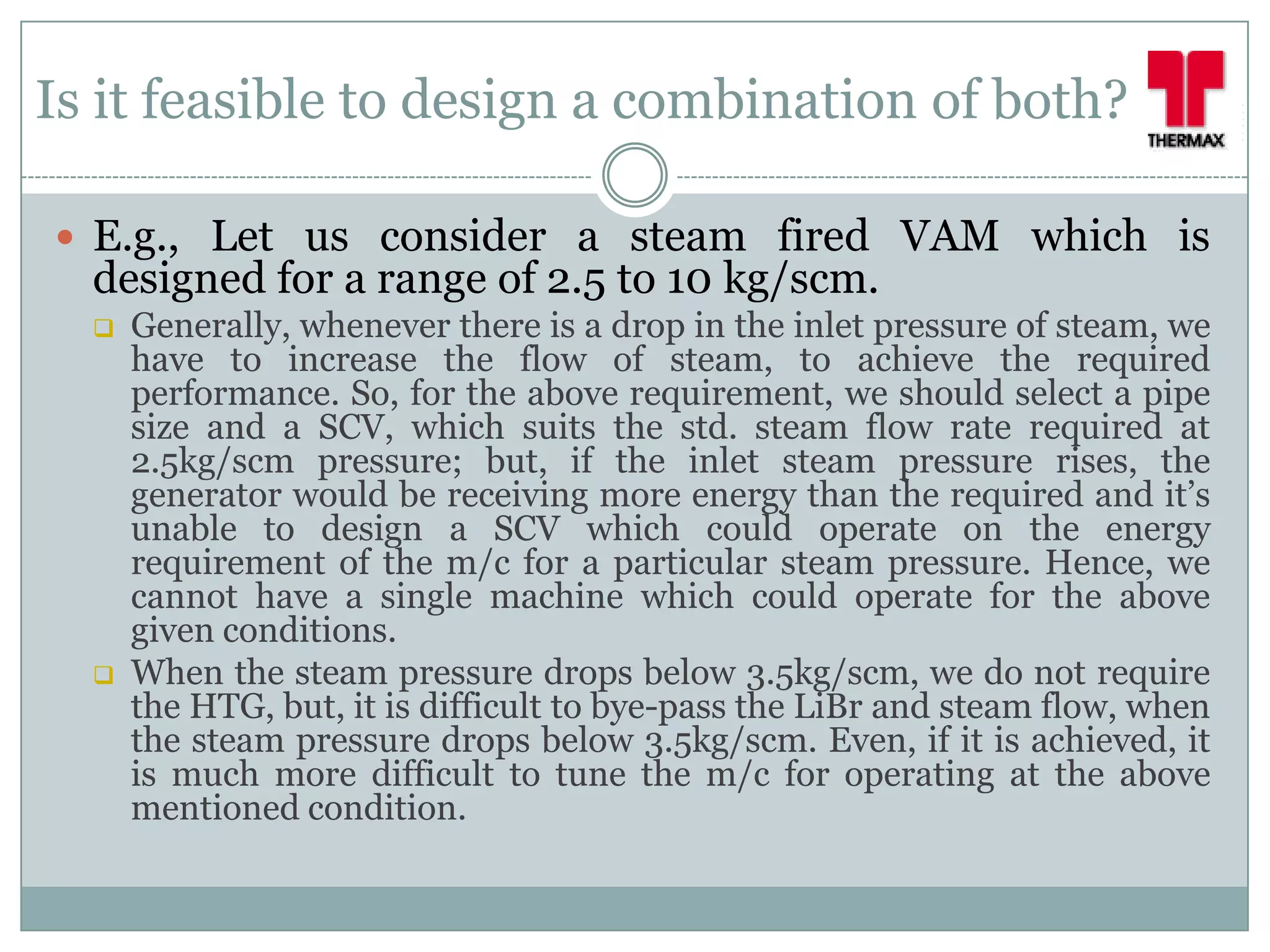
• Can you compare the feasibility of both machines?
• Is it feasible to design a combination of both?
• Summary
• Abbreviations
• Contact Details
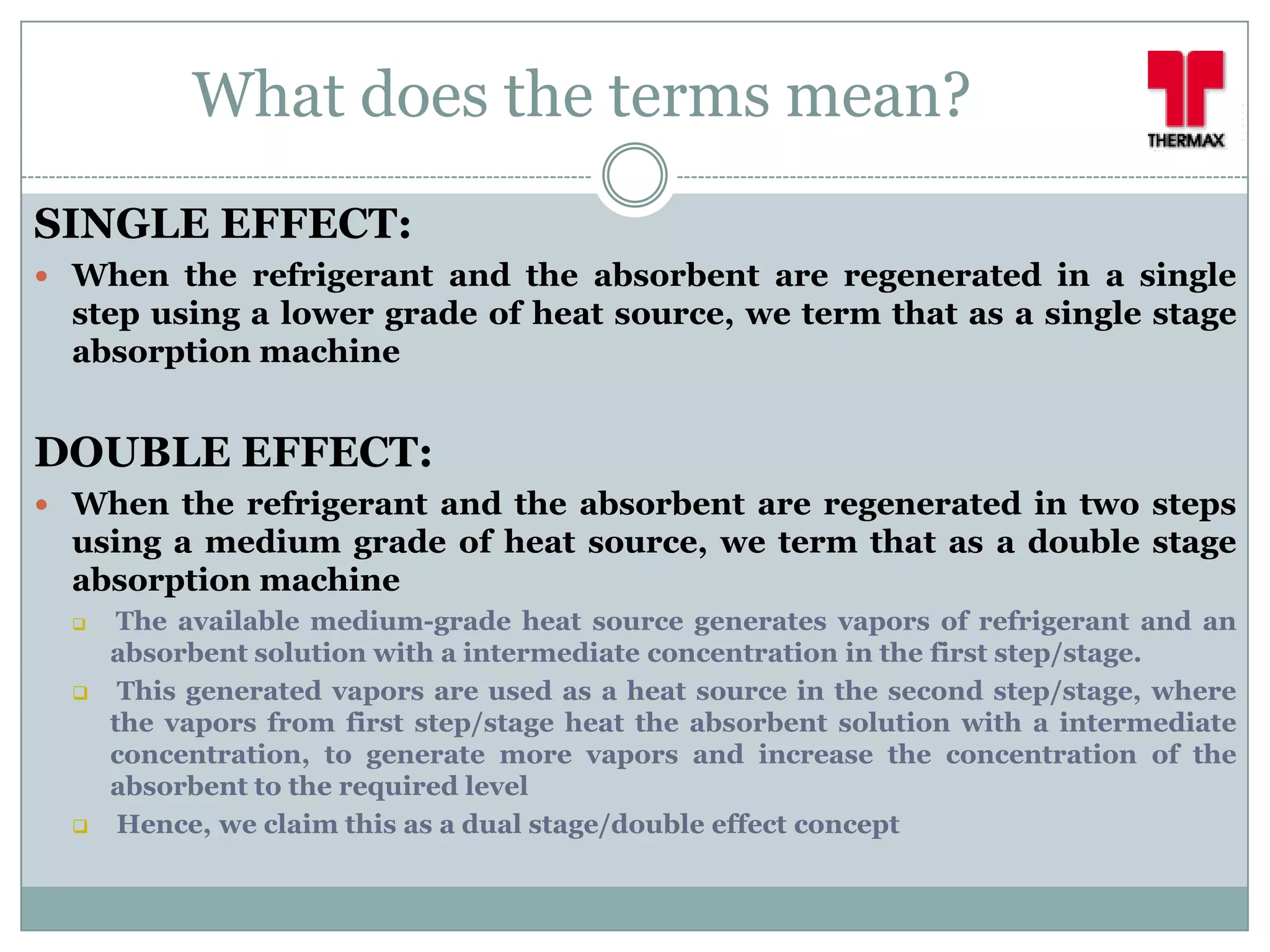
What does the terms mean?
SINGLE EFFECT:
 When the refrigerant and the absorbent are regenerated in a single
  step using a lower grade of heat source, we term that as a single stage
  absorption machine


DOUBLE EFFECT:
 When the refrigerant and the absorbent are regenerated in two steps
  using a medium grade of heat source, we term that as a double stage
  absorption machine
      The available medium-grade heat source generates vapors of refrigerant and an
      absorbent solution with a intermediate concentration in the first step/stage.
      This generated vapors are used as a heat source in the second step/stage, where
      the vapors from first step/stage heat the absorbent solution with a intermediate
      concentration, to generate more vapors and increase the concentration of the
      absorbent to the required level
      Hence, we claim this as a dual stage/double effect concept
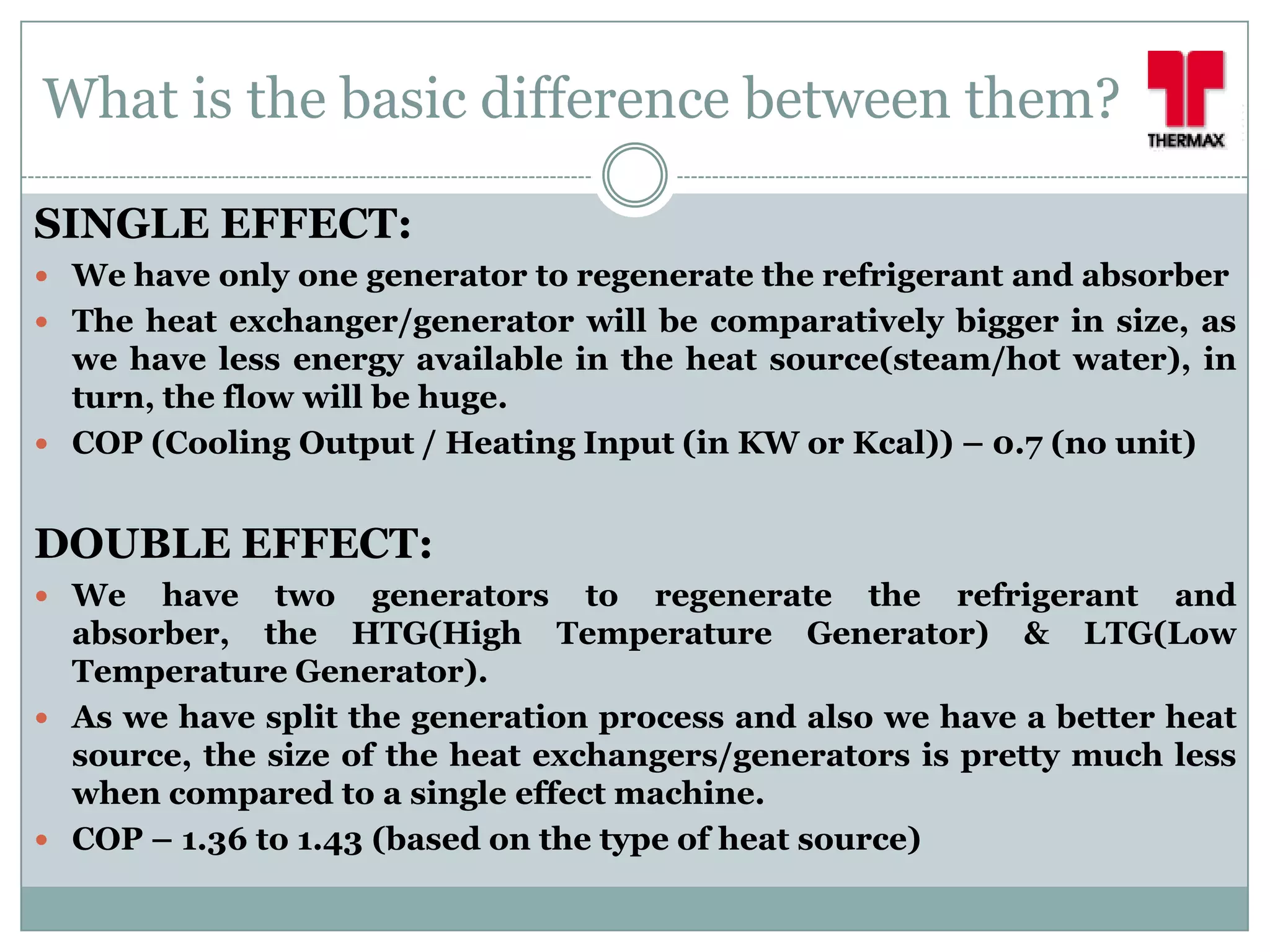
What is the basic difference between them?

SINGLE EFFECT:
 We have only one generator to regenerate the refrigerant and absorber
 The heat exchanger/generator will be comparatively bigger in size, as
  we have less energy available in the heat source(steam/hot water), in
  turn, the flow will be huge.
 COP (Cooling Output / Heating Input (in KW or Kcal)) – 0.7 (no unit)


DOUBLE EFFECT:
 We   have two generators to regenerate the refrigerant and
  absorber, the HTG(High Temperature Generator) & LTG(Low
  Temperature Generator).
 As we have split the generation process and also we have a better heat
  source, the size of the heat exchangers/generators is pretty much less
  when compared to a single effect machine.
 COP – 1.36 to 1.43 (based on the type of heat source)
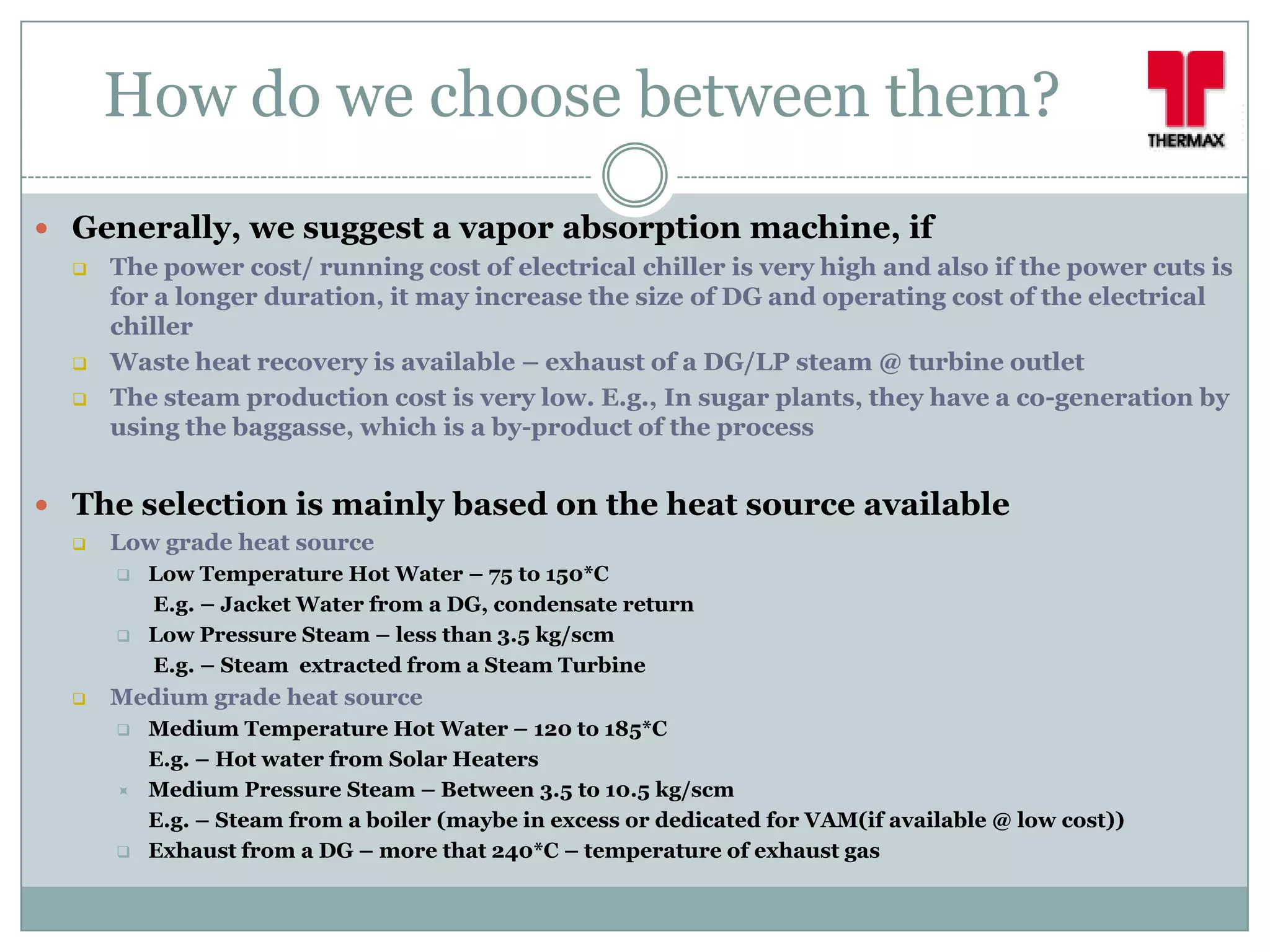
How do we choose between them?
 Generally, we suggest a vapor absorption machine, if
     The power cost/ running cost of electrical chiller is very high and also if the power cuts is
      for a longer duration, it may increase the size of DG and operating cost of the electrical
      chiller
     Waste heat recovery is available – exhaust of a DG/LP steam @ turbine outlet
     The steam production cost is very low. E.g., In sugar plants, they have a co-generation by
      using the baggasse, which is a by-product of the process


 The selection is mainly based on the heat source available
     Low grade heat source
         Low Temperature Hot Water – 75 to 150*C
          E.g. – Jacket Water from a DG, condensate return
         Low Pressure Steam – less than 3.5 kg/scm
          E.g. – Steam extracted from a Steam Turbine
     Medium grade heat source
         Medium Temperature Hot Water – 120 to 185*C
          E.g. – Hot water from Solar Heaters
         Medium Pressure Steam – Between 3.5 to 10.5 kg/scm
          E.g. – Steam from a boiler (maybe in excess or dedicated for VAM(if available @ low cost))
         Exhaust from a DG – more that 240*C – temperature of exhaust gas
What would be the difference in performance?

 The main difference would be, that, the single effect
 machine requires almost twice that of a double effect
 machine in the case of heat input, as the amount of
 useful energy/enthalpy is less in a low grade energy;
 hence, the COP of a Single effect is almost half of that
 of a double-effect, but when we consider in terms of
 performance, there will not be any difference, as the
 machines are designed to provide the desired
 output, whatever and however maybe the energy
 input
 When the available energy for a single effect machine
 is on the least extreme, then we will have a
 considerable increase in the machine size
Can you compare the feasibility of both machines?
Is it feasible to design a combination of both?

 E.g., Let us consider a steam fired VAM which is
  designed for a range of 2.5 to 10 kg/scm.
     Generally, whenever there is a drop in the inlet pressure of steam, we
      have to increase the flow of steam, to achieve the required
      performance. So, for the above requirement, we should select a pipe
      size and a SCV, which suits the std. steam flow rate required at
      2.5kg/scm pressure; but, if the inlet steam pressure rises, the
      generator would be receiving more energy than the required and it’s
      unable to design a SCV which could operate on the energy
      requirement of the m/c for a particular steam pressure. Hence, we
      cannot have a single machine which could operate for the above
      given conditions.
     When the steam pressure drops below 3.5kg/scm, we do not require
      the HTG, but, it is difficult to bye-pass the LiBr and steam flow, when
      the steam pressure drops below 3.5kg/scm. Even, if it is achieved, it
      is much more difficult to tune the m/c for operating at the above
      mentioned condition.
Summary

  We hope that,
 We had answered the questions which were asked
  initially in the most easiest and simplest way
  possible, so that, it would help you to take decision
  which best suits your requirement and process, with
  maximum heat recovery and minimum heat loss
 For anymore queries, please feel free to contact the
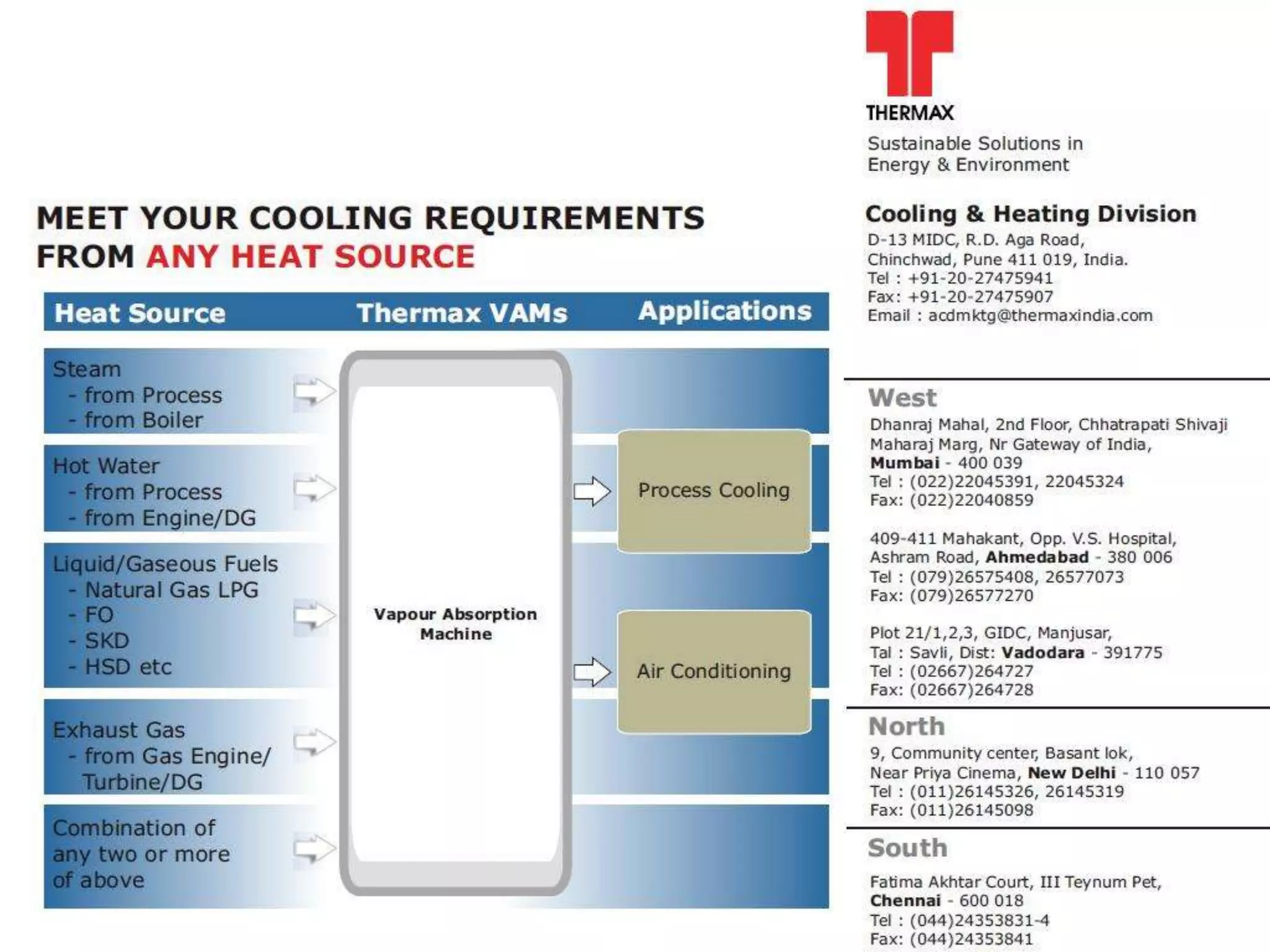
  respective regional sales person or visit
  www.thermaxindia.com and post your query
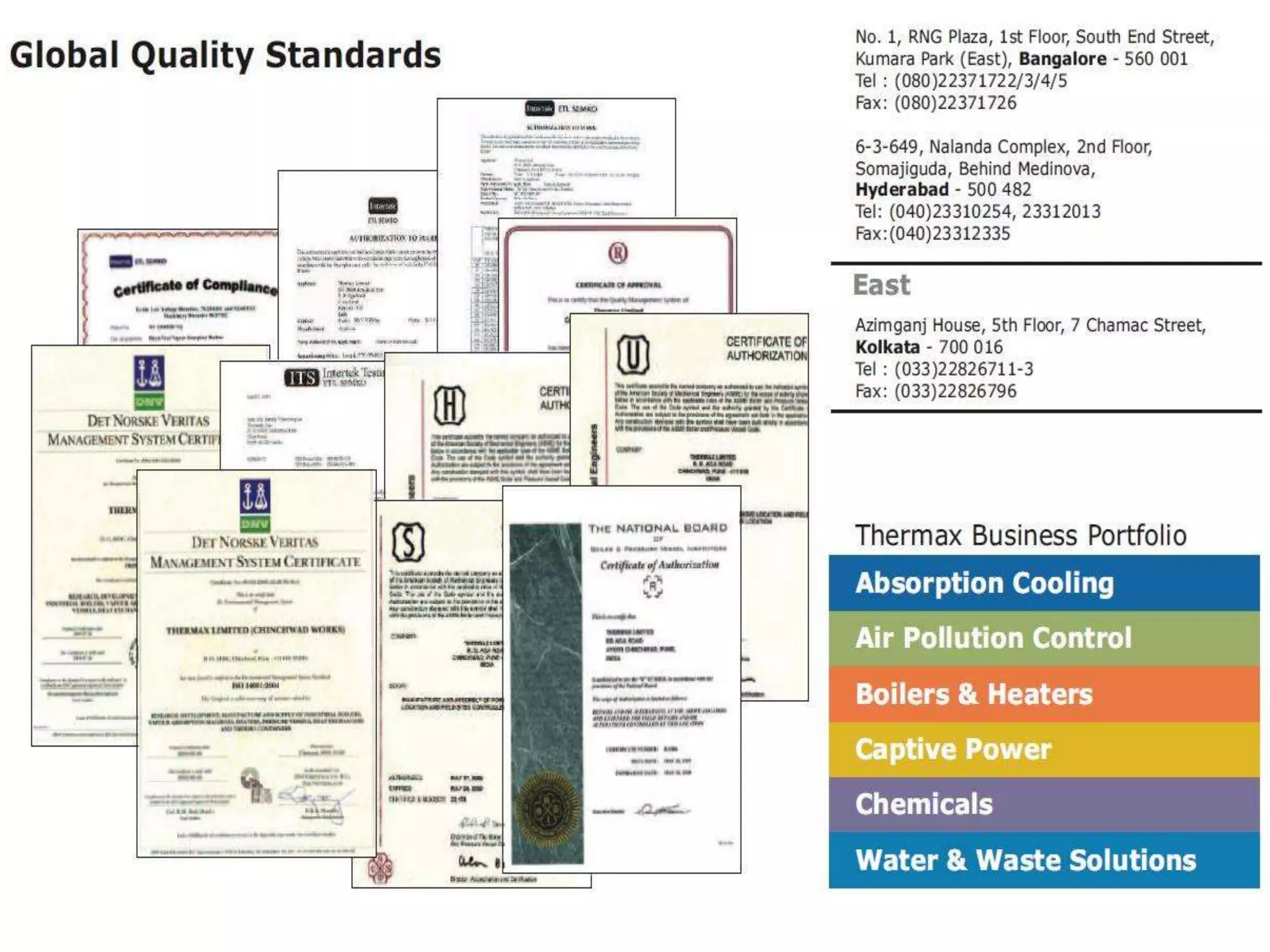
 The contact details are given below
Abbreviations

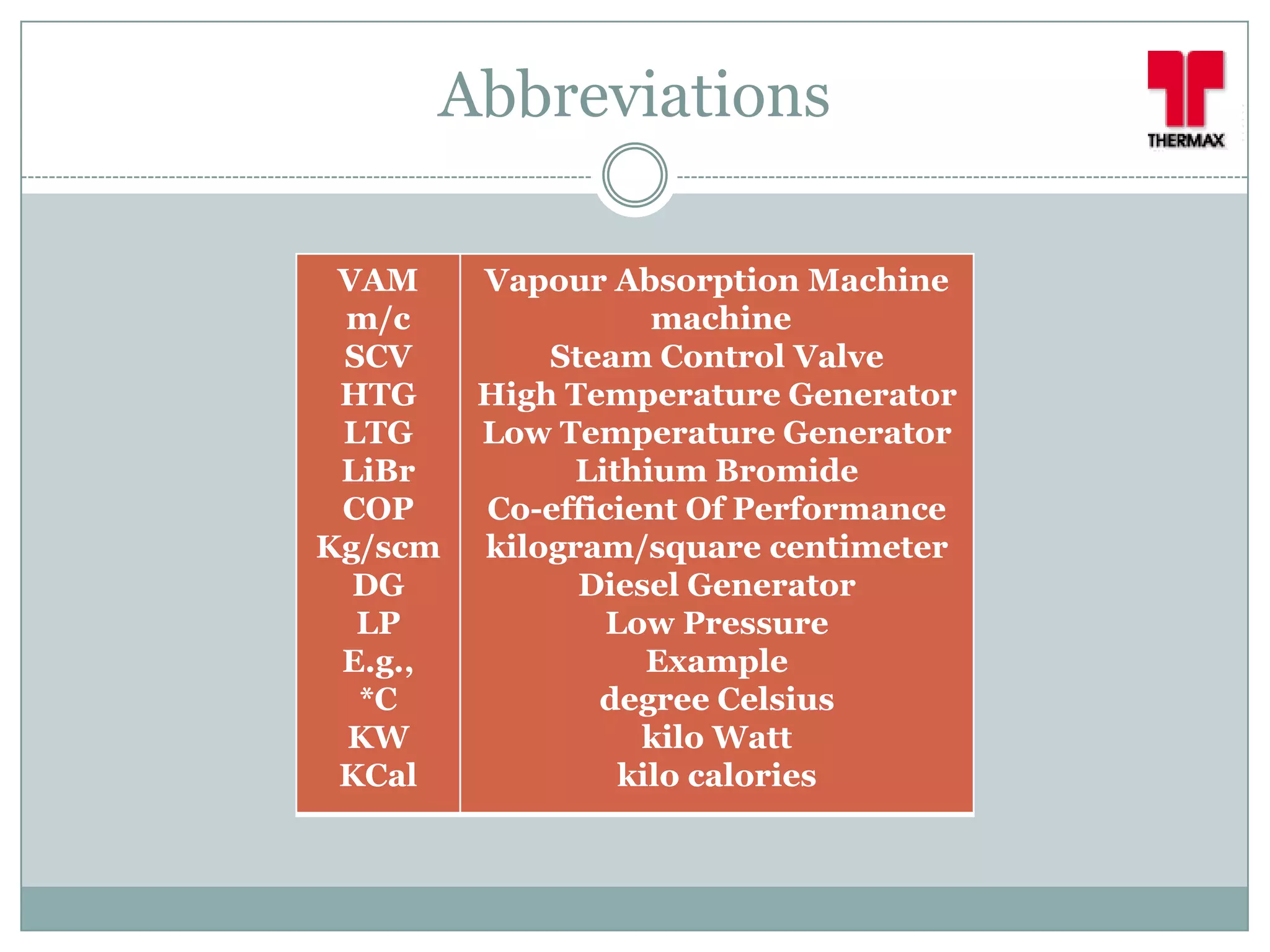
 VAM     Vapour Absorption Machine
 m/c                machine
 SCV         Steam Control Valve
 HTG     High Temperature Generator
 LTG     Low Temperature Generator
 LiBr          Lithium Bromide
 COP     Co-efficient Of Performance
Kg/scm   kilogram/square centimeter
  DG           Diesel Generator
  LP             Low Pressure
 E.g.,              Example
  *C            degree Celsius
 KW                kilo Watt
 KCal             kilo calories
Single effect vs double effect vam

Single effect vs double effect vam

  • 1.
    Single Effect VSDouble Effect QUESTIONS TO BE ANSWERED • What do the terms mean? • What is the basic difference between them? • How do we choose between them? • What would be the difference in performance? • Can you compare the feasibility of both machines? • Is it feasible to design a combination of both? • Summary • Abbreviations • Contact Details
  • 2.
    What does theterms mean? SINGLE EFFECT:  When the refrigerant and the absorbent are regenerated in a single step using a lower grade of heat source, we term that as a single stage absorption machine DOUBLE EFFECT:  When the refrigerant and the absorbent are regenerated in two steps using a medium grade of heat source, we term that as a double stage absorption machine  The available medium-grade heat source generates vapors of refrigerant and an absorbent solution with a intermediate concentration in the first step/stage.  This generated vapors are used as a heat source in the second step/stage, where the vapors from first step/stage heat the absorbent solution with a intermediate concentration, to generate more vapors and increase the concentration of the absorbent to the required level  Hence, we claim this as a dual stage/double effect concept
  • 3.
    What is thebasic difference between them? SINGLE EFFECT:  We have only one generator to regenerate the refrigerant and absorber  The heat exchanger/generator will be comparatively bigger in size, as we have less energy available in the heat source(steam/hot water), in turn, the flow will be huge.  COP (Cooling Output / Heating Input (in KW or Kcal)) – 0.7 (no unit) DOUBLE EFFECT:  We have two generators to regenerate the refrigerant and absorber, the HTG(High Temperature Generator) & LTG(Low Temperature Generator).  As we have split the generation process and also we have a better heat source, the size of the heat exchangers/generators is pretty much less when compared to a single effect machine.  COP – 1.36 to 1.43 (based on the type of heat source)
  • 4.
    How do wechoose between them?  Generally, we suggest a vapor absorption machine, if  The power cost/ running cost of electrical chiller is very high and also if the power cuts is for a longer duration, it may increase the size of DG and operating cost of the electrical chiller  Waste heat recovery is available – exhaust of a DG/LP steam @ turbine outlet  The steam production cost is very low. E.g., In sugar plants, they have a co-generation by using the baggasse, which is a by-product of the process  The selection is mainly based on the heat source available  Low grade heat source  Low Temperature Hot Water – 75 to 150*C E.g. – Jacket Water from a DG, condensate return  Low Pressure Steam – less than 3.5 kg/scm E.g. – Steam extracted from a Steam Turbine  Medium grade heat source  Medium Temperature Hot Water – 120 to 185*C E.g. – Hot water from Solar Heaters  Medium Pressure Steam – Between 3.5 to 10.5 kg/scm E.g. – Steam from a boiler (maybe in excess or dedicated for VAM(if available @ low cost))  Exhaust from a DG – more that 240*C – temperature of exhaust gas
  • 5.
    What would bethe difference in performance?  The main difference would be, that, the single effect machine requires almost twice that of a double effect machine in the case of heat input, as the amount of useful energy/enthalpy is less in a low grade energy; hence, the COP of a Single effect is almost half of that of a double-effect, but when we consider in terms of performance, there will not be any difference, as the machines are designed to provide the desired output, whatever and however maybe the energy input  When the available energy for a single effect machine is on the least extreme, then we will have a considerable increase in the machine size
  • 6.
    Can you comparethe feasibility of both machines?
  • 7.
    Is it feasibleto design a combination of both?  E.g., Let us consider a steam fired VAM which is designed for a range of 2.5 to 10 kg/scm.  Generally, whenever there is a drop in the inlet pressure of steam, we have to increase the flow of steam, to achieve the required performance. So, for the above requirement, we should select a pipe size and a SCV, which suits the std. steam flow rate required at 2.5kg/scm pressure; but, if the inlet steam pressure rises, the generator would be receiving more energy than the required and it’s unable to design a SCV which could operate on the energy requirement of the m/c for a particular steam pressure. Hence, we cannot have a single machine which could operate for the above given conditions.  When the steam pressure drops below 3.5kg/scm, we do not require the HTG, but, it is difficult to bye-pass the LiBr and steam flow, when the steam pressure drops below 3.5kg/scm. Even, if it is achieved, it is much more difficult to tune the m/c for operating at the above mentioned condition.
  • 8.
    Summary Wehope that,  We had answered the questions which were asked initially in the most easiest and simplest way possible, so that, it would help you to take decision which best suits your requirement and process, with maximum heat recovery and minimum heat loss  For anymore queries, please feel free to contact the respective regional sales person or visit www.thermaxindia.com and post your query  The contact details are given below
  • 9.
    Abbreviations VAM Vapour Absorption Machine m/c machine SCV Steam Control Valve HTG High Temperature Generator LTG Low Temperature Generator LiBr Lithium Bromide COP Co-efficient Of Performance Kg/scm kilogram/square centimeter DG Diesel Generator LP Low Pressure E.g., Example *C degree Celsius KW kilo Watt KCal kilo calories