BOILER
DRAUGHT
By-
Umesh Ghuge 64
(11920115)
Ahmed Shah 69
(11920152)
BOILER
DRAUGHT
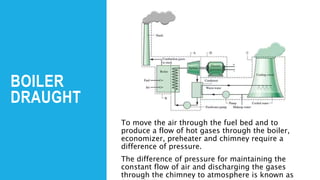
To move the air through the fuel bed and to
produce a flow of hot gases through the boiler,
economizer, preheater and chimney require a
difference of pressure.
The difference of pressure for maintaining the
constant flow of air and discharging the gases
through the chimney to atmosphere is known as
TYPES OF
DRAUGHT
Natural Draught
Artificial Draught
•Forced
•Induced
•Balanced
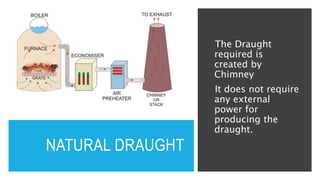
NATURAL DRAUGHT
The Draught
required is
created by
Chimney
It does not require
any external
power for
producing the
draught.
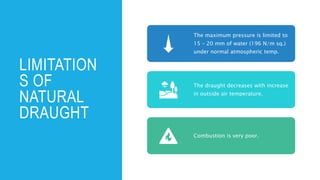
LIMITATION
S OF
NATURAL
DRAUGHT
The maximum pressure is limited to
15 – 20 mm of water (196 N/m sq.)
under normal atmospheric temp.
The draught decreases with increase
in outside air temperature.
Combustion is very poor.
ARTIFICIAL
DRAUGHT
Natural Draught provides insufficient
head and lack of flexibility hence
Artificial Draught is used.
The requirement of draught in actual
power plant is high (300 mm of water)
and to meet high draught
requirements, some other system
must be used.
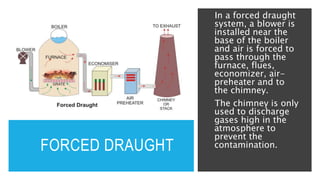
FORCED DRAUGHT
In a forced draught
system, a blower is
installed near the
base of the boiler
and air is forced to
pass through the
furnace, flues,
economizer, air-
preheater and to
the chimney.
The chimney is only
used to discharge
gases high in the
atmosphere to
prevent the
contamination.
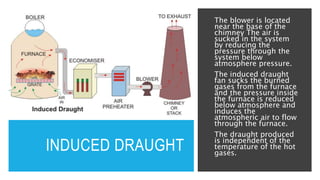
INDUCED DRAUGHT
The blower is located
near the base of the
chimney The air is
sucked in the system
by reducing the
pressure through the
system below
atmosphere pressure.
The induced draught
fan sucks the burned
gases from the furnace
and the pressure inside
the furnace is reduced
below atmosphere and
induces the
atmospheric air to flow
through the furnace.
The draught produced
is independent of the
temperature of the hot
gases.
DISADVANT
AGES OF
FORCED
AND
INDUCED
In the forced draught the furnace cannot be
opened either for firing or inspection
because of high-pressure air inside the
furnace which will try to blow out suddenly
and there is every chance of blowing out the
fire completely and furnace stops.
In the induced draught the furnace cannot
be opened either for firing or inspection
because the cold air will try to rush into the
furnace as the pressure inside the furnace is
below atmospheric pressure.
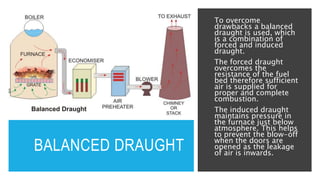
BALANCED DRAUGHT
To overcome
drawbacks a balanced
draught is used, which
is a combination of
forced and induced
draught.
The forced draught
overcomes the
resistance of the fuel
bed therefore sufficient
air is supplied for
proper and complete
combustion.
The induced draught
maintains pressure in
the furnace just below
atmosphere. This helps
to prevent the blow-off
when the doors are
opened as the leakage
of air is inwards.
BENEFITS
OF
ARTIFICIAL
DRAUGHT
It is better in control and more
economical than natural draught.
The rate of combustion is high.
The air flow can be regulated
according to the requirement.
It prevents the formation of smoke
as complete combustion is possible
LOSSES IN
BOILER
DRAUGHT
Frictional resistance offered to the
flow of flue gases.
Bends in gas flow, offer flow
resistance.
Loss due to friction head in grate,
economizer, super heater etc.
Loss due to flow resistance offered
by chimney.
THANKS!!
Any questions?

Boiler Draught

  • 1.
  • 2.
    BOILER DRAUGHT To move theair through the fuel bed and to produce a flow of hot gases through the boiler, economizer, preheater and chimney require a difference of pressure. The difference of pressure for maintaining the constant flow of air and discharging the gases through the chimney to atmosphere is known as
  • 3.
    TYPES OF DRAUGHT Natural Draught ArtificialDraught •Forced •Induced •Balanced
  • 4.
    NATURAL DRAUGHT The Draught requiredis created by Chimney It does not require any external power for producing the draught.
  • 5.
    LIMITATION S OF NATURAL DRAUGHT The maximumpressure is limited to 15 – 20 mm of water (196 N/m sq.) under normal atmospheric temp. The draught decreases with increase in outside air temperature. Combustion is very poor.
  • 6.
    ARTIFICIAL DRAUGHT Natural Draught providesinsufficient head and lack of flexibility hence Artificial Draught is used. The requirement of draught in actual power plant is high (300 mm of water) and to meet high draught requirements, some other system must be used.
  • 7.
    FORCED DRAUGHT In aforced draught system, a blower is installed near the base of the boiler and air is forced to pass through the furnace, flues, economizer, air- preheater and to the chimney. The chimney is only used to discharge gases high in the atmosphere to prevent the contamination.
  • 8.
    INDUCED DRAUGHT The bloweris located near the base of the chimney The air is sucked in the system by reducing the pressure through the system below atmosphere pressure. The induced draught fan sucks the burned gases from the furnace and the pressure inside the furnace is reduced below atmosphere and induces the atmospheric air to flow through the furnace. The draught produced is independent of the temperature of the hot gases.
  • 9.
    DISADVANT AGES OF FORCED AND INDUCED In theforced draught the furnace cannot be opened either for firing or inspection because of high-pressure air inside the furnace which will try to blow out suddenly and there is every chance of blowing out the fire completely and furnace stops. In the induced draught the furnace cannot be opened either for firing or inspection because the cold air will try to rush into the furnace as the pressure inside the furnace is below atmospheric pressure.
  • 10.
    BALANCED DRAUGHT To overcome drawbacksa balanced draught is used, which is a combination of forced and induced draught. The forced draught overcomes the resistance of the fuel bed therefore sufficient air is supplied for proper and complete combustion. The induced draught maintains pressure in the furnace just below atmosphere. This helps to prevent the blow-off when the doors are opened as the leakage of air is inwards.
  • 11.
    BENEFITS OF ARTIFICIAL DRAUGHT It is betterin control and more economical than natural draught. The rate of combustion is high. The air flow can be regulated according to the requirement. It prevents the formation of smoke as complete combustion is possible
  • 12.
    LOSSES IN BOILER DRAUGHT Frictional resistanceoffered to the flow of flue gases. Bends in gas flow, offer flow resistance. Loss due to friction head in grate, economizer, super heater etc. Loss due to flow resistance offered by chimney.
  • 13.