1
Asexual Reproduction
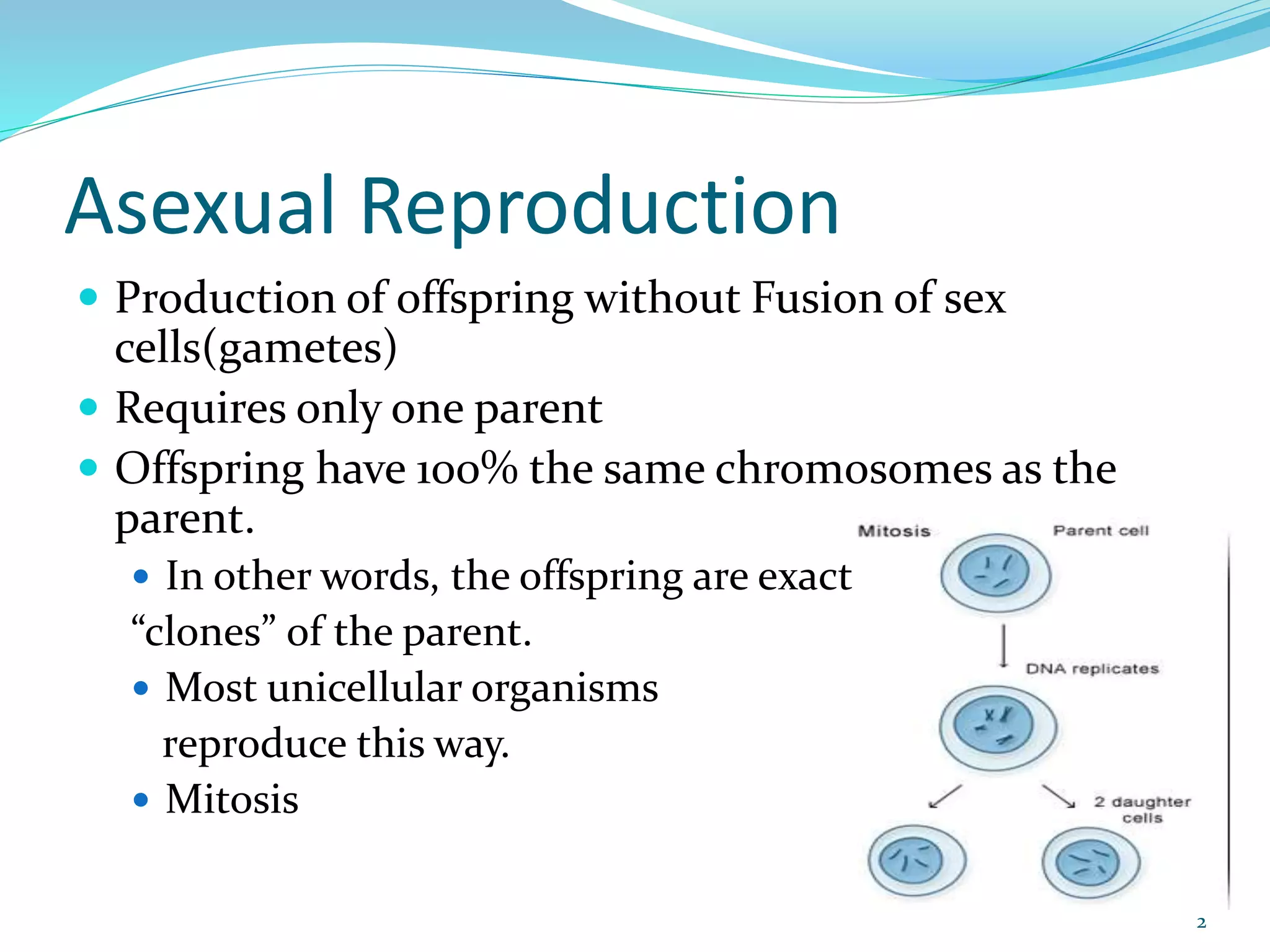
 Production of offspring without Fusion of sex
cells(gametes)
 Requires only one parent
 Offspring have 100% the same chromosomes as the
parent.
 In other words, the offspring are exact
“clones” of the parent.
 Most unicellular organisms
reproduce this way.
 Mitosis
2
Natural Methods Of Asexual Reproduction
 In Nature, Plants Reproduce By Following Methods.
 Budding
 By Spores or Sporulation
 Vegetative propagation
 Apomixis
3
Natural Method No.1
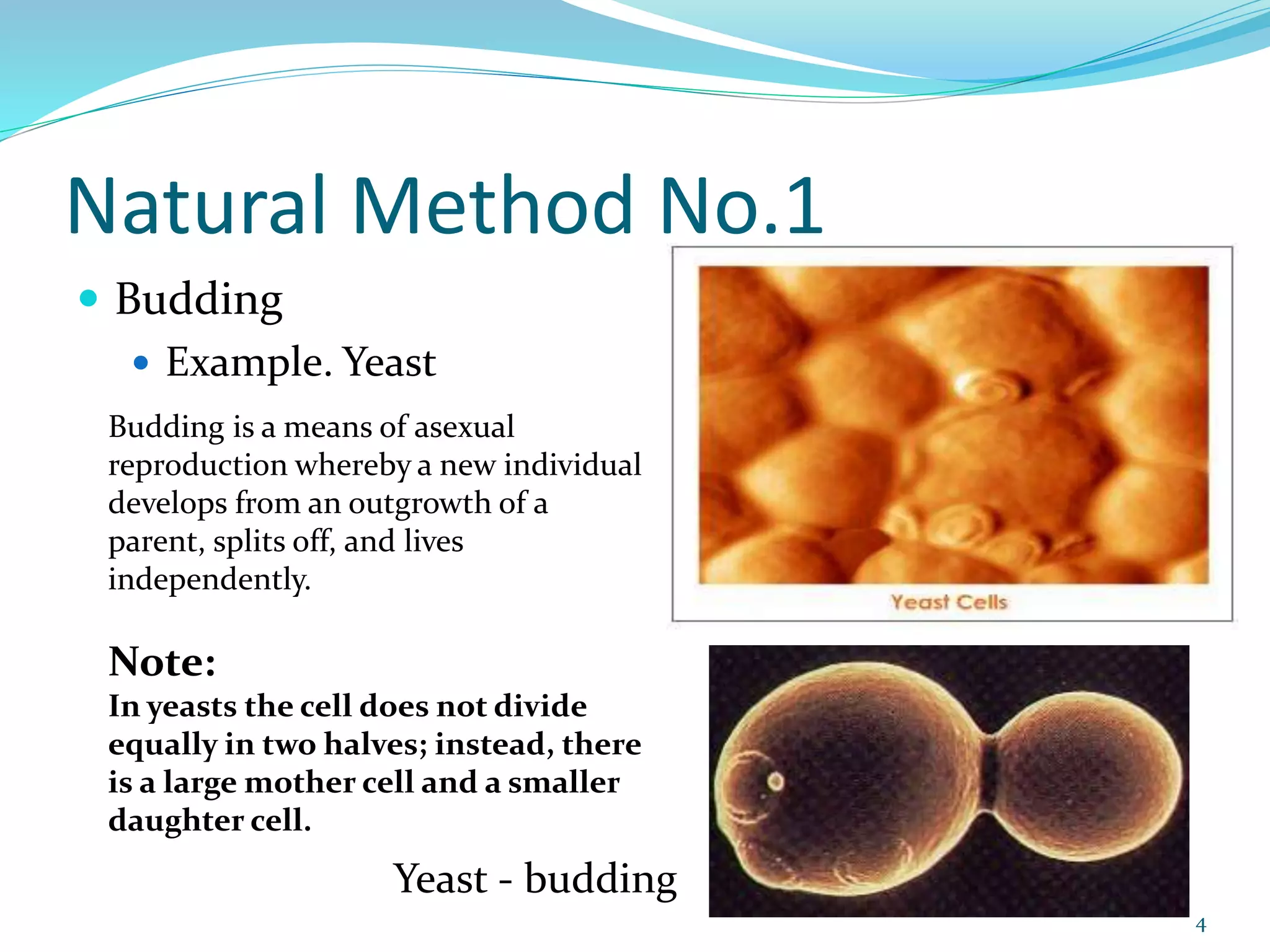
 Budding
 Example. Yeast
4
Budding is a means of asexual
reproduction whereby a new individual
develops from an outgrowth of a
parent, splits off, and lives
independently.
Note:
In yeasts the cell does not divide
equally in two halves; instead, there
is a large mother cell and a smaller
daughter cell.
Yeast - budding
Natural Method No.2
 Spore Formation or Sporulation
 Happens in fungi, green algae, moulds
and non flowering plants (e.g. fern)
 Spores are produced and each spore
develops into offspring which are identical
to parent
5
Spores: Single, specialized cells which
are released from the parent -- they are
enclosed in a protective case and develop
when environmental conditions are
favorable.
The formation of spores occurs in
bread mold, mushrooms, mosses & ferns.
Fungi
Natural Method No.3
 Vegetative Propagation
 Vegetative propagation results
in a
new plant that is genetically
identical to the parent plant (a
clone).
 Seeds does not involves.
 Examples: strawberry plant,
vegetables, and crops.
6
Natural Method No.4
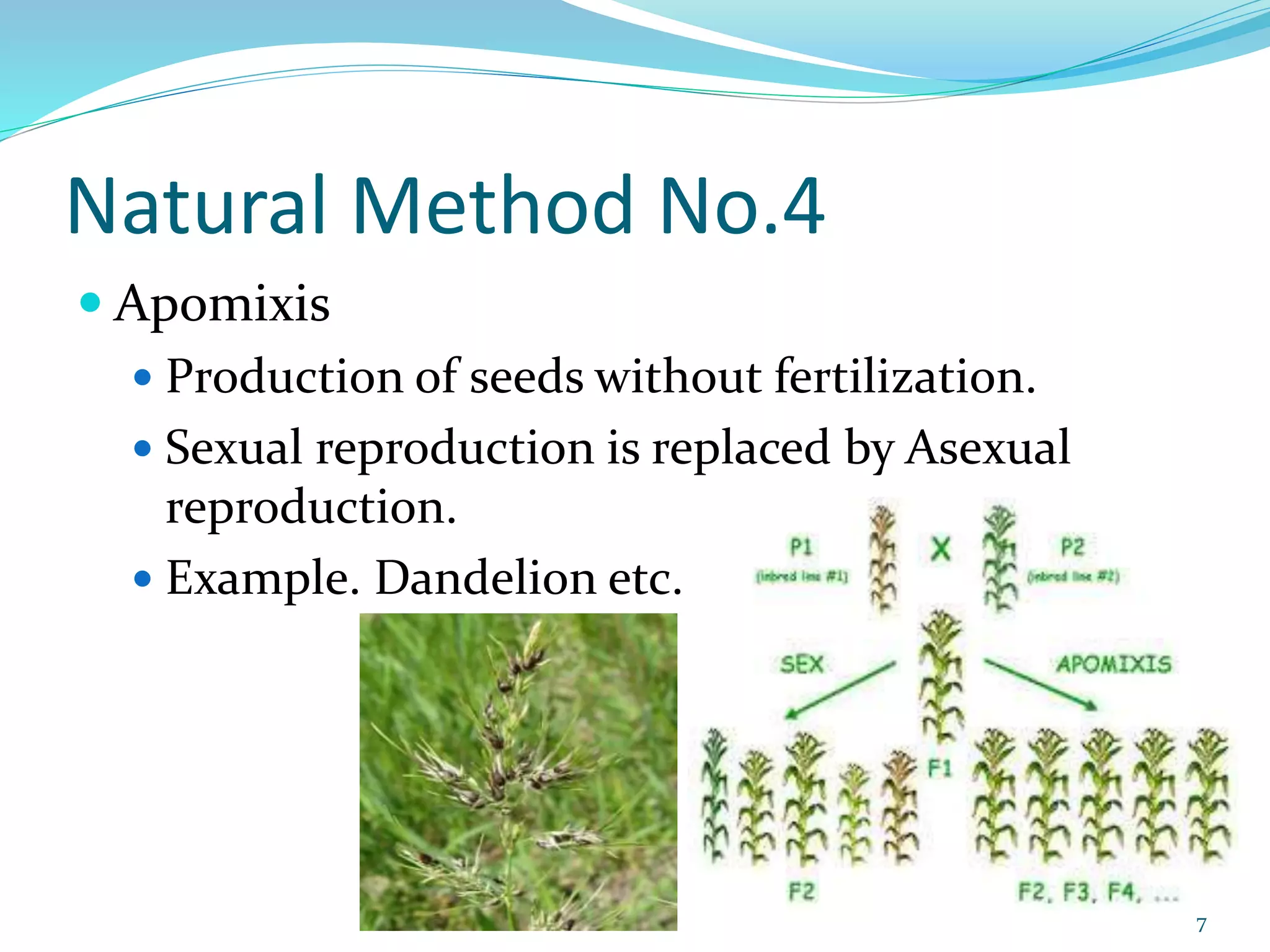
 Apomixis
 Production of seeds without fertilization.
 Sexual reproduction is replaced by Asexual
reproduction.
 Example. Dandelion etc.
7
Artificial Methods Of Asexual Reproduction
Plants may asexually reproduce by diff.
techniques. i.e.
 By Cutting
 Tissue culture (test tube cloning)
 Protoplast Fusion
8
Artificial Method No.1
 Plant cuttings
9
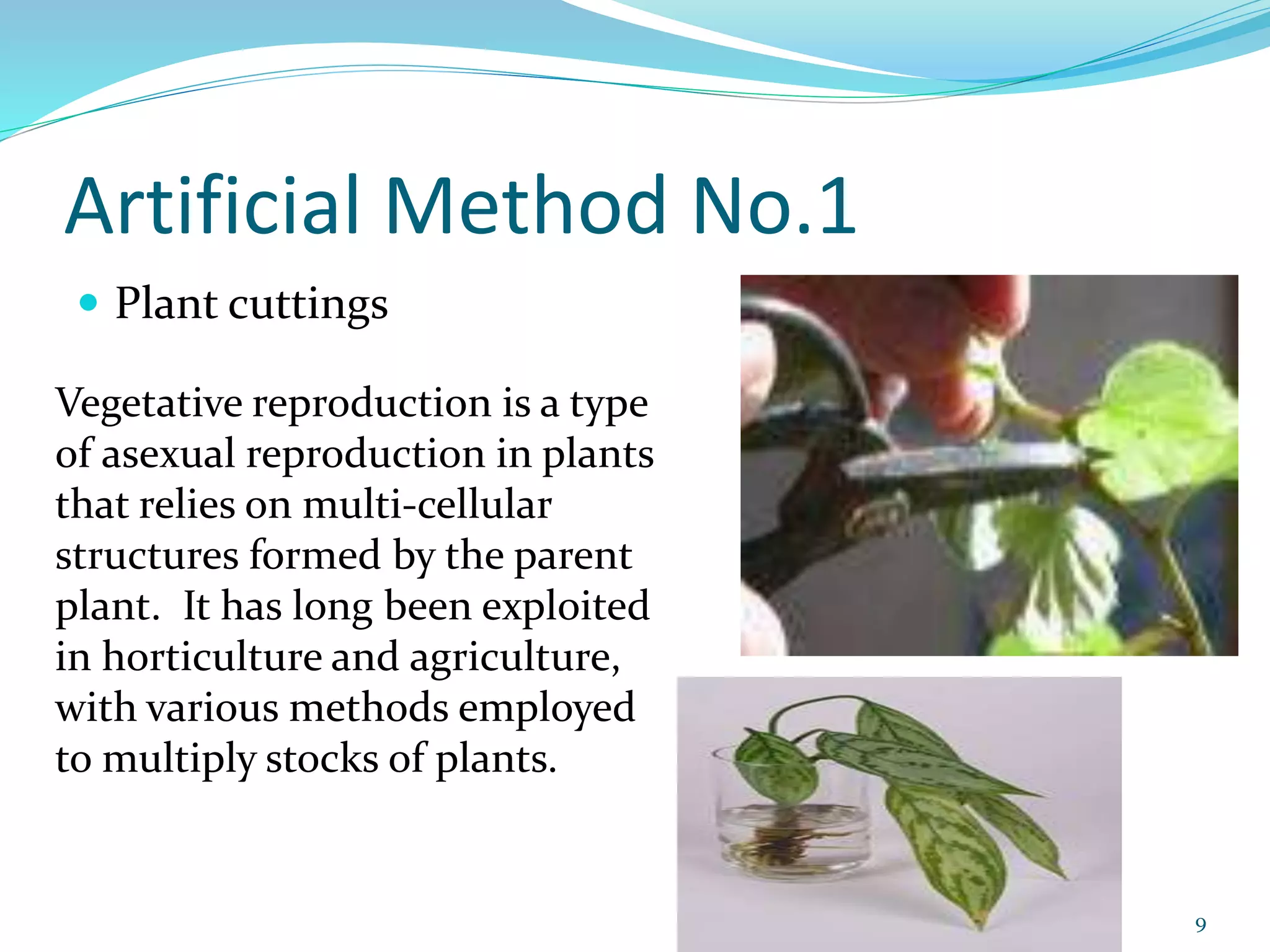
Vegetative reproduction is a type
of asexual reproduction in plants
that relies on multi-cellular
structures formed by the parent
plant. It has long been exploited
in horticulture and agriculture,
with various methods employed
to multiply stocks of plants.
Artificial Method No.2
 Tissue culture (test tube cloning)
 In this technique plants with similar characters are produced, called
“clones”.
 New plant can produce from the pieces of tissues or one
parenchyma cell.
 This cell divides to form a body, called callus.
 This callus consists of similar cells & from this root arise and cells
starts to produce diff. parts of plant body.
 This method is used in Orchards & Pinus trees to obtain wood.
10
Advantages & Disadvantages Of
Tissue culture
Advantages Disadvantages
 By this technique similar
character are developed.
 These plants have
resistance against diseases,
 By plant culture useful
chemicals are obtained,
e.g. Shikonin.This chemical
is used in chemical silk
industry.
 These plants are sterile,
do not reproduce by sexual
method.
 This technique may cause
change in the structure or
number of Chromosomes.
11
Artificial Method No.3
 Protoplast Fusion technique of tissue culture
 In this technique outer cell wall is removed around the protoplasts.
 In some cases protoplasts are fused together, then their protoplasts are used
for culture.
 These protoplasts produce a wall around them, then they are changed into
new plants.
 This method is used in Potato & Wild night Shade plant.
12
13

Asexual Reproduction in Plants (Quick Rivew)

  • 1.
  • 2.
    Asexual Reproduction  Productionof offspring without Fusion of sex cells(gametes)  Requires only one parent  Offspring have 100% the same chromosomes as the parent.  In other words, the offspring are exact “clones” of the parent.  Most unicellular organisms reproduce this way.  Mitosis 2
  • 3.
    Natural Methods OfAsexual Reproduction  In Nature, Plants Reproduce By Following Methods.  Budding  By Spores or Sporulation  Vegetative propagation  Apomixis 3
  • 4.
    Natural Method No.1 Budding  Example. Yeast 4 Budding is a means of asexual reproduction whereby a new individual develops from an outgrowth of a parent, splits off, and lives independently. Note: In yeasts the cell does not divide equally in two halves; instead, there is a large mother cell and a smaller daughter cell. Yeast - budding
  • 5.
    Natural Method No.2 Spore Formation or Sporulation  Happens in fungi, green algae, moulds and non flowering plants (e.g. fern)  Spores are produced and each spore develops into offspring which are identical to parent 5 Spores: Single, specialized cells which are released from the parent -- they are enclosed in a protective case and develop when environmental conditions are favorable. The formation of spores occurs in bread mold, mushrooms, mosses & ferns. Fungi
  • 6.
    Natural Method No.3 Vegetative Propagation  Vegetative propagation results in a new plant that is genetically identical to the parent plant (a clone).  Seeds does not involves.  Examples: strawberry plant, vegetables, and crops. 6
  • 7.
    Natural Method No.4 Apomixis  Production of seeds without fertilization.  Sexual reproduction is replaced by Asexual reproduction.  Example. Dandelion etc. 7
  • 8.
    Artificial Methods OfAsexual Reproduction Plants may asexually reproduce by diff. techniques. i.e.  By Cutting  Tissue culture (test tube cloning)  Protoplast Fusion 8
  • 9.
    Artificial Method No.1 Plant cuttings 9 Vegetative reproduction is a type of asexual reproduction in plants that relies on multi-cellular structures formed by the parent plant. It has long been exploited in horticulture and agriculture, with various methods employed to multiply stocks of plants.
  • 10.
    Artificial Method No.2 Tissue culture (test tube cloning)  In this technique plants with similar characters are produced, called “clones”.  New plant can produce from the pieces of tissues or one parenchyma cell.  This cell divides to form a body, called callus.  This callus consists of similar cells & from this root arise and cells starts to produce diff. parts of plant body.  This method is used in Orchards & Pinus trees to obtain wood. 10
  • 11.
    Advantages & DisadvantagesOf Tissue culture Advantages Disadvantages  By this technique similar character are developed.  These plants have resistance against diseases,  By plant culture useful chemicals are obtained, e.g. Shikonin.This chemical is used in chemical silk industry.  These plants are sterile, do not reproduce by sexual method.  This technique may cause change in the structure or number of Chromosomes. 11
  • 12.
    Artificial Method No.3 Protoplast Fusion technique of tissue culture  In this technique outer cell wall is removed around the protoplasts.  In some cases protoplasts are fused together, then their protoplasts are used for culture.  These protoplasts produce a wall around them, then they are changed into new plants.  This method is used in Potato & Wild night Shade plant. 12
  • 13.