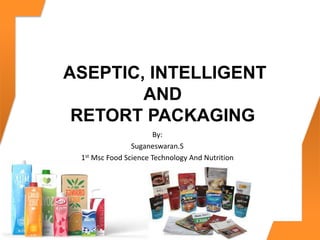
ASEPTIC, INTELLIGENT
AND
RETORT PACKAGING
By:
Suganeswaran.S
1st Msc Food Science Technology And Nutrition
WHAT IS PACKAGING?
PACKAGING
Science
Art
Technology
• Packaging is the science, art and technology of
enclosing or protecting products for
distribution, storage, sale and use.
• Definition of packaging - “a good packaging is
one that saves more than it costs, including
refrigeration, transportation, storage, handling,
labour, etc.”
- Mr. Robert Rausina, founder of Tetra
Pak Sweden.
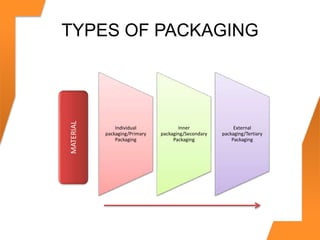
TYPES OF PACKAGING
Individual
packaging/Primary
Packaging
Inner
packaging/Secondary
Packaging
External
packaging/Tertiary
Packaging
MATERIAL
MODERN METHODS OF PACKAGING
• “Form, Fill And Seal (FFS)” System,
• Aseptic Packaging System,
• Retort -able Pouches,
• Modified Atmospheric Packaging (MAP),
• Active Packaging Systems And
• Intelligent Packaging Systems.
ASEPTIC PACKAGING SYSTEM
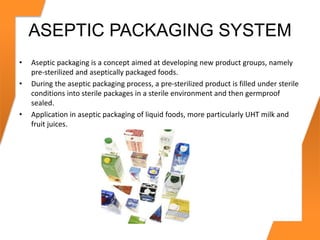
• Aseptic packaging is a concept aimed at developing new product groups, namely
pre-sterilized and aseptically packaged foods.
• During the aseptic packaging process, a pre-sterilized product is filled under sterile
conditions into sterile packages in a sterile environment and then germproof
sealed.
• Application in aseptic packaging of liquid foods, more particularly UHT milk and
fruit juices.
REQUIREMENTS OF ASEPTIC
PACKAGING SYSTEMS
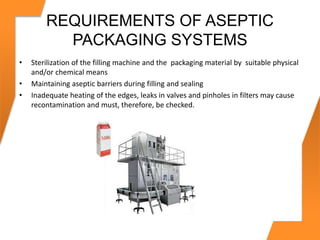
• Sterilization of the filling machine and the packaging material by suitable physical
and/or chemical means
• Maintaining aseptic barriers during filling and sealing
• Inadequate heating of the edges, leaks in valves and pinholes in filters may cause
recontamination and must, therefore, be checked.
STERILIZATION OF THE PACKAGING AND THE FILLER
ENVIRONMENT
• Chemical sterilization processes for the packaging film include treatment with
ethylene oxide, sodium hypochlorite, peracetic acid and hydrogen peroxide
(H2O2).
• Ethylene oxide is not only slow in action but its desorption requires very long time.
Hence it can be used for pre-treatment of packaging, but not for final sterilization
on the packaging unit.
• Sodium hypochlorite and peracetic acid are very effective sterilants, but removal
of their residues from the packaging necessitates a sterile-water rinse. Alcohols
such as glycols require high temperature (e.g. 100 degree C) application for the
desired sporicidal effect.
• Although H2O2 also shows poor effectiveness at ambient temperatures, its high
sporicidal effect at 80 degree C makes it useful for packaging sterilization.
TYPES OF PACKAGING MATERIALS FOR
ASEPTIC PACKAGING SYSTEMS
GLASS:
 Glass bottles have been used for packaging of many liquid foods but it has not
been a commercial success with aseptic filling plants.
 Glass as such offers protection against oxygen and light if it has been provided with
anti-actinic compounds.
CANS:
 Aseptic canning is expensive, particularly for a low cost product like milk. Cans are
not preferred for packaging of UHT processed products
 The cans may be of tinplate or drawn aluminum: the solder in tinplate cans may
have to be of higher melting point than normal to withstand the can sterilization
temperatures.
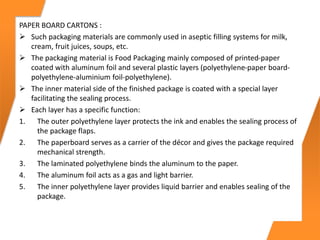
PAPER BOARD CARTONS :
 Such packaging materials are commonly used in aseptic filling systems for milk,
cream, fruit juices, soups, etc.
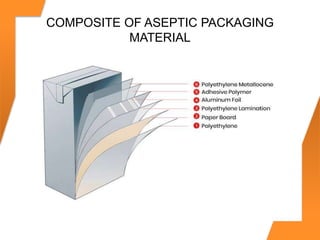
 The packaging material is Food Packaging mainly composed of printed-paper
coated with aluminum foil and several plastic layers (polyethylene-paper board-
polyethylene-aluminium foil-polyethylene).
 The inner material side of the finished package is coated with a special layer
facilitating the sealing process.
 Each layer has a specific function:
1. The outer polyethylene layer protects the ink and enables the sealing process of
the package flaps.
2. The paperboard serves as a carrier of the décor and gives the package required
mechanical strength.
3. The laminated polyethylene binds the aluminum to the paper.
4. The aluminum foil acts as a gas and light barrier.
5. The inner polyethylene layer provides liquid barrier and enables sealing of the
package.
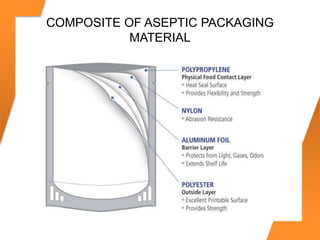
COMPOSITE OF ASEPTIC PACKAGING
MATERIAL
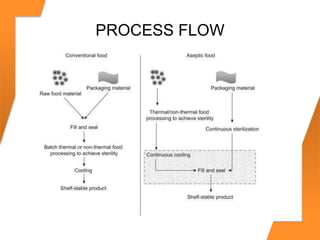
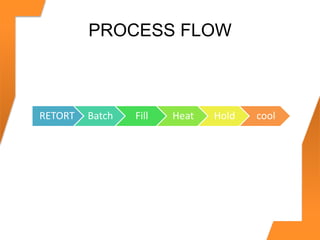
PROCESS FLOW
RETORT PACKAGING
• In response to the military need, as the rigid cans conventionally used by the
combat forces posed problems such as difficulty in opening, injurious, and the
potential to be used in makeshift explosives by the enemy.
• The retort-able flexible packages are characterized by their structural components
of heat-resistant plastic layers with or without aluminum foil and their ability to be
thermo processed to result in shelf-stable food product. Its cost is also less as
compared to cans.
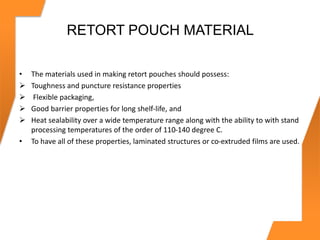
RETORT POUCH MATERIAL
• The materials used in making retort pouches should possess:
 Toughness and puncture resistance properties
 Flexible packaging,
 Good barrier properties for long shelf-life, and
 Heat sealability over a wide temperature range along with the ability to with stand
processing temperatures of the order of 110-140 degree C.
• To have all of these properties, laminated structures or co-extruded films are used.
COMPOSITE OF ASEPTIC PACKAGING
MATERIAL
PROCESS FLOW
RETORT Batch Fill Heat Hold cool
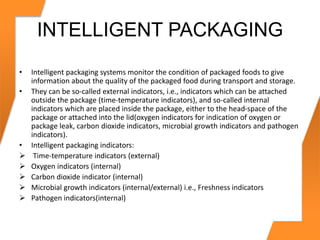
INTELLIGENT PACKAGING
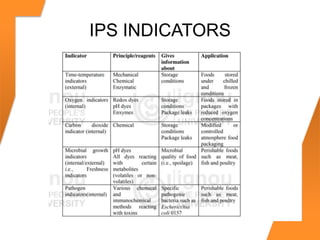
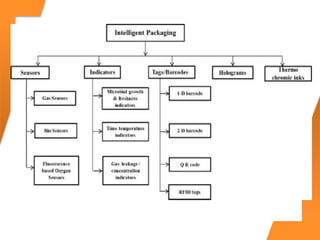
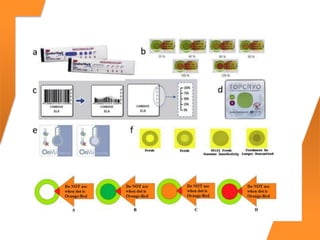
• Intelligent packaging systems monitor the condition of packaged foods to give
information about the quality of the packaged food during transport and storage.
• They can be so-called external indicators, i.e., indicators which can be attached
outside the package (time-temperature indicators), and so-called internal
indicators which are placed inside the package, either to the head-space of the
package or attached into the lid(oxygen indicators for indication of oxygen or
package leak, carbon dioxide indicators, microbial growth indicators and pathogen
indicators).
• Intelligent packaging indicators:
 Time-temperature indicators (external)
 Oxygen indicators (internal)
 Carbon dioxide indicator (internal)
 Microbial growth indicators (internal/external) i.e., Freshness indicators
 Pathogen indicators(internal)
IPS INDICATORS
Thank you

Aseptic, intelligent and retort packaging

  • 1.
  • 2.
    WHAT IS PACKAGING? PACKAGING Science Art Technology •Packaging is the science, art and technology of enclosing or protecting products for distribution, storage, sale and use. • Definition of packaging - “a good packaging is one that saves more than it costs, including refrigeration, transportation, storage, handling, labour, etc.” - Mr. Robert Rausina, founder of Tetra Pak Sweden.
  • 3.
  • 4.
    MODERN METHODS OFPACKAGING • “Form, Fill And Seal (FFS)” System, • Aseptic Packaging System, • Retort -able Pouches, • Modified Atmospheric Packaging (MAP), • Active Packaging Systems And • Intelligent Packaging Systems.
  • 5.
    ASEPTIC PACKAGING SYSTEM •Aseptic packaging is a concept aimed at developing new product groups, namely pre-sterilized and aseptically packaged foods. • During the aseptic packaging process, a pre-sterilized product is filled under sterile conditions into sterile packages in a sterile environment and then germproof sealed. • Application in aseptic packaging of liquid foods, more particularly UHT milk and fruit juices.
  • 6.
    REQUIREMENTS OF ASEPTIC PACKAGINGSYSTEMS • Sterilization of the filling machine and the packaging material by suitable physical and/or chemical means • Maintaining aseptic barriers during filling and sealing • Inadequate heating of the edges, leaks in valves and pinholes in filters may cause recontamination and must, therefore, be checked.
  • 7.
    STERILIZATION OF THEPACKAGING AND THE FILLER ENVIRONMENT • Chemical sterilization processes for the packaging film include treatment with ethylene oxide, sodium hypochlorite, peracetic acid and hydrogen peroxide (H2O2). • Ethylene oxide is not only slow in action but its desorption requires very long time. Hence it can be used for pre-treatment of packaging, but not for final sterilization on the packaging unit. • Sodium hypochlorite and peracetic acid are very effective sterilants, but removal of their residues from the packaging necessitates a sterile-water rinse. Alcohols such as glycols require high temperature (e.g. 100 degree C) application for the desired sporicidal effect. • Although H2O2 also shows poor effectiveness at ambient temperatures, its high sporicidal effect at 80 degree C makes it useful for packaging sterilization.
  • 8.
    TYPES OF PACKAGINGMATERIALS FOR ASEPTIC PACKAGING SYSTEMS GLASS:  Glass bottles have been used for packaging of many liquid foods but it has not been a commercial success with aseptic filling plants.  Glass as such offers protection against oxygen and light if it has been provided with anti-actinic compounds. CANS:  Aseptic canning is expensive, particularly for a low cost product like milk. Cans are not preferred for packaging of UHT processed products  The cans may be of tinplate or drawn aluminum: the solder in tinplate cans may have to be of higher melting point than normal to withstand the can sterilization temperatures.
  • 9.
    PAPER BOARD CARTONS:  Such packaging materials are commonly used in aseptic filling systems for milk, cream, fruit juices, soups, etc.  The packaging material is Food Packaging mainly composed of printed-paper coated with aluminum foil and several plastic layers (polyethylene-paper board- polyethylene-aluminium foil-polyethylene).  The inner material side of the finished package is coated with a special layer facilitating the sealing process.  Each layer has a specific function: 1. The outer polyethylene layer protects the ink and enables the sealing process of the package flaps. 2. The paperboard serves as a carrier of the décor and gives the package required mechanical strength. 3. The laminated polyethylene binds the aluminum to the paper. 4. The aluminum foil acts as a gas and light barrier. 5. The inner polyethylene layer provides liquid barrier and enables sealing of the package.
  • 10.
    COMPOSITE OF ASEPTICPACKAGING MATERIAL
  • 11.
  • 12.
    RETORT PACKAGING • Inresponse to the military need, as the rigid cans conventionally used by the combat forces posed problems such as difficulty in opening, injurious, and the potential to be used in makeshift explosives by the enemy. • The retort-able flexible packages are characterized by their structural components of heat-resistant plastic layers with or without aluminum foil and their ability to be thermo processed to result in shelf-stable food product. Its cost is also less as compared to cans.
  • 13.
    RETORT POUCH MATERIAL •The materials used in making retort pouches should possess:  Toughness and puncture resistance properties  Flexible packaging,  Good barrier properties for long shelf-life, and  Heat sealability over a wide temperature range along with the ability to with stand processing temperatures of the order of 110-140 degree C. • To have all of these properties, laminated structures or co-extruded films are used.
  • 14.
    COMPOSITE OF ASEPTICPACKAGING MATERIAL
  • 15.
    PROCESS FLOW RETORT BatchFill Heat Hold cool
  • 16.
    INTELLIGENT PACKAGING • Intelligentpackaging systems monitor the condition of packaged foods to give information about the quality of the packaged food during transport and storage. • They can be so-called external indicators, i.e., indicators which can be attached outside the package (time-temperature indicators), and so-called internal indicators which are placed inside the package, either to the head-space of the package or attached into the lid(oxygen indicators for indication of oxygen or package leak, carbon dioxide indicators, microbial growth indicators and pathogen indicators). • Intelligent packaging indicators:  Time-temperature indicators (external)  Oxygen indicators (internal)  Carbon dioxide indicator (internal)  Microbial growth indicators (internal/external) i.e., Freshness indicators  Pathogen indicators(internal)
  • 17.
  • 20.