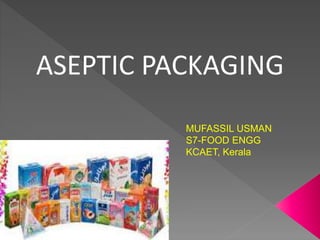
ASEPTIC PACKAGING
MUFASSIL USMAN
S7-FOOD ENGG
KCAET, Kerala
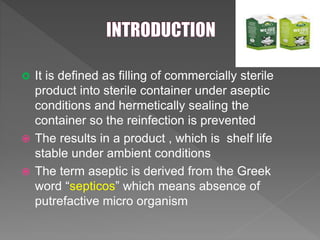
 It is defined as filling of commercially sterile
product into sterile container under aseptic
conditions and hermetically sealing the
container so the reinfection is prevented
 The results in a product , which is shelf life
stable under ambient conditions
 The term aseptic is derived from the Greek
word “septicos” which means absence of
putrefactive micro organism
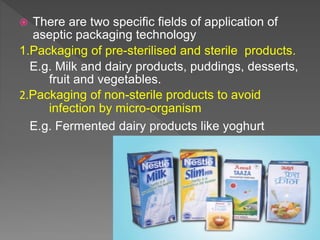
 There are two specific fields of application of
aseptic packaging technology
1.Packaging of pre-sterilised and sterile products.
E.g. Milk and dairy products, puddings, desserts,
fruit and vegetables.
2.Packaging of non-sterile products to avoid
infection by micro-organism
E.g. Fermented dairy products like yoghurt
 Aseptic packaging technology is fundamentally
different from that of conventional food
processing by canning.
 In canning, the process begins with treating the
food prior to filling
 Initial operations inactivate enzymes so that
these will not degrade the product during
processing.
 Generally, air that can cause oxidative damage
is removed from the interior.
 In aseptic packaging, the package is
hermetically sealed and after subjected to
heating.
 Sterilization of the products before filling
 The package must be able to withstand heat up
to about 100°C for high acid products and up to
127°C for low acid products.
Aseptic processing comprises the following:
• Sterilisation of the products before filling
• Sterilisation of packaging materials or containers
and closures before filling
• Sterilisation of aseptic installations before
operation (UHT unit, lines for products, sterile air
and gases, filler and relevant machine zones)
• Maintaining sterility in this total system during
operation
1.Microwaves
2. Electrical resistance heating
3. High voltage discharge
4. Ultra high pressure
5. Sterilization of air by incineration
 Heat , chemicals and radiation have been used
, alone or in combination , for sterilization of
aseptic equipment and packaging materials
 Systems employing moist heat are
frequently sterilized at temperatures
ranging from 121°C to 129°C, while 176°C
to 232°C is used for sterilization by dry
heat.
 Sterilization of air by incineration:
Temperature ranging from 260°C to 315°C
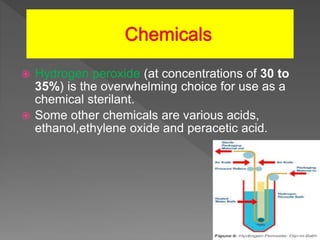
 Hydrogen peroxide (at concentrations of 30 to
35%) is the overwhelming choice for use as a
chemical sterilant.
 Some other chemicals are various acids,
ethanol,ethylene oxide and peracetic acid.
 Gamma-radiation has been used for decades to
decontaminate packaging materials for use in
aseptic systems for packing acid and acidified
food.
 A dose of approximately 1.5 Megaradians
(Mrad) is commonly used to decontaminate
containers for acid and acidified food.
 Ultraviolet (UV-C) light has been used to
decontaminate food contact surfaces
Carton Boxes, Bags and Pouches, Cups
and Trays, Bottles and Jars, Metal Cans,
Plastic Cans, Composite Cans are used for
packaging
 Convenience
Aseptic packages are portable, lightweight, and
shatterproof and easily transportable
 Food Safety
The aseptic process and carton together ensure that the
liquid food or beverage inside is free from harmful bacteria
and contaminants.
 No refrigeration required
 Long shelf life
 More nutrition
 Low Packaging to product ratio
 Plant Installation cost is high as compare to
canning
 Gas transmission rate of Aseptic bag/ package
 Overcooked flavour in some products
 Lack of equipment for particulate sterilization,
dueespecially to settling of solids and thus over
processing
Aseptic packaging

Aseptic packaging

  • 1.
  • 2.
     It isdefined as filling of commercially sterile product into sterile container under aseptic conditions and hermetically sealing the container so the reinfection is prevented  The results in a product , which is shelf life stable under ambient conditions  The term aseptic is derived from the Greek word “septicos” which means absence of putrefactive micro organism
  • 3.
     There aretwo specific fields of application of aseptic packaging technology 1.Packaging of pre-sterilised and sterile products. E.g. Milk and dairy products, puddings, desserts, fruit and vegetables. 2.Packaging of non-sterile products to avoid infection by micro-organism E.g. Fermented dairy products like yoghurt
  • 4.
     Aseptic packagingtechnology is fundamentally different from that of conventional food processing by canning.  In canning, the process begins with treating the food prior to filling  Initial operations inactivate enzymes so that these will not degrade the product during processing.  Generally, air that can cause oxidative damage is removed from the interior.
  • 5.
     In asepticpackaging, the package is hermetically sealed and after subjected to heating.  Sterilization of the products before filling  The package must be able to withstand heat up to about 100°C for high acid products and up to 127°C for low acid products.
  • 7.
    Aseptic processing comprisesthe following: • Sterilisation of the products before filling • Sterilisation of packaging materials or containers and closures before filling • Sterilisation of aseptic installations before operation (UHT unit, lines for products, sterile air and gases, filler and relevant machine zones) • Maintaining sterility in this total system during operation
  • 8.
    1.Microwaves 2. Electrical resistanceheating 3. High voltage discharge 4. Ultra high pressure 5. Sterilization of air by incineration
  • 9.
     Heat ,chemicals and radiation have been used , alone or in combination , for sterilization of aseptic equipment and packaging materials
  • 10.
     Systems employingmoist heat are frequently sterilized at temperatures ranging from 121°C to 129°C, while 176°C to 232°C is used for sterilization by dry heat.  Sterilization of air by incineration: Temperature ranging from 260°C to 315°C
  • 11.
     Hydrogen peroxide(at concentrations of 30 to 35%) is the overwhelming choice for use as a chemical sterilant.  Some other chemicals are various acids, ethanol,ethylene oxide and peracetic acid.
  • 12.
     Gamma-radiation hasbeen used for decades to decontaminate packaging materials for use in aseptic systems for packing acid and acidified food.  A dose of approximately 1.5 Megaradians (Mrad) is commonly used to decontaminate containers for acid and acidified food.  Ultraviolet (UV-C) light has been used to decontaminate food contact surfaces
  • 13.
    Carton Boxes, Bagsand Pouches, Cups and Trays, Bottles and Jars, Metal Cans, Plastic Cans, Composite Cans are used for packaging
  • 14.
     Convenience Aseptic packagesare portable, lightweight, and shatterproof and easily transportable  Food Safety The aseptic process and carton together ensure that the liquid food or beverage inside is free from harmful bacteria and contaminants.  No refrigeration required  Long shelf life  More nutrition  Low Packaging to product ratio
  • 15.
     Plant Installationcost is high as compare to canning  Gas transmission rate of Aseptic bag/ package  Overcooked flavour in some products  Lack of equipment for particulate sterilization, dueespecially to settling of solids and thus over processing