
Mr. Pritam P. Kolge
M. Pharm (QA)
Bharati Vidyapeeth College of Pharmacy Kolhapur
Introduction
 Aseptic packaging is the filling of sterile containers
with a commercially sterile product under aseptic
conditions, and then sealing them so that re-infection
is prevented; that is, so that they are hermetically
sealed.
 Sources of contamination: microorganism may be in
the product, on the surface of packaging material or
the part coming in contact with the product.
objectives
 To sterile the product that provide the higher quality
product
 To take advantage of high temperature short
time(HTST)
 To extend the shelf life of products at normal
temperature by packaging them aseptically
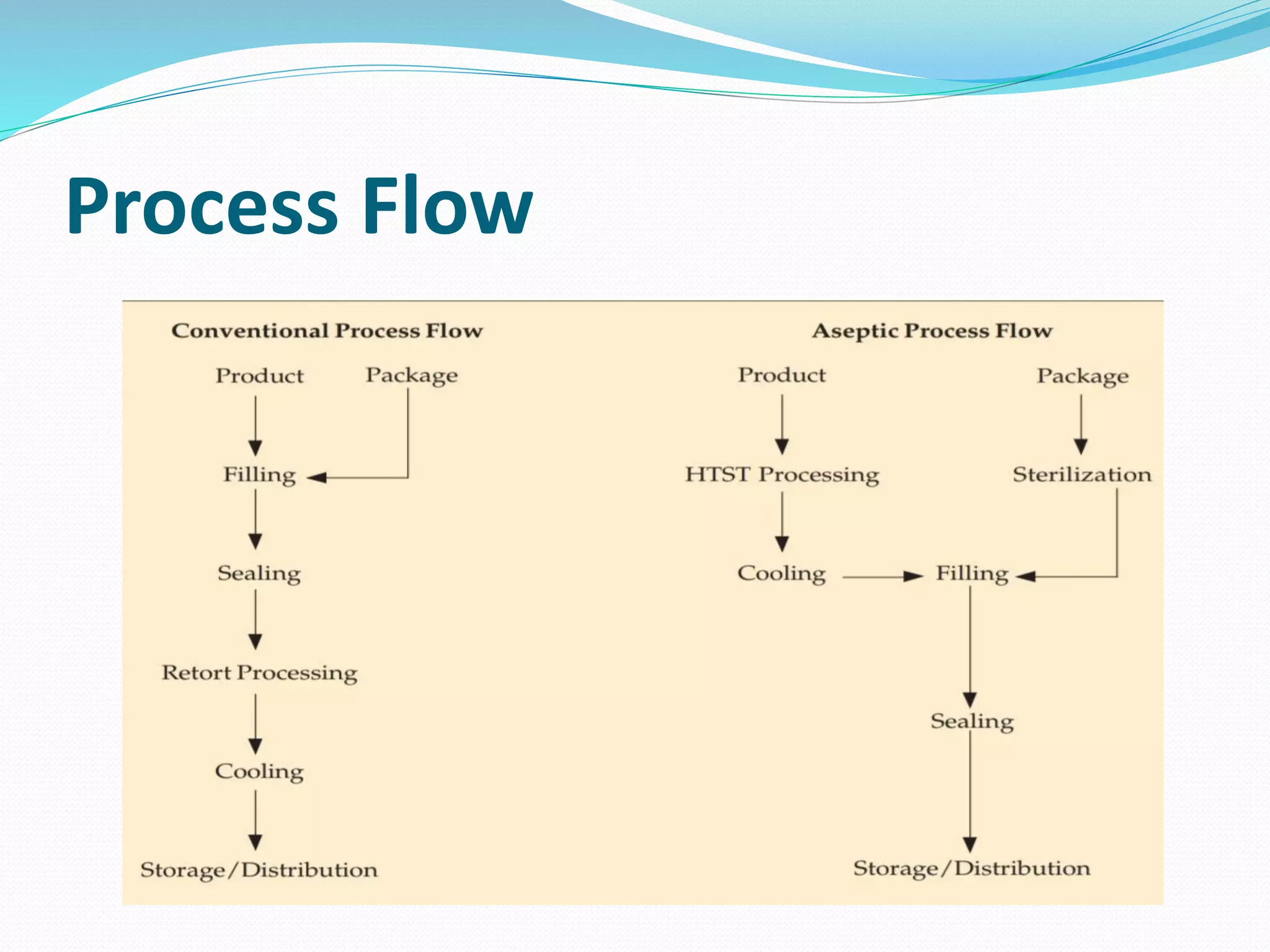
Process Flow
Working of aseptic process
sterilization of equipment
sterilization of food/drugs
sterilization of container
Filling and closure of presterilized product into
sterilized container under aseptic conditions
Maintenance of sterility
Sterilization of Equipments
Radiation
• UV-C radiation
• Infrared radiation
• Ionizing radiation
Heat
• Saturated steam
• Superheated steam
• Hot air
• Hot air and steam
Chemical
• Hydrogen peroxide
• Ethanol
• Ethylene oxide
• Paraceticacid
Sterilization of Product
• 63◦C/30 min
• 72◦C/15 sec
HTST
• 130◦C – 150◦C/ fractions of sec
UHT
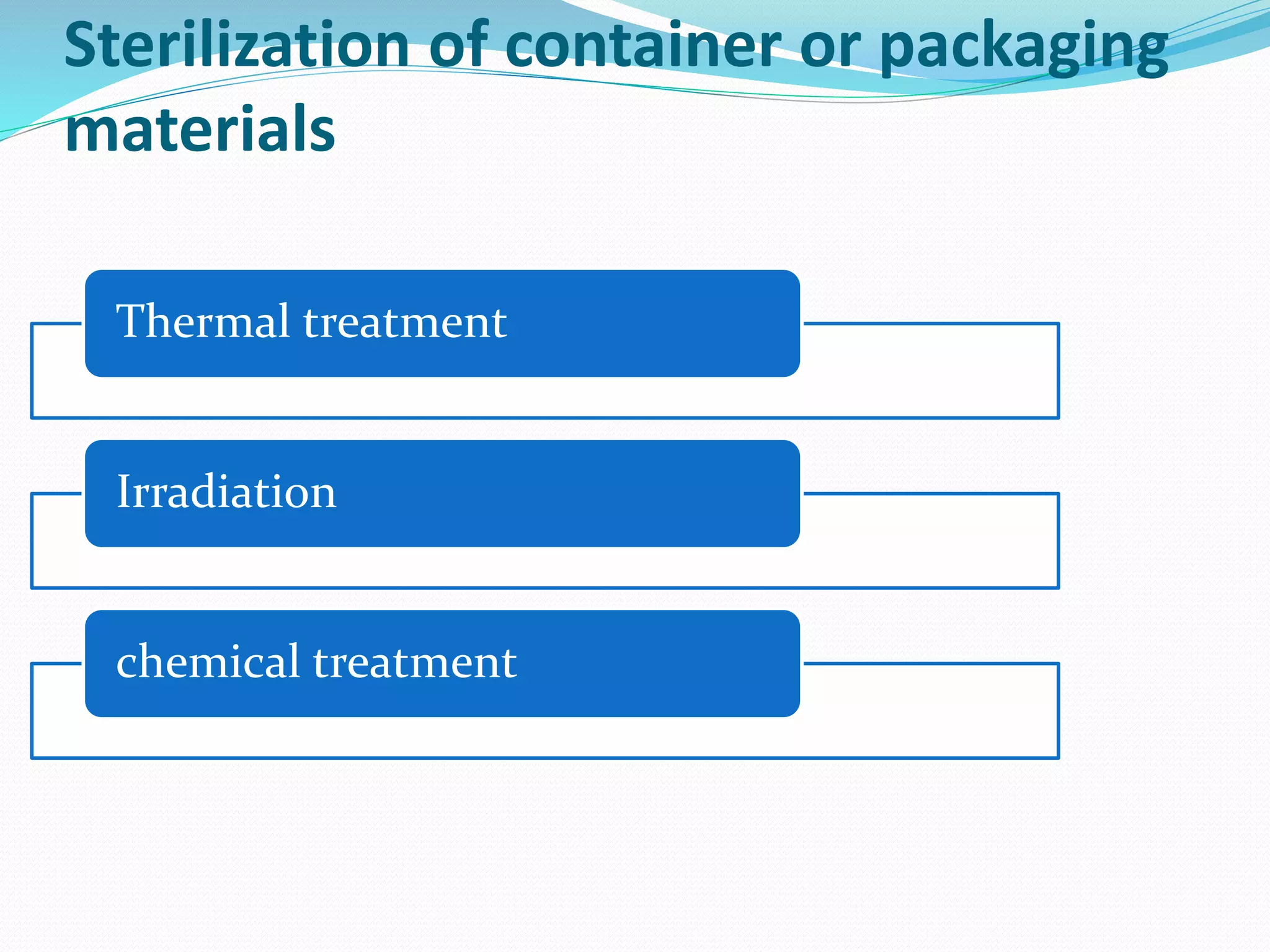
Sterilization of container or packaging
materials
Thermal treatment
Irradiation
chemical treatment
Aseptic packaging of Milk
Packaging materials
Packaging materials:
paper and paper based products
Glass
Tin plate
Aluminums foil
Plastics
Aseptic packaging systems
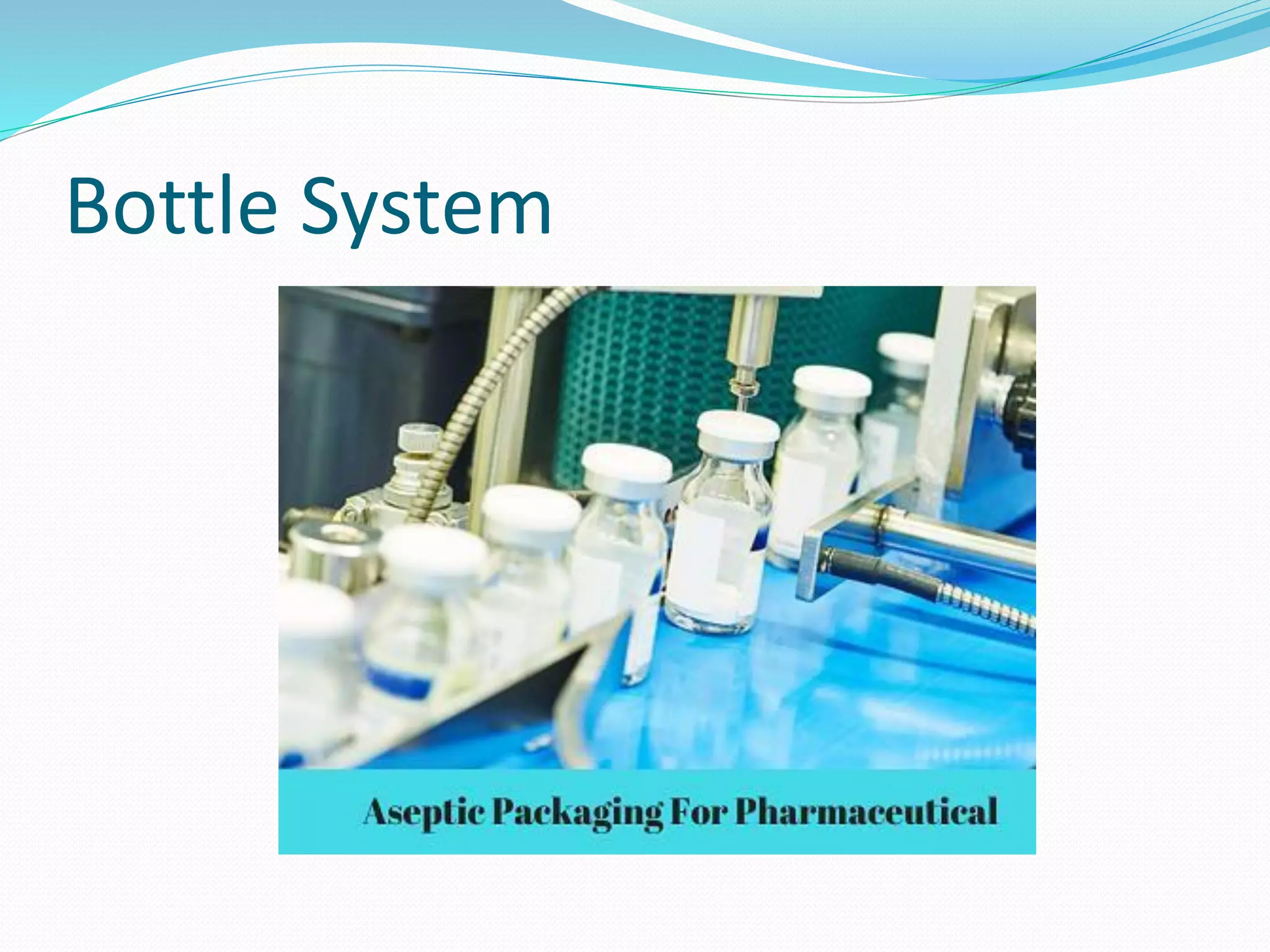
 Bottle system
 Sachet and pouch systems
 Cup systems
Bottle System
Sachet And Pouch System
Cup System
Benefits of aseptic packaging systems
 Keeps the product for several months
 Conserve the nutritive value of foods
 Less space requirement
 Cheaper packaging cost
 Permits storage and handling without refrigeration
 Eliminates the use of preservatives
Storage
❖ To maintain at a low temperature so as to prevent any
deterioration in quality prior to processing/product
manufacturing
❖ To facilitate bulking of the raw materials supply,
which will ensure uniform composition
❖ To allow for uninterrupted operation during
processing
References
 www.sciencedirect.com
 www.google.co.in
Thank You

Aseptic Packaging

  • 1.
    Mr. Pritam P.Kolge M. Pharm (QA) Bharati Vidyapeeth College of Pharmacy Kolhapur
  • 2.
    Introduction  Aseptic packagingis the filling of sterile containers with a commercially sterile product under aseptic conditions, and then sealing them so that re-infection is prevented; that is, so that they are hermetically sealed.  Sources of contamination: microorganism may be in the product, on the surface of packaging material or the part coming in contact with the product.
  • 3.
    objectives  To sterilethe product that provide the higher quality product  To take advantage of high temperature short time(HTST)  To extend the shelf life of products at normal temperature by packaging them aseptically
  • 4.
  • 5.
    Working of asepticprocess sterilization of equipment sterilization of food/drugs sterilization of container Filling and closure of presterilized product into sterilized container under aseptic conditions Maintenance of sterility
  • 6.
    Sterilization of Equipments Radiation •UV-C radiation • Infrared radiation • Ionizing radiation Heat • Saturated steam • Superheated steam • Hot air • Hot air and steam Chemical • Hydrogen peroxide • Ethanol • Ethylene oxide • Paraceticacid
  • 7.
    Sterilization of Product •63◦C/30 min • 72◦C/15 sec HTST • 130◦C – 150◦C/ fractions of sec UHT
  • 8.
    Sterilization of containeror packaging materials Thermal treatment Irradiation chemical treatment
  • 9.
  • 10.
    Packaging materials Packaging materials: paperand paper based products Glass Tin plate Aluminums foil Plastics
  • 11.
    Aseptic packaging systems Bottle system  Sachet and pouch systems  Cup systems
  • 12.
  • 13.
  • 14.
  • 15.
    Benefits of asepticpackaging systems  Keeps the product for several months  Conserve the nutritive value of foods  Less space requirement  Cheaper packaging cost  Permits storage and handling without refrigeration  Eliminates the use of preservatives
  • 16.
    Storage ❖ To maintainat a low temperature so as to prevent any deterioration in quality prior to processing/product manufacturing ❖ To facilitate bulking of the raw materials supply, which will ensure uniform composition ❖ To allow for uninterrupted operation during processing
  • 17.
  • 18.