ABB MD FACC©
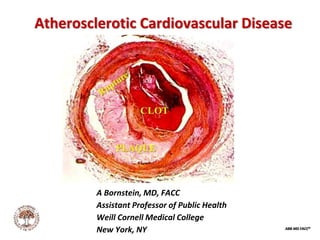
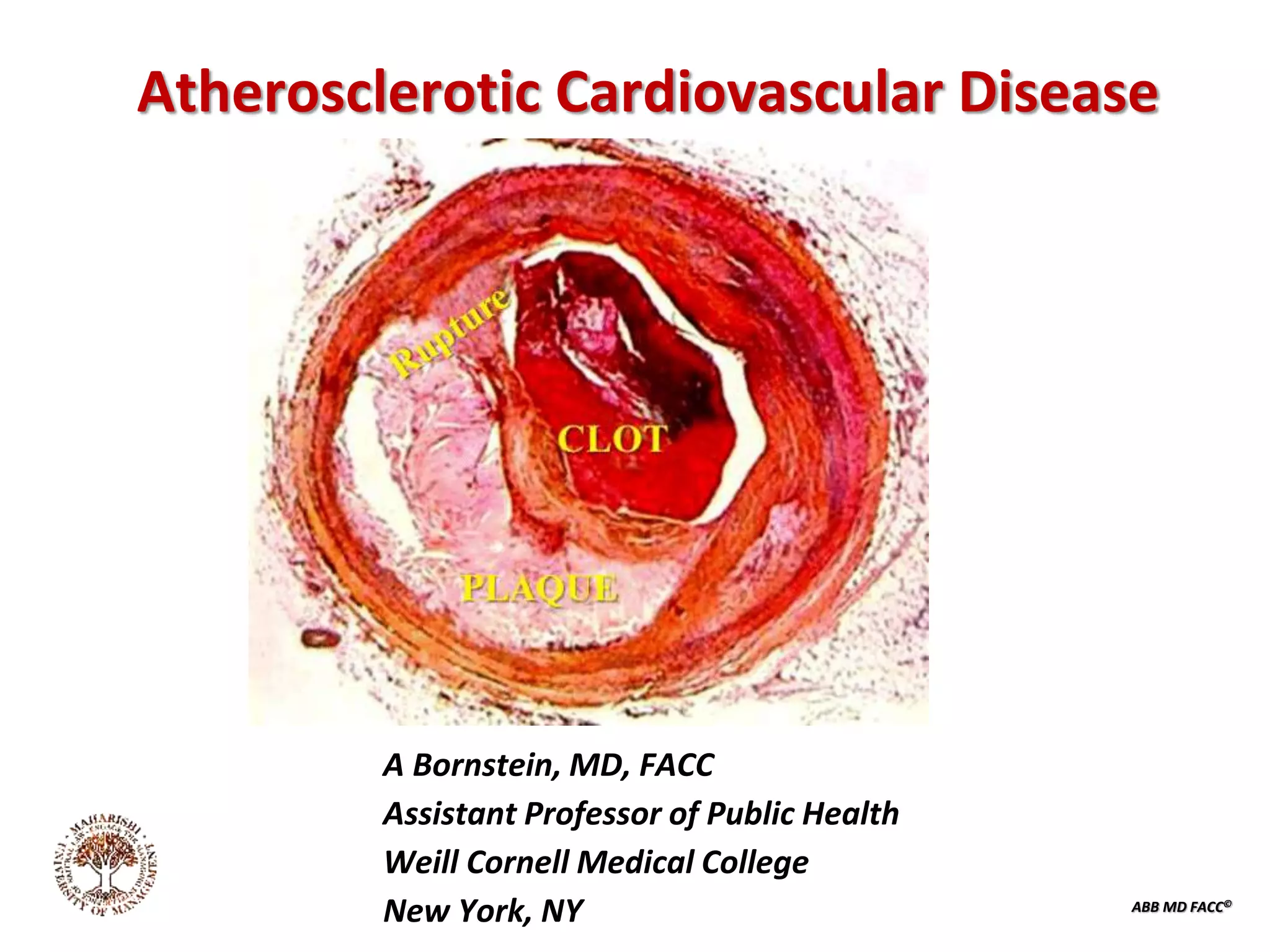
Atherosclerotic Cardiovascular Disease
A Bornstein, MD, FACC
Assistant Professor of Public Health
Weill Cornell Medical College
New York, NY
ABB MD FACC©
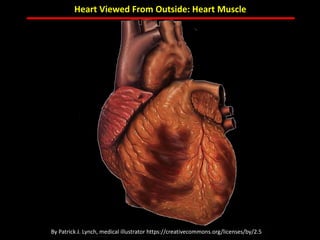
Heart Viewed From Outside: Heart Muscle
By Patrick J. Lynch, medical illustrator https://creativecommons.org/licenses/by/2.5
ABB MD FACC©
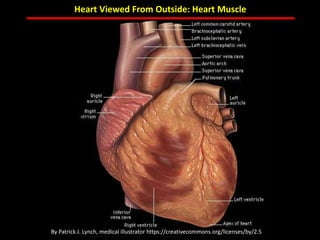
Heart Viewed From Outside: Heart Muscle
By Patrick J. Lynch, medical illustrator https://creativecommons.org/licenses/by/2.5
ABB MD FACC©
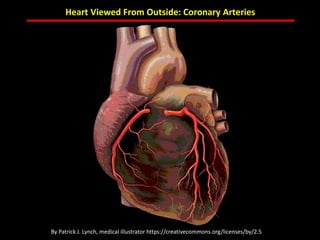
Heart Viewed From Outside: Coronary Arteries
By Patrick J. Lynch, medical illustrator https://creativecommons.org/licenses/by/2.5
ABB MD FACC©
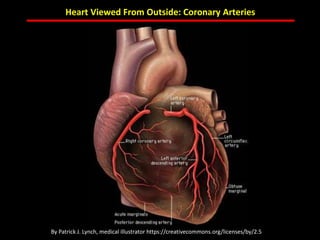
Heart Viewed From Outside: Coronary Arteries
By Patrick J. Lynch, medical illustrator https://creativecommons.org/licenses/by/2.5
ABB MD FACC©
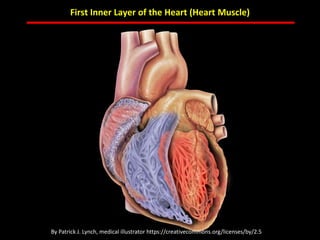
First Inner Layer of the Heart (Heart Muscle)
ABB MD FACC©By Patrick J. Lynch, medical illustrator https://creativecommons.org/licenses/by/2.5
ABB MD FACC©
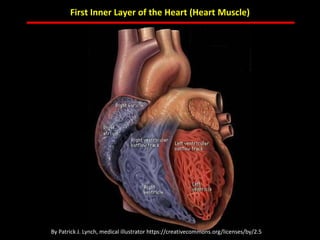
First Inner Layer of the Heart (Heart Muscle)
ABB MD FACC©By Patrick J. Lynch, medical illustrator https://creativecommons.org/licenses/by/2.5
ABB MD FACC©
ABB MD FACC©
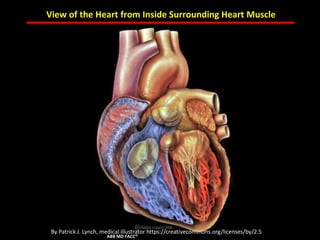
View of the Heart from Inside Surrounding Heart Muscle
By Patrick J. Lynch, medical illustrator https://creativecommons.org/licenses/by/2.5
ABB MD FACC©
ABB MD FACC©
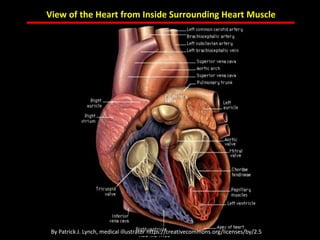
View of the Heart from Inside Surrounding Heart Muscle
By Patrick J. Lynch, medical illustrator https://creativecommons.org/licenses/by/2.5
ABB MD FACC©
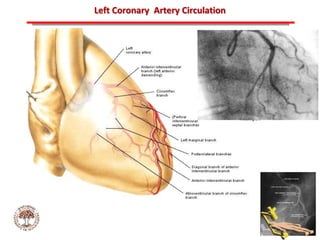
Left Coronary Artery Circulation
ABB MD FACC©
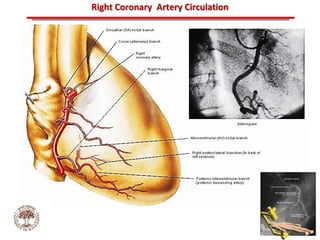
Right Coronary Artery Circulation
ABB MD FACC©
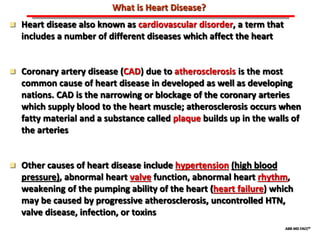
What is Heart Disease?
 Heart disease also known as cardiovascular disorder, a term that
includes a number of different diseases which affect the heart
 Coronary artery disease (CAD) due to atherosclerosis is the most
common cause of heart disease in developed as well as developing
nations. CAD is the narrowing or blockage of the coronary arteries
which supply blood to the heart muscle; atherosclerosis occurs when
fatty material and a substance called plaque builds up in the walls of
the arteries
 Other causes of heart disease include hypertension (high blood
pressure), abnormal heart valve function, abnormal heart rhythm,
weakening of the pumping ability of the heart (heart failure) which
may be caused by progressive atherosclerosis, uncontrolled HTN,
valve disease, infection, or toxins
ABB MD FACC©
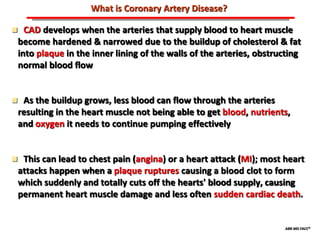
What is Coronary Artery Disease?
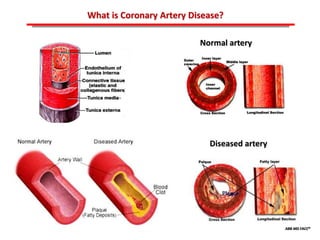
 CAD develops when the arteries that supply blood to heart muscle
become hardened & narrowed due to the buildup of cholesterol & fat
into plaque in the inner lining of the walls of the arteries, obstructing
normal blood flow
 As the buildup grows, less blood can flow through the arteries
resulting in the heart muscle not being able to get blood, nutrients,
and oxygen it needs to continue pumping effectively
 This can lead to chest pain (angina) or a heart attack (MI); most heart
attacks happen when a plaque ruptures causing a blood clot to form
which suddenly and totally cuts off the hearts' blood supply, causing
permanent heart muscle damage and less often sudden cardiac death.
ABB MD FACC©
What is Coronary Artery Disease?
Normal artery
Diseased artery
ABB MD FACC©
Heart Attack (MI) Due to Plaque Rupture
Triggering Acute Thrombus Formation
ABB MD FACC©
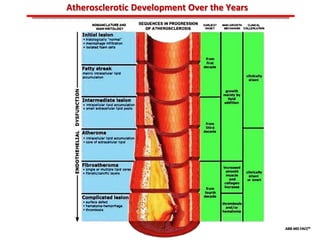
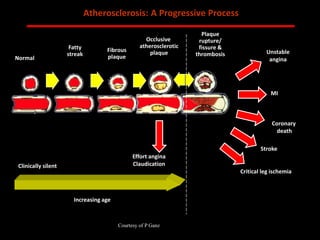
Atherosclerotic Development Over the Years
ABB MD FACC©
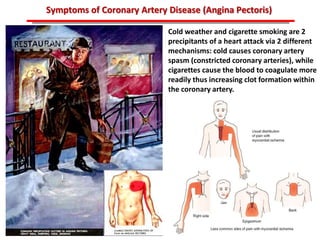
Symptoms of Coronary Artery Disease (Angina Pectoris)
Cold weather and cigarette smoking are 2
precipitants of a heart attack via 2 different
mechanisms: cold causes coronary artery
spasm (constricted coronary arteries), while
cigarettes cause the blood to coagulate more
readily thus increasing clot formation within
the coronary artery.
ABB MD FACC©
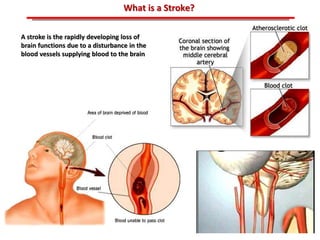
What is a Stroke?
A stroke is the rapidly developing loss of
brain functions due to a disturbance in the
blood vessels supplying blood to the brain
ABB MD FACC©
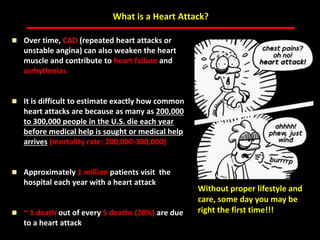
What is a Heart Attack?
 Over time, CAD (repeated heart attacks or
unstable angina) can also weaken the heart
muscle and contribute to heart failure and
arrhythmias
 It is difficult to estimate exactly how common
heart attacks are because as many as 200,000
to 300,000 people in the U.S. die each year
before medical help is sought or medical help
arrives (mortality rate: 200,000-300,000)
 Approximately 1 million patients visit the
hospital each year with a heart attack
 ~ 1 death out of every 5 deaths (20%) are due
to a heart attack
Without proper lifestyle and
care, some day you may be
right the first time!!!
ABB MD FACC©
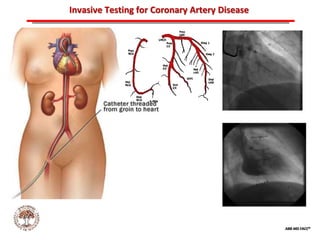
Invasive Testing for Coronary Artery Disease
ABB MD FACC©
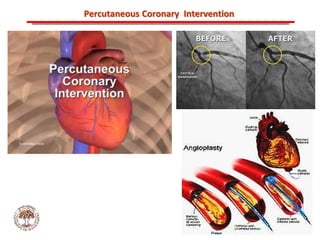
Percutaneous Coronary Intervention
ABB MD FACC©
Normal
Fatty
streak
Fibrous
plaque
Occlusive
atherosclerotic
plaque
Plaque
rupture/
fissure &
thrombosis
Clinically silent
Increasing age
Effort angina
Claudication
MI
Unstable
angina
Coronary
death
Stroke
Critical leg ischemia
Atherosclerosis: A Progressive Process
Courtesy of P Ganz
ABB MD FACC©
Libby P. Lancet. 1996;348:S4-S7.
Media
– T lymphocyte
– Macrophage
foam cell (tissue factor+)
– ‘Activated’ intimal SMC (HLA-DR+)
– Normal medial SMC
Fibrous cap
Intima
Lipid
core
Lumen
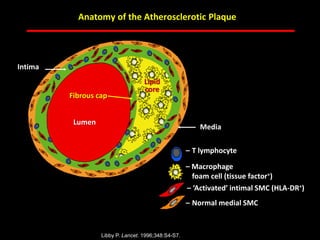
Anatomy of the Atherosclerotic Plaque
ABB MD FACC©
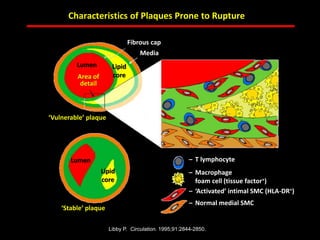
Libby P. Circulation. 1995;91:2844-2850.
Characteristics of Plaques Prone to Rupture
– T lymphocyte
– Macrophage
foam cell (tissue factor+)
– ‘Activated’ intimal SMC (HLA-DR+)
– Normal medial SMC
‘Stable’ plaque
‘Vulnerable’ plaque
Lumen
Area of
detail
Media
Fibrous cap
Lumen
Lipid
core
Lipid
core
ABB MD FACC©
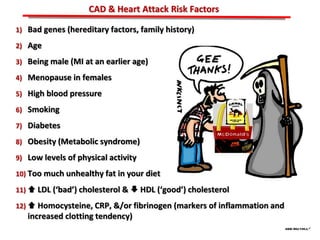
1) Bad genes (hereditary factors, family history)
2) Age
3) Being male (MI at an earlier age)
4) Menopause in females
5) High blood pressure
6) Smoking
7) Diabetes
8) Obesity (Metabolic syndrome)
9) Low levels of physical activity
10) Too much unhealthy fat in your diet
11)  LDL (‘bad’) cholesterol &  HDL (‘good’) cholesterol
12)  Homocysteine, CRP, &/or fibrinogen (markers of inflammation and
increased clotting tendency)
CAD & Heart Attack Risk Factors

ASCVD for students 04 13 18

  • 1.
    ABB MD FACC© AtheroscleroticCardiovascular Disease A Bornstein, MD, FACC Assistant Professor of Public Health Weill Cornell Medical College New York, NY
  • 2.
    ABB MD FACC© HeartViewed From Outside: Heart Muscle By Patrick J. Lynch, medical illustrator https://creativecommons.org/licenses/by/2.5
  • 3.
    ABB MD FACC© HeartViewed From Outside: Heart Muscle By Patrick J. Lynch, medical illustrator https://creativecommons.org/licenses/by/2.5
  • 4.
    ABB MD FACC© HeartViewed From Outside: Coronary Arteries By Patrick J. Lynch, medical illustrator https://creativecommons.org/licenses/by/2.5
  • 5.
    ABB MD FACC© HeartViewed From Outside: Coronary Arteries By Patrick J. Lynch, medical illustrator https://creativecommons.org/licenses/by/2.5
  • 6.
    ABB MD FACC© FirstInner Layer of the Heart (Heart Muscle) ABB MD FACC©By Patrick J. Lynch, medical illustrator https://creativecommons.org/licenses/by/2.5
  • 7.
    ABB MD FACC© FirstInner Layer of the Heart (Heart Muscle) ABB MD FACC©By Patrick J. Lynch, medical illustrator https://creativecommons.org/licenses/by/2.5
  • 8.
    ABB MD FACC© ABBMD FACC© View of the Heart from Inside Surrounding Heart Muscle By Patrick J. Lynch, medical illustrator https://creativecommons.org/licenses/by/2.5
  • 9.
    ABB MD FACC© ABBMD FACC© View of the Heart from Inside Surrounding Heart Muscle By Patrick J. Lynch, medical illustrator https://creativecommons.org/licenses/by/2.5
  • 10.
    ABB MD FACC© LeftCoronary Artery Circulation
  • 11.
    ABB MD FACC© RightCoronary Artery Circulation
  • 12.
    ABB MD FACC© Whatis Heart Disease?  Heart disease also known as cardiovascular disorder, a term that includes a number of different diseases which affect the heart  Coronary artery disease (CAD) due to atherosclerosis is the most common cause of heart disease in developed as well as developing nations. CAD is the narrowing or blockage of the coronary arteries which supply blood to the heart muscle; atherosclerosis occurs when fatty material and a substance called plaque builds up in the walls of the arteries  Other causes of heart disease include hypertension (high blood pressure), abnormal heart valve function, abnormal heart rhythm, weakening of the pumping ability of the heart (heart failure) which may be caused by progressive atherosclerosis, uncontrolled HTN, valve disease, infection, or toxins
  • 13.
    ABB MD FACC© Whatis Coronary Artery Disease?  CAD develops when the arteries that supply blood to heart muscle become hardened & narrowed due to the buildup of cholesterol & fat into plaque in the inner lining of the walls of the arteries, obstructing normal blood flow  As the buildup grows, less blood can flow through the arteries resulting in the heart muscle not being able to get blood, nutrients, and oxygen it needs to continue pumping effectively  This can lead to chest pain (angina) or a heart attack (MI); most heart attacks happen when a plaque ruptures causing a blood clot to form which suddenly and totally cuts off the hearts' blood supply, causing permanent heart muscle damage and less often sudden cardiac death.
  • 14.
    ABB MD FACC© Whatis Coronary Artery Disease? Normal artery Diseased artery
  • 15.
    ABB MD FACC© HeartAttack (MI) Due to Plaque Rupture Triggering Acute Thrombus Formation
  • 16.
    ABB MD FACC© AtheroscleroticDevelopment Over the Years
  • 17.
    ABB MD FACC© Symptomsof Coronary Artery Disease (Angina Pectoris) Cold weather and cigarette smoking are 2 precipitants of a heart attack via 2 different mechanisms: cold causes coronary artery spasm (constricted coronary arteries), while cigarettes cause the blood to coagulate more readily thus increasing clot formation within the coronary artery.
  • 18.
    ABB MD FACC© Whatis a Stroke? A stroke is the rapidly developing loss of brain functions due to a disturbance in the blood vessels supplying blood to the brain
  • 19.
    ABB MD FACC© Whatis a Heart Attack?  Over time, CAD (repeated heart attacks or unstable angina) can also weaken the heart muscle and contribute to heart failure and arrhythmias  It is difficult to estimate exactly how common heart attacks are because as many as 200,000 to 300,000 people in the U.S. die each year before medical help is sought or medical help arrives (mortality rate: 200,000-300,000)  Approximately 1 million patients visit the hospital each year with a heart attack  ~ 1 death out of every 5 deaths (20%) are due to a heart attack Without proper lifestyle and care, some day you may be right the first time!!!
  • 20.
    ABB MD FACC© InvasiveTesting for Coronary Artery Disease
  • 21.
    ABB MD FACC© PercutaneousCoronary Intervention
  • 22.
    ABB MD FACC© Normal Fatty streak Fibrous plaque Occlusive atherosclerotic plaque Plaque rupture/ fissure& thrombosis Clinically silent Increasing age Effort angina Claudication MI Unstable angina Coronary death Stroke Critical leg ischemia Atherosclerosis: A Progressive Process Courtesy of P Ganz
  • 23.
    ABB MD FACC© LibbyP. Lancet. 1996;348:S4-S7. Media – T lymphocyte – Macrophage foam cell (tissue factor+) – ‘Activated’ intimal SMC (HLA-DR+) – Normal medial SMC Fibrous cap Intima Lipid core Lumen Anatomy of the Atherosclerotic Plaque
  • 24.
    ABB MD FACC© LibbyP. Circulation. 1995;91:2844-2850. Characteristics of Plaques Prone to Rupture – T lymphocyte – Macrophage foam cell (tissue factor+) – ‘Activated’ intimal SMC (HLA-DR+) – Normal medial SMC ‘Stable’ plaque ‘Vulnerable’ plaque Lumen Area of detail Media Fibrous cap Lumen Lipid core Lipid core
  • 25.
    ABB MD FACC© 1)Bad genes (hereditary factors, family history) 2) Age 3) Being male (MI at an earlier age) 4) Menopause in females 5) High blood pressure 6) Smoking 7) Diabetes 8) Obesity (Metabolic syndrome) 9) Low levels of physical activity 10) Too much unhealthy fat in your diet 11)  LDL (‘bad’) cholesterol &  HDL (‘good’) cholesterol 12)  Homocysteine, CRP, &/or fibrinogen (markers of inflammation and increased clotting tendency) CAD & Heart Attack Risk Factors