Electrical Engineering By: Joel Sandoval
What Is Electrical Engineering? EE is the field that deals applications with electricity, electronics, and magnetisms. EE field now covers sub-fields such as: Power Electronics, Control Systems, Signal Processing, and Telecommunications.
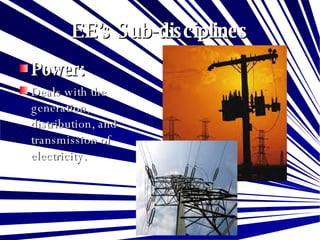
EE’s Sub-disciplines Power: Deals with the generation, distribution, and transmission of electricity.
Continued Electronics & Microelectronics:   Involves with design and testing of electric circuits and circuits in very small scale.
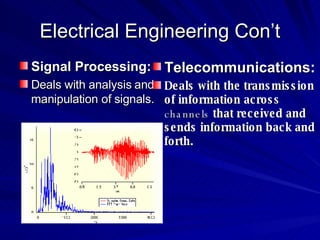
Electrical Engineering Con’t Signal Processing: Deals with analysis and manipulation of signals. Telecommunications: Deals with the transmission of information across  channels  that received and sends information back and forth.
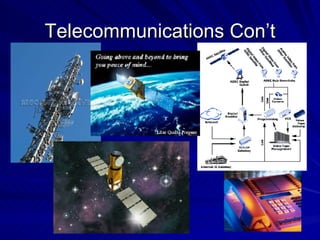
Telecommunications Con’t
Trainings & Education EE typically process an academic degree with major in Electrical Engineering. The length of study is between four to five years. EE receive Bachelors of Engineering, Bachelors of Science, and Bachelors of Technology depending upon the university they attended. There isn’t much of a training for EE but, they can obtain training in universities, community colleges, and and technical schools.
Salary Range & Employment Outlook According to the U.S. Department of Labor, EE’s Salary is between $51K to $80K per year depending in experience and education. Employment in EE is expected to grow as fast as the average for all occupation over the period of 2004-2014.
References Wikipedia.com U.S. Department of Labor Bureau of Labor Statistics. Litterqualitypropane.com Avidimages.com

Electrical Engineering Presentation

  • 1.
  • 2.
    What Is ElectricalEngineering? EE is the field that deals applications with electricity, electronics, and magnetisms. EE field now covers sub-fields such as: Power Electronics, Control Systems, Signal Processing, and Telecommunications.
  • 3.
    EE’s Sub-disciplines Power:Deals with the generation, distribution, and transmission of electricity.
  • 4.
    Continued Electronics &Microelectronics: Involves with design and testing of electric circuits and circuits in very small scale.
  • 5.
    Electrical Engineering Con’tSignal Processing: Deals with analysis and manipulation of signals. Telecommunications: Deals with the transmission of information across channels that received and sends information back and forth.
  • 6.
  • 7.
    Trainings & EducationEE typically process an academic degree with major in Electrical Engineering. The length of study is between four to five years. EE receive Bachelors of Engineering, Bachelors of Science, and Bachelors of Technology depending upon the university they attended. There isn’t much of a training for EE but, they can obtain training in universities, community colleges, and and technical schools.
  • 8.
    Salary Range &Employment Outlook According to the U.S. Department of Labor, EE’s Salary is between $51K to $80K per year depending in experience and education. Employment in EE is expected to grow as fast as the average for all occupation over the period of 2004-2014.
  • 9.
    References Wikipedia.com U.S.Department of Labor Bureau of Labor Statistics. Litterqualitypropane.com Avidimages.com