ARTHI.P.R
TEMPERATURE MONITORING
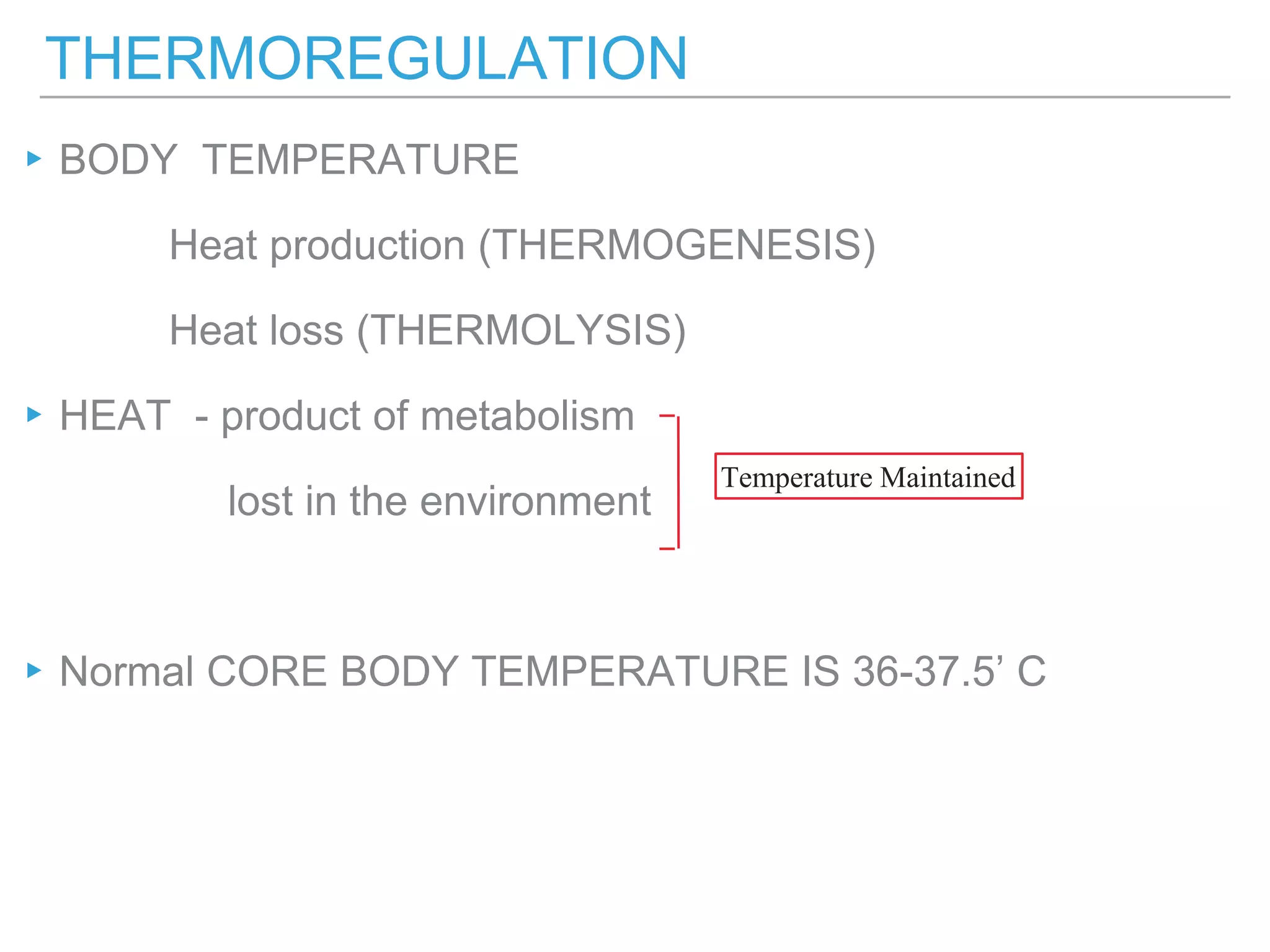
THERMOREGULATION
Temperature Maintained
▸BODY TEMPERATURE
Heat production (THERMOGENESIS)
Heat loss (THERMOLYSIS)
▸HEAT - product of metabolism
lost in the environment
▸Normal CORE BODY TEMPERATURE IS 36-37.5’ C
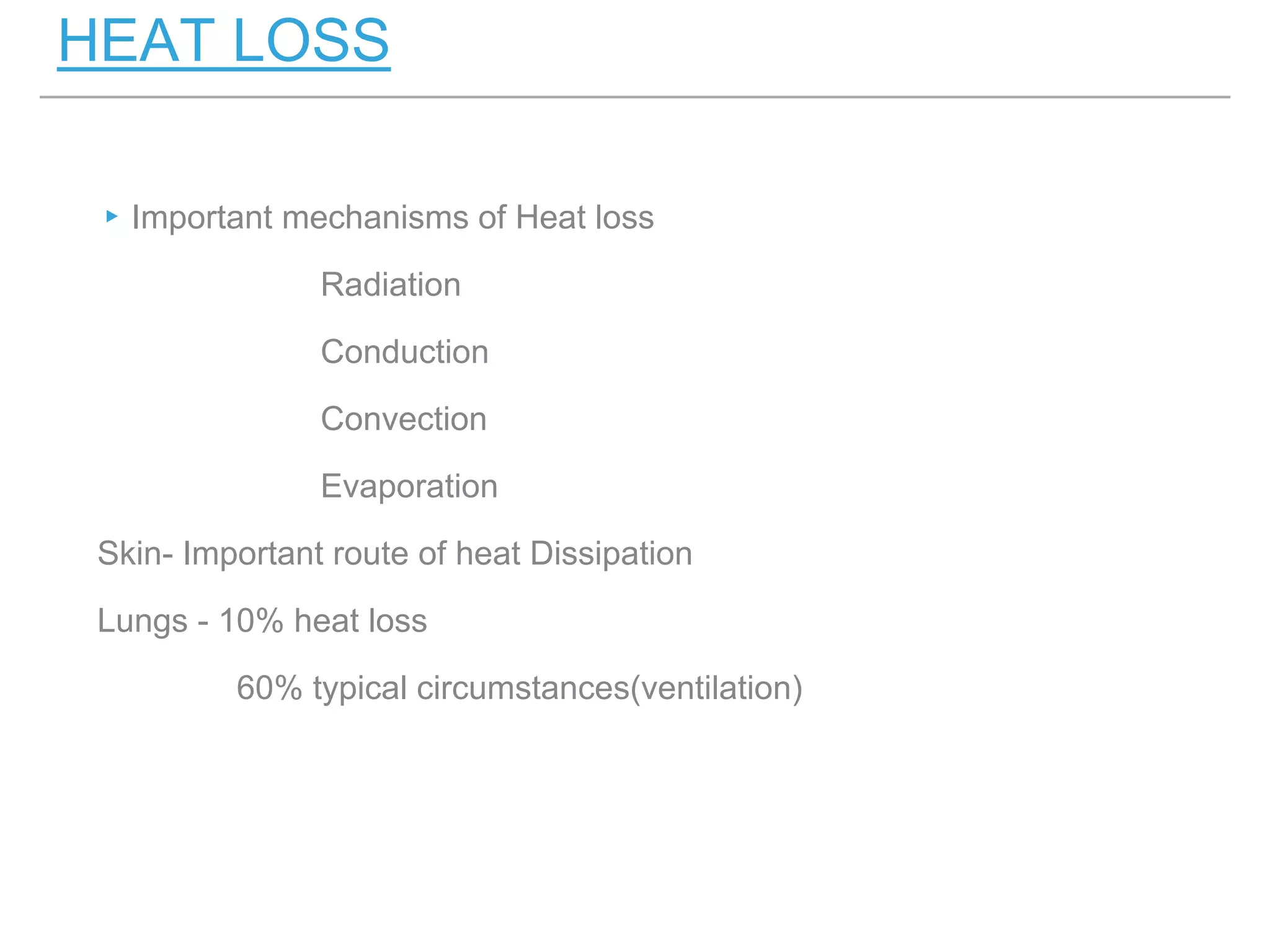
▸Important mechanisms of Heat loss
Radiation
Conduction
Convection
Evaporation
Skin- Important route of heat Dissipation
Lungs - 10% heat loss
60% typical circumstances(ventilation)
HEAT LOSS
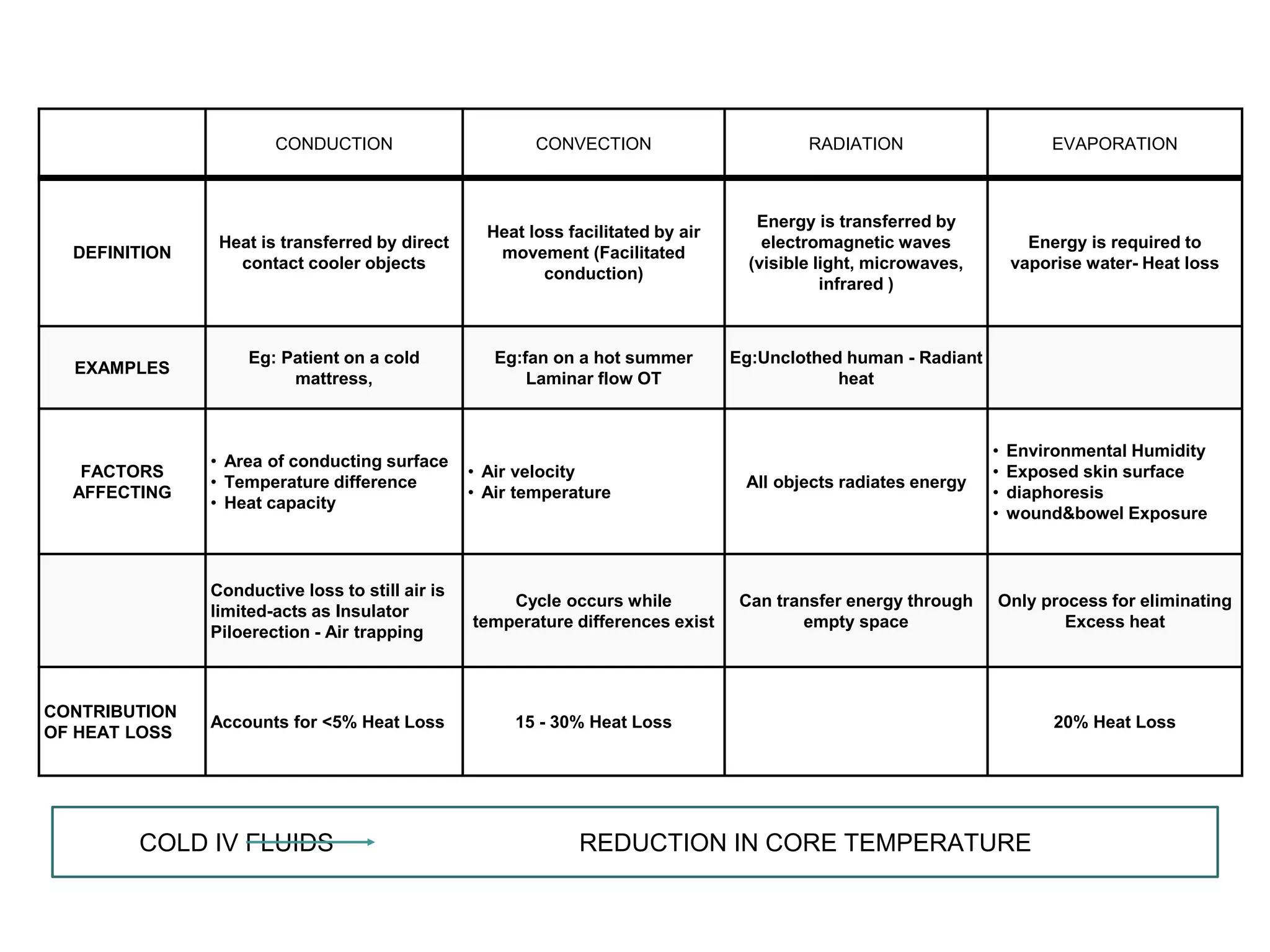
CONDUCTION CONVECTION RADIATION EVAPORATION
DEFINITION
Heat is transferred by direct
contact cooler objects
Heat loss facilitated by air
movement (Facilitated
conduction)
Energy is transferred by
electromagnetic waves
(visible light, microwaves,
infrared )
Energy is required to
vaporise water- Heat loss
EXAMPLES
Eg: Patient on a cold
mattress,
Eg:fan on a hot summer
Laminar flow OT
Eg:Unclothed human - Radiant
heat
FACTORS
AFFECTING
• Area of conducting surface
• Temperature difference
• Heat capacity
• Air velocity
• Air temperature
All objects radiates energy
• Environmental Humidity
• Exposed skin surface
• diaphoresis
• wound&bowel Exposure
Conductive loss to still air is
limited-acts as Insulator
Piloerection - Air trapping
Cycle occurs while
temperature differences exist
Can transfer energy through
empty space
Only process for eliminating
Excess heat
CONTRIBUTION
OF HEAT LOSS
Accounts for <5% Heat Loss 15 - 30% Heat Loss 20% Heat Loss
COLD IV FLUIDS REDUCTION IN CORE TEMPERATURE
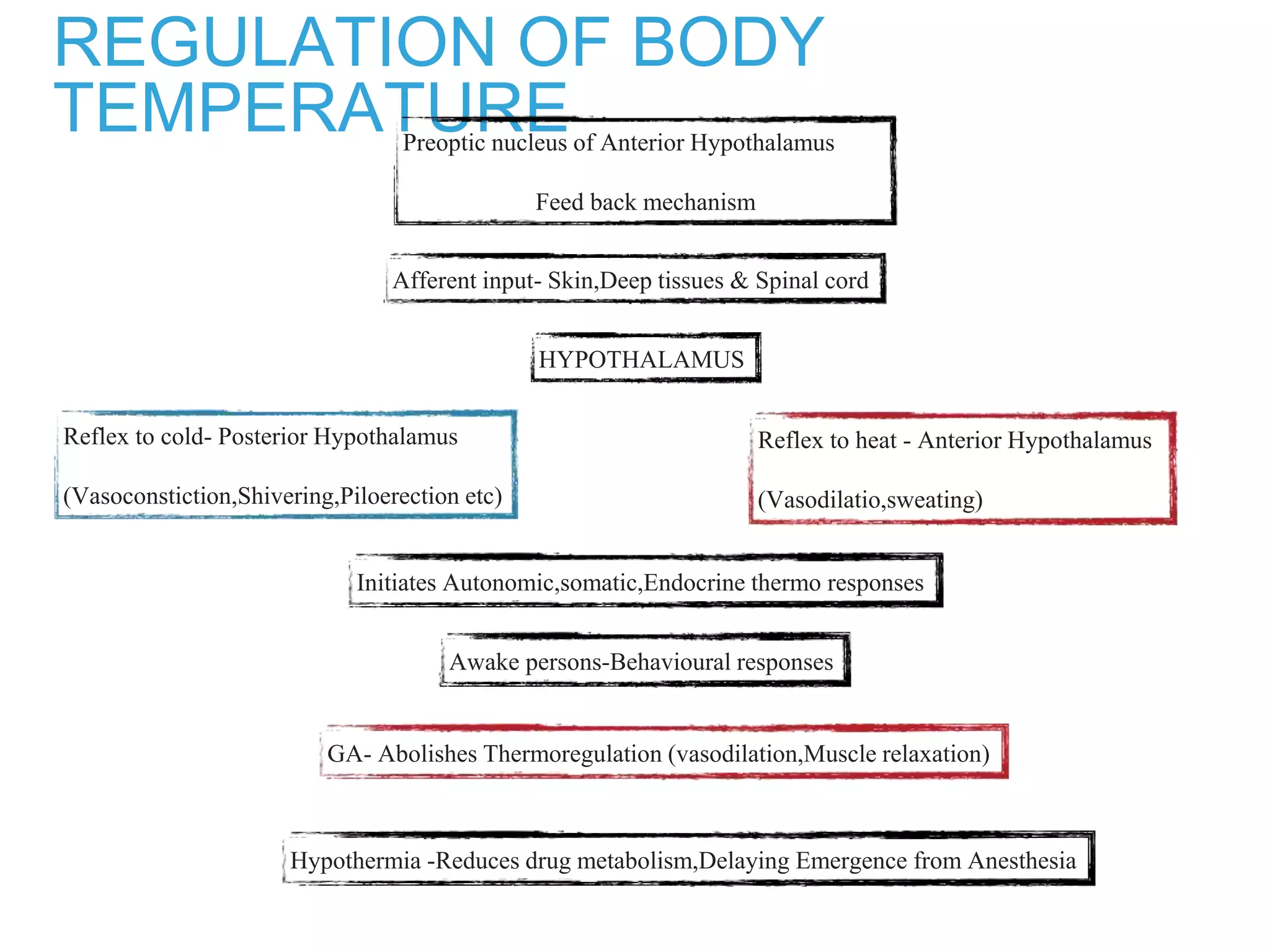
REGULATION OF BODY
TEMPERATUREPreoptic nucleus of Anterior Hypothalamus
Feed back mechanism
Afferent input- Skin,Deep tissues & Spinal cord
HYPOTHALAMUS
Reflex to cold- Posterior Hypothalamus
(Vasoconstiction,Shivering,Piloerection etc)
Reflex to heat - Anterior Hypothalamus
(Vasodilatio,sweating)
Initiates Autonomic,somatic,Endocrine thermo responses
Awake persons-Behavioural responses
GA- Abolishes Thermoregulation (vasodilation,Muscle relaxation)
Hypothermia -Reduces drug metabolism,Delaying Emergence from Anesthesia
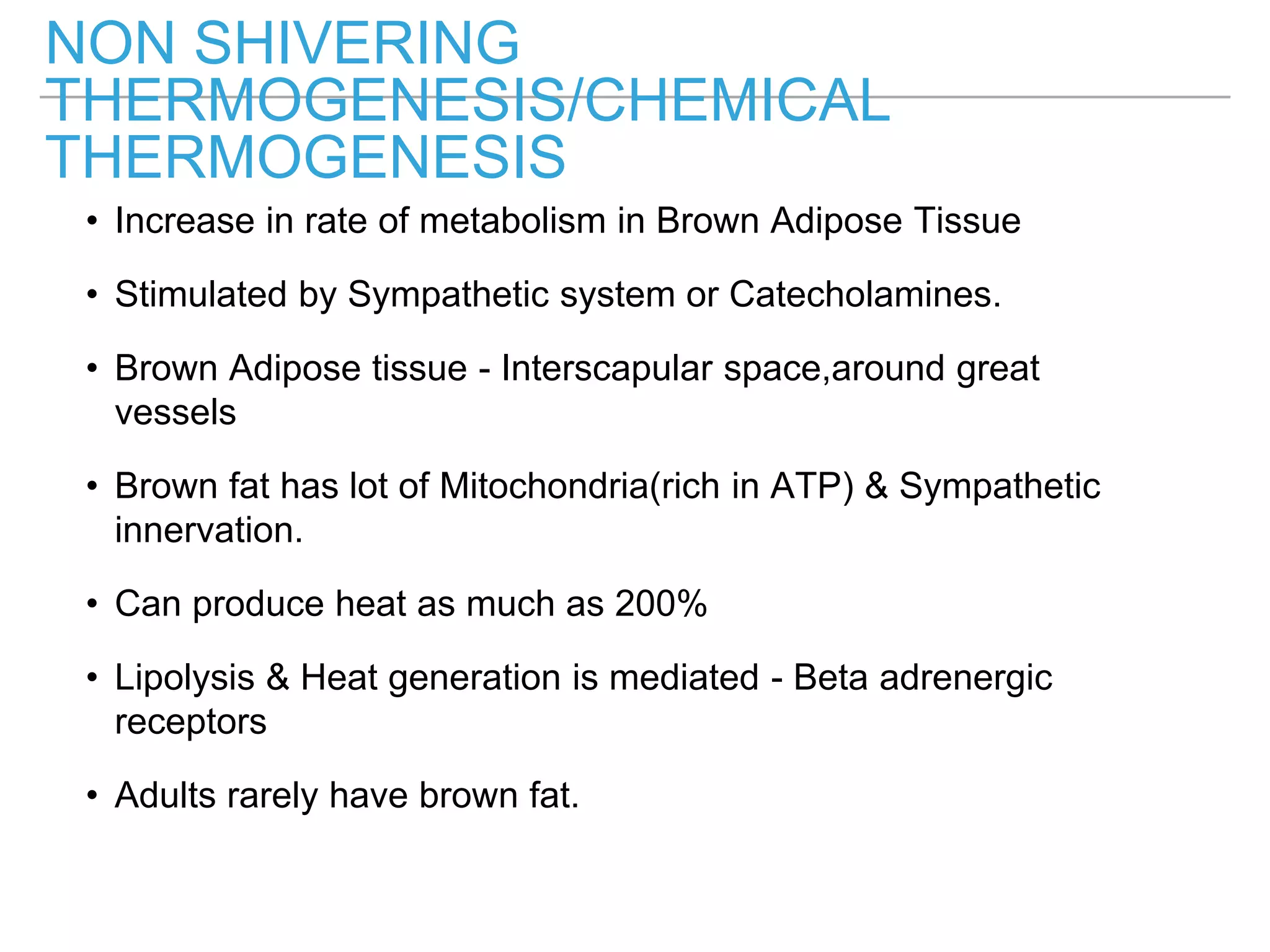
NON SHIVERING
THERMOGENESIS/CHEMICAL
THERMOGENESIS
• Increase in rate of metabolism in Brown Adipose Tissue
• Stimulated by Sympathetic system or Catecholamines.
• Brown Adipose tissue - Interscapular space,around great
vessels
• Brown fat has lot of Mitochondria(rich in ATP) & Sympathetic
innervation.
• Can produce heat as much as 200%
• Lipolysis & Heat generation is mediated - Beta adrenergic
receptors
• Adults rarely have brown fat.
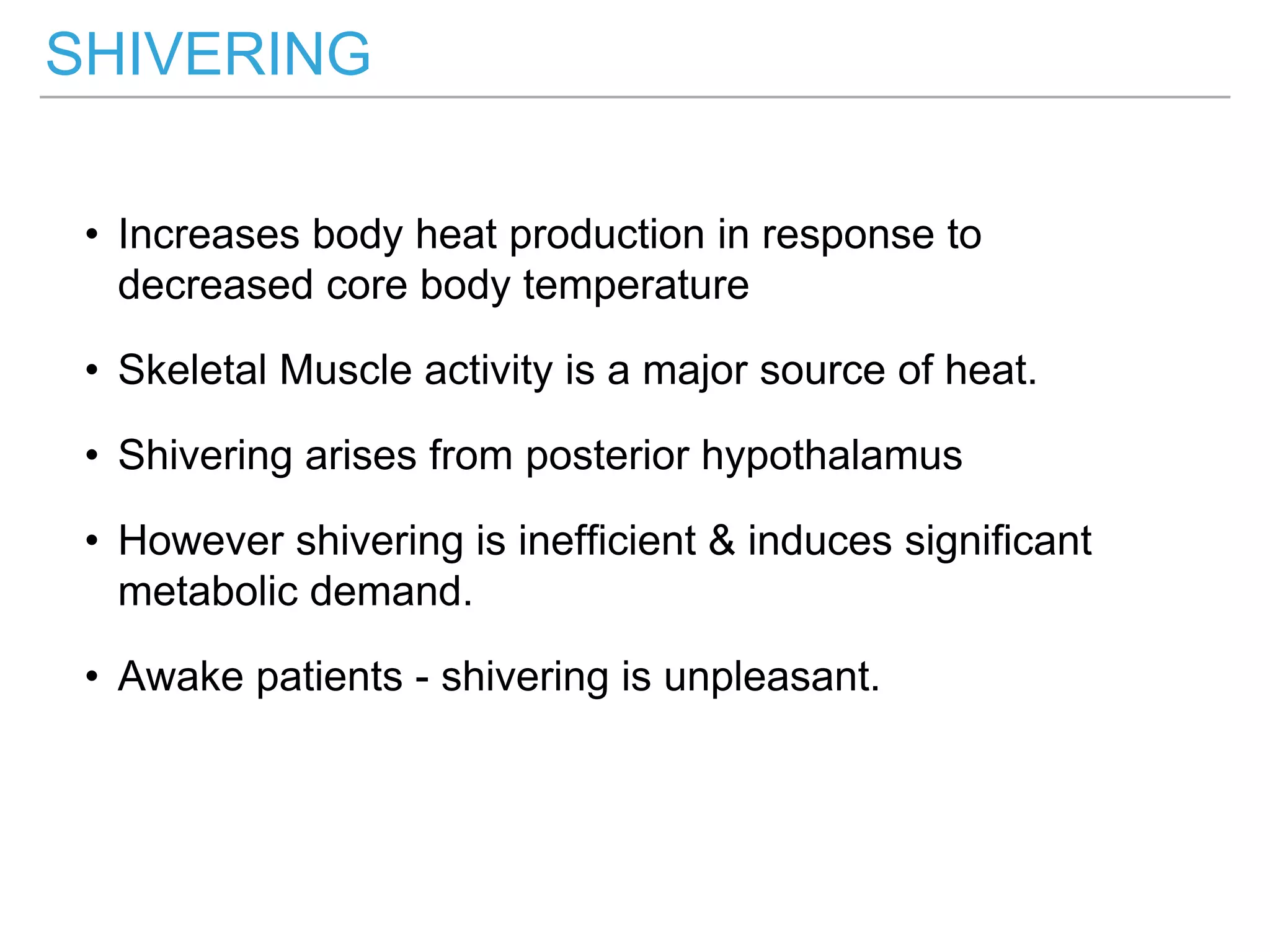
SHIVERING
• Increases body heat production in response to
decreased core body temperature
• Skeletal Muscle activity is a major source of heat.
• Shivering arises from posterior hypothalamus
• However shivering is inefficient & induces significant
metabolic demand.
• Awake patients - shivering is unpleasant.
▸Major determinant of heat loss
▸It is regulated by sympathetic nervous system
▸In adult blood flow is 400ml/min ,decreased to 50ml/min
cold ,2800ml/min in heat
▸Subcutaneous venous plexuses hold large volume of
blood- fingers, palms ,toes and earlobes -arteriovenous
anastomosis - causes significant heat loss during
circulation.
CUTANEOUS BLOOD FLOW
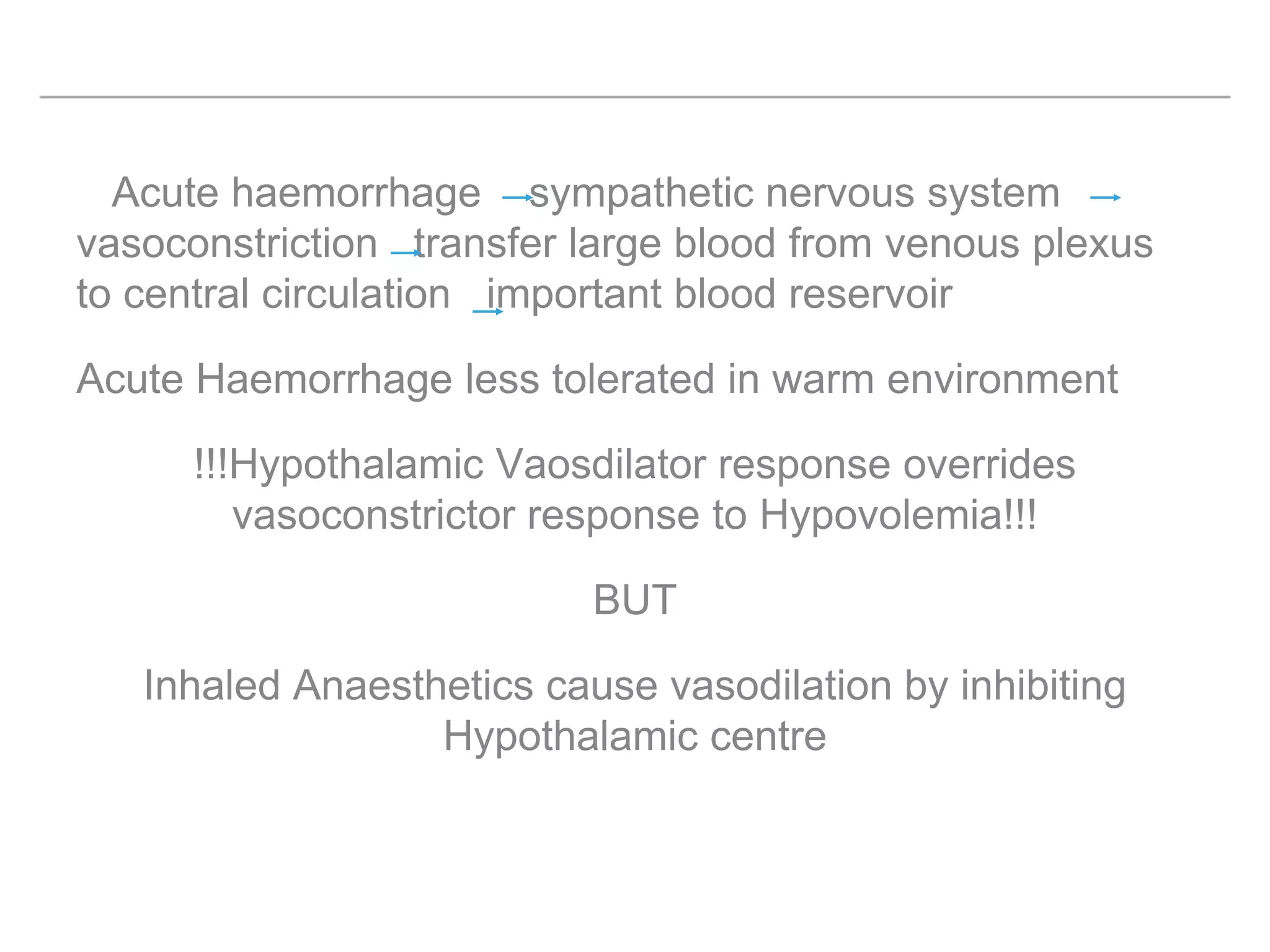
Acute haemorrhage sympathetic nervous system
vasoconstriction transfer large blood from venous plexus
to central circulation important blood reservoir
Acute Haemorrhage less tolerated in warm environment
!!!Hypothalamic Vaosdilator response overrides
vasoconstrictor response to Hypovolemia!!!
BUT
Inhaled Anaesthetics cause vasodilation by inhibiting
Hypothalamic centre
Thermoregulatory system :
AFFERENT (INPUT)
CENTRAL (CONTROL)
EFFERENT (RESPONSE)
▸ body temperature is determined by cold environment -poikilothermic
PERIOPERATIVE TEMPERATURE
CHANGES IN HYPOTHERMIA
GA AFFECTS ALL 3
REGIONAL AFFECTS AFFERENET
AND EFFERENT
1. Resetting Hypothalamic thermostat
2. Reduced temperature (outside)
3. Administration of cold iv fluids
4. Decreased basal metabolic rate
5. Drug induced vasodilation
6. Core compartment exposed to room temperature
7. Heat required to humidify dry gases
▸anaesthesia inhibit
thermoregulation in dose
dependent manner
▸vasoconstriction and shivering
inhibited > sweating .
▸non shivering thermogenesis
does not occur in GA
▸ALFENTANIL and PROPOFOL
lower the threshold for
vasoconstriction and sweating
▸ISOFLURANE and
DESFLURANE decrease the
threshold temperature for cold
responses in a nonlinear fashion
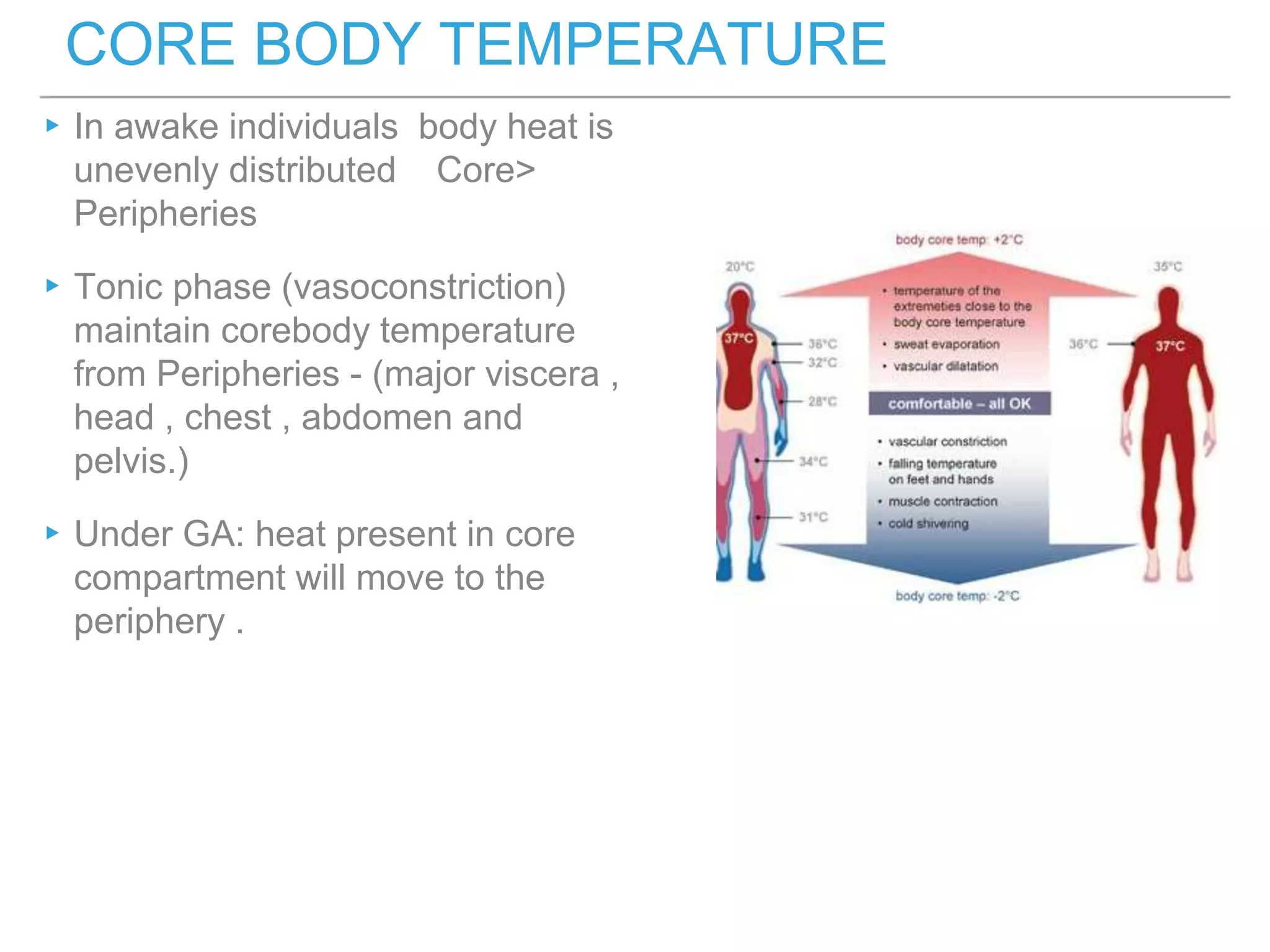
▸In awake individuals body heat is
unevenly distributed Core>
Peripheries
▸Tonic phase (vasoconstriction)
maintain corebody temperature
from Peripheries - (major viscera ,
head , chest , abdomen and
pelvis.)
▸Under GA: heat present in core
compartment will move to the
periphery .
CORE BODY TEMPERATURE
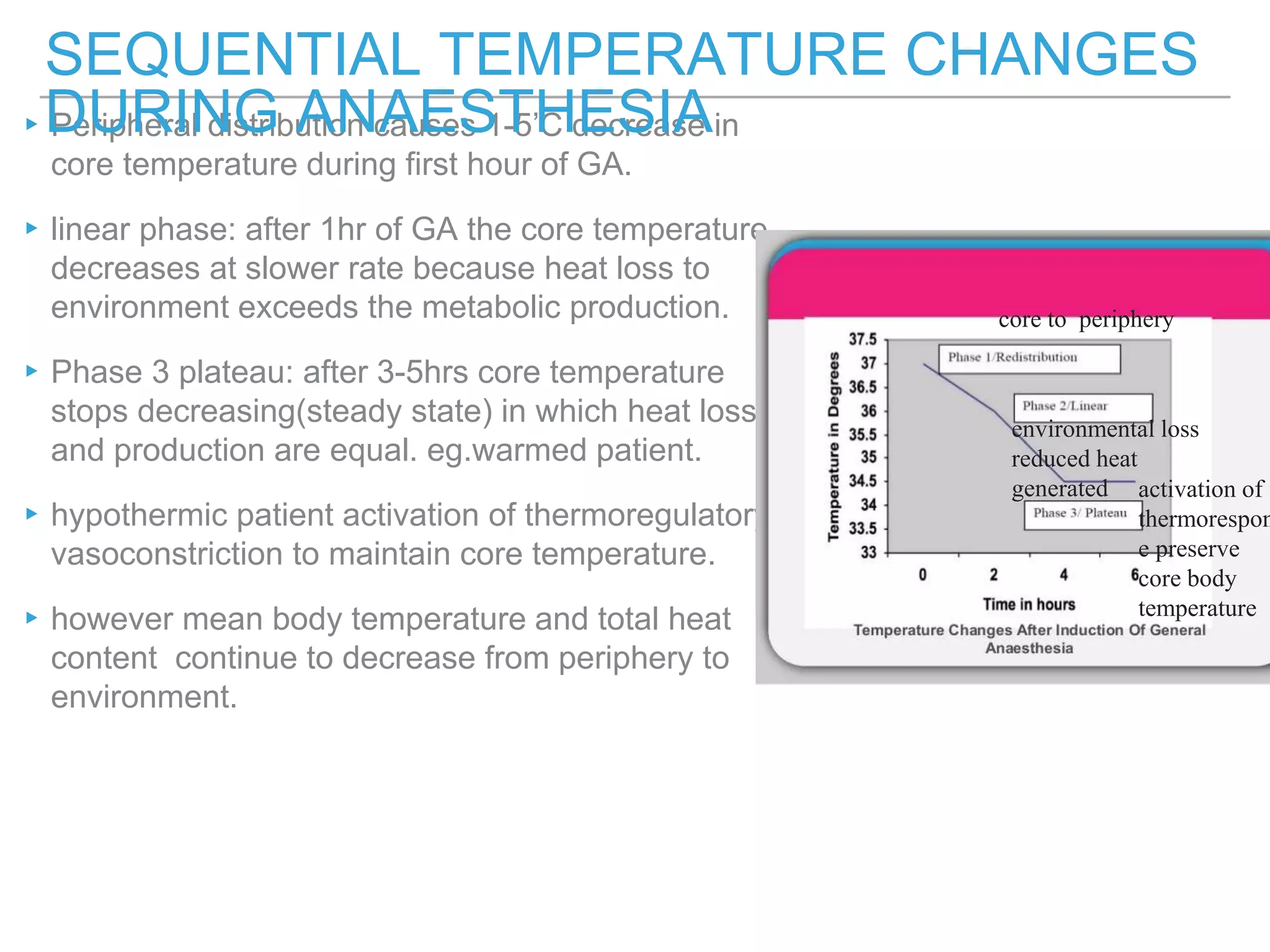
▸Peripheral distribution causes 1-5’C decrease in
core temperature during first hour of GA.
▸linear phase: after 1hr of GA the core temperature
decreases at slower rate because heat loss to
environment exceeds the metabolic production.
▸Phase 3 plateau: after 3-5hrs core temperature
stops decreasing(steady state) in which heat loss
and production are equal. eg.warmed patient.
▸hypothermic patient activation of thermoregulatory
vasoconstriction to maintain core temperature.
▸however mean body temperature and total heat
content continue to decrease from periphery to
environment.
SEQUENTIAL TEMPERATURE CHANGES
DURING ANAESTHESIA
core to periphery
environmental loss
reduced heat
generated activation of
thermorespon
e preserve
core body
temperature
▸It has minimal effect - centre(Hypothalamus)
▸Afferent input (cold) from lower body is overridden by warmth
due to cutaneous vasodilation- Initially
Decrease in core temperature is similar to GA or even more
▸Reflex vasoconstriction is abolished below the level of block
,Therefore plateau phase (PHASE 3)does not occur.
▸Core temperature may decrease sufficiently to trigger
shivering.
▸Reflex shivering to produce heat is only to upper body, it is
restricted in the blocked areas.
REGIONAL ANAESTHESIA
▸Hypothermia reduces the metabolic demand
▸O2 consumption 5% _ 7% for every Degree Celsius
▸1-3”C decrease protects against cerebral ischemia and arterial
hypoxemia
▸Mild Hypothermia (33-36)- Beneficial :
cardiac surgeries, aneurysmal clipping ,
cardiac arrest ,stroke, traumatic brain injury acute MI, birth
injury
▸surface cooling causes hypothermia - shivering which delays core
cooling
BENEFICIAL EFFECTS OF
PREOPERATIVE HYPOTHERMIA
POST OPERATIVE SHIVERING
Increases metabolic rate and cardiac work
Impaired platelet function and coagulation(transfusion ).
Delayed wound healing
▸1’C decrease in temperature -5% reduction in anaesthetic requirement
(mac) and increase in volatile anaesthetic blood /gas solubility
▸ Delayed anaesthetic emergence- decreased drug metabolism eg: non-
depolarizing neuromuscular blocking drugs.
Core Hypothermia = 1.5C Triples Incidence of Ventricular Tachycardia
ADVERSE CONSEQUENCES OF
PERIOPERATIVE HYPOTHERMIA
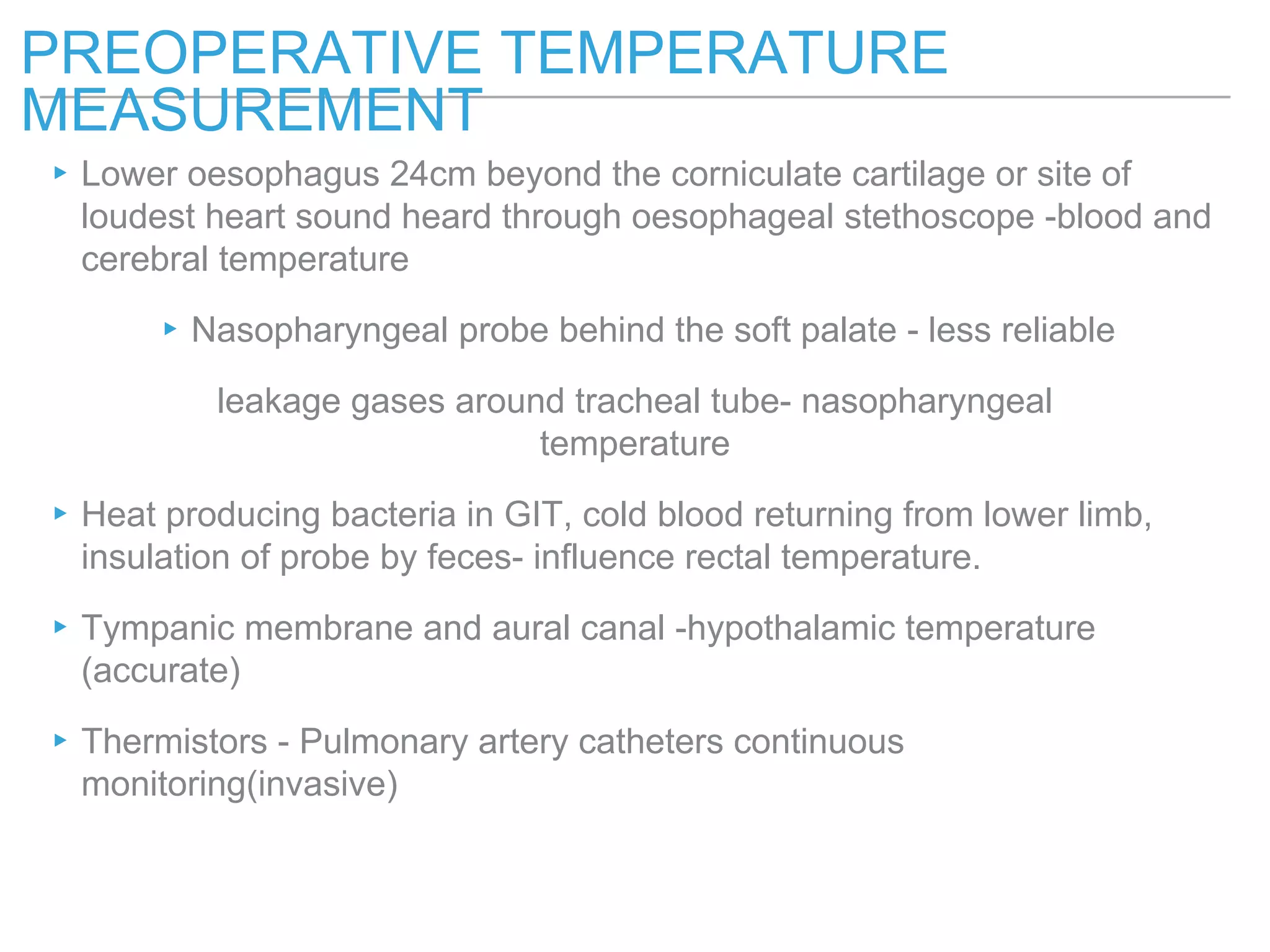
▸Lower oesophagus 24cm beyond the corniculate cartilage or site of
loudest heart sound heard through oesophageal stethoscope -blood and
cerebral temperature
▸Nasopharyngeal probe behind the soft palate - less reliable
leakage gases around tracheal tube- nasopharyngeal
temperature
▸Heat producing bacteria in GIT, cold blood returning from lower limb,
insulation of probe by feces- influence rectal temperature.
▸Tympanic membrane and aural canal -hypothalamic temperature
(accurate)
▸Thermistors - Pulmonary artery catheters continuous
monitoring(invasive)
PREOPERATIVE TEMPERATURE
MEASUREMENT
▸Airway heating and
humidification helps in
thermal management
▸IV fluids and blood at 4’ C
decreases the core body
temperature by 0.25’C. So
warmed fluids are useful .
▸skin-heat loss during surgery
and anaesthesia ,more than
25’C causes discomfort
during procedure
PREVENTION OF PREOPERATIVE
HYPOTHERMIA
TYPES OF
HEAT LOSS
CONDUCTION CONVECTION RADIATION EVAPORATION
PREVENTION
1. Surgical
Drapes
2. Blankets
3. Cushion
bed above
steel cot
1. Warmer 1. Infant
incubator
2. Blankets
3. Hot water
Bags or
Gloves
1. IV Fluids
2. Humidified
Gases
THANK YOU
HYPERTHERMIA
• A variety of Disorder can cause raise in body temperature.
• Disorders resulting from thermoregulatory failure
Excessive metabolic production of heat
Excessive environment heat
Impaired heat dissipation
• In hyperthermia states - Hypothalamic set point is normal
but peripheral mechanism unable to maintain body
temperature.
HYPERTHERMIA
Arthi (1) copy
Arthi (1) copy

Arthi (1) copy

  • 1.
  • 2.
    THERMOREGULATION Temperature Maintained ▸BODY TEMPERATURE Heatproduction (THERMOGENESIS) Heat loss (THERMOLYSIS) ▸HEAT - product of metabolism lost in the environment ▸Normal CORE BODY TEMPERATURE IS 36-37.5’ C
  • 3.
    ▸Important mechanisms ofHeat loss Radiation Conduction Convection Evaporation Skin- Important route of heat Dissipation Lungs - 10% heat loss 60% typical circumstances(ventilation) HEAT LOSS
  • 4.
    CONDUCTION CONVECTION RADIATIONEVAPORATION DEFINITION Heat is transferred by direct contact cooler objects Heat loss facilitated by air movement (Facilitated conduction) Energy is transferred by electromagnetic waves (visible light, microwaves, infrared ) Energy is required to vaporise water- Heat loss EXAMPLES Eg: Patient on a cold mattress, Eg:fan on a hot summer Laminar flow OT Eg:Unclothed human - Radiant heat FACTORS AFFECTING • Area of conducting surface • Temperature difference • Heat capacity • Air velocity • Air temperature All objects radiates energy • Environmental Humidity • Exposed skin surface • diaphoresis • wound&bowel Exposure Conductive loss to still air is limited-acts as Insulator Piloerection - Air trapping Cycle occurs while temperature differences exist Can transfer energy through empty space Only process for eliminating Excess heat CONTRIBUTION OF HEAT LOSS Accounts for <5% Heat Loss 15 - 30% Heat Loss 20% Heat Loss COLD IV FLUIDS REDUCTION IN CORE TEMPERATURE
  • 5.
    REGULATION OF BODY TEMPERATUREPreopticnucleus of Anterior Hypothalamus Feed back mechanism Afferent input- Skin,Deep tissues & Spinal cord HYPOTHALAMUS Reflex to cold- Posterior Hypothalamus (Vasoconstiction,Shivering,Piloerection etc) Reflex to heat - Anterior Hypothalamus (Vasodilatio,sweating) Initiates Autonomic,somatic,Endocrine thermo responses Awake persons-Behavioural responses GA- Abolishes Thermoregulation (vasodilation,Muscle relaxation) Hypothermia -Reduces drug metabolism,Delaying Emergence from Anesthesia
  • 6.
    NON SHIVERING THERMOGENESIS/CHEMICAL THERMOGENESIS • Increasein rate of metabolism in Brown Adipose Tissue • Stimulated by Sympathetic system or Catecholamines. • Brown Adipose tissue - Interscapular space,around great vessels • Brown fat has lot of Mitochondria(rich in ATP) & Sympathetic innervation. • Can produce heat as much as 200% • Lipolysis & Heat generation is mediated - Beta adrenergic receptors • Adults rarely have brown fat.
  • 7.
    SHIVERING • Increases bodyheat production in response to decreased core body temperature • Skeletal Muscle activity is a major source of heat. • Shivering arises from posterior hypothalamus • However shivering is inefficient & induces significant metabolic demand. • Awake patients - shivering is unpleasant.
  • 8.
    ▸Major determinant ofheat loss ▸It is regulated by sympathetic nervous system ▸In adult blood flow is 400ml/min ,decreased to 50ml/min cold ,2800ml/min in heat ▸Subcutaneous venous plexuses hold large volume of blood- fingers, palms ,toes and earlobes -arteriovenous anastomosis - causes significant heat loss during circulation. CUTANEOUS BLOOD FLOW
  • 9.
    Acute haemorrhage sympatheticnervous system vasoconstriction transfer large blood from venous plexus to central circulation important blood reservoir Acute Haemorrhage less tolerated in warm environment !!!Hypothalamic Vaosdilator response overrides vasoconstrictor response to Hypovolemia!!! BUT Inhaled Anaesthetics cause vasodilation by inhibiting Hypothalamic centre
  • 10.
    Thermoregulatory system : AFFERENT(INPUT) CENTRAL (CONTROL) EFFERENT (RESPONSE) ▸ body temperature is determined by cold environment -poikilothermic PERIOPERATIVE TEMPERATURE CHANGES IN HYPOTHERMIA GA AFFECTS ALL 3 REGIONAL AFFECTS AFFERENET AND EFFERENT 1. Resetting Hypothalamic thermostat 2. Reduced temperature (outside) 3. Administration of cold iv fluids 4. Decreased basal metabolic rate 5. Drug induced vasodilation 6. Core compartment exposed to room temperature 7. Heat required to humidify dry gases
  • 11.
    ▸anaesthesia inhibit thermoregulation indose dependent manner ▸vasoconstriction and shivering inhibited > sweating . ▸non shivering thermogenesis does not occur in GA ▸ALFENTANIL and PROPOFOL lower the threshold for vasoconstriction and sweating ▸ISOFLURANE and DESFLURANE decrease the threshold temperature for cold responses in a nonlinear fashion
  • 12.
    ▸In awake individualsbody heat is unevenly distributed Core> Peripheries ▸Tonic phase (vasoconstriction) maintain corebody temperature from Peripheries - (major viscera , head , chest , abdomen and pelvis.) ▸Under GA: heat present in core compartment will move to the periphery . CORE BODY TEMPERATURE
  • 13.
    ▸Peripheral distribution causes1-5’C decrease in core temperature during first hour of GA. ▸linear phase: after 1hr of GA the core temperature decreases at slower rate because heat loss to environment exceeds the metabolic production. ▸Phase 3 plateau: after 3-5hrs core temperature stops decreasing(steady state) in which heat loss and production are equal. eg.warmed patient. ▸hypothermic patient activation of thermoregulatory vasoconstriction to maintain core temperature. ▸however mean body temperature and total heat content continue to decrease from periphery to environment. SEQUENTIAL TEMPERATURE CHANGES DURING ANAESTHESIA core to periphery environmental loss reduced heat generated activation of thermorespon e preserve core body temperature
  • 14.
    ▸It has minimaleffect - centre(Hypothalamus) ▸Afferent input (cold) from lower body is overridden by warmth due to cutaneous vasodilation- Initially Decrease in core temperature is similar to GA or even more ▸Reflex vasoconstriction is abolished below the level of block ,Therefore plateau phase (PHASE 3)does not occur. ▸Core temperature may decrease sufficiently to trigger shivering. ▸Reflex shivering to produce heat is only to upper body, it is restricted in the blocked areas. REGIONAL ANAESTHESIA
  • 15.
    ▸Hypothermia reduces themetabolic demand ▸O2 consumption 5% _ 7% for every Degree Celsius ▸1-3”C decrease protects against cerebral ischemia and arterial hypoxemia ▸Mild Hypothermia (33-36)- Beneficial : cardiac surgeries, aneurysmal clipping , cardiac arrest ,stroke, traumatic brain injury acute MI, birth injury ▸surface cooling causes hypothermia - shivering which delays core cooling BENEFICIAL EFFECTS OF PREOPERATIVE HYPOTHERMIA
  • 16.
    POST OPERATIVE SHIVERING Increasesmetabolic rate and cardiac work Impaired platelet function and coagulation(transfusion ). Delayed wound healing ▸1’C decrease in temperature -5% reduction in anaesthetic requirement (mac) and increase in volatile anaesthetic blood /gas solubility ▸ Delayed anaesthetic emergence- decreased drug metabolism eg: non- depolarizing neuromuscular blocking drugs. Core Hypothermia = 1.5C Triples Incidence of Ventricular Tachycardia ADVERSE CONSEQUENCES OF PERIOPERATIVE HYPOTHERMIA
  • 17.
    ▸Lower oesophagus 24cmbeyond the corniculate cartilage or site of loudest heart sound heard through oesophageal stethoscope -blood and cerebral temperature ▸Nasopharyngeal probe behind the soft palate - less reliable leakage gases around tracheal tube- nasopharyngeal temperature ▸Heat producing bacteria in GIT, cold blood returning from lower limb, insulation of probe by feces- influence rectal temperature. ▸Tympanic membrane and aural canal -hypothalamic temperature (accurate) ▸Thermistors - Pulmonary artery catheters continuous monitoring(invasive) PREOPERATIVE TEMPERATURE MEASUREMENT
  • 18.
    ▸Airway heating and humidificationhelps in thermal management ▸IV fluids and blood at 4’ C decreases the core body temperature by 0.25’C. So warmed fluids are useful . ▸skin-heat loss during surgery and anaesthesia ,more than 25’C causes discomfort during procedure PREVENTION OF PREOPERATIVE HYPOTHERMIA
  • 19.
    TYPES OF HEAT LOSS CONDUCTIONCONVECTION RADIATION EVAPORATION PREVENTION 1. Surgical Drapes 2. Blankets 3. Cushion bed above steel cot 1. Warmer 1. Infant incubator 2. Blankets 3. Hot water Bags or Gloves 1. IV Fluids 2. Humidified Gases
  • 20.
  • 21.
    HYPERTHERMIA • A varietyof Disorder can cause raise in body temperature. • Disorders resulting from thermoregulatory failure Excessive metabolic production of heat Excessive environment heat Impaired heat dissipation • In hyperthermia states - Hypothalamic set point is normal but peripheral mechanism unable to maintain body temperature. HYPERTHERMIA