
Temperature Management in
Surgical Patient
Dr. Asifa Iqbal
BDS,M.Phil
PGR FCPS II(OMFS)
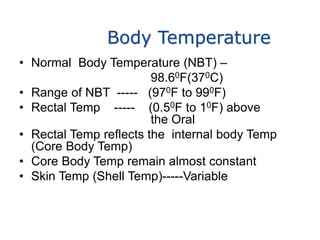
Body Temperature
• Normal Body Temperature (NBT) –
98.60F(370C)
• Range of NBT ----- (970F to 990F)
• Rectal Temp ----- (0.50F to 10F) above
the Oral
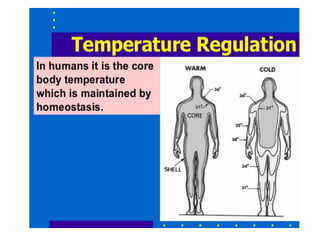
• Rectal Temp reflects the internal body Temp
(Core Body Temp)
• Core Body Temp remain almost constant
• Skin Temp (Shell Temp)-----Variable
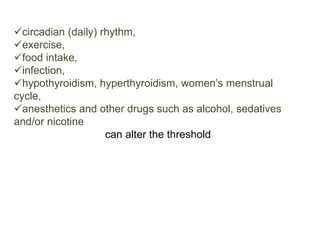
circadian (daily) rhythm,
exercise,
food intake,
infection,
hypothyroidism, hyperthyroidism, women’s menstrual
cycle,
anesthetics and other drugs such as alcohol, sedatives
and/or nicotine
can alter the threshold
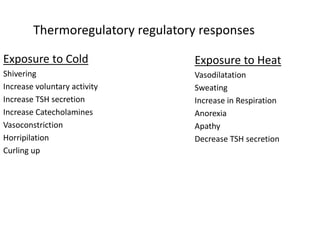
Thermoregulatory regulatory responses
Exposure to Cold
Shivering
Increase voluntary activity
Increase TSH secretion
Increase Catecholamines
Vasoconstriction
Horripilation
Curling up
Exposure to Heat
Vasodilatation
Sweating
Increase in Respiration
Anorexia
Apathy
Decrease TSH secretion
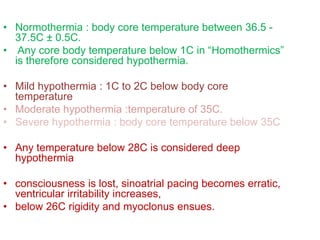
• Normothermia : body core temperature between 36.5 -
37.5C ± 0.5C.
• Any core body temperature below 1C in “Homothermics”
is therefore considered hypothermia.
• Mild hypothermia : 1C to 2C below body core
temperature
• Moderate hypothermia :temperature of 35C.
• Severe hypothermia : body core temperature below 35C
• Any temperature below 28C is considered deep
hypothermia
• consciousness is lost, sinoatrial pacing becomes erratic,
ventricular irritability increases,
• below 26C rigidity and myoclonus ensues.
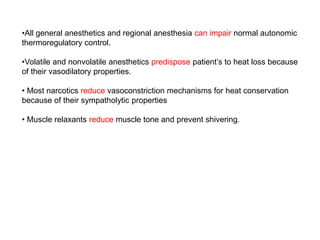
•All general anesthetics and regional anesthesia can impair normal autonomic
thermoregulatory control.
•Volatile and nonvolatile anesthetics predispose patient’s to heat loss because
of their vasodilatory properties.
• Most narcotics reduce vasoconstriction mechanisms for heat conservation
because of their sympatholytic properties
• Muscle relaxants reduce muscle tone and prevent shivering.
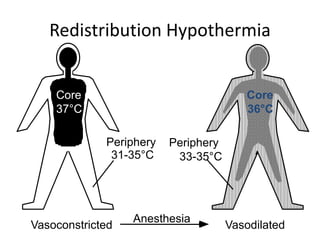
Redistribution Hypothermia
Core
37°C
Vasoconstricted
Periphery
31-35°C
Anesthesia
Periphery
33-35°C
Core
36°C
Vasodilated
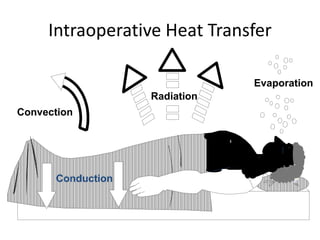
Intraoperative Heat Transfer
Evaporation
Conduction
Convection
Radiation
Cardiovascular - Increased pulse and blood pressure (postoperatively), systemic vascular
resistance (SVR), contractility, ventricular dysrhythmias and irritability, myocardial depression
and secretion of catecholamines. Cardiac output and heart rate are decreased (intraoperative)
Respiratory - Strength is diminished at body core temperature of less than 33C, but CO2
ventilatory response is unaffected.
Hepatic - Blood flow and function are diminished which will decrease significantly the
metabolism of some drugs.
Renal - Decrease in renal blood flow due to increase in renal vascular resistance. Inhibition of
tubular resorption maintains normal urinary volume until progressively lower temperatures
inhibit reabsorption of sodium and potassium and an antiduiretic hormone (ADH) mediated
diuresis results. Plasma electrolyte usually remain normal.
Neurologic - Decreased cerebral blood flow, increased cerebrovascular resistance, decreased
minimum alveolar concentration, delayed emergence from anesthesia due to direct depressant
effects of hypothermia, altered mental sensorium to include drowsiness and confusion.
Metabolic - Decreased metabolic rate, decreased tissue perfusion leading to metabolic
acidosis, and hyperglycemia from catecholamines may occur. Increased oxygen consumption may
occur due to shivering postoperatively.
Hematologic - Increased blood viscosity, thrombocytopenia, leftward shift of the
hemoglobin dissociation curve causing increase difficulty of oxygen unloading from
hemoglobin leading to hypoxia, alterations in coagulation via impaired platelet function,
decreased coagulation factor activity leading to a greater intraoperative bleeding and blood
loss.
Immunologic - Impaired immune system function increasing rate of postoperative wound
infection.
Drug Pharmacology - Decreased hepatic blood flow, and metabolism coupled with
decreased renal blood flow and clearance result in decreased anesthetic requirement,
delayed awakening due to reduced rates of drug clearance.
Shivering and Wound Healing - Increased shivering which can increase heat production by
100% - 300% with concomitant oxygen consumption up to 500% and increased production of
CO2. Vasoconstriction and the reduced delivery of oxygen to injured tissues also leads to a
delay in wound healing and a significant rate of postoperative infection rate.
Special Medical Conditions - Hypothermia can precipitate
a sickle cell crisis in sickle cell anemia patient since sickling
of erythrocytes occur with decreasing arterial oxygen tension.
The three most common complications
associated with mild hypothermia are
oa three-fold increase in morbid myocardial events,
oa three-fold increase in the risk of surgical wounds
infection and prolonged hospitalization,
o increased blood loss and transfusion
requirements
•The best management for hypothermia, like most
complications in anesthesia, is prevention.
•Intraoperative hypothermia can be minimized by any technique which
limits cutaneous heat loss to the environment, evaporation from
surgical sites and respiratory tract, conductive cooling from excessive
gas flow rates, cold intravenous fluids or irrigating solutions.
•The initial 1-1.5 C reduction in core temperature change is not
possible to prevent. It will happen Mean body temperature will
decrease when heat loss to the environment is greater than metabolic
heat production.
•The body will loss about 1C per hour when the heat lost to the
environment is greater than twice the metabolic production.
• Pre-warming
• Operating room environment
• Anesthesia Circuits, Airway Heating and
Humidification
• Warming IV Fluids and Blood Products
• Postoperative Considerations
•During the postoperative recovery period, the bodies thermal heat
transfer situation is significantly different.
•As the anesthetic-induced peripheral vasodilation dissipates away, the
thermoregulatory vasoconstriction ensues. Now, heat transfer from the
periphery to the central core compartment is significantly impaired due to this
vasoconstriction. Because the postoperative thermoregulatory vasoconstriction
decreases peripheral-to-core heat transfer, applied warming to the skin is most
effective during surgery when patients are vasodilated.
•Postoperative shivering should be treated with warming of the patient most
effectively via forced-air systems and warm blankets to not only psychologically
help make the patient feel better but institute physiologic measures to re-warm
the patient. Intravenous administration of 12.5 - 25mg of meperidine IV or
ketanserin IV can be use to treat the postoperative shivering caused by
hypothermia. The mechanism by which this works is by lowering the
thremoregulatory threshhold for shivering thermogenesis.
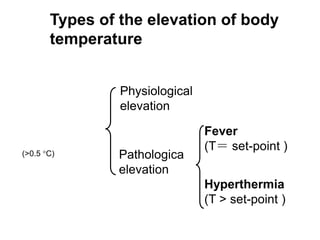
Hyperthermia
(T > set-point )
Physiological
elevation
Pathologica
elevation
Fever
(T= set-point )
elevation of body
temperature
(>0.5 C)
Types of the elevation of body
temperature
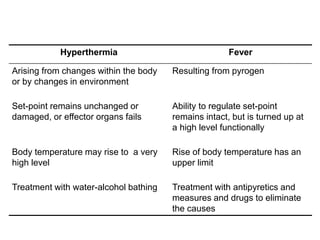
Hyperthermia Fever
Arising from changes within the body
or by changes in environment
Resulting from pyrogen
Set-point remains unchanged or
damaged, or effector organs fails
Ability to regulate set-point
remains intact, but is turned up at
a high level functionally
Body temperature may rise to a very
high level
Rise of body temperature has an
upper limit
Treatment with water-alcohol bathing Treatment with antipyretics and
measures and drugs to eliminate
the causes
Comparison between hyperthermia and fever
Malignant hyperthermia
•- A rare complication of anaesthesia
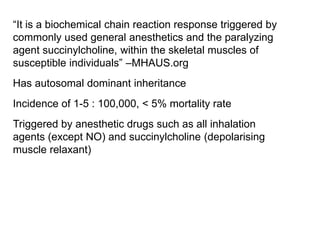
“It is a biochemical chain reaction response triggered by
commonly used general anesthetics and the paralyzing
agent succinylcholine, within the skeletal muscles of
susceptible individuals” –MHAUS.org
Has autosomal dominant inheritance
Incidence of 1-5 : 100,000, < 5% mortality rate
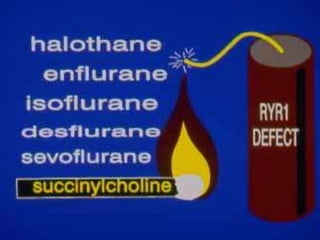
Triggered by anesthetic drugs such as all inhalation
agents (except NO) and succinylcholine (depolarising
muscle relaxant)
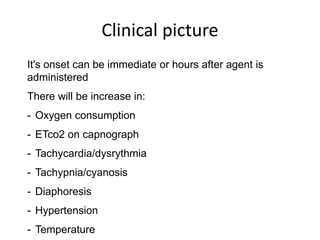
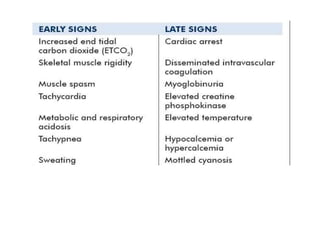
Clinical picture
It's onset can be immediate or hours after agent is
administered
There will be increase in:
- Oxygen consumption
- ETco2 on capnograph
- Tachycardia/dysrythmia
- Tachypnia/cyanosis
- Diaphoresis
- Hypertension
- Temperature
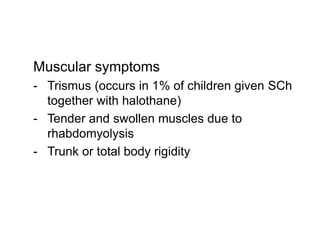
Muscular symptoms
- Trismus (occurs in 1% of children given SCh
together with halothane)
- Tender and swollen muscles due to
rhabdomyolysis
- Trunk or total body rigidity
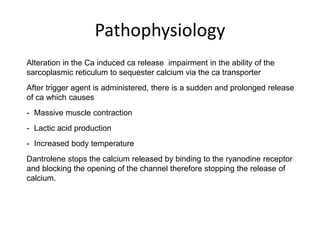
Pathophysiology
Alteration in the Ca induced ca release impairment in the ability of the
sarcoplasmic reticulum to sequester calcium via the ca transporter
After trigger agent is administered, there is a sudden and prolonged release
of ca which causes
- Massive muscle contraction
- Lactic acid production
- Increased body temperature
Dantrolene stops the calcium released by binding to the ryanodine receptor
and blocking the opening of the channel therefore stopping the release of
calcium.
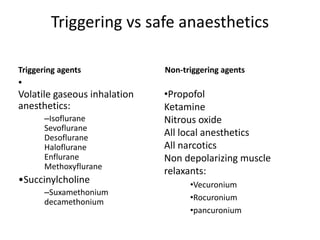
Triggering vs safe anaesthetics
Triggering agents
•
Volatile gaseous inhalation
anesthetics:
–Isoflurane
Sevoflurane
Desoflurane
Haloflurane
Enflurane
Methoxyflurane
•Succinylcholine
–Suxamethonium
decamethonium
Non-triggering agents
•Propofol
Ketamine
Nitrous oxide
All local anesthetics
All narcotics
Non depolarizing muscle
relaxants:
•Vecuronium
•Rocuronium
•pancuronium
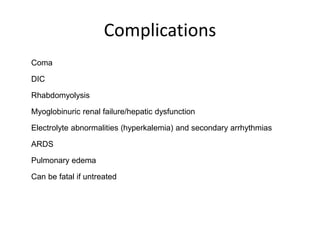
Complications
Coma
DIC
Rhabdomyolysis
Myoglobinuric renal failure/hepatic dysfunction
Electrolyte abnormalities (hyperkalemia) and secondary arrhythmias
ARDS
Pulmonary edema
Can be fatal if untreated
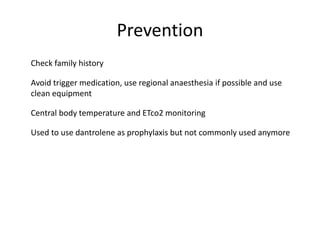
Prevention
Check family history
Avoid trigger medication, use regional anaesthesia if possible and use
clean equipment
Central body temperature and ETco2 monitoring
Used to use dantrolene as prophylaxis but not commonly used anymore
Management
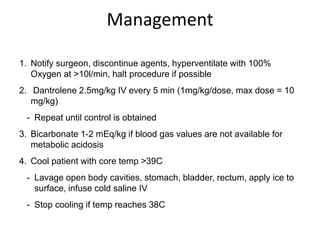
1. Notify surgeon, discontinue agents, hyperventilate with 100%
Oxygen at >10l/min, halt procedure if possible
2. Dantrolene 2.5mg/kg IV every 5 min (1mg/kg/dose, max dose = 10
mg/kg)
- Repeat until control is obtained
3. Bicarbonate 1-2 mEq/kg if blood gas values are not available for
metabolic acidosis
4. Cool patient with core temp >39C
- Lavage open body cavities, stomach, bladder, rectum, apply ice to
surface, infuse cold saline IV
- Stop cooling if temp reaches 38C
Remember
"Some Hot Dude Better Give Iced Fluids Fast!"
(Hot dude = hypothermia):
Stop triggering agents
Hyperventilate/ Hundred percent oxygen
Dantrolene (2.5mg/kg)
Bicarbonate
Glucose and insulin
IV Fluids and cooling blanket
Fluid output monitoring/ Furosemide/ Fast
heart [tachycardia]
Take Home Message
In emergency patient
In preoperative patient
In Immediate post operative period
Temperature matters

Temperature matters

  • 1.
    Temperature Management in SurgicalPatient Dr. Asifa Iqbal BDS,M.Phil PGR FCPS II(OMFS)
  • 3.
    Body Temperature • NormalBody Temperature (NBT) – 98.60F(370C) • Range of NBT ----- (970F to 990F) • Rectal Temp ----- (0.50F to 10F) above the Oral • Rectal Temp reflects the internal body Temp (Core Body Temp) • Core Body Temp remain almost constant • Skin Temp (Shell Temp)-----Variable
  • 5.
    circadian (daily) rhythm, exercise, foodintake, infection, hypothyroidism, hyperthyroidism, women’s menstrual cycle, anesthetics and other drugs such as alcohol, sedatives and/or nicotine can alter the threshold
  • 6.
    Thermoregulatory regulatory responses Exposureto Cold Shivering Increase voluntary activity Increase TSH secretion Increase Catecholamines Vasoconstriction Horripilation Curling up Exposure to Heat Vasodilatation Sweating Increase in Respiration Anorexia Apathy Decrease TSH secretion
  • 8.
    • Normothermia :body core temperature between 36.5 - 37.5C ± 0.5C. • Any core body temperature below 1C in “Homothermics” is therefore considered hypothermia. • Mild hypothermia : 1C to 2C below body core temperature • Moderate hypothermia :temperature of 35C. • Severe hypothermia : body core temperature below 35C • Any temperature below 28C is considered deep hypothermia • consciousness is lost, sinoatrial pacing becomes erratic, ventricular irritability increases, • below 26C rigidity and myoclonus ensues.
  • 9.
    •All general anestheticsand regional anesthesia can impair normal autonomic thermoregulatory control. •Volatile and nonvolatile anesthetics predispose patient’s to heat loss because of their vasodilatory properties. • Most narcotics reduce vasoconstriction mechanisms for heat conservation because of their sympatholytic properties • Muscle relaxants reduce muscle tone and prevent shivering.
  • 10.
  • 11.
  • 12.
    Cardiovascular - Increasedpulse and blood pressure (postoperatively), systemic vascular resistance (SVR), contractility, ventricular dysrhythmias and irritability, myocardial depression and secretion of catecholamines. Cardiac output and heart rate are decreased (intraoperative) Respiratory - Strength is diminished at body core temperature of less than 33C, but CO2 ventilatory response is unaffected. Hepatic - Blood flow and function are diminished which will decrease significantly the metabolism of some drugs. Renal - Decrease in renal blood flow due to increase in renal vascular resistance. Inhibition of tubular resorption maintains normal urinary volume until progressively lower temperatures inhibit reabsorption of sodium and potassium and an antiduiretic hormone (ADH) mediated diuresis results. Plasma electrolyte usually remain normal. Neurologic - Decreased cerebral blood flow, increased cerebrovascular resistance, decreased minimum alveolar concentration, delayed emergence from anesthesia due to direct depressant effects of hypothermia, altered mental sensorium to include drowsiness and confusion. Metabolic - Decreased metabolic rate, decreased tissue perfusion leading to metabolic acidosis, and hyperglycemia from catecholamines may occur. Increased oxygen consumption may occur due to shivering postoperatively.
  • 13.
    Hematologic - Increasedblood viscosity, thrombocytopenia, leftward shift of the hemoglobin dissociation curve causing increase difficulty of oxygen unloading from hemoglobin leading to hypoxia, alterations in coagulation via impaired platelet function, decreased coagulation factor activity leading to a greater intraoperative bleeding and blood loss. Immunologic - Impaired immune system function increasing rate of postoperative wound infection. Drug Pharmacology - Decreased hepatic blood flow, and metabolism coupled with decreased renal blood flow and clearance result in decreased anesthetic requirement, delayed awakening due to reduced rates of drug clearance. Shivering and Wound Healing - Increased shivering which can increase heat production by 100% - 300% with concomitant oxygen consumption up to 500% and increased production of CO2. Vasoconstriction and the reduced delivery of oxygen to injured tissues also leads to a delay in wound healing and a significant rate of postoperative infection rate.
  • 14.
    Special Medical Conditions- Hypothermia can precipitate a sickle cell crisis in sickle cell anemia patient since sickling of erythrocytes occur with decreasing arterial oxygen tension.
  • 15.
    The three mostcommon complications associated with mild hypothermia are oa three-fold increase in morbid myocardial events, oa three-fold increase in the risk of surgical wounds infection and prolonged hospitalization, o increased blood loss and transfusion requirements
  • 16.
    •The best managementfor hypothermia, like most complications in anesthesia, is prevention. •Intraoperative hypothermia can be minimized by any technique which limits cutaneous heat loss to the environment, evaporation from surgical sites and respiratory tract, conductive cooling from excessive gas flow rates, cold intravenous fluids or irrigating solutions. •The initial 1-1.5 C reduction in core temperature change is not possible to prevent. It will happen Mean body temperature will decrease when heat loss to the environment is greater than metabolic heat production. •The body will loss about 1C per hour when the heat lost to the environment is greater than twice the metabolic production.
  • 17.
    • Pre-warming • Operatingroom environment • Anesthesia Circuits, Airway Heating and Humidification • Warming IV Fluids and Blood Products • Postoperative Considerations
  • 18.
    •During the postoperativerecovery period, the bodies thermal heat transfer situation is significantly different. •As the anesthetic-induced peripheral vasodilation dissipates away, the thermoregulatory vasoconstriction ensues. Now, heat transfer from the periphery to the central core compartment is significantly impaired due to this vasoconstriction. Because the postoperative thermoregulatory vasoconstriction decreases peripheral-to-core heat transfer, applied warming to the skin is most effective during surgery when patients are vasodilated. •Postoperative shivering should be treated with warming of the patient most effectively via forced-air systems and warm blankets to not only psychologically help make the patient feel better but institute physiologic measures to re-warm the patient. Intravenous administration of 12.5 - 25mg of meperidine IV or ketanserin IV can be use to treat the postoperative shivering caused by hypothermia. The mechanism by which this works is by lowering the thremoregulatory threshhold for shivering thermogenesis.
  • 20.
    Hyperthermia (T > set-point) Physiological elevation Pathologica elevation Fever (T= set-point ) elevation of body temperature (>0.5 C) Types of the elevation of body temperature
  • 21.
    Hyperthermia Fever Arising fromchanges within the body or by changes in environment Resulting from pyrogen Set-point remains unchanged or damaged, or effector organs fails Ability to regulate set-point remains intact, but is turned up at a high level functionally Body temperature may rise to a very high level Rise of body temperature has an upper limit Treatment with water-alcohol bathing Treatment with antipyretics and measures and drugs to eliminate the causes Comparison between hyperthermia and fever
  • 22.
    Malignant hyperthermia •- Arare complication of anaesthesia
  • 23.
    “It is abiochemical chain reaction response triggered by commonly used general anesthetics and the paralyzing agent succinylcholine, within the skeletal muscles of susceptible individuals” –MHAUS.org Has autosomal dominant inheritance Incidence of 1-5 : 100,000, < 5% mortality rate Triggered by anesthetic drugs such as all inhalation agents (except NO) and succinylcholine (depolarising muscle relaxant)
  • 24.
    Clinical picture It's onsetcan be immediate or hours after agent is administered There will be increase in: - Oxygen consumption - ETco2 on capnograph - Tachycardia/dysrythmia - Tachypnia/cyanosis - Diaphoresis - Hypertension - Temperature
  • 25.
    Muscular symptoms - Trismus(occurs in 1% of children given SCh together with halothane) - Tender and swollen muscles due to rhabdomyolysis - Trunk or total body rigidity
  • 27.
    Pathophysiology Alteration in theCa induced ca release impairment in the ability of the sarcoplasmic reticulum to sequester calcium via the ca transporter After trigger agent is administered, there is a sudden and prolonged release of ca which causes - Massive muscle contraction - Lactic acid production - Increased body temperature Dantrolene stops the calcium released by binding to the ryanodine receptor and blocking the opening of the channel therefore stopping the release of calcium.
  • 29.
    Triggering vs safeanaesthetics Triggering agents • Volatile gaseous inhalation anesthetics: –Isoflurane Sevoflurane Desoflurane Haloflurane Enflurane Methoxyflurane •Succinylcholine –Suxamethonium decamethonium Non-triggering agents •Propofol Ketamine Nitrous oxide All local anesthetics All narcotics Non depolarizing muscle relaxants: •Vecuronium •Rocuronium •pancuronium
  • 30.
    Complications Coma DIC Rhabdomyolysis Myoglobinuric renal failure/hepaticdysfunction Electrolyte abnormalities (hyperkalemia) and secondary arrhythmias ARDS Pulmonary edema Can be fatal if untreated
  • 31.
    Prevention Check family history Avoidtrigger medication, use regional anaesthesia if possible and use clean equipment Central body temperature and ETco2 monitoring Used to use dantrolene as prophylaxis but not commonly used anymore
  • 32.
    Management 1. Notify surgeon,discontinue agents, hyperventilate with 100% Oxygen at >10l/min, halt procedure if possible 2. Dantrolene 2.5mg/kg IV every 5 min (1mg/kg/dose, max dose = 10 mg/kg) - Repeat until control is obtained 3. Bicarbonate 1-2 mEq/kg if blood gas values are not available for metabolic acidosis 4. Cool patient with core temp >39C - Lavage open body cavities, stomach, bladder, rectum, apply ice to surface, infuse cold saline IV - Stop cooling if temp reaches 38C
  • 33.
    Remember "Some Hot DudeBetter Give Iced Fluids Fast!" (Hot dude = hypothermia): Stop triggering agents Hyperventilate/ Hundred percent oxygen Dantrolene (2.5mg/kg) Bicarbonate Glucose and insulin IV Fluids and cooling blanket Fluid output monitoring/ Furosemide/ Fast heart [tachycardia]
  • 34.
    Take Home Message Inemergency patient In preoperative patient In Immediate post operative period