PAIN – SOME FACTS
Dr. S. Parthasarathy
MD., DA., DNB, MD (Acu), Dip. Diab. DCA, Dip. Software
statistics
DEFINITION
 An unpleasant sensory and emotional
experience associated with actual or
potential tissue damage, or described in
terms of such damage.
 ISSP definition
SOME SAY AS
 An unpleasant sensation, occurring in
varying degrees of severity as a
consequence of injury, disease, or emotional
disorder.
 pain always has a subjective component
MARGO MCCAFFREY
 Whatever the patient says hurts.
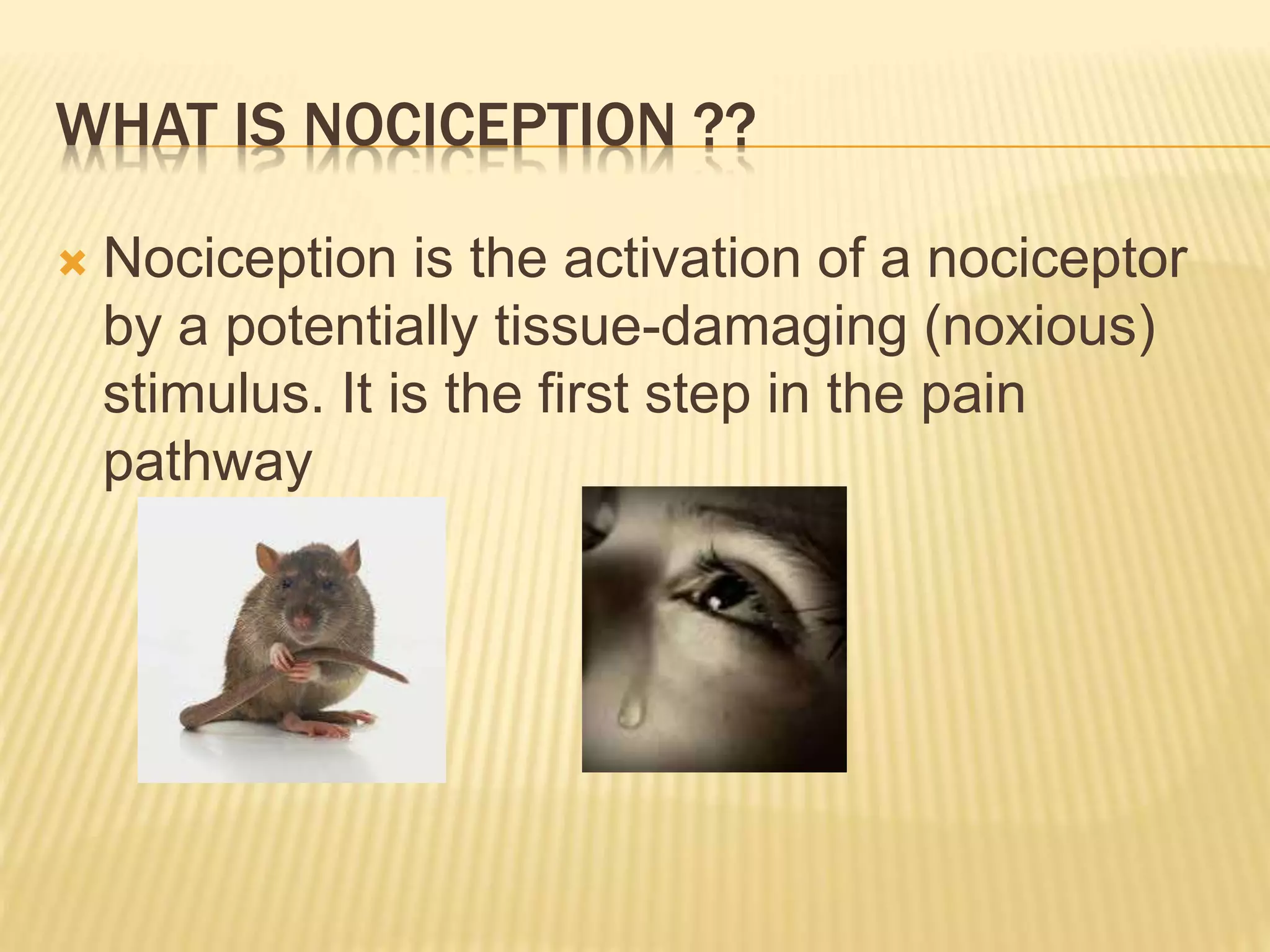
WHAT IS NOCICEPTION ??
 Nociception is the activation of a nociceptor
by a potentially tissue-damaging (noxious)
stimulus. It is the first step in the pain
pathway
WHAT IS A NOCICEPTOR ??
 nociceptor is a specialized, neurologic
receptor that is capable of differentiating
between innocuous and noxious stimuli
 Terminals of A delta and C fibres
ANALGESIA
 Patient has no pain
 But the noxious stimulus is there
 Anaesthesia – all sensory modalities gone
 While analgesia – only pain
PARAESTHESIA
 Abnormal sensation
 Spontaneous or evoked
 Painful or painless
 Painful paraesthesia is dysaesthesia
 Formication is a form of paresthesia in which
the patient feels as though bugs are crawling
ANAESTHESIA DOLOROSA
 pain is felt in an area that is otherwise numb
or
desensitized
Trigeminal neuralgia
Trigeminal nerve is ablated
no sensation
but suddenly shooting pain comes
HYPERPATHIA
 hyperpathia refers to an abnormally intense
pain response to repetitive stimuli.
 Usually hyperpathic area of skin is not
sensitive to a simple stimulus but over
responds to multiple stimuli
 Pin prick
ALGOGENS
 Histamines, substance P, potassium, and
prostaglandins, bradykinin, 5 HT are
examples of algogenic substances
 Produced or injected – nociception
HYPERALGESIA-
SHIFT OF THE STIMULUS PAIN RESPONSE
CURVE TO THE LEFT
 Primary
 Pain to a non noxious
stimulus in the area of
injury
 Pharyngitis –
swallowing – painful
 Secondary
 Pain to a non noxious
stimulus in the area by the
side or encircling the
injury
stimulus
P
A
I
n
PRIMARY SECONDARY
 Starts within
minutes
 Area of injury
 Sensitive to heat
and mechanical
 Peripheral
sensitization
 Delayed onset
 Wider area
 Only thermal
 Central role
PRIMARY HYPERALGESIA – MECHANISMS
 Expansion of receptive field of nociceptor
 Sensitization of nociceptor
 Loss of central inhibition
 Increased CAMP levels
 Activation of protein kinase C
SECONDARY HYPERALGESIA
 Antidromic release of algogens
 Dorsal horn neurons – sensitive
 WDR neurons – plastic changes
 Sometimes irreversible
 Post op pain - !!!
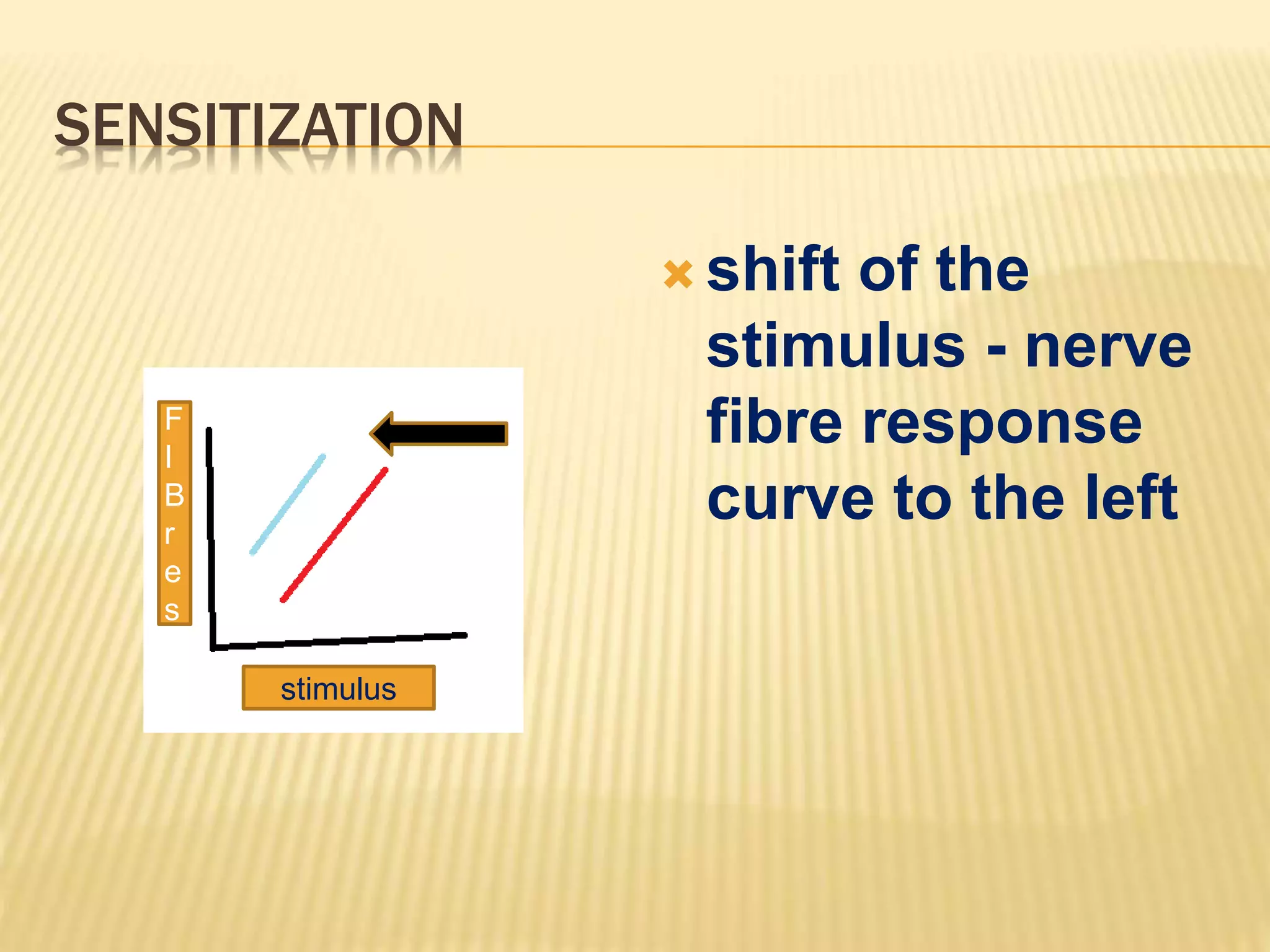
SENSITIZATION
 shift of the
stimulus - nerve
fibre response
curve to the left
stimulus
F
I
B
r
e
s
SENSITIZATION
Sensitization is a state in which a peripheral
receptor or a central neuron either responds
to
stimuli in a more intense fashion than it
would under baseline conditions or
responds to a stimulus to which it is
normally insensitive.
Sensitization occurs both at the level of the
nociceptor in the periphery and at the level of
the second-order neuron in the spinal cord
CLASSIFY PAIN
TYPES OF PAIN
 Nociceptive
 Somatic
 Visceral
 Nonnociceptive
 Peripheral
 Central
 Psychogenic
NOCICEPTIVE – SOMATIC
 Dull or sharp
 Localized
 Increased with movement
 Eg. Tooth ache
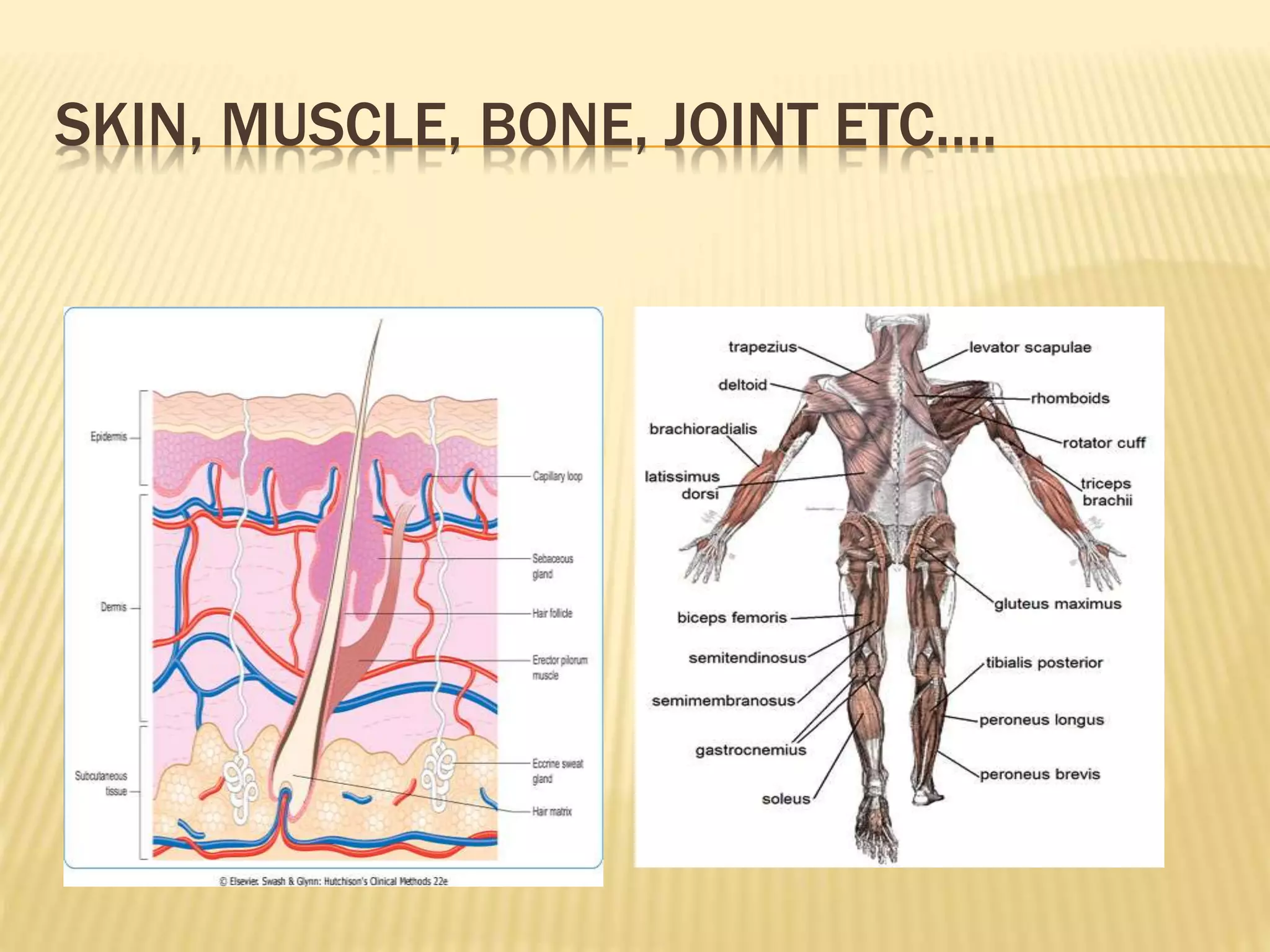
SKIN, MUSCLE, BONE, JOINT ETC….
VISCERAL NOCICEPTION
autonomic sensations
including nausea,
vomiting, and
diaphoresis.
There are often
cutaneous referral
sites
NEUROPATHIC
 burning, electrical, and numbing
 Intervening normal
 Sudden
 Post herpetic, trigeminal,
glossopharyngeal
CENTRAL PAIN
 Central pain syndrome is a neurological
condition caused by damage or malfunction
in the Central Nervous System (CNS) which
causes a sensitization of the pain system.
Trauma, tumors, stroke, Multiple Sclerosis,
Parkinson's disease, or epilepsy .
 Pain can either be relegated to a specific
part of the body or affect the body as a
whole.
DEJERINE ROUSSY SYNDROME
 severe, persistent, paroxysmal, often
intolerable, pains on the hemiplegic side, not
yielding to any analgesic treatment
THEORIES HAVE BEEN PROPOSED-
NEUROPATHIC PAIN
 that state there are specific cellular and
molecular changes that affect membrane
excitability and induce new gene expression
after nerve injury, thereby allowing for enhanced
responses to future stimulation.
 the ectopic impulses of neuroma, changes of
sodium and calcium channels in injured nerves,
sympathetic activation, and deficient central
inhibitory pathway contribute to the mechanisms
of neuropathic pain
PSYCHOGENIC PAIN
 Psychogenic pain, also called psychalgia, is
pain that is caused by increased, or
prolonged by mental, emotional, or
behavioural factors
 Headache, back pain, or stomach pain are
some of the most common types of
psychogenic pain.
 It accompanies or induced by social
rejection, broken heart, grief, love sickness,
or other such emotional events.
PSYCHOGENIC PAIN
 No nociception
 No neuropathic mechanism
 But some evidence of psychologic symptoms
to meet criteria for somatoform pain disorder,
depression,
 Usually chronic
WHY DO WE NEED TO CLASSIFY PAIN ??
 Origin of pain
 Treatment modalities
 Prognosis
TEMPORAL CLASSIFICATION
 Acute
 Acute pain is temporally related to injury and
resolves during the appropriate healing
period
 Chronic
 pain that persists for more than 3 months or
that outlasts theusual healing process.
 Recurrent
 Duodenal ulcer
OTHER CLASSIFICATIONS
 Etiology
 Arthritic
 Cancer
 Site
 Appendix
 Mastitits
HISTORY AND THEORY
 Aristotle believed that pain was due to evil
spirits entering the body through injury,
 Hippocrates believed that it was due to an
imbalance in vital fluids.
 it was thought that pain originated outside the
body, perhaps as a punishment from God
 In 1644, René Descartes theorized that pain
was a disturbance that passed down along
nerve fibers until the disturbance reached the
brain
THEORIES OF PAIN - SPECIFICITY THEORY
 body has a separate sensory system for
perceiving pain just as it does for hearing
and vision— Von Frey (1895)
 and this system contains its own special
receptors for detecting pain stimuli, its own
peripheral nerves and pathway to the brain,
and its own area of the brain for processing
pain signals
SPECIFICITY THEORY
 when someone pulls
the rope to ring the
bell, the bell rings in
the tower.
 Proved not correct
PATTERN THEORY- GOLDSCHNEIDER (1920)
 there is no separate system for perceiving
pain,
receptors for pain are shared with other
senses, such as of touch.
 people feel pain when certain patterns of
neural activity occur.
OTHER THEORIES
 Wilhelm Erb's (1874) "intensive" theory,
that a pain signal can be generated by
intense enough stimulation of any sensory
receptor, has been soundly disproved
 Central processing theory
 Inputs – same but the central processing
differs to produce pain
MELZACK WALL GATE CONTROL THEORY
 pain stimulation is carried by small, slow
fibers that enter the dorsal horn of the spinal
cordWall highlighted that pain messages are
carried by the specific nerve fibres
that can be blocked before reaching the brain
by the actions of other nerves and
psychological factors
THE GATE OPENS AND CLOSES
THE GATE CONTROL THEORY
 The gate control theory states that non
painful stimulus such as distraction competes
with the painful impulse to reach the brain.
 This rivlary limits the number of impulses that
can be transmitted in the brain by creating
the hypothetical gate
 Distraction – mechanical , endorphins,
psychological
 Only theory – multifaceted pain approach
THE IDEA IS
 if the large fibers remain un stimulated, the
pain signal will be propagated, but if they are
activated, they act as an electrical gate,
blocking the transmission of pain up the C
fiber.
 How is pain perceived ??
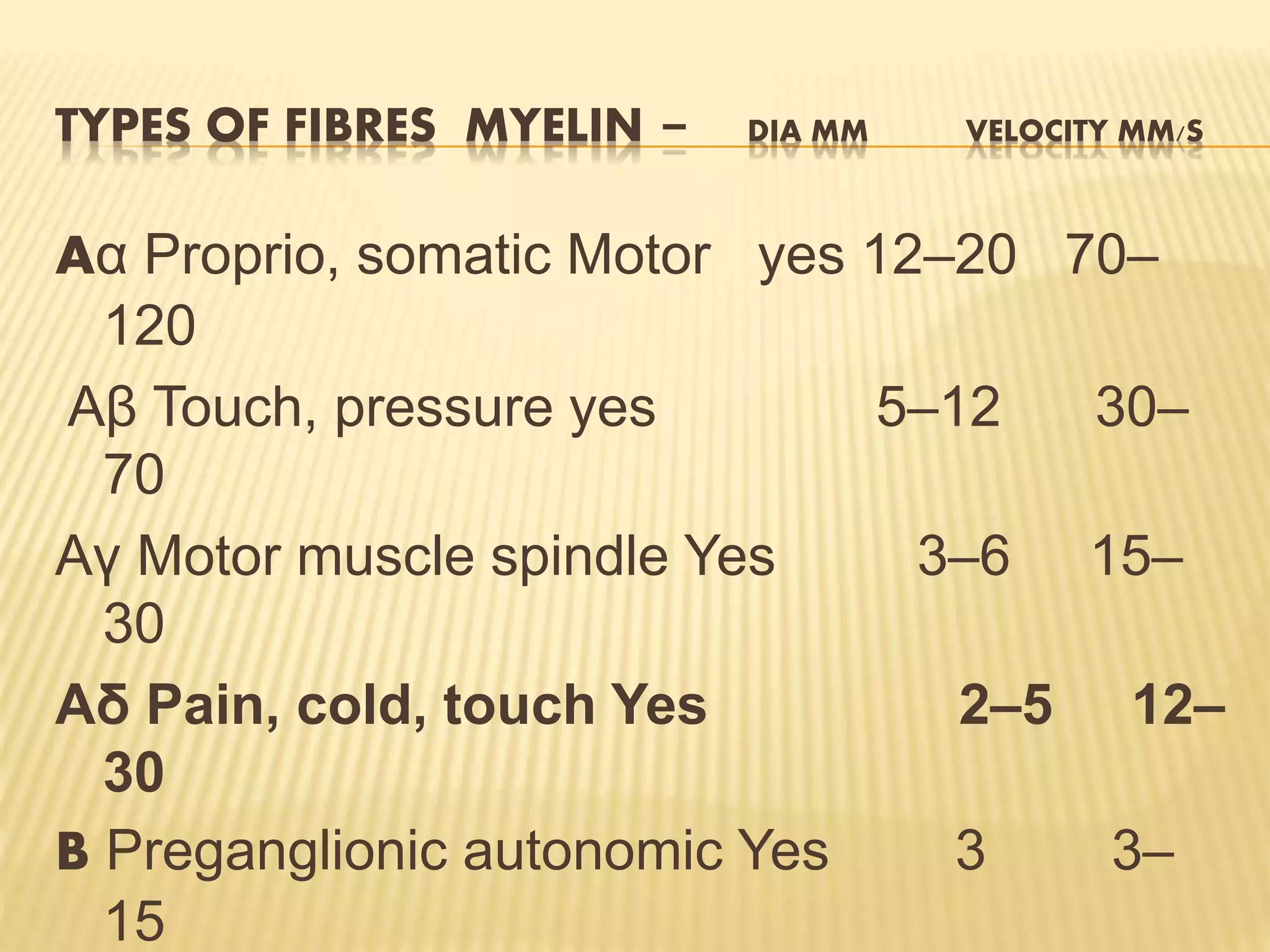
TYPES OF FIBRES MYELIN – DIA MM VELOCITY MM/S
Aα Proprio, somatic Motor yes 12–20 70–
120
Aβ Touch, pressure yes 5–12 30–
70
Aγ Motor muscle spindle Yes 3–6 15–
30
Aδ Pain, cold, touch Yes 2–5 12–
30
B Preganglionic autonomic Yes 3 3–
15
PAIN STARTS
 Pain receptors (nociceptors)
 The sensation of pain then travels from the
periphery to the spinal cord along A-delta
and C fibers
 Lissauer’s tract
 synapse on second order neurons in
substantia gelatinosa in dorsal horn (second
order neuron)
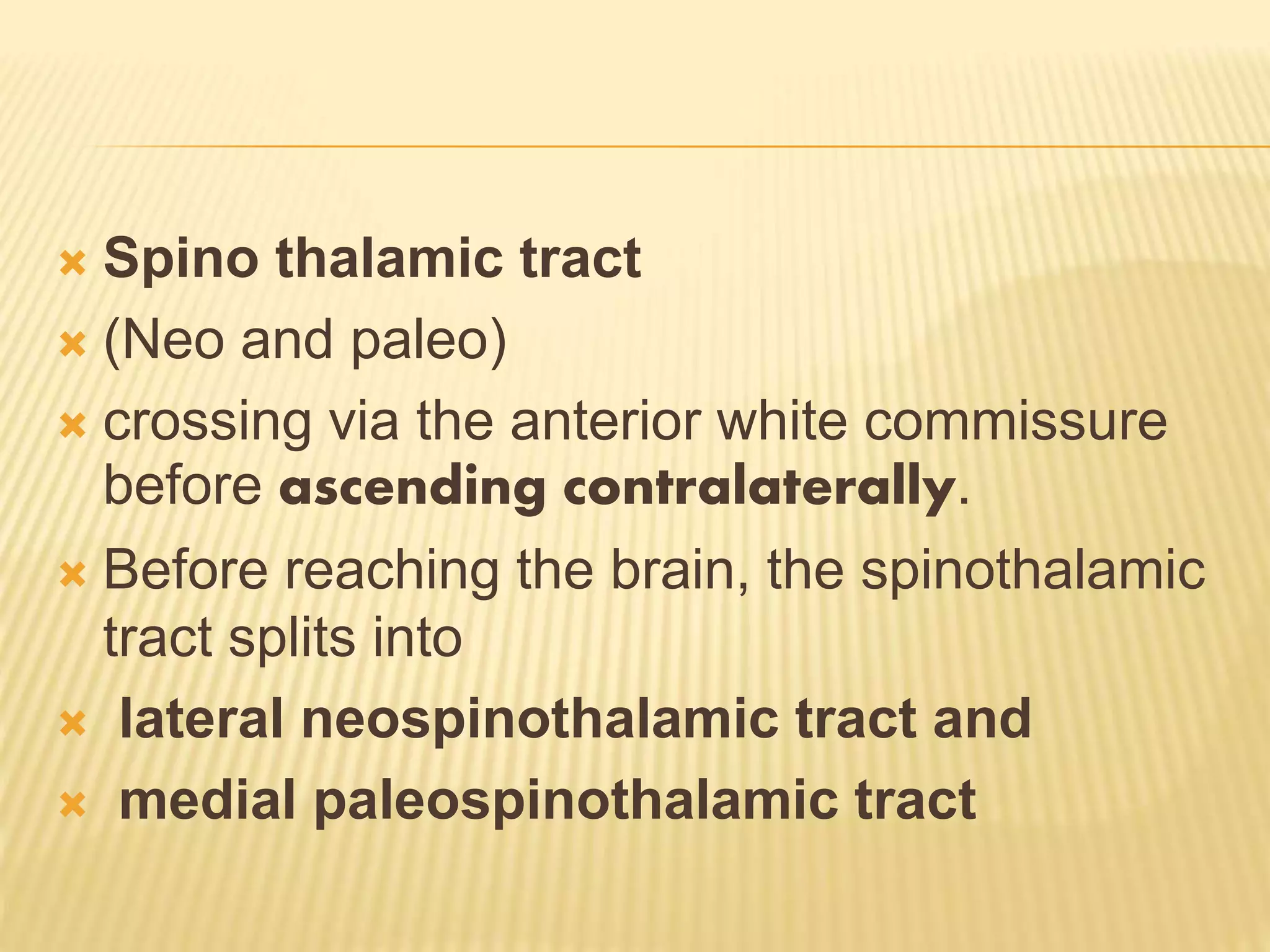
 Spino thalamic tract
 (Neo and paleo)
 crossing via the anterior white commissure
before ascending contralaterally.
 Before reaching the brain, the spinothalamic
tract splits into
 lateral neospinothalamic tract and
 medial paleospinothalamic tract
 Neo - posterolateral nucleus of the thalamus
 Paleo spinothalamic neurons carry
information from C fibers and terminate
throughout the brain stem, a tenth of them in
the thalamus and the rest in the medulla,
pons and periaqueductal grey matter
OTHER SECOND ORDER NEURONS
 Spino mesencephalic
 Midbrain – behavioural responses to pain
 Spino reticular
 Alerting and arousal motivational aspects
-pain
 Pontine and medullary reticular formation
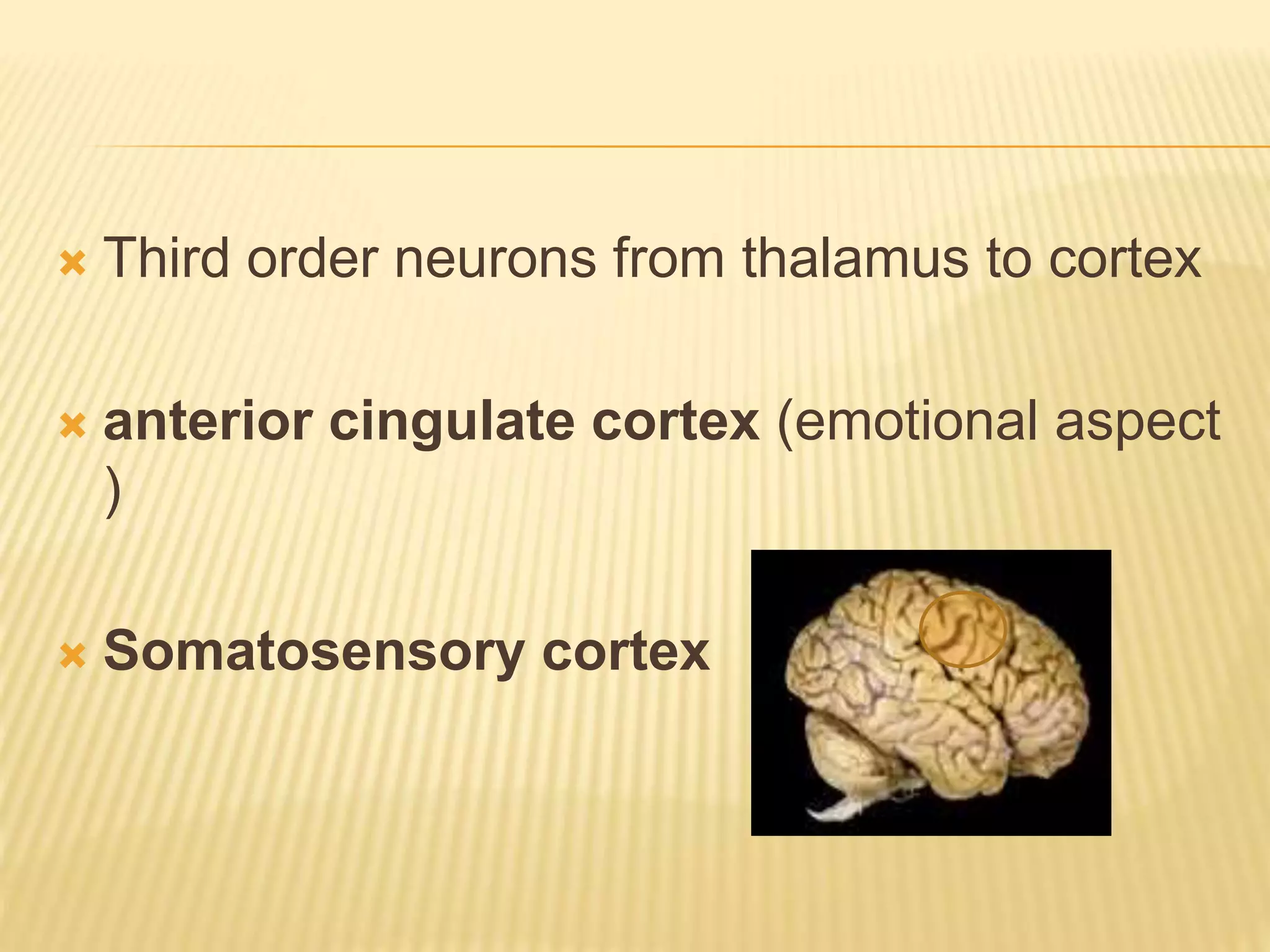
 Third order neurons from thalamus to cortex
 anterior cingulate cortex (emotional aspect
)
 Somatosensory cortex
SIMPLE NEUROANATOMY OF PAIN
DESCENDING INFLUENCE
 In 1858 Bernard found that spinal afferents
can be modified by supraspinally organized
systems.
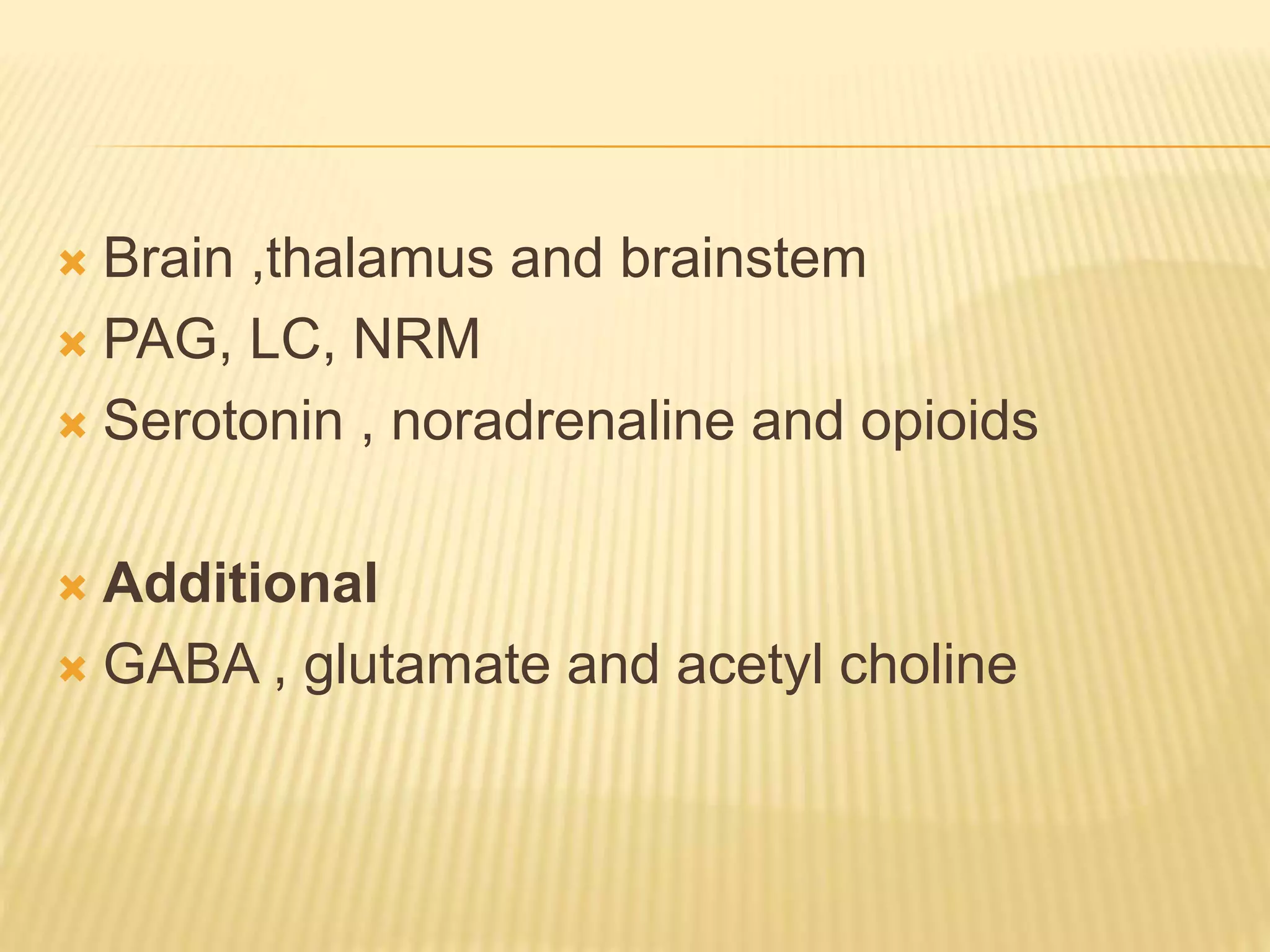
 Three and three
 Brain ,thalamus and brainstem
 PAG, LC, NRM
 Serotonin , noradrenaline and opioids
 Additional
 GABA , glutamate and acetyl choline
COX ET AL
 Medial forebrain
 Lateral hypothalamus
 Electrical stimulation attenuated foot pain
ESSENTIAL NUCLEI
 Periaqueductal grey
 PAG – extensive connections
 Opioids
NUCLEUS LOCUS CERULEUS
 Pons
 Projection to hippocampus ,spinal cord and
cortex
 Noradrenergic system
NUCLEUS RAPHE MAGNUS
 Medulla
 Serotonin – originally
 But now multiple , glutamate and opioids
PAIN FACTS – SUMMARY
 DEFINITION
 CLASSIFICATION
 THEORIES
 PATHWAYS
 DESCENDING CONTROL
OH !! PAINFUL LECTURE ENDS ??
Thank you all

Pain the basics

  • 1.
    PAIN – SOMEFACTS Dr. S. Parthasarathy MD., DA., DNB, MD (Acu), Dip. Diab. DCA, Dip. Software statistics
  • 2.
    DEFINITION  An unpleasantsensory and emotional experience associated with actual or potential tissue damage, or described in terms of such damage.  ISSP definition
  • 3.
    SOME SAY AS An unpleasant sensation, occurring in varying degrees of severity as a consequence of injury, disease, or emotional disorder.  pain always has a subjective component
  • 4.
    MARGO MCCAFFREY  Whateverthe patient says hurts.
  • 5.
    WHAT IS NOCICEPTION??  Nociception is the activation of a nociceptor by a potentially tissue-damaging (noxious) stimulus. It is the first step in the pain pathway
  • 6.
    WHAT IS ANOCICEPTOR ??  nociceptor is a specialized, neurologic receptor that is capable of differentiating between innocuous and noxious stimuli  Terminals of A delta and C fibres
  • 7.
    ANALGESIA  Patient hasno pain  But the noxious stimulus is there  Anaesthesia – all sensory modalities gone  While analgesia – only pain
  • 8.
    PARAESTHESIA  Abnormal sensation Spontaneous or evoked  Painful or painless  Painful paraesthesia is dysaesthesia  Formication is a form of paresthesia in which the patient feels as though bugs are crawling
  • 9.
    ANAESTHESIA DOLOROSA  painis felt in an area that is otherwise numb or desensitized Trigeminal neuralgia Trigeminal nerve is ablated no sensation but suddenly shooting pain comes
  • 10.
    HYPERPATHIA  hyperpathia refersto an abnormally intense pain response to repetitive stimuli.  Usually hyperpathic area of skin is not sensitive to a simple stimulus but over responds to multiple stimuli  Pin prick
  • 11.
    ALGOGENS  Histamines, substanceP, potassium, and prostaglandins, bradykinin, 5 HT are examples of algogenic substances  Produced or injected – nociception
  • 12.
    HYPERALGESIA- SHIFT OF THESTIMULUS PAIN RESPONSE CURVE TO THE LEFT  Primary  Pain to a non noxious stimulus in the area of injury  Pharyngitis – swallowing – painful  Secondary  Pain to a non noxious stimulus in the area by the side or encircling the injury stimulus P A I n
  • 13.
    PRIMARY SECONDARY  Startswithin minutes  Area of injury  Sensitive to heat and mechanical  Peripheral sensitization  Delayed onset  Wider area  Only thermal  Central role
  • 14.
    PRIMARY HYPERALGESIA –MECHANISMS  Expansion of receptive field of nociceptor  Sensitization of nociceptor  Loss of central inhibition  Increased CAMP levels  Activation of protein kinase C
  • 15.
    SECONDARY HYPERALGESIA  Antidromicrelease of algogens  Dorsal horn neurons – sensitive  WDR neurons – plastic changes  Sometimes irreversible  Post op pain - !!!
  • 16.
    SENSITIZATION  shift ofthe stimulus - nerve fibre response curve to the left stimulus F I B r e s
  • 17.
    SENSITIZATION Sensitization is astate in which a peripheral receptor or a central neuron either responds to stimuli in a more intense fashion than it would under baseline conditions or responds to a stimulus to which it is normally insensitive. Sensitization occurs both at the level of the nociceptor in the periphery and at the level of the second-order neuron in the spinal cord
  • 18.
  • 19.
    TYPES OF PAIN Nociceptive  Somatic  Visceral  Nonnociceptive  Peripheral  Central  Psychogenic
  • 20.
    NOCICEPTIVE – SOMATIC Dull or sharp  Localized  Increased with movement  Eg. Tooth ache
  • 21.
    SKIN, MUSCLE, BONE,JOINT ETC….
  • 22.
    VISCERAL NOCICEPTION autonomic sensations includingnausea, vomiting, and diaphoresis. There are often cutaneous referral sites
  • 23.
    NEUROPATHIC  burning, electrical,and numbing  Intervening normal  Sudden  Post herpetic, trigeminal, glossopharyngeal
  • 24.
    CENTRAL PAIN  Centralpain syndrome is a neurological condition caused by damage or malfunction in the Central Nervous System (CNS) which causes a sensitization of the pain system. Trauma, tumors, stroke, Multiple Sclerosis, Parkinson's disease, or epilepsy .  Pain can either be relegated to a specific part of the body or affect the body as a whole.
  • 25.
    DEJERINE ROUSSY SYNDROME severe, persistent, paroxysmal, often intolerable, pains on the hemiplegic side, not yielding to any analgesic treatment
  • 26.
    THEORIES HAVE BEENPROPOSED- NEUROPATHIC PAIN  that state there are specific cellular and molecular changes that affect membrane excitability and induce new gene expression after nerve injury, thereby allowing for enhanced responses to future stimulation.  the ectopic impulses of neuroma, changes of sodium and calcium channels in injured nerves, sympathetic activation, and deficient central inhibitory pathway contribute to the mechanisms of neuropathic pain
  • 27.
    PSYCHOGENIC PAIN  Psychogenicpain, also called psychalgia, is pain that is caused by increased, or prolonged by mental, emotional, or behavioural factors  Headache, back pain, or stomach pain are some of the most common types of psychogenic pain.  It accompanies or induced by social rejection, broken heart, grief, love sickness, or other such emotional events.
  • 28.
    PSYCHOGENIC PAIN  Nonociception  No neuropathic mechanism  But some evidence of psychologic symptoms to meet criteria for somatoform pain disorder, depression,  Usually chronic
  • 29.
    WHY DO WENEED TO CLASSIFY PAIN ??  Origin of pain  Treatment modalities  Prognosis
  • 30.
    TEMPORAL CLASSIFICATION  Acute Acute pain is temporally related to injury and resolves during the appropriate healing period  Chronic  pain that persists for more than 3 months or that outlasts theusual healing process.  Recurrent  Duodenal ulcer
  • 31.
    OTHER CLASSIFICATIONS  Etiology Arthritic  Cancer  Site  Appendix  Mastitits
  • 32.
    HISTORY AND THEORY Aristotle believed that pain was due to evil spirits entering the body through injury,  Hippocrates believed that it was due to an imbalance in vital fluids.  it was thought that pain originated outside the body, perhaps as a punishment from God  In 1644, René Descartes theorized that pain was a disturbance that passed down along nerve fibers until the disturbance reached the brain
  • 33.
    THEORIES OF PAIN- SPECIFICITY THEORY  body has a separate sensory system for perceiving pain just as it does for hearing and vision— Von Frey (1895)  and this system contains its own special receptors for detecting pain stimuli, its own peripheral nerves and pathway to the brain, and its own area of the brain for processing pain signals
  • 34.
    SPECIFICITY THEORY  whensomeone pulls the rope to ring the bell, the bell rings in the tower.  Proved not correct
  • 35.
    PATTERN THEORY- GOLDSCHNEIDER(1920)  there is no separate system for perceiving pain, receptors for pain are shared with other senses, such as of touch.  people feel pain when certain patterns of neural activity occur.
  • 36.
    OTHER THEORIES  WilhelmErb's (1874) "intensive" theory, that a pain signal can be generated by intense enough stimulation of any sensory receptor, has been soundly disproved  Central processing theory  Inputs – same but the central processing differs to produce pain
  • 37.
    MELZACK WALL GATECONTROL THEORY  pain stimulation is carried by small, slow fibers that enter the dorsal horn of the spinal cordWall highlighted that pain messages are carried by the specific nerve fibres that can be blocked before reaching the brain by the actions of other nerves and psychological factors
  • 38.
    THE GATE OPENSAND CLOSES
  • 39.
    THE GATE CONTROLTHEORY  The gate control theory states that non painful stimulus such as distraction competes with the painful impulse to reach the brain.  This rivlary limits the number of impulses that can be transmitted in the brain by creating the hypothetical gate  Distraction – mechanical , endorphins, psychological  Only theory – multifaceted pain approach
  • 40.
    THE IDEA IS if the large fibers remain un stimulated, the pain signal will be propagated, but if they are activated, they act as an electrical gate, blocking the transmission of pain up the C fiber.
  • 41.
     How ispain perceived ??
  • 43.
    TYPES OF FIBRESMYELIN – DIA MM VELOCITY MM/S Aα Proprio, somatic Motor yes 12–20 70– 120 Aβ Touch, pressure yes 5–12 30– 70 Aγ Motor muscle spindle Yes 3–6 15– 30 Aδ Pain, cold, touch Yes 2–5 12– 30 B Preganglionic autonomic Yes 3 3– 15
  • 44.
    PAIN STARTS  Painreceptors (nociceptors)  The sensation of pain then travels from the periphery to the spinal cord along A-delta and C fibers  Lissauer’s tract  synapse on second order neurons in substantia gelatinosa in dorsal horn (second order neuron)
  • 45.
     Spino thalamictract  (Neo and paleo)  crossing via the anterior white commissure before ascending contralaterally.  Before reaching the brain, the spinothalamic tract splits into  lateral neospinothalamic tract and  medial paleospinothalamic tract
  • 46.
     Neo -posterolateral nucleus of the thalamus  Paleo spinothalamic neurons carry information from C fibers and terminate throughout the brain stem, a tenth of them in the thalamus and the rest in the medulla, pons and periaqueductal grey matter
  • 47.
    OTHER SECOND ORDERNEURONS  Spino mesencephalic  Midbrain – behavioural responses to pain  Spino reticular  Alerting and arousal motivational aspects -pain  Pontine and medullary reticular formation
  • 48.
     Third orderneurons from thalamus to cortex  anterior cingulate cortex (emotional aspect )  Somatosensory cortex
  • 49.
  • 50.
  • 51.
    DESCENDING INFLUENCE  In1858 Bernard found that spinal afferents can be modified by supraspinally organized systems.  Three and three
  • 52.
     Brain ,thalamusand brainstem  PAG, LC, NRM  Serotonin , noradrenaline and opioids  Additional  GABA , glutamate and acetyl choline
  • 53.
    COX ET AL Medial forebrain  Lateral hypothalamus  Electrical stimulation attenuated foot pain
  • 54.
    ESSENTIAL NUCLEI  Periaqueductalgrey  PAG – extensive connections  Opioids
  • 55.
    NUCLEUS LOCUS CERULEUS Pons  Projection to hippocampus ,spinal cord and cortex  Noradrenergic system
  • 56.
    NUCLEUS RAPHE MAGNUS Medulla  Serotonin – originally  But now multiple , glutamate and opioids
  • 57.
    PAIN FACTS –SUMMARY  DEFINITION  CLASSIFICATION  THEORIES  PATHWAYS  DESCENDING CONTROL
  • 58.
    OH !! PAINFULLECTURE ENDS ?? Thank you all