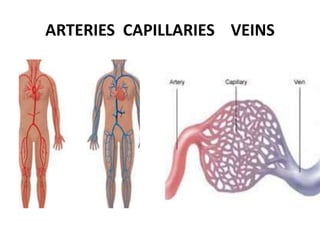
ARTERIES CAPILLARIES VEINS
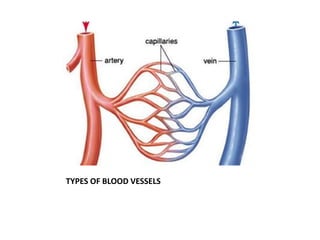
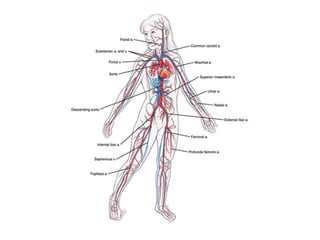
ARTERIES
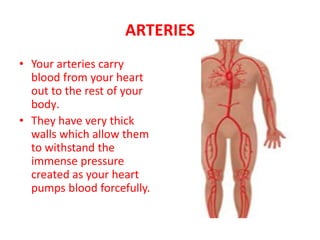
• Your arteries carry
blood from your heart
out to the rest of your
body.
• They have very thick
walls which allow them
to withstand the
immense pressure
created as your heart
pumps blood forcefully.
CAPILLARIES
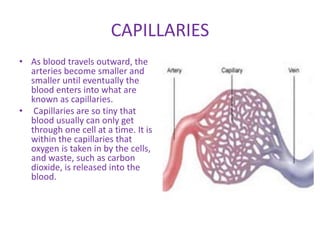
• As blood travels outward, the
arteries become smaller and
smaller until eventually the
blood enters into what are
known as capillaries.
• Capillaries are so tiny that
blood usually can only get
through one cell at a time. It is
within the capillaries that
oxygen is taken in by the cells,
and waste, such as carbon
dioxide, is released into the
blood.
VEINS
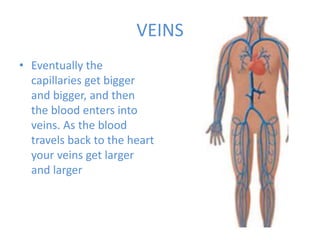
• Eventually the
capillaries get bigger
and bigger, and then
the blood enters into
veins. As the blood
travels back to the heart
your veins get larger
and larger
TYPES OF BLOOD VESSELS
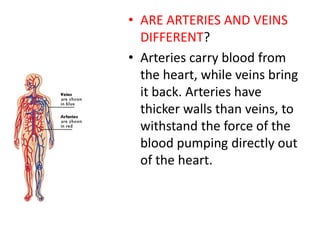
• ARE ARTERIES AND VEINS
DIFFERENT?
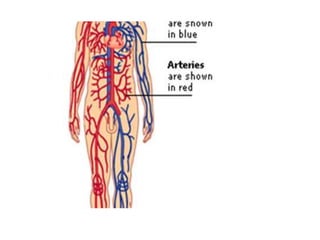
• Arteries carry blood from
the heart, while veins bring
it back. Arteries have
thicker walls than veins, to
withstand the force of the
blood pumping directly out
of the heart.
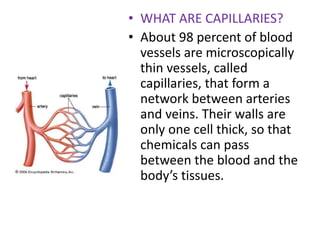
• WHAT ARE CAPILLARIES?
• About 98 percent of blood
vessels are microscopically
thin vessels, called
capillaries, that form a
network between arteries
and veins. Their walls are
only one cell thick, so that
chemicals can pass
between the blood and the
body’s tissues.
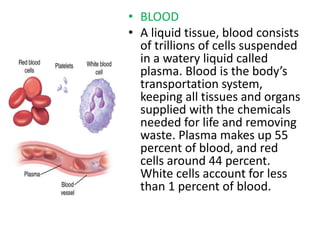
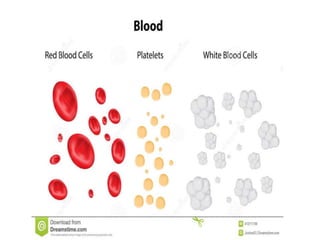
• BLOOD
• A liquid tissue, blood consists
of trillions of cells suspended
in a watery liquid called
plasma. Blood is the body’s
transportation system,
keeping all tissues and organs
supplied with the chemicals
needed for life and removing
waste. Plasma makes up 55
percent of blood, and red
cells around 44 percent.
White cells account for less
than 1 percent of blood.
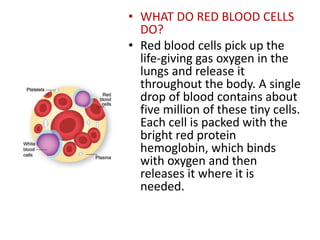
• WHAT DO RED BLOOD CELLS
DO?
• Red blood cells pick up the
life-giving gas oxygen in the
lungs and release it
throughout the body. A single
drop of blood contains about
five million of these tiny cells.
Each cell is packed with the
bright red protein
hemoglobin, which binds
with oxygen and then
releases it where it is
needed.
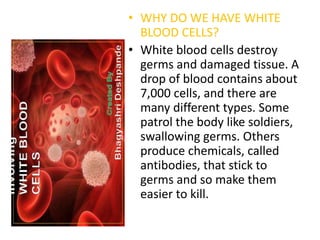
• WHY DO WE HAVE WHITE
BLOOD CELLS?
• White blood cells destroy
germs and damaged tissue. A
drop of blood contains about
7,000 cells, and there are
many different types. Some
patrol the body like soldiers,
swallowing germs. Others
produce chemicals, called
antibodies, that stick to
germs and so make them
easier to kill.
Arteries  capillaries    veins

Arteries capillaries veins

  • 1.
  • 2.
    ARTERIES • Your arteriescarry blood from your heart out to the rest of your body. • They have very thick walls which allow them to withstand the immense pressure created as your heart pumps blood forcefully.
  • 3.
    CAPILLARIES • As bloodtravels outward, the arteries become smaller and smaller until eventually the blood enters into what are known as capillaries. • Capillaries are so tiny that blood usually can only get through one cell at a time. It is within the capillaries that oxygen is taken in by the cells, and waste, such as carbon dioxide, is released into the blood.
  • 4.
    VEINS • Eventually the capillariesget bigger and bigger, and then the blood enters into veins. As the blood travels back to the heart your veins get larger and larger
  • 5.
  • 7.
    • ARE ARTERIESAND VEINS DIFFERENT? • Arteries carry blood from the heart, while veins bring it back. Arteries have thicker walls than veins, to withstand the force of the blood pumping directly out of the heart.
  • 8.
    • WHAT ARECAPILLARIES? • About 98 percent of blood vessels are microscopically thin vessels, called capillaries, that form a network between arteries and veins. Their walls are only one cell thick, so that chemicals can pass between the blood and the body’s tissues.
  • 9.
    • BLOOD • Aliquid tissue, blood consists of trillions of cells suspended in a watery liquid called plasma. Blood is the body’s transportation system, keeping all tissues and organs supplied with the chemicals needed for life and removing waste. Plasma makes up 55 percent of blood, and red cells around 44 percent. White cells account for less than 1 percent of blood.
  • 10.
    • WHAT DORED BLOOD CELLS DO? • Red blood cells pick up the life-giving gas oxygen in the lungs and release it throughout the body. A single drop of blood contains about five million of these tiny cells. Each cell is packed with the bright red protein hemoglobin, which binds with oxygen and then releases it where it is needed.
  • 11.
    • WHY DOWE HAVE WHITE BLOOD CELLS? • White blood cells destroy germs and damaged tissue. A drop of blood contains about 7,000 cells, and there are many different types. Some patrol the body like soldiers, swallowing germs. Others produce chemicals, called antibodies, that stick to germs and so make them easier to kill.