Transportation in
Humans
(circulatory
system)
1LIKE, SHARE, COMMENT AND SUBSCRIBE
Functions of transport system
• Supply of oxygen and nutrients to every cell of
the body.
• Hormones and enzymes that are formed in
one part of the body are transported to
required body organ.
• Removal of harmful substances from the body
cells. Like carbon dioxide, ammonia, and urea.
• Transport of immune cells to the site of
infection.
2LIKE, SHARE, COMMENT AND SUBSCRIBE
Parts of circulatory system
• Circulatory system:- circulatory system is a
system of vessels which connects all the cells,
tissues and organs of the body together.
Parts of circulatory
system
Heart
Pumps the blood into
blood vessel
Blood Vessels artery,
veins capillaries
Pipe like organ which
transports blood
throughout the body
Blood
Fluid medium that
transports
substances
3LIKE, SHARE, COMMENT AND SUBSCRIBE
Blood
• Blood:- Blood is a liquid or fluid connective tissue. It
is red in colour that flows in the blood vessels.
• Functions of blood:-
- It supplies food and oxygen to every body cells.
- It removes waste from the cells.
- It helps in regulating body temperature.
- It protects body against infection.
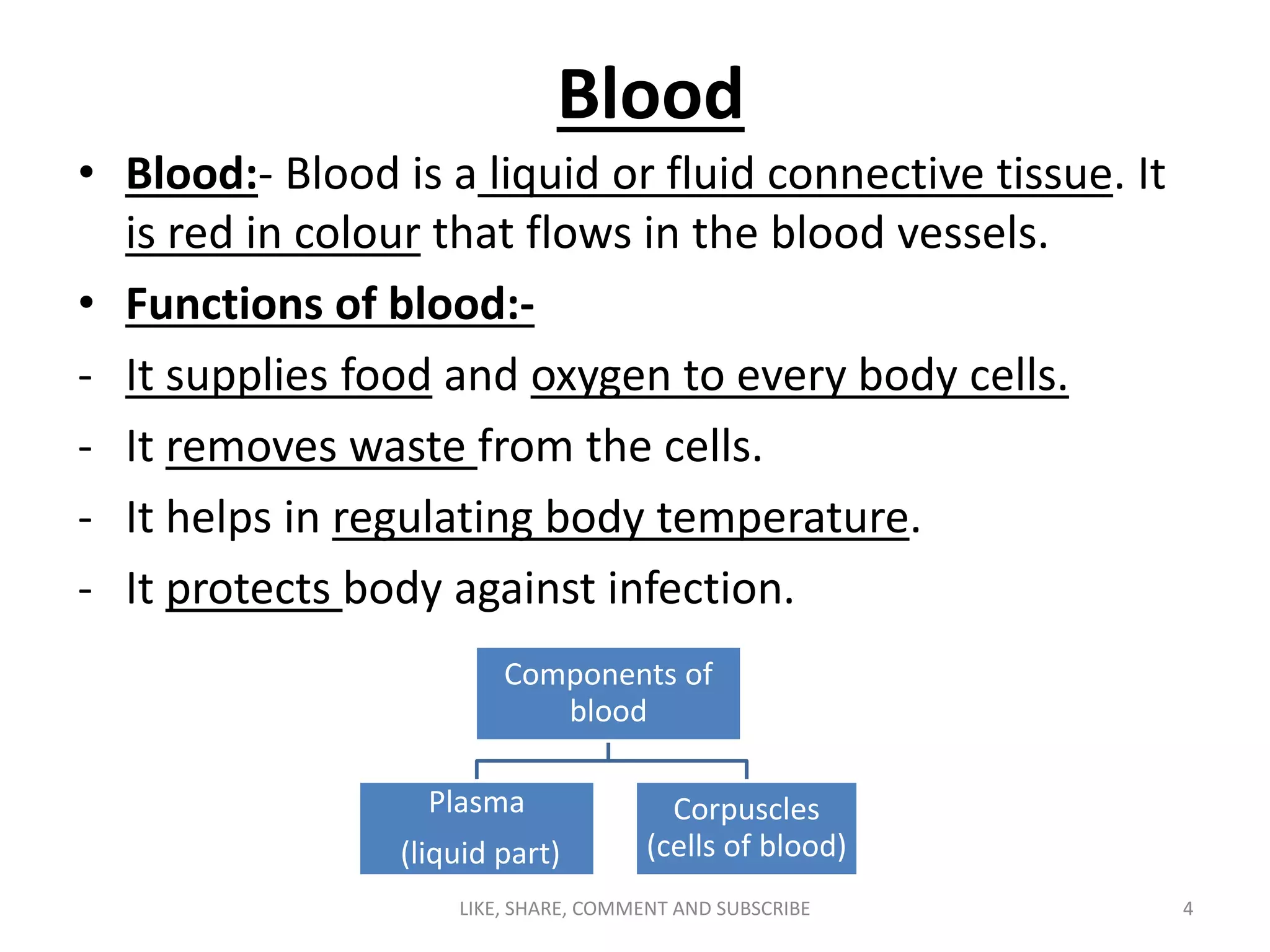
Components of
blood
Plasma
(liquid part)
Corpuscles
(cells of blood)
4LIKE, SHARE, COMMENT AND SUBSCRIBE
Plasma
(liquid, non-living part of blood)
• Plasma:- plasma is the non living, yellowish liquid
part of the blood. Plasma makes up more than
half of blood volume.
• Functions of plasma:-
- It transports dissolved food and oxygen to the
body cells.
- It transports enzymes, hormones, and chemicals
in the body.
- It removes carbon dioxide and waste from the
cells.
5LIKE, SHARE, COMMENT AND SUBSCRIBE
LIKE, SHARE, COMMENT AND SUBSCRIBE 6
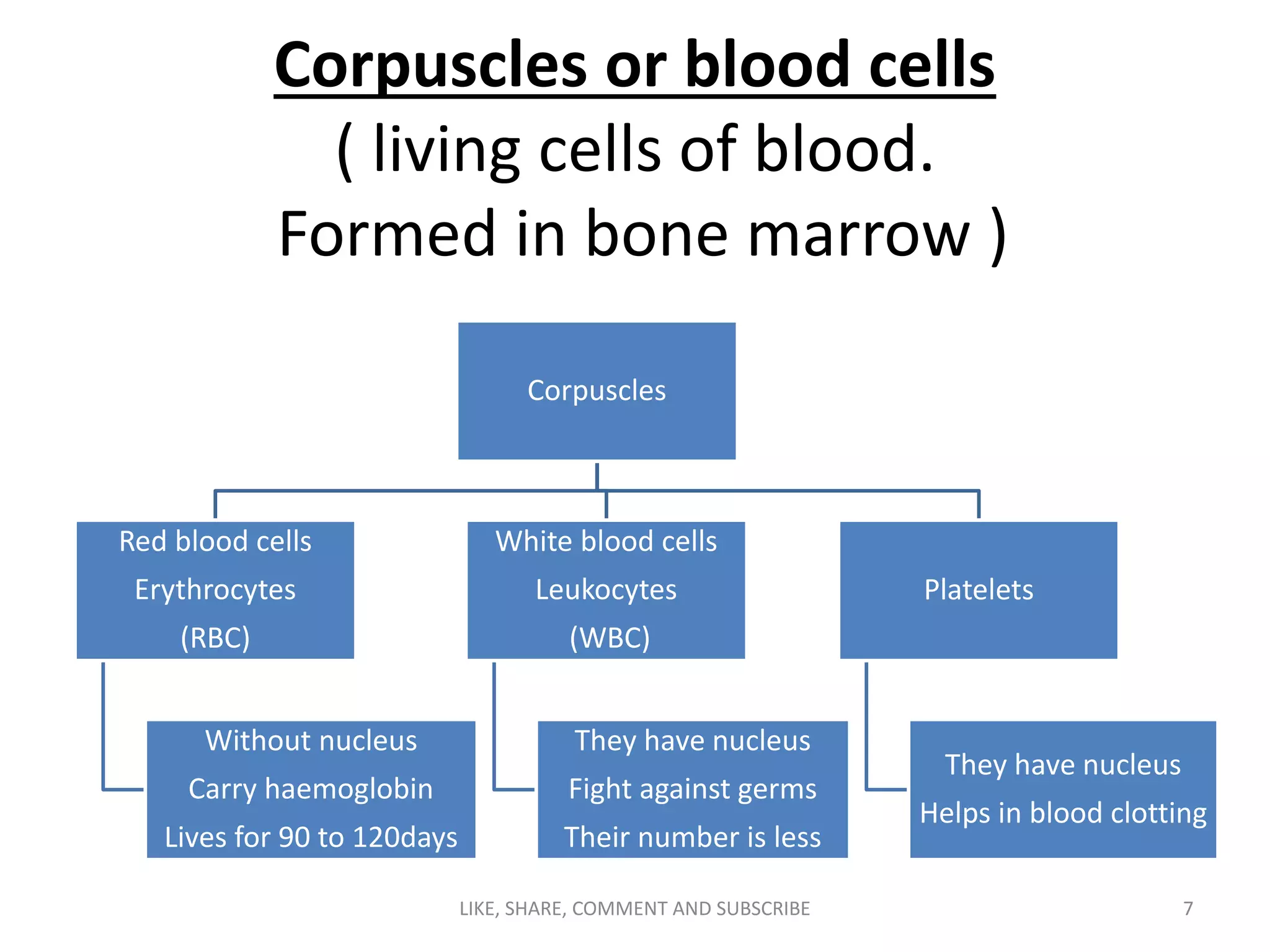
Corpuscles or blood cells
( living cells of blood.
Formed in bone marrow )
Corpuscles
Red blood cells
Erythrocytes
(RBC)
Without nucleus
Carry haemoglobin
Lives for 90 to 120days
White blood cells
Leukocytes
(WBC)
They have nucleus
Fight against germs
Their number is less
Platelets
They have nucleus
Helps in blood clotting
7LIKE, SHARE, COMMENT AND SUBSCRIBE
Red blood cells or erythrocytes
• RBC do not have nucleus. Hence they are very flexible. That
is why it can be transported to thinnest capillaries and
reach every cell of the body.
• Because of lack of nucleus RBC have life span of 120 days.
Then they are degenerated in the liver.
• It contains protein called Haemoglobin which is carrier of
oxygen as well as carbon dioxide molecule.
• Haemoglobin + oxygen= oxyhaemoglobin
• Haemoglobin + carbon dioxide= carboxyhaemoglobin.
• Haemoglobin contains iron which gives red colour to the
blood.
• Count of RBC in blood is very high.
8LIKE, SHARE, COMMENT AND SUBSCRIBE
WBC (leucocytes) and platelets
• WBC defend body against infection. And fight against
germs. WBC have memory cells which remember the
shape of germs and hence provide us immunity. That is
why vaccinations are given in childhood. ( vaccines are
the preparations of dead disease causing organism).
• WBC count are less in blood. But during infection their
count goes high.
• They are called as soldiers of body.
• Platelet:- They are minute cells and help in clotting of
blood ( when there is cut in the body then after some
time the blood automatically stops coming out due to
formation of wire mesh like structure by platelets).
9LIKE, SHARE, COMMENT AND SUBSCRIBE
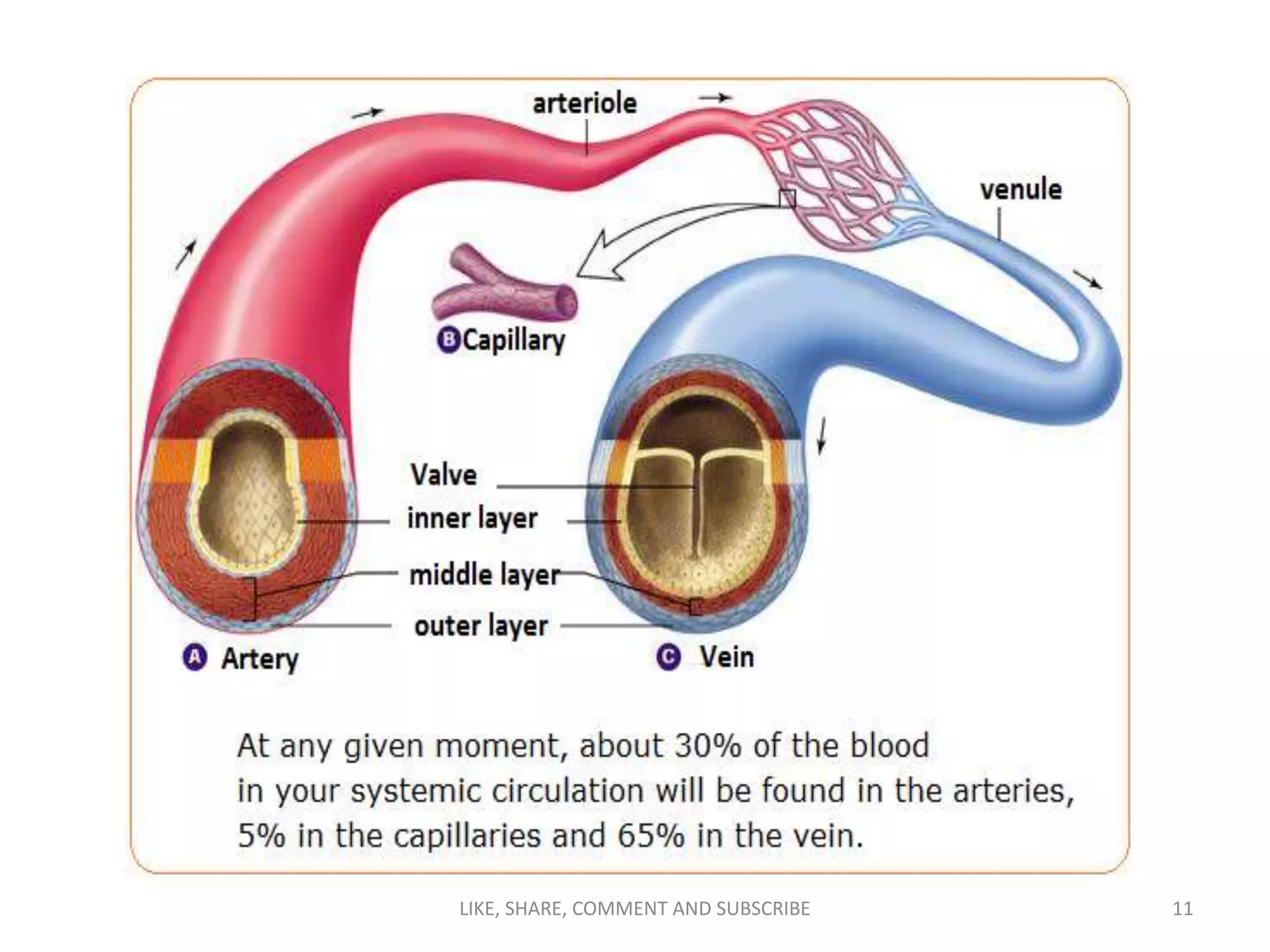
Blood vessels
Blood vessels
Arteries
They carry blood away from
heart.
They carry oxygenated blood.
Veins
They carry blood from body to
heart.
They carry deoxygenated blood
capillaries
They are finest blood vessels.
They connect artery with
veins.
LIKE, SHARE, COMMENT AND SUBSCRIBE 10
LIKE, SHARE, COMMENT AND SUBSCRIBE 11
Arteries:-
- Arteries have thick muscular walls.
- They carry blood away from heart. The force of heart
pumping keeps blood flowing through artery. We can
feel the flow of blood in our wrist.
- Blood in artery is bright red in colour because it
contains lots of oxygen. Oxyhaemoglobin is bright red
in colour.
- Largest artery in the body is Aorta. Aorta arise from
the left ventricle of heart.
- On entering the body organs and cells the artery
divides into fine capillaries.
LIKE, SHARE, COMMENT AND SUBSCRIBE 12
Veins:-
- veins carry blood from body organs to the heart.
- They have thin walls.
- There are valves inside the veins make the blood to
flow only towards the heart.
- The flow of blood in veins is not jerky.
- The blood is deoxygenated and so it is dark in colour.
- Veins are placed superficially. Just below the skin.
- Veins begin as capillaries. They join and rejoin to form
large vein that opens into the right auricle of heart.
LIKE, SHARE, COMMENT AND SUBSCRIBE 13
Capillaries:-
- Capillaries are the finest blood vessels.
- They connect arteries and veins.
- The capillaries have very thin walls. (only one
cell thick).
- At the capillaries, food and oxygen pass from
blood to the cells and carbon dioxide and
waste products pass from cell to the blood.
LIKE, SHARE, COMMENT AND SUBSCRIBE 14
Like
Share
Comment
Subscribe
LIKE, SHARE, COMMENT AND SUBSCRIBE 15

Transportation in humans (part 1) grade 7 notes

  • 1.
  • 2.
    Functions of transportsystem • Supply of oxygen and nutrients to every cell of the body. • Hormones and enzymes that are formed in one part of the body are transported to required body organ. • Removal of harmful substances from the body cells. Like carbon dioxide, ammonia, and urea. • Transport of immune cells to the site of infection. 2LIKE, SHARE, COMMENT AND SUBSCRIBE
  • 3.
    Parts of circulatorysystem • Circulatory system:- circulatory system is a system of vessels which connects all the cells, tissues and organs of the body together. Parts of circulatory system Heart Pumps the blood into blood vessel Blood Vessels artery, veins capillaries Pipe like organ which transports blood throughout the body Blood Fluid medium that transports substances 3LIKE, SHARE, COMMENT AND SUBSCRIBE
  • 4.
    Blood • Blood:- Bloodis a liquid or fluid connective tissue. It is red in colour that flows in the blood vessels. • Functions of blood:- - It supplies food and oxygen to every body cells. - It removes waste from the cells. - It helps in regulating body temperature. - It protects body against infection. Components of blood Plasma (liquid part) Corpuscles (cells of blood) 4LIKE, SHARE, COMMENT AND SUBSCRIBE
  • 5.
    Plasma (liquid, non-living partof blood) • Plasma:- plasma is the non living, yellowish liquid part of the blood. Plasma makes up more than half of blood volume. • Functions of plasma:- - It transports dissolved food and oxygen to the body cells. - It transports enzymes, hormones, and chemicals in the body. - It removes carbon dioxide and waste from the cells. 5LIKE, SHARE, COMMENT AND SUBSCRIBE
  • 6.
    LIKE, SHARE, COMMENTAND SUBSCRIBE 6
  • 7.
    Corpuscles or bloodcells ( living cells of blood. Formed in bone marrow ) Corpuscles Red blood cells Erythrocytes (RBC) Without nucleus Carry haemoglobin Lives for 90 to 120days White blood cells Leukocytes (WBC) They have nucleus Fight against germs Their number is less Platelets They have nucleus Helps in blood clotting 7LIKE, SHARE, COMMENT AND SUBSCRIBE
  • 8.
    Red blood cellsor erythrocytes • RBC do not have nucleus. Hence they are very flexible. That is why it can be transported to thinnest capillaries and reach every cell of the body. • Because of lack of nucleus RBC have life span of 120 days. Then they are degenerated in the liver. • It contains protein called Haemoglobin which is carrier of oxygen as well as carbon dioxide molecule. • Haemoglobin + oxygen= oxyhaemoglobin • Haemoglobin + carbon dioxide= carboxyhaemoglobin. • Haemoglobin contains iron which gives red colour to the blood. • Count of RBC in blood is very high. 8LIKE, SHARE, COMMENT AND SUBSCRIBE
  • 9.
    WBC (leucocytes) andplatelets • WBC defend body against infection. And fight against germs. WBC have memory cells which remember the shape of germs and hence provide us immunity. That is why vaccinations are given in childhood. ( vaccines are the preparations of dead disease causing organism). • WBC count are less in blood. But during infection their count goes high. • They are called as soldiers of body. • Platelet:- They are minute cells and help in clotting of blood ( when there is cut in the body then after some time the blood automatically stops coming out due to formation of wire mesh like structure by platelets). 9LIKE, SHARE, COMMENT AND SUBSCRIBE
  • 10.
    Blood vessels Blood vessels Arteries Theycarry blood away from heart. They carry oxygenated blood. Veins They carry blood from body to heart. They carry deoxygenated blood capillaries They are finest blood vessels. They connect artery with veins. LIKE, SHARE, COMMENT AND SUBSCRIBE 10
  • 11.
    LIKE, SHARE, COMMENTAND SUBSCRIBE 11
  • 12.
    Arteries:- - Arteries havethick muscular walls. - They carry blood away from heart. The force of heart pumping keeps blood flowing through artery. We can feel the flow of blood in our wrist. - Blood in artery is bright red in colour because it contains lots of oxygen. Oxyhaemoglobin is bright red in colour. - Largest artery in the body is Aorta. Aorta arise from the left ventricle of heart. - On entering the body organs and cells the artery divides into fine capillaries. LIKE, SHARE, COMMENT AND SUBSCRIBE 12
  • 13.
    Veins:- - veins carryblood from body organs to the heart. - They have thin walls. - There are valves inside the veins make the blood to flow only towards the heart. - The flow of blood in veins is not jerky. - The blood is deoxygenated and so it is dark in colour. - Veins are placed superficially. Just below the skin. - Veins begin as capillaries. They join and rejoin to form large vein that opens into the right auricle of heart. LIKE, SHARE, COMMENT AND SUBSCRIBE 13
  • 14.
    Capillaries:- - Capillaries arethe finest blood vessels. - They connect arteries and veins. - The capillaries have very thin walls. (only one cell thick). - At the capillaries, food and oxygen pass from blood to the cells and carbon dioxide and waste products pass from cell to the blood. LIKE, SHARE, COMMENT AND SUBSCRIBE 14
  • 15.