





A r t 1 0 0
U n d e r s t a n d i n g V i s u a l C u l t u r e
module 10.2
design + designers
agenda 3.31.16
packaging design (short review)
semiotics of chair design (Shaker side chair vs. French side
chair)
famous modern chairs
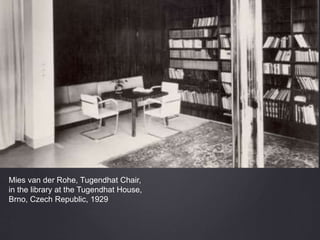
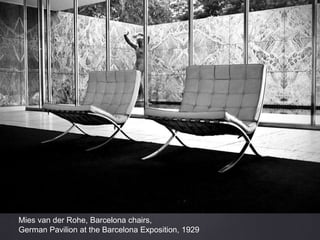
Mies van der Rohe, Barcelona Chair and Brno Chair
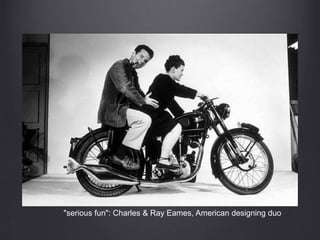
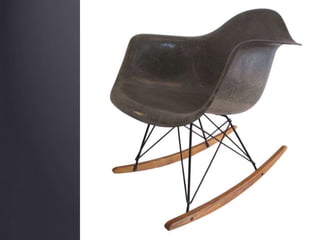
Charles and Ray Eames, DCM, LCW, RAR
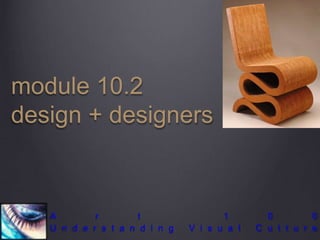
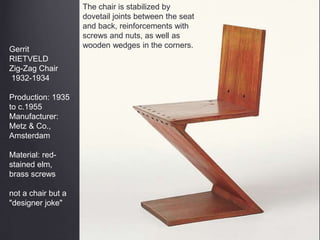
Gerrit RIETVELD, Zigzag Chair
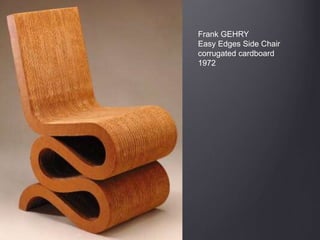
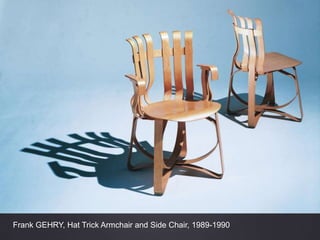
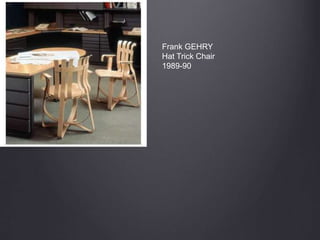
Frank GEHRY, Easy Edges Chair and Hat Trick Chair
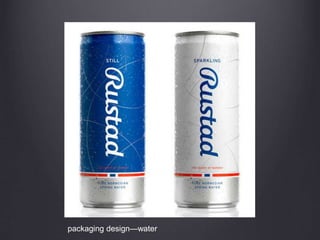
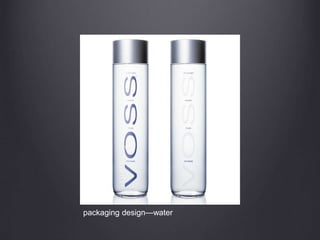
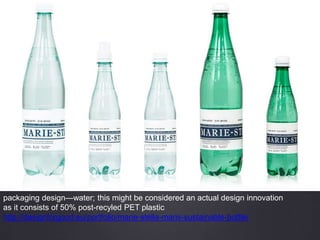
packaging design—water
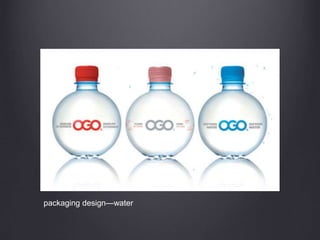
packaging design—water; this might be considered an actual design innovation
as it consists of 50% post-recyled PET plastic
http://designforgood.eu/portfolio/marie-stella-maris-sustainable-bottle/
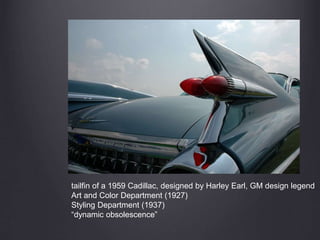
tailfin of a 1959 Cadillac, designed by Harley Earl, GM design legend
Art and Color Department (1927)
Styling Department (1937)
“dynamic obsolescence”
Compare the Tesla which runs on a different kind of motor.
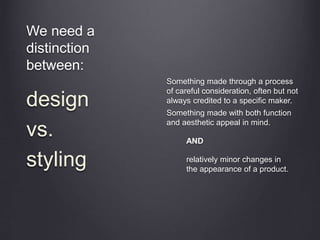
We need a
distinction
between:
Something made through a process
of careful consideration, often but not
always credited to a specific maker.
Something made with both function
and aesthetic appeal in mind.
AND
relatively minor changes in
the appearance of a product.
design
vs.
styling
Design for a
better world
“Very few aspects of the material environment are
incapable of improvement in some significant way by
greater attention being paid to their design.
Inadequate lighting, machines that are not user-
friendly, badly-formatted information, are just a few
examples of bad design that create cumulative
problems and tensions.”
—Heskett, p. 2
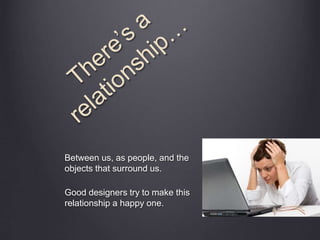
Between us, as people, and the
objects that surround us.
Good designers try to make this
relationship a happy one.
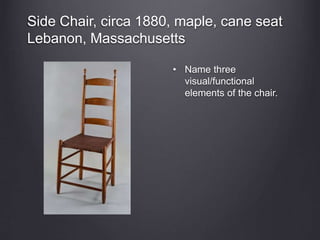
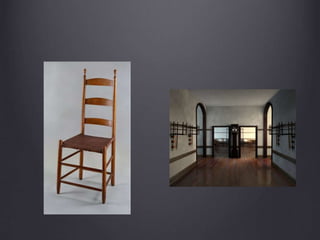
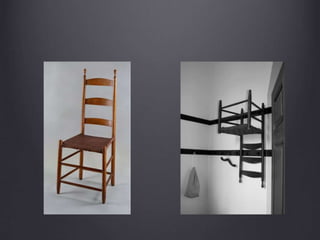
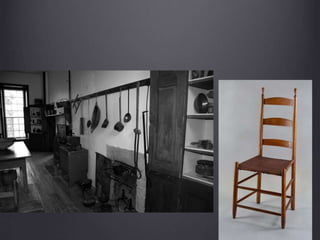
Side Chair, circa 1880, maple, cane seat
Lebanon, Massachusetts
• Name three
visual/functional
elements of the chair.
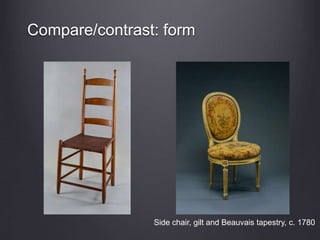
Compare/contrast: form
Side chair, gilt and Beauvais tapestry, c. 1780
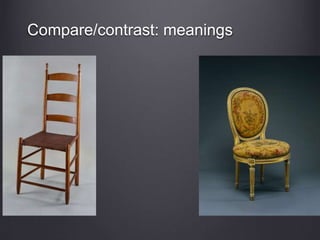
Compare/contrast: meanings
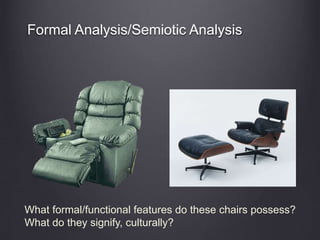
Formal Analysis/Semiotic Analysis
What formal/functional features do these chairs possess?
What do they signify, culturally?
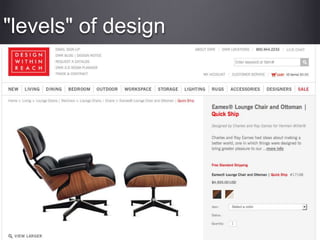
"levels" of design
design for mass consumption: meant to be popular,
affordable
elite or "high" design: meant to be exclusive
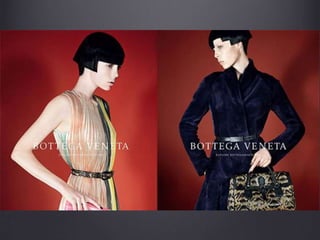
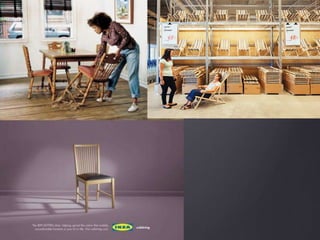
"levels" of design
design for mass consumption: meant to be popular,
affordable
elite or "high" design: meant to be exclusive
Mies van der Rohe, Tugendhat Chair,
in the library at the Tugendhat House,
Brno, Czech Republic, 1929
Mies van der Rohe, Barcelona chairs,
German Pavilion at the Barcelona Exposition, 1929
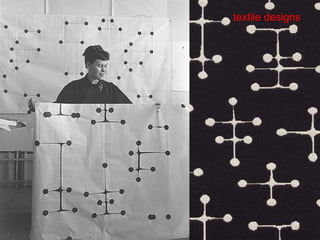
"serious fun": Charles & Ray Eames, American designing duo
textile designs
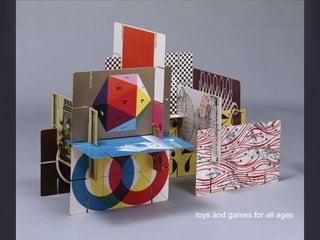
toys and games for all ages
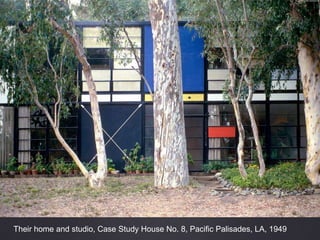
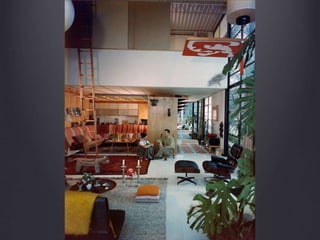
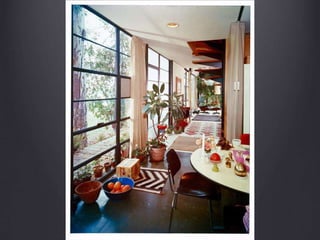
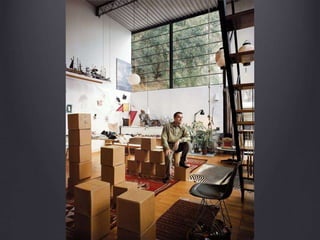
Their home and studio, Case Study House No. 8, Pacific Palisades, LA, 1949
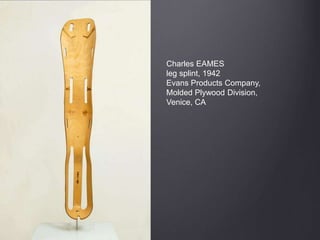
Charles EAMES
leg splint, 1942
Evans Products Company,
Molded Plywood Division,
Venice, CA
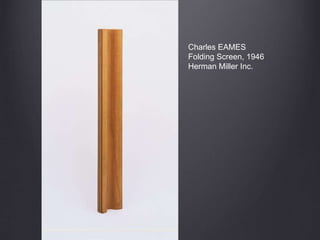
Charles EAMES
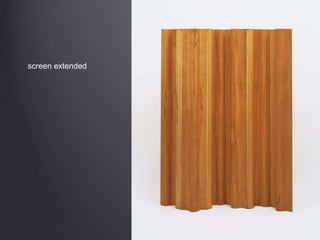
Folding Screen, 1946
Herman Miller Inc.
screen extended
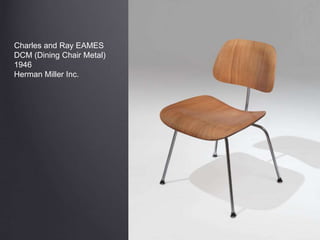
Charles and Ray EAMES
DCM (Dining Chair Metal)
1946
Herman Miller Inc.
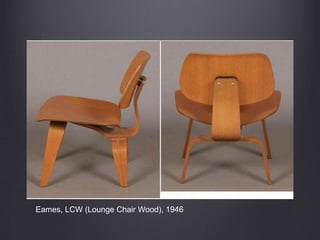
Eames, LCW (Lounge Chair Wood), 1946
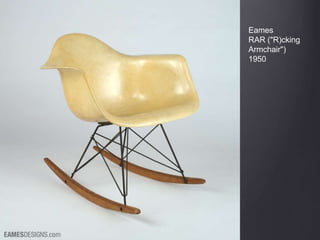
Eames
RAR ("R)cking
Armchair")
1950
Gerrit
RIETVELD
Zig-Zag Chair
1932-1934
Production: 1935
to c.1955
Manufacturer:
Metz & Co.,
Amsterdam
Material: red-
stained elm,
brass screws
not a chair but a
"designer joke"
The chair is stabilized by
dovetail joints between the seat
and back, reinforcements with
screws and nuts, as well as
wooden wedges in the corners.
Frank GEHRY
Easy Edges Side Chair
corrugated cardboard
1972
Frank GEHRY, Hat Trick Armchair and Side Chair, 1989-1990
Frank GEHRY
Hat Trick Chair
1989-90
what's driving modern
design?
• spirit of experiment
• using new materials
• using old materials in unfamiliar ways
• coming up with solutions undreamt of previously
• formal innovation
• the desire to make it different
• the desire to make it new (novelty prized over traditional
solutions—after all, chairs have been around for a long time!)
what else might motivate
designers?
• the desire to change the world!
• using design to create innovative solutions to real-world
problems, not just making another chair or cocktail shaker
or sneaker
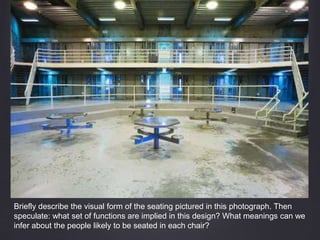
Briefly describe the visual form of the seating pictured in this photograph. Then
speculate: what set of functions are implied in this design? What meanings can we
infer about the people likely to be seated in each chair?

Art100Sp16Week10Class2

  • 1.
    A r t1 0 0 U n d e r s t a n d i n g V i s u a l C u l t u r e module 10.2 design + designers
  • 2.
    agenda 3.31.16 packaging design(short review) semiotics of chair design (Shaker side chair vs. French side chair) famous modern chairs Mies van der Rohe, Barcelona Chair and Brno Chair Charles and Ray Eames, DCM, LCW, RAR Gerrit RIETVELD, Zigzag Chair Frank GEHRY, Easy Edges Chair and Hat Trick Chair
  • 3.
  • 4.
  • 5.
  • 6.
  • 8.
    packaging design—water; thismight be considered an actual design innovation as it consists of 50% post-recyled PET plastic http://designforgood.eu/portfolio/marie-stella-maris-sustainable-bottle/
  • 9.
    tailfin of a1959 Cadillac, designed by Harley Earl, GM design legend Art and Color Department (1927) Styling Department (1937) “dynamic obsolescence”
  • 10.
    Compare the Teslawhich runs on a different kind of motor.
  • 11.
    We need a distinction between: Somethingmade through a process of careful consideration, often but not always credited to a specific maker. Something made with both function and aesthetic appeal in mind. AND relatively minor changes in the appearance of a product. design vs. styling
  • 12.
    Design for a betterworld “Very few aspects of the material environment are incapable of improvement in some significant way by greater attention being paid to their design. Inadequate lighting, machines that are not user- friendly, badly-formatted information, are just a few examples of bad design that create cumulative problems and tensions.” —Heskett, p. 2
  • 13.
    Between us, aspeople, and the objects that surround us. Good designers try to make this relationship a happy one.
  • 15.
    Side Chair, circa1880, maple, cane seat Lebanon, Massachusetts • Name three visual/functional elements of the chair.
  • 16.
    Compare/contrast: form Side chair,gilt and Beauvais tapestry, c. 1780
  • 17.
  • 21.
    Formal Analysis/Semiotic Analysis Whatformal/functional features do these chairs possess? What do they signify, culturally?
  • 22.
    "levels" of design designfor mass consumption: meant to be popular, affordable elite or "high" design: meant to be exclusive
  • 23.
    "levels" of design designfor mass consumption: meant to be popular, affordable elite or "high" design: meant to be exclusive
  • 28.
    Mies van derRohe, Tugendhat Chair, in the library at the Tugendhat House, Brno, Czech Republic, 1929
  • 29.
    Mies van derRohe, Barcelona chairs, German Pavilion at the Barcelona Exposition, 1929
  • 30.
    "serious fun": Charles& Ray Eames, American designing duo
  • 31.
  • 32.
    toys and gamesfor all ages
  • 33.
    Their home andstudio, Case Study House No. 8, Pacific Palisades, LA, 1949
  • 37.
    Charles EAMES leg splint,1942 Evans Products Company, Molded Plywood Division, Venice, CA
  • 38.
    Charles EAMES Folding Screen,1946 Herman Miller Inc.
  • 39.
  • 40.
    Charles and RayEAMES DCM (Dining Chair Metal) 1946 Herman Miller Inc.
  • 41.
    Eames, LCW (LoungeChair Wood), 1946
  • 42.
  • 44.
    Gerrit RIETVELD Zig-Zag Chair 1932-1934 Production: 1935 toc.1955 Manufacturer: Metz & Co., Amsterdam Material: red- stained elm, brass screws not a chair but a "designer joke" The chair is stabilized by dovetail joints between the seat and back, reinforcements with screws and nuts, as well as wooden wedges in the corners.
  • 45.
    Frank GEHRY Easy EdgesSide Chair corrugated cardboard 1972
  • 46.
    Frank GEHRY, HatTrick Armchair and Side Chair, 1989-1990
  • 47.
    Frank GEHRY Hat TrickChair 1989-90
  • 48.
    what's driving modern design? •spirit of experiment • using new materials • using old materials in unfamiliar ways • coming up with solutions undreamt of previously • formal innovation • the desire to make it different • the desire to make it new (novelty prized over traditional solutions—after all, chairs have been around for a long time!)
  • 49.
    what else mightmotivate designers? • the desire to change the world! • using design to create innovative solutions to real-world problems, not just making another chair or cocktail shaker or sneaker
  • 50.
    Briefly describe thevisual form of the seating pictured in this photograph. Then speculate: what set of functions are implied in this design? What meanings can we infer about the people likely to be seated in each chair?

Editor's Notes

  • #33 Creator: Charles Eames, (Artist), American, 1907-1978 Creator: Tigrett Enterprises, Chicago, IL, (Manufacturer) Title: House of Cards (giant size) Work Type: Design Objects Date: 1954 Material: Plastic coated slotted cards Description: Purchase Repository: Museum of Modern Art (New York, N.Y.) Accession Number: SC46.1955 Collection: The Museum of Modern Art, Architecture and Design Collection Source: Data From: The Museum of Modern Art
  • #34  Creator: Charles Eames (American architect, 1907-1978); Ray Eames (American architect, 1916-1988) Culture: American Title: Case Study House no. 8 Title: Charles and Ray Eames House Title: View: Entire south central wall (through trees) Work Type: Architecture and City Planning Work Type: buildings; dwellings; houses Date: 1945-1949 (creation) Date: Photograph: 12/15/1990 (creation) Location: site: Pacific Palisades (Los Angeles, California, United States) Location: Location Note: 203 Chautauqua Boulevard Material: glass; wood; plaster; steel; pre-fabricated panels and windows Technique: construction (assembling) Style Period: International Style (modern European architecture style); Twentieth century Description: Work: In 1945 they collaborated with Eero Saarinen and Edgardo Contini on two projected case study houses (nos 8 and 9) for the magazine Arts and Architecture. Case Study House no. 9, which was intended for John Entenza, the editor and publisher of the magazine, was a single-level dwelling of steel and stucco and was built (1947-1949), essentially as proposed in its first design, at 205 Chautauqua Boulevard, Pacific Palisades, CA. Case Study House no. 8, which was to be the Eames's house, was originally conceived as two steel-framed boxes raised above the site on steel legs. The design was substantially changed, however, and the house was built at ground-level, with two-storey living and studio sections separated by an open atrium . It is a typical Eames product, light in appearance and suggesting a tie to the historical (Japanese architecture) and to the modern. The new siting of the house at 203 Chautauqua Boulevard, Pacific Palisades, set it into the hillside, and through its glass walls the interior could become fully a part of the surrounding eucalyptus grove and take in the view beyond of the Pacific Ocean. The playfulness of the house was reinforced by wall panels of bright colours, panels containing illusionistic photo-murals and by the presence of the Eames's collection of toys and folk art. Subject: architectural exteriors; architectural interiors; dwelling Collection: Archivision Addition Module Three ID Number: Vendor ID: 1A1-EC-EH-F1 ID Number: 29659 Source: Work description from: Grove Art Online; http://www.oxfordartonline.com/ Source: Data and Image: Archivision, Inc. Rights: © Scott Gilchrist, Archivision, Inc. Rights: This image has been selected and made available by an institutional user of the ARTstor Digital Library using ARTstor's software tools. ARTstor has not pre-screened or selected this image, and therefore disclaims any liability for any use of this image. Should you have any legal objection to the use of this image, please notify ARTstor's Contact for Legal Notices.
  • #35 Creator: Eames, Charles and Ray Eames Title: Job 2717: Eames House (Los Angeles, Calif.) Also known as Case Study House No. 8 Work Type: Architecture Date: 1949 Date: Photograph: 1958 Material: Photograph: Transparency Measurements: Photograph: 4" x 5" Description: Photographer: Shulman, Julius Repository: Julius Shulman photography archive, 1936-1997, Getty Research Institute, Los Angeles, Accession no. 2004.R.10. Repository: http://www.getty.edu/research/ Collection: Getty Research Institute: Julius Shulman Photography Archive ID Number: Box 199 ID Number: 2717-1k Source: Image and original data provided by the Getty Research Institute Rights: Copyright The J. Paul Getty Trust. Rights: Contact information: Research Services, Getty Research Institute, 1200 Getty Center Dr., Los Angeles, CA 90049; Tel No: 310-440-7390; Fax: 310-440-7780; Email: reference@getty.edu Rights: Please note that if this image is under copyright, you may need to contact one or more copyright owners for any use that is not permitted under the ARTstor Terms and Conditions of Use or not otherwise permitted by law. While ARTstor tries to update contact information, it cannot guarantee that such information is always accurate. Determining whether those permissions are necessary, and obtaining such permissions, is your sole responsibility.
  • #36 Creator: Eames, Charles and Ray Eames Title: Job 2717: Eames House (Los Angeles, Calif.) Also known as Case Study House No. 8 Work Type: Architecture Date: 1949 Date: Photograph: 1958 Material: Photograph: Transparency Measurements: Photograph: 4" x 5" Description: Photographer: Shulman, Julius Repository: Julius Shulman photography archive, 1936-1997, Getty Research Institute, Los Angeles, Accession no. 2004.R.10. Repository: http://www.getty.edu/research/ Collection: Getty Research Institute: Julius Shulman Photography Archive ID Number: Box 199 ID Number: 2717-2k Source: Image and original data provided by the Getty Research Institute Rights: Copyright The J. Paul Getty Trust. Rights: Contact information: Research Services, Getty Research Institute, 1200 Getty Center Dr., Los Angeles, CA 90049; Tel No: 310-440-7390; Fax: 310-440-7780; Email: reference@getty.edu Rights: Please note that if this image is under copyright, you may need to contact one or more copyright owners for any use that is not permitted under the ARTstor Terms and Conditions of Use or not otherwise permitted by law. While ARTstor tries to update contact information, it cannot guarantee that such information is always accurate. Determining whether those permissions are necessary, and obtaining such permissions, is your sole responsibility.
  • #37 Creator: Eames, Charles and Ray Eames Title: Job 2717: Eames House (Los Angeles, Calif.) Also known as Case Study House No. 8 Work Type: Architecture Date: 1949 Date: Photograph: 1958 Material: Photograph: Transparency Measurements: Photograph: 4" x 5" Description: Photographer: Shulman, Julius Repository: Julius Shulman photography archive, 1936-1997, Getty Research Institute, Los Angeles, Accession no. 2004.R.10. Repository: http://www.getty.edu/research/ Collection: Getty Research Institute: Julius Shulman Photography Archive ID Number: Box 199 ID Number: 2717-3ak Source: Image and original data provided by the Getty Research Institute Rights: Copyright The J. Paul Getty Trust. Rights: Contact information: Research Services, Getty Research Institute, 1200 Getty Center Dr., Los Angeles, CA 90049; Tel No: 310-440-7390; Fax: 310-440-7780; Email: reference@getty.edu Rights: Please note that if this image is under copyright, you may need to contact one or more copyright owners for any use that is not permitted under the ARTstor Terms and Conditions of Use or not otherwise permitted by law. While ARTstor tries to update contact information, it cannot guarantee that such information is always accurate. Determining whether those permissions are necessary, and obtaining such permissions, is your sole responsibility.
  • #38 Creator: Charles and Ray Eames Creator: Evans Products Company, Molded Plywood Division, Venice, California, Established 1943, Manufacturer Creator: Charles Eames, American, Saint Louis, Missouri, 1907-1978, Saint Louis, Missouri Creator: Ray Eames, American, Sacramento, California, 1916-1988, Los Angeles, California Title: Leg Splint Work Type: design object Date: 1942 Material: molded plywood Measurements: 42 1/2 in. x 8 in. x 3 1/2 in. (107.95 cm x 20.32 cm x 8.89 cm) Description: <p>Artist: Charles Ormond Eames and Ray Bernice Alexandra Kaiser met at the Cranbrook Academy of Art in Michigan, where they both studied design and architecture in the late 1930s. They eventually married and developed a joint career based on a commitment to devising "elegant solutions" to design problems.</p><p>Ray, a former painter, had assisted Charles and Eero Saarinen with a series of molded plywood chairs and tables - an experience that benefited the couple when they moved to Los Angeles in 1941. There they perfected their process of woodworking and made splints, litters, and aircraft parts for the armed forces during World War II.</p><p>In 1946 the Museum of Modern Art, New York, showcased Charles and Ray Eames's new furniture technology. This exhibition secured them a contract with the Herman Miller company in Michigan and initiated a 30-year relationship that produced many of the enduring furniture designs of the twentieth century.</p><p>In the late 1940s, the Eameses designed a house for the Case Study House Program sponsored by <em>Arts and Architecture</em> magazine. From the 1950s onward, they expanded their design and architectural practice to include the production of films and exhibitions - including <em>Toccatta for Toy Trains</em> (1957) and <em>Mathematica</em> (1961) - that used a variety of media to engage the imagination of the public.</p> Repository: San Francisco Museum of Modern Art Repository: Gift of Michael and Gabrielle Boyd Accession Number: 98.579 Subject: design; medical equipment; legs; splints Collection: San Francisco Museum of Modern Art (SFMOMA) ID Number: 23534 Source: Image and original data provided by the San Francisco Museum of Modern Art Source: http://www.sfmoma.org/ Rights: Please note that if this image is under copyright, you may need to contact one or more copyright owners for any use that is not permitted under the ARTstor Terms and Conditions of Use or not otherwise permitted by law. While ARTstor tries to update contact information, it cannot guarantee that such information is always accurate. Determining whether those permissions are necessary, and obtaining such permissions, is your sole responsibility.
  • #39 Creator: Charles Eames, (Artist), American, 1907-1978 Creator: Evans Products Co., Molded Plywood Div., Venice, CA, (Manufacturer) Title: Folding Screen Work Type: Design Objects Date: 1946 Material: Molded calico ash plywood and canvas Measurements: h. 68" (172.7 cm) Description: Gift of Herman Miller Furniture Co. Description: Exhibitions: 1947 MoMA, #357: Useful Objects, #75. 1949 National Museum of Canada, Ottawa, Canada. 1958-9 MoMA: 20th C. Design. 1973 MoMA: Charles Eames. Repository: Museum of Modern Art (New York, N.Y.) Accession Number: 79.1948 Related Item: +20th C. Design-, MoMA, 1959, p. 60, illus. +Charles Eames-, MoMA, 1973, pp. 28-29, illus. +House Beautiful-, Dec. 1947. Derek E. Ostergard, +Bent Wood and Metal Furn.:- +1850-1946- (New York: Amer. Fed of Arts, 1987), pp. 330-31, illus. Collection: The Museum of Modern Art, Architecture and Design Collection Source: Data From: The Museum of Modern Art
  • #40 Creator: Charles Eames, (Artist), American, 1907-1978 Creator: Evans Products Co., Molded Plywood Div., Venice, CA, (Manufacturer) Title: Folding Screen Work Type: Design Objects Date: 1946 Material: Molded calico ash plywood and canvas Measurements: h. 68" (172.7 cm) Description: Gift of Herman Miller Furniture Co. Description: Exhibitions: 1947 MoMA, #357: Useful Objects, #75. 1949 National Museum of Canada, Ottawa, Canada. 1958-9 MoMA: 20th C. Design. 1973 MoMA: Charles Eames. Repository: Museum of Modern Art (New York, N.Y.) Accession Number: 79.1948 Related Item: +20th C. Design-, MoMA, 1959, p. 60, illus. +Charles Eames-, MoMA, 1973, pp. 28-29, illus. +House Beautiful-, Dec. 1947. Derek E. Ostergard, +Bent Wood and Metal Furn.:- +1850-1946- (New York: Amer. Fed of Arts, 1987), pp. 330-31, illus. Collection: The Museum of Modern Art, Architecture and Design Collection Source: Data From: The Museum of Modern Art
  • #41 Creator: Charles and Ray Eames Creator: Charles Eames, American, Saint Louis, Missouri, 1907-1978, Saint Louis, Missouri Creator: Ray Eames, American, Sacramento, California, 1916-1988, Los Angeles, California Creator: Herman Miller Inc., Zeeland, Michigan, Established 1923, Manufacturer Title: DCM (Dining chair metal) Work Type: furniture Date: 1946 Material: molded plywood, steel, and rubber Measurements: 29 3/4 in. x 19 1/2 in. x 23 in. (75.57 cm x 49.53 cm x 58.42 cm) Description: <p>Artist: Charles Ormond Eames and Ray Bernice Alexandra Kaiser met at the Cranbrook Academy of Art in Michigan, where they both studied design and architecture in the late 1930s. They eventually married and developed a joint career based on a commitment to devising "elegant solutions" to design problems.</p><p>Ray, a former painter, had assisted Charles and Eero Saarinen with a series of molded plywood chairs and tables - an experience that benefited the couple when they moved to Los Angeles in 1941. There they perfected their process of woodworking and made splints, litters, and aircraft parts for the armed forces during World War II.</p><p>In 1946 the Museum of Modern Art, New York, showcased Charles and Ray Eames's new furniture technology. This exhibition secured them a contract with the Herman Miller company in Michigan and initiated a 30-year relationship that produced many of the enduring furniture designs of the twentieth century.</p><p>In the late 1940s, the Eameses designed a house for the Case Study House Program sponsored by <em>Arts and Architecture</em> magazine. From the 1950s onward, they expanded their design and architectural practice to include the production of films and exhibitions - including <em>Toccatta for Toy Trains</em> (1957) and <em>Mathematica</em> (1961) - that used a variety of media to engage the imagination of the public.</p> Repository: San Francisco Museum of Modern Art Repository: Gift of Mr. and Mrs. William P. Brotherton in memory of Gary Brotherton, Alys Tully, and Mary Thompson Accession Number: 78.43 Subject: chairs; seats; functional Collection: San Francisco Museum of Modern Art (SFMOMA) ID Number: 351 Source: Image and original data provided by the San Francisco Museum of Modern Art Source: http://www.sfmoma.org/ Rights: Please note that if this image is under copyright, you may need to contact one or more copyright owners for any use that is not permitted under the ARTstor Terms and Conditions of Use or not otherwise permitted by law. While ARTstor tries to update contact information, it cannot guarantee that such information is always accurate. Determining whether those permissions are necessary, and obtaining such permissions, is your sole responsibility.