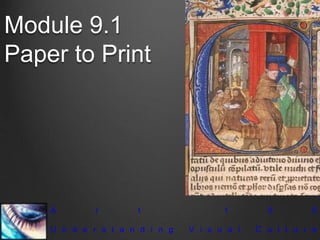
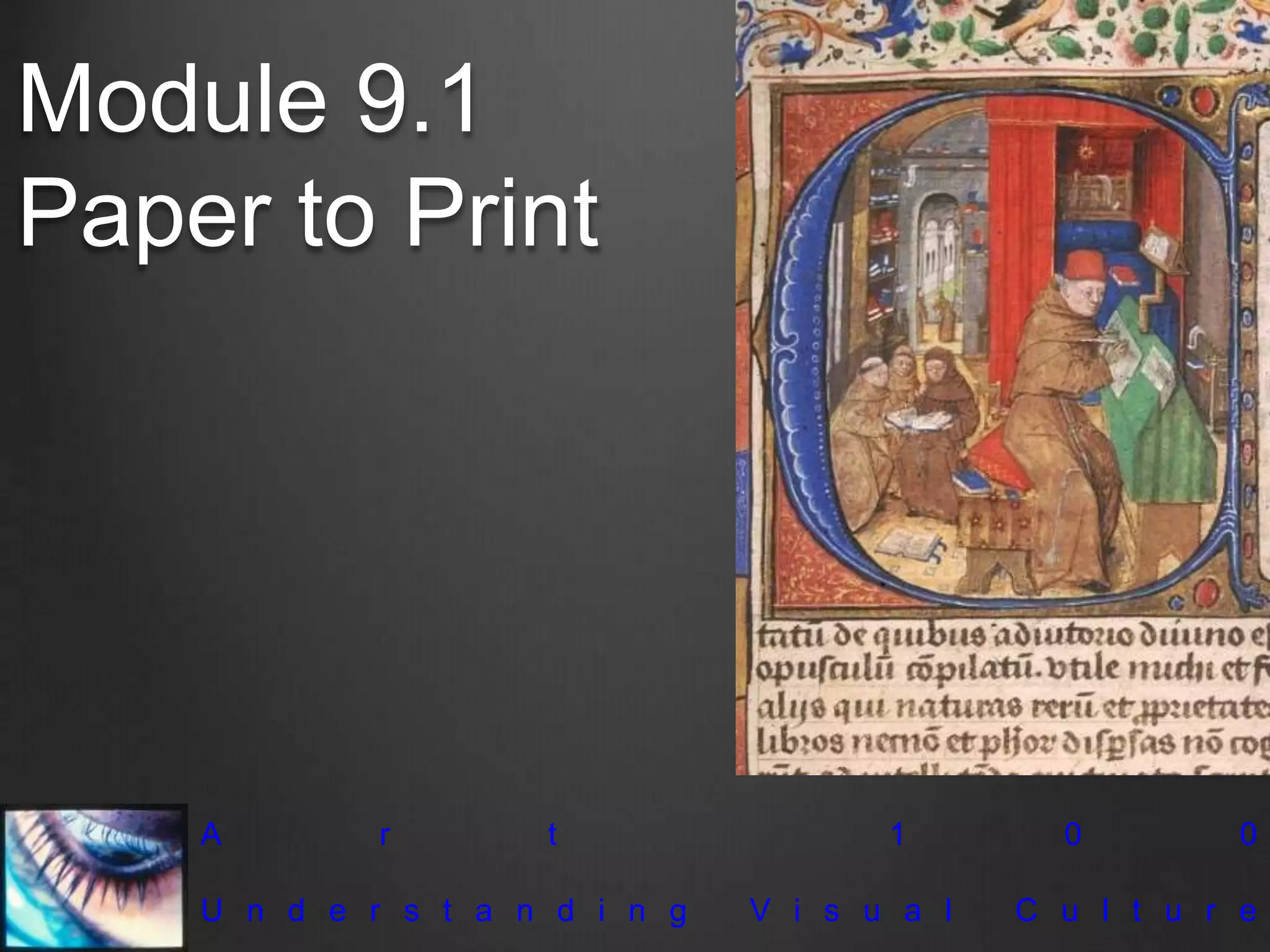
Module 9.1
Paper to Print
A r t 1 0 0
U n d e r s t a n d i n g V i s u a l C u l t u r e
agenda 3.15.16
• questions or concerns about test?
• recording things: how do we keep records?
• clay tablets [Sumeria]
• papyrus [Egypt]
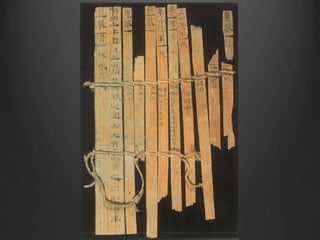
• bamboo, silk, paper [China]
• qipu [Andes]
• parchment [Europe]
• from script (handwriting) to print
• advances in print technology
The earliest uses of writing (and other systems of notation)
that survive are ledgers that keeping track of quantities—
particularly household accounts, debts, amounts in inventory,
etc.
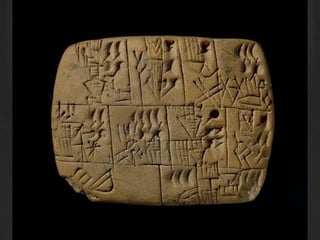
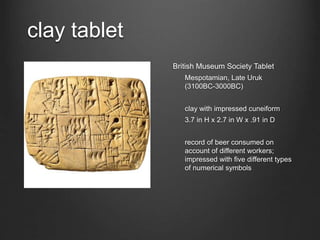
clay tablet
British Museum Society Tablet
Mespotamian, Late Uruk
(3100BC-3000BC)
clay with impressed cuneiform
3.7 in H x 2.7 in W x .91 in D
record of beer consumed on
account of different workers;
impressed with five different types
of numerical symbols
clay tablets
PROS CONS
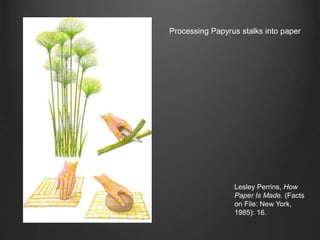
Lesley Perrins, How
Paper Is Made. (Facts
on File: New York,
1985): 16.
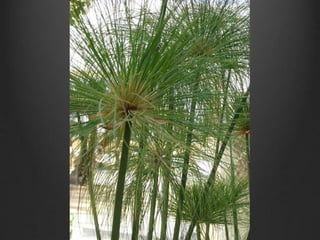
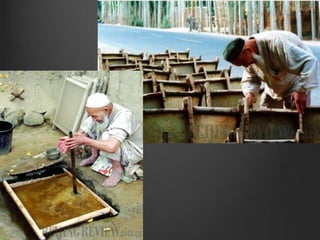
Processing Papyrus stalks into paper
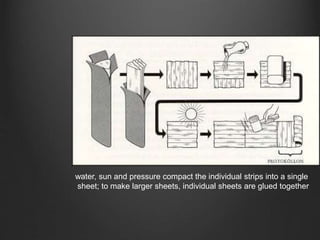
water, sun and pressure compact the individual strips into a single
sheet; to make larger sheets, individual sheets are glued together
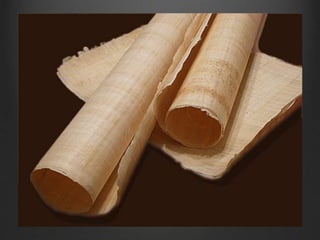
papyrus fragment
Simonides [Greek]
epic poem about a Greek military victory
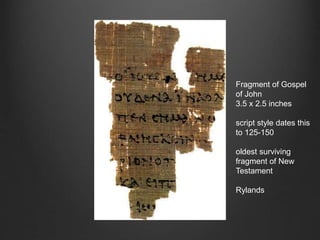
Fragment of Gospel
of John
3.5 x 2.5 inches
script style dates this
to 125-150
oldest surviving
fragment of New
Testament
Rylands
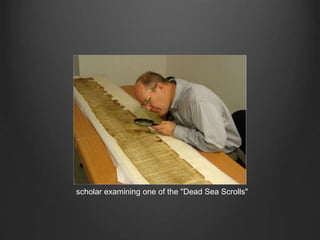
scholar examining one of the "Dead Sea Scrolls"
papyrus
CONSPROS
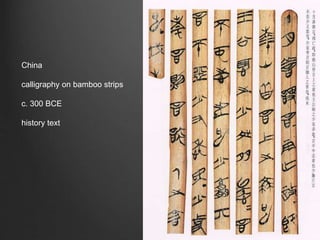
China
calligraphy on bamboo strips
c. 300 BCE
history text
Paper and Systems of Notation
• rise of paper production in Baghdad late eighth/early ninth
sparks production of books, scholarly activity, development of
libraries
• it also impacts the develop of systems of notation, new ways of
representing human knowledge in various fields
• math (numerals)
• commerce (numerals, coinage, standard accounting
procedures)
• geography (cartography)
• cooking
• music (counter-example of dance notation)
• genealogy
• battle plans
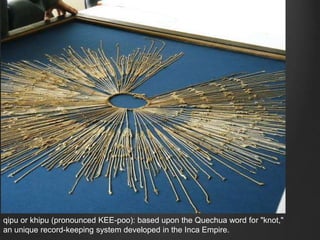
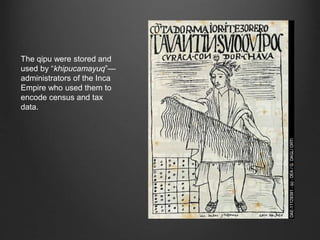
qipu or khipu (pronounced KEE-poo): based upon the Quechua word for "knot,"
an unique record-keeping system developed in the Inca Empire.
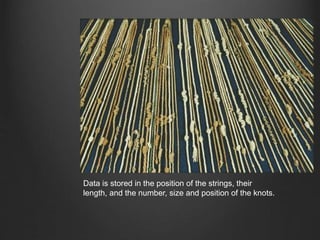
Data is stored in the position of the strings, their
length, and the number, size and position of the knots.
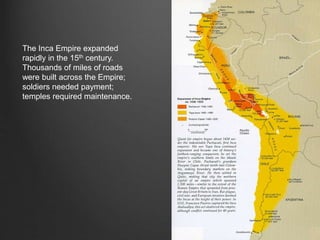
The Inca Empire expanded
rapidly in the 15th century.
Thousands of miles of roads
were built across the Empire;
soldiers needed payment;
temples required maintenance.
The qipu were stored and
used by “khipucamayuq”—
administrators of the Inca
Empire who used them to
encode census and tax
data.
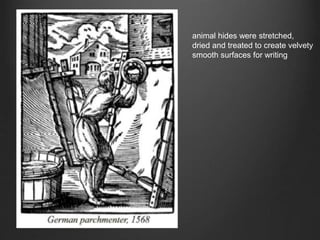
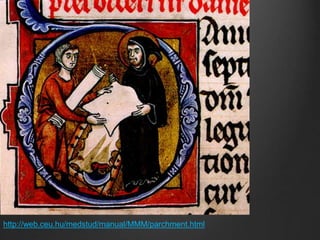
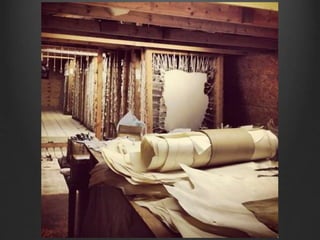
animal hides were stretched,
dried and treated to create velvety
smooth surfaces for writing
http://web.ceu.hu/medstud/manual/MMM/parchment.html
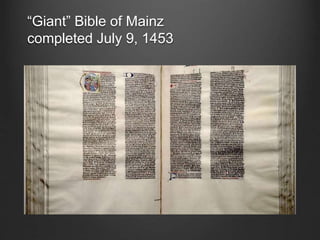
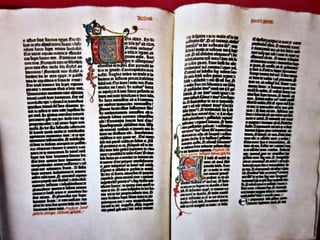
“Giant” Bible of Mainz
completed July 9, 1453
parchment
PROS CONS
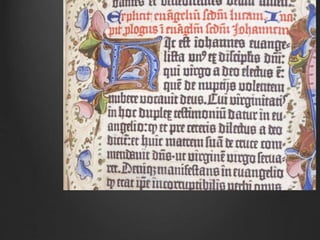
from script to print
• print permits a greater degree of standardization and
modularization
• more information can be exchanged more quickly
• linked to rise of science, ongoing development of human
rights
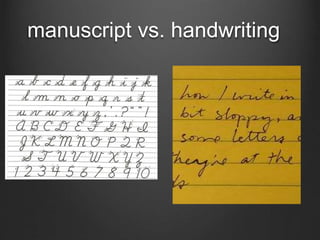
manuscript vs. handwriting
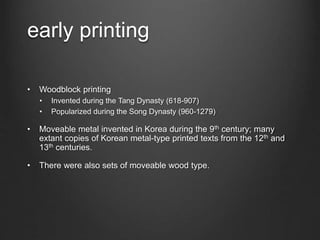
early printing
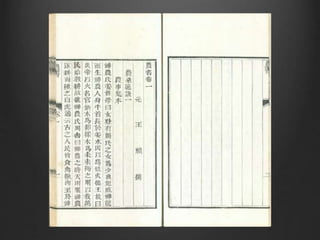
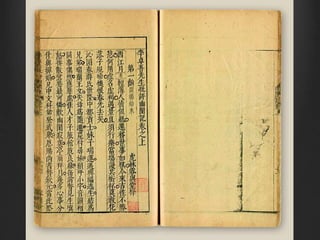
• Woodblock printing
• Invented during the Tang Dynasty (618-907)
• Popularized during the Song Dynasty (960-1279)
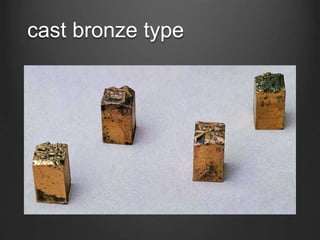
• Moveable metal invented in Korea during the 9th century; many
extant copies of Korean metal-type printed texts from the 12th and
13th centuries.
• There were also sets of moveable wood type.
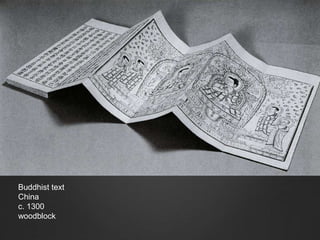
Buddhist text
China
c. 1300
woodblock
cast bronze type
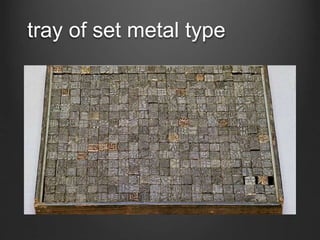
tray of set metal type
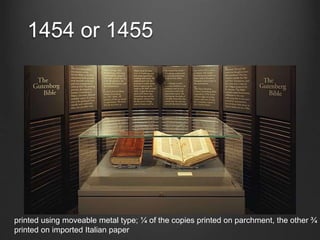
1454 or 1455
printed using moveable metal type; ¼ of the copies printed on parchment, the other ¾
printed on imported Italian paper
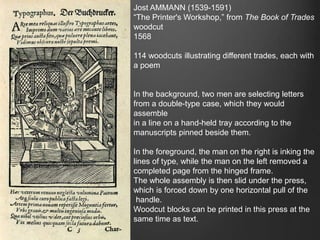
Jost AMMANN (1539-1591)
“The Printer's Workshop,” from The Book of Trades
woodcut
1568
114 woodcuts illustrating different trades, each with
a poem
In the background, two men are selecting letters
from a double-type case, which they would
assemble
in a line on a hand-held tray according to the
manuscripts pinned beside them.
In the foreground, the man on the right is inking the
lines of type, while the man on the left removed a
completed page from the hinged frame.
The whole assembly is then slid under the press,
which is forced down by one horizontal pull of the
handle.
Woodcut blocks can be printed in this press at the
same time as text.
early printed format
 broadsheet/broadside: a single sheet that was used to
print announcements or notices on one side only.
 could be posted publicly and read/viewed by all
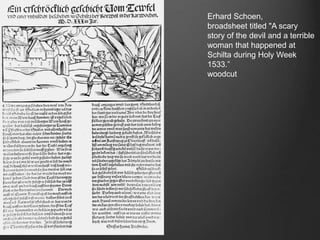
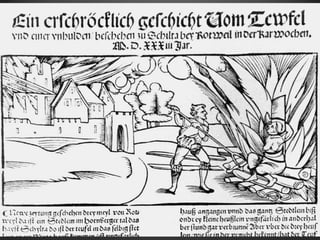
Erhard Schoen,
broadsheet titled "A scary
story of the devil and a terrible
woman that happened at
Schilta during Holy Week
1533.”
woodcut
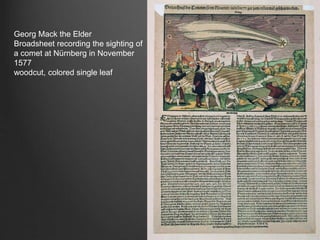
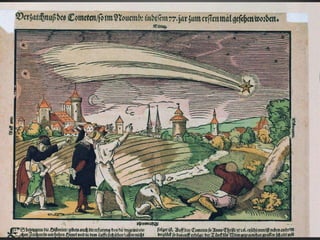
Georg Mack the Elder
Broadsheet recording the sighting of
a comet at Nürnberg in November
1577
woodcut, colored single leaf
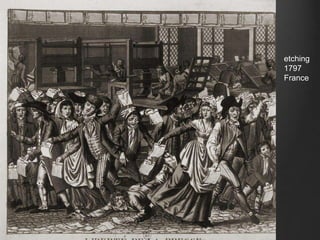
etching
1797
France
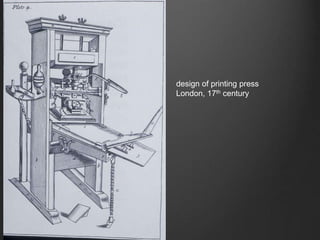
design of printing press
London, 17th century
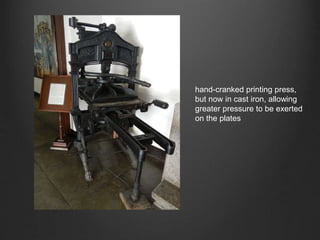
hand-cranked printing press,
but now in cast iron, allowing
greater pressure to be exerted
on the plates
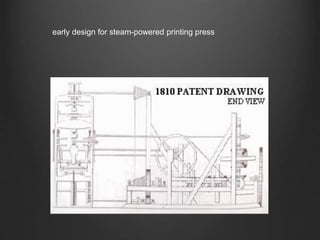
early design for steam-powered printing press
New combination of
technologies in the 1820s
• steam power
• iron presses
• higher pressure for reproduction of images
• larger printing area
• endgrain wood engraving (produces harder, smoother
surface that can hold finer lines)
These technological improvements led to an explosion of printe
materials in the 19th century.
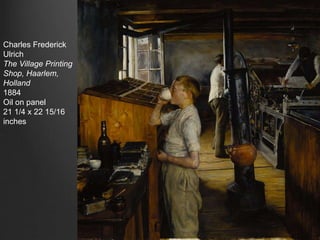
Charles Frederick
Ulrich
The Village Printing
Shop, Haarlem,
Holland
1884
Oil on panel
21 1/4 x 22 15/16
inches
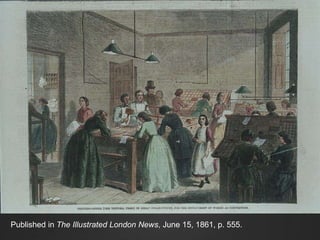
Published in The Illustrated London News, June 15, 1861, p. 555.
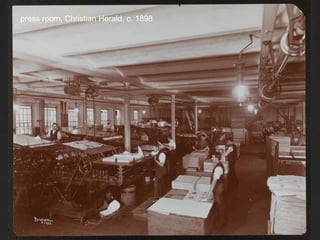
press room, Christian Herald, c. 1898
what happens when print is
mechanized?
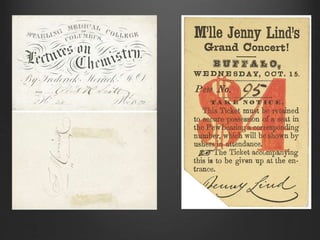
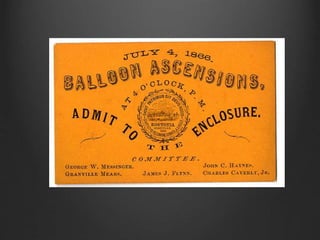
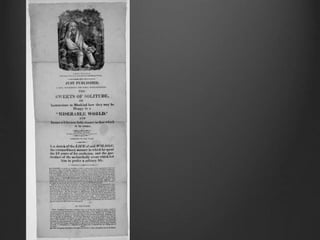
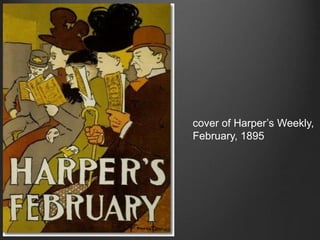
• Ephemera: printed paper meant to be thrown away:
tickets, menus, billheads, public notices and posters
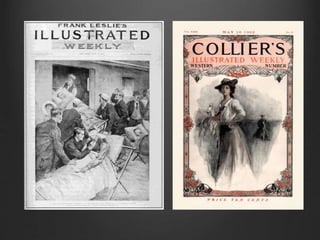
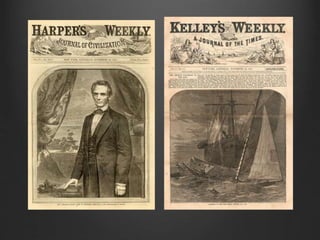
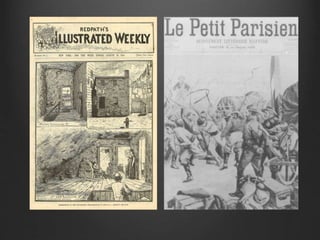
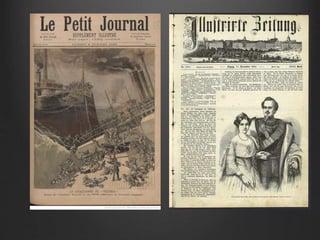
• Illustrated weekly magazines begin publication.
• There is enough work for skilled designers,
illustrators, caricaturists, beginning of advertising
profession.
• Also impacted publication of books and prints,
increasing print runs and opening up a mass market.
cover of Harper’s Weekly,
February, 1895
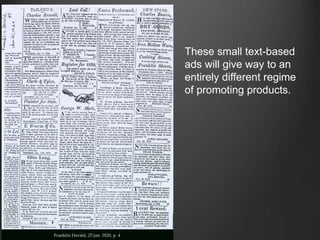
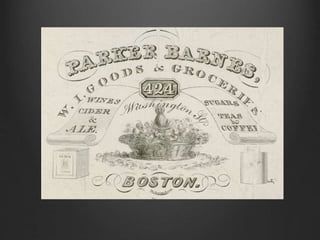
changes in advertising
These small text-based
ads will give way to an
entirely different regime
of promoting products.
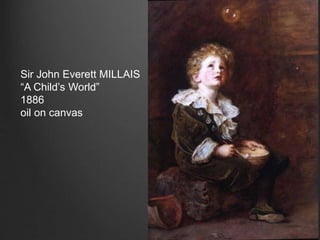
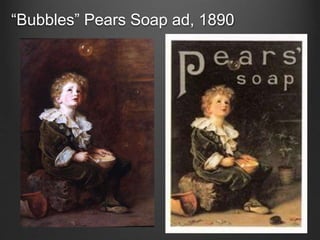
Sir John Everett MILLAIS
“A Child’s World”
1886
oil on canvas
“Bubbles” Pears Soap ad, 1890

Art100SP16Module9.1

  • 1.
    Module 9.1 Paper toPrint A r t 1 0 0 U n d e r s t a n d i n g V i s u a l C u l t u r e
  • 2.
    agenda 3.15.16 • questionsor concerns about test? • recording things: how do we keep records? • clay tablets [Sumeria] • papyrus [Egypt] • bamboo, silk, paper [China] • qipu [Andes] • parchment [Europe] • from script (handwriting) to print • advances in print technology
  • 3.
    The earliest usesof writing (and other systems of notation) that survive are ledgers that keeping track of quantities— particularly household accounts, debts, amounts in inventory, etc.
  • 5.
    clay tablet British MuseumSociety Tablet Mespotamian, Late Uruk (3100BC-3000BC) clay with impressed cuneiform 3.7 in H x 2.7 in W x .91 in D record of beer consumed on account of different workers; impressed with five different types of numerical symbols
  • 6.
  • 9.
    Lesley Perrins, How PaperIs Made. (Facts on File: New York, 1985): 16. Processing Papyrus stalks into paper
  • 10.
    water, sun andpressure compact the individual strips into a single sheet; to make larger sheets, individual sheets are glued together
  • 12.
    papyrus fragment Simonides [Greek] epicpoem about a Greek military victory
  • 13.
    Fragment of Gospel ofJohn 3.5 x 2.5 inches script style dates this to 125-150 oldest surviving fragment of New Testament Rylands
  • 14.
    scholar examining oneof the "Dead Sea Scrolls"
  • 15.
  • 17.
    China calligraphy on bamboostrips c. 300 BCE history text
  • 18.
    Paper and Systemsof Notation • rise of paper production in Baghdad late eighth/early ninth sparks production of books, scholarly activity, development of libraries • it also impacts the develop of systems of notation, new ways of representing human knowledge in various fields • math (numerals) • commerce (numerals, coinage, standard accounting procedures) • geography (cartography) • cooking • music (counter-example of dance notation) • genealogy • battle plans
  • 20.
    qipu or khipu(pronounced KEE-poo): based upon the Quechua word for "knot," an unique record-keeping system developed in the Inca Empire.
  • 21.
    Data is storedin the position of the strings, their length, and the number, size and position of the knots.
  • 22.
    The Inca Empireexpanded rapidly in the 15th century. Thousands of miles of roads were built across the Empire; soldiers needed payment; temples required maintenance.
  • 23.
    The qipu werestored and used by “khipucamayuq”— administrators of the Inca Empire who used them to encode census and tax data.
  • 25.
    animal hides werestretched, dried and treated to create velvety smooth surfaces for writing
  • 26.
  • 28.
    “Giant” Bible ofMainz completed July 9, 1453
  • 29.
  • 30.
    from script toprint • print permits a greater degree of standardization and modularization • more information can be exchanged more quickly • linked to rise of science, ongoing development of human rights
  • 31.
  • 32.
    early printing • Woodblockprinting • Invented during the Tang Dynasty (618-907) • Popularized during the Song Dynasty (960-1279) • Moveable metal invented in Korea during the 9th century; many extant copies of Korean metal-type printed texts from the 12th and 13th centuries. • There were also sets of moveable wood type.
  • 33.
  • 36.
  • 37.
    tray of setmetal type
  • 39.
    1454 or 1455 printedusing moveable metal type; ¼ of the copies printed on parchment, the other ¾ printed on imported Italian paper
  • 42.
    Jost AMMANN (1539-1591) “ThePrinter's Workshop,” from The Book of Trades woodcut 1568 114 woodcuts illustrating different trades, each with a poem In the background, two men are selecting letters from a double-type case, which they would assemble in a line on a hand-held tray according to the manuscripts pinned beside them. In the foreground, the man on the right is inking the lines of type, while the man on the left removed a completed page from the hinged frame. The whole assembly is then slid under the press, which is forced down by one horizontal pull of the handle. Woodcut blocks can be printed in this press at the same time as text.
  • 43.
    early printed format broadsheet/broadside: a single sheet that was used to print announcements or notices on one side only.  could be posted publicly and read/viewed by all
  • 44.
    Erhard Schoen, broadsheet titled"A scary story of the devil and a terrible woman that happened at Schilta during Holy Week 1533.” woodcut
  • 46.
    Georg Mack theElder Broadsheet recording the sighting of a comet at Nürnberg in November 1577 woodcut, colored single leaf
  • 48.
  • 49.
    design of printingpress London, 17th century
  • 50.
    hand-cranked printing press, butnow in cast iron, allowing greater pressure to be exerted on the plates
  • 51.
    early design forsteam-powered printing press
  • 52.
    New combination of technologiesin the 1820s • steam power • iron presses • higher pressure for reproduction of images • larger printing area • endgrain wood engraving (produces harder, smoother surface that can hold finer lines) These technological improvements led to an explosion of printe materials in the 19th century.
  • 53.
    Charles Frederick Ulrich The VillagePrinting Shop, Haarlem, Holland 1884 Oil on panel 21 1/4 x 22 15/16 inches
  • 54.
    Published in TheIllustrated London News, June 15, 1861, p. 555.
  • 55.
    press room, ChristianHerald, c. 1898
  • 57.
    what happens whenprint is mechanized? • Ephemera: printed paper meant to be thrown away: tickets, menus, billheads, public notices and posters • Illustrated weekly magazines begin publication. • There is enough work for skilled designers, illustrators, caricaturists, beginning of advertising profession. • Also impacted publication of books and prints, increasing print runs and opening up a mass market.
  • 66.
    cover of Harper’sWeekly, February, 1895
  • 67.
  • 68.
    These small text-based adswill give way to an entirely different regime of promoting products.
  • 70.
    Sir John EverettMILLAIS “A Child’s World” 1886 oil on canvas
  • 71.

Editor's Notes

  • #49 Work Type stipple etching with hand coloring Date 1797