Arithmetic Progression
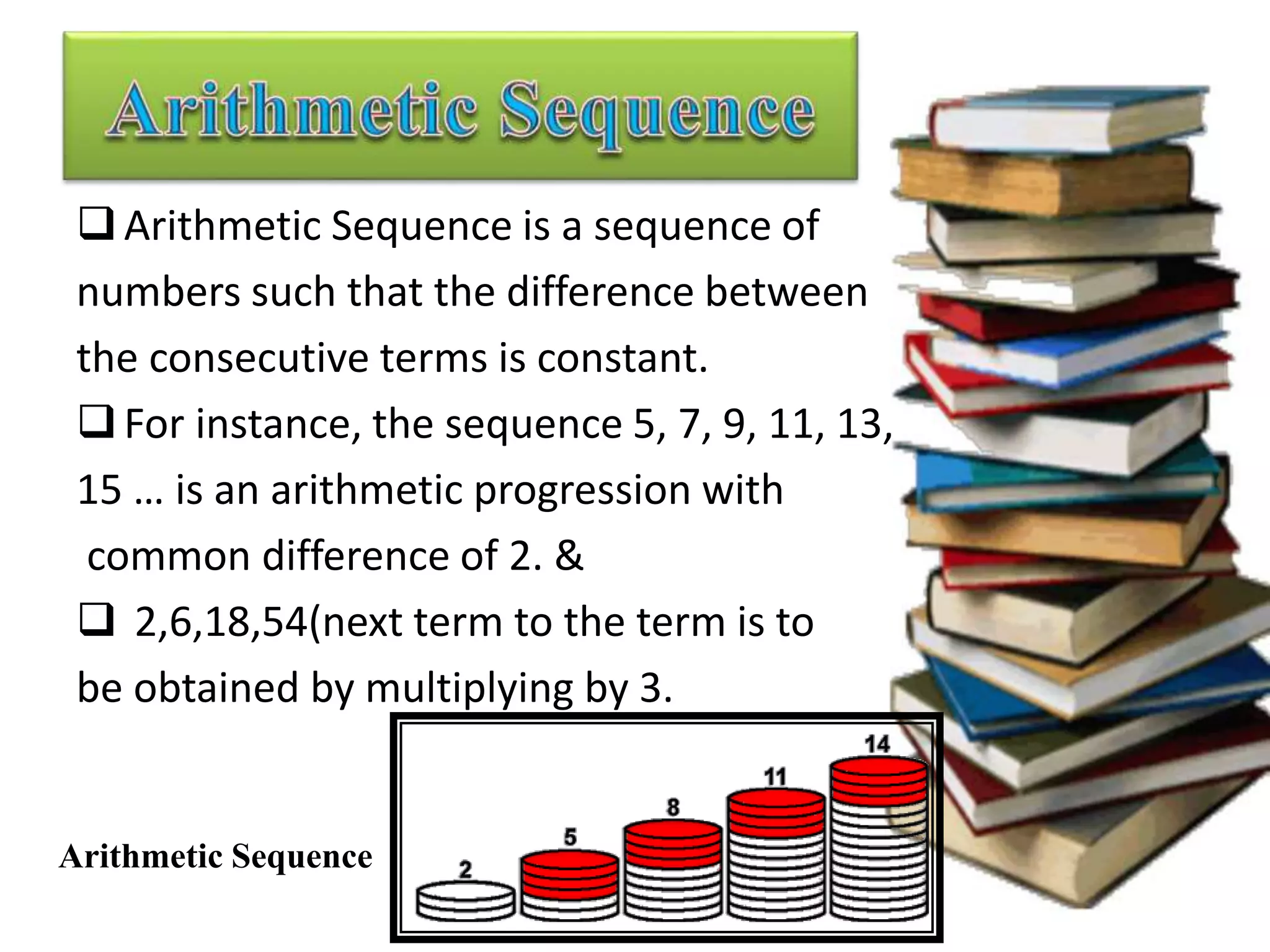
 Arithmetic Sequence is a sequence of
numbers such that the difference between
the consecutive terms is constant.
 For instance, the sequence 5, 7, 9, 11, 13,
15 … is an arithmetic progression with
common difference of 2. &
 2,6,18,54(next term to the term is to
be obtained by multiplying by 3.

Arithmetic Sequence
Arithmetic Progression
If various terms of a sequence are formed by adding a
fixed number to the previous term or the difference
between two successive terms is a fixed number, then the
sequence is called AP.
e.g.1) 2, 4, 6, 8, ……… the sequence of even numbers is
an example of AP
 2) 5, 10, 15, 20, 25….. In this each term is obtained by
adding 5 to the preceding term except first term.
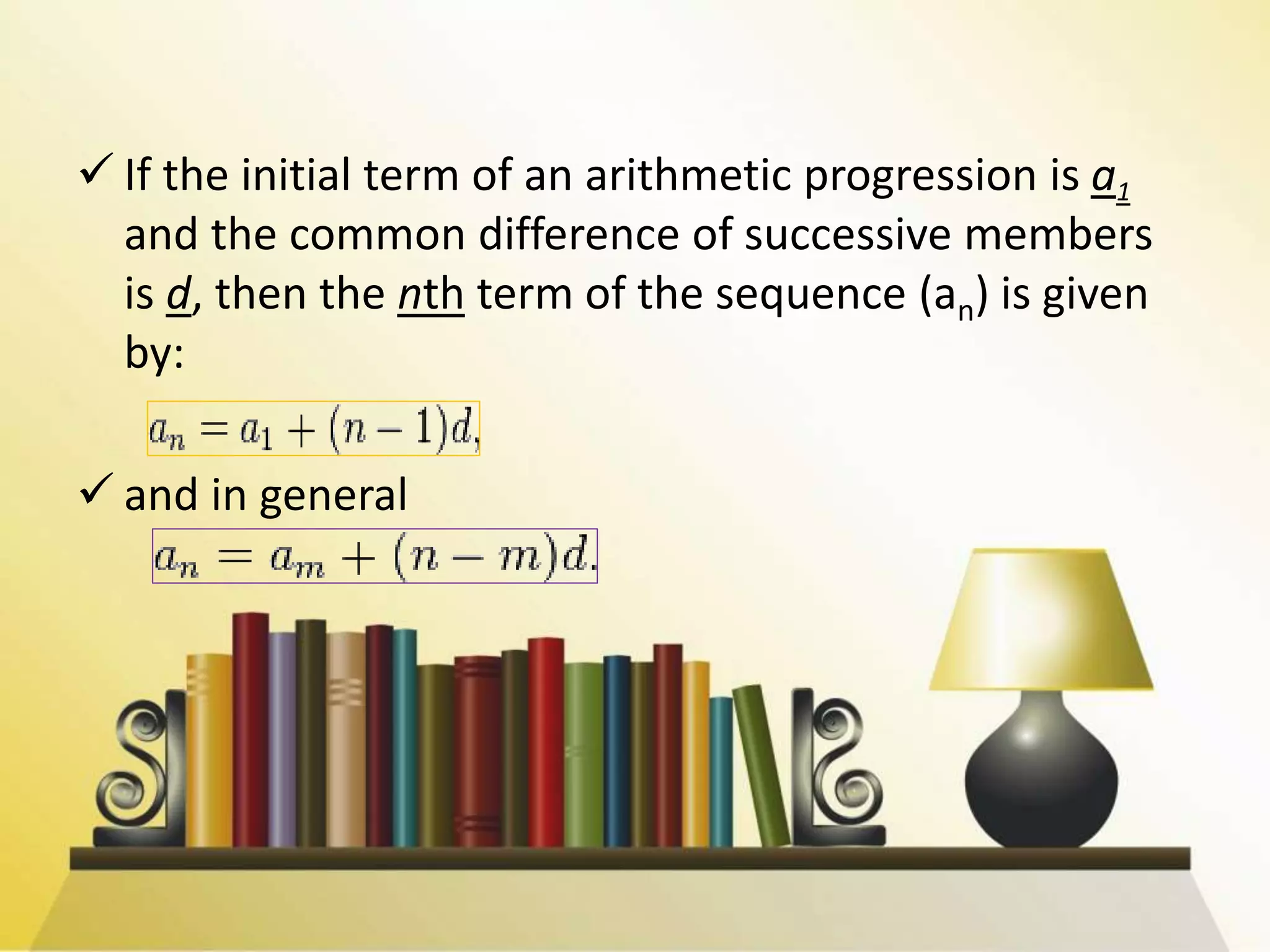
 If the initial term of an arithmetic progression is a1
and the common difference of successive members
is d, then the nth term of the sequence (an) is given
by:

 and in general
• A finite portion of an arithmetic progression is called a finite
arithmetic progression and sometimes just called an arithmetic
progression. The sum of a finite arithmetic progression is called
an Arithmetic series.
• The behavior of the arithmetic progression depends on the
common difference d. If the common difference is:
 Positive, the members (terms) will grow towards positive infinity.
 Negative, the members (terms) will grow towards negative
infinity.
Common Difference





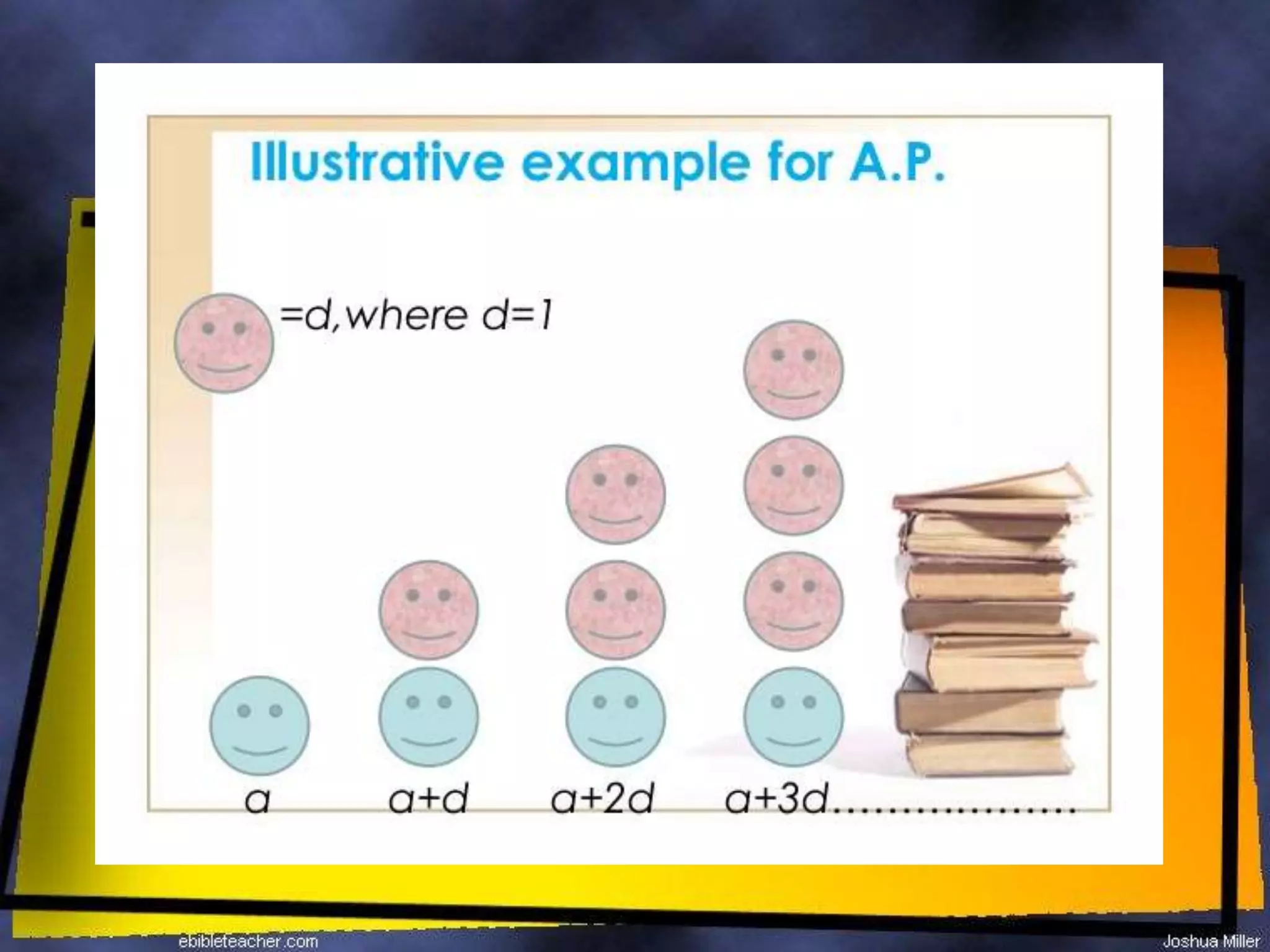
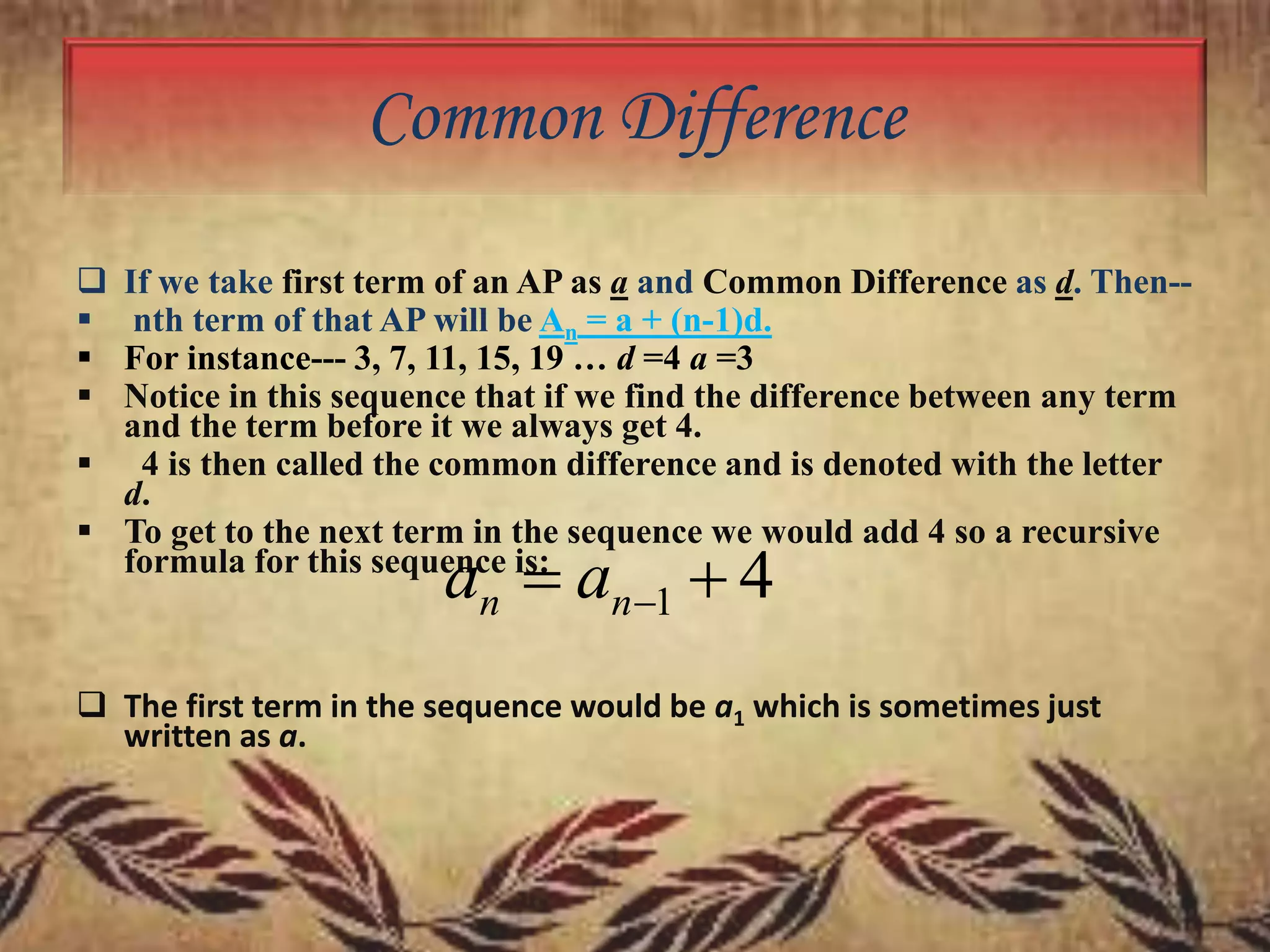
If we take first term of an AP as a and Common Difference as d. Then-nth term of that AP will be An = a + (n-1)d.
For instance--- 3, 7, 11, 15, 19 … d =4 a =3
Notice in this sequence that if we find the difference between any term
and the term before it we always get 4.
 4 is then called the common difference and is denoted with the letter
d.
 To get to the next term in the sequence we would add 4 so a recursive
formula for this sequence is:

an  an1  4

 The first term in the sequence would be a1 which is sometimes just
written as a.
Example
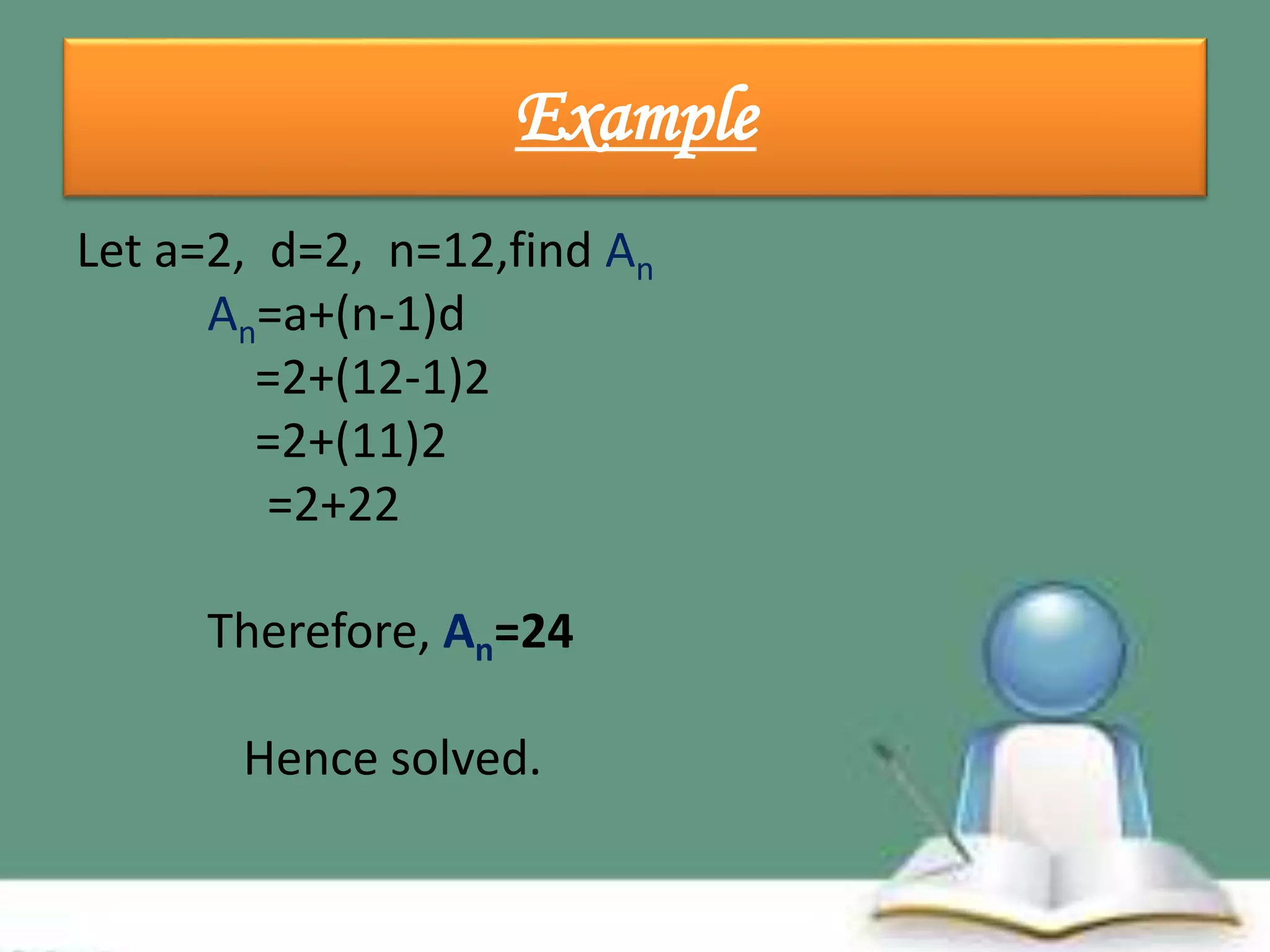
Let a=2, d=2, n=12,find An
An=a+(n-1)d
=2+(12-1)2
=2+(11)2
=2+22
Therefore, An=24
Hence solved.
The difference between two terms of
an AP
The difference between two terms of
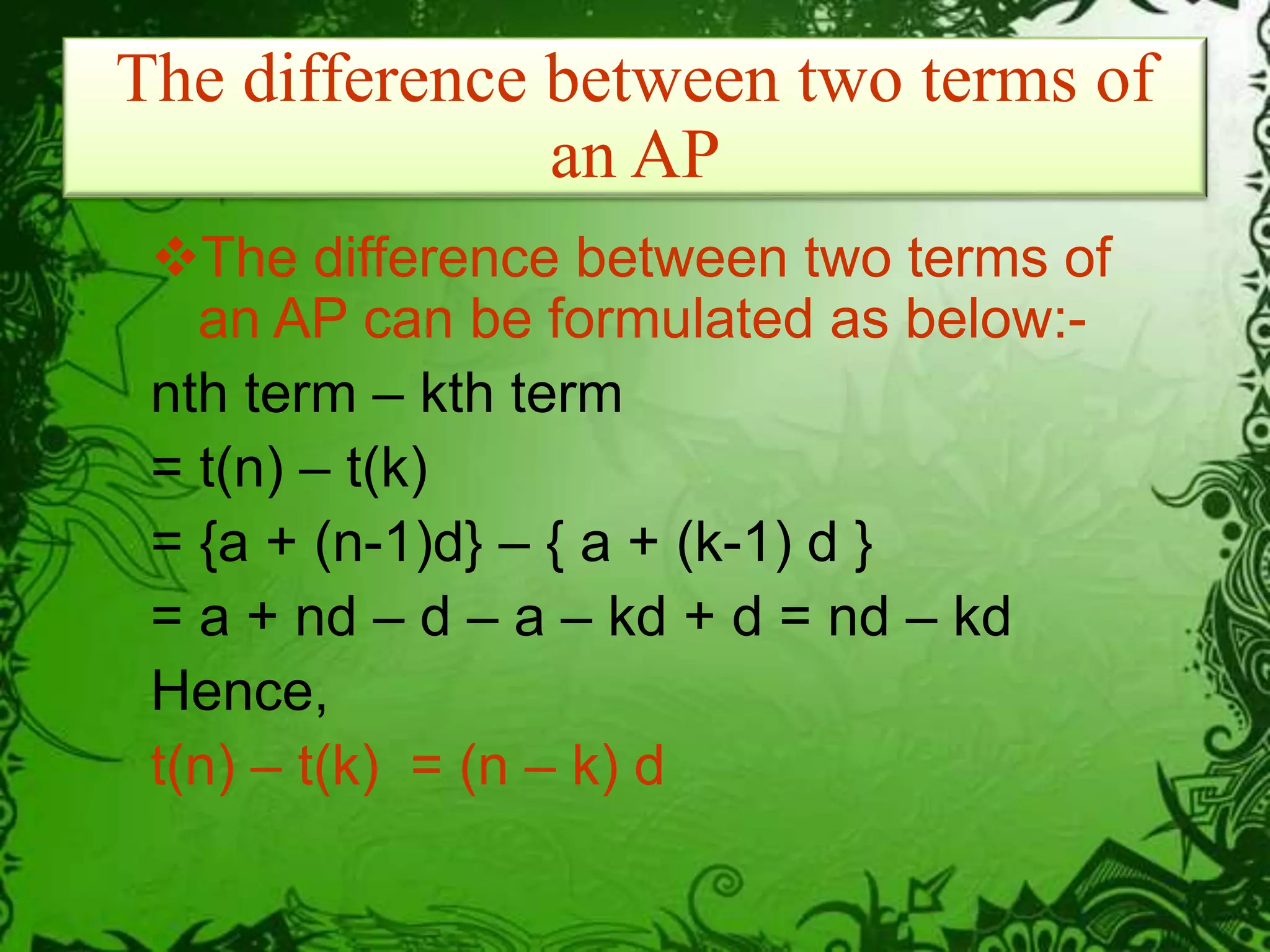
an AP can be formulated as below:nth term – kth term
= t(n) – t(k)
= {a + (n-1)d} – { a + (k-1) d }
= a + nd – d – a – kd + d = nd – kd
Hence,
t(n) – t(k) = (n – k) d
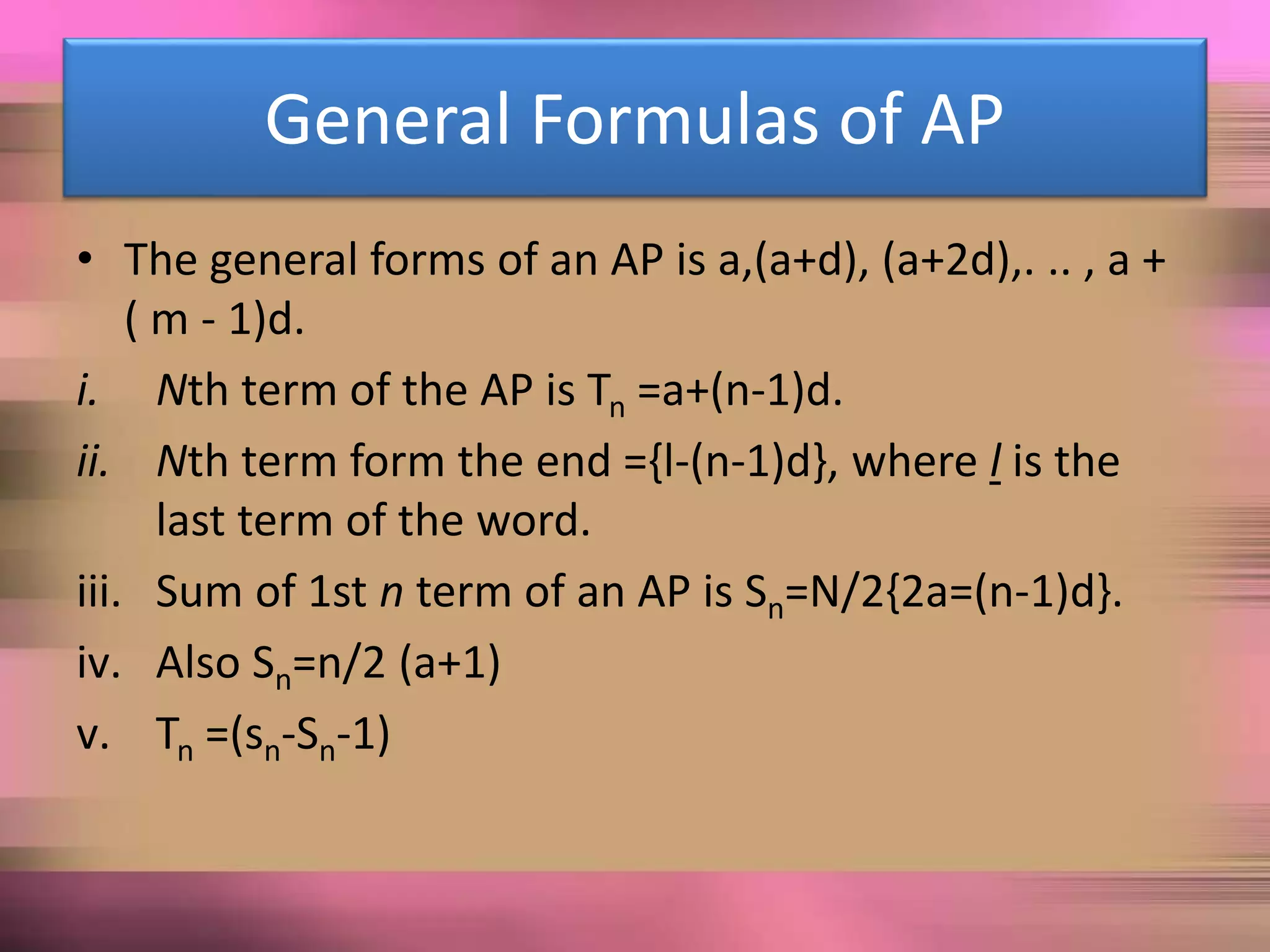
General Formulas of AP
• The general forms of an AP is a,(a+d), (a+2d),. .. , a +
( m - 1)d.
i. Nth term of the AP is Tn =a+(n-1)d.
ii. Nth term form the end ={l-(n-1)d}, where l is the
last term of the word.
iii. Sum of 1st n term of an AP is Sn=N/2{2a=(n-1)d}.
iv. Also Sn=n/2 (a+1)
v. Tn =(sn-Sn-1)
The sum of n terms, we find as,
Sum = n X [(first term + last term) / 2]
Now last term will be = a + (n-1) d
Therefore,

Sum(Sn) =n X [{a + a + (n-1) d } /2 ]
= n/2 [ 2a + (n+1)d]
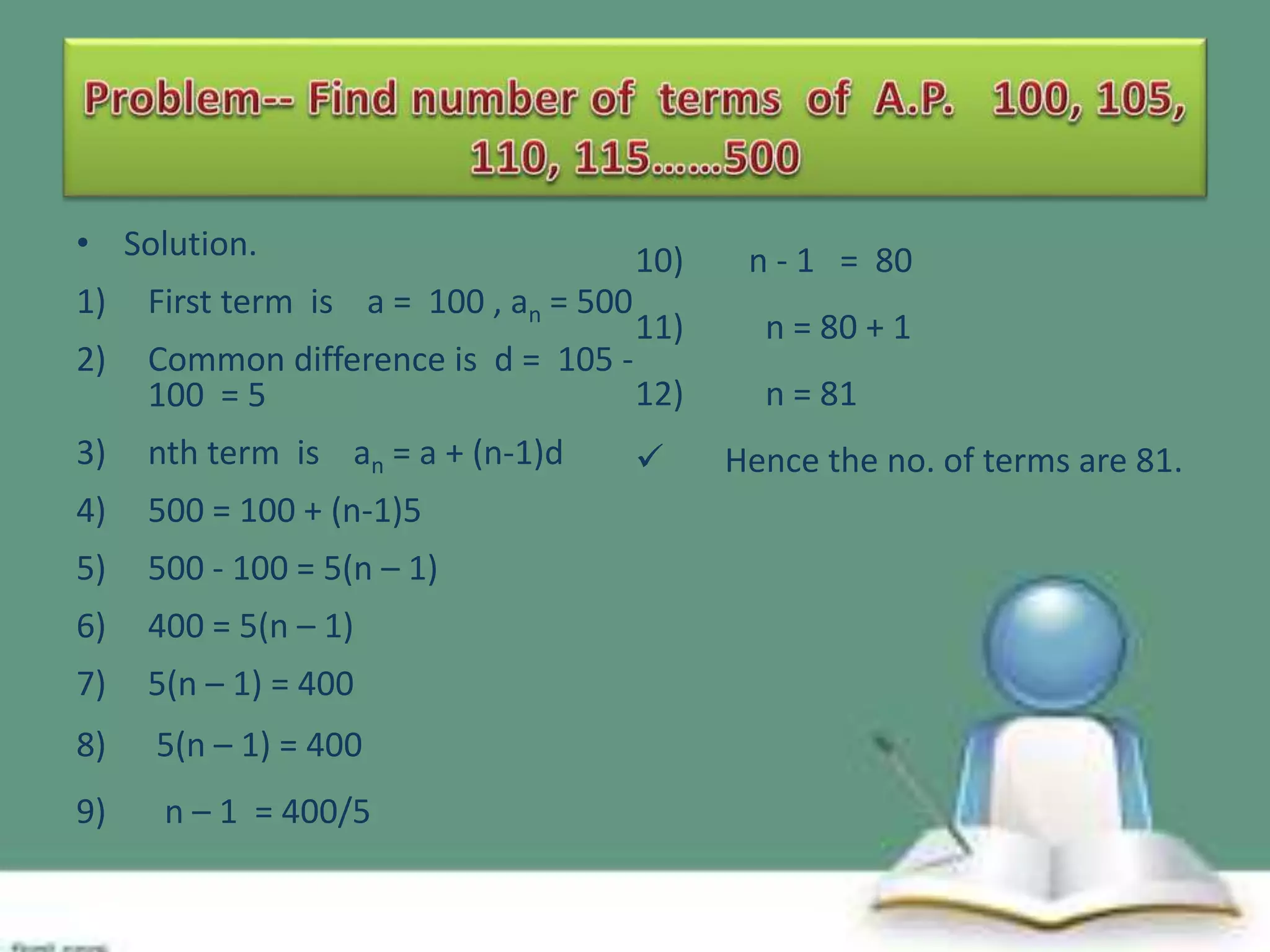
• Solution.

10)

n - 1 = 80

11)

n = 80 + 1

1)

First term is a = 100 , an = 500

2)

Common difference is d = 105 12)
100 = 5

3)

nth term is an = a + (n-1)d

4)

500 = 100 + (n-1)5

5)

500 - 100 = 5(n – 1)

6)

400 = 5(n – 1)

7)

5(n – 1) = 400

8)

5(n – 1) = 400

9)

n – 1 = 400/5



n = 81
Hence the no. of terms are 81.
Arithmetic progression

Arithmetic progression

  • 1.
  • 2.
     Arithmetic Sequenceis a sequence of numbers such that the difference between the consecutive terms is constant.  For instance, the sequence 5, 7, 9, 11, 13, 15 … is an arithmetic progression with common difference of 2. &  2,6,18,54(next term to the term is to be obtained by multiplying by 3. Arithmetic Sequence
  • 4.
    Arithmetic Progression If variousterms of a sequence are formed by adding a fixed number to the previous term or the difference between two successive terms is a fixed number, then the sequence is called AP. e.g.1) 2, 4, 6, 8, ……… the sequence of even numbers is an example of AP  2) 5, 10, 15, 20, 25….. In this each term is obtained by adding 5 to the preceding term except first term.
  • 5.
     If theinitial term of an arithmetic progression is a1 and the common difference of successive members is d, then the nth term of the sequence (an) is given by:  and in general
  • 6.
    • A finiteportion of an arithmetic progression is called a finite arithmetic progression and sometimes just called an arithmetic progression. The sum of a finite arithmetic progression is called an Arithmetic series. • The behavior of the arithmetic progression depends on the common difference d. If the common difference is:  Positive, the members (terms) will grow towards positive infinity.  Negative, the members (terms) will grow towards negative infinity.
  • 7.
    Common Difference     If wetake first term of an AP as a and Common Difference as d. Then-nth term of that AP will be An = a + (n-1)d. For instance--- 3, 7, 11, 15, 19 … d =4 a =3 Notice in this sequence that if we find the difference between any term and the term before it we always get 4.  4 is then called the common difference and is denoted with the letter d.  To get to the next term in the sequence we would add 4 so a recursive formula for this sequence is: an  an1  4  The first term in the sequence would be a1 which is sometimes just written as a.
  • 8.
    Example Let a=2, d=2,n=12,find An An=a+(n-1)d =2+(12-1)2 =2+(11)2 =2+22 Therefore, An=24 Hence solved.
  • 9.
    The difference betweentwo terms of an AP The difference between two terms of an AP can be formulated as below:nth term – kth term = t(n) – t(k) = {a + (n-1)d} – { a + (k-1) d } = a + nd – d – a – kd + d = nd – kd Hence, t(n) – t(k) = (n – k) d
  • 10.
    General Formulas ofAP • The general forms of an AP is a,(a+d), (a+2d),. .. , a + ( m - 1)d. i. Nth term of the AP is Tn =a+(n-1)d. ii. Nth term form the end ={l-(n-1)d}, where l is the last term of the word. iii. Sum of 1st n term of an AP is Sn=N/2{2a=(n-1)d}. iv. Also Sn=n/2 (a+1) v. Tn =(sn-Sn-1)
  • 11.
    The sum ofn terms, we find as, Sum = n X [(first term + last term) / 2] Now last term will be = a + (n-1) d Therefore, Sum(Sn) =n X [{a + a + (n-1) d } /2 ] = n/2 [ 2a + (n+1)d]
  • 12.
    • Solution. 10) n -1 = 80 11) n = 80 + 1 1) First term is a = 100 , an = 500 2) Common difference is d = 105 12) 100 = 5 3) nth term is an = a + (n-1)d 4) 500 = 100 + (n-1)5 5) 500 - 100 = 5(n – 1) 6) 400 = 5(n – 1) 7) 5(n – 1) = 400 8) 5(n – 1) = 400 9) n – 1 = 400/5  n = 81 Hence the no. of terms are 81.