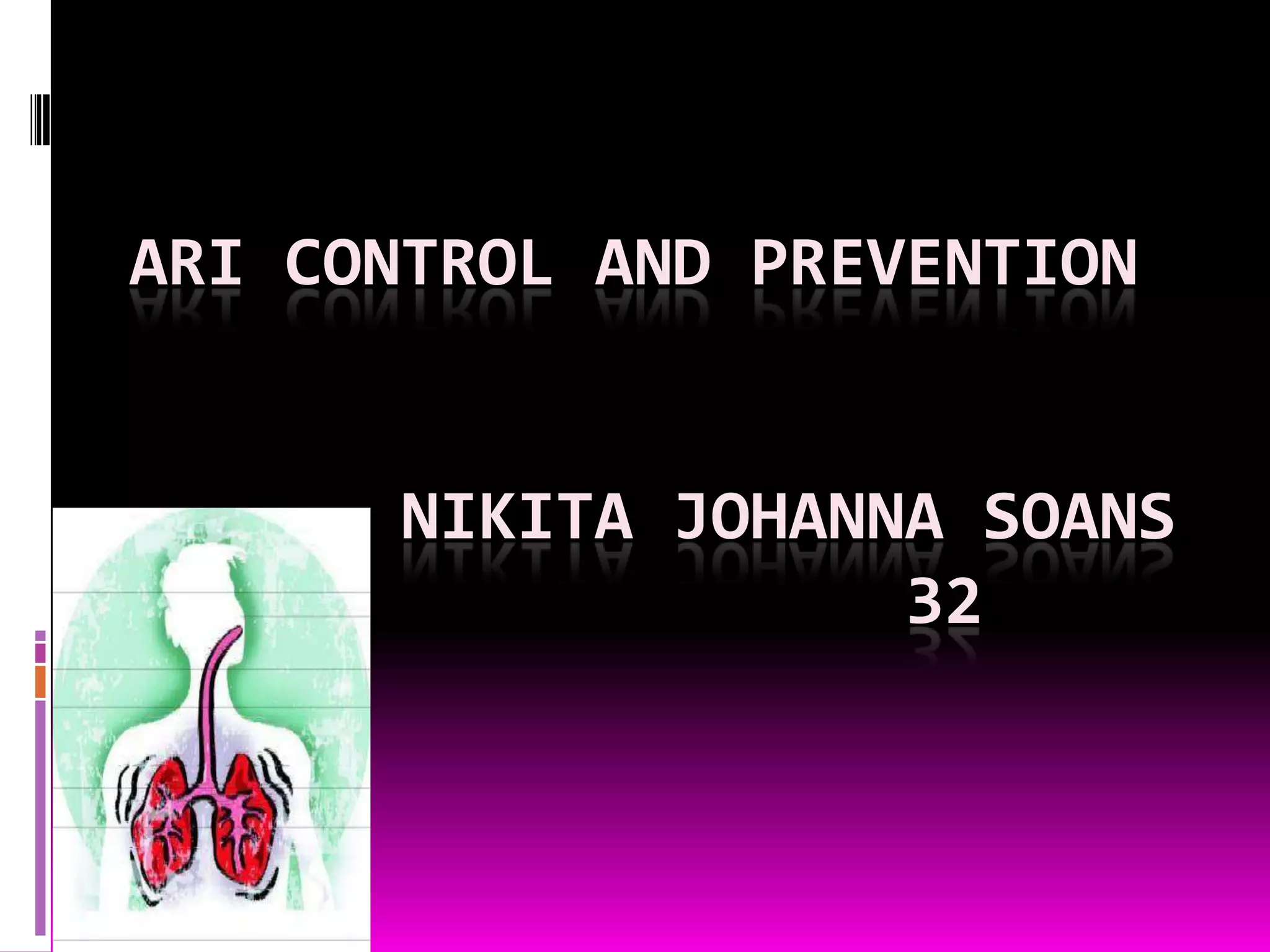
ARI CONTROL AND PREVENTION

NIKITA JOHANNA SOANS
32
ARI control
 Improving the primary medical care services and

developing better methods for early detection ,
treatment and prevention of acute respiratory
infection is the best way to control ARI
 mortality rate due to pneumonia is reduced if
treated correctly
 Education of mothers about pneumonia because
compliance with treatment and seeking proper
care when child suffers determine outcome of
the disease
WHO recommendation for management
of ARI
Clinical assesment
 History taking and management are very
important
 Note :1)age
 2)feeding habits
 3)fever
 4)convulsions
 5)irregular breathing
 6)history of treatment during the illness
 7)activity
Physical examination
1:count the breaths in one minute
 Breathing count depends on the age of the child
 Count respiratory rate for a minute
 Fast breathing is present when RR is
-60 breaths /min or more in a child less than two
months of age
-50/min or more in child aged 2months upto 12
months
-40 breaths/min or more in a child aged 12 months
upto 5 years
Chest indrawing
 Look for chest indrawing when child breaths IN
 Child has indrawing if the lower chest wall goes in

when the child breaths IN
 Occurs when the effort required to breath in ,is much
greater than normal

Stridor
 Harsh noise while breathing IN is stridor
 Occurs due to narrowing of trachea ,larynx or
epiglottis
 These conditions often called croup
Wheeze
 A child with wheeze makes a soft whistling noise

OR

shows signs that breathing OUT is difficult
 This is due to narrowing of the air passages

Fever
 Check for body temperature

Cyanosis
 Sign of hypoxia
Malnutrition
 If malnutrition is present its high risk
and case fatality rates are higher
 In severely malnourished:

1) children with pneumonia, fast
breathing and chest indrawing may
not be evident
2)Impaired or absent response to
hypoxia and a weak or absent cough
reflex
3)Careful evaluation and
mangement
ARI control programmes
ARI control in children
• ARI is an episode of acute symptoms & signs

resulting from infection of any part of respiratory
tract & related structures
• Constitutes 22-66% of outpatients & 12-45% of
inpatients
• In India: 10-50 children die per 10,000 episodes
of ARI
ARI control programmes
• Crux of the program is to identify children with
ARI at the community level by training the field

workers to recognize easily & reliably identifiable
clinical signs of ARI & early reference
WHO protocol comprises 3 steps:
1. Case finding & Assessment
2. Case Classification
3. Institution of appropriate therapy
Step 1: Case finding & Assessment
• Cough & difficult breathing in children < 5 years
age
• Fever is not an efficient criteria
Step 2: Case Classification
• Children grouped into 2:


Infants < 2months & Older children

• Specific signs to be looked: In younger children
like feeding difficulty, lethargy, hypothermia,

convulsions
In infants < 2 months
• Pneumonia is diagnosed if RR 60/min with

other clinical signs
• All should be hospitalized
• All should receive IV medications
• Minimum duration of 10 days
• Combination of Ampicillin & Gentamicin
step 3:Institution of appropriate
therapy
 Antibiotics
Prevention of ARI
 Breastfeeding infants exclusively (no other

food or drinks, not even water) for the first six
months breast milk has excellent nutritional
value and it contains the mother’s antibodies
which help to protect the infant from
infection.
 Avoiding irritation of the respiratory tract by

indoor air pollution, such as smoke from
cooking fires; avoid the use of dried cow dung
as fuel for indoor fires.
 Immunization of all children with the routine
Expanded Programme on Immunization
 Feeding children with adequate amounts of
varied and nutritious food to keep their
immune system strong.
 control the spread of respiratory bacteria by

educating parents to avoid contact as much as
possible between their children and patients who
have ARIs.
 people with ARIs should cough or sneeze away
from others, hold a cloth to the nose and mouth
to catch the airborne droplets when coughing or
sneezing
 Immunization also increases control, by
reducing the reservoir of infection in the
community and increasing the level of herd
immunity
immunization
measles vaccine
 Pneumonia is a serious complication of measles
 Reducing the incidence of measles helps reduce





death from pneumonia
Live attenuated vaccine
Freeze dried product
0.5ml dose subcutaneously also effective
intramuscularly
Schedule :9 th month
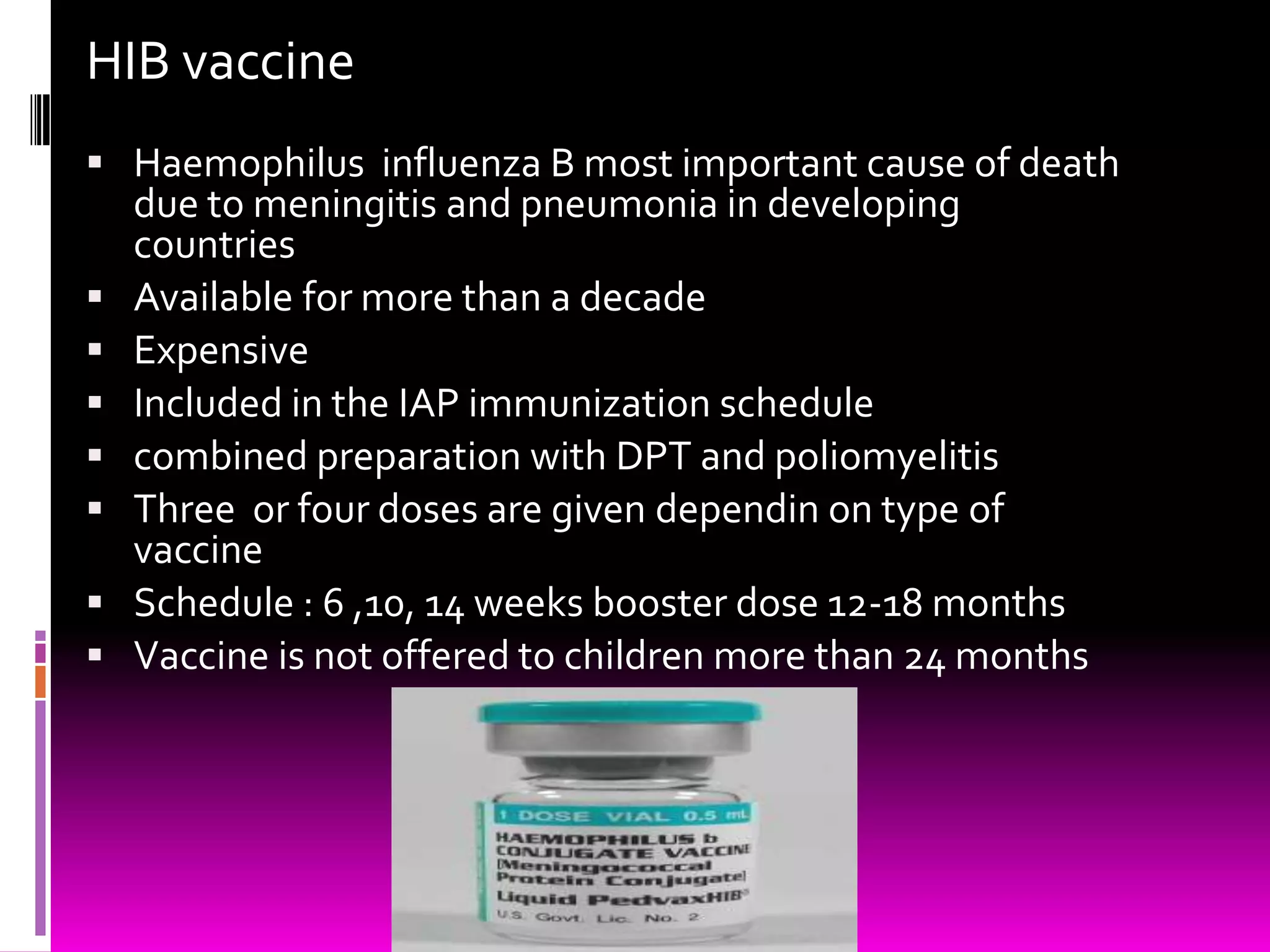
HIB vaccine
 Haemophilus influenza B most important cause of death








due to meningitis and pneumonia in developing
countries
Available for more than a decade
Expensive
Included in the IAP immunization schedule
combined preparation with DPT and poliomyelitis
Three or four doses are given dependin on type of
vaccine
Schedule : 6 ,10, 14 weeks booster dose 12-18 months
Vaccine is not offered to children more than 24 months
Pneumococcal vaccine
A)ppv23: polysaccharide non
conjugate vaccine containing
capsular antigen of 23 serotypes
against this infection
 Children under two years and
immunocompromised do not
respond well to this vaccine
 Select groups –sickle cell disease
,chronic heart disease , DM,
organ transplants etc
 Dose -0.5ml
 Administration – intramuscular
in the deltoid
Pcv-7: pneumococcal conjugate vaccine
 New vaccine suitable for infants and toddlers
 It is included in the IAP immunization schedule

 Induces a t- cell dependent immune response
 Prevents pneumococcal pneumonia and
meningitis moderately effective against otitis

media
 dose- 1)6,10,14 weeks ,booster after 12 months
OR
 2)2, 4,6 months and booster after 12 months
 administration-intramuscular
thank you 

Acute respiratory infection control and prevention

  • 1.
    ARI CONTROL ANDPREVENTION NIKITA JOHANNA SOANS 32
  • 2.
    ARI control  Improvingthe primary medical care services and developing better methods for early detection , treatment and prevention of acute respiratory infection is the best way to control ARI  mortality rate due to pneumonia is reduced if treated correctly  Education of mothers about pneumonia because compliance with treatment and seeking proper care when child suffers determine outcome of the disease
  • 3.
    WHO recommendation formanagement of ARI Clinical assesment  History taking and management are very important  Note :1)age  2)feeding habits  3)fever  4)convulsions  5)irregular breathing  6)history of treatment during the illness  7)activity
  • 4.
    Physical examination 1:count thebreaths in one minute  Breathing count depends on the age of the child  Count respiratory rate for a minute  Fast breathing is present when RR is -60 breaths /min or more in a child less than two months of age -50/min or more in child aged 2months upto 12 months -40 breaths/min or more in a child aged 12 months upto 5 years
  • 5.
    Chest indrawing  Lookfor chest indrawing when child breaths IN  Child has indrawing if the lower chest wall goes in when the child breaths IN  Occurs when the effort required to breath in ,is much greater than normal Stridor  Harsh noise while breathing IN is stridor  Occurs due to narrowing of trachea ,larynx or epiglottis  These conditions often called croup
  • 6.
    Wheeze  A childwith wheeze makes a soft whistling noise OR  shows signs that breathing OUT is difficult  This is due to narrowing of the air passages Fever  Check for body temperature Cyanosis  Sign of hypoxia
  • 7.
    Malnutrition  If malnutritionis present its high risk and case fatality rates are higher  In severely malnourished: 1) children with pneumonia, fast breathing and chest indrawing may not be evident 2)Impaired or absent response to hypoxia and a weak or absent cough reflex 3)Careful evaluation and mangement
  • 8.
    ARI control programmes ARIcontrol in children • ARI is an episode of acute symptoms & signs resulting from infection of any part of respiratory tract & related structures • Constitutes 22-66% of outpatients & 12-45% of inpatients • In India: 10-50 children die per 10,000 episodes of ARI
  • 9.
    ARI control programmes •Crux of the program is to identify children with ARI at the community level by training the field workers to recognize easily & reliably identifiable clinical signs of ARI & early reference WHO protocol comprises 3 steps: 1. Case finding & Assessment 2. Case Classification 3. Institution of appropriate therapy
  • 10.
    Step 1: Casefinding & Assessment • Cough & difficult breathing in children < 5 years age • Fever is not an efficient criteria
  • 11.
    Step 2: CaseClassification • Children grouped into 2:  Infants < 2months & Older children • Specific signs to be looked: In younger children like feeding difficulty, lethargy, hypothermia, convulsions
  • 12.
    In infants <2 months • Pneumonia is diagnosed if RR 60/min with other clinical signs • All should be hospitalized • All should receive IV medications • Minimum duration of 10 days • Combination of Ampicillin & Gentamicin
  • 13.
    step 3:Institution ofappropriate therapy  Antibiotics
  • 14.
    Prevention of ARI Breastfeeding infants exclusively (no other food or drinks, not even water) for the first six months breast milk has excellent nutritional value and it contains the mother’s antibodies which help to protect the infant from infection.
  • 15.
     Avoiding irritationof the respiratory tract by indoor air pollution, such as smoke from cooking fires; avoid the use of dried cow dung as fuel for indoor fires.  Immunization of all children with the routine Expanded Programme on Immunization  Feeding children with adequate amounts of varied and nutritious food to keep their immune system strong.
  • 16.
     control thespread of respiratory bacteria by educating parents to avoid contact as much as possible between their children and patients who have ARIs.  people with ARIs should cough or sneeze away from others, hold a cloth to the nose and mouth to catch the airborne droplets when coughing or sneezing  Immunization also increases control, by reducing the reservoir of infection in the community and increasing the level of herd immunity
  • 17.
  • 18.
    measles vaccine  Pneumoniais a serious complication of measles  Reducing the incidence of measles helps reduce     death from pneumonia Live attenuated vaccine Freeze dried product 0.5ml dose subcutaneously also effective intramuscularly Schedule :9 th month
  • 19.
    HIB vaccine  Haemophilusinfluenza B most important cause of death        due to meningitis and pneumonia in developing countries Available for more than a decade Expensive Included in the IAP immunization schedule combined preparation with DPT and poliomyelitis Three or four doses are given dependin on type of vaccine Schedule : 6 ,10, 14 weeks booster dose 12-18 months Vaccine is not offered to children more than 24 months
  • 20.
    Pneumococcal vaccine A)ppv23: polysaccharidenon conjugate vaccine containing capsular antigen of 23 serotypes against this infection  Children under two years and immunocompromised do not respond well to this vaccine  Select groups –sickle cell disease ,chronic heart disease , DM, organ transplants etc  Dose -0.5ml  Administration – intramuscular in the deltoid
  • 21.
    Pcv-7: pneumococcal conjugatevaccine  New vaccine suitable for infants and toddlers  It is included in the IAP immunization schedule  Induces a t- cell dependent immune response  Prevents pneumococcal pneumonia and meningitis moderately effective against otitis media  dose- 1)6,10,14 weeks ,booster after 12 months OR  2)2, 4,6 months and booster after 12 months  administration-intramuscular
  • 22.