NationalAcute Respiratory Infections
Control programme
Submitted To: Mrs. Bina Barla Submitted By: Ambika Mehta
Subject coordinator, Roll no: 01
College of Nursing , Basic B.sc Nursing 4th year
RIMS, Ranchi. College of Nursing, RIMS, Ranchi
Contents
 Introduction of the programme
 History
 Aims Of the programme
 Acute respiratory infection
 Risk Factors
 Sign and symptoms
 Treament
 Prevention
 Hospital Admission and Death
 Strategies of the programme
 Role of nurse
 Summary
 References
 Bibliography
Introduction
Acute Respiratory Infection Control
Programme was initiated as a pilot project in
14 districts in year 1990. The programme
was incorporated in child survival and safe
motherhood (CSSM) programme in the year
1992 later on with Reproductive and Child
Health (RCH) phase I in year 1997. Now
ARI control is one of the components of RCH
phase II.
History
 In the 1980s that acute respiratory
Infections were the largest neglected threat
to child survival in developing countries.
 In response to prevailing relatively high
levels of morbidity and mortality associated
with ARI among children under age 5 years,
Egypt in 1989 established a national
program to fight ARI among such young
children.
 The main control strategy of the program
was standard case management for early
detection and therapy using health care
providers who diagnose and treat children
with ARI , especially pneumonia.
Aims of the
programme
 The ARI programme aims at improving treatment
practices in hospitals and health centers to reduce
mortality rates due to pnuemonia and to reduce the
use of unnecessary an potentially harmful drugs
and overuse of antibiotics for the treatment ARI in
children.
 The programme also aims at early recognition and
appropriate treatment of pneumonia and timely
referral of severe cases for treatment under
medical supervision and hospitalization when
required.
 The primary objective of ARI programme is to
reduce mortality rate in children the main focus of
the training will be on diagnosis and treatment of
pneumonia.
Acute
Respiratory
Infection
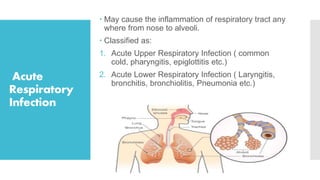
 May cause the inflammation of respiratory tract any
where from nose to alveoli.
 Classified as:
1. Acute Upper Respiratory Infection ( common
cold, pharyngitis, epiglottitis etc.)
2. Acute Lower Respiratory Infection ( Laryngitis,
bronchitis, bronchiolitis, Pneumonia etc.)
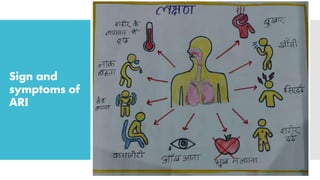
Sign and
symptoms of
ARI
Treatment of
pneumonia
at a health
center
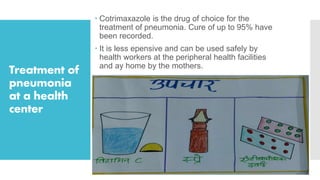
 Cotrimaxazole is the drug of choice for the
treatment of pneumonia. Cure of up to 95% have
been recorded.
 It is less epensive and can be used safely by
health workers at the peripheral health facilities
and ay home by the mothers.
Hospital
Admission
and Death
Strategies of
the
programme
 To ensure standard care management of
pneumonia in children under 5 years by training
medical and other health personnel.
 To train peripheral health staff to recognize and
treat cases of pneumonia.
 To promote timely referral of severe pneumonia by
the peripheral health staff and community.
 To improve maternal knowledge about home
management of coughs and cold and recognition of
early and danger sign for seeking appropriate care.
 To promote immunisation , exclusive breastfeeding
, proper weaning and vitamin A administration.
Role of a
nurse
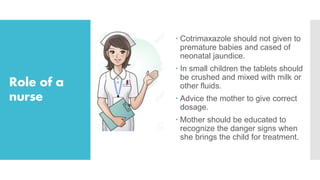
 Cotrimaxazole should not given to
premature babies and cased of
neonatal jaundice.
 In small children the tablets should
be crushed and mixed with milk or
other fluids.
 Advice the mother to give correct
dosage.
 Mother should be educated to
recognize the danger signs when
she brings the child for treatment.
Cont…
 Mother should be advised to keep young infants
warm.
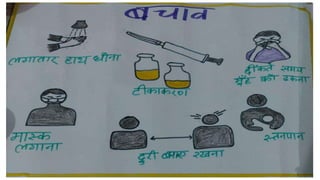
 Exclusive breastfeeding up to 6 months of age.
 DPT and measles vaccination at the appropriate
age.
 Hand washing before feeding and touching the
baby.
 For pneumonia and severe pneumonia referral
should be done.
Evaluation
What is National ARI Programme?
Enlist the aims of the programme.
What is acute respiratory infection?
Enumerate the sign and symptoms of
ARI.
How to treat pneumonia?
Describe the role of nurse.
Summary
Improving the primary medical care services
and developing bettermethods for early
detection, treatment and prevention of acute
respiratory infection is the best way to control
ARI. Mortality rate due to pneumonia is
reduce if treated correctly.
Reference
 Books
 Internet
 Discussion with teacher
Bibliography
 Kamalam S;Essentials in Community Health
Nursing practice;The Health sciences Publishers;
3rd edition;page no-108to109.
 Kumari Neelam ; Essentials of community health
Nursing; PV publications; page no- 310.
 Manivannan Shyamala D; Textbook of community
Health Nursing; CBS publications; volume 2;page
no- 238.
 www.slideshare.net
 en.M.Wikipedia.org
 www.scribd.com
National leprosy eradication program CHN

National leprosy eradication program CHN

  • 1.
    NationalAcute Respiratory Infections Controlprogramme Submitted To: Mrs. Bina Barla Submitted By: Ambika Mehta Subject coordinator, Roll no: 01 College of Nursing , Basic B.sc Nursing 4th year RIMS, Ranchi. College of Nursing, RIMS, Ranchi
  • 2.
    Contents  Introduction ofthe programme  History  Aims Of the programme  Acute respiratory infection  Risk Factors  Sign and symptoms  Treament  Prevention  Hospital Admission and Death  Strategies of the programme  Role of nurse  Summary  References  Bibliography
  • 3.
    Introduction Acute Respiratory InfectionControl Programme was initiated as a pilot project in 14 districts in year 1990. The programme was incorporated in child survival and safe motherhood (CSSM) programme in the year 1992 later on with Reproductive and Child Health (RCH) phase I in year 1997. Now ARI control is one of the components of RCH phase II.
  • 4.
    History  In the1980s that acute respiratory Infections were the largest neglected threat to child survival in developing countries.  In response to prevailing relatively high levels of morbidity and mortality associated with ARI among children under age 5 years, Egypt in 1989 established a national program to fight ARI among such young children.  The main control strategy of the program was standard case management for early detection and therapy using health care providers who diagnose and treat children with ARI , especially pneumonia.
  • 5.
    Aims of the programme The ARI programme aims at improving treatment practices in hospitals and health centers to reduce mortality rates due to pnuemonia and to reduce the use of unnecessary an potentially harmful drugs and overuse of antibiotics for the treatment ARI in children.  The programme also aims at early recognition and appropriate treatment of pneumonia and timely referral of severe cases for treatment under medical supervision and hospitalization when required.  The primary objective of ARI programme is to reduce mortality rate in children the main focus of the training will be on diagnosis and treatment of pneumonia.
  • 6.
    Acute Respiratory Infection  May causethe inflammation of respiratory tract any where from nose to alveoli.  Classified as: 1. Acute Upper Respiratory Infection ( common cold, pharyngitis, epiglottitis etc.) 2. Acute Lower Respiratory Infection ( Laryngitis, bronchitis, bronchiolitis, Pneumonia etc.)
  • 8.
  • 9.
    Treatment of pneumonia at ahealth center  Cotrimaxazole is the drug of choice for the treatment of pneumonia. Cure of up to 95% have been recorded.  It is less epensive and can be used safely by health workers at the peripheral health facilities and ay home by the mothers.
  • 11.
  • 12.
    Strategies of the programme  Toensure standard care management of pneumonia in children under 5 years by training medical and other health personnel.  To train peripheral health staff to recognize and treat cases of pneumonia.  To promote timely referral of severe pneumonia by the peripheral health staff and community.  To improve maternal knowledge about home management of coughs and cold and recognition of early and danger sign for seeking appropriate care.  To promote immunisation , exclusive breastfeeding , proper weaning and vitamin A administration.
  • 13.
    Role of a nurse Cotrimaxazole should not given to premature babies and cased of neonatal jaundice.  In small children the tablets should be crushed and mixed with milk or other fluids.  Advice the mother to give correct dosage.  Mother should be educated to recognize the danger signs when she brings the child for treatment.
  • 14.
    Cont…  Mother shouldbe advised to keep young infants warm.  Exclusive breastfeeding up to 6 months of age.  DPT and measles vaccination at the appropriate age.  Hand washing before feeding and touching the baby.  For pneumonia and severe pneumonia referral should be done.
  • 15.
    Evaluation What is NationalARI Programme? Enlist the aims of the programme. What is acute respiratory infection? Enumerate the sign and symptoms of ARI. How to treat pneumonia? Describe the role of nurse.
  • 16.
    Summary Improving the primarymedical care services and developing bettermethods for early detection, treatment and prevention of acute respiratory infection is the best way to control ARI. Mortality rate due to pneumonia is reduce if treated correctly.
  • 17.
    Reference  Books  Internet Discussion with teacher
  • 18.
    Bibliography  Kamalam S;Essentialsin Community Health Nursing practice;The Health sciences Publishers; 3rd edition;page no-108to109.  Kumari Neelam ; Essentials of community health Nursing; PV publications; page no- 310.  Manivannan Shyamala D; Textbook of community Health Nursing; CBS publications; volume 2;page no- 238.  www.slideshare.net  en.M.Wikipedia.org  www.scribd.com