ACUTE
RESPIRATORY
INFECTION
PRSENTED BY- RISHABH
NAHAR
ROHIT
MAHESHWARI
CONTENT
 INTRODUCTION
 EPIDEMIOLOGY
 CLASSIFICATION
 FACTORS AFFECTING
 UPPER RESPIRATORY INFECTION
 COMMON COLD
 TONSILITIS
 LOWER RESPIRATORY INFECTION
 BRONCHI LITIS
 PNEUMONIA
 IMNCI
 OBJECTIVE IMNCI
 COMPONENT
 ADVANTAGE OF INTREGETED APPROACH
 REFERENCES
ACUTE RESPIRATORY
INFECTIONS
Infections of the respiratory tract are described in
a number of different ways according to the
general areas of involvement in the more
common infections.
The upper respiratory tract or upper airway
consists of primarily of the nose and pharynx.
The lower respiratory tract consists of bronchi
and bronchioles.
CHILDREN WITH ARI PRESENTING
IN OPD
Place % of children
London (UK) 35.0
Herston (Australia) 34
Ethiopia (Whole country) 25.5
Sau aulo (Brazil) 41.8
India 38.9
Nepal 37.6
EPIDEMIOLOGY
 Varied agents – Bacteria and viruses
 Clinical picture may vary with etiological
agent
 May be present in normal people but
may cause disease in only few.
Factors Affecting Acute Respiratory
Infections:
 Nature of infectious agent: The respiratory tract subjected
to a wide variety of infectious agents.
 Age of child: Children of preschool and school age are more
often exposed to infectious agents generally after 3 months of
age infants have less resistance to infections.
 Size of child: Airways are smaller in young children and more
subjected to considerable narrowing from edema.
 Ability to resist invading organisms: School age children
have greater resistance to infection than infants and young
children.
 Presence of great conditions:Malnutrition, anemia,
fatigue, chilling of the body and immune deficiencies
decrease normal resistance to infection.
 Presence of disorders affecting respiratory tract:
Allergies, cardiac abnormalities and cystic fibrosis
weaken respiratory defense mechanism.
 Seasons: The most common respiratory tract
pathogens appear in epidemics during winter and
spring months.
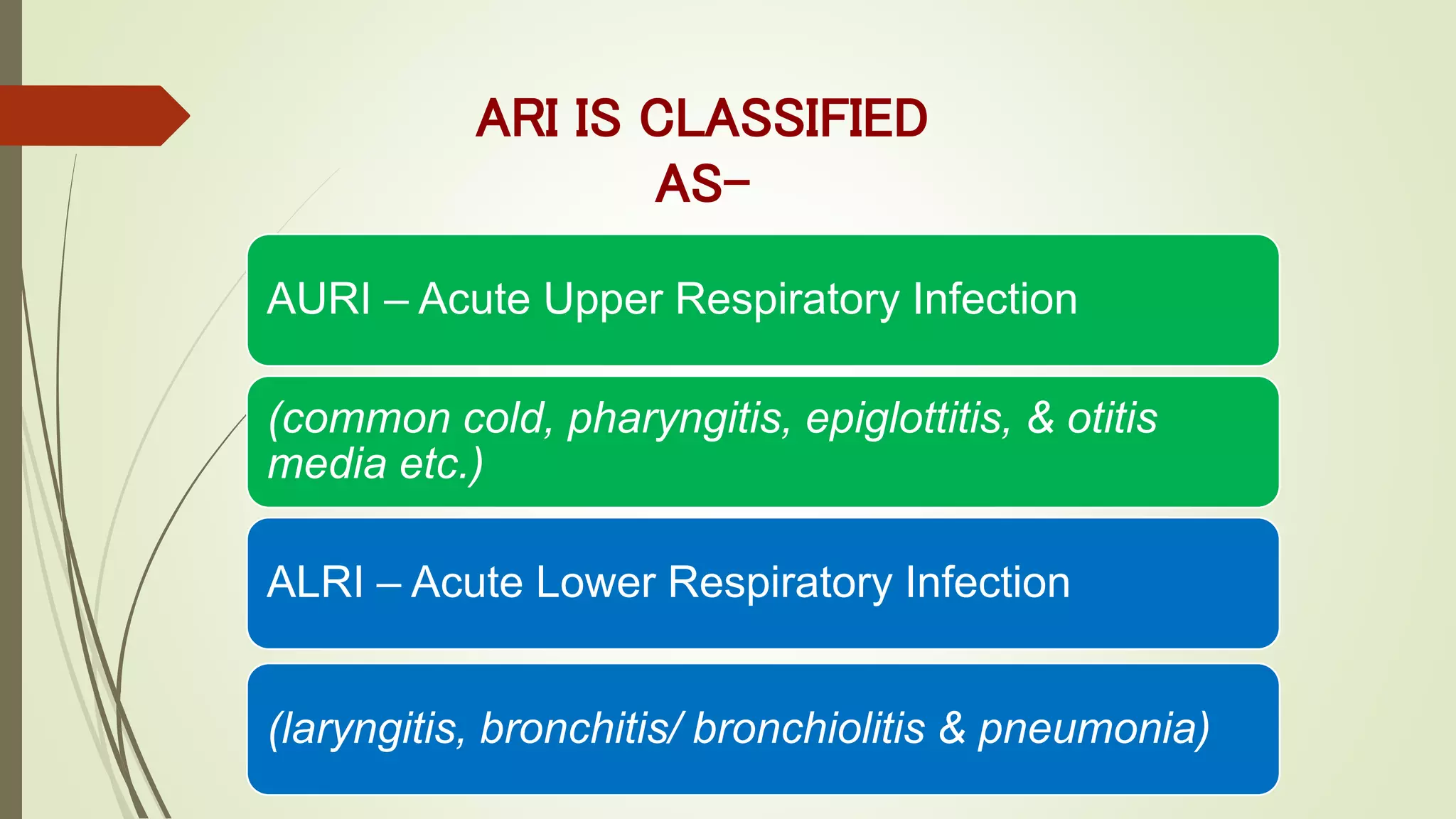
ARI IS CLASSIFIED
AS-
AURI – Acute Upper Respiratory Infection
(common cold, pharyngitis, epiglottitis, & otitis
media etc.)
ALRI – Acute Lower Respiratory Infection
(laryngitis, bronchitis/ bronchiolitis & pneumonia)
UPPER RESPIRATORY TRACT
INFECTIONS;
THE COMMON COLD
 Children average 8 episodes per year, adults 3 episodes per
year
 Etiologies : Rhinoviruses 30 to 35%
Coronaviruses about 10%
Miscellaneous known viruses about 20%
Influenza and adenovirus-30%
Presumed undiscovered viruses up to 35%
Group A streptococci 5% to 10%
THE COMMON COLD
 Common symptoms are sore throat, runny
nose, nasal congestion, sneezing.
 Sometimes accompanied by conjunctivitis,
fatigue.
 Sinusitis often present by CT scan;
“rhinosinusitis” might be a better term
THE COMMON COLD
THE COMMON COLD
CLINICAL FEATURES:-
 Incubation period 12-72 hours
 Nasal obstruction, drainage, sneezing,
scratchy throat
 Median duration 1 week but 25% can last 2
weeks
 Pharyngeal erythema is commoner with
adenovirus than with rhino or coronavirus
TREATMENT
• Rapid antigen tests for group A
streptococcus.
• Rapid techniques for influenza,
RSV, para influenza.
• Treat with NSAIDs.
•And prevent from cold atmosphere.
UPPER RESPIRATORY TRACT
INFECTIONS :TONSILLITIS
 Tonsillitis is a viral or bacterial infection in the throat that
causes inflammation of the tonsils.
 In the first six months of life tonsils provide a useful
defense against infections. Tonsillitis is one of the most
common ailments in pre-school children, but it can also
occur at any age.
 Children are most often affected from around the age of
three or four, when they start nursery or school and come
into contact with many new infections.
 A child may have tonsillitis if he/she has a sore throat, a
fever and is off food.
PALATINE TONSILS
(Visible during oral
examination)
CAUSES OF TONSILITIS
 Tonsillitis is caused by a variety of
contagious viral and bacterial infections.
 It is spread by close contact with other
individuals and occurs more during winter
periods.
 The most common bacterium causing
tonsillitis is streptococcus.
ADVICE AND TREATMENT:
 Encourage bed rest.
 Introduce soft liquid diet according to the child’s preferences.
 Provide cool mist atmosphere to keep the mucous membranes
moist during periods of mouth breathing.
 Warm saline gargles & paracetamol are useful to promote
comfort.
 If antibiotics are prescribed, counsel the child’s parents
regarding the necessity of completing the treatment period
Surgical removal of chronic tonsillitis
(tonsillectomy) is controversial. Generally,
tonsils should not
removed before 3 or 4 yrs of age,
because of the problem of excessive blood
loss & the possibility of
re-growth or hypertrophy of lymphoid
tissue, in young children.
MANAGEMENT
LOWER RESPIRATORY
TRACT INFECTIONS
 BRONCHITIS/BRONCHIOLITIS
 PNEUMONIA
LOWER RESPIRATORY
TRACT INFECTIONS:BRONCHIOLITIS
 Inflammatory disease of the
bronchioles
 Peak age of onset : 6 months
 Male : female :- 2:1
 Occurs mostly in winter/spring
BRONCHIOLITIS :
CLINICAL FEATURES
 Coryza with cough followed by worsening
breathlessness
 Vomiting
 Irritability
 Wheeze
 Feeding difficulty
 Episodes of apnoea
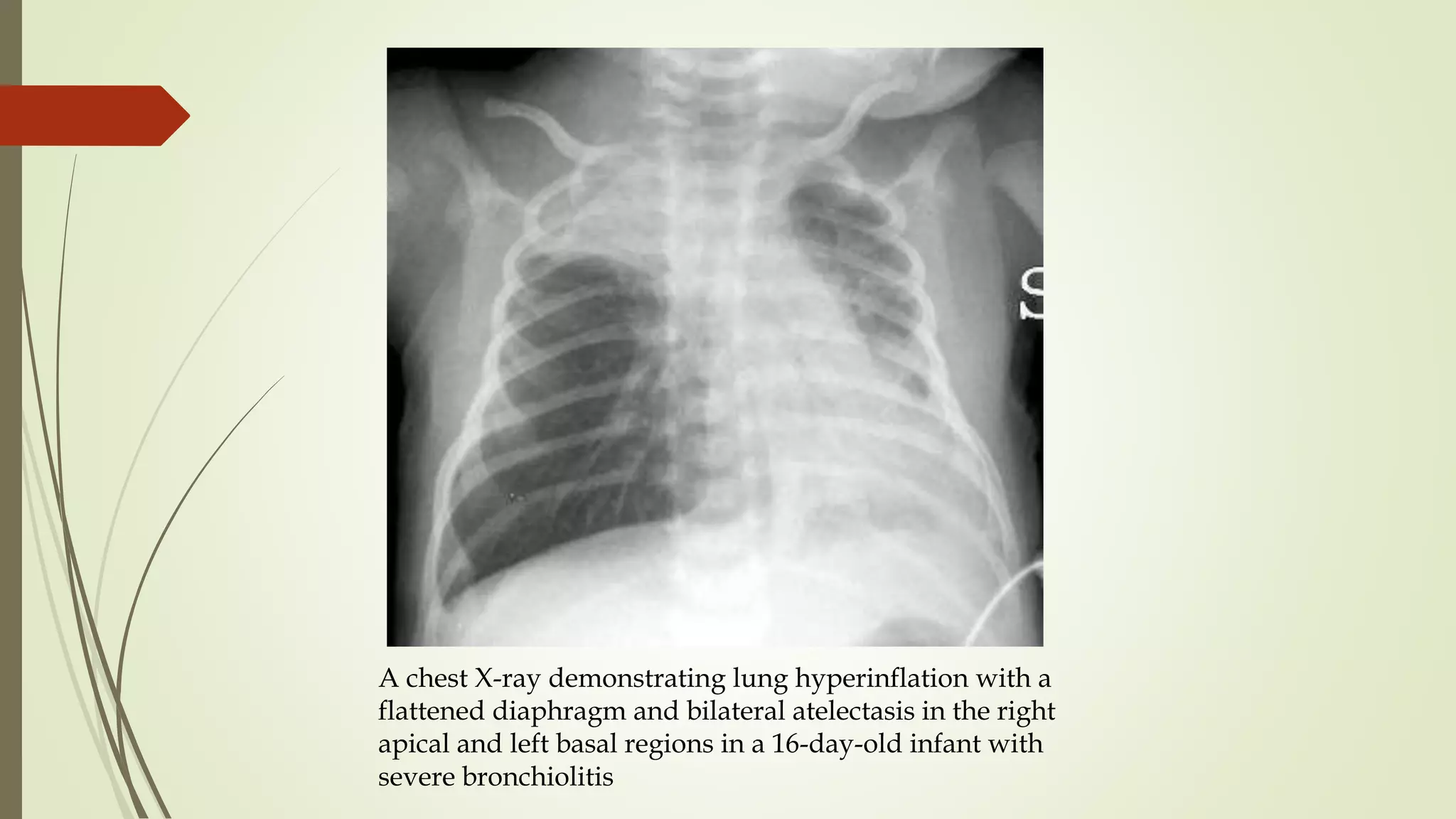
A chest X-ray demonstrating lung hyperinflation with a
flattened diaphragm and bilateral atelectasis in the right
apical and left basal regions in a 16-day-old infant with
severe bronchiolitis
MANAGEMENT
• TREATMENT
• Mainly supportive
• Prop up (30 – 40 degrees)
• Oxygen inhalation (achieve o2 >92%)
• If tachypneic, limit the oral feeds and use a nasogastic tube
for feeding
• Parenteral fluids to limit dehydration
• Correct resp. acidosis and electrolyte imbalance
• Bronchodilators for wheeze (nebulized adrenaline)
• Mechanical ventilation (severe resp. distress )
PREVENTION
LOWER RESPIRATORY
TRACT INFECTIONS:PNEUMONIA
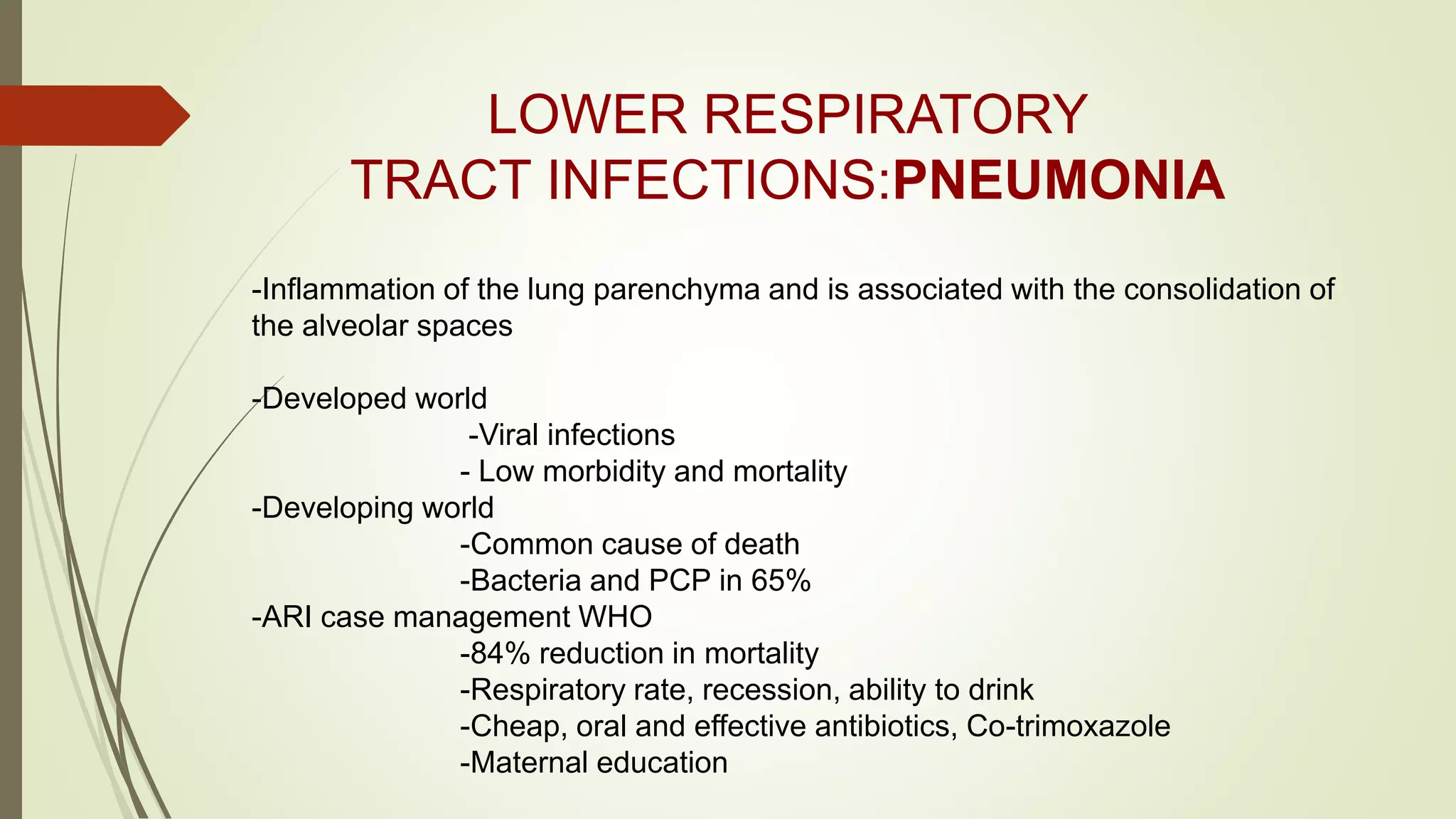
-Inflammation of the lung parenchyma and is associated with the consolidation of
the alveolar spaces
-Developed world
-Viral infections
- Low morbidity and mortality
-Developing world
-Common cause of death
-Bacteria and PCP in 65%
-ARI case management WHO
-84% reduction in mortality
-Respiratory rate, recession, ability to drink
-Cheap, oral and effective antibiotics, Co-trimoxazole
-Maternal education
PNEUMONIA:
ETIOLOGY
•Vary according to-
Age, immune status, where contracted
•Developing countries
S. pneumoniae, H. influenzae, S aureus
Viruses 40%
Other: Mycoplasma, Chlamydia, Moraxella
•Developed countries
Viruses: RSV, Adenovirus, Parainfluenza, Influenza
Mycoplasma pneumoniae and Chlamydia
Pneumoniae Bacteria: 5-10%
PNEUMONIA:
HIGH RISK CHILDREN FOR
PNEUMONIA
•Significant risk factors are younger age (2-6 months), low parental
education, smoking at home, prematurity, low birth weight,
weaning from breast milk at < 6 months, a negative history of
diphtheria, pertussis and tetanus vaccination, anemia,
malnutrition and overcrowding.
•Infection rate higher in siblings of school children who introduce
infection in the household.
•Other risk factors
Immunodeficiency
Cystic fibrosis
Sickle cell disease
Tracheostomy in situ
PNEUMONIA:
DANGER SIGNS
•Sign of respiratory distress; nasal flaring & chest
Indrawing
•Younger than 2 months
•Decreased level of consciousness
•Stridor when calm
•Severe malnutrition
•Associated symptomatic HIV/AIDS
PNEUMONIA:
SIGNS OF RESPIRATORY DISTRESS
PNEUMONIA:
SIGNS OF RESPIRATORY DISTRESS
PNEUMONIA:RADIOLOGY
Bacterial
– Poorly demarcated
alveolar opacities with
air bronchograms
– Lobar or segmental
opacification
PNEUMONIA:RADIOLOGY
Viral
– Perihilar streaking,
Interstitial changes,
air trapping
COMPLICATIONS OF
PNEUMONIA
Empyema
 Lung abscess
 Pneumothorax
 Pleural effusion
 Delayed resolution
 Respiratory failure
 Metastatic septic lesions
 Meningitis
 Otitis media
 Sinusitis
PNEUMONIA:TREATMENT
Antibiotics
Under 5 yrs
-First line treatment :- amoxicillin
-Alternatives : coamoxiclav, cefaclor,(for typical)
macrolides (for atypical)
Over 5 yrs
-First line treatment :- Erythromycin 6 hourly daily/ doxacyclin 12 hourly
-Alternatives :-macrolide or flucloxacillin + amoxicillin
-Modrately :-ceftriaxone IV or erythromycin
-severely :-ceftriaxone IV and azithromycin IV ones day
PNEUMONIA:TREATMENT
CONT..
•Oxygen
- intranasaly
•Hydration
-50 – 80ml/kg/day
•Temperature control
•Airway obstruction management
•Chest drain :- for fluid or pus collection in chest
(empyema)
PNEUMONIA:PROGNOSIS
 Most children recover without residual damage
Incorrect treatment leads to tissue destruction and
Bronchiectasis
Half of children with pneumonia secondary to
measles or adenovirus have persistent airway
obstruction
PNEUMONIA:PREVENTION AND CONTROL
OF ARIs
Early diagnosis of pneumonia and the warning signs of
severe disease and prompt management – key factors
which determine the outcome of disease
Guidelines have been given by WHO regarding
management and use of antibiotics.
Recent changes – Management as per the
IMNCI protocol
PNEUMONIA:VACCINATION
 MEASLES
 HIB VACCINE
 PNEUMOCOCCAL
PNEUMONIA
THE INTEGRATYED
MANAGEMENT OF
NEONATAL AND
CHILDHOOD ILLNESS
(IMNCI)
INTRODUCTION
- 10 million children/ year- die in developing
countries due to acute respiratory infections,
diarrhoea, malaria, malnutrition
- 1990-WHO+UNICEF +other agencies- (IMCI)
- India adopted as (IMNCI).
- According to PSM(park)- NFHS.III report highlight that
ARI 17%, Diarrhoea 13%, malnutrition 43%
IMNCI HAVE TWO GROUPS OF CHILDREN
0-2 months Young
infants.
2 months to 5 years
Children
OBJECTIVE
IMPROVE
GROWTH AND
DEVELOPMENT
DURING THE
FIRST 5 YEARS
OF A CHILD'S
LIFE
REDUCE
FREQUENCY
AND SEVERITY
OF ILLNESS
AND
DISABILITY
REDUCE
MORTALITY
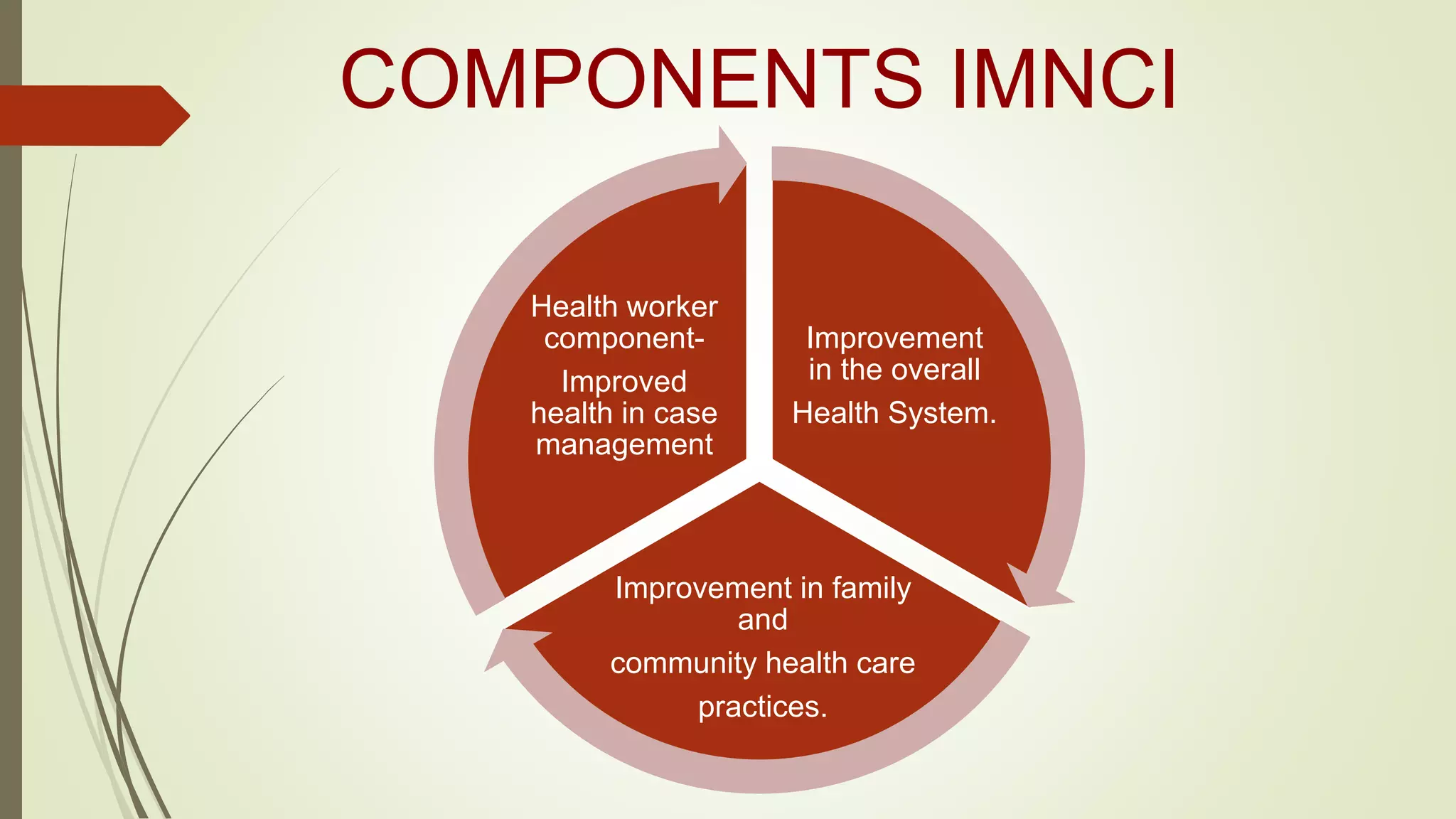
Improvement
in the overall
Health System.
Improvement in family
and
community health care
practices.
Health worker
component-
Improved
health in case
management
COMPONENTS IMNCI
Principle of IMNCI
1. All sick children under 5 years of age must be
examined for conditions which indicate immediate
referral or hospitalization.
2. Children must be routinely assessed for major
symptoms, nutritional and immunization status,
feeding problems and other potential problems.
3. Based on the presence of selected clinical signs,
the child is placed in a ‘classifications’.
Referral
Treatment in
health facility
Management
at home
4. A limited number of essential drugs are used.
5. Counseling of caretakers about home care
including feeding, fluids and when to return to
health facility
6. IMNCI guidelines address most common but
not all pediatric problems.
Care of Newborns and Young Infants
(infants under 2 months)
1. Keeping the child warm.
2. Initiation of breastfeeding immediately after
birth and counseling for exclusive
breastfeeding and non-use of pre lacteal feeds.
3. Cord, skin and eye care.
4. Recognition of illness in newborn and
management and/or referral).
5. Immunization
6. Home visits in the postnatal period.
Care of Infants (2 months to 5 years)
1. Management of diarrhea, acute respiratory
infections, malaria, measles, acute ear infection,
malnutrition and anemia.
2. Recognition of illness and at risk conditions and
management/referral)
3. Prevention and management of Iron and Vitamin A
deficiency.
4. Counseling on feeding for all children below 2 years
5. Counseling on feeding for malnourished children
between 2 to 5 years.
6. Immunization
IMNCI CASE MANAGEMENT PROCESS
Steps of case management process are the
following:
1. Asses the young infant/ child.
2. Classify the illness.
3. Identify the treatment.
4. Treat the young infant/child.
5. Counsel the mother./ Provide follow up care.
ADVANTAGE OF INTEGRATED
APPROACH
• Speeds up the urgent treatment and treatment
seeking practices.
• Prompt recognition of serious condition, hence
prompt referral.
• Involves parents in effective care of baby at
home.
• Partial Success of Individual disease control
program.
ADVANTAGES OF
INTEGRATED
APPROACH
CONT…
• Involves prevention of diseases by active
immunization, Improved nutrition and
exclusive Breastfeeding practices.
• Highly cost effective.
• It avoids wastages of resources by using
most appropriate medicines and treatment.
• It reduces duplication of effort.
REFERENCES
Community medicine and recent advances.- AH
Suryakanta.
Global recommendation on physical health activity for
health.- www.who.int
en.wikipedia.org/wiki/ARI
Textbook of medicine – Davidson
Review of Pharmacology
Medicine text book – review Mathew
www. who.nic.child.imnci

Acute respiratory Infection & IMNCI

  • 1.
  • 2.
    CONTENT  INTRODUCTION  EPIDEMIOLOGY CLASSIFICATION  FACTORS AFFECTING  UPPER RESPIRATORY INFECTION  COMMON COLD  TONSILITIS  LOWER RESPIRATORY INFECTION  BRONCHI LITIS  PNEUMONIA  IMNCI  OBJECTIVE IMNCI  COMPONENT  ADVANTAGE OF INTREGETED APPROACH  REFERENCES
  • 3.
    ACUTE RESPIRATORY INFECTIONS Infections ofthe respiratory tract are described in a number of different ways according to the general areas of involvement in the more common infections. The upper respiratory tract or upper airway consists of primarily of the nose and pharynx. The lower respiratory tract consists of bronchi and bronchioles.
  • 4.
    CHILDREN WITH ARIPRESENTING IN OPD Place % of children London (UK) 35.0 Herston (Australia) 34 Ethiopia (Whole country) 25.5 Sau aulo (Brazil) 41.8 India 38.9 Nepal 37.6
  • 5.
    EPIDEMIOLOGY  Varied agents– Bacteria and viruses  Clinical picture may vary with etiological agent  May be present in normal people but may cause disease in only few.
  • 6.
    Factors Affecting AcuteRespiratory Infections:  Nature of infectious agent: The respiratory tract subjected to a wide variety of infectious agents.  Age of child: Children of preschool and school age are more often exposed to infectious agents generally after 3 months of age infants have less resistance to infections.  Size of child: Airways are smaller in young children and more subjected to considerable narrowing from edema.  Ability to resist invading organisms: School age children have greater resistance to infection than infants and young children.
  • 7.
     Presence ofgreat conditions:Malnutrition, anemia, fatigue, chilling of the body and immune deficiencies decrease normal resistance to infection.  Presence of disorders affecting respiratory tract: Allergies, cardiac abnormalities and cystic fibrosis weaken respiratory defense mechanism.  Seasons: The most common respiratory tract pathogens appear in epidemics during winter and spring months.
  • 8.
    ARI IS CLASSIFIED AS- AURI– Acute Upper Respiratory Infection (common cold, pharyngitis, epiglottitis, & otitis media etc.) ALRI – Acute Lower Respiratory Infection (laryngitis, bronchitis/ bronchiolitis & pneumonia)
  • 9.
    UPPER RESPIRATORY TRACT INFECTIONS; THECOMMON COLD  Children average 8 episodes per year, adults 3 episodes per year  Etiologies : Rhinoviruses 30 to 35% Coronaviruses about 10% Miscellaneous known viruses about 20% Influenza and adenovirus-30% Presumed undiscovered viruses up to 35% Group A streptococci 5% to 10%
  • 10.
    THE COMMON COLD Common symptoms are sore throat, runny nose, nasal congestion, sneezing.  Sometimes accompanied by conjunctivitis, fatigue.  Sinusitis often present by CT scan; “rhinosinusitis” might be a better term
  • 11.
  • 12.
    THE COMMON COLD CLINICALFEATURES:-  Incubation period 12-72 hours  Nasal obstruction, drainage, sneezing, scratchy throat  Median duration 1 week but 25% can last 2 weeks  Pharyngeal erythema is commoner with adenovirus than with rhino or coronavirus
  • 13.
    TREATMENT • Rapid antigentests for group A streptococcus. • Rapid techniques for influenza, RSV, para influenza. • Treat with NSAIDs. •And prevent from cold atmosphere.
  • 15.
    UPPER RESPIRATORY TRACT INFECTIONS:TONSILLITIS  Tonsillitis is a viral or bacterial infection in the throat that causes inflammation of the tonsils.  In the first six months of life tonsils provide a useful defense against infections. Tonsillitis is one of the most common ailments in pre-school children, but it can also occur at any age.  Children are most often affected from around the age of three or four, when they start nursery or school and come into contact with many new infections.  A child may have tonsillitis if he/she has a sore throat, a fever and is off food.
  • 16.
  • 17.
    CAUSES OF TONSILITIS Tonsillitis is caused by a variety of contagious viral and bacterial infections.  It is spread by close contact with other individuals and occurs more during winter periods.  The most common bacterium causing tonsillitis is streptococcus.
  • 18.
    ADVICE AND TREATMENT: Encourage bed rest.  Introduce soft liquid diet according to the child’s preferences.  Provide cool mist atmosphere to keep the mucous membranes moist during periods of mouth breathing.  Warm saline gargles & paracetamol are useful to promote comfort.  If antibiotics are prescribed, counsel the child’s parents regarding the necessity of completing the treatment period
  • 19.
    Surgical removal ofchronic tonsillitis (tonsillectomy) is controversial. Generally, tonsils should not removed before 3 or 4 yrs of age, because of the problem of excessive blood loss & the possibility of re-growth or hypertrophy of lymphoid tissue, in young children. MANAGEMENT
  • 21.
    LOWER RESPIRATORY TRACT INFECTIONS BRONCHITIS/BRONCHIOLITIS  PNEUMONIA
  • 22.
    LOWER RESPIRATORY TRACT INFECTIONS:BRONCHIOLITIS Inflammatory disease of the bronchioles  Peak age of onset : 6 months  Male : female :- 2:1  Occurs mostly in winter/spring
  • 23.
    BRONCHIOLITIS : CLINICAL FEATURES Coryza with cough followed by worsening breathlessness  Vomiting  Irritability  Wheeze  Feeding difficulty  Episodes of apnoea
  • 24.
    A chest X-raydemonstrating lung hyperinflation with a flattened diaphragm and bilateral atelectasis in the right apical and left basal regions in a 16-day-old infant with severe bronchiolitis
  • 25.
    MANAGEMENT • TREATMENT • Mainlysupportive • Prop up (30 – 40 degrees) • Oxygen inhalation (achieve o2 >92%) • If tachypneic, limit the oral feeds and use a nasogastic tube for feeding • Parenteral fluids to limit dehydration • Correct resp. acidosis and electrolyte imbalance • Bronchodilators for wheeze (nebulized adrenaline) • Mechanical ventilation (severe resp. distress )
  • 26.
  • 27.
    LOWER RESPIRATORY TRACT INFECTIONS:PNEUMONIA -Inflammationof the lung parenchyma and is associated with the consolidation of the alveolar spaces -Developed world -Viral infections - Low morbidity and mortality -Developing world -Common cause of death -Bacteria and PCP in 65% -ARI case management WHO -84% reduction in mortality -Respiratory rate, recession, ability to drink -Cheap, oral and effective antibiotics, Co-trimoxazole -Maternal education
  • 28.
    PNEUMONIA: ETIOLOGY •Vary according to- Age,immune status, where contracted •Developing countries S. pneumoniae, H. influenzae, S aureus Viruses 40% Other: Mycoplasma, Chlamydia, Moraxella •Developed countries Viruses: RSV, Adenovirus, Parainfluenza, Influenza Mycoplasma pneumoniae and Chlamydia Pneumoniae Bacteria: 5-10%
  • 29.
    PNEUMONIA: HIGH RISK CHILDRENFOR PNEUMONIA •Significant risk factors are younger age (2-6 months), low parental education, smoking at home, prematurity, low birth weight, weaning from breast milk at < 6 months, a negative history of diphtheria, pertussis and tetanus vaccination, anemia, malnutrition and overcrowding. •Infection rate higher in siblings of school children who introduce infection in the household. •Other risk factors Immunodeficiency Cystic fibrosis Sickle cell disease Tracheostomy in situ
  • 30.
    PNEUMONIA: DANGER SIGNS •Sign ofrespiratory distress; nasal flaring & chest Indrawing •Younger than 2 months •Decreased level of consciousness •Stridor when calm •Severe malnutrition •Associated symptomatic HIV/AIDS
  • 31.
  • 32.
  • 33.
    PNEUMONIA:RADIOLOGY Bacterial – Poorly demarcated alveolaropacities with air bronchograms – Lobar or segmental opacification
  • 34.
  • 35.
    COMPLICATIONS OF PNEUMONIA Empyema  Lungabscess  Pneumothorax  Pleural effusion  Delayed resolution  Respiratory failure  Metastatic septic lesions  Meningitis  Otitis media  Sinusitis
  • 36.
    PNEUMONIA:TREATMENT Antibiotics Under 5 yrs -Firstline treatment :- amoxicillin -Alternatives : coamoxiclav, cefaclor,(for typical) macrolides (for atypical) Over 5 yrs -First line treatment :- Erythromycin 6 hourly daily/ doxacyclin 12 hourly -Alternatives :-macrolide or flucloxacillin + amoxicillin -Modrately :-ceftriaxone IV or erythromycin -severely :-ceftriaxone IV and azithromycin IV ones day
  • 37.
    PNEUMONIA:TREATMENT CONT.. •Oxygen - intranasaly •Hydration -50 –80ml/kg/day •Temperature control •Airway obstruction management •Chest drain :- for fluid or pus collection in chest (empyema)
  • 38.
    PNEUMONIA:PROGNOSIS  Most childrenrecover without residual damage Incorrect treatment leads to tissue destruction and Bronchiectasis Half of children with pneumonia secondary to measles or adenovirus have persistent airway obstruction
  • 39.
    PNEUMONIA:PREVENTION AND CONTROL OFARIs Early diagnosis of pneumonia and the warning signs of severe disease and prompt management – key factors which determine the outcome of disease Guidelines have been given by WHO regarding management and use of antibiotics. Recent changes – Management as per the IMNCI protocol
  • 41.
    PNEUMONIA:VACCINATION  MEASLES  HIBVACCINE  PNEUMOCOCCAL PNEUMONIA
  • 42.
    THE INTEGRATYED MANAGEMENT OF NEONATALAND CHILDHOOD ILLNESS (IMNCI)
  • 43.
    INTRODUCTION - 10 millionchildren/ year- die in developing countries due to acute respiratory infections, diarrhoea, malaria, malnutrition - 1990-WHO+UNICEF +other agencies- (IMCI) - India adopted as (IMNCI). - According to PSM(park)- NFHS.III report highlight that ARI 17%, Diarrhoea 13%, malnutrition 43%
  • 44.
    IMNCI HAVE TWOGROUPS OF CHILDREN 0-2 months Young infants. 2 months to 5 years Children
  • 45.
    OBJECTIVE IMPROVE GROWTH AND DEVELOPMENT DURING THE FIRST5 YEARS OF A CHILD'S LIFE REDUCE FREQUENCY AND SEVERITY OF ILLNESS AND DISABILITY REDUCE MORTALITY
  • 46.
    Improvement in the overall HealthSystem. Improvement in family and community health care practices. Health worker component- Improved health in case management COMPONENTS IMNCI
  • 47.
    Principle of IMNCI 1.All sick children under 5 years of age must be examined for conditions which indicate immediate referral or hospitalization. 2. Children must be routinely assessed for major symptoms, nutritional and immunization status, feeding problems and other potential problems. 3. Based on the presence of selected clinical signs, the child is placed in a ‘classifications’. Referral Treatment in health facility Management at home
  • 48.
    4. A limitednumber of essential drugs are used. 5. Counseling of caretakers about home care including feeding, fluids and when to return to health facility 6. IMNCI guidelines address most common but not all pediatric problems.
  • 49.
    Care of Newbornsand Young Infants (infants under 2 months) 1. Keeping the child warm. 2. Initiation of breastfeeding immediately after birth and counseling for exclusive breastfeeding and non-use of pre lacteal feeds. 3. Cord, skin and eye care. 4. Recognition of illness in newborn and management and/or referral). 5. Immunization 6. Home visits in the postnatal period.
  • 50.
    Care of Infants(2 months to 5 years) 1. Management of diarrhea, acute respiratory infections, malaria, measles, acute ear infection, malnutrition and anemia. 2. Recognition of illness and at risk conditions and management/referral) 3. Prevention and management of Iron and Vitamin A deficiency. 4. Counseling on feeding for all children below 2 years 5. Counseling on feeding for malnourished children between 2 to 5 years. 6. Immunization
  • 51.
    IMNCI CASE MANAGEMENTPROCESS Steps of case management process are the following: 1. Asses the young infant/ child. 2. Classify the illness. 3. Identify the treatment. 4. Treat the young infant/child. 5. Counsel the mother./ Provide follow up care.
  • 53.
  • 54.
    • Speeds upthe urgent treatment and treatment seeking practices. • Prompt recognition of serious condition, hence prompt referral. • Involves parents in effective care of baby at home. • Partial Success of Individual disease control program. ADVANTAGES OF INTEGRATED APPROACH
  • 55.
    CONT… • Involves preventionof diseases by active immunization, Improved nutrition and exclusive Breastfeeding practices. • Highly cost effective. • It avoids wastages of resources by using most appropriate medicines and treatment. • It reduces duplication of effort.
  • 57.
    REFERENCES Community medicine andrecent advances.- AH Suryakanta. Global recommendation on physical health activity for health.- www.who.int en.wikipedia.org/wiki/ARI Textbook of medicine – Davidson Review of Pharmacology Medicine text book – review Mathew www. who.nic.child.imnci