Mechanical ventilation – beyond
BASIC
ARDS
Hanaa A. El Gendy
Assistant Professor of Anesthesia and
ICU (ASUH)
The Berlin Definition 2011
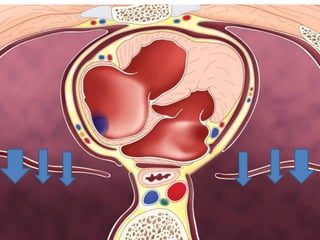
Sternum
Vertebra
Complications of mechanical ventilation
• Oxygen
toxicity
• Barotrauma
• Volutrauma
• Shear injury
• Biotrauma
Solutions
• Minimize FIO2
–SpO2 88-94%
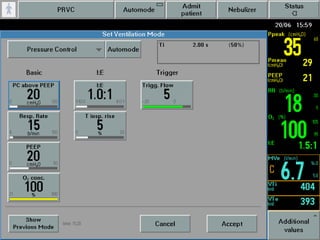
• Open lung
Recruitment Manoeuvres
Recruitment manoeuvre
Pressure
Time
Pressure
Time
Recruitment manoeuvre
Pressure
Time
Pressure
Time
Before Recruitment
Arterial blood gas 18:00 23/10/1999 Fi02=0.7
pH=7.47 pCO2=31 pO2=59 Saturation 91%
After Recruitment
Arterial blood gas 19:00 23/10/1999 Fi02=0.6
pH=7.45 pCO2=34 pO2=182 Saturation 99%
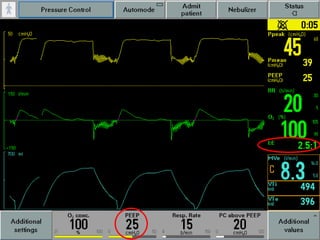
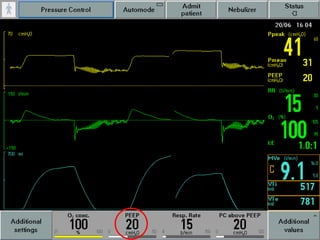
PEEP after recruitment
– Generally, it is recommended (Hickling 2001) to
gradually decrease PEEP until there is a fall in PO2; this is
a “decremental PEEP trial”
– PEEP is decreased by 2cmH2O every 4 minutes
– A fall in PO2 by over 10% indicates that there is
derecruitment
– PEEP is then set to just 2cmH2O above the level at which
derecruitment occurs
– For Girgis et al (2006) this strategy resulted in 4 hrs of
improved oxygenation
PEEP Endpoints
• Best PaO2
• Best O2 delivery
• Pplat < 30 cm H2o
• Best CT aeration
• The best possible lung compliance
• Hemodynamic stability
Protective Ventilation Strategy in ARDS
• Keep the PaO2 55-80 mmHg
• Maintain an arterial oxygen saturation (SaO2) of 88-94%
• Avoid volutrauma, barotraumas and biotrauma (VIL), by keeping the tidal volumes in the 4-6ml/kg
range and airway plateau pressure < 30 cmH2O .
• Predicted body weight in kg, calculated by: [2.3 *(height in inches - 60) + 45.5 for women or + 50
for men].
* PEEP values of 2cmH2O above PEEP associated with optimal compliance
• Higher respiratory rate.
• PH ≥ 7.15
The advantages of using PCV
in ARDS
Gas Distribution
Driving Pressure and Survival in the Acute Respiratory Distress Syndrome
The New England Journal of Medicine 2015
In patients with severe ARDS as defined by PaO2/FiO2 <150,
48 hrs administration of non depolarizing neuromuscular
blocking agent (NMBA) cisatracurium has been shown to
improve oxygenation, and adjusted 90-day survival, as well as
decreasing duration of mechanical ventilation and
barotrauma, without increasing muscle weakness .Moreover,
NMBAs have been shown to reduce levels of both pulmonary
and systemic pro-inflammatory mediators
Papazian L, Forel JM, Gacouin A, et al. Neuromuscular blockers in early acute
respiratory distress syndrome. N Engl J Med 2010;363:1107-16
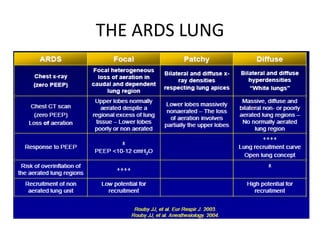
THE ARDS LUNG
EARLY Prone ventilation
Preparation
• Criteria
– PaO2/FiO2 ratio ≤ 150mmHg (20kPa)
– PEEP ≥ 5cmH2O
– FiO2 ≥ 0.6
• Haemodynamically stable
• Not severely acidaemic,
• Does not have intracranial hypertension
• Adequately paralysed
• Increase FiO2 to 1.0 app 15-20 min before repositioning
Duration
• Most responders show an improvement in gas
exchange within a few hours
• Prone for 16h then supine for at least 4h
Venous access secure
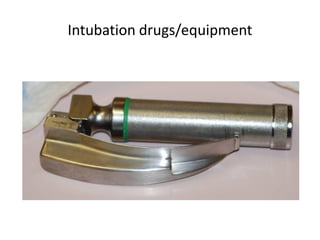
Intubation drugs/equipment
Preparation
• Prepare padding to prevent pressure sores in
prone position
• Staff
• Someone who can re-intubate to look after head, neck
& ETT
• 4 other staff
Duration
• Most responders show an improvement in gas
exchange within a few hours
• Prone for 16h then supine for at least 4h
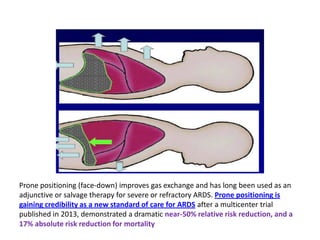
Prone positioning (face-down) improves gas exchange and has long been used as an
adjunctive or salvage therapy for severe or refractory ARDS. Prone positioning is
gaining credibility as a new standard of care for ARDS after a multicenter trial
published in 2013, demonstrated a dramatic near-50% relative risk reduction, and a
17% absolute risk reduction for mortality
Benefits of prone positioning
• Improves V/Q mismatch
• Increased ventilation in dependent areas
• Decreases physiologic shunt
• Improved ventilation in areas where perfusion remains the same
• Decreases compression/Increase FRC
Cardiac
Abdominal
• Prevent ventilator associated lung injury
• Enhances mobilization of secretions
Summary
• Low tidal volume, low pressure
• Open lung approach makes “sense”
– Recruitment
– High PEEP
• Minimize FiO2
• Early prone ventilation in patients meeting
criteria
Thank You!

ARDS management

  • 1.
    Mechanical ventilation –beyond BASIC ARDS Hanaa A. El Gendy Assistant Professor of Anesthesia and ICU (ASUH)
  • 2.
  • 6.
  • 7.
    Complications of mechanicalventilation • Oxygen toxicity • Barotrauma • Volutrauma • Shear injury • Biotrauma
  • 9.
  • 10.
  • 12.
  • 23.
  • 24.
    Before Recruitment Arterial bloodgas 18:00 23/10/1999 Fi02=0.7 pH=7.47 pCO2=31 pO2=59 Saturation 91% After Recruitment Arterial blood gas 19:00 23/10/1999 Fi02=0.6 pH=7.45 pCO2=34 pO2=182 Saturation 99%
  • 25.
    PEEP after recruitment –Generally, it is recommended (Hickling 2001) to gradually decrease PEEP until there is a fall in PO2; this is a “decremental PEEP trial” – PEEP is decreased by 2cmH2O every 4 minutes – A fall in PO2 by over 10% indicates that there is derecruitment – PEEP is then set to just 2cmH2O above the level at which derecruitment occurs – For Girgis et al (2006) this strategy resulted in 4 hrs of improved oxygenation
  • 26.
    PEEP Endpoints • BestPaO2 • Best O2 delivery • Pplat < 30 cm H2o • Best CT aeration • The best possible lung compliance • Hemodynamic stability
  • 29.
    Protective Ventilation Strategyin ARDS • Keep the PaO2 55-80 mmHg • Maintain an arterial oxygen saturation (SaO2) of 88-94% • Avoid volutrauma, barotraumas and biotrauma (VIL), by keeping the tidal volumes in the 4-6ml/kg range and airway plateau pressure < 30 cmH2O . • Predicted body weight in kg, calculated by: [2.3 *(height in inches - 60) + 45.5 for women or + 50 for men]. * PEEP values of 2cmH2O above PEEP associated with optimal compliance • Higher respiratory rate. • PH ≥ 7.15
  • 30.
    The advantages ofusing PCV in ARDS Gas Distribution
  • 31.
    Driving Pressure andSurvival in the Acute Respiratory Distress Syndrome The New England Journal of Medicine 2015
  • 32.
    In patients withsevere ARDS as defined by PaO2/FiO2 <150, 48 hrs administration of non depolarizing neuromuscular blocking agent (NMBA) cisatracurium has been shown to improve oxygenation, and adjusted 90-day survival, as well as decreasing duration of mechanical ventilation and barotrauma, without increasing muscle weakness .Moreover, NMBAs have been shown to reduce levels of both pulmonary and systemic pro-inflammatory mediators Papazian L, Forel JM, Gacouin A, et al. Neuromuscular blockers in early acute respiratory distress syndrome. N Engl J Med 2010;363:1107-16
  • 33.
  • 34.
  • 35.
    Preparation • Criteria – PaO2/FiO2ratio ≤ 150mmHg (20kPa) – PEEP ≥ 5cmH2O – FiO2 ≥ 0.6 • Haemodynamically stable • Not severely acidaemic, • Does not have intracranial hypertension • Adequately paralysed • Increase FiO2 to 1.0 app 15-20 min before repositioning
  • 36.
    Duration • Most respondersshow an improvement in gas exchange within a few hours • Prone for 16h then supine for at least 4h
  • 37.
  • 38.
  • 39.
    Preparation • Prepare paddingto prevent pressure sores in prone position • Staff • Someone who can re-intubate to look after head, neck & ETT • 4 other staff
  • 40.
    Duration • Most respondersshow an improvement in gas exchange within a few hours • Prone for 16h then supine for at least 4h
  • 41.
    Prone positioning (face-down)improves gas exchange and has long been used as an adjunctive or salvage therapy for severe or refractory ARDS. Prone positioning is gaining credibility as a new standard of care for ARDS after a multicenter trial published in 2013, demonstrated a dramatic near-50% relative risk reduction, and a 17% absolute risk reduction for mortality
  • 42.
    Benefits of pronepositioning • Improves V/Q mismatch • Increased ventilation in dependent areas • Decreases physiologic shunt • Improved ventilation in areas where perfusion remains the same • Decreases compression/Increase FRC Cardiac Abdominal • Prevent ventilator associated lung injury • Enhances mobilization of secretions
  • 43.
    Summary • Low tidalvolume, low pressure • Open lung approach makes “sense” – Recruitment – High PEEP • Minimize FiO2 • Early prone ventilation in patients meeting criteria
  • 44.