Eclecticism in the
19th Century
ARCH 417
CLASS 03
agenda 8.31.15
• terminology:
• modern
• modernity
• modernization
• modernism
• eclecticism
• Gothic Revival (neoGothic)
• Neoclassical
problem of periodization
• any dividing line is fundamentally arbitrary
• any way of dividing up historical periods has advantages
and disadvantages
• "modern": when does it begin? when does it end?
early modern
Renaissance: rediscovery of ancient texts and statues.
Classical revival. The church is challenged.
Printing press opens the age of mass media, rise in
literacy, Reformation, rise of individualism.
Improvements in navigation, invention of longitude,
globalization, colonization.
Intensification of trade, banking, capitalism.
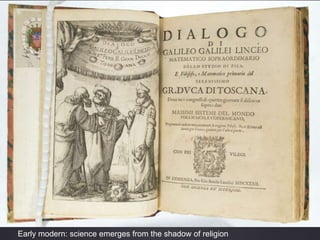
Early modern: science emerges from the shadow of religion
modern
industrialization/mechanization
urbanization
transportation/mass migrations
social revolutions and rise of democracies
mass media
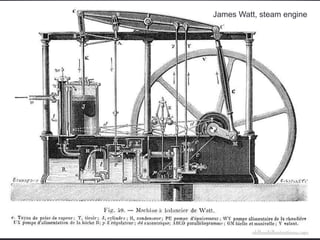
James Watt, steam engine
1968
why '68?
Tet Offensive in Vietnam War
international unrest and protest: Paris, Mexico City,
Prague
assassinations of Rev. Martin Luther King, Jr and Robert
Fitzgerald Kennedy
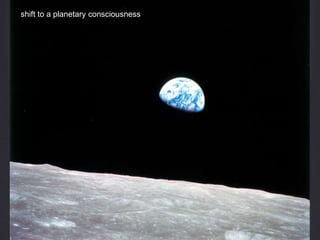
Apollo 8 to moon and back
shift to a planetary consciousness
1959
• Congrès Internationaux d'Architecture Moderne (founded
in 1928)
• CIAM 1959 was the last congress
• "The present is a moment of crisis, not any longer
because we need modern architecture, but because we
have got it." —J.M. Richards, "The Next Step,?"
Architectural Review 107 (March 1950).
• also: Sputnik, birth control, desegregation, IBM
post? late? modern
ongoing globalization
intensification of media
intensification of capitalism
economy of services and signs added to economy of
things
societies of control
"The term 'modern architecture' ...can be understood to refer
to all buildings of the modern period regardless of their
ideological basis, or it can be understood more specifically as
an architecture conscious of its own modernity and striving
for change....Already in the early 19th century, there was wide
dissatisfaction with eclecticism among architects, historians,
and critics. This well-documented attitude justifies a history of
modern architecture concerned primarily with reformist,
'avant-garde' tendencies, rather than one that attempts to
deal with the whole of architectural production as if it
operated within a non-ideological, neutral field."
—Alan Colquhoun, Modern
Architecture, p.9
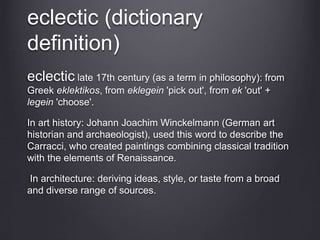
eclectic (dictionary
definition)
eclectic late 17th century (as a term in philosophy): from
Greek eklektikos, from eklegein 'pick out', from ek 'out' +
legein 'choose'.
In art history: Johann Joachim Winckelmann (German art
historian and archaeologist), used this word to describe the
Carracci, who created paintings combining classical tradition
with the elements of Renaissance.
In architecture: deriving ideas, style, or taste from a broad
and diverse range of sources.
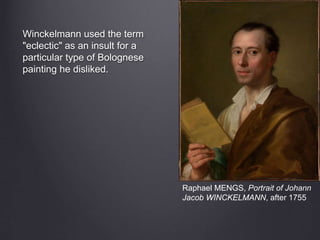
Raphael MENGS, Portrait of Johann
Jacob WINCKELMANN, after 1755
Winckelmann used the term
"eclectic" as an insult for a
particular type of Bolognese
painting he disliked.
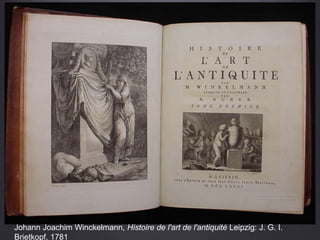
Johann Joachim Winckelmann, Histoire de l'art de l'antiquité Leipzig: J. G. I.
Brietkopf, 1781
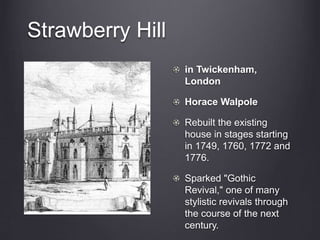
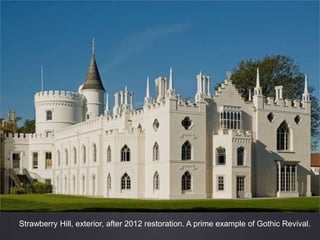
Strawberry Hill
in Twickenham,
London
Horace Walpole
Rebuilt the existing
house in stages starting
in 1749, 1760, 1772 and
1776.
Sparked "Gothic
Revival," one of many
stylistic revivals through
the course of the next
century.
Strawberry Hill, exterior, after 2012 restoration. A prime example of Gothic Revival.
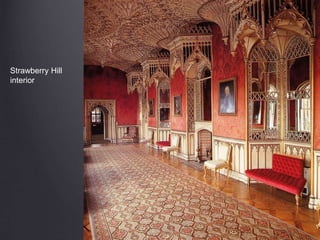
Strawberry Hill
interior
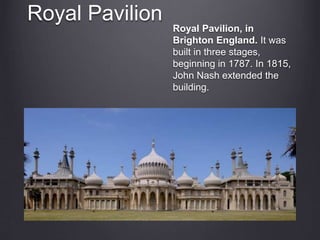
Royal Pavilion
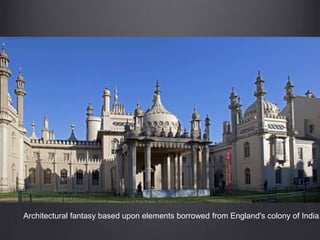
Royal Pavilion, in
Brighton England. It was
built in three stages,
beginning in 1787. In 1815,
John Nash extended the
building.
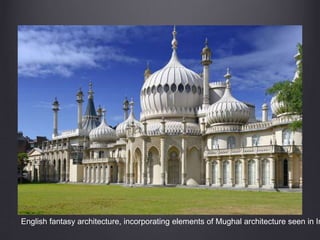
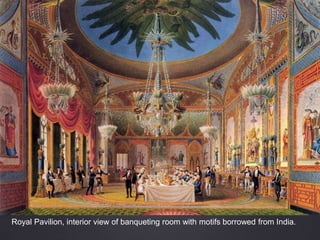
English fantasy architecture, incorporating elements of Mughal architecture seen in In
Royal Pavilion, interior view of banqueting room with motifs borrowed from India.
Architectural fantasy based upon elements borrowed from England's colony of India.
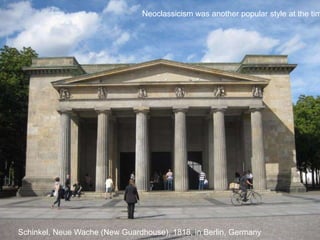
Schinkel, Neue Wache (New Guardhouse), 1818, in Berlin, Germany
Neoclassicism was another popular style at the tim
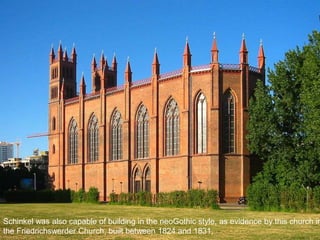
Schinkel was also capable of building in the neoGothic style, as evidence by this church in
the Friedrichswerder Church, built between 1824 and 1831,
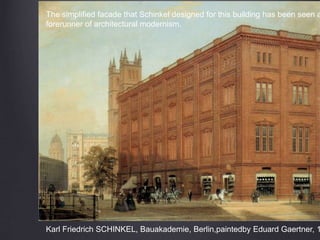
Karl Friedrich SCHINKEL, Bauakademie, Berlin,paintedby Eduard Gaertner, 1
The simplified facade that Schinkel designed for this building has been seen a
forerunner of architectural modernism.
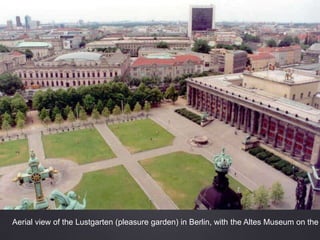
Aerial view of the Lustgarten (pleasure garden) in Berlin, with the Altes Museum on the
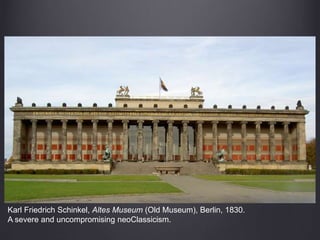
Karl Friedrich Schinkel, Altes Museum (Old Museum), Berlin, 1830.
A severe and uncompromising neoClassicism.
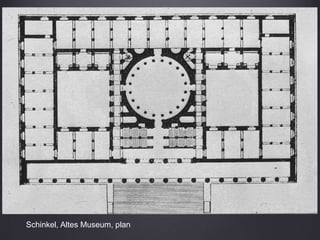
Schinkel, Altes Museum, plan
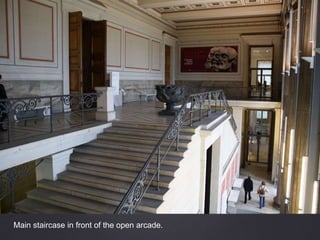
Main staircase in front of the open arcade.
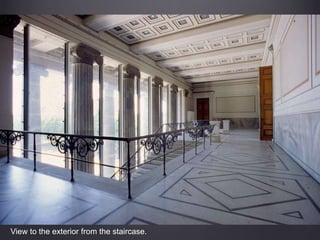
View to the exterior from the staircase.
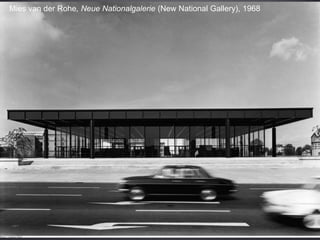
Neue Nationalgalerie, Berlin
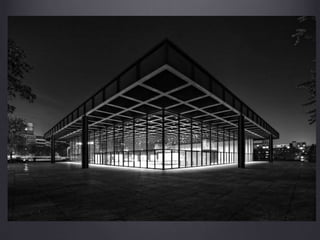
Mies van der Rohe, Neue Nationalgalerie (New National Gallery), 1968
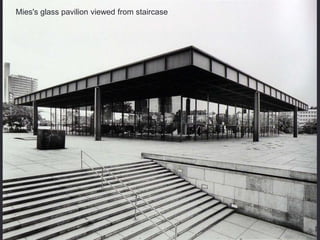
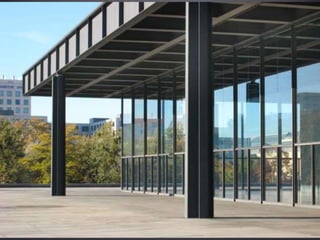
Mies's glass pavilion viewed from staircase
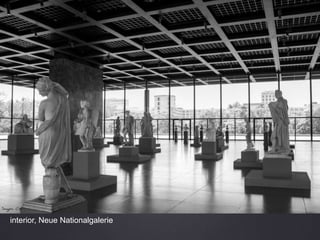
interior, Neue Nationalgalerie
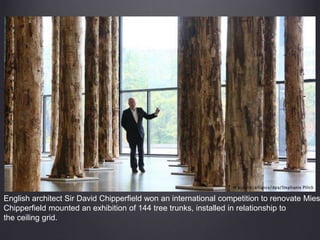
English architect Sir David Chipperfield won an international competition to renovate Mies
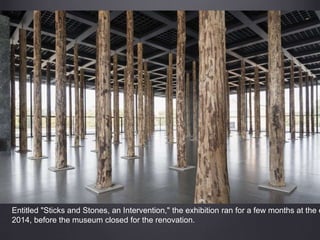
Chipperfield mounted an exhibition of 144 tree trunks, installed in relationship to
the ceiling grid.
Entitled "Sticks and Stones, an Intervention," the exhibition ran for a few months at the e
2014, before the museum closed for the renovation.
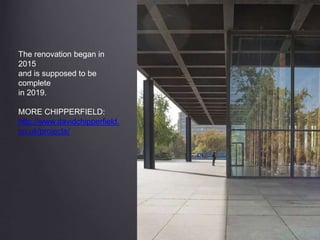
The renovation began in
2015
and is supposed to be
complete
in 2019.
MORE CHIPPERFIELD:
http://www.davidchipperfield.
co.uk/projects/

ARCH417Class03

  • 1.
    Eclecticism in the 19thCentury ARCH 417 CLASS 03
  • 2.
    agenda 8.31.15 • terminology: •modern • modernity • modernization • modernism • eclecticism • Gothic Revival (neoGothic) • Neoclassical
  • 3.
    problem of periodization •any dividing line is fundamentally arbitrary • any way of dividing up historical periods has advantages and disadvantages • "modern": when does it begin? when does it end?
  • 4.
    early modern Renaissance: rediscoveryof ancient texts and statues. Classical revival. The church is challenged. Printing press opens the age of mass media, rise in literacy, Reformation, rise of individualism. Improvements in navigation, invention of longitude, globalization, colonization. Intensification of trade, banking, capitalism.
  • 5.
    Early modern: scienceemerges from the shadow of religion
  • 6.
  • 7.
  • 8.
    1968 why '68? Tet Offensivein Vietnam War international unrest and protest: Paris, Mexico City, Prague assassinations of Rev. Martin Luther King, Jr and Robert Fitzgerald Kennedy Apollo 8 to moon and back
  • 9.
    shift to aplanetary consciousness
  • 10.
    1959 • Congrès Internationauxd'Architecture Moderne (founded in 1928) • CIAM 1959 was the last congress • "The present is a moment of crisis, not any longer because we need modern architecture, but because we have got it." —J.M. Richards, "The Next Step,?" Architectural Review 107 (March 1950). • also: Sputnik, birth control, desegregation, IBM
  • 11.
    post? late? modern ongoingglobalization intensification of media intensification of capitalism economy of services and signs added to economy of things societies of control
  • 12.
    "The term 'modernarchitecture' ...can be understood to refer to all buildings of the modern period regardless of their ideological basis, or it can be understood more specifically as an architecture conscious of its own modernity and striving for change....Already in the early 19th century, there was wide dissatisfaction with eclecticism among architects, historians, and critics. This well-documented attitude justifies a history of modern architecture concerned primarily with reformist, 'avant-garde' tendencies, rather than one that attempts to deal with the whole of architectural production as if it operated within a non-ideological, neutral field." —Alan Colquhoun, Modern Architecture, p.9
  • 13.
    eclectic (dictionary definition) eclectic late17th century (as a term in philosophy): from Greek eklektikos, from eklegein 'pick out', from ek 'out' + legein 'choose'. In art history: Johann Joachim Winckelmann (German art historian and archaeologist), used this word to describe the Carracci, who created paintings combining classical tradition with the elements of Renaissance. In architecture: deriving ideas, style, or taste from a broad and diverse range of sources.
  • 14.
    Raphael MENGS, Portraitof Johann Jacob WINCKELMANN, after 1755 Winckelmann used the term "eclectic" as an insult for a particular type of Bolognese painting he disliked.
  • 15.
    Johann Joachim Winckelmann,Histoire de l'art de l'antiquité Leipzig: J. G. I. Brietkopf, 1781
  • 16.
    Strawberry Hill in Twickenham, London HoraceWalpole Rebuilt the existing house in stages starting in 1749, 1760, 1772 and 1776. Sparked "Gothic Revival," one of many stylistic revivals through the course of the next century.
  • 17.
    Strawberry Hill, exterior,after 2012 restoration. A prime example of Gothic Revival.
  • 18.
  • 19.
    Royal Pavilion Royal Pavilion,in Brighton England. It was built in three stages, beginning in 1787. In 1815, John Nash extended the building.
  • 20.
    English fantasy architecture,incorporating elements of Mughal architecture seen in In
  • 21.
    Royal Pavilion, interiorview of banqueting room with motifs borrowed from India.
  • 22.
    Architectural fantasy basedupon elements borrowed from England's colony of India.
  • 23.
    Schinkel, Neue Wache(New Guardhouse), 1818, in Berlin, Germany Neoclassicism was another popular style at the tim
  • 24.
    Schinkel was alsocapable of building in the neoGothic style, as evidence by this church in the Friedrichswerder Church, built between 1824 and 1831,
  • 25.
    Karl Friedrich SCHINKEL,Bauakademie, Berlin,paintedby Eduard Gaertner, 1 The simplified facade that Schinkel designed for this building has been seen a forerunner of architectural modernism.
  • 26.
    Aerial view ofthe Lustgarten (pleasure garden) in Berlin, with the Altes Museum on the
  • 27.
    Karl Friedrich Schinkel,Altes Museum (Old Museum), Berlin, 1830. A severe and uncompromising neoClassicism.
  • 28.
  • 29.
    Main staircase infront of the open arcade.
  • 30.
    View to theexterior from the staircase.
  • 31.
    Neue Nationalgalerie, Berlin Miesvan der Rohe, Neue Nationalgalerie (New National Gallery), 1968
  • 32.
    Mies's glass pavilionviewed from staircase
  • 33.
  • 36.
    English architect SirDavid Chipperfield won an international competition to renovate Mies Chipperfield mounted an exhibition of 144 tree trunks, installed in relationship to the ceiling grid.
  • 37.
    Entitled "Sticks andStones, an Intervention," the exhibition ran for a few months at the e 2014, before the museum closed for the renovation.
  • 38.
    The renovation beganin 2015 and is supposed to be complete in 2019. MORE CHIPPERFIELD: http://www.davidchipperfield. co.uk/projects/