Application Security
Netlight EDGE
Who am I?
• Dimitrios Stergiou (@dstergiou)
• Information Security Manager @ NetEnt
• 7 years InfoSec experience in gaming companies
• 15 years InfoSec experience (engineer, consultant,
manager)
• Mini bio:
• Greek (and Swede)
• Loves: InfoSec, Social Engineering, Economics,
Video games
• Hates: Vegetables, Rain, Pronouncing “j” as “y”
Disclaimer
I don’t have the ultimate truth
But I am also NOT trying to sell
you anything
Listen, question and take
everything with a grain of salt
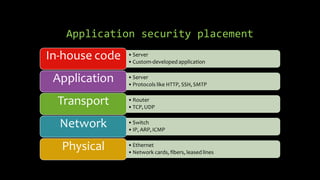
Application security placement
•Server
•Custom-developed application
•Server
•Protocols like HTTP, SSH,SMTP
•Router
•TCP,UDP
•Switch
•IP, ARP, ICMP
•Ethernet
•Network cards, fibers, leased lines
In-house code
Application
Transport
Network
Physical
What doesn’t
work?
Let’s talk about 4 approaches to
Application Security that don’t
(generally) produce results
4 FAIL approaches to AppSec
Bolt on Security
•Functional first, Security afterwards
•Weakness: Design decisions, long cycle to fix
Waterfall Security
•Prepare every security solution in advance
•Weakness: Not Agile friendly (who does waterfall these days?)
“Random” Security
•Implement every security countermeasure known to man
•Weakness: Expensive, bloats the product / service, time-consuming
All or Nothing Security
•Reactively implement all proposed security controls (usually after an audit)
•Weakness: Too big of a chunk to bite, maybe overdoing it
So, what works?
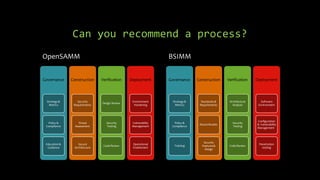
Can you recommend a process?
OpenSAMM
Governance
Strategy&
Metrics
Policy &
Compliance
Education&
Guidance
Construction
Security
Requirements
Threat
Assessment
Secure
Architecture
Verification
Design Review
Security
Testing
CodeReview
Deployment
Environment
Hardening
Vulnerability
Management
Operational
Enablement
BSIMM
Governance
Strategy&
Metrics
Policy &
Compliance
Training
Construction
Standards &
Requirements
AttackModels
Security
Features&
Design
Verification
Architecture
Analysis
Security
Testing
CodeReview
Deployment
Software
Environment
Configuration
& Vulnerability
Management
Penetration
testing
Conclusion
• We still don’t have an “absolute
truth” – there is no standard for
AppSec
• But these 2 modelslook
EXTREMELYsimilar
• So maybe we have some kind of
consensus on what needs to be
done
What are we
trying to
achieve?
• Cover the basis
• Auditrequirements
• Regulatoryrequirements
• Manage risk
• Mitigate,avoid
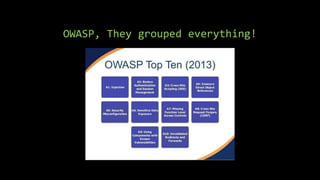
OWASP, They grouped everything!
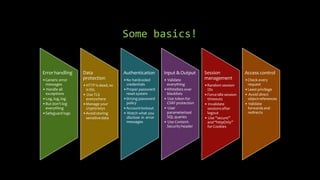
Some basics!
Error handling
•Generic error
messages
• Handle all
exceptions
•Log, log, log
•But don’t log
everything
•Safeguard logs
Data
protection
•HTTP is dead, so
isSSL
• Use TLS
everywhere
•Manage your
cryptokeys
•Avoidstoring
sensitivedata
Authentication
•No hardcoded
credentials
•Proper password
reset system
•Strong password
policy
•Accountlockout
• Watch what you
disclose in error
messages
Input &Output
• Validate
everything
•Whitelists over
blacklists
• Use token for
CSRF protection
• User
parameterized
SQLqueries
• Use Content-
Securityheader
Session
management
•Random session
IDs
•Force idle session
timeouts
• Invalidate
sessionsafter
logout
• Use “secure”
and “httpOnly”
for Cookies
Access control
•Check every
request
•Least privilege
• Avoid direct
objectreferences
• Validate
forwardsand
redirects
That is TOO
much!
• How are we going to do all
these things?
• “Do we need a security
project?”
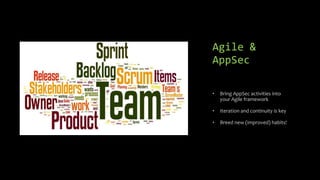
Agile &
AppSec
• Bring AppSec activities into
your Agile framework
• Iteration and continuity is key
• Breed new (improved) habits!
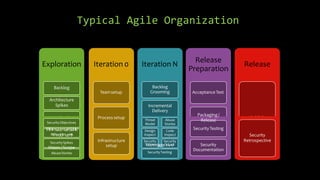
Exploration
Backlog
Architecture
Spikes
UserStories
Iteration 0
Teamsetup
Processsetup
Infrastructure
setup
Iteration N
Backlog
Grooming
Incremental
Delivery
UserStories
Release
Preparation
AcceptanceTest
Documentation
Release
Publish
SecurityObjectives
MinimSeucmuritVyiable
RePqruoirdemucentts
SecuritySpikes
Vision / Scope
AbuseStories
Threat Abuse
Model Stories
Design Code
Inspect Inspect
Security Security
SRpiektersospecGtoivaels
SecurityTesting
Packaging /
Release
SecurityTesting
Security
Documentation
Security
Retrospective
Typical Agile Organization
Latest
nightmare
• Not a bad idea, but…
• … there is a difference
between DevOps and the
“Wild, wild west”
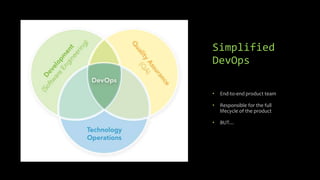
Simplified
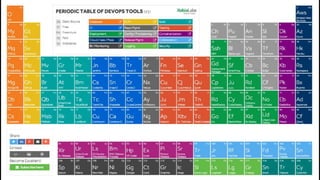
DevOps
• End-to-end product team
• Responsible for the full
lifecycle of the product
• BUT…
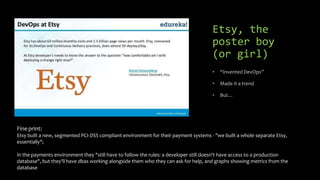
Etsy, the
poster boy
(or girl)
• “Invented DevOps”
• Made it a trend
• But…
Fine print:
Etsy built a new, segmented PCI-DSS compliant environment for their payment systems - "we built a whole separate Etsy,
essentially";
In the payments environment they "still have to follow the rules: a developer still doesn't have access to a production
database", but they'll have dbas working alongside them who they can ask for help, and graphs showing metrics from the
database
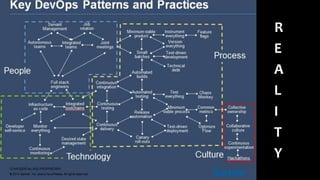
R
E
A
L
I
T
Y
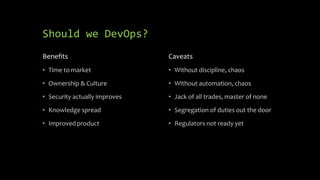
Should we DevOps?
Benefits
• Time to market
• Ownership & Culture
• Security actually improves
• Knowledge spread
• Improved product
Caveats
• Without discipline, chaos
• Without automation, chaos
• Jack of all trades, master of none
• Segregation of duties out the door
• Regulators not ready yet
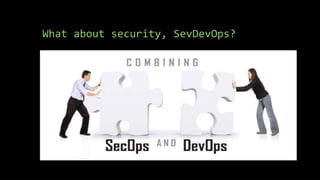
What about security, SevDevOps?
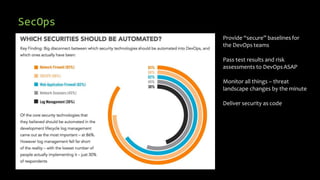
SecOps
Provide “secure” baselinesfor
the DevOps teams
Pass test results and risk
assessments to DevOpsASAP
Monitor all things – threat
landscape changes by the minute
Deliver security as code
Application Security within Agile

Application Security within Agile

  • 1.
  • 2.
    Who am I? •Dimitrios Stergiou (@dstergiou) • Information Security Manager @ NetEnt • 7 years InfoSec experience in gaming companies • 15 years InfoSec experience (engineer, consultant, manager) • Mini bio: • Greek (and Swede) • Loves: InfoSec, Social Engineering, Economics, Video games • Hates: Vegetables, Rain, Pronouncing “j” as “y”
  • 3.
    Disclaimer I don’t havethe ultimate truth But I am also NOT trying to sell you anything Listen, question and take everything with a grain of salt
  • 4.
    Application security placement •Server •Custom-developedapplication •Server •Protocols like HTTP, SSH,SMTP •Router •TCP,UDP •Switch •IP, ARP, ICMP •Ethernet •Network cards, fibers, leased lines In-house code Application Transport Network Physical
  • 5.
    What doesn’t work? Let’s talkabout 4 approaches to Application Security that don’t (generally) produce results
  • 6.
    4 FAIL approachesto AppSec Bolt on Security •Functional first, Security afterwards •Weakness: Design decisions, long cycle to fix Waterfall Security •Prepare every security solution in advance •Weakness: Not Agile friendly (who does waterfall these days?) “Random” Security •Implement every security countermeasure known to man •Weakness: Expensive, bloats the product / service, time-consuming All or Nothing Security •Reactively implement all proposed security controls (usually after an audit) •Weakness: Too big of a chunk to bite, maybe overdoing it
  • 7.
  • 8.
    Can you recommenda process? OpenSAMM Governance Strategy& Metrics Policy & Compliance Education& Guidance Construction Security Requirements Threat Assessment Secure Architecture Verification Design Review Security Testing CodeReview Deployment Environment Hardening Vulnerability Management Operational Enablement BSIMM Governance Strategy& Metrics Policy & Compliance Training Construction Standards & Requirements AttackModels Security Features& Design Verification Architecture Analysis Security Testing CodeReview Deployment Software Environment Configuration & Vulnerability Management Penetration testing
  • 9.
    Conclusion • We stilldon’t have an “absolute truth” – there is no standard for AppSec • But these 2 modelslook EXTREMELYsimilar • So maybe we have some kind of consensus on what needs to be done
  • 10.
    What are we tryingto achieve? • Cover the basis • Auditrequirements • Regulatoryrequirements • Manage risk • Mitigate,avoid
  • 11.
  • 12.
    Some basics! Error handling •Genericerror messages • Handle all exceptions •Log, log, log •But don’t log everything •Safeguard logs Data protection •HTTP is dead, so isSSL • Use TLS everywhere •Manage your cryptokeys •Avoidstoring sensitivedata Authentication •No hardcoded credentials •Proper password reset system •Strong password policy •Accountlockout • Watch what you disclose in error messages Input &Output • Validate everything •Whitelists over blacklists • Use token for CSRF protection • User parameterized SQLqueries • Use Content- Securityheader Session management •Random session IDs •Force idle session timeouts • Invalidate sessionsafter logout • Use “secure” and “httpOnly” for Cookies Access control •Check every request •Least privilege • Avoid direct objectreferences • Validate forwardsand redirects
  • 13.
    That is TOO much! •How are we going to do all these things? • “Do we need a security project?”
  • 15.
    Agile & AppSec • BringAppSec activities into your Agile framework • Iteration and continuity is key • Breed new (improved) habits!
  • 16.
    Exploration Backlog Architecture Spikes UserStories Iteration 0 Teamsetup Processsetup Infrastructure setup Iteration N Backlog Grooming Incremental Delivery UserStories Release Preparation AcceptanceTest Documentation Release Publish SecurityObjectives MinimSeucmuritVyiable RePqruoirdemucentts SecuritySpikes Vision/ Scope AbuseStories Threat Abuse Model Stories Design Code Inspect Inspect Security Security SRpiektersospecGtoivaels SecurityTesting Packaging / Release SecurityTesting Security Documentation Security Retrospective Typical Agile Organization
  • 17.
    Latest nightmare • Not abad idea, but… • … there is a difference between DevOps and the “Wild, wild west”
  • 18.
    Simplified DevOps • End-to-end productteam • Responsible for the full lifecycle of the product • BUT…
  • 19.
    Etsy, the poster boy (orgirl) • “Invented DevOps” • Made it a trend • But… Fine print: Etsy built a new, segmented PCI-DSS compliant environment for their payment systems - "we built a whole separate Etsy, essentially"; In the payments environment they "still have to follow the rules: a developer still doesn't have access to a production database", but they'll have dbas working alongside them who they can ask for help, and graphs showing metrics from the database
  • 20.
  • 22.
    Should we DevOps? Benefits •Time to market • Ownership & Culture • Security actually improves • Knowledge spread • Improved product Caveats • Without discipline, chaos • Without automation, chaos • Jack of all trades, master of none • Segregation of duties out the door • Regulators not ready yet
  • 23.
  • 24.
    SecOps Provide “secure” baselinesfor theDevOps teams Pass test results and risk assessments to DevOpsASAP Monitor all things – threat landscape changes by the minute Deliver security as code