Awad Nasser Albalwi‫ــــــــــــــــــــــــــــــــــــــــــــ‬‫ــــــــــــــــــــــــــــــــــــــــــــــــــــــــــــــــــــــــــــــــــــــــــــــــــــــــ‬
Application of Statistical and mathematical
equations in Chemistry
Part 6
Strong Acid and Base Titrations
Weak Acid and Strong Base Titration
Strong Acid and Weak Base Titrations
Precipitation
Percentage calculation
Awad Nasser Albalwi‫ــــــــــــــــــــــــــــــــــــــــــــ‬‫ــــــــــــــــــــــــــــــــــــــــــــــــــــــــــــــــــــــــــــــــــــــــــــــــــــــــ‬
Strong Acid and Base Titrations
Titration of a strong acid with a strong base is the simplest of the four types of
titrations as it involves a strong acid and strong base that completely dissociate in
water, thereby resulting in a strong acid-strong base neutralization reaction. This
titration requires the use of a buret to dispense a strong base into a container of
strong acid, or vice-versa, in order to determine the equivalence point.
Weak Acid and Strong Base Titration
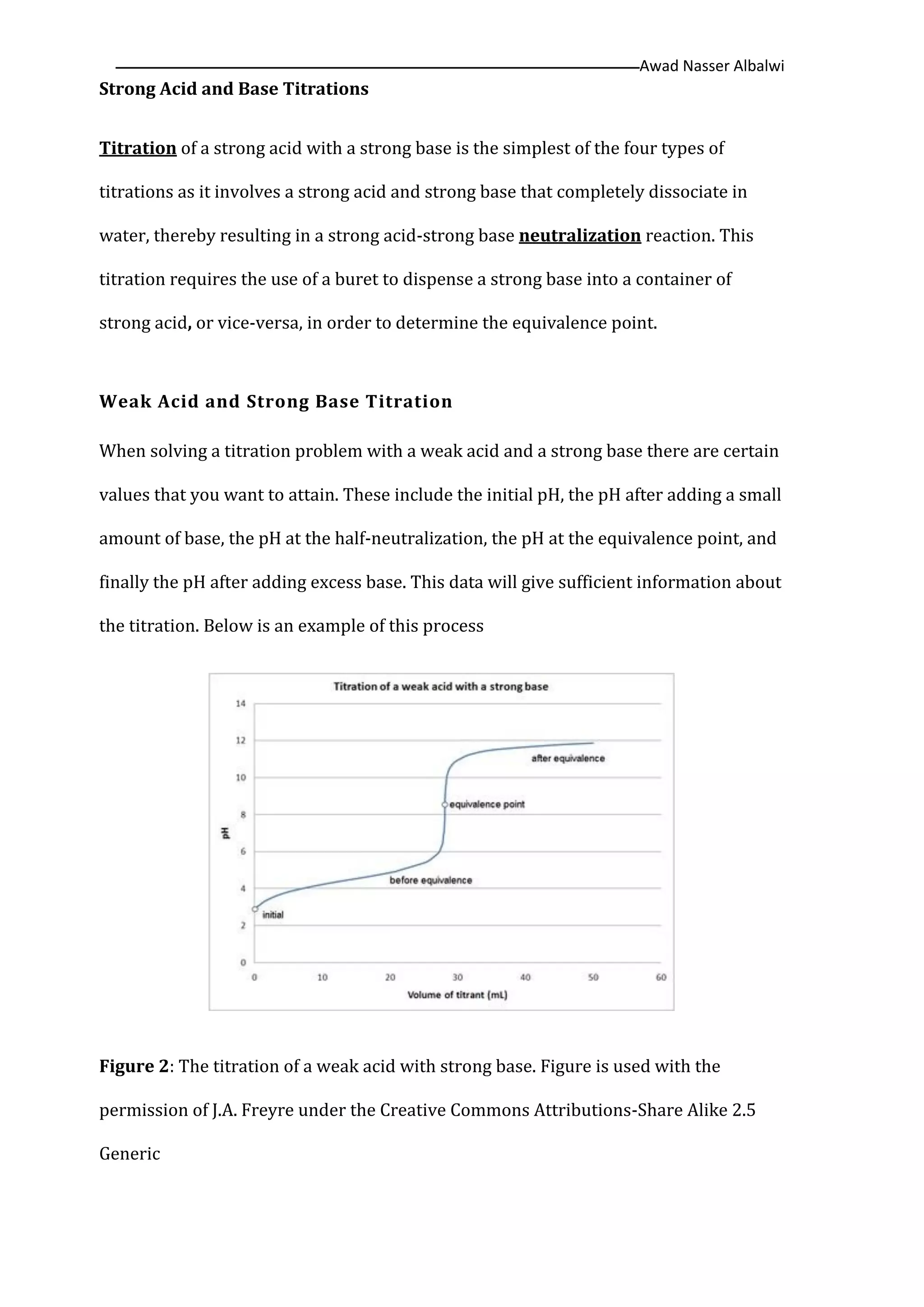
When solving a titration problem with a weak acid and a strong base there are certain
values that you want to attain. These include the initial pH, the pH after adding a small
amount of base, the pH at the half-neutralization, the pH at the equivalence point, and
finally the pH after adding excess base. This data will give sufficient information about
the titration. Below is an example of this process
Figure 2: The titration of a weak acid with strong base. Figure is used with the
permission of J.A. Freyre under the Creative Commons Attributions-Share Alike 2.5
Generic
Awad Nasser Albalwi‫ــــــــــــــــــــــــــــــــــــــــــــ‬‫ــــــــــــــــــــــــــــــــــــــــــــــــــــــــــــــــــــــــــــــــــــــــــــــــــــــــ‬
Strong Acid and Weak Base Titrations
A strong acid will react with a weak base to form an acidic (pH < 7) solution.
For example, the reaction between an ammonia solution (a weak base) and
hydrochloric acid (a strong acid) in the aqueous phase can be written as follows:
The acid can be titrated into the base, or the base can be titrated into the acid. Small
amounts of whichever solution is placed in the burette (this solution is called the
titrant) are added (titrated) into the receiver, and, if pH measurements can be
obtained via electrode, a graph of pH vs. volume of titrant can be made.
Precipitation is the formation of a solid in a solution or inside another solid during
a chemical reaction or by diffusion in a solid. When the reaction occurs in a liquid
solution, the solid formed is called the precipitate. The chemical that causes the solid
to form is called the precipitant
n solids, precipitation occurs if the concentration of one solid is above the solubility
limit in the host solid, due to e.g. rapid quenching or ion implantation, and the
temperature is high enough that diffusion can lead to segregation into precipitates.
Precipitation in solids is routinely used to synthesize nanoclusters
Percentage calculation
Gravimetric methods of analysis are based on the measurement of mass. The
two gravimetric methods are precipitation methods and volatilization
methods. In precipitation methods the analyte is converted to an insoluble
product, filtered, washed and heated. The mass of the resulting residue is
determined. In volatilization methods the analyte is heated and the analyte or
Awad Nasser Albalwi‫ــــــــــــــــــــــــــــــــــــــــــــ‬‫ــــــــــــــــــــــــــــــــــــــــــــــــــــــــــــــــــــــــــــــــــــــــــــــــــــــــ‬
its decomposition product is collected. The resulting loss of mass is
determined.
General form for calculations
The calculations for gravimetric analyses are fairly straight-forward.
Gravimetric calculations are based on the fundamental stoichiometric
calculations. (Note: You may wish to review these calculations before
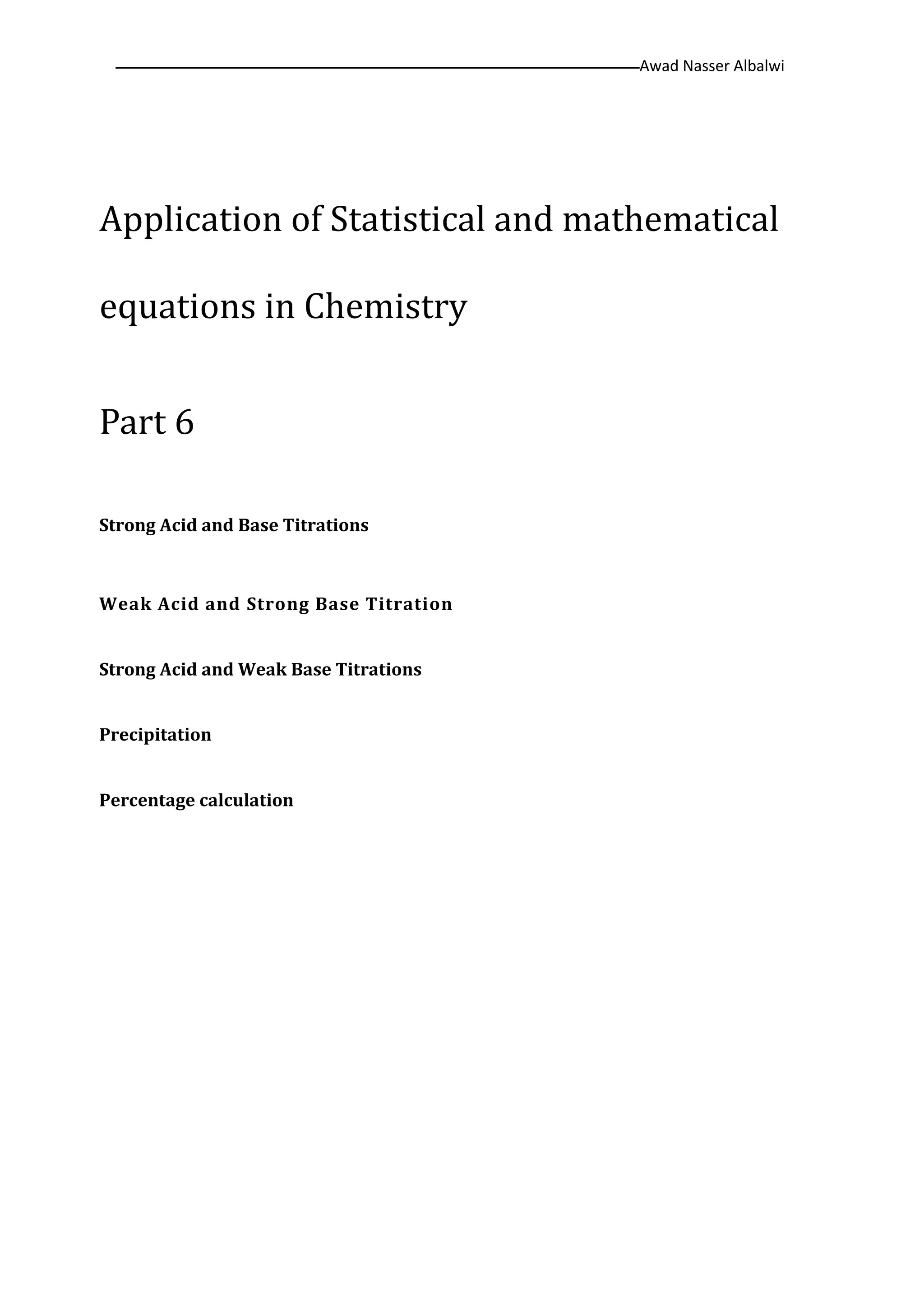
continuing.) The basic form of the calculation is:
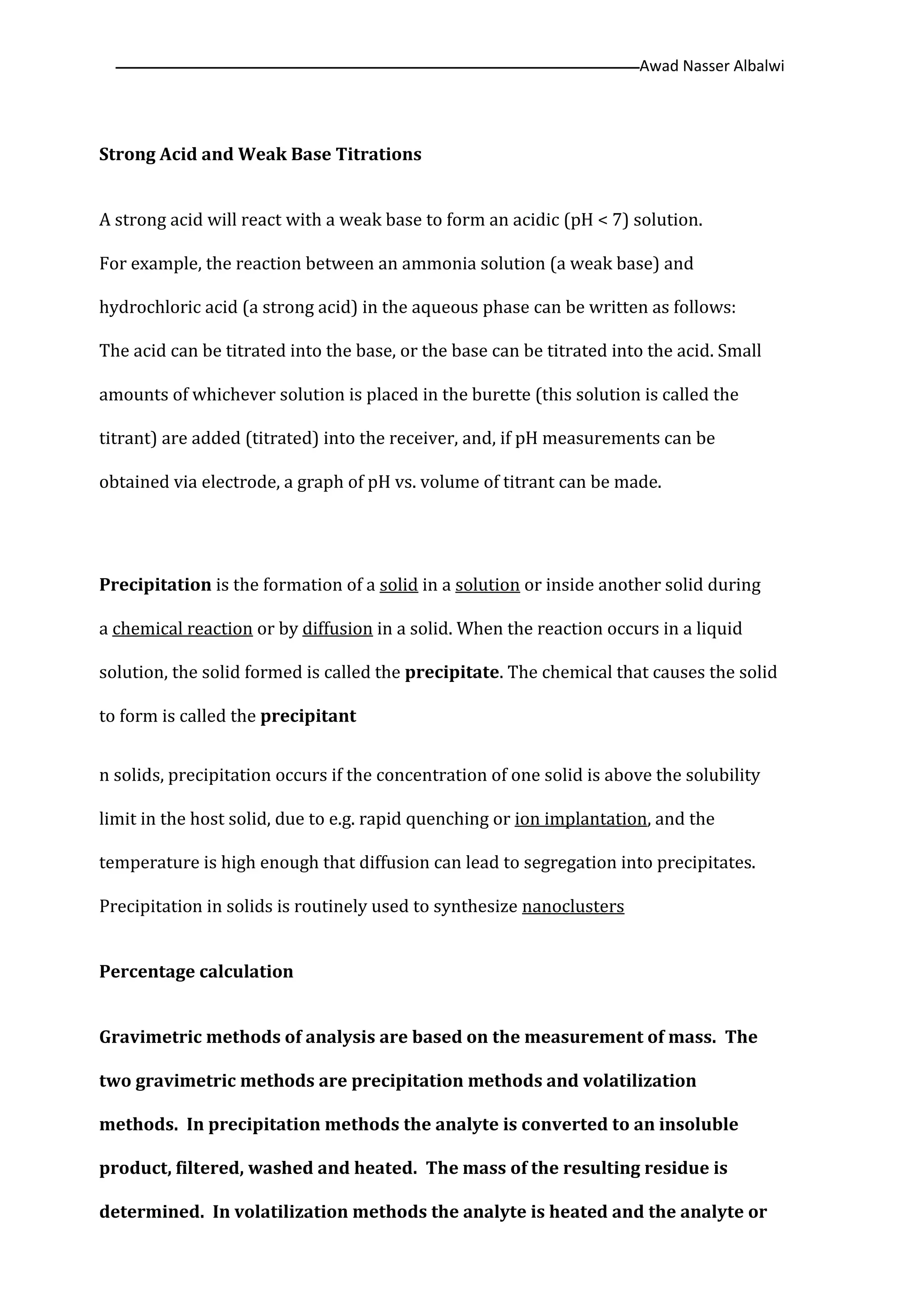
The gravimetric factor (GF) comes from a combination of the mole ratios and
the formula weights used in the stoichiometric calculation.
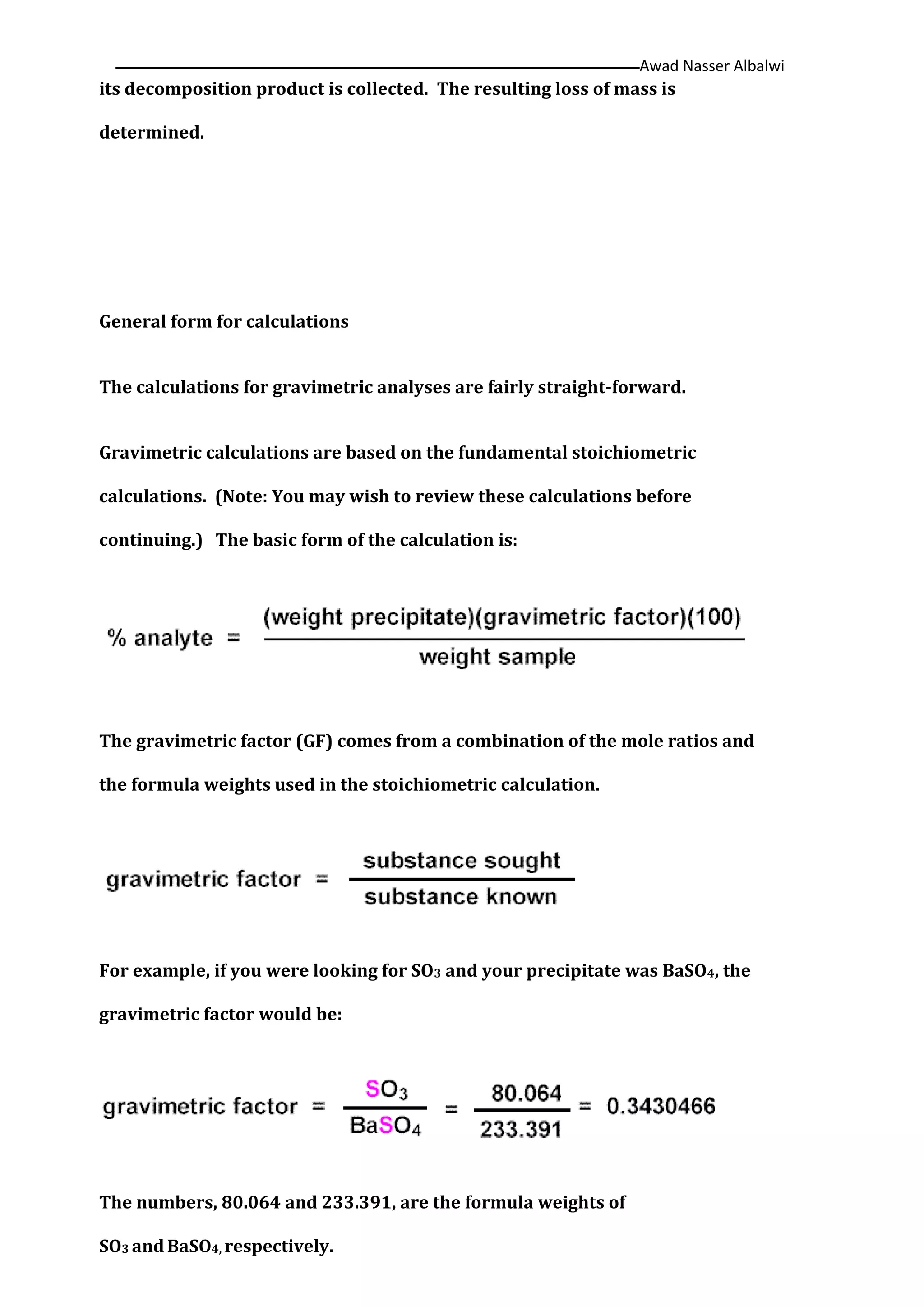
For example, if you were looking for SO3 and your precipitate was BaSO4, the
gravimetric factor would be:
The numbers, 80.064 and 233.391, are the formula weights of
SO3 andBaSO4, respectively.
Awad Nasser Albalwi‫ــــــــــــــــــــــــــــــــــــــــــــ‬‫ــــــــــــــــــــــــــــــــــــــــــــــــــــــــــــــــــــــــــــــــــــــــــــــــــــــــ‬
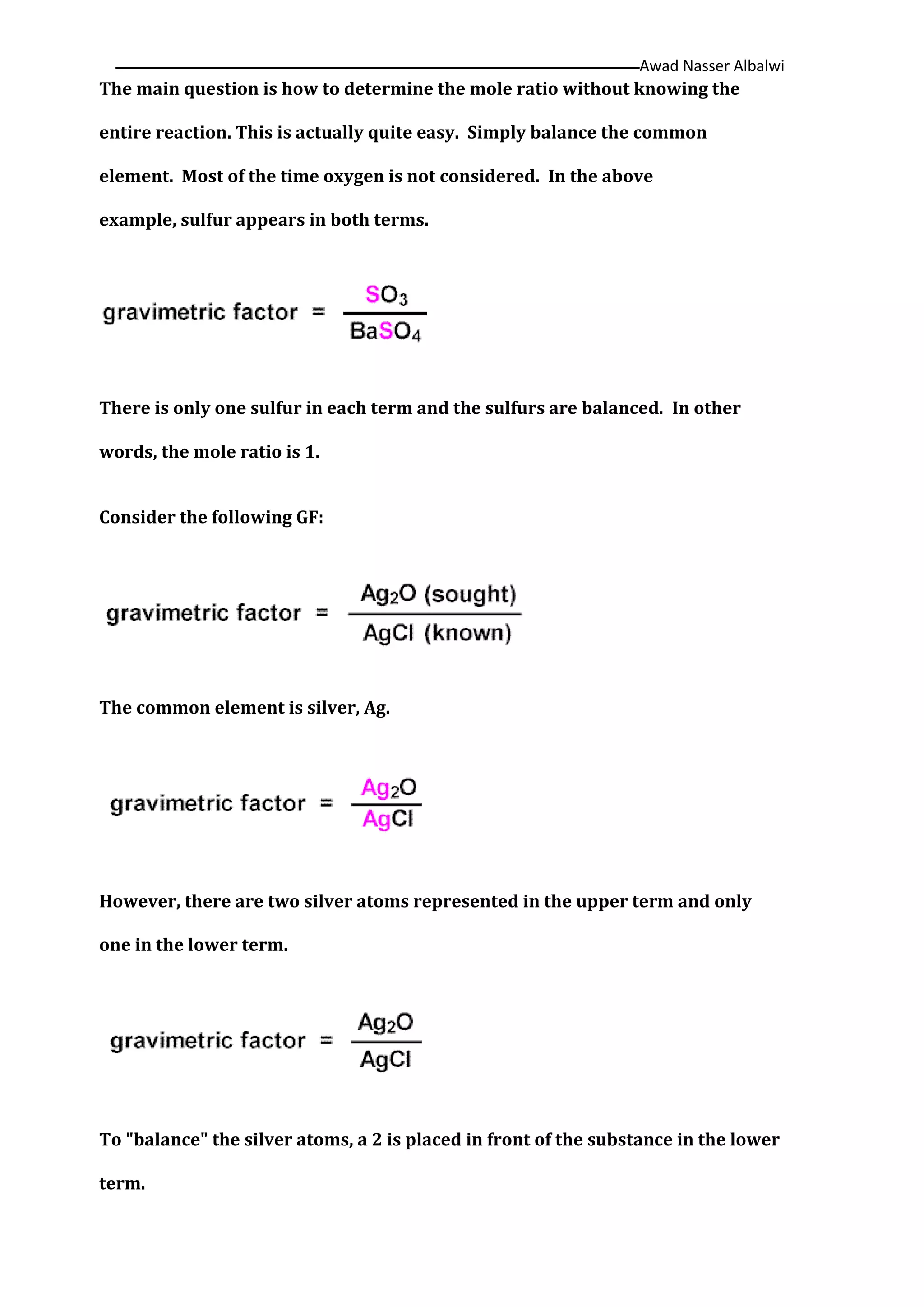
The main question is how to determine the mole ratio without knowing the
entire reaction. This is actually quite easy. Simply balance the common
element. Most of the time oxygen is not considered. In the above
example, sulfur appears in both terms.
There is only one sulfur in each term and the sulfurs are balanced. In other
words, the mole ratio is 1.
Consider the following GF:
The common element is silver, Ag.
However, there are two silver atoms represented in the upper term and only
one in the lower term.
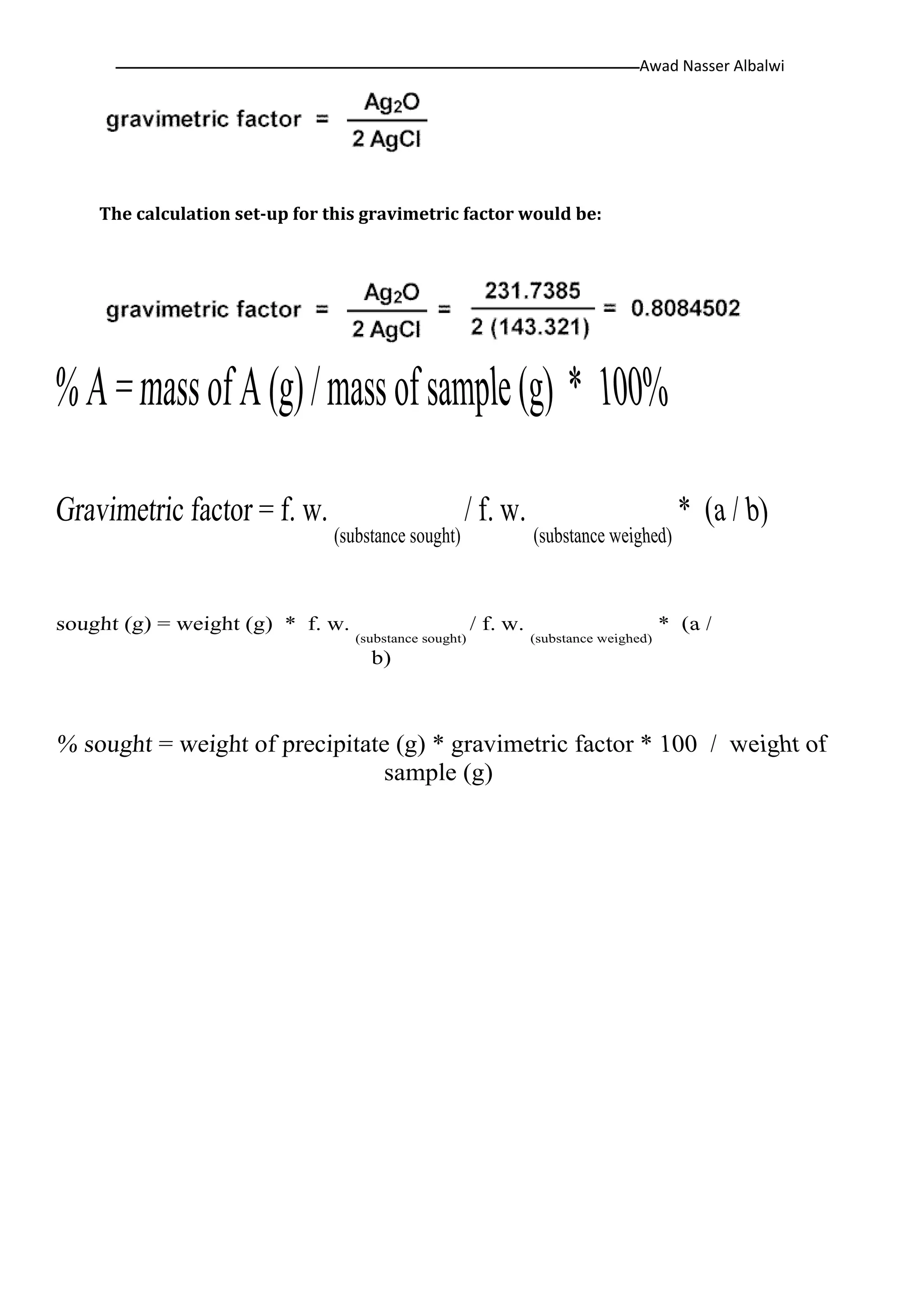
To "balance" the silver atoms, a 2 is placed in front of the substance in the lower
term.
Awad Nasser Albalwi‫ــــــــــــــــــــــــــــــــــــــــــــ‬‫ــــــــــــــــــــــــــــــــــــــــــــــــــــــــــــــــــــــــــــــــــــــــــــــــــــــــ‬
The calculation set-up for this gravimetric factor would be:

Application of Statistical and mathematical equations in Chemistry -Part 6