Anti-spasmodic drugs
Drugs used to treat symptoms such as pain and
spasm in irritable bowel syndrome.
Classification:
• Antimuscarinics/Anticholinergics : Hyoscine
Butylbromide, Atropine, Dicyclomine,
Propantheline
•Smooth muscle relaxants: Drotaverine,
Alverine, Mebeverine, Peppermint oil
• Antispasmodics are given for abdominal pain, IBS
symptoms.
• There are two main classes of antispasmodic, the
antimuscarinic drugs and drugs that are direct smooth
muscle relaxants.
• Antimuscarinic drugs
• These drugs block cholinergic transmission at
parasympathetic postganglionic nerve endings and cause
smooth muscle to relax. The synthetic antimuscarinics
dicyclomine and propantheline are probably the most
useful in IBS, but therapeutic efficacy is often limited by
other anticholinergic effects. The drugs are
contraindicated in patients with glaucoma and
prostatism, and should be avoided in patients with
gastro-oesophageal reflux.
• Direct smooth muscle relaxants
• Mebeverine is a reserpine derivative that has a
direct effect on colonic muscle activity, especially,
it appears, on colonic hypermotility. As it does not
possess antimuscarinic activity, it does not exhibit
the troublesome effects of that group of drugs.
• Alverine and peppermint oil also have direct
smooth muscle relaxing activity.
Anti spasmodics are commonly used in:
• To help relieve some of the symptoms of IBS
such as spasm (colic), bloating and abdominal
pain
• To reduce the movement ( motility) of the
intestine
• Overactive bladder
• Movement problems in Parkinson's disease
• Diarrhoea
• Motion sickness
• Nausea and/or vomiting
• Muscle spasms
• Chronic obstructive pulmonary disease (COPD)
• Asthma
MECHANISM:
Movement of food along the gut occurs because of the
regular relaxation and contraction of muscles of gut.
In conditions such as IBS these muscle contractions can
occur too often or be painful, causing symptoms such as
pain and bloating
Anti muscarinics work by attaching to the muscarinic
receptors and stopping the chemicals to act & make the
muscle contract.
Reducing the muscle contractions in this way often
helps to relieve some of the symptoms caused by IBS
• Hyoscine Butylbromide
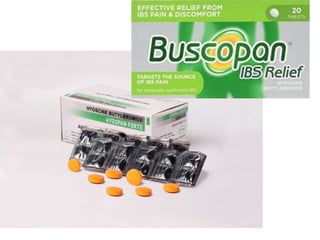
• MOA: Also known as scopolamine butylbromideand sold under
brandname Buscopan has anticholinergic action. Its high affinity
for muscarinic receptors located on the smooth-muscle cells of
the GI tract exerts a smooth-muscle relaxing/spasmolytic effect.
• Indications (Dosage 20-40mg oral, 20mg/ml Inj)
• crampy abdominal pain
• esophageal spasms
• renal colic
• bladder spasms
• It is also used to improve respiratory secretions at the end of life
• Hyoscine butylbromide can be taken by mouth, injection into a
muscle, or into a vein
• Side effects:
• sleepiness, vision changes, dry mouth, rapid heart rate, triggering
of glaucoma and severe allergies. Sleepiness however, is
uncommon.
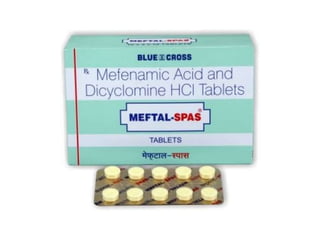
Dicyclomine:
 Has direct smooth muscle relaxant action &
weak anti cholinergic
 Exerts anti spasmodic action
 Also has anti-emetic property
Indications:
 Morning sickness
 Motion sickness
 Dysmenorrhoea
 Irritable bowel disease
Dose: 20 mg oral/i.m children 5-10mg
Contraindications:
Paralytic ileus
Myasthenia gravis
Pyloric stenosis
Enlargement of the
prostate
Pregnancy
Lactating mother
ADRs
Flatulence
bloating(wind)
Heart burn
Constipation
Dry mouth
Drotaverine:
 A novel non anticholiergic smooth muscle
relaxant
 Exerts anti spasmodic action
 Used orally
MOA
 Inhibits phosphdiesterase-4 selective for
smooth muscle
 Elevation of cAMP/cGMP attends smooth
muscle relaxation
• Drotaverine has spasmolytic and vasodilating
action.
• It exerts its action by inhibiting
phosphodiesterase enzyme IV.
• This will leads to a decrease in cyclic AMP level
and reduction in calcium ions (Ca2+).
• The reduction of calcium ions will dilates the
unstipped muscles and blood vessels strongly
and relieves spasm of smooth muscles.
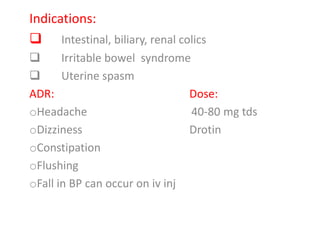
Indications:
 Intestinal, biliary, renal colics
 Irritable bowel syndrome
 Uterine spasm
ADR: Dose:
oHeadache 40-80 mg tds
oDizziness Drotin
oConstipation
oFlushing
oFall in BP can occur on iv inj

Antispasmodic drugs

  • 1.
    Anti-spasmodic drugs Drugs usedto treat symptoms such as pain and spasm in irritable bowel syndrome. Classification: • Antimuscarinics/Anticholinergics : Hyoscine Butylbromide, Atropine, Dicyclomine, Propantheline •Smooth muscle relaxants: Drotaverine, Alverine, Mebeverine, Peppermint oil
  • 2.
    • Antispasmodics aregiven for abdominal pain, IBS symptoms. • There are two main classes of antispasmodic, the antimuscarinic drugs and drugs that are direct smooth muscle relaxants. • Antimuscarinic drugs • These drugs block cholinergic transmission at parasympathetic postganglionic nerve endings and cause smooth muscle to relax. The synthetic antimuscarinics dicyclomine and propantheline are probably the most useful in IBS, but therapeutic efficacy is often limited by other anticholinergic effects. The drugs are contraindicated in patients with glaucoma and prostatism, and should be avoided in patients with gastro-oesophageal reflux.
  • 3.
    • Direct smoothmuscle relaxants • Mebeverine is a reserpine derivative that has a direct effect on colonic muscle activity, especially, it appears, on colonic hypermotility. As it does not possess antimuscarinic activity, it does not exhibit the troublesome effects of that group of drugs. • Alverine and peppermint oil also have direct smooth muscle relaxing activity.
  • 4.
    Anti spasmodics arecommonly used in: • To help relieve some of the symptoms of IBS such as spasm (colic), bloating and abdominal pain • To reduce the movement ( motility) of the intestine • Overactive bladder • Movement problems in Parkinson's disease • Diarrhoea • Motion sickness • Nausea and/or vomiting • Muscle spasms • Chronic obstructive pulmonary disease (COPD) • Asthma
  • 5.
    MECHANISM: Movement of foodalong the gut occurs because of the regular relaxation and contraction of muscles of gut. In conditions such as IBS these muscle contractions can occur too often or be painful, causing symptoms such as pain and bloating Anti muscarinics work by attaching to the muscarinic receptors and stopping the chemicals to act & make the muscle contract. Reducing the muscle contractions in this way often helps to relieve some of the symptoms caused by IBS
  • 6.
    • Hyoscine Butylbromide •MOA: Also known as scopolamine butylbromideand sold under brandname Buscopan has anticholinergic action. Its high affinity for muscarinic receptors located on the smooth-muscle cells of the GI tract exerts a smooth-muscle relaxing/spasmolytic effect. • Indications (Dosage 20-40mg oral, 20mg/ml Inj) • crampy abdominal pain • esophageal spasms • renal colic • bladder spasms • It is also used to improve respiratory secretions at the end of life • Hyoscine butylbromide can be taken by mouth, injection into a muscle, or into a vein • Side effects: • sleepiness, vision changes, dry mouth, rapid heart rate, triggering of glaucoma and severe allergies. Sleepiness however, is uncommon.
  • 8.
    Dicyclomine:  Has directsmooth muscle relaxant action & weak anti cholinergic  Exerts anti spasmodic action  Also has anti-emetic property Indications:  Morning sickness  Motion sickness  Dysmenorrhoea  Irritable bowel disease Dose: 20 mg oral/i.m children 5-10mg
  • 9.
    Contraindications: Paralytic ileus Myasthenia gravis Pyloricstenosis Enlargement of the prostate Pregnancy Lactating mother ADRs Flatulence bloating(wind) Heart burn Constipation Dry mouth
  • 11.
    Drotaverine:  A novelnon anticholiergic smooth muscle relaxant  Exerts anti spasmodic action  Used orally MOA  Inhibits phosphdiesterase-4 selective for smooth muscle  Elevation of cAMP/cGMP attends smooth muscle relaxation
  • 12.
    • Drotaverine hasspasmolytic and vasodilating action. • It exerts its action by inhibiting phosphodiesterase enzyme IV. • This will leads to a decrease in cyclic AMP level and reduction in calcium ions (Ca2+). • The reduction of calcium ions will dilates the unstipped muscles and blood vessels strongly and relieves spasm of smooth muscles.
  • 13.
    Indications:  Intestinal, biliary,renal colics  Irritable bowel syndrome  Uterine spasm ADR: Dose: oHeadache 40-80 mg tds oDizziness Drotin oConstipation oFlushing oFall in BP can occur on iv inj