Anti-Spasmodics
Dr. Saroj Suwal
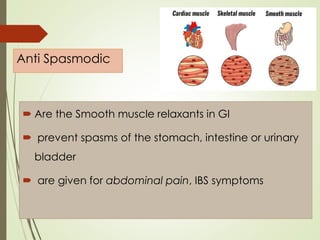
Anti Spasmodic
 Are the Smooth muscle relaxants in GI
 prevent spasms of the stomach, intestine or urinary
bladder
 are given for abdominal pain, IBS symptoms
Anti-spasmodic drugs classification
Two types :
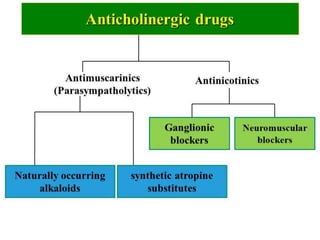
• Antimuscarinics/Anticholinergics :
• Hyoscine Butylbromide, Atropine, Dicyclomine,
Propantheline
•Smooth muscle relaxants: (Non
anticholinergics)
Drotaverine, Alverine, Mebeverine,
Peppermint oil
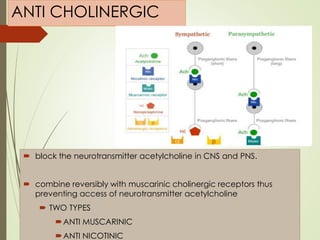
ANTI CHOLINERGIC
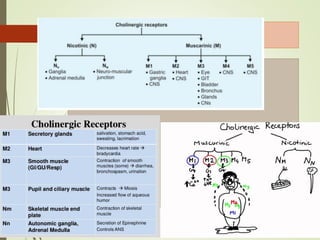
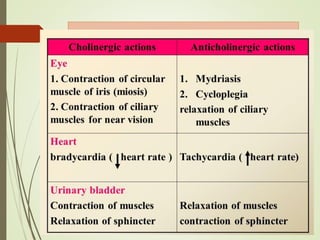
 block the neurotransmitter acetylcholine in CNS and PNS.
 combine reversibly with muscarinic cholinergic receptors thus
preventing access of neurotransmitter acetylcholine
 TWO TYPES
ANTI MUSCARINIC
ANTI NICOTINIC
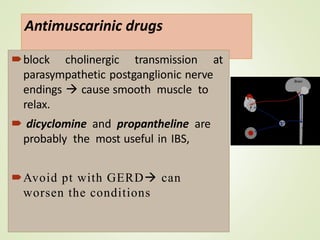
Antimuscarinic drugs
block cholinergic transmission at
parasympathetic postganglionic nerve
endings → cause smooth muscle to
relax.
 dicyclomine and propantheline are
probably the most useful in IBS,
Avoid pt with GERD→ can
worsen the conditions
smooth muscle relaxants
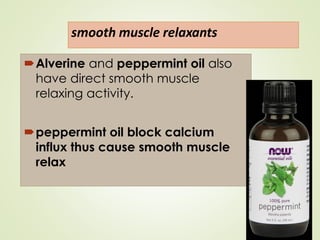
Alverine and peppermint oil also
have direct smooth muscle
relaxing activity.
peppermint oil block calcium
influx thus cause smooth muscle
relax
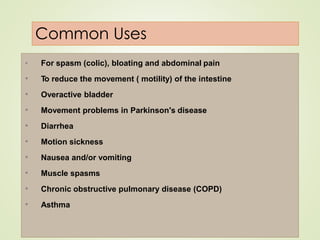
Common Uses
• For spasm (colic), bloating and abdominal pain
• To reduce the movement ( motility) of the intestine
• Overactive bladder
• Movement problems in Parkinson's disease
• Diarrhea
• Motion sickness
• Nausea and/or vomiting
• Muscle spasms
• Chronic obstructive pulmonary disease (COPD)
• Asthma
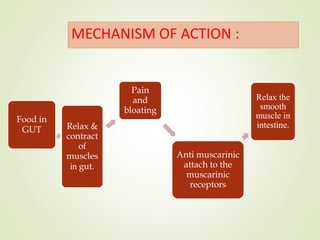
MECHANISM OF ACTION :
Food in
GUT Relax &
contract
of
muscles
in gut.
Pain
and
bloating
Anti muscarinic
attach to the
muscarinic
receptors
Relax the
smooth
muscle in
intestine.
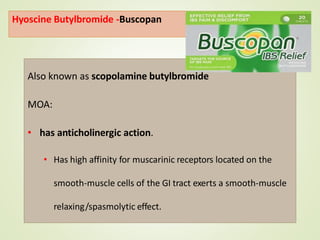
Hyoscine Butylbromide -Buscopan
Also known as scopolamine butylbromide
MOA:
• has anticholinergic action.
• Has high affinity for muscarinic receptors located on the
smooth-muscle cells of the GI tract exerts a smooth-muscle
relaxing/spasmolytic effect.
Indications
• crampy abdominal pain
• esophageal spasms
• renal colic
• bladder spasms
• also used to improve respiratory secretions at the
end of life
• Can taken by Oral , im or IV
• (Dosage
• 10mg oral x TDS, 20mg/ml Inj x TDS)
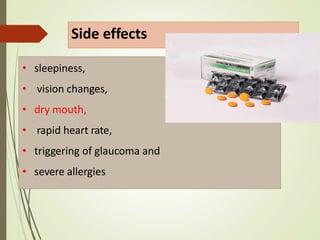
Side effects
• sleepiness,
• vision changes,
• dry mouth,
• rapid heart rate,
• triggering of glaucoma and
• severe allergies
Dicyclomine:
 muscarinic antagonist used as an antispasmodic
and in urinary incontinence
Has direct smooth muscle relaxant
action
Has weak anti cholinergic
Exerts anti spasmodic action
Also has anti-emetic
property
Indications:
Morning sickness
Motion sickness
Dysmenorrhoea
Irritable bowel disease
Dose:
20 mg oral/i.m children 5-10mg
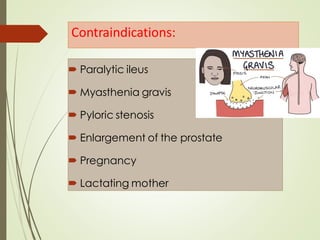
Contraindications:
 Paralytic ileus
 Myasthenia gravis
 Pyloric stenosis
 Enlargement of the prostate
 Pregnancy
 Lactating mother
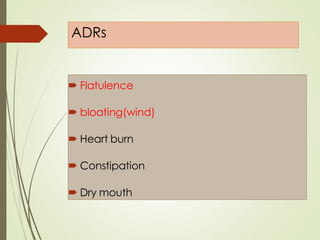
ADRs
 Flatulence
 bloating(wind)
 Heart burn
 Constipation
 Dry mouth
Smooth muscle relaxants: (Non anticholinergics)
Are direct smooth muscle relaxants
Drotaverine
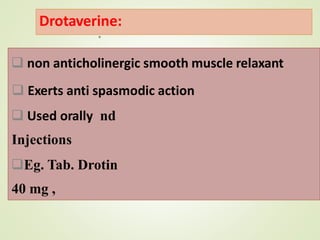
Drotaverine:
❑ non anticholinergic smooth muscle relaxant
❑ Exerts anti spasmodic action
❑ Used orally nd
Injections
❑Eg. Tab. Drotin
40 mg ,
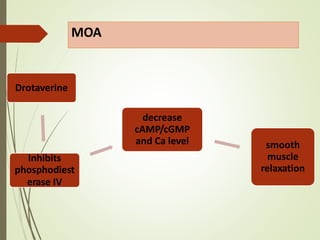
MOA
Drotaverine
Inhibits
phosphodiest
erase IV
decrease
cAMP/cGMP
and Ca level smooth
muscle
relaxation
Indications:
 Intestinal, biliary, renal colic
 Irritable bowel syndrome
 Uterine spasm ( dysmenorrhea)
 headache,
 also used to relieve cervical spasm during labor.
 Dose
 Drotin 40-80 mg tds
ADR
 Headache Dizziness Constipation
 Flushing
 Fall in BP can occur on iv inj
Contraindications
 Allergy
 Sever liver/kidney damage
 Heart Failure

3.1antispasmodicdrugs