Antimalarials
Archana B Chavhan
M.Pharm (QA)
KYDSCT’s College of Pharmacy, Sakegaon
Defination
Anti malarials drug is used to prevent or treatment of malaria
• Malaria is occurs due to infection by the four species of a
• 1. Plasmodium Malariae
• 2. Plasmodium vivax
• 3. Plasmodium ouale
• 4. Plasmodium falciparum
The Disease are infected into human body due to bite of female Anapheles
mosquitos.
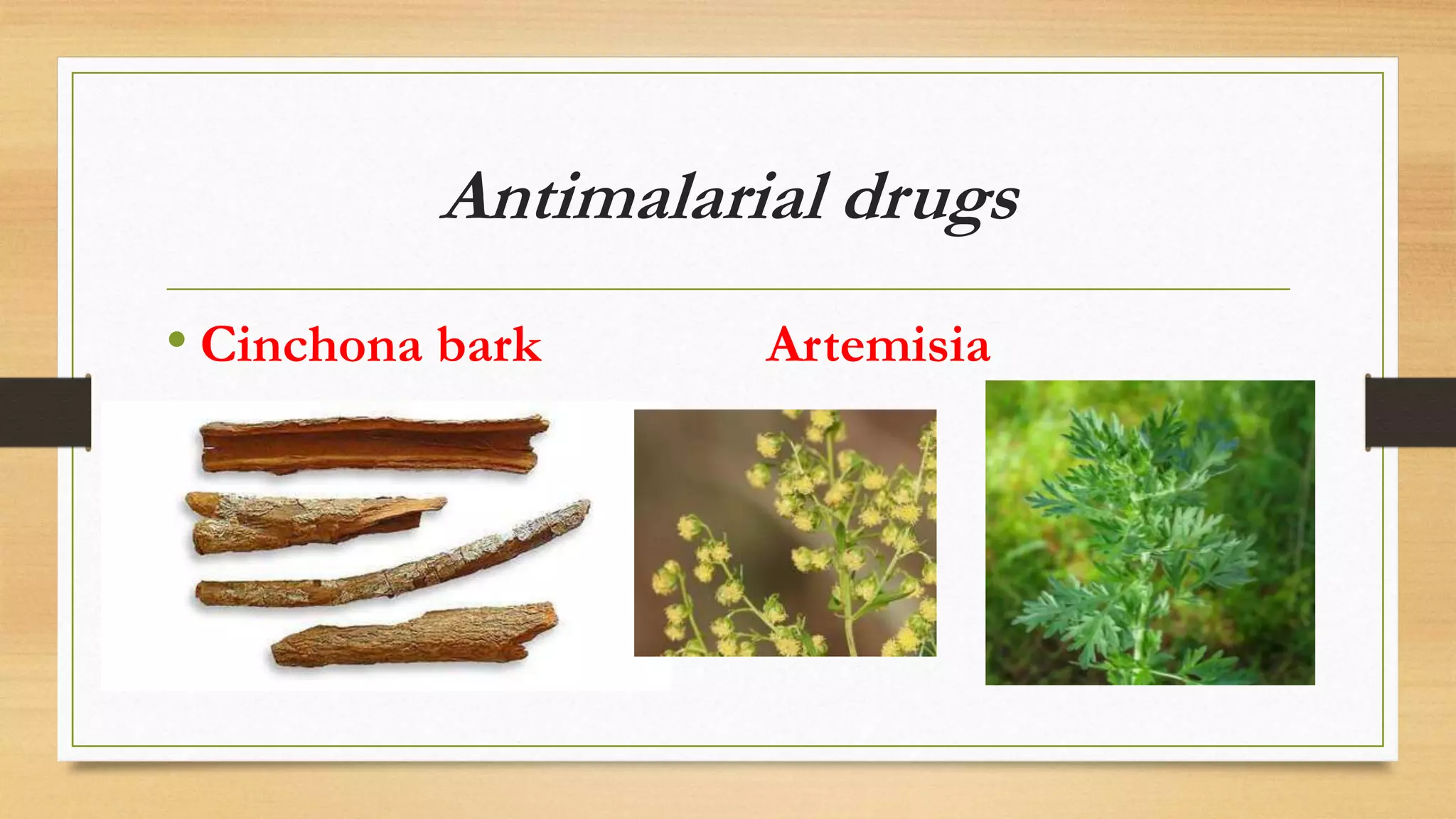
Antimalarial drugs
• Cinchona bark Artemisia
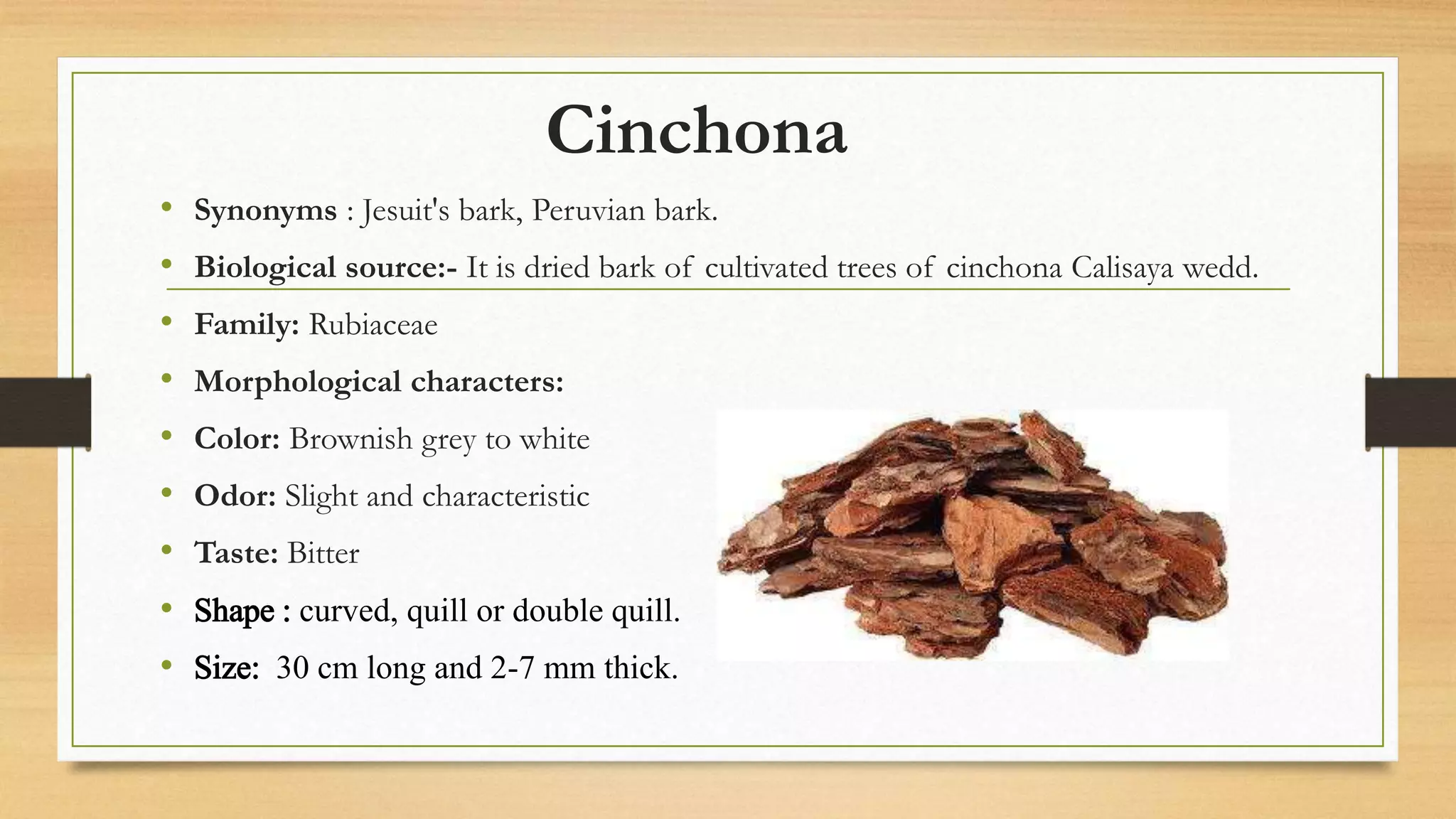
Cinchona
• Synonyms : Jesuit's bark, Peruvian bark.
• Biological source:- It is dried bark of cultivated trees of cinchona Calisaya wedd.
• Family: Rubiaceae
• Morphological characters:
• Color: Brownish grey to white
• Odor: Slight and characteristic
• Taste: Bitter
• Shape : curved, quill or double quill.
• Size: 30 cm long and 2-7 mm thick.
Chemical Constituents:-
• Alkaloid is the major chemical constituent of cinchona.
• It consist of approximately 30 types of alkaloids.
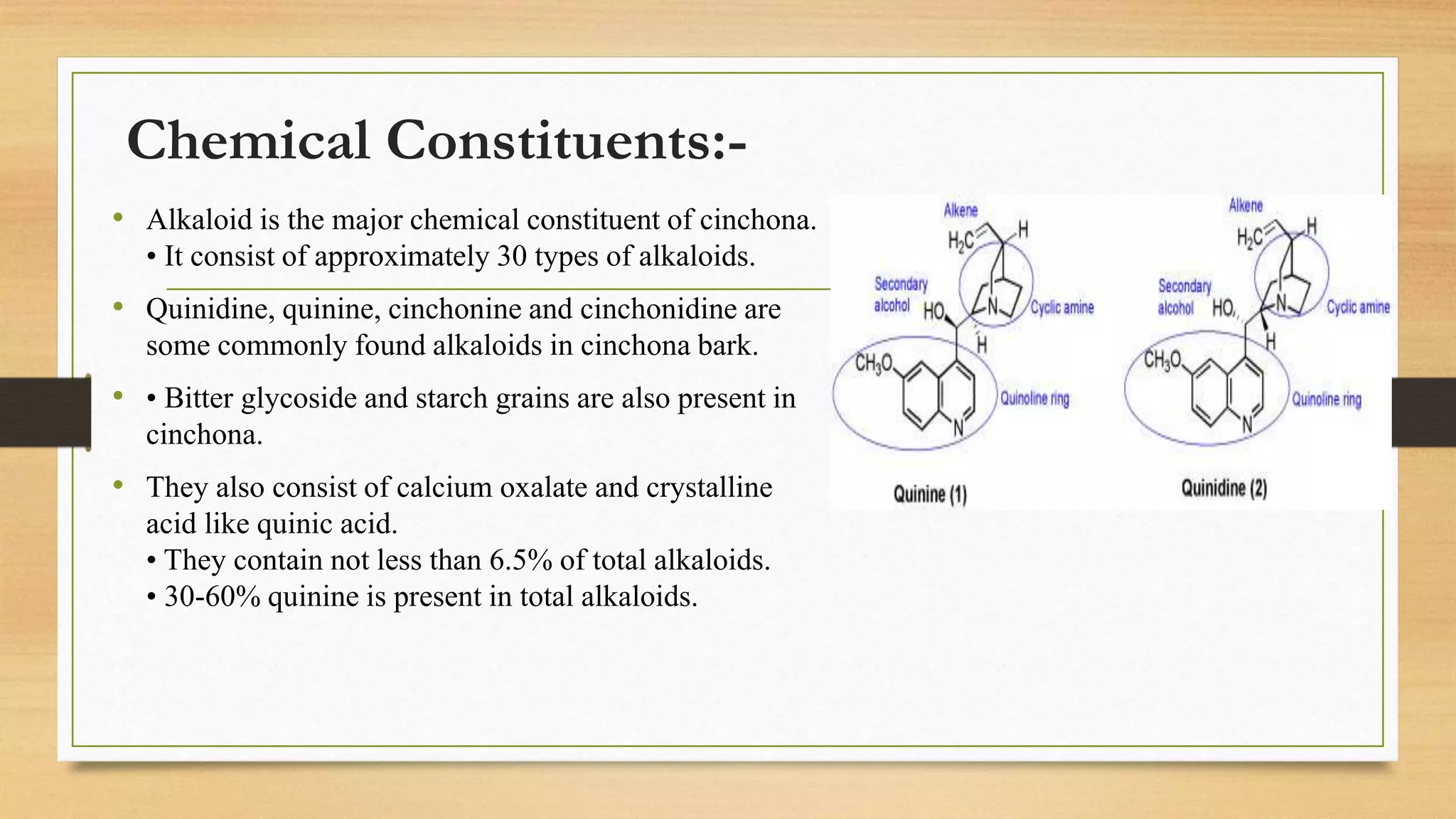
• Quinidine, quinine, cinchonine and cinchonidine are
some commonly found alkaloids in cinchona bark.
• • Bitter glycoside and starch grains are also present in
cinchona.
• They also consist of calcium oxalate and crystalline
acid like quinic acid.
• They contain not less than 6.5% of total alkaloids.
• 30-60% quinine is present in total alkaloids.
Uses
1. Cinchona mainly used for its antimalarial activity and it is
used as antimalarial drug.
2. It also have analgesic, antipyretic and protoplasmic
properties.
3. It is used to treat cardiac arrhythmia.
4. It is used as antiseptic
5. It is used to treatment dyspepsia and gastric catarrh.
6. It is also used as antiseptic and useful in disease like
abscesses, cavities and ulcers.
Artemisia
• Synonyms:- Mugworts, wormwood and sagebrush.
• Biological Source: Artemisia annua is an annual herbaceous plant of the Asteraceae.
Artemisia annua (L.)
• Family:- Compositae.
• Colour: Flowers are yellowish, other parts are whitish-grey.
• Odour: Aromatic, sweet.
• Taste: Bitter, Camphor like.
• Shape: The flower heads are yellow or brown in colour and oval in shape. The flowers
are fertile and have tubular corolla, short cylindrical tube, narrow limb and no calyx.
Chemical constituents
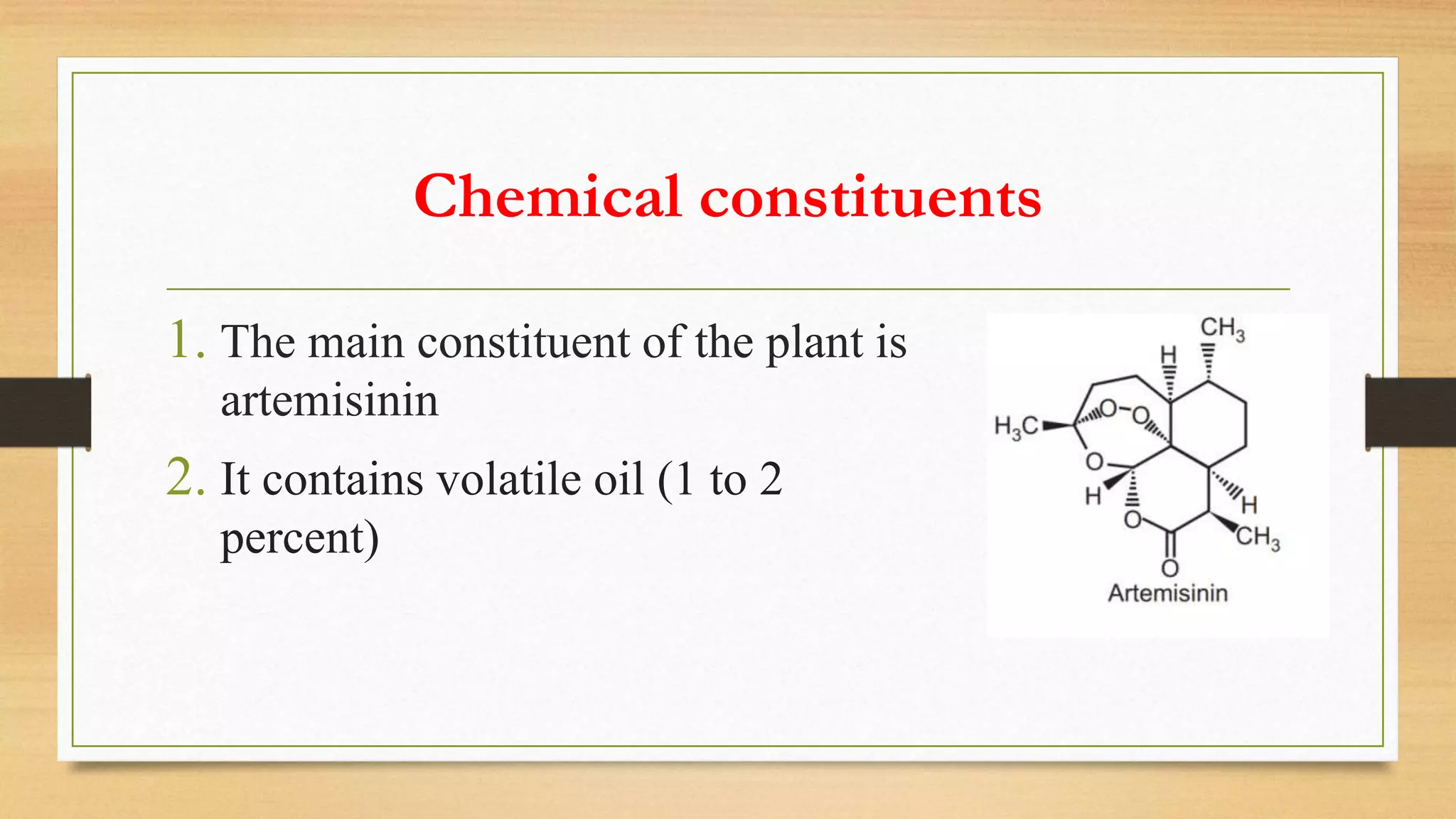
1. The main constituent of the plant is
artemisinin
2. It contains volatile oil (1 to 2
percent)
Uses
1. Mainly used as antimalarial agent
2. In the treatment of;
• Epilepsy.
• Irregular menstrual periods.
• Anxiety.
• Diarrhea.
• Constipation.

Antimalarials.pptx

  • 1.
    Antimalarials Archana B Chavhan M.Pharm(QA) KYDSCT’s College of Pharmacy, Sakegaon
  • 2.
    Defination Anti malarials drugis used to prevent or treatment of malaria • Malaria is occurs due to infection by the four species of a • 1. Plasmodium Malariae • 2. Plasmodium vivax • 3. Plasmodium ouale • 4. Plasmodium falciparum The Disease are infected into human body due to bite of female Anapheles mosquitos.
  • 3.
  • 4.
    Cinchona • Synonyms :Jesuit's bark, Peruvian bark. • Biological source:- It is dried bark of cultivated trees of cinchona Calisaya wedd. • Family: Rubiaceae • Morphological characters: • Color: Brownish grey to white • Odor: Slight and characteristic • Taste: Bitter • Shape : curved, quill or double quill. • Size: 30 cm long and 2-7 mm thick.
  • 5.
    Chemical Constituents:- • Alkaloidis the major chemical constituent of cinchona. • It consist of approximately 30 types of alkaloids. • Quinidine, quinine, cinchonine and cinchonidine are some commonly found alkaloids in cinchona bark. • • Bitter glycoside and starch grains are also present in cinchona. • They also consist of calcium oxalate and crystalline acid like quinic acid. • They contain not less than 6.5% of total alkaloids. • 30-60% quinine is present in total alkaloids.
  • 6.
    Uses 1. Cinchona mainlyused for its antimalarial activity and it is used as antimalarial drug. 2. It also have analgesic, antipyretic and protoplasmic properties. 3. It is used to treat cardiac arrhythmia. 4. It is used as antiseptic 5. It is used to treatment dyspepsia and gastric catarrh. 6. It is also used as antiseptic and useful in disease like abscesses, cavities and ulcers.
  • 7.
    Artemisia • Synonyms:- Mugworts,wormwood and sagebrush. • Biological Source: Artemisia annua is an annual herbaceous plant of the Asteraceae. Artemisia annua (L.) • Family:- Compositae. • Colour: Flowers are yellowish, other parts are whitish-grey. • Odour: Aromatic, sweet. • Taste: Bitter, Camphor like. • Shape: The flower heads are yellow or brown in colour and oval in shape. The flowers are fertile and have tubular corolla, short cylindrical tube, narrow limb and no calyx.
  • 8.
    Chemical constituents 1. Themain constituent of the plant is artemisinin 2. It contains volatile oil (1 to 2 percent)
  • 9.
    Uses 1. Mainly usedas antimalarial agent 2. In the treatment of; • Epilepsy. • Irregular menstrual periods. • Anxiety. • Diarrhea. • Constipation.