K.Y.D.S.C.T’ s college of pharmacy, sakegaon.
Prepared & Presented By: Priyanka N. Deshmukh
M.Pharm(Q.A)
Dental
Products
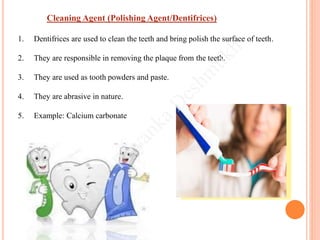
Cleaning Agent (Polishing Agent/Dentifrices)
1. Dentifrices are used to clean the teeth and bring polish the surface of teeth.
2. They are responsible in removing the plaque from the teeth.
3. They are used as tooth powders and paste.
4. They are abrasive in nature.
5. Example: Calcium carbonate
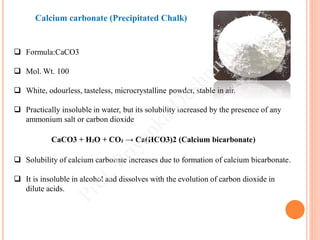
Calcium carbonate (Precipitated Chalk)
 Formula:CaCO3
 Mol. Wt. 100
 White, odourless, tasteless, microcrystalline powder, stable in air.
 Practically insoluble in water, but its solubility increased by the presence of any
ammonium salt or carbon dioxide
CaCO3 + H₂O + CO₂ → Ca(HCO3)2 (Calcium bicarbonate)
 Solubility of calcium carbonate increases due to formation of calcium bicarbonate.
 It is insoluble in alcohol and dissolves with the evolution of carbon dioxide in
dilute acids.
 Uses:
1. Used as an antacid.
2. Used as a chalk
3. In the treatment of diarrhoea.
4. Also used as a polishing agent in tooth powders
5. Used in homeopathic medicine.
 Storage:
Stored in well closed, air-tight containers.
 Incompatibility:
1. It is incompatible with tetracycline.
2. Calcium carbonate with large amounts of milk can cause milk-alkali Syndrome
(burnett syndrome).
 Pharmaceutical preparation : Tablet / oral suspension
 Market preparation :
1. As injection (calcijex)
2. Oral solution (rocaltrol)
Anticaries Agents
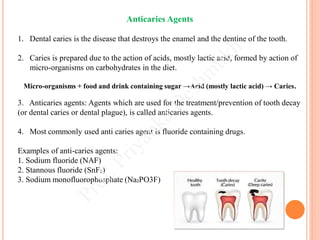
1. Dental caries is the disease that destroys the enamel and the dentine of the tooth.
2. Caries is prepared due to the action of acids, mostly lactic acid, formed by action of
micro-organisms on carbohydrates in the diet.
Micro-organisms + food and drink containing sugar →Acid (mostly lactic acid) → Caries.
3. Anticaries agents: Agents which are used for the treatment/prevention of tooth decay
(or dental caries or dental plague), is called anticaries agents.
4. Most commonly used anti caries agent is fluoride containing drugs.
Examples of anti-caries agents:
1. Sodium fluoride (NAF)
2. Stannous fluoride (SnF₂)
3. Sodium monofluorophosphate (Na₂PO3F)
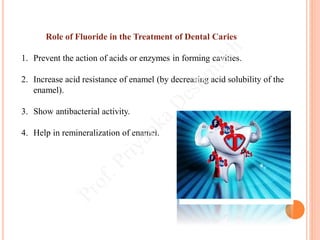
Role of Fluoride in the Treatment of Dental Caries
1. Prevent the action of acids or enzymes in forming cavities.
2. Increase acid resistance of enamel (by decreasing acid solubility of the
enamel).
3. Show antibacterial activity.
4. Help in remineralization of enamel.
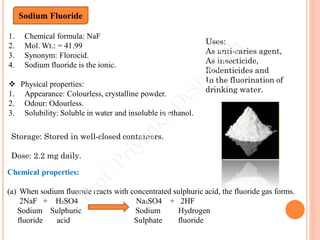
1. Chemical formula: NaF
2. Mol. Wt.: = 41.99
3. Synonym: Florocid.
4. Sodium fluoride is the ionic.
 Physical properties:
1. Appearance: Colourless, crystalline powder.
2. Odour: Odourless.
3. Solubility: Soluble in water and insoluble in ethanol.
Sodium Fluoride
Chemical properties:
(a) When sodium fluoride reacts with concentrated sulphuric acid, the fluoride gas forms.
2NaF + H₂SO4 Na₂SO4 + 2HF
Sodium Sulphuric Sodium Hydrogen
fluoride acid Sulphate fluoride
Uses:
As anti-caries agent,
As insecticide,
Rodenticides and
In the fluorination of
drinking water.
Storage: Stored in well-closed containers.
Dose: 2.2 mg daily.
Medical Uses
Dentures do not feel like real teeth, nor do they function like real teeth.
Dentures can help people through:
1. Chewing ability is improve.
2. Gives a natural appearance to the face.
3. Provides support for the lips and cheeks.
4. Corrects the collapsed appearance that results from the loss of teeth.
5. Pronounciation, enables patients to speak better.
Denture cleaners
Dentures are also known as false teeth where prosthetic devices are
used to replace missing teeth which are surrounded by soft and hard
tissues of the oral cavity.
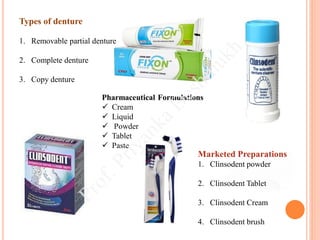
Types of denture
1. Removable partial denture
2. Complete denture
3. Copy denture
Pharmaceutical Formulations
 Cream
 Liquid
 Powder
 Tablet
 Paste
Marketed Preparations
1. Clinsodent powder
2. Clinsodent Tablet
3. Clinsodent Cream
4. Clinsodent brush
 Denture adhesive is a
paste, powder or
strip made from a
non-toxic, water-
soluble material that
goes between the
denture and the gum-
line.
 Adhesive helps
enhance the natural
forces that hold your
dentures in place.
Denture adhesive
Denture Adhesive Powder
This type of adhesive
comes in a powder form
and works by soaking up
water to attach denture to
your gum just like a cream
does.
Pharmaceutical Formulations:
Denture adhesive cream: Denture adhesive cream is the
most common kind of adhesive you will come across.
Denture Adhesive Strips
Strips work by applying
them directly on your
dentures before you put
them in your mouth, but
these can be expensive.
Types
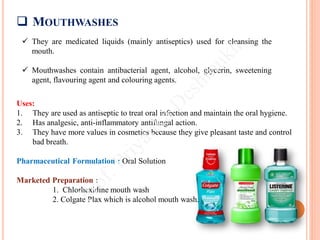
 MOUTHWASHES
 They are medicated liquids (mainly antiseptics) used for cleansing the
mouth.
 Mouthwashes contain antibacterial agent, alcohol, glycerin, sweetening
agent, flavouring agent and colouring agents.
Uses:
1. They are used as antiseptic to treat oral infection and maintain the oral hygiene.
2. Has analgesic, anti-inflammatory antifungal action.
3. They have more values in cosmetics because they give pleasant taste and control
bad breath.
Pharmaceutical Formulation : Oral Solution
Marketed Preparation :
1. Chlorhexidine mouth wash
2. Colgate Plax which is alcohol mouth wash.
Y
oU
THAN
K

Dental products

  • 1.
    K.Y.D.S.C.T’ s collegeof pharmacy, sakegaon. Prepared & Presented By: Priyanka N. Deshmukh M.Pharm(Q.A) Dental Products
  • 2.
    Cleaning Agent (PolishingAgent/Dentifrices) 1. Dentifrices are used to clean the teeth and bring polish the surface of teeth. 2. They are responsible in removing the plaque from the teeth. 3. They are used as tooth powders and paste. 4. They are abrasive in nature. 5. Example: Calcium carbonate
  • 3.
    Calcium carbonate (PrecipitatedChalk)  Formula:CaCO3  Mol. Wt. 100  White, odourless, tasteless, microcrystalline powder, stable in air.  Practically insoluble in water, but its solubility increased by the presence of any ammonium salt or carbon dioxide CaCO3 + H₂O + CO₂ → Ca(HCO3)2 (Calcium bicarbonate)  Solubility of calcium carbonate increases due to formation of calcium bicarbonate.  It is insoluble in alcohol and dissolves with the evolution of carbon dioxide in dilute acids.
  • 4.
     Uses: 1. Usedas an antacid. 2. Used as a chalk 3. In the treatment of diarrhoea. 4. Also used as a polishing agent in tooth powders 5. Used in homeopathic medicine.  Storage: Stored in well closed, air-tight containers.  Incompatibility: 1. It is incompatible with tetracycline. 2. Calcium carbonate with large amounts of milk can cause milk-alkali Syndrome (burnett syndrome).  Pharmaceutical preparation : Tablet / oral suspension  Market preparation : 1. As injection (calcijex) 2. Oral solution (rocaltrol)
  • 5.
    Anticaries Agents 1. Dentalcaries is the disease that destroys the enamel and the dentine of the tooth. 2. Caries is prepared due to the action of acids, mostly lactic acid, formed by action of micro-organisms on carbohydrates in the diet. Micro-organisms + food and drink containing sugar →Acid (mostly lactic acid) → Caries. 3. Anticaries agents: Agents which are used for the treatment/prevention of tooth decay (or dental caries or dental plague), is called anticaries agents. 4. Most commonly used anti caries agent is fluoride containing drugs. Examples of anti-caries agents: 1. Sodium fluoride (NAF) 2. Stannous fluoride (SnF₂) 3. Sodium monofluorophosphate (Na₂PO3F)
  • 6.
    Role of Fluoridein the Treatment of Dental Caries 1. Prevent the action of acids or enzymes in forming cavities. 2. Increase acid resistance of enamel (by decreasing acid solubility of the enamel). 3. Show antibacterial activity. 4. Help in remineralization of enamel.
  • 7.
    1. Chemical formula:NaF 2. Mol. Wt.: = 41.99 3. Synonym: Florocid. 4. Sodium fluoride is the ionic.  Physical properties: 1. Appearance: Colourless, crystalline powder. 2. Odour: Odourless. 3. Solubility: Soluble in water and insoluble in ethanol. Sodium Fluoride Chemical properties: (a) When sodium fluoride reacts with concentrated sulphuric acid, the fluoride gas forms. 2NaF + H₂SO4 Na₂SO4 + 2HF Sodium Sulphuric Sodium Hydrogen fluoride acid Sulphate fluoride Uses: As anti-caries agent, As insecticide, Rodenticides and In the fluorination of drinking water. Storage: Stored in well-closed containers. Dose: 2.2 mg daily.
  • 8.
    Medical Uses Dentures donot feel like real teeth, nor do they function like real teeth. Dentures can help people through: 1. Chewing ability is improve. 2. Gives a natural appearance to the face. 3. Provides support for the lips and cheeks. 4. Corrects the collapsed appearance that results from the loss of teeth. 5. Pronounciation, enables patients to speak better. Denture cleaners Dentures are also known as false teeth where prosthetic devices are used to replace missing teeth which are surrounded by soft and hard tissues of the oral cavity.
  • 9.
    Types of denture 1.Removable partial denture 2. Complete denture 3. Copy denture Pharmaceutical Formulations  Cream  Liquid  Powder  Tablet  Paste Marketed Preparations 1. Clinsodent powder 2. Clinsodent Tablet 3. Clinsodent Cream 4. Clinsodent brush
  • 10.
     Denture adhesiveis a paste, powder or strip made from a non-toxic, water- soluble material that goes between the denture and the gum- line.  Adhesive helps enhance the natural forces that hold your dentures in place. Denture adhesive Denture Adhesive Powder This type of adhesive comes in a powder form and works by soaking up water to attach denture to your gum just like a cream does. Pharmaceutical Formulations: Denture adhesive cream: Denture adhesive cream is the most common kind of adhesive you will come across. Denture Adhesive Strips Strips work by applying them directly on your dentures before you put them in your mouth, but these can be expensive. Types
  • 11.
     MOUTHWASHES  Theyare medicated liquids (mainly antiseptics) used for cleansing the mouth.  Mouthwashes contain antibacterial agent, alcohol, glycerin, sweetening agent, flavouring agent and colouring agents. Uses: 1. They are used as antiseptic to treat oral infection and maintain the oral hygiene. 2. Has analgesic, anti-inflammatory antifungal action. 3. They have more values in cosmetics because they give pleasant taste and control bad breath. Pharmaceutical Formulation : Oral Solution Marketed Preparation : 1. Chlorhexidine mouth wash 2. Colgate Plax which is alcohol mouth wash.
  • 12.