Download to read offline

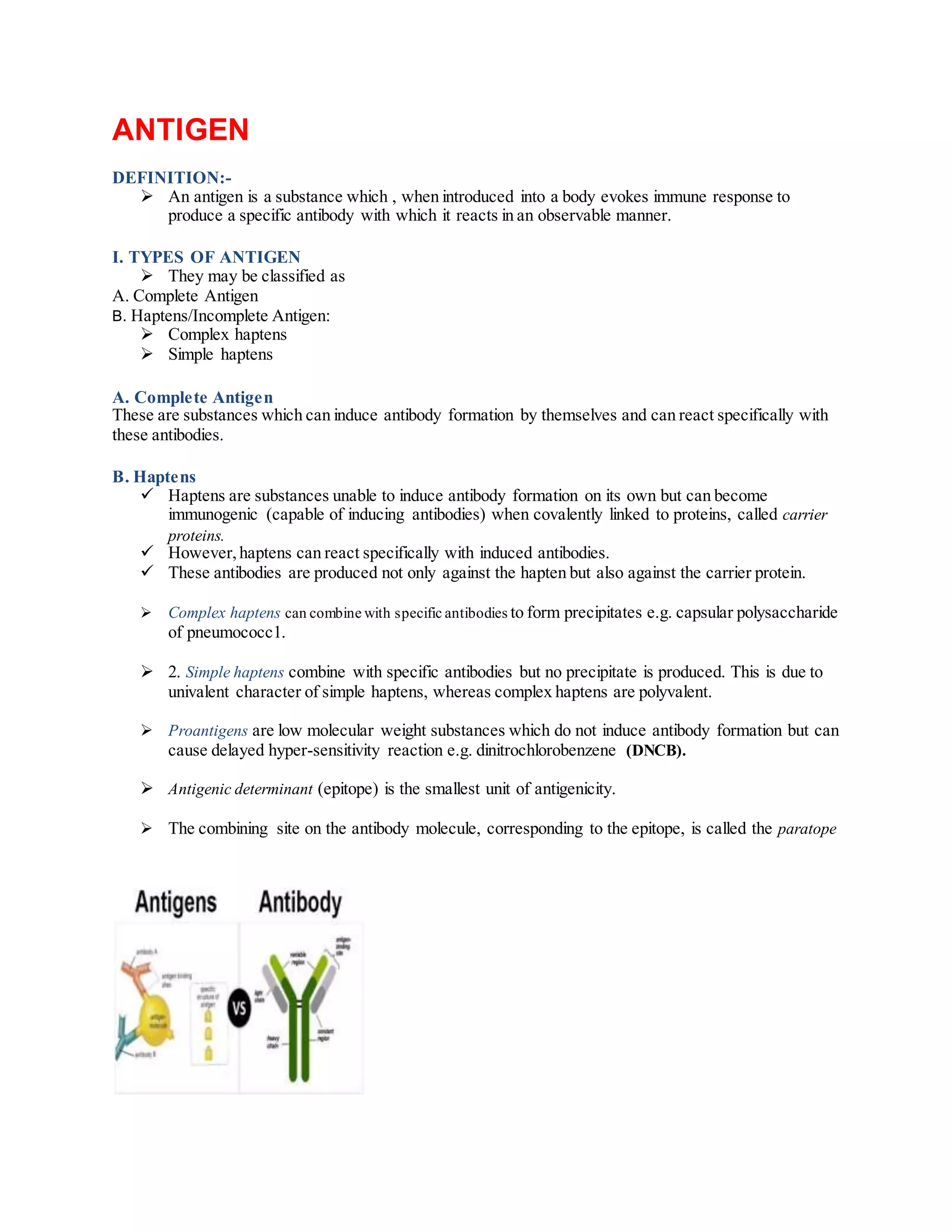

An antigen is a substance that provokes an immune response when introduced to the body, causing antibodies to be produced that specifically react with that antigen. Antigens can be complete antigens, which can induce antibody formation on their own, or haptens, which must be linked to a carrier protein to become immunogenic. Haptens are divided into complex haptens, which form precipitates with antibodies, and simple haptens, which do not. Antigenicity depends on factors like the antigen's size, chemical nature, and ability to be broken down by tissue enzymes. Superantigens can interact non-specifically with antigen-presenting cells and T-lymphocytes to stimulate immune responses.


