COAGULANT & ANTICOAGULANT
Indraj Saini
B Pharma 3 year
5th sem assignment
Short Note of anticoagulant
College- Alwar Pharmacy College ( group of IET )
Coagulant
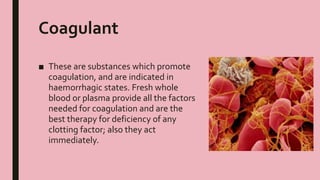
■ These are substances which promote
coagulation, and are indicated in
haemorrhagic states. Fresh whole
blood or plasma provide all the factors
needed for coagulation and are the
best therapy for deficiency of any
clotting factor; also they act
immediately.
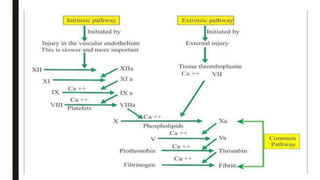
Coagulant factors
 Factor I - fibrinogen.
 Factor II - prothrombin.
 Factor III - tissue thromboplastin (tissue factor)
 Factor IV - ionized calcium ( Ca++ )
 Factor V - labile factor or proaccelerin.
 Factor VI - unassigned.
 Factor VII - stable factor or proconvertin.
 Factor VIII - antihemophilic factor-A
 Factor IX - plasma thromboplastin component, Christmas factor
 Factor X - Stuart-Prower factor or antihemophilicfactor-C
 Factor XI - plasma thromboplastin antecedent
 Factor XII - Hageman factor
 Factor XIII - fibrin-stabilizing factor
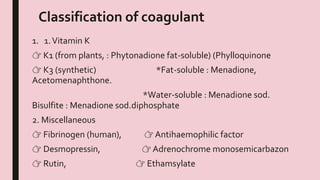
Classification of coagulant
1. 1.Vitamin K
👉 K1 (from plants, : Phytonadione fat-soluble) (Phylloquinone
👉 K3 (synthetic) *Fat-soluble : Menadione,
Acetomenaphthone.
*Water-soluble : Menadione sod.
Bisulfite : Menadione sod.diphosphate
2. Miscellaneous
👉 Fibrinogen (human), 👉 Antihaemophilic factor
👉 Desmopressin, 👉 Adrenochrome monosemicarbazon
👉 Rutin, 👉 Ethamsylate
Anticoagulant
■ Anticoagulants are medicines that help prevent blood clots.
They're given to people at a high risk of getting clots, to reduce their
chances of developing serious conditions such as strokes and heart
attacks. A blood clot is a seal created by the blood to stop bleeding
from wounds.
■ Anticoagulants (sometimes known as “blood thinners”) are medicines
that delay the clotting of blood. Examples are heparin, warfarin,
dabigitran, apixaban, rivoraxaban and edoxaban.
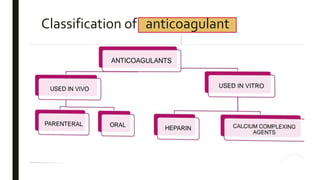
Classification of anticoagulant
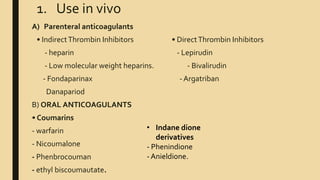
1. Use in vivo
A) Parenteral anticoagulants
• IndirectThrombin Inhibitors • DirectThrombin Inhibitors
- heparin - Lepirudin
- Low molecular weight heparins. - Bivalirudin
- Fondaparinax - Argatriban
Danapariod
B) ORAL ANTICOAGULANTS
• Coumarins
- warfarin
- Nicoumalone
- Phenbrocouman
- ethyl biscoumautate.
• Indane dione
derivatives
- Phenindione
- Anieldione.
Heparin
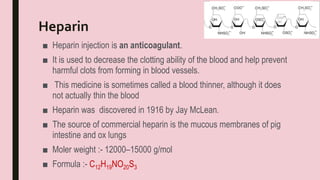
■ Heparin injection is an anticoagulant.
■ It is used to decrease the clotting ability of the blood and help prevent
harmful clots from forming in blood vessels.
■ This medicine is sometimes called a blood thinner, although it does
not actually thin the blood
■ Heparin was discovered in 1916 by Jay McLean.
■ The source of commercial heparin is the mucous membranes of pig
intestine and ox lungs
■ Moler weight :- 12000–15000 g/mol
■ Formula :- C12H19NO20S3
Machanism of action
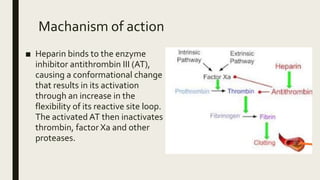
■ Heparin binds to the enzyme
inhibitor antithrombin III (AT),
causing a conformational change
that results in its activation
through an increase in the
flexibility of its reactive site loop.
The activated AT then inactivates
thrombin, factor Xa and other
proteases.
Uses
■ It is used to decrease the clotting ability of the blood and help
prevent harmful clots from forming in blood vessels.
Side effects of Heparin are:
•easy bleeding and bruising;
•pain, redness, warmth, irritation, or skin changes where the
medicine was injected;
•itching of your feet; or.
•Bluish-colored skin
Warfarin
■ Warfarin is a medication that slows the blood clotting process. It is used in
individuals who have recently formed a blood clot, or, are at risk for forming them.
■ Moler weight :-308.33 g/mol
■ Formula :C19H16O4
■ Mechanism of action — Warfarin and related vitamin K antagonists
(VKAs) block the function of the vitamin K epoxide reductase complex in the liver,
leading to depletion of the reduced form of vitamin K that serves as a cofactor for
gamma carboxylation of vitamin K-dependent coagulation factors
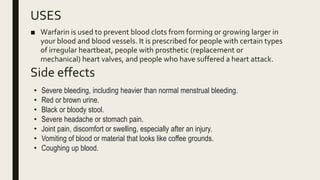
USES
Side effects
■ Warfarin is used to prevent blood clots from forming or growing larger in
your blood and blood vessels. It is prescribed for people with certain types
of irregular heartbeat, people with prosthetic (replacement or
mechanical) heart valves, and people who have suffered a heart attack.
• Severe bleeding, including heavier than normal menstrual bleeding.
• Red or brown urine.
• Black or bloody stool.
• Severe headache or stomach pain.
• Joint pain, discomfort or swelling, especially after an injury.
• Vomiting of blood or material that looks like coffee grounds.
• Coughing up blood.
Thanking you

ANTICOAGULANTS

  • 1.
    COAGULANT & ANTICOAGULANT IndrajSaini B Pharma 3 year 5th sem assignment Short Note of anticoagulant College- Alwar Pharmacy College ( group of IET )
  • 2.
    Coagulant ■ These aresubstances which promote coagulation, and are indicated in haemorrhagic states. Fresh whole blood or plasma provide all the factors needed for coagulation and are the best therapy for deficiency of any clotting factor; also they act immediately.
  • 3.
    Coagulant factors  FactorI - fibrinogen.  Factor II - prothrombin.  Factor III - tissue thromboplastin (tissue factor)  Factor IV - ionized calcium ( Ca++ )  Factor V - labile factor or proaccelerin.  Factor VI - unassigned.  Factor VII - stable factor or proconvertin.  Factor VIII - antihemophilic factor-A  Factor IX - plasma thromboplastin component, Christmas factor  Factor X - Stuart-Prower factor or antihemophilicfactor-C  Factor XI - plasma thromboplastin antecedent  Factor XII - Hageman factor  Factor XIII - fibrin-stabilizing factor
  • 5.
    Classification of coagulant 1.1.Vitamin K 👉 K1 (from plants, : Phytonadione fat-soluble) (Phylloquinone 👉 K3 (synthetic) *Fat-soluble : Menadione, Acetomenaphthone. *Water-soluble : Menadione sod. Bisulfite : Menadione sod.diphosphate 2. Miscellaneous 👉 Fibrinogen (human), 👉 Antihaemophilic factor 👉 Desmopressin, 👉 Adrenochrome monosemicarbazon 👉 Rutin, 👉 Ethamsylate
  • 6.
    Anticoagulant ■ Anticoagulants aremedicines that help prevent blood clots. They're given to people at a high risk of getting clots, to reduce their chances of developing serious conditions such as strokes and heart attacks. A blood clot is a seal created by the blood to stop bleeding from wounds. ■ Anticoagulants (sometimes known as “blood thinners”) are medicines that delay the clotting of blood. Examples are heparin, warfarin, dabigitran, apixaban, rivoraxaban and edoxaban.
  • 7.
  • 8.
    1. Use invivo A) Parenteral anticoagulants • IndirectThrombin Inhibitors • DirectThrombin Inhibitors - heparin - Lepirudin - Low molecular weight heparins. - Bivalirudin - Fondaparinax - Argatriban Danapariod B) ORAL ANTICOAGULANTS • Coumarins - warfarin - Nicoumalone - Phenbrocouman - ethyl biscoumautate. • Indane dione derivatives - Phenindione - Anieldione.
  • 9.
    Heparin ■ Heparin injectionis an anticoagulant. ■ It is used to decrease the clotting ability of the blood and help prevent harmful clots from forming in blood vessels. ■ This medicine is sometimes called a blood thinner, although it does not actually thin the blood ■ Heparin was discovered in 1916 by Jay McLean. ■ The source of commercial heparin is the mucous membranes of pig intestine and ox lungs ■ Moler weight :- 12000–15000 g/mol ■ Formula :- C12H19NO20S3
  • 10.
    Machanism of action ■Heparin binds to the enzyme inhibitor antithrombin III (AT), causing a conformational change that results in its activation through an increase in the flexibility of its reactive site loop. The activated AT then inactivates thrombin, factor Xa and other proteases.
  • 11.
    Uses ■ It isused to decrease the clotting ability of the blood and help prevent harmful clots from forming in blood vessels. Side effects of Heparin are: •easy bleeding and bruising; •pain, redness, warmth, irritation, or skin changes where the medicine was injected; •itching of your feet; or. •Bluish-colored skin
  • 12.
    Warfarin ■ Warfarin isa medication that slows the blood clotting process. It is used in individuals who have recently formed a blood clot, or, are at risk for forming them. ■ Moler weight :-308.33 g/mol ■ Formula :C19H16O4 ■ Mechanism of action — Warfarin and related vitamin K antagonists (VKAs) block the function of the vitamin K epoxide reductase complex in the liver, leading to depletion of the reduced form of vitamin K that serves as a cofactor for gamma carboxylation of vitamin K-dependent coagulation factors
  • 13.
    USES Side effects ■ Warfarinis used to prevent blood clots from forming or growing larger in your blood and blood vessels. It is prescribed for people with certain types of irregular heartbeat, people with prosthetic (replacement or mechanical) heart valves, and people who have suffered a heart attack. • Severe bleeding, including heavier than normal menstrual bleeding. • Red or brown urine. • Black or bloody stool. • Severe headache or stomach pain. • Joint pain, discomfort or swelling, especially after an injury. • Vomiting of blood or material that looks like coffee grounds. • Coughing up blood.
  • 14.