azad82d@gmail.com
azad.haleem@uod.ac
Dr.Azad A Haleem AL.Mezori
MRCPCH,DCH, FIBMS
Assistant Professor
University Of Duhok
College of Medicine
Pediatrics Department
ANTIMICROBIAL
RESISTANCE AWARENESS
Scan
For
Contact
ANTIBIOTICS
• Antibiotics can be defined as substances
capable of killing & inhibiting the growth of
micro organisms.
• The term antibiotics literally means “against
life”; in this case, against microbes.
• There are many types of antibiotics—
antibacterials, antivirals, antifungals, and
antiparasitics.
• Antibiotics have transformed the practice of
medicine, making once lethal infections
readily treatable and making other medical
advances, like cancer chemotherapy and
organ transplants, possible.
ANTIBIOTICS
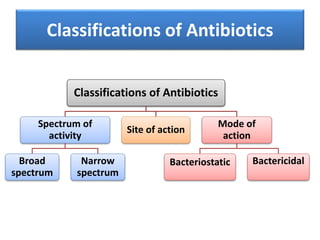
Classifications of Antibiotics
Spectrum of
activity
Broad
spectrum
Narrow
spectrum
Site of action
Mode of
action
Bacteriostatic Bactericidal
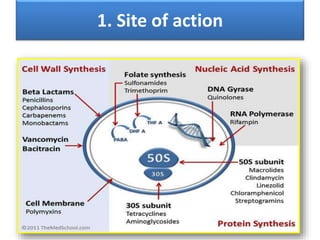
1. Site of action
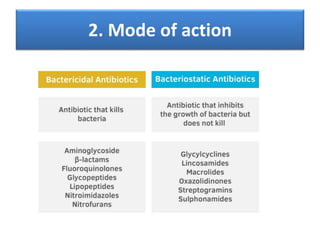
2. Mode of action
3. Spectrum of activity
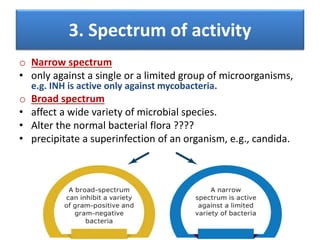
o Narrow spectrum
• only against a single or a limited group of microorganisms,
e.g. INH is active only against mycobacteria.
o Broad spectrum
• affect a wide variety of microbial species.
• Alter the normal bacterial flora ????
• precipitate a superinfection of an organism, e.g., candida.
Misuse of Antibiotics
What is Misuse of Antibiotics?:
• When antibiotics are prescribed unnecessarily;
• When antibiotic administration is delayed in critically
ill patients;
• When antibiotic treatment is not given according to
microbiological culture data results.
• When the dose is lower or higher than appropriate for
the specific patient; and
• When the route of administrations [IV vs. oral] not
appropriate
• When the duration of treatment is too short or too
long;
Drug resistance level & classification
• Growth of bacteria is not halted (terminated) by the
maximal level of that antibiotic that can be tolerated by the
host.
 Primary
 Some organisms are inherently resistant to an antibiotic
 e.g., gram-negative organisms are inherently resistant to
vancomycin.
 Secondary
 spontaneous mutation or acquired resistance and selection.
 Cross-resistance
 resistant to more than one antibiotic.
Factors that may lead to Drug resistance
• Factors that may contribute to the
emergence and dissemination of
antimicrobial resistance
o ► Inadequate infection control
o ► High antimicrobial usage per geographic
area per unit time
o ► Increased use of antimicrobial prophylaxis
o ► Increased empiric polymicrobial
antimicrobial therapy.
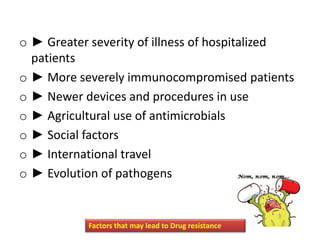
o ► Greater severity of illness of hospitalized
patients
o ► More severely immunocompromised patients
o ► Newer devices and procedures in use
o ► Agricultural use of antimicrobials
o ► Social factors
o ► International travel
o ► Evolution of pathogens
Factors that may lead to Drug resistance
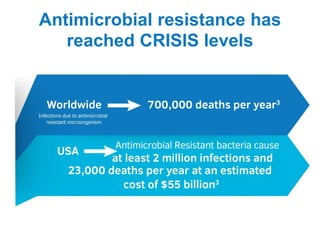
Antimicrobial resistance has
reached CRISIS levels
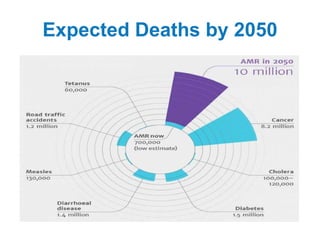
Expected Deaths by 2050
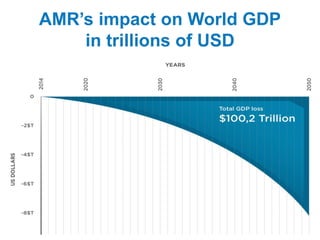
AMR’s impact on World GDP
in trillions of USD
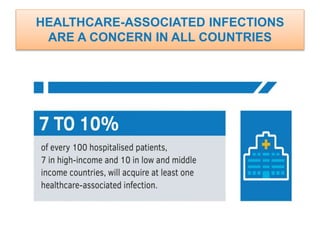
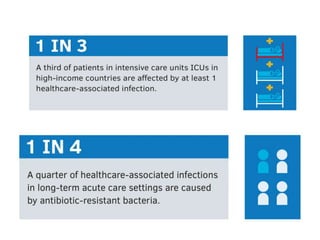
HEALTHCARE-ASSOCIATED INFECTIONS
ARE A CONCERN IN ALL COUNTRIES
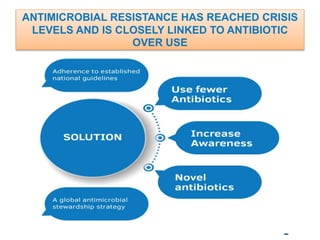
ANTIMICROBIAL RESISTANCE HAS REACHED CRISIS
LEVELS AND IS CLOSELY LINKED TO ANTIBIOTIC
OVER USE
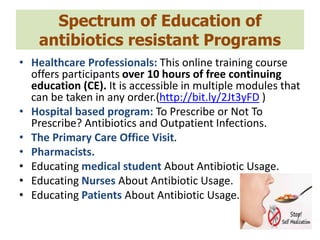
Spectrum of Education of
antibiotics resistant Programs
• Healthcare Professionals: This online training course
offers participants over 10 hours of free continuing
education (CE). It is accessible in multiple modules that
can be taken in any order.(http://bit.ly/2Jt3yFD )
• Hospital based program: To Prescribe or Not To
Prescribe? Antibiotics and Outpatient Infections.
• The Primary Care Office Visit.
• Pharmacists.
• Educating medical student About Antibiotic Usage.
• Educating Nurses About Antibiotic Usage.
• Educating Patients About Antibiotic Usage.
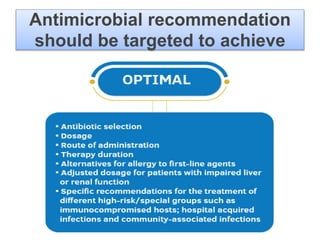
Antimicrobial recommendation
should be targeted to achieve
ANTIMICROBIAL RESISTANCE AWARENESS .pptx

ANTIMICROBIAL RESISTANCE AWARENESS .pptx

  • 1.
    azad82d@gmail.com azad.haleem@uod.ac Dr.Azad A HaleemAL.Mezori MRCPCH,DCH, FIBMS Assistant Professor University Of Duhok College of Medicine Pediatrics Department ANTIMICROBIAL RESISTANCE AWARENESS Scan For Contact
  • 3.
    ANTIBIOTICS • Antibiotics canbe defined as substances capable of killing & inhibiting the growth of micro organisms. • The term antibiotics literally means “against life”; in this case, against microbes. • There are many types of antibiotics— antibacterials, antivirals, antifungals, and antiparasitics.
  • 4.
    • Antibiotics havetransformed the practice of medicine, making once lethal infections readily treatable and making other medical advances, like cancer chemotherapy and organ transplants, possible. ANTIBIOTICS
  • 6.
    Classifications of Antibiotics Classificationsof Antibiotics Spectrum of activity Broad spectrum Narrow spectrum Site of action Mode of action Bacteriostatic Bactericidal
  • 7.
    1. Site ofaction
  • 8.
    2. Mode ofaction
  • 9.
    3. Spectrum ofactivity o Narrow spectrum • only against a single or a limited group of microorganisms, e.g. INH is active only against mycobacteria. o Broad spectrum • affect a wide variety of microbial species. • Alter the normal bacterial flora ???? • precipitate a superinfection of an organism, e.g., candida.
  • 10.
  • 11.
    What is Misuseof Antibiotics?: • When antibiotics are prescribed unnecessarily; • When antibiotic administration is delayed in critically ill patients; • When antibiotic treatment is not given according to microbiological culture data results. • When the dose is lower or higher than appropriate for the specific patient; and • When the route of administrations [IV vs. oral] not appropriate • When the duration of treatment is too short or too long;
  • 12.
    Drug resistance level& classification • Growth of bacteria is not halted (terminated) by the maximal level of that antibiotic that can be tolerated by the host.  Primary  Some organisms are inherently resistant to an antibiotic  e.g., gram-negative organisms are inherently resistant to vancomycin.  Secondary  spontaneous mutation or acquired resistance and selection.  Cross-resistance  resistant to more than one antibiotic.
  • 13.
    Factors that maylead to Drug resistance • Factors that may contribute to the emergence and dissemination of antimicrobial resistance o ► Inadequate infection control o ► High antimicrobial usage per geographic area per unit time o ► Increased use of antimicrobial prophylaxis o ► Increased empiric polymicrobial antimicrobial therapy.
  • 14.
    o ► Greaterseverity of illness of hospitalized patients o ► More severely immunocompromised patients o ► Newer devices and procedures in use o ► Agricultural use of antimicrobials o ► Social factors o ► International travel o ► Evolution of pathogens Factors that may lead to Drug resistance
  • 15.
  • 16.
  • 18.
    AMR’s impact onWorld GDP in trillions of USD
  • 19.
  • 23.
    ANTIMICROBIAL RESISTANCE HASREACHED CRISIS LEVELS AND IS CLOSELY LINKED TO ANTIBIOTIC OVER USE
  • 24.
    Spectrum of Educationof antibiotics resistant Programs • Healthcare Professionals: This online training course offers participants over 10 hours of free continuing education (CE). It is accessible in multiple modules that can be taken in any order.(http://bit.ly/2Jt3yFD ) • Hospital based program: To Prescribe or Not To Prescribe? Antibiotics and Outpatient Infections. • The Primary Care Office Visit. • Pharmacists. • Educating medical student About Antibiotic Usage. • Educating Nurses About Antibiotic Usage. • Educating Patients About Antibiotic Usage.
  • 25.