


1
Antimicrobials
Substance that kills or inhibits the growth of
microorganisms such as bacteria, fungi, or protozoans.
2
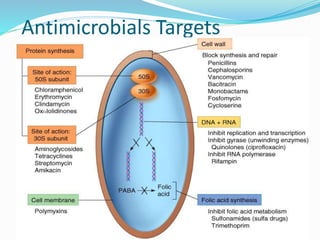
Antimicrobials Targets
3
z
4
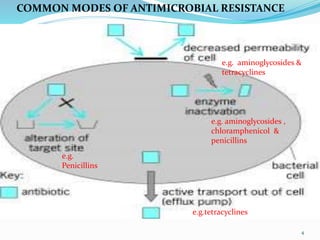
COMMON MODES OF ANTIMICROBIAL RESISTANCE
e.g.
Penicillins
e.g. aminoglycosides ,
chloramphenicol &
penicillins
e.g.tetracyclines
e.g. aminoglycosides &
tetracyclines
Why do we need newer
antimicrobials
 Bacterial resistance to antimicrobials-health and
economic problem
 Chronic resistant infections contribute to increasing
health care cost
 Increase morbidity & mortality
with resistant microorganisms
5
NEWER ANTIBACTERIALS
1. Oxazolidinones
2. Glycopeptides
3. Lipopeptides
4. Ketolides
5. Glycylcyclines
6. Carbapenems
7. Cephalosporins
8. Pleuromutilins
9. Macrocyclic antibiotic
10. Rifamycins
11. Streptogramins
12. Quinolones
6
Oxazolidinones
MOA: Protein synthesis inhibitor at 50s subunit of ribosome
Linezolid
Acts on Gram-positive bacteria including streptococci
, vancomycin-resistant enterococci (VRE), and methicillin-
resistant Staphylococcus aureus (MRSA)
7
Newer Oxazolidinones
 MOA:
Bind to the 23S portion of the 50S subunit preventing
translation initiation
 ADVANTAGE OVER LINEZOLID:
Improved potency
Aqueous solubility
Reduced toxicity
8
Radezolid Torezolid
Uncomplicated skin and
skin structure infections
Complicated skin and skin
structure infections
Oxazolidinones
Mechanism of Resistance in older oxazolidinones
occurs due to mutations in ribosomal RNA (rRNA)
Resistance overcome by: Newer oxazolidinones by
additional hydrogen bond interactions with 23S rRNA
9
GlycopeptidesMOA:
Inhibits peptidoglycan chain formation through
blockage of both, transpeptidation and transglycosylation
during cell wall formation. Dissipates membrane potential
of the bacterial cell membrane causing an increase in
permeability.
1)Vancomycin & Teicoplanin
Active against staphylococci (including methicillin
resistant strains), streptococci, enterococci
and Clostridium.
10
Glycopeptides
2)Telavancin :
Newer glycopeptides
Approved for complicated skin and skin structure
infections(MRSA)
Additional mode of action
1) Causes disruption of membrane potential
2) Increases cell permeability causing rapid bactericidal
activity
11
Glycopeptides Advantage over Vancomycin
Additional mechanisms of action
Renal and hepatic excretion
No known nephrotoxicity or dose adjustments
Less frequent dosing
Longer t 1/2 life
12
LipopeptidesMOA:
Binds to bacterial membranes and causes a rapid
depolarization leads to Inhibition of protein, DNA, and
RNA synthesis
Developed for the treatment of vancomycin-resistant
enterococcal infections
Indication:
Treatment of complicated skin and skin structure
infections
13
Lipopeptides Equal in efficacy to vancomycin, oxacillin, or nafcillin, in
the treatment of complicated skin and skin structure
infections
 Daptomycin-
 Rapidly bactericidal
 No cross resistance
 Can cause life-threatening eosinophilic pneumonia.
14
Ketolides
MOA- Inhibits bacterial RNA polymerase.
Indication : Clostridium difficile-associated diarrhoea,
community acquired pneumonia , prevention of post-
exposure inhalational anthrax
It is minimally or not absorbed following oral
administration, thus systemic side effects are reduced.
It does not affect the normal flora of the lower
gastrointestinal tract since it does not show any activity
against gram-negative organisms.
15
Glycylcyclines
Derived from tetracycline
 MOA:
 Bind to 30 S subunit of bacterial ribosome
Does not undergo active efflux easily in gram-positive
organisms
Designed to overcome two common mechanisms of
tetracycline resistance
1) Resistance mediated by acquired efflux pumps
2) Ribosomal protection
16
Glycylcyclines
Tigecycline:
Indication
Complicated skin and skin structure infections &
Intra-abdominal infections
Active against MRSA
17
Carbapenems
MOA: Bind to the PBPs inhibiting the bacterial cell
wall synthesis
Beta-lactam antibiotics with a broad spectrum of
antibacterial activity over Gram - and Gram + aerobic
and anaerobic bacteria.
18
Carbapenems
1)Imipenem-cilastatin
Activity against gram-positive cocci and gram-negative
bacilli, including P. aeruginosa and anaerobes.
Cautions: β-Lactam safety profile (rash, eosinophilia),
nausea, seizures.
Cilastatin possesses no antibacterial activity; reduces
renal imipenem metabolism. Primarily renally
eliminated.
19
Carbapenems
2)Meropenem •
 Activity against gram-positive cocci and gram-negative
bacilli, including P. aeruginosa and anaerobes.
 Preferred for treatment of CNS infections .
20
Carbapenems
3)Ertapenem :
Spectrum: Gram-positive and negative aerobic as well
as anaerobic bacteria excluding the nonfermenters,
MRSA and drug-resistant enterococci.
 Effective against most resistant enterobacteriaceae
producing ESBLs and/or AmpC-type β-lactamases.
 Recommended for prophylaxis of surgical-site
infection following elective colorectal surgery.
 Unlike imipenem, ertapenem does not require co-
administration with cilastin
21
Carbapenems
4) Doripenem
 Effective against gram-positive and negative aerobes and
anaerobes including Pseudomonas aeruginosa,
Acinetobacter species.
It is effective against β-lactamase producing strains of
enterobacteriaceae.
Approved for the treatment of intra-abdominal infections
and complicated urinary tract infections including
pyelonephritis.
Dosage adjustment is required in renal failure patients.
22
Cephalosporins
MOA:
Bind strongly to PBP2a of methicillin resistant
Staphylococci
Novel cephalosporin have
Broad spectrum activity against MRSA and multi-drug
resistant S. pneumonia.
23
Cephalosporins1)Cefuroxime
 second-generation cephalosporins
 Active against Haemophilus influenzae, Neisseria
gonorrhoeae, and Lyme disease
2)Ceftaroline:
Approved for the treatment of
o community - acquired pneumonia &
o complicated skin and soft - tissue infections
24
Pleuromutilins
MOA: Bind to 50S subunit of ribosomes inhibiting
protein synthesis.
Retapamulin:
Topical antibiotic
Treatment of skin infections such as impetigo S. aureus
(methicillin-susceptible only) or S. pyogenes
25
Macrocyclic antibioticFidaxomicin
MOA:
Inhibit bacterial enzyme RNA polymeras
Narrow spectrum bactericidal agent.
Demonstrated selective eradication of pathogenic
Clostridium difficile.
26
Rifamycins
 Rifampin, Rifabutin & Rifapentine are already
approved dugs
 Rifaximin : Newer non systemic rifamycin
- Approved for traveler's diarrhea, hepatic
encephalopathy
- Irritable bowel syndrome, small intestinal bacterial
overgrowth & Clostridium difficile infection
27
Streptogramins MOA:
Inhibits DNA gyrase and topoisomerase IV.
 Available in a parenteral formulation.
 Dalfopristin-Quinupristin
 Spectrum - MRSA, CONS, penicillin-susceptible and
penicillin-resistant S. pneumoniae, and vancomycin-
resistant E. faecium but not E. faecalis,VISA
 Indication- – serious infection with VISA and VRE –
Serious infection with MRSA when Vancomycin is not
tolerated .
28
Quinolones
 Drug interactions: potent inhibitor of CYP 3A4
 The newer quinolones include: Gemifloxacin,
esifloxacin , Gemifloxacin •
 Oral fluoroquinolone approved for chronic bronchitis
and community-acquired pneumonia.•
 High concentrations are achieved in the respiratory
tract after oral administration, making it an ideal drug
for the treatment of respiratory tract infections.
29
THANK YOU
30

Antibiotics

  • 1.
  • 2.
    Antimicrobials Substance that killsor inhibits the growth of microorganisms such as bacteria, fungi, or protozoans. 2
  • 3.
  • 4.
    4 COMMON MODES OFANTIMICROBIAL RESISTANCE e.g. Penicillins e.g. aminoglycosides , chloramphenicol & penicillins e.g.tetracyclines e.g. aminoglycosides & tetracyclines
  • 5.
    Why do weneed newer antimicrobials  Bacterial resistance to antimicrobials-health and economic problem  Chronic resistant infections contribute to increasing health care cost  Increase morbidity & mortality with resistant microorganisms 5
  • 6.
    NEWER ANTIBACTERIALS 1. Oxazolidinones 2.Glycopeptides 3. Lipopeptides 4. Ketolides 5. Glycylcyclines 6. Carbapenems 7. Cephalosporins 8. Pleuromutilins 9. Macrocyclic antibiotic 10. Rifamycins 11. Streptogramins 12. Quinolones 6
  • 7.
    Oxazolidinones MOA: Protein synthesisinhibitor at 50s subunit of ribosome Linezolid Acts on Gram-positive bacteria including streptococci , vancomycin-resistant enterococci (VRE), and methicillin- resistant Staphylococcus aureus (MRSA) 7
  • 8.
    Newer Oxazolidinones  MOA: Bindto the 23S portion of the 50S subunit preventing translation initiation  ADVANTAGE OVER LINEZOLID: Improved potency Aqueous solubility Reduced toxicity 8 Radezolid Torezolid Uncomplicated skin and skin structure infections Complicated skin and skin structure infections
  • 9.
    Oxazolidinones Mechanism of Resistancein older oxazolidinones occurs due to mutations in ribosomal RNA (rRNA) Resistance overcome by: Newer oxazolidinones by additional hydrogen bond interactions with 23S rRNA 9
  • 10.
    GlycopeptidesMOA: Inhibits peptidoglycan chainformation through blockage of both, transpeptidation and transglycosylation during cell wall formation. Dissipates membrane potential of the bacterial cell membrane causing an increase in permeability. 1)Vancomycin & Teicoplanin Active against staphylococci (including methicillin resistant strains), streptococci, enterococci and Clostridium. 10
  • 11.
    Glycopeptides 2)Telavancin : Newer glycopeptides Approvedfor complicated skin and skin structure infections(MRSA) Additional mode of action 1) Causes disruption of membrane potential 2) Increases cell permeability causing rapid bactericidal activity 11
  • 12.
    Glycopeptides Advantage overVancomycin Additional mechanisms of action Renal and hepatic excretion No known nephrotoxicity or dose adjustments Less frequent dosing Longer t 1/2 life 12
  • 13.
    LipopeptidesMOA: Binds to bacterialmembranes and causes a rapid depolarization leads to Inhibition of protein, DNA, and RNA synthesis Developed for the treatment of vancomycin-resistant enterococcal infections Indication: Treatment of complicated skin and skin structure infections 13
  • 14.
    Lipopeptides Equal inefficacy to vancomycin, oxacillin, or nafcillin, in the treatment of complicated skin and skin structure infections  Daptomycin-  Rapidly bactericidal  No cross resistance  Can cause life-threatening eosinophilic pneumonia. 14
  • 15.
    Ketolides MOA- Inhibits bacterialRNA polymerase. Indication : Clostridium difficile-associated diarrhoea, community acquired pneumonia , prevention of post- exposure inhalational anthrax It is minimally or not absorbed following oral administration, thus systemic side effects are reduced. It does not affect the normal flora of the lower gastrointestinal tract since it does not show any activity against gram-negative organisms. 15
  • 16.
    Glycylcyclines Derived from tetracycline MOA:  Bind to 30 S subunit of bacterial ribosome Does not undergo active efflux easily in gram-positive organisms Designed to overcome two common mechanisms of tetracycline resistance 1) Resistance mediated by acquired efflux pumps 2) Ribosomal protection 16
  • 17.
    Glycylcyclines Tigecycline: Indication Complicated skin andskin structure infections & Intra-abdominal infections Active against MRSA 17
  • 18.
    Carbapenems MOA: Bind tothe PBPs inhibiting the bacterial cell wall synthesis Beta-lactam antibiotics with a broad spectrum of antibacterial activity over Gram - and Gram + aerobic and anaerobic bacteria. 18
  • 19.
    Carbapenems 1)Imipenem-cilastatin Activity against gram-positivecocci and gram-negative bacilli, including P. aeruginosa and anaerobes. Cautions: β-Lactam safety profile (rash, eosinophilia), nausea, seizures. Cilastatin possesses no antibacterial activity; reduces renal imipenem metabolism. Primarily renally eliminated. 19
  • 20.
    Carbapenems 2)Meropenem •  Activityagainst gram-positive cocci and gram-negative bacilli, including P. aeruginosa and anaerobes.  Preferred for treatment of CNS infections . 20
  • 21.
    Carbapenems 3)Ertapenem : Spectrum: Gram-positiveand negative aerobic as well as anaerobic bacteria excluding the nonfermenters, MRSA and drug-resistant enterococci.  Effective against most resistant enterobacteriaceae producing ESBLs and/or AmpC-type β-lactamases.  Recommended for prophylaxis of surgical-site infection following elective colorectal surgery.  Unlike imipenem, ertapenem does not require co- administration with cilastin 21
  • 22.
    Carbapenems 4) Doripenem  Effectiveagainst gram-positive and negative aerobes and anaerobes including Pseudomonas aeruginosa, Acinetobacter species. It is effective against β-lactamase producing strains of enterobacteriaceae. Approved for the treatment of intra-abdominal infections and complicated urinary tract infections including pyelonephritis. Dosage adjustment is required in renal failure patients. 22
  • 23.
    Cephalosporins MOA: Bind strongly toPBP2a of methicillin resistant Staphylococci Novel cephalosporin have Broad spectrum activity against MRSA and multi-drug resistant S. pneumonia. 23
  • 24.
    Cephalosporins1)Cefuroxime  second-generation cephalosporins Active against Haemophilus influenzae, Neisseria gonorrhoeae, and Lyme disease 2)Ceftaroline: Approved for the treatment of o community - acquired pneumonia & o complicated skin and soft - tissue infections 24
  • 25.
    Pleuromutilins MOA: Bind to50S subunit of ribosomes inhibiting protein synthesis. Retapamulin: Topical antibiotic Treatment of skin infections such as impetigo S. aureus (methicillin-susceptible only) or S. pyogenes 25
  • 26.
    Macrocyclic antibioticFidaxomicin MOA: Inhibit bacterialenzyme RNA polymeras Narrow spectrum bactericidal agent. Demonstrated selective eradication of pathogenic Clostridium difficile. 26
  • 27.
    Rifamycins  Rifampin, Rifabutin& Rifapentine are already approved dugs  Rifaximin : Newer non systemic rifamycin - Approved for traveler's diarrhea, hepatic encephalopathy - Irritable bowel syndrome, small intestinal bacterial overgrowth & Clostridium difficile infection 27
  • 28.
    Streptogramins MOA: Inhibits DNAgyrase and topoisomerase IV.  Available in a parenteral formulation.  Dalfopristin-Quinupristin  Spectrum - MRSA, CONS, penicillin-susceptible and penicillin-resistant S. pneumoniae, and vancomycin- resistant E. faecium but not E. faecalis,VISA  Indication- – serious infection with VISA and VRE – Serious infection with MRSA when Vancomycin is not tolerated . 28
  • 29.
    Quinolones  Drug interactions:potent inhibitor of CYP 3A4  The newer quinolones include: Gemifloxacin, esifloxacin , Gemifloxacin •  Oral fluoroquinolone approved for chronic bronchitis and community-acquired pneumonia.•  High concentrations are achieved in the respiratory tract after oral administration, making it an ideal drug for the treatment of respiratory tract infections. 29
  • 30.

Editor's Notes

  • #3 1945 The “golden age of antibiotics” begins with the introduction of cephalosporins, chloramphenicol, tetracyclines, erythromycin, vancomycin, gentamicin and many variations on the penicillin (b-lactam) nucleus
  • #9 4–8 fold more active than linezolid in linezolid-susceptible and resistant strains of staphylococci and enterococci and upto 4-fold higher against anaerobes
  • #11 Telavancin is a new intravenous lipoglycopeptide antibiotic with activity against staphylococci (including methicillin-resistant strains), streptococci, and vancomycin-susceptible enterococci. It is dosed once daily and does not require serum-level monitoring. Indication: Telavancin is FDA approved for the treatment of complicated skin and skin-structure infections (cSSTIs) in adults. It was found to be noninferior to vancomycin for this purpose in a pooled analysis of two randomized controlled trials. The FDA recently denied approval of telavancin for nosocomial pneumonia, requesting additional dat This class of drugs inhibit the synthesis of cell walls in susceptible microbes by inhibiting peptidoglycan synthesis. They bind to the amino acids within the cell wall preventing the addition of new units to the peptidoglycan. In particular they bind to acyl-D-alanyl-D-alanine in peptidoglycan
  • #13 Replacement of the terminal D-alanine residue in the cell wall peptidoglycan substrate for the cross-linking transpeptidase enzyme by D-serine or D-lactate confers moderate and full resistance to vancomycin, respectively
  • #18 Active against wide variety of mDr pathogenic nosocomials
  • #19 he Food and Drug Administration (FDA) has approved four carbapenems: imipenem (a primary component of Primaxin IM, Merck) meropenem (Merrem IV, Astra-Zeneca) ertapenem (Invanz, Merck) Doripenem he Food and Drug Administration (FDA) has approved four carbapenems: imipenem (a primary component of Primaxin IM, Merck) meropenem (Merrem IV, Astra-Zeneca) ertapenem (Invanz, Merck) doripenem he Food and Drug Administration (FDA) has approved four carbapenems: imipenem (a primary component of Primaxin IM, Merck) meropenem (Merrem IV, Astra-Zeneca) ertapenem (Invanz, Merck) doripenem he Food and Drug Administration (FDA) has approved four carbapenems: imipenem (a primary component of Primaxin IM, Merck) meropenem (Merrem IV, Astra-Zeneca) ertapenem (Invanz, Merck) doripenem remain the drugs of choice for extended-spectrum, beta-lactamase–producing organisms, resistance may emerge via other beta-lactamases, such as metallo–beta-lactamases, alteration of porin channels, or up-regulation of efflux pumps. Therefore, carbapenems should be used judiciously, and the appropriate use of these agents must be considered carefully.
  • #25 Ceftobiprole was approved earlier this year in Canada, and most recently it was approved in SwitzerlandSeveral novel agents to treat MRSA infections have been approved within the last decade, including quinapristin/dalfopristin (Synercid, King), approved in 1999; linezolid (Zyvox, Phamacia, Upjohn), approved in 2000l; daptomycin (Cubicin, Cubist), approved in 2003; and tigecylcine (Tygacil, Wyeth), approved in 2005