ANTIBIOTICS
OUTLINE
a. Bacterial cell structure
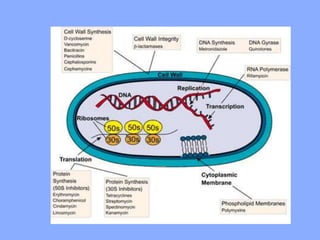
b. Antibiotic groups and sites of action
c. Mechanisms of Resistance in Bacteria
d. Sensitivity testing
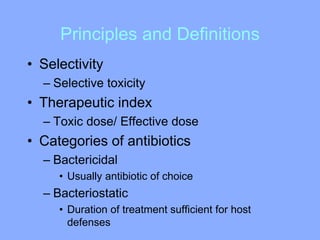
Principles and Definitions
• Selectivity
– Selective toxicity
• Therapeutic index
– Toxic dose/ Effective dose
• Categories of antibiotics
– Bactericidal
• Usually antibiotic of choice
– Bacteriostatic
• Duration of treatment sufficient for host
defenses
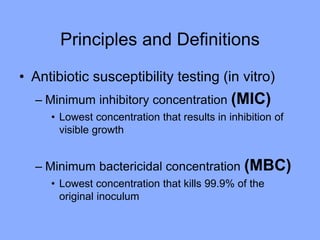
Principles and Definitions
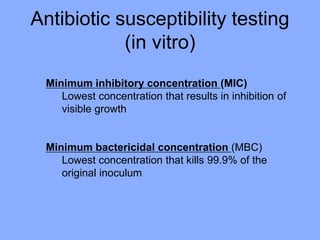
• Antibiotic susceptibility testing (in vitro)
– Minimum inhibitory concentration (MIC)
• Lowest concentration that results in inhibition of
visible growth
– Minimum bactericidal concentration (MBC)
• Lowest concentration that kills 99.9% of the
original inoculum
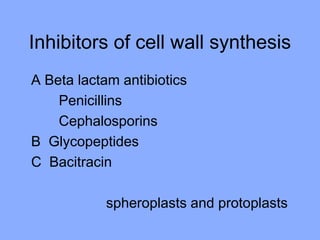
Inhibitors of cell wall synthesis
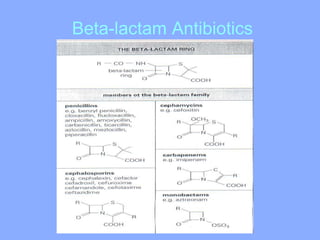
A Beta lactam antibiotics
Penicillins
Cephalosporins
B Glycopeptides
C Bacitracin
spheroplasts and protoplasts
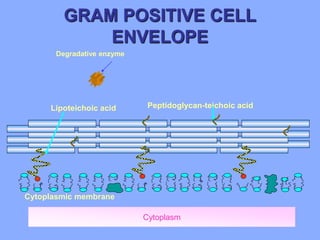
Cytoplasm
Lipoteichoic acid Peptidoglycan-teichoic acid
Cytoplasmic membrane
GRAM POSITIVE CELL
ENVELOPE
Degradative enzyme
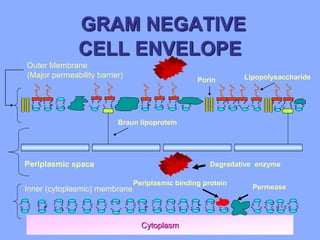
GRAM NEGATIVE
CELL ENVELOPE
Cytoplasm
Inner (cytoplasmic) membrane
Outer Membrane
(Major permeability barrier) LipopolysaccharidePorin
Braun lipoprotein
Degradative enzyme
Periplasmic binding protein
Permease
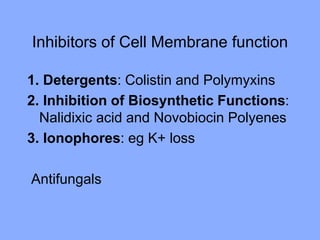
Inhibitors of Cell Membrane function
1. Detergents: Colistin and Polymyxins
2. Inhibition of Biosynthetic Functions:
Nalidixic acid and Novobiocin Polyenes
3. Ionophores: eg K+ loss
Antifungals
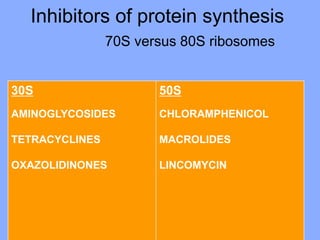
Inhibitors of protein synthesis
70S versus 80S ribosomes
30S
AMINOGLYCOSIDES
TETRACYCLINES
OXAZOLIDINONES
50S
CHLORAMPHENICOL
MACROLIDES
LINCOMYCIN
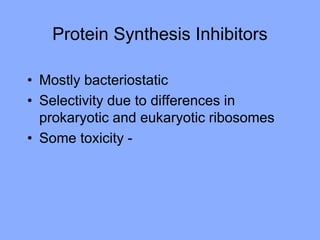
Protein Synthesis Inhibitors
• Mostly bacteriostatic
• Selectivity due to differences in
prokaryotic and eukaryotic ribosomes
• Some toxicity -
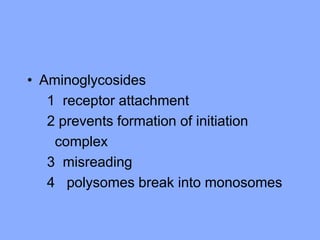
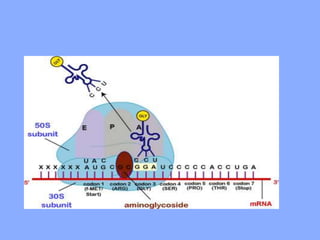
• Aminoglycosides
1 receptor attachment
2 prevents formation of initiation
complex
3 misreading
4 polysomes break into monosomes
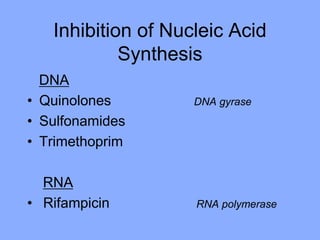
Inhibition of Nucleic Acid
Synthesis
DNA
• Quinolones DNA gyrase
• Sulfonamides
• Trimethoprim
RNA
• Rifampicin RNA polymerase
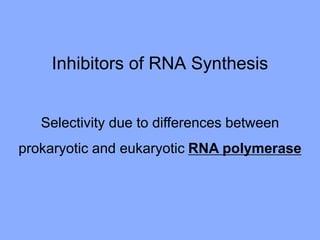
Inhibitors of RNA Synthesis
Selectivity due to differences between
prokaryotic and eukaryotic RNA polymerase
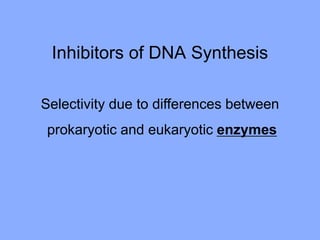
Inhibitors of DNA Synthesis
Selectivity due to differences between
prokaryotic and eukaryotic enzymes
Quinolones (bactericidal)
nalidixic acid, ciprofloxacin, ofloxacin, norfloxacin,
levofloxacin, lomefloxacin, sparfloxacin
• Mode of action - These antimicrobials bind to the A subunit of
DNA gyrase (topoisomerase) and prevent supercoiling of DNA,
thereby inhibiting DNA synthesis.
• Spectrum of activity - Gram-positive cocci and urinary tract
infections
• Resistance - Common for nalidixic acid; developing for
ciprofloxacin
Rifampin, Rifamycin,
Rifampicin, Rifabutin (bactericidal)
• Mode of action - These antimicrobials bind to DNA-dependent
RNA polymerase and inhibit initiation of mRNA synthesis.
• Spectrum of activity - Broad spectrum but is used most
commonly in the treatment of tuberculosis
• Resistance - Common
• Combination therapy - Since resistance is common, rifampin
is usually used in combination therapy.
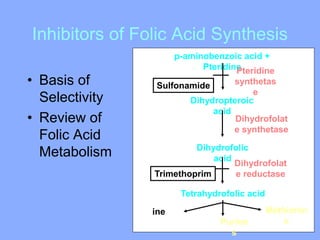
Inhibitors of Folic Acid Synthesis
• Basis of
Selectivity
• Review of
Folic Acid
Metabolism
p-aminobenzoic acid +
Pteridine
Dihydropteroic
acid
Dihydrofolic
acid
Tetrahydrofolic acid
Pteridine
synthetas
e
Dihydrofolat
e synthetase
Dihydrofolat
e reductase
ine
Purine
s
Methionin
e
Trimethoprim
Sulfonamide
• Most antimicrobials have more than one
mechanism of action.
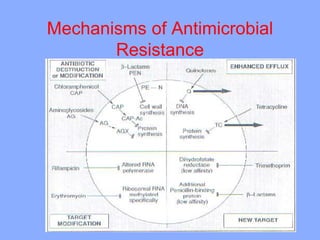
Mechanisms of Antimicrobial
Resistance
Beta-lactam Antibiotics
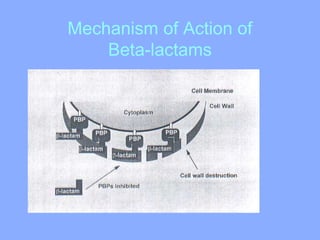
Mechanism of Action of
Beta-lactams
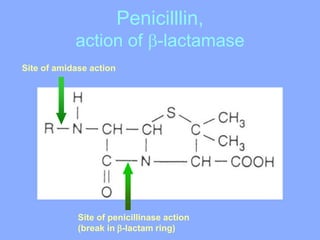
Penicilllin,
action of b-lactamase
Site of amidase action
Site of penicillinase action
(break in b-lactam ring)
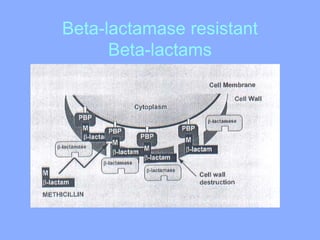
Beta-lactamase resistant
Beta-lactams
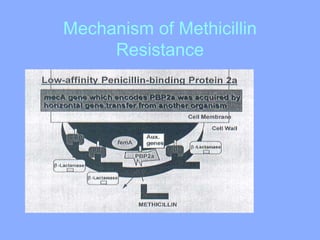
Mechanism of Methicillin
Resistance
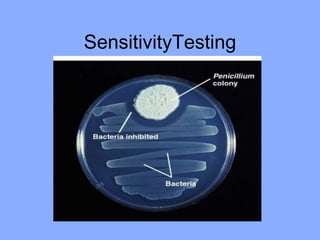
SensitivityTesting
Antibiotic susceptibility testing
(in vitro)
Minimum inhibitory concentration (MIC)
Lowest concentration that results in inhibition of
visible growth
Minimum bactericidal concentration (MBC)
Lowest concentration that kills 99.9% of the
original inoculum
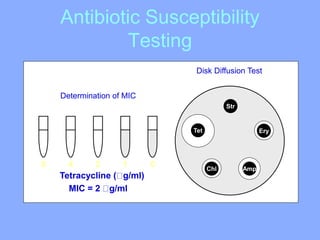
Antibiotic Susceptibility
Testing
8 4 02 1
Tetracycline ( g/ml)
MIC = 2 g/ml
Determination of MIC
Chl Amp
Ery
Str
Tet
Disk Diffusion Test
Media used for Sensitivity
Testing
• Mueller Hinton Agar
• DST
• Special media e.g. Chocolate agar
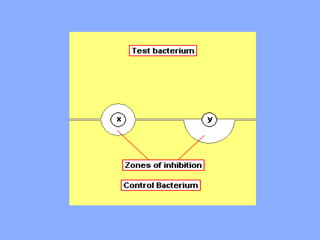
Disc Diffusion Testing
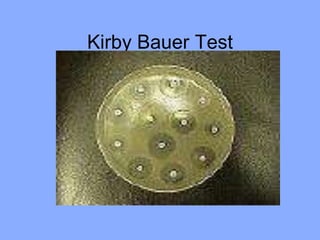
• A. Kirby Bauer method……
CLSI recommended
• B. Stokes Comparitive method
Kirby Bauer Test
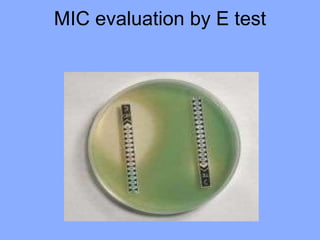
MIC evaluation by E test
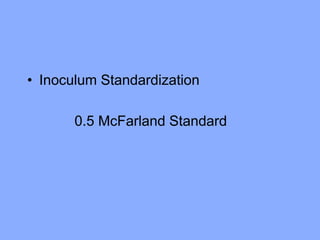
• Inoculum Standardization
0.5 McFarland Standard
Review
• Sites of action
• Mechanisms of action
• Major groups
• Sensitivity testing methodology

Antibiotics

  • 1.
  • 2.
    OUTLINE a. Bacterial cellstructure b. Antibiotic groups and sites of action c. Mechanisms of Resistance in Bacteria d. Sensitivity testing
  • 3.
    Principles and Definitions •Selectivity – Selective toxicity • Therapeutic index – Toxic dose/ Effective dose • Categories of antibiotics – Bactericidal • Usually antibiotic of choice – Bacteriostatic • Duration of treatment sufficient for host defenses
  • 4.
    Principles and Definitions •Antibiotic susceptibility testing (in vitro) – Minimum inhibitory concentration (MIC) • Lowest concentration that results in inhibition of visible growth – Minimum bactericidal concentration (MBC) • Lowest concentration that kills 99.9% of the original inoculum
  • 7.
    Inhibitors of cellwall synthesis A Beta lactam antibiotics Penicillins Cephalosporins B Glycopeptides C Bacitracin spheroplasts and protoplasts
  • 8.
    Cytoplasm Lipoteichoic acid Peptidoglycan-teichoicacid Cytoplasmic membrane GRAM POSITIVE CELL ENVELOPE Degradative enzyme
  • 9.
    GRAM NEGATIVE CELL ENVELOPE Cytoplasm Inner(cytoplasmic) membrane Outer Membrane (Major permeability barrier) LipopolysaccharidePorin Braun lipoprotein Degradative enzyme Periplasmic binding protein Permease
  • 10.
    Inhibitors of CellMembrane function 1. Detergents: Colistin and Polymyxins 2. Inhibition of Biosynthetic Functions: Nalidixic acid and Novobiocin Polyenes 3. Ionophores: eg K+ loss Antifungals
  • 11.
    Inhibitors of proteinsynthesis 70S versus 80S ribosomes 30S AMINOGLYCOSIDES TETRACYCLINES OXAZOLIDINONES 50S CHLORAMPHENICOL MACROLIDES LINCOMYCIN
  • 12.
    Protein Synthesis Inhibitors •Mostly bacteriostatic • Selectivity due to differences in prokaryotic and eukaryotic ribosomes • Some toxicity -
  • 13.
    • Aminoglycosides 1 receptorattachment 2 prevents formation of initiation complex 3 misreading 4 polysomes break into monosomes
  • 15.
    Inhibition of NucleicAcid Synthesis DNA • Quinolones DNA gyrase • Sulfonamides • Trimethoprim RNA • Rifampicin RNA polymerase
  • 16.
    Inhibitors of RNASynthesis Selectivity due to differences between prokaryotic and eukaryotic RNA polymerase
  • 17.
    Inhibitors of DNASynthesis Selectivity due to differences between prokaryotic and eukaryotic enzymes
  • 18.
    Quinolones (bactericidal) nalidixic acid,ciprofloxacin, ofloxacin, norfloxacin, levofloxacin, lomefloxacin, sparfloxacin • Mode of action - These antimicrobials bind to the A subunit of DNA gyrase (topoisomerase) and prevent supercoiling of DNA, thereby inhibiting DNA synthesis. • Spectrum of activity - Gram-positive cocci and urinary tract infections • Resistance - Common for nalidixic acid; developing for ciprofloxacin
  • 19.
    Rifampin, Rifamycin, Rifampicin, Rifabutin(bactericidal) • Mode of action - These antimicrobials bind to DNA-dependent RNA polymerase and inhibit initiation of mRNA synthesis. • Spectrum of activity - Broad spectrum but is used most commonly in the treatment of tuberculosis • Resistance - Common • Combination therapy - Since resistance is common, rifampin is usually used in combination therapy.
  • 20.
    Inhibitors of FolicAcid Synthesis • Basis of Selectivity • Review of Folic Acid Metabolism p-aminobenzoic acid + Pteridine Dihydropteroic acid Dihydrofolic acid Tetrahydrofolic acid Pteridine synthetas e Dihydrofolat e synthetase Dihydrofolat e reductase ine Purine s Methionin e Trimethoprim Sulfonamide
  • 21.
    • Most antimicrobialshave more than one mechanism of action.
  • 22.
  • 23.
  • 24.
    Mechanism of Actionof Beta-lactams
  • 25.
    Penicilllin, action of b-lactamase Siteof amidase action Site of penicillinase action (break in b-lactam ring)
  • 26.
  • 27.
  • 28.
  • 30.
    Antibiotic susceptibility testing (invitro) Minimum inhibitory concentration (MIC) Lowest concentration that results in inhibition of visible growth Minimum bactericidal concentration (MBC) Lowest concentration that kills 99.9% of the original inoculum
  • 31.
    Antibiotic Susceptibility Testing 8 402 1 Tetracycline ( g/ml) MIC = 2 g/ml Determination of MIC Chl Amp Ery Str Tet Disk Diffusion Test
  • 32.
    Media used forSensitivity Testing • Mueller Hinton Agar • DST • Special media e.g. Chocolate agar
  • 33.
    Disc Diffusion Testing •A. Kirby Bauer method…… CLSI recommended • B. Stokes Comparitive method
  • 34.
  • 36.
  • 37.
  • 38.
    Review • Sites ofaction • Mechanisms of action • Major groups • Sensitivity testing methodology

Editor's Notes

  • #6 Prokaryotic cell
  • #11 Selective permeability barrier and active trnsport. Damage leads to loss of macromolecules and ions. Ionophores: discharge of membrane potential and loss of oxidative phosphorylation.(Valinomycin)
  • #13 Eg Streptomycin