Drugs Affecting the
             Gastrointestinal System
                   Antidiarrheals and Laxatives


Copyright © 2002, 1998, Elsevier Science (USA). All rights reserved.
Diarrhea

  • Abnormal frequent passage of loose stools
       or
  • Abnormal passage of stools with increased
    frequency, fluidity, and weight, or with
    increased stool water excretion


Copyright © 2002, 1998, Elsevier Science (USA). All rights reserved.
Diarrhea

  Acute Diarrhea
  • Sudden onset in a previously healthy person
  • Lasts from 3 days to 2 weeks
  • Self-limiting
  • Resolves without sequelae


Copyright © 2002, 1998, Elsevier Science (USA). All rights reserved.
Diarrhea

  Chronic Diarrhea
  • Lasts for over 3 to 4 weeks
  • Associated with recurring passage of
    diarrheal stools, fever, loss of appetite,
    nausea, vomiting, weight loss, and chronic
    weakness


Copyright © 2002, 1998, Elsevier Science (USA). All rights reserved.
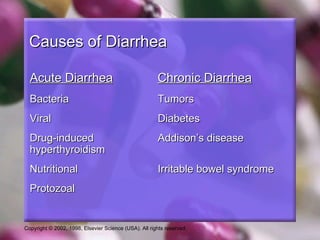
Causes of Diarrhea

  Acute Diarrhea                                       Chronic Diarrhea
  Bacteria                                             Tumors
  Viral                                                Diabetes
  Drug-induced                                         Addison’s disease
  hyperthyroidism
  Nutritional                                          Irritable bowel syndrome
  Protozoal


Copyright © 2002, 1998, Elsevier Science (USA). All rights reserved.
Antidiarrheals: Mechanism of Action

  Adsorbents
  • Coat the walls of the GI tract
  • Bind to the causative bacteria or toxin, which
    are then eliminated through the stool
       Examples:                 bismuth subsalicylate (Pepto-Bismol),
                                 kaolin-pectin, activated charcoal,
                                 attapulgite (Kaopectate)


Copyright © 2002, 1998, Elsevier Science (USA). All rights reserved.
Antidiarrheals: Mechanism of Action

  Anticholinergics
  • Decrease intestinal muscle tone and peristalsis of GI
    tract
  • Result: slowing the movement of fecal matter
    through the GI tract
       Examples:                 belladonna alkaloids (Donnatal),
                                 atropine, hyoscyamine


Copyright © 2002, 1998, Elsevier Science (USA). All rights reserved.
Antidiarrheals: Mechanism of Action

  Intestinal Flora Modifiers
  • Bacterial cultures of Lactobacillus organisms
    work by:
         – Supplying missing bacteria to the GI tract
         – Suppressing the growth of diarrhea-causing bacteria

             Examples: Lactobacillus acidophilus (Lactinex)


Copyright © 2002, 1998, Elsevier Science (USA). All rights reserved.
Antidiarrheals: Mechanism of Action

  Opiates
  • Decrease bowel motility and relieve rectal spasms
  • Decrease transit time through the bowel, allowing
    more time for water and electrolytes to be absorbed

       Examples:                 paregoric, opium tincture, codeine,
                                 loperamide, diphenoxylate


Copyright © 2002, 1998, Elsevier Science (USA). All rights reserved.
Antidiarrheal Agents: Side Effects

  Anticholinergics
  • Urinary retention, hesitancy, impotence
  • Headache, dizziness, confusion, anxiety, drowsiness
  • Dry skin, rash, flushing
  • Blurred vision, photophobia, increased
    intraocular pressure


Copyright © 2002, 1998, Elsevier Science (USA). All rights reserved.
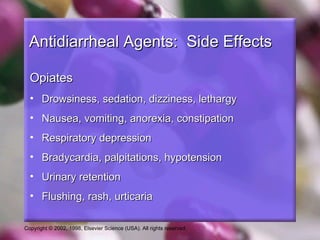
Antidiarrheal Agents: Side Effects

  Opiates
  • Drowsiness, sedation, dizziness, lethargy
  • Nausea, vomiting, anorexia, constipation
  • Respiratory depression
  • Bradycardia, palpitations, hypotension
  • Urinary retention
  • Flushing, rash, urticaria

Copyright © 2002, 1998, Elsevier Science (USA). All rights reserved.
Antidiarrheal Agents: Interactions

  • Adsorbents decrease the absorption of many
    agents, including digoxin, clindamycin,
    quinidine, and hypoglycemic agents
  • Adsorbents cause increased bleeding times
    when given with anticoagulants
  • Antacids can decrease effects of
    anticholinergic antidiarrheal agents


Copyright © 2002, 1998, Elsevier Science (USA). All rights reserved.
Antidiarrheal Agents:
  Nursing Implications
  • Obtain thorough history of bowel patterns,
    general state of health, and recent history of
    illness or dietary changes, and assess for
    allergies.
  • DO NOT give bismuth subsalicylate to
    children under age 16 or teenagers with
    chicken pox because of the risk of Reye’s
    syndrome.


Copyright © 2002, 1998, Elsevier Science (USA). All rights reserved.
Antidiarrheal Agents:
  Nursing Implications
  • Use adsorbents carefully in elderly patients
    or those with decreased bleeding time,
    clotting disorders, recent bowel surgery,
    or confusion.
  • Anticholinergics should not be administered
    to patients with a history of glaucoma, BPH,
    urinary retention, recent bladder surgery,
    cardiac problems, or myasthenia gravis.


Copyright © 2002, 1998, Elsevier Science (USA). All rights reserved.
Antidiarrheal Agents:
  Nursing Implications
  • Teach patients to take medications exactly
    as prescribed and to be aware of their fluid
    intake and dietary changes.
  • Assess fluid volume status; intake and
    output; and mucous membranes before,
    during, and after initiation of treatment.


Copyright © 2002, 1998, Elsevier Science (USA). All rights reserved.
Antidiarrheal Agents:
  Nursing Implications
  • Teach patients to notify their physician
    immediately if symptoms persist.


                           Monitor for therapeutic effect.


Copyright © 2002, 1998, Elsevier Science (USA). All rights reserved.
LAXATIVES


Copyright © 2002, 1998, Elsevier Science (USA). All rights reserved.
Constipation

  • Abnormally infrequent and difficult passage
    of feces through the lower GI tract.
  • Symptom, not a disease
  • Disorder of movement through the colon
    and/or rectum
  • Can be caused by a variety of diseases
    or drugs


Copyright © 2002, 1998, Elsevier Science (USA). All rights reserved.
Causes of Constipation
  Metabolic and endocrine disorders
  • Diabetes, hypothyroidism, pregnancy

  Neurogenic
  • Autonomic neuropathy, multiple sclerosis, spinal
    cord lesions, Parkinson’s disease, CVA

  Adverse drug effects
  • Analgesics, anticholinergics, iron supplements,
    opiates, aluminum antacids, calcium antacids

Copyright © 2002, 1998, Elsevier Science (USA). All rights reserved.
Causes of Constipation

  Lifestyle
  • Poor bowel movement habits: voluntary refusal to
    defecate resulting in constipation
  • Diet: poor fluid intake and/or low-residue
    (roughage) diet, or excessive consumption of dairy
    products
  • Physical inactivity
  • Psychological factors: stress, anxiety, hypochondria


Copyright © 2002, 1998, Elsevier Science (USA). All rights reserved.
Laxatives:

  Mechanisms of Action
  • Bulk-forming
  • Emollient
  • Hyperosmotic
  • Saline
  • Stimulant


Copyright © 2002, 1998, Elsevier Science (USA). All rights reserved.
Laxatives: Mechanism of Action

  Bulk-Forming
  • High fiber
  • Absorbs water to increase bulk
  • Distends bowel to initiate reflex bowel activity

         Examples: psyllium (Metamucil), methylcellulose (Citrucel),
                   polycarbophil


Copyright © 2002, 1998, Elsevier Science (USA). All rights reserved.
Laxatives: Mechanism of Action

  Emollient
  • Stool softeners and lubricants
  • Promote more water and fat in the stools
  • Lubricate the fecal material and intestinal walls

         Examples:            Stool softeners: docusate salts (Colace, Surfak)
                              Lubricants: mineral oil


Copyright © 2002, 1998, Elsevier Science (USA). All rights reserved.
Laxatives: Mechanism of Action

  Hyperosmotic
  • Increase fecal water content
  • Result: bowel distention, increased peristalsis,
    and evacuation

         Examples:            polyethylene glycol (GoLYTELY), sorbitol,
                              glycerin, lactulose (Chronulac)


Copyright © 2002, 1998, Elsevier Science (USA). All rights reserved.
Laxatives: Mechanism of Action

  Saline
  • Increase osmotic pressure within the intestinal tract,
    causing more water to enter the intestines
  • Result: bowel distention, increased peristalsis, and
    evacuation

         Examples:            magnesium sulfate (Epsom salts)
                              magnesium hydroxide (MOM),
                              magnesium citrate
                              sodium phosphate (Fleet Phospho-Soda)


Copyright © 2002, 1998, Elsevier Science (USA). All rights reserved.
Laxatives: Mechanism of Action

  Stimulant
  • Increases peristalsis via intestinal nerve stimulation

         Examples: castor oil, senna, cascara, bisacodyl


Copyright © 2002, 1998, Elsevier Science (USA). All rights reserved.
Laxatives: Therapeutic Uses
  Laxative Group                                    Use
  Bulk-forming                                      Acute and chronic
                                                    constipation

                                                    Irritable bowel syndrome
                                                    Diverticulosis
  Emollient                                         Acute and chronic
                                                    constipation
                                                    Softening of fecal impaction
                                                    Facilitation of BMs in
                                                    anorectal conditions
Copyright © 2002, 1998, Elsevier Science (USA). All rights reserved.
Laxatives: Therapeutic Uses
  Laxative Group                                  Use
  Hyperosmotic                                    Chronic constipation
                                                  Diagnostic and surgical preps
  Saline                                          Constipation
                                                  Diagnostic and surgical preps
                                                  Removal of helminths
                                                  and parasites


Copyright © 2002, 1998, Elsevier Science (USA). All rights reserved.
Laxatives: Therapeutic Uses
  Laxative Group                                  Use
  Stimulant                                       Acute constipation
                                                  Diagnostic and surgical
                                                  bowel preps


Copyright © 2002, 1998, Elsevier Science (USA). All rights reserved.
Laxatives: Therapeutic Uses
  Laxative Group                                  Use

  Bulk-forming                                    Impaction and fluid overload

  Emollient                                       Skin rashes

                                                  Decreased absorption
                                                  of vitamins

  Hyperosmotic                                    Abdominal bloating,
                                                  rectal irritation


Copyright © 2002, 1998, Elsevier Science (USA). All rights reserved.
Laxatives: Therapeutic Uses
  Laxative Group                                  Use

  Saline                                          Magnesium toxicity (with
                                                  renal insufficiency),
                                                  cramping, diarrhea,
                                                  increased thirst

  Stimulant                                       Nutrient malabsorption, skin
                                                  rashes, gastric irritation,
                                                  rectal irritation


Copyright © 2002, 1998, Elsevier Science (USA). All rights reserved.
Laxatives: Side Effects

  • All laxatives can cause electrolyte
    imbalances!!!


Copyright © 2002, 1998, Elsevier Science (USA). All rights reserved.
Laxatives: Nursing Implications

  • Obtain a thorough history of presenting
    symptoms, elimination patterns, and
    allergies.

  • Assess fluid and electrolytes before
    initiating therapy.

  • Patients should not take a laxative or
    cathartic if they are experiencing nausea,
    vomiting, and/or abdominal pain.

Copyright © 2002, 1998, Elsevier Science (USA). All rights reserved.
Laxatives: Nursing Implications

  • A healthy, high-fiber diet and increased
    fluid intake should be encouraged as an
    alternative to laxative use.
  • Long-term use of laxatives often results in
    decreased bowel tone and may lead to
    dependency.
  • All laxative tablets should be swallowed
    whole, not crushed or chewed, especially
    if enteric-coated.
Copyright © 2002, 1998, Elsevier Science (USA). All rights reserved.
Laxatives: Nursing Implications

  • Patients should take all laxative tablets with
    6 to 8 ounces of water.

  • Patients should take bulk-forming laxatives
    as directed by the manufacturer with at least
    240 mL (8 ounces) of water.


Copyright © 2002, 1998, Elsevier Science (USA). All rights reserved.
Laxatives: Nursing Implications

  • Bisacodyl and cascara sagrada should be
    given with water due to interactions with
    milk, antacids, and H2 blockers.

  • Patients should contact their physician if they
    experience severe abdominal pain, muscle
    weakness, cramps, and/or dizziness, which
    may indicate possible fluid or electrolyte
    loss.


Copyright © 2002, 1998, Elsevier Science (USA). All rights reserved.
Laxatives: Nursing Implications

  • Monitor for therapeutic effect.


Copyright © 2002, 1998, Elsevier Science (USA). All rights reserved.

Anti diarrheals and laxatives

  • 1.
    Drugs Affecting the Gastrointestinal System Antidiarrheals and Laxatives Copyright © 2002, 1998, Elsevier Science (USA). All rights reserved.
  • 2.
    Diarrhea •Abnormal frequent passage of loose stools or • Abnormal passage of stools with increased frequency, fluidity, and weight, or with increased stool water excretion Copyright © 2002, 1998, Elsevier Science (USA). All rights reserved.
  • 3.
    Diarrhea AcuteDiarrhea • Sudden onset in a previously healthy person • Lasts from 3 days to 2 weeks • Self-limiting • Resolves without sequelae Copyright © 2002, 1998, Elsevier Science (USA). All rights reserved.
  • 4.
    Diarrhea ChronicDiarrhea • Lasts for over 3 to 4 weeks • Associated with recurring passage of diarrheal stools, fever, loss of appetite, nausea, vomiting, weight loss, and chronic weakness Copyright © 2002, 1998, Elsevier Science (USA). All rights reserved.
  • 5.
    Causes of Diarrhea Acute Diarrhea Chronic Diarrhea Bacteria Tumors Viral Diabetes Drug-induced Addison’s disease hyperthyroidism Nutritional Irritable bowel syndrome Protozoal Copyright © 2002, 1998, Elsevier Science (USA). All rights reserved.
  • 6.
    Antidiarrheals: Mechanism ofAction Adsorbents • Coat the walls of the GI tract • Bind to the causative bacteria or toxin, which are then eliminated through the stool Examples: bismuth subsalicylate (Pepto-Bismol), kaolin-pectin, activated charcoal, attapulgite (Kaopectate) Copyright © 2002, 1998, Elsevier Science (USA). All rights reserved.
  • 7.
    Antidiarrheals: Mechanism ofAction Anticholinergics • Decrease intestinal muscle tone and peristalsis of GI tract • Result: slowing the movement of fecal matter through the GI tract Examples: belladonna alkaloids (Donnatal), atropine, hyoscyamine Copyright © 2002, 1998, Elsevier Science (USA). All rights reserved.
  • 8.
    Antidiarrheals: Mechanism ofAction Intestinal Flora Modifiers • Bacterial cultures of Lactobacillus organisms work by: – Supplying missing bacteria to the GI tract – Suppressing the growth of diarrhea-causing bacteria Examples: Lactobacillus acidophilus (Lactinex) Copyright © 2002, 1998, Elsevier Science (USA). All rights reserved.
  • 9.
    Antidiarrheals: Mechanism ofAction Opiates • Decrease bowel motility and relieve rectal spasms • Decrease transit time through the bowel, allowing more time for water and electrolytes to be absorbed Examples: paregoric, opium tincture, codeine, loperamide, diphenoxylate Copyright © 2002, 1998, Elsevier Science (USA). All rights reserved.
  • 10.
    Antidiarrheal Agents: SideEffects Anticholinergics • Urinary retention, hesitancy, impotence • Headache, dizziness, confusion, anxiety, drowsiness • Dry skin, rash, flushing • Blurred vision, photophobia, increased intraocular pressure Copyright © 2002, 1998, Elsevier Science (USA). All rights reserved.
  • 11.
    Antidiarrheal Agents: SideEffects Opiates • Drowsiness, sedation, dizziness, lethargy • Nausea, vomiting, anorexia, constipation • Respiratory depression • Bradycardia, palpitations, hypotension • Urinary retention • Flushing, rash, urticaria Copyright © 2002, 1998, Elsevier Science (USA). All rights reserved.
  • 12.
    Antidiarrheal Agents: Interactions • Adsorbents decrease the absorption of many agents, including digoxin, clindamycin, quinidine, and hypoglycemic agents • Adsorbents cause increased bleeding times when given with anticoagulants • Antacids can decrease effects of anticholinergic antidiarrheal agents Copyright © 2002, 1998, Elsevier Science (USA). All rights reserved.
  • 13.
    Antidiarrheal Agents: Nursing Implications • Obtain thorough history of bowel patterns, general state of health, and recent history of illness or dietary changes, and assess for allergies. • DO NOT give bismuth subsalicylate to children under age 16 or teenagers with chicken pox because of the risk of Reye’s syndrome. Copyright © 2002, 1998, Elsevier Science (USA). All rights reserved.
  • 14.
    Antidiarrheal Agents: Nursing Implications • Use adsorbents carefully in elderly patients or those with decreased bleeding time, clotting disorders, recent bowel surgery, or confusion. • Anticholinergics should not be administered to patients with a history of glaucoma, BPH, urinary retention, recent bladder surgery, cardiac problems, or myasthenia gravis. Copyright © 2002, 1998, Elsevier Science (USA). All rights reserved.
  • 15.
    Antidiarrheal Agents: Nursing Implications • Teach patients to take medications exactly as prescribed and to be aware of their fluid intake and dietary changes. • Assess fluid volume status; intake and output; and mucous membranes before, during, and after initiation of treatment. Copyright © 2002, 1998, Elsevier Science (USA). All rights reserved.
  • 16.
    Antidiarrheal Agents: Nursing Implications • Teach patients to notify their physician immediately if symptoms persist. Monitor for therapeutic effect. Copyright © 2002, 1998, Elsevier Science (USA). All rights reserved.
  • 17.
    LAXATIVES Copyright © 2002,1998, Elsevier Science (USA). All rights reserved.
  • 18.
    Constipation •Abnormally infrequent and difficult passage of feces through the lower GI tract. • Symptom, not a disease • Disorder of movement through the colon and/or rectum • Can be caused by a variety of diseases or drugs Copyright © 2002, 1998, Elsevier Science (USA). All rights reserved.
  • 19.
    Causes of Constipation Metabolic and endocrine disorders • Diabetes, hypothyroidism, pregnancy Neurogenic • Autonomic neuropathy, multiple sclerosis, spinal cord lesions, Parkinson’s disease, CVA Adverse drug effects • Analgesics, anticholinergics, iron supplements, opiates, aluminum antacids, calcium antacids Copyright © 2002, 1998, Elsevier Science (USA). All rights reserved.
  • 20.
    Causes of Constipation Lifestyle • Poor bowel movement habits: voluntary refusal to defecate resulting in constipation • Diet: poor fluid intake and/or low-residue (roughage) diet, or excessive consumption of dairy products • Physical inactivity • Psychological factors: stress, anxiety, hypochondria Copyright © 2002, 1998, Elsevier Science (USA). All rights reserved.
  • 21.
    Laxatives: Mechanismsof Action • Bulk-forming • Emollient • Hyperosmotic • Saline • Stimulant Copyright © 2002, 1998, Elsevier Science (USA). All rights reserved.
  • 22.
    Laxatives: Mechanism ofAction Bulk-Forming • High fiber • Absorbs water to increase bulk • Distends bowel to initiate reflex bowel activity Examples: psyllium (Metamucil), methylcellulose (Citrucel), polycarbophil Copyright © 2002, 1998, Elsevier Science (USA). All rights reserved.
  • 23.
    Laxatives: Mechanism ofAction Emollient • Stool softeners and lubricants • Promote more water and fat in the stools • Lubricate the fecal material and intestinal walls Examples: Stool softeners: docusate salts (Colace, Surfak) Lubricants: mineral oil Copyright © 2002, 1998, Elsevier Science (USA). All rights reserved.
  • 24.
    Laxatives: Mechanism ofAction Hyperosmotic • Increase fecal water content • Result: bowel distention, increased peristalsis, and evacuation Examples: polyethylene glycol (GoLYTELY), sorbitol, glycerin, lactulose (Chronulac) Copyright © 2002, 1998, Elsevier Science (USA). All rights reserved.
  • 25.
    Laxatives: Mechanism ofAction Saline • Increase osmotic pressure within the intestinal tract, causing more water to enter the intestines • Result: bowel distention, increased peristalsis, and evacuation Examples: magnesium sulfate (Epsom salts) magnesium hydroxide (MOM), magnesium citrate sodium phosphate (Fleet Phospho-Soda) Copyright © 2002, 1998, Elsevier Science (USA). All rights reserved.
  • 26.
    Laxatives: Mechanism ofAction Stimulant • Increases peristalsis via intestinal nerve stimulation Examples: castor oil, senna, cascara, bisacodyl Copyright © 2002, 1998, Elsevier Science (USA). All rights reserved.
  • 27.
    Laxatives: Therapeutic Uses Laxative Group Use Bulk-forming Acute and chronic constipation Irritable bowel syndrome Diverticulosis Emollient Acute and chronic constipation Softening of fecal impaction Facilitation of BMs in anorectal conditions Copyright © 2002, 1998, Elsevier Science (USA). All rights reserved.
  • 28.
    Laxatives: Therapeutic Uses Laxative Group Use Hyperosmotic Chronic constipation Diagnostic and surgical preps Saline Constipation Diagnostic and surgical preps Removal of helminths and parasites Copyright © 2002, 1998, Elsevier Science (USA). All rights reserved.
  • 29.
    Laxatives: Therapeutic Uses Laxative Group Use Stimulant Acute constipation Diagnostic and surgical bowel preps Copyright © 2002, 1998, Elsevier Science (USA). All rights reserved.
  • 30.
    Laxatives: Therapeutic Uses Laxative Group Use Bulk-forming Impaction and fluid overload Emollient Skin rashes Decreased absorption of vitamins Hyperosmotic Abdominal bloating, rectal irritation Copyright © 2002, 1998, Elsevier Science (USA). All rights reserved.
  • 31.
    Laxatives: Therapeutic Uses Laxative Group Use Saline Magnesium toxicity (with renal insufficiency), cramping, diarrhea, increased thirst Stimulant Nutrient malabsorption, skin rashes, gastric irritation, rectal irritation Copyright © 2002, 1998, Elsevier Science (USA). All rights reserved.
  • 32.
    Laxatives: Side Effects • All laxatives can cause electrolyte imbalances!!! Copyright © 2002, 1998, Elsevier Science (USA). All rights reserved.
  • 33.
    Laxatives: Nursing Implications • Obtain a thorough history of presenting symptoms, elimination patterns, and allergies. • Assess fluid and electrolytes before initiating therapy. • Patients should not take a laxative or cathartic if they are experiencing nausea, vomiting, and/or abdominal pain. Copyright © 2002, 1998, Elsevier Science (USA). All rights reserved.
  • 34.
    Laxatives: Nursing Implications • A healthy, high-fiber diet and increased fluid intake should be encouraged as an alternative to laxative use. • Long-term use of laxatives often results in decreased bowel tone and may lead to dependency. • All laxative tablets should be swallowed whole, not crushed or chewed, especially if enteric-coated. Copyright © 2002, 1998, Elsevier Science (USA). All rights reserved.
  • 35.
    Laxatives: Nursing Implications • Patients should take all laxative tablets with 6 to 8 ounces of water. • Patients should take bulk-forming laxatives as directed by the manufacturer with at least 240 mL (8 ounces) of water. Copyright © 2002, 1998, Elsevier Science (USA). All rights reserved.
  • 36.
    Laxatives: Nursing Implications • Bisacodyl and cascara sagrada should be given with water due to interactions with milk, antacids, and H2 blockers. • Patients should contact their physician if they experience severe abdominal pain, muscle weakness, cramps, and/or dizziness, which may indicate possible fluid or electrolyte loss. Copyright © 2002, 1998, Elsevier Science (USA). All rights reserved.
  • 37.
    Laxatives: Nursing Implications • Monitor for therapeutic effect. Copyright © 2002, 1998, Elsevier Science (USA). All rights reserved.