Antenna
An antenna or aerial, is an electrical device which converts electric power
into radio waves, and vice versa. An antenna is a conductor that can
transmit, send and receive signals such as microwave, radio or satellite
signals. It is usually used with a radio transmitter or radio receiver.
Figure: Some common features of antenna.
Classification
•Wire Antennas
Wire Antennas
Short Dipole Antenna
Dipole Antenna
Half-Wave Dipole
Broadband Dipoles
Monopole Antenna
Folded Dipole Antenna
Loop Antenna
Cloverleaf Antenna
•Travelling Wave Antennas
 Helical Antennas
Yagi-Uda Antennas
Spiral Antennas
•Reflector Antennas
Corner Reflector
Parabolic Reflector (Dish Antenna)
•Microstrip Antennas
Rectangular Microstrip (Patch) Antennas
Planar Inverted-F Antennas (PIFA)
•Log-Periodic Antennas
Bow Tie Antennas
Log-Periodic Antennas
Log-Periodic Dipole Array
•Aperture Antennas
Slot Antenna
Cavity-Backed Slot Antenna
Inverted-F Antenna
Slotted Waveguide Antenna
Horn Antenna
Vivaldi Antenna
Telescopes
•Other Antennas
NFC Antennas
Fractal Antennas
Wearable Antennas
Patch antenna
A patch antenna (also known as a rectangular micro strip antenna) is a
type of radio antenna with a low profile, which can be mounted on a flat
surface. It consists of a flat rectangular sheet or "patch" of metal,
mounted over a larger sheet of metal called a ground plane.
Figure: Microstrip Patch Antenna
Multiband Antenna
An antenna designed to operate on several bands. These antennas often
use designs where one part of the antenna is active for one band, and
another part is active for a different band. A multiband antenna may
have lower than average gain or may be physically larger in
compensation.
Figure: Multiband Antenna
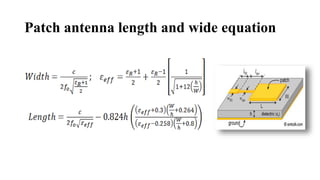
Patch antenna length and wide equation
Dielectric substrate
• Microstrip is a type of electrical transmission line which can be
fabricated using printed circuit board technology, and is used to
convey microwave-frequency signals. It consists of a conducting strip
separated from a ground plane by a dielectric layer known as the
substrate.
Applications of Patch antenna
Microstrip Patch antennas are widely used in today’s era. It is widely
used due to its compact shape and light weight, les complexity and easy
to implement. Some widely usage fields of patch antenna are
mentioned blown are :
 satellite communication
 military purposes
 GPS
 mobile
 missile systems
 Navigational System
 Non satellite based application such
as medical hyperthermia
 Integrated phased array system
 Direct broadcast satellite system and
remote sensing
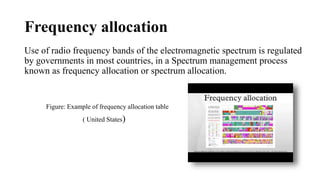
Frequency allocation
Use of radio frequency bands of the electromagnetic spectrum is regulated
by governments in most countries, in a Spectrum management process
known as frequency allocation or spectrum allocation.
Figure: Example of frequency allocation table
( United States)
Advantage or disadvantage of patch
antenna
• Advantages:
 Ease of manufacturing
 It has a very low fabrication cost.
 Microstrip patch antennas are efficient radiators.
 It has a support for both linear and circular polarization.
 Easy in integration with microwave integration circuits.
• Disadvantages:
 Low impedance bandwidth.
 Low gain.
 Extra radiation occurs from its feeds and junctions.
 Excitation of surface waves.
 Size of micro strip antenna comes in both advantages and
disadvantages but there are some applications where the size of
microstrip antenna is too large to be used.

Antenna

  • 1.
    Antenna An antenna oraerial, is an electrical device which converts electric power into radio waves, and vice versa. An antenna is a conductor that can transmit, send and receive signals such as microwave, radio or satellite signals. It is usually used with a radio transmitter or radio receiver. Figure: Some common features of antenna.
  • 2.
    Classification •Wire Antennas Wire Antennas ShortDipole Antenna Dipole Antenna Half-Wave Dipole Broadband Dipoles Monopole Antenna Folded Dipole Antenna Loop Antenna Cloverleaf Antenna
  • 3.
    •Travelling Wave Antennas Helical Antennas Yagi-Uda Antennas Spiral Antennas •Reflector Antennas Corner Reflector Parabolic Reflector (Dish Antenna)
  • 4.
    •Microstrip Antennas Rectangular Microstrip(Patch) Antennas Planar Inverted-F Antennas (PIFA) •Log-Periodic Antennas Bow Tie Antennas Log-Periodic Antennas Log-Periodic Dipole Array
  • 5.
    •Aperture Antennas Slot Antenna Cavity-BackedSlot Antenna Inverted-F Antenna Slotted Waveguide Antenna Horn Antenna Vivaldi Antenna Telescopes •Other Antennas NFC Antennas Fractal Antennas Wearable Antennas
  • 6.
    Patch antenna A patchantenna (also known as a rectangular micro strip antenna) is a type of radio antenna with a low profile, which can be mounted on a flat surface. It consists of a flat rectangular sheet or "patch" of metal, mounted over a larger sheet of metal called a ground plane. Figure: Microstrip Patch Antenna
  • 7.
    Multiband Antenna An antennadesigned to operate on several bands. These antennas often use designs where one part of the antenna is active for one band, and another part is active for a different band. A multiband antenna may have lower than average gain or may be physically larger in compensation. Figure: Multiband Antenna
  • 8.
    Patch antenna lengthand wide equation
  • 9.
    Dielectric substrate • Microstripis a type of electrical transmission line which can be fabricated using printed circuit board technology, and is used to convey microwave-frequency signals. It consists of a conducting strip separated from a ground plane by a dielectric layer known as the substrate.
  • 10.
    Applications of Patchantenna Microstrip Patch antennas are widely used in today’s era. It is widely used due to its compact shape and light weight, les complexity and easy to implement. Some widely usage fields of patch antenna are mentioned blown are :  satellite communication  military purposes  GPS  mobile  missile systems  Navigational System  Non satellite based application such as medical hyperthermia  Integrated phased array system  Direct broadcast satellite system and remote sensing
  • 11.
    Frequency allocation Use ofradio frequency bands of the electromagnetic spectrum is regulated by governments in most countries, in a Spectrum management process known as frequency allocation or spectrum allocation. Figure: Example of frequency allocation table ( United States)
  • 12.
    Advantage or disadvantageof patch antenna • Advantages:  Ease of manufacturing  It has a very low fabrication cost.  Microstrip patch antennas are efficient radiators.  It has a support for both linear and circular polarization.  Easy in integration with microwave integration circuits.
  • 13.
    • Disadvantages:  Lowimpedance bandwidth.  Low gain.  Extra radiation occurs from its feeds and junctions.  Excitation of surface waves.  Size of micro strip antenna comes in both advantages and disadvantages but there are some applications where the size of microstrip antenna is too large to be used.