
Usman zafar
Batch ‘J’
final year
mBBs
Antenatal Care
Definition of Antenatal care
comprehensive health supervision of a
pregnant woman before delivery
Or it is planned examination, observation
and guidance given to the pregnant
woman from conception till the time of
labor.
Goals
To reduce maternal and perinatal
mortality and morbidity rates
To improve the physical and mental
health of women and children
Importance of Antenatal Care
 To ensure that the pregnant woman and her
fetus are in the best possible health.
 To detect early and treat properly
complications
 Offering education for parenthood
 To prepare the woman for labor, lactation and
care of her infant
Schedule for Antenatal Visits:
The first visit or initial visit should be made
as early is pregnancy as possible.
Return Visits:
Once every month till 7th month.
Once every 2 weeks till the 9th month
Once every week during the 9th month,
till labor.
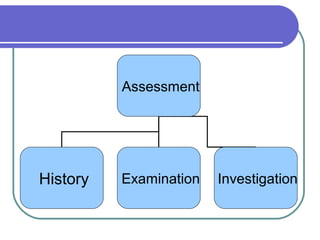
Assessment
History Examination Investigation
History
Personal history
Family history
Medical and surgical history
Menstrual history
Obstetrical history
History of present pregnancy
Physical Examinations
Height of over 150 cm indication of an
average-sized pelvis
The approximate weight gain during
pregnancy is 12 kg.; 2kg in the first 20
weeks and 10 kg in the remaining 20
weeks (1.5 kg per week until term).
Obesity (more than 20 kg above the
weight-height formula) leads to an
increased risk of gestational diabetes,
pregnancy-induced hypertension and
thrombo-embolic disorders
Local Examination
The uterus may be higher than expected
due to large fetus, multiple pregnancy,
polyhydrammnios or mistaken date of last
menstrual period.
The uterus may be lower than expected due
to small fetus, intrauterine growth
retardation, oligohydramnios or mistaken
date of last menstrual period.
Fetal heart sound is heard by sonicaid
as early as 10thweek of pregnancy.
Fetal heart sound is heard by Pinard' s
fetal stethoscope after the 20thweek of
pregnancy.
The normal fetal heart rate is 120-160
beats/min
Investigations:
Urine should be tested for sugar,
ketones and protein.
Hemoglobin will be repeated:
At 36 weeks of gestation.
Every 4 weeks if Hb is < 9 g/dl.
Fetal kick count
The pregnant woman reports at
least 10 movements in 12 hours.
Absence of fetal movements
precedes intrauterine fetal death
by 48 hours.
Prevention of neonatal tetanus
Clean delivery practices
3cleans : clean hands, clean delivery
surface, clean cord care
Tetanus toxoid protects both mother & child
Unimmunized pregnant women : 2 doses
tetanus toxoid
•1st
dose as early as possible during
pregnancy
•2nd
dose – at least a month later / 3 wks
before delivery
Health Teaching during the First
Trimester
 Physiological changes
during pregnancy
 Weight gain
 Fresh air and sunshine
 Rest and sleep
 Diet
 Daily activities
 Exercises and relaxation
 Hygiene
 Teeth
 Bladder and bowel
 Sexual counseling
 Smoking :
 Medications
 Infection
 Irradiation
 Occupational and
environmental hazards
 Travel
 Follow up
 Minor discomforts
 Signs of Potential
Complications
 Exercise should be simple, mild exercise avoid
lifting heavy weights
 A tooth can be extracted during pregnancy,
but local analgesia is recommended
 Catheter and enema should be avoided.
 Smoking may lead to ptyalism, nervousness
and hyper emesis and make pregnant woman
at increased risk of chest infections and
thrombo-embolic disorders
 Pregnant woman should avoid contact with
infectious diseases especially rubella or
(German measles) because it has deleterious
effects on the fetus
 Pregnant woman should avoid exposure to x-
ray or irradiation because of possible
teratogenic effects on the fetus such as birth
defects or childhood leukemia
Common Discomforts of Pregnancy,
Etiology, and Relief Measures:
Urinary frequency
RELIEF MEASURES:
 Decrease fluid intake at night.
 Maintain fluid intake during day.
 Void when feel the urge.
Fatigue
RELIEF MEASURES:
 Rest frequency.
 Go to bed earlier.
Sleep difficulties
RELIEF MEASURES:
Rest frequency
 Decrease fluid intake at night
Breast enlargement and
sensitivity
RELIEF MEASURES:
 Wear a good supporting bra.
 Assess for other conditions.
Nasal stuffiness and epistaxis
ETIOLGY: Elevated estrogen levels
 RELIEF MEASURES :
Avoid decongestants.
Use humidifiers, and normal saline drops.
Ptyalism (excessive
salivation(
ETIOLGY: Unknown
RELIEF MEASURES:
Perform frequent mouth care.
Chew gum.
Decrease fluid intake at night.
Maintain fluid intake during day.
Nausea and vomiting
 RELIEF MEASURES:
 Avoid food or smells that exacerbate condition.
 Eat dry crackers or toast before rising in
morning.
 Eat small, frequent meals.
 Avoid sudden movements. Get out of bed slowly
 Breath fresh air to help relieve nausea.
Shortness of breath
RELIEF MEASURES:
 Use extra pillows at night to keep more upright.
 Limit activity during day
Heartburn
RELIEF MEASURES:
 Eat small, more frequent meals.
 Use antacids.
 Avoid overeating and spicy foods.
Dependent edema
 Avoid standing for long periods.
 Elevate legs when laying or sitting.
 Avoid tight stockings.
Varicosities
 Rest in sims' position.
 Elevate legs regularly.
 Avoid crossing legs.
 Avoid tight stockings.
 Avoid long periods of standing
Hemorrhoids
RELIEF MEASURES:
Maintain regular bowel habits.
Use prescribed stool softeners.
Apply topical or anesthetic
ointments to area.
Constipation
RELIEF MEASURES:
Maintain regular bowel habits.
Increase fiber in diet.
Increase fluids.
Find iron preparation that is
least constipating
Leucorrhea
RELIEF MEASURES:
Take a daily bath or shower.
Wear cotton underwear.
Backache
RELIEF MEASURES:
Wear shoes with low heels.
Walk with pelvis tilted forward.
Use firmer mattress.
Perform pelvic rocking or tilting
Leg cramps
RELIEF MEASURES:
 Extend affected leg and dorsiflex the foot.
 Elevate lower legs frequently.
 Apply heat to muscles.
 Evaluate diet.
Faintness
RELIEF MEASURES:
•Rise slowly from sitting to standing.
•Evaluate hemoglobin and
hematocrit.
•Avoid hot environments
Its begging of the end…….

Antenatal care

  • 1.
  • 2.
  • 4.
    Definition of Antenatalcare comprehensive health supervision of a pregnant woman before delivery Or it is planned examination, observation and guidance given to the pregnant woman from conception till the time of labor.
  • 5.
    Goals To reduce maternaland perinatal mortality and morbidity rates To improve the physical and mental health of women and children
  • 6.
    Importance of AntenatalCare  To ensure that the pregnant woman and her fetus are in the best possible health.  To detect early and treat properly complications  Offering education for parenthood  To prepare the woman for labor, lactation and care of her infant
  • 7.
    Schedule for AntenatalVisits: The first visit or initial visit should be made as early is pregnancy as possible. Return Visits: Once every month till 7th month. Once every 2 weeks till the 9th month Once every week during the 9th month, till labor.
  • 9.
  • 10.
    History Personal history Family history Medicaland surgical history Menstrual history Obstetrical history History of present pregnancy
  • 11.
    Physical Examinations Height ofover 150 cm indication of an average-sized pelvis The approximate weight gain during pregnancy is 12 kg.; 2kg in the first 20 weeks and 10 kg in the remaining 20 weeks (1.5 kg per week until term).
  • 12.
    Obesity (more than20 kg above the weight-height formula) leads to an increased risk of gestational diabetes, pregnancy-induced hypertension and thrombo-embolic disorders
  • 13.
    Local Examination The uterusmay be higher than expected due to large fetus, multiple pregnancy, polyhydrammnios or mistaken date of last menstrual period. The uterus may be lower than expected due to small fetus, intrauterine growth retardation, oligohydramnios or mistaken date of last menstrual period.
  • 14.
    Fetal heart soundis heard by sonicaid as early as 10thweek of pregnancy. Fetal heart sound is heard by Pinard' s fetal stethoscope after the 20thweek of pregnancy. The normal fetal heart rate is 120-160 beats/min
  • 15.
    Investigations: Urine should betested for sugar, ketones and protein. Hemoglobin will be repeated: At 36 weeks of gestation. Every 4 weeks if Hb is < 9 g/dl.
  • 16.
    Fetal kick count Thepregnant woman reports at least 10 movements in 12 hours. Absence of fetal movements precedes intrauterine fetal death by 48 hours.
  • 17.
    Prevention of neonataltetanus Clean delivery practices 3cleans : clean hands, clean delivery surface, clean cord care Tetanus toxoid protects both mother & child Unimmunized pregnant women : 2 doses tetanus toxoid •1st dose as early as possible during pregnancy •2nd dose – at least a month later / 3 wks before delivery
  • 18.
    Health Teaching duringthe First Trimester  Physiological changes during pregnancy  Weight gain  Fresh air and sunshine  Rest and sleep  Diet  Daily activities  Exercises and relaxation  Hygiene  Teeth  Bladder and bowel  Sexual counseling  Smoking :  Medications  Infection  Irradiation  Occupational and environmental hazards  Travel  Follow up  Minor discomforts  Signs of Potential Complications
  • 19.
     Exercise shouldbe simple, mild exercise avoid lifting heavy weights  A tooth can be extracted during pregnancy, but local analgesia is recommended  Catheter and enema should be avoided.  Smoking may lead to ptyalism, nervousness and hyper emesis and make pregnant woman at increased risk of chest infections and thrombo-embolic disorders
  • 20.
     Pregnant womanshould avoid contact with infectious diseases especially rubella or (German measles) because it has deleterious effects on the fetus  Pregnant woman should avoid exposure to x- ray or irradiation because of possible teratogenic effects on the fetus such as birth defects or childhood leukemia
  • 21.
    Common Discomforts ofPregnancy, Etiology, and Relief Measures: Urinary frequency RELIEF MEASURES:  Decrease fluid intake at night.  Maintain fluid intake during day.  Void when feel the urge.
  • 22.
    Fatigue RELIEF MEASURES:  Restfrequency.  Go to bed earlier.
  • 23.
    Sleep difficulties RELIEF MEASURES: Restfrequency  Decrease fluid intake at night
  • 24.
    Breast enlargement and sensitivity RELIEFMEASURES:  Wear a good supporting bra.  Assess for other conditions.
  • 25.
    Nasal stuffiness andepistaxis ETIOLGY: Elevated estrogen levels  RELIEF MEASURES : Avoid decongestants. Use humidifiers, and normal saline drops.
  • 26.
    Ptyalism (excessive salivation( ETIOLGY: Unknown RELIEFMEASURES: Perform frequent mouth care. Chew gum. Decrease fluid intake at night. Maintain fluid intake during day.
  • 27.
    Nausea and vomiting RELIEF MEASURES:  Avoid food or smells that exacerbate condition.  Eat dry crackers or toast before rising in morning.  Eat small, frequent meals.  Avoid sudden movements. Get out of bed slowly  Breath fresh air to help relieve nausea.
  • 28.
    Shortness of breath RELIEFMEASURES:  Use extra pillows at night to keep more upright.  Limit activity during day
  • 29.
    Heartburn RELIEF MEASURES:  Eatsmall, more frequent meals.  Use antacids.  Avoid overeating and spicy foods.
  • 30.
    Dependent edema  Avoidstanding for long periods.  Elevate legs when laying or sitting.  Avoid tight stockings.
  • 31.
    Varicosities  Rest insims' position.  Elevate legs regularly.  Avoid crossing legs.  Avoid tight stockings.  Avoid long periods of standing
  • 32.
    Hemorrhoids RELIEF MEASURES: Maintain regularbowel habits. Use prescribed stool softeners. Apply topical or anesthetic ointments to area.
  • 33.
    Constipation RELIEF MEASURES: Maintain regularbowel habits. Increase fiber in diet. Increase fluids. Find iron preparation that is least constipating
  • 34.
    Leucorrhea RELIEF MEASURES: Take adaily bath or shower. Wear cotton underwear.
  • 35.
    Backache RELIEF MEASURES: Wear shoeswith low heels. Walk with pelvis tilted forward. Use firmer mattress. Perform pelvic rocking or tilting
  • 36.
    Leg cramps RELIEF MEASURES: Extend affected leg and dorsiflex the foot.  Elevate lower legs frequently.  Apply heat to muscles.  Evaluate diet.
  • 37.
    Faintness RELIEF MEASURES: •Rise slowlyfrom sitting to standing. •Evaluate hemoglobin and hematocrit. •Avoid hot environments
  • 38.
    Its begging ofthe end…….