Antacids
KRVS Chaitanya
What are antacids?
• An antacid is a substance which neutralizes stomach
acidity and is used to relieve heartburn, indigestion or an upset
stomach, some times constipation and diarrhea..
• They contain ingredients such as aluminium, calcium,
magnesium, or sodium bicarbonate which act as bases
(alkalis) to counteract stomach acid and make its pH more
neutral.
Which antacid is used for?
When antacids are used
• Indigestion.
• Heartburn or acid reflux – also known as gastro-oesophageal
reflux disease (GERD) a stomach ulcer.
• Gastritis (inflammation of the stomach lining)
Medical uses:
• Antacids are available over the counter and are taken by
mouth to quickly relieve occasional heartburn, the major
symptom of gastroesophageal reflux disease and indigestion.
• Treatment with antacids alone is symptomatic and only
justified for minor symptoms.
• Alternative uses for antacids include constipation, diarrhea,
hyperphosphatemia, and urinary alkalization.
• Non-particulate antacids (sodium citrate, magnesium
trisilicate) increase gastric pH with little or no effect on gastric
volume, and therefore may see some limited use in pre-
operative procedures.
• Sodium citrate should be given within 1 hour of surgery to be
the most effective.
How antacids work
• Antacids are over-the-counter (OTC) medications that help
neutralize stomach acid.
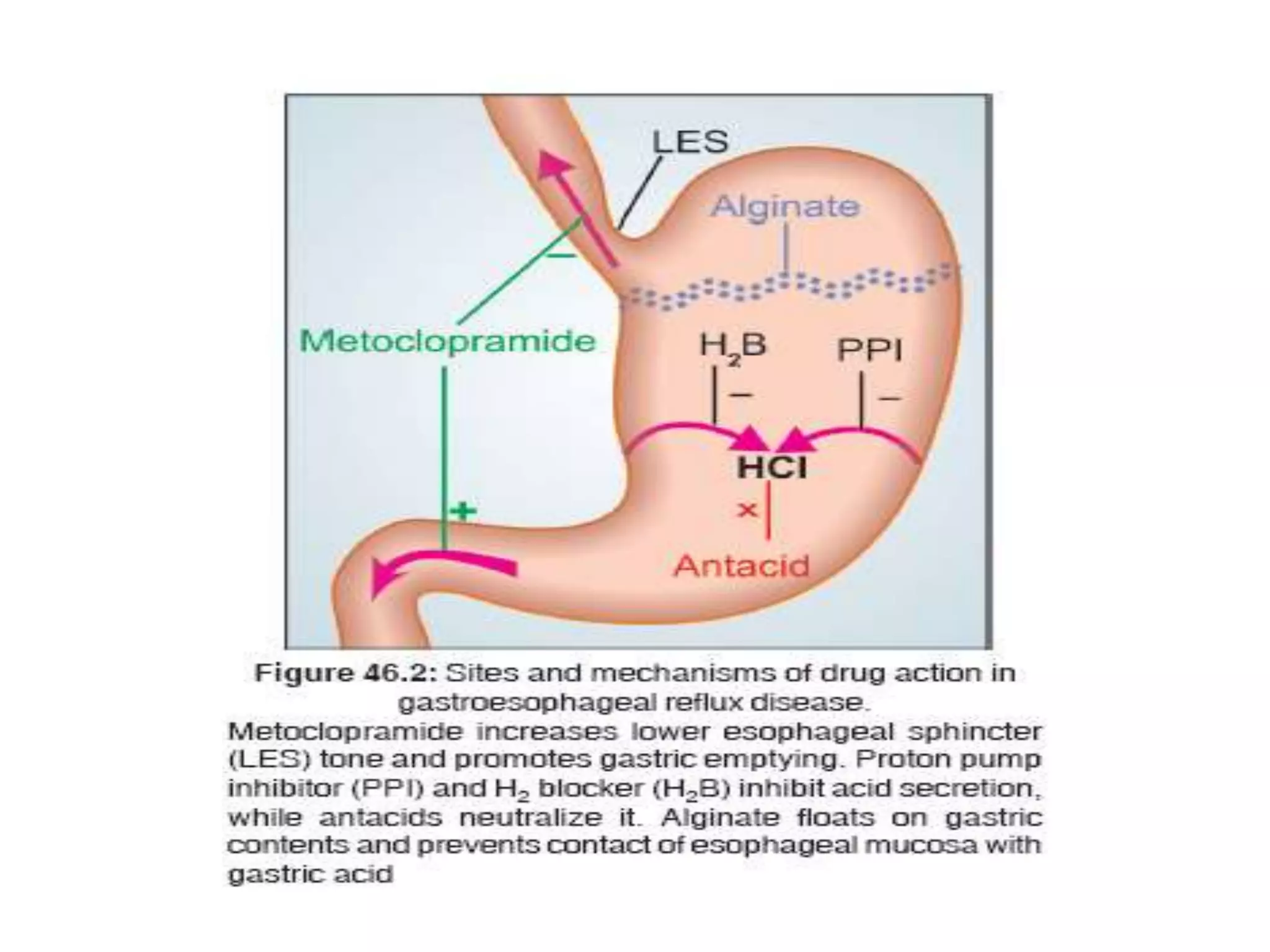
• They work differently from other acid reducers such as H2
receptor blockers and proton pump inhibitors (PPIs).
• Those drugs work by reducing or preventing the secretion of
stomach acid.
• Antacids can be used to treat symptoms of excess stomach
acid, such as: acid reflux, which can include
– Regurgitation
– Bitter taste
– Persistent dry cough
– Pain when lying down
– Trouble swallowing heartburn.
What is ANC
• The acid neutralizing capacity (ANC) of an antacid is the
amount of acid that it can neutralize.
• The moles of acid neutralized equals the difference between
the moles of acid added and the moles of base required for the
back titration.
• Acid-neutralizing capacity or ANC in short is a measure for
the overall buffering capacity against acidification of a
solution, e.g. surface water or soil water.
Types of antacids
Antacids usually come in the following drug forms:
1. Liquid
2. Chewable gummy or tablet
3. Tablet that you dissolve in water to drink
Precautions
• Antacids are typically safe for most people.
• However, people with certain medical conditions should talk
with their doctors before taking certain antacids that contain
aluminium hydroxide and magnesium carbonate.
• For example, people with heart failure may have sodium
restrictions to help decrease fluid build-up.
• People with kidney failure may develop a build-up of aluminium
after using antacids. This can lead to aluminium toxicity.
• People with kidney failure also tend to have problems
with electrolyte balance. All antacids contain electrolytes, which
could make electrolyte balance problems worse.
• Children don’t typically develop symptoms of excess stomach acid,
so their symptoms could be related to another condition.
Side effects of antacids
• Side effects from antacids are rare. However, they can occur,
even when you use them according to the directions.
• Antacids can either cause constipation or have a laxative
effect.
• Some people have had allergic reactions and flatulence too
• Antacids might also increase the risk of
developing sensitivities to certain foods
• Formulations containing magnesium salts may cause diarrhea,
whereas those containing calcium or aluminium may cause
constipation.
• Rarely, long-term use of calcium carbonate may cause kidney
stones.
• Long-term use of antacids containing aluminium may
increase the risk of developing osteoporosis.
Side effects from misuse
• Many of the side effects of antacids come from not taking
them as directed.
• If you take too much or take them for longer than directed, you
could get an overdose of calcium.
• Too much calcium can cause:
– Nausea
– Vomiting
– Mental status changes
– Kidney stones
• Excess calcium can also lead to alkalosis. In this condition,
your body doesn’t make enough acid to function properly.
• If you feel like you need to use a lot of an antacid for relief,
that might be a sign of another condition.
• If you’ve taken an antacid according to the directions and
haven’t gotten relief, talk to your doctor.
Mechanism of action
• When an excess amount of acid is produced in the stomach,
the natural mucous barrier that protects the lining of the
stomach can degrade, leading to pain and irritation.
• There is also potential for the development of acid reflux,
which can cause pain and damage to the oesophagus.
• Antacids contain alkaline ions that chemically
neutralize stomach gastric acid, reducing damage to the
stomach lining and oesophagus, and relieving pain.
• Some antacids also inhibit pepsin, an enzyme that can
damage the oesophagus in acid reflux.
• Antacids do not directly inhibit acid secretion, and thus are
distinct from acid-reducing drugs like H2-receptor
antagonists or proton pump inhibitors (PPIs).
• Antacids do not kill the bacteria Helicobacter pylori, which
causes most ulcers.
Formulations
• Antacids may be formulated with other active ingredients such
as simethicone to control gas, or alginic acid to act as a
physical barrier to acid.
1. Liquids
– Milk of magnesia
– Magnesium/ aluminium combinations. (Quicker relief)
2. Tablets
– Chewable tablets
• Common salts available in tablet form include those of calcium,
magnesium, aluminium, and sodium.
– Effervescent tablet
• Effervescent tablets are tablets which are designed to dissolve in
water, and then release carbon dioxide.
Thank you

Antacids

  • 1.
  • 2.
    What are antacids? •An antacid is a substance which neutralizes stomach acidity and is used to relieve heartburn, indigestion or an upset stomach, some times constipation and diarrhea.. • They contain ingredients such as aluminium, calcium, magnesium, or sodium bicarbonate which act as bases (alkalis) to counteract stomach acid and make its pH more neutral.
  • 3.
    Which antacid isused for? When antacids are used • Indigestion. • Heartburn or acid reflux – also known as gastro-oesophageal reflux disease (GERD) a stomach ulcer. • Gastritis (inflammation of the stomach lining)
  • 4.
    Medical uses: • Antacidsare available over the counter and are taken by mouth to quickly relieve occasional heartburn, the major symptom of gastroesophageal reflux disease and indigestion. • Treatment with antacids alone is symptomatic and only justified for minor symptoms. • Alternative uses for antacids include constipation, diarrhea, hyperphosphatemia, and urinary alkalization.
  • 5.
    • Non-particulate antacids(sodium citrate, magnesium trisilicate) increase gastric pH with little or no effect on gastric volume, and therefore may see some limited use in pre- operative procedures. • Sodium citrate should be given within 1 hour of surgery to be the most effective.
  • 6.
    How antacids work •Antacids are over-the-counter (OTC) medications that help neutralize stomach acid. • They work differently from other acid reducers such as H2 receptor blockers and proton pump inhibitors (PPIs). • Those drugs work by reducing or preventing the secretion of stomach acid.
  • 7.
    • Antacids canbe used to treat symptoms of excess stomach acid, such as: acid reflux, which can include – Regurgitation – Bitter taste – Persistent dry cough – Pain when lying down – Trouble swallowing heartburn.
  • 8.
    What is ANC •The acid neutralizing capacity (ANC) of an antacid is the amount of acid that it can neutralize. • The moles of acid neutralized equals the difference between the moles of acid added and the moles of base required for the back titration. • Acid-neutralizing capacity or ANC in short is a measure for the overall buffering capacity against acidification of a solution, e.g. surface water or soil water.
  • 9.
    Types of antacids Antacidsusually come in the following drug forms: 1. Liquid 2. Chewable gummy or tablet 3. Tablet that you dissolve in water to drink
  • 10.
    Precautions • Antacids aretypically safe for most people. • However, people with certain medical conditions should talk with their doctors before taking certain antacids that contain aluminium hydroxide and magnesium carbonate. • For example, people with heart failure may have sodium restrictions to help decrease fluid build-up.
  • 11.
    • People withkidney failure may develop a build-up of aluminium after using antacids. This can lead to aluminium toxicity. • People with kidney failure also tend to have problems with electrolyte balance. All antacids contain electrolytes, which could make electrolyte balance problems worse. • Children don’t typically develop symptoms of excess stomach acid, so their symptoms could be related to another condition.
  • 12.
    Side effects ofantacids • Side effects from antacids are rare. However, they can occur, even when you use them according to the directions. • Antacids can either cause constipation or have a laxative effect. • Some people have had allergic reactions and flatulence too • Antacids might also increase the risk of developing sensitivities to certain foods
  • 13.
    • Formulations containingmagnesium salts may cause diarrhea, whereas those containing calcium or aluminium may cause constipation. • Rarely, long-term use of calcium carbonate may cause kidney stones. • Long-term use of antacids containing aluminium may increase the risk of developing osteoporosis.
  • 14.
    Side effects frommisuse • Many of the side effects of antacids come from not taking them as directed. • If you take too much or take them for longer than directed, you could get an overdose of calcium. • Too much calcium can cause: – Nausea – Vomiting – Mental status changes – Kidney stones
  • 15.
    • Excess calciumcan also lead to alkalosis. In this condition, your body doesn’t make enough acid to function properly. • If you feel like you need to use a lot of an antacid for relief, that might be a sign of another condition. • If you’ve taken an antacid according to the directions and haven’t gotten relief, talk to your doctor.
  • 16.
    Mechanism of action •When an excess amount of acid is produced in the stomach, the natural mucous barrier that protects the lining of the stomach can degrade, leading to pain and irritation. • There is also potential for the development of acid reflux, which can cause pain and damage to the oesophagus.
  • 17.
    • Antacids containalkaline ions that chemically neutralize stomach gastric acid, reducing damage to the stomach lining and oesophagus, and relieving pain. • Some antacids also inhibit pepsin, an enzyme that can damage the oesophagus in acid reflux.
  • 18.
    • Antacids donot directly inhibit acid secretion, and thus are distinct from acid-reducing drugs like H2-receptor antagonists or proton pump inhibitors (PPIs). • Antacids do not kill the bacteria Helicobacter pylori, which causes most ulcers.
  • 19.
    Formulations • Antacids maybe formulated with other active ingredients such as simethicone to control gas, or alginic acid to act as a physical barrier to acid. 1. Liquids – Milk of magnesia – Magnesium/ aluminium combinations. (Quicker relief)
  • 20.
    2. Tablets – Chewabletablets • Common salts available in tablet form include those of calcium, magnesium, aluminium, and sodium. – Effervescent tablet • Effervescent tablets are tablets which are designed to dissolve in water, and then release carbon dioxide.
  • 22.