Fluid and Electrolytes Ms. Cherry Ann G. Garcia RN, MAN-IP [email_address]
Homeostasis  State of equilibrium in body  Naturally maintained by adaptive responses  Body fluids and electrolytes are maintained within narrow limits
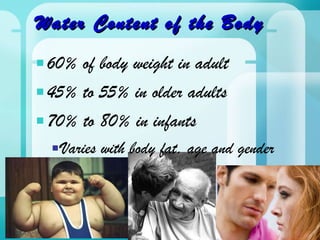
Water Content of the Body 60% of body weight in adult 45% to 55% in older adults 70% to 80% in infants Varies with body fat, age and gender
Compartments Intracellular fluid (ICF) Extracellular fluid (ECF) Intravascular (plasma) Interstitial Transcellular
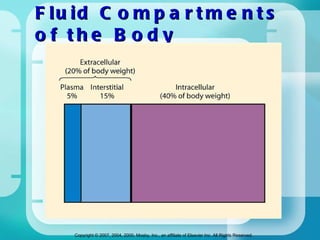
Fluid Compartments of the Body
Intracellular Fluid (ICF) Located within cells 40% of total body weight
Extracellular Fluid (ECF) One-third of body weight  Between cells (interstitial fluid), lymph, plasma, and transcellular fluid
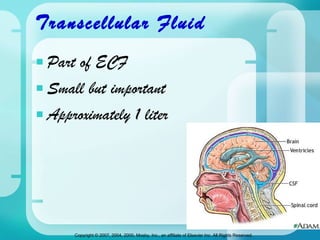
Transcellular Fluid Part of ECF Small but important Approximately 1 liter
Transcellular Fluid Includes fluid in Cerebrospinal fluid Gastrointestinal tract Pleural spaces Synovial spaces Peritoneal fluid spaces
Electrolytes Substances whose molecules dissociate into ions (charged particles) when placed into water Cations: positively-charged Anions: negatively-charged
Functions of Electrolytes Promote neuromuscular irritability Regulate acid and base balance Regulate distribution of body fluids  among body fluid compartments
Measurement of Electrolytes International standard is millimoles per liter  ( mmol/L ) U.S. uses milliequivalent  ( mEq ) Ions combine mEq for mEq
Electrolyte Composition ICF Prevalent cation is K + Prevalent anion is PO 4 3- ECF Prevalent cation is Na + Prevalent anion is Cl -
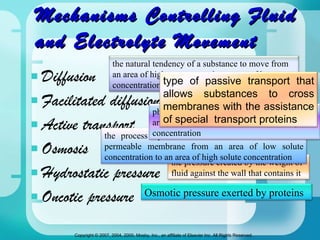
Mechanisms Controlling Fluid and Electrolyte Movement Diffusion Facilitated diffusion Active transport Osmosis Hydrostatic pressure Oncotic pressure the natural tendency of a substance to move from an area of higher concentration to one of lower  concentration the pressure created by the weight of fluid against the wall that contains it the process by which fluid moves across a semi-permeable membrane from an area of low solute concentration to an area of high solute concentration Osmotic pressure exerted by proteins physiologic pump that moves fluid from an area of lower concentration to one of higher concentration type of passive transport that allows substances to cross membranes with the assistance of special  transport proteins
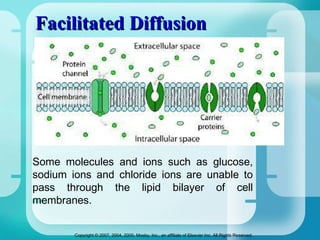
Facilitated Diffusion Some molecules and ions such as glucose, sodium ions and chloride ions are unable to pass through the lipid bilayer of cell membranes.
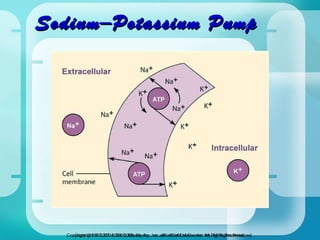
Sodium–Potassium Pump Copyright © 2007, 2004, 2000, Mosby, Inc., an affiliate of Elsevier Inc. All Rights Reserved.
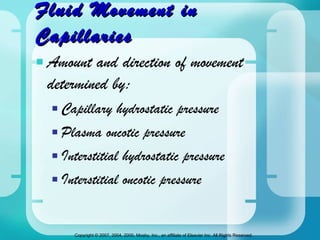
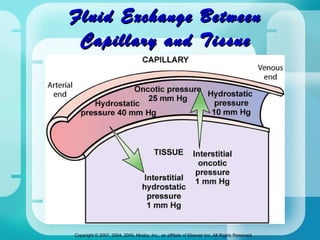
Fluid Movement in Capillaries Amount and direction of movement  determined by: Capillary hydrostatic pressure Plasma oncotic pressure Interstitial hydrostatic pressure Interstitial oncotic pressure
Fluid Exchange Between Capillary and Tissue
Fluid Shifts Plasma to interstitial fluid shift results in edema: Elevation of hydrostatic pressure Decrease in plasma oncotic pressure Elevation of interstitial oncotic pressure
Fluid Shifts Interstitial fluid to plasma Fluid drawn into plasma space with increase in plasma osmotic or oncotic pressure Compression stockings decrease peripheral edema
Fluid Movement between  ECF and ICF  Water deficit (increased ECF)  Associated with symptoms that result from cell shrinkage as water is pulled into vascular system
Fluid Movement between  ECF and ICF  Water excess (decreased ECF) Develops from gain or retention of excess water
Fluid Spacing First spacing Normal distribution of fluid in ICF and ECF Second spacing Abnormal accumulation of interstitial fluid (edema)
Fluid Spacing Third spacing Fluid accumulation in part of body where it is not easily exchanged with ECF
Regulation of Water Balance Hypothalamic regulation Pituitary regulation Adrenal cortical regulation Renal regulation
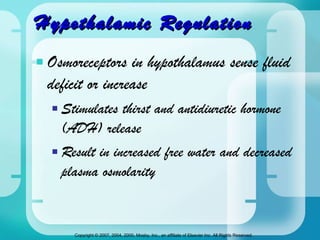
Hypothalamic Regulation Osmoreceptors in hypothalamus sense fluid deficit or increase Stimulates thirst and antidiuretic hormone (ADH) release Result in increased free water and decreased plasma osmolarity
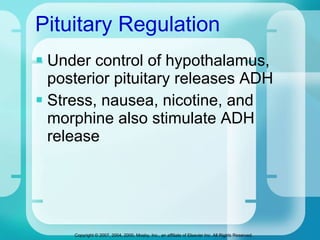
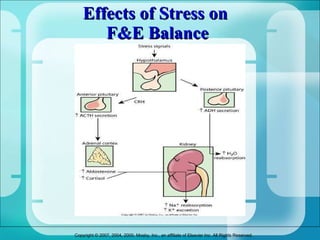
Pituitary Regulation Under control of hypothalamus, posterior pituitary releases ADH Stress, nausea, nicotine, and morphine also stimulate ADH release
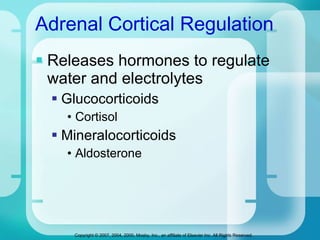
Adrenal Cortical Regulation Releases hormones to regulate water and electrolytes Glucocorticoids Cortisol Mineralocorticoids Aldosterone
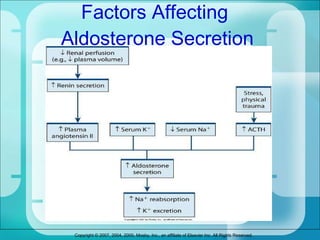
Factors Affecting  Aldosterone Secretion
Renal Regulation Primary organs for regulating fluid and electrolyte balance Adjusting urine volume Selective reabsorption of water and electrolytes Renal tubules are sites of action of ADH and aldosterone
Effects of Stress on  F&E Balance
Cardiac Regulation Natriuretic peptides are antagonists to the RAAS Produced by cardiomyocytes in response to increased atrial pressure Suppress secretion of aldosterone, renin, and ADH to decrease blood volume and pressure
Gastrointestinal Regulation  Oral intake accounts for most water Small amounts of water are eliminated by gastrointestinal tract in feces Diarrhea and vomiting can lead to significant fluid and electrolyte loss
Insensible Water Loss Invisible vaporization from lungs and skin to regulate body temperature Approximately 600 to 900 ml/day  is lost  No electrolytes are lost
Gerontologic Considerations Structural changes in kidneys decrease ability to conserve water Hormonal changes lead to decrease in ADH and ANP Loss of subcutaneous tissue leads to increased loss of moisture
Gerontologic Considerations  Reduced thirst mechanism results in decreased fluid intake Nurse must assess for these changes and implement treatment accordingly
Fluid and Electrolyte Imbalances Common in most patients with illness Directly caused by illness or disease (burns or heart failure) Result of therapeutic measures  (IV fluid replacement or diuretics)
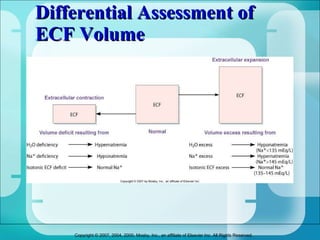
Extracellular Fluid Volume Imbalances ECF volume deficit (hypovolemia) Abnormal loss of normal body fluids (diarrhea, fistula drainage, hemorrhage), inadequate intake, or plasma-to-interstitial fluid shift Treatment: replace water and electrolytes with balanced IV solutions
Causes of Volume deficit High fever heat stroke DI Hemorrhage GI losses Overuse of diuretics Inadequate fluid Intake Third-space fluid shifts
Clinical manifestations Restlessness,lethargy, confusion Thirst Decreased skin turgor Postural hypotension Decreased urine output Increased resp. rate Wt. Loss Seizures, coma
Extracellular Fluid Volume Imbalances  Fluid volume excess (hypervolemia) Excessive intake of fluids, abnormal retention of fluids (CHF), or interstitial-to-plasma fluid shift Treatment: remove fluid without changing electrolyte composition or osmolality of ECF
Causes Excessive isotonic or hypotonic IV fluids Heart failure Renal failure SIADH Cushing syndrome Long-term use corticosteroids
Manifestations-Clinical Headache, confusion, lethargy Peripheral edema Distended neck veins Bounding pulse,  Polyuria Dyspnea, crackles, pulmonary edema Wt. Gain Seizures, coma
Nursing Management Nursing Diagnoses Hypovolemia Deficient fluid volume Decreased cardiac output Potential complication: hypovolemic shock
Nursing Management Nursing Diagnoses Hypervolemia Excess fluid volume Ineffective airway clearance Risk for impaired skin integrity Disturbed body image Potential complications: pulmonary edema, ascites
Nursing Management Nursing Implementation I&O Monitor cardiovascular changes Assess respiratory status and monitor changes Daily weights Skin assessment
Nursing Management Nursing Implementation Neurologic function LOC PERLA Voluntary movement of extremities Muscle strength Reflexes
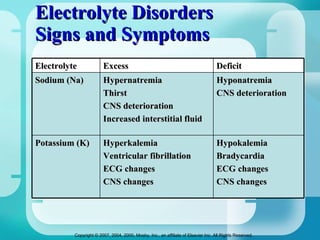
Electrolyte Disorders Signs and Symptoms Electrolyte  Excess Deficit Sodium (Na) Hypernatremia Thirst CNS deterioration Increased interstitial fluid Hyponatremia CNS deterioration Potassium (K) Hyperkalemia Ventricular fibrillation ECG changes CNS changes Hypokalemia  Bradycardia ECG changes  CNS changes
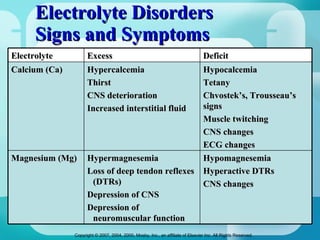
Electrolyte Disorders Signs and Symptoms Electrolyte  Excess Deficit Calcium (Ca) Hypercalcemia Thirst CNS deterioration Increased interstitial fluid Hypocalcemia Tetany Chvostek’s, Trousseau’s signs  Muscle twitching CNS changes ECG changes Magnesium (Mg) Hypermagnesemia  Loss of deep tendon reflexes (DTRs) Depression of CNS Depression of neuromuscular function Hypomagnesemia  Hyperactive DTRs CNS changes
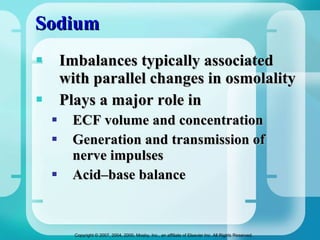
Sodium Imbalances typically associated with parallel changes in osmolality  Plays a major role in ECF volume and concentration Generation and transmission of nerve impulses Acid–base balance
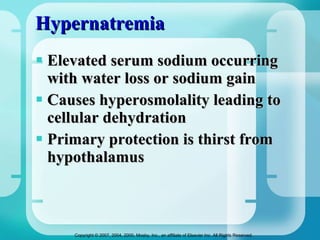
Hypernatremia Elevated serum sodium occurring with water loss or sodium gain Causes hyperosmolality leading to cellular dehydration  Primary protection is thirst from  hypothalamus
Differential Assessment of  ECF Volume
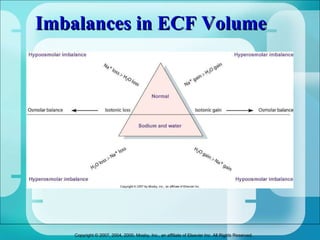
Imbalances in ECF Volume
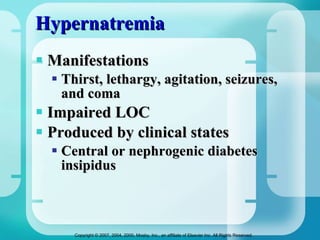
Hypernatremia Manifestations Thirst, lethargy, agitation, seizures, and coma Impaired LOC Produced by clinical states  Central or nephrogenic diabetes insipidus
Hypernatremia Serum sodium levels must be reduced gradually to avoid cerebral edema
Nursing Management Nursing Diagnoses Risk for injury Potential complication: seizures and coma leading to irreversible brain damage
Nursing Management Nursing Implementation Treat underlying cause If oral fluids cannot be ingested, IV solution of 5% dextrose in water or hypotonic saline Diuretics
Hyponatremia Results from loss of sodium-containing fluids or from water excess Manifestations Confusion, nausea, vomiting, seizures, and coma
Nursing Management Nursing Diagnoses Risk for injury Potential complication: severe neurologic changes
Nursing Management Nursing Implementation Caused by water excess Fluid restriction is needed Severe symptoms (seizures) Give small amount of IV hypertonic saline solution (3% NaCl)
Nursing Management Nursing Implementation Abnormal fluid loss Fluid replacement with sodium-containing solution
Potassium Major ICF cation Necessary for Transmission and conduction of nerve and muscle impulses  Maintenance of cardiac rhythms Acid–base balance
Potassium Sources  Fruits and vegetables (bananas and oranges) Salt substitutes  Potassium medications (PO, IV) Stored blood
Hyperkalemia High serum potassium caused by Massive intake Impaired renal excretion Shift from ICF to ECF Common in massive cell destruction Burn, crush injury, or tumor lysis
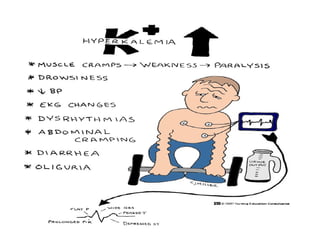
Hyperkalemia Manifestations Weak or paralyzed skeletal muscles Ventricular fibrillation or cardiac standstill  Abdominal cramping or diarrhea
 
Nursing Management Nursing Diagnoses Risk for injury Potential complication: dysrhythmias
Nursing Management Nursing Implementation Eliminate oral and parenteral K intake Increase elimination of K (diuretics, dialysis, Kayexalate)
Nursing Management Nursing Implementation Force K from ECF to ICF by IV insulin or sodium bicarbonate Reverse membrane effects of elevated ECF potassium by administering calcium gluconate IV
Hypokalemia Low serum potassium caused by Abnormal losses of K +  via the kidneys or gastrointestinal tract Magnesium deficiency Metabolic alkalosis
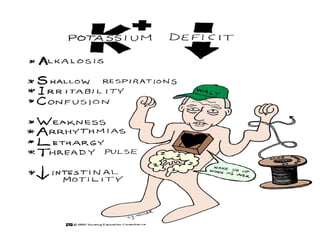
Hypokalemia Manifestations Most serious are cardiac Skeletal muscle weakness Weakness of respiratory muscles Decreased gastrointestinal motility
 
Nursing Management Nursing Diagnoses Risk for injury Potential complication: dysrhythmias
Nursing Management Nursing Implementation KCl supplements orally or IV Should not exceed 10 to 20 mEq/hr  To prevent hyperkalemia and cardiac arrest
Calcium Obtained from ingested foods More than 99% combined with phosphorus and concentrated in skeletal system Inverse relationship with phosphorus
Calcium Bones are readily available store Blocks sodium transport and stabilizes cell membrane Ionized form is biologically active
Calcium Functions  Transmission of nerve impulses Myocardial contractions Blood clotting Formation of teeth and bone Muscle contractions
Calcium Balance controlled by Parathyroid hormone Calcitonin Vitamin D
Hypercalcemia High serum calcium levels caused by Hyperparathyroidism (two thirds of cases) Malignancy  Vitamin D overdose Prolonged immobilization
Hypercalcemia Manifestations Decreased memory Confusion Disorientation Fatigue Constipation
Nursing Management Nursing Diagnoses Risk for injury Potential complication: dysrhythmias
Nursing Management Nursing Implementation Excretion of Ca with loop diuretic Hydration with isotonic saline infusion Synthetic calcitonin Mobilization
Hypocalcemia Low serum Ca levels caused by Decreased production of PTH Acute pancreatitis  Multiple blood transfusions  Alkalosis Decreased intake
Hypocalcemia Manifestations Positive Trousseau’s or Chvostek’s sign Laryngeal stridor Dysphagia Tingling around the mouth or in the extremities
Tests for Hypocalcemia Fig. 17-15
Nursing Management Nursing Diagnoses Risk for injury Potential complication: fracture or respiratory arrest
Nursing Management Nursing Implementation Treat cause Oral or IV calcium supplements Not IM to avoid local reactions Treat pain and anxiety to prevent hyperventilation-induced respiratory alkalosis
Phosphate Primary anion in ICF Essential to function of muscle, red blood cells, and nervous system Deposited with calcium for bone and tooth structure
Phosphate Involved in acid–base buffering system, ATP production, and cellular uptake of glucose Maintenance requires adequate renal functioning Essential to muscle, RBCs, and nervous system function
Hyperphosphatemia High serum PO 4 3    caused by  Acute or chronic renal failure Chemotherapy Excessive ingestion of phosphate or vitamin D
Hyperphosphatemia Manifestations  Calcified deposition in soft tissue such as joints, arteries, skin, kidneys, and corneas Neuromuscular irritability and tetany
Hyperphosphatemia Management Identify and treat underlying cause Restrict foods and fluids containing PO 4 3    Adequate hydration and correction of hypocalcemic conditions
Hypophosphatemia Low serum PO 4 3   caused by Malnourishment/malabsorption Alcohol withdrawal Use of phosphate-binding antacids During parenteral nutrition with inadequate replacement
Hypophosphatemia Manifestations CNS depression Confusion  Muscle weakness and pain Dysrhythmias  Cardiomyopathy
Hypophosphatemia Management Oral supplementation Ingestion of foods high in PO 4 3  IV administration of sodium or potassium phosphate
Magnesium 50% to 60% contained in bone Coenzyme in metabolism of protein and carbohydrates  Factors that regulate calcium balance appear to influence magnesium balance
Magnesium Acts directly on myoneural junction  Important for normal cardiac function
Hypermagnesemia High serum Mg caused by Increased intake or ingestion of products containing magnesium when renal insufficiency or failure is present
Hypermagnesemia Manifestations Lethargy or drowsiness Nausea/vomiting Impaired reflexes Respiratory and cardiac arrest
Hypermagnesemia Management Prevention Emergency treatment IV CaCl or calcium gluconate Fluids to promote urinary excretion
Hypomagnesemia Low serum Mg caused by Prolonged fasting or starvation Chronic alcoholism Fluid loss from gastrointestinal tract Prolonged parenteral nutrition without supplementation Diuretics
Hypomagnesemia Manifestations Confusion Hyperactive deep tendon reflexes Tremors Seizures  Cardiac dysrhythmias
Hypomagnesemia Management Oral supplements Increase dietary intake Parenteral IV or IM magnesium when severe
IV Fluids Purposes Maintenance When oral intake is not adequate Replacement When losses have occurred
IV Fluids Hypotonic More water than electrolytes Pure water lyses RBCs Water moves from ECF to ICF by osmosis Usually maintenance fluids
IV Fluids Isotonic Expands only ECF No net loss or gain from ICF
IV Fluids Hypertonic Initially expands and raises the osmolality of ECF Require frequent monitoring of Blood pressure Lung sounds Serum sodium levels
D5W Isotonic Provides 170 cal/L Free water Moves into ICF Increases renal solute excretion
D5W Used to replace water losses and treat hyponatremia Does not provide electrolytes
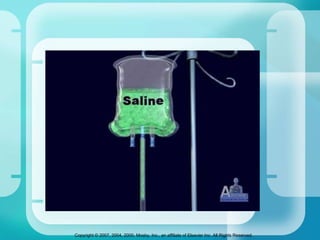
Normal Saline (NS) Isotonic  No calories More NaCl than ECF 30% stays in IV (most) 70% moves out of IV
Normal Saline (NS) Expands IV volume Preferred fluid for immediate response Risk for fluid overload higher Does not change ICF volume Blood products Compatible with most medications
 
Lactated Ringer’s Isotonic More similar to plasma than NS Has less NaCl Has K, Ca, PO 4 3  , lactate (metabolized to HCO 3  ) Expands ECF
D5 ½ NS Hypertonic Common maintenance fluid KCl added for maintenance or replacement
D10W Hypertonic Provides 340 kcal/L Free water Limit of dextrose concentration may be infused peripherally
Plasma Expanders Stay in vascular space and increase osmotic pressure  Colloids (protein solutions) Packed RBCs  Albumin Plasma

Ms.fluid&electrolytes

  • 1.
    Fluid and ElectrolytesMs. Cherry Ann G. Garcia RN, MAN-IP [email_address]
  • 2.
    Homeostasis Stateof equilibrium in body Naturally maintained by adaptive responses Body fluids and electrolytes are maintained within narrow limits
  • 3.
    Water Content ofthe Body 60% of body weight in adult 45% to 55% in older adults 70% to 80% in infants Varies with body fat, age and gender
  • 4.
    Compartments Intracellular fluid(ICF) Extracellular fluid (ECF) Intravascular (plasma) Interstitial Transcellular
  • 5.
  • 6.
    Intracellular Fluid (ICF)Located within cells 40% of total body weight
  • 7.
    Extracellular Fluid (ECF)One-third of body weight Between cells (interstitial fluid), lymph, plasma, and transcellular fluid
  • 8.
    Transcellular Fluid Partof ECF Small but important Approximately 1 liter
  • 9.
    Transcellular Fluid Includesfluid in Cerebrospinal fluid Gastrointestinal tract Pleural spaces Synovial spaces Peritoneal fluid spaces
  • 10.
    Electrolytes Substances whosemolecules dissociate into ions (charged particles) when placed into water Cations: positively-charged Anions: negatively-charged
  • 11.
    Functions of ElectrolytesPromote neuromuscular irritability Regulate acid and base balance Regulate distribution of body fluids among body fluid compartments
  • 12.
    Measurement of ElectrolytesInternational standard is millimoles per liter ( mmol/L ) U.S. uses milliequivalent ( mEq ) Ions combine mEq for mEq
  • 13.
    Electrolyte Composition ICFPrevalent cation is K + Prevalent anion is PO 4 3- ECF Prevalent cation is Na + Prevalent anion is Cl -
  • 14.
    Mechanisms Controlling Fluidand Electrolyte Movement Diffusion Facilitated diffusion Active transport Osmosis Hydrostatic pressure Oncotic pressure the natural tendency of a substance to move from an area of higher concentration to one of lower concentration the pressure created by the weight of fluid against the wall that contains it the process by which fluid moves across a semi-permeable membrane from an area of low solute concentration to an area of high solute concentration Osmotic pressure exerted by proteins physiologic pump that moves fluid from an area of lower concentration to one of higher concentration type of passive transport that allows substances to cross membranes with the assistance of special  transport proteins
  • 15.
    Facilitated Diffusion Somemolecules and ions such as glucose, sodium ions and chloride ions are unable to pass through the lipid bilayer of cell membranes.
  • 16.
    Sodium–Potassium Pump Copyright© 2007, 2004, 2000, Mosby, Inc., an affiliate of Elsevier Inc. All Rights Reserved.
  • 17.
    Fluid Movement inCapillaries Amount and direction of movement determined by: Capillary hydrostatic pressure Plasma oncotic pressure Interstitial hydrostatic pressure Interstitial oncotic pressure
  • 18.
    Fluid Exchange BetweenCapillary and Tissue
  • 19.
    Fluid Shifts Plasmato interstitial fluid shift results in edema: Elevation of hydrostatic pressure Decrease in plasma oncotic pressure Elevation of interstitial oncotic pressure
  • 20.
    Fluid Shifts Interstitialfluid to plasma Fluid drawn into plasma space with increase in plasma osmotic or oncotic pressure Compression stockings decrease peripheral edema
  • 21.
    Fluid Movement between ECF and ICF Water deficit (increased ECF) Associated with symptoms that result from cell shrinkage as water is pulled into vascular system
  • 22.
    Fluid Movement between ECF and ICF Water excess (decreased ECF) Develops from gain or retention of excess water
  • 23.
    Fluid Spacing Firstspacing Normal distribution of fluid in ICF and ECF Second spacing Abnormal accumulation of interstitial fluid (edema)
  • 24.
    Fluid Spacing Thirdspacing Fluid accumulation in part of body where it is not easily exchanged with ECF
  • 25.
    Regulation of WaterBalance Hypothalamic regulation Pituitary regulation Adrenal cortical regulation Renal regulation
  • 26.
    Hypothalamic Regulation Osmoreceptorsin hypothalamus sense fluid deficit or increase Stimulates thirst and antidiuretic hormone (ADH) release Result in increased free water and decreased plasma osmolarity
  • 27.
    Pituitary Regulation Undercontrol of hypothalamus, posterior pituitary releases ADH Stress, nausea, nicotine, and morphine also stimulate ADH release
  • 28.
    Adrenal Cortical RegulationReleases hormones to regulate water and electrolytes Glucocorticoids Cortisol Mineralocorticoids Aldosterone
  • 29.
    Factors Affecting Aldosterone Secretion
  • 30.
    Renal Regulation Primaryorgans for regulating fluid and electrolyte balance Adjusting urine volume Selective reabsorption of water and electrolytes Renal tubules are sites of action of ADH and aldosterone
  • 31.
    Effects of Stresson F&E Balance
  • 32.
    Cardiac Regulation Natriureticpeptides are antagonists to the RAAS Produced by cardiomyocytes in response to increased atrial pressure Suppress secretion of aldosterone, renin, and ADH to decrease blood volume and pressure
  • 33.
    Gastrointestinal Regulation Oral intake accounts for most water Small amounts of water are eliminated by gastrointestinal tract in feces Diarrhea and vomiting can lead to significant fluid and electrolyte loss
  • 34.
    Insensible Water LossInvisible vaporization from lungs and skin to regulate body temperature Approximately 600 to 900 ml/day is lost No electrolytes are lost
  • 35.
    Gerontologic Considerations Structuralchanges in kidneys decrease ability to conserve water Hormonal changes lead to decrease in ADH and ANP Loss of subcutaneous tissue leads to increased loss of moisture
  • 36.
    Gerontologic Considerations Reduced thirst mechanism results in decreased fluid intake Nurse must assess for these changes and implement treatment accordingly
  • 37.
    Fluid and ElectrolyteImbalances Common in most patients with illness Directly caused by illness or disease (burns or heart failure) Result of therapeutic measures (IV fluid replacement or diuretics)
  • 38.
    Extracellular Fluid VolumeImbalances ECF volume deficit (hypovolemia) Abnormal loss of normal body fluids (diarrhea, fistula drainage, hemorrhage), inadequate intake, or plasma-to-interstitial fluid shift Treatment: replace water and electrolytes with balanced IV solutions
  • 39.
    Causes of Volumedeficit High fever heat stroke DI Hemorrhage GI losses Overuse of diuretics Inadequate fluid Intake Third-space fluid shifts
  • 40.
    Clinical manifestations Restlessness,lethargy,confusion Thirst Decreased skin turgor Postural hypotension Decreased urine output Increased resp. rate Wt. Loss Seizures, coma
  • 41.
    Extracellular Fluid VolumeImbalances Fluid volume excess (hypervolemia) Excessive intake of fluids, abnormal retention of fluids (CHF), or interstitial-to-plasma fluid shift Treatment: remove fluid without changing electrolyte composition or osmolality of ECF
  • 42.
    Causes Excessive isotonicor hypotonic IV fluids Heart failure Renal failure SIADH Cushing syndrome Long-term use corticosteroids
  • 43.
    Manifestations-Clinical Headache, confusion,lethargy Peripheral edema Distended neck veins Bounding pulse, Polyuria Dyspnea, crackles, pulmonary edema Wt. Gain Seizures, coma
  • 44.
    Nursing Management NursingDiagnoses Hypovolemia Deficient fluid volume Decreased cardiac output Potential complication: hypovolemic shock
  • 45.
    Nursing Management NursingDiagnoses Hypervolemia Excess fluid volume Ineffective airway clearance Risk for impaired skin integrity Disturbed body image Potential complications: pulmonary edema, ascites
  • 46.
    Nursing Management NursingImplementation I&O Monitor cardiovascular changes Assess respiratory status and monitor changes Daily weights Skin assessment
  • 47.
    Nursing Management NursingImplementation Neurologic function LOC PERLA Voluntary movement of extremities Muscle strength Reflexes
  • 48.
    Electrolyte Disorders Signsand Symptoms Electrolyte Excess Deficit Sodium (Na) Hypernatremia Thirst CNS deterioration Increased interstitial fluid Hyponatremia CNS deterioration Potassium (K) Hyperkalemia Ventricular fibrillation ECG changes CNS changes Hypokalemia Bradycardia ECG changes CNS changes
  • 49.
    Electrolyte Disorders Signsand Symptoms Electrolyte Excess Deficit Calcium (Ca) Hypercalcemia Thirst CNS deterioration Increased interstitial fluid Hypocalcemia Tetany Chvostek’s, Trousseau’s signs Muscle twitching CNS changes ECG changes Magnesium (Mg) Hypermagnesemia Loss of deep tendon reflexes (DTRs) Depression of CNS Depression of neuromuscular function Hypomagnesemia Hyperactive DTRs CNS changes
  • 50.
    Sodium Imbalances typicallyassociated with parallel changes in osmolality Plays a major role in ECF volume and concentration Generation and transmission of nerve impulses Acid–base balance
  • 51.
    Hypernatremia Elevated serumsodium occurring with water loss or sodium gain Causes hyperosmolality leading to cellular dehydration Primary protection is thirst from hypothalamus
  • 52.
  • 53.
  • 54.
    Hypernatremia Manifestations Thirst,lethargy, agitation, seizures, and coma Impaired LOC Produced by clinical states Central or nephrogenic diabetes insipidus
  • 55.
    Hypernatremia Serum sodiumlevels must be reduced gradually to avoid cerebral edema
  • 56.
    Nursing Management NursingDiagnoses Risk for injury Potential complication: seizures and coma leading to irreversible brain damage
  • 57.
    Nursing Management NursingImplementation Treat underlying cause If oral fluids cannot be ingested, IV solution of 5% dextrose in water or hypotonic saline Diuretics
  • 58.
    Hyponatremia Results fromloss of sodium-containing fluids or from water excess Manifestations Confusion, nausea, vomiting, seizures, and coma
  • 59.
    Nursing Management NursingDiagnoses Risk for injury Potential complication: severe neurologic changes
  • 60.
    Nursing Management NursingImplementation Caused by water excess Fluid restriction is needed Severe symptoms (seizures) Give small amount of IV hypertonic saline solution (3% NaCl)
  • 61.
    Nursing Management NursingImplementation Abnormal fluid loss Fluid replacement with sodium-containing solution
  • 62.
    Potassium Major ICFcation Necessary for Transmission and conduction of nerve and muscle impulses Maintenance of cardiac rhythms Acid–base balance
  • 63.
    Potassium Sources Fruits and vegetables (bananas and oranges) Salt substitutes Potassium medications (PO, IV) Stored blood
  • 64.
    Hyperkalemia High serumpotassium caused by Massive intake Impaired renal excretion Shift from ICF to ECF Common in massive cell destruction Burn, crush injury, or tumor lysis
  • 65.
    Hyperkalemia Manifestations Weakor paralyzed skeletal muscles Ventricular fibrillation or cardiac standstill Abdominal cramping or diarrhea
  • 66.
  • 67.
    Nursing Management NursingDiagnoses Risk for injury Potential complication: dysrhythmias
  • 68.
    Nursing Management NursingImplementation Eliminate oral and parenteral K intake Increase elimination of K (diuretics, dialysis, Kayexalate)
  • 69.
    Nursing Management NursingImplementation Force K from ECF to ICF by IV insulin or sodium bicarbonate Reverse membrane effects of elevated ECF potassium by administering calcium gluconate IV
  • 70.
    Hypokalemia Low serumpotassium caused by Abnormal losses of K + via the kidneys or gastrointestinal tract Magnesium deficiency Metabolic alkalosis
  • 71.
    Hypokalemia Manifestations Mostserious are cardiac Skeletal muscle weakness Weakness of respiratory muscles Decreased gastrointestinal motility
  • 72.
  • 73.
    Nursing Management NursingDiagnoses Risk for injury Potential complication: dysrhythmias
  • 74.
    Nursing Management NursingImplementation KCl supplements orally or IV Should not exceed 10 to 20 mEq/hr To prevent hyperkalemia and cardiac arrest
  • 75.
    Calcium Obtained fromingested foods More than 99% combined with phosphorus and concentrated in skeletal system Inverse relationship with phosphorus
  • 76.
    Calcium Bones arereadily available store Blocks sodium transport and stabilizes cell membrane Ionized form is biologically active
  • 77.
    Calcium Functions Transmission of nerve impulses Myocardial contractions Blood clotting Formation of teeth and bone Muscle contractions
  • 78.
    Calcium Balance controlledby Parathyroid hormone Calcitonin Vitamin D
  • 79.
    Hypercalcemia High serumcalcium levels caused by Hyperparathyroidism (two thirds of cases) Malignancy Vitamin D overdose Prolonged immobilization
  • 80.
    Hypercalcemia Manifestations Decreasedmemory Confusion Disorientation Fatigue Constipation
  • 81.
    Nursing Management NursingDiagnoses Risk for injury Potential complication: dysrhythmias
  • 82.
    Nursing Management NursingImplementation Excretion of Ca with loop diuretic Hydration with isotonic saline infusion Synthetic calcitonin Mobilization
  • 83.
    Hypocalcemia Low serumCa levels caused by Decreased production of PTH Acute pancreatitis Multiple blood transfusions Alkalosis Decreased intake
  • 84.
    Hypocalcemia Manifestations PositiveTrousseau’s or Chvostek’s sign Laryngeal stridor Dysphagia Tingling around the mouth or in the extremities
  • 85.
  • 86.
    Nursing Management NursingDiagnoses Risk for injury Potential complication: fracture or respiratory arrest
  • 87.
    Nursing Management NursingImplementation Treat cause Oral or IV calcium supplements Not IM to avoid local reactions Treat pain and anxiety to prevent hyperventilation-induced respiratory alkalosis
  • 88.
    Phosphate Primary anionin ICF Essential to function of muscle, red blood cells, and nervous system Deposited with calcium for bone and tooth structure
  • 89.
    Phosphate Involved inacid–base buffering system, ATP production, and cellular uptake of glucose Maintenance requires adequate renal functioning Essential to muscle, RBCs, and nervous system function
  • 90.
    Hyperphosphatemia High serumPO 4 3  caused by Acute or chronic renal failure Chemotherapy Excessive ingestion of phosphate or vitamin D
  • 91.
    Hyperphosphatemia Manifestations Calcified deposition in soft tissue such as joints, arteries, skin, kidneys, and corneas Neuromuscular irritability and tetany
  • 92.
    Hyperphosphatemia Management Identifyand treat underlying cause Restrict foods and fluids containing PO 4 3  Adequate hydration and correction of hypocalcemic conditions
  • 93.
    Hypophosphatemia Low serumPO 4 3  caused by Malnourishment/malabsorption Alcohol withdrawal Use of phosphate-binding antacids During parenteral nutrition with inadequate replacement
  • 94.
    Hypophosphatemia Manifestations CNSdepression Confusion Muscle weakness and pain Dysrhythmias Cardiomyopathy
  • 95.
    Hypophosphatemia Management Oralsupplementation Ingestion of foods high in PO 4 3  IV administration of sodium or potassium phosphate
  • 96.
    Magnesium 50% to60% contained in bone Coenzyme in metabolism of protein and carbohydrates Factors that regulate calcium balance appear to influence magnesium balance
  • 97.
    Magnesium Acts directlyon myoneural junction Important for normal cardiac function
  • 98.
    Hypermagnesemia High serumMg caused by Increased intake or ingestion of products containing magnesium when renal insufficiency or failure is present
  • 99.
    Hypermagnesemia Manifestations Lethargyor drowsiness Nausea/vomiting Impaired reflexes Respiratory and cardiac arrest
  • 100.
    Hypermagnesemia Management PreventionEmergency treatment IV CaCl or calcium gluconate Fluids to promote urinary excretion
  • 101.
    Hypomagnesemia Low serumMg caused by Prolonged fasting or starvation Chronic alcoholism Fluid loss from gastrointestinal tract Prolonged parenteral nutrition without supplementation Diuretics
  • 102.
    Hypomagnesemia Manifestations ConfusionHyperactive deep tendon reflexes Tremors Seizures Cardiac dysrhythmias
  • 103.
    Hypomagnesemia Management Oralsupplements Increase dietary intake Parenteral IV or IM magnesium when severe
  • 104.
    IV Fluids PurposesMaintenance When oral intake is not adequate Replacement When losses have occurred
  • 105.
    IV Fluids HypotonicMore water than electrolytes Pure water lyses RBCs Water moves from ECF to ICF by osmosis Usually maintenance fluids
  • 106.
    IV Fluids IsotonicExpands only ECF No net loss or gain from ICF
  • 107.
    IV Fluids HypertonicInitially expands and raises the osmolality of ECF Require frequent monitoring of Blood pressure Lung sounds Serum sodium levels
  • 108.
    D5W Isotonic Provides170 cal/L Free water Moves into ICF Increases renal solute excretion
  • 109.
    D5W Used toreplace water losses and treat hyponatremia Does not provide electrolytes
  • 110.
    Normal Saline (NS)Isotonic No calories More NaCl than ECF 30% stays in IV (most) 70% moves out of IV
  • 111.
    Normal Saline (NS)Expands IV volume Preferred fluid for immediate response Risk for fluid overload higher Does not change ICF volume Blood products Compatible with most medications
  • 112.
  • 113.
    Lactated Ringer’s IsotonicMore similar to plasma than NS Has less NaCl Has K, Ca, PO 4 3  , lactate (metabolized to HCO 3  ) Expands ECF
  • 114.
    D5 ½ NSHypertonic Common maintenance fluid KCl added for maintenance or replacement
  • 115.
    D10W Hypertonic Provides340 kcal/L Free water Limit of dextrose concentration may be infused peripherally
  • 116.
    Plasma Expanders Stayin vascular space and increase osmotic pressure Colloids (protein solutions) Packed RBCs Albumin Plasma